Daimler says to pay 870 mn euro fine over diesel recalls
Author: Mei Ling Tan
-
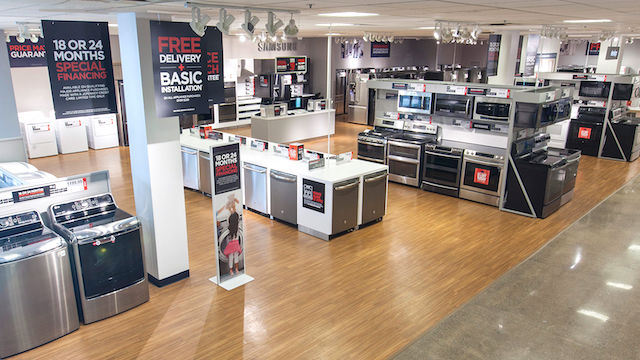
Appliance Subscription services taking off in South Korea
The subscription services economy – through which one can periodically receive products or services instead of purchasing them outright – is on the rise in South Korea.
Rental services, which used to be represented by water purifiers, are now in their heyday as they have expanded to various items such as LED masks and dishwashers.
Major online shopping portal Gmarket’s sales data for rental services over the past five years showed a more than fivefold increase (448 percent) since 2014.
Compared to last year, rentals of massage chairs increased by 435 percent, clothes dryers by 111 percent, and air purifiers by 106 percent.
When dividing the rental service by generation, customers in their 40s accounted for 46 percent of purchases, nearly the majority, followed by those in their 30s at 35 percent.
People in their 30s and 40s who seek practical consumption and have relative economic power, have responded to rental services that allow them to rent products at reasonable prices.
The items available for rent have diversified. Various kitchen appliances such as dishwashers, food processors, coffee machines, air fryers and induction stoves as well as LED masks and pet products like pet dry rooms are available.
Rental companies are also introducing health-related products such as spinal-heating medical devices and eye massagers, as well as unique products such as painting rentals and indoor plant growing machines.
“Because products that can improve quality of life can be used without any initial cost and can be replaced with new products after a certain period of time, preference for rental services is increasing,” said a representative of Gmarket.
-

MCG giants keen to restoring biodiversity
Leading FMCG companies including Nestlé, Kellogg Company, Danone, Mars and Unilever have formed a new coalition aimed at protecting and restoring biodiversity within their supply chains and product portfolios.
The One Planet Business for Biodiversity (OP2B) initiative launched by Danone CEO Emmanuel Faber at the United Nations Climate Action Summit in New York on Monday includes 19 companies with combined total revenues of around $500 billion.
The coalition is focused on scaling up regenerative agriculture practices, boosting biodiversity and increasing the resilience of food and agriculture systems; as well as eliminating deforestation and protecting high-value ecosystems.
Mark Schneider, Nestlé CEO, said protecting and restoring biodiversity “is essential to safeguard food production and food security”.
“Nestlé has for many years worked with farmers to manage their land sustainably and will continue to lead activities enhancing biodiversity,”
Schneider said.The OP2B coalition members also include L’Oreal, Balbo Group, Barry Callebaut, DSM, Firmenich, Google , Jacobs Douwe Egberts, Kering, Livelihoods Funds, Loblaw Companies Limited, Migros Ticaret, Symrise and Yara.
Mars launches #PledgeForPlanet
Mars is going a step further to tackle climate change, with the launch of its #PledgeForPlanet initiative, which calls on suppliers to set science-based targets and embrace renewable energy.
“Climate change is a real and tangible threat to society. For example, in our business, we already see it in the risk to livelihoods for smallholder farmers who provide most of our raw ingredients,” Mars CEO Grant F. Reid said.
“Risks to the resiliency and sustainability of our supply chain and the future of the farmers we work with is top of mind. But, as a family business that thinks in generations and aspires to make a positive difference in the world, our responsibilities and our ambitions go beyond risk mitigation. We are committed to doing our part for the good of the planet.”
The initiative follows the company’s investment of $1 billion towards its Sustainable in a Generation Plan which looks beyond its own direct operations and into its extended supply chain.
-
Line launches online fashion customisation platform
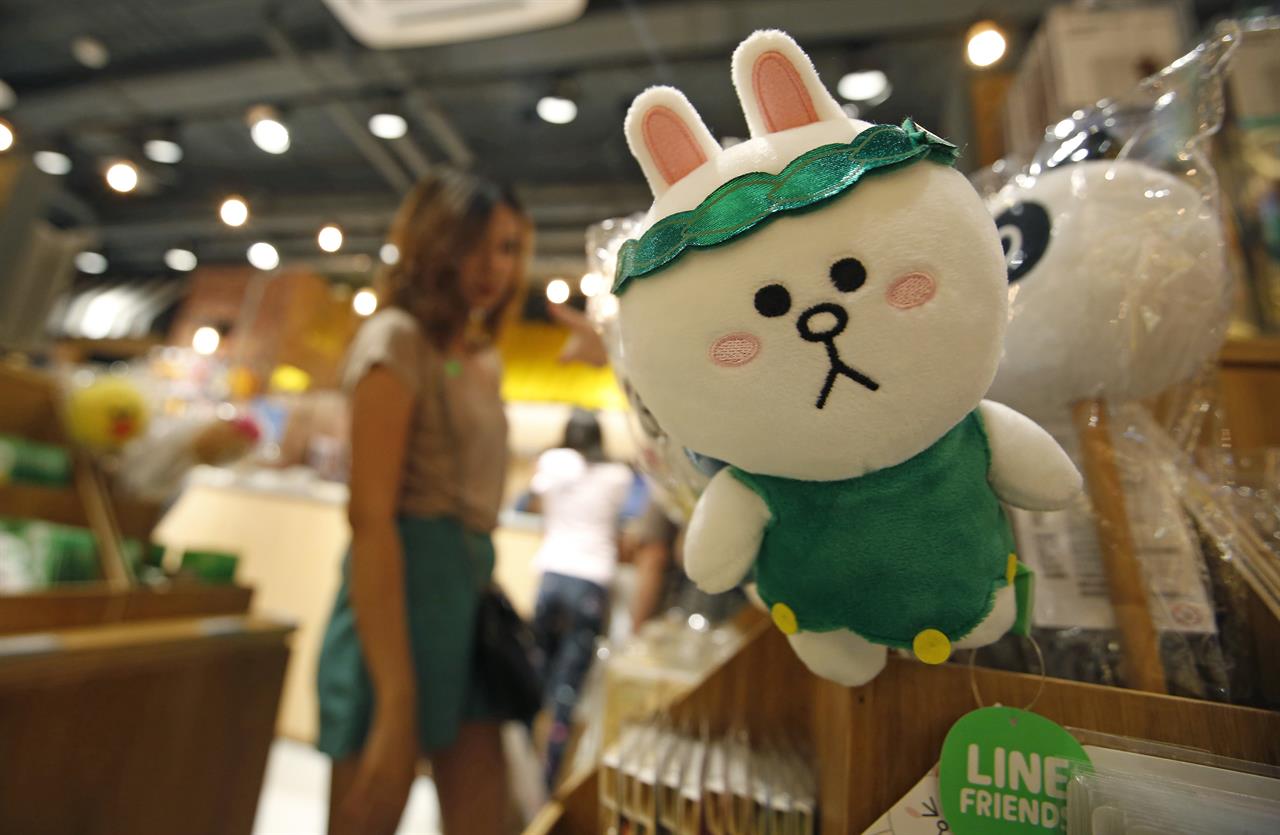
Character brand Line Friends has launched an online fashion customization platform where consumers can purchase personalized fashion items based on their lifestyles.
The ‘Line Friends Creator’ app was released globally (except Europe) on September 19.
The new sales platform provides millennial customers with an opportunity to customize products using the creative contents of Line Friends, and have fun designing a product according to their own styles added with a differentiated brand experience.
Line Friends Creator also provides a wide array of themed artworks based on the original character lineup, Brown & Friends and BT21. The new platform offers a wide selection of trendy fashion items including t-shirts, sweatshirts, hoodies, canvas tote bags, and smartphone cases, which customers can select based on their needs and preferences.
“Fashion items are one of the most representative ways for Millennials to express themselves as they value revealing their individuality and personalities freely,” said a Line Friends spokesperson. “With the ‘Line Friends Creator’ artworks that are full of wit and uniqueness, we hope that a lot of customers can enjoy creating personalized trendy outfits based on their mood, tastes, and daily lives.”
-

Bubble-tea chain Milksha opened in Australia
Taiwanese bubble-tea chain Milksha has opened a flagship store in Melbourne, Australia.
The store is the Milkshop brand’s first flagship in Australia. It operates 240 locations in several Asian countries.
The brand is known for its use of fresh milk rather than creamer.
“Those familiar with the Milksha brand know that it’s a premium bubble tea brand,” said Milkshop International GM Peter Huang. “We chose Melbourne to launch our flagship store because it is no doubt the foodie capital of Australia. The city is a melting pot of different cultures open to trying new products, which can be seen in its established and growing market of bubble-tea lovers.”
The firm is partnering with local supplier St David’s Dairy for fresh milk.
-

CU convenience store chain to open in Vietnam
South Korea’s CU convenience store chain will expand its footprint to Vietnam, its second international market after Mongolia.
BGF Retail, the operator of CU, signed a master franchise agreement with CUVN, a Vietnam-based convenience store operator, on Tuesday. CUVN will be in charge of investment and operations in Vietnam market as BGF Retail contributes its brand and business background.
BGF Retail and CUVN plan to open their first store in Vietnam by June next year.
Park Jae-koo, CEO of BGF Retail, said the company will continue to expand internationally making forays into growing emerging markets.
With the new expansion, the South Korean convenience store operator expects to gain a strong position in the Southeast Asian market as Vietnam’s economy has witnessed significant growth during recent years.
Rival network GS25 has already launched in Vietnam, opening stores in Ho Chi Minh City.
-
Forever 21 leaves Hong Kong amid bankruptcy predictions
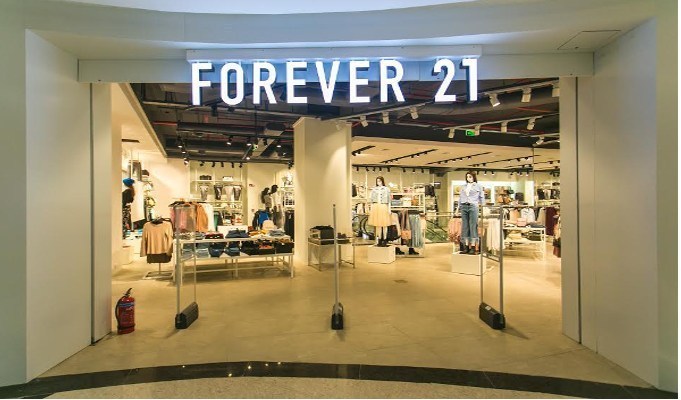
Once, Forever 21 had one of the largest flagship stores in Hong Kong. Now it has exited the market altogether.
The California-headquartered fast-fashion retailer has closed its three-story Mong Kok store, eight years after it opened a massive six-story flagship in the heart of Causeway Bay, which is now home to Victoria’s Secret.
In April, Forever 21 closed its Chinese e-commerce website and withdrew products for sale on Tmall and JD. At the same time it closed one physical store on the mainland and was widely reported to be planning to exit the market altogether.
Last month, it was reported by Bloomberg to be preparing to file for bankruptcy protection after failing to reach a deal to refinance its heavy debt load but as recently as 10 days ago its owners discounted that course, saying the business would trade on.
With more than 800 stores in the Americas, Asia and Europe Forever 21 grew from a single store in Los Angeles in 1984 opened by co-founder Do Won Chang and his wife Jin Sook. While its international growth trajectory was rapid in the 2000s, in later years it has failed to keep pace with European rivals H&M and Zara and Japan’s Uniqlo, leading it to shutter flagship stores like the one in Causeway Bay.
-

Mana! looks abroad as plant-based, whole-foods business matures
Fast-casual, plant-based whole-foods retailer Mana! Is eyeing further expansion both within Hong Kong and abroad after refining its format in multiple city locations.
Founder Bobsy Gaia says Mana! Starstreet, its third store which opened in August, is the first to be opened in a commercial partnership, in this case with Swire Properties.
“We were ready to scale since day one as a fast-slow food concept. Scaling without integrity and brand is dangerous, so we spent time to build the brand first for when the day comes, the expansion will be ready,” he said in an interview.
To date, all Hong Kong developments have been done under its own steam but the Mana! team is keen to explore international opportunities, either by its own means or through franchising.
More stores are planned within the next two years after the company has tested its concepts in commercial areas.
Despite that, founder Bobsy Gaia is adamant the company is not out to please its shareholders.
“We will seek intelligent capital with integrity to grow. Planet and profit benefit has to balance altogether.”
Mana! Is becoming well known among the local and expat community for its health and eco-conscious positioning. And Gaia is equally well known for his strong advocacy in the eco-movement.
The new Starstreet flagship spans more than 1600sqft, the largest after its Central and Poho stores. Apart from its signature menu of fast-slow food, Mana! Starstreet houses its first salad bar and vegan coffee cafe. Not only has the flagship ticked all the boxes for sustainability innovation being a completely zero-waste store, but Mana!’s works within the community and the initiatives set in their new outlet also paved way for Bobsy Gaia being awarded and recognized as one of Hong Kong’s Top 50 Innovative Retail Leaders for 2019.
From eco-fashion to food
Hailing from Beirut, Gaia moved to Hong Kong almost three decades ago originally to expand his eco-fashion line until he saw a need for vegetarian food right at Lamma Island where he lives. From the original Bookworm Cafe, to Life Cafe on Shelley Street, Gaia has continuously reinvented the concept and found commercial success through the Mana! venture that is patronized by many today.
The Mana! tribe
Mana! customers range from locals and expats, of all genders, age brackets and ethnicities. Albeit the Hong Kong consumer may be eating green for health reasons as opposed to alleviating climate change; there is clearly a growing awareness among the locals and even moreso, emerging within Gen Z.
Aside from Gaia and his team’s effort in educating local schools and universities, the stores’ customer bases is generally getting younger reflecting a growing demand and awareness among younger people to make a conscious consumption choice.
The evolution of Mana! flagships
From the first Mana! Raw on Wellington Street to the Poho joint, the fast-slow food establishment stands out amongst Hong Kong’s concrete jungle with its outdoor space and high ceilings. Mana! also has a 3500sqft production kitchen at Wong Chuk Hang where its team continuously invent and produce the vegan food on its menus today.
Each of the restaurants specialise in different offerings. The Central store, for example, sells an average of 500 flats a day, while the Poho outlet is noted for the brand’s first vegan coffee shop. But all the stores maintain visual consistently through their murals and designs.
While the Starstreet flagship streamlines all food concepts and offerings together in one place, “this is a fuller expression of Mana!’s concept – with space” according to Gaia, especially as it is the first location that is roofed. The store’s signature reclaimed wooden tables stretch through the restaurant, and are large enough for a leisurely hangout as well as a welcome working spot, equipped with free WiFi. It is common to find the Mana! team using its own space rather than their headquarters as it allows them to engage with the Mana! community. A cushioned no-shoes Zen zone sits comfortably in the middle of the restaurant for gatherings, and a library corner with Bobsy’s must-reads in life.
Sustainability
The fundamental of Mana!’s success not only lies from its vegan food offerings, but it is also recognized for its sustainability movement that has contributed back to the community largely. “The difference is integrity…we don’t cut corners,” said Gaia. “We’ve invested lots of time to showcase what a conscious business can be and should be like. Our recycling system took eight years to develop – we call this version 0.7.”
Aside from alliances and organizations, Mana!’s team works closely with the government, with many initiatives we see today influenced by their efforts. For example, they were the first in launching Hong Kong’s first designated paper recycling bins in 1997. Glass bottles recycled in-store get turned into bricks and tiles for Hong Kong parks and sidewalks. All of its packaging underwent in-depth research to design the compostable packaging that exists today, and is returned back to the earth as soil.
Outside of its shops, Mana!’s team is seen regularly in local communities, partnering with like-minded organisations and even start-ups, such as Hong Kong Dog Rescue, Peta and Feeding Hong Kong. It also works with retailers such as Lush and Lululemon through corporate catering or hosting events together. Every morning, the Mana! Starstreet store hosts “Morning Mindfulness” sessions with Lululemon ambassadors as well as local trainers to bring the local community together.
Tips for retailers
Gaia has sage advice for retailers seeking to evolve and adapt their sustainability initiatives.
“Build a conscious business that inspires change. A restaurant is a restaurant, but Mana! is a vehicle to inspire change, through the stomach.”
Gaia says Mana!’s success has come from bringing integrity and trust to its retail business – key ingredients for success, especially in the sustainability market. He invites retailers seeking inspiration to visit any of his eateries and peruse the libraries on hand.
But in his own wise words: “The new business of business, is to
-

HSBC Announces Key Senior Appointments
HSBC Private Banking has announced the expanded role of Cynthia Lee, appointed as Regional Head of Private Wealth Solutions (PWS), Asia Pacific, and the appointment of Steven Weekes as Head of Private Wealth Solutions (PWS), South East Asia.
Cynthia Lee is the new Regional Head of Private Wealth Solutions, Asia Pacific at HSBC Private Bank. In order to build on Private Wealth Solutions’ comprehensive regional support for a growing number of HSBC Group-connected clients, Cynthia Lee takes on an expanded role to cover Asia Pacific. The change means PWS’ structure will mirror that of Private Banking, the largest contributor of referrals for the business. Cynthia will continue to report to Alan Beattie, Global Head of Private Wealth Solutions.
As we look to strengthen our position in Asia, a region where we continue to see an immense opportunity, Cynthia and Steven’s wealth of experience and deep expertise will help us bring the best of PWS to our Asian clients,” said Alan Beattie, Global Head of Private Wealth Solutions. Cynthia has over 20 years of wealth advisory experience, focusing on private clients and families. She joined HSBC as Head of PWS, North Asia, in January 2019. She was formerly at JP Morgan where she was most recently Head of Wealth Advisory for Asia.
Steven Weekes has joined HSBC as head of private wealth solutions, South East Asia from Citi Private Bank, where he worked for 23 years. Most recently, Steven was Head of International Fiduciary Services based in Zurich, Switzerland, leading a global team of professionals with responsibility for International Trust companies in the Bahamas, the Cayman Islands, Jersey, Singapore and Switzerland.
Prior to this, Steven was the Regional Trust Head for Asia, responsible for the delivery of wealth planning to Private Banking clients in Asia with a strong focus on Next Gen and Wealth Transfer Planning. Steven has also held other Trust, Private Banking and business advisory roles at Citi and KPMG in Switzerland and Australia.
Weekes will be based in Singapore, reporting to Cynthia Lee, Regional head of Private Wealth Solutions, Asia Pacific. He takes over from Michelle Lau, who has been appointed to a new role within HSBC Private Banking as Managing Director, Ultra High Net Worth and Family Office Strategic Services, South East Asia. In her new position, Michelle will drive further development in South East Asia of HSBC Private Banking’s UHNW proposition, services for Family Offices, and global connectivity.
HSBC is aiming to significantly expand its Asian Private Banking business over the next five years, including Private Wealth Solutions, with a key focus on Greater China and the ASEAN region.
-

Vingroup unit licensed to offer e-wallet services
Vingroup’s loyalty program VinID has been permitted to operate e-wallet services, furthering the private conglomerate’s foray into cashless payment.
VinID acquired local payment firm People Care Jsc in May. It also owns People Care’s e-wallet MonPay, and has replaced the management board of the payment firm with its own executives since the end of last year.
Vingroup established VinID in July last year with a charter capital of VND3 trillion ($129.4 million), in which Vingroup owns 80 percent.
The license for VinID Pay is among the 31 certifications that the central bank has issued for payment intermediary companies.
Economists have said that the potential for cashless payments in Vietnam is huge due to a growing middle class and rapidly improving telecom infrastructure. The government targets to make 90 percent of all transactions cashless by 2020.
However, for now, the reliance on cash remains huge. About 80 percent of Vietnamese prefer to use cash for daily transactions
-
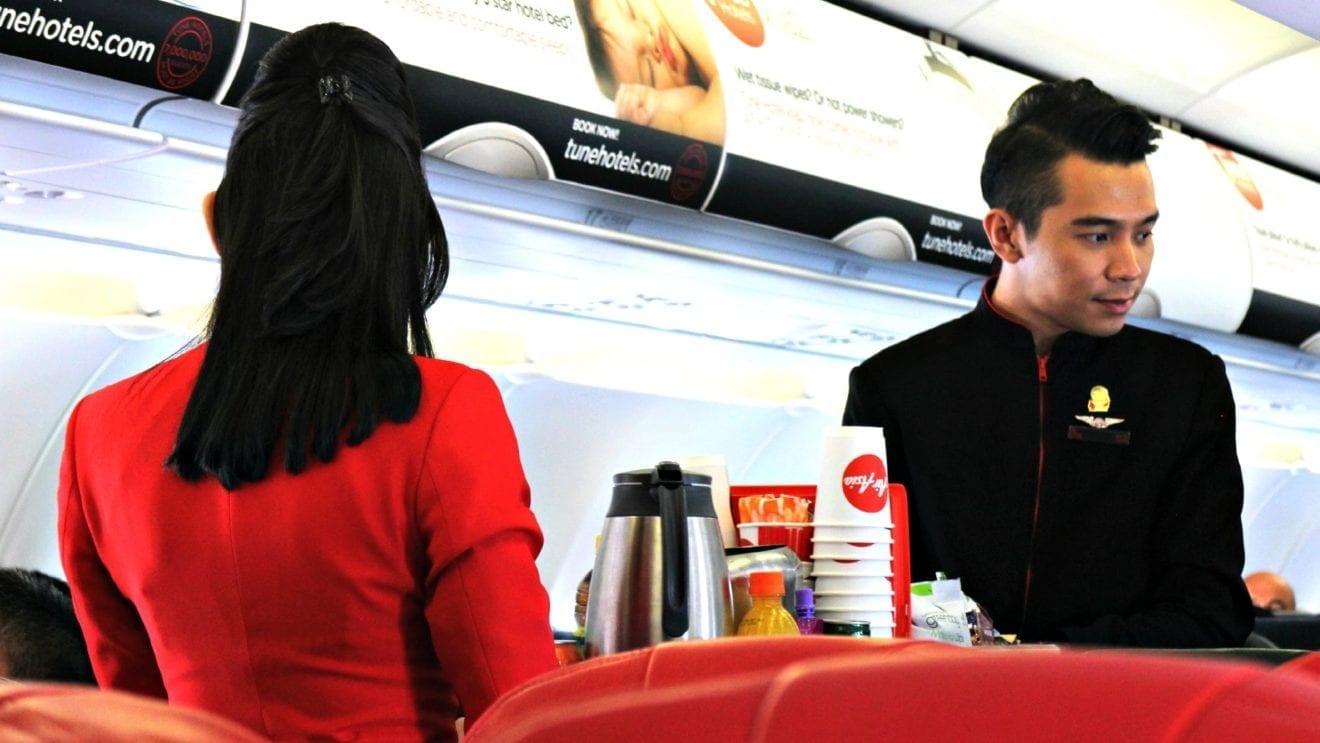
AirAsia celebrates 600 million guests flown with BIG Sale
Airasia the world’s best low-cost airline for 11 years running, is celebrating 600 million guests flown with a BIG Sale and six million promotional seats.
Enjoy promotional all-in AirAsia BIG Member fares from as low as RM12 for flights from Kuala Lumpur to Penang, Kuantan, Johor Baru, Kota Kinabalu, and Kuching, from RM50 for flights to Surat Thani, Krabi, Visakhapatnam, Maldives (Male), Bangkok, Can Tho and many more.
Fly AirAsia X from as low as RM196 from Kuala Lumpur to Tianjin, Seoul, Taipei, Gold Coast, Osaka and other exciting long-haul destinations. For extra comfort and perks, try our award-winning Premium Flatbed from Kuala Lumpur to Wuhan, Busan, Fukuoka, Melbourne from only RM796.
Enjoy 16% off Pick A Seat when making seat selection with flights during the initial booking stage, up to 40% off bookings for selected hotels and up to 60% off flight-plus-hotel holiday packages. BIG members will earn an additional 600 BIG points when booking activities during the BIG Sale period (minimum spending of RM200).
Book at airasia.com or the AirAsia mobile app from September 23 (0001h GMT +8) to Sept 26 (2400 GMT +8) for travel between Feb 10 and Dec 15, 2020 .
AirAsia group chief commercial officer Karen Chan said, “As a show of appreciation to our 600 million guests flown, we are pleased to announce a BIG Sale across our network. As we further transform into a travel tech platform company, the AirAsia BIG Sale will become more than just flight promotions. Be sure to look out for exclusive discounts on selected hotels, activities and flight-plus-hotel packages when you book your next journey on airasia.com.”
AirAsia BIG Members, BigPay users and AirAsia Credit Card holders will be able to take advantage of a 24-hour priority access period starting Sept 22. Simply log in as a BIG Member on airasia.com to access seats at the lowest fares. (0001h GMT +8). BIG Members will also be able to redeem promotional seats from as little as 500 BIG Points one way on airasiabig.com and the AirAsia BIG mobile app.
-
Alibaba Acquires One-Third of Ant Financial
Alibaba Group has bought a 33 percent equity interest in Ant Financial, pulling the financial tech giant closer to mainland China.
Following the acquisition, Ant will no longer be required to pay 37.5 percent of its pre-tax profits to the e-commerce behemoth.
The profit transferal agreement was brokered in 2011 following a dispute Alibaba and Yahoo which consequently led the former’s co-founder Jack Ma to shift Ant Financial – formerly known as Alipay – into a separate entity he controlled. Concerns about conducting business in China with a foreign-owned entity was the cited for the move.
Every year we generate new stuff and we acquire new stuff. We never stop,» Alibaba chairman Daniel Zhang said at its annual investor conference in Hangzhou. «Payment and financial services are very important pillars in Alibaba’s system.
The latest deal places the value of Alibaba’s global portfolio at $83 billion with investments into diverse high tech industries including artificial intelligence and augmented reality, according to group CFO Maggie Wu.
Ant, valued at $150 billion, offers a full range of financial services and products including micro-lending, insurance, credit scoring and China’s largest money market fund. It is also in the midst of foreign acquisitions in India and Thailand. Its flagship digital payments platform currently boasts 900 million users.
-

How online retail is expanding in Australia
Online retail is one of the biggest trends of today. Visiting the actual stores and going shop by shop to find your preferred product is slowly fading away and leaving its place to the online shopping experience. Everyone wants to sit at home, browse through the brand websites, pick the products of their liking, and then place an order without ever going outside.
That’s exactly what’s going on in the world and Australia doesn’t fall behind. Almost every form of retailing or service company starting from clothing stores to the slot game providers, known as pokies in Australia, are increasingly going online.
In fact, according to Australia Post’s 2019 eCommerce Industry Report, online purchases increased to 20.2% in 2018 and recorded double-digit growth every month. It seems that Australian retailers are really flexing their muscles here.
In this article, we’re going to see how three of the most popular online retailers handle this new transformation in the retail industry, and how they manage to satisfy customer demands by providing high-quality products, affordable prices, and fast delivery.
Urge to increase the scale
With the Internet and expanded – or rather, nullified – boundaries, companies have ever-more-prevalent incentives to increase production to meet rising demands. Be Fit Food, the dietician-designed real healthy meal company, has increased its production from 3,000 meals a week to 30,000 meals a week. “There’s a huge opportunity, with potential for 100,000 deliveries every week. So we need partners that can scale with us,” says the company’s CEO and Founder Kate Save.
The company is based in Victoria and now it ships to New South Wales, Queensland, and South Australia. There are plans to expand and cover Western Australia as well.
Fashion purchases are among of the biggest driving forces of online retails, constituting 35.2% of all online purchases.
Showpo, a Sydney-based Australian online fashion retailer, is also increasing its supply; according to its Head of Operations Paul Waddy, the year to year production is growing 40 to 60%. “We now sell to over 80 countries, so we are also an export business”, says Waddy.
The importance of fast deliveries
Fast delivery is one of the biggest deciding factors in online shopping. It’s one thing to get quality products in one piece, but if delivery takes several days, it quickly loses its appeal. Australian retailers have quickly realized this and started to incorporate faster delivery methods.
In fact, next-business-day deliveries have increased by 31.7% in Australia, and fashion purchases account for almost 62% of these retails. Showpo is partnering with Australian Post to enable the same business-day delivery on subway areas in Sydney, Melbourne, Brisbane, and Adelaide.
“How quickly we can get our orders out to our customers is super important, they want value, they want something that looks great and they want it quickly. If you can’t keep up the service levels, your customers will not come back to you,” says Waddy.
Australia’s biggest online retail store Myer is also focusing on fast deliveries. “Our customers expect a great experience, but they also want it today. We can now provide same-day delivery to 80% of the country”, says the company’s GM Omnichannel Robbie Tutt.
Fast delivery of its healthy dietician-designed food is also very important to Be It Food. “We’d love to be able to deliver within a 24-hour window. If a customer can’t get that replacement product for another four days, we know that’s just not good enough”, says Kate Save.
Variety is key
The Australia Post’s report also shows that stores that offer a variety of products, known as Variety Stores, are the biggest online shopping category. They showed year on year growth of 21.5% last year. eBay and Catch are the main marketplaces that take up 56.4% of the variety store purchases.
Myer’s GM Tutt says that the biggest Australian retail company is also focusing on incorporating variety stores on its online channel, increasing by 44% in the second quarter of 2019.
“It’s all about convenience. Customers don’t see channels, they see a brand. They expect a great experience however they interact with us. Whether that’s through social, digital, in store, or when they receive their parcel, that’s all the Myer brand,” says Tutt.
Tutt also mentions that he realizes how often people shop through multiple channels at once. That’s why he believes many of them will definitely choose Myer which will offer a variety of shops on one platform.
Be It Food also tries to expand its capabilities. According to Kate Save, “Our customers really want tracking information. Even though we’re not the delivery service, they expect a quality of service from us.”
These three Australian companies have found a key to success in the retail industry of 2019. It’s mainly based on increasing supply to meet bigger, more internationalized demands; faster delivery services; and variety stores on one single platform.
-

Retailers commit to reduce climate footprint
Gen Less, a government sponsored initiative to help New Zealanders and local businesses reduce their climate footprint, launched on Saturday – with several retailers already committing to take part.
Some of the methods Gen Less puts forward for a business to reduce its carbon footprint are to replace vehicles with EVs, video conference rather than travelling to meet, support low carbon suppliers, encourage staff to commute without a car, switch to LED lights, setting up a ‘green team’ to oversee sustainable initiatives in the business, and better understanding where your business could save energy.
Countdown, NZ Post, Ecostore and Ethique all voiced their support for the program, with Countdown noting it will reduce its carbon emissions by 60 per cent by 2030.
“There is no denying the impact that changes to our climate is having, and will continue to have, on the planet,” Countdown general manager of safety and sustainability Kiri Hannifin said.
“At Countdown, we’ve got an unwavering focus on reducing our emissions and, since 2016, we’ve reduced them by 21 per cent.
“Our new carbon emissions target makes our intention clear – we want to significantly reduce our emissions even further to help protect Aotearoa for future generations.
“We absolutely agree that by using less, we can have more. That’s why we are really proud to be a part of Gen Less and encourage anyone wanting to do their bit to join this exciting movement.”
Skincare brand Ecostore recently announced it would be targeting carbon neutrality by the end of 2019 across its New Zealand and Australian operations.
“Businesses need to step up and recognise that they can and must be a force for good,” Ecostore managing director Pablo Kraus said.
“Corporates have an incredible opportunity to pave the way for future generations. We must lead by example, empower others, act, make changes.”