Author: Mei Ling Tan

  • HSBC Life Singapore Makes Senior Appointments

    HSBC Life Singapore Makes Senior Appointments

    The bank has announced three senior appointments to support the growth of its insurance business, as it ramps up its manufacturing and distribution activities in Singapore.

    HSBC is boosting management oversight on key units of its insurance business in Singapore with the appointment of Lee Kah Jing as chief product officer, Gajan Yogaranandan as chief risk officer, and Kapil Arora as chief financial officer, the bank said in a statement on Wednesday.

    To meaningfully grow our business to scale, there’s a need for us to fire up all cylinders. This means having the support of a strong leadership team to drive key pillars of our business, be it at the product development and management aspect or oversight of key business risks and our financials, is critical, Carlos Vazquez, CEO, HSBC Life Singapore said in the statement.

    Lee, whose appointment was effective on 1 July, joins from  Sun Life Financial Indonesia, where he was head of Product Actuarial. He brings more than 10 years of life insurance experience across key areas including analytics, enterprise risk management, product development, and actuarial pricing.

    Arora, who joined HSBC Group in 2007, brings more than 15 years in the field of finance and accounts. He was most recently head of Financial Control at HSBC Insurance (Hong Kong). His appointment is effective on 19 August.

    Yogaranandan, also with more than 15 years of sector experience, joined HSBC Group in 2011, and was most recently a manager of Global Market and Credit Risk. He was previously the lead Market and Credit Risk Manager for HSBC’s Europe insurance business. His appointment is effective on 26 August.

    HSBC rebranded its Singapore life insurance business to HSBC Life Singapore and widened its distribution channel to include independent Financial Advisory (FA) firms, in a bid to capture a slice of Asia-Pacific’s booming insurance market as a result of an ageing and wealthier domestic population, and a rise in international citizens seeking more sophisticated wealth and insurance solutions.

    It has since ramped up its offering with new products and expanded distribution arrangements. HSBC Life said that it has grown its overall headcount by 25 percent in the past year.
  • HSBC Launches Digital Credit Card in Mainland China

    HSBC Launches Digital Credit Card in Mainland China

    HSBC continues to expand its capabilities in mainland China with the latest launch of a digital credit card – the first foreign bank to do so.

    The card will allow HSBC customers to access credit card information via the HSBC Mobile App or WeChat Banking service in addition to the same privileges and benefits as the plastic card.

    The bank also leveraged facial recognition technology to allow easy activation of credit cards or unlocking of details. Mainstream online payment tools, such as Alipay, WeChat Pay and UnionPay, can also be added through the credit card.

    We have invested in data analytics capabilities and AI-powered risk control systems to provide a digital credit card solution that caters to the spending needs of customers looking for ease, convenience, value and security, said Richard Li, EVP and head of retail banking and wealth management for HSBC in China.

    HSBC continues to build momentum in mainland China, having also crossed the one million credit card issuance mark since it first began in late 2016. It had also recently launched its first onshore high net worth client center focusing on clients with a minimum account size of $1 million.

  • Hong Kong Launches Initiatives for Financial Hub Status

    Hong Kong Launches Initiatives for Financial Hub Status

    Hong Kong officials announced various plans to further promote the city’s status as a global financial center and corridor for Greater Bay Area opportunities.

    According to Hong Kong’s financial secretary Paul Chan Mo-po, measures would be introduced to encourage more private equity funds to set up and conduct fundraising for Shenzhen-based tech startups. The government will also seek to introduce measures that attract more family offices to establish in Hong Kong.

    Attracting private equity funds and family offices to come to Hong Kong will be the two future developments to allow the city’s financial sector to capture the opportunities arising from the development of the Greater Bay Area, Chan said, during a recent event, Connect Hall, hosted by 10 financial services industry bodies.

    Chan also highlighted Greater Bay Area opportunities including the expansion of «connect» programs which have thus far included stocks and bonds.

    The Greater Bay Area is going to provide more opportunities to Hong Kong,» Chan shared. «There will be more cross-border connect schemes in future. After the stock connect and bond connect, we continue to look at insurance connect and wealth management connect in future.

    Also present at the event was local chief executive Carrie Lam Cheng Yuet-ngor who underlined at the same event that there was «no reason to change the credit rating of Hong Kong.

    Even though Hong Kong faces overseas markets’ uncertainties and local social unrest over the past three months, the banking and financial markets work well and the exchange rate is stable,” she said. «The rule of law and free flow of capital and talent have not been affected by the recent incidents.

    Chan added to Cheng’s statements, noting that a lesson has been learned by the Hong Kong government. «The government has learned a lesson from the social events over the last two months,» he said. We will listen to different sectors to improve the economy and society.

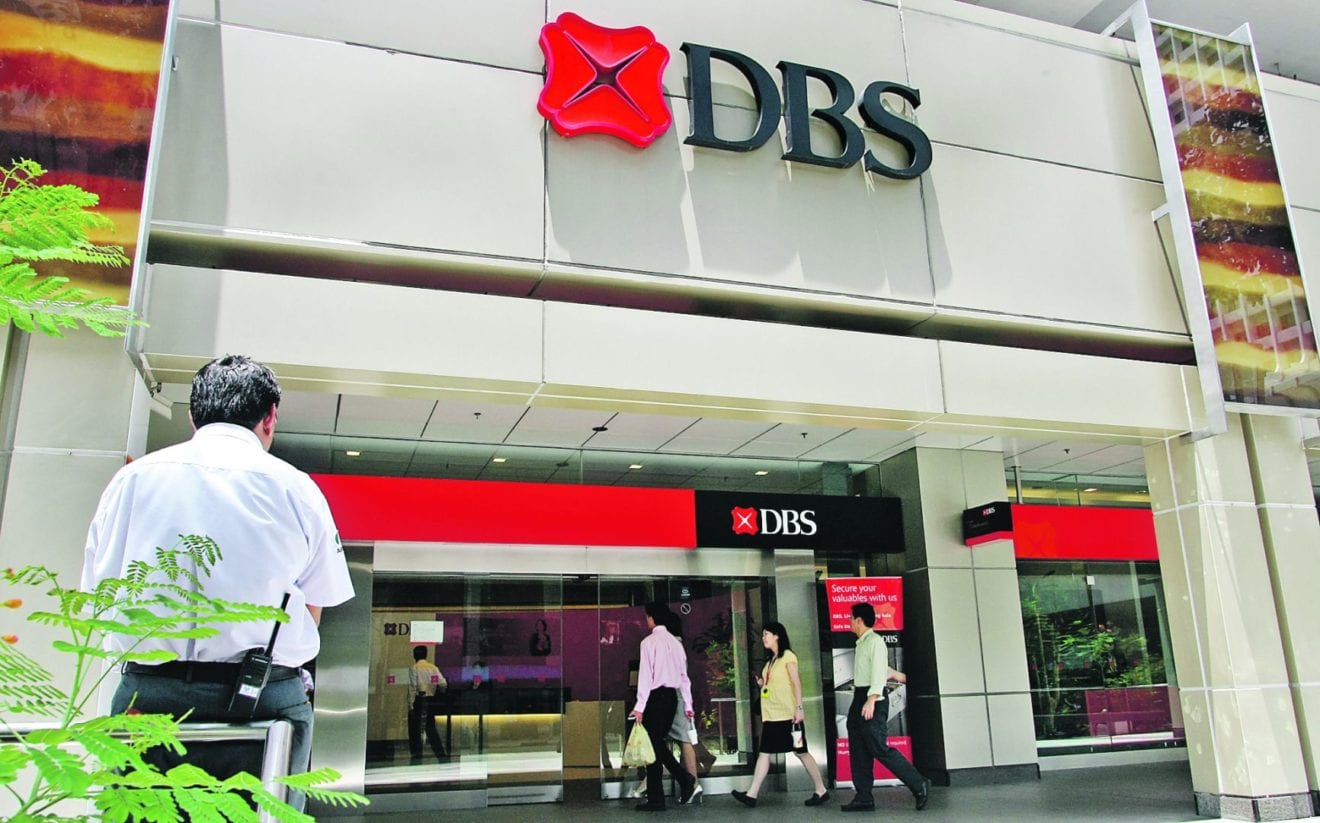
  • DBS Targets More Than $200 Billion AUM by 2023

    DBS Targets More Than $200 Billion AUM by 2023

    The bank’s hopes to grow its wealth business, which currently makes up 20 percent of the group’s total income, by tapping on opportunities in the region.

    DBS hopes to increase its assets under management (AUM) to S$300 billion ($218.04 billion), up from S$234 billion currently, by 2023.

    This target, which translates to a 7–8 percent annual growth rate, outpaces the industry average, but the bank sees several opportunities for it to continue expanding in this sector, Sim S Lim, DBS group head of consumer banking and wealth management said.

    Lim, a 35-year industry veteran, succeded Tan Su Shan – who is now group head of institutional banking – in January 2019. He joined the bank in 2010 as Singapore country head, and was previously the president and CEO of Nikko Citigroup from 2008 to 2009.

    Banks are fighting for a slice of Asia’s growing wealth pie, and a wealth transfer estimated at $2.7 trillion over the next decade and a half.

    Indonesia is closest to a hinterland that we have, and we have plans for Indonesia to grow, Lim said, adding that banks with a clear local presence have an edge over their global counterparts as they can move quickly and easily among the region’s diverse economies, and as such, are well-placed to cater to client needs.

    According to the newspaper, DBS is among the top wealth managers in Asia excluding China, with its AUM in North Asia making up almost half of its asset base.

  • Breaking Down The Biggest Asian Companies

    Breaking Down The Biggest Asian Companies

    Are you aware of the fact that Asia is home to some of the biggest companies in the world? Over the years, Asia has managed to build and attract many successful businessmen and women. These individuals have gone on to create many profitable businesses. There is a good chance that you’ve encountered a few of these businesses at some point. However, you may not have realized that they were Asian. With that being said, you’ll want to read this comprehensive guide and learn about the biggest Asian companies on the planet.

    Alibaba

    First and foremost, you should take a look at Alibaba. Most people have heard of this company. If not, there is a good chance that you know about the company’s founder, Jack Ma. He has become one of the most successful businessmen in the world. Alibaba was founded in early April of 1999. It is more than twenty years old and the company has become immensely successful during the past few years. In fact, it is now traded publicly on the New York Stock Exchange under the ticker BABA. The company is similar to Amazon but they offer many other services.

    Alibaba is one of the biggest companies in the world. At the end of March 2019, it was said that the company had more than 101,000 employees. If you take a look at the latest Australian pokies news, you will find out that most believe Alibaba will be around for many years to come.

    Avenue Supermarts

    Next, you have Avenue Supermarts. You’ve likely never heard of this company. Nevertheless, they’re very successful in India. The company was founded in 2002 by Radhakishan Damani. The company is publicly traded and it currently operates more than 180 stores. As you can tell by the name, the company operates hyper markets. They’ve been around for more than 17 years and they’ve found great success over the years. It is estimated that the company will generate more than 2.7 billion dollars in 2019 with a net income of more than 133 million. The is very impressive. Remember that this company’s stock is traded on the National Stock Market.

    Tencent

    Tencent is a little different. This is an investment holding conglomerate that has found big success in the past few years. The company is currently based out of China. They’ve been around for more than 20 years. The company was founded in mid November of 1998. They’re publicly traded and they are involved in numerous industries. For instance, you should know that Tencent has become the biggest gaming company in the world. They’re considered one of the most valuable technology companies in the world. Plus, they run one of the world’s biggest social media networks.

    As you can already see, the company is involved in a little bit of everything. They are involved in the smartphone, payment system, social media, music, and mobile games market. This is a very diverse company that is going to continue thriving in the future. They currently employ more than 54,000 employees.

    Samsung

    Next, you have Samsung. This company competes directly with Apple and many American consumers will agree that Samsung is better. The company offers a little bit of everything from televisions to smartphones. They’ve had a few problems during the past few years but they’re grown steadily nevertheless. You can guarantee that Samsung is going to be around for many years. They’re very successful all around the world. If you’re not a fan of the Apple iPhone, you should strongly consider making the switch to a Samsung phone. You’ll be glad that you did in the long run.

    Either way, you can guarantee that Samsung is one of the most successful Asian companies ever.

    Toyota

    Finally, you have Toyota. There is a possibility that you’ve owned a Toyota vehicle in the past. If you have, you likely loved the automobile. The company is very popular because they produce high-quality vehicles that will withstand the test of time. Just remember that the company’s vehicles are slightly expensive. Nevertheless, they’ll prove to be well worth it in the long run. Toyota is capable of producing vehicles that are going to be safe and reliable. On top of that, their vehicles are fun to drive too. Be sure to check out their vehicles!

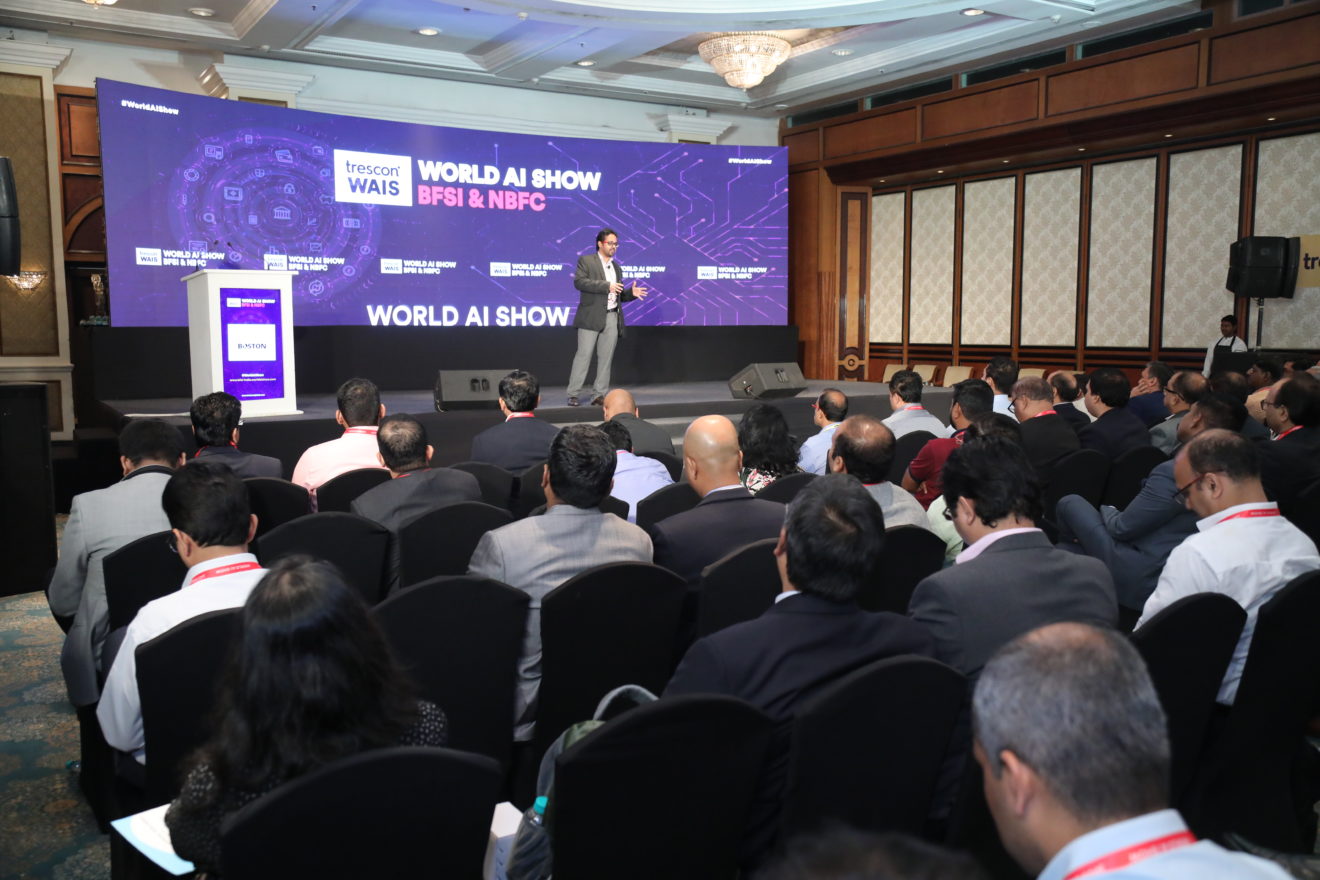
  • AI for India’s BFSI & NBFC Sectors Move Beyond Experimentation

    AI for India’s BFSI & NBFC Sectors Move Beyond Experimentation

    As the global race for Artificial Intelligence (AI) leadership intensifies, India has begun to catch up with countries like United Arab Emirates, South Korea, the United States, Germany, Singapore and Japan in the mainstream adoption of AI-based technologies. The Indian BFSI & NBFC sectors are undergoing a dramatic change with the growing realization of AI’s importance among business leaders and have put them at the forefront of exploring the full enterprise potential of AI use-cases for their businesses.

    The applications of emerging technologies in the banking and non-banking sectors has become a critical topic of discussion today. Given that India is serious about digitization, Trescon hosted its 11th global edition of World AI Show which was a dedicated spin-off of the global AI series that focused on business applications of AI in BFSI and NBFC. The conference was held in Mumbai – ‘Financial Capital of India’ to hear what industry leaders had to say about the progress in AI adoption across India’s BFSI & NBFC sectors. On Friday, Mumbai saw top C-level executives such as Inderjit Sehrawat, Managing Director for Kryon; Vivek Zakarde, Head – Analytics, BI & DWH at Reliance General Insurance Company Limited; Dr. Puneet Kaur Kohli, CTO of Manappuram Finance Limited and Sunit Vakharia, CIO for Bank of Baroda Financial Services Limited among other top speakers who came together to break down real-world industry use-cases, workshops and discussions on adoption challenges of AI & RPA for enterprises.

    The theme for the conference revolved around “Enabling the Use of AI for the Future of Finance“, especially AI’s significant application in areas such as customer experience, automation, fraud and risk management and enterprise digitization growth in the Indian BFSI and NBFC industry.

    Few key high-level takeaways from the conference:

    • A Tech Talk from Amod Kabade, Head SSG (Specialist Solutions Group) at Boston Limited on how the challenge of digital transformation is leading to an explosion in technology opportunities.
    • Inderjit Sehrawat, Managing Director for Kryon gave a tech talk on automation at scale and the right way for organizations to accelerate its digital journey.
    • A comprehensive workshop was conducted by Rajkumar Devulapalli, Head of Professional Services and Support APAC at Spirent Communications on proactive Cybersecurity training which covered the Cyber Range as an important tool to effectively evaluate network elements and train cybersecurity professionals across enterprises and organizations.
    • Ramprakash Ramamoorthy, Product Manager – AI & Machine Learning for ManageEngine which is a division of Zoho Corp, delivered a tech talk on how to build an AI-powered IT infrastructure.
    • Maneesh Jhawar, Founder & CEO of QualityKiosk Technologies; Prateek Kapoor, Director Transformation & Automation COE for Aon and Ankit Goenka, Head of Customer Experience at Bajaj Allianz General Insurance Company Ltd, were part of a panel discussion that highlighted how AI is radically changing customer experience by creating human-centric digital services in the BFSI Sector.
    • Discussions at the conference also centred on how NBFCs can adopt AI into their current digital infrastructure to reduce time-to-decision and boost pro-active risk management.
    • AI’s ability to detect patterns in data to help identify fraudulent claims in the insurance industry.

    World AI Show (BFSI & NBFC) also featured the Big BFSI & NBFC Awards that honoured the top thought-leaders who are bringing about a significant change in their organisations and industries through technology implementation and strategies in applying future technologies.


  • Hong Kong Customs seizes counterfeit sport shoes

    Hong Kong Customs seizes counterfeit sport shoes

    Hong Kong Customs seized about 12 000 pairs of suspected counterfeit sports shoes on Monday, with an estimated market value of about $1 million.

    The fake goods were discovered in a shipping container at the Customs Cargo Examination Compound of the River Trade Terminal in Tuen Mun.

    However, the shoes were not destined for the local market. Through a routine risk-assessment program, Customs officers inspected a 40-foot-long container destined for the Dominican Republic that arrived in Hong Kong from Huangpu in Guangdong. Upon inspection, Customs officers seized the batch of suspected counterfeit sports shoes in the container.

    The counterfeit sports shoes were not clearly branded in the image released by Hong Kong Customs (above).  Investigations are continuing.

    Under the Trade Descriptions Ordinance, any person who imports or exports any goods to which a forged trademark is applied commits an offence. The maximum penalty upon conviction is a fine of $500,000 and imprisonment for five years.

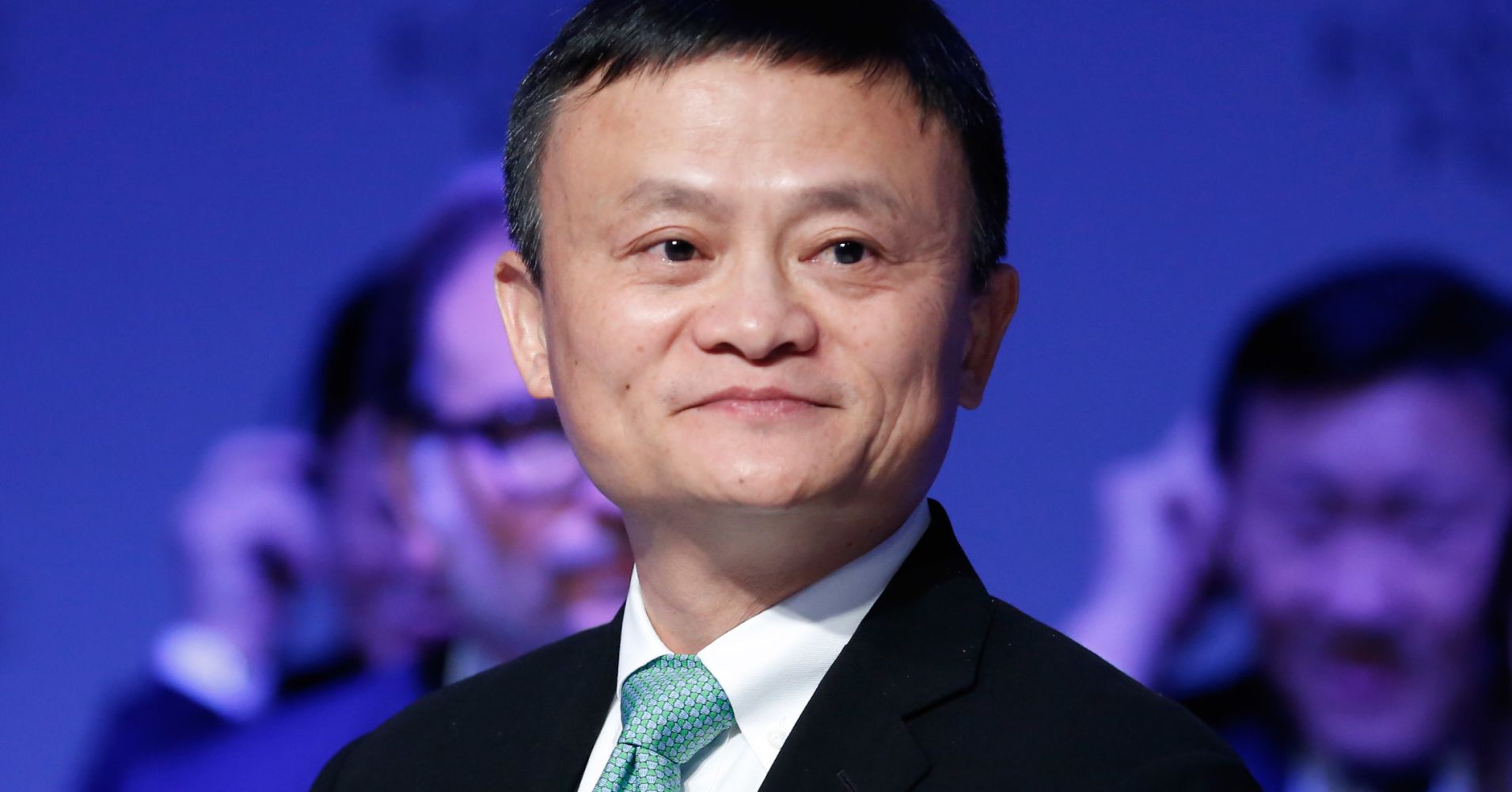
  • Alibaba’s Ma steps down as chairman after reflection

    Alibaba’s Ma steps down as chairman after reflection

    Alibaba Group founder Jack Ma, who helped launch China’s online retailing boom, has stepped down as chairman of the world’s biggest e-commerce company as its fast-changing industry faces uncertainty amid a US-Chinese tariff war.

    Ma, one of China’s wealthiest and best-known entrepreneurs, gave up his post on his 55th birthday as part of a succession announced a year ago.

    He will stay on as a member of the Alibaba Partnership, a 36-member group with the right to nominate a majority of the company’s board of directors.

    Ma, a former English teacher, founded Alibaba in 1999 to connect Chinese exporters to American retailers.

    The company has shifted focus to serving China’s growing consumer market and expanded into online banking, entertainment and cloud computing. Domestic businesses accounted for 66 per cent of its $US16.7 billion in revenue in the quarter ending in June.

    Chinese retailing faces uncertainty amid a tariff war that has raised the cost of US imports.

    Growth in online sales decelerated to 17.8 per cent in the first half of 2019 amid slowing Chinese economic growth, down from 2018’s full-year rate of 23.9 per cent.

    Alibaba says its revenue rose 42 percent over a year earlier in the quarter ending in June to $16.7 billion and profit rose 145 per cent to $US3.1 billion. Still, that was off slightly from 2018’s full-year revenue growth of 51 percent.

    The total amount of goods sold across Alibaba’s e-commerce platforms rose 25 percent last year to $US853 billion. By comparison, the biggest US e-commerce company, Amazon.com Inc., reported total sales of $US277 billion.

    Alibaba’s deputy chairman, Joe Tsai, told reporters in May the company is “on the right side” of issues in US-Chinese trade talks. Tsai said Alibaba stands to benefit from Beijing’s promise to increase imports and a growing consumer market.

    Alibaba was founded at a time when few Chinese were online. As internet use spread, the company expanded into consumer-focused retailing and services. Few Chinese used credit cards, so Alibaba created the Alipay online payments system.

    Ma, known in Chinese as Ma Yun, appears regularly on television. He pokes fun at his own appearance, saying his oversize head and angular features make him look like the alien in director Steven Spielberg’s movie “E.T. The Extraterrestrial.”

    The company’s $US25 billion initial public offering on the New York Stock Exchange in September 2014 was the biggest to date by a Chinese company.

    The Hurun Report, which follows China’s wealth, estimates Ma’s fortune at $US38 billion.

    Ma’s successor as chairman is CEO Daniel Zhang, a former accountant and 12-year veteran of Alibaba.

    Alibaba’s e-commerce business spans platforms including business-to-business Alibaba.com, which links foreign buyers with Chinese suppliers of goods from furniture to medical technology, and Tmall, with online shops for popular brands.

    Ma faced controversy when it disclosed in 2011 that Alibaba transferred control over Alipay to a company he controlled without immediately informing shareholders including Yahoo Inc. and Japan’s Softback.

    Alibaba said the move was required to comply with Chinese regulations, but some financial analysts said the company was paid too little for a valuable asset. The dispute was later resolved by Alibaba, Yahoo and Softbank.

    Corporate governance specialists have questioned the Alibaba Partnership, which gives Ma and a group of executives more control over the company than shareholders.

    Ma has said that ensures Alibaba focuses on long-term development instead of responding to pressure from financial markets.

  • CapitaLand opens new Raffles City mall in Chongqing

    CapitaLand opens new Raffles City mall in Chongqing

    Capitaland has opened a Raffles City mall in Chongqing, China.

    The first component in the 1.12 million sqm megastructure to be opened to the public was the development’s 235,000sqm shopping mall, which launched on September 6 with 95 percent committed occupancy. About 40 per cent of the more than 400 international and local brands are new-to-market brands for the city, flagships or new concept stores.

    Located in Chaotianmen, it is Singapore’s and Capitaland’s single largest development in China at RMB24 billion (US$3.37 billion).

    “The opening of Raffles City Chongqing marks a new milestone in Capitaland’s contribution towards and benefiting from China’s urbanization push,” said Capitaland Group president, China, Lucas Loh.

    “As the ninth Raffles City development to turn operational, it is by far our largest and most complex integrated development. Seven years in the making, Raffles City Chongqing is a megastructure that melds astounding architectural design with sustainable urban planning. The development was purposefully built to spearhead the renewal of the Chaotianmen riverfront district with world-class live-work-play amenities and improved accessibility.”

    “As the representation of Capitaland’s new-gen malls in China, Raffles City Chongqing combines experiential retail concepts with digitalization to excite and engage shoppers,” said Capitaland CEO commercial management, China Chin Phei Chen.

    “Value-added services such as augmented reality navigation, restaurant booking and carpark reservation are supported by the Capitastar app. In addition to curating an attractive tenant mix, we have also created public spaces with regular art and heritage showcases for the public to enjoy, learn and discover.

    “Raffles City Chongqing is at once a showcase of local culture to the world and a beacon of international sophistication in the aspiring global city; in short, a destination for both residents and tourists,” he said.

  • Business conditions deteriorate again in Australia

    Business conditions deteriorate again in Australia

    A closely watched measure of Australian business confidence declined in August as conditions remained sub-par, suggesting momentum in the corporate sector is weakening.

    National Australia Bank’s index of business conditions fell 2.0 points to +1.0 in August, extending a slide from July.

    The survey’s volatile measure of business confidence also declined, easing 3.0 points to +1.0.

    Both measures were “well below” long-run averages, NAB said, adding it would review its outlook for Australian interest rates on Wednesday.

    NAB Group chief economist Alan Oster said that while industries such as mining experienced favourable conditions, as well as elevated employment and capex, conditions in the retail industry remained weak.

    “Transport & utilities and retail are both well below average and the weakest across all industries,” Oster said.

    “Business confidence and our other forward-looking indicators suggest there is unlikely to be an imminent turnaround in business conditions.

    “While conditions are still positive, they have now been below average for some time and point to a significant loss of momentum in private demand.”

    Australia’s $1.95 trillion economy has dodged a recession since the early 1990s but has now hit a soft patch, with sluggish consumer spending and benign wage growth leading to a broader slowdown.

    In the quarter ended June 30, annual economic growth slowed to 1.4 percent, the weakest in a decade, from 1.8 per cent in the previous three months.

    The RBA pre-emptively responded by chopping interest rates in both June and July, taking them to a record low of 1.0 per cent. It has shown willingness to do more if needed.

    The cuts have helped boost home prices and mortgage lending though there are few signs of growth outside of the housing.

    Worryingly, forward-looking indicators in the NAB survey remained subdued in August. Forward orders, the most reliable indicator of domestic demand, fell to -4.0 from -3.0 in July.

    Measures of inflation were also sluggish with labor and retail costs increasing only modestly.

    Despite the slowing inactivity and a pull-back in expansion plans, the employment index rose 2.0 points to +2.0.

  • Fenty Beauty Hong Kong launches at Harvey Nichols

    Fenty Beauty Hong Kong launches at Harvey Nichols

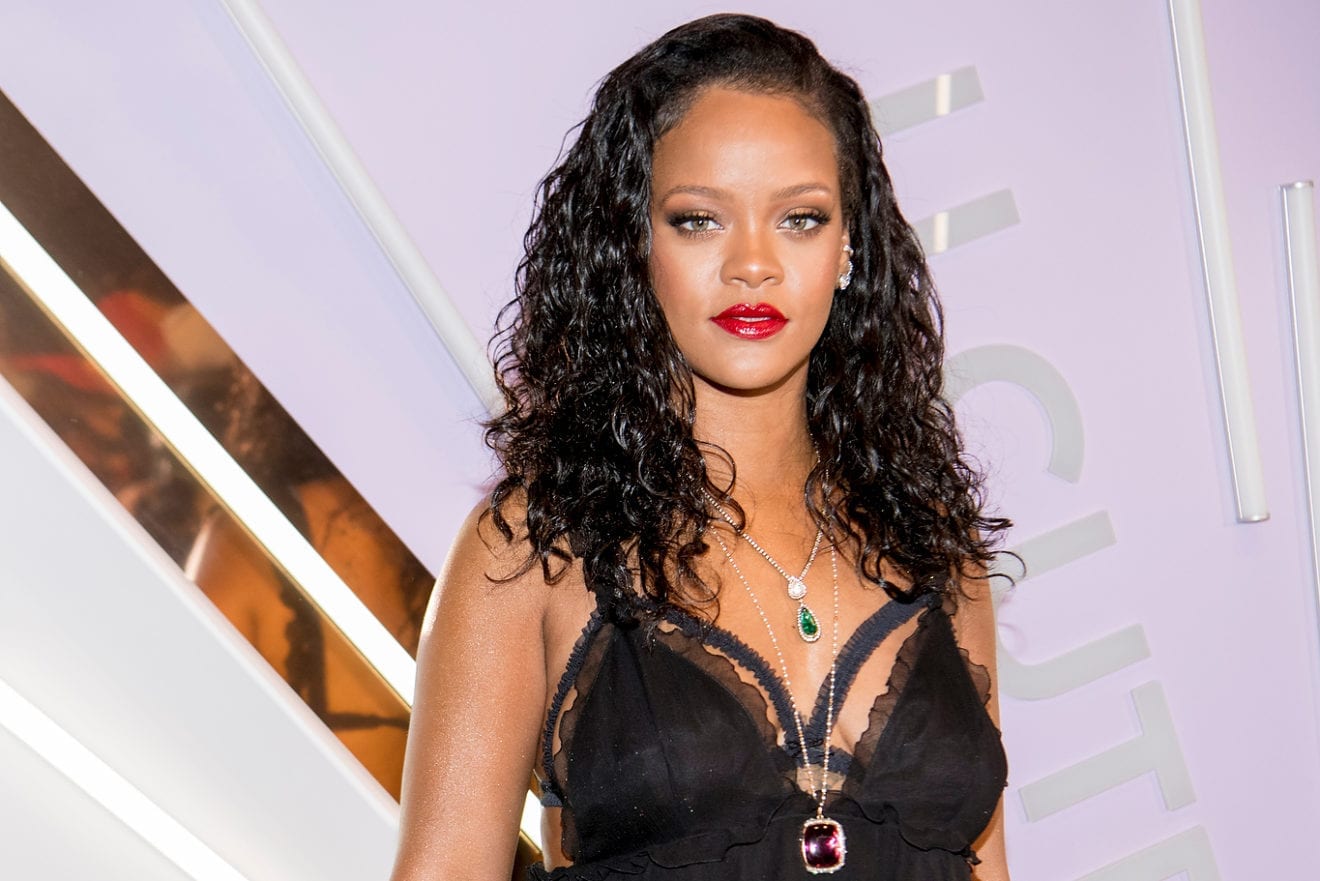
    Singer Rihanna’s Fenty Beauty brand has launched at Harvey Nichols in Hong Kong as its first department store partner in Asia.

    Following the success of its exclusive launch at Harvey Nichols in the UK, the brand went on sale at Harvey Nichols locations Hong Kong – as well as its regional online store – on September 3.

    The brand made its Hong Kong debut at T Galleria by DFS last week.

    Following Rihanna’s mandate of “inclusivity”, Fenty Beauty offers “Beauty for All” artistry-quality products that are consciously inclusive of differing values and beliefs.

    “I created Fenty Beauty because I wanted to make a beauty brand that is inclusive for people everywhere,” said Rihanna. “I want everyone to feel beautiful, recognized and empowered, no matter their ethnicity, culture, skin tone or style.”

  • McDonald’s to buy AI voice-technology company Apprente

    McDonald’s to buy AI voice-technology company Apprente

    Fast-food restaurant giant McDonald’s is underscoring its increasing focus on technology by acquiring AI voice-technology company Apprente.

    The company says the investment will expand its presence in the Bay Area technology sector and allow the company to integrate new teams with advanced technology skillsets into its business.

    Apprente is described as an “early-stage leader” in voice-based conversational technology.

    “The agreement marks another bold step in advancing employee and customer-facing innovations while further strengthening McDonald’s technology capabilities,” the company said in a statement.

    The Apprente team will be the founding member of a new, integrated, internal group within McDonald’s Global Technology team called McD Tech Labs. McDonald’s says it expects to grow its presence in Silicon Valley with the hiring of additional engineers, data scientists and other advanced technology experts to join McD Tech Labs to meet future business needs and support deployment.

    Before signing the deal, McDonald’s extensively trialled Apprente’s solutions in test restaurants, along with evaluating products from other companies in the voice-technology space.

    Apprente was founded in 2017 in Mountain View, California, to create voice-based platforms for complex, multilingual, multi-accent and multi-item conversational ordering.

    “In McDonald’s restaurants, this technology is expected to allow for faster, simpler and more accurate order taking at the Drive Thru with future potential to incorporate into mobile ordering and kiosks,” the company said.

    “Building our technology infrastructure and digital capabilities are fundamental to our Velocity Growth Plan and enable us to meet rising expectations from our customers, while making it simpler and even more enjoyable for crew members to serve guests,” said Steve Easterbrook, president and CEO at McDonald’s Corporation.

    “Apprente’s gifted team, and the technology they have developed, will form McD Tech Labs, a new group integrated in our global technology team that will take our culture of innovation one step further.”

    Dr Itamar Arel, co-founder of Apprente and VP of McD Tech Labs, said it was quite clear from various engagements that McDonald’s is leading the industry with technology.

    “Apprente was borne out of an opportunity to use technology to solve challenging real-world problems and we’re thrilled to now apply this to creating personalised experiences for customers and crew.”

    Previously, McDonald’s acquired Dynamic Yield, a leader in personalisation and decision-logic technology, which is now deployed in more than 8000 US restaurants and will be integrated into nearly all drive-thru restaurants in the US and Australia by the end of this year. McDonald’s will use the decision technology to provide a more personalised customer experience by varying outdoor digital Drive Thru menu displays to show food based on time of day, weather, current restaurant traffic and trending menu items. The decision technology can also instantly suggest and display additional items to a customer’s order based on their current selections.

    Earlier this year, McDonald’s also invested in Plexure, a mobile app vendor, to further advance the development of McDonald’s Global Mobile App.

  • Thailand’s MK Group buys into seafood restaurant chain

    Thailand’s MK Group buys into seafood restaurant chain

    Thailand’s MK Restaurant Group will purchase a 65 per cent shareholding in the Lam Charoen Seafood chain.

    The 40-year-old restaurant brand, which has 26 branches across Thailand, will sell for THB2.06 billion (US$67.13 million), according to an announcement posted to the Thai stock exchange last Friday.

    The acquisition, which will most likely close by December, will take place via MK Restaurant Group subsidiary Catapult, funded by working capital.

    MK Restaurant Group currently operates more than 400 locations under several brand names including MK, Yayoi, Miyazaki, Hakata, Bizzy Box, Le Petit and MK Harvest.

  • MavCom fines AirAsia, AirAsia X RM200,000 each

    MavCom fines AirAsia, AirAsia X RM200,000 each

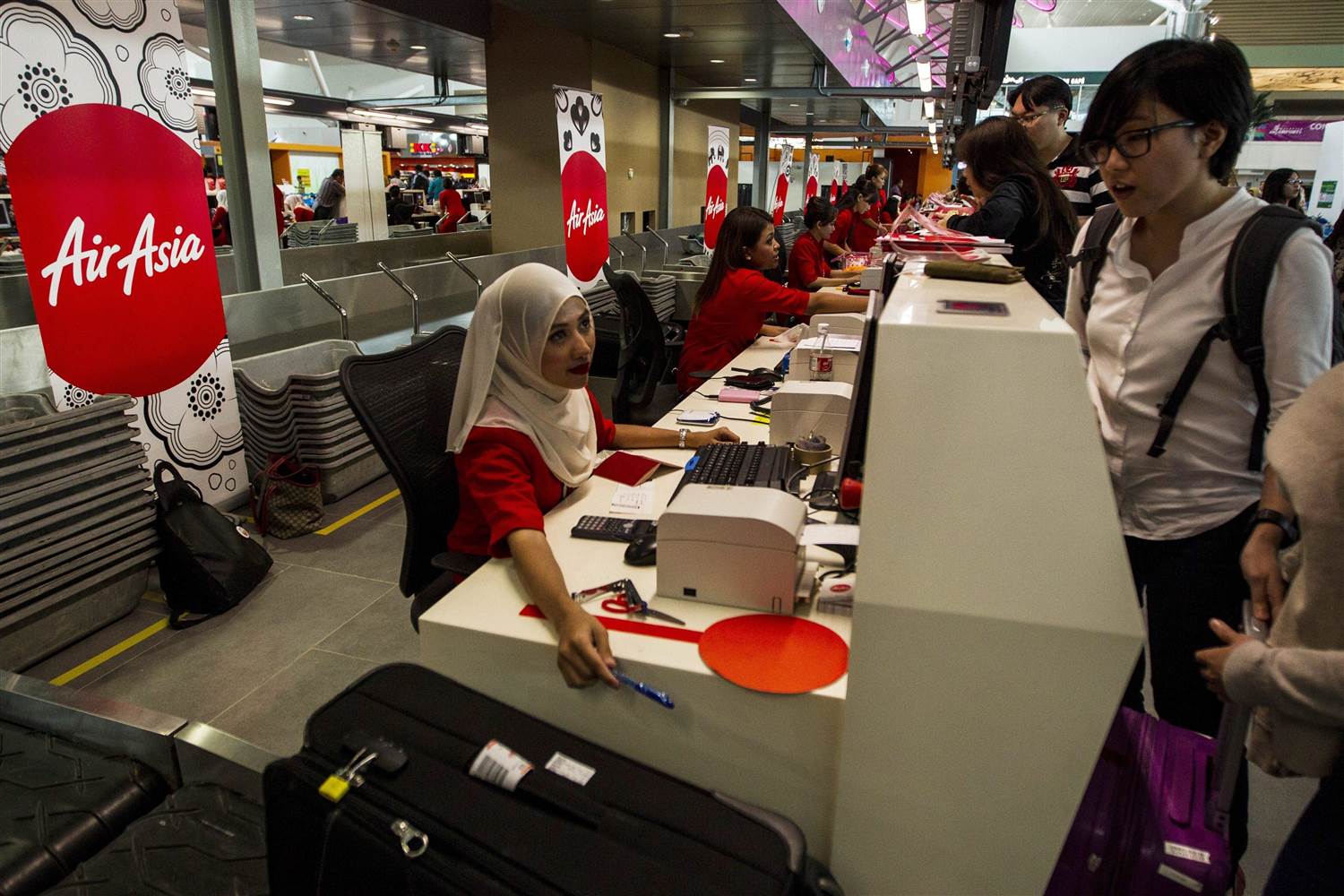
    RM200,000 each for charging credit card, debit card and online banking processing fees separate from their base fares.

    MavCom said in a statement on Tuesday the fees charged by the airlines contravened the Malaysian Aviation Consumer Protection Code 2016 (MACPC). It said MACPC came into effect on July 1,2016, and was published in line with MavCom’s aim to protect the rights and interests of consumers.

    MavCom said as the first consumer protection code specifically intended for Malaysia’s aviation industry, the MACPC ultimately provides for more transparency on aviation service providers’ obligations towards consumers and clearer guidance for consumers on their rights and interests as air travellers.

    MavCom said from June 1,2019, it had been monitoring for compliance with the new provisions of the MACPC.

    “AirAsia and AirAsia X have been found to contravene subparagraph 3(2) of the MACPC which requires full disclosure of the final price of the airfare.

    “As part of the due process to determine whether a contravention has been committed, MavCom issued show-cause letters to both airlines and afforded opportunities to the airlines to provide factors to mitigate the quantum of the penalties.

    MavCom said that Section 69(4) of the Malaysian Aviation Commission Act 2015 [Act 771] together with paragraph 22 of the MACPC empowered it to impose a financial penalty for a non-compliance of the MACPC, an amount not exceeding RM200,000 and in the case of a second or subsequent non-compliance, an amount ten times of the financial penalty which was imposed for the first non-compliance.

    “Upon thorough evaluation and taking into consideration the written representations by the airlines, the commission has imposed on AirAsia and AirAsia X a penalty of RM200,000 each for the first violation of subparagraph 3(2) of the MACPC, for the period commencing June 1,2019 to Aug 9,2019, ” it said.

  • Apple unveils cheaper iPhones to combat market decline

    Apple unveils cheaper iPhones to combat market decline

    Apple this week unveiled a cheaper generation of smartphones after several consecutive quarters of declining iPhone sales.

    So far this fiscal year, iPhone sales have fallen 15 per cent in Apple’s first quarter, a further 17 per cent in its second quarter and 12 per cent in its third quarter.

    The cheapest version of the new iPhone 11 model starts at $1199 – below the retail price of its predecessor, the iPhone X, which at full price sells for almost $1500. Customers can trade in their old model phone at Apple stores to receive a discounted price of $849.

    Apple is also launching a ‘pro’ version of the phone with extra features, which starts at $1749, or $1899 for the ‘pro max’ version with a larger screen.

    While the pro and pro max phones are geared toward high-end buyers, the comparably cheap iPhone 11 could go some way toward converting customers who have postponed purchasing a new phone for the past year or two.

    Australian retailers have been feeling the sting of falling consumer spending, as shoppers become more selective about how they spend their money, and are scrutinising high-cost, low-margin products that fail to move.

    Myer stopped selling Apple phones in May as part of its shift towards profitable sales.

    “Myer has made it clear that it will not chase unprofitable sales, and has made this decision as we could not reach acceptable commercial terms that were in the best interest of the company and shareholders,” a Myer spokesman told SMH at the time.

    “This decision is also about ensuring space in our stores is utilised in the most productive and effective way for the company.”

    Apple earlier this year said slowing sales of its flagship phones were largely due to economic weakness in some emerging markets, noticeably Greater China.

    According to Apple chief executive Tim Cook, while the retailer anticipated challenges, it didn’t foresee the magnitude of economic deceleration seen in these markets, and experienced lesser sales even in larger markets.

    “While Greater China and other emerging markets accounted for the vast majority of the year-over-year iPhone revenue decline, in some developed markets iPhone upgrades were also not as strong as we thought they we would be,” Cook said.

    “While macroeconomic challenges in some markets were a key contributor to this trend, we believe there are other factors broadly impacting our iPhone performance, including consumers adapting to a world with fewer carrier subsidies, US dollar strength-related price increases, and some customers taking advantage of significantly reduced pricing for iPhone battery replacements.”

    Apple also announced revisions of its iPad and Apple Watch products, alongside the announcement that its TV streaming service, Apple TV+, will be available November 1st.

    Apple’s stock price rose 1.1 per cent after the announcements to US$216.7 per share.