Author: Mei Ling Tan

  • 5 Star Plus designs concept store for Sinsian Black Jelly

    5 Star Plus designs concept store for Sinsian Black Jelly

    Sinsian Black Jelly is making a play in China’s growing health food industry from its Liangmaqiao store in Beijing, which opened earlier this year.

    The brand plans to open 10 further stores in the coming year so that more of China can experience the dessert.

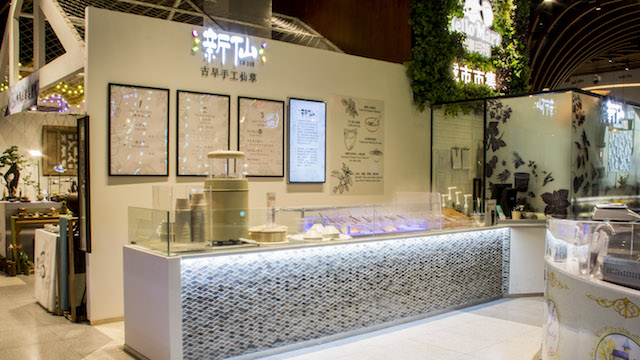
    The Sinsian Black Jelly store’s design by 5 Star Plus Retail Design reflects the product geometrically via tiles intended to resemble the squares of the jelly after processing, offset by white tones to symbolise the ingredients.

    In expressing the product through a minimalist decor and style, the designer’s goal is to allow customers to recall the product more easily. The lighting sources and glass walls convey warmth and a coordinated environment, while the transparent design elements place a focus on the grass jelly by putting the preparation of the desserts on display, encouraging confidence in the product.

    Customers in store can watch as fresh ingredients are put into their jellies using toppings of their choice.

    The jelly is made from a plant known as Mesona chinensis, which grows largely in East Asia. It is preserved without pigments or preservatives and prepared by allowing the leaves to dry before boiling cooling before being cut into cubes.

    Sinsian Black Jelly is making a play in China’s growing health food industry from its Liangmaqiao store in Beijing, which opened earlier this year.

    The brand plans to open 10 further stores in the coming year so that more of China can experience the dessert.

    The Sinsian Black Jelly store’s design by 5 Star Plus Retail Design reflects the product geometrically via tiles intended to resemble the squares of the jelly after processing, offset by white tones to symbolize the ingredients.

    In expressing the product through a minimalist decor and style, the designer’s goal is to allow customers to recall the product more easily. The lighting sources and glass walls convey warmth and a coordinated environment, while the transparent design elements place a focus on the grass jelly by putting the preparation of the desserts on display, encouraging confidence in the product.

    Customers in store can watch as fresh ingredients are put into their jellies using toppings of their choice.

    The jelly is made from a plant known as Mesona chinensis, which grows largely in East Asia. It is preserved without pigments or preservatives and prepared by allowing the leaves to dry before boiling cooling before being cut into cubes.

  • Shapeshifting smartphone cameras may be the next big thing

    Shapeshifting smartphone cameras may be the next big thing

    Over the past couple of years, we’ve been talking about how hardware innovation in smartphone cameras has taken a back seat in favor of new software developments. Despite small camera sensor sizes, limited by the slim profiles of modern phones and ever-increasing battery capacities, smartphone cameras have been able to deliver miraculously good results, almost exclusively thanks to improvements in how raw image and video dta is processed by software.

    However, during this time of amazing software developments, companies like Huawei kept pushing camera hardware innovations forward, albeit at a slower pace, by introducing larger sensors and impressive optical zoom solutions. In comparison, the likes of Samsung and Apple, who are considered leaders in their own market segments, have seemingly fallen behind in terms of bringing new camera innovations to the table. Recently, an infographic started doing rounds online, comparing camera sensors in Samsung and Huawei phones over the past couple of years. As you can see, while the sensors in Samsung phones have remained the same size since the release of the Galaxy S7 in 2016, Huawei has been upping its camera game the whole time.

    And though Samsung may seem like it’s got quite comfortable in its leading position in the premium Android market, hence less willing to introduce drastic new hardware innovations, next year’s Samsung flagship models may actually usher in a radical new camera technology that could make smartphone cameras even more versatile, with quicker focus, and even smaller optical parts.

    Samsung has been working with a company called Varioptic, since around 2005, on a liquid lens camera solution for smartphones. Actually, Varioptic is the company that created this type of lens way back in 2002, but Samsung was evidently interested in implementing it in a smartphone 14 years ago.

    Digging through news and press-releases from 2005, I stumbled across many reports that Samsung wanted to use a liquid lens to create a phone camera with optical zoom capabilities. At that time, motorized solutions were too big and too expensive for what Samsung wanted to achieve in mobile device, so Varioptic’s liquid lens—which had no moving parts, and was small and very durable—seemed like the perfect vessel to carry out the company’s vision.

    Something went wrong, however—or it must have—because, according to an official press-release from that time, Samsung phones with liquid lens cameras were supposed to be “commercially available by the last quarter of [2005].”

    But the technology wasn’t just written off. On the contrary. In 2017, Varioptic became a part of Corning, the maker of your phone’s Gorilla Glass, through an acquisition that included Varioptic and Invenios technologies for packaging and stabilizing liquid lenses. Coincidentally, Samsung has a strategic partnership with Corning.

    Recent “leaks” about the Galaxy S11 mentioned that Samsung’s next S-series flagship will bring something that’s “never been seen before” in relation to the camera. Now, this may very well be in part your usual leaker mumbo-jumbo get-on-the-hype-train-thing, but considering Samsung’s past relations with Varioptics and its current partnership with Corning, there may be something in the pipeline relating to liquid lenses on smartphones.

    Liquid lens showcase by Corning and Varioptic from 2018. This footage was slowed down thousands of times. Liquid lenses are capable of changing their shape on the order of milliseconds

    Traditional camera lenses are made from glass, while liquid lenses are, well… liquid. To be precise, they are composed of an optical liquid that is capable of changing its shape at a very rapid pace. The focal length of a glass lens is dependent on the material it’s made of, and the radius of its curvature. The same holds true for liquid lenses, though they are capable of altering the radius of their curvature, thus changing their focal length at a whim. This shape-shifting is controlled electronically and can occur extremely fast. As in, milliseconds fast.

    Imaging lenses are usually comprised of multiple optical elements because a single optical lens can rarely provide sufficient resolving power. For this same reason, using a liquid lens by itself is not likely to be done on a smartphone. However, by introducing a liquid lens to multi-element lens design, the speed and flexibility of the camera can be greatly improved. Having the ability to focus both up close and to optical infinity in milliseconds makes integrating liquid lenses an ideal choice for applications that require focusing at multiple distances where the objects are different sizes or are at different distances away from the lens.

    And herein lies the “problem” that may have deterred Samsung from using liquid lenses back in 2005. On their own, liquid lenses may be very compact and extremely quick, but they have nowhere near the imaging performance of traditional, multi-element lenses. Combining the two can, potentially, lead to some interesting developments, but 14 years ago, this wasn’t enough of an incentive. In 2020, however, the time may be ripe for the marriage between liquid and glass in smartphone cameras.

  • Apple’s taking a conservative approach to 2019 iPhone production orders

    Apple’s taking a conservative approach to 2019 iPhone production orders

    The iPhone 11 series is just one week away and analysts from Cowen and Rosenblatt Securities believe Apple is adopting a pretty conservative approach this year when it comes to orders.

    The overall number of units ordered this year from Apple’s assembly partners isn’t thought to be much higher than what was requested twelve months earlier. Specifically, Cowen’s source suggests Apple is planning to manufacture a total of 65 million units for the fourth quarter of 2019 which is considered “flat” year-over-year. This figure consists of 47 million iPhone 11 units and 18 million combined units of older models such as the iPhone XS and iPhone 8.
    Looking at the entire second half of 2019 in terms of manufacturing volume, it’s believed Apple has ordered 79 million iPhone 11 units which is actually down 7% from the 85 million iPhone XS & XR units it ordered last year. Cowen believes the lower production rate is an attempt to better handle excess inventories as Apple heads into 2020.
    From what can be gathered, Apple’s biggest focus right now in terms of production seems to be successfully serving the North American market before mid-December when tariffs on Chinese imports are set to be applied. According to Rosenblatt, the California-based company is yet to make any changes to iPhone 11 Pro and iPhone 11 Pro Max manufacturing levels because it’s “already been aggressive enough to build inventory for the North American market.” However, Apple reportedly sped up production for the iPhone 11 (R) in August because of anticipated higher sales.
    Once December passes both new and old iPhone models imported from China will automatically be subject to the new 15% import tariff. The impact of this should be split between Apple and its supply chain partners although the “rapid depreciation” of China’s currency that’s gradually lowering manufacturing costs should help offset the added cost for Apple slightly. Nevertheless, it’s still expected to impact the company’s bottom line and may result in weaker Chinese iPhone sales as local customers retaliate.
    Consumers in the US aren’t presently expected to see any price increases but the threat certainly exists. This could lead to a sudden spike in demand by consumers attempting to avoid the tariffs which may result in a “stronger than seasonally normal” quarter for Apple, according to Rosenblatt.
    The iPhone 11 (R), iPhone 11 Pro, and iPhone 11 Pro Max or whatever Apple chooses to call them will all be announced next Tuesday, September 10. Last year Apple opted for a staggered release wherein the iPhone XS Max series arrived in September and the cheaper iPhone XR followed in October but this year all smartphones are expected to launch simultaneously on Friday, September 20. To ensure an early delivery, Apple should open up pre-orders a week earlier on Friday, September 13.
    When it comes to pricing the 2019 iPhone lineup is rumored to be no different to last year’s. The cheaper iPhone 11 will apparently stick to the $749 price tag while the premium iPhone 11 Pro looks set to land at $999. The iPhone XS Max’s replacement, on the other hand, should retail at $1,099. The standard models should feature 128GB of storage although 256GB and 512GB variants that retail at higher prices are to be expected too.
    Finally, in regards to colors, the iPhone 11 will reportedly be sold in black, white, red, yellow, green, and lavender. The iPhone 11 Pro and Pro Max, on the other hand, may launch in Gold, Space Gray, Silver, and a new dark green shade.
  • Kerry Logistics Records a 194% Surge in Profit

    Kerry Logistics Records a 194% Surge in Profit

    Kerry Logistics Network Limited (‘Kerry Logistics’ or together with its subsidiaries, the ‘Group’ today announced the Group’s interim results for the six months ended 30 June 2019.

    The Group’s Financial Highlights

    ·      Turnover increased by 13% to HK$19,810 million (2018 1H: HK$17,461 million)

    ·      Core operating profit increased by 9% to HK$1,330 million (2018 1H: HK$1,216 million)

    ·      Core net profit dropped slightly by 4% to HK$669 million (2018 1H: HK$700 million)

    ·      Profit attributable to the Shareholders, including the gain from disposal of two warehouses in Hong Kong of HK$1,958 million, increased by 194% to HK$2,790 million (2018 1H: HK$948 million)

    ·      Integrated Logistics (‘IL’) business recorded a segment profit of HK$1,162 million (2018 1H: HK$1,107 million) and International Freight Forwarding (‘IFF’) business recorded HK$288 million (2018 1H: HK$235 million), which represent an increase of 5% and 22%, respectively

    ·      Special dividend of 35 HK cents per Share was paid on Tuesday, 23 July 2019. Interim dividend of 9 HK cents per Share, to be payable on Friday, 27 September 2019

    William MA, Group Managing Director of Kerry Logistics, said, “Global economic growth has markedly slowed down in 2019 1H, with weakened trade and manufacturing. The ongoing international trade disputes and unresolved negotiations have created further adverse conditions and accelerated changes in the global supply chains. Rising political and social turmoil in Hong Kong added pressure to the already softening economy. In view of the slower world economy, the Group continued its efforts in strengthening its service capabilities, expanding its network coverage and building its business scale in order to give itself a competitive advantage in adapting to the changing global logistics landscape.”

    IL Profit Rose

    Buoyed by the positive performance of its Hong Kong business and continued expansion in Taiwan, coupled with the steady growth of its operation in Asia, the Group’s IL division recorded a moderate increase in segment profit, which accounted for 80% of the Group’s total segment profit in 2019 1H

    In Hong Kong, supported by new customer wins across various industries and business growth of some of the key accounts in the fashion and food and beverage industries, the segment profit of the logistics operations remained in an upward trend by rising 18% in 2019 1H.

    In Mainland China, benefitting from shifting the focus to multiple higher-growth verticals including pharmaceutical, imported food and beverage, and automotive parts to minimize impact from global trade volatility, the segment profit of the Group’s IL business turned around in 2019 1H.

    In Taiwan, driven by Kerry Pharma and the newly acquired Science Park Logistics, the IL profit grew by 11% in 2019 1H. Kerry Pharma, as the sole certified pharmaceutical logistics provider in Taiwan, has continued to expand in the niche market. The acquisition of Science Park Logistics in January 2019 strengthened the Group’s capability in serving high-tech customers.

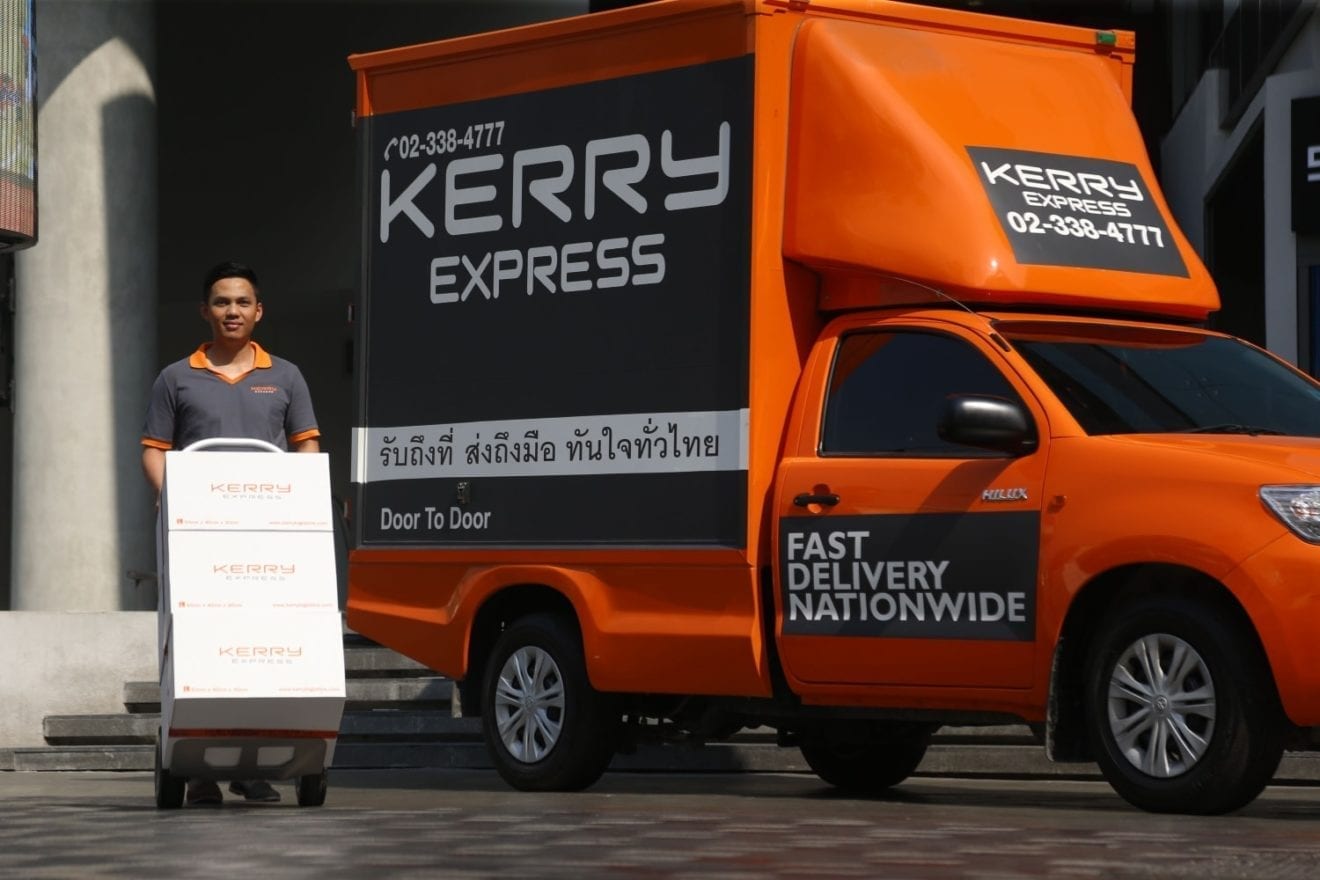
    In Asia, the growth momentum of the Group’s business moderated in 2019 1H. While Kerry Express Thailand continued to expand its service coverage and business scale across Thailand, the profit growth was slower. The performance of the Thailand operation remained robust. Kerry Express Thailand’s daily delivery quantity has grown to more than 1 million parcels, and the number of service points has doubled (compared to 2018 Q4) to 10,000 locations. Segment profit in Asia increased by 7% during the period. The increment was only moderate as the Group is still financing the Kerry Express operations in Malaysia, Vietnam and Indonesia, which incurred an aggregated loss of approximately HK$40 million during the period.

    IFF Volume Swelled

    Riding on the increased trade from Mainland China to other Southeast Asian countries and within Asia, the IFF division achieved a 22% growth in segment profit, which contributed 20% to the Group’s total segment profit in 2019 1H.

    Facility Portfolio Enhanced

    In Mainland China, the logistics centre in Wuhan was completed in 2019 Q2. In Taiwan, the 154,000-sq-ft transit hub in Xinshi District commenced operation in 2019 Q2, and the 430,000-sq-ft logistics centre in Guanyin is expected to complete in 2019 Q4. In Thailand, construction of Phase three of the Kerry Bangna Logistics Centre began in 2018 Q4, and is expected to complete in 2020 Q1.

    Asset Monetised

    In June 2019, the disposal of the Group’s warehouses in Chai Wan and Shatin to a subsidiary of Kerry Properties Limited was completed. The total gain of the disposal was approximately HK$2 billion. The Group will continue to actively consider opportunities to unlock the value of its assets on the balance sheet, which will provide capital for strategic investments and ongoing expansion, and crystallise value for its shareholders.

    Softening Asia Growth

    Recent events in Hong Kong are creating unfavourable conditions for the Group’s business in 2019 2H. However, the Group believes that the stronger results elsewhere in Asia should be able to offset the weak performance in Hong Kong. In particular, Taiwan will remain one of the growth drivers in Asia in 2019 2H.

    Enriching Business Mix

    Following the extension of its business into new verticals such as coffee trading and distribution, and the expansion of its service in pharmaceutical and food-related cold chain to tap into emerging business segments, the Group will keep on diversifying its business capabilities in local markets to position itself for growth opportunities in various sectors.

    Seizing E-Commerce Growth

    E-commerce has increasingly gained prevalence as a mode of consumption. In view of the strong growth impetus in cross-border e-commerce, in particular the exports from Mainland China and the intra-Asia e-commerce trade, the Group will pursue further strategic setups that will optimally deploy its resources to seize the e-commerce growth potential in the region.

    Pursuing Asset-Lighter Model

    Taking into account the positive profit growth and expansion potential in the IFF division, the Group will continue to focus on expanding its less asset-heavy IFF business both organically and through mergers and acquisitions.

    William Ma concluded, “Global economic growth is expected to remain weak in 2020, as policy uncertainties and geopolitical tensions continue to cloud the trade environment. The current political and social disquiet in Hong Kong, which is the Group’s key market, is expected to adversely impact the Group’s performance in 2019 2H. Nevertheless, the Group is in a resilient position to withstand difficult market conditions, sustained by its expanding global network and diverse range of businesses. Taking into consideration the challenging market outlook, the Group will remain watchful and keep reinforcing its foundation through enhancing its service capabilities, expanding its network presence and enlarging its business scale.”

  • Lucasfilm to launch LEGO Star Wars Battles mobile game

    Lucasfilm to launch LEGO Star Wars Battles mobile game

    To be successful, you’ll have to collect and upgrade characters and vehicles, build LEGO towers to combat, defend and capture territory, as well as create both light and dark side armies.

    LEGO Star Wars Battles includes heroes and villains that have never been featured in any other LEG Star Wars game, such as Rey and Kylo Ren, the First Order’s BB-9E, and a Duros rebel trooper inspired by Star Wars Battlefront.

    There will be more than 40 units featuring characters, vehicles, and troops from Star Wars films and animation that can be collected in LEGO Star Wars Battles. Now, the bad news is the game won’t be available any time soon, as Lucasfilm announced LEGO Star Wars Battles will be available in 2020 on the App Store and Google Play, so we’ll just have to wait at six months.

  • Japanese Automakers’ Sales Fall In South Korea Amid Consumer Boycott

    Japanese Automakers’ Sales Fall In South Korea Amid Consumer Boycott

    Japanese automakers posted sharper sales falls in South Korea in August, industry data showed on Wednesday, hit by a consumer boycott of Japanese vehicles amid a worsening diplomatic row between the countries.

    Toyota Motor Corp and other Japanese carmakers saw South Korean sales tumble 57% to 1,398 vehicles in August from a year earlier, steeper than the 17% fall in July.

    Japan’s decision in July to tighten controls on exports of materials that South Korea uses to make semiconductors and display screens has prompted a consumer backlash in Korea, with consumers boycotting Japanese products such as beer, clothes, vehicles and tours to the neighboring country.

    Relations between the two U.S. allies had already soured over South Korean demands for Japanese compensation for South Korean forced laborers during World War Two.

    Toyota’s South Korean sales fell 59% to 542 in August from a year earlier, while Honda Motor’s sales tumbled 81% to 138.

    Toyota’s Lexus was the top-selling Japanese brand in South Korea, with sales reaching 603 vehicles in August, up 7.7% from year earlier, but down 39% from July.

  • Ford Finds Buyer For Brazil Plant, But New Owner Could Cut 1,300 Jobs

    Ford Finds Buyer For Brazil Plant, But New Owner Could Cut 1,300 Jobs

    Brazilian automaker CAOA reached an initial agreement to buy Ford Motor Co’s plant in Sao Bernardo do Campo, the companies said on Tuesday, but CAOA could slash 1,300 jobs, according to the union representing the plant’s workers.

    Ford announced in February that it would shut down the plant, its oldest in Brazil, which employs some 3,000 workers, as part of a global restructuring and a push to exit the heavy truck business.

    CAOA and Ford have been negotiating the purchase since late February, Reuters reported at the time, when Sao Paulo state Governor Joao Doria rushed to find a buyer for the plant in a push to keep jobs in the city.

    Wagner Santana, president of the union that represents Ford’s workers, told reporters that in conversations with CAOA, the Brazilian automaker said it would initially retain only some 800 workers and that 1,300 would be let go, with the remainder being kept by Ford.

    Doria has defended Sao Paulo as a manufacturing hub at a time when the auto industry turned to other Brazilian states that were offering aggressive tax incentives. He has introduced a tax incentive of his own.

    At the news conference, Doria said a decision on how many jobs will be kept can only be made once Ford and CAOA close the sale, which is set to go through a 45-day due diligence process.

    “Preserve all jobs, that’s the fundamental condition for a contribution from the state,” Doria said, in reference to potential tax benefits.

    Santana said CAOA plans to pay those it hires up to 80% of their current Ford salaries, noting that is still much more than salaries paid in other states.

    A CAOA spokesperson declined to comment.

    “The objective is to make the factory profitable and productive, so it generates employment and riches,” said Carlos Alberto Oliveira Andrade, CAOA’s president and founder, whose initials make up the company name.

    Brazil’s large domestic market and protectionist economy has long attracted the world’s biggest automakers to set up shop here, and CAOA is the rare carmaker that is actually domestically owned. It has struck deals to make cars for Korea’s Hyundai and co-owns China’s Chery operation in Brazil, whose cars are branded as CAOA Chery.

    Ford opened the plant in 1967, and it is the company’s oldest in the country. It was primarily used to make heavy trucks, as well as the compact Ford Fiesta, a sales laggard. Ford is undergoing a global restructuring and has said it would focus on a much newer plant in the Northeastern state of Bahia.

  • Lamborghini Sian Revealed Ahead Of The 2019 Frankfurt Motor Show

    Lamborghini Sian Revealed Ahead Of The 2019 Frankfurt Motor Show

    Lamborghini has already revealed the details of what will be there at the upcoming 2019 Frankfurt Motor Show. It’s the all-new Lamborghini Sian which will be the first hybrid supercar that the brand has ever done. The SVJ sourced 6.5-litre, Naturally Aspirated, V12 engine is coupled with a 48-volt mild-hybrid system which adds 33 bhp more taking the total maximum output to a staggering 808 bhp at 8500 rpm, enough to clock triple digit speeds in under 2.8 seconds. It is the most powerful production Lamborghini ever built and can reach a top speed of 350 kmph.

    The Sian is anything but a fancy supercar. It’s been commissioned to perform and not just to impress with all that it packs in. The most interesting of all is the first ever supercapacitor system debuted in the Aventador and Sian has built on it immensely. It’s three times more powerful than a similarly sized battery which also weighs just 34 kg offering an impressive weight-to-power ratio of 1.0 kg / bhp. The braking system also works to completely charge the supercapacitor every time it brakes. The stored energy provides an instant boost up to 130 kmph making it 10 percent faster. The electric motor disconnects past 130 kmph and the powertrain completely takes over. Compared to the Aventador SVJ which currently sits on Lamborghini’s throne, the Sian is 0.2 seconds faster between 30 to 60 kmph and in higher gears, the traction force is increase by up to 20 percent making it 1.2 seconds faster between 70 to 120 kmph.

    Lamborghinis have always been head turners as far as looks are concerned and going by these sketches, the Sian takes inspiration from the Countach and has the bold and sharp design elements intact as well which is typical of a Lamborghini. The air inlets sport the iconic Lamborghini Y shaped curtains and the hood is sculpted with diagonal lines. The lower section of the front integrates a carbon fibre splitter flanked by Y shaped headlights which come together to give a very aggressive stance.

    Lamborghini is planning to make just 63 units of the Sian in honour of the foundation year of Lamborghini and it will be showcased at the upcoming Frankfurt Motor Show.

  • Nearly 70 Percent of Singaporeans Registered to National E-Payment System

    Nearly 70 Percent of Singaporeans Registered to National E-Payment System

    Singapore’s national e-payment system, «PayNow», currently boasts a nearly 70 percent penetration of the city-state’s population with monthly volumes exceeding S$1 billion, an MAS board member recently shared with parliament.

    Ong Ye Kung, minister of education and Monetary Authority of Singapore board member noted that take-up was «encouraging» with more than 65 percent of Singaporeans aged between 20 to 75 years old having already registered, representing 2.8 million accounts.

    Transaction volumes have also increased significantly. Two years ago, PayNow registered 150,000 transactions totaling S$24 million ($17 million) and in July this year, the figures rose to over 5 million and S$1 billion ($720 million), respectively.

    Despite PayNow’s success, Ong noted that Singapore made a conscious decision to keep the playing field open for all.

    «We made a deliberate decision not to have one player dominate the landscape and grow up very quickly,» he said, citing other channels like Apple or Google Pay.

    «Instead, we put in place the backbone infrastructure so that multiple providers can compete and innovate to increase consumer choice while encouraging interoperability. As a result, Singaporeans can now make e-payments in multiple ways which are simple, swift and secure.»

    Although corporate adoption has lagged its retail counterpart, Ong remains optimistic. Its corporate business currently serves entities representing half of the total unique entity number (UEN) issued in Singapore, an ID number required to interact with government agencies. It has 20 percent penetration rate of retail acceptance across hawker centers, supermarkets, healthcare and various F&B businesses.

    As a result, the ratio of cash and cheque’s relative usage to e-payments have decreased significantly. Cheques have fallen 8 percent per year over the past three years while the cash ratio dropped from 53 percent to 33 percent in the same period.

    When asked about pushing greater usage from banks, Ong agreed that the MAS should encourage the sector to promote PayNow corporates while also charging for cheques.

    «And I think having this carrot-and-stick, push-and-pull approach will continue to see higher take-up of pay now corporate,» he said.

  • AirAsia eager to introduce bio-fuel powered flight, supported by Airbus

    AirAsia eager to introduce bio-fuel powered flight, supported by Airbus

    AirAsia Group Bhd is expected to introduce a biofuel-powered flight in the future as the airline initiated research and developments (R&D) into aviation biofuels supported by Airbus SE.

    Group chief executive officer Tan Sri Tony Fernandes has expressed interest to explore the production of alternative and sustainable aviation biofuels in Malaysia.

    “However, it is too early to comment right now but obviously, we as an airline would like to do more in biofuels. We can not do it alone. So, it is great that Airbus supports our vision of trying to get biofuels into the aircraft. Hopefully that dream is not so far away with Airbus’ support,” Fernandes said after the signing ceremony between AirAsia and Airbus involving the airline’s 42 new aircraft orders in Kuala Lumpur last Friday.

    Market observers believe the move likely to cut the group’s jet fuel cost and reduce carbon emissions.

    Fernandes said aviation biofuels R&D requires a lot of work involving comprehensive studies on how the alternative fuel burns compared with the conventional kerosene jet fuels.

    He said technical support from airframe maker Airbus SE would facilitate the airline’s initiative to develop its aviation biofuels.

    Airbus had last Friday announced it would increase participation in the Aerospace Malaysia Innovation Centre (AMIC) to provide more funds for joint research programs.

    Airbus is also one of AMIC founders, which is set to appoint an Innovation Technical Director to support the non-profit organization including into aviation biofuels in Malaysia.

    This was also part of Airbus’ US$120 million (RM505 million) planned investments announced last week comprising three initiatives to further develop Malaysia’s aviation and aerospace industry.

    Under the initiatives for AMIC, Airbus said the programs benefitting from additional funding such as alternative and sustainable aviation biofuels.

    Inter’s Romelu Lukaku was allegedly subjected to racial abuse during the match against Cagliari at Sardegna Arena Stadium in Cagliari, Italy. – EPA

    Chief executive officer Gauillaume Faury said Airbus’ new initiatives also include the expansion of the company’s wholly-owned maintenance, repair, and overhaul (MRO) facility – Sepang Aircraft Engineering (SAE); and the establishment of the Airbus Malaysia Digital Initiative.

    “These initiatives will significantly enhance our presence in Malaysia, which is one of our most important markets in Asia,” he said at a press conference at the signing ceremony of the firm order between AirAsia Group and Airbus here, recently.

    He said Airbus’ initiatives would also strengthen its win-win partnerships with Malaysia, contributing to the development of the Malaysian aerospace sector and enabling the company to benefit from the competencies and skills available in the country.

    Major airlines had been experimenting for years with biofuels in an effort to reduce both carbon emissions and their reliance on fossil fuels.

    According to Bloomberg, several major carriers were planning larger-scale usage of biofuel in 2019 and 2020, including JetBlue Airways Corp and Cathay Pacific Airways Ltd.

    Meanwhile, the International Air Transport Association (IATA) had approved a resolution that called on governments to continue working towards the implementation of the Carbon Offsetting and Reduction Scheme for International Aviation (CORSIA).

    Having agreed through the United Nations’ International Civil Aviation Organisation (ICAO), CORSIA would limit net carbon dioxide emissions from international aviation at 2020 levels to achieve carbon-neutral growth.

    The first test flight with biojet fuel was undertaken by Virgin Atlantic in 2008. As at June 2019, more than 180,000 commercial flights using sustainable aviation fuels have been performed, according to IATA.

  • Fenty Beauty by Rihanna launched in Hong Kong

    Fenty Beauty by Rihanna launched in Hong Kong

    Luxury travel retailer DFS will debut cosmetics brand Fenty Beauty by Rihanna in downtown T Galleria locations in Hong Kong and Macau today.

    DFS will stock Fenty Beauty by Rihanna exclusively in Macau and be one of the first retailers in Hong Kong to introduce the brand.

    Singer Rihanna developed her global makeup line in partnership with Kendo Brands, an LVMH-owned beauty developer, in 2017. Now the company has created a full Maison for Fenty.

    The range of artistry-quality products are inspired by Rihanna’s vision of ensuring people everywhere feel included, with a focus on skin tones that have been traditionally underrepresented in the beauty industry.

    “I created Fenty Beauty because I wanted to make a beauty brand that is inclusive for people everywhere,” said Rihanna. “I want everyone to feel beautiful, recognized and empowered, no matter their ethnicity, culture, skin tone or style.”

    DFS Group chairman and CEO Ed Brennan described Rihanna as a “multi-talented entrepreneur who embraces diversity, applauds curiosity and instills playfulness – qualities that we at DFS also value and promote”.

  • Another Hong Kong counterfeit ring in custody

    Another Hong Kong counterfeit ring in custody

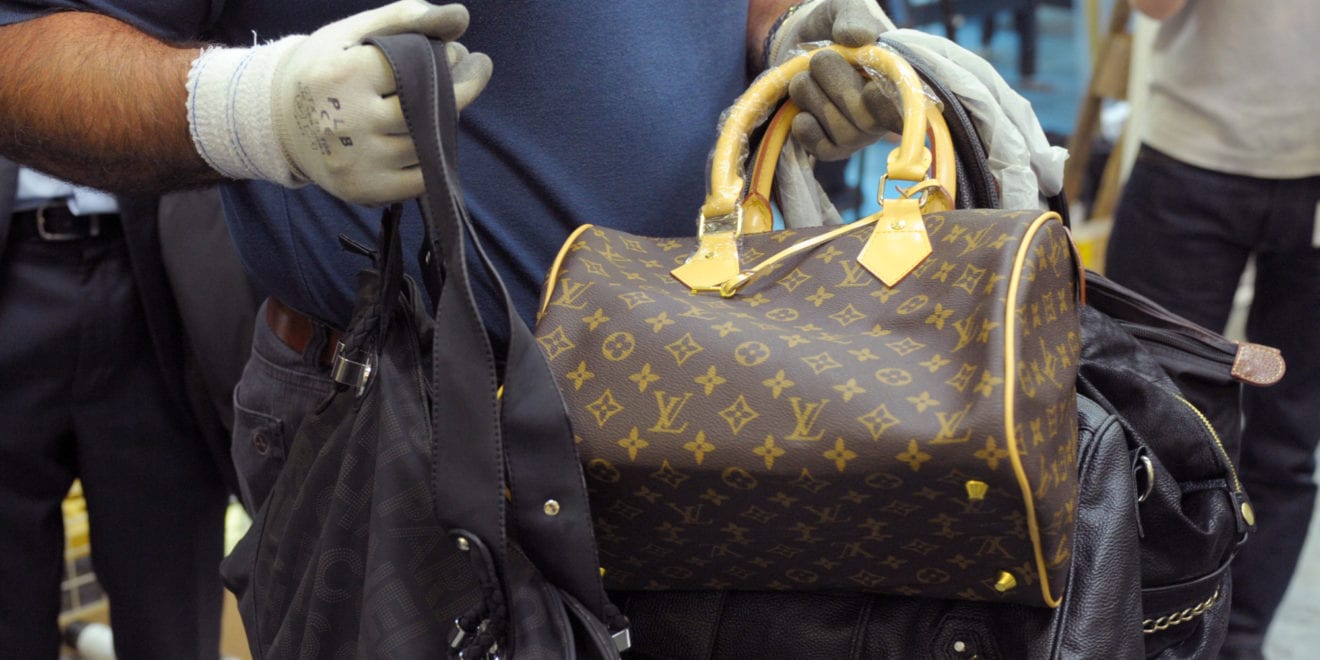
    Customs has smashed another Hong Kong counterfeiting syndicate, this one operating from Tung Choi Street in Mong Kok.

    About 2600 items of suspected counterfeit goods – including handbags, wallets and belts with an estimated market value of about HKD4.3 million (US$548,000) – were seized during the raid of a fixed hawker pitch and a storage facility.

    Customs had earlier received information alleging the sale of counterfeit goods at a fixed hawker pitch in Mong Kok. After an in-depth investigation with the assistance of the trademark owner, Customs officers took enforcement action that culminated in the raid. The batch of suspected counterfeit goods and one tablet for displaying photos of suspected counterfeit goods were seized.

    During the operation, one female syndicate head and one male member of the Hong Kong counterfeit ring, both aged 46, were arrested. The investigation is ongoing.

    Customs says it will continue to step up inspection and enforcement to combat the sale of counterfeit goods, and reminds consumers to procure goods at reputable shops and to check with the trademark owners or their authorized agents if the authenticity of a product is in doubt.

    Customs also reminds traders to be cautious and prudent in merchandising, describing the sale of counterfeit goods as a serious crime with offenders liable to criminal sanctions. Under the Trade Descriptions Ordinance, any person who sells or possesses for sale any goods with a forged trademark commits an offence. The maximum penalty upon conviction is a fine of $500,000 ($64,000) and imprisonment for five years.

  • London’s Duck & Waffle opens in Hong Kong

    London’s Duck & Waffle opens in Hong Kong

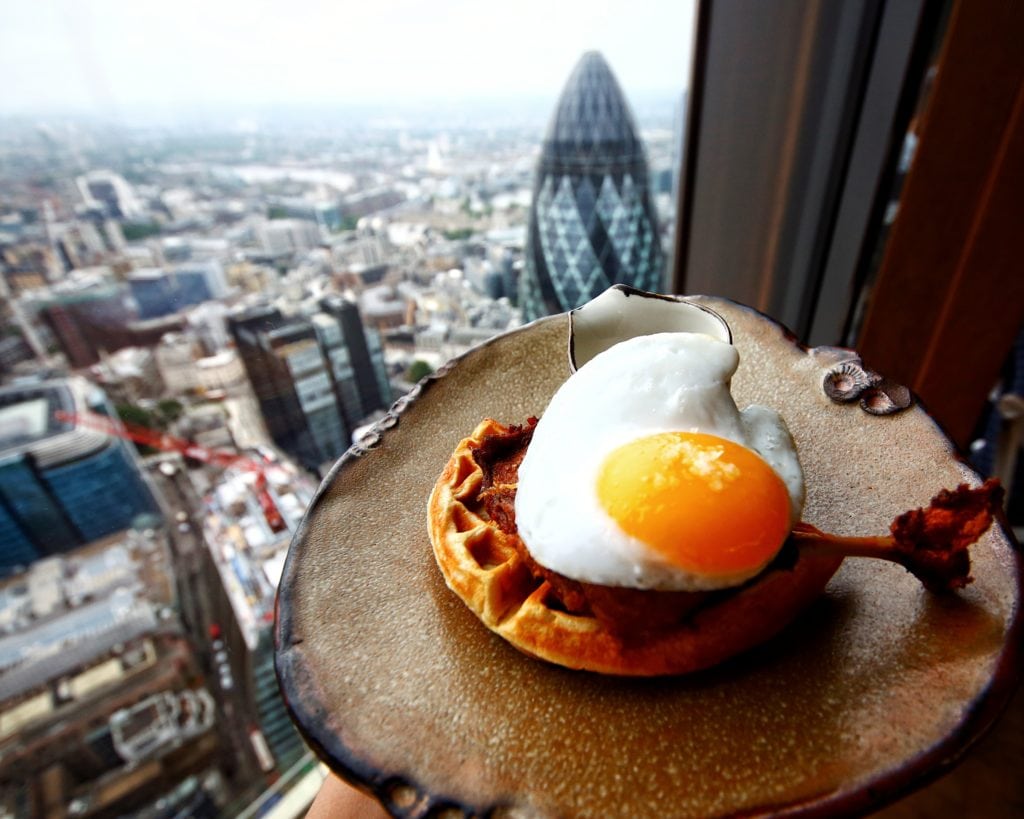
    The Duck & Waffle restaurant will officially land in Hong Kong this September at IFC mall.

    Its first destination outside of London, the new venue is designed to welcome guests throughout the day and into the late hours of the night with a large open space and kitchen combined with an “island” bar.

    The restaurant was designed by architecture and interior design firm CetraRuddy.

    The Duck & Waffle’s menu is designed for sharing and offers a take on British cuisine with broad European and American influences. Its signature eponymous dish has sold more than 1 million servings.

  • Radio Rentals to pay $25 million for pricing fraud

    Radio Rentals to pay $25 million for pricing fraud

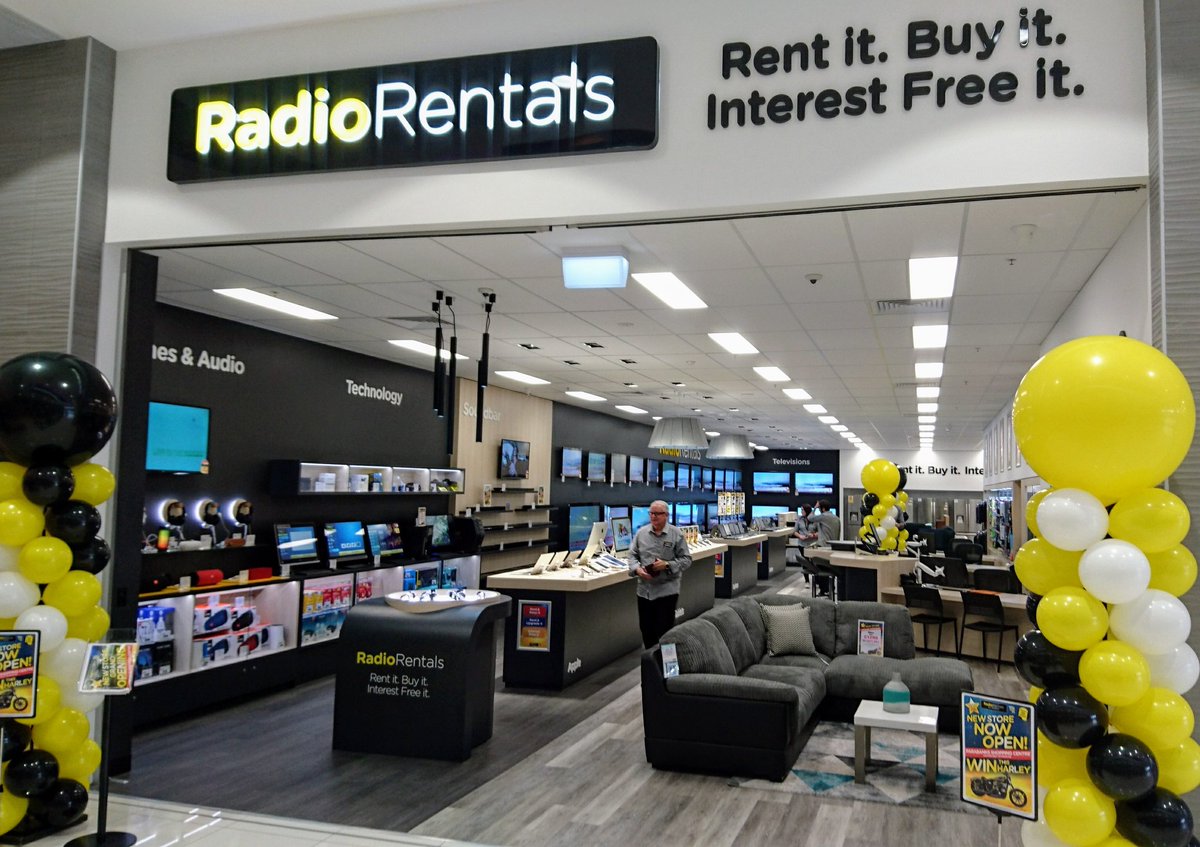
    Radio Rentals-parent Thorn Group has settled a consumer-led class-action lawsuit lodged against it in 2017, which involved customers paying far in excess of the market value for goods rented.

    According to law firm Maurice Blackburn, which represented thousands of people against the business, Radio Rentals’ Rent, Buy, $1 Buy program had seen customers pay up to seven times the retail price.

    The class action settled on Monday for a sum of $25 million, though Thorn Group’s insurer will also make a separate contribution toward the settlement. According to Thorn Group, the settlement is not an admission of liability.

    While the two parties have agreed on the sum, the settlement must still be approved by the Federal Court.

    Maurice Blackburn principal Ben Slade said the program may have affected up to 200,000 people.

    “The class action alleges that one of the more insidious aspects of the business is that Radio Rentals continued to draw money on an ongoing basis from its clients’ Centrepay (Centrelink payment) accounts, well beyond the retail value of the goods,” Maurice Blackburn Lawyers principal Ben Slade said upon launching the case.

    “Rent, Try, $1 Buy is misleading when you delve into what’s involved. What we have found is that people are paying up to seven times the true retail cost for goods in the belief that the goods will always be theirs, yet the contracts do not give them that right.”

    Lead plaintiff Casey Simpson said Radio Rentals had taken advantage of her after she paid more than $3300 for a used mattress and bed worth $430.

    “I have four kids and am on a low income – I thought Rent, Try, $1 Buy would be a sensible alternative to get some basic goods in a way we could afford,” Simpson said.

    “I never knew I’d had to pay as much as much as they kept charging me, or that I wouldn’t have a right to buy the goods for $1.”

    Radio Rentals in South Australia is an independent entity, and is not involved in the lawsuit.

  • Overseas expansion and domestic store upgrades for Harvey Nash

    Overseas expansion and domestic store upgrades for Harvey Nash

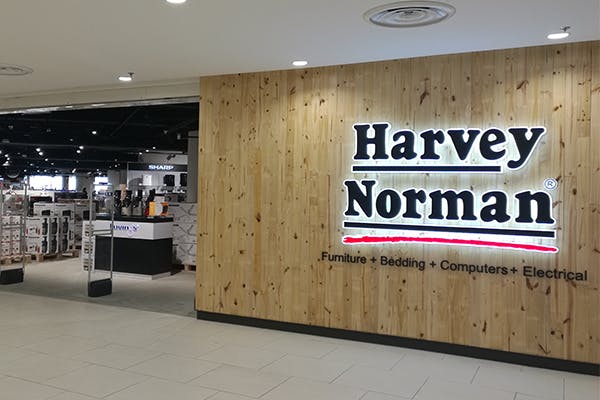
    Harvey Norman executive chairman Gerry Harvey says the furniture and homewares giant is looking at entering new markets in Southeast Asia and expanding its premium store format in capital cities across Australia to maintain momentum in a “not great” retail climate.

    The retailer on Friday announced plans to raise $174 million from investors to pay down debt and better position the company for a future retail recession, as it reported a 12.1 percent increase in year-on-year sales from company-operated stores to $2.23 billion in FY19.

    However, the co-founder and chair of the furniture chain stopped short of complaining about the current retail climate.

    “I think ‘struggle’, ‘recession’ and ‘tough’ are pretty strong words. It’s not that bad,” Harvey said.

    “It’s not great – trying to get last year’s figures is difficult – but we wouldn’t have made $574 million [reported profit before tax] if it were so terrible.”

    Though Harvey Norman is largely sheltered from the rising cost of rent which is forcing many retailers to shrink their store networks, the retailer is leaving some of the sites it doesn’t own for this reason.

    “I’ve just had a few rent increases that are horrendous,” Harvey said. “There are a couple of sites we’ll be exciting because of that.”

    “Looking” at Thailand and Vietnam

    Wages were another hindrance to the company’s domestic growth in FY19. Sales grew 12.1 per cent year on year in the overseas markets where Harvey Norman operates, compared to a 12.1 per cent decline in revenue from Australian franchisees.

    Harvey Norman has 90 international stores in New Zealand, Singapore, Malaysia, Ireland, Northern Ireland, Slovenia and Croatia. The New Zealand market, however, was an exception, with performance more similar to Australia.

    “Australia and New Zealand have got very high standards of living,” Harvey said.

    “The minimum wage in Australia is probably the highest in the world. Singapore, Malaysia and Croatia are way below Australia. The costs are less significant.”

    This is at least part of the reason Harvey Norman plans to open more bricks-and-mortar presence in Malaysia, where the retailer will focus its expansion efforts in the near term.

    “Our immediate focus is on Malaysia, where we think we can open a lot more shops in the next few years,” Harvey said.

    “We’re also looking at whether we open in Thailand or Vietnam. That’s not going to happen tomorrow, but we do want to go to other countries.”

    Bringing back the ‘wow’ factor

    At home, the focus is on rolling out a new premium store format to more capital cities and upgrading the look and feel of stores across the network.

    “We really want to do one in every state that looks like Auburn,” Harvey said about the retailer’s NSW flagship store, which opened last year.

    “We did it on the basis that we could do the same in Melbourne and Brisbane and Perth. It’s on the to-do list. We’d love to have a really great signature shop in Melbourne, we haven’t got one.”

    For the long-time retail executive, stores are the key to staying relevant, even as consumers spend more of their daily lives online.

    “People are talking about how they’re always looking at a screen during the day and on their phone at night. They’re losing contact with people, and they’re starting to say, ‘I really have to go out into the world again’,” Harvey said.

    “You’ve got people going more and more online, and at the same time, wanting to go more and more offline.”

    Harvey Norman’s approach is to invest in making stores very appealing, offering a wide range of merchandise, providing wonderful service and the ‘wow’ factor, Harvey said.

    “Most retailers right across the world have not been spending money on their shops, and then their shops start to look terrible,” he said.

    “I think people are bored with online shopping and shopping centres, where they all look the same. They’d like to see something different.”