Author: Mei Ling Tan

  • Hong Kong Loosens Fintech Lending

    Hong Kong Loosens Fintech Lending

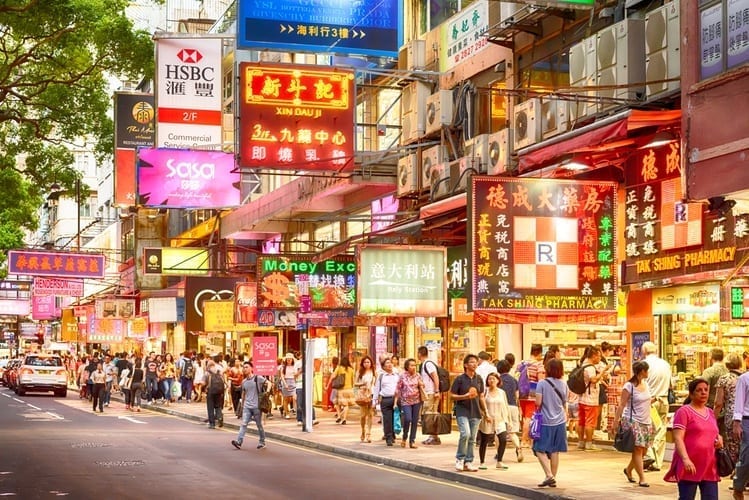
    The Hong Kong Monetary Authority amended its credit risk management guidelines to encourage greater application of analytic tools when providing loans, in yet another move to further fintech development in the financial hub.

    As part of the HKMA’s Banking Made Easy Initiative, lenders are now allowed to further expand personal lending based on credit analytics tools, like big data analysis, to assess and approve applications. The guideline was issued in May 2018 and initially limited such types of lending but will now liberalize the market.

    Several AIs (authorized institutions) have since rolled out new retail credit products following the guidelines and the business has been operating smoothly, said HKMA’s executive director of banking supervision, Raymond Chan, in a note.

    In view of this latest development, the HKMA considers that it is no longer necessary to set an across-the-board limit applicable to all AIs on such lending (i.e. 10% of an AI’s capital base). Instead, the HKMA expects AIs intending to develop this business to set a limit of their own, which should be commensurate with their risk appetite and risk management capability.

    Fintech continues to grow as new regulatory and market developments are picking up momentum in the region.

    As a leading financial center, Hong Kong is undoubtedly competing for market share. For example, the «Banking Made Easy Initiative» was issued last year and involved a dedicated task force to help the industry “minimize regulatory frictions” in digital banking including remote onboarding, online finance and wealth management.

    Rival hub, Singapore, is also making inroads into the space with the regulators officially taking digital banking applications last week as hopefuls vie for one of the five licenses.

  • Maybank Kim Eng To Launch Trading Capabilities for Southeast Asia

    Maybank Kim Eng To Launch Trading Capabilities for Southeast Asia

    Maybank Kim Eng, Maybank’s investment banking arm, announces its selection of Australian-headquartered fintech firm, Iress, as the software provider for online trading and market data.

    Iress’ ViewPoint will be rolled out progressively to Maybank Kim Eng’s clients in Singapore, Malaysia, Thailand, and Vietnam. The expanded agreement with Iress will enable Maybank Kim Eng clients to research and trade on the multi-asset, multi-currency online interface.

    After the successful implementation of Iress’ Pro and market data software, we’re pleased to now be offering ViewPoint to our growing customer base to share the benefits of their state-of-the-art tools and capabilities,» said Jeffrey Goh, managing director, and regional head of brokerage, Maybank Kim Eng.

    ASX-listed Iress has been providing financial software to clients in Asia since 2010 and to Maybank Kim Eng since 2015.

    Prior to ViewPoint, Maybank Kim Eng had already implemented Iress’ aforementioned  «Pro» which provides real-time market data and in-depth analysis across 200 global markets from which trade orders can be made directly to the «Iress Order System».

  • Deutsche Bank Hires Head of China Onshore Wealth Management

    Deutsche Bank Hires Head of China Onshore Wealth Management

    Deutsche Bank’s recruitment drive for the private bank in Asia persists, this time with the hire of a new head of onshore wealth management in China.

    Jeffrey Yen Chieh Peng joins the bank as managing director and head of China onshore wealth management, effective today. According to the bank’s announcement, Peng will oversee and strengthen the onshore platform, develop and execute long-term expansion strategies and advise on the overall Greater China business.

    In his new Shanghai-based role, Peng report to Kanas Chan, head of North Asia wealth management; Feng Gao, chairman of Deutsche Bank (China) Co., Ltd. and China chief country officer of Deutsche Bank; and Rose Zhu, president of Deutsche Bank (China) Co., Ltd.

    Prior to joining Deutsche Bank, Peng was most recently with Bank of Singapore where he was a managing director and head of strategic alliance and «IAM Excellence Center» for Greater China and North Asia. Previously, Peng also spent 11 years with UBS where he was last an executive director and head of wealth management investment products and services in China.

    Despite cost-cutting pressures, the bank has stayed in line with its commitment to focus on wealth management, especially in high growth markets like Asia. And within the region, the bank’s recent moves signal its focus on major markets: China and India.

    The bank’s persistent hiring drive recently included the addition of three ex-Julius Baer bankers covering the non-resident Indian segment. And on China, the bank not only notes the still rapidly growing wealth from the segment but an increasingly business-friendly onshore environment.

    We see opportunities in onshore China markets as the high-net-worth client segment grows exponentially, while the environment grows increasingly business-friendly and promising, said Deutsche Bank’s Kansas Chan.

    Peng’s hire is to support our Global China Strategy, investing in and strengthening our onshore and offshore China platform.

  • Domestic online E-commerce spending up

    Domestic online E-commerce spending up

    Online spending on local sites has strengthened in July and helped to boost the country’s total online retail sales compared to the previous corresponding period.

    Spending on New Zealand sites rose 18 percent compared to the previous year – again driven by food and grocery categories in recent months.

    New Zealand’s total online retail spending in July was 9 percent higher than a year ago. Excluding the food and liquor sectors, annual online spending was equivalent to 11.1 percent of retail sales, according to both Statistics New Zealand and Bank of New Zealand’s indices.

    Spending growth at offshore sites fell slightly in July, with online spending down 3 percent on July last year.

    Spending on entertainment media among international e-commerce companies grew strongly but was offset by broad-based softening across most other categories at offshore sites.

    Gary Baker, director of institutional research at Bank of New Zealand, said annual online spending across the retail categories they cover is running at just over $4.6 billion, excluding GST.

    “This is equivalent to 8 percent of total retail sales reported in Statistics NZ’s Retail Trade Series (RTS), comparing like-for-like categories,” Baker said.

  • FWO on underpayment: Self-disclosure no longer enough

    FWO on underpayment: Self-disclosure no longer enough

    Big business wage thieves looking for a soft response from the workplace watchdog are going to be disappointed, with fair work ombudsman Sandra Parker declaring an intention to be hands-on with big firms who confess underpayments.

    Speaking at a Council of Small Businesses Australia summit in Melbourne on Thursday, Parker said some large companies have been “sloppy” in their payroll practices, failing to keep their houses in order.

    “We’re getting a lot more companies coming to us self-disclosing large underpayments, many of them going back many years,” Parker said.

    “They had been previously saying to us that they’re trying to fix it and we should, therefore, leave them alone to get on with it.”

    “That’s not what we’re going to do.”

    Big businesses confessing underpayments to the Fair Work Ombudsman (FWO) will be required to, at a minimum, enter into court-enforceable undertakings.

    This will involve multi-year external audit plans, training programs, contrition payments, and a condition to publicly apologize to the community.

    “If they aren’t willing to cooperate with us on that basis, then we will obviously carefully consider litigation,” Parker said.

    The list of big businesses caught in alleged wage theft scandals in recent years is lengthy, including franchise networks such as 7-Eleven, Domino’s, Caltex and Retail Food Group.

    More recently, jewelry retailer Michael Hill and men’s clothing retailer M.J. Bale admitted to underpaying workers, while the case of celebrity chef George Calombaris’ company MADE Establishment stealing wages has been well-publicized.

    Calombaris agreed to pay a $200,000 contrition payment under his enforceable undertaking with the FWO for the more than $7.8 million his company underpaid workers in wages and superannuation.

    The extent of the payment, notwithstanding MADE’s backpay bill, angered some, including the lawyer who represented workers at the company, who said the payment was not enough.

    Parker said there’s been a “huge shift” in public attitudes towards wage theft recently, with the federal government now preparing to introduce tough new laws to criminalize underpayment.

    “[It has] made everyone stop and think about what that means. We’ve never had a criminal system in workplace relations,” she said.

    Parker, whose office was spun out of Michaelia Cash’s Department of Jobs and Small Business and into Attorney-General and Industrial Relations Minister Christian Porter’s portfolio earlier this year, said she’s been in discussion with the government over its proposed crackdown.

    “We’ve said to the [Industrial Relations] Minister and the department that the majority of businesses do the right thing,” Parker said.

    Parkers comments come as the federal government prepares to move ahead with a broad-based review of Australia’s workplace laws, including examining its in-principled support for migrant worker task force recommendations.

    That task force, overseen by former ACCC boss Allan Fels, found the exploitation of migrant workers is “widespread and entrenched” in Australia, as calls grow in the community for decisive action.

    “The community is saying enough is enough,” Parker said on Thursday.

    The government is being lobbied to consider simplifying the workplace compliance framework for corporations, including by ditching the Fair Work Commission’s Better Off Overall Test (BOOT), which regulates the approval of enterprise bargaining agreements.

    Treasurer Josh Frydenberg said earlier this week the government will prioritize evidence-based reforms to Australia’s workplace laws.

    “We are interested in further workplace relations reform that is evidence-based, pragmatic, protects workers entitlements and produces clear gains to the economy and working Australians,” he said.

    The FWO will also be handing out more compliance notices to businesses underpaying workers, amid efforts to streamline its enforcement efforts.

    Parker said a 12-month review of her office’s regulatory model has resulted in a refined focus that should be simpler for businesses.

    It comes as the ombudsman juggles its role as a source of education and advice about workplace laws with increasingly strong community expectations about addressing worker exploitation.

    “We’ve gone back to the act, and we’ve gone back to looking at exactly what it is the parliament and the community requires of the Fair Work Ombudsman,” Parker said.

    “We’re going to be using statutory compliance notices a lot more than we were before,” she said.

    Parker said compliance notices aren’t punitive and don’t constitute an admission of guilt, with the focus instead on rectifying any underpayments and educating business owners.

    “If people come to us, if they’re willing to work with us, they’re willing to use our tools, we’re not going to prosecute them or take them to court for mistakes,” Parker said.

    The FWO issued 220 compliance notices in the 2017-18 year, recovering more than $950,000 in unpaid wages. Three litigations were commenced against employers who did not comply with notices.

    Those numbers are expected to increase over the coming year as the FWO continues its compliance efforts, particularly in the fast-food, retail and cafe sectors.

    “If a business doesn’t comply we will give them a warning and an opportunity to give a reasonable excuse,” Parker said.

    “We will also take them to court if they don’t comply, and we will seek a penalty, both for the failure to comply with the notice and the original contravention.”

    A balancing act

    Tasked with prosecuting cases of deliberate wage underpayment while helping businesses trying to do the right thing, Parker faces an increasingly precarious balancing act in the coming years as the government ratchets up penalties for wage theft and small business advocates question the complexity of workplace laws.

    Asked Thursday about the perception of the FWO among small businesses, Parker said her office was focused on creating quicker solutions.

    “We want to implement a quicker [sic] solution when we come across underpayment then we have in the past,” Parker said, saying compliance notices would enable the ombudsman to deliver better outcomes for firms.

    “We will issue [compliance notices] more quickly, and there will be more of them.”

    The ombudsman has a series of online resources to help businesses remain compliant with their legal obligations, including a comprehensive (and free) pay calculator tool.

  • BSH Home Appliances appoints new director for APAC

    BSH Home Appliances appoints new director for APAC

    BSH Home Appliances Group has appointed Gunjan Srivastava as executive VP, head of Asia Pacific.

    The appointment reflects the company’s focus on driving accelerated growth across the region, including Singapore, Malaysia, Indonesia, Thailand, India, Australia and New Zealand.

    Gunjan has more than 15 years of experience in the durable-goods sector, with core expertise in fortifying brand portfolios. Prior to this appointment, Gunjan was the CEO of BSH India, where he was instrumental in spearheading the firm’s growth over five years, introducing new verticals and doubling its market footprint.

    “I’m both humbled and excited to continue strengthening the BSH brand and fortifying our presence in the region,” said Gunjan. “In my years leading BSH India, I’ve had the chance to gain an in-depth understanding of how to drive vigorous growth for BSH in a high potential market. Asia Pacific is a vastly diverse region, where there is an immense opportunity for us to increase visibility, gain market share, and further consolidate our leadership.”

    In his new role, Gunjan will be focusing on maximising the opportunities in the various Asia Pacific markets that BSH has subsidiaries in.

    “In order to meet consumer needs that are in constant flux, BSH has a clearly defined objective: to become the industry leader for digital services and kitchen experiences for connected consumers, by producing innovations that offer tangible benefits and help make their lives better,” said Gunjan.

    BSH Home Appliances recently opened its first UnserHaus Customer Care Centre and a UnserHaus Experience Centre in Singapore. Meaning “our house” in German, the centre is a lifestyle concept featuring Bosch and Gaggenau appliances in a home-like environment.

    While waiting for their appliances to be repaired, customers can visit either the dining room, which provides a hands-on experience with built-in appliances like dishwashers, coffee machines and ovens; or the living room, where they can sit down, unwind and relax with music or a wide-screen television. There is a children’s playing space as well.

    All products at UnserHaus come tagged with a QR code that allows visitors to purchase and pay for them online.

  • Hong Kong retail sales down last month

    Hong Kong retail sales down last month

    Hong Kong retail sales in July plunged by 11.4 percent as ongoing protests and the China-US trade war took their toll.

    The fall was widely expected with several large retailers projecting double-digit declines based on their own internal monitoring during the month.

    A government spokesman said the decline in retail sales reflected “weak local consumer sentiment and significant disruptions to inbound tourism and consumption-related activities arising from the recent local social incidents”.

    He said the Census and Statistics Department (C&SD) expected Hong Kong retail sales will likely stay weak in the near term, as escalated US-Mainland trade tensions and subdued economic conditions continue to dampen consumer sentiment.

    “The situation may even deteriorate further if the social incidents involving violence do not come to a stop.”

    July’s decrease followed a 6.7-per-cent decline in June when the current round of protests commenced. For the first seven months of the year, sales are down by 3.8 percent year on year.

    After netting out the effects of price changes, July’s figure was even bleaker, down 13 percent compared with a decline of 7.6 percent in June and a year-to-date 4.4 percent.

    Retail sales to visitors usually account for about 50 percent of the total market in Hong Kong, so the key category of watches, jewelry, and luxury goods – the largest category – plummeted by 24.4 percent in July.

    Apparel sales fell by 13 percent, medicines, and cosmetics by 16.1 percent, and commodities in department stores by 10.4 percent.

    Categories less reliant on visitors performed better: sales of food, alcoholic drinks, and tobacco were down by 2.3 percent, consumer goods, not classified elsewhere by 1.4 percent, and books, stationery, newspapers, and gifts by 6 percent.

    Sales of electrical goods fell by 17.4 percent, of footwear and accessories by 10.1 percent and of furniture and fixtures by 8.7 percent.

    The only category to post growth year on year was supermarket sales, which rose by a modest 1 percent.

  • BreadTalk Group to buy Food Junction

    BreadTalk Group to buy Food Junction

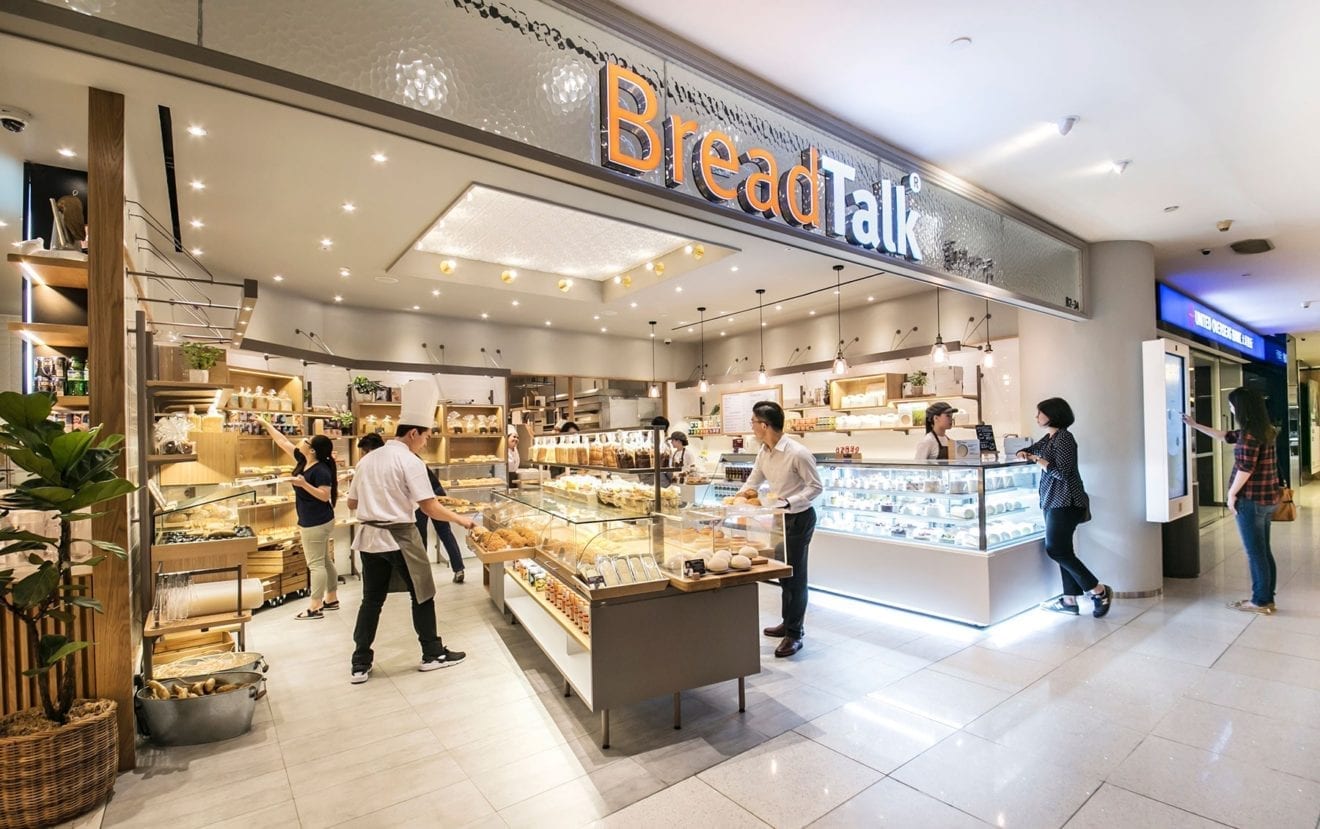
    Listed Singapore food-and-beverage company BreadTalk Group is to buy foodcourt operator Food Junction Management (FJM).

    A subsidiary of BreadTalk, Topwin Investment, has signed a sale and purchase agreement to pay S$80 million for FJM, which operates 12 foodcourts in Singapore and three in Malaysia. A fourth is on track to open next year at The Mall in Johor Bahru.

    BreadTalk Group sees synergies between the FJM business and its own foodcourt operations – it owns Food Republic and Food Opera-branded sites in Singapore, Greater China, Thailand, Cambodia and Malaysia. The combined operation could share support services and rationalise supply arrangements.

    FJM is owned by Singapore investment company Auric Pacific Group Limited.

  • New leader appointed in APAC for Abercrombie & Fitch

    New leader appointed in APAC for Abercrombie & Fitch

    Abercrombie & Fitch has hired two key senior staff to lead its Europe, Middle East, and Africa (EMEA) and Asia-Pacific (APAC) regions.

    Olga Wu will oversee Abercrombie & Fitch Asia-Pacific and Daniel Le Vesconte will manage the company’s EMEA regional operations. Both have been appointed group VPs.

    They will report to global brands president Kristin Scott and are responsible for executing the company’s brand strategies to drive growth in their respective local markets.

    In conjunction with these appointments, the company continues to build its international presence and has selected the London and Shanghai offices as its regional EMEA and APAC headquarters respectively.

    Le Vesconte, 50, joins the company most recently from footwear and clothing brand Dr. Martens, where he served as president, EMEA. Wu, 54, joins the company from VF Corporation, where she most recently served as GM of Timberland in China.

    “As we seek to drive global growth and adapt our playbooks for markets around the world, we’re investing in our international teams to drive further closeness to our customers in every region,” said Abercrombie & Fitch CEO Fran Horowitz. “We are pleased to welcome Dan and Olga to our A&F team; they each bring deep experience and understanding of consumer behavior and brand leadership across their respective regions. Their insights and leadership will help support our goal of consistently bringing relevant products and brand experiences to our customers around the world.”

  • ‘Sporting idol experience’ unveiled inside Puma NYC flagship

    ‘Sporting idol experience’ unveiled inside Puma NYC flagship

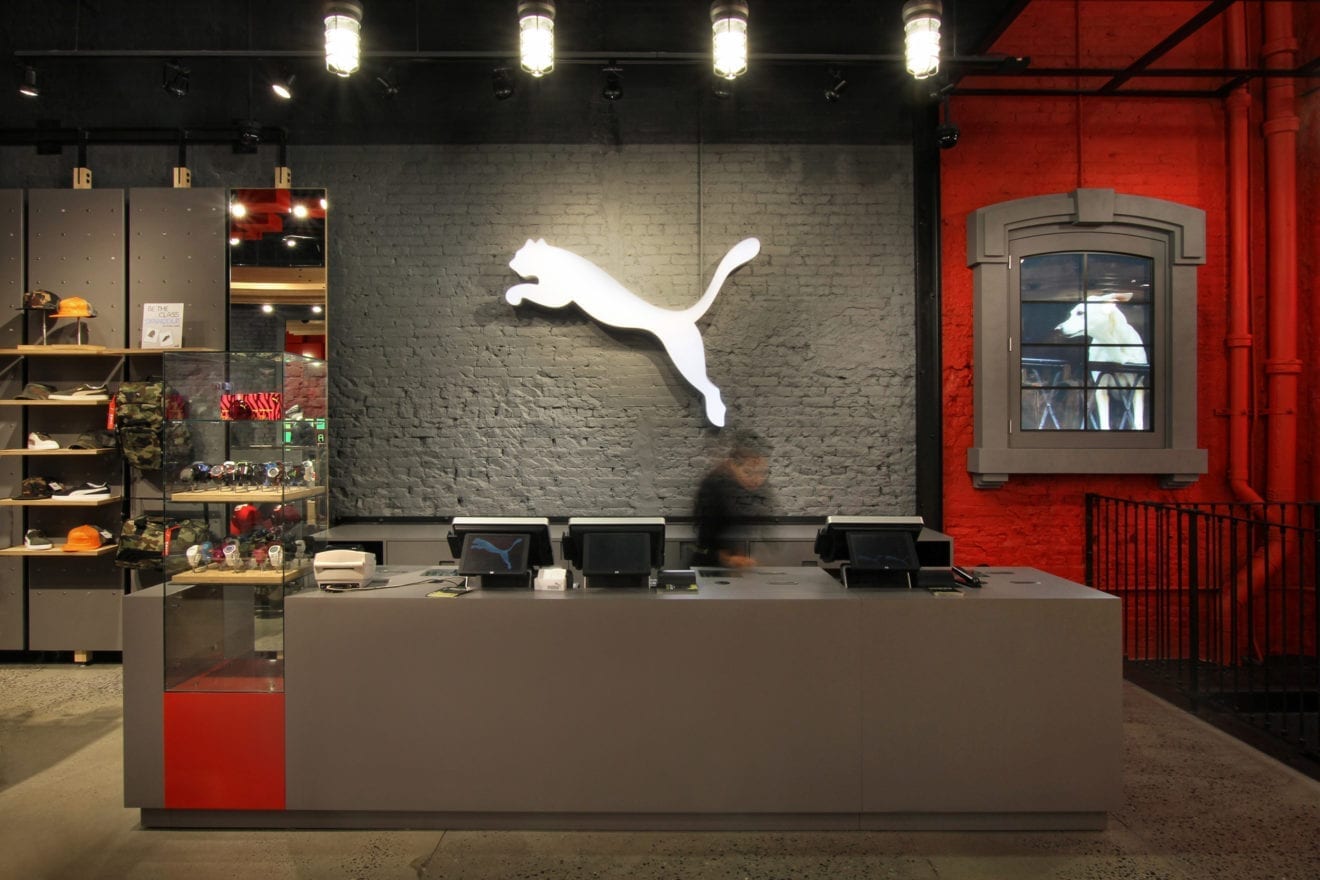
    A “unique and immersive” retail experience awaits visitors to the new Puma NYC flagship store unveiled on Fifth Avenue.

    The athletic footwear and apparel brand have opened a two-story store which features an industry-first multi-sport, multi-sensory Skill Cube, designed and developed by human experience design studio Green Room.

    The creative platform integrates global Puma brand ambassadors into an immersive experience, positioning them as virtual training buddies – an approach established, through behavioral research, as key to better engaging the lifestyle traits of Puma’s Gen Z target audience.

    Respected for their training regimes and prowess, athletes Lewis Hamilton, Antoine Griezmann and Romelu Lukaku host coaching sessions that transport customers either to a virtual football stadium or a disused warehouse; an experience specifically designed to deliver the best authentic footwear trial whilst still in store.

    “Facilitating unique and immersive experiences is central to our long-term commercial strategy and the Skill Cube New York delivers on this in every way,” said Puma’s global head of commercial marketing Jason Isenberg. “This is truly a one-of-a-kind experience, and we are confident that our shoppers in the Puma NYC flagship store will find it extremely engaging and compelling.”

    Once inside the Skill Cube, visitors are immersed in a multi-sensory environment incorporating 270° floor to ceiling LCD content screens, graphic projection, motion sensing devices, dynamic lighting and surround sound. The floor covering is a high-quality, multi-sport, synthetic turf, designed to bring the footwear benefits to the fore by simulating authentic trial conditions, further enhancing a life-like experience.

    Converging analog and digital worlds, the Teamsport experience kicks off in a virtual Puma locker room with footballers Griezmann or Lukaku; trialists are transported to a CGI replica of a capacity-filled San Siro Stadium. Reconstructed to a superior level of detail and adaptability – featuring an impressive 5 million individual blades of grass – the virtual environment offers full flexibility and control over 152 lights, independent movement of all 80,000 football fans in the crowd and updatable sponsorship boards, TV screens and pitch patterns.

    Visitors to the Puma NYC flagship’s Skill Cube are scored on their performance and at the end of the experience, the stadium comes alive with confetti cannons, fireworks, and a cheering crowd. The training experience then transports participants into a warehouse to train with Lewis Hamilton, who takes them through three trials; ladder, jab and jump.

    “Our approach was to encourage engagement and disrupt ‘autopilot customer’ browsing,” said digital experience director Martyn Palmer. “By introducing a highly curated approach to the experience zone, we have succeeded in creating a harmonious customer journey that mixes physical and digital interactions to elevate a positive product experience.”

  • Siam Piwat gives mall space to disabled and underprivileged suppliers

    Siam Piwat gives mall space to disabled and underprivileged suppliers

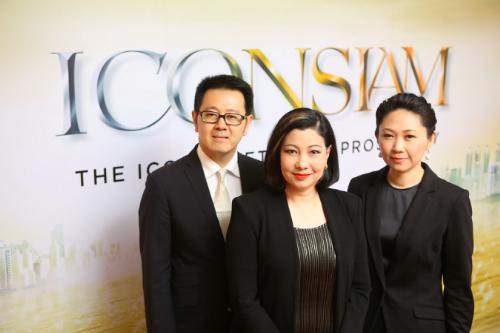
    Thai shopping-centre operator Siam Piwat has created special zones in two of its malls stocking products made by people with disabilities, underprivileged people and special-needs children.

    Called Made by Beautiful People, the products are now available at IconCraft on the fourth floor of IconSiam and in the ODS (Object of Desire Store) on the third floor of Siam Paragon. Both malls are in Bangkok.

    The initiative is an expansion of its ongoing social contribution Citizen of Love, launched in 2009 in which it aims to “share love, provide opportunities and bring pride and equality for all Thais”.

    Space for the Made by Beautiful People displays is provided free by Siam Piwat.

    “With an aim to inspire, to create opportunities and generate sustainable careers and income for the underprivileged people, the company offers full assistance for the sales and marketing of the products,” said a Siam Piwat spokesperson.

    “Products now available are from seven pioneering charitable organizations and groups:  Vocational Development Center for the Disabled, Light for the Disabilities Foundation, Anusarnsunthon School for the Deaf, Arunothai for Special Needs Project, Autistic Thai Foundation, Na Kittikun Foundation, and Sikkha Asia Foundation.

    “The ultimate goal is to culminate an empowering space, a creative showcase of their works and their talents, a place where products made by people, whose hearts know no boundaries, are connected to local consumers and visitors from across the globe,” said the spokesperson.

  • Tiffany to open Blue Box Cafe in Hong Kong

    Tiffany to open Blue Box Cafe in Hong Kong

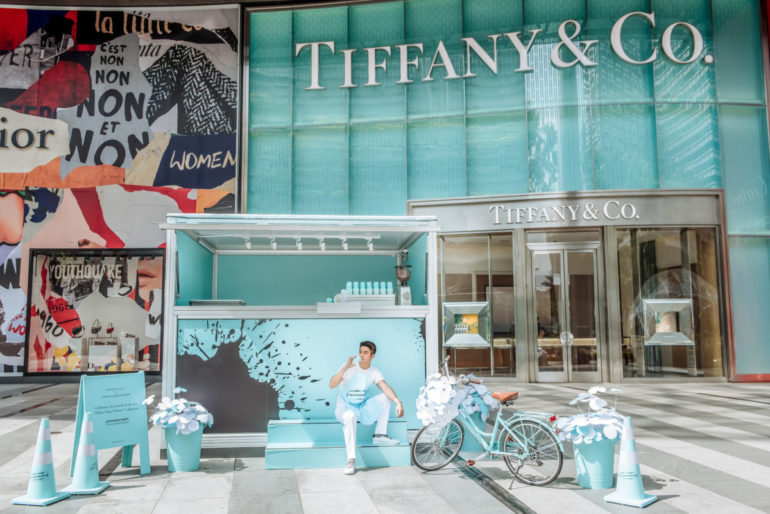
    Luxury jewelry retailer Tiffany & Co is set to open its largest flagship store in Asia at One Peking Road – and with it the first Blue Box Cafe in Hong Kong.

    The flagship and cafe – the first in Asia –  will soft open early this month and mid next month respectively. Both outlets have been designed to offer new experiences for long-time patrons of the firm, with One Peking Road displaying the full range of the house’s products and the cafe bringing a slice of New York City to tropical Hong Kong.

    The cafe features the brand’s own crockery and utensils to complement the cultured ritual of afternoon tea, reflective of the artistry and craftsmanship of the house.

    In anticipation of The Tiffany Blue Box Cafe in Hong Kong opening, reservations for seating are being taken through the firm’s online platform, allowing online users the chance to be the first to experience something which has, until now, only been available in Tiffany & Co’s flagship store in New York City.

  • Topsports China plans IPO

    Topsports China plans IPO

    Chinese sportswear firm Topsports International is set to proceed with an IPO in Hong Kong, despite economic uncertainties and ongoing protests in the city.

    The Belle International subsidiary is expected to launch its IPO this month, provided it qualifies for the listing. It is expected to be raising up to $1 billion from the exercise, which will see it among the few major firms to start trading on the exchange amidst continuing protests.

    The spinoff was first proposed more than a year ago by the company’s private equity owners Hillhouse Capital and CDH who took Belle private in a US$6.8 billion deal in July 2017.

    The prospectus for Topsports’ IPO says the company is China’s largest sportswear retailer in terms of retail sales value. It enjoyed a 15.9 percent market share last year.

  • Apple’s rumored mixed-reality headset could use gloves as a controller

    Apple’s rumored mixed-reality headset could use gloves as a controller

    By now, many of you know that Apple’s next big thing is NOT going to be the HomePod. Actually, for a few years now, analysts have been expecting Apple to introduce AR glasses as soon as 2020-2021. There have been two schools of thought here; one is that this will be a standalone device while others, including reliable TF International analyst Ming-Chi Kuo, expect your iPhone to carry the brains of the headset. Kuo, in fact, says that production on the Apple Glasses will start no later than the second quarter of next year.

    A couple of patent applications filed by Apple reveals a pair of features that the company is apparently working on for the headset which has been dubbed Apple Glasses. The patent applications were submitted with the U.S. Patent and Trademark Office (USPTO) in February. The first one, titled Scanning Mirror Display Devices, discusses the technology that uses lasers and mirrors to project images directly into the eyes of the person wearing the glasses in lieu of a display. This could be done in a way to support Augmented Reality (AR) by allowing the images to be overlayed over a real-world view. The patent application says that this technology might be used to replace “overly complex, bulky, and uncomfortable to wear” head-mounted displays.

    The second patent application, Magnetic Sensor Based Proximity Sensing, uses magnetic sensing technology to detect the position of a user wearing a special glove on his or her hand. This could be used to control VR or AR features on the Apple Glasses through the use of hand gestures. A person wearing the headset would also don the gloves which have special material on the fingertips.

    Last month, a report stated that Apple had decided to terminate the Apple Glasses project, but that might not have been the case based on subsequent reports. In fact, just 10 days after that story made the rounds, a huge leak revealed that the tech giant was working on a mixed-reality headset supporting both AR and VR. The glasses will supposedly offer 8K resolution of  7680×4320 for each eye. The device has a codename of T288, according to this leak, and uses a newly developed operating system called rOS for reality Operating System. A 5nm chip will reportedly power the glasses and TSMC is expected to start producing components using this process starting next year.

    The same report said that Apple’s headset would also include eyebrow and jaw sensors to determine the expression being made by the user, hand sensors (which might include the technology found in the second patent that we discussed in this article), sensors to track the eyes and left and right cameras. Many of these features were also discovered in a patent that Apple filed with the USPTO this past March.

    Back in June of 2017, analyst Gene Munster, now with Loup Ventures, said that the Apple Glasses would end up being bigger than the iPhone. At the time, Munster said, “In 10 years we expect the iPhone will be around, but be a much smaller part of Apple’s business as Apple Glasses slowly gains market adoption.” The analyst originally expected the glasses to launch in 2020, but changed that forecast to December 2021 back in May. Munster forecasts that 10 million Apple Glasses will be rung up during the device’s first year on the market.

  • Spotify now lets users share music on Facebook Stories

    Spotify now lets users share music on Facebook Stories

    Spotify has just made it possible for people listening to music to share it on Facebook Stories. If you want your friends and followers to know what songs you like, you can now share it on Facebook Stories and viewers will hear a 15-second preview before tapping to listen.

    Here is how you can do that: tap “Share” when viewing the track on Spotify, select Facebook, customize your Story, and post it to your followers. As mentioned earlier, your followers will get a 15-second preview that they can listen to, but they can also tap “Play on Spotify” if they want to hear more.

    The new feature is a logical step forward and an upgrade from the similar option that artists and their teams have been using for quite a while to promote their tracks, albums, playlists, podcasts, and more.

    For the time being, the preview feature will only play when a single track is shared to Stories. However, if you want to share other content like albums, playlists, or your profile, your followers will have the option to tap directly into that content on Spotify, but they won’t hear a preview.