Author: Mei Ling Tan

  • Pininfarina Battista Launched In The Middle East

    Pininfarina Battista Launched In The Middle East

    Automobili Pininfarina has announced the introduction of its fully-electric hypercar, Pininfarina Battista, in the Middle East market. Expected to be priced around $2 million ( ₹ 13.95 crore approx.), the Italian marque’s zero-emission electric hypercar was launched in Dubai, at specialist luxury car retailer Adamas Motors showroom. The new Battista electric hypercar is slated to enter production in the second half of 2020 at Pininfarina’s Cambiano facility in Italy. Initially, the carmaker will be producing a maximum of 150 units, out of which only 50 are anticipated to be available to cover the Middle East and Asia markets, so the company expects the demands to be exceptionally high.

    Talking about the Luca Borgogno, Design Director, Automobili Pininfarina, said, “We are proud to be in Dubai for the Battista’s Middle East debut. Just a few weeks after it was launched at the Geneva International Motor Show, where it received an amazing reception, we have arrived in one of the world’s most discerning countries for supercars and luxury cars. The Battista’s classic hypercar proportions combined with cutting-edge technology that delivers 1,900 hp and zero emissions will be a new experience for its owners in the UAE, and we believe will make them fall in love with ultra-high-performance electric vehicles.”

    In addition to Adamas Motors as the brand’s retail partner for the UAE, Pininfarina will soon announce a second retail partner for the Middle East, which will cover the important Saudi Arabia market. Meanwhile, potential customers are invited to apply to own a Battista using an online service within the company’s website.

    The Pininfarina Battista will be the first of the Italian marque’s pure-electric luxury cars, and it comes with a 120-kWh battery providing power to four electric motors – one for each wheel – offering a combined output close 1,900 horses while developing 2,300 Nm of peak torque. Pininfarina claims that the Battista electric hypercar is faster than a current Formula 1 race car. While 0-100 kmph is achieved in under two seconds, 0-300 kmph takes less than 12 seconds and it can reach a top speed of 350 kmph. As for the range, the company claims that the Battista has a potential zero-emissions range of up to 450 kilometres.

    The Battista comes with the classic Pininfarina design, using the same principle of form and function coming together, as seen in classic Pininfarina cars reaching back to the Cisitalia 202 of 1947 and through more than 100 Ferraris. The car also comes with a futuristic-looking cabin with a completely driver-oriented dashboard with two displays positioned behind the steering wheel offering a host of information. The hypercar features dual tone black and brown interior using high-quality leather. Plans are in place for the opportunity to fully personalise each car at Pininfarina SpA’s Cambiano headquarters.

  • Next Generation Mercedes-Benz S-Class Interior Leaked

    Next Generation Mercedes-Benz S-Class Interior Leaked

    Mercedes-Benz is readying the next generation of its flagship S-Class sedan and while we’ve seen test mules in the past, a leaked image of the interior have now made its online. The next generation Mercedes-Benz S-Class due to make its debut sometime in 2020 and going by the leaked image, the car appears future ready. Confirmed by earlier spy shots, the W223 S-Class replaced the dual infotainment screen with single unit for the instrument console and a massive vertically-stacked display for all other controls. The Tesla like touchscreen system replaces a tonne of switches on dashboard that gets a clutter-free appearance with sleek looking air-con vents and a new steering wheel. The leaked image also reveals the dual-tone treatment to the cabin in pristine while and black shades.

    The new generation Mercedes-Benz S-Class will be based on the automaker’s MRA platform and will come with a range of six and eight cylinder petrol and diesel engines. There will also be an electrified version called – the EQ S – and will be based on the company’s new Modular Electric Architecture (MEA). The new electrified version is expected to sport a range of 500 km on a single charge, as the automaker’s new top-of-the-line electric saloon. Not to forget, there will be the Affalterbach versions too with the AMG-tuned S-Class drawing power from the 4.0-litre V8 bi-turbo motor that is likely to go hybrid.

    In addition, the new Mercedes-Benz S-Class is expected to be offered in only the long-wheelbase guise globally. That said, do expect the Pullman and Maybach versions to follow suit packing in tech and comfort over the current W222 S-Class. It needs to be seen if Mercedes will continue with the Coupe and Convertible versions on the next generation. With respect to new tech, expect improved autonomous driving capability possibly up to Level 3; a new and updated version of the Airmatic suspension and more segment-first creature comforts on the offering.

    In terms of design, the new S-Class is likely to get an evolutionary styling along lines of the new A-Class, CLS and the likes. The current version is one of the most gorgeous looking saloons out there, which really sets the benchmark for the new version. It is also likely to serve as the design inspiration for the next C-Class and E-Class models, when its time for their respective new life cycles.

    More details on the new S-Class will be available in the months to come. A global debut will happen next year while sales globally should commence by 2021 or 2022, depending on the market. The W222 S-Class is assembled in India, and given the sheer demand for the flagship Mercedes, expect the new model to be locally assembled as well.

  • Chatime facing allegations of Employee Underpayment

    Chatime facing allegations of Employee Underpayment

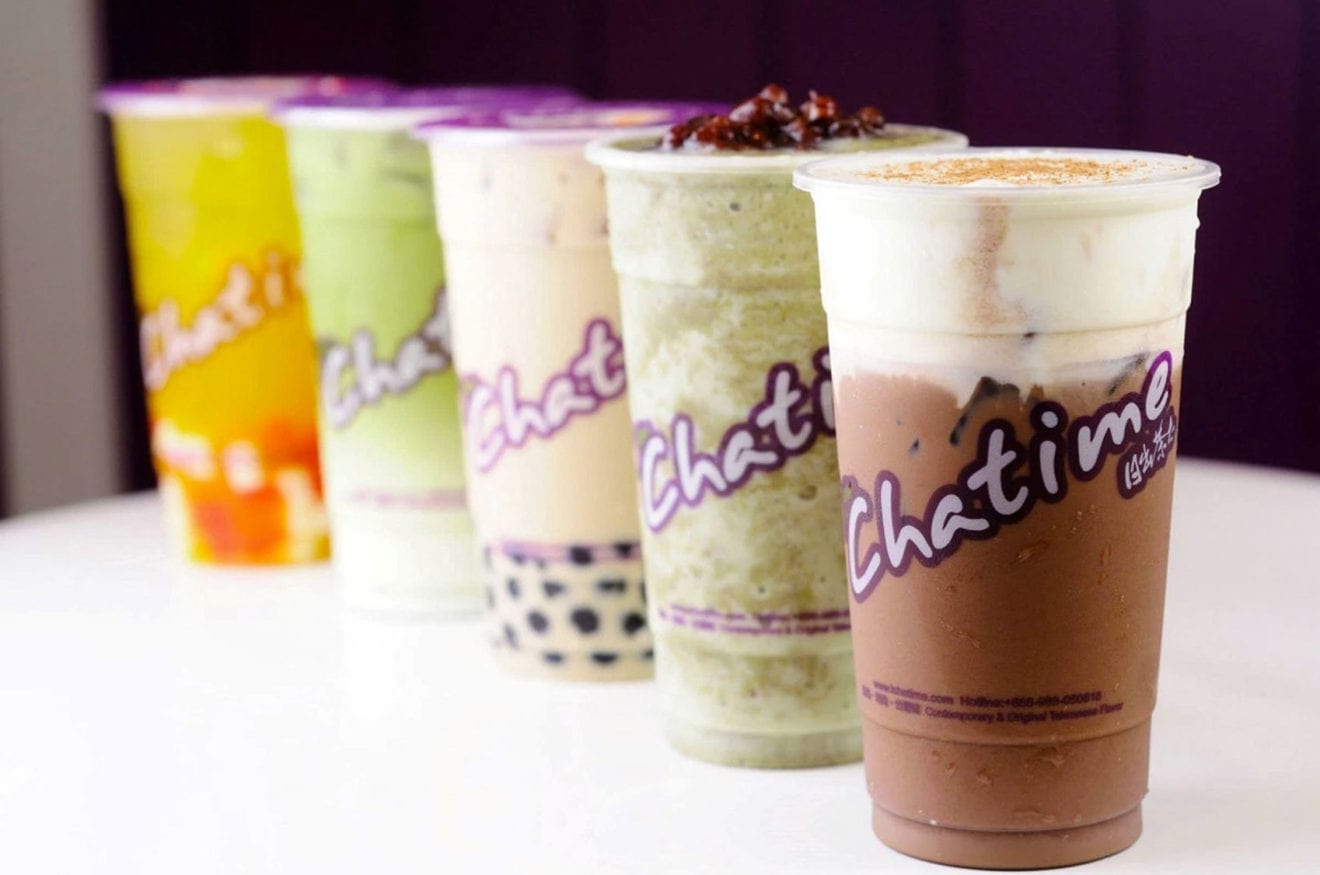
    Bubble tea chain Chatime is the subject of the latest underpayment scandal, after an in-depth report alleged rampant underpayment in both corporate-owned stores and the franchisee network stretching back to 2009.

    Employees of the Taiwanese company’s Australian subsidiary – Infinite Plus – are owed more than $10 million, according to the report. Many of the underpaid workers are foreign students on visas from China and Taiwan, who were too afraid to complain to authorities, the report said.

    A spokesperson for the Fair Work Ombudsman (FWO) told it has a current investigation relating to Infinite Plus, so could not comment further on the matter at this stage.

    The report comes after a parliamentary inquiry earlier this year called for a total overhaul of the franchise sector, after a series of underpayment scandals at 7-Eleven, Retail Food Group, Domino’s Pizza Enterprises Ltd and other franchise businesses.

    Chatime had not previously been insinuated in the underpayment scandals, but according to the report, the bubble tea business had in fact received a formal complaint from the Fair Work Ombudsman (FWO) in 2018, after an audit of its corporate-owned stores from August to December 2016 revealed 150 workers had been underpaid.

    Chatime was told to back-pay workers an estimated $113,494 in NSW and $62,975 in Victoria, the report stated, but was not further penalised by the FWO. The Ombudsman also chose not to make the finding public.

    Earlier this month, however, the regulator commenced legal action against a Chatime franchisee in Sydney, which it alleged underpaid 17 workers more than $46,000. A Chatime insider told, “It’s pretty standard picking on the little guys, not the big guys”.

    The spokesperson for the FWO told it is examining the rapid establishment and expansion of overseas franchise businesses.

    “These businesses often implement operating models and workplace practices associated with their countries of origin,” the spokesperson said.

    “In combination with employing migrant workers, who may be unaware of their rights, there is significant potential for non-compliance. We are proactively auditing several emerging franchisees in the fast food, restaurant and café sector to check compliance of their business models with Australia’s workplace laws.”

    The spokesperson said recent litigations commenced against PappaRich and Chatime franchisee outlet operators are the result of this activity.

    The spokesperson also confirmed that the FWO investigated Bakery Venture, a business that Infinite Plus’s key shareholders – Charlley Zhao and Iris Qian – were involved directors of and key shareholders, last year.

    The Ombudsman secured $350,000 in back-pay for employees and former employees of Bakery Venture, trading as Dough Collective, but further enforcement options were limited, since the company went into liquidation during the investigation.

    We asked Chatime for comment, but had not received a reply by the time of publication.

  • Central Phuket opens luxury VIP Zone

    Central Phuket opens luxury VIP Zone

    Thai property developer and the operator of Central Phuket shopping centre, CPN, has celebrated a new luxury zone with the launch of a range of world-class brands.

    The company says the new stores are being introduced in line with “the rapid growth and high demand of the affluent world tourist market in support of Thailand’s tourism industry’s move to elevate Phuket city as a global beach lifestyle destination comparable to the French Riviera, Miami, and Hawaii”.

    “As a global player, we aim to elevate Central Phuket to become one of the most complete travel destinations in the world,” said CPN deputy CEO Wallaya Chirathivat. “Central Phuket has the concept of ‘The Magnitude of Luxury & Leisure Resort Shopping Destination’ in the form of a ‘Beach Lifestyle’, which perfectly matches with Phuket as a beach city comparable to the world’s greatest beach cities. We truly appreciate that the global luxury brands have placed trust and confidence in our project as the first luxury mall located outside Bangkok, Thailand.”

    To mark the occasion, Central Phuket held a grand celebration entitled “The Unveiling of the New World of Luxury” highlighting the prestigious “Universe of Sirivannavari: The First View from Paris to Phuket” exhibition. HRH Princess Sirivannavari Nariratana allowed the exhibition to be held for the first time in Thailand at Central Phuket Floresta from April 28 to May 26.

  • Joy City reveals management Revamp

    Joy City reveals management Revamp

    Hong Kong property company Joy City has revealed new management appointments and the departure of its CFO.

    Two new deputy GMs have been appointed: Song Bingxin and Guo Fengrui.

    Song, 49, joined Cofco Corporation, Joy City’s controlling shareholder, in 1994. From December 2016 to April this year, she was deputy GM at Grand Joy Holdings.

    Guo, 50, served as GM of the operations management from February 2015 and acted as the GM assistant from April 2019 at Grand Joy Holdings.

    At the same time, CFO Xu Hanping has ceased her role “due to work reallocation”, according to a stock exchange filing by Joy City.

    “Ms Xu confirmed that she has no disagreement with the board and there is no matter in relation to her cessation as the CFO that needs to be brought to the attention of the shareholders of the Company,” the statement read, before expressing gratitude for her service.

    Zhang Jianguo, 53, has been appointed as her replacement. He joined Grand Joy Holdings in 1994 and most recently served as CFO at Grand Joy Holdings.

    All the changes took effect on April 26.

    The Joy City management team now comprises Zhou Peng (GM), Yao Changlin, Song, Guo and Li Wenyao as deputy GMs and Jianguo as CFO.

  • Under Armour Singapore showcases Rush

    Under Armour Singapore showcases Rush

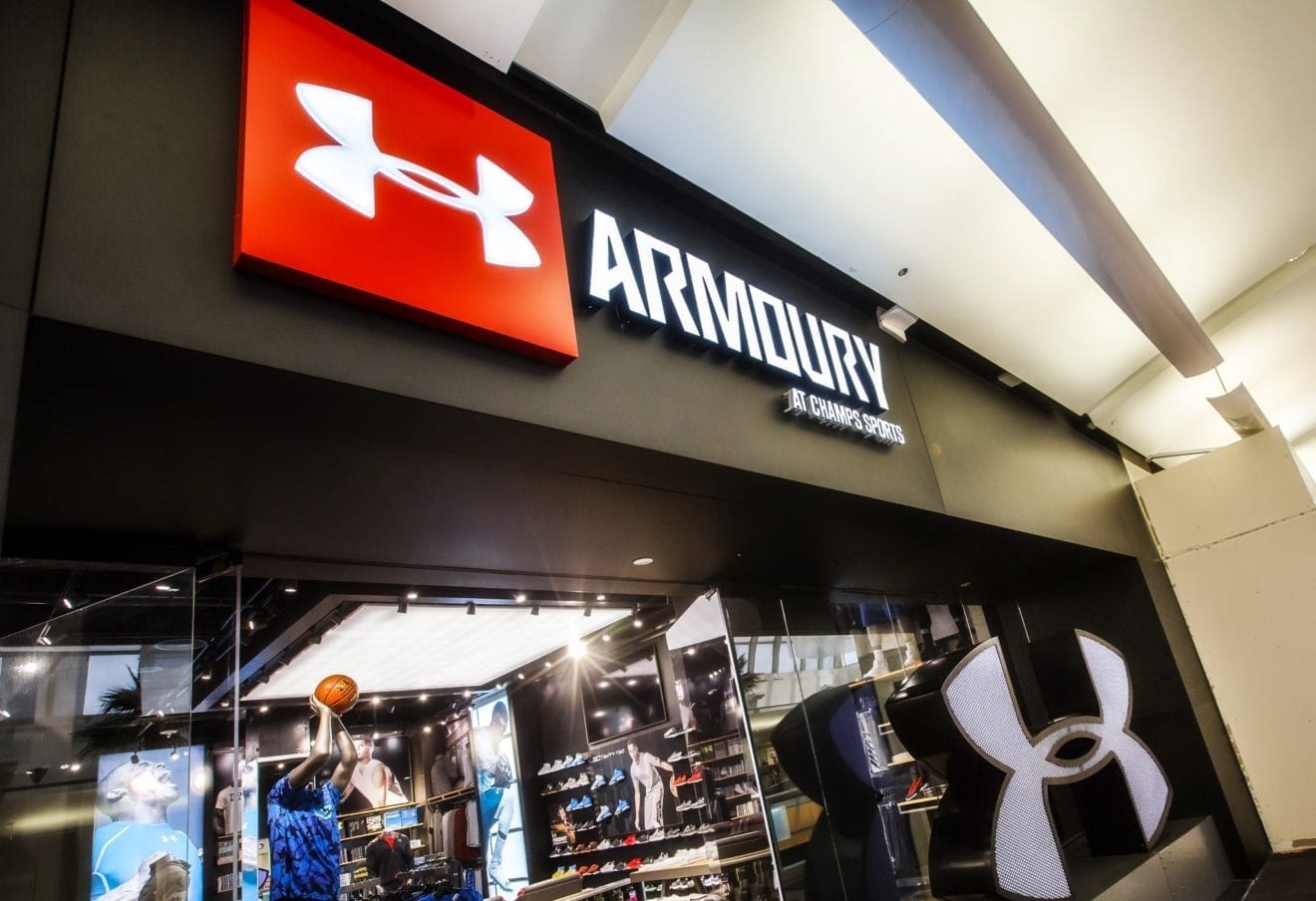
    Under Armour Singapore has partnered with Celliant to create performance apparel line UA Rush and Recovery.

    Designed to enhance performance, the collection includes men’s and women’s fitted tees, long-sleeved shirts, leggings and tights and more.

    All pieces will range from S$69-$199, and are now available for purchase on Under Armour Singapore’s online store, retail stores in Orchard Central, Bugis Junction, VivoCity, and through authorised Under Armour resellers.

    In conjunction with the launch, Under Armour is hosting an admission-free “Rush & Recovery Experience” at Orchard Central Discovery Walk until May 2.

    The interactive exhibits bring to life the inner workings of Rush technology. Distinct experiential zones will showcase how the technology generates performance improvements for the wearer, and helps power recovery.

    Another zone, “Test of Will”, features Under Armour’s annual advanced urban fitness challenge where visitors can see a preview of this year’s unique challenges and put their grit, strength and determination to the test.

    Under Armour’s Rush-and-Recovery-engineered fabric promotes improved performance and energy return. It is intended to provide the same benefits to the body as an infrared sauna.

    “The introduction of UA Rush is our commitment to giving athletes 360-degrees of training support both in the gym and beyond,” said Dan Leraris, GM of men’s training at Under Armour.

    “With the launch of UA Rush, we now complete the training cycle – there is now UA gear designed to optimise human performance at every training occasion.”

    Under Armour athletes from around the globe have been training in UA Rush including Singapore Athletic Association athletes such as swimmer Amanda Lim, marathon runner Jasmine Goh, master coach at Ritual Gym, Shrek Ismail, and SuperheroRunners founder Nelson Wong.

  • Low-cost imports challenge Furniture Retailers

    Low-cost imports challenge Furniture Retailers

    The furniture retailing industry may face a tough trading environment in 2019-20 with revenue expected to decline by 3.3 per cent during the period, according to IBISWorld analysts.

    Mounting internal and external competition is expected to continue to threaten the viability of furniture operators in the current year, with revenue expected to decline to $890.0 million as the industry continues to struggle with a challenging operating environment.

    Bao Vuong, IBISWorld senior industry analyst, said the rising volume of low-cost furniture imported into New Zealand is also forecast to hinder the industry’s performance in the current year.

    “The availability of low-cost furniture imports is projected to heighten industry competition,” Vuong said.

    Industry revenue is also likely to be suppressed by slower growth in residential building construction, which will reduce retail demand for furniture items.

    An IBISWorld furniture retailing industry report last year showed it has faced a tough trading environment over the past five years, with revenue growth stifled by increasing competition.

    Within the industry, players typically compete on the basis of price and product range.

    External competition comes from a range of other operators that sell furniture as part of their operations, including department stores, auction websites and online-only players.

    In the next five years through 2023-24, IBISWorld analysts forecast the furniture retailing industry to be operating within a challenging environment .

    “Mounting internal and external competition is projected to continue threatening the viability of operators over the period,” analysts said.

    The report also showed softer real household discretionary income growth could hinder retail demand for furniture products during the period.

  • Easter spending up 4.6 per cent over Last Year

    Easter spending up 4.6 per cent over Last Year

    While nationwide spending was down year-on-year over the week to Easter Monday, the holiday period performed better compared to its 2018 counterpart, according to nationwide spending data from Paymark.

    The seven days to Monday, April 22, 2019, saw spending increase by 4.6 per cent compared to the Easter week in 2018, which ran to April 2. This is down slightly from the 4.9 per cent year-on-year spending increase in 2018.

    Gisborne saw the strongest growth at 14.6 per cent, followed by Marlborough at 13.3 per cent, when comparing Easter periods.

    Spending was also up across clothing and footwear stores (13.8 per cent), and liquor retailers (9.9 per cent).

    Compared to the exact same week in 2018, rather than last year’s East period, spending in the Canterbury region was down 7 per cent, with Kiwis spending a total of $125.1 million in the region over the week.

    Wellington brought in $106.2 million, a 5.9 per cent drop, while Auckland brought in $454.1 million – a 6 per cent drop compared to the same period in 2018.

    Auckland made up about a third of the spending in the country, with Paymark recording $1.19 billion spent over the week (0.8 per cent down on 2018), though the region was far outstripped in terms of overall growth.

    The Bay of Plenty saw spending grow to $92.9 million – a 14.5 per cent increase year over year. Gisborne enjoyed 19.6 per cent spending growth to $11.7 million, while Otago brought in $76.6 million, or an increase of 7.1 per cent.

    According to Paymark, grocery, fuel and hospitality providers, drove almost all of the spending increase.

    “This year these merchants recorded $43 million more spending (up 15.7 per cent) outside of the three largest Paymark regions,” Paymark said.

  • New Zealand Food Basket launches Tmall Store

    New Zealand Food Basket launches Tmall Store

    Some of New Zealand’s most popular food and beverage brands now have direct access to Chinese customers through a new flagship on the online marketplace, Tmall.

    The online flagship, which opened last week, is the result of a joint venture between Tmall Fresh and New Zealand Food Basket Ltd, a consortium of 18 food and beverage brands.

    “It will significantly improve our reach and shorten the supply chain in a way that each brand couldn’t achieve alone,” Nicola O’Rourke, chairperson of the consortium, said.

    Nine brands were available for sale at launch – Babich, Vogel’s, Rockit, Future Cuisine, Pāmu, Zealong, Fiordland Lobster and Oha Honey – while the remaining nine brands are set to begin selling on the marketplace in June.

    They include Zespri, Sanford, Lewis Road Creamery, Kāpiti, Sealord, Alliance, Shott Beverages, Wild Catch and Cherri.

    Tmall is owned and operated by Alibaba, China’s biggest e-commerce company, with nearly 700 million monthly active users.

    The flagship store is expected to boost awareness of the brands in a market where demand for New Zealand products is high, but it can be difficult for even big companies to get cut-through.

    “Together, we want to help these brands deepen their engagement with the Chinese consumer, so shoppers in China can gain a greater appreciation of the premium high-quality products that New Zealand offers,” Maggie Zhou, Alibaba’s managing director for Australia and New Zealand, said at the signing ceremony in Shanghai last week.

    According to New Zealand’s official data agency, Stats NZ, in 2018, China was the country’s single-biggest export market, accounting for around one in every five dollars of sales of goods and services.

    At $16.6 billion, New Zealand’s export to China for the year ended September 30, 2018, was $2.6 billion more than Australia and nearly double the sales to the US.

  • AuMake doubles digit Profit

    AuMake doubles digit Profit

    AuMake more than doubled its profit and nearly doubled sales in Q3, compared to the previous corresponding period.

    The daigou-focused retailer reported $1.68 million in profit in the March quarter, 104 per cent up on the same period last year, and $9.9 million in sales, up 93 per cent on the same period last year.

    Almost a third of AuMake’s total sales in Q3 were made online, primarily coming from the Chinese social media app, WeChat.

    AuMake grew its online customer database more than six times over, from 20,000 to 130,000 over the quarter, and is investing heavily in its online infrastructure to continue such growth. This includes a larger online customer service team, improvements to its various online sales platforms, such as WeChat and JD.com, and a new packaging facility.

    According to AuMake, the March quarter is typically a slower one for the business, as it includes a four-week period surrounding Chinese New Year when Chinese logistics companies close, and a large number of daigou shoppers return home for the holiday.

    As such, the brand expects to see a material improvement over the upcoming June quarter, particularly as the recent $14.2 million acquisition of competitor Broadway will take effect in June.

    AuMake said the acquisition makes it the “largest China-focused offline and online retail platform in Australia”, and that it will utilise Broadway’s existing relationships with over 100 travel agencies in China to reach new customers.

    “The acquisition of Broadway has transformed AuMake into a significant and influential business in the ANZ Chinese tourist and diagou market,” AuMake executive chairman Keong Chan said.

    “However, AuMake is more than a simple retail business. AuMake’s Chinese focussed retail platform is underpinned by a unique business model that utilises the strength of its online and offline sales to incubate, promote and sell ANZ brands to Chinese consumers.”

    According to a strategy update issued by AuMake on Tuesday, the retailer aims to grow its online channel to half of total sales, and to grow its own-brand product revenue to $15 to $20 million by FY20. Own-brand products brought in $4 million in FY19.

    The retailer is also exploring opportunities to open co-branded offline stores and products with JD.com, and to synergise the supply chains of the two brands.

  • Hong Kong designers showcased at Arab Fashion Week

    Hong Kong designers showcased at Arab Fashion Week

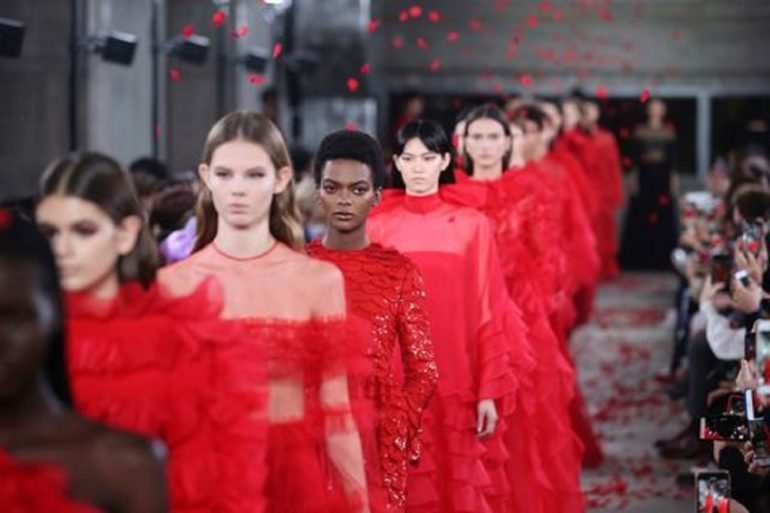
    Fashion Farm Foundation present international program at Dubai. Fashion Farm Foundation has showcased Hong Kong designers in international fashion program HKFG Dubai AW19 during Arab Fashion Week.

    Two Hong Kong local brands, Car|2ie and YLYstudio, presented their latest collections to showcase their works to the fashion media, buyer, insider and fashionistas. A cocktail reception was also arranged to feature eight Hong Kong local brands, introducing their designs to the invited guests.

    While the theme of the Car|2ie AW19 collection “The Proud Rose” is inspired by the Hong Kong movie “Lost Romance” and the main character Rose’s curiosity about love, the YLYstudio collection “Project” attempts a timeless and classic design without the frame of time.

    Famous Arab actor Ali Alketbi, Italian influencer Marco Parrino and singer Ghazal Sadat showed up at the event to show support for Hong Kong’s fashion design.

  • Aldi takes Union to court over misleading Commercials

    Aldi takes Union to court over misleading Commercials

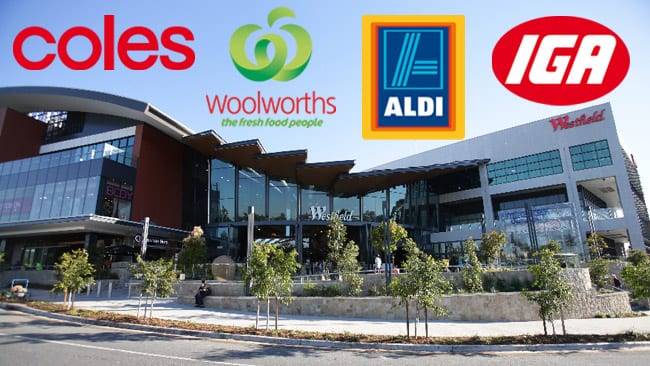
    Aldi has taken the Transport Workers Union to Federal Court, following what the supermarket claims is a string of false and misleading claims.

    The TWU has made a number of claims toward Aldi, including that its drivers have faced harassment when they have raised concerns over fatigue with management, with one driver quoted as being told, “Everyone else is doing it. You are the only one with a problem.”

    However, the supermarket has refuted these claims and said it will let the courts determine the matter.

    “The TWU has made a series of allegations against Aldi,” an Aldi spokesperson told. “We say these allegations are false.”

    According to the TWU, the supermarket’s alleged actions could have far-reaching consequences for those who raise concerns about safety in the workplace, environmental or rights abuses.

    “Transport workers are sending a clear message to Aldi to take road safety seriously and make sure its transport workers, the transport workers in its supply chain, and other road users can return home to their families in one piece,” Nick McIntosh, TWU national assistant secretary, said in a statement to Aldi over the Christmas period.

    “Coles and Woolworths have recognised their critical role in improving road safety. Aldi needs to stop attacking truck drivers and instead sit down in good faith and be part of the solution.”

  • Mobile phone sales drive wireless power market

    Mobile phone sales drive wireless power market

    It used to be that wireless charging was a nice-to-have but not got-to-have feature. These days, however, high-end smartphones have started to pick up on the interest and including this as standard feature.

    So when IHS Markit made its forecasts of the wireless power market, the analyst made it clear that mobile phones were an important factor driving the growth in this segment in 2018, comprising 71% of all receiver units shipped.

    The latest IHS Markit Wireless Power Market Tracker report put annual unit shipments of wirelessly charged mobile phones up by nearly 40% in 2018, reaching 300 million units, mainly driven by flagship models. The growth is expected to build in the mid-range smartphone category, as mobile phone companies plan to extend the adoption of wireless charging in that price band.

    Fortified by the growth in the sales of wirelessly charged mobile phones, global shipments of wireless power receivers and transmitters across all applications and product segments grew by 37% in 2018 to 600 million units, compared to the previous year. Global shipments will continue to grow to approximately 2.1 billion units in 2023, according to HIS Markit.

    “Wireless power technology continues to evolve rapidly, with reach expanding beyond smartphones to wider applications and product segments,” said Dinesh Kithany, wireless power and power supplies analyst, IHS Markit. “Wireless power technology is also undergoing further sub-segmentation, with regard to wider power levels and distance range.”

    He noted that wireless charging feature is used as a market differentiator to promote flagship models. “For example, Huawei and Samsung both included some cool innovations in their smartphones, with features like reverse-charging, wireless power-sharing, multi-device charging and the introduction of NFC wireless charging,” Kithany said.

    Opportunity outside mobile

    Beyond the mobile ecosystem – which also includes smartwatches, wireless earphones, and wearables – wireless charging is expanding into computing devices, smart home devices, IoT sensors, medical devices, small home appliances, power tools, robots and drones, augmented reality and virtual reality devices, gaming applications, industrial sector, 5G applications, electric vehicles and public infrastructure.

    “This wireless charging expansion creates opportunities for emerging wireless power solutions such as high-frequency-based resonant and radio-frequency, infrared and other uncoupled solutions to gain entry into the overall wireless power market,” Kithany said.

    According to IHS Markit, the smart home devices market is an especially promising segment for wireless power, because of the opportunities it presents to manufacturers and the benefits that accrue to consumers. Led by smart speakers, the wireless charging enabled smart home market is expected to grow to more than 100 million units in 2028.

    “Smart thermostats, air-control devices, electronic door locks, garage-door systems, intruder alarms, video cameras, video doorbells and other smart home devices will follow,” Kithany said. “The IoT sensors market alone is expected to add more than one billion wireless charging devices to this market in the next five years.”

  • Esprit’s restructuring shows first Results

    Esprit’s restructuring shows first Results

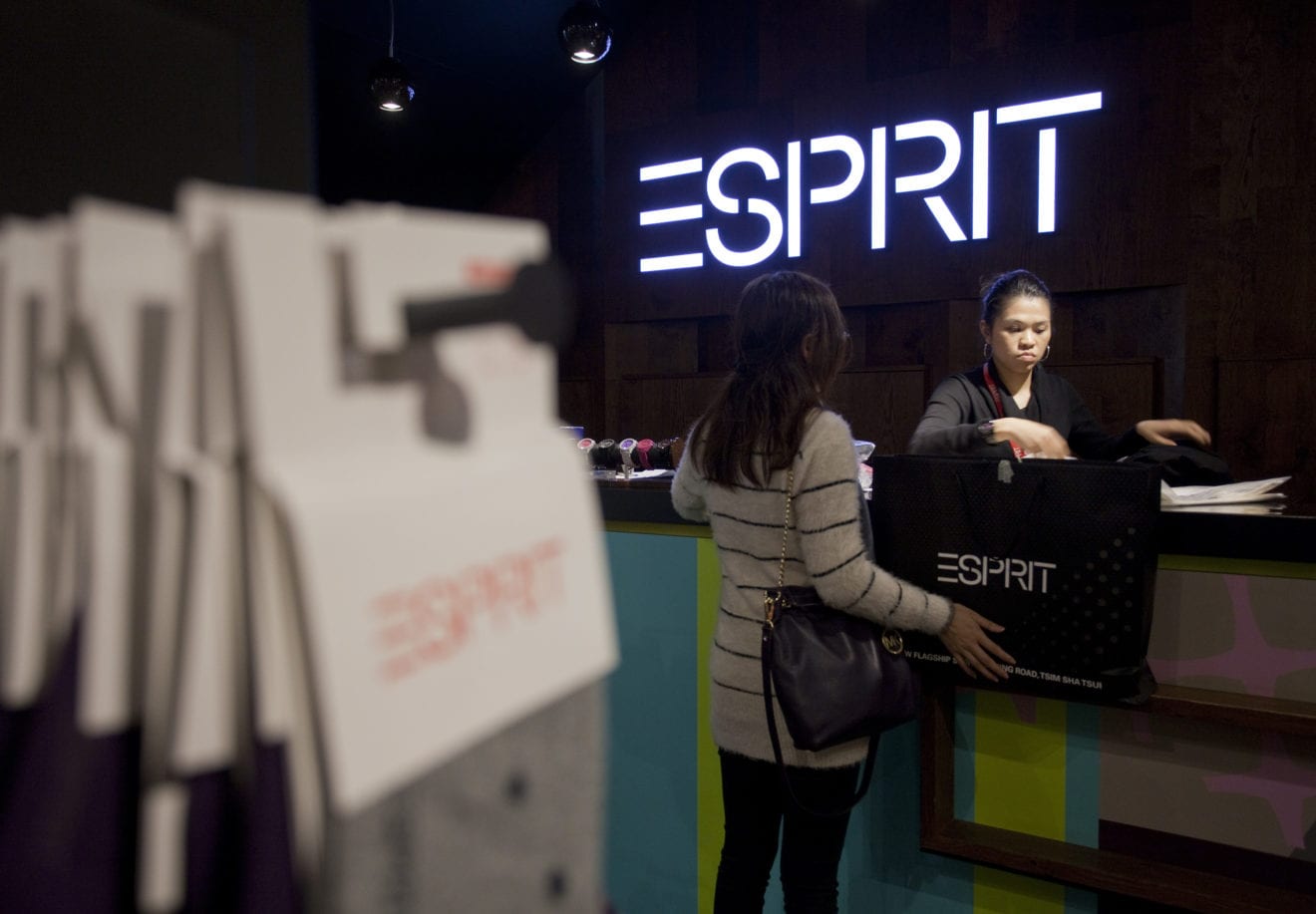
    Esprit’s restructure is beginning to pay off, the company says, despite another quarterly same-store-sales decline.

    For the three months to March 31, Esprit sales were HK$3.156 billion (US$402.3 million), down 11.6 per cent in local currency on the same period a year earlier. However, the company said that marks an improvement on the 12.4 per cent reduction in retail space occupied by the fashion brand.

    “This is the first-time since the first quarter of 2017-18 where the group recorded a quarterly revenue decline that is less than the corresponding space reduction,” the company said in a stock-exchange filing.

    “It is worth noting that while the quarter recorded a revenue decline, the rate of decline has continued to narrow quarter-on-quarter, reflecting a positive trend of improvement.”

    During the first quarter to September 30, sales declined 16.2 per cent, in the next quarter by 12.5 per cent and now to 11.6 per cent.

    The “improvement” was mainly driven by Germany which accounted for the largest share of the group’s sales. For Asia Pacific, the higher rate of revenue decline in the second quarter and third quarter was mainly due to the group exiting Australia and New Zealand, where all stores were closed by the end of last September as part of Esprit’s restructure.

    The company said it remains focused on the execution of its Strategy Plan to restore Esprit to sustainable growth and profitability.

    “Management is encouraged by the quarter-on-quarter improvements seen in different aspects of the business … and the progress of the strategic initiatives are progressing well and on track.

    The group is encouraged by the initial progress achieved during the early stages of the Strategy Plan, and this gives us confidence that we are on the right track. However, it is important to appreciate that the strategic closure of loss-making stores will exert pressure on our top-line in the short term, and as other initiatives are still work-in-progress at this stage, it will require time to make the corresponding improvements in brand and product visible to our customers for attracting them back into Esprit stores.”

  • Puma profit Down

    Puma profit Down

    Sportswear giant’s sales and profit soar, with China one of its greatest performing markets.

    Puma is celebrating its “best quarter ever” as sales, gross margin and profit reached record levels.

    On a currency-adjusted basis sales reached €1.319 billion (US$1.476 billion) up 15.3 per cent, while on a reported basis, sales growth was 16.6 per cent.

    The German-headquarted sportswear retailer said the increase reflected continued growth in all regions and product divisions across the business.

    Gross profit margin improved by 80 basis points to 49 per cent and EBIT by 27 per cent to €143 million. Net earnings rose 40.1 per cent to €94.4 million in the quarter.

    “The first quarter of 2019 was the best quarter Puma has ever seen,” said Bjorn Gulden, Puma’s CEO. “Revenues … were the highest Puma has ever achieved in a quarter and the EBIT … was also the highest absolute EBIT Puma has ever achieved. So, it has been a very good start into the year.”

    By region, Asia-Pacific – driven by China – and the Americas contributed with double-digit sales growth, while sales in Europe, Middle East and Africa increased “solidly,” the company said.

    By division, apparel was the main growth driver in the quarter, followed by accessories and footwear. The categories running and training, teamsport, motorsport and golf on the performance side, as well as sportstyle all recorded strong growth.