Author: Mei Ling Tan

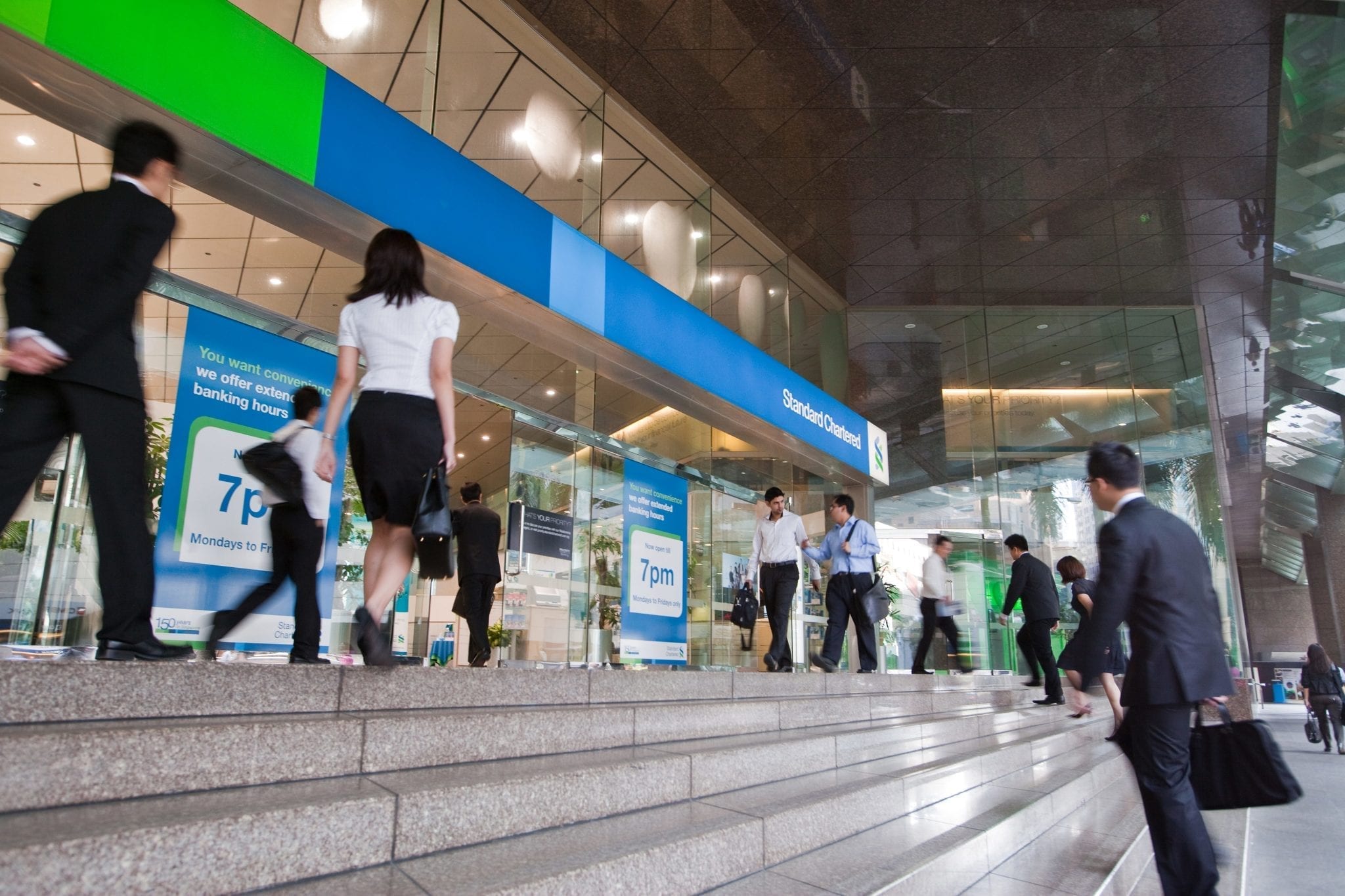
  • Standard Chartered Provides Instant Loans

    Standard Chartered Provides Instant Loans

    Our clients are highly engaged digitally. We have seen a 33 percent quarter-on-quarter growth in new mobile active clients, as our clients look to do most of their banking activities digitally, from application to activation to service requests and payments,» said Natalia Goh, Head of Credit Cards and Personal Loans, Standard Chartered Bank Singapore, in a press release on Tuesday.

    Since last year, the bank has seen twice the number of digital service requests from clients, such as card activation, replacement, and renewal requests, as well as reporting of lost cards.

    In addition, we see that our clients are increasingly comfortable with digital payments, with the number of mobile wallet transactions growing more than 80 percent in the past year. With this shift towards an increasingly digital lifestyle, we believe that our instant digital credit card and loan disbursement capabilities will greatly enhance the overall client experience,» Goh added.

    The new capability is powered by the bank’s real-time onboarding platform, which leverages on MyInfo, Singapore’s national database, to help new clients save a significant amount of time usually needed on lengthy form-filling. For clients who do not currently have a credit card or bank account with the Bank, MyInfo will help to pre-populate most of the information in the application form. Clients who hold existing credit card(s) with the bank will have a simpler and shorter form to complete.


  • Docomo, Itochu Logistics test IoT for delivery-fleet management in US

    Docomo, Itochu Logistics test IoT for delivery-fleet management in US

    Japan’s NTT Docomo and Itochu Logistics are planning to trial an IoT solution for delivery fleet management in the US.

    The solution uses devices compatible with low-power, wide-area LTE-M technology to track the status of outsourced trucks in their fleets.

    The trial will begin in the United States on May 1, 2019.

    According to the companies, the solution involves placing hand-held, battery- or solar-powered devices in trucks to collect data, such as truck locations and frequency of sudden braking, which will be sent through an LTE network to a dedicated website.

    The solution can also provide temperature, humidity, brightness, etc. data depending on delivery needs, as well as notify customers via email when the trucks approach their destinations.Itochu Logistics USA expects to save time using the solution compared to the conventional method of manually phoning drivers to confirm their locations and estimated delivery times.

    The solution will be tested for its effectiveness in supporting the management and safety of truck fleets at Itochu Logistics USA’s delivery-trick network and logistics system.

    “While most delivery trucks are equipped with GPS devices, the location data typically is available to the owner but not to logistics/transport companies that retain the trucks on an outsourced basis,” the companies said.

    “The solution’s easily deployed LTE-M devices, however, will give logistics/transport companies dedicated access to location and other useful information about trucks operating temporarily in their fleets.”

    The trial is part of the Globiot global-IoT initiative that Docomo launched on July 2, 2018.

    The Japanese mobile giant said it expects the solution will be marketed widely throughout US, Japan, and Asia.

  • Harley-Davidson 2019 First Quarter Sales Down

    Harley-Davidson 2019 First Quarter Sales Down

    Harley-Davidson has released its first-quarter results of 2019, and worldwide sales of motorcycles seem to have taken a hit, with the Bar & Shield brand reporting a 3.8 per cent decrease in global sales. While Harley says international sales were down 3.3 per cent, domestic US sales were down 4.2 per cent. According to Harley, these decreases were driven by “continued weak industry sales that were down 4.7 per cent.” Net income in the first quarter declined by 26.8 per cent as a result of declining worldwide sales. The company’s first quarter net income was reported as $ 127.9 million, down from $ 174.8 million in the same period of 2018, while the consolidated revenue was $ 1.38 billion in the first quarter of this year, compared to $ 1.54 billion in the first quarter of 2018.

    Struggling with falling sales and demand for motorcycles, Harley-Davidson has launched a campaign to build the next generation of riders with its “More Roads to Harley-Davidson” accelerated growth plan. The company’s strategic objectives through 2027 are to build as many as 2 million new riders in the US alone, grow international business to 50 per cent of annual volume, launch 100 new high impact motorcycles, and do so profitably and sustainably.

    “We are acting with agility and discipline to take full advantage of rapidly evolving global markets,” said Matt Levatich, president and chief executive officer, Harley-Davidson, Inc. “Harley-Davidson’s U.S. market share growth and retail sales performance in the first quarter are further evidence of the effects we are having as we continue to implement and dial-in our More Roads efforts.

    “We are driven by our un-paralleled rider focus and deep analytics that are guiding our efforts today and into the future. We, along with our dealers, are determined to lead and stimulate global industry growth.”

    Harley-Davidson said it has made some progress on the More Roads plan and appointed its first-ever brand president, to fully engage the power of the brand as a catalyst to achieve its strategy and long-term objectives. Harley has also expanded its electric portfolio with the acquisition of StaCyc, a maker of electric two-wheelers for children. There are also continued preparations to launch the LiveWire, Harley-Davidson’s first electric motorcycle later this year.

    For the second quarter of 2019, Harley-Davidson expects to ship approximately 65,000 to 70,500 motorcycles, with overall motorcycle shipments in 2019 estimated to be in the region of 2,17,000 to 2,22,000 motorcycles

  • Creditor Maybank Terminates Collaboration Deal

    Creditor Maybank Terminates Collaboration Deal

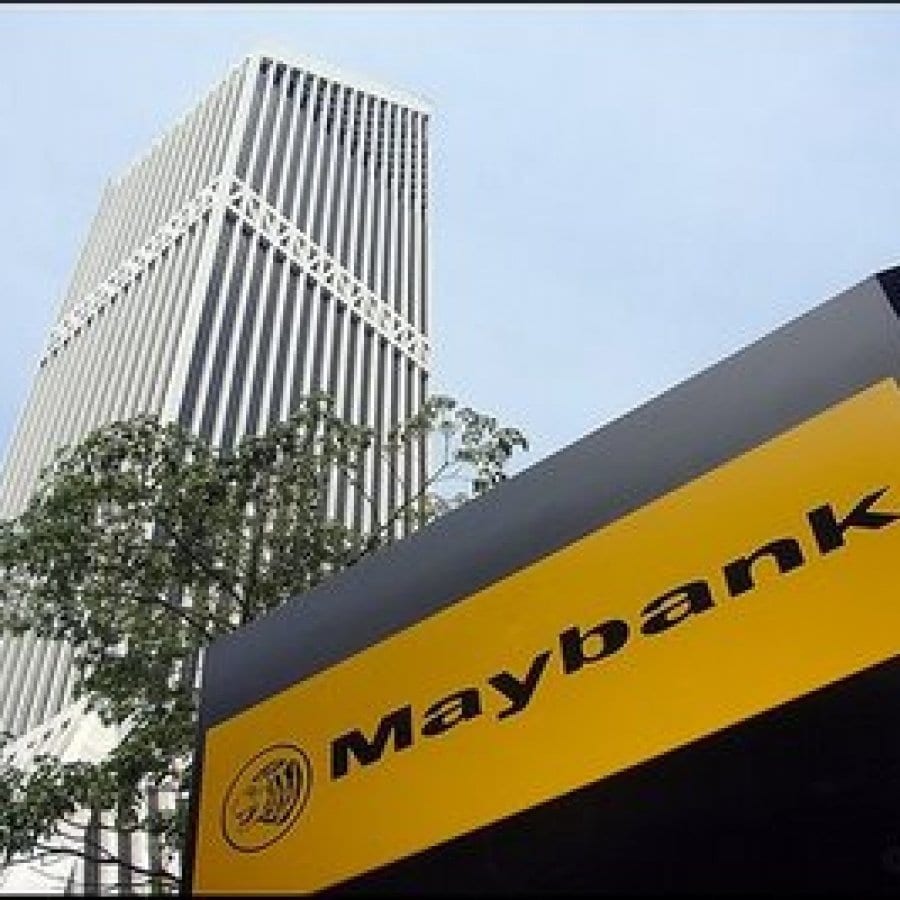
    Hyflux said that creditor Maybank was terminating its collaboration agreement with the troubled Singapore water infrastructure player with immediate effect due to its failure to reach a binding deal with a bidder or investor.

    This constitutes a breach which is incapable of remedy under the collaboration agreement,» the letter said, according to the Hyflux filing. In addition, Maybank has sent notices to Singapore water regulator PUB and the Energy Market Authority of Singapore, Hyflux said.

    «These notices are in respect of an enforcement event and acceleration of the maturity of all amounts owing under the Tuaspring financing documents,» Hyflux said in the filing. «Maybank has also stated its intention to appoint receivers and managers over the assets of Tuaspring save for the desalination plant and shared infrastructure.» Maybank’s loans to Hyflux were substantial: A CGS-CIMB research note from August said that the exposure was at S$658.6 million as of the end of the first half of last year.

    The Malaysian bank had agreed to hold off on enforcement action against Hyflux on the condition that the Singapore company would execute a deal with a successful bidder or investor which would fully settle with Maybank. A deal had appeared within reach and Maybank had provided Hyflux with multiple deadline extensions of their agreement.

    SM Investments, a consortium of the Salim Group and the Medco Group, had entered a binding agreement in October to invest S$530 million for a 60 percent stake in Hyflux, which had filed for court protection in May. Hyflux had said the oversupply of gas in Singapore’s market had resulted in depressed electricity prices, which hit earnings in 2017 and drove losses in the first quarter of 2018.

    But in early April, Hyflux terminated the deal, saying it had «no confidence» that SM Investments would complete the investment after the Indonesian consortium failed to provide a written commitment it would do so.

    The deal’s termination led to Singapore’s water regulator PUB rescinding its extension of the default cure period for the contractual obligations of Hyflux’s Tuaspring Desalination Plant. Last Wednesday, PUB issued a notice to Hyflux that it would terminate its water purchase agreement (WPA) and take over the plant.

    Maybank’s move was likely to mark another headache for Hyflux: «The termination of the collaboration agreement is expected to have a material impact on the financial performance of the group,» Hyflux said.

  • XL Axiata upgrading fiber network for 5G era

    XL Axiata upgrading fiber network for 5G era

    Indonesia’s XL Axiata has engaged Infinera to modernize both its South Sumatra terrestrial network and its Singapore-to-Jakarta subsea network for the 5G era.

    Under the agreement, Infinera will provide its XTC platform for the South Sumatra terrestrial network and the  Jakarta-Bangka-Batam-Singapore (B2JS) cable.

    The XTC platform is powered by Infinera’s Infinite Capacity Engine solution, which is designed to provide scalable multi-terabit optical super-channel capacity for distances from metro to subsea.

    XL Axiata CTO Yessie Dianty Yosetya said this additional capacity will allow XL Axiata to prepare its network for the arrival of 5G in Indonesia.

    “As one of Southeast Asia’s largest economies, modernizing the network in Indonesia to ensure 5G-readiness is a priority,” she said.

    “Our partnership with Infinera and Lintas Teknologi has been critical to help us achieve this milestone. Further, the performance of Infinera’s ICE4 solution for this subsea and terrestrial network upgrade enables the delivery of cloud-scale capacity that is simple and operationally efficient, with the benefit of intelligent OTN switching that accelerates our ability to deliver services faster.”

    XL Axiata’s transport infrastructure spans over 45,000km of fiber, while its mobile services cover 94% of Indonesia’s population. The company is a subsidiary of Malaysia-based Axiata Group.

  • Rent growth boosts CapitaLand Retail China

    Rent growth boosts CapitaLand Retail China

    Stronger rental growth and lower operating expenses boosted CapitaLand Retail China Trust’s income by 10.7 per cent in the first quarter. According to CapitaLand Retail China Trust Management Limited (CRCTML), the manager of  CRCT, net property income reached RMB198.9 million for the three months to March 31, up from RMB179.6 million in the same period a year earlier.

    “China’s economy expanded at an encouraging pace of 6.4 per cent during the quarter, with consumer demand showing signs of improvement,” said Tan Tze Wooi, CRCTML’s CEO. “The fiscal stimulus rolled out by the Chinese government, which include business and individual tax cuts, is expected to boost consumer sentiments. These developments bode well for CRCT, which has sustained its growth momentum into the new year through proactive asset management and value enhancement initiatives.

    During the quarter sales by CRCT’s tenants increased 9.8 per cent year on year, while shopper traffic grew 14 per cent. Portfolio occupancy remained high, at 97.4 per cent at the end of the period.

    “This strong foundation will anchor CRCT’s performance as we forge ahead with our tenant remix strategy to draw more popular concepts,” he said.

    Core income available for distribution to unitholders was S$24.9 million, 4.9 per cent higher than the first quarter of last year and 8.2 per cent higher than the fourth quarter of last year, with distributable income from joint ventures increasing 115.9 per cent year-on-year. The total distributable amount to unitholders was S$25.9 million.

  • Singapore Banks’ FX Volumes Pushed Up

    Singapore Banks’ FX Volumes Pushed Up

    Singapore banks will enjoy increased FX volumes going forward as the country grows as a foreign exchange (FX hub), banking heads said.

    «Singapore is fast evolving into a natural hub for FX in Asia with the many initiatives to promote FX trading in the region, coupled with regulatory support to encourage key market participants to set up their pricing and matching engines in Singapore,» said Lim Wee Kian, DBS managing director, head of FX.

    «FX trading activities and volumes in Singapore have increased over the past few years due to several reasons including the strong economic growth of Asia and a larger share of global investment flows into the region,» said Jose Luis Yepez, Citi head of FX and local markets, Asia-Pacific, Singapore.

    Plus, there is significant growth in the wealth management industry in the region, added Yepez. Despite the slight decline in assets under management (AUM) from $1.69 trillion to $1.63 trillion last year, Asia’s private banks have enjoyed a 6.9 percent compounded annual growth rate over the last five years, according to data from the Asian Private Banker.

    Last year, DBS Bank reported that its consumer banking/ wealth management income rose 21 percent to S$ 5.65 billion from increases in all product categories, despite a dip in the segment’s income during the fourth quarter last year. In the FX spot space, Southeast Asia’s largest bank saw strong growth, with spot volumes for 2016, 2017 and 2018 growing by 20 percent, 28 percent and 45 percent, year-on-year,  respectively, said Lim.

    «Digitisation of DBS’ FX transactions was a key driver of the strong growth in FX volumes, which started from a lower base, coupled with the strong traction from all remittance corridors of our consumer banking group and wealth management business,»  said Lim.

  • Indonesian Fintech Launches First Debt Services in Malaysia

    Indonesian Fintech Launches First Debt Services in Malaysia

    A fintech specialized in solving debt problems of consumers and business owners has launched its services in Malaysia, a country whose total overdue consumer loans is second highest in Southeast Asia.

    Indonesian Fintech amalan International announced on Wednesday that it has started operations in Malaysia, expanding its footprints in Indonesia and Singapore. In Malaysia, the total balance of overdue or almost overdue consumer loans is estimated to be $15 billion, the second highest in Southeast Asia.

    «In many cases, amalan is able to reduce the outstanding balance and/or the monthly installments by 50 to 90 percent in Indonesia – this would be also our target for our Malaysian clients. We want to offer a fresh start to our clients so that they can build a better financial future,» says amalan’s founder and CEO, Arne Hartmann in a statement to the media.

    amalan says that its key differentiator lies in working for borrowers to find the best solution with their lenders. As a social enterprise, amalan does not ask for upfront fees and instead uses a success fee model where the borrower only needs to pay after a restructuring plan has been agreed. The amount of the success fee is based on the savings generated through the restructuring.

    So far, the fintech said it has restructured more than 1,000 loans with all major banks in Indonesia and saved its clients more than $800,000 in the process.

    For each borrower, a restructuring plan is generated that takes into account all of the borrower’s loans to then reduce the debt balance and the monthly installments to an affordable level. These debt management programs use proprietary data and technology to get the borrowers out of debt faster, paying less.

    amlan Indonesia was selected as one of the 30 best start-ups in MaGIC (Malaysian Global Innovation & Creativity Center), a business accelerator program of the Malaysian government.

  • Ford Invests $500 Million In Rivian, a Battery Supplier

    Ford Invests $500 Million In Rivian, a Battery Supplier

    Rivian announced an equity investment of $500 million from Ford Motor Company. In addition to the investment, the companies have agreed to work together to develop an all-new, next-generation battery electric vehicle for Ford’s growing EV portfolio using Rivian’s skateboard platform. Rivian already has developed two clean-sheet vehicles with adventurers at the core of every design and engineering decision. The company’s launch products – the five-passenger R1T pickup and seven-passenger R1S SUV – will deliver up to 644 kilometres of range and provide an unmatched combination of performance, off-road capability and utility, starting in late 2020.

    RJ Scaringe, Rivian founder and CEO said, “Ford has a long-standing commitment to sustainability, with Bill Ford being one of the industry’s earliest advocates, and we are excited to use our technology to get more electric vehicles on the road.”

    Ford intends to develop a new vehicle using Rivian’s flexible skateboard platform. This is in addition to Ford’s existing plans to develop a portfolio of battery electric vehicles. As part of its previously announced $11 billion EV investment, Ford already has confirmed two key fully electric vehicles: a Mustang-inspired crossover coming in 2020 and a zero-emissions version of the best-selling F-150 pickup.

    Rivian remains an independent company. The investment is subject to customary regulatory approval. Following Ford’s investment, Joe Hinrichs, Ford’s president of Automotive, will join Rivian’s seven-member board.

    Bill Ford, Ford’s executive chairman said, “We are excited to invest in and partner with Rivian. I have gotten to know and respect RJ, and we share a common goal to create a sustainable future for our industry through innovation.”

  • Airasia keen to buy digital platforms to boost digital business

    Airasia keen to buy digital platforms to boost digital business

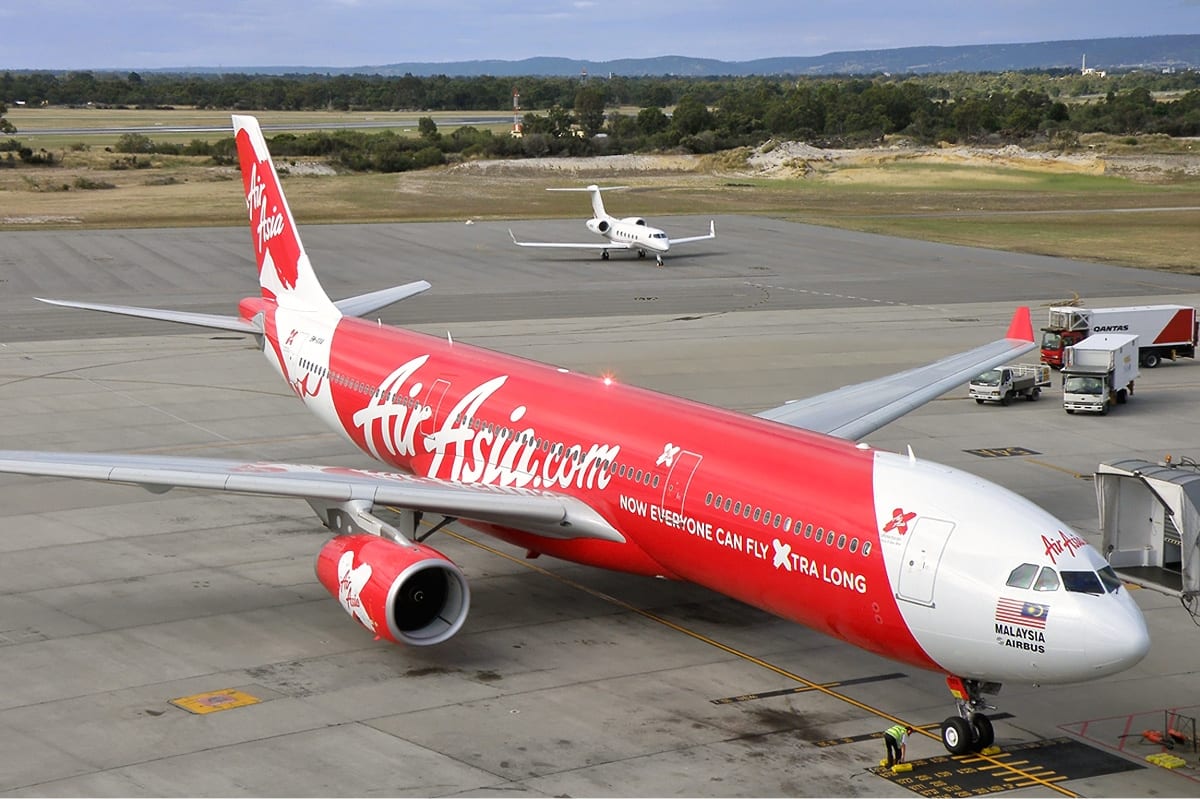
    Airasia Group Bhd is keen to acquire digital platforms abroad to boost its digital business segment.

    AirAsia Group chief executive officer Tan Sri Tony Fernandes said: “For sure…some will be M&A (merger and acquisition), some will be joint-ventures.”

    Asked which country the group was eyeing, he said: “Wait and see.”

    Fernandes was speaking to reporters after launching a brand new rooftop at AirAsia RedQ here, tonight. Also present was AirAsia executive chairman Datuk Kamarudin Meranun.

    Going forward, Fernandes said digital business would become a large part of the group’s revenue.

    “But I don’t want to make any prediction but many years ago I said ancillary income will be a big part of our business, and it became 25 percent. I believe digital will be much bigger,” he added.

    Commenting on the new rooftop, Fernandes said the idea was to drive integration between the staff from different departments toward an exciting digital future.

    “Digital is more about department working closely together. We are on a very exciting journey turning Airasia into more than just an airline,” he added.

  • AirAsia’s facial-recognition boarding system can now be activated on your smartphone

    AirAsia’s facial-recognition boarding system can now be activated on your smartphone

    Travelling can be stressful and AirAsia wants to make your boarding experience seamless with its new FACES feature. This is a facial recognition system that uses your face to replace your boarding pass.

    According to AirAsia Group CEO, Tan Sri Tony Fernandes, you can now register your face on the official AirAsia app. To register, just go to your profile and then tap on “My FACES”. You will be asked to record a short video of your face and submit a copy of your passport. Before you can start using FACES, you’ll need to do a one-time verification with their ground staff. Once that’s done, you can just walk through their gates without showing your boarding pass.

    At the moment, FACES is only available at Senai Airport in Johor and they hope to roll out this feature to more airports throughout the country. According to AirAsia, the FACES feature can help to speed up the boarding process and it has a success rate of 98%. FACES is available only for adults aged 18 and above. You can learn more from their FAQ.

    Previously, passengers will need to register their face through a kiosk located around the check-in counter area. With the updated app, you can perform this step anytime with your smartphone.

  • Thai AirAsia to fly to Sihanoukville from July

    Thai AirAsia to fly to Sihanoukville from July

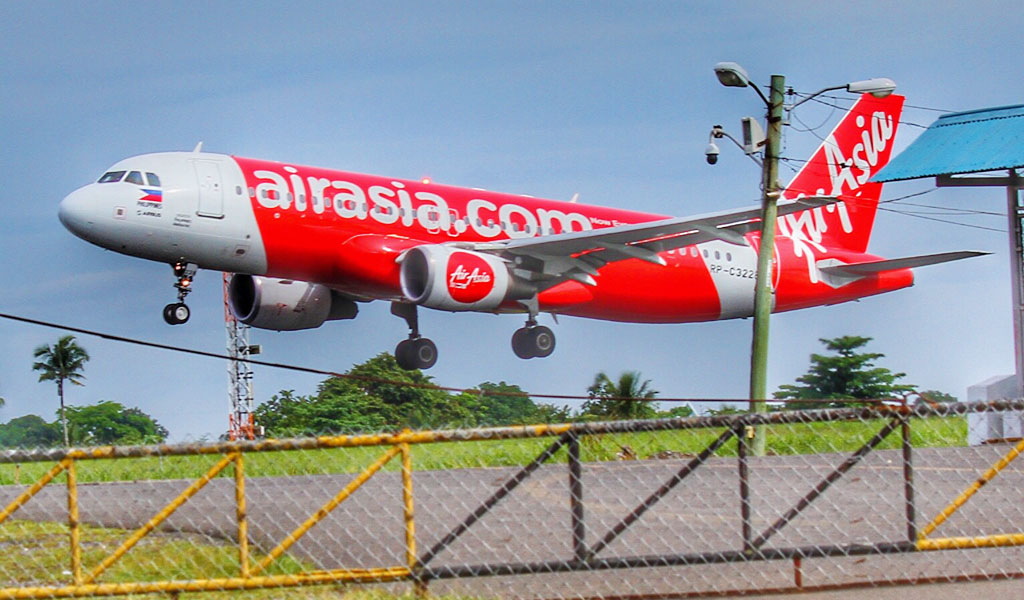
    Low-cost carrier Thai AirAsia, a subsidiary of Malaysia-based AirAsia, will launch a direct flight from Bangkok’s Don Mueang International Airport to Cambodia’s Sihanoukville in July. The coastal town will become Thai AirAsia’s third destination in Cambodia after Siem Reap and Phnom Penh.

    “The new route is expected to serve the millions of foreign travellers who use Thailand as a hub, while for Thai travellers, Sihanoukville offers an affordable beach and cultural getaway,” Thai AirAsia CEO Santisuk Klongchaiya was quoted as saying in the Bangkok Post on Monday

    Norinda Khek, communications and public relations director at Cambodia Airports, confirmed the new flight, and said it demonstrates the efficiency of Cambodia Airports’ route development strategy, which aims to attract airlines by providing them marketing support, among other services.

    Taing Sochet Krisna, director of Preah Sihanouk province’s tourism department, said that the presence of one more airline in Sihanoukville International Airport will help increase the number of tourists to the province.

    He said China tops the list of visitors to the province by nationality, followed by neighboring countries like Malaysia and Vietnam.

    According to data from Cambodia Airports, last year air passenger traffic to the province increased by more than 92 percent, totalling 650,000 visitors.

    According to Mr Norinda, Sihanoukville International Airport has five domestic airlines – Cambodia Angkor Air, Cambodia Airways, Lanmei Airlines, JC Cambodia Airlines, and Sky Angkor Airlines – and four international ones – AirAsia, Ruili Airlines, Sichuan Airlines, and Hainan Airlines.

  • Calvin Klein opening First Multi Brand Fashion Store

    Calvin Klein opening First Multi Brand Fashion Store

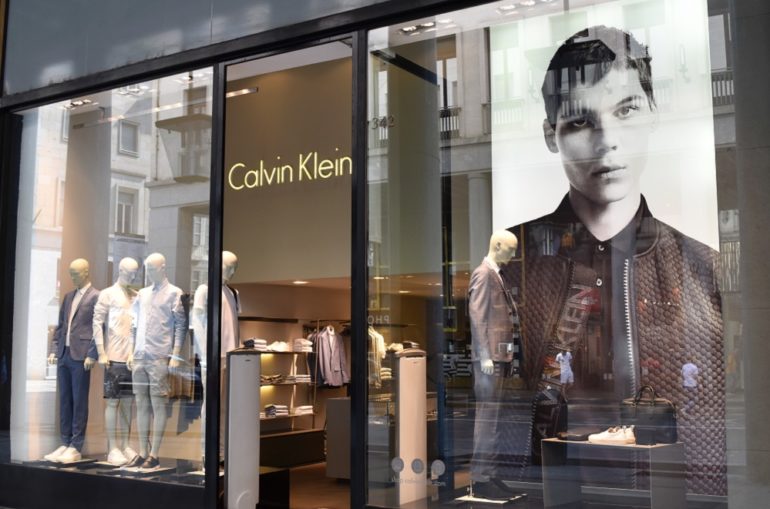
    The first store bringing together the entire Calvin Klein offering in Australia opened over the Easter long weekend at Queensland’s Sunshine Plaza. Spanning over 310sqm and offering a full range of men’s and women’s underwear, jeans, performance, accessories, as well as kid’s underwear, the store is the Calvin Klein’s 32nd in Australia, and reflects the brand’s minimal, modern aesthetic.

    Sunshine Plaza recently finalised a $440 million redevelopment, boasting over 345 retail stores to become the first ‘super regional’ shopping centre North of Brisbane.

    Calvin Klein’s presence in Australian and New Zealand had previously been run by Gazal Corporation, but the brand’s US-based owner, PVH Corporation, recently outlined plans to purchase Gazal.

    The deal, which also impacts the Tommy Hilfiger brand and is expected to be finalised in the second quarter of 2019, will give PVH a more direct hand in the brand’s Australasian operations.

    “I’m pleased that we have agreed to acquire Gazal. PVH currently – and for many years – has had a successful business relationship with our Australian partners and would be pleased to bring them into the larger PVH family,” Emanuel Chirico, PVH Corporation’s chairman and CEO said.

    “Gazal has enhanced the market position of our brands in Australia and New Zealand and we believe the region continues to offer significant growth over the next five years and aligns with our strategic priority to expand our direct control of businesses operated under the Calvin Klein and Tommy Hilfiger brands worldwide.”

  • Pomelo launches first Beauty Line

    Pomelo launches first Beauty Line

    O2O fashion brand Pomelo has launched its first cosmetics line, Beet, solidifying its identity as a one-stop lifestyle brand.

    Created with women on-the-go in mind, Beet comprises 17 products across four categories – Liquid Blush, Liquid Lipstick, Lip Gloss and Liquid Shimmer.

    All products are priced at S$10 per item and feature paraben-free and cruelty-free formulations.

    “For consumers today, beauty is integral to style,” said David Jou, Pomelo CEO, signalling the company is taking “a step in the right direction”.

    “As a fashion brand that wants to offer women everywhere their best look to become their best selves, we cannot ignore that.”

    With Beet, Pomelo provides another touchpoint for a seamless customer experience that prioritises modern consumers’ demand for convenience.

    Last month, Pomelo launched its second sustainable collection, Purpose.

  • Ramadan an opportunity for E-Commerce Retailers

    Ramadan an opportunity for E-Commerce Retailers

    Online sales in Malaysia and Indonesia are set to boom in the lead up to – and during – Ramadan, according to an analysis by advertising platform Criteo. Based on data from last year’s festival – which ran from May 15 to June 14, consumer activity typically slowed at the start and end of the period.

    However, while this could be a result of consumers focusing more on the actual festivities during those times, online retail sales surged 10 days into Ramadan and lasted through the two weeks before Eid al-Fitr on 15 June.

    A 57 per cent uplift in online retail sales was observed on June 4, Criteo revealed.

    By comparison, shoppers in the Middle East typically shop early into the season and slow down closer to Eid al-Fitr to focus on celebrations. Online retail sales surged early, reaching a 106 per cent uplift on May 26. The shopping behaviour during Ramadan in Turkey mirrored that in Malaysia and Indonesia, with online retail sales reaching a peak at 50 per cent uplift a week before Eid al-Fitr.

    “Ramadan represents a notable cultural shift in consumer behaviour, with the Middle East and Southeast Asia being key regions,” said Criteo SEA-Pacific MD said Alban Villani. “Moreover, the global Islamic economy is also growing year-on-year, estimated to reach US$3 trillion by 2023.

    “Given the growth potential of the halal industry, retailers should leverage Ramadan to engage Muslim shoppers,” continued Villani. “They should start reaching out to shoppers early with the relevant messaging two weeks earlier, especially when shoppers are thinking of buying gifts for family and friends. As some shoppers might purchase later into the festive season, retailers should continue engaging them with special offers and personalised content throughout Ramadan to optimise their campaign efforts. By doing so, it is easier for retailers to stay top-of-mind when shoppers are ready to buy gifts to share the festive joy.”