Author: Mei Ling Tan

  • Cloud fueled data center spending growth to $150b in 2018

    Cloud fueled data center spending growth to $150b in 2018

    Synergy Research Group (SRG) says a 30% spike in public cloud spending the data center hardware and software market grow to $150 billion in 2018. In addition, the requirement for ever-richer server configurations also drove up enterprise server average selling prices.

    Spending on enterprise data center infrastructure grew by 13% in part driven by the 23% growth in private cloud or cloud-enabled infrastructure, which helped to offset a marginal decline in traditional, non-cloud infrastructure.

    In terms of market share, ODMs in aggregate account for the largest portion of the public cloud market, with Dell EMC being the leading individual vendor, followed by CiscoHPE and Huawei. The 2018 market leader in private cloud was Dell EMC, followed by Microsoft, HPE and Cisco.

    Private cloud or cloud-enabled infrastructure accounted for a little over a third of the total. Servers, OS, storage, networking and virtualization software combined accounted for 96% of the data center infrastructure market, with the balance comprising network security and management software.

    “Cloud service revenues continue to grow by almost 50% per year, enterprise SaaS revenues are growing by 30%, search/social networking revenues are growing by almost 25%, and e-commerce revenues are growing by over 30%, all of which are helping to drive big increases in spending on public cloud infrastructure,” said John Dinsdale, chief analyst at Synergy Research Group.

    “We are also now seeing some reasonably strong growth in enterprise data center infrastructure spending, with the main catalysts being more complex workloads, hybrid cloud requirements, increased server functionality and higher component costs,” added Dinsdale.

  • German Motor Authority Probes More Mercedes Emissions Software

    German Motor Authority Probes More Mercedes Emissions Software

    Germany’s motor vehicle authority KBA is investigating Daimler on suspicion that 60,000 Mercedes cars were fitted with software aimed at tricking emissions tests, the Bild am Sonntag newspaper reported on Sunday. A spokesman for Daimler, owner of Mercedes-Benz, said the carmaker was reviewing the facts and fully cooperating with the KBA. Bild am Sonntag said the KBA was looking into suspicious software in Mercedes-Benz GLK 220 CDI cars produced between 2012 and 2015, after tests showed they only meet emissions limits when a certain function is activated.

    Since rival Volkswagen admitted in 2015 to cheating U.S. emissions tests, the scandal has spread to other carmakers. Daimler has ordered the recall of 3 million vehicles to fix excess emissions coming from their diesel engines.

    Bild am Sonntag said the KBA found that the function it had discovered had been removed during software updates carried out by Daimler.

    The Daimler spokesman said the company had complied with a process agreed upon with the KBA and German Transport Ministry when updating software for the 3 million recalled vehicles.

    “The allegation that we wanted to hide something with the voluntary service measure is incorrect,” he said.

    This month European Union antitrust regulators charged BMW, Daimler and Volkswagen with colluding to block the rollout of emissions-cleaning technology.

  • Selected unveils Future You store concept

    Selected unveils Future You store concept

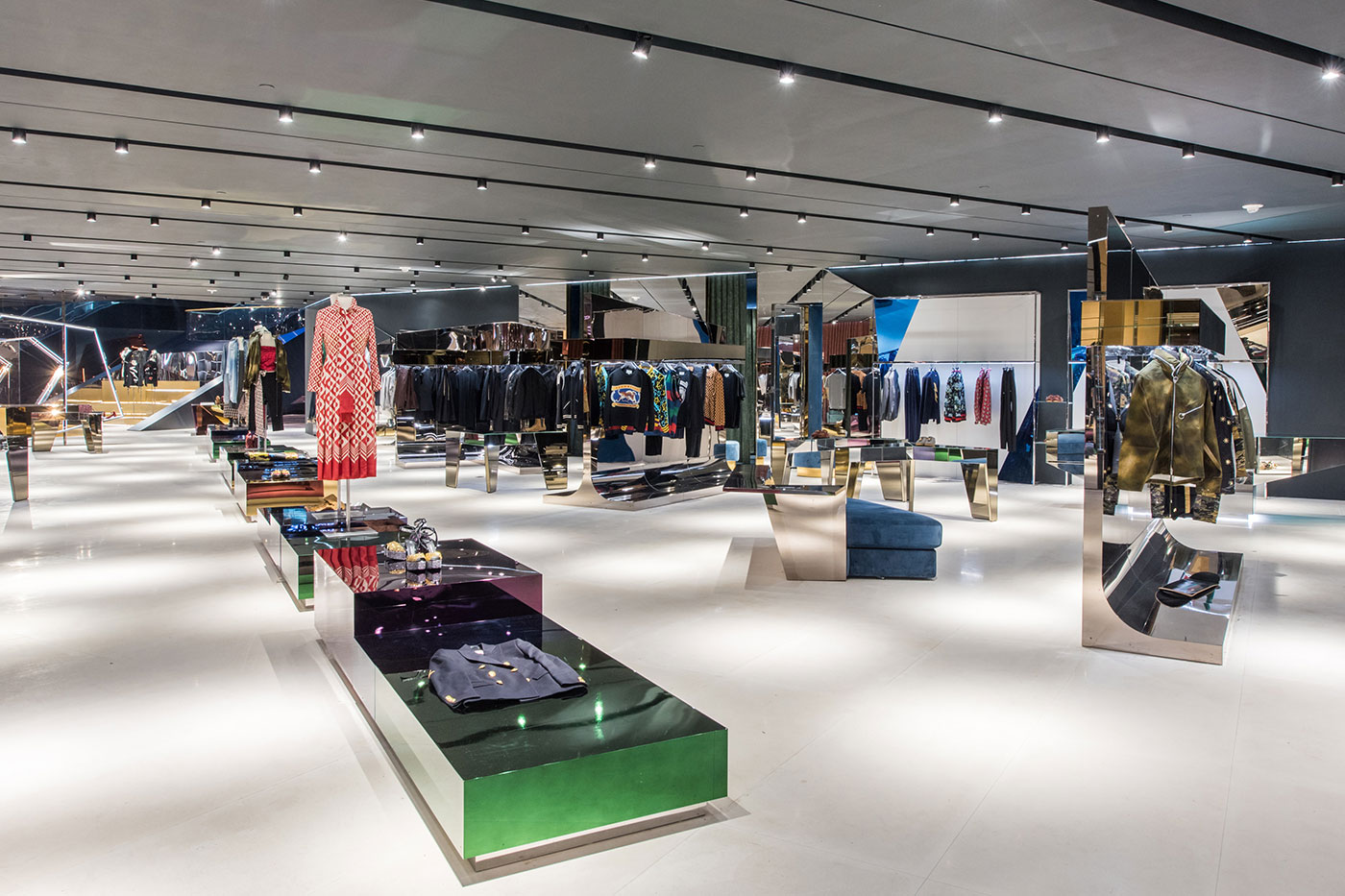
    Retail design agency Dalziel & Pow has created an elevated retail experience for Bestseller Fashion Group China’s “Selected” brand.

    The new premium Future You store concept is to be launched initially in a series of stores in Beijing, delivering a space “ready to connect, change, and dress the future consumer”. The design is an attempt to raise Selected’s profile as the destination for on-trend, quality workwear, as well as building an aspirational lifestyle model around the brand.

    Integrating a dynamic, hyper-connected experience to impress China’s digital natives, the store includes projections, kinetic signage and a live social media feed behind the cash desk to evoke a sense of change and “newness”. A “magic mirror” within the fitting rooms area allows customers to swipe through products to find their perfect outfit, which once chosen can then be shared via WeChat.

    Integrated throughout the store on the perimeter rails are pocket-sized screens, called “Debriefs” which showcase bite-sized snippets of product information, education on materials and fashion inspiration.

    The design language for the store was developed to create a feeling of “one space”, a concept designed for people and not for genders; a fluid space creating flow between categories and reflecting the fact that Chinese couples often shop together. A single product rail flows through the whole store, symbolically unifying the space.

    Selected’s fitting rooms form a key architectural feature as well as a social space, as is the cash desk. There are also separate shop-in-shop areas for Chinos and Denim, enhanced by miniature screens detailing fit and fabric qualities.

  • South Korean bank launches hand palm recognition verification

    South Korean bank launches hand palm recognition verification

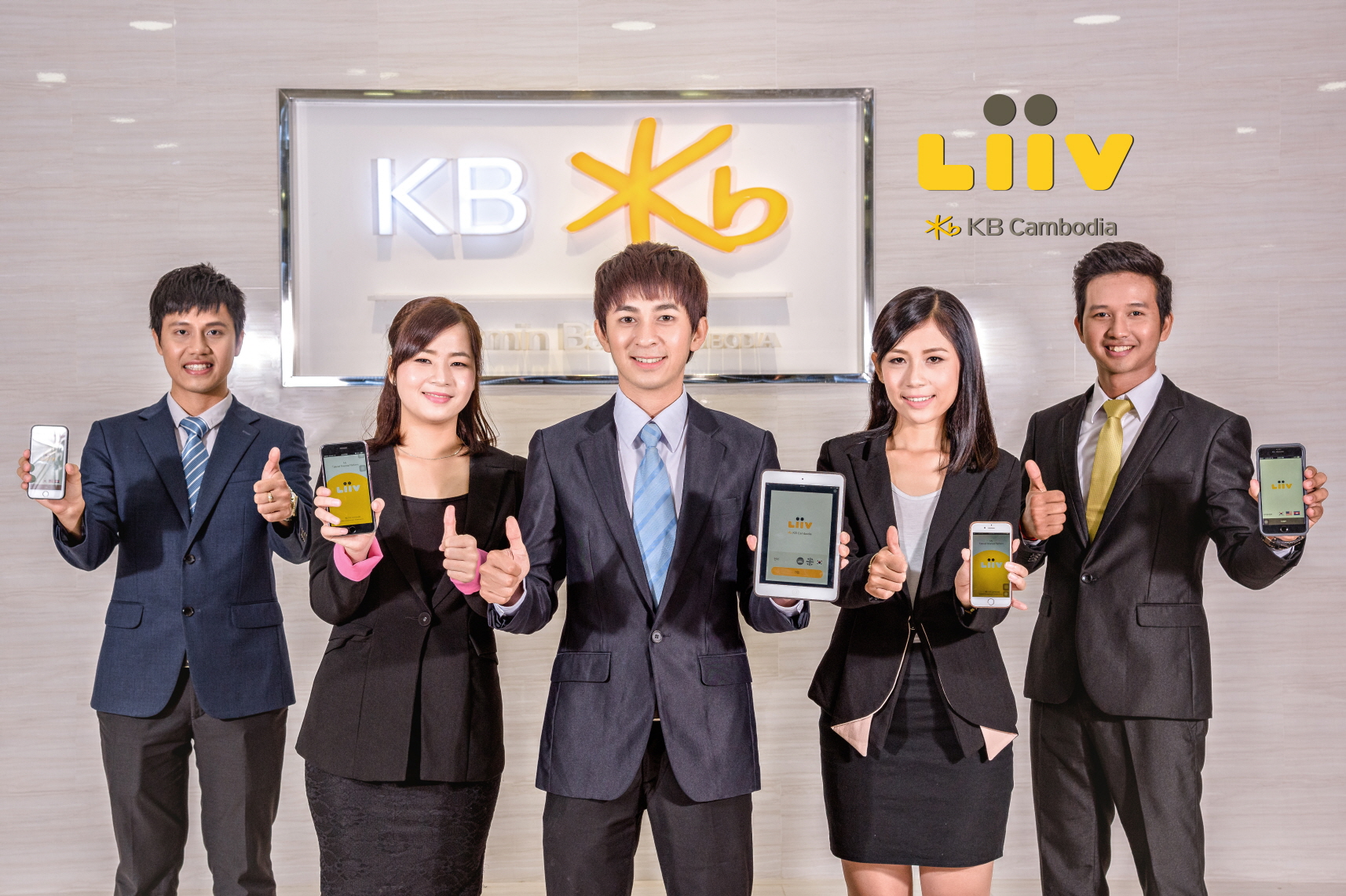
    A South Korean bank has launched a service allowing customers to use palm recognition to withdraw cash – a likely precursor to similar technology becoming available in retail stores.

    KB Kookmin Bank says by using palm prints, customers no longer have to use a bankbook, stamp or password.

    The bank explained that palm vein recognition is safer and more precise than other biometric identification methods such as fingerprint or iris recognition. It believes the service will appeal to older customers who often have difficulty recalling passwords.

    According to a report, using palm recognition is also quicker than current means. Palm vein patterns differ by individual, allowing the scanner to correctly identify the customer.

    Similar palm-vein scanners are already being used at automated teller machines (ATM) from major banks worldwide, including Barclays in the UK and Ogaki Kyoritsu Bank in Japan.

    To prevent biometric information from leaking, the bank will encrypt the vein pattern database and work with the Korea Financial Telecommunications and Clearings Institute to store the information. The data will be disassembled into multiple blocks when stored, and reassembled when used for transactions.

    KB Kookmin Bank expects that the new palm-recognition service will particularly benefit senior customers who often have a hard time remembering passwords.

  • Singapore retail sales plunge due to Chinese New Year

    Singapore retail sales plunge due to Chinese New Year

    Singapore retail sales plummeted 10 per cent year on year in February – but the sudden drop was largely due to the timing of Chinese New Year celebrations.

    After excluding motor vehicles from the figures, sales dropped by a slightly higher 10.7 per cent.

    Chinese New Year fell in the middle of the month last year, and early in the month this year, resulting in a shifting of some seasonal spending back into January this time around. Figures combining January and February sales in both comparable periods were not released.

    According to Statistics Singapore, sectors such as food retailers, apparel & footwear, supermarkets & hypermarkets, department stores, furniture & household goods, and medical goods & toiletries registered declines in retail sales of between 10.4 per cent and 24.8 per cent this year.

    Sales of watches & jewellery, optical goods, and books fell by between 7.2 per cent and 9.2 per cent.

    Statistics Singapore estimated total retail sales in February this year at $3.3 billion, with online retail sales comprising about 5 per cent of those.

    Sales of food & beverage services decreased 2.3 per cent year on year. The total sales value of food & beverage services in February was estimated at $855 million, compared to $875 million in February last year.

  • Massimo Dutti Singapore opens at Jewel Changi

    Massimo Dutti Singapore opens at Jewel Changi

    Massimo Dutti Singapore has launched its sixth store, at Jewel Changi. The Inditex-owned fashion label’s almost 600sqm retail space features the brand’s newest design concept for the first time in Southeast Asia and following the opening of a similar outlet in Munich, Germany.

    Designed to look like a New York apartment, the new interior design layout expresses the natural evolution of the brand. The store concept is focused on lifestyle, offering a more enticing setting via the use of warm, high-quality materials such as wooden furniture and finishes and the use of plants – a blending of contemporary designer furniture that greatly reinforces this updated identity.

    As Massimo Dutti Singapore’s second largest store after Liat Tower, the new venue is in line with the Inditex Group’s latest approach to eco-efficiency.

    Electricity consumption has been reduced by some 30 per cent and water consumption by 40 per cent in comparison with its conventional stores. The eco-efficiency measures implemented include a store lighting system that optimises the lighting for the furnishings, and the exclusive use of LED bulbs. The lighting system also enables partial lighting of store spaces.

    The Changi store also features a Travel Collection, with easy-iron shirts and lightweight crease-resistant suits.

  • Easter 2019 trading hours Unveiled

    Easter 2019 trading hours Unveiled

    The Australian Retailers Association expects shoppers to turn out in force to buy Easter-related food and gifts this week.

    According to the ARA, most Easter sales do not occur until the week before Good Friday, which this year falls on April 19.

    Although the Easter trading period is shorter than the Christmas period, it is still recognised as a busy event for retailers, ARA executive director Russell Zimmerman said.

    “As Easter is celebrated widely, many Australians will be heading to retail outlets to buy fresh produce to cater for Easter lunches and feed their friends and families,” Zimmerman said.

    The ARA predicts that sales of traditional Easter items, including hot cross, buns, seafood, fresh produce, liquor and chocolate will increase during this time.

    Bryan Skepper, Sydney Fish Market general manager, said he expects 50,000 people to visit the iconic market on Good Friday and estimates over 650 tonnes of seafood will be sold during the day.

    Skepper said the fish market will open its doors for extended trading hours on Good Friday. It will open at 5am on April 19 and will close at 5pm.

    Steve Plarre, CEO of Ferguson Plarre Bakehouses, said hot cross buns, unsurprisingly, are top-sellers during the Easter period.

    He said the last few years have seen a rise in the sale of their raspberry and white chocolate and apple and cinnamon varieties.

    Restrictions on trading during the Easter period, which begins on Good Friday and lasts until Easter Monday, vary by state. The National Retail Association has provided the following information on trading restrictions:

    ACT

    There are no trading restrictions any day from April 19-22.

    Northern Territory

    Trading hours are not regulated in the Northern Territory, however, individual restrictions may apply to certain shopping centres based on centre management.

    Trading hours for the sale of liquor products are regulated.

    NSW

    Shops are closed on Good Friday, April 19, and Easter Sunday, April 21, except for small shops and exempt shops, and shops in exempt areas.

    There are no trading restrictions on Saturday, April 20, or Monday, April 22.

    Queensland

    Independent retail shops are closed on Good Friday except if they are a predominantly food and/or grocery store, which can trade unrestricted. There are no restrictions from April 20-22.

    Non-exempt shops must not open on Good Friday. Trading may be permitted for non-exempt shops in certain areas of Queensland on the other public holidays during the Easter period.

    Tasmania

    Shops are closed on Good Friday, April 19, but are open from April 20-22.

    South Australia

    Shops in the CBD tourist precinct are closed on Good Friday, April 19. Trading is permitted on Saturday, April 20, until 5pm, and between 11am and 5pm on Sunday, April 21, and Monday, April 22.

    Shops in the Greater Adelaide Shopping District are closed on Good Friday, April 19, and Easter Sunday, April 21. Trading is permitted on Saturday, April 20, until 5pm, and between 11am and 5pm on Monday, April 22.

    Shops in Proclaimed Shopping Districts, excluding shops selling hardware, building materials, furniture floor coverings and motor vehicle parts and accessories, are closed from April 19-22.

    Trading is permitted for the exempted categories listed above on Saturday, April 20, until 5pm, and between 9am and 5pm on Sunday, April 21, and Monday, April 22. These shops are closed on Good Friday, April 19.

    Victoria

    Shops are closed on Good Friday, April 19, except for exempt shops. There are no restrictions on trading from April 20-22.

    WA

    Shops are closed in the Perth metro area on Good Friday, April 19, and trade is permitted on Saturday, April 20, between 8am to 5pm. On Sunday, April 21, trade is permitted between 11am to 5pm, and on Monday, April 22, trade is permitted between 8am to 6pm.

    Outside of the Perth metro area, shops are closed on April 19-22, except for Saturday, April 20, when trade is permitted between 8am and 5pm.


  • King Living Opens Shanghai Flagship Store

    King Living Opens Shanghai Flagship Store

    Australian furniture and lifestyle brand King Living has opened a flagship retail store in Shanghai, continuing its global expansion into China.

    The new 400sqm space will showcase King Living’s sofa designs, dining ranges, contemporary bed and mattress ranges, and outdoor collections.

    The brand has been a prominent player in Australian furniture design for more than 40 years, and is now continuing to seek a global audience with the opening of the new showroom in the design district of Xuhui in Shanghai.

    As King Living moves into China, it further expands its global reach with existing stores in Singapore, Malaysia, New Zealand and Canada, with a showroom opening in Vancouver slated for later this year.

    The brand represents the deep quality and barefoot luxury of the Australian lifestyle that is in high demand across China, which has been the driving force behind for its expansion.

    “Shanghai is key to King Living’s global growth strategy,” said King Living’s CEO Anna Carrabs. “China provides us with an unparalleled growth opportunity that doesn’t exist in slower-moving markets of developed countries. A key advantage for King Living is that one of our manufacturing facilities is in Shanghai, which allows us to implement initiatives and increase market penetration.

    “Being from Australia, we have a reputation for quality, and I think that sets us apart from some of our global competitors. This is a very exciting time for King Living and we look forward to seeing the Shanghai showroom thrive in what we hope will be the first of many stores in the region.”

    King Living is also one of the first Australian furniture retailers to offer Alipay and WeChat Pay as a payment option throughout all their showrooms in Australia and abroad. These platforms are the preferred payment method for Chinese consumers both domestically and internationally, enabling more customers to transact with their mobile wallet.

  • Jail Sentence for trade-show Fraudsters

    Jail Sentence for trade-show Fraudsters

    Two trade-show fraudsters have received jail sentences after Customs caught them selling fake goods at the Hong Kong Convention & Exhibition Centre.

    A person in charge of an exhibition booth and a salesperson were sentenced to three months’ imprisonment and three months’ imprisonment suspended for 12 months respectively on March 15 and April 12 at the Eastern Magistrates’ Courts for offering to supply goods with false trade description and possession of goods with a forged trademark for the purpose of trade or business.

    They had contravened the Trade Descriptions Ordinance (TDO), according to a spokesperson for Customs.

    The sentence imposed on the person in charge of the exhibition booth is the heaviest penalty in the past decade among similar cases of infringement that took place at exhibition fairs.

    Customs earlier received the trademark owner’s information alleging the display of counterfeit handbags for order at a booth in a leather fair held at the Hong Kong Convention and Exhibition Centre.

    After investigation, Customs officers conducted a test-buy operation and successfully ordered 500 counterfeit handbags and seized five counterfeit handbag samples at a booth with an estimated market value of about $40,000 in total. A 36-year-old man in charge and a 29-year-old saleslady were arrested and prosecuted.

    The Customs spokesperson promised to continue to take “stringent enforcement action” to combat infringing activities. Booth exhibitors are reminded to respect intellectual property rights and not to sell counterfeit goods.

    Under the TDO, any person who sells or possesses for sale any goods with a forged trademark commits an offence. The maximum penalty upon conviction is a fine of $500,000 and imprisonment for five years.

    Despite stringent vetting of exhibitors, fake products at major Hong Kong exhibitions has been concerning authorities for some time. In September 2016, Customs officers seized a fake branded jewellery at a trade show in the Hong Kong Convention & Exhibition Centre.

  • Popular Pixel widget will gain new options

    Popular Pixel widget will gain new options

    The Pixel Launcher’s At A Glance widget shows the day, date and information related to the weather, including the temperature. Tapping on the day and date will open the calendar while tapping on the weather information will take you to Google’s weather app. The widget also alerts you to a calendar appointment, an upcoming flight (including the boarding time) and unusual traffic changes.

    Now, the At A Glance widget has some new features. Long press on the widget and tap on preferences and you’ll see all of the available information that the widget can display. This includes Calendar events, Upcoming flight information, and Traffic information along with two new features: Reminders and Intelligent tips. The former will show you the next upcoming reminder alerts. For example, let’s say you set a reminder to alert you when you can take Tylenol again; this will show up on the widget. The latter reveals intelligent tips powered by Google Assistant.

    We’re guessing that these are suggestions about what features available on your phone use should use in certain situations. Right now, both of these new features are not working even though they are listed as preferences for the widget.

  • Beauty & You brings Find Kapoor and Olens into Hong Kong

    Beauty & You brings Find Kapoor and Olens into Hong Kong

    The Shilla Duty Free’s retail concept Beauty&You has become the first retailer in Hong Kong to launch exclusive South Korean brands Find Kapoor and Olens.

    Located at Hong Kong International Airport (HKIA), Beauty&You seeks to introduce a multitude of brands and product combinations to customers, placing strong emphasis on the concept of individuality and personalised offerings through a mix-and-match of a unique range of products.

    “We are ecstatic to have Beauty&You as the first retailer to bring Find Kapoor and Olens to the HKIA”, said a representative for Beauty&You. “These partnerships are a testament to our strong positioning and ability to collaborate with a multitude of brands, in order to bring all-round travel retail experiences and surprises to global travellers.”

    Beauty&You will feature Find Kapoor’s classic, minimalistic strapped handbags at a dedicated pop-up. Olens is a range of coloured contact lenses.

    These brand collaborations are tailored to the needs of all global travellers passing through HKIA, aiming to stimulate customers’ minds about beauty and styling, said The Shilla. Incorporating brand new product options and categories such as fashion accessories and coloured contact lenses, Beauty&You strives to break the traditional mindset of beauty as solely focused on skincare and cosmetics, helping consumers to achieve their own definitions.

  • Cloud gaming could make up half of 5G data traffic by 2022

    Cloud gaming could make up half of 5G data traffic by 2022

    Cloud gaming could generate as much as 50% of 5G data traffic by 2022, based on the rapid progression of cloud gaming services in recent months.

    That was one of the key findings presented during a recent livecast hosted by Openwave, which was attended by over 50 operators, including Vodafone, Orange, Deutsche Telekom, Verizon, AT&T and Telefónica.

    According to Openwave, most operators believe cloud gaming could represent 25% to 50% of 5G data traffic by 2022.

    As mobile operators deploy 5G networks, it’s vital that mobile operators prepare for the disruptive impact that cloud gaming could pose, the company noted.

    “The recent emergence of cloud gaming platforms including Google Stadia, Apple Arcade, Microsoft xCloud and Snap Games has not escaped the attention of the operator community,” said John Giere, president and CEO of Openwave Mobility. “Over-the-top (OTT) players have ambitious plans to become the ‘Netflix for gaming’, hosting libraries of thousands of instantly accessible games that, ultimately, will consume three to four times the amount of bandwidth on 5G networks, compared to standard definition video traffic. Needless to say this will impact mobile operator data strategies.”

    “While 5G network rollouts are still in their infancy, OTTs are already planning augmented, virtual and mixed reality services, in addition to cloud gaming. Combined with the expected continued growth of streaming video, these services will rapidly eat into the additional bandwidth provisions of 5G.”

  • Airtel launches e-book app store

    Airtel launches e-book app store

    India’s Bharti Airtel has expanded its OTT portfolio with the launch of a new app store for e-books.

    The Airtel Books app currently offers over 70,000 e-books from Indian and international authors, including some of the latest launch titles.

    The app will include a subscription service offering access to a curated selection of the e-books, priced at 129 rupees ($1.87) for six months and 199 for 12 months. Customers can also purchase books on a per-item basis.

    Airtel Books will be available to both Airtel and non-Airtel customers via both iOS and Android.

    Airtel is offering all users a complimentary 30 day trial and access to free titles from the Readers Club component of the app. Smartphone customers will also be offered five free books from a selection of over 5,000 paid e-books.

    The new OTT app adds to Airtel’s existing digital content portfolio, which includes offerings including the Wynk Music subscription service and Airtel TV.

    “Airtel Books is another major milestone in our journey towards building a world-class digital content portfolio. E-books is a fast growing segment along with music and video, thanks to large screen smartphones becoming the cornerstone of digital lifestyle,” Airtel CEO for content and apps Sameer Batra said.

    “We are delighted to roll out this initiative and take it to the smartphone users across India through our deep distribution reach.”

  • Samsung Galaxy Studio creates Heartbeat Experience

    Samsung Galaxy Studio creates Heartbeat Experience

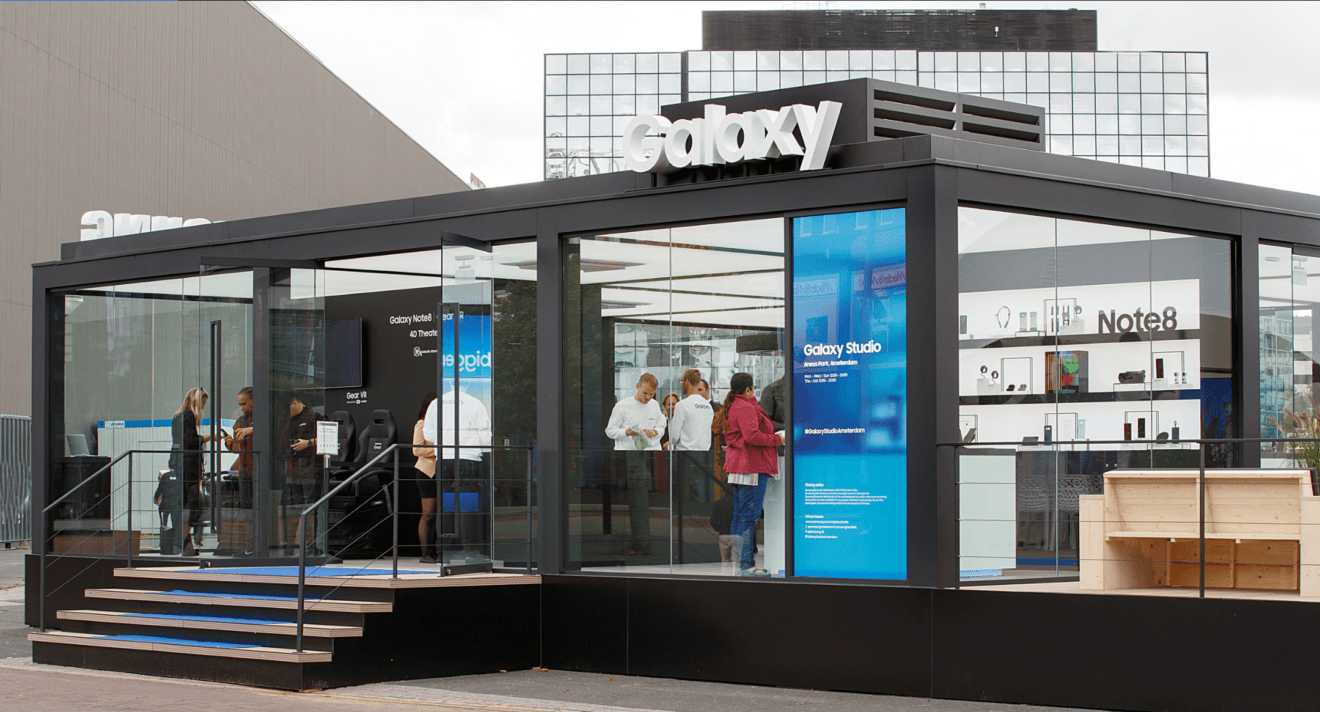
    Samsung Galaxy Studio pop up in Causeway Bay marks the Galaxy S series’ 10th anniversary smartphone.

    Interactive digital lights in the studio allowing participants to create visually stunning motion images responding to their own heart rates and eye images in order to demonstrate the quality of the latest Galaxy S10 phone camera.

    Every participant visiting the Samsung Galaxy Studio will be equipped with a Galaxy S10 smartphone to experience different zones, where they can personally try out the phone’s extensive functions. Participants will be awarded limited prizes upon completion.

    “Samsung has been upholding the belief of innovation for the past 10 years, bringing consumers an excellent smart mobile experience,” said Samsung Electronics HK MD Yiyin Zhao. “At the same time, we understand how Millennials crave for an all-new experience, so we opened the all-new Galaxy Studio in Causeway Bay, where fashionistas gather.”

    Visitors who register at the check-in counter to get a Galaxy S10 smartphone with the Galaxy Buddy app installed are then led through different experience zones. After completing an experience, participants receive a digital stamp through the Galaxy S10’s NFC tag function. Participants may redeem gifts after collecting four digital stamps, and are encouraged to upload their photos to their social media accounts.


  • Subscribers to Facebook, Instagram and WhatsApp faced over 2 hours Downtime

    Subscribers to Facebook, Instagram and WhatsApp faced over 2 hours Downtime

    If you mosey on over to DownDetector.com you’ll notice something interesting. The graphs that measure the number of complaints received by Facebook, Instagram, and WhatsApp users all look the same. That’s because the trio was down world-wide for over two hours today. And of course, all three apps are owned by Facebook.

    Starting at about 6:30 am EST, complaints about all three started to roll in, peaking about 90 minutes later. Some Facebook users could not access the app at all, and others could not refresh their news feeds. Instagram users had the same issues, and WhatsApp members could not send or receive messages. Almost a month ago to the day, all three were down in North America, Europe, and Latin America for as long as 24 hours. Facebook blamed the problem on a “server configuration change.”

    After the issue was resolved today, Facebook released a statement apologizing for the inconvenience. So far though, the company has not revealed the reason for Sunday’s outages.

    “Earlier today, some people may have experienced trouble connecting to the family of apps. The issue has since been resolved; we’re sorry for any inconvenience.”-Facebook

    Facebook purchased Instagram for $1 billion back in April 2012. It closed on the purchase of WhatsApp in October 2014. The final purchase price amounted to more than $21 billion.