Author: Mei Ling Tan

  • How founder’s distaste for buying drove AirAsia’s growth

    How founder’s distaste for buying drove AirAsia’s growth

    AirAsia, the region’s biggest budget airline, said it prefers to pursue organic growth instead of expansion through acquisitions, partly explaining why it declined to buy Hong Kong’s sole low-cost carrier Hong Kong Express Airways (HK Express). Cathay Pacific Airways, Hong Kong’s flagship premium carrier, this week offered HK$4.93 billion (S$850 million) to buy its budget competitor from the indebted HNA Group. AirAsia looked at the proposal to buy HK Express and its full-service sibling Hong Kong Airlines, declining to acquire either, said founder Tony Fernandes.

    “My philosophy has been organic growth,” Fernandes said in an interview with South China Morning Post during Credit Suisse’s Asia Investment Conference in Hong Kong. “I generally don’t believe in acquisition because it comes with a lot of inherent issues. When you import through acquisition, it comes at a risk, so it’s not my preference.

    Fernandes’ approach illustrates how he turned the Kuala Lumpur-based airline from a near-bankrupt company into Asia’s largest budget carrier in less than two decades, with more than 140 destinations and flying on 320 routes at the lowest unit cost in the global aviation industry.

    Fernandes, who worked for Warner Music Group before striking out on his own, bought AirAsia in December 2001 for a token 1 ringgit, taking on the carrier’s 40 million ringgit (S$15 million at the time) of debt. Within a year, the carrier reported a profit, qualifying for a listing on the Kuala Lumpur Stock Exchange two years later.

    AirAsia’s 2018 revenue rose 9 per cent to 10.6 billion ringgit (US$2.5 billion), while pre-tax profit rose by the same quantum to a record 1.7 billion ringgit. Low-cost, long-haul AirAsia X notched revenue of 4.5 billion ringgit, flat year-on-year, but the 2017’s profit performance turned into a loss of 312 million ringgit.

    The airline and its affiliates flew 73 million passengers last year, a figure that beat even full-service flag carriers in Southeast Asia. AirAsia had made a single acquisition in 18 years, when it bought 49 per cent of Zest Airways for an undisclosed sum to secure a landing slot in the Philippines in 2013. Elsewhere in the region, AirAsia expands its network through joint ventures in seven countries, including Japan, India and Thailand.

    The airline, operating with 21,000 employees with no union representation, wants to steer clear of importing “inherent issues” and excess baggage from taking on another airline, Fernandes said.

    Now AirAsia has a chance to help revive Malaysia Airlines, the very competitor that the low-cost carrier had beaten into the ground. Malaysia’s Premier Mahathir Mohamad broached the idea of either selling or shutting the nation’s flag carrier two weeks ago.

    Malaysia Airlines, now under the ward of the country’s sovereign wealth fund Khazanah Nasional after a 6 billion ringgit capital infusion, “can definitely be turned around,” Fernandes said.

    Still, AirAsia is in no hurry to revive its 2011 share swap plan with the flag carrier, which was vetoed by the government of then-premier Najib Razak.

    “Many people will say that [AirAsia’s] expertise could be used to hurt Malaysia Airlines and benefit AirAsia. There is a genuine interest to help but in this day and age, not everyone will see it that way, ” Fernandes said. “It’s best that we do our own thing, and we’ve got a lot on out plate.”

    Worldwide aviation is booming, where 8.2 billion passengers could take to the sky by 2037, according to a 20-year forecast made in October by the International Air Transport Association (IATA), with the Asia-Pacific region driving the biggest growth.

    Still, not everything is hale and rosy in the region, as intense competition in a price-sensitive travelling weighed on airlines’ bottom lines. Only six of the 20 publicly traded airlines or affiliates in Southeast Asia were in the black, with 19 of them reporting declines in third-quarter profitability compared with a year earlier, according to CAPA Centre for Aviation.

    AirAsia had been approached for help. It has already evaluated and declined buying a stake in Bangkok-based NokAir. AirAsia’s Indonesia unit was also linked to – and denied – the possible purchase of Citilink, the low-cost brand of Indonesia’s flag carrier Garuda.

    “I never say no to any M&A, but it has to be a sexy opportunity to go down that route,” Fernandes said.

    Turning to India, and the troubles associated with Jet Airways, which was saved from near-bankruptcy at the last minute, the Malaysian-owned budget carrier said it was positioning itself for the opportunity to grow if runways slots relinquished come up for sale.

    “India is a prize, but just like with prizes, nothing comes easy. It’s been a lot of hard work,” Fernandes said.

    Expecting runway slots to be freed up, the AirAsia chief added. “We want to [buy] it in the right way. We’re not vultures. There will be a few airlines hoping Jet goes bust and we don’t want anyone to lose their jobs, we want every airline to survive and grow, but if an opportunity arises to take those slots, then for sure.”

  • Alibaba Launches “Fliggy Buy” Shopping Channel with Merchants

    Alibaba Launches “Fliggy Buy” Shopping Channel with Merchants

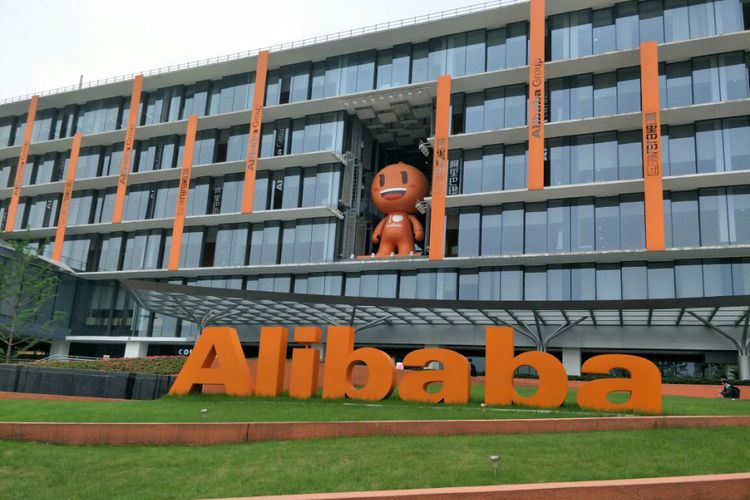
    New service offers convenience to Chinese travelers, advances “Global Fun” strategy Hangzhou, China, March 26, 2019 – Fliggy, the travel service platform of Alibaba Group, has launched its Fliggy Buy service, which offers overseas merchants a new solution to capture opportunities presented by the growing purchasing power of Chinese outbound travelers.

    The service offers a new shopping channel for Chinese travelers to browse and buy goods on Fliggy before reaching their destination, picking them up in stores after they arrive. It also advances Alibaba’s “Global Fun” strategy, which promotes international travel for Chinese tourists by working with industry players to give the tourists a richer experience while abroad.

    Merchants on Fliggy Buy will include duty-free and tax-free stores, both overseas and within mainland China, internationally renowned brands, specialty local stores and an increasing range of shopping destinations. Furla Hong Kong and Laox of Japan have already joined this channel, and more merchants are expected to join.

    “Fliggy is committed to making it easy to conduct travel business in the digital era. The launch of Fliggy Buy represents our latest move to work with merchants targeting the vast numbers of tourists from China to develop innovative solutions, and offer them targeted customer traffic. Our aim is also to embrace the potential of digital technology and provide a holistic travel experience encompassing food, accommodation, transportation, sightseeing, shopping and entertainment,” said Roman Zhu, Head of Fliggy Buy at Fliggy.

    Through Fliggy Buy, Chinese customers can access detailed information and buyers’ reviews about products, presented in their own language, prior to an overseas trip. This helps them understand features and compare prices across different merchants before committing to a purchase. They can ensure the items they want, especially limited editions, are in stock before the trip and make reservations online, as well as seek online customer service. Buying from duty-free and tax-free stores is an added benefit.
    Chinese travelers using this service can choose from a range of products, including cosmetics, suitcases, bags and alcohol offered by popular merchants. After selecting a pickup store, as well as inputting their personal information and completing payment, consumers can then pick up their goods at their leisure, allowing them more time to explore and experience the destination.

    “Duty-free and tax-free stores are our focus during the first phase of rollout, as they are the most visited shopping and consumption venues amongst Chinese outbound tourists. Our next step is to enrich the product categories on Fliggy Buy and recruit more overseas merchants to include high-end luxury brands, household electronics sellers, as well as pharmacy and cosmetics stores, assisting them to reach more Chinese consumers,” Zhu said.

    With users visiting 192 countries and regions in 2018, outbound travel is an important part of Fliggy’s business. Fliggy’s insights show an upward tendency of Chinese travelers spending overseas, as the average spending of these travelers grew 9% year-on-year in 2018. As a platform operator, Fliggy is dedicated to helping merchants and associations working in the tourist industry worldwide to build direct relationships with Chinese consumers.

    As a key component of the Alibaba Economy, Fliggy is committed to promoting Alibaba Group’s “Global Fun” initiative. Global Fun together with Global Buy, Global Sell, Global Pay and Global Delivery are the five core aspects of Alibaba Group’s globalization strategy to realize its long-term vision of serving two billion consumers around the world and supporting 10 million businesses to operate profitably on its platforms by 2036.

  • Mahindra Sales Grow By 11% Last Year

    Mahindra Sales Grow By 11% Last Year

    Indian auto giant Mahindra & Mahindra (M&M) registered a growth of 11 per cent in auto sales for the financial year 2018-19. The automaker sold 608,596 units in the previous fiscal, as opposed to 549,153 units sold in FY2017-18. The company’s steady growth was visible in the March 2019 sales results as well with Mahindra selling 62,952 units, as against 62,076 units in March 2018. The automaker saw a hike of one per cent in its sales for the previous month.

    Commenting on the performance, Rajan Wadhera, President, Automotive Sector, Mahindra said, “We have closed FY-19 with robust double digit growth of 11 per cent at an overall level, despite strong headwinds faced by the Indian automotive industry this year. This growth has been supported by our three new product launches, which have been well received in the market. The commercial vehicles segment and exports have also posted strong growth rates of 15 per cent and 37 per cent respectively.”

    Mahindra’s domestic sales stood at 59,012 units for March 2019, growing by one per cent over 58,652 units sold in March last year. The Passenger Vehicle segment that includes UVs, cars and vans contributed 27,646 units to last month’s sales, registering a growth of four per cent over 26,555 units sold in March 2018. The commercial vehicle segment meanwhile saw sales decline by four per cent with 24,423 units sold in March this year, as against 25,495 units sold in March last year.

    The Medium and Heavy Commercial Vehicles segment saw Mahindra sell sold 917 units, which also saw sluggish volumes with a decline of 33 per cent in year-on-year sales. Nevertheless, exports dor March 2019 stood at 3940 vehicles, growing by 15 per cent, while three wheeler sales for the previous month grew by five per cent at 6943 units.

  • Toyota And Mahindra Register Growth, Maruti Suzuki Car Sales Drop

    Toyota And Mahindra Register Growth, Maruti Suzuki Car Sales Drop

    Carmakers in India have officially started to come out with their sales numbers for the month of March 2019. The Financial Year 2018-19 has been quite an eventful year for the Indian auto industry with the year ending in a positive note. As for the sales performances in March 2019, the results were quite mixed. In fact, the country’s largest carmaker, Maruti Suzuki India, continued to see a decline in sales in March 2019, while other manufacturers like Toyota Kirloskar Motors and Mahindra and Mahindra registered marginal growth.

    Toyota India

    In March 2019, Toyota Kirloskar Motor sold 13,662 units in India, registering a growth of 0.9 per cent, compared to the 13,537 units during the same month last year. As for the company’s domestic sales, Toyota’s wholesales numbers went up to 12,818 units last month, compared to the 12539 vehicles sold in March 2018, registering a growth of 2 per cent. Exports, on the other hand, saw a decline of 15.4 per cent during the month of March 2019 with 844 units, against the 998 vehicles that were exported during the same month last year. However, as for the company total sales during FY 2018-19, Toyota Kirloskar Motor recorded a sales growth of 7 per cent in the domestic market with 150,525 units, compared to the 140,645 units being sold during FY 2017-18.

    Commenting on the sales performance, N. Raja, Deputy Managing Director, Toyota Kirloskar Motor said, “We are happy to have clocked a growth of 7 per cent in domestic sales in FY 18-19 as compared to FY 17-18. Innova Crysta and Fortuner have been maintaining the growth trajectory and continue to be leaders in the segment.” He also added that “All New Camry Hybrid Electric Vehicle or self-charging electric vehicle has already crossed 500 bookings since its launch in Jan 2019. Additionally, Etios Liva has also contributed to the positive sales momentum in FY 18-19 with a growth of 13% as compared to FY 17-18.”

    Maruti Suzuki India

    Maruti Suzuki India has registered a decline of 1.6 per cent in the last month of the Financial Year 2019. Last month the company sold 158,076 vehicles, including domestic sales and export, compared to the 160,598 units that were sold in March 2018. The company’s total sales in India alone reached 147,613 units in March 2019, registering a marginal de-growth of 0.7 per cent, against the 148,582 vehicles sold during the same month last year. Exports, on the other hand, took a massive hit with a decline of almost 13 per cent with 10,463 units, compared to the 12,016 units exported in March 2018.

    Maruti Suzuki has registered the highest ever total sales in FY 2018-19 at 1,862,449 units, a growth of 4.7 per cent, compared to the 1,779,574 units sold in 2017-18. The company’s domestic sales for FY 2018-19 reached 1,753,700 units, also the highest ever, compared to the 1,653,500 units sold in 2017-18. In fact, this is the 7th straight year of growth in domestic sales for Maruti Suzuki India.

    Mahindra and Mahindra

    Mahindra and Mahindra has registered a marginal growth of 1 per cent in total sales for the month of March 2019 with 62952 units. In comparison, the company sold 62076 units in March 2018. Mahindra’s domestic sales touched 59,012 vehicles during March 2019, as against 58,652 vehicles in March 2018, registering a similar growth of 1 per cent. The Passenger Vehicles segment (which includes UVs, Cars and Vans) sold 27,646 vehicles in March 2019, registering a growth of 4 per cent. The company’s exports, on the other hand, saw substantial growth of 15 per cent with 3940 units, against the 3424 exported in March 2018.

    On the other hand, the company’s sales performance for the financial year that ended on March 31, 2019, stood at 6,08,596 vehicles, compared to 5,49,153 vehicles during FY-18, registering a growth of 11 per cent.

    Commenting on the performance, Rajan Wadhera, President, Automotive Sector, Mahindra and Mahindra said, “We have closed FY-19 with robust double-digit growth of 11 per cent at an overall level, despite strong headwinds faced by the Indian automotive industry this year. This growth has been supported by our three new product launches, which have been well received in the market. The commercial vehicles segment and exports have also posted strong growth rates of 15% and 37% respectively.”

  • Six great marketing lessons Learned from MarketingPulse

    Six great marketing lessons Learned from MarketingPulse

    “Great ideas should be scary,” advocates Marcelo Pascoa, head of global brand marketing at Burger King, one of the keynote speakers at the recent MarketingPulse event in Wanchai. “When new things come to be, it is often associated with fear. So, my advice to marketers is: be very afraid! If you sleep well the night before your project launches, then the promotion wouldn’t be too spectacular.”

    Pascoa’s projects are known to be bold and daring, even making fun of competitors in the market. One example was a marketing stunt in which people were asked to open the Burger King app at a McDonald’s to win a free burger. As a result, there was a huge leap in interest in the Burger King app and it became the most downloaded app on the store. He said that knowing your work aligns with the brand value is key when facing challenges and criticism. “My biggest fear is being irrelevant. Marketers live in fantasies where they control everything, but social media has proved that we cannot control everything.”

    MarketingPulse second edition

    Pascoa was one of many speakers at the second edition of MarketingPulse, Asia’s premier conference for marketers and brands, held at the Hong Kong Convention and Exhibition Centre. Organised by the Hong Kong Trade Development Council (HKTDC), the key morning session at the event, “Dear Brands, Let’s Sail to the Future!”, featured a heavyweight line-up of industry experts who shared their tricks and tips on how to keep ahead of marketing trends to develop successful brand stories.

    Respect cultural differences

    Endeavor is a brand focusing on entertainment, sports and marketing services. Bozoma Saint John, the company’s chief marketing officer, shared her success stories at Endeavor and in previous high-profile marketing roles at Uber and Apple Music.

    St John recounted some of the marketing stunts that helped to push her brands, from inviting Beyonce to perform at the Super Bowl and promoting Apple Music’s breakup song services through private chat messages between three famous black actresses, to featuring two superstar athletes sharing their thoughts on cultural differences during an Uber ride. These stunts were not only successful in capturing the attention of consumers, but also raised discussions on cultural issues relevant to society as a whole.

    “I am addicted to popular culture,” she declared. “I am always fascinated by the latest and most trendy things and would like to know how they come to be and how they connect with history. People working in the marketing sector represent various cultural differences between different places. We have to know its meaning, why it comes to be, and how cultures interact in order to use popular culture as a marketing tool.”

    Saint John pointed out that there are currently tensions in society which make it important for marketers to understand different communities well and build connections through various emotions in order to avoid controversies such as cultural appropriation.

    Think before you speak

    One of Hong Kong’s best-known creative talents, Juno Mak, creator at Kudos Films, began his presentation by sharing his experience in the entertainment industry and explaining how marketing became part of his everyday life.

    “We do not need to be a businessman to do marketing, as we are already marketing ourselves in our daily lives − our sitting posture, our favourite colours, and our watches, these are all making a promotion out of a life. When you know yourself better, you will know how to do marketing,” he said.

    Mak also made the bold suggestion that we should abandon two things: our resumes, and thoughts that come from the mouth, not the head.

    “Things you write in your resume are tasks completed in the past. But we have to think: what’s next? We should also give up on thoughts that come from our mouths, as they might be copies of other people’s ideas. Thoughts should come from your head − a creation that you agree with.”

    Storytelling techniques

    Jonathan Mildenhall, co-founder and CEO of TwentyFirstCenturyBrand and former chief marketing officer at Airbnb, offered the audience a whole new definition of marketing in the 21st century. “Marketers create assets for the company, including its finance, consumers, employees and cultural assets. Marketing with a clear focus creates unparalleled value,” he said.

    Mildenhall emphasised that storytelling techniques are key to any marketing campaign.

    “I am 100 per cent a supporter of emotional storytelling. If a marketing campaign does not contain a story behind it, it is only market pollution. Stories help us build a signature super-brand that people care about.”

    He shared his experience at Airbnb to illustrate how consumption begins with emotion − for example, bringing the room in a Van Gogh painting to life, or sharing true stories from the community to bring out cultural values.

    “We rationalise our choice of consumption after we create the emotion,” he explained.

    Understanding local tastes

    Keiei Sho, executive officer, GM of overseas business division at Calbee, distributed his company’s popular grilled corn sticks to conference visitors to demonstrate how market tastes can change.

    “People used to say that the corn sticks were too hard and that consumers would not like them,” he said, before revealing that sales were now in the region of US$300-400 million. Sho recounted Calbee’s history, explaining that after the Second World War, Japan was left with devastated industries and faced food shortages. Calbee stepped in to manufacture prawn crackers using the flour left behind by the US Army and shrimps from the Seto Inland Sea, which proved to be a hit.

    The company continues its creative legacy, recently working with 47 Japanese prefectures to create a successful campaign by developing 47 different flavours of chips.

    “We collaborated with local governments to learn about local tastes, hoping to know what would resonate with consumers, while showcasing promotions from various prefectural governments on the back of the bag,” he explained.

    Using its advantages in the areas of food safety and convenient packaging, the brand has continued to push the envelope by launching breakfast food items to attract Chinese visitors and promoting Kyoto’s breakfast culture using online celebrities.

    Embracing consumer insights

    The lingerie brand created by Michelle Cordeiro Grant, founder and CEO of Lively, has embraced the concepts of female empowerment and body acceptance. The company created a new definition of what sexiness means, building a brand that brings community, experience and products together.


    Advocating “high style and comfort”, the brand has been communicating with 100 brand ambassadors right from the start to learn about consumers’ needs and elicit useful feedback. Many of Lively’s new underwear lines are launched in accordance with customer preferences.

    Grant said Lively is an experience-focused brand, with its retail stores devoting only 30 per cent of the space to products while the rest is used for events such as hip-hop experiences and movie nights.

    “Lively is an organism with a human soul,” she said. “Normally, females purchase underwear once or twice a year, while our consumers purchase underwear on average four to five times per year. This shows that they are purchasing not out of their ‘needs’, but their ‘desires’.

    “This is key to how we create our market share.”

  • Jollibee Singapore to open Restaurants in Woodlands and Punggol

    Jollibee Singapore to open Restaurants in Woodlands and Punggol

    Jollibee Singapore is to open new stores at Woodlands MRT station and Waterway Point in Punggol.

    The Philippine fast-food giant is recruiting full-time and part-time staff for the stores via its Facebook page. Listed jobs include service, kitchen crew as well as managerial roles.

    Having opened its first store at Lucky Plaza in 2013, Jollibee Singapore now has six outlets: two at Lucky Plaza, and one each in Paya Lebar, Changi, Novena and Jurong East.

    In a 2017 interview, Dennis Flores, Jollibee’s president and head of international business, said the company plans to open 15 stores in the island in the next five years.

  • Ambassador To Return As PSA’s EV Brand For India

    Ambassador To Return As PSA’s EV Brand For India

    While the PSA Peugeot-Citroen group has officially announced that it will bring its Citroen brand to India, we finally have some news on its plans for Ambassador too. Two days before holding its first-ever official press conference in India to show us Citroen’s debut model for the country, we have learnt of a parallel plan afoot within the company. Speaking on specific conditions of anonymity, senior PSA board member and reclusive heiress Evié de Courant has shared with this reporter that the Ambassador brand will be used exclusively for electric vehicles to be sold in India only. The sub-brand will be the first new addition to the PSA family, after its last acquisition of erstwhile GM brands Opel and Vauxhall in August 2017.

    The Ambassador range of cars will likely only debut post 2022, and it is not as yet decided whether it would entail a standalone retail network. While Citroen will have a full-fledged dealer network, Ambassador branded cars are likely to be sold using an exclusive online sales strategy. Workshops for the two will be common though. The plan is to initially launch a compact SUV or crossover style car, and then a premium hatchback. Both are expected to share their platform and some components with similar sized ICE (internal combustion engine) models from the Citroen brand, to maximise economies of scale. The intent is to make Ambassador a profit-making entity from within the first quarter of the start of sales.

    PSA has also been in Formula E since 2015-16 and will bring a lot of its learnings to the EV plan. Citroen’s premium brand DS has also announced its range of EVs for Europe, which will use the E-Tense badge. The DS3 Crossback E-Tense is expected to be the first model and is expected to have a 330-kilometre range. Expect the Ambassador crossover to sport a similar electric powertrain.

    While the initial focus will be on India, the company believes the Ambassador brand will have a strong resonance with Indian diaspora across the world – especially in the Commonwealth states, which are also largely right-hand-drive. And so there is already a feasibility study on to examine the export potential of Ambassador badged products from 2023 onwards, according to Ms de Courant.

    It may be recalled that whilst entering into its two joint ventures (JVs) with Hindustan Motors (HM) in January 2017, PSA had also acquired rights to the Ambassador brand for ₹ 80 Crore a month later. At the time, HM had released a statement that read, “Ambassador has been an iconic brand and a surplus asset with us. We were looking for a suitable opportunity and found the right buyer in the PSA group. We intend to use the proceeds from the sale in clearing dues of employees, lenders and others.”

    It was at the start of 2017 that the two companies had also entered into two partnerships with an initial investment of ₹ 700 Crore for vehicle and engine manufacturing in Tamil Nadu. The first of the two JVs is between PSA and HMFC or Hindustan Motors Finance Corp for the assembly and distribution of new cars. HFMC currently also assembles Mitsubishi and Isuzu branded cars. The second is a JV for engine making with AVTEC – hived off years ago from HM that is a components and engines supplier to the auto industry. We trust the two will have a lot more success and will build on a strong foundation, unlike the veracity of this report. And on any other day we would have loved for this news to be true

  • Maruti Suzuki Sales Grow in 2019,  But March Sales Hit Weak

    Maruti Suzuki Sales Grow in 2019, But March Sales Hit Weak

    Maruti Suzuki has registered the highest ever total sales in FY 2018-19 at 1,862,449 units, a growth of 4.7 per cent, compared to the 1,779,574 units sold in 2017-18. The company’s domestic sales for FY 2018-19 reached 1,753,700 units, also the highest ever, compared to the 1,653,500 units sold in 2017-18. In fact, this is the 7th straight year of growth in domestic sales for Maruti Suzuki India. But, in the month of March 2019, the company’s total sales went down by 1.6 per cent in the last month of the Financial Year 2019.

    Last month the company sold 158,076 vehicles, including domestic sales and export, compared to the 160,598 units that were sold in March 2018. The company’s total sales in India alone reached 147,613 units in March 2019, registering a marginal de-growth of 0.7 per cent, against the 148,582 vehicles sold during the same month last year. Exports, on the other hand, took a massive hit with a decline of almost 13 per cent with 10,463 units, compared to the 12,016 units exported in March 2018.

    In March, the domestic market, it was the company’s Mini cars segment, which includes the Alto range and the pre-facelift WagonR that took the biggest hit, a drop of 55.1 per cent by selling 16,826 units, against the 37,511 units sold in March 2018. Same was the case for the company’s mid-size sedan, Ciaz, which saw a decline of 15 per cent by selling just 3,672 units in March 2019, compared to the 4,321 units sold during the same month last year.

    In contrast, the compact segment, which includes the new WagonR, Swift, Dzire, Baleno, and Ignis, saw a considerable growth of almost 20 per cent with cumulative sales of 82,532 units. The utility vehicles and Vans segment also saw substantial growth of 12.3 per cent (25,563 units) and 20.1 per cent (22,764) respectively. Similarly, in the commercial vehicle space, the sale of the Super Carry LCV also went up by 82.9 per cent selling 2,582 units last month, compared to the 1,412 units sold in March 2018.

  • Hedge Funds Look to Expand in Asia

    Hedge Funds Look to Expand in Asia

    Hedge funds are looking to increase exposure to the region given the opportunities there, according to a survey by J.P. Morgan. Hedge funds are looking to grow further in Asia, with close to half of the investors surveyed by J.P. Morgan planning to do so. This is despite likely outflows experienced by fundamental long-short equity, event-driven, and managed-futures strategies, the survey found.

    Asia is a continuously opening market and there will be more funds going in there to take advantage of potential asset-price dislocations and opportunities, Michael Monforth, global head of capital advisory at J.P. Morgan, said in a statement.

    Searching For Higher Returns

    Despite the instability and poor performance that the market has shown in 2018, institutional investors are nonetheless still investing in hedge funds this year as they search for high returns and other ways of investment.

    For some markets, unwinding of QE or a global slowdown is akin to a rock band losing its lead singer: Investors are looking to alternatives, Monforth added.

    Asset Price Dislocations

    2018 was the biggest annual loss for the industry since 2011, falling by 4.8 percent on a fund-weighted basis according to Hedge Fund Research Inc. Hedge funds witnessed a $33.5 billion in outflows and the number of startups was at its all-time low since 2000.

    Investors remain apprehensive about hedge fund crowding, style drift, and transparency, according to the survey.

  • George & Matilda expands up to 70 practices

    George & Matilda expands up to 70 practices

    George & Matilda now has 70 practices in its network, a milestone for the eyecare retailer started in 2016, which brings together independent optometrists under a single banner.

    According to CEO Chris Beer, this model has been the key to success for the business, which recently added local optometrists in Victoria, Queensland and New South Wales.

    “We pride ourselves on being a home for any practice that is focused on delivering the best care for their patients, no matter how they do so,” Beer said.

    “This makes for a very varied and diverse group of partners, which we believe is our key strength.”

    According to Beer, the firm’s ability to listen and learn from its partners to gather information which can then be filtered through its marketing, supply chain and business support structures has resulted in “fantastic results at a time when a lot of retail is hurting.”

    IBISWorld estimates the optometry and optical dispensing industry to be worth approximately $3.7 billion in Australia, with an annual growth of 2.9 per cent between 2014-19.

    Much of this is due to the industry’s distinct mix of retail and service elements, according to IBISWorld senior industry analyst Liam Harrison.

    “With around half of Australians requiring glasses, there is a large market for industry services,” Harrison told IR.

    “Combining traditional retail with service elements has helped the industry both remain relevant and protect its profitability at a time when consumers are looking to reduce their expenditure where they can.”

    However, with businesses offering the purchase of eyewear online, the offering of service elements may not be mandatory to survive in the industry, Harrison argues.

    Looking forward, Beer believes the next year will be transformative for George & Matilda.

    “We started this business with the vision to help the world see better by supporting and uniting local independents to build the best optometry community,” Beer said.

    “It’s a big ambition, but we have invested the time and resources to create something that can bring about meaningful change for the industry in the long term.”

  • Caltex putting digital foundations in place via App

    Caltex putting digital foundations in place via App

    Caltex Australia is investing heavily in new technology to make transactions at its petrol stations and convenience store sites more simple and seamless and enhance the customer experience as it expands into new areas, such as fresh food, healthy fast food, parcel collection and other services. The convenience retailer on Tuesday laid out a vision for the business that includes enabling customers to pay for fuel and pre-order coffee via app and updating prices and promotions in-store using digital signage. It is also testing use cases for payment via facial recognition and number plate recognition.

    Caltex believes these innovations will give it a competitive advantage in the lucrative $8 billion and growing convenience market going forward.

    The company’s innovation team, based out of the “C-lab”, was able to deliver a prototype of mobile checkout and mobile payments within weeks of the visit to China, and is now working on selecting appropriate sites for live trials, Da Ros said.

    This is just one example of the digital-first mindset the company has embraced through its work with technology partner, Microsoft.

    “It’s not about isolating a digital lab or a digital strategy, but instead it’s about ensuring seamless connectivity between key systems, processes, operational workflows and customer touchpoints – everything is connected,” Da Ros said about the company’s approach to innovation.

    This customer-first approach has led Caltex Australia to consider how it might enter new areas, as including fresh food, healthy fast food, parcel collection and a range of other services, as Australian demographics shift to two-income, time-strapped households.

    “The customers of the future will log in to their Caltex app, arrange to pick up the dry-cleaning and select something for dinner. They then drive into the Caltex site and an attendant will come to the car with everything the customer has ordered – including their favourite coffee,” Caltex CEO Julian Segal told.

    The technology investment comes as Caltex undergoes a significant transformation to position itself for growth in the highly competitive convenience market. This includes buying back hundreds of franchisee retail sites, growing retail and convenience revenues, strengthening fuel loyalty and embedding a digital-first mentality across the entire organisation.

  • H&M beats expectations says Audit

    H&M beats expectations says Audit

    Fast fashion giant H&M reported first quarter results on Friday, exceeding expectations on both profit and margin, which it cited as proof that its turnaround strategy is working.

    The global retailer’s pre-tax profit was 1.04 billion Swedish crowns (A$157.58 billion) for the quarter running from December 1, 2018 to February 28, 2019, less than the 1.26 billion Swedish crowns it posted in the previous corresponding period. But this was well ahead of the 708 million that analysts had been expecting.

    Gross margin was 50.0 per cent, up from 49.9 per cent in the previous corresponding period, while analysts had been anticipating a fall to 49.4 per cent.

    H&M said this was the result of ongoing improvements in buying and logistics, which led to a 1.5 percentage point reduction in the markdowns in relation to sales, compared to the corresponding quarter the previous year.

    “Our ongoing transformation work has contributed to stronger collections with increased full-price sales, lower markdowns and increased market shares,” Karl-Johan Persson, H&M’s CEO, said in a statement accompanying the results.

    “Sales developed well both in stores and online in many markets, including Sweden which grew by 11 per cent, the UK by 8 per cent, Poland by 15 per cent, China by 16 per cent and India by 42 per cent in local currencies.”

    H&M has also been working to improve its online offering by launching e-commerce sites in new markets, integrating digital and physical stores and providing faster delivery options. The retailer also said it will launch an upgraded loyalty programme, which has 35 million members, shortly.

    Today, H&M is available online in 47 markets, and Mexico and Egypt will be added in 2019. It is also launching on Myntra and Jabong, India’s largest e-commerce marketplaces, later this year.

    Rival fast fashion giant Zara has made a similar e-commerce push. It is now available in over 200 markets online. The chain’s parent company Inditex last year announced its plan to make every brand available online, including in markets where it doesn’t have any physical stores.

    H&M said it plans to add 175  net new stores to its network in 2019. Most of these stores will open in growth markets, while the number of stores in Europe is expected to reduce by 50.

    “The rapid transformation of fashion retail continues and we can see that our own transformation work is taking us in the right direction, even if many challenges remain and there is still hard work to do,” Persson said.

    “The progress we have made in our strategic focus areas confirms that we are on the right track. Therefore we continue moving forward at full speed and we are optimistic about the future for the H&M group.”

    H&M’s strategic focus areas include:

    • creating the best customer offering
    • fast, efficient flexible product flow in the supply chain, including initiatives within advanced data analytics and AI
    • continued investment in the tech foundation, including scalable and robust platforms to enable faster development of new apps and technologies
    • digital expansion into new markets
  • Vardenchi To Open New Lifestyle Garage Store In Mumbai

    Vardenchi To Open New Lifestyle Garage Store In Mumbai

    Motorcycle design company, Vardenchi, is all set to open its first ‘Lifestyle Garage’ in Goregaon, Mumbai. The flagship space will offer a wide range of bespoke motorcycle upgrade solutions and crafted biker products. Biker Products will include a range of fashion motorcycle helmets, lifestyle riding gear, a collection of apparel like t shirts hoodies and shoes. Motorcycle Upgrade products will include accessories for Safety, Utility and Style such as lights, seats, guards, luggage and more.

    A lot of motorcycle parts and materials have inspired the design of the Lifestyle Garage. Akshai Varde, MD/Founder, Vardenchi said, “The Vardenchi Lifestyle Garage is a culmination of our long standing vision of offering ‘everything motorcycle.’ The market and the timing are very well positioned for a concept like this and we are extremely excited to kick off the first of an entire network of franchise stores”

  • Reebok to launch Aztrek pop-up in Singapore

    Reebok to launch Aztrek pop-up in Singapore

    Reebok will launch a Aztrek pop-up store at Suntec City next month.

    Set to open from May 1 to 7, the pop up brings the retro Aztrek line back with ‘90s-inspired colours and designs, along with cult-classic arcade games and Instagram-worthy corners.

    Visitors will get free token to play arcade games such as Tetris, Mario Kart, Mortal Kombat, Space Invaders, Pacman and Street Fighters, with every purchase.

    Other Reebok Classic favorites such as the Instapump Fury, Club C, Classic Nylon, Pyro and Classic Leather Alter The Icons will also be available at the pop up.

    There will be a photo contest for participants to share their pictures on their Instagram stories with the hashtags #Aztrek, #ReebokClassic and #ReebokSG and tag Reebok’s Instagram handle @Reebok_Sg.

    Originally launched as an all-terrain shoe in 1993, the Aztrek is designed for wearing on mountains.

    This year, the Aztrek returns with three silhouettes including a collaboration with supermodel, Gigi Hadid, called Aztrek Double x Gigi Hadid.

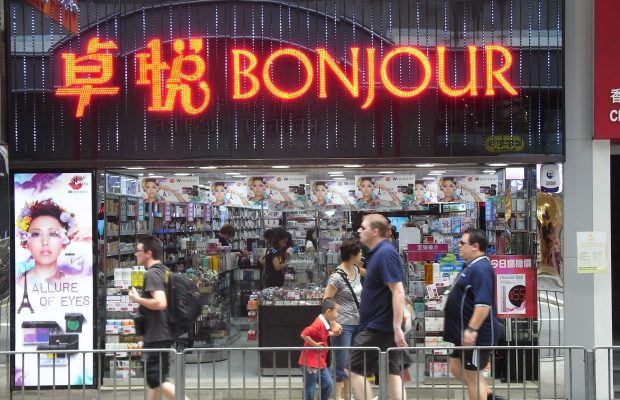
  • Rent reductions causes Bonjour Holdings a big loss

    Rent reductions causes Bonjour Holdings a big loss

    Bonjour Holdings sales fell 7.3 per cent last year as the health and beauty products retailer reorganised its store network.

    The company reported a loss attributable to shareholders of HK$39.6 million (US$5 million), which was a significant improvement on the previous year’s loss of $202.3 million.

    Same-store sales crept up 0.8 per cent, albeit that is a slower rate than the 2.3 per cent of 2017.

    The Hong Kong-listed group finished the year with 39 stores in Hong Kong, Macau and Guangzhou, a reduction of just one. But during the year it relocated some stores and negotiated more favourable rental deals from its landlords on others. That strategy saw rent, as a proportion of turnover, fall from 19.1 per cent in 2017 to 15.5 per cent last year, the total rent bill down from $368.8 million to $277.6 million.

    “Although the high-street shop rents started to raise slightly last year due to the recovery of the retail sector in the first half, the group has adopted an optimistic cautious strategic planning in its store network in response to the market changes,” the company said in its results announcement.

    “Stores were deliberately chosen at both tourists shopping hotspots and community districts or residential areas with high population density to cater to both tourists and local communities’ needs which also helped the group to increase the market penetration.”

    Tourist demographics change

    The structural change to the mix of mainland tourists during the last few years has impacted on the average ticket size at Bonjour Holdings’ stores. An increasing number of arrivals are now coming from lower-tier cities with less spending power. In addition, the weak RMB and uncertain economic environment dampened the attractiveness of Hong Kong goods to mainland shoppers that they became more cautious in their spending, the company said.

    Bonjour Holdings said pressure on profitability remained last year, despite the group increasing its profit margin by 0.3 per cent.

    E-commerce expansion

    One bright point in Bonjour Holdings’ results was the increase in online sales, up 9 per cent year on year.

    As well as upgrading its own online store, Bonjour has opened flagships on e-commerce platforms Tmall Global, Kaola and Xiahongshu to increase brand visibility, provide customers with more information on products, and launch timely promotions.

    “E-commerce keeps growing and social media continues to play a bigger role,” the company said in its results filing.

    “The group put more effort into digital media by distributing promotional videos on Facebook and Weibo pages and regularly launched online promotional activities and special events, including “Double Eleven”.