Author: Mei Ling Tan

  • Volvo XC40 full-electric variant to debut later this year

    Volvo XC40 full-electric variant to debut later this year

    Volvo will reveal the full-electric version of the XC40 before the end of the year, the company told at a safety event here last week. Officials declined to provide additional details. Adding a battery-powered version of the compact SUV to the lineup is a crucial step for Volvo, which wants full-electric cars to account for half of its global sales by 2025.

    The XC40 will be the first battery-driven model from the Swedish brand and the second full-electric vehicle from the Volvo Car Group. The first was the Polestar 2, which the group’s electrified performance brand debuted in February and revealed to the public at the Geneva auto show this month.

    Both full-electric vehicles will be on the road by 2020.

    In addition, both models will use the Compact Modular Architecture (CMA) that Volvo developed with Chinese sister brand Geely. CMA also underpins the 01, 02 and 03 from Lynk & CO. The trio of Lynk & CO cars accounted for more than 120,000 combined sales in China last year. The upstart brand, which is co-owned by Volvo Cars and Zhejiang Geely Holding, plans to open stores in five European cities next year.

    The XC40, which was the 2018 European Car of the Year, is Volvo’s No. 2-selling model globally after its large sibling, the XC60.

    Last month Volvo said the XC40 would also get two plug-in hybrid powertrain options, starting with a T5 Twin Engine variant and followed by the T4 Twin Engine.

    Volvo CEO Hakan Samuelsson said he expects plug-in hybrids to account for up to 25 percent of global sales in the model lines that offer them. Currently about 10 percent to 15 percent of Volvo’s global sales come from plug-in hybrids. The powertrain is offered in the XC90 and XC60 SUVs, V90 and V60 station wagons and the S90 and S60 sedans.

  • Fat Brands China to open six stores More

    Fat Brands China to open six stores More

    Fat Brands China has announced the development of six new co-branded Fatburger and Buffalo’s Express restaurants throughout Shanghai with Bloomfield.

    The new locations will build on Fat’s existing presence in China, where the company currently operates multiple successful locations in both Beijing and Shanghai.

    “When expanding internationally, it’s important to identify a partner we can trust with our iconic brand,” said CEO of Fat Brands Andy Wiederhorn. “Markets such as Shanghai, where demand and crowds are large, magnifies this need even more. We’re thrilled to open more restaurants with the Bloomfield team. They’ve done an excellent job maintaining the integrity of our brand while providing a deep understanding of the Chinese consumer.”

    Fat Brands currently owns seven restaurant brands that have more than 300 locations open and 200 under development around the world.

  • Google Maps update brings Nokia’s classic Snake Game

    Google Maps update brings Nokia’s classic Snake Game

    The classic Snake game that made its debut on Nokia phones back in 2007 and achieved popularity not long after, is now available to all Google Map users. Well, let’s say that a very improved version of that game can now be played by Android and iOS users directly in Google Maps.

    Apparently, Google continues the tradition of celebrating April Fools with a long-lasting gag that will be available to those using some of its services on mobile and desktop. This year Google has decided to make Maps the main platform of its gag.

    All Android and iOS users will be able to play Snake on their phones and achieve high scores by picking up as many passengers and visiting as many iconic locations as possible. You’ll be able to play in different locations across the world, such as Cairo, London, San Francisco, Sao Paolo, Sydney, and Tokyo, or simply choose to play in the World.

    In order to start playing Snake, you’ll have to open the Google Maps app, tap on the menu icon on the top left corner, then select “Play Snake” to start playing directly in the app.

    Depending on what city you chose to play in, you’ll have to gather passengers with your ever-growing train and visit important locations around the world, including Big Ben, the Great Sphinx of Giza, and the Eiffel Tower.

    The Snake game is now rolling out worldwide on Android and iOS and will be available from within the Google Maps app for about a week.

  • DBS and Singapore Airlines form digital partnership

    DBS and Singapore Airlines form digital partnership

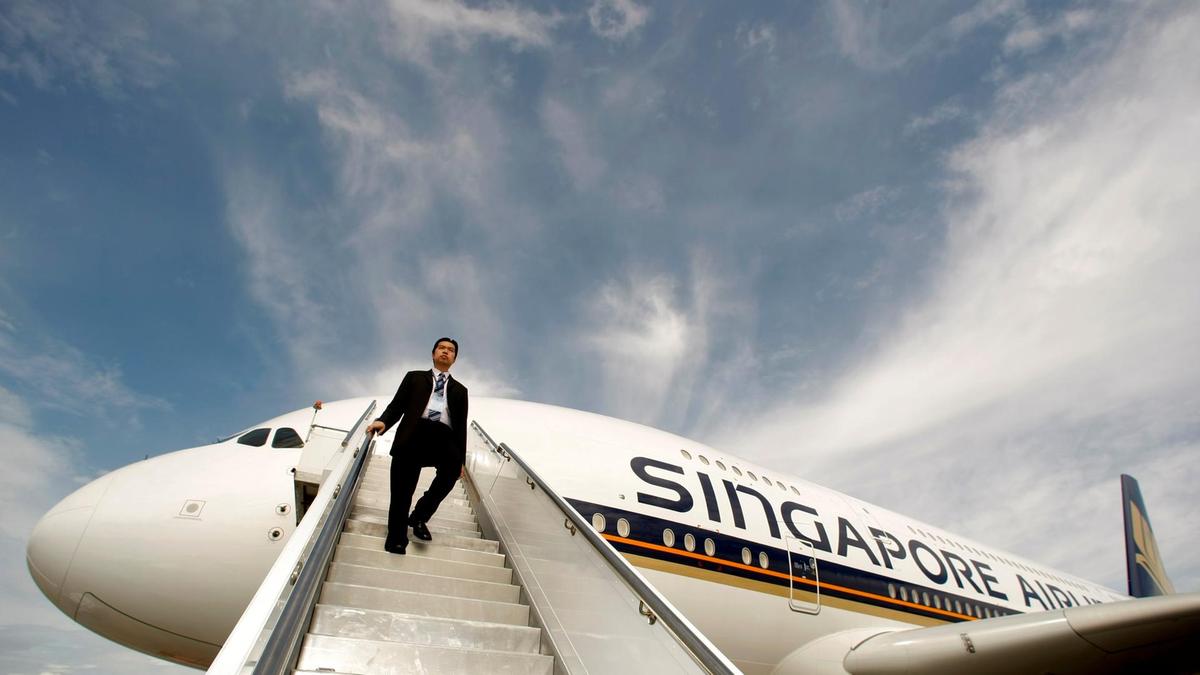
    DBS Bank and Singapore Airlines (SIA) have today come together to sign a memorandum of understanding (MOU) to enhance digital capabilities across various digital platforms, to enable a seamless banking and travel customer experience for travellers.

    Under the MOU, the two companies will introduce flight booking and merchandising capabilities on DBS’ platforms, a DBS-SIA Rewards Programme on KrisPay1, and the expansion of payment options for SIA customers using PayNow, via Application Programming Interface (API) technology. The MOU is in line with SIA’s move to enhance digital capabilities company-wide, and DBS’ vision to make payments simple and hassle-free for customers through building integrated digital ecosystems.

    “We are excited to be teaming up with DBS, which has been twice globally recognised as the World’s Best Digital Bank. The partnership will provide great benefits to both our companies, given our shared aim to be a digital leader in our respective industries, with enhanced customer benefits through new flight booking, merchandising and reward programme ties,” said Singapore Airlines Executive Vice President Commercial, Mr Mak Swee Wah.

    As the first bank partner that SIA will connect via API for flight ticket sales and KrisShop, DBS customers can now look forward to booking their holidays on the soon-to-be-launched DBS Travel Marketplace which will allow one to purchase flights, book hotels and buy travel insurance on a single integrated platform.

    “We are thrilled to partner Singapore Airlines, winner of multiple best airline awards, to create an inclusive digital travel ecosystem for our customers,” said Mr Shee Tse Koon, DBS Singapore Country Manager. “Singaporeans are among the most well-travelled in the world with over 10.3 million overseas trips made in 2018 alone. Through this partnership, we would be able to elevate the consumer travel experience by offering extensive travel and retail options for travellers to choose from and customise their journeys right at the start.”

    Facilitated by API technology, the collaboration is also expected to cover the following areas:

    DBS-SIA Rewards Programme, where KrisFlyer members can instantly convert DBS points into KrisPay miles via the KrisPay app. Miles can subsequently be used for retail purchases at KrisPay partners island-wide. Alternatively, the KrisPay miles can be converted into KrisFlyer miles instantly within seven days of accrual. DBS is SIA’s first conversion partner on KrisPay.

    By including PayNow as a payment mode, SIA can offer its passengers the flexibility and convenience to pay for their flights from their bank accounts using PayNow, and issue tickets instantly once the payment is done. This is made possible by DBS IDEAL RAPID, an enhanced solution that offers Instant Credit Confirmation, as well as consolidated daily credit and reporting. The comprehensive solution also includes other value-added options like automated refunds; for instance, if a trip is cancelled or changed, SIA can refund the outstanding amount back to the passenger’s bank account.

    The initiatives will be gradually rolled out this year, beginning with the DBS Travel Marketplace, with the full suite of updates to be made available by end of 2019.


  • Oppo request patent on new slider design

    Oppo request patent on new slider design

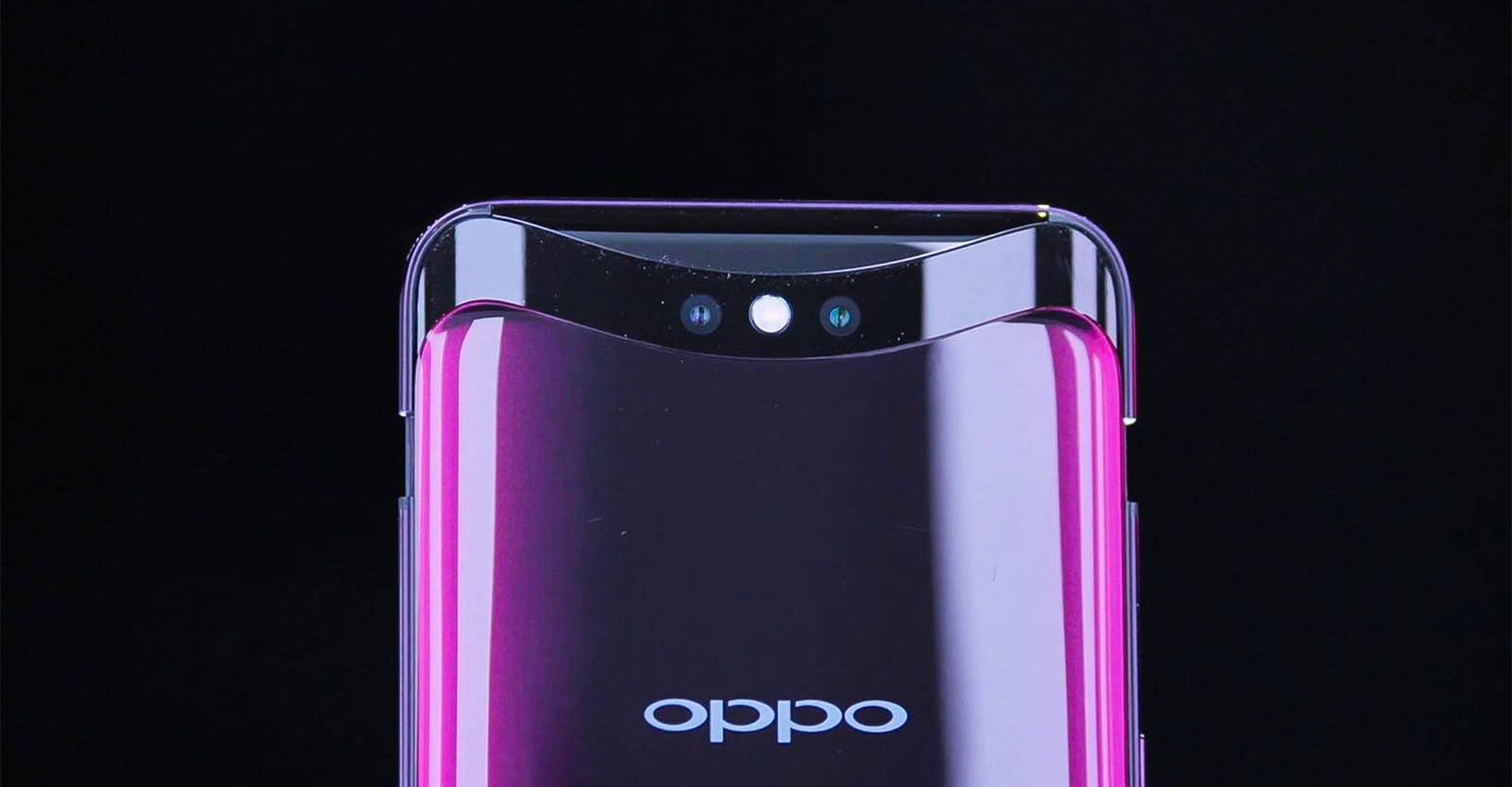
    The European Union Intellectual Property Office (EUIPO) has published a patent awarded to Chinese phone manufacturer Oppo. The company’s Oppo Find X was the first smartphone to feature a slider design; the slider hides the front-facing camera and dual rear cameras until needed. Now, Oppo’s new slider design includes dual cameras that are mounted on the back of the phone, never hidden from view. Meanwhile, the slider holds a pair of front-facing selfie cameras.

    Just the other day, we showed you a case render for a phone called the Oppo Reno, which will be unveiled on April 10th. To give the phone a high screen-to-body-ratio without relying on a notch (which is really the reason for all of the sliders, punch-holes, pop-up cameras and side panels we’re seeing on new handsets these days), the Oppo Reno uses a wedge that mechanically rises from the top of the device.

    The illustrations that accompany the patent show a phone using the newly patented slider, but also don’t show a fingerprint scanner. This could be related to the fact that the patent has nothing to do with that feature, or it could indicate that Oppo plans on equipping a phone using the patented new slider design, with an in-display fingerprint scanner.

    The patent was initially filed in January, was registered and published today. It expires on January 30, 2024.

  • Huawei says half of its flagships could have foldable displays by 2021

    Huawei says half of its flagships could have foldable displays by 2021

    Huawei is betting pretty heavily on foldable smartphones and in a recent interview the CEO of the company’s Consumer Business Group, Richard Yu, revealed Huawei’s short-term expectations for the new device format. Because the foldable segment is so new, Huawei’s primary focus at the moment is the recently-announced Mate X, which will go on sale in June. This device, as the company openly admits, is rather expensive but as foldable devices start to gain traction Huawei expects pricing to begin falling. In fact, in just two years’ time, Huawei’s foldable flagships should cost no more than regular smartphones.

    This gradual drop in price will also result in Huawei bringing more devices to the market and, by 2021, half of the smartphone giant’s flagship offerings could sport foldable displays, with one of these being a compact device that’s smaller than both the Huawei Mate X and Huawei P30 Pro.

    Obviously, foldable devices will become increasingly more important to Huawei in the years to come. The company does, however, recognize that not everyone will be interested in the new format and that some will prefer traditional smartphones. This would suggest that regular devices, like the ones in our hands today, will be sticking around for quite some time and are under no threat at the moment.

  • Google offers Android users one 99-cent movie rental service

    Google offers Android users one 99-cent movie rental service

    Haven’t seen Lady Gaga and Bradley Cooper yet in A Star is Born? Google will let you rent it for only 99 cents from the Google Play Store. Android users are receiving a notification today about a special offer allowing them to pick one movie to rent from the Google Play Store library for 99 cents (+ Tax). The offer expires on April 21st. Once an Android user takes Google up on the deal, he or she will have 30 days to finish viewing the film selected. The video rented will play in the highest quality for the device being used to view it (4K, HD or SD).

    Typically, a movie like A Star is Born will cost $5.99 to rent in 4K, so Google is offering a good deal here, even though it is limited to one rental. Most likely Google is trying to get Android users to rent a film in the hope that the experience is so enjoyable, they decide to repeat it a number of times, paying full price, of course.

    There are plenty of movies available to rent for 99 cents (+ Tax). You might want to consider one of these:

    • Mary Poppins Returns
    • Aquaman
    • Fantastic Beasts: The Crimes of Grindelwald
    • Bohemian Rhapsody
    • Get Out
    • Ralph Breaks the Internet

    Remember, you only get one shot at a 99 cent rental, so choose wisely. Watch for the notification on your Android phone, or open the Google Play Store app on your device and tap on the Movies & TV heading.

  • HTHKH to buy full control of mobile business

    HTHKH to buy full control of mobile business

    Hutchison Telecommunications Hong Kong Holdings (HTHKH) has arranged to buy out Japan’s NTT Docomo‘s share of its mobile businesses for $60 million.

    Under the agreement, HTHKH will acquire Docomo’s 24.1% interest in Hutchison Telephone Company Limited (HTCL) and its 24.1% stake in Hutchison 3G Hong Kong Holdings (H3GHK), making both companies wholly-owned subsidiaries.

    In an announcement, HTHKH said acquiring full control of its mobile business will increase the value of HTHKH shares, enhance operational efficiency and save costs by eliminating resources expended on shareholder communications.

    The transaction is expected to close on May 31. HTHKH plans to use the proceeds from the disposal of its fixed line business in 2017 to pay for the purchase.

    HTHKH and Docomo have agreed to discuss potential ways of extending their mutually beneficial relationship despite no longer being tied through a shareholder relationship.

    The companies have agreed to enter a consultation and cooperation agreement upon the closing of the transaction to explore the feasibility of collaboration in the field of mobile telecommunications products and services.

  • Huawei profit grows 25.1% Last Year

    Huawei profit grows 25.1% Last Year

    Huawei has reported a solid 25.1% increase in net profit for 2018 despite the continuing political challenges the vendor has been facing in the US and other markets.

    The Chinese vendor reported a net profit for the year of 59.3 billion yuan ($8.83 billion), on the back of a 19.5% increase in revenue to 721.2 billion yuan.

    Sales in the vendors’ core carrier business declined slightly to 294 billion yuan, but consumer business revenue surged 45.1% from 2017 to reach 348.9 billion yuan as Huawei carved out a higher share of the global smartphone market.

    Enterprise revenue also grew 23.8% to 74.4 billion yuan, due to demand for the company’s cloud, big data, AI and IoT solutions.

    Commenting on the results, Huawei rotating chairman Guo Ping appeared confident that the company can weather the impact of decisions by regulators in markets including the US, Australia and New Zealand  to restrict the vendor from providing equipment to segments of their respective markets over national security concerns.

    “Through heavy, consistent investment in 5G innovation, alongside large-scale commercial deployment, Huawei is committed to building the world’s best network connections,” he said.

    “Throughout this process, Huawei will continue to strictly comply with all relevant standards to build secure, trustworthy, and high-quality products. As we work towards this goal, we have been explicitly clear: Cyber security and user privacy protection are at the absolute top of our agenda.”

    He added that the company is “confident that the companies that choose to work with Huawei will be the most competitive in the 5G era, and countries that choose to work with Huawei will gain an advantage for the next wave of growth in the digital economy.”

  • Ford confirms end of C-Max

    Ford confirms end of C-Max

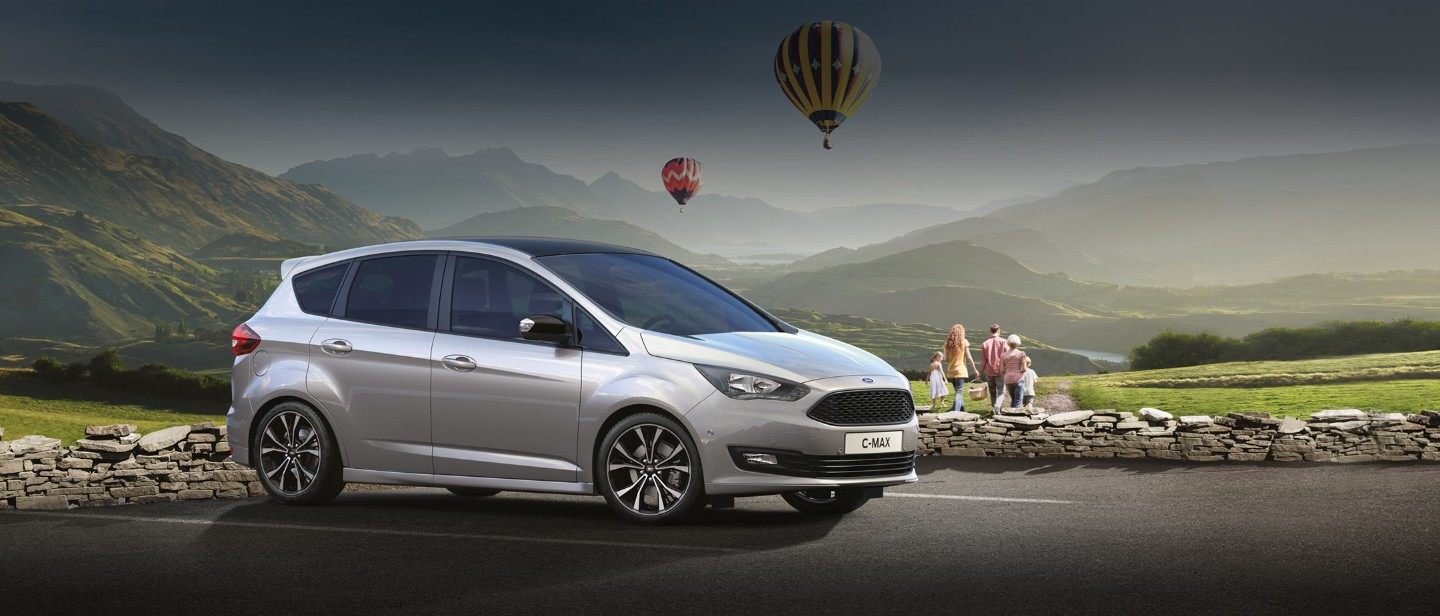
    Ford confirmed it will end production of its C-Max minivan at its factory in Saarlouis, Germany, but said the plant will stay open with further investment in the Focus car that is also built there. Production of the C-Max and Grand C-Max will stop by the end of June, the automaker said on Friday in a news release.

    Ford will also end night-shift production at the factory. The moves will reduce costs as Ford seeks to turn around its money-losing European operations.

    Ford said it will continue to invest in production of the Focus compact car in Saarlouis. There is strong demand for higher margin wagon, Active and ST variants of the Focus, the company said.

    Ford said on March 15 that it plans to cut more than 5,000 jobs in Germany to help return its operations in the region to profit in the near-term. The turnaround plan will involve job cuts, looking at plant closures and discontinuing money-losing vehicle lines, Ford has said.

    The automaker employs about 53,000 people in Europe, with more than 24,000 of them in Germany. It has 18,000 employees in Cologne, the location of its European headquarters and a factory that builds the Fiesta subcompact hatchback. Another 6,000 are employed in Saarlouis and a further 200 staff are based at an engineering center in Aachen.

    Ford is dropping the C-Max and Grand C-Max because of a sharp drop in demand as customers switch to SUVs and crossovers.

    Sales of the C-Max and Grand C-Max fell 21 percent to 53,080 in Europe last year, according to JATO Dynamics. Focus sales dropped 8 percent to 194,097.

  • China Mobile Hong Kong holds 5G experience showcase

    China Mobile Hong Kong holds 5G experience showcase

    China Mobile Hong Kong (CMHK) and property company Sino Group have jointly held what they are calling Hong Kong’s first in-mall 5G experience showcase at the Olympian City 2 mall.

    The Future is Now 5G Experience Showcase, which was held over four days ending yesterday, comprised six experience zones intended to introduce ad demonstrate 5G technology.

    These zones were based around concepts including autonomous vehicles, smart glasses and a machine that purports to be unbeatable at janken (also known as rock paper scissors) by using 5G leased lines and a sensory system to detect gestures as they are thrown.

    Other zones highlight the speed improvement between 4G and 5G, the potential of 5G technology in smart city development and a start-up exhibition based on IoT technology.

    “Out of Hong Kong’s many mobile carriers, CMHK is the first network provider to receive the 5G trial permit, and has succeeded in engineering Hong Kong’s first end-to-end 5G network testing as well as the first Commercial Equipment Field-Testing of 28GHz 5G base stations,” CMHK chairman Dr Li Feng said.

    “In the future, CMHK will continue to adhere to the concept of ‘4G changes lives, 5G changes society’ by presenting “5G+ Project” in three agendas: firstly, to complement the existing 4G network with 5G infrastructure; to promote 5G with new networking technology; and develop more comprehensive 5G ecosystems to maximize the value of 5G.’

  • Philippines taps UNDP to accelerate free Wi-Fi rollout

    Philippines taps UNDP to accelerate free Wi-Fi rollout

    The Philippines’ Department of ICT (DICT) has signed a partnership agreement with the United Nations Development Program (UNDP) aimed at fast-tracking the deployment of free Wi-Fi access in public places.

    Under the agreement, the UNDP will provide support for the government’s Pipol Konek – Free Wi-Fi Internet Access in Public Places Project.

    The UNDP will conduct area-based network analysis of target sites, oversee monitoring of project impact, and continue to provide technical training to stakeholders involved in the rollout.

    The UNDP and the DICT will meanwhile jointly take charge of project oversight. The project participants plan to hold workshops and consultative meetings to address the challenges with the rollout and investigate potential solutions.

    The DICT sought the assistance of the UNDP in September last year to expedite the project and aid in the capacity-building initiatives of the companies involved in the rollout. A formal signing ceremony was held last week during the first project board meeting.

    “Today as we set to seal this meeting of minds, the Department is optimistic that our goals of providing free Internet access and promoting knowledge-building among our citizens will soon be realized,” DICT acting secretary Eliseo M Rio Jr said at the signing ceremony.

  • Google yanks controversial app from the Play Store

    Google yanks controversial app from the Play Store

    Axios revealed last week that Google has removed the Living Hope Ministries app from the Google Play Store. Those who installed the app could listen to recordings of sermons and view texts of devotionals for men, women, parents and their children. However, despite the Ministry’s denial, the app was also known for offering gay conversion therapy. This is a controversial method that some (including Vice President Mike Pence) believe will convert gay and bisexual men and women to a heterosexual orientation. The conversion is done by a brainwashing-like technique that uses psychology and religious belief to pound messages into subjects over and over again. Some say that this technique is harmful, ineffective, and could lead to depression, drug use and suicide.

    Meanwhile, Google’s action came after 142,212 people signed a petition on Change.org that called for the app’s removal. Several LGBTQ organizations also demanded that the app is removed. But Google did not respond immediately; it took months of protesting before the company finally followed the lead of other tech firms that had already removed the app from their storefronts such as Apple, Microsoft and Amazon.

    “It took months of activism by Truth Wins Out and Change.org, and today Human Rights Campaign, to get Google to pull a conversion therapy app. I called Google out in the press about this in January. They took no action. Credit is due for finally acting — but Google now needs a serious internal audit examining why it delayed so long.”-Sen. Brad Hoylman.

    “After consulting with outside advocacy groups, reviewing our policies, and making sure we had a thorough understanding of the app and its relation to conversion therapy, we’ve decided to remove it from the Play Store, consistent with other app stores.”-Google

    Before the Human Rights Campaign fought for the removal of the app, it had given Google a perfect 100% score for its annual Corporate Equality Index. The score was based on Google’s offering of health benefits for same-sex couples, and for providing health care to Transgender employees. However, the organization pulled its support for Google because it would not originally remove the Living Hope Ministries app.

  • Roberto Cavalli US collapses as Expected

    Roberto Cavalli US collapses as Expected

    Italian fashion label Roberto Cavalli has shuttered its stores in the US and will liquidate its entire operations in the territory.

    While the brand had recently sought to negotiate with creditors while buying to time to source new investment, it has now sent all staff home and will close all stores. Several key executives have resigned, and a spokesperson announced on Sunday that the group will file for liquidation bankruptcy.

    The flamboyant fashion house has been inundated with difficulties since former Versace executive Gian Giacomo was appointed CEO in late 2015. The firm has struggled since to gain new investment and experienced a high turnover in its creative team.

    The group’s online operations have been shut down until logistics are re-routed through Europe.

  • Update to the Google Camera app adds a new popular feature

    Update to the Google Camera app adds a new popular feature

    The update to version 6.2 of the Google Camera app comes with Dark mode and a few other changes, and it is rolling out to Pixel handsets via the Google Play Store. According to Android Police, the settings on the updated camera app will go into Dark mode when the Battery Saver is enabled. The report says that this works consistently with the Android Q beta installed, but not so much with Android 9 Pie.

    Since the camera app already uses a black background, why add this feature? Well, if you’re in a dark room or out at night and need to go into the Google Camera app’s settings, you’ll instantly be blinded by the white background used for that page. Why did Google have Dark mode enabled when the Battery Saver is turned on? Because if you have a phone with an AMOLED screen, a black background means fewer pixels need to be activated, which means that the phone will consume less battery power.

    Another change can be seen when moving between the camera, video, portrait, and panorama settings in the app. Previously, when a user switched between camera and video, for example, he would see a black transition screen with the icon of the selected setting in the middle. With version 6.2, when switching between settings, the screen no longer turns black and instead shows what your camera is looking at. There is also a zoom in and out effect while the selected setting’s icon remains in the middle of the screen. And there is one last change. When the flash is turned on for the front-facing selfie camera, the flash icon will appear on the display

    Remember, you need to have version 6.2 of the Google Camera app and a Pixel handset to enjoy all of these new goodies.