Author: Mei Ling Tan

  • Chinese Giant Anta Sports Eyes Takeover Bid for Struggling German Brand Puma

    Chinese Giant Anta Sports Eyes Takeover Bid for Struggling German Brand Puma

    Anta Sports Products, a prominent Chinese sportswear manufacturer, is reportedly considering the acquisition of German sportswear brand, Puma. It’s understood that Anta, listed on the Hong Kong stock exchange, is currently working with an adviser to examine the feasibility of a bid for Puma. If the proposition proves profitable, Anta may collaborate with a private equity firm to proceed with an offer.

    Potential Competitors in the Bid

    Alongside Anta, other possible contenders for the acquisition include the Chinese sportswear group Li Ning and the Japanese sportswear company Asics. Li Ning has reportedly been engaging with banks to discuss financing for a potential bid, giving an early indication of the company’s interest in Puma. As for Asics, there’s speculation that it could also show interest in the German sportswear brand.

    When approached for comments on the acquisition, Anta Sports, Puma, and Asics didn’t offer immediate responses. On the other hand, Li-Ning provided a statement indicating that the company had not yet participated in any significant discussions or assessments relating to the transaction mentioned. The company further stated that its main focus remains on the expansion and evolution of its brand.

    Shareholder’s Stand

    Artemis, the private holding firm that has the biggest share in Puma and also controls Kering, the owner of Gucci, has stated that it’s exploring all options for its 29% stake. Information from a source previously revealed that Artemis had no intentions of selling their shares at the market value as of September.

    Puma’s current market valuation stands at 2.52 billion euros, equivalent to $2.92 billion. The Pinault family that manages Artemis obtained its stake in Puma in 2018 from Kering when the luxury conglomerate transitioned into a pure luxury player focusing on brands like Gucci and Saint Laurent.

    Strategy Shift

    In October, Puma’s new CEO, Arthur Hoeld, announced that the brand would decrease discounts, enhance marketing, and trim its product range. This strategy change was part of Puma’s turnaround plan following a dip in demand for its products and the impact of US tariffs on imports. The plan also included cutting 900 corporate jobs.

    The competitive sportswear market has seen Puma’s share price fall by half since the beginning of this year, losing ground to its competitors.

    Questions & Answers

    Who are the potential bidders for the acquisition of Puma?
    Anta Sports Products, Li Ning, and Asics are the potential contenders for the acquisition of Puma.

    What is Puma’s current market valuation?
    Puma’s current market valuation is approximately 2.52 billion euros or $2.92 billion.

    What is Puma’s new strategy under CEO Arthur Hoeld?
    Puma’s new strategy involves decreasing discounts, enhancing marketing, reducing its product range, and eliminating 900 corporate jobs as part of its turnaround plan.


  • WhatsApp Boosts Social Media Appeal with New Drafts Feature: No More Lost Status Updates!

    WhatsApp Boosts Social Media Appeal with New Drafts Feature: No More Lost Status Updates!

    WhatsApp, the widely-used messaging app, is once again evolving into a more social media-centric platform with the anticipated introduction of a new feature already available on its sister platforms, Facebook and Instagram. This progression is altering the app’s primary focus from being a messaging platform to integrating more traditional social media elements.

    Status Drafts Soon to be Available on WhatsApp

    The status feature of WhatsApp has been embraced by billions of users around the globe. However, if you’ve ever begun typing an extensive status and got interrupted, you’re familiar with the ensuing frustration as your status disappears, if you exit the app. A new development indicates that this inconvenience is about to be addressed.

    The latest version of WhatsApp appears to have code that suggests the imminent introduction of a “save as draft” feature for status updates. This means that if you exit the application while in the middle of composing a status, you won’t have to start over.

    This capability is expected to work similarly to Instagram. When you attempt to exit the status editor, a pop-up will appear, querying whether you want to save your status before exiting. You will be provided with the options to either save as a draft, discard your status, or continue editing. Once saved, the status will appear as a draft the next time the creation screen is opened.

    However, while this new feature is certainly useful, it does pose a potential downside concerning storage. Forgotten drafts and continuous creation of new statuses may cause WhatsApp to consume more space than usual on user devices. Similar issues have been observed with Instagram, where stored data can accumulate over time.

    Nonetheless, it will be intriguing to see how WhatsApp navigates this challenge once the feature is launched. One possible solution could be the automatic deletion of drafts after a specific period.

    A Convenient Upgrade

    While it may not seem like a significant shift, the ability to save drafts is a valuable improvement. It not only saves time but brings WhatsApp closer to aligning with other Meta-owned apps like Facebook, Instagram, and Threads. For those who regularly use statuses (essentially WhatsApp’s version of Instagram Stories), this enhancement will be appreciatively welcomed.

    There’s no official launch timeline for the feature yet, but it is expected to be part of the next stable release of the app.

    Additionally, WhatsApp is experimenting with features that allow support for multiple accounts on a single device. The app was recently made compatible with the Apple Watch and introduced passkey-encrypted backups, enabling users to secure their backups with their fingerprint, face, or phone lock code.

    Questions & Answers

    What new feature is WhatsApp introducing?
    WhatsApp is introducing a new feature that will allow users to save their status updates as drafts.

    How will the new ‘Save as Draft’ feature work?
    If users exit the app while creating a status, a pop-up will appear asking whether they want to save their current status as a draft. If saved, the status will appear as a draft the next time the status creation screen is opened.

    Are there any potential downsides to the new feature?
    The ‘Save as Draft’ feature may cause the app to consume more storage on users’ devices due to the accumulation of saved drafts.

  • AliExpress Shuts Down Controversial Doll Vendor Amid Legal Scrutiny: A Deep Dive into the Intricate Web of Online Marketplace Regulations

    AliExpress Shuts Down Controversial Doll Vendor Amid Legal Scrutiny: A Deep Dive into the Intricate Web of Online Marketplace Regulations

    AliExpress, the online marketplace under the Alibaba Group, has expelled a China-based merchant who was selling dolls with childlike features intended for sexual use. This move followed a Reuters inquiry into whether the sale of these products adhered to the laws of the United States and European Union.

    The Case at Hand

    AliExpress was first alerted to these controversial listings in mid-November. The company initially claimed that there was no violation of their policies, arguing that the dolls were rigid and lacked any sexual functionality. However, they later shifted their stance, banning the seller for dishonest conduct on this grave issue.

    The seller, Guava Dolls, was found to be marketing four dolls that bore a striking resemblance to minors. These dolls were available for purchase in the US and Europe. Lawyers examining the case pointed out that the images of the dolls on AliExpress bore hallmarks of child sexualization, such as infantile expressions and school uniforms.

    Despite several attempts to reach Guava Dolls through email and social media, the seller remained unresponsive. AliExpress stated that the seller repeatedly denied selling sex toys on any platform, but eventually admitted to accepting custom orders on different platforms. This admission led to their permanent ban from the marketplace.

    European Regulations and the DSA

    AliExpress, along with Shein and Temu, falls under the purview of Europe’s Digital Services Act (DSA) due to their classification as Very Large Online Platforms (VLOPs). The European Commission is closely supervising AliExpress’s compliance with the DSA.

    The DSA mandates that online consumer marketplaces carry out due diligence on the products being sold on their platforms. They must also block or remove any illegal content once they become aware of its presence. These platforms now face stiffer regulatory obligations.

    AliExpress has indicated that it plans to employ third parties to aid in monitoring its platform in the future.

    Response to the Investigation

    The investigation was instigated by a consumer watchdog that spotted the childlike sex dolls on Shein’s marketplace. The European Commission has since asked Shein to provide information on their protective measures against age-inappropriate content and illegal products.

    AliExpress announced after the investigation that it had removed similar listings. It further stated that sellers who violated its policies would face penalties.

    According to the rules of AliExpress, content must neither be sexually explicit nor harmful to minors. Listings that insinuate or depict sex involving minors are prohibited. The company had originally claimed that the dolls in question were anime dolls created for fans of Japanese animation.

    Legal Implications

    In certain European countries, including France, Germany, and the UK, selling or facilitating access to dolls suggestive of children is illegal, regardless of their function. Consumer protection bodies in these nations often categorize such items as analogous to images of sexual abuse under child protection laws. Lawyers consulted by Reuters argued that the listings on AliExpress violated both national and EU guidelines.

    European Union lawmakers voted in favor of a resolution to protect EU consumers from non-compliant e-commerce platforms. This resolution underscores the issue of childlike sex dolls, among others. It is anticipated that the resolution will implore the Commission and EU member states to intensify checks on products entering the bloc.

    In the US, the regulation of childlike sex dolls is determined by state laws. Several states, including Arizona, Utah, Kentucky, Florida, Tennessee, Texas, Hawaii, Louisiana, and Wisconsin have enacted legislation targeting the sale, import, or possession of such dolls.

    Questions & Answers

    What triggered the investigation into AliExpress and Shein?
    The investigation was triggered by a consumer watchdog that discovered childlike sex dolls on Shein’s marketplace.

    What are the obligations of online marketplaces under Europe’s Digital Services Act (DSA)?
    The DSA mandates that online consumer marketplaces carry out due diligence on the products being sold on their platforms. They must also block or remove any illegal content once they become aware of its presence.

    What actions have been taken by AliExpress in response to the investigation?
    AliExpress has removed similar listings from its platform and announced that sellers who violated its policies would face penalties.

  • Alibaba Veteran Jia Hang Spearheads DCS Group’s Future; Set to Revolutionize Cross-Border Payments

    Alibaba Veteran Jia Hang Spearheads DCS Group’s Future; Set to Revolutionize Cross-Border Payments

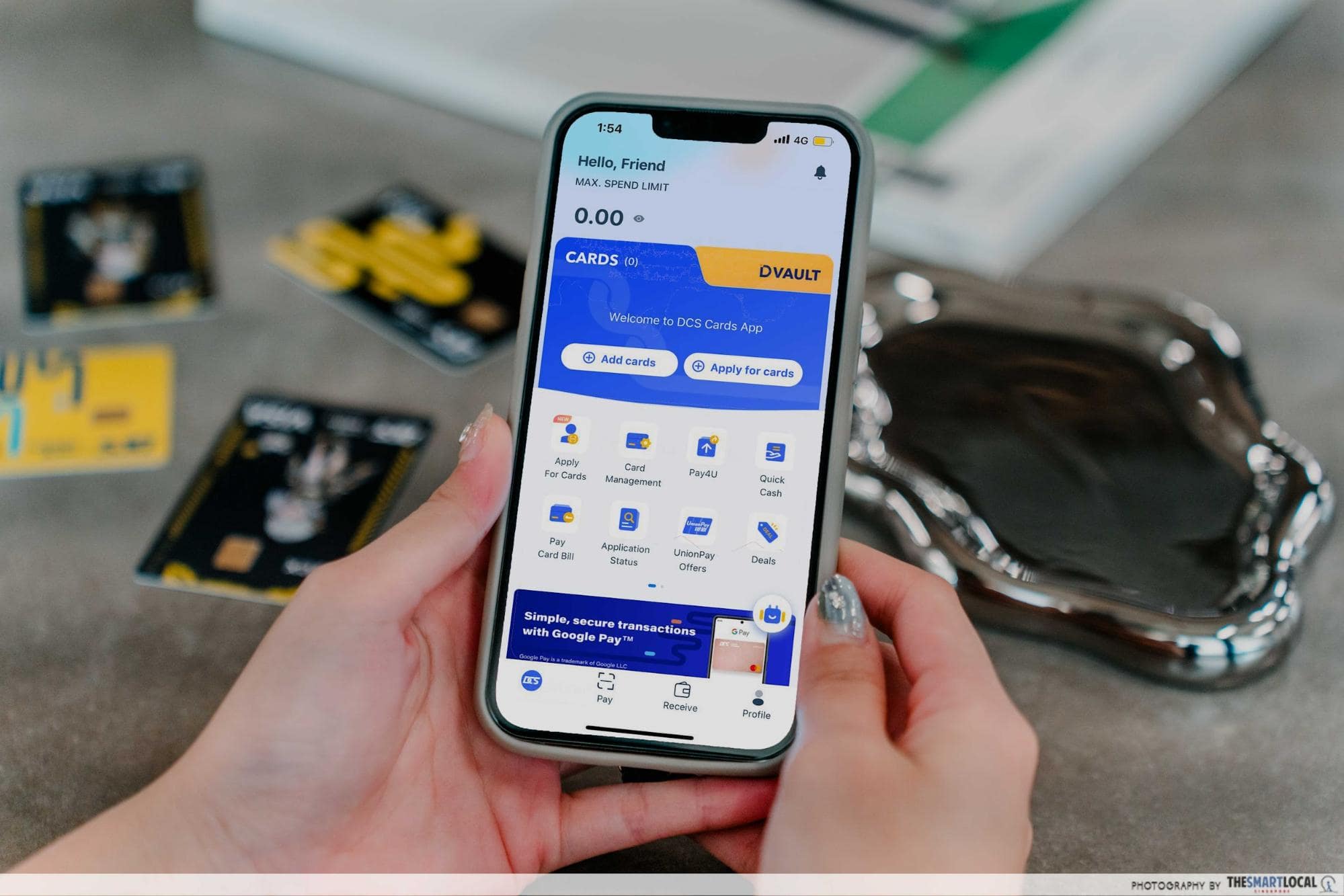
    DCS Group, previously known as Diners Club Singapore, has announced the appointment of Jia Hang as its new executive chairman. This represents the most senior leadership addition in the group’s history, underlining its ambition to revolutionise cross-border and cross-rail payments from Singapore.

    Jia Hang Takes the Helm

    Jia Hang will lead DCS Group, which includes DCS Fintech, its global business, and DCS Card Centre, the group’s core entity based in Singapore. His mandate will include strengthening DCS’s role as a trusted payment institution under the Banking Act and the advancement of its vision to create seamless, interoperable payment flows across both traditional and blockchain rails.

    The move strategically places DCS in a position to speed up its dual-rail strategy across traditional finance and blockchain ecosystems. This comes at a time when regulatory trust and infrastructure preparedness are becoming key differentiators in Asia’s digital finance landscape.

    Focusing on TradFi-Web3 Convergence

    As executive chairman, Jia Hang will oversee corporate direction, governance, and business development. He will focus on enhancing DCS’s dual-rail infrastructure and improving customer experience. He has been tasked with deepening the company’s collaborations with regulators and partners to deliver secure payment solutions for consumers and businesses.

    Global Experience in Payments

    Jia Hang discussed his appointment and stated, “At every stage of my career, I’ve been guided by one enduring question – how can payments connect the world more inclusively, seamlessly, and securely?” He added that DCS is uniquely positioned with the regulatory trust and operational discipline needed to “reimagine that future from Singapore outward.” His ambition is to build a next-generation payments network merging the reliability of traditional finance with the agility of emerging technology.

    Recent Milestones in DCS’s Transformation

    Jia Hang’s appointment comes on the heels of major milestones in DCS’s transformation journey. Last month, the company completed its largest asset-backed securitization program, a S$450 million transaction that achieved AAA ratings on senior tranches. Earlier this year, DCS launched the DeCard Visa card, which allows stablecoin-to-fiat conversion for everyday transactions, extending real-world utility to Web3 users.

    A Career Spanning Leading Digital Commerce Platforms

    Jia Hang brings with him extensive experience from major Asian and global payments ecosystems. His prior roles include senior leadership posts at Ant Group, where he led the expansion of Alipay+ across Southeast Asia and Europe. He also spent nearly a decade at China UnionPay and UnionPay International, where he launched and built UnionPay USA.

    DCS: A Next-Generation Global Payments Provider

    DCS, established over fifty years ago as Diners Club Singapore, has evolved into a Singapore-licensed financial institution with dual capabilities in card issuing and merchant acquiring. Its infrastructure supports both traditional and cryptocurrency-funded payments through regulated partners and is compatible with global schemes, including Visa, Mastercard, UnionPay, and Diners Club. The group continues to position itself as a bridge between traditional and decentralized finance, aiming to deliver secure, borderless payments with real-world utility for businesses and consumers.

    Questions & Answers

    What is the role of Jia Hang in DCS Group?
    Jia Hang has been appointed as the executive chairman of DCS Group. His role involves overseeing corporate direction, governance, and business development, with a particular focus on enhancing DCS’s dual-rail infrastructure and improving customer experience.

    What is DCS Group’s aim with the appointment of Jia Hang?
    With Jia Hang’s appointment, DCS Group aims to reshape cross-border and cross-rail payments from Singapore. The move positions DCS to accelerate its dual-rail strategy across traditional finance and blockchain ecosystems.

    What is the significance of Jia Hang’s appointment?
    Jia Hang’s appointment is a significant move for DCS Group, marking the most senior leadership addition in the group’s history. It also signals the company’s ambition to become a leading player in Asia’s digital finance landscape.

  • Vietravel to Divest Entire Stake from Vietravel Airlines by Year’s End: An Insider Look

    Vietravel to Divest Entire Stake from Vietravel Airlines by Year’s End: An Insider Look

    Vietravel, a tourism company, has announced its intent to divest its 14.1% shareholding in Vietravel Airlines by the end of the current year. The details of the prospective investor are yet to be disclosed.

    Background of Vietravel Airlines

    Established in 2020, Vietravel Airlines commenced its journey with a registered capital of $26.5 million USD. The airline began commercial operations in 2021, thereby becoming the sixth airline of Vietnam and the third to be privately owned.

    Major Stakeholders

    The majority of the airline, 75% to be precise, is under the ownership of businesses run by Do Quang Hien, the founder and chairman of the T&T Group conglomerate. Hien acquired his stakes in the airline towards the end of last year. His son, Do Vinh Quang, was appointed chairman a few months after the acquisition.

    Growth and Expansion Plans

    Since Hien’s takeover, Vietravel Airlines has been on a growth trajectory. Its charter capital has been expanded to a staggering VND2.6 trillion. The airline primarily operates across the Hanoi–Da Nang–Ho Chi Minh City routes, also serving popular tourist spots like Phu Quoc and Nha Trang.

    The airline has set a target to expand its fleet to a minimum of 10 aircraft by the end of this year. Negotiations are underway with aircraft manufacturers and international airlines to achieve this goal.

    Questions & Answers

    What is the current ownership structure of Vietravel Airlines?
    75% of the airline is owned by businesses managed by Do Quang Hien, founder and chairman of T&T Group.

    What are Vietravel Airlines’ primary routes?
    The airline mainly operates on the Hanoi–Da Nang–Ho Chi Minh City routes and also serves tourist destinations like Phu Quoc and Nha Trang.

    What are Vietravel Airlines’ expansion plans for the current year?
    The airline plans to expand its fleet to at least 10 aircraft by the end of this year.

  • Myanmar Set to Burst onto Global Durian Scene: A New Frontier in Fruit Exporting

    Myanmar Set to Burst onto Global Durian Scene: A New Frontier in Fruit Exporting

    Myanmar is gearing up to venture into the global durian export market, aiming to launch exports by 2023 or at the latest by 2027. This move is part of a strategic plan to generate additional foreign income and bolster the nation’s local durian industry.

    Initiatives Underway

    According to Kyaw Min, the chairman of the Myanmar Durian Producers and Exporters Association, the registration process with the General Administration of Customs of China has already commenced. The focus is not only on the export of fresh durians but also processed durian products.

    Min revealed that the association is actively seeking foreign investors, industry experts, and business partners to foster the development of value-added durian processing within the country. The belief is that this initiative will catalyze swift growth in Myanmar’s durian industry and generate new streams of foreign income once exports commence.

    The Global Durian Market

    China stands as the globe’s leading consumer of this strong-smelling fruit. In the previous year, China imported a record-breaking 15.6 million tonnes of durian, valued at a staggering US$6.99 billion. The majority of these imports originated from Thailand and Vietnam, with contributions of 57% and 41.5% respectively. The remaining percentage of imports came from the Philippines and Malaysia.

    However, this year has recorded a dip in demand, with a 15% decrease in imports during the first half of the year. This equates to a total of 708,190 tonnes. The market has also become more competitive, with new players like Cambodia, which shipped its initial durian batch in July.

    Laos has expressed interest in joining the competitive market, and Indonesia has publicized plans to ship durians directly to China, bypassing their previous route through Thailand.

    Myanmar Durian Industry

    Currently, Myanmar cultivates durians on approximately 60,000 acres (24,281 hectares) of land. More than 4,000 of these acres are located in Yangon, a central durian producing region. Other significant production hubs include the Kayin and Mon states and the Tanintharyi, Bago, and Ayeyarwady regions.

    According to Myint Sein, a trustee of the Ayeyarwady Durian Producers and Exporters Cluster, Myanmar’s durian season traditionally falls in May, June, and July. Sein emphasizes that the development of the durian industry in Myanmar will significantly benefit local farmers and contribute substantially to national economic growth.

    Questions & Answers

    What is Myanmar’s plan for its durian industry?
    Myanmar plans to begin exporting durians to the global market by 2023 or 2027 to increase foreign income and grow its local industry.

    Who are the major players in the global durian market?
    China is the largest buyer, and the main suppliers are Thailand, Vietnam, the Philippines, and Malaysia. New entries Cambodia, Laos, and Indonesia are also establishing their presence.

    What impact could the development of the durian industry have on Myanmar?
    The development of the durian industry is expected to significantly uplift local farmers and contribute to the country’s economic growth.

  • Manulife Bolsters Leadership with Appointment of Former HSBC Asia CFO Ming Lau

    Manulife Bolsters Leadership with Appointment of Former HSBC Asia CFO Ming Lau

    Manulife, a global insurance provider, has announced the appointment of Ming Lau as its new Chief Financial Officer (CFO) for Asia. This announcement is effective as of May 2026. Ming Lau will directly report to Colin Simpson, Manulife’s Global CFO.

    Ming Lau brings a wealth of experience to this new role. He has an impressive career in financial services spanning nearly three decades. Most recently, he served as the CFO for HSBC in the Asia Pacific and Middle East regions. He also filled various senior positions, such as CFO of HSBC China and CFO of HSBC Global Commercial Banking.

    The experienced finance professional is expected to bring immense value to Manulife. Commenting on the appointment, Colin Simpson stated, “We are delighted to welcome Ming to Manulife. His extensive experience and proven leadership across multiple markets will be instrumental as we continue to advance our strategic priorities and growth ambitions in Asia.”

    Questions & Answers

    Who has been appointed as the new CFO for Asia by Manulife?
    Ming Lau has been appointed as the new Chief Financial Officer (CFO) for Asia at Manulife.

    What is the professional background of the newly appointed CFO?
    Ming Lau has nearly 30 years of experience in financial services. Previously, he served as CFO for HSBC in the Asia Pacific and Middle East regions, as well as CFO of HSBC China and CFO of HSBC Global Commercial Banking.

    Who will Ming Lau report to in his new role?
    In his new role as CFO for Asia at Manulife, Ming Lau will report to Colin Simpson, the Global CFO of Manulife.

  • Citi Bolsters Asian FX Market Presence: Key Hires Spark Momentum in Regional Expansion

    Citi Bolsters Asian FX Market Presence: Key Hires Spark Momentum in Regional Expansion

    Citi is amplifying its efforts to boost its foreign exchange business across Japan, North Asia, Australia, and South Asia with the addition of seven experienced professionals to its foreign exchange sales and trading teams since September. The strategic move aims to capitalize on increasing regional FX flows and further develop relationships with corporate, institutional, and public-sector clients, as indicated in a recent announcement.

    Boosting Corporate FX Presence

    Citi is solidifying its corporate foreign exchange sales capacities with the appointment of Manoj Goel as Head of Corporate FX Sales for the Indian subcontinent. Goel, who brings a wealth of 23 years of experience and a proven track record of spearheading notable cross-border FX transactions in India, will be reporting to Vandana Bhatter and Aditya Bagree. Prior to this, Goel headed Global Markets Corporate Sales at a major global bank. He is an Electronics Engineering graduate from BITS Pilani and holds an MBA from IIM Calcutta, where he was a silver medalist.

    Enhancing Capabilities in Singapore

    Citi has welcomed back Cassalynne Lou to its Singapore Corporate FX Sales team, where she will be reporting to Galvin Phua. Lou, who has over seven years of experience in FX sales across New York, Singapore, and at a major bank, will be focusing on broadening the Citi Commercial Bank North Asia–Singapore FX corridor and enhancing advisory services for corporate clients.

    Powering Up Institutional FX Team

    On the institutional front, Citi has recruited Yusuke Aita as a Director based in Tokyo. Aita, who will be reporting to Anand Goyal, brings 17 years of diverse FX trading and sales experience from several leading banks. He has previously catered to hedge funds and institutional clients.

    Strengthening Hong Kong’s Institutional FX Coverage

    Citi has bolstered its institutional FX coverage in Hong Kong by appointing Renee Gao as Director. Gao, who will report to Chen Ni, has specialized in emerging-markets fixed income and FX products in her previous role at a major global bank. She started her journey at Goldman Sachs in Hong Kong and Sydney, focusing on FX solutions for institutional clients.

    Expanding Regional Bank and Real-Money Coverage in Singapore

    Matthew Lim has joined Citi’s institutional FX sales team in Singapore as Vice President and will report to Timothy Young. With prior experience at UBS and Credit Agricole, Lim has covered banks, private banks, and central banks. He is a Bachelor of Science in Finance degree holder with a minor in Economics from Pennsylvania State University.

    Augmenting FX Trading Bench with Senior Options Talent

    Citi has appointed Nicky Lam as Director in its G10 FX Options trading team in Singapore. Lam, who will report to Akshay Saxena, brings with him two decades of experience across Singapore, London, and Hong Kong. He has previously led G10 options for APAC at both Nomura and Goldman Sachs and has also served at the Royal Bank of Scotland.

    Enhancing SGD and EM Trading Capabilities

    Jonathan Chua has joined Citi’s FX Trading desk in Singapore as an SGD and short-term interest rate trader. He will report to Dany Checrallah. Chua brings over a decade of experience in SGD and emerging-market currencies. He began his career at Citi in G10 spot trading and holds degrees from the University of Exeter and INSEAD.

    Growth Corresponds with Strong Market Performance

    The recruitment momentum aligns with the robust performance in Citi’s markets business. In the third quarter of 2025, markets revenues hit $5.6 billion, marking a 15 percent increase. Fixed income revenues also saw a 12 percent rise to $4.0 billion, aided by a 15 percent surge in rates and currencies and an eight percent increase in spread products and other fixed income. Heightened client activity in rates and stronger mortgage trading contributed to these gains.

    Reaffirming Commitment to Regional FX Growth

    Nathan Swami, Head of FX Trading in Japan, North Asia, Australia, and South Asia, commented, “These appointments underscore our unwavering commitment to strengthening and maintaining our leadership position in these markets. They also reaffirm our deep dedication to our valued corporate and institutional clients, as well as our continued investment in the growth of our business.”

    Questions & Answers

    Question: What is Citi’s strategy for enhancing its foreign exchange business?
    Answer: Citi is appointing experienced professionals to its FX sales and trading teams to capitalize on increasing regional FX flows and further develop relationships with corporate, institutional, and public-sector clients.

    Question: What roles have been filled as part of this strategy?
    Answer: Citi has filled positions such as Head of Corporate FX Sales for the India sub-continent, Director positions in Tokyo and Hong Kong, Vice President in Singapore, and other senior roles.

    Question: What has been the recent performance of Citi’s markets business?
    Answer: In the third quarter of 2025, Citi’s markets revenues reached $5.6 billion, a 15 percent increase. Fixed income revenues also rose by 12 percent to $4.0 billion.

  • Google Debunks Viral Rumors: Gemini AI Not Trained on Gmail Data

    Google Debunks Viral Rumors: Gemini AI Not Trained on Gmail Data

    Clarifying the Misunderstanding

    Recently, there has been a significant amount of attention given to rumors suggesting that Google has been utilizing personal emails to develop its Gemini AI. These rumors have been dismissed by the company itself via social media, assuring users that their personal emails are not being used for training the artificial intelligence (AI) system. The rumors seemingly originated from misconceptions about long-standing settings, rather than a covertly introduced policy change.

    If one has been active on social media platforms recently, they may have come across posts suggesting that Google is clandestinely using Gmail data to train its artificial intelligence models. Often, these posts refer to a setting in Gmail titled “Smart features and personalization,” urging users to disable it promptly. As a result, even some tech security platforms initially reported the story before later issuing corrections.

    To dispel any concerns, Google has issued a clarification, asserting that Gemini is not trained using Gmail content. They further explained that the “Smart features” setting, which powers functions such as tab sorting and Smart Compose, has been in existence for an extended period and is not a new tool intended to extract user data. The flurry of concern appears to be a typical example of internet misinformation becoming distorted and exaggerated.

    Addressing Privacy Concerns

    This incident underscores the current heightened sensitivity regarding AI and data privacy. Given the continuous scrutiny faced by companies such as OpenAI over web scraping and data usage, it is understandable why users are exceedingly vigilant. The competitive nature of the landscape further compounds this issue. For instance, Apple is marketing its forthcoming “Apple Intelligence” as a privacy-centric alternative that primarily processes data on-device to avoid the sort of fears associated with the potential misuse of cloud-stored data.

    For Google, navigating this space is a balancing act. While the company is deeply involved in AI and requires vast amounts of data to compete effectively, losing the trust of its billions of Workspace users is a risk it cannot afford to take. If users start to believe that their private communications are being used to train AI chatbots, they may begin to explore other options. This incident serves as a reminder to tech giants that they need to explicitly communicate the functions of their “smart” settings, or the internet will fill in the gaps with worst-case scenario assumptions.

    Restoring Confidence

    Google’s prompt reaction to clarify the situation was important. Understandably, many users were alarmed, considering that tech companies have not exactly established a trustworthy reputation in recent years. Speaking from a personal perspective, I depend on Gmail’s smart features frequently, with the priority inbox being a particularly valuable tool. The confirmation that these features do not supply my emails to Gemini for processing is reassuring.

    However, this serves as a wake-up call for Google’s UI team. If an existing setting is ambiguous enough to be misconstrued as a “spyware toggle” in a viral social media post, it might be time to reconsider the description provided.

    Questions & Answers

    Is Google using personal emails to train its Gemini AI?
    No, Google has explicitly stated that it does not use personal emails to train its Gemini AI.

    What caused the misconception about Google using personal emails for AI training?
    The misconception appears to stem from misunderstanding about the “Smart features and personalization” setting in Gmail, which has been around for a long period and is not a new tool designed to extract user data.

    What do Gmail’s smart features do?
    The smart features in Gmail power functions like tab sorting and Smart Compose. They do not feed user emails into any AI system for training or development purposes.

  • Revolutionize Your Viewing: YouTube Tests AI Chatbot for Personalized Home Feed Customization

    Revolutionize Your Viewing: YouTube Tests AI Chatbot for Personalized Home Feed Customization

    YouTube is in the process of testing an Artificial Intelligence (AI) chatbot aimed at enhancing your home feed to better align with your video preferences. This development seeks to address the limitations currently presented by the platform’s algorithm, allowing you a greater degree of control over your feed.

    Algorithm Limitations and the Role of AI

    Your YouTube home feed is largely shaped by the platform’s algorithm. This algorithm works by continuously monitoring your viewing habits, the content you have previously liked or disliked, and the YouTube channels you follow. Despite its effectiveness, this system has its flaws as it can lead to an over-saturated feed based on a fleeting interest.

    For instance, viewing a few Marvel-related videos may lead the algorithm to categorize you as a die-hard Marvel fan and subsequently fill your home feed with Marvel content. YouTube is acknowledging this limitation and is experimenting with an AI chatbot that allows you to specify the type of content you wish to view.

    Introducing Your Custom Feed

    YouTube is testing a new feature, “Your Custom Feed,” which allows you to customize your home feed. Users involved in the experiment will find this feature on their home page. This feature allows you to update your feed recommendations based on simple prompts. This innovation is intended to provide an easy means of exerting greater control over your suggested content.

    Accessing the AI chatbot is as simple as tapping “Your Custom Feed” next to the Home option on your YouTube main page. You can then enter a prompt detailing the type of videos you wish to see on your home feed. This change will reset your current YouTube home feed to better reflect your stated preference.

    AI and Custom Feed

    YouTube is not alone in utilizing AI to help users customize their feeds. Platforms are increasingly using AI chatbots or manual topic selection to tailor content to users’ preferences, providing more control over content than relying solely on algorithms.

    However, it is worth noting that as technology giants like Google begin to integrate AI tools into their products, they are likely to use the data shared with these chatbots to train their AI models. This data-sharing means users may inadvertently become a source for training AI systems.

    Respecting User Preferences

    While some users may appreciate the more personalized feed offered by AI technologies, others may prefer to browse un-curated content. It is hoped that should this feature become widely available, Google will allow users to opt-out, respecting the preferences of users who do not wish to have their viewing habits learned by AI.

    Other User-Controlled Features

    YouTube has been taking steps to give users more control over their feeds. For instance, there is the “Customize Your Feed” option that occasionally appears on the home feed, which asks users to select their preferred types of videos. YouTube also frequently asks if you like a particular post or video to determine if it should show you similar content in your feed.

    In addition, YouTube introduced an option to remove pop-ups such as “subscribe to the channel” or “watch another video” that appear at the end of a video. These innovations suggest that YouTube is committed to refining the user experience on its platform.

    Questions & Answers

    What is YouTube doing to improve the user experience?
    YouTube is experimenting with an AI chatbot that allows users to customize their home feed. This gives users more control over their feed, addressing limitations of the platform’s algorithm.

    How can users interact with the AI chatbot?
    Users can interact with the chatbot by tapping the “Your Custom Feed” feature found on their home page. They can then enter a prompt detailing the type of videos they wish to see on their home feed.

    What if users do not wish to have AI learn their viewing habits?
    YouTube hopes to respect the preferences of all users. Should the AI feature become widely available, it is anticipated that users who do not wish to have AI learn their viewing habits will have the option to disable the feature.

  • Siri: The Underdog of AI Yet Surprisingly Handy – A Personal Journey

    Siri: The Underdog of AI Yet Surprisingly Handy – A Personal Journey

    I vividly recall the unveiling of the iPhone 4S. Being a high school senior at the time, it felt as if the future had arrived in the persona of Siri – a smart, virtual personal assistant that Apple had persuasively marketed as the dawn of a new era.

    While Siri was a groundbreaking introduction at the time, the first mainstream voice virtual assistant on a significant smartphone, it fell short of perfection. More than a decade has passed since then, with the development of more sophisticated and natural-sounding AI assistants that readily outperform Siri.

    Despite its limitations and the derision it often attracts, I’ve found myself unexpectedly impressed by Siri’s capabilities on several occasions. Here are a few instances where Siri demonstrated its value, despite being considered an underdog in the realm of voice assistants.

    Indispensable Music Companion

    One of my primary uses for Siri, apart from querying about the weather, is to identify currently playing tracks. This comes in handy when I’m driving, dining out, or streaming music from my own phone.

    While on the topic of music, I often command Siri to add songs to my favorites. This feature proves particularly convenient when I’m on a run and shuffling through my “Discover” playlist, as manually doing so can be cumbersome.

    Adjusting Specific Percentages

    Another surprising capability of Siri is its ability to adjust brightness and sound volume to a specific percentage. I’ve found this feature useful in scenarios where I’m unable to manually adjust these settings.

    Handy Utilities

    Despite being considered basic features, Siri’s ability to convert units and currencies, perform simple mathematical calculations, and set reminders has been surprisingly beneficial. I’ve also frequently used Siri as a dictionary and a tool to convert written content into a sort of podcast.

    One of the most useful features is Siri’s ability to remember where I’ve parked my car, especially in unfamiliar locations. Additionally, Siri’s capability to log details like weight and medication in the Apple Health app greatly simplifies the process.

    Future of Siri

    Apple is reported to be preparing one of Siri’s most significant upgrades ever, with a fully re-architected version in the works. This includes testing a chatbot system, Veritas, as the foundation for the revamped assistant.

    The new Siri will reportedly integrate more deeply with Apple Intelligence and include AI-driven “agents”, hinting at the evolution of Siri into a more personalized coach. There are also plans to allow third-party assistants to use the iPhone’s side button in certain regions, suggesting a shift towards a more flexible approach to voice assistants on the iPhone.

    If these upgrades materialize as expected, Siri could transition from being the underdog to a genuinely intelligent assistant in the coming year.

    Questions & Answers

    What are some surprising capabilities of Siri?
    Siri can identify currently playing tracks, add songs to a user’s favorites list, adjust brightness and sound volume to a specific percentage, convert units and currencies, perform mathematical calculations, set reminders, remember where a user has parked their car, and log details in the Apple Health app.

    What are the plans for Siri’s future?
    Apple is reportedly preparing a significant overhaul of Siri, including a fully re-architected version that incorporates a chatbot system, deeper integration with Apple Intelligence, and the introduction of AI-driven “agents”.

    Can Siri integrate with third-party assistants?
    Apple is testing a framework that allows third-party assistants to use the iPhone’s side button in certain regions, suggesting a move towards a more flexible approach to voice assistants on the iPhone.

  • Sudden Shutdown: Singapore’s Wan Yang Massage Parlor Leaves Customers $22,000 Short with Unfulfilled Packages

    Sudden Shutdown: Singapore’s Wan Yang Massage Parlor Leaves Customers $22,000 Short with Unfulfilled Packages

    Wan Yang Health Product and Foot Reflexology Centre, a well-known massage and reflexology chain in Singapore, has unexpectedly shuttered all its outlets. There are reports of customers losing in excess of S$29,000 (US$22,230) due to unutilized prepaid packages.

    Immediate Cease of Operations

    All five of the chain’s outlets across the city-state have displayed notices indicating an immediate halt of operations. Further, they have plans to initiate formal liquidation proceedings. The company’s website link on its social media page is now defunct, and phone calls to the outlets have gone unanswered. The outlets are now listed as permanently closed on Google Maps.

    Customers Surprised by Sudden Closure

    Customers, who had interacted with the outlets as recently as the preceding week, were taken aback by the sudden closure. They reported that the business seemed to be functioning normally, with appointments being scheduled for upcoming days. Celine, a regular customer, had an appointment scheduled for the following day but found the shop unexpectedly closed. Similarly, another long-term customer, Daniel, had purchased a substantial package and had a significant portion of it remaining. He too had an appointment scheduled, only to find the establishment boarded up.

    Concerns and Speculations

    Customers reported that the staff had been promoting new packages just days prior to the sudden closure. Given that Wan Yang was an established and reputable business, the abrupt closing has led to significant concern and speculation. The Consumers Association of Singapore has received 15 complaints related to the unexpected closure of Wan Yang outlets. The association has expressed deep concern over prepayment losses in the beauty and wellness sector due to sudden business shutdowns and is currently seeking clarification from Wan Yang regarding customer refunds for unused packages.

    Potential Impact on Employees

    Some customers have raised questions about the impact on Wan Yang’s employees and whether they were also blindsided by the sudden closure. There are concerns about the possibility of a situation similar to that of the bakery chain Twelve Cupcakes, which abruptly closed and left its employees without their owed salaries.

    Questions & Answers

    What led to the sudden closure of Wan Yang Health Product and Foot Reflexology Centre?
    The reasons behind the abrupt closure of Wan Yang Health Product and Foot Reflexology Centre are not currently known.

    How much money have customers lost due to the closure of Wan Yang outlets?
    Customers have reported losing over S$29,000 (US$22,230) related to unused prepaid packages.

    What is the potential impact on employees of Wan Yang?
    It is unclear at this time, but there is concern that employees may have been caught off guard by the sudden closure, similar to a recent situation with the bakery chain Twelve Cupcakes.

  • Go Green and Earn Green: Hanoi Rewards Residents with Cash for Switching to Electric Motorbikes

    Go Green and Earn Green: Hanoi Rewards Residents with Cash for Switching to Electric Motorbikes

    Hanoi’s local government is currently deliberating a proposition to incentivize motorbike users to switch to electric models. According to the proposal, a subsidy of VND5 million (US$190) will be given to individuals opting to replace their gasoline motorbikes with electric ones.

    The Subsidy Plan

    The subsidy is designed to encourage the adoption of electric motorbikes by permanent residents and those who have resided in the city for at least two years. The plan dictates that when a resident purchases an electric motorbike with a price tag of VND10 million (US$379) or above, they will receive a subsidy of 20% of the motorbike’s cost, up to a maximum of VND5 million (US$190).

    For those who fall under the category of low-income or nearly low-income residents, the subsidy rises to VND20 million and VND15 million respectively. The proposal stipulates that each individual is entitled to a subsidy for one vehicle until January 1, 2031.

    This proposal offers a more generous subsidy than the previous recommendation issued by the Department of Construction in July, which proposed a maximum subsidy of VND3 million.

    Additional Incentives

    Apart from the subsidies on electric motorbike purchases, the proposal also includes several additional incentives to encourage the transition to electric vehicles. For instance, the city plans to cover 50% of registration and license plate fees for new electric motorbike owners. For those who purchase their vehicles on installment plans, a 30% subsidy on loan interest for the first 12 months is offered.

    The proposal also extends its benefits to transportation businesses such as buses and taxis, offering a full subsidy on all fees when they transition to electric vehicles.

    Infrastructure Plans

    In a bid to ensure adequate infrastructure for the anticipated increase in electric vehicles, the city also plans to require certain facilities to allocate a portion of their parking lots to charging stations. Apartment buildings, commercial buildings, hospitals, and other public facilities are expected to dedicate at least 15% of their parking space to charging stations for electric vehicles. Newly-built facilities will be required to allocate at least 30%.

    In a further step towards reducing emissions, Hanoi plans to prohibit gas-powered motorbikes from downtown streets starting July 2026 and to ban most fossil fuel vehicles by 2030. The city, currently home to around 6.9 million motorbikes, has identified gasoline-powered motorbikes as a significant contributor to the city’s pollution, accounting for around 60%.

    Questions & Answers

    What is the purpose of the subsidy?
    The subsidy aims to encourage the adoption of electric motorbikes by providing financial incentives to residents.

    What other incentives are included in the proposal?
    Other incentives include subsidies on registration and license plate fees, as well as on loan interest for those purchasing on installment plans. Subsidies are also offered to transportation businesses transitioning to electric vehicles.

    What steps are being taken to accommodate the anticipated shift to electric vehicles?
    The city plans to mandate certain facilities to dedicate a portion of their parking lots to charging stations for electric vehicles. In addition, it plans to ban gas-powered motorbikes and most fossil fuel vehicles by 2030.

  • Triumph Bids Farewell to China: Decades-Long Journey of Lingerie Giant Ends

    Triumph Bids Farewell to China: Decades-Long Journey of Lingerie Giant Ends

    The international lingerie brand, Triumph, has announced plans to exit Mainland China, one of the world’s largest retail markets, by the end of this year. This decision marks the end of a long-standing presence in the region, spanning over several decades.

    Gratitude for Loyal Customers

    In a recent statement, Triumph expressed its appreciation towards its Chinese consumers, acknowledging their support over the past three decades. The company expressed gratitude to all customers and members who trusted and supported the Triumph brand over the years.

    They further emphasized how fortunate they have been to grow alongside their customers in China. Ever since their initial venture into the Chinese market, Triumph states that it has been a privilege to work closely with their consumers, witnessing the brand’s growth and transformation in the country.

    Phased Withdrawal Strategy

    The brand has decided to employ a phased approach to its withdrawal, initially focusing on its digital ecosystem. Triumph’s WeChat mini-program, which offers after-sales services, will cease operation as of midnight, December 10.

    Other digital platforms that offer after-sales support, including Taobao, Tmall, Tmall Outlet, JD, Pinduoduo, Douyin, and VIPshop, will end their association with Triumph no later than midnight, December 5.

    Following the digital shutdown, Triumph’s physical presence will also be phased out. All offline locations are slated for closure by December 31.

    The decision was issued by Hainan Youmei Underwear and Yancheng International Women’s Fashion, the entities that manage Triumph’s operations in China.

    Questions & Answers

    When will Triumph’s WeChat mini-program cease operation?
    Triumph’s WeChat mini-program will stop offering after-sales services at midnight on December 10.

    What is Triumph’s strategy for exiting the Chinese market?
    Triumph is employing a phased approach to its withdrawal, first focusing on its digital ecosystem and then moving to its physical locations.

    When are all of Triumph’s offline stores set to close?
    All of Triumph’s physical stores in China are set to close by December 31.

  • Alibaba’s Revenue Surges, Thanks to Fast Delivery and AI Investments: Outpaces Quarterly Estimates

    Alibaba’s Revenue Surges, Thanks to Fast Delivery and AI Investments: Outpaces Quarterly Estimates

    In Tuesday’s quarterly report, Alibaba, the Chinese e-commerce behemoth, exceeded analysts’ revenue predictions. This success was primarily attributed to the company’s significant investments in one-hour delivery services, which attracted more users to its shopping applications. Additionally, the company’s cloud division demonstrated remarkable growth.

    Share Performance and Revenue

    Following the announcement, the company’s US-listed shares increased by 2% in initial trading. Alibaba reported a second-quarter revenue of 247.80 billion yuan (approximately US$35 billion). This figure surpassed the anticipated revenue of 242.65 billion yuan. However, the adjusted profit of 4.36 yuan per American Depository Share fell short of an estimated 5.49 yuan.

    Fierce Competition in the Quick Commerce Sector

    Alibaba’s performance comes amidst an expensive competition in China’s ‘instant retail’ or ‘quick commerce’ sector. Here, major corporations are investing billions in expedited delivery services to secure a larger market share. Simultaneously, Alibaba has been making significant investments in artificial intelligence (AI), positioning itself as a frontrunner in the industry within China.

    Investment in AI

    The company announced in February plans to allocate 380 billion yuan over three years to AI and cloud investments. However, CEO Eddie Wu hinted at potential additional investments to address supply chain challenges while meeting customer demand. Indicating the company’s aggressive stance on AI investment, Wu suggested that the planned investment may be insufficient given the scale of customer demand.

    Profit Impacts

    Despite the investments causing a 53% reduction in net profit to 20.61 billion yuan, this figure still surpassed analysts’ predictions. These investments, particularly in AI, are anticipated to establish long-term competitive advantages, notwithstanding the immediate pressure on profit margins.

    Instant Retail Sector

    In the instant retail sector, aggressive discounting and subsidies from Alibaba and its competitors have led to concerns over margins and substantial cash expenditure. However, with its diversified business model and significant resources, Alibaba is less vulnerable than its rivals. The company projects that the instant retail sector could add 1 trillion yuan in yearly gross merchandise value over the next three years. Notably, Alibaba’s instant retail business has significantly improved unit economics recently, with cost per order decreasing by half since summer.

    Singles’ Day Subsidies

    The Singles’ Day sales period, stretching from early October to November 11, witnessed considerable subsidies and discounting by retailers to stimulate demand. Sales across major platforms during this period escalated to 1.70 trillion yuan, an increase from 1.44 trillion yuan the previous year.

    Expansion into Consumer AI

    Alibaba has also recently intensified efforts to penetrate the consumer AI market, a sector where it has been comparably less active due to its greater emphasis on enterprise clients. Despite launching a free app, which gained 10 million downloads within its first week, it remains behind the market leader, ByteDance’s Doubao, which boasts 150 million users. Consequently, an ongoing price war in China’s domestic AI market, triggered by competitors focusing on affordable computing and app development, has forced Alibaba to reduce prices.

    Questions & Answers

    What led to Alibaba exceeding analysts’ revenue expectations?
    Alibaba’s investments in one-hour delivery services attracted more users to its shopping apps, leading to increased revenue.

    What challenges is Alibaba facing in the quick commerce sector?
    The sector is highly competitive, with corporations investing billions in expedited delivery services to secure a larger market share.

    How is Alibaba responding to competition in the consumer AI market?
    Alibaba has intensified efforts to penetrate the consumer AI market and launched a free app that gained 10 million downloads within its first week. It has also reduced its prices to remain competitive.