Author: Mei Ling Tan

  • Vietjet and Japan Airlines to Commence Code share Ticket Sales

    Vietjet and Japan Airlines to Commence Code share Ticket Sales

    New-age airline Vietjet and Japan Airlines (JAL) has announced that both carriers` will begin sales of their codeshare flights starting Tuesday, 23 October 2018.

    This follows a formal partnership agreement between both parties in 2017, in which Vietjet and JAL signed a Memorandum of Understanding for commercial cooperation. The two airlines now offer codeshare flights on domestic destinations in Vietnam and on international flights between Vietnam and Japan.

    Applicable routes operated by Vietjet include domestic flights connecting Ho Chi Minh City and Hanoi; Ho Chi Minh City and Da Nang; Hanoi and Da Nang; and international flights linking Kansai with Hanoi. The codeshare flights will be available for travel from 28 October 2018, while the Kansai to Hanoi route specifically commences operation on 8 November 2018.

    According to the agreement, Vietjet and JAL aims to continue expanding their codeshare routes in the near future, including other flight services between Japan and Vietnam as well as JAL’s domestic flights, and Vietjet’s domestic flights.

    Vietjet, the largest domestic airline in Vietnam, started its flight services in 2011 and now operates an expanding network all over Vietnam and Asia. Offering convenient and friendly services with reasonable fares and many other attractive add-on services, Vietjet has succeeded in creating new demands in Vietnam. As a new-age carrier, it also offers top-class service called “SkyBoss”, which has been very well received among passengers expecting quality service.


  • Taxi or not? Vietnam debate rages over Grab status

    Taxi or not? Vietnam debate rages over Grab status

    Transport authorities and taxi associations have reiterated that ride-hailing firm Grab should be treated as a taxi service, but experts disagree. Nguyen Cong Hung, vice chairman of the Vietnam Automobile Transportation Association (VATA), said at a recent meeting that it was incorrect to identify Grab as an electronic contract service firm.

    Hung said that legal experts have affirmed that Grab and other ride-hailing services are taxi services, and ordering a car service via a phone call or a phone app are only superficially different modalities.

    While some people believe that calling Grab a taxi service will hinder the development of technology, Hung disagreed.

    “Identifying a car service as traditional taxi or technology taxi will guarantee authorities management power and fairness in terms of their responsibilities. Whichever service applies technology will have higher profits,” he added.

    Echoing Hung, chairman of the Ho Chi Minh City Taxi Association, Ta Long Hy, said that any service which sets transport fees collects money and spends a large amount of money on discounts is a transportation service, and not merely a software company.

    Hy said that all car services that are 9-seaters or lower are taxi services in nature. “The Ministry of Transport should not create an exclusive playing field for a service that is basically a taxi service.”

    He proposed that 9-seater or lower car services, whether Grab or traditional taxis, be identified by a mark on their license plates or a larger registration label on the car’s windshield.

    Earlier this month, the Transport Ministry released the latest draft of a transportation management decree under which under 9-seater car services be registered as taxi firms before they can apply ride-hailing technologies.

    This means that Grab and other ride-hailing firms would have to register their services again as a taxi business and comply with corresponding legal responsibilities regarding their operating licenses, drivers’ profiles and tax duties.

    Should the decree be passed, Grab and other ride-hailing cars will have to put a sticker labeled “taxi” on their windshields and carry a taxi legend on the top.

    The draft goes against many experts’ requests to treat ride-healing services as a new business model that is different from traditional taxi service.

    Nguyen Dinh Cung, director of the Central Institute of Economic Management (CIEM), had said earlier that firms that primarily used software cannot be called a transportation business.

    Cung said that the government should encourage new investment forms or business models with an open and fair environment in keeping with Industry 4.0 trends.

    Lawyer Truong Thanh Duc said that the Ministry of Transport has been making changes with recent drafts without having a consistent viewpoint.

    The fact the ministry wants to identify ride-hailing services as taxi firms is against the government’s policy of prioritizing technology development in the Fourth Industrial Revolution, he said.

    Marketing expert Do Hoa said that Grab and other ride-hailing services should be managed under a new law specifically written for technological services.

    Traditional regulations related to taxi firms are not appropriate for Grab, as it is not a transport company, he said.

    The heated debates and struggles between ride-hailing cars and traditional taxis have not cooled after the exit of Uber from the Southeast Asian market in March. Taxi firms have continued to complain about the unfair competition they are facing.

    They have also joined hands to fight the market onslaught of ride-hailing firms.

    Grab has consistently been denying that it is a taxi firm, saying it only provides technological solutions to transport services.

    The debate over Grab’s status as transport company is hardly new in Vietnam. Vietnam’s top taxi company Vinasun sued Grab for $1.84 million in losses, citing “unhealthy competition”.

    In Vietnam, local cab firms like Mai Linh and Vinasun have to pay value added tax (VAT) of 10 percent and corporate income tax of 20 percent, while Grab only have to pay some 3 percent.

    The ride-hailing market in Vietnam has seen new entrants after Uber’s departure, including Fastgo and GoViet, which is an affiliate of Indonesia’s Gojek.

    Current market dominator Grab has expanded its services to include GrabFood, a food delivery service, and GrabCar Business, targeting the corporate sector.

    These moves pose further challenges for long-standing taxi firms like Mai Linh, Taxi Group and Vinasun.

  • Two thirds of the company wrong in measuring customer loyalty

    Two thirds of the company wrong in measuring customer loyalty

    A commissioned study conducted by Forrester Consulting on behalf of Collinson, a global leader in loyalty and benefits, reveals that the majority of organisations do not understand what is driving customer loyalty, and are therefore putting customer relationships and profitability at risk.

    Surveying decision-makers in organisations with revenue exceeding US$300 million, respondents graded their programmes based on a series of measures and also shared their key goals and challenges. The study surveyed and compared the results for a multitude of countries and regions in Asia Pacific (APAC), including Hong Kong, mainland China, Singapore, Indonesia, Japan, Korea and Australia.

    The research found that two thirds (65 per cent) of those surveyed markets in APAC do not understand why their customers are loyal to their organisations. Almost 7 out of 10 (67 per cent) reported that they do not have a proper framework in place to measure loyalty in the context of overall business performance. Remarkably, the research also found a misalignment between the loyalty objectives and the measurement criteria used to determine the effectiveness of their loyalty success.

    Three reasons why organisations may be struggling with customer loyalty

    1. Loyalty strategy without clearly defined business objectives and appropriate metrics

    Loyalty success is led by a holistic loyalty strategy with clear defined goals and measurement framework which needs to be embedded consistently across an organisation.

    Less than half (49%) of the APAC respondents have clearly defined business goals and objectives to define their loyalty proposition, where Hong Kong and Japan have the highest percentage (55%) compared with 39% of respondents in Singapore. Only 40% have cohesive customer loyalty strategy that spans multiple functions and is a top strategic initiative with C-level support.

    From the research, we found there is a clear discrepancy between what people are trying to achieve through their loyalty programmes and the KPIs in places to measure the performance in relation to their objectives.

    The key loyalty objectives and performance metrics shared by our respondents for their customer loyalty programme in APAC are misaligned as shown below:

    Key loyalty objectives The metrics for measurement
    1 Acquiring new customers (53%) Customer satisfaction (62%)
    2 Retaining existing customer (47%) Customer engagement (59%)
    3 Enriching customer relationships (46%) Customer retention rate (57%)
    4 Improving the customer experience (37%) Loyalty programme enrolments (57%)
    5 Increase customer advocacy (35%) Sales & revenue (57%)

    Without appropriate metrics, it could be difficult to know which areas need improvement and understand the impact of customer loyalty on overall business performance.

    1. Without a single customer view to harness data potential

    To appeal to the modern, choice-rich consumers, it is important to engage them at an individual level which means collecting all appropriate data across the customer journey.

    The research found that three-fifths (60%) of respondents in APAC do not have centralised business rules to incorporate all sources of customer data into a single customer view. Less than a half (48%) collect a wide enough range of customer data to run deep analyses, where only 26% of them automate advanced data analytics to optimise their customer strategy, and 35% would use predictive modelling to identify the right existing dynamic content based on customer behaviour.

    Predictive modelling enables brands to make better decisions and run more effective programmes where China has the highest percentage (47%) compared with the rest of respondents in Asia Pacific to harness the value of data for providing personalized offers for each member. It is vital to recognise each customer preference and behaviour to provide a personalised experience that stands out from the competition. This can only be done when brands continuously collect the right information about their customers and using it effectively, to understand what makes them tick.

    1. Competitive differentiation

    Loyalty programmes with reward, point and VIP schemes have been pervasive for years. These tactics are still frequently employed, but the effectiveness is uncertain when they are deployed without a sound loyalty strategy. From the research, we found that brands continue to see competitive differentiation as being vital, with two thirds (66%) of loyalty practitioners in APAC reporting that is a critical or high priority.

    72% in Asia Pacific, 78% in Hong Kong, Indonesia and Korea respondents planned to increase funding for developing new loyalty programme benefits and rewards.  Embracing partnerships with like-minded brands, who can offer unique experiences and access to their customer base, will enhance and strengthen the member’s engagement. It enables partner brands to expand their knowledge of the customer through an integrated cross analysis of buyer behaviour and preferences for personalized, curated communications to increases sales leveraged through the partnership.

    Mary English, Executive Vice President, APAC of Collinson, says, “A clearly defined loyalty strategy provides the foundation to design a proposition for continuous engagement with your customers in a relevant and meaningful way. Data is the fuel for ongoing loyalty to a brand with heavy weighting on a well-structured single customer view to capture, measure, gain insights, and personalise the dialogue with their customers.  Organisations need to put loyalty back on track by becoming better aligned in terms of their objectives, what they measure, and how to differentiate their programmes. There is really no ‘one size fits all’ approach and each organisation must identify their brand’s unique, valuable assets in formulating a strategy that is regularly reviewed and updated to the changing behaviours of their customers.”

    “Creating formalised processes and employing dedicated resources can be a valuable investment and demonstrate your company’s commitment to loyalty. It is logical for companies to consider ‘connected loyalty’ as a goal of their strategy. Customers who feel connected to the organisation become fans, not just purchasers of their products and services. The latter may simply be shopping out of habit or convenience, whereas fans will go out of their way for the brands they love.”


  • KitKat opens Osaka shop for made-to-order premium chocolate bars

    KitKat opens Osaka shop for made-to-order premium chocolate bars

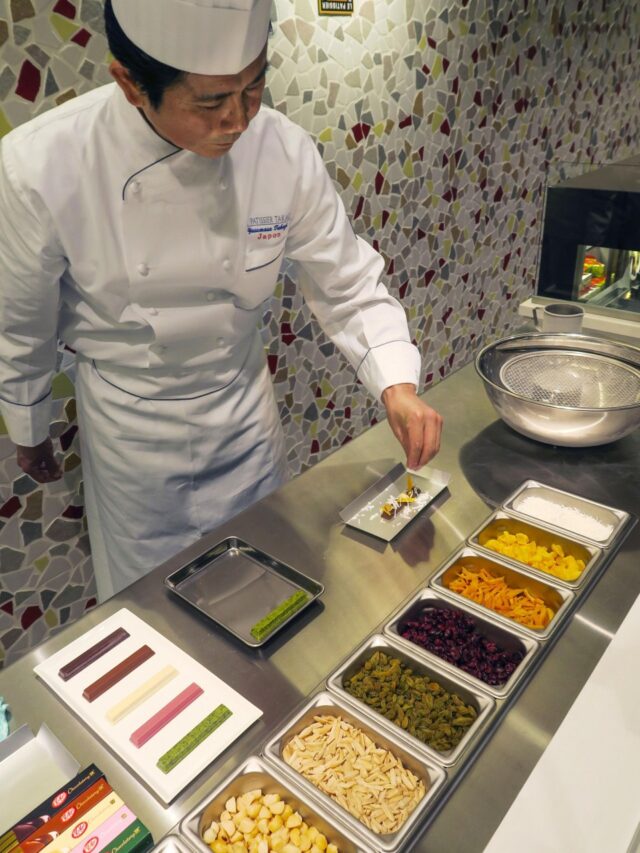
    Nestle Japan has opened a permanent made-to-order Kit Kat store in Osaka. The new specialty store is the first and only permanent location in Japan where personalised Kit Kats can be made. It offers customised creations chilled on-the-spot with liquid nitrogen, with customers choosing from three types of chocolate and nine toppings.

    The store is located just outside Nankai Electric Railway’s Namba Station, a prominent Osaka sightseeing location, given the expected popularity of bespoke Kit Kats among tourists.

    Japan has developed a reputation internationally for its unique Kit Kat flavours, which have proved popular with visitors to the country. The confectionery originally comes from the UK.

    Nestle Japan says its made-to-order Kit Kats are sold from ¥702 (US$6.25).

  • Tmall’s “See Now, BuyNow” Show Kicks Off 2018 11.11 Global Shopping Festival

    Tmall’s “See Now, BuyNow” Show Kicks Off 2018 11.11 Global Shopping Festival

    Tmall, the largest B2C ecommerce platform for global and domestic brands and retailers in China, hosted its “See Now, Buy Now” Tmall Collection Fashion Show during the weekend in Beijing, kicking off the month-long lead-up celebration to Alibaba Group’s 2018 11.11 Global Shopping Festival.

    This year – the festival’s 10th anniversary – its fashion show added a new interactive element. In addition to popular “See Now” and “Buy Now” features that allow viewers to purchase items shown on the runway instantly from their mobile phones, this year’s fashion show also introduced an innovative feature, “Play Now”. “Play Now” gives viewers the chance to vote for their favorite outfits to create a trend report that would provide insights and instant feedback to participating brands.

    “Tmall Collection is our annual extravaganza to showcase the hottest trends in fashion. We created the ‘See Now, Buy Now’ concept two years ago, and we are excited to boost consumer engagement to a new level with the ‘Play Now’ feature, enabling viewers to share their views with brands real-time,” said Jessica Liu, President of Tmall Fashion and Luxury.  “The ‘See Now, Buy Now’ show provides a powerful sales channel for the world’s leading brands and also has the potential to reshape the fashion industry with the interactive component tailored for the always-online Chinese millennials.”

    The four-hour “See Now, Buy Now” show featured an impressive lineup of more than 60 international and domestic brands showcasing their latest collections, including Estée Lauder, Levi’s, Adidas, Guess, I.T, M.A.C.., G-Star Raw, and Swatch. More top luxury brands participated in the event than ever before, including Stella McCartney, Burberry, MCM, La Perla, Giuseppe Zanotti, and Stuart Weitzman.

    To celebrate the 10th anniversary of the 11.11 Global Shopping Festival, the fashion show also featured a special segment highlighting crossover products that are specifically designed for the Festival. Celebrities participating in the show this year included American fashion designers Anna Sui and Jason Wu, American singer Jaden Smith, and Chinese singer Chris Lee.

    The live runway show had attracted over 57 million online viewership, more than tripling that of last year. It was broadcast live on 10 platforms, including the Taobao app, Alibaba’s video platform Youku, social media platform Weibo, and short video app Tik Tok.

  • BMW expands recall on fire risk to 1.6 million diesel vehicles

    BMW expands recall on fire risk to 1.6 million diesel vehicles

    BMW is recalling about 1.6 million diesel cars to fix a potential fire hazard in their engines, expanding repairs from just under half a million vehicles in Europe and Asia. The voluntary service action follows a BMW investigation that found coolant could leak from the car’s exhaust recirculation unit. The defect can lead to sparks while driving and cause fires in “in extreme cases,” the automaker said Tuesday in a statement.

    South Korea’s government, after reports of 40 fires this year, asked drivers to keep vehicles off roads until undergoing checks. Police also raided the automaker’s office in Seoul to probe the safety issue, after videos of cars engulfed by fire went viral.

    The vehicles affected — diesels with four- and six-cylinder engines — were produced between 2010 and 2017, BMW said.

    After the initial recall announced in August, BMW’s internal investigation found more vehicles with similar technical setups. The company said it will replace the components as necessary.

    BMW last month cut its profit forecast, blaming an increase in warranty provisions alongside trade tensions and pricing pressure.

  • Nok Air launches international direct flights from Phuket to Chengdu

    Nok Air launches international direct flights from Phuket to Chengdu

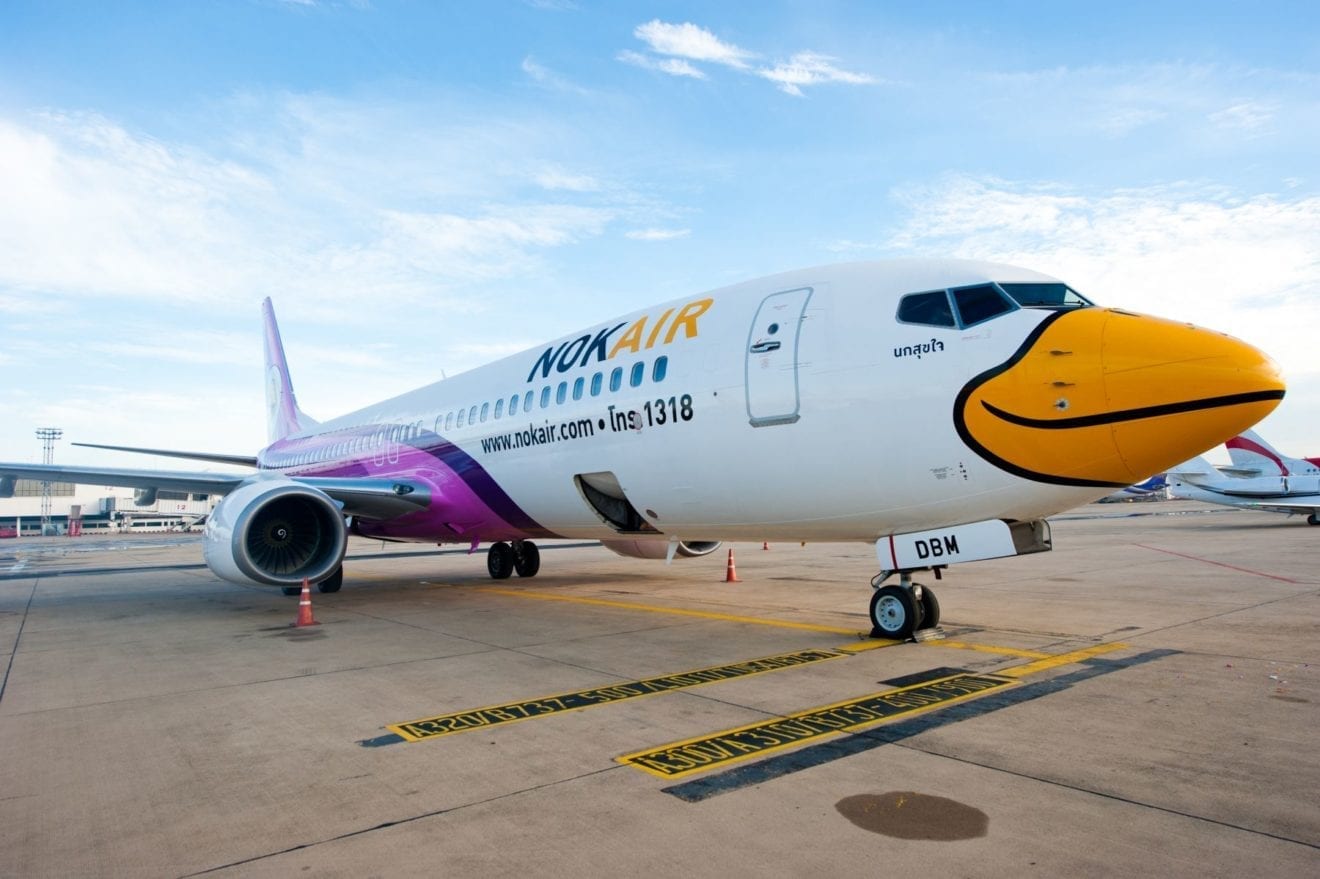
    Nok Air launches the daily international direct flight, Phuket-Chengdu, aiming to offer passengers the most impressive travel experience Nok Air always commits itself to impress all travelers lifestyle. To offer Chinese passengers the best experience, Nok Air has just launched the new daily direct flight from Phuket to Chengdu, China, 7 flights a week (1 round-trip flight/day) starting from 4,000 baht with free of charge baggage allowance of 20 kilograms and free Royal Orchid Plus (ROP) mileage earning from THAI Airways.

    Nok Air also provides various routes to China which include Zhengzhou, Nanning and ‘Phuket-Chengdu’ as the latest one with more than 500,000 Chinese passengers in the last year.Phuket-Chengdu and Chengdu-Phuket tickets are available on www.nokair.com from October 8th 2018.

  • 2019 Ducati Panigale V4 R Spotted

    2019 Ducati Panigale V4 R Spotted

    The Ducati Panigale V4 R is the downsized, 1,000 cc version of the Ducati Panigale V4, and will be Ducati’s weapon of choice in superbike racing for some time now. The current Panigale V4’s 1,194 cc engine overshoots the displacement limit for the World Superbike Championship (WSBK) for four-cylinder models, so an engine meeting the WSBK homologation requirements was imminent. Latest spy shots show exactly such an example of the V4 R undergoing test runs at an undisclosed location. The bike seen in the spy pictures appear to be the race-spec variant of the new model, although Ducati will certainly introduce a road-legal model of the V4 R as well.

    The spy shots reveal that the V4 R has a different fairing design than the Panigale V4, with a pair of gill-like openings on the side (quite like the BMW S 1000 RR). The fairing also has a number of mounting points that may be used for adding winglets which are now allowed for WSBK racing. Also seen is a dry clutch on the test bike, although this clutch could only be available on the race-spec bike, rather than the street bike. The test bike also sports lightweight magnesium-forged Marchesini wheels, and what seem to be Brembo brakes. The spy shots also reveal a reworked exhaust system which seems to be more compact than the stock exhaust system on the current Panigale V4.

    So far, there’s no indication when the V4 R will be launched and what its pricing will be. The production-spec model of the Ducati Panigale V4 R is expected to be unveiled at the EICMA show in Milan next month, followed by the model’s launch in Europe. We expect Ducati India to introduce the road version of the V4 R in India sometime next year.

  • DHL Express ranked as one of the world’s best Employers

    DHL Express ranked as one of the world’s best Employers

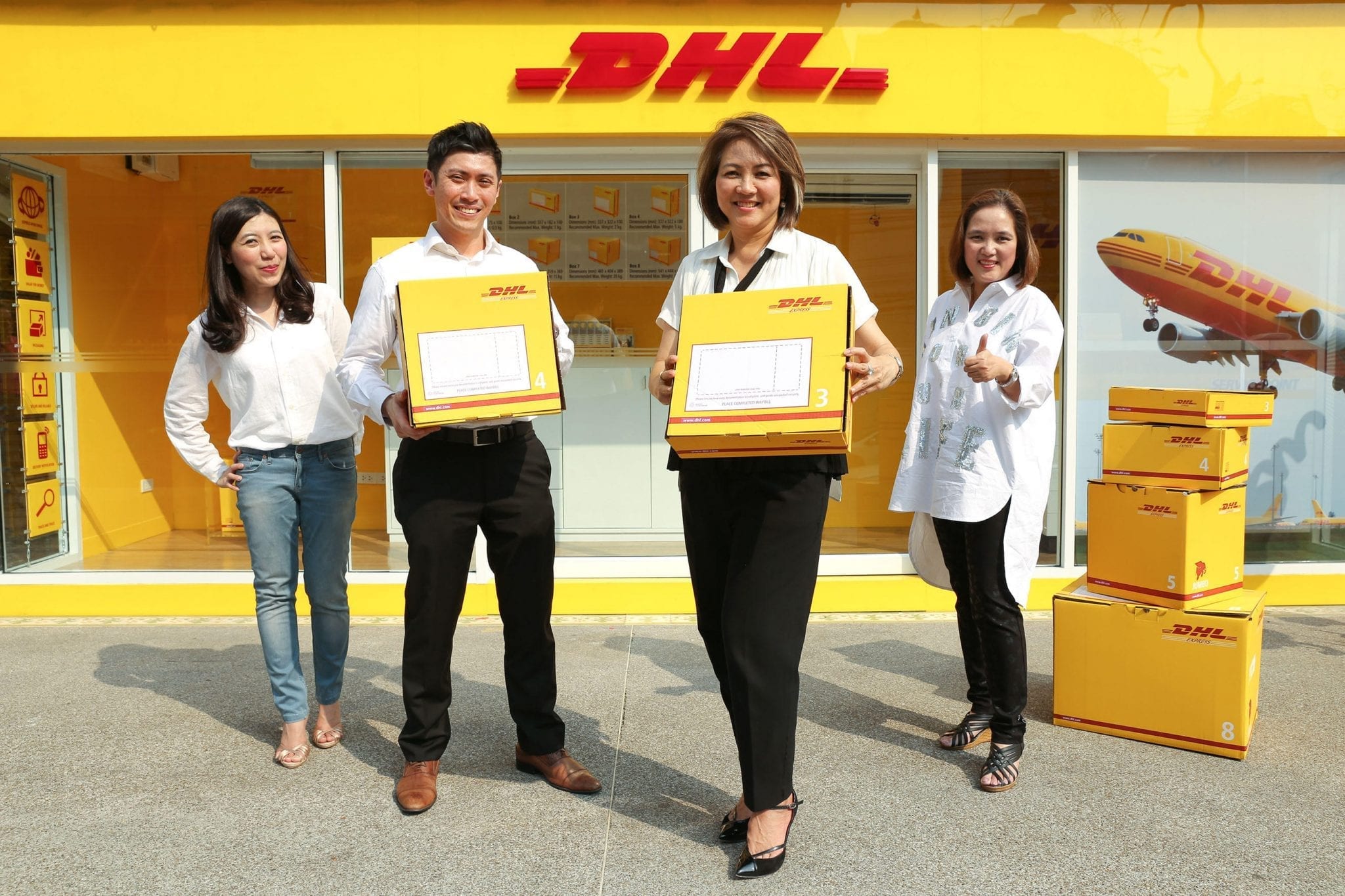
    DHL Express, the world leader in logistics and express delivery, has been recognised as the sixth best place to work globally in a 2018 employer ranking from Great Place to Work and FORTUNE. Every year, Great Place to Work®, a global people analytics and consulting firm, assesses the work experience of employees through their certification program. In 2018, more than 7,000 organisations participated in the survey process, representing the voices of 12 million employees worldwide. From that pool of companies, the 25 World’s Best Workplaces have been selected. The assessment criteria are built around the core criterion of Trust, analysing the relationship of employees with management, other employees and to their jobs.

    “At DHL Express, we build our business strategy around our motivated people”, says Ken Allen, CEO, DHL Express. “We believe that employee motivation directly results in customer satisfaction and loyalty which brings business success. Our more than 100,000 employees are the biggest asset we have. This is why it is amazing to see that our investment in our people shows a sustainable impact.”

    “Our HR strategy is looking holistically across the entire employee journey”, says Regine Buettner, Executive Vice President HR, Global & Europe, DHL Express. “While establishing a customer-first mindset across the organisation, we make sure that we meet the needs of our employees so they have their best day at work every day. ‘Respect & Results’ is the principle guiding our actions and decisions, it reflects that while we create a trustful work environment, we sustain a high-performance mentality. A culture of engagement and recognition happens by design, not by default. While HR has a strategic, enabling and consulting role, it requires our leaders to actively shape the culture and our employees to live it on a daily business.”

    “Congratulations to the World’s Best workplaces. It is a big challenge to build a high-trust culture that is great for employees in many countries across the globe. These organisations have bold leaders who have risen to the challenge – they are the vanguard showing millions of organisations worldwide that is possible and desirable to create a great place to work for all,” says Great Place to Work’s CEO, Michael Bush.

    In Asia Pacific, DHL Express was also ranked second on the list of Asia’s Best Multinational Workplaces 2018, by Great Place to Work®. This accolade was presented in recognition of the company’s commitment to providing strong, caring and innovative culture.

    The Great Place to Work® ranking of the 25 World’s Best Workplaces can be found here. The ranking of Asia’s Best Multinational Workplaces 2018 can be found here.

  • CITIC Telecom CTC opens cloud centers in London and Moscow

    CITIC Telecom CTC opens cloud centers in London and Moscow

    CITIC Telecom CPC, a subsidiary of CITIC Telecom International Holdings Limited, is launching new connected SmartCLOUD Services Center in Moscow and London. Stephen Ho, CEO of CITIC Telecom CPC, said the ‘Europe & Russia Cloud Ring’ will be crucial for European-based enterprises who are looking to invest in and explore the emerging market and business opportunities in mainland China.

    The two new sites will provide enterprise customers with scalable multi-cloud connectivity with full disaster recovery capability and intra-city, inter-city and cross-boundary redundancies. They will also provide round-the-clock professional support optimizing customers’ IT investment, achieving a faster response time and ensuring business continuity.

    The move follows the company’s recent debut of two cloud centers in Frankfurt, Germany, and Cape Town, South Africa. The company now has 18 cloud centers across Asia Pacific, America, South Africa, Europe and Russia.

    Mavenir creates open RAN ecosystem

    Mavenir has announced an Open RAN partner ecosystem that includes MTI, Tecore Networks, Baicells, NEC, AceAxis, KMW, Benetel, CommScope, Blue Danube Systems and Airrays.

    The move aims to provide more options and makes it easy for operators to deploy an innovative, flexible cloud-based Open RAN solution, the company said.

    Mavenir will act as the end-to-end systems integrator simplifying the engagement for operators and creating an offering that is on par with the traditional, hardware centric proprietary vendors.

    Juniper Networks invests $2m in Corero

    Corero Networks said it has secured a $2 million investment from Juniper Networks.

    The investment follows the pair’s recently signed multi-year global resale partnership, under which Juniper will resell and support Corero’s SmartWall DDoS protection software products and services.

    ServiceNow taps NTT Com to launch two data centers in Japan

    ServiceNow is building two new data centers in Tokyo and Osaka through a partnership with NTT Communications to provide high-performing and high-availability cloud services to enterprises in Japan.

    The two data centers being built by NTT Com are expected to be ready in the first half of 2019.

    The new Japanese data centers are expected to enhance the ServiceNow Nonstop Cloud, which has been designed to support the availability and scalability of services and processes for global enterprises.

    The new data centers will add to ServiceNow’s existing nine data center pairs, which are set up across five continents to meet customers’ location and data sovereignty needs.

  • Samsung buys Spanish AI firm Zhilabs in prep for 5G

    Samsung buys Spanish AI firm Zhilabs in prep for 5G

    Samsung Electronics announced that it has acquired Barcelona-based artificial intelligence startup Zhilabs in a bid to further enhance its 5G capabilities.

    Financial details of the deal were not disclosed.

    Zhilabs will be fully owned by Samsung, but it will continue to operate independently under its own management, the South Korean vendor said in a statement.

    Zhilabs provides AI-based network and service analytics solutions and its products are used by telecoms carriers including Celcom, Maxis, NTT East, Telenor, O2, Vodafone, TIM, and Telefonica.

    Samsung said AI-based automation will play a central role in the introduction of new services driven by 5G, such as industrial Internet of Things (IoT) and connected cars, as carriers seek to implement new automated solutions and network virtualization features.

    “5G will enable unprecedented services that generate exponentially greater data traffic, for which automated and intelligent network analytics tools are vital,” said Youngky Kim, president and head of networks business at Samsung Electronics.

    “The acquisition of Zhilabs will enable Samsung to help carriers meet these demands to measure and ensure the quality of each subscriber’s service experience.”

    The acquisition of Zhilabs is also part of the company’s pledge, announced in August, to invest 25 trillion won ($22 billion) in AI, 5G, automotive electronics components and biopharmaceuticals technologies.

  • Dialog Axiata to establish 5G innovation center

    Dialog Axiata to establish 5G innovation center

    Sri Lanka’s Dialog Axiata has teamed up with Ericsson to establish the market’s first 5G innovation center.

    The new center will seek to encourage Sri Lankans to develop innovative IoT and ICT technologies and solutions. It will engage in collaborative research with local universities and global institutions.

    Researchers and entrepreneurs will be able to use the center’s facilities to design and develop prototypes and conduct verification testing. Developers, academics and ecosystem partners will also be able to test 5G capabilities on-site.

    The center will be backed by investments of over 500 million rupees ($2.89 million) in connectivity, equipment and infrastructure, the two companies said.

    “The 5G Innovation Center is another milestone in Dialog’s Technology leadership as we prepare to commercially launch 5G, ahead of the rest of South Asia,” Dialog Axiata group CEO Supun Weerashinghe said.

    “5G sets a capable environment to help fast track IoT developments along with next generation video and robot/manufacturing automation. Advancing the transformational technology of 5G in Sri Lanka will enable exciting possibilities across education, health, agriculture and manufacturing and also harness entrepreneurship and provide a springboard for in-country talent.”

  • Ericsson, LimeLight to collaborate on content delivery

    Ericsson, LimeLight to collaborate on content delivery

    Ericsson has announced an agreement with Limelight Networks to add content delivery capabilities to its new Ericsson Unified Delivery Network (UDN) platform.

    Ericsson aims to develop UDN as a webscale edge delivery network, and is using the agreement with Limelight Networks to add content delivery as the first application built on the platform.

    Edge computing promises to address rapid increasing demand for data by leveraging distributed infrastructure to support low laency applications such as IoT, gaming and virtual reality.

    “We are always looking for ways to improve the performance and reach of our network,” LimeLight Networks CEO Bob Lento said.

    “The strength of Ericsson’s partnerships with communications service providers through the UDN Network is a key component of this agreement that enable us to offer even better reach and performance for our customers. We are delighted to work with Ericsson on this initiative.”

    According to Frost and Sullivan principal analyst Dan Rayburn, edge computing and content delivery are a powerful combination.

    “Combining content delivery technologies with an edge cloud platform that’s distributed inside ISPs is one of the best ways to guarantee optimal performance and allow application providers to use edge services to improve the end-user experience,” he said.

  • India allocates license-free 5-GHz spectrum

    India allocates license-free 5-GHz spectrum

    The Indian government has freed up spectrum in the 5-GHz frequency band for use in the provision of license free Wi-Fi and short range 5G services.

    The government has issued a notification stating that no license will be required to establish or operate wireless equipment for the provision of low power wireless systems including radio local area networks, in parts of the 5-GHz band.

    The directive covers spectrum in the range of 5150-MHz to 5250-MHz; 5250-MHz to 5350-MHz; 5470-MHz to 5725-MHz; and 5725-MHz to 5875-MHz, and is designed to support short range communications such as for providing coverage for apartment buildings or shopping centers.

    This frequency range is used for the provision of Wi-Fi services worldwide, and can also be used to augment capacity for 5G services, according to SN Gupta, secretary general of the ITU’s APT foundation of India.

    It will support the government’s goal of improving Wi-Fi coverage nationwide. Under the Bharat Net program, the government plans to roll out 10 million Wi-Fi hotspots across the country in rural areas, and is in discussions with the market’s telecoms operators to augment Wi-Fi coverage in urban areas.

  • Dialog Axiata launches VoWiFi

    Dialog Axiata launches VoWiFi

    Sri Lanka’s Dialog Axiata has launched what it says is the nation’s first voice over Wi-Fi calling service. The operator’s VoWiFi service does not require a third party app to be installed and allows calls to be received over Wi-Fi as if they were standard incoming calls.

    Dialog Axiata is offering five Huawei smartphones that support the VoWiFi service, and plans to extend it to other VoWiFi supported handsets from Samsung, Apple and other vendors in the near future.

    “Dialog is committed to delivering the latest in technology and connectivity to all Sri Lankans, and VoWiFi is another key step in offering next generation solutions to our customers,” Dialog Axiata CTO Pradeep De Almeida said.

    “We started this journey by enhancing the infrastructure in our network and migrating to a new state-of-the-art core network. For our customers, this means a better experience through greater agility and flexibility.”