Author: Mei Ling Tan

  • Samsung works with Dutch on blockchain

    Samsung works with Dutch on blockchain

    Samsung SDS said on Sunday it signed a partnership with two Dutch entities, ABN AMRO and the Port of Rotterdam, to use blockchain technologies for logistics. The IT solutions and logistics arm of Samsung will link its Nexledger blockchain product with ABN AMRO’s Corda platform by February. In doing so, it will verify whether the system is compatible with other blockchain systems.

    ABN AMRO’s system is designed mainly for financial transactions.

    Blockchain technologies, which allow for the validation of data without central management, will be used for the paperless administration of container financing and logistics, the Samsung SDS pilot project integrating container payments, administration and physical transportation.

    At present, the various processes in the handling of containers utilize separate circuits.

    “The project came after Europe took note of Korean marine logistics blockchain services,” said Kim Hyung-tae, vice president and general manager of the smart logistics unit at Samsung SDS. “It will help our global blockchain business expand and improve our competitiveness.”

    Last year, Samsung SDS led a consortium to conduct tests on blockchain-powered storage in marine transport. The consortium included companies and government bodies.

    “The ultimate goal is to reach an open, independent and global platform that operates from the perspective of shippers,” said Daphne de Kluis, ABN AMRO’s CEO of commercial banking. “This will make the logistics chain more transparent and efficient, and millions of euros can be saved in the long term.”

    According to the bank, the hope is to create an entirely new industry standard.

    “The transportation, monitoring and financing of freight and services should be just as easy as ordering a book online,” said Port of Rotterdam in a release.

    The pilot with the Dutch companies starts in January, and the results will be announced in February.

    The cooperative network will become open to other parties, according to ABN Amro and Port of Rotterdam.

  • Unstaffed shop to open in Tokyo on trial basis

    Unstaffed shop to open in Tokyo on trial basis

    A Japanese railway network operator is testing an unmanned store in a Tokyo railway station. The store will use artificial intelligence in place of cashiers to transact with customers in a trial expected to last about two months. The venture was opened by East Japan Railway, otherwise known as JR East, this week at the Akabane Station in Tokyo’s north.

    It has some 80 cameras mounted in the ceiling and on shelves recording customer behaviour before the AI software detects which items customers select.

    Customers pay using stored value cards issue by railway companies for transit.

    If the concept proves a success, JR East says it will begin rolling the technology out in stations across the city.

    The store is loosely modelled on unmanned stores opened in Mainland China, along with the Amazon Go concept in the US.

  • Fila opens its second heritage store in Mumbai

    Fila opens its second heritage store in Mumbai

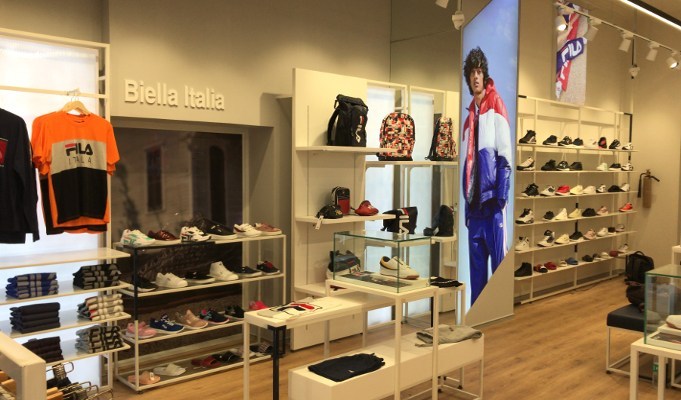
    Fila launched its flagship heritage store in Mumbai at Fort last month. As part of the brand’s retail expansion plan for the current financial year, they have now opened doors to their second heritage store in Mumbai at Inorbit Mall in Malad.

    With Kala Ghoda being the upcoming shopping district for South Mumbai, the second store is strategically located in a popular mall in North Mumbai that sees high footfalls of consumers from other parts of the city.

    The Inorbit Malad store aims to attract the millennial customer with its classic-meets-contemporary vibe and is standardized to sync with the brand’s retail design layout across all existing and upcoming stores in India. Characterized with its signature, bold, oversized, backlit logo on the exterior and iconic red, white and blue color palette in the interiors; the design serve as the ideal backdrop to showcase a show-stopping and vibrant Fila Heritage autumn/winter 2018 collection.

    Fila has been there for iconic moments, accompanying extraordinary individuals in pursuit of true sport – those who courageously challenge limits and defy expectations through a seamless combination of power and grace.

    From its humble textile beginnings in Biella, Italy in 1911 to its historic introduction of colour on the tennis court in 1973, the brand has always taken pride in creating designs as bold and breath-taking as those wearing it. With a philosophy of innovation and a commitment to performance and sophistication, Fila continues to make a statement with styles that are novel in aesthetic and effective in function.

  • Vietnam remains among 50 most valuable national brands

    Vietnam remains among 50 most valuable national brands

    Brand Finance has released its annual report on the world’s 100 leading nation brands, and Vietnam is in 43rd place. Its brand value is estimated at $235 billion, up $32 billion from the previous year. It has risen two places in the list this year.

    The global brand valuation consultancy firm evaluates a country’s national brand on the brands based there and the economy as a whole by weighing up various socio-economic factors.

    A “strong” national brand denotes a highly attractive environment for investment, encouraging inward investment, adding value to exports, and attracting tourists and skilled migrants, it explained.

    Vietnam’s continuing rise in the list is primarily due to “Vietnam Value”, a national program to endorse products and services that meet minimum standards set out by the government, and concentrated efforts to promote economic growth by the government, it said.

    In Southeast Asia, Vietnam is only in sixth place in terms of value, below Indonesia, Singapore, the Philippines, Malaysia, and Thailand.

    The Top 10 in the world did not see much change with the U.S., China and Germany continuing to lead in terms of value.

    The U.S.’ value has shot up by 23 percent to $25.9 trillion this year as a result of falling tax rates and a more business-friendly environment despite the negative public image that President Trump may have cultivated, the report said.

    Founded in 1996, Brand Finance is the world’s leading independent branded business valuation and strategy consultancy. Headquartered in London, the firm is present in over 20 countries.

  • OneSiam Bangkok teamed up with Air Asia to lure Chinese shoppers

    OneSiam Bangkok teamed up with Air Asia to lure Chinese shoppers

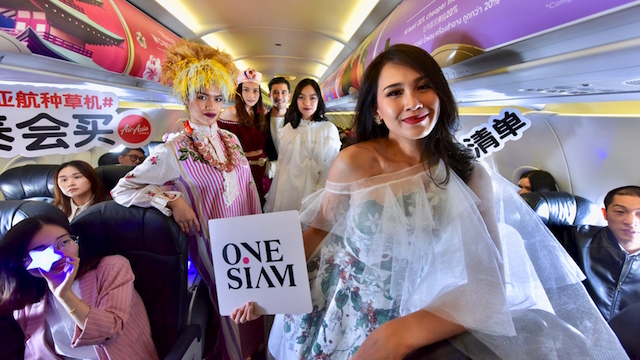
    Bangkok’s three shopping centres grouped under the OneSiam brand, are collaborating with Air Asia to encourage more Chinese tourists to Thailand. The malls – Siam Paragon, Siam Center, and Siam Discovery – have received backing from the Tourism Authority of Thailand (TAT)’s Chengdu office to launch a campaign called Air Asia x OneSiam present Thailand Shopping Festival. It will run from now through to the end of the Lunar New Year celebration early next year.

    The partners believe the campaign will help achieve an anticipated 15 per cent increase in Mainland Chinese tourists visiting Thailand next year.

    Chinese remain the largest demographic group of tourists visiting Thailand, according to Charun Chuennaitom, director of the TAT Chengdu Office. TAT data shows that between January and August this year, an estimated 25.8 million tourists travelled to Thailand, 10 per cent more than during the same period last year. Chinese accounted for 7.7 million of those, up by 16.5 per cent.

    Tanavan Arkaleephan, director of tourism department at Siam Piwat, said OneSiam is a popular destination for Chinese travellers.

    “Each day there is an estimate of 150,000 to 200,000 shoppers in Siam Paragon, 120,000 to 150,000 in Siam Center and Siam Discover, separately. The ratio of Thai visitors to Chinese visitors is 60 to 40.”

    He said the top five tourist sources to regularly visit OneSiam are China, Hong Kong, South Korea, Malaysia and Singapore, but Chinese remain the majority group.

    Tourists who between now and February 28 present an Air Asia boarding pass to One Siam staff at the Siam Paragon tourist lounge, and who follow the OneSiam WeChat account, can receive privileges and promotions from partnering brands, including vouchers from OneSiam, product samples from Pralyn, 30 per cent discounts on body massage therapy from The Beauty Art, and discount offers from Thai designer brands.

    Tourists can enter to win tickets from Air Asia and shopping vouchers at OneSiam.

    Air Asia offers direct flights from Bangkok to 15 destinations in China.

    Nattinee Tawanchulee, director of commercial at Thai AirAsia, said as part of the collaboration, Air Asia has a surprise in store for travellers on some flights from Chongqing to Bangkok, with an in-flight fashion show showcasing special collections from Thai brands including Fri27Nov, Iconic, Kloset, Rotsaniyom, and Theatre.

  • Li & Fung to have new COO

    Li & Fung to have new COO

    Weizhong Zhu (“Wilson”) has joined Li & Fung as Chief Operating Officer (COO) and will lead operations across all Li & Fung’s 40+ production countries. As Li & Fung pushes ahead on its digital supply chain strategy to build the Supply Chain of the Future, Wilson will focus on strengthening the Company’s production platforms globally, ensuring consistent KPIs and driving operational excellence to improve customer service.

    A 31-year industry veteran, Wilson brings deep expertise in international trade relations and supply chain for retail and consumer products.

    His vast industry experience includes Chief Sourcing and Production Officer at Gymboree, EVP for Private Brand and Global Sourcing at Michaels Stores Inc, VP of Private Brand and Global Sourcing at Office Depot, and VP for Global Sourcing at Hudson’s Bay Company.

    Most recently, Wilson co-founded Cooper Aerobics Wellness Center in China, the first fitness and wellness center of its kind in China, and prior to that, he served as Chairman and CEO of inQbrands, where he led the transition of the US subsidiary of China-based Focus Technology into a full-service brand and product agency.

    “With the ongoing US-China trade war, Wilson’s leadership comes at a critical time as our customers rely on our scale and expertise to deliver alternative sourcing strategies and mitigate any potential risk in their supply chains” said Spencer Fung, CEO of Li & Fung.

    Wilson Zhu received his Master of Arts degree in Language and International Trade from Eastern Michigan University in 1987.

    Passionate about sharing knowledge and ideas, Zhu was a columnist for China’s New Fortune business magazine from 2013 to 2016 and regularly contributes to other media outlets on globalization, retail, management, branding and China-US trade relations.

  • LG hosts fair to identify promising start-ups

    LG hosts fair to identify promising start-ups

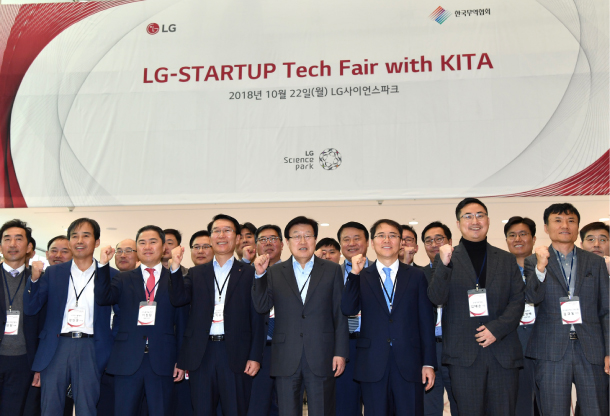
    Technology-related subsidiaries of LG hosted a fair on Monday in which 20 local start-ups presented their cutting-edge developments in areas such as autopilot technologies, artificial intelligence and big data. The small firms are seeking partnerships with and support from the fourth-largest conglomerate in Korea.

    LG picked the start-ups jointly with the Korea International Trade Association (KITA), hoping to revitalize local start-up ecosystem.

    The conglomerate is providing a venue for the fledgling firms to mingle with their larger counterparts and find new business opportunities.

    LG subsidiaries participating in the event include LG Electronics, LG Display, LG Innotek, LG Chem, LG U+ and LG CNS.

    Executives and researchers from those companies as well as KITA CEO Kim Young-ju paid a visit to the start-up fair, which took place at the LG Science Park in Magok, western Seoul, and had a closer look at technologies and services featured.

    Funnel, for instance, has developed a voice-recognition system that automatically collects information from television broadcasts. The resulting database can be used for artificial-intelligence smart speakers and voice-command chat bots.

    Venta VR owns a technology that is able to tape high-resolution 3D videos and calibrate the video images afterwards in a way that enhances the level of immersion and minimizes visual fatigue.

    LG will offer some of the participating start-ups office and research space inside the LG Science Park as well as technology-related consulting and funds.

    Companies under the LG umbrella have been increasing support for start-ups.

    LG Electronics is backing four start-ups that are in the web operating system business, whereas LG CNS and LG Display have been running their own programs.

    LG-led tech fairs aimed at locating and supporting promising local start-ups have been held in the United States, Germany, Israel and Russia.

    With a German start-up discovered during a tech fair in Europe, LG developed a linear compressor technology for refrigerators.

    LG says it will apply the cooperation system it developed overseas to Korean start-ups and smaller companies.

    “Future cooperation with start-ups will propel their global outreach,” said an executive at the LG Science Park.

  • Lego Mosaic Maker opened first store in Yokohama

    Lego Mosaic Maker opened first store in Yokohama

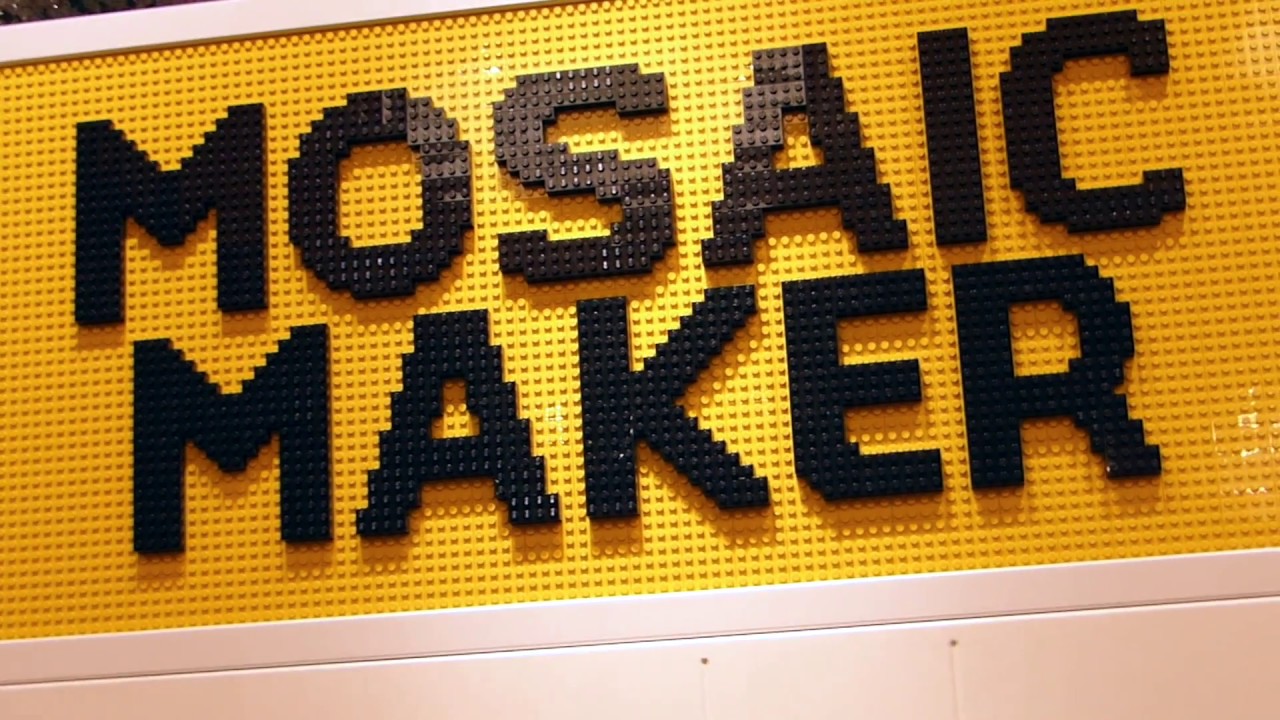
    Danish toy producer Lego has opened a store in Yokohama Landmark Plaza this week, introducing “Lego Mosaic Maker” to Japan. One of only five in the world, the Lego Mosaic Maker is a machine that can reproduce your face in mosaic feature with Lego blocks.

    Visitors enter a booth and take a photo of their face, creating a kit that can make the mosaic in around 10 minutes and which can be offered as a gift for family or friends.

    Use of the mosaic maker is by advance reservation only for a fee of ¥10,455 (US$93). Other special promotions are available in-store.

  • Vietnam footwear exports benefit from US-China trade spat

    Vietnam footwear exports benefit from US-China trade spat

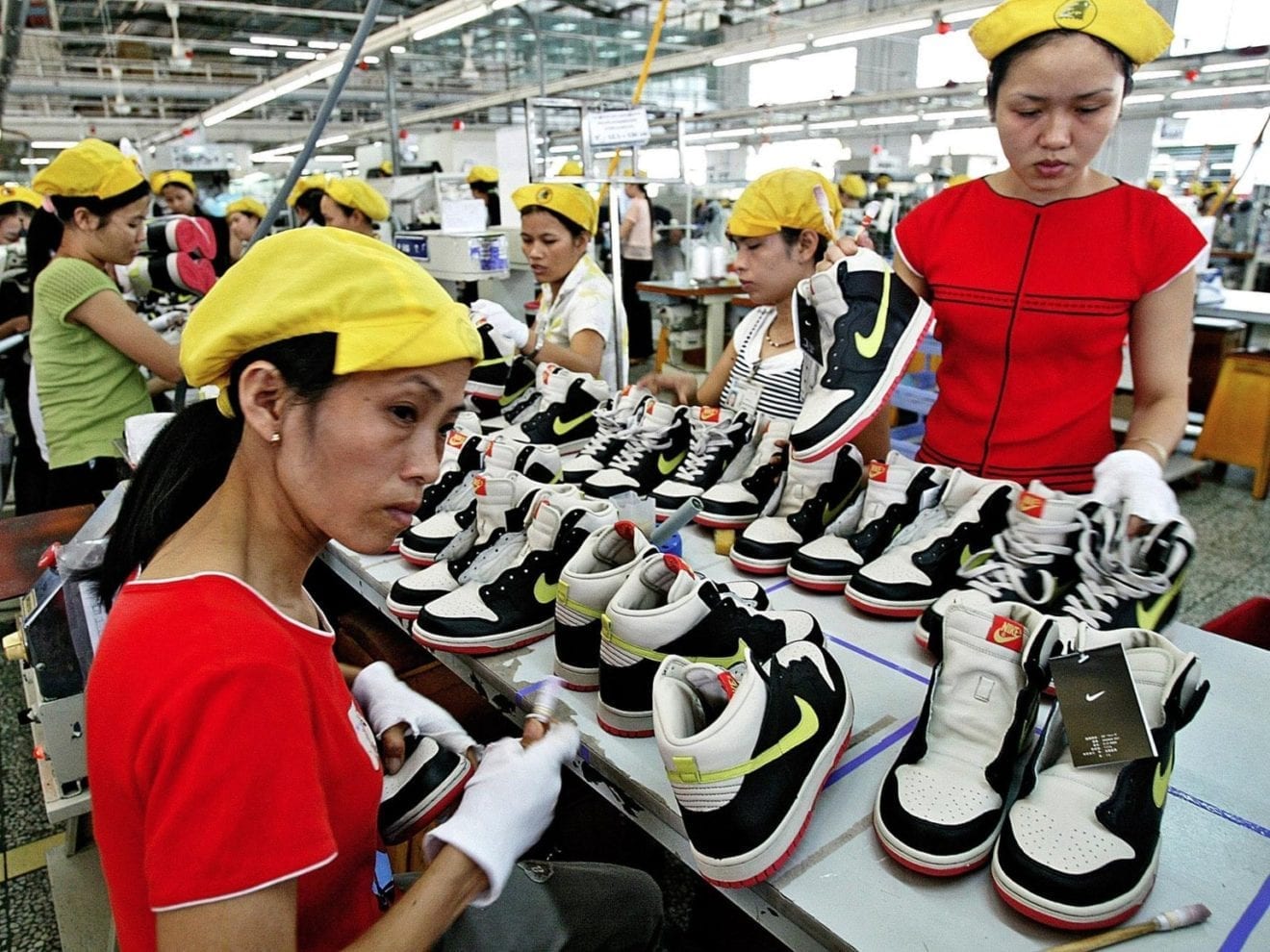
    Vietnamese footwear exporters seem to be benefiting from the ongoing trade war between the U.S. and China. According to customs statistics, Vietnam’s footwear exports in the first nine months of this year were worth $11.74 billion, a 10.2 percent year-on-year increase. Its exports to China in the period have risen by 28.5 percent, to Japan by 14.7 percent, and to the U.S. by 13.5 percent.

    Vietnam is the second biggest exporter of footwear to the U.S. behind China, shipping 404 million pairs of shoes last year.

    The upward trend is likely to continue, too, as rising wages in China increase the cost of goods produced there and the country is thus directing more of its manufacturing resources toward higher-priced goods like electronics, according to the global footwear news outlet Footwearnews.

    Foreign companies are moving to other countries like Vietnam to cut cost.

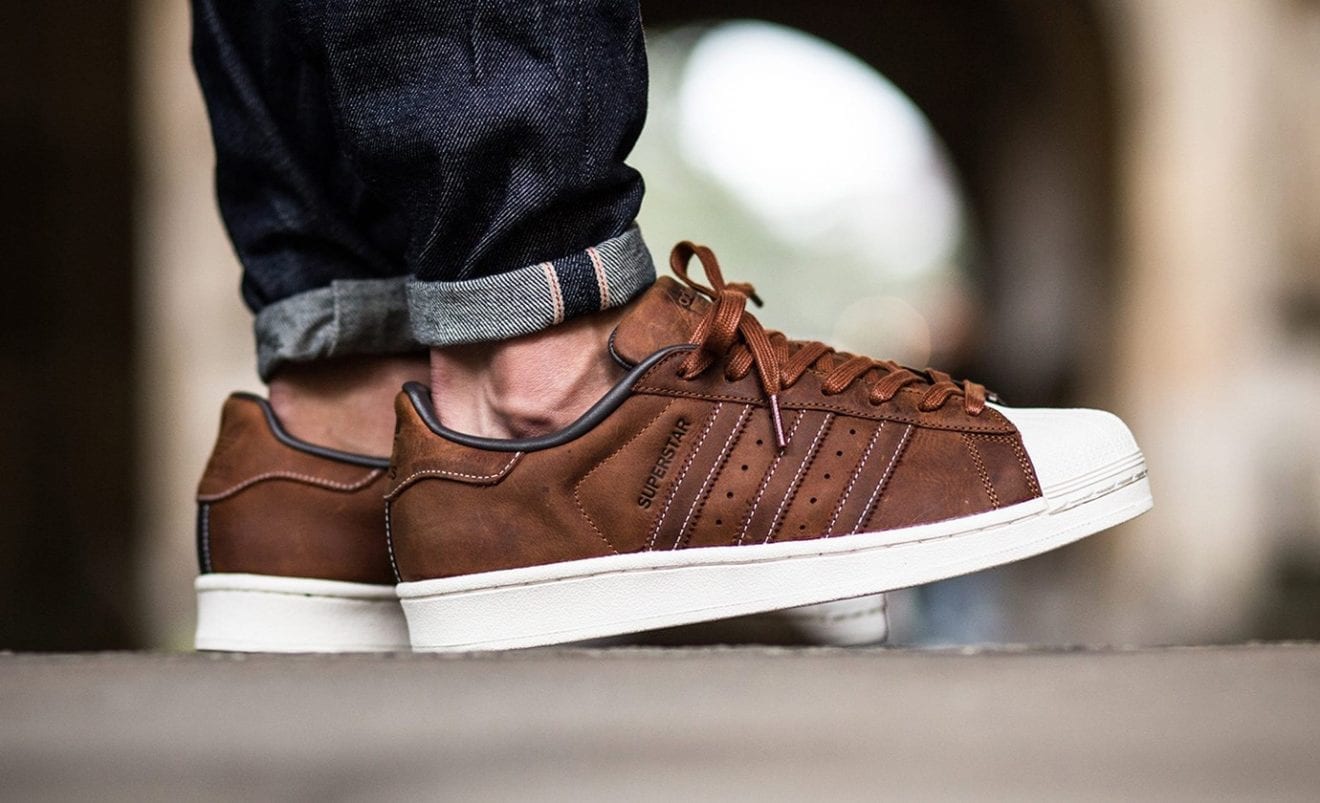
    Adidas CEO Kasper Rorsted said last May that his company is shifting sourcing of footwear from China to Vietnam.

    Vietnam has in fact overtaken China as its top supplier, with Vietnamese factories producing 44 percent of its shoes by volume last year and Chinese manufacturers supplying 19 percent, according to Adidas.

    This would help shield the company from potential tariffs or supply chain disruptions if President Donald Trump’s trade war with China continues to escalate, a fact its competitors also seem to be taking notice of.

    Vietnam may see export orders surging as footwear importers shun China to avoid high U.S. tariffs and choose the Southeast Asian nation instead, local media quoted Diep Thanh Kiet, vice chairman of the Vietnam Leather, Footwear and Handbag Association (Lefaso), as saying.

    “Vietnam’s leather and footwear export can reach $19.5 billion or slightly higher this year depending on the situation,” he said. Vietnam’s footwear exports were worth $14.65 billion last year.

  • 7-Eleven Outlets In Singapore Are Now Lazada Collection Points

    7-Eleven Outlets In Singapore Are Now Lazada Collection Points

    Lazada and Ninja Van have teamed up with the Singapore 7-Eleven convenience store chain to allow online shoppers to designate any of the nearly 350 stores island-wide as collection points. The collaboration will offer the largest network of collection points around Singapore. The new service debuted at 159 7-Eleven stores this week, with a progressive rollout planned for the rest of the store network by the end of the year.

    Lazada and last-mile logistics provider Ninja Van say the new service eliminates the need for a purchaser to ensure someone is home to receive goods bought online. They can nominate any participating Singapore 7-Eleven store as their delivery point upon checkout.

    “More than 35 per cent of Singaporean households have only one or two residents, with close to 25,000 new dual or single person households forming just between 2016 and last year,” said Crispian Leong, Singapore 7-Eleven head of marketing.

    “Most are working during the day, and many may not find it convenient to receive parcels at their office. With close to 350 participating stores islandwide, we are excited that we can partner with Lazada and Ninja Van to offer this added convenience to consumers’ daily lives and online shopping habits.”

    Ray Chou, country head of Ninja Van Singapore, said the problem will address the high number of failed deliveries its partners encounter, “which is disruptive not only for our customers, but for sellers and delivery companies as well”.

    Users of the service will enjoy free delivery, as opposed to S$1.49 for normal and S$2.99 for express drop-off to their homes.

    Pierre de Bellescize, CEO at Lazada eLogistics Singapore, said partnering with 7-Eleven and Ninja Van will bolster the click-and-collect options the company already offers with SingPost’s PopStations, SPH Buzz Convenience Stores and Parcel Santa Lockers located in Condominiums and others.

  • Vietcombank files for private issue of 360 million shares

    Vietcombank files for private issue of 360 million shares

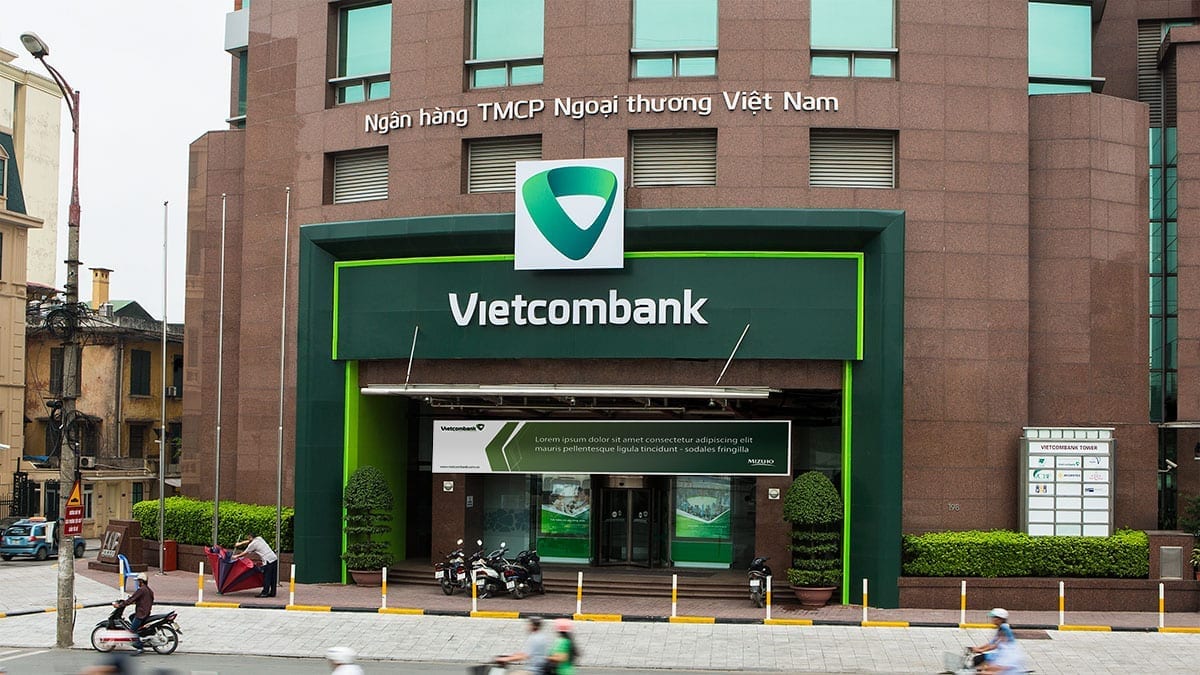
    Vietnam’s State Securities Commission has received an application from Vietcombank for a private placement of shares worth over $156.5 million. The commission (SSC) said the country’s third largest bank by assets proposes to make a private issue of 360 million shares, equivalent to 10 percent of its charter capital.

    The lender plans to sell nearly 54 million shares to its strategic partner, Japan’s Mizuho Bank, to ensure it retains its 15 percent stake post dilution.

    It will sell the remaining 306 million shares, or 7.73 percent of its charter capital, to other undisclosed investors.

    The bank has not disclosed the issue price either. Its shares closed at VND58,000 ($2.5) Friday on the HCMC market.

    The State Bank of Vietnam recently gave Vietcombank approval to increase its charter capital by 10 percent to VND39.58 trillion ($1.69 billion).

    The lender has also received approval from its shareholders to make the private placement.

    Vietcombank and other top lenders, including BIDV and Vietinbank, have been struggling to increase their capital to meet international capital adequacy norms.

    The second Basel Accords, or Basel II, prescribe minimum capital adequacy of 8 percent of risk-weighted assets for all financial institutions to cover operational risks.

    In 2016 Vietcombank signed a deal with Singapore sovereign wealth fund GIC Private Limited to sell a 7.73 percent stake. The deal has yet to be consummated, with the bank’s chairman, Nghiem Xuan Thanh, saying they have been unable to agree on a price.

    As a state-owned bank, Vietcombank’s issue of new shares must not be at a price lower than their current market price or a minimum value set by the government.

    However, the price offered by GIC did not meet this requirement.

    If the private issuance of VND3.6 trillion ($156.5 million) is successful, Vietcombank will have the highest chartered capital in the industry of nearly VND40 trillion ($1.74 billion).

  • GM Korea votes to spin off R&D unit

    GM Korea votes to spin off R&D unit

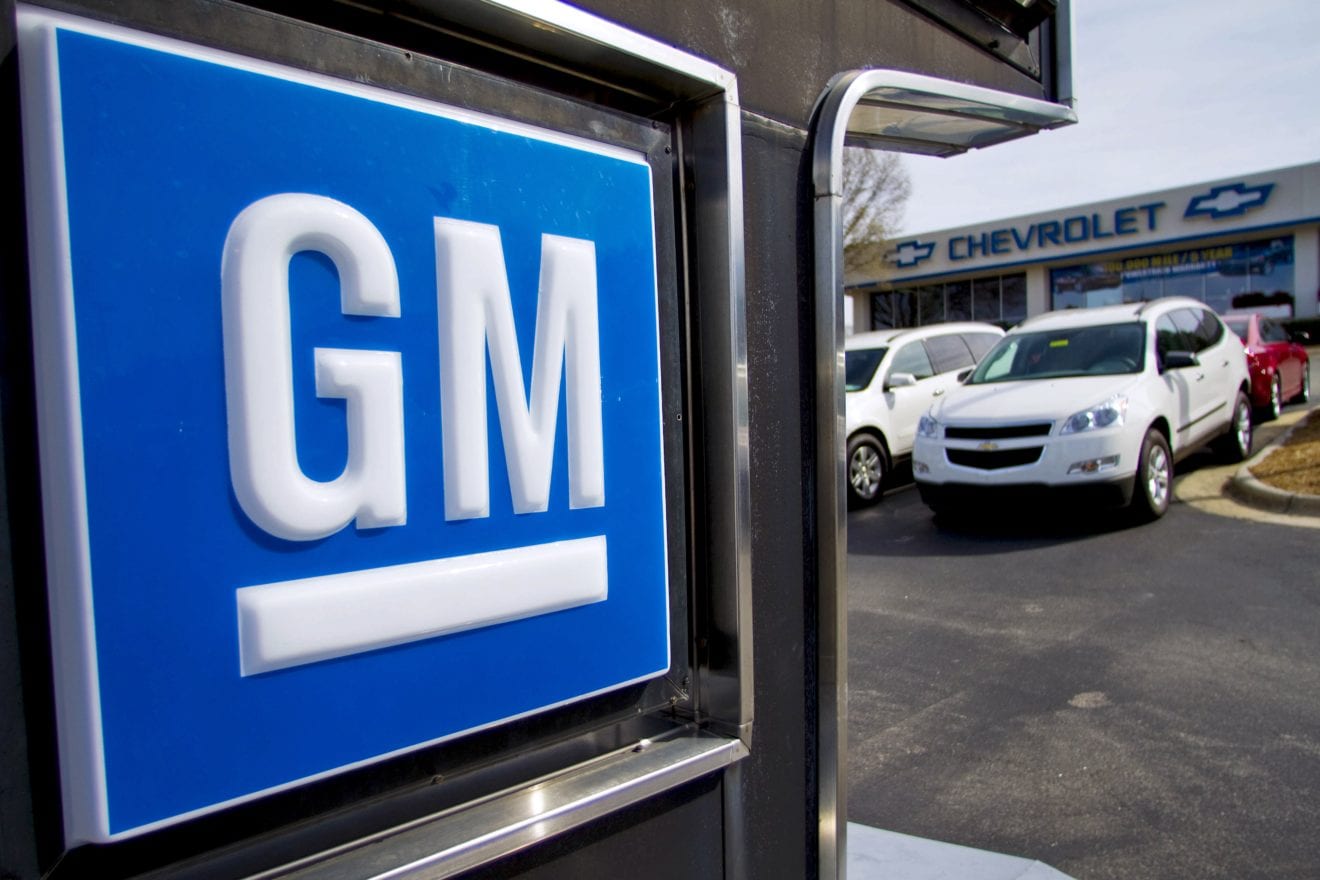
    A GM Korea shareholders’ meeting Friday decided to spin off its R&D and design department, reigniting conflict with its labor union and the state-owned Korea Development Bank (KDB), the automaker’s second-largest stakeholder.  “The plan to establish a dedicated engineering unit, GM Technical Center Korea, was approved during the shareholders meeting,” GM Korea said in a statement.

    However, the decision is guaranteed to be controversial since KDB, which owns 17-percent of GM Korea, intended to vote against the spinning off of R&D and design unit from production but missed the shareholders’ meeting.

    “We received notification of the shareholders’ meeting, but the decision was made in our absence,” an official at the KDB bank said. “We were not able to exercise our veto rights since we weren’t there.”

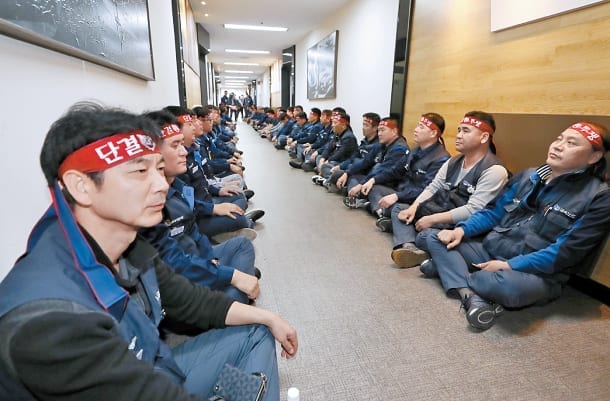
    GM Korea’s unionized workers occupy the hallway leading to the GM Korea chief executive’s office at the company’s headquarters in Bupyeong District, Incheon, on Friday in an effort to stop a shareholders’ meeting from taking place

    It’s not clear why KDB representatives didn’t attend. KDB said it will be looking into the legality of the meeting.

    On Thursday, KDB released a statement saying it would ask GM Korea’s management to explain fully its decision to spin off the R&D and design center and decide whether to exercise its veto rights.

    The statement was released after a court in Incheon rejected KDB’s request for an injunction to stop the shareholders’ meeting.

    “Although we respect the judgment of the Incheon court, we have deep concerns about GM Korea’s push to spin off [R&D and design] without sufficient explanation or agreement from the interested parties during the shareholders’ meeting,” the bank said in the statement.

    GM Korea’s union claims the spin-off is the first step in a long-term plan to completely halt domestic production.

    KDB has the right to nullify any GM Korea decision to sell more than 20 percent of its total assets, which is supposed to prevent the U.S. automaker from pulling out of Korea or restructuring without the consent of the bank.

    That right, which expired in October 2017, was reinstated after GM and the Korean government reached an agreement in April.

    However, it’s not clear whether that veto right can be applied to spinning off units within GM Korea. There’s even arguments that the newly forming center may not account for 20 percent of the automaker’s total assets.

    The union tried to stop the shareholders’ meeting by occupying a hall leading to GM Korea CEO Kaher Kazem’s office in Bupyeong District, Incheon. The union earlier this week voted in favor of a walkout that will likely take place next week.

    A crisis that led to the shutdown of one of GM Korea’s four plants in Korea in May seemed to have been solved when GM and the Korean government reached an agreement after long negotiations to inject $7.15 billion into the struggling automaker. GM agreed on covering $6.4 billion while KDB put up $750 million. GM agreed to keep the local unit going for at least 10 years.

    But in July, GM Korea announced the spinning off of its R&D center, which will turn Korea into its global strategic development and design center for next generation models.

    Meanwhile, production of compact vehicles will end in 2022 and factories will concentrate on SUVs.

    “The establishment of a dedicated GM Korea Technical Center is an important development in continuing our organization,” said GM Korea CEO Kazem in a letter sent to employees on Monday, adding that the new center would help to “more effectively respond to and secure and execute global engineering projects.”

  • Easing price of gold gives Luk Fook sales some shine

    Easing price of gold gives Luk Fook sales some shine

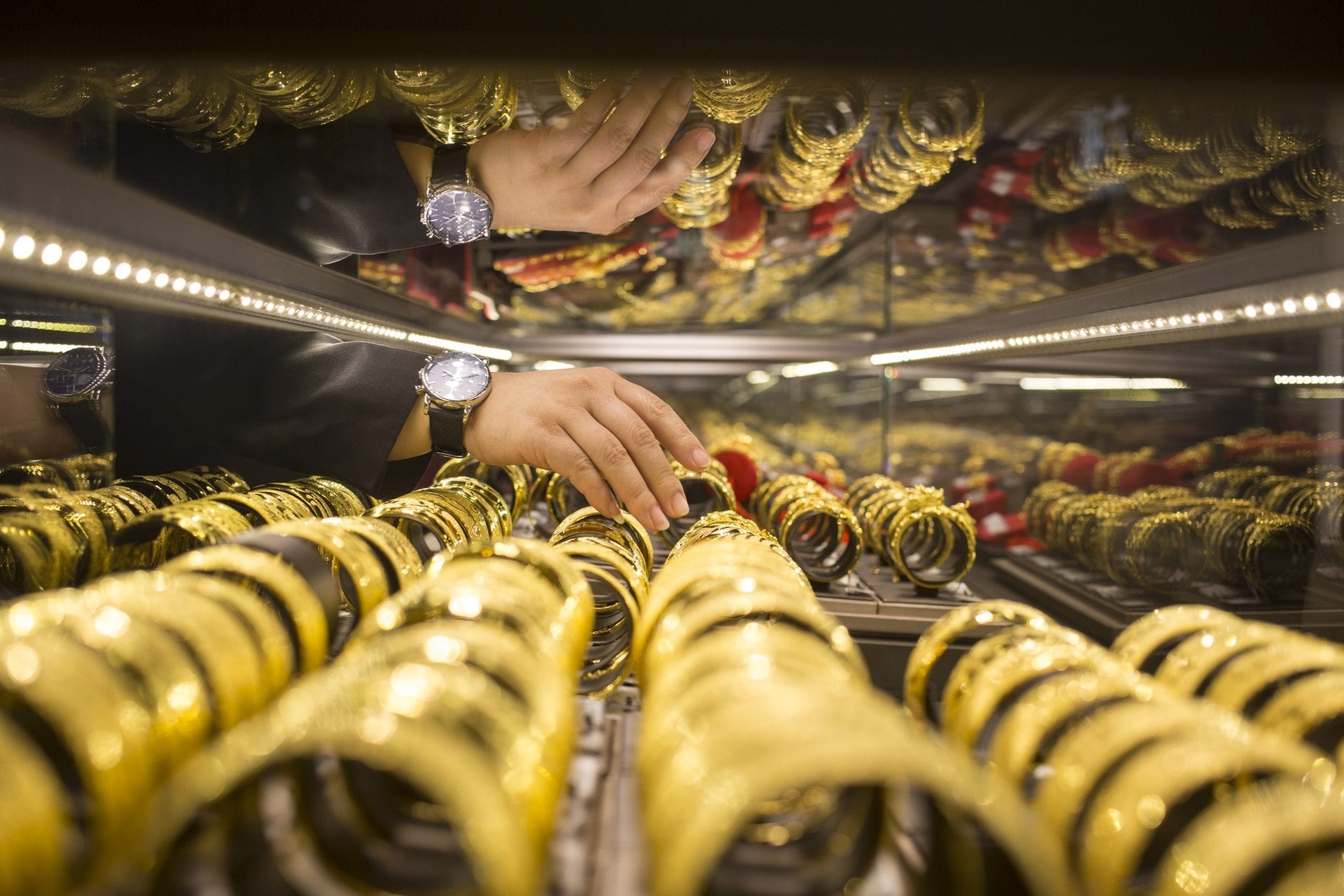
    Luk Fook achieved same-store sales growth of 14 per cent in its latest quarter, thanks to lower gold prices, good market sentiment and a successful sales strategy. In a note to shareholders, chairman and CEO Wai Sheung Wong said same-store sales of gold products rose by 23 per cent and of gem-set jewellery by 5 per cent.

    Luk Fook Hong Kong and Macau sales led the way, rising 17 per cent, with gold products up 30 per cent, during the three months to September 30.

    However, depreciation of the Renminbi led to a higher tendency for customers to purchase lower-value items, resulting in a single-digit drop in the average selling price of gem-set jewellery products.

    The jeweller’s fortunes appear to have endured after the quarter ended.

    “In the first two weeks of October, the growth momentum of Hong Kong and Macau market

    continued, with same-store sales sustained at a double-digit growth. As for the mainland market, because of the large number of outbound travellers during the long holiday period and a high base, same-store sales of self-operated shops recorded a double-digit drop in the first two weeks of October,” said Wong.

    During the quarter, there was a net addition of 57 Lukfook shops on the mainland: 62 more licensed shops and five fewer self-operated shops.

    At the end of the quarter, Luk Fook had 223 self-operated shops, including 151 in Mainland China, 50 in Hong Kong, 11 in Macau and 11 overseas. It had a further 1500 licensed shops on the mainland, one in Cambodia and one in the Philippines, taking the total network to 1725.

  • Vietnam urged to cut dependence on crude oil

    Vietnam urged to cut dependence on crude oil

    A prime ministerial advisory body has said the state budget is overly dependent on crude oil, an unsustainable income source. The National Financial Supervisory Commission (NFSC) recently said crude oil is not a sustainable income source, both in the short and long term.

    In the short term, crude oil revenue can be affected by global oil prices and mining output; and the state budget has been significantly impacted by such fluctuations over the years, the NFSC noted.

    In the long run, this source of income is also unsustainable as national reserves are limited, it added.

    Earlier, Deputy Prime Minister Vuong Dinh Hue had said at a meeting of the legislative National Assembly that Vietnam needs to stop relying on crude oil and focus on tourism to ensure its economic growth.

    “It is better to welcome one million tourists than trying to find one million tons of crude oil because tourism is more eco-friendly and safe for the economy,” he’d said.

    Vietnam’s September crude oil exports totaled 375,000 tons, down 21.1 percent year-on-year, according to the General Statistics Office. This brought crude oil exports in the first nine months of this year to 2.97 million tons, down 45.2 percent from a year earlier.

    From early this year to September 15, accumulated budget revenue is estimated to be at VND898.3 trillion ($39.06 billion), of which VND43.5 trillion ($1.89 billion) or about 5 percent comes from crude oil, according to the General Statistics Office.

    Vietnam’s domestic crude oil production reached its peak in 2004 with an output of more than 20 million tons, but has declined to an estimated 14.2 million tons in 2017.

    It is forecast that around 11 million tons will be produced in 2018. Crude oil exports have contributed 0.25 percent to the country’s GDP in recent years.

  • Flipkart corners more than 50 pc share in India festive sale: RedSeer Consulting

    Flipkart corners more than 50 pc share in India festive sale: RedSeer Consulting

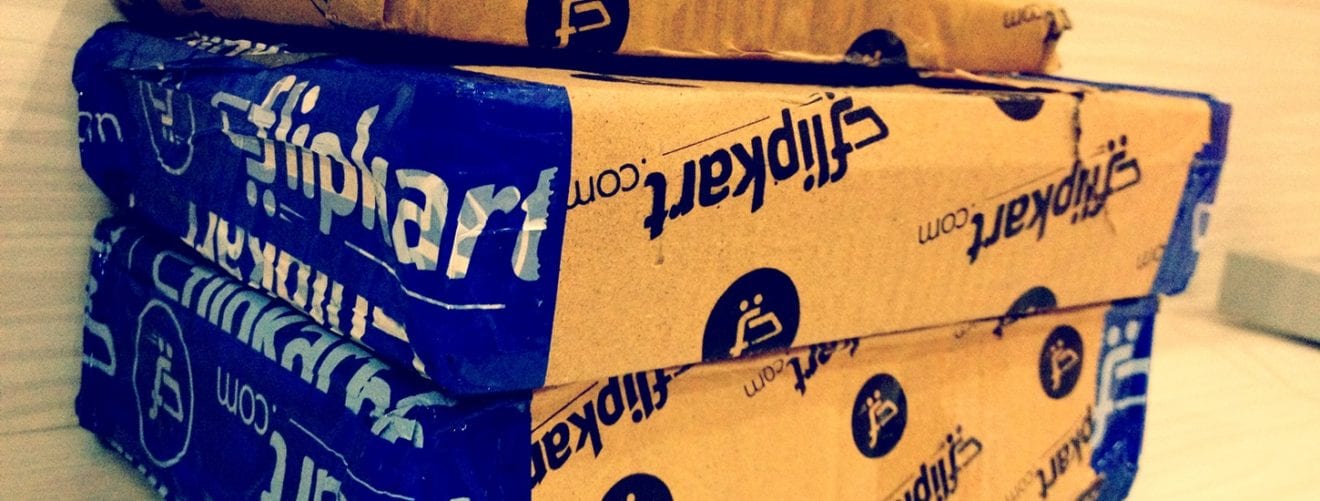
    Increased buying in smartphones and fashion verticals helped Walmart-backed Flipkart corner over 50 percent share during the first leg of the festive sale, according to research firm RedSeer Consulting. As per RedSeer’s latest report, Flipkart had a 51 percent share, while Amazon India had 32 percent share of the festive sale from October 9-14.

    “Flipkart accounted for more than half of GMV for the entire industry. Between Flipkart and Amazon, the share was 62-38. Higher share for Flipkart was driven by higher sales in both mobiles and fashion verticals,” RedSeer said.

    An Amazon spokesperson termed the report as ‘speculative’ that ‘lack robust and credible methodology’.

    “We received an overwhelming response to the Great Indian festival, with first 36 hours nearly surpassing the entire first wave last year and the entire wave growing by 96 percent versus last year…the festive season so far has exceeded our most aggressive plans,” the spokesperson said.

    Other players like Snapdeal, Paytm Mall and ShopClues also ran their festive offers and accounted for 17 percent share of the sales.

    Flipkart in a statement said the company “pushed the boundaries on many fronts and hit some of our biggest-ever numbers during its Big Billion Days (BBD).

    “We maintained a clear leadership in deep-penetrated and high ASP categories,” it added.

    As per the RedSeer report, the fashion and smartphone verticals grew by 78 percent and 70 percent, respectively.

    However, consumer electronics grew by only 45 percent despite large investments by both players in supply chain and affordability initiatives like debit card EMIs, it added.

    RedSeer said its report is based on interview with experts from supply chain, banking ecosystem and brands, seller views, customer surveys and other research.

    The report said Day 2 of the five-day sale was the biggest in terms of gross merchandise value (GMV) as it saw the launch of multiple new exclusives in mobile phones and offers on other platforms as well.

    Post second day, the growth of GMV stalled a bit with last three days accounting for only 42 percent of sales compared to 60 percent in the first two days, it added.