Author: Mei Ling Tan

  • Asia’s Aversion to Bank Accounts Is a Big Deal

    Asia’s Aversion to Bank Accounts Is a Big Deal

    There’s a flaw in the forecast for an ever-rising Asia: a vast gap in the financial system. Big slices of the population don’t have a bank account.

    It’s hard to see the region reaching its full potential, let alone surpassing the U.S. as an economic superpower, until this bridge is crossed. An economy without broad use of banks cannot grow into a superpower.

    East Asia and the Pacific seem to be making progress on this. Seventy-one percent of adults have a bank account or equivalent at a mobile money provider, a bit more than the global proportion of 69 percent, the World Bank reckons. But the details are less encouraging. That 71 percent is little changed from four years ago. In Southeast Asia’s biggest economy, Indonesia, just 49 percent own an account.

    In the most populated members of the Association of Southeast Asian Nations, a group of 10 nations lauded for their economic progress and potential, the proportion is well below 50 percent. India is doing better at about 80 percent, but short of where it needs to be.

    This lopsided nature further reveals itself in the size of the overall pie. Indonesia overtook Singapore in 2016 as the largest financial-services market in Asean, according to PwC. On one level, this is a function of Indonesia’s huge population and gross domestic product. Yet almost every Singaporean has a bank account — around 96 percent — and the city is home to an array of sophisticated finance operations.

    You can see the potential for a place like Indonesia to pull ahead and meet its destiny. Just imagine where it would be if its people and businesses were fully banked! Until then, some of the more bullish projections about Asia must be tempered.

    What’s so great about a bank account? Once a person has an account, they have a better chance of fully participating in the economic life of their country, and their country has greater odds that gender, racial and income inequality can be addressed. Panelists at the World Economic Forum on Asean in Hanoi this month, in which I participated, wrestled with the subject.

    The more transactions that continue in cash, the harder it also is to tackle corruption. Indonesia’s anti-graft agency is taking action, but also meeting stiff resistance from factions within the government and parliament, says Transparency International. Not to pick on Indonesia. The Philippines, another seriously underbanked economy, and India struggle as well.

    Technology may hold part of the answer. As mobile payment systems proliferate around the globe, it’s entirely possible developing countries will just leapfrog over the bank branch and ATM structure and go mostly digital.

    It’s tough for banks to cover the 17,000 islands that make up Indonesia, for example. Almost twice as many Indonesians have mobile phone subscriptions as have bank accounts, the International Finance Corp. estimates. That’s spurring a surge in e-payments and investment from KKR, Warburg Pincus and Sequoia as well as Google, Alibaba and Tencent, the Nikkei Asian Review reported.

    However economies get there, it’s the destination that’s important. Without a financial system to service heavyweights, Asia can’t rule the world.


  • Jollibee to bring Panda Express to the Philippines

    Jollibee to bring Panda Express to the Philippines

    Jollibee Food Corp on Thursday said it would bring Panda Express to the Philippines, the popular “Chinese kitchen” in the US.

    The initial phase of the 50/50 joint venture between JFC and Panda Restaurant Group Inc intends to develop 5 Panda Express outlets in Metro Manila, JFC told the stock exchange.

    “With proven track records in providing great tasting food at a great value, JFC and Panda join hands to introduce American Chinese food, a globally-influenced cuisine inspired by authentic Chinese culinary principles, to the Philippines,” JFC said in a statement.

    JFC chairman Tony Tan Caktiong said Panda Express is “very much in line with JFC brand portfolio.”

    “We look forward to tapping into JFC’s market expertise to grow the Panda Express brand into a household name in the Philippines and, more importantly, actioning our shared value of inspiring people to better their lives,” Andrew Cherng, co-founder and co-CEO of Panda.

    Jollibee Group’s worldwide store network reached 4,324 as of Aug. 31, 2018.

    JFC said Panda Express has operations in the US, Canada, Mexico, Korea, Japan and Russia, among others.

  • Kathleen Tan to step down as AirAsia China president

    Kathleen Tan to step down as AirAsia China president

    Kathleen Tan, AirAsia’s president of China, is stepping down from her role. She was responsible for providing leadership and strategic direction to the airline. Tan confirmed the move in a statement, and added that she has decided to “take a long break” and her last day is on 8 October 2018.

    Tan was promoted to her current role in June 2017. Prior to that, she was president, North Asia, a role she was appointed to in June 2016. During that period of time, she was responsible for building the China, Hong Kong, Macau, Japan, Korea and Taiwan markets.

    In 2015, Tan left her role as CEO of AAE Travel, previously a joint venture formed by AirAsia and Expedia Group in 2011. The airline disposed of its remaining 25% equity interest in AAE Travel to Expedia Group this August.

    Between 2004 to 2013, Tan helmed the roles of regional head of commercial and senior vice president of China. During the period, she championed marketing campaigns, such as giving away one million discounted seats in 2005. She also spearheaded the airline’s social media strategy and development.

    Tan also worked at FJ Benjamin as divisional head of marketing for Southeast Asia before moving to Warner Music, where she was regional marketing director of Warner Music Asia Pacific and later, managing director of Warner Music Singapore until 2004.

    When asked what prompted her departure, Tan said: “I love the company but the culture has changed, and it is no longer what it used to be. When the company grows bigger, you need to find the perfect structure and ways to integrate the new people into the company,” Tan explained. She added that she also grew tired of travelling nonstop and reached a point where she felt like she was “living out of a suitcase”.

    While Tan has yet to decide on her next move, she is considering various possibilities, including giving motivational talks and mentoring the younger generation and educating them about marketing.

    Working in the China market with AirAsia

    During an interview, Tan said she faced plenty of challenges during her time in China, one of them being the fact that the country is still rather traditional.

    “No matter how modern the country is in terms of technology, their values and cultures are still very traditional. Face time is still very important. When you have meetings with people, you need to be there all the time. Trust, respect and guanxi (relationships) are still valued in China business,” she said. Tan added:

    You need to win and influence people. You cannot just sit around when you are dealing with the government, especially when you are a foreign brand.

    Tan describes herself as someone passionate about marketing and urges more marketers to “take ownership” of customer care. “Building a brand is important and customer care is part of that building block that helps shape consumers’ perception of a brand,” she said.

    “If you don’t handle customer care promptly, it will hurt your brand, especially in today’s social media age. Consumers will slam you and it will go viral,” she said.

    During her tenure, Tan claims AirAsia also adopted the use of artificial intelligence and machine learning to manage customer queries in China via WeChat, gradually shifting away from traditional call centres. Tan also claimed that the airline had over 60,000 chats within two weeks of its launch on WeChat. It also made sure the bots knew when to use stickers, which are a hit with Chinese consumers on WeChat, when communicating with them.

    It also made it a point to alleviate the anxiety of travellers when they encounter flight disruptions by offering AirAsia consumers a QR code for crisis management, as part of enhancing customer experience where they can get live flight updates. This was available to consumers during the eruption of Mount Agung in Bali in July.

    She told that during her time at AirAsia, the brand was going through “restructuring” as was undergoing digital transformation. She added that the airline was also increasingly focused on collecting data, building dashboards and looking at algorithms, integrating operations, customers and commercial, all in a bid to position AirAsia as a “digitally smart airline”.

    “As a marketer at AirAsia, I never had much data to look at in the past. It would have been heavenly if I could turn back time and see the number of engagements I had for a post in the early days of social media, so I know if I’m moving in the right direction. It’s a great time right now as companies have data made available to them. Think of the wonders companies can do with data,” Tan said.

  • DHL eCommerce launches Cash on Delivery for cross border e-commerce

    DHL eCommerce launches Cash on Delivery for cross border e-commerce

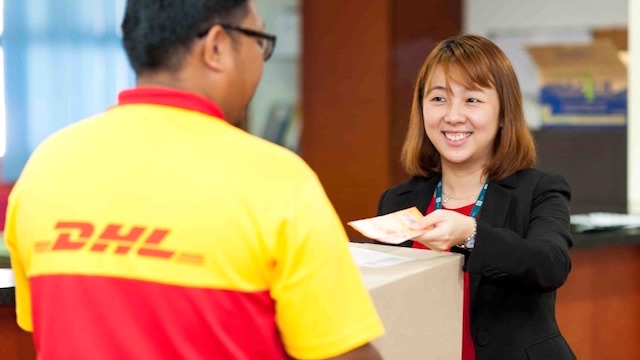
    Cash is still king in Southeast Asia, with over 73% of the population still unbanked and inaccessible to e-commerce retailers since they do not have access to credit cards or internet banking services. DHL eCommerce, a division of Deutsche Post DHL Group, today launched its Cross Border Cash-on-Delivery (COD) service to allow consumers to pay for their international purchases in cash and only upon delivery.

    COD is available as a value-added service of the DHL Parcel International Direct product, specifically for sellers based in China and Australia delivering to consumers in Malaysia, Thailand and Vietnam. Collected cash will be remitted to a local bank account at destination (Malaysia, Thailand or Vietnam) or in the billing country (China or Australia) based on the local destination currency. Remittance will be made to sellers every fortnight and tracking visibility of the status of COD is available on the DHL portal.

    “Despite growing credit card adoption in Southeast Asia, the low level of credit card penetration has forced e-commerce retailers to offer alternative modes of payment methods such as cash on delivery, digital payments and in some cases paying in-store. This opens up a huge potential by reaching out to a new group of unbanked consumers and also meeting the needs of consumers who prefer to pay in cash.” said Charles Brewer, CEO, DHL eCommerce.

    “China and Australia are huge e-commerce export markets and our DHL Parcel International Direct product provides a direct entry into high demand markets with excellent transit times of 3-5 business days with economical shipping prices. With our fully-owned domestic delivery network in Malaysia, Thailand and Vietnam, we are able to deliver on-time with secure features like cash-on-delivery.” added Brewer.

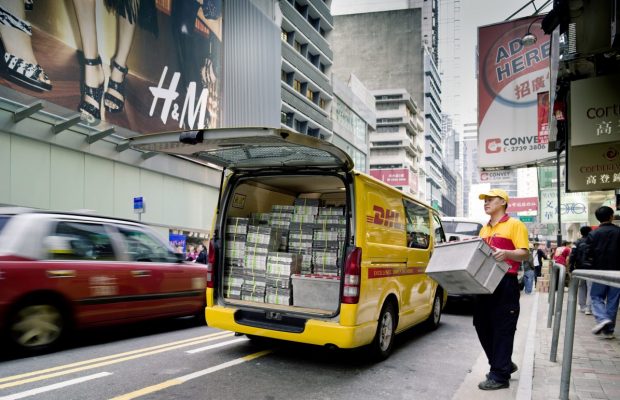
    To enable sellers in China and Australia to tap on the cross-border e-commerce opportunity, DHL eCommerce enables economical international shipping with a range of e-commerce features. This includes parcel pick-up service; easy IT integration of the seller’s inventory into the DHL shipping process, end-to-end tracking, dynamic routing and distribution, returns management, etc.

    DHL eCommerce is part of Deutsche Post DHL Group, established in 2014 as part of the Group’s growing focus in e-commerce logistics solutions. Along with its sister divisions DHL Express, DHL Supply Chain and DHL Global Forwarding, the Group offers end-to-end solutions for e-commerce retailers.

  • Everstone puts on the block a piece of Burger King India

    Everstone puts on the block a piece of Burger King India

    Five years after setting up the franchise for Burger King in India, homegrown PE firm Everstone Capital is set to offload a minority stake in the quick service restaurant (QSR) chain. Everstone, which holds about 88% of Burger King India, will offload 20%, valuing the chain at $300-350 million, according to two people aware of the development.

    As per the proposed transaction, about 30-35% of Burger King India will be sold through secondary and primary offerings. Parent Burger King Worldwide holds 12% of Burger King India.

    Advisory firm EY has been mandated to run the sale process, which is expected to be launched in a few weeks, said one of the persons cited above. Everstone will remain the controlling stakeholder after the transaction.

    F&B Asia Ventures, a pan-Asian food and beverage business platform controlled by Everstone Capital, owns and operates Burger King’s branded restaurants in India and Indonesia. Everstone joined hands with US fast-food chain Burger King Worldwide in 2013 to set up the franchise for the two countries.

    Burger King India grew 68% to post sales of Rs 237 crore in FY17 from Rs 141 crore in FY16. In FY17, the company generated average sales of Rs 2.7 crore from each of its 88 outlets opened till March 2017, while rival Westlife Development, which runs McDonald’s in the south and west, posted average sales of Rs 3.6 crore from each outlet. Burger King, however, notched up higher numbers than Jubilant FoodWorksNSE -0.78 %, where average sales per outlet were at Rs 2.1 crore from both its brands, Dominos, Dunkin’ Donuts, ET reported last year.

    Since its first outlet was opened in November 2014, Burger King India has grown into 140 outlets in more than 30 cities in India and is expected to cross 200 by FY19. The chain is present in Amritsar, Ahmedabad, Bengaluru, Chandigarh, Chennai, Hyderabad, Kochi, Ludhiana, Mumbai, Delhi-National Capital Region and Pune.

    If the deal materialises, it will be Everstone’s second part exit from the food and beverages (F&B) portfolio in the past year. In December, Everstone sold a stake in Massive Restaurants, owned by Jiggs Kalra and son Zorawar Kalra, to PE firm Gaja Capital.

    Brands on its F&B Asia platform include Harry’s, Domino’s (Indonesia), Burger King, Pind Balluchi and Duck & Rice. The fund has invested over `1,200 crore in the sector so far. Besides F&B Asia, Everstone also owns Pan India Foods Solutions, a platform with brands such as Spaghetti Kitchen, Copper Chimney, Gelato Italiano, The Coffee Bean & Tea Leaf, Bombay Blue and Noodle Bar.

    “Investor interest in Indian QSR is driven by the same trends that are driving consumption theme across categories such as demographics, urbanisation and eating out,” said Harminder Sahni, managing director of retail consultancy firm, Wazir Advisors. Multinationals have the advantage of global brand equity and experience. Indian brands are too young to compete as of now and have to tackle issues such as product development, supply chain, store expansion and consumer connect, Sahni added.

  • AirAsia begins first direct flight between Taipei and Chiang Mai

    AirAsia begins first direct flight between Taipei and Chiang Mai

    Malaysian low-cost airline launched its first direct flight between Taipei and Chiang Mai on September 30th, the only budget airline route available in Taiwan connecting to the city in northern Thailand, reports said Monday.

    As a promotion, individuals will be able to book a ticket for a single trip between Oc.t 2, 2018 and Mar. 30, 2019, at NT$930 (US$30) before tax from midnight Oct. 2 through Oct. 7.

    The Taipei-Chiang Mai route marks the seventh international route operated by the airline in Taiwan, in addition to Taipei/Kaohsiung-Kuala Lumpur, Taipei-Sabah, Taipei-Manila, Taipei-Cebu, and Taipei-Clark.

    According to Al Chen, AirAsia’s sales manager of in Taiwan, Thailand has always been one of the most popular Southeast Asian tourist destinations for people in Taiwan. Chiang Mai, crowned the Best City in Asia 2017 by Travel and Leisure magazine, caters to the various needs of tourists seeking a laid-back, adventurous, cultural, or nature-filled travel.

  • Jollibee goes to London

    Jollibee goes to London

    Brits are about to have a taste of “bida ang saya” (joyful experience) as Jollibee Foods has started its expansion in the United Kingdom with a ceremonial launch of its first store on Sept. 25.

    Cabinet secretaries visited the store on the sidelines of an investors’ roadshow in the UK, a month before its grand opening next month.

    JFC officials, led by chief executive officer (CEO) Ernesto Tanmantiong and JFC president and head of Jollibee International Business for Europe, Middle East, Asia and Australia Dennis Flores, welcomed the government officials.

    “We are truly delighted and excited to be opening and introducing Jollibee to this part of the world. I, together with our Jollibee International and store teams, sincerely appreciate your presence here. We are sincerely humbled by your visit as we partner for economic progress and help contribute to bringing honor to our country,” said Tanmantiong.

    Tanmantiong noted that as JFC has done in Vietnam, Brunei, Singapore and Hong Kong, it also envisions to successfully serve the Filipino community as well as the British in the UK.

    The Cabinet officials’ visit coincided with the Philippine Economic Briefing in the UK, where they presented before the UK-Association of Southeast Asian Nations Business Council the latest updates on various government programs.

    The officials present were Finance Secretary Carlos Dominguez III, Trade Secretary Ramon Lopez, Tourism Secretary Bernadette Romulo-Puyat, Public Works Secretary Mark Villar, Transportation Secretary Arthur Tugade, Budget Secretary Benjamin Diokno, National Economic and Development Authority director general Ernesto Pernia and Bases Conversion and Development Authority president and CEO Vivencio Dizon.

    Lawmaker Pia Cayetano and Philippine Ambassador to the UK Antonio Manuel Lagdameo joined the Cabinet officials.

    “From our family, to our people, to those who invested in us, to our suppliers and to our customers, the journey has become not just our own, but a journey of the Filipino people. We look forward to traveling to the next destinations together,” Tanmantiong said.

    The UK store, which is opening on Oct. 20, is among the latest branches JFC is opening abroad.

    JFC will also open stores in Macau and New York this year.

    “(JFC’s) success is becoming the success of the Philippines as they represent, in a way, the dynamism and world class, hardworking and happy character of Filipinos,” Lopez told.

    Lopez said the economic team is pleased to be part of the JFC milestone in the UK.

    JFC is the parent company of Jollibee and has 12 brands with over 4,000 stores across 20 countries.

    In 2013, JFC became the number one restaurant company in Asia in terms of market capitalization and is now the world’s largest Asian restaurant company.

  • DHL eCommerce on a roll for top spot in logistics solution

    DHL eCommerce on a roll for top spot in logistics solution

    A division of Deutsche Post DHL Group, DHL eCommerce focuses on providing e-commerce logistics solutions.

    “Having launched the first DHL ServicePoints in December 2017, the company has been rapidly expanding its network towards the target of 1,000 outlets by the end of this year. We are on track and will team up with SE-ED book center and selected retail chains to further expand our footprint, providing more choices and convenience for sellers and buyers with extensive drop-off and pick-up locations,” he added.

    The company launched DHL Parcel Metro earlier this year, a same-day delivery service for Greater Bangkok. Retailers can send parcels, weighing up to

    20kg each, under a cut-off delivery time of 12 pm on the same day. It came as an addition to the existing next-day service across most parts of Thailand, and the two-to-three day delivery service to some rural areas.

    “We will also introduce more SME-friendly services for small businesses, such as those needing less than 5 shipments a day. It will be mobile-friendly, with competitive and transparent pricings, without the need to open an account,” he added.

    “Our upcountry pick-up capability enables Thai micro-SMEs, particularly those in the rural areas, to tap on e-commerce for an easy and convenient way to ship their parcels,” he said.

    Kiattichai added that the company is very upbeat on the growth prospect of  e-commerce in Thailand.

    “2018 is an excellent year for us as we have seen very positive and encouraging growth in volumes and customers. Besides B2C (Business to Consumer), we have also been supporting B2B companies requiring domestic deliveries, including banks and retailers with multiple branches across the country.”

    Last week, the Department of International Trade Promotion reported that  the value of buy and sell transactions on the e-commerce channel totalled Bt2.8 trillion last year, due to greater

    Internet accessibility and more people buying products from online platforms. Of the total, business-2-business e-commerce accounted for  Bt1.67 trillion in value, business-2-consumer Bt812 billion, other kinds of e-commerce Bt324 billion. The e-commerce boom has led to continuous expansion of the logistic business with annual growth of 10 to 20 per cent, reaching Bt28 billion in value last year,according to department data.

    Recently DHL eCommerce has enabled Kasemchaifood, one of Thailand’s major egg producers, to deliver fresh eggs directly to consumers within 24 hours by leveraging on DHL eCommerce’s nationwide delivery network in Thailand.

    “Our team of e-commerce delivery experts are specially-trained to ensure they are able to handle all parcels with care and deliver a smile in the last mile – even for the most fragile item,” Kiattichai said.

    DHL eCommerce has also worked with Kasemchaifood to design and test shipping packages with protective and shock-resistant packaging. It has also enabled a last-mile delivery technology platform for Kasemchaifood, making it possible for consumers to track their deliveries from farm to table.

    He added that the e-commerce market is fairly new, still in its growth stage with many new players in a very competitive environment.

    “However, quality is a huge issue and we are proud that our consistent quality remains to be the market-leading differentiator in e-commerce delivery. It is an excellent time to be in e-commerce and we are extremely excited to grow our service to become the market leader in e-commerce logistics,”.

    “Innovation is a huge focus for DHL and we will continue to invest in small innovations (aimed at improving productivity) and big innovations (eg new business models) to digitize the logistics industry,”

    “Our Innovation Centers in Singapore, Troisdorf in Germany and Chicago in the US are fully focused on developing, testing and rolling out new innovations such as Artificial Intelligence and we will do this with customer input to ensure we always provide value to them,” Kiattichai said.

  • AirAsia looks to expand Ipoh connectivity

    AirAsia looks to expand Ipoh connectivity

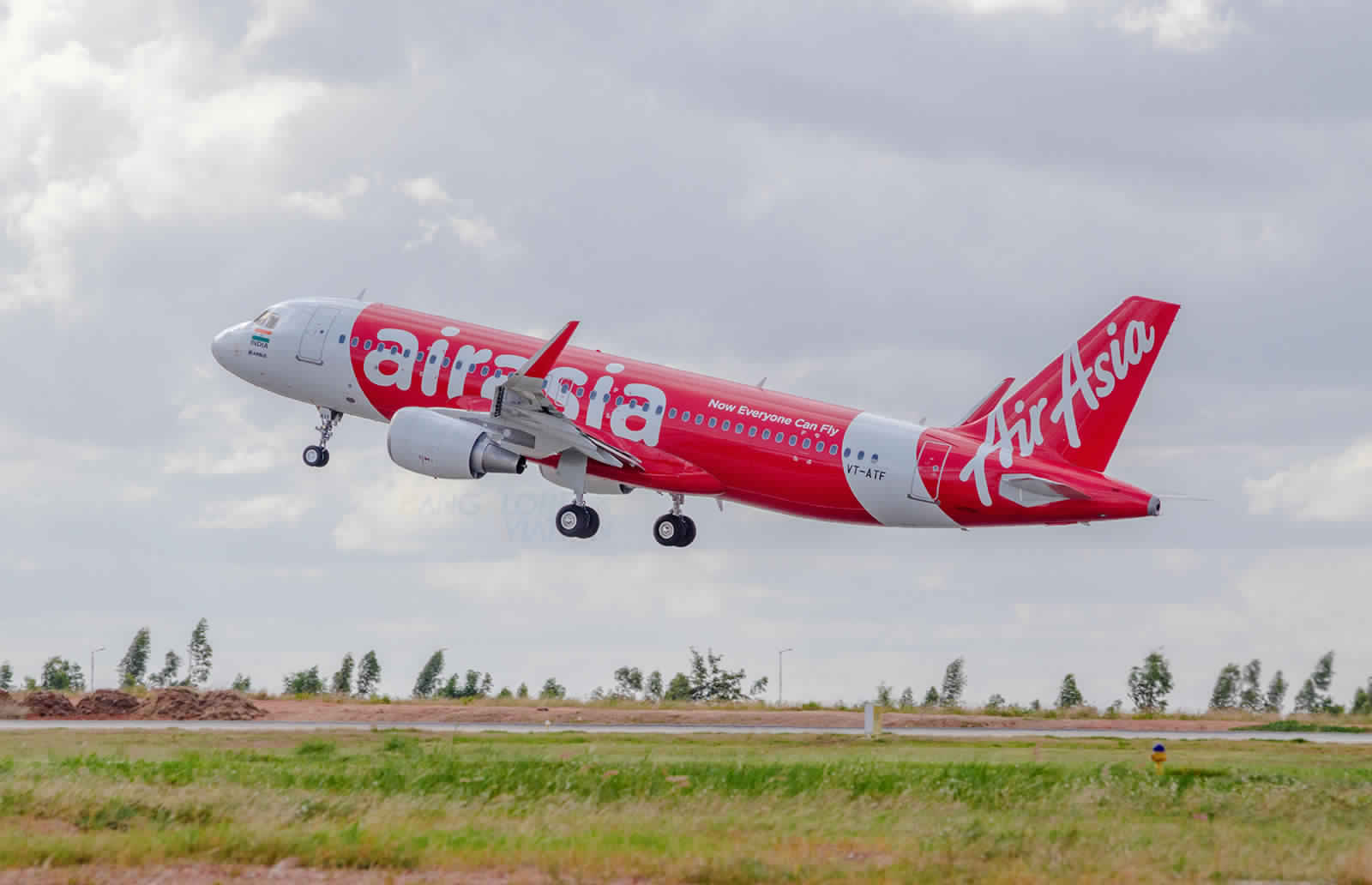
    Low-cost carrier AirAsia is eyeing additional routes here after launching its inaugural direct flight route between Ipoh and Johor Baru today.

    “AirAsia has never shied away from destinations. With help from all the agencies here, depending on the facilities and availability of service, we can look into anything within a four hour (flight) distance, for example,” AirAsia chief operating officer Riad Asmat told the press after the inaugural flight landed at the Sultan Azlan Shah airport here.

    “We can’t confirm anything at the moment because it requires evaluation. But we look at destinations on a daily basis,” he added.

    Riad said the airline’s planes could take 180 passengers each and AirAsia was targeting an 80 per cent take-up.

    He said the airline also launched a Johor Baru-Alor Setar flight today, which will be flown four times weekly.

    “We are confident both Ipoh and Alor Setar will be extremely popular destinations for business and leisure travellers,” he said.

    Perak Mentri Besar Ahmad Faizal Azumu, who was present to greet the first 120 passengers on the inaugural flight, said the flight would boost the state’s tourism industry and economy.

    He said the state received 20.1 million domestic tourists last year, up from to 16.8 million in 2016, placing the state second behind Selangor.

    Ahmad Faizal said the Perak Tourism Action Council (PTAC) would come up with a masterplan to drive and rebrand Perak’s tourism industry,

    “Besides enhancing the branding of our products, we will also re-examine human capital in the tourism sector. We want to provide retraining and skills enhancement programmes for our hospitality operators, hotel staff, tour guides, entrepreneurs and everyone in the tourism ecosystem,” he said,

    “The state government has full confidence that AirAsia will play its part as our strategic partner to further promote Perak as a whole.

    “We are looking at beyond the Johor Bahru-Ipoh route. Our dream is to work together to connect Ipoh to other destinations in AirAsia’s vast network.”

    Ahmad Faizal reiterated that the state was still interested in building a new airport, but noted that it was still being discussed.

  • HSBC is making a bet on Asia millionaires

    HSBC is making a bet on Asia millionaires

    HSBC Holdings is planning to increase its wealth-management staff in Asia as chief executive officer John Flint bets on growth in the region.

    The bank plans to add more than 1,300 positions, split roughly between retail and private banking, by 2022, according to the heads of the two divisions, which between them currently employ just over 32,000 people in the region. The bulk of the hires, some of which could be internal, will be in Hong Kong and Singapore.

    The wealth strategy is part of Mr Flint’s plan to grow HSBC by expanding in Asian markets including Greater China and South-east Asia. The CEO, promoted in February, said in June that HSBC will pour as much as US$17 billion by 2020 into expanding the region’s business and improving technology. The bank aims to grow revenue from Asia by at least US$1 billion during the same period.

    “We have a real opportunity to do more and that’s to further build on Hong Kong and to materially build what we do today in Singapore,” Kevin Martin, the firm’s Asia-Pacific head of retail banking and wealth management, said in an interview. “Both businesses need to do it in concert,” he said, referring to the retail and private banking units.

    THe London-based bank’s plans for wealth management in Asia, which is dominated by global banks such as UBS Group AG, Citigroup Inc and Credit Suisse Group AG, come as regional firms including DBS Group Holdings Ltd. and BOC Hong Kong (Holdings) Ltd are also expanding amid an unprecedented rise in the region’s assets.

    HSBC said on Monday that Antonio Simoes, who was head of UK and Europe, will run global private banking from Jan 1. Peter Boyles, who currently runs the group, will retire after 43 years at the company.

    Offshore wealth in Asia, excluding Japan, has been growing at about 10 per cent a year, according to Boston Consulting Group data, faster than the 5 per cent globally. Offshore wealth from China alone amounted to about US$1 trillion this year, the consulting firm estimated.

    Hong Kong’s wealth managers expect to double the money they handle over the next five years to about US$2 trillion, the city’s Private Wealth Management Association said in a recent report published with KPMG China, citing the increasing interest of Chinese nationals looking to diversify their holdings.

    “The wealth that the Chinese have already offshore is a massive piece of opportunity for us,” said Tan Siew Meng, Asia-Pacific head of global private banking at HSBC.

    The expected growth in the industry may exacerbate Hong Kong’s shortage of relationship managers, according to the Private Wealth Management Association’s report. Two-thirds of respondents said a “limited talent pool” was the biggest supply-side constraint.

    Mr Martin said the 1,300 staff boost is “not a big scary number” given that his retail bank, including subsidiary Hang Seng Bank Ltd, employs about 31,000 people in the Asia-Pacific region. Staff within the group may transfer to the wealth business, he said. Hiring will be both internal and external, and include relationship managers, product specialists and advisers, Ms Tan said. Her private bank had 1,100 employees in the region at the end of last year.

  • ASUS Handpicks SmartOSC for Its Ecommerce Push in Singapore

    ASUS Handpicks SmartOSC for Its Ecommerce Push in Singapore

    ASUS, one of Fortune magazine’s World’s Most Admired Companies, that is dedicated to creating products for today and tomorrow’s smart life, has appointed SmartOSC to be its ecommerce partner, following a competitive pitch in April. The event marked an important milestone in ASUS strategy to differentiate and enhance its offering for the Singapore market.

    Emma Ou, Country Manager of ASUS Singapore shared: “The current ASUS’s website is the best place to explore our wide range of products. Adding the ecommerce site will deliver a more convenient and immediate shopping solution in addition to all our brick and mortar stores at our brand stores and authorised retailers. Hosting our own ecommerce site is also align with our ongoing effort in providing our customers a seamless O2O shopping experience and an attractive rewards programme. Throughout the entire pitching process, SmartOSC demonstrated a holistic view of our requirement and passion for our brands. We get great ideas and constant feedbacks from their team for realizing our vision”.

    According to research firm Statistica’s report on Singaporean consumer ecommerce market, electronics & media is currently one of the leading ecommerce verticals accounted for 26% of total revenue. With user penetration is at 68% in 2018 and is expected to hit 72% in 2022, ecommerce is a captivating opportunity for any brands and retailers. Moreover, the research firm also reports that Asia contributed for almost 80% of all B2B e-commerce volume worldwide in 2017 and Southeast Asia is proving itself to be an attractive B2B procurement market in the region.

    SmartOSC will work closely with ASUS team to provide consulting, user-centric experience design, technical implementation and integration services. After launch, the website will be the one-stop shopping destination for both B2B and B2C customers. Customers will be able to order a wide range of product available across ASUS distribution network, and there will be options build customized gaming hardwares from its famous Republic of Gamers (ROG) product line.

    “ASUS is exactly the kind of ambitious partner SmartOSC is excited to work with. It gives us the opportunity to think out of the box and work on a project that goes beyond conventional requirements. We are confident that our ecommerce expertise and technical capability will make us a genuinely valued partner to ASUS.” Thai Son, CEO of SmartOSC, said.


  • Polish Active Wear and Lifestyle Brand “4F” Opening its First Store In Thailand

    Polish Active Wear and Lifestyle Brand “4F” Opening its First Store In Thailand

    Polish activewear and lifestyle brand 4F has launched in Thailand.

    The brand, recognised globally for its functional, contemporary design approach, opened its first retail store in the country at Siam Discovery.

    Local agent Sport Lifestyle Lab owner Hidekazu Fujii said: “Health and fitness is becoming increasingly popular in Thailand, as people look to eat healthier diets, gets more exercise or dress for it. We’re seeing more and more Thais embracing the athleisure trend by mixing and matching sportswear pieces into their everyday look. We saw an opportunity to introduce 4F to the market and Siam Discovery is a perfect central location for young Thais to shop. It gives tremendous exposure and opportunity for the brand to grow.”

    The firm is expected to open pop-up stores throughout Bangkok to make the brand more accessible to the local market.

    4F currently operates more than 200 retail and wholesale outlets in 35 countries.

  • NIKE, Inc. reports fiscal 2019 first quarter results

    NIKE, Inc. reports fiscal 2019 first quarter results

    NIKE, Inc. has reported fiscal 2019 financial results for its first quarter ended August 31, 2018. For the quarter, double-digit revenue growth was driven by the continued success of the Consumer Direct Offense, which fueled growth across all geographies as well as wholesale and NIKE Direct, led by digital.

    “NIKE’s Consumer Direct Offense, combined with our deep line up of innovation, is driving strong momentum and balanced growth across our entire business,” said Mark Parker, Chairman, President and CEO, NIKE, Inc. “Our expanded digital capabilities are accelerating our complete portfolio and creating value across all dimensions as we connect with and serve consumers.”

    Diluted earnings per share for the quarter were US $0.67, an increase of 18 percent driven by strong revenue growth, gross margin expansion, selling and administrative expense leverage, and a lower average share count, partially offset by a higher effective tax rate.

    “We are delivering stronger global growth and profitability than we anticipated entering this fiscal year,” said Andy Campion, Executive Vice President and Chief Financial Officer, NIKE, Inc. “While foreign exchange volatility has increased, our underlying currency-neutral momentum continues to build as we transform how NIKE operates, drives growth and creates value for our shareholders.”

    First Quarter Income Statement Review

    – Revenues for NIKE, Inc. increased 10 percent to US $9.9 billion, up 9 percent on a currency-neutral basis.

    Revenues for the NIKE Brand were US $9.4 billion, up 10 percent on a currency-neutral basis driven by double-digit growth internationally and in NIKE Direct, strong momentum in North America, and growth in almost every category led by Sportswear.

    Revenues for Converse were US $527 million, up 7 percent on a currency-neutral basis, mainly driven by growth in Europe and Asia.

    – Gross margin increased 50 basis points to 44.2 percent primarily due to higher average selling prices, favorable full-price sales mix and margin expansion in NIKE Direct, partially offset by higher product costs.

    – Selling and administrative expense increased 7 percent to US $3.1 billion. Demand creation expense was US $964 million, up 13 percent primarily driven by sports marketing investments, brand campaigns and key sports moments. Operating overhead expense increased 5 percent to US $2.1 billion driven by investments in capabilities to drive the Consumer Direct Offense, particularly in NIKE Direct and global operations.

    – The effective tax rate was 14 percent, which reflects the new U.S. statutory rate and implemented provisions of the U.S. Tax Cuts and Jobs Act.

    – Net income increased 15 percent to US$1.1 billion driven primarily by strong revenue growth, gross margin expansion and selling and administrative expense leverage while diluted earnings per share increased 18 percent from the prior year to US $0.67 reflecting a 2.5 percent decline in the weighted average diluted common shares outstanding.

  • Astro Malaysia Q2 earnings fall 93%

    Astro Malaysia Q2 earnings fall 93%

    Astro Malaysia Holdings Bhd’s net profit for the second quarter ended July 31 fell 93% to RM16.58 million from RM246.34 million a year ago due to an increase in FIFA World Cup content, merchandise sales and higher net finance costs.

    The decrease in earnings before interest, tax, depreciation and amortisation (ebitda) was mainly due to higher content costs from FIFA World Cup and merchandise sales, while higher net finance cost was mainly due to unfavourable unrealised forex movement arising from unhedged finance lease liabilities and vendor financing and increase in interest expenses from borrowings.

    Revenue for the quarter of RM1.42 billion was marginally lower by 0.2% mainly due to a decrease in subscription and advertising revenue.

    For the six months period, net profit plunged 57% to RM191.31 million from RM442.17 million mainly a year ago due to decrease in ebitda and increase in net finance costs.

    Revenue for the current period of RM2.73 billion was lower by 0.7% against corresponding period of RM2.75 billion, mainly due to a decrease in subscription and advertising revenue.

    The board of directors declared a second interim single-tier dividend of 2.5 sen per ordinary share in respect of the financial year ending Jan 31, 2019 amounting to RM130.35 million.

    Astro chairman Tun Zaki Azmi said Astro continues to be cash generative, cost disciplined and proactive in its capital management whilst navigating through a challenging market and competitive media environment.

    Astro CEO Henry Tan said it experienced increased content costs for the 2018 FIFA World Cup. In addition, financial results were affected by the reduced need to advertise during the tax holiday period from June 1 to Aug 31, 2018 and the depreciating ringgit.

    Nevertheless, it continues to have stable revenues across TV and radio with diversification from digital platforms, e-commerce, licensing income and theatrical sales.

    “Going forward, we expect the group’s second half performance to improve and we will remain focused on key business drivers. Astro is committed to improving customer experience beginning with a new interface for premium customers on TV and Astro GO allowing for a seamless viewing experience across all screens and the introduction of 4K Ultra HD offerings,” said Tan.

  • Gov’t Urged to Tighten Rules on Foreign Investment in Indonesian Startups

    One of Indonesia’s most influential business lobbies has urged the government to tighten its regulations on foreign ownership, taxation and user privacy at local digital startups to prevent domination by foreign entities.

    Indonesia, home to more than 260 million people – half of whom are active internet users – has seen a rise in the digital economy over the past five years.

    There are currently at least four unicorn startups in the country, but all are backed by foreign investments.

    Ride-haling service Go-Jek Indonesia received $550 million from Sequoia Capital and Warburg, and $1.2 billion from Google, Temasek and Meituan-Dianping. Online airline ticketing and hotel booking service Traveloka received $350 million from US-based travel company Expedia, while e-commerce website Bukalapak received an undisclosed amount from 500 American startups and QueensBridge Venture Partners. Tokopedia, another e-commerce site, meanwhile received $1.1 billion from Chinese e-commerce giant Alibaba.

    Over the long run, this means profit would be transferred to the investors’ countries, leading to an even larger current-account deficit, further increasing pressure on the rupiah.

    Bhima Yudhistira Adhinegara, an economist at the Institute for Development of Economics and Finance (Indef), warned that most of the startups still experience losses but foreign funding keeps pouring in, driving up their valuations.

    “Once the valuation is at its peak, they would sell their shares for a capital gain,” Bhima said.

    These startups are also well placed to harvest customer data, paving the way for foreign investors to gain a foothold in Indonesia’s tightly regulated payment and credit ecosystem.

    “It can be seen from Go-Jek that expanded its wings into a payment system. Companies such as Alipay and WeChat Pay could enter Indonesia by funding local startups with the intention to expand their scope in fintech,” Bhima said.

    “Don’t let them being too liberal like banks. If necessary, it might be better to introduce special regulations, such as limiting foreign ownership to 40 percent and requiring collaboration with domestic capital for the remainder,” he added.

    Johnny Darmawan, deputy chairman for industrial affairs at the Indonesian Chamber of Commerce and Industry (Kadin), agreed with Bhima’s assessment.

    “They aim for consumer data; that’s why they keep investing in the startups,” Johnny said.

    He also questioned the fact that despite attracting huge amounts of capital, startups are still categorized as small and medium enterprises, preventing the government from imposing limits on foreign funding.

    “Also, startups are often out of the tax authority’s scope; that’s why we must find a way to tax those that are funded by foreign entities,” Johnny said.

    Technology expert Heru Sutadi, a former commissioner of the Indonesian Telecommunication Regulatory Authority (BRTI), said it would be a great danger to share citizens’ data with foreign entities, as it is prone to abuse.

    “Citizens will be the victims. The user data belongs to citizens, while it is being exploited,” he said.

    The Financial Services Authority (OJK) banned hundreds of illegal foreign online lenders this year after a series of user-data abuses surfaced.

    Still, other businesses beg to give startups more opportunities, pointing out that Indonesia’s digital economy is still in its infancy.

    “Just let startups develop. But if they start to cause chaos in economy and make no contribution to it, they must be disciplined,” said Chris Kanter, secretary of the Indonesian Employers Association (Apindo). He believes the current size of foreign investment in local startups is still normal.

    Shinta Kamdani, deputy chairwoman for international relations at Kadin, said that instead of limiting foreign investment, more startups should be encouraged to list on the Indonesia Stock Exchange (IDX) to allow them to attract more local investors.