Author: Mei Ling Tan

  • SSENSE Launches Chinese Online Store

    SSENSE Launches Chinese Online Store

    Canada’s Ssense has developed a Chinese language version of its online store as it seeks to boost sales in greater China.

    Described as a “personalised shopping experience” the site is in simplified Chinese and includes product descriptions and customer care services directly targeting customers in China.

    Mandarin-speaking customer care representatives will be available at certain times of the day to assist shoppers, and taxes or duties applicable to Chinese customers will be included on the price list.

    Chinese is the fourth language to be used on the Ssense platform.

  • U.S. Polo Assn. accelerates China growth with China Open sponsorship

    U.S. Polo Assn. accelerates China growth with China Open sponsorship

    The United States Polo Association, via its licensing arm and broadcaster — USPA Global Licensing — announced that U.S. Polo Assn. will return as the official apparel sponsor of the 2018 China Open Polo Tournament.

    Partnering with Chinese licensing partner, Yicai Brands Management, the West Palm Beach, Florida-based U.S. Polo Assn. will provide official jerseys for players and uniforms for staff of the event.

    The tournament will take place on Sunday, September 30, at the Tang Polo Club in Beijing and is recognised as one of the largest and most watched international polo tournaments in China. This year, four international polo teams will participate including Brunei, England, Malaysia and China.

    “We are excited to be the official apparel sponsor for the prestigious China Open Polo Tournament,” said USPAGL President and CEO, J. Michael Prince.

    “This will be another opportunity to build global brand awareness while also engaging consumers and sports fans in the sport and lifestyle of polo in one of the most important markets in the world.”

    With a global footprint worth $1.6 billion in retail sales and a presence across 166 countries, China has become the American brand’s premier market for growth, as it eyes a $2 billion dollar global sales target.

    In the next five years, U.S. Polo Assn. plans to have over 300 retail stores in China, representing one of the largest retail footprints for an international apparel brand in the Chinese marketplace. Earlier this year, the company also relocated its Chinese operations to the city of Changshu (nicknamed “Apparel City”) at the Changshu Brand Operations Centre, which specialises in product design, research & development, marketing, social media and e-commerce.

    “With our amazing partner, Yicai, U.S. Polo Assn. is building a significant brand presence in China while also driving tremendous long-term growth,” added Prince.

    The Chinese agreement comes after the brand announced expansion plans for the UK and Ireland, as part of a new strategy under new creative director Craig Prest. Earlier this year, the brand also inked a sponsorship deal to dress the U.S. national team at the 2018 Westchester Cup in the UK.

  • Apple cuts costs for the iPhone XS’s big display

    Apple cuts costs for the iPhone XS’s big display

    Apple shaved some parts from the display in its largest new iPhone, helping keep costs under control in what has become the priciest component of its phones in recent years, according to a new cost analysis of the device.

    TechInsights, an Ottawa, Ontario-based firm which rips open phones to analyze their contents and estimate the cost of the parts inside, said on Tuesday that the iPhone XS Max with 256 gigabytes of storage capacity contains about $443 in parts and assembly costs, compared with $395.44 for the 64-gigabyte version of last year’s iPhone X.

    Apple released a trio of new phones earlier this month, including an update to last year’s iPhone X, called the iPhone XS, that starts at $999, and the budget-minded iPhone XR that starts at $749.

    But it was the iPhone XS Max – with a 6.5-inch display that uses OLED technology for richer colors – that pushed new pricing boundaries, starting at $1,099.

    In its cost analysis released on Tuesday, TechInsights found that the single priciest part of the iPhone XS Max – the display – cost $80.50, compared with $77.27 for last year’s iPhone X, which featured a smaller 5.8-inch screen.

    The relatively small increase in cost despite the larger screen size was because Apple appeared to have removed some components related to its so-called 3D Touch system, which makes apps respond differently depending on how hard users press the screen.

    “All told, what they took out adds up to about $10, so this $80 estimate would have been about $90,” Al Cowsky, who oversees cost analysis at TechInsights said in an interview.

    “They had a trade-off in cost.”

    Apple declined to comment on the study.

    But Bob O’Donnell of TECHnalysis Research said Apple likely made the right decision to focus on ensuring it could deliver a larger-screened model this year economically.

  • Nike’s China sales booms in latest report

    Nike’s China sales booms in latest report

    Booming sales by Nike China helped the sportswear giant record a 10 per cent rise in global revenues in the first quarter.

    Footwear sales in greater China soared 26 per cent, apparel sales by 23 per cent and equipment sales by 8 per cent. Combined sales growth for the region was 24 per cent, from US$1.11 billion last year to $1.38 billion this year.

    Nike China profit rose 27 per cent to $502 million, while combined Asia Pacific and Latin America sales rose 7 per cent to $1.27 billion.

    “Nike’s consumer direct offense [program], combined with our deep line up of innovation, is driving strong momentum and balanced growth across our entire business,” said Mark Parker, chairman, president and CEO at Nike.

    “Our expanded digital capabilities are accelerating our complete portfolio and creating value across all dimensions as we connect with and serve consumers.”

    Revenues for the company’s Converse division rose 7 per cent to $527 million, mainly driven by growth in Europe and Asia.

    Net income increased 15 per cent to $1.1 billion driven primarily by strong revenue growth and improved gross margin.

  • LG U+ adds Google Assistant to its IPTV

    LG U+ adds Google Assistant to its IPTV

    Unlike its telecom service competitors SK Telecom and KT, LG U+, the smallest of the three, is taking a two-track strategy when it comes to voice commands for its internet protocol TV (IPTV) service.

    LG U+ said on Wednesday that it will enable its customers to use Google Assistant for its IPTV set-top box. Subscribers to LG U+ IPTV service can use Google’s AI voice assistant to watch YouTube on TV, launch the Google Photos app as well as use translate and search features with a remote control specifically devoted to Google Assistant.

    Searching for videos on YouTube and viewing photos on smart TVs is hardly new for owners of the latest smart TVs, but using a remote control for real-time translation on a TV is a unique feature.

    “We plan to continue expanding the fields of cooperation with Google that began in 2012,” said Won Kang-hoon, leader of the IPTV partnership service team at LG U+.

    LG U+, an affiliate of LG Electronics, already joined forces with top domestic search engine and portal operator Naver last December to let its customers use Naver’s Clova AI platform for its cable TV service. The telecom operator even tied Clova Friends, an AI speaker, with its subscription services as part of a joint promotion.

    LG U+ IPTV subscribers, who total around 2 million, can use both Clova and Google Assistant. But the telecom has yet to decide whether to link the Google Home AI speaker with its IPTV service.

    SK Telecom and KT, the two largest telecom operators in Korea, have been building their own AI voice command platform. The former has Nugu and the latter has Giga Genie. Other tech firms, such as Samsung Electronics and Naver, have theirs as well. LG U+’s affiliate LG Electronics has its own ThinQ platform, but as of now it only works with home appliances and smartphones.

    LG U+ first released a set-top box equipped with the Google TV operating system in 2012. Four years later, it let subscribers watch some curated YouTube video content. Last August, LG U+ began offering YouTube Kids content to subscribers.

  • Indonesia’s Tauzia Hotels Joins Hands With Ascott for Southeast Asia Expansion

    Indonesia’s Tauzia Hotels Joins Hands With Ascott for Southeast Asia Expansion

    Green Oak Hotel Management, the holding company of Tauzia Hotels, announced on Thursday that it will cooperate with Ascott Limited, an international serviced-residence operator, to expand its business in Southeast Asia.

    The plan will see Tauzia open hotels in Malaysia, the Philippines, Cambodia, Laos and Myanmar.

    Tauzia currently operates 122 hotels, with a total of nearly 20,000 rooms, in Indonesia and Vietnam under six brands, including Harris, POP!, YELLO, Fox Harris, Harris Vertu and Préférence.

    Most of the company’s hotels are in Indonesia, mainly in Jakarta, Bali, Bandung (West Java), Surabaya (East Java) and Yogyakarta.

    “This partnership will enhance Tauzia’s future growth and performance as Ascott’s expertise and support will contribute greatly toward expanding our brand and product offerings in Asia and even beyond,” Tauzia Hotels founder Marc Steinmeyer said in a statement.

    Around 70 percent of its customers are business travelers, while the remainder are leisure travelers.

    The company has opened 10 hotels, with a total of 1,500 rooms, so far this year, including a POP! Hotel and Harris Hotel in Solo and Semarang in Central Java, a Fox Harris Hotel in in Bali and in Bandung, West Java, and a Harris Resort in Batam, Riau Islands.

    The company plans to open Liu Men by Préférence – its high-end hotel brand – in Melaka, Malaysia, before the end of this year.

    Through Ascott’s investment in Tauziah, the company expects to capture the untapped, but growing market in the region as it sees strong opportunities in the middle-class and business segments, Ascott chief executive Kevin Goh said.

    “[The growing middle-class] is brought on by the rise of the economy, commuters, infrastructure builders, other project-based workers and tech-savvy, self-sufficient and value-conscious leisure travelers. With our investment in Tauzia, we look forward to accessing this market, which is one of the fastest-growing segments in the hotel industry,” Goh said.

    He said Ascott will help Tauzia to access the international market by connecting the group to its 100,000 global corporate clients.

    Singapore-headquartered Ascott has had a presence in Indonesia for the past 22 years. The company operates 17 serviced residences, with a total of more than 3,000 residential units, in Jakarta, Bali, Bandung, Surabaya, Yogyakarta, Karawang (West Java) and Makassar (South Sulawesi).

  • Axiata Malaysia evaluating options on stake in M1

    Axiata Malaysia evaluating options on stake in M1

    Axiata Group Bhd, which is evaluating its options on a possible buyout offer by two of M1 Ltd’s major shareholders Keppel Corp Ltd (KCL) and Singapore Press Holdings (SPH), is hoping for accurate future value for its 28.7% interest in M1.

    News reports in Singapore cited that both companies are planning to launch a general offer for shares they do not own in M1. The deal is expected to fetch a market value of S$1.51 billion (RM4.6 billion).

    KCL and SPH hold 19.3% and 13.5% stake in M1, respectively.

    In a statement released today, Axiata said any transaction involving M1 stake should reflect its accurate future value as well as incorporate acceptable control premium based on market norms and precedent transactions of similar nature.

    Axiata said the group is currently reviewing its position in view of a possible transaction to be further announced by KCL and SPH on its M1 shares.

    “The company is already in discussion with a financial institution to act as its adviser to review various options available to Axiata with the sole objective that the company continues to vigorously protect and enhance shareholders’ value of both Axiata and M1, the latter via its board representation.”

    “The financial institution will also advise the company once KCL and SPH officially announce their proposed transaction,” it added.

    Axiata’s share price gained 19 sen or 4.2% to close at RM4.75 today with 3.02 million shares changing hands.

  • Weakening Rupiah Sees Calls for Gov’t to Scrap Palm Oil Export Tax

    Weakening Rupiah Sees Calls for Gov’t to Scrap Palm Oil Export Tax

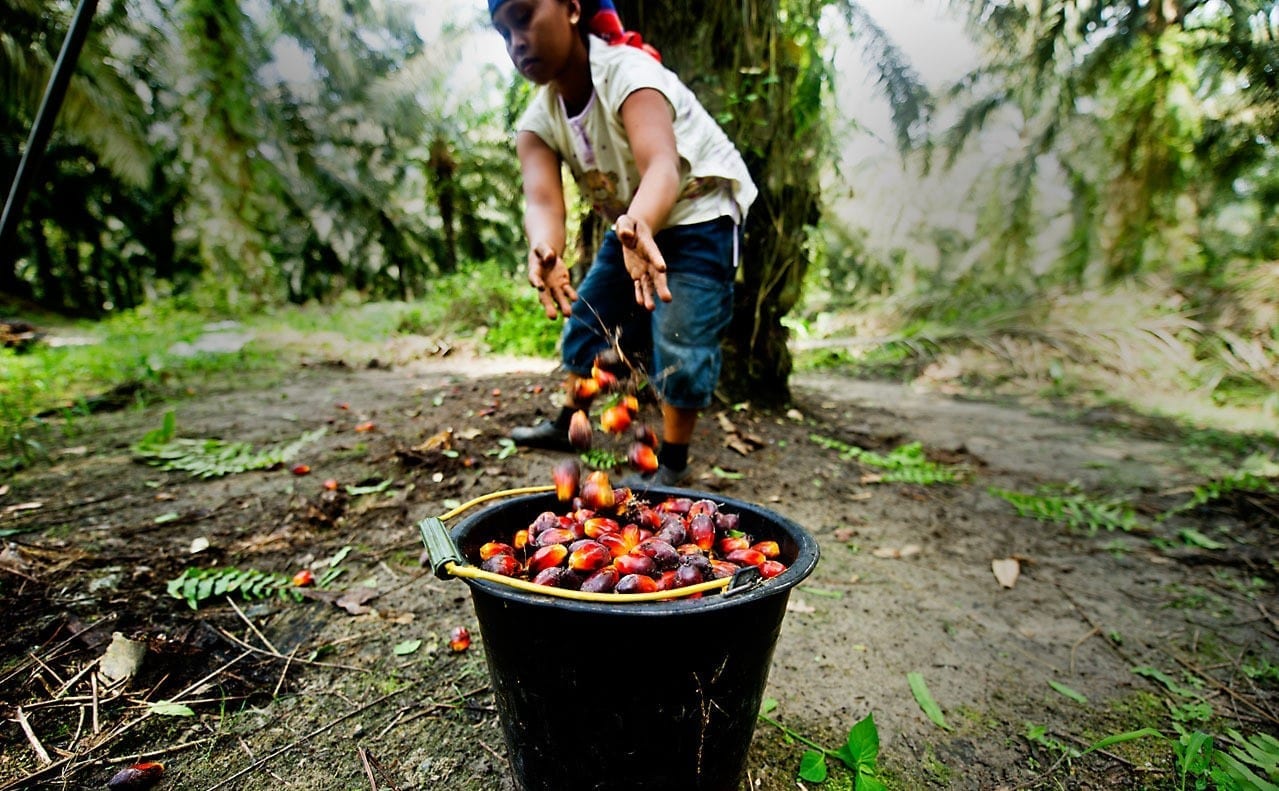
    A lawmaker and an industry analyst have called on the government to scrap its export tax on crude palm oil to help improve the competitiveness of the sector and boost exports, amid a weakening rupiah.

    Since 2015, the  Indonesian Oil Palm Estate Fund (BPDPKS), which is tasked with strengthening and promoting sustainable practices in the industry, has been imposing a $50 per ton export levy on crude palm oil and $30 per ton levy on crude palm oil derivative products when prices drop below $750.

    The levies were imposed to encourage local producers to sell more of their products at home and to incentivize local biodiesel producers. However, palm oil producers have complained about this policy since the start, as it burdens those seeking to export their products, which is more beneficial during a stronger dollar.

    “Under this condition, the government needs to be flexible in imposing some policies. It should consider scrapping the export tax … to help us to achieve a trade surplus,” said Eriko Sotarduga, a member of House of Representatives Commission VI, which oversees trade, industry and business competition.

    The rupiah strengthened to 14,825 to the dollar on Friday from 14,840 previously, according to data. It has fallen by 8.5 percent so far this year. Indonesia’s trade balance returned to a $1.72 billion surplus in August after recording its first deficit in 19 months in July.

    Eriko said amid the current low price of crude palm oil, scrapping export levies could help producers to expand the market, because they have been struggling to compete with other vegetable oils.

    Meanwhile, Bungaran Saragih, an advisor at the Palm Oil Agribusiness Strategic Policy Institute, said the government must provide the industry with its full support, given the fact that the industry sustains millions of people, with about 40 percent of the country’s production coming from smallholders.

    “Nowadays, palm oil is the best commodity” to support the nation’s economy and currency. Therefore, it deserves some incentives, he said.

    The government has been very careful in dealing with the sector as the commodity is the biggest foreign-exchange contributor.

    Palm oil exports reached their highest value ever last year at $23 billion, which was a 26 percent increase from 2016.

    However, the current administration is also cautious about issuing new permits to producers. President Joko “Jokowi” Widodo ordered a review of existing permits on Wednesday, amid growing concern over deforestation in the country.

    As reported earlier this week, environmental activist group Greenpeace International accused 25 palm oil producers, supplying some of the world’s most renowned brands, of contributing to massive forest destruction.

  • Decathlon opened first Korean store

    Decathlon opened first Korean store

    The first Decathlon South Korea store has opened.

    The French-headquartered sports goods retailer is rapidly expanding its Asian footprint, last year opening its first store in Indonesia and in January planning its fourth Singapore store, a 5000sqm flagship.

    The new Decathlon South Korea store is takes up 7800sqm in Songdo, near Seoul. Its opening early this month coincides with the launch of its South Korean e-commerce platform. Four more outlets are in the works to be opened within two years.

    Stephane Guy, CEO of Decathlon South Korea, said: “Songdo is a sports city. There are many parks where we can run, walk and we have many families living here too. It‘s exactly what we wanted.”

    Decathlon operates 1415 stores in 47 countries.

  • ADB lowers Vietnam’s 2018 growth forecast

    ADB lowers Vietnam’s 2018 growth forecast

    Vietnam’s economy is likely to expand by 6.9 percent instead of the 7.1 percent predicted in April.

    In its Asian Development Outlook (ADO) 2018 report issued Wednesday, the Asian Development Bank (ADB) also estimates Vietnam’s GDP for 2019 at 6.8 percent.

    Explaining the downward revision, the bank said that the year’s second half is likely see a moderate growth in exports, agriculture, construction, and mining sectors.

    The bank also believes that the ongoing trade war between the U.S. and China could have spillover impacts on Vietnam’s export and FDI inflows.

    Referring to the ongoing trade war between U.S. and China, ADB’s Vietnam Country Director Eric Sidgwick, said the country was vulnerable since it has integrated deeply with global trade.

    “These are not good events for Vietnam. As Vietnam is so open … any reduction to global trade is going to affect it,” quoted Sidgwick as saying.

    “There may be a beneficial impact in the short term, but we have to see how it plays out over the longer term. The long-term risk is trade contraction in general and high competition from as a result of that Vietnam being squeezed out,” he said.

    Vietnam’s growth this year could be dented by lean strength in key export markets such as China, the European Union and Japan, while unfavorable weather conditions could also undermine agricultural output and mining production, ADB said.

    ADB advised that Vietnam should continue to monitor the situation to assess the impact of the trade war and respond in timely manner.

    To mitigate negative impacts, Vietnam needs to continue to improve its business environment, infrastructure and market diversification, Nguyen Minh Cuong, an ADB economist said.

    “This will increase the competitiveness of Vietnam in the global market, whether it is affected by the trade war or not,” he added.

    ADB also raised the forecast of inflation rate from 3.7 percent to 4 percent this year, and from 4 percent to 4.5 percent in 2019.

    Vietnam’s GDP has sustained and built on last year’s gains with an impressive 7.08 percent growth in the first half of 2018, the highest rate since 2011.

  • Walmart Canada launches grocery delivery in Metro Vancouver with Food-X

    Walmart Canada launches grocery delivery in Metro Vancouver with Food-X

    Walmart Canada has announced the launch of sustainable grocery delivery for Metro Vancouver consumers in collaboration with Sustainable Produce Urban Delivery (SPUD)’s food delivery platform, Food-X Urban Delivery (Food-X). Metro Vancouver residents can now shop on walmart.ca/grocery or via the Walmart app and have their grocery orders delivered to their door by Food-X. Food-X helps Walmart with home delivery through shared warehousing and consolidation of orders.

    “It’s never been easier for customers to shop for fresh groceries – however and whenever they want,” said Daryl Porter, Vice President, Omnichannel Operations and Online Grocery. “Consumers are seeking out options to save time and money and Walmart is proud to offer more choices – including sustainable delivery.”

    Walmart remains committed to making everyday easier for busy families. This new grocery shopping option is faster and more affordable for customers in urban centres like Vancouver where there may not be convenient access to a Walmart Supercentre, and for customers who prefer to shop online.

    Customers can shop at walmart.ca/grocery or via the Walmart app. When done, they simply pay by credit card a then select a delivery window and their order will be delivered by Food-X right to their door in reusable totes as early as the next day. Customers can fill their cart with fresh groceries, including Canadian No. 1 grade fruits and vegetables such as BC-grown produce as well as an expanded selection of organic produce, Canadian beef, chicken and pork, dairy, baked goods, frozen foods and pantry items. They can also add health and beauty products, household supplies, pet food, baby food, diapers and lots more. All fresh groceries come with a 100 percent satisfaction, money-back guarantee. Minimum order is US $50 before taxes and delivery is US $9.97.

    The 74,000 sq. ft. sustainable warehouse features proprietary technology SPUD has been refining for the past 20 years to minimize the environmental impact of grocery delivery from reducing food waste to ensuring trucks are making fewer trips on the road. The Food-X warehouse has technology, several bio-digesters used to compost meat, produce, and compostable packaging bringing their food waste to 0.5 percent, which is leading the retail industry.

    Earlier this year, Walmart announced a commitment to achieve zero food waste by 2025 in its Canadian operations. The company’s journey to zero food waste in Canada by 2025 was announced in April 2018 with a three-part strategy that includes improving operational efficiencies, as well as increasing food donations and providing philanthropic support.

    “Our strategic collaboration with Food-X supports our belief that environmental and business sustainability go hand-in-hand,” said Porter. “Food-X is a leader in sustainability in Vancouver and we are proud to partner with a like-minded, environmentally-conscious operation.”

    “Consumer demand for online grocery shopping is growing and that means more trucks on the road,” said Peter van Stolk, CEO of Food-X. “We have built a best-in-class platform to get fresh food and groceries from the supplier to the kitchen while reducing waste and lowering emissions. We are very proud that Walmart is committed to zero food waste by 2025, and we are excited to be partnered with them on this goal.”

  • Activewear retailer Lorna Jane expands in China

    Activewear retailer Lorna Jane expands in China

    Australian activewear retailer Lorna Jane is expanding into greater China as more than 10 potential investors are seeking a majority shareholding.

    Around 30 per cent of Lorna Jane’s more than $200 million in annual revenues comes from its online platforms in China. Its sports bra product is the top seller in its category there. It currently has 2.5 million followers on social media.

    The business is currently assessing its options, while announcing last month the hire of KPMG to review the company’s strategies. KPMG has commented that the business is “performing extremely well”.

    The company is facing competition from gym-wear retailers such as Gymshark and the increasing shift in society of people wearing sportswear as streetwear. Co-owner Lorna Clarkson says activewear has now become ready-to-wear. “There’s now a blurred line between fashion and sports apparel.”

    CEO Bill Clarkson said that most likely within the next 12 months “our aim is to eventually open stores in China and Hong Kong,” depending on who the firm’s partner ends up being. It is currently in the process of reducing its physical store network in Australia due to high rental costs.

  • Indonesia to Host World’s First Conference on Creative Economy in November

    Indonesia to Host World’s First Conference on Creative Economy in November

    Indonesia is set to host the first World Conference on Creative Economy, which will serve as a forum for government representatives and industry players to exchange ideas establish common ground and resolve challenges in the industry.

    “The speakers will come from different parts of the world and they will present their views on the current state of the creative economy and their vision of the future of this industry,” Creative Economy Agency (Bekraf) chairman Triawan Munaf said at a press conference in Jakarta on Tuesday.

    The inaugural conference will take place in Nusa Dua, Bali, on Nov. 6-8 and will involve around 1,000 participants, including ministers and business leaders, from 50 countries. These include Peter Trillingsgaard, vice president for government and public affairs at the Lego Group; Le Kexi, president of the China Film Corporation, Indonesian Finance Minister Sri Mulyani Indrawati, Bukalapak chief executive Achmad Zaky and Tokopedia chief executive William Tanuwijayia.

    “This conference is part of our effort to increase our capacity as a country, to further strengthen our creativity and competitiveness, and to achieve prosperity for the people,” Deputy Foreign Minister A.M. Fachir said.

    With “Inclusively Creative” as the main theme, participants will discuss key issues in the creative economy, including social cohesion, regulations, marketing, ecosystems and financing.

    The creative economy is a tool to facilitate better communication and understanding across the economic and cultural divide, especially because the industry has the potent to create opportunities for all, regardless of age, gender, background or geographic location, Triawan said.

    Fachir added that the conference forms part of Indonesia’s efforts to realize the United Nations Sustainable Development Goals, such as decent work and economic growth and reduced inequality.

    “It is both fitting and a duty for Indonesia to become a leader in the creative economy because we have what it takes,” Triawan said, adding that Indonesia plans to hold the event biannually.

    Indonesia’s creative economy has been on the rise over the past few years. It contributed more than Rp 922 trillion ($61.7 billion), or around 7.4 percent of the country’s economy, in 2016.

    Endah Sulistianti, deputy for inter-region and institution relations at Bekraf, said the conference aims to present the potential of creativity for the future of the world.

    “We are proposing to the world this tangible and infinite possibility, from creativity as [one of the solutions] to the limits of our natural resources,” Endah said.

    The conference will coincide with CreatiVillage, an exhibition space for ideas, concepts and products of various countries. Endah said it will feature creative works from South Korea, China, Saudi Arabia, and Denmark, among others.

    Business and investment forums, as well as business-matching sessions, will also take place on the sidelines of the event.

    The conference is expected to conclude with a set of recommendations on the creative economy, which will be presented at next year’s session of the United Nations General Assembly in New York.

    Fachir said Indonesian officials attending the ongoing session of the General Assembly are lobbying UN member countries to support efforts that will boost the role of creative the economy across the globe.

  • US-China trade war dims Asia’s 2019 growth outlook: ADB

    US-China trade war dims Asia’s 2019 growth outlook: ADB

    Developing Asia could grow more slowly than previously thought next year as the US-China trade war inflicts damage on the region’s export-reliant economies, the Asian Development Bank (ADB) said.

    Tightening global liquidity could also weigh on business activity by pushing up borrowing costs, while capital outflows are also a risk.

    The Manila-based institution kept its 2018 economic growth estimate for the region at 6.0% in an update of its Asian Development Outlook. But it trimmed next year’s forecast to 5.8% from 5.9%.

    “Downside risks to the outlook are intensifying,” said ADB chief economist Yasuyuki Sawada, pointing to the potential impact of US-Sino trade tensions on regional supply chains and the risk of sudden capital outflows if the Federal Reserve raises interest rates even more quickly.

    The ADB’s 5.8% growth estimate for 2019 would be the slowest for the region since 2001, when it expanded 4.9%.
    The report covers 45 countries in the Asia-Pacific.

    The ADB’s latest forecasts did not reflect fresh tariffs that the US and China imposed on each other’s goods on Monday.

    Sawada said the additional duties would not significantly change ADB’s growth forecasts, but added the “escalating” trade conflict must be closely monitored.

    China’s economy is expected to grow 6.3% in 2019, the ADB said, slower than its 6.4% forecast in July and weaker than its 6.6% growth estimate for 2018, which was unchanged from its previous projection.

    Domestic consumption in China “seems to be quite robust and supporting 6.6% growth this year”, Sawada said.

    “But admittedly we don’t know (how) the further escalation of the trade dispute may directly affect consumer sentiment,” he added.

    Beijing has set a growth target of around 6.5% this year, the same as last year, which it handily beat with an expansion of 6.9%.

    Chinese authorities have pledged they can still meet the 2018 target, and have started to roll out growth boosting measures as the trade war threatens to put further pressure on the already cooling economy.

    For Southeast Asia, moderating export growth, quickening inflation, net capital outflows and a worsening balance of payments have dimmed the outlook, with growth this year projected to slow to 5.1% from the July forecast of 5.2%.

    “Policy makers have at their disposal an array of policy tools with which to manage pockets of vulnerability and maintain stability, but they must be applied carefully,” Sawada said.

    Inflation across the region is expected to remain under control, helped by country-specific factors like moderate food price inflation in India and China and fuel subsidies in Indonesia and Malaysia, the ADB said.

    Sawada said Asian governments have “enough policy space to handle” shocks and pressure from currency depreciations.

    The ADB lowered its 2018 economic growth forecast for Vietnam to 6.9% from 7.1% projected previously, partly due to the ongoing trade friction between the US and China.

    Vietnam, one of the fastest growing economies in Asia, has an open economy that is heavily reliant on exports, while the US and China are among its biggest trade partners.

    ADB lowered its growth forecast as the ongoing trade tension between the US and China could have a spillover impact on Vietnam. However, the ADB outlook is still higher than the Vietnamese government’s target of 6.7%.

  • Ministop South Korea is for sale, rivals compete

    Ministop South Korea is for sale, rivals compete

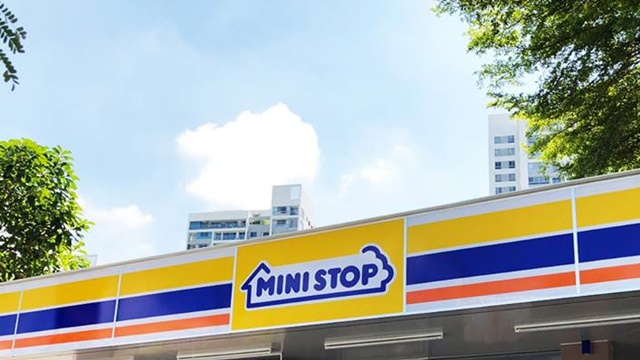
    South Korean retail operators Lotte and Shinsegae are competing to buy the 21-year-old local subsidiary of Japanese convenience-store operator Ministop.

    Shinsegae and Lotte respectively own rival chains Emart24 and 7-Eleven and are both reportedly seeking to take full ownership of Ministop South Korea. Both companies see the deal as a means to grow their respective businesses in a market where convenience-store penetration has reached saturation point, limiting opportunities for organic network growth.

    7-Eleven currently operates 9535 stores across South Korea and Emart24 3413. The Ministop network numbers just 2535.

    Japan’s Aeon, which owns the Ministop brand, owns a majority 76 per cent of the South Korean business.

    Daesang group owns 20 per cent and Mitsubishi the balance. Aeon has appointed Nomura Securities to find a buyer for the business as it sees little future for the convenience store brand in South Korea, a highly competitive market. Instead, Aeon is looking to Southeast Asian markets for growth, including Vietnam, Thailand and Cambodia.

    Last year, Ministop South Korea sales totalled 1.18 trillion won (US$1 billion), ranking it fourth in revenue terms behind GS25, CU and 7-Eleven.