Author: Mei Ling Tan

  • Thailand to Levy Taxes on All Foreign Online Purchases in Boost to Local Businesses

    Thailand to Levy Taxes on All Foreign Online Purchases in Boost to Local Businesses

    Beginning January next year, Thailand will impose taxes on all foreign goods sold through online platforms, thereby ending the current exemption on low-value imports priced under 1500 baht (US$46.30).

    Creating a Fair Market

    According to Panthong Loikulnan, the Director-General of the Customs Department, the objective of this move is to level the competition for local businesses and increase government revenue. The current situation gives foreign goods an edge over Thai businesses, putting Small and Medium-sized Enterprises (SMEs) at a disadvantage.

    New Tax System for Imports

    The newly instated system will subject all imported goods, regardless of their value, to customs duties and Value-Added Tax (VAT) as required by the law. This change supersedes the existing tariff exemption, which will be phased out by the end of this year.

    Goods priced below 1500 baht currently represent over 30 billion baht ($927 million) in annual imports. Loikulnan estimates that imposing an average 10 per cent duty could generate at least an additional 3 billion baht ($92.7 million) in government revenue each year.

    The proposed system will primarily rely on data verification from online platforms and random inspections to ensure compliance. Furthermore, Thailand’s customs department is currently in discussions with major e-commerce operators to directly link their sales and import data.

    Protecting Domestic Retailers

    Loikulnan believes that this reform will help establish a fair market for domestic retailers who are already paying taxes and are particularly impacted by the wave of low-cost imported products.

    In his opinion, delaying the implementation of such a system would put Thailand at a disadvantage since many other countries are grappling with the same issue: domestic sellers pay taxes, while foreign goods are imported tax-free.

    Lump-sum Tax Proposal

    For the long term, Loikulnan suggests introducing a “lump-sum tax”, which implies a flat rate of 20 to 30 per cent per imported package. This would simplify the system and increase efficiency. However, he acknowledges that such a change would necessitate legislative amendments and would take time to implement.

    Questions & Answers

    What is the objective of Thailand’s new tax system?
    The aim is to level the playing field for local businesses and increase government revenue.

    How will the new system work?
    All imported goods, regardless of their value, will be subject to customs duties and VAT. The system will rely on data verification from online platforms and random inspections to ensure compliance.

    What is the proposed “lump-sum tax”?
    The “lump-sum tax” refers to a flat rate of 20 to 30 per cent per imported package, suggested as a long-term solution to simplify the system and increase efficiency.

  • Boku Leverages Singapore as Gateway to Revolutionize Global Payments Market

    Boku Leverages Singapore as Gateway to Revolutionize Global Payments Market

    Boku, a leading mobile payments company, has selected Singapore as the site for its latest Innovation Hub. This decision aligns with the company’s strategic plan to secure a portion of the rapidly expanding global payments market, which is projected to reach nearly $290 trillion by 2030.

    Introducing the Innovation Hub

    Boku’s new Innovation Hub is dedicated to developing advanced capabilities aimed at guiding businesses through the complexities of global monetary transactions. The company, founded in 2008 and currently headquartered in London, maintains a global presence with offices throughout North America, Asia-Pacific, Europe, and Latin America.

    Given the anticipated growth in global payments, Boku is focusing its efforts on addressing the key difficulties in foreign exchange, payouts, and the interoperability of digital wallets. These areas have become essential for businesses looking to scale internationally.

    The Rise of Local Payment Methods

    The transition from traditional card-based payment methods to local payment methods (LPMs) is progressing at a pace much faster than industry experts predicted. According to research conducted by Boku in partnership with Juniper Research, LPMs surpassed traditional card payments in popularity in 2025 and are predicted to comprise 59 percent of all global ecommerce transactions by 2028.

    Leadership of the Innovation Hub

    Yi Hahn Chin, former Citibank executive with over two decades of experience in transaction banking and cross-border payment innovation, will lead the Hub. Chin’s appointment underscores Boku’s commitment to marrying global expertise with regional proximity. He noted the persistent challenges of cross-border payments for digital merchants operating in multiple markets. According to Chin, basing the team in Singapore will enable closer collaboration with merchants and partners, resulting in capabilities that directly address the evolving needs of the market and improve commercial outcomes.

    Singapore as a Strategic Location

    Singapore was chosen as the location for Boku’s new Hub due to its abundant fintech talent, clear regulatory framework, and its pivotal role in the Asia-Pacific’s burgeoning mobile-first payment landscape. The Hub will leverage Singapore’s position to collaborate with fintech companies and merchants in designing and testing solutions aimed at minimizing cross-border complexities and broadening acceptance.

    Moving Beyond Traditional Payments

    Stuart Neal, CEO of Boku, emphasized the need for merchants to have access to a payment infrastructure that simplifies processes while extending reach. He indicated that the Innovation Hub will enable Boku to create and trial solutions in actual markets with real partners, and that basing the team in Singapore will be key to enhancing relationships with Asia-Pacific merchants and driving growth.

    Global Reach of Boku’s Network

    Boku presently offers over 200 local payment methods, reaching more than 7 billion consumer accounts across over 60 countries. The company processes transactions for over 100 million active users monthly, with digital wallets and account-to-account payments forming the backbone of the company’s growth. With the introduction of the new Singapore Hub, Boku is signaling its intention to climb higher up the value chain by not just linking payment methods, but also by facilitating smooth, data-driven cross-border trade.

    Questions & Answers

    What is the purpose of Boku’s Innovation Hub in Singapore?
    The Hub is intended to develop new capabilities to help businesses navigate the complexities of global monetary transactions, with a focus on addressing key difficulties in foreign exchange, payouts, and the interoperability of digital wallets.

    Who will be leading Boku’s new Innovation Hub?
    Yi Hahn Chin, a former Citibank executive with over 20 years of experience in transaction banking and cross-border payment innovation, will be leading the Hub.

    Why was Singapore chosen as the location for Boku’s Innovation Hub?
    Singapore was chosen due to its rich fintech talent pool, clear regulatory framework, and because of its central role in the Asia-Pacific’s burgeoning mobile-first payment landscape.

  • Revolutionizing Finance: Singapore and UK Launch Innovative AI Partnership for Cross-Border Growth

    Revolutionizing Finance: Singapore and UK Launch Innovative AI Partnership for Cross-Border Growth

    Singapore and the United Kingdom’s financial regulators have initiated a novel partnership that focuses on artificial intelligence (AI). The aim of this collaboration is to enhance cross-border opportunities between the two markets.

    The Monetary Authority of Singapore (MAS) and the UK’s Financial Conduct Authority (FCA) recently revealed their latest venture – an AI-focused partnership – during the Singapore FinTech Festival 2025. The primary goal of this UK-Singapore AI and Finance Partnership is to encourage the sharing of best practices and foster cross-border opportunities within the two markets.

    Enhancing AI Solutions

    MAS’s fintech chief, Kenneth Gay, emphasized the potential benefits of this partnership. He believes that these collaborations will significantly improve the AI services provided by both parties, leading to increased adoption in their respective financial sectors. Furthermore, he predicts that the collaboration will result in a more efficient, safe, and robust financial sector powered by AI.

    A Corridor for Growth

    Jessica Rusu, the FCA’s chief data, information & intelligence officer, echoed Gay’s sentiments. She stated that firms are increasingly seeking out cross-border opportunities and collaboration. Through this partnership, firms can learn from one another and collectively shape the future of responsible AI. Rusu sees this partnership as more than just a collaboration; she views it as a corridor for growth within London, Singapore, and the industry as a whole.

    Questions & Answers

    What is the primary aim of the UK-Singapore AI and Finance Partnership?
    The main objective of the partnership is to encourage the sharing of best practices and foster cross-border opportunities within the two markets.

    How will the partnership enhance AI solutions?
    The collaborative efforts between the two parties are expected to greatly improve the AI services provided, leading to increased adoption in their respective financial sectors.

    What does the partnership represent for the industry, according to Jessica Rusu?
    Jessica Rusu, the FCA’s chief data, information & intelligence officer, views the partnership as a corridor for growth within London, Singapore, and the industry as a whole.

  • BNP Paribas Wealth Management Amplifies AI Integration with New Excellence Center in Singapore

    BNP Paribas Wealth Management Amplifies AI Integration with New Excellence Center in Singapore

    BNP Paribas Wealth Management has recently established an Artificial Intelligence (AI) Center of Excellence in Singapore. This new AI hub signifies the bank’s commitment to harnessing digital innovation in Asia’s burgeoning financial sector.

    The Four Pillars of Success

    The newly-formed AI Center of Excellence is built upon four fundamental principles: innovation, deployment, acceleration, and upskilling. The center aims to work in conjunction with BNP Paribas Wealth Management’s central office in Paris and various Singapore-based innovation ecosystems. This will foster responsible AI adoption across the region, with a particular emphasis on co-developing generative and predictive AI solutions. These solutions are aimed at enhancing portfolio analytics, streamlining client onboarding, and automating advisory services.

    Investing in Employee Learning

    In addition to the establishment of the AI hub, BNP Paribas has rolled out a comprehensive learning and development curriculum. This program is designed to equip employees with practical AI skills, catering to all tiers of the workforce. From technology experts and business leaders to AI ambassadors and catalysts, the bank is committed to fostering a culture of continuous learning and innovation.

    Arnaud Tellier, CEO for Asia at BNP Paribas Wealth Management, acknowledges the transformative role of AI in the wealth management industry. He also emphasizes the center’s alignment with Singapore’s national AI strategy. Tellier stated that this development aims to “integrate innovation, governance, and human expertise to deliver trusted, insightful, and high-value client experiences”. He added that this will be “powered by AI that is secure, seamless, and deeply personalized to each individual’s goals.”

    Questions & Answers

    What is the primary purpose of the AI Center of Excellence?
    Its main goal is to foster responsible AI adoption across the region, with a focus on co-developing generative and predictive AI solutions for portfolio analytics, client onboarding, and advisory automation.

    What is the bank’s approach to employee learning in light of the new AI hub?
    BNP Paribas has launched a comprehensive learning and development curriculum designed to equip its employees, from tech experts to AI ambassadors, with practical AI skills.

    How does the CEO of BNP Paribas Wealth Management see the role of AI in the industry?
    Arnaud Tellier sees AI as a transformative force in wealth management, enabling the delivery of secure, seamless, and deeply personalized client experiences.

  • OpenAI Unveils Smarter, More Conversational GPT-5.1: Learning from Past Mistakes, Delivering Fresh Upgrade

    OpenAI Unveils Smarter, More Conversational GPT-5.1: Learning from Past Mistakes, Delivering Fresh Upgrade

    In August, OpenAI faced a wave of criticism after the launch of GPT-5 and the immediate discontinuation of its older models. Responding to the feedback, OpenAI has now unveiled what it refers to as an “upgrade” of GPT-5, aptly named GPT-5.1. This new model encapsulates the lessons learned from previous mistakes and introduces improvements in intelligence and communication styles.

    GPT-5.1: A Step Forward in AI Conversations

    OpenAI has introduced enhancements to the intelligence and communication style of ChatGPT with its new GPT-5.1 release. The update includes two new models, GPT-5.1 Instant and GPT-5.1 Thinking.

    GPT-5.1 Instant is described by the company as “warmer, more intelligent, and better at following your instructions” compared to the previous version. Meanwhile, the advanced reasoning model GPT-5.1 Thinking works faster on simple tasks and shows greater persistence with complex ones. It is also easier to comprehend.

    The GPT-5.1 Instant model provides answers that appear more natural, as shown in examples provided by OpenAI. The model has improved at following directions and can choose to contemplate before responding to more challenging questions. The GPT-5.1 Thinking model presents as more approachable, providing more empathetic and warm responses.

    For those interested, the earlier GPT-5 models will still be accessible via the legacy menu for three months.

    Expanded Personality Presets

    A significant aspect of the update includes expanded personality presets for the conversational tone of the models. Users now have eight different options to choose from which determine how ChatGPT responds. These include:

    1. Default
    2. Professional
    3. Friendly
    4. Candid
    5. Quirky
    6. Efficient
    7. Nerdy
    8. Cynical

    Furthermore, OpenAI is set to introduce an experimental method to finetune the style of ChatGPT. Some users will have the ability to adjust ChatGPT’s characteristics directly from the personalization settings. They can select how concise, warm, or scannable the AI’s responses are, and even decide how frequently it employs emojis.

    Rollout and Access

    The new models are being rolled out as of today, starting with paid users. Access will be extended to free and signed-out ChatGPT users at a later stage. In contrast to the sudden disappearance of GPT-4 in August, the older GPT-5 models will be available for three months via the ChatGPT legacy models dropdown menu.

    Addressing the Issue of Hallucinations

    While the option to customize ChatGPT is appreciated, the style of its responses has not been a major concern for many users. There is a wider call for OpenAI to concentrate more on minimizing hallucinations and enhancing the accuracy of ChatGPT and its models. Regardless, it appears that a sense of skepticism will persist, with users likely to continue double-checking the information provided by AI.

    Questions & Answers

    What is the new GPT-5.1 model by OpenAI?
    The GPT-5.1 model is an upgrade of the previous GPT-5 by OpenAI. It includes improvements in intelligence and communication styles and introduces new models named GPT-5.1 Instant and GPT-5.1 Thinking.

    What are the new features of the GPT-5.1 model?
    The GPT-5.1 model has a more “natural” communication style, follows instructions better, and can think before responding to challenging queries. There are eight personality presets for users to select, and they can also fine-tune the AI’s responses.

    How long will the previous GPT-5 models be available?
    The older GPT-5 models will be accessible to users for three months via the legacy menu.

  • Apple’s Digital ID Revolution: Now, Use Your iPhone for TSA Checkpoints!

    Apple’s Digital ID Revolution: Now, Use Your iPhone for TSA Checkpoints!

    Apple has unveiled a new Digital ID feature for its Apple Wallet, initially announced at WWDC 2025. The feature facilitates the creation of a Digital ID in the Apple Wallet application using details from users’ US passports.

    US Passport Integration with Apple Wallet

    Apple device owners in the United States, particularly those with iPhones and Apple Watches, now have the ability to add a digital copy of their US passports to their gadgets. The so-called Digital ID can be utilized for identification purposes at selected TSA checkpoints across the US airports for domestic travel.

    The process of creating and presenting a Digital ID based on a US passport requires the following:

    – An iPhone 11 or later with iOS 26.1 or later, or an Apple Watch Series 6 or later with watchOS 26.1 or later
    – Active Face ID or Touch ID and Bluetooth
    – An Apple Account with active two-factor authentication
    – A valid and unexpired US passport
    – A device with its region set to the United States

    Creating a Digital ID is quite simple. It involves opening the Wallet application on your iPhone, tapping the plus sign at the top-right corner, and selecting Driver’s License or ID Cards. From this point, you then select Digital ID and follow the on-screen instructions for setup and verification.

    During the setup, users will be required to scan their physical passport’s photo page using their iPhone, then use the device to read the passport’s chip to verify the authenticity of the data. Additional verification entails taking a selfie and performing a series of facial and head movements.

    Where Can the Digital ID be Used?

    The Digital ID feature can be utilized at over 250 TSA checkpoints in various US airports. However, its usage is currently limited to domestic travel. The feature cannot be used for international travel or border crossings. Apple has stated that the Digital ID is not intended to replace the physical passport. While TSA has a comprehensive list of states supporting mobile IDs, it still advises travelers to carry their physical ID.

    Eventually, Apple plans to expand the usage of the Digital ID to businesses and organizations for identity and age verification purposes, both in-person and online.

    Presenting a Digital ID in person is similar to presenting other IDs in the Wallet. Users need to double-click the side button on their iPhone, select Digital ID, and hold the iPhone near a scanner. They then review the requested information and authenticate with Face ID or Touch ID.

    Apple ensures that all Digital ID data is encrypted and stored on-device, assuring users that neither when nor where the ID data is presented, nor what data is shared can be accessed by the company.

    Expansion and Future of Digital ID

    The Digital ID feature builds upon the existing ID features in the Apple Wallet. Users in 12 US states and Puerto Rico have the option of adding their driver’s license to the Wallet. The feature is also available for Japan’s My Number Card, marking its first international expansion.

    Unlike Google Wallet, which supports state IDs in a few states and features an ID Pass for both US and UK passports, Apple’s Digital ID doesn’t aim for a total replacement of the physical document.

    As Apple moves towards making physical wallets obsolete, the company has introduced a way to store all details about users’ payment cards along with their digital versions in the Wallet, negating the need for carrying physical cards. The application can also accommodate loyalty cards, tickets, passes, and more.

    Once the Digital ID feature gets broader support, including acceptance at event venues, physical stores, and websites with adult content, physical wallets may become a thing of the past.

    Questions & Answers

    What is the new Digital ID feature in Apple Wallet?
    The Digital ID is a new feature in the Apple Wallet that allows users to create a digital version of their US passport for identification purposes.

    What are the requirements for creating a Digital ID?
    To create a Digital ID, you need an iPhone 11 or later running iOS 26.1 or later, or an Apple Watch Series 6 or later running watchOS 26.1 or later, active Face ID or Touch ID and Bluetooth, an Apple Account with active two-factor authentication, a valid and unexpired US passport, and a device with its region set to the United States.

    Where can I use my Digital ID?
    The Digital ID can be used at over 250 TSA checkpoints in various US airports for domestic travel. In the future, the Digital ID will be accepted at businesses and organizations for identity and age verification, both in person and online.

  • Fiber Broadband Boom: Dominating the APAC Market and Powering Digital Transformation Through 2030

    Fiber Broadband Boom: Dominating the APAC Market and Powering Digital Transformation Through 2030

    The fixed communications services market in the Asia Pacific (APAC) region is expected to experience steady growth through to 2030. This growth is likely to be facilitated by the ongoing expansion of fiber broadband in both emerging and developed markets.

    Growth Projections for APAC

    According to recent predictions, there will be a rise in fixed communications service revenue in APAC from $386 billion in 2025 up to $405 billion by 2030. This represents a compound annual growth rate (CAGR) of 1%. The primary driver behind the forecasted increase is the continuous expansion of broadband networks and governmental investments in fiber infrastructure. This is particularly the case in emerging markets such as India, Malaysia, and the Philippines.

    It is also anticipated that fixed broadband account penetration in the region will increase from 22.6% in 2025 to 24.6% in 2030. The rise is expected to stem from nationwide fiber rollout programs and increased consumer adoption in developing economies.

    In Malaysia, for instance, the JENDELA Phase 2 program has extended broadband coverage to 97.95% of populated areas. This has resulted in fiber connectivity being provided to over 9.48 million premises as of July 2025. In India, the government is accelerating the BharatNet Phase 3 program. Backed by an investment of $18 billion, the initiative aims to extend fiber broadband to more than 250,000 villages by 2027, thereby ensuring affordable access for millions of rural households.

    Developed APAC Markets

    In contrast, developed APAC markets such as Australia, New Zealand, and Singapore already have high broadband penetration, thanks to long-standing national broadband network initiatives. By 2030, it is predicted that fiber-optic access lines will account for approximately 87% of total fixed access lines in developed APAC markets and around 90% in emerging APAC markets.

    The rise in demand for high-speed internet and competitively priced fiber broadband plans, which often include unlimited data and access to subscription video-on-demand platforms, is expected to drive fiber adoption in APAC.

    Furthermore, China remains the largest fiber broadband market in the APAC region, with 99% of broadband subscriptions already on fiber as of 2025. Singapore is also anticipated to have almost 100% of broadband connections via fiber-to-the-home/building by 2030, largely due to continued investments by NetLink NBN Trust.

    Voice Telephony Services

    In relation to voice telephony services, it is predicted that the sector will remain stagnant, with fixed voice penetration expected to stay at around 10% between 2025 and 2030. Despite this, there is expected to be an expansion in packet-switched lines at 2.8%, driven by fiber rollouts that are encouraging consumers to transition to VoIP-based services. However, overall fixed voice revenue is anticipated to continue to decline over the forecast period due to the growing use of mobile voice and OTT voice services.

    Through to 2030, fiber broadband is expected to remain the dominant fixed access technology in the APAC region, thereby reinforcing its position as the backbone of the region’s digital infrastructure and future network innovation.

    Questions & Answers

    What is the projected growth rate for the fixed communications services market in APAC?
    The fixed communications services market in APAC is expected to grow at a compound annual growth rate of 1%, increasing from $386 billion in 2025 to $405 billion by 2030.

    What factors are driving the growth of the fixed communications services market in APAC?
    The growth of the fixed communications services market in APAC is being driven by the ongoing expansion of broadband networks, governmental investments in fiber infrastructure, and rising demand for high-speed internet.

    What is the future of voice telephony services in the APAC region?
    Despite an expected expansion in packet-switched lines, driven by fiber rollouts, overall fixed voice revenue is predicted to decline due to the increasing usage of mobile voice and OTT voice services.

  • 5G Power Play: How China, South Korea, and Singapore Race to Champion Smart, Ultra-Fast Networks

    5G Power Play: How China, South Korea, and Singapore Race to Champion Smart, Ultra-Fast Networks

    Asia’s broadband and mobile landscapes are quickly transforming, spurred on by economic goals, digital sovereignty, and leadership in industries powered by artificial intelligence (AI). Significant investments are being poured into denser radio networks, more rapid fixed connections, and smart AI automation, particularly in China, South Korea, and Singapore. But what advantages do these leaders hope to reap from such extensive efforts?

    The Economic Imperative

    In the Asia-Pacific region, mobile technologies have already become a major economic cornerstone. The sector was responsible for approximately $950 billion and 5.6% of the regional GDP in 2024, and these numbers are expected to rise with the expansion of 5G.

    Rapid strides are being made in China to roll out both 5G and 5G-Advanced (5G-A) networks. The country now hosts over 4.486 million 5G cell sites, accounting for 35.3% of all mobile base stations, as of May 2025. In just the first five months of that year, 235,000 new 5G base stations were installed, highlighting the government’s ongoing dedication to expanding connectivity. Furthermore, China’s move toward 5G-A signifies a shift from basic connectivity to intelligent networking.

    South Korea’s 5G rollout is similarly comprehensive and widespread. By the third quarter of 2024, the country had approximately 36.1 million 5G connections, and operators had achieved nationwide 5G coverage that same year. Additionally, South Korea ranks highest in terms of 5G infrastructure density.

    Singapore, too, is making substantial strides in the 5G domain. By early 2024, key operators such as StarHub reported over 99% outdoor 5G coverage. The city-state has also dedicated SGD 25 billion (~USD 18 billion) in R&D funding to back enterprise testbeds for 5G in sectors like smart estates, Industry 4.0, and urban mobility.

    The Consumer Imperative

    Both consumers and businesses in Asia are pressing for lower latency, higher capacity, and full coverage. Emerging technologies such as cloud gaming, immersive video, and factory automation depend on low-latency, robust connections and are transitioning to actual deployment.

    In the race for speed, South Korea and Singapore often rank among the fastest worldwide. High speeds are essential to support business workloads, AR/VR services, and AI tasks.

    In China, where average 5G download speeds exceed 400 Mbps, operators like China Mobile and China Unicom report an increase in customer satisfaction and a reduction in churn rates as users upgrade to premium 5G plans.

    Networks are not only becoming faster but also more adaptive. Vendors and carriers are incorporating AI into the radio access network, core, and operations stacks, supporting functions like energy optimization, traffic prediction, and self-healing.

    The Geopolitical Imperative

    Networks play a critical role as key geopolitical assets. As such, governments are diversifying their suppliers and promoting investments in backup cables, localized cloud and edge computing, and corporate cloud services. Security and economic objectives further propel the demand for faster, more reliable networks.

    The advent of software as the primary differentiator in a market where hardware has become largely standardized, along with subsidies and targeted policies, is accelerating deployment. The large-scale rollouts in China underscore how favorable policy can rapidly reduce costs and expand coverage.

    A Pragmatic Race with High Stakes

    Rapid progress, however, comes with its own set of challenges. Densely packed networks are expensive, and some countries still grapple with spectrum and backhaul limitations. AI networks are complex to manage, and privacy, localization, and cybersecurity rules introduce additional regulatory hurdles.

    Yet, the pursuit by China, South Korea, and Singapore of the fastest, smartest networks revolves around maintaining economic competitiveness, enabling AI and cloud services, achieving digital resilience and independence, and unlocking future business verticals.

    Network investment has now become a central pillar for economic growth and national strategy. AI and smart infrastructure drive continuous upgrades; resilience and digital sovereignty guide policy-making; and vendor competition hastens rollout. The real victors in this race won’t simply have the highest speeds, but the ability to balance speed, intelligence, regulatory clarity, and expenditure effectively.

    By pushing forward with 5G and 5.5G leadership, China, South Korea, and Singapore are poised to benefit economically through new digital industries and productivity growth, satisfy consumer demands for faster, smarter connectivity, and solidify their geopolitical influence as global frontrunners in next-generation technology.

    Questions & Answers

    What is driving the rapid evolution of Asia’s broadband and mobile landscape?
    Economic ambitions, digital sovereignty, and leadership in AI-powered industries are the key drivers behind the swift transformation of Asia’s broadband and mobile landscape.

    How is 5G contributing to the economies of China, South Korea, and Singapore?
    5G is expected to boost the economies of these countries through the creation of new digital industries, productivity growth, and by meeting consumer and business demands for faster, smarter connectivity.

    What challenges are being faced in the deployment of 5G and AI networks?
    The key challenges include the high costs of dense network deployments, limitations related to spectrum and backhaul, complexity of managing AI networks, and regulatory hurdles related to privacy, localization, and cybersecurity.


  • Sea Battles Rivals with Heightened Spending: Revenue Soars, Profits Dip Amid Competitive E-Commerce Landscape

    Sea Battles Rivals with Heightened Spending: Revenue Soars, Profits Dip Amid Competitive E-Commerce Landscape

    Sea Ltd, a Singapore-based conglomerate, has announced a significant increase in its sales and marketing expenditure during the third quarter. This resulted in a jump in revenue, but it also had a negative impact on profits. This increase in spending comes as the company seeks to maintain its market position in the fiercely competitive e-commerce sector of Southeast Asia.

    However, this increase in expenditure has had a negative effect on share prices. Shares listed in the United States dipped by 2% on Tuesday, following a slide of up to 6% in pre-market trading.

    Sea Ltd has significantly increased spending on marketing, advertising, and user acquisition to counter competition from rivals such as TikTok Shop and Alibaba. Their e-commerce platform, Shopee, has introduced financial incentives like cashbacks, buy-now-pay-later schemes, and loyalty currencies. These initiatives are aimed at appealing to consumers who are exercising caution due to economic uncertainty.

    Despite this, Sea Ltd reported earnings per share of 59 cents in the quarter, falling short of the analysts’ estimate of 76 cents.

    Zavier Wong, a market analyst at eToro, stated that Sea Ltd is not looking for immediate profits, but is instead focusing on preserving and expanding its market share. Although this strategy may seem risky now, if executed correctly, it could be crucial in retaining relevance for its platform.

    The growth in Sea Ltd’s primary e-commerce, digital entertainment, and financial services sectors has remained robust, indicating that the increased spending has been somewhat successful in reaching consumers.

    The company announced total quarterly revenue of US$5.99 billion, surpassing estimates of $5.65 billion. Sea Ltd is also working to enhance its delivery business by investing in shipping logistics and fulfillment, as was revealed by company executives in a post-earnings conference call.

    Expectations are high for Shopee’s annual gross merchandise value (the total value of products sold on the platform) to grow by over 25%.

    The overall quarterly operating expenses increased by 28% to $2.12 billion, compared with $1.66 billion the previous year. Sales and marketing expenses also experienced a 31% increase.

    Sea Ltd’s e-commerce unit reported revenue of $4.3 billion, surpassing estimates of $3.99 billion.

    Questions & Answers

    Why has Sea Ltd increased its sales and marketing expenditure?
    The company has increased its marketing and sales spending to counter competition from rivals and maintain its market position in the e-commerce sector of Southeast Asia.

    Has the increased spending affected Sea Ltd’s share prices?
    Yes, following the announcement of the increased expenditure, the company’s shares listed in the US dipped by 2%.

    What initiatives has Sea Ltd’s e-commerce platform, Shopee, introduced to attract consumers?
    Shopee has introduced financial incentives such as cashbacks, buy-now-pay-later schemes, and loyalty currencies to appeal to consumers amid economic uncertainty.

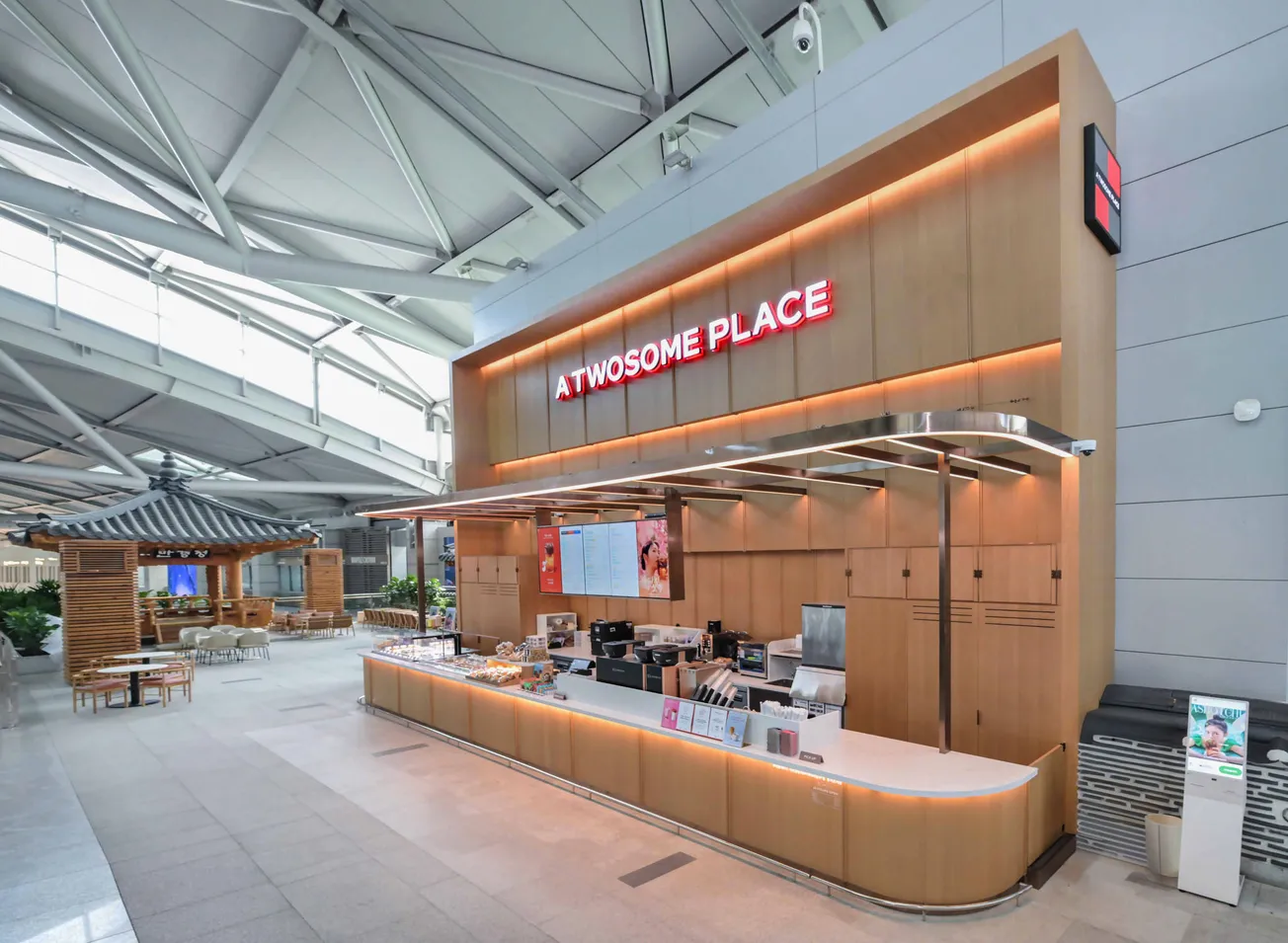
  • South Korean Cafe Giant ‘A Twosome Place’ Readies for Sweet US Debut

    South Korean Cafe Giant ‘A Twosome Place’ Readies for Sweet US Debut

    Renowned South Korean café chain, A Twosome Place, is gearing up to launch its first company-owned branch in the United States in the coming year. This move signifies a re-energized push for international expansion, following the café’s exit from the Chinese market three years prior.

    Global Expansion Strategy

    While the exact location and timeline for the U.S. launch have not yet been disclosed, it is clear that this move is part of A Twosome Place’s comprehensive strategy to disseminate Korean-style café culture worldwide.

    A Twosome Place, established in 2002, currently operates over 1700 outlets across South Korea, and is recognized for its exceptional dessert offerings. The chain embarked on franchising in 2008 and was later purchased by The Carlyle Group in 2021.

    Domestic Developments

    On the domestic front, A Twosome Place is introducing the ‘Twosome 2.0’ concept: a high-end store design that is being implemented in key districts of Seoul. There are plans already underway to propagate this concept nationally, while infusing new elements into pre-existing stores.

    The café chain retreated from the Chinese market after shuttering over 40 outlets in 2022, which came as a result of a sustained period of lackluster sales in the region.

    Questions & Answers

    What is the significance of A Twosome Place’s expansion into the U.S.?
    The planned move to open a branch in the U.S. is part of A Twosome Place’s wider strategy to introduce Korean-style café culture to international markets.

    What is ‘Twosome 2.0’, the concept A Twosome Place is implementing domestically?
    ‘Twosome 2.0’ is a new store design concept that provides a premium aesthetic. The company plans to implement this design across their stores in South Korea.

    Why did A Twosome Place withdraw from the Chinese market?
    A Twosome Place withdrew from China after experiencing several years of slow sales, leading to the closure of more than 40 stores in 2022.

  • Thailand Abolishes Tax Exemptions for Online Purchases from Abroad: A Boost for Local Businesses

    Thailand Abolishes Tax Exemptions for Online Purchases from Abroad: A Boost for Local Businesses

    Thailand is set to impose taxes on all foreign goods sold through online platforms starting from January of next year. This move marks an end to the existing exemptions granted to low-value imports that are priced under 1500 baht (US$46.30).

    Creating a Fair Business Environment

    Panthong Loikulnan, the director-general of the customs department, has said that the motivation behind this change is to establish a more level playing field for local businesses and to increase government revenue. He stated, “The absence of duties grants foreign goods an advantage over Thai businesses. This is particularly unjust to our SMEs.”

    In the new system, all imported goods, regardless of their value, will be subject to customs duties and value-added tax (VAT) as mandated by law. This change is set to replace the existing tariff exemption which is due to expire at the end of this year.

    Currently, imported goods priced below 1500 baht account for over 30 billion baht ($927 million) in annual imports.

    Loikulnan has indicated that enforcing an average 10 per cent duty could generate at least an additional 3 billion baht ($92.7 million) in government revenue each year.

    Ensuring Compliance

    The system will primarily depend on data verification from online platforms. Random inspections will also be carried out to ensure compliance.

    Thailand’s customs department has been engaging in discussions with major e-commerce operators, including Shopee and Lazada, to directly link their sales and import data.

    Loikulnan stated that this reform will assist in leveling the playing field for domestic retailers who are already paying taxes, particularly the small and medium-sized enterprises that are affected by the surge of low-cost imported products.

    He expressed concerns about the delay in implementing this process, stating that, “If we procrastinate, we will find ourselves at a disadvantage because all other countries are beginning to face the same issue: domestic sellers pay taxes, but foreign goods are imported tax-free.”

    Future Suggestions

    For the longer term, Loikulnan suggested introducing a “lump-sum tax”, which would be a flat rate of 20 to 30 per cent per imported package. He believes this would help simplify the system and increase its efficiency. However, he noted that such a change would necessitate legislative amendments and would require time to implement.

    Questions & Answers

    What is the motivation behind the imposition of taxes on foreign goods sold online?
    The introduction of the tax is aimed at creating a level playing field for local businesses and increasing government revenue.

    How will the system ensure compliance?
    The system will primarily depend on data verification from online platforms, with random inspections being carried out to ensure compliance.

    What is the ‘lump-sum tax’ that is being suggested for the longer term?
    The ‘lump-sum tax’ refers to a flat rate of 20 to 30 per cent per imported package. This is aimed at simplifying the system and increasing its efficiency.

  • Burger King China’s Explosive Expansion: $350M Investment Fuels Rise to 4000 Outlets by 2035

    Burger King China’s Explosive Expansion: $350M Investment Fuels Rise to 4000 Outlets by 2035

    Restaurant Brands International (RBI) has recently confirmed a $350 million investment deal toward their Burger King China operation via a newly formed partnership with Chinese alternative asset manager, CPE. With a well-established reputation for scaling consumer brands within the Chinese markets, CPE’s primary investment will facilitate expansion, marketing, menu innovation, and operations for Burger King’s restaurants across China.

    Joint Venture Objectives

    This joint venture is targeting to more than triple the current Burger King presence in China, from approximately 1250 restaurants to a projected 4000 by the year 2035. Joshua Kobza, CEO of RBI, highlighted the significance of this partnership, recognizing China as “one of the most exciting long-term opportunities for Burger King globally.” The recent investments and newly formed joint venture underscore their confidence in the Chinese market.

    Additionally, Kobza emphasized the potential benefits of this partnership, noting how combining the iconic Burger King brand and RBI’s global scaling abilities with CPE’s local market knowledge and operational expertise can unlock the business’s full potential in China.

    Ownership and Development Agreement

    The completion of this transaction, which is anticipated for the first quarter of next year, will result in CPE owning approximately 83% of Burger King China, leaving RBI with an ownership stake of approximately 17%.

    Further to the partnership, a wholly-owned affiliate of Burger King China will sign a 20-year master development agreement. This will grant the affiliate exclusive rights to develop the Burger King brand within the Chinese market.

    Strategic Alignment and Previous Investments

    This joint venture aligns with RBI’s broader strategy of pairing with experienced local operators and investors to drive profitable growth. This approach, while maintaining a primarily franchised business model globally, is aiming for a net restaurant growth of 5% or more by the end of the 2024-2028 outlook period.

    This recent partnership follows an earlier transaction in February, where RBI purchased stakes in Burger King China from its local franchisee for an estimated $158 million.

    Questions & Answers

    What is the purpose of the joint venture between RBI and CPE?
    The joint venture aims at expanding Burger King’s presence in China from about 1250 to over 4000 restaurants by 2035.

    What will be the ownership split of Burger King China after the transaction?
    Once the transaction is completed, CPE will own approximately 83% of Burger King China, while RBI will hold an estimated 17%.

    What are the terms of the development agreement?
    A wholly-owned affiliate of Burger King China will sign a 20-year master development agreement, which grants the affiliate exclusive rights to develop the Burger King brand in China.

  • Esprit Makes a Fashionable Comeback: Unveils Revamped Collection in New Hong Kong Flagship Store

    Esprit Makes a Fashionable Comeback: Unveils Revamped Collection in New Hong Kong Flagship Store

    Esprit, a popular fashion brand listed in Hong Kong, has made a comeback in the city by opening a flagship store in Causeway Bay. This comes after the brand’s departure from its headquarters in 2020.

    New Beginnings in Causeway Bay

    Since November 1, Esprit’s new flagship store has been in operation at Fashion Walk in Causeway Bay. Covering 4400 square feet over two floors, the store signifies a new dawn for the brand. As it re-establishes its presence in Hong Kong, Esprit is focusing on bringing back its classic styles to its loyal customer base.

    The store’s opening has been enabled by WIP International, led by Esprit HK CEO Herbert Chan Wai-ming. WIP International has secured exclusive rights for the brand’s operations in the region. Chan has outlined a five-year plan to regain the brand’s momentum.

    Esprit’s Revival Strategy

    As the brand re-enters the somewhat sluggish retail scene in Hong Kong, Chan is driven by his goal to “create miracles for Hong Kong.”

    Esprit, which was founded by Susie and Doug Tompkins in 1968, got listed on the Hong Kong Stock Exchange in 1993. The brand then experienced rapid expansion into over 40 countries. However, sales began to drop sharply and underwent massive restructuring. This, coupled with the Covid-19 crisis, led to the closure of its retail stores across Asian markets.

    The listed Esprit is now solely a brand owner, licensing its name to third parties. It has moved away from its initial business model, which included significant capital expenditures associated with sourcing, distribution, and retail operations.

    Chan’s current strategy involves “rebuilding Esprit as a Hong Kong brand” by bringing the brand’s own heritage back to the city streets. In addition, he has ambitions for a global relaunch, potentially in Taiwan, Japan, South Korea, and Mainland China. However, he is committed to taking this expansion slowly, prioritizing success in the home market first.

    Flagship Store and Revamped Collection

    The new flagship store also serves as the platform to introduce Esprit’s revamped collection. With an array of new fabrics and designs, 70 percent of the items have been personally designed by Chan. This revamp has resulted in a 30 percent price increase on some products.

    In his bid to reposition the brand, Chan has been willing to try new strategies that Esprit has not experimented with before.

    After closing its store five years ago, Esprit made a preliminary return to Causeway Bay in 2022 with a three-story pop-up store, marking the initial stage of its revival.

    Questions & Answers

    What is Esprit’s new strategy for its return to Hong Kong?
    Esprit aims to rebuild itself as a Hong Kong brand by reintroducing its classic styles and revamping its collection with new fabrics and designs.

    Who is leading the revival of Esprit in Hong Kong?
    Herbert Chan Wai-ming, Esprit HK’s CEO, is leading the brand’s revival in Hong Kong.

    What are the future expansion plans of Esprit?
    Esprit’s CEO has plans for a global relaunch, potentially in Taiwan, Japan, South Korea, and Mainland China, prioritizing success in the home market first.

  • Pandora Jewelry’s Strategic Expansion: New Regional HQ and Factory to Accelerate Asian Market Growth

    Pandora Jewelry’s Strategic Expansion: New Regional HQ and Factory to Accelerate Asian Market Growth

    Pandora, recognized as the world’s leading jewelry brand in terms of sales volume, has announced its plan to establish a fresh regional headquarters in Singapore. The move forms part of a broader growth strategy designed to strengthen the company’s footprint across Asia.

    Why Singapore?

    Massimo Basei, Pandora’s Chief Commercial Officer, highlighted several reasons for choosing Singapore for this strategic move. He pointed out that the city-state’s robust business environment, dynamic economy, and strategic positioning within Asia were crucial in making this decision.

    Basei explained, “Singapore’s location, right at the heart of Asia, allows us to extend the right levels of support to markets ranging from Japan and South Korea to India and Southeast Asia.”

    A New Home for Pandora

    The Danish jewelry giant has inked a lease agreement for its new 8,600-square-foot office situated at Asia Square Tower 1 in Marina Bay. The new office is expected to become operational in the near future.

    Pandora has plans to expand its team by recruiting approximately 50 employees across various fields such as branding, marketing, and operations. The hiring process is anticipated to commence soon.

    Basei acknowledged that while Asia is home to some of the world’s largest jewelry markets, it remains relatively under-represented within Pandora’s global business landscape. He stated, “While we have had a presence in Asia, we now aim to intensify our focus on this region.”

    Current Market Position

    At present, the United States stands as Pandora’s most significant market, contributing to 32% of its revenue in the initial nine months of 2025. Other crucial markets are the U.K. (11%), Italy (7%), and Germany (7%).

    However, Pandora has been steadily reducing its operations in China due to flagging sales. Over the course of this year, the company has shut down 59 concept stores in China.

    Production Expansion

    In order to meet the expected increase in demand resulting from its Asian expansion, Pandora has launched a new production facility in Vietnam. The company commenced the construction of a US$150 million manufacturing site in Binh Duong, now a part of Ho Chi Minh City, in May last year. Production at this site is slated to start next year.

    Until now, all of Pandora’s jewelry has been produced at its three facilities in Bangkok and Lamphun, Thailand. The new Vietnam facility is projected to augment Pandora’s production capacity by approximately 50%, enabling the company to manufacture up to 60 million pieces annually. For context, Pandora produced a total of 113 million pieces in 2024.

    Questions & Answers

    Why did Pandora choose Singapore for its new regional headquarters?
    Singapore was selected due to its vibrant business environment, dynamic economy and strategic location in the heart of Asia.

    What is the main aim of Pandora’s expansion in Asia?
    While Pandora has had a presence in Asia, it aims to intensify its focus on the region, which is home to some of the world’s largest jewelry markets.

    How is Pandora planning to meet the increased production demand due to its Asian expansion?
    Pandora has set up a new factory in Vietnam, which will aid in increasing the production capacity by about 50%, enabling the manufacture of up to 60 million pieces annually.

  • Vietnam’s Fruit Exports Skyrocket to $4.06B in China: Durian and Banana Leading the Charge

    Vietnam’s Fruit Exports Skyrocket to $4.06B in China: Durian and Banana Leading the Charge

    In the first three quarters of 2025, Vietnam set a new export record, shipping out fruits and vegetables worth US$4.06 billion to China, marking a 19% increase in comparison to the previous year. This growth was largely driven by the export of durian and banana.

    Vietnam’s Market Share in China

    According to the data from Chinese customs, these exports accounted for 20% of China’s total fruit and vegetable imports, marking an increase from 17.9% a year earlier. Durian was the leading export product, with shipments valued at $2.3 billion. The average export price per ton was $3,696, which is 14-15% less than that of Thai durian. This fact has positioned Vietnam as the second-largest exporter of this fruit to China, preceded only by Thailand.

    The Popularity of Vietnamese Bananas

    Bananas were another significant export product, with shipments totaling $232 million, a 16% annual increase. With an average price of $409 per ton, Vietnamese bananas were considerably less expensive than those from the Philippines and Ecuador, which cost $589 and $757 respectively. This has made Vietnamese bananas a favorite among Chinese importers, particularly in border provinces such as Guangxi and Guangdong, where consumers value fresh, affordable, and high-quality products.

    China’s Fruit and Vegetable Imports

    Chinese imports of fruits and vegetables amounted to nearly $20.3 billion in the first nine months of 2025. Thailand was the leading supplier, with its exports to China accounting for $6.7 billion, representing a yearly increase of 10% and a 33% share of the market.

    Vietnam’s Export Strategy

    Dang Phuc Nguyen, the general secretary of the Vietnam Fruits & Vegetables Association, noted that Vietnamese exporters benefit from the close geographical proximity to China, resulting in lower transportation durations and costs. A representative from an exporter in Can Tho, a major durian producer, confirmed this, stating that this advantage enables them to maintain the freshness and quality of the fruit while cutting shipping costs by half compared to their Thai competitors.

    Free trade agreements, like ASEAN-China and RCEP, as well as bilateral quarantine protocols, have also facilitated exports. In response to China’s stricter import requirements, many Vietnamese businesses have improved their orchards and packaging lines and invested in cold storage facilities this year.

    Despite durians accounting for over half of Vietnam’s fruit and vegetable exports to China, export specialists have advised against over-reliance on a single product. To enhance its market share in China, they recommend that Vietnam diversify its products, improve storage technology, and adhere to quality standards.

    Questions & Answers

    What is the main fruit exported from Vietnam to China?
    Durian is the main fruit that Vietnam exports to China.

    How have Vietnamese businesses upgraded in response to China’s stricter import requirements?
    Vietnamese businesses have upgraded their orchards and packaging lines and invested in cold storage to meet China’s stricter import requirements.

    What are the recommendations for Vietnam to increase its market share in China?
    To increase its market share in China, Vietnam should diversify its products, improve its storage technology, and adhere to quality standards.