Author: Mei Ling Tan

  • Mastermind and A Bathing Ape first concept store opens door

    Mastermind and A Bathing Ape first concept store opens door

    Mastermind and A Bathing Ape have collaborated to open their first crossover concept store in Hong Kong.

    The store, which opened on Saturday in Causeway Bay, features a streetwear collection from the two Japanese brands.

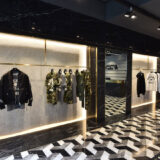
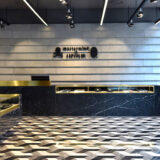
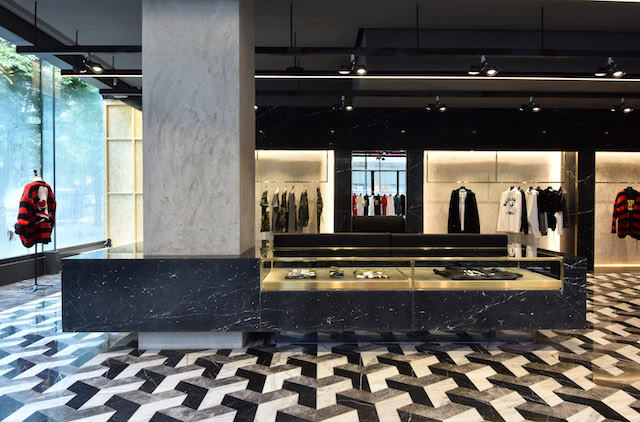
    Decked out in black and white with accents of gold, the store combines the “gothic underworld” of Mastermind with A Bathing Ape’s neon-highlighted fun persona. Marble is used extensively in both the interior and exterior, with metallic racks to create “a sophisticated and imposing atmosphere” according to a spokesperson for the brands.

    “A concrete visual wall embodies the brand’s rebellious spirit while the artfully placed Japanese window blinds add a refined touch from Japan. The op-art style ‘Y’ patterned tile flooring appears to extend endlessly to promote a mysterious and sci-fi sense of scale.” Another highlight is the mastermind x Mobile Suit Gundam Zaku figure in black with the brand’s unique skull and crossbones logo at the entrance.

    Mastermind was conceived by Masaaki Homma in Japan 1997 after eight years as a Yohji Yamamoto sales representative. The name Mastermind Japan stems from ‘M’asaaki and his tribute to his father who is a master hairdresser. The brand’s skull logo “symbolises the battle between good and evil, which underscores the ethos of the brand saying ‘Don’t Give Up Your Dream Until You Die’,” Homma explains.

    Mastermind Japan shut its doors in 2013 with a view to focusing on collaborative projects but later re-entered the fashion scene with the shorter ‘Mastermind’ brand name.

    The military-inspired Mastermind and A Bathing Ape 2018 Fall-Winter capsule collection launched in the new store features a series of hooded sweatshirts, short-sleeved t-shirts, shorts, cap and mask emblazoned with the codes of both brands: camouflage, skull and shark head.

    View the gallery below (5 images) :
  • Farfetch prepares for IPO

    Farfetch prepares for IPO

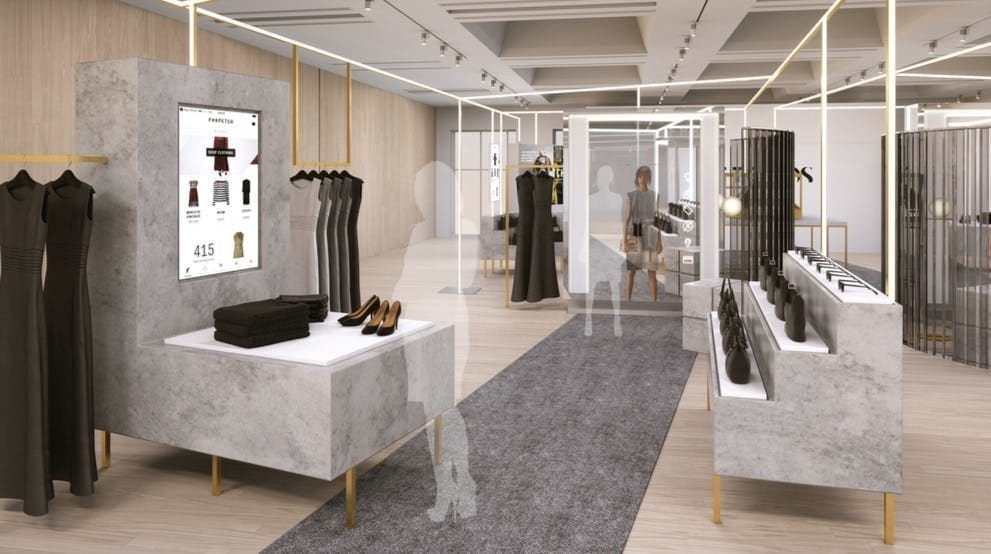
    Fashion marketplace Farfetch has filed an F-1 form with the US Securities and Exchange Commission with the intention of proceeding with a public flotation of its Class A ordinary shares on the New York Stock Exchange under the ticker symbol “FTCH.”

    The number of shares to be offered and the price range for the proposed offering have not yet been determined.

    Goldman Sachs & Co., J.P. Morgan, Allen & Company and UBS Securities are acting as joint lead book-running managers for the proposed offering. Credit Suisse Securities (USA), Deutsche Bank Securities Inc. and Wells Fargo Securities are acting as joint bookrunners. Cowen and Co. and BNP Paribas Securities Corp are acting as co-managers.

    Reports of the company’s plans to IPO first surfaced in June 2017. Farfetch founder and chief executive Jose Neves had been reticent to lay out a timetable for an IPO, but he acknowledged that it was the logical next step for the company.

    The listing could value the company at up to $5 billion.

    The fashion e-commerce platform, which connects consumers with a curated global network of boutiques and brands, cleared $800 million in gross merchandise value in 2016, generating an estimated $150 million in revenue (Farfetch takes 20 to 25 percent commission from partners).

    So far this year, the platform has acquired a Chinese digital marketing agency in a bid to boost its presence in the world’s second-largest luxury market; inked a strategic partnership with Chanel to enhance the French luxury house’s boutique experience; entered into a joint venture with Chalhoub Group, one of the biggest distributors of fashion and luxury goods in the Middle East; and struck a deal with Burberry to expand its global e-commerce distribution and launch a “show to door” London delivery service in a drumroll of announcements designed, in part, to prime the market in advance of its IPO.

  • Flipkart unveils Indian version of eBay for refurbished goods

    Flipkart unveils Indian version of eBay for refurbished goods

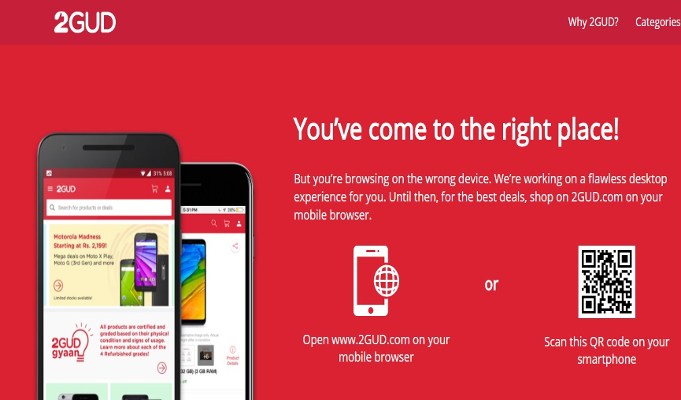
    Retail giant Walmart-owned leading e-tailer Flipkart on Wednesday unveiled a dedicated portal ‘2GUD’ for refurbished goods, including mobile phones, laptops and tablets, a week after shutting its eBay India operations.

    “The independent platform ‘2GUD’ aims to bring affordability, accessibility and availability to the refurbished market, while also addressing the problem of trust and convenience,” the company said.

    The platform offers refurbished mobile phones, tablets, laptops and other electronic accessories along with a 3-12 month warranty.”

    Through 2GUD, we aim to remove the trust deficit that exists in the refurbished goods market,” the city-based company’s Chief Executive Kalyan Krishnamurthy told reporters here.

    The platform has been launched on mobile browsers initially through the site 2gud.com, and it will soon be accessible through desktop browsers and a mobile application.

    The company’s executives, however, declined to give the investment being made in its new arm.

    “Every product that is sold on the platform goes through about 47 rounds of checks and is sold in five grades based on their physical condition — ‘Like New’, ‘Superb’, ‘Very Good’, ‘Good’ and ‘Okay’,” the company’s Vice President heading 2GUD operations Anil Goteti said.

    The prices of products on the platform will vary based on their condition.

    With the refurbished goods market remaining “highly fragmented and unorganised”, 2GUD will remove the buyer-seller interaction by performing the necessary quality checks itself, Goteti said.

    The platform also allows customers to return their products, he added.

    The company estimates the refurbished goods market in India to be worth US $20 billion in the coming five to six years.

    The launch of the independent platform for old goods, which was developed over the last 10 months, comes a week after Flipkart shut down the eBay India operations on August 14.

    Several of eBay India’s staff are now working with Flipkart’s new arm for refurbished goods, the company’s executives said, though they declined to share the specifics.

    The Bengaluru-based Flipkart in 2017 acquired eBay India’s operations in a US $1.4 billion fund-raising deal from several investors, including eBay, which invested US $500 million and received US $200 million worth stocks in Flipkart.

    With Walmart acquiring a majority stake (77 percent) in Flipkart in a US $16 billion (Rs 1,07,662 crore) deal in May this year, California-based eBay had announced that it would sell its stake in Flipkart back to the company for about US $1.1 billion and relaunch its India business soon.

  • Ikea Malaysia online platform launched

    Ikea Malaysia online platform launched

    Ikea Malaysia has launched an online store.

    The e-commerce site promises to offer the largest online selection of home furnishings in the country. It marks a strong entry into the Malaysian e-commerce market by the Swedish company’s Southeast Asian subsidiary.

    The site’s delivery service will be available nationwide by package or truck, offering more than 9000 products to online buyers throughout Malaysia purchasing with major debit and credit cards accepted.

    Ikea Malaysia recently extended its return policy from 100 to 365 days to provide their customers more time to exchange or return their products after purchase.

  • Behind dispute between traditional taxi and ride-hailing company in Hanoi

    Behind dispute between traditional taxi and ride-hailing company in Hanoi

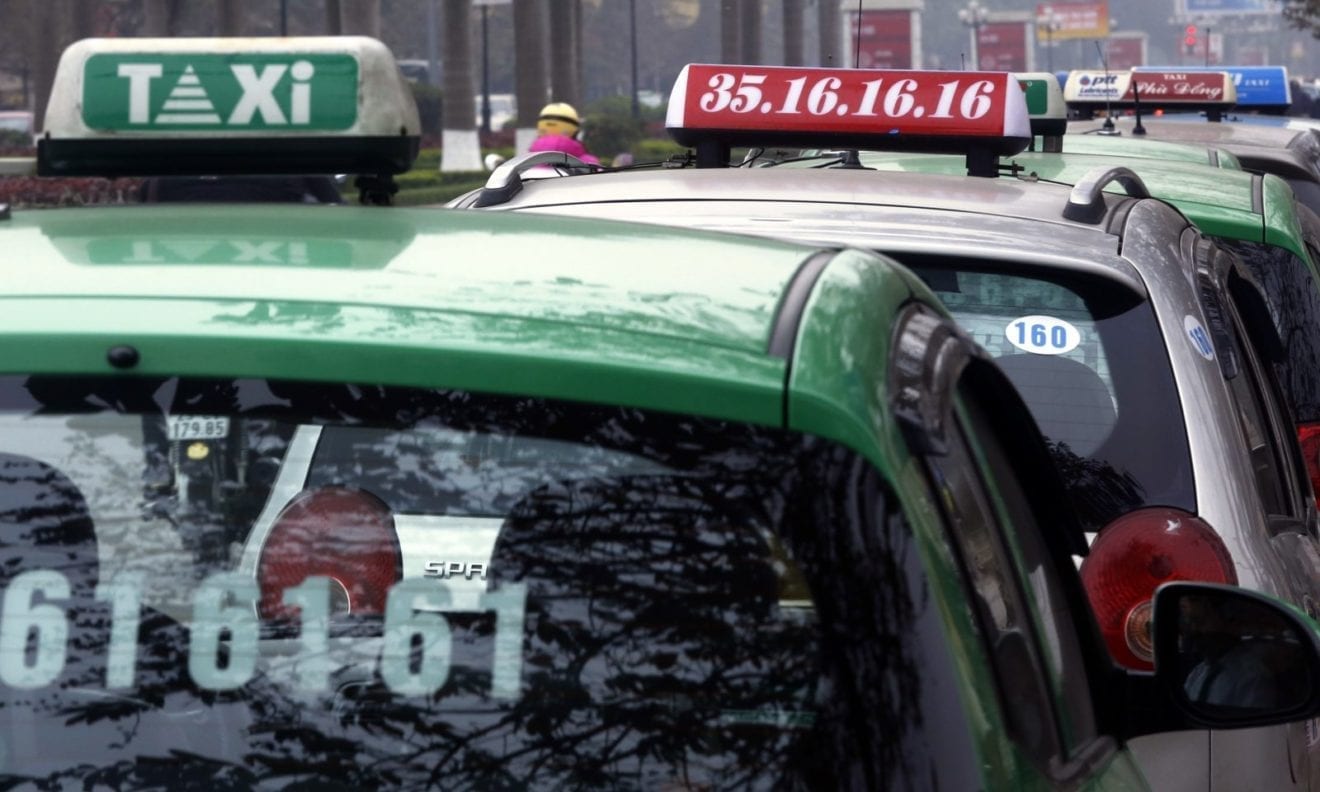
    Three major taxi firms in Hanoi have recently joined forces to have their 3,000 vehicles operating under a single brand starting in October.

    Thanh Cong, Ba Sao and Sao Ha Noi are set to become G7 Taxi in a bid to take on ride-hailing behemoth Grab.

    In April representatives of top traditional taxi firms had sat down to discuss the idea of building one common ride-hailing app for all of them.

    Nguyen Cong Hung, chairman of the Hanoi Taxi Association, said: “Traditional taxis, each with their own app, are now trying to compete with Grab. But we are divided, therefore we need to unite.”

    The meeting came after logistics firm Phuong Trang announced it had invested $100 million in ride-hailing app Vato and leading taxi firm Mai Linh started offering benefits to attract drivers.

    In March southern taxi firms ComfortDelgro Savico and Vinataxi had merged to take on Grab.

    Vinataxi, the third largest taxi firm in HCMC, was confident the merger would increase its growth sixfold this year.

    But Grab is also busy.

    While the acquisition of Uber’s Southeast Asian business last March has allowed Grab to become the dominant player in the ride-hailing business in Vietnam, it is working to improve its strategies to compete with local taxi firms.

    The company introduced Grab for Business in Vietnam earlier this month, a service that helps a company track the trips its employees make to limit unnecessary trips and control expenses.

    Following the recent entry of Indonesia’s Go-Jek as Go-Viet, Grab is deploying various strategies to attract drivers by offering bonuses and opening stops with free wifi and coffee.

    ‘Huge unfairness’

    The Hanoi Taxi Association earlier this month wrote to Prime Minister Nguyen Xuan Phuc saying Grab’s operation has created a “huge unfairness in terms of business conditions which demolish traditional taxi businesses and cause instability in society.”

    It wanted GrabCar to be considered “electronic” to guarantee fairness and all GrabCar vehicles to carry the label “electronic taxi.”

    The Ministry of Transport has labeled GrabCar as “electronic taxi” in then newest version of its bill on transport regulations, but does not require its vehicles to carry the legend.

    In a report related to the bill, which is expected to be discussed at the next session of the National Assembly in October, the Central Institute for Economic Management says lawmakers should not use old standards to new business models.

    “It is a grave mistake to force Grab to operate as a traditional taxi,” Nguyen Dinh Cung, chairman of the institute said.

  • Flipkart acquires AI-led startup to get next 200 million online shoppers

    Flipkart acquires AI-led startup to get next 200 million online shoppers

    In a move aimed at getting the next 200 million online shoppers to its platform, e-commerce major Flipkart has acquired Liv.ai, an artificial intelligence-led speech recognition startup. The company, however, did not disclose the deal amount.

    Post the acquisition, Liv.ai will become a Flipkart centre of excellence for voice solutions, and help accelerate an end-to-end conversational shopping experience for its users, Flipkart said in a statement.

    Founded in 2015, Liv.ai is the first Indian company to build speech to text application programming interfaces (APIs) that enable speech to text conversion in 10 Indian languages including Hindi, Bengali, Punjabi, Marathi, Gujarati, Kannada, Tamil, Telugu and Malayalam.

    US retail giant Walmart has recently completed its US $16 billion transaction to buy 77 percent stake in Flipkart.

    “The next wave of growth of internet users is coming from tier II+ cities and 70 percent of these current internet users are native/vernacular language speakers and this proportion is only increasing,” Flipkart CEO Kalyan Krishnamurthy said.

    Given the complexities in typing on vernacular keyboards, voice will become a preferred interface for new shoppers, he added. He explained that building a voice interface is complex, especially in Indian context given multiple languages and accents.

    The team at Liv.ai has been able to solve this through multiple technological innovations including deep neural net-based methods and this expertise is a big capability add-on for Flipkart, he said.

    “Ultimately, we want to give our customers a conversational e-commerce experience and believe that with the voice interface the opportunities are endless including discovery, search, engagement, transactions etc,” Krishnamurthy said.

    Flipkart said this will help build voice and speech capabilities to help get next 200 million online shoppers, who will prefer native language interaction on the web. As per industry studies, Hindi internet user base is likely to outgrow English user base by 2021 and along with Marathi and Bengali users, will drive the volume growth.

    Liv.ai co-founders Subodh Kumar, Kishore Mundra and Sanjeev Kumar, along with the entire Liv.ai team will join Flipkart as a part of the deal.

    The team under the leadership of Ravish Sinha, Vice President Flipkart, will act as a centre of excellence to drive further developing the voice solutions, integration with Flipkart app and developing use cases for various categories.

  • Aeon Stores Hong Kong posts loss in contrary with good sales

    Aeon Stores Hong Kong posts loss in contrary with good sales

    Aeon Stores Hong Kong has recorded record half-year revenue of HK$4.93 billion ($US628 million) in sales.

    The figure represents a year-on-year increase of 6.7 per cent. The group’s gross profit margin rose by 0.2 percentage points to 30.7 per cent during the period.

    In its report for the June 30 half year, Aeon Stores Hong Kong said the development of new retail store types and O2O e-commerce has intensified competition in the retail market and presented challenges to the group. However, the diversification and personalisation of consumers’ lifestyles has afforded many opportunities.

    During the period, the group continued to actively carry out internal restructuring and cost control, focusing on improving customer experience and operational standards, while at the same time accelerating digital marketing activities to cement its foundation for supporting future growth.

    To address the intensifying competition in the market, Aeon launched a new customer relationship management system last year, introducing big data analysis to strengthen its sales and marketing platform.

    Aeon’s operations in Mainland China reported a loss of HK$13.7 million during the period due to costs associated with cultivating newly-opened stores and the closure of others.

    The expenses contributed to an overall loss attributable to owners of the company of HK$50.48 million ($6.43 million).

    Aeon currently operates 32 stores in southern China.

  • Chanel to debut brand’s first makeup line for men

    Chanel to debut brand’s first makeup line for men

    Diving into the swelling men’s grooming trend, Chanel is launching its first makeup line for guys, a three-product range, starting in South Korea on September 1.

    The collection includes a tinted fluid, coming in four colors, a matte moisturizing lip balm, and four shades of eyebrow pencil.

    The fashion house already has a signature handbag and unisex fragrance named Boy. Though you might assume the name is a gender reference, it is actually the name of Gabrielle Chanel’s first—and tragic—love Boy Capel.

    “By creating Boy de Chanel, its first makeup line for men, Chanel reaffirms the ever-changing codes of an unchanging vision: Beauty is not a matter of gender, it is a matter of style,” the company said.

    “Just as Gabrielle Chanel borrowed elements from the men’s wardrobe to dress women, Chanel draws inspiration from the women’s world to write the vocabulary of a new personal aesthetic for men,” the company said in a statement. “Lines, colors, attitudes, gestures… There is no absolutely feminine or masculine prerequisite: Style alone defines the person we wish to be.”

    The tinted foundation is called Boy de Chanel, and it’s SPF 25 and comes in eight sheer and hyaluronic acid-infused shades. Though Chanel offers hundreds of foundation options in its main beauty line, we imagine both men and women will be running to their nearest Chanel boutique to get their hands on the sleek black bottle. The lack of shades likely means it’s an extremely sheer and adaptable formula.

    The line also includes Boy de Chanel brow pencils in four shades. The final product is a clear, moisturizing lip balm with a matte finish.

    “By creating Boy de Chanel, its first makeup line for men, Chanel reaffirms the ever-changing codes of an unchanging vision: Beauty is not a matter of gender, it is a matter of style.”

    The collection will be rolled out to the rest of the world in November on the house’s e-commerce platforms and in January 2019 in Chanel’s boutiques.

  • Zomato India expands food delivery services to other cities

    Online restaurant guide and food ordering firm Zomato on Wednesday said it has expanded its ordering and food delivery services to Vijayawada, Madurai, and Cuttack as part of its expansion plans.

    With this launch, Zomato’s online ordering services are now available across 31 cities in India, Zomato said in a statement.

    Zomato Food Delivery CEO Mohit Gupta said that growth in Tier II and tier III cities has been really encouraging for the company.

    It has extended its services to 10 new cities in the last 2 months and the response in all these cities has been exceptional so far, he added.

  • Don’t treat ride-hailing firms as taxis, Vietnam government advised

    Don’t treat ride-hailing firms as taxis, Vietnam government advised

    Forcing ride-hailing cars to work like traditional taxis is a serious mistake revealing a non-innovative mindset, a leading economist says.

    Nguyen Dinh Cung, director of the Central Institute of Economic Management (CIEM), criticized state agencies for a “managing mindset” that “is not yet innovated”.

    Cung was referring to the latest draft decree on transportation management, which asks ride-hailing firms like Grab, Fastgo and Vietgo to comply with many conditions that are applied to normal transportation businesses like taxi companies.

    He said firms that primarily used software cannot be called a transportation business and said the new move was not consistent with the country’s stated aim of removing at least 50 percent of current business conditions.

    Cung told VnExpress that the state managers must also think in terms of the market from the perspective of facilitating new technologies and business models instead of using administrative procedures to intervene in their business.

    While the latest draft has cut many conditions for the ride-hailing business, such as logos, paint colors, board signs, an operating center, communication equipment and uniforms for drivers, Cung said there were still several negative conditions.

    For instance, the draft decree requires ride-hailing firms to send their transport contract information to the Transport Department before providing their service.

    It also requires that ride-hailing firms have a team to manage and monitor traffic safety issues.

    Cung said such conditions were meant to give authorities more room to intervene in the operations of the ride-hailing firms.

    He has recommended to the Government Office that the draft is not approved and instead, the state tries to encourage new investment forms or business models with an open and fair environment in keeping with Industry 4.0 trends.

    Even if they don’t want to encourage the new technology-based business yet, the laws should not do away with such business models with irrelevant, old conditions, he told VnExpress.

    Prepared by the Ministry of Transport to replace the Decree 86/2014 on managing automobile transportation businesses, the fifth edition of the draft has been released for public feedback.

    The tussle between ride-hailing cars and traditional taxis has not cooled after the exit of Uber from the Southeast Asian market in March. Taxi firms have continued to complain about the unfair competition they are facing.

    They have also joined hands to fight the market onslaught of ride-hailing firms.

    The ride-hailing market has seen new entrants after Uber’s departure, including Aber, Fastgo and GoViet, which is an affiliate of Indonesia’s Gojek.

    Current market dominator Grab has expanded its service to include GrabFood and GrabCar Business, the latter targeting the corporate sector. These moves pose further challenges for long-standing taxi firms like Mai Linh, Taxi Group and Vinasun.

  • Estee Lauder Hong Kong, China show good numbers

    Estee Lauder Hong Kong, China show good numbers

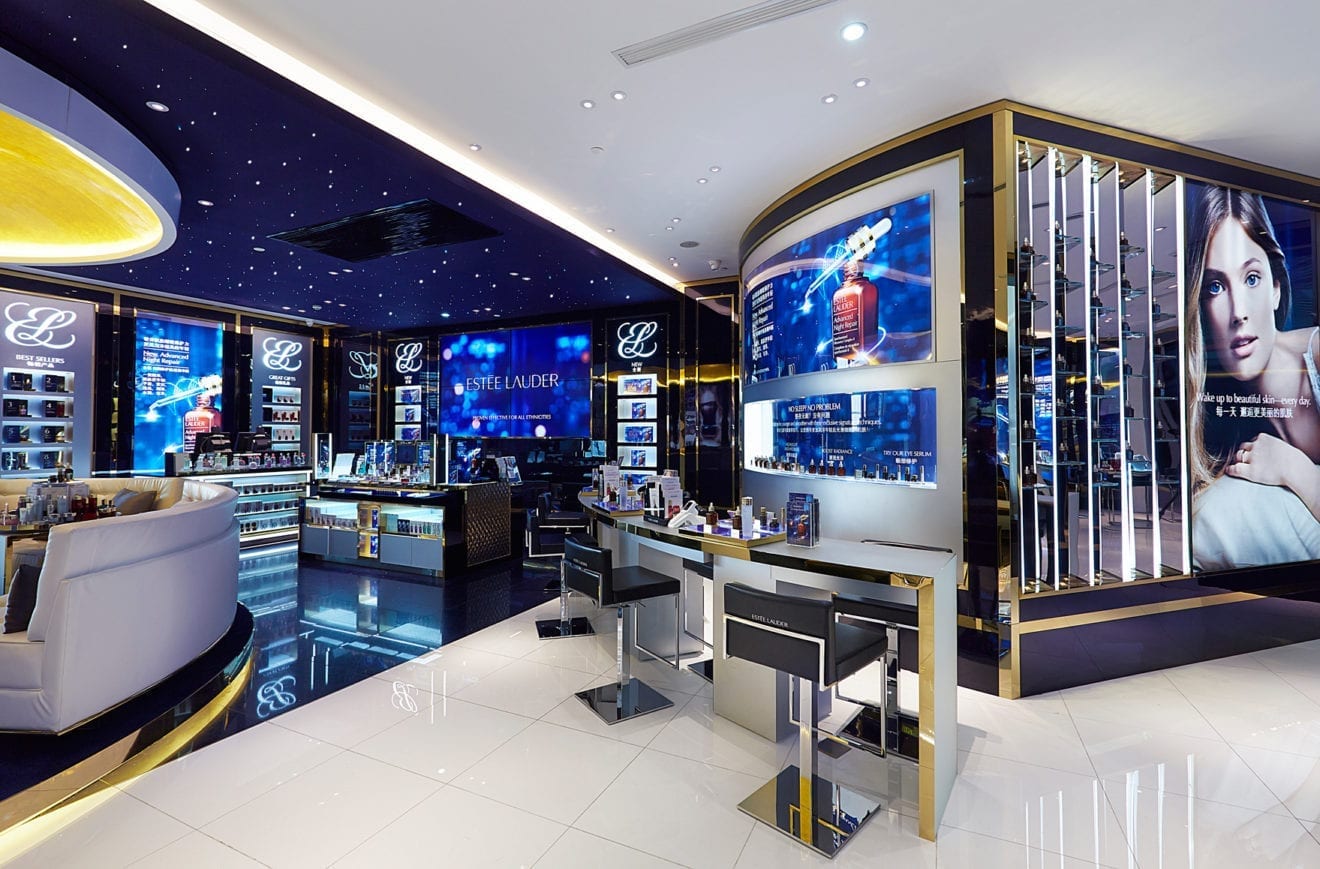
    Cosmetics giant Estee Lauder says it achieved sales growth in every global market last financial year, led by strong double-digit increases in China and Hong Kong.

    Every single category posted growth as well.

    Globally, Estee Lauder sales reached $13.68 billion, a 16 per cent increase on last year.

    Operating income of $2.05 billion, was up 21 per cent from the prior year, while net earnings of $1.11 billion, was down 11 per cent.

    President and CEO Fabrizio Freda said the results reflect, in part, the company’s strategy to drive growth by targeting its investments to shifts in consumer and market dynamics across product categories, geographic regions, brands and distribution channels. That strategy positioned the company well for the resurgence in global prestige skin care growth as well as the strong increase in demand among Chinese consumers.

    “Sales climbed in virtually all our brands and we hit milestones along the way. Among the top four brands, our flagship Estee Lauder brand achieved record global sales and grew 22 per cent in constant currency, demonstrating the amazing equity of the brand. La Mer became the fourth brand in our portfolio to contribute well over $1 billion in net sales, and we increased sales at Mac and Clinique globally.”

    He said product innovation and creativity were strong across brands and boosting investment in digital advertising helped accelerate sales growth.

    Freda concluded: “In fiscal 2019, we will continue to create products that appeal to a more diverse and growing middle class around the world.”

  • Fabelle eyes retail expansion; to launch e-commerce portal soon

    Fabelle eyes retail expansion; to launch e-commerce portal soon

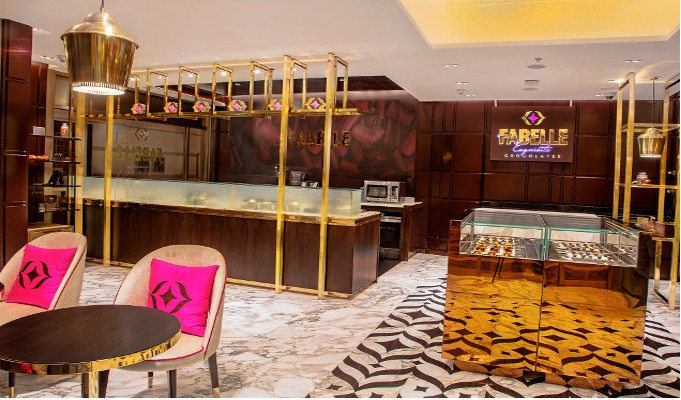
    Fabelle was launched in April 2016 with it first boutique in Bengaluru India at ITC Gardenia. In the subsequent 12 months the brand scaled up to all major ITC Hotels in 6 metros. Bengaluru was followed by Kolkata, Delhi, Mumbai and so on. The brand has just entered Hyderabad with its new property called ITC Kohenur.

    Recently, the brand has also forayed into malls by opening its retail outlets. Elaborating on the same, Abhijit Chakravorty, Head of Marketing – New Categories at ITC Limited says, “Our first retail outlet was opened at Quest Mall in Kolkata and second outlet in Select Citywalk in Saket, New Delhi.”

    The outlets in malls are take-away boutiques and the outlets nestled in hotels ranges from 500-1,500 sq.ft.

    A continuous product innovation has been the USP of the brand. According to Chakravorty, “Recently we have launched Fabelle chocolate bars which are positioned in the mid-luxury range. The average price of the bar ranges from Rs 300-500.”

    He further adds, “Going forward, we are looking at premium retail points to sell these bars. Soon, we will be expanding the range to Bengaluru market. We are targeting around 150 premium retail outlets like Food Hall, Godrej Nature Basket etc and premium modern trade outlets located at premium catchment areas.”

    The brand is also going to launch the fourth variant of the Chocolate Buzz, Rocky Road, inspired by desserts. Chocolate Buzz has already tasted success and the demand for the products have been increasing as it falls into the category of daily consumption in mid-luxury segment.

    “Then we also wish to work on premium gifting products. Then we will be launching our truffles range and aim to be the pioneer. We are going to launch a lot of gifting offers for coming festivities like Diwali,” reveals Chakravorty.

    In future, the brand will also be launching its e-commerce portal where the delivery of the products will be taken care by the brand itself.

    “We have launched a pilot e-commerce service in Bengaluru and soon it will be extended to other parts of the country. All our retail outlets will be mapped with the e-commerce portal by September 2018,” asserts Chakravorty.

    Recently, Fabelle commemorated the Independence Day with a first of its kind 72 kg chocolate bar made from a unique mix of 72 ingredients. The brand which is known to create distinct chocolate experiences had crafted a larger than life 72 Kg chocolate bar in each of the 6 metros where the brand is currently available. These bars will be displayed in the chocolate boutiques in select ITC Luxury Hotels in Mumbai, Delhi, Kolkata, Hyderabad, Chennai and Bengaluru from August 15-19, 2018.

  • Bose Vietnam experience makes debut with first store opening

    Bose Vietnam experience makes debut with first store opening

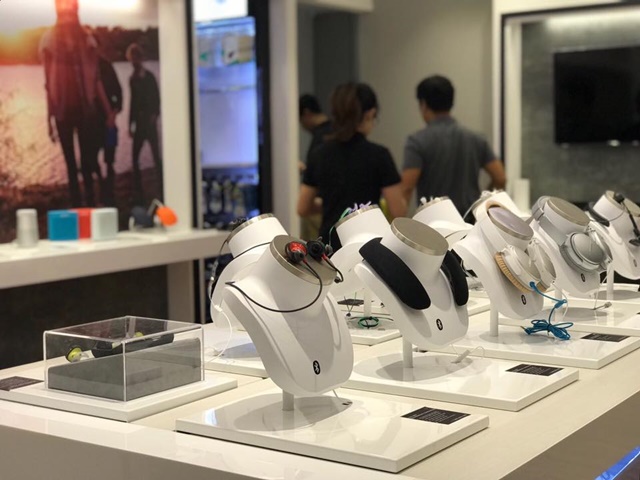
    Audio equipment brand Bose Vietnam has opened its first international-standard experience store, at Ho Chi Minh City’s Saigon Centre.

    Operated in partnership with Vietnamese mobile device retailer Mai Nguyen, the store offer ranges from audio devices such as headphones to home theatre systems, as well as professional equipments for restaurants, resorts and hotels.

    Christian Rojas, Southeast Asia sales director at Bose Corporation, says the brand is boosting its operation by bringing the latest equipment and designs to the store.

    Bose Vietnam debuted three years ago, through the Mai Nguyen store network.

    View the gallery below :

  • McDonald’s makes big change in store face

    McDonald’s makes big change in store face

    McDonald’s newest restaurant is making a bold statement about the future of the chain.

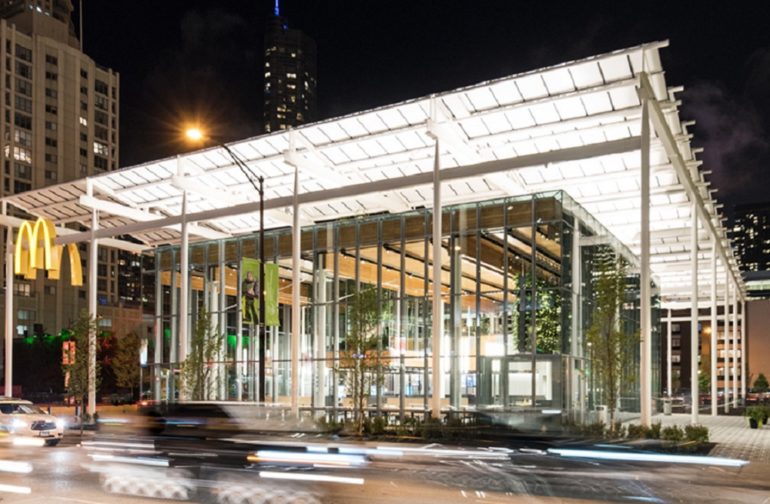
    McDonald’s has just opened a new flagship restaurant in Chicago. It is a glassy, 19,000-square-foot building that looks more like an Apple Store than a fast-food restaurant — and that is exactly what the company intended.

    “We are proud to open the doors to this flagship restaurant, which symbolizes how we are building a better McDonald’s for our customers and the communities where they live,” McDonald’s President and CEO Steve Easterbrook said in a statement.

    While the structure may be different, the Golden Arches are still present at the restaurant, which will be open 24 hours a day, seven days a week.

    The restaurant features self-order kiosks, table service, mobile order and pay, and delivery — services that are becoming increasingly mainstream at McDonald’s locations across the US. Table service and increased digital ordering options are part of McDonald’s “Experience of the Future” revamp.

    Currently, roughly 5,000 restaurants fit the qualifications, and McDonald’s plans to transform almost all restaurants by 2020. The restaurant also highlights something else McDonald’s is pushing in an effort to remake its image: sustainability. It has more than 70 trees at the ground level, as well as on-site solar panels.

    The restaurant was designed by the Chicago-based firm Ross Barney Architects. While not every McDonald’s is going to look quite so classy and glassy, the combination of more tech, table service, and an emphasis on sustainability provides a blueprint of what the fast-food giant wants to roll out across America.

  • Gelatissimo plans expansion to India and Bangladesh

    Gelatissimo plans expansion to India and Bangladesh

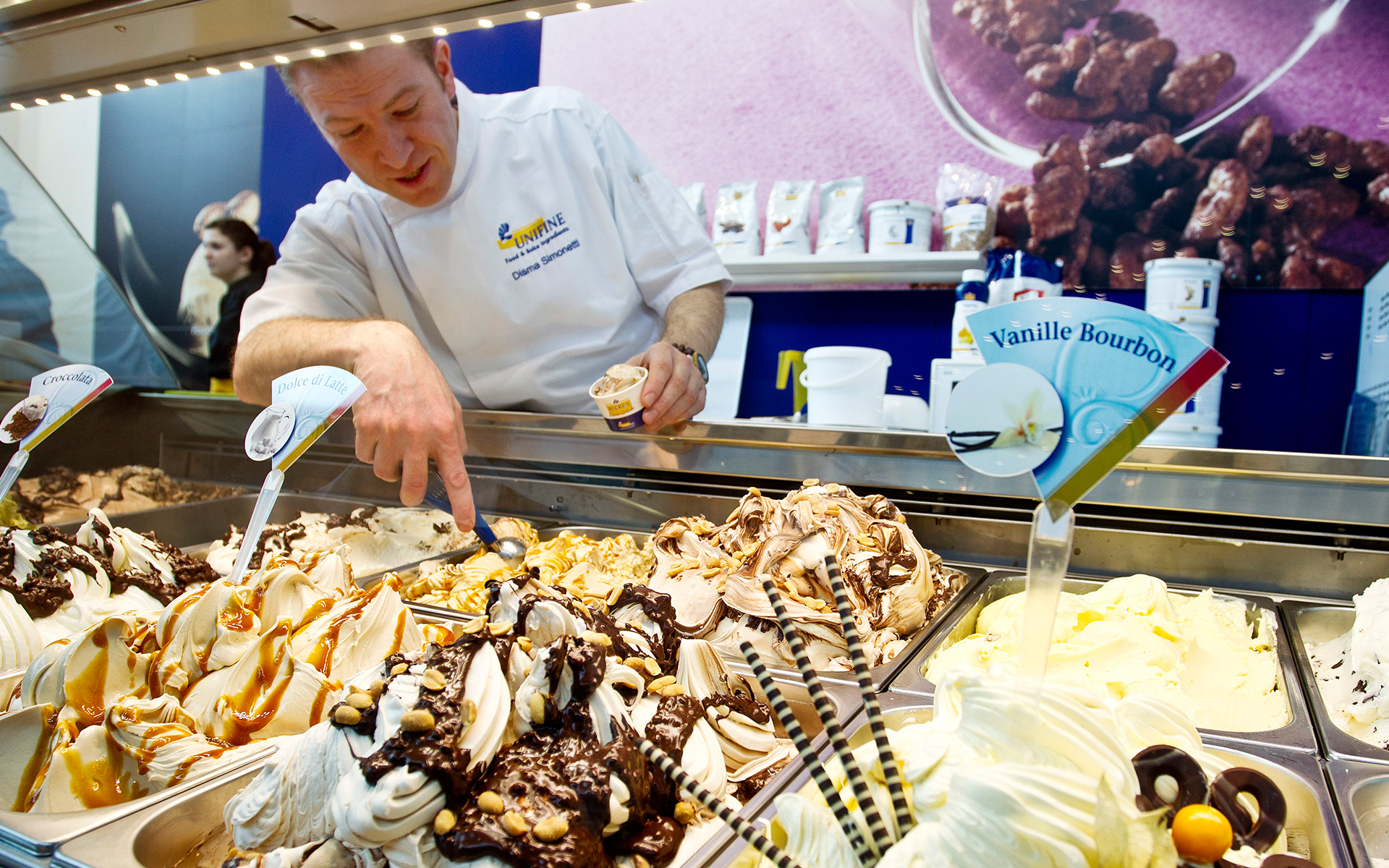
    Gelatissimo, Australia’s largest franchised gelato chain, will open stores in India and Bangladesh next month.

    The openings mark the privately owned company’s latest international expansion, joining franchises in Southeast Asia and the Middle East.

    Gelatissimo CEO Filipe Barbosa CEO said that in both India and Bangladesh, populations are booming and the average spend per head on eating out and luxury goods is growing rapidly. Coupled with a love for desserts and all things Australian, Gelatissimo and the franchisees see a great potential for growth in both regions.

    Although gelato is a newer concept to both markets, the ice-cream and premium dessert categories has expanded quickly and is forecast to increase significantly over the next five years.

    “The stores will be fitted in the internationally recognisable Gelatissimo branding and serve the brand’s best-loved flavours and products,” added Indian master franchisee Sangeeta Dumpeta.

    Bangladesh’s Nilesh Jamnadas added, “The stores have been adapted with localised features and will serve some new flavours, adapted for local taste buds”.

    Since its launch in 2002, Gelatissimo has grown to 45 stores across Australia, with a further 17 overseas. The store launches in Bangladesh and India will take the total to 66 outlets  globally.

    Gelatissimo launched in Singapore in 2005 and has been expanding its overseas footprint since then in the Philippines, China, Kuwait and Saudi Arabia -along with a failed foray into Malaysia.

    The franchisees in both Bangladesh and India are expected to open at least five stores in each market over the next year.

    “Bangladesh and India represent big opportunities for us and our partners and we look forward to making it a sweet success,” said Barbosa.