Author: Mei Ling Tan

  • Dior Backstage pop-up for KLIA

    Dior Backstage pop-up for KLIA

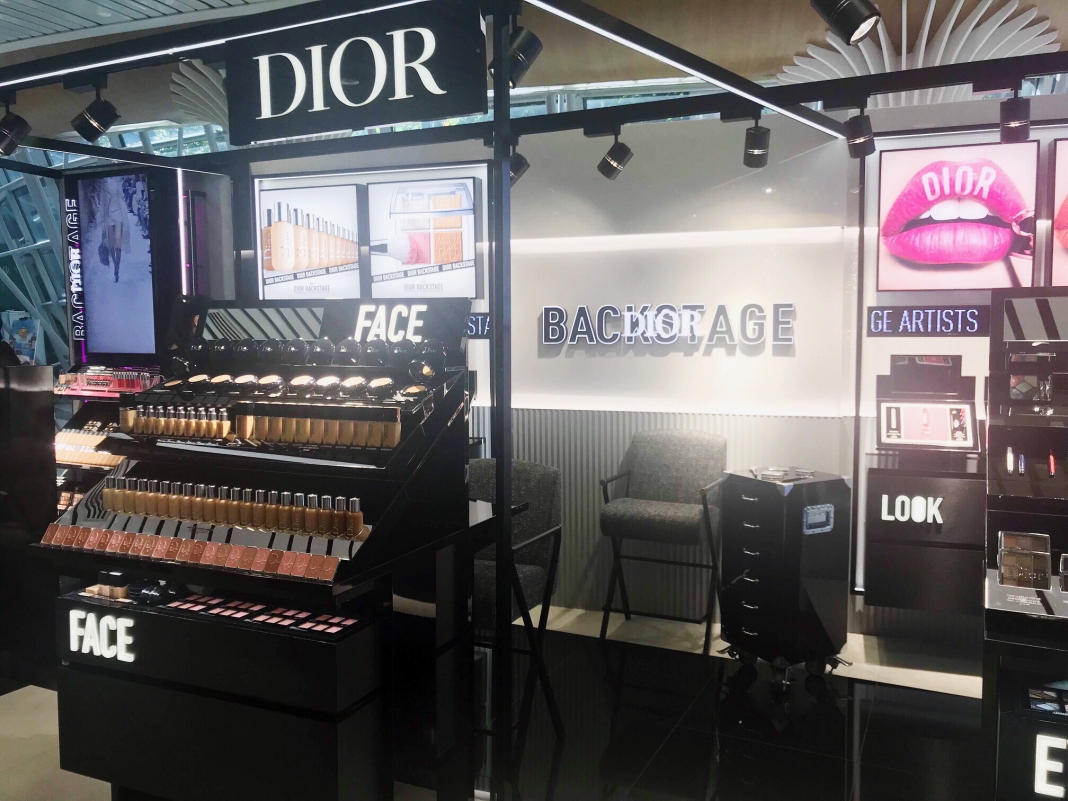
    A Dior Backstage pop-up store is being opened at Kuala Lumpur International Airport (KLIA).

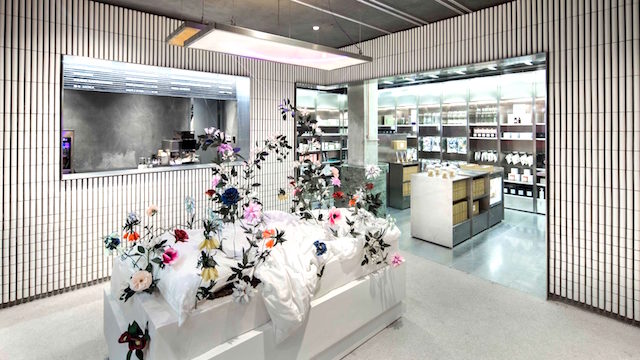
    A partnership between Malaysia Airports, Parfums Christian Dior and Colour & Fragrances, the signature black lacquer store is positioned at KLIA’s international departures as a novel cosmetics concept inspired by the theatre backstage setting.

    It is the first Dior Backstage in Southeast Asia.

    Malaysia Airports senior GM for commercial services Nazli Aziz said: “It is very much in line with our mission of enhancing the total airport experience by continuously introducing unique products and services for travellers.”

    He added that the continued introduction of prestigious and international brands at KLIA will boost the overall retail revenue per passenger.

    Sales revenue for perfumes and cosmetics is forecast to reach RM450 million (US$109.7 million) this year.

    The pop-up will be staffed by a Dior stylist and a team of beauty consultants.

  • China is now the largest market for Samsung

    China is now the largest market for Samsung

    China accounted for more than 30 percent of Samsung Electronics’ overall sales over the January-June period, industry data showed Monday, emerging as the company’s largest market and outpacing the American continents for the first time.

    The South Korean tech giant, which posted sales of 83.9 trillion won ($74.6 billion) over the first six months of 2018, raked in 27.4 trillion won, or 32.7 percent, from China, the corporate data showed. It marked a sharp rise from 18.5 percent tallied in 2013.

    Asia’s top economy accounted for 20.6 percent of Samsung’s sales in 2014, with the number rising to 28.3 percent for the whole of 2017.

    In contrast to its rising dependency on the Chinese market, Samsung’s latest data sales to the Americas was equal to 26 percent of the total in the first six months of this year, falling from 31.8 percent posted for all of 2016.

    Industry watchers said the increase apparently came as Chinese tech giants’ demand for Samsung’s chips increased sharply. The U.S. government’s protectionism policies also weighed down on Samsung’s sales in the key North American market, they added.

    Samsung’s business report showed Chinese tech giant Huawei Technologies was included as one of the South Korean firm’s top five clients. Other major buyers of Samsung products were Apple, Verizon Wireless, Germany’s Deutsche Telekom AG and Hong Kong’s Techtronics.

    The company said five firms accounted for 11 percent of its first-half sales, without providing further details. The latest list is significant as Chinese and Hong Kong firms joined the top five.

    In 2017, Samsung’s five major buyers were Apple, Best Buy, Sprint, Verizon and Deutsche Telekom.

    Experts said Samsung Electronics should take a careful approach to the Chinese market at the same time, as Beijing’s latest push to foster its own semiconductor industry may adversely impact the company.
    China accounted for more than 30 percent of Samsung Electronics’ overall sales over the January-June period, industry data showed Monday, emerging as the company’s largest market and outpacing the American continents for the first time.

    The South Korean tech giant, which posted sales of 83.9 trillion won ($74.6 billion) over the first six months of 2018, raked in 27.4 trillion won, or 32.7 percent, from China, the corporate data showed. It marked a sharp rise from 18.5 percent tallied in 2013.

    Asia’s top economy accounted for 20.6 percent of Samsung’s sales in 2014, with the number rising to 28.3 percent for the whole of 2017.

    In contrast to its rising dependency on the Chinese market, Samsung’s latest data sales to the Americas was equal to 26 percent of the total in the first six months of this year, falling from 31.8 percent posted for all of 2016.

    Industry watchers said the increase apparently came as Chinese tech giants’ demand for Samsung’s chips increased sharply. The U.S. government’s protectionism policies also weighed down on Samsung’s sales in the key North American market, they added.

    Samsung’s business report showed Chinese tech giant Huawei Technologies was included as one of the South Korean firm’s top five clients. Other major buyers of Samsung products were Apple, Verizon Wireless, Germany’s Deutsche Telekom AG and Hong Kong’s Techtronics.

    The company said five firms accounted for 11 percent of its first-half sales, without providing further details. The latest list is significant as Chinese and Hong Kong firms joined the top five.

    In 2017, Samsung’s five major buyers were Apple, Best Buy, Sprint, Verizon and Deutsche Telekom.

    Experts said Samsung Electronics should take a careful approach to the Chinese market at the same time, as Beijing’s latest push to foster its own semiconductor industry may adversely impact the company.

    “Samsung Electronics, whose dependency on China has significantly increased, may become the victim of the irrational trade dispute between Washington and Beijing, which is ignoring the existing international system,” an industry watcher said.
    “Samsung Electronics, whose dependency on China has significantly increased, may become the victim of the irrational trade dispute between Washington and Beijing, which is ignoring the existing international system,” an industry watcher said.

  • Jokowi Says Indonesia Committed to Closing Wealth Gap

    Jokowi Says Indonesia Committed to Closing Wealth Gap

    President Joko “Jokowi” Widodo said his government will continue its efforts to reduce income inequality in Indonesia, following encouraging results in overcoming wealth disparity over the past few years.

    “Economic justice is a serious concern for us, especially regarding the poorest 40 percent of our population… efforts to achieve social justice for all Indonesians will never stop,” the president said during his state-of-the-nation address in the national legislature in Jakarta on Thursday (16/08).

    Southeast Asia’s largest economy has managed to reduce its Gini ratio to 0.389 – the lowest in the past six years – thanks to land redistribution and cash transfer programs aimed at the country’s poorest.

  • % Arabica announces Singapore launch

    % Arabica announces Singapore launch

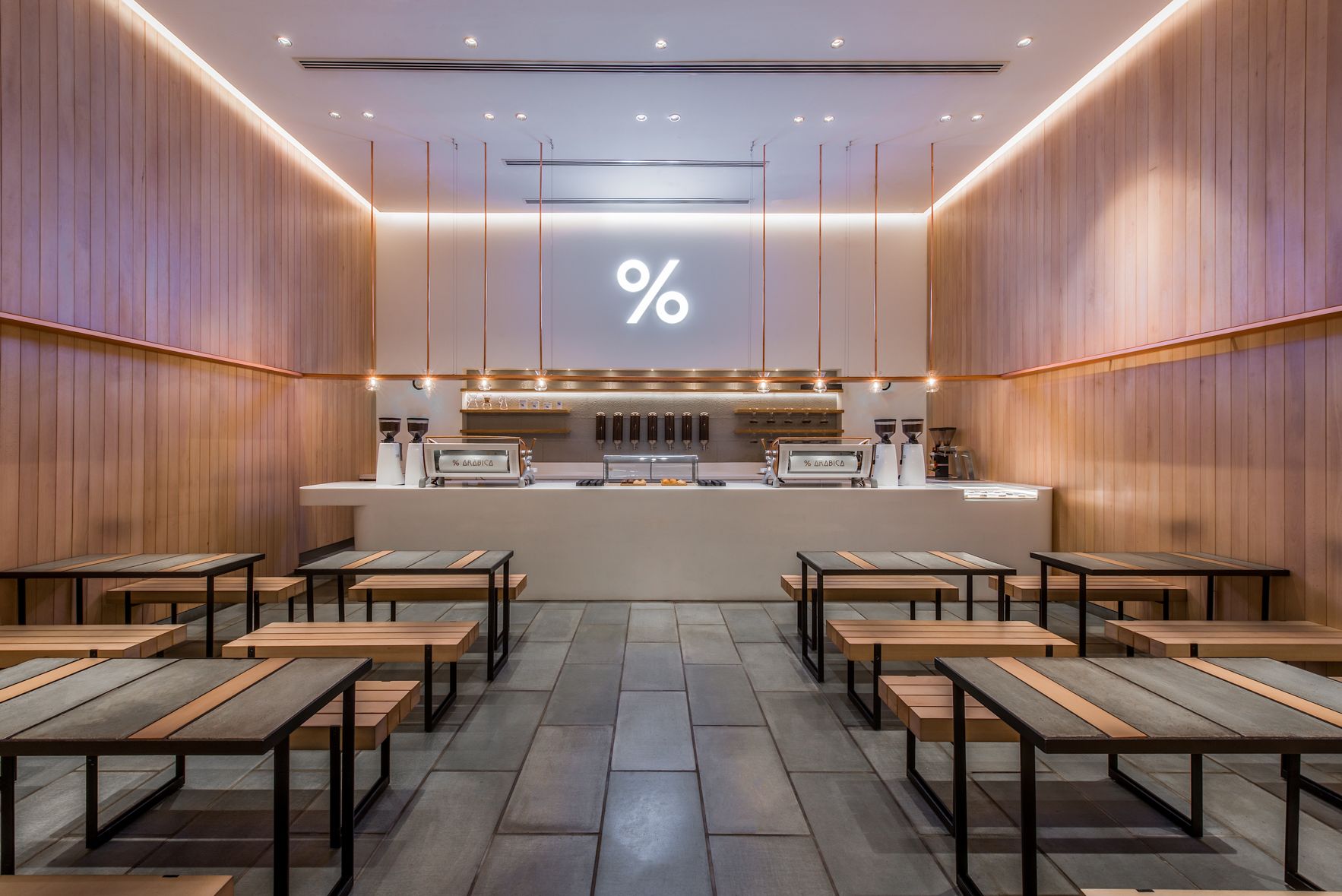
    Kyoto-headquartered coffee chain % Arabica Coffee is to open its first store in Singapore.

    The company has revealed the location on Instagram: 56 Arab Street. With a fit-out yet to be completed, the store may not open until the end of the year.

    The company has also confirmed it is currently fitting out its first store in Indonesia, with others destined for Malaysia and India.

    With its slogan “See the world through coffee”, % Arabica Coffee has built a strong following via social media. In Asia it has three stores in Japan, three in Hong Kong, one in the Philippines and two in China. It is also in Germany and several Middle East markets, with plans for France, Morocco and Canada.

    % Arabica Coffee was founded in 2014 by Japan-born Kenneth Shoji who grew a love for the beverage while studying in California.

  • Indonesian Retailers Need Better Digital Integration

    Indonesian Retailers Need Better Digital Integration

    Integrating with digital platforms will enable Indonesian brick-and-mortar retailers to better engage with customers, who are increasingly shifting their spending from goods to experiences.

    “In Indonesia right now, our retailers underperform… because our customers are already shifting,” Roy Nicholas Mandey, chairman of the Indonesian Retail Association (Aprindo), said in a keynote speech last week during a conference titled “Consumer in Focus.”

    “They are already shifting from a shopper lifestyle to a leisure lifestyle,” he said. In the pre-2014 “shopper lifestyle,” customers took time to explore retail selections at shops and made more frequent purchases, Roy said.

    The “leisure lifestyle” after 2014 has seen customers spend less time at shops, directly buying the products they are looking for and leaving, he said. That has diminished opportunities for retailers to entice customer to make additional purchases.

    Central bank data shows that retail sales only grew at 4.9 percent in the second quarter of this year compared with the same period last year, while annual sales growth used to be in double digits prior to 2014.

    Capillary Technologies, a Singapore-based customer relationship management and e-commerce omnichannel service provider, has pointed out that the integration of brick-and-mortar shops and digital platforms may be the key to surviving the challenges in the current retail environment.

    “Consumers do not perceive brands independently of the platform or medium in which they appear, necessitating a cohesive ecosystem where brand and consumer can smoothly interact,” Abhijeet Vijayvergiya, president and managing director of global accounts and Asia Pacific at Capillary Technologies, said in a press release last week.

    “Additionally, multiple touch-points are needed to connect everything to a single system, such that a unified perception of the brand is conveyed to the consumer. Surrounded by disruptive technology, brands must possess adaptability to turn this obstacle to their advantage, as well as engage in introspection and consumer-readiness for the sake of surviving the industry’s current environment.”

    During last week’s conference, jointly hosted by Capillary Technologies and its business partner GenieTech, the company discussed four areas for retailers or brands to become more consumer friendly. These include understanding customers in the digital age, being seamless, technology-powered one-on-one engagement and powering commerce with artificial intelligence.

    Capillary Technologies is currently working with several Indonesian companies, such as hardware chain store Mitra10, gas retailer Badak, smartphone retailer Erajaya Group, restaurant chain Mujigae and bakery Mount Scopus Group Indonesia to improve their customer relationship management.

    “We want to become the first big IT product company from Asia that is expanding globally,” Vijayvergiya said during a post-conference interview.

    “So, whether it is working in Indonesia, working in China, working in Thailand, working in Malaysia – so we want to really localize. So, our approach is that, while we build global products, but we localize in the markets we go to solve local problems.”


  • Gentle Monster starts its European expansion

    Gentle Monster starts its European expansion

    South Korean eyewear brand Gentle Monster began the first phase of a major European expansion plan when it opened a 450 sq m store in the heart of London’s West End.

    Celebrating the opening at a party, the company’s UK and Europe managing director, Gary Bott, also talked about its Selfridges concession opening Monday and detailed plans for further stores in the EMEA region, including Paris and Dubai.

    The company is riding an eyewear wave in which sunglasses and frames are one of the most dynamic growth categories in the fashion sector at present.

    And that growth means the category is seeing plenty of style and technology innovation, as well as offering opportunities for brands with a strong point of difference to expand into new markets.

    Gentle Monster is known for its unusual frame designs and its powerful creative collaborations and that’s a compelling USP.

    It needs to be compelling too as it’s in a location with plenty of competition. The flagship opening, on Argyll Street, puts it in a prime retail and tourist spot (it’s a stone’s throw away from Liberty and is exactly opposite the London Palladium.) And the Selfridges concession sees it taking its place as one of the anchor brands in the latest phase of the Accessories hall.

    Its UK (and later on, its European) expansion comes on the back of news last September that L Catterton Asia invested in IICombined, the owner and operator of the brand.

    Gentle Monster had been founded in 2011 by Jay Oh and Hankook Kim, and expanded steadily in recent years, although its standalone store numbers had only just edged into double-digits by last autumn. However, the pace has speeded up in recent months with the company having 17 stores before the London opening.

    The faster opening pace will be kept up from now as the company targets the EMEA region, with Gary Bott telling Fashion Network that the brand will open six new stores later this year and into 2019. “We’re looking at Paris first and then Dubai,” Bott said, adding that London was the choice for the first European location because it’s “a platform into Europe.”

    The permanent Selfridges location comes after the company opened a pop-up at The Corner Shop there on June 4 with Bott adding that the temporary store gave the brand valuable experience of the London market.

    Bott said “the feedback and sales especially have gone beyond our expectations. We’ve doubled effectively what we hoped we’d do.”

    The new Argyll Street location underlines just why the brand is so appealing to retailers such as Selfridges as it concentrates on the retail experience as much as the products. Bott said: “We are very much focused on creating a sensory experience for the customer, even down to the individual fragrance for each of our flagship stores.”

    With this in mind, the London flagship follows a completely different design scheme to the brand’s other stores and ‘experience’ really is at the heart of the layout. The firm’s in-house robotic’s team created the concept that mixes aliens with martial arts, focusing more on the visual appeal of Kung Fu than on its ability to cause serious physical damage. The idea is that extra-terrestrials were “captivated by the beauty of Kung Fu, presented in the most unexpected client point-of-view throughout the two floors.”

    Of course, we don’t get aliens or martial artists at the much smaller Selfridges store but experience and a striking visual impact are no less priorities there. An ‘active volcano’ and another robotic installation certainly add an interesting element to the Accessories hall.

    As you can see, robotics really makes up a key part of the company’s store strategy and so it’s no surprise that it invested in a robotics factory in Korea.

    The robotics specialists there work in cooperation with the Gentle Monster store designers with Bott adding that “everything’s half assembled in HQ. And then it travels around the world to whatever destination we’re opening up in our flagships stores, and then our spatial design teams fully assemble everything on site.”

  • Popeyes Brand to Launch in the Philippines

    Popeyes Brand to Launch in the Philippines

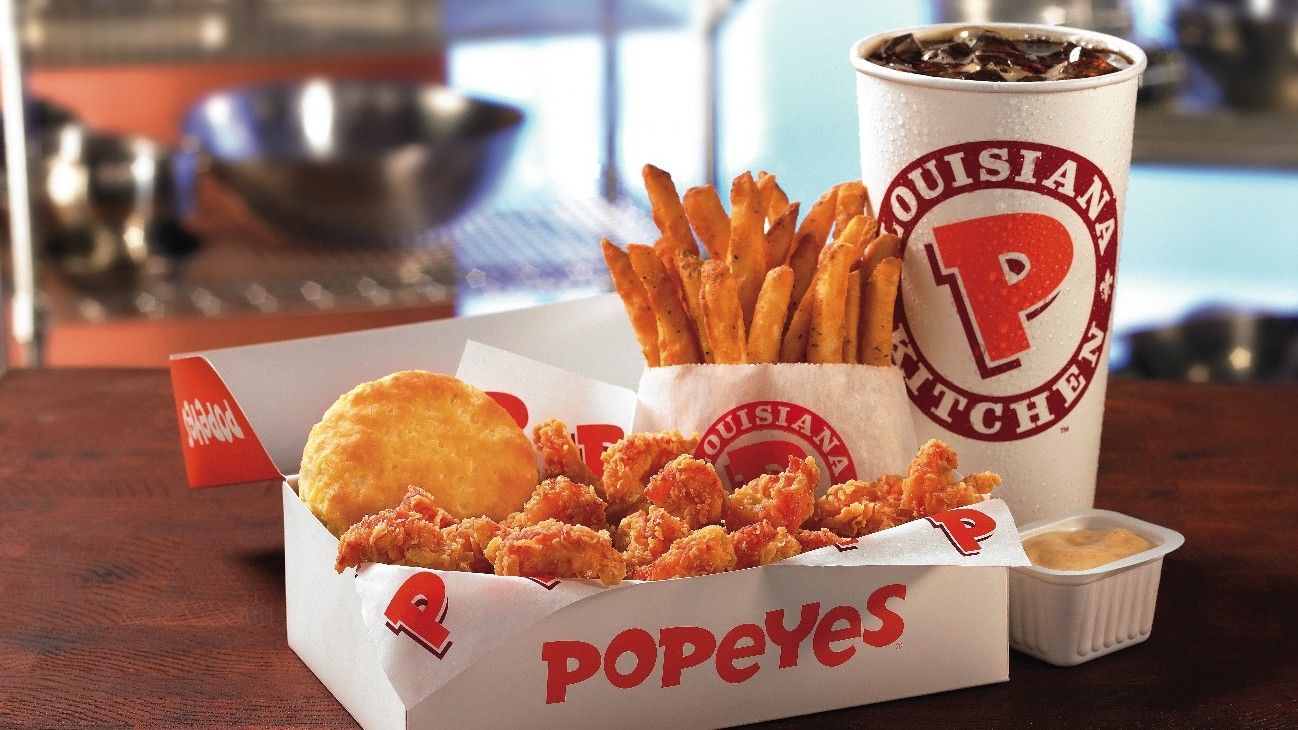
    The first Popeyes Philippines store is imminent.

    Popeyes, the US fast-food chain, has signed a master franchise agreement for the country with local operator Kuya J Holdings.

    Popeyes’ president Alexandre Santoro said he believed the brand’s friend chicken offer will resonate well with guests in the Philippines.

    Kuya J Group’s chairman Lowell L Yu said: “The Philippines is a large and growing market, and we are looking forward to serving the high-quality food that Popeyes offers to the country’s more than 100 million people.”

    Popeyes was founded in 1972 and serves cuisine based on its Louisiana heritage. It has more than 2900 restaurants in the US and around the world. In Asia it is already established in Vietnam, Singapore, Malaysia and Hong Kong.

    It is expected the first Popeyes Philippines store will open in Manila.

  • Vietnam instant noodles consumption blooms

    Vietnam instant noodles consumption blooms

    Vietnam was the world’s fifth largest instant noodles consumer in 2017, consuming 5.06 billion packs.

    This marked a 2.8 percent increase from 4.92 billion in 2016, according to the World Instant Noodles Association (WINA).

    Vietnam had held the fourth spot since 2012, but this was taken by India last year, with a consumption of 5.4 billion packs.

    Other countries in the top five were China (38.9 billion packs); Indonesia (12.6 billion); and Japan (5.6 billion).

    With population over 93 million, Vietnam is second among 2017’s top 3 countries with the highest per capita instant noodles consumption at 53.5 servings; behind South Korea with 73.7 servings and above Nepal with 51.1 servings.

    In 2016, the average Vietnamese person gobbled 53 packs of instant noodles, higher than Indonesians at 49, Japanese at 44 and Chinese people at 38.

    Local enterprises have tapped into this huge market by partnering with overseas companies, increasing the options manifold for the Vietnamese consumer.

    Domestic instant noodle enterprises have reported rising sales, reflecting the increasing consumption.

    A representative of the Acecook Vietnam Joint Stock Company said that the company has seen an eight percent year-on-year increase in revenues in the first half this year.

    Similarly, the Colusa – Milike Food Joint Stock Company reported a net profit of $12.1 million in the first six months, a 10 percent increase from the same period last year.

    Globally, some 100 billion servings of instant noodles were sold in 2017, an average of 270 million packages consumed per day.

    FoodDive, an online news site in food industry, quoted an IMARC Group report as saying the global instant noodles market value reached $40 billion in 2017 and is expected to reach $55 billion in 2023.

  • Galaxy Note9 does better than S9 on preorder sales

    Galaxy Note9 does better than S9 on preorder sales

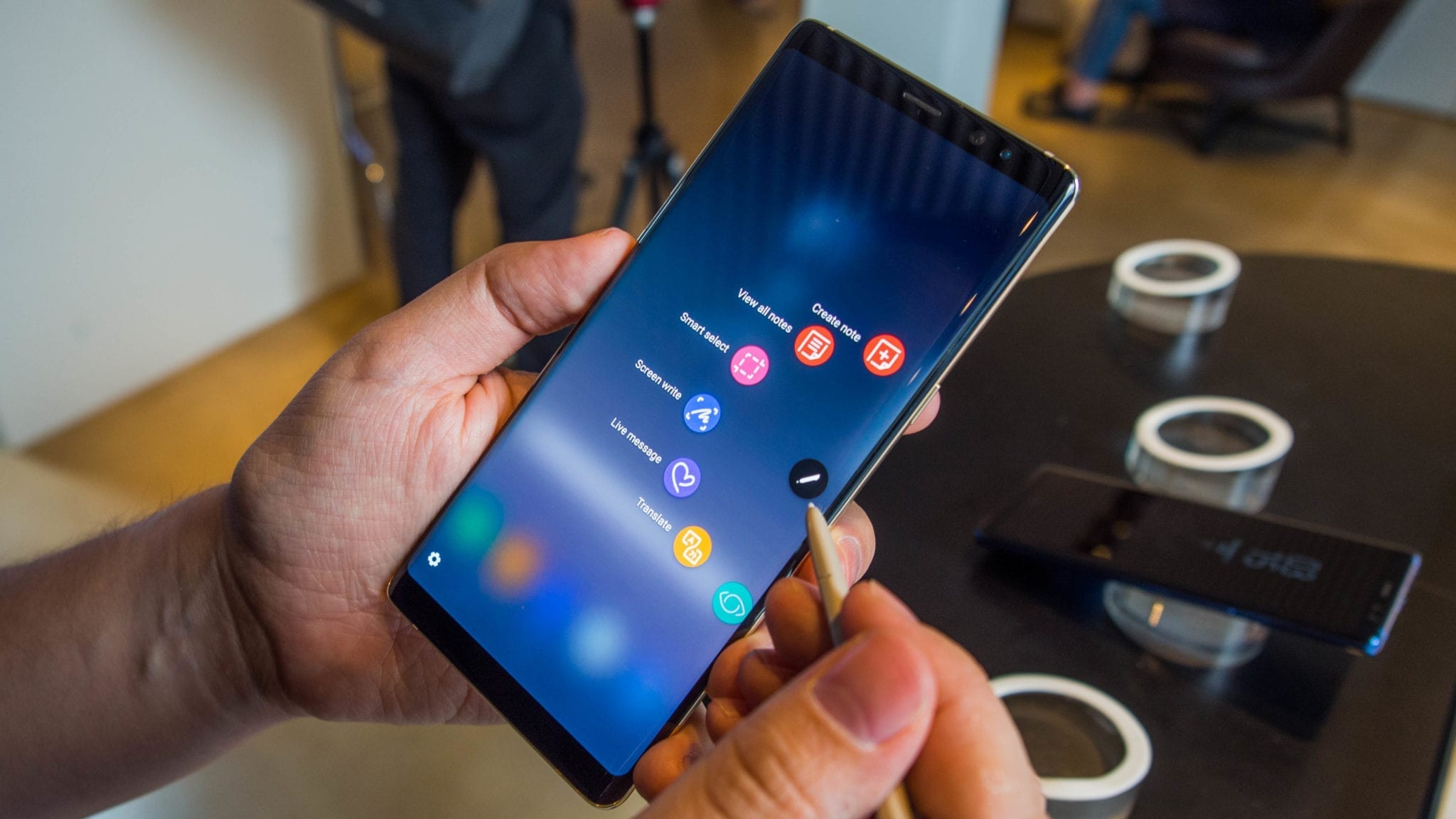
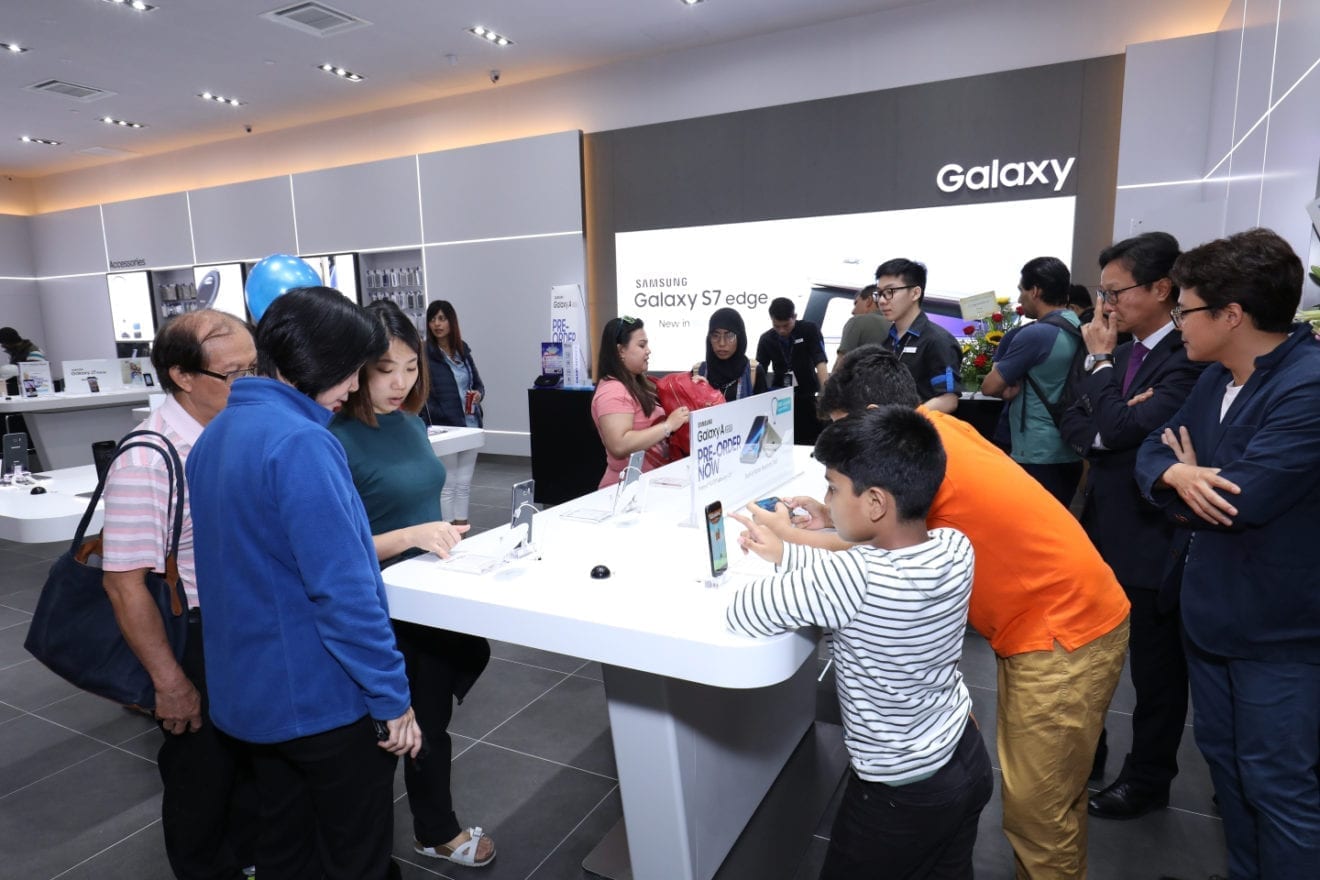
    Samsung Electronics latest smartphone, the Galaxy Note9, attracted more preorder sales than the Galaxy S9, released in March, mobile carriers here said Monday.

    “The number of preorders for the Galaxy Note9 is roughly 30 to 50 percent higher than the Galaxy S9,” a source from a local mobile carrier said.

    The representative added that despite the stronger numbers it is still some 80 percent of the preorder numbers for last year’s Galaxy Note8.

    The overall figure for the Note9 is viewed as being solid considering demand for the Note8 shot up due to the battery debacle of the Note7 that was released in 2016.

    Local mobile carriers will end preorders for the new smartphone on Monday, and start handing out the devices to customers on Tuesday. The official release is slated for Friday.

    The Galaxy S9, which failed to grab the market’s attention due to a lack of features compared with predecessors, has been cited as one of major hurdles that has weighed down Samsung’s mobile business.

    The Note9 is currently seeking to revitalize the IT and mobile business through its 4,000 mAh battery along with a top-notch stylus equipped with Bluetooth technology.

  • Here, the Portuguese brand who caught the eye of millennials

    Here, the Portuguese brand who caught the eye of millennials

    The world of the 19th-century Portuguese ceramics company Bordallo Pinheiro is whimsical, colourful and eccentric, and its surreal creations are taking over tables and Instagram feeds around the world. How has this 134-year-old brand – stocked in Liberty, SCP, Amara, Couverture and Arket – become a must-have for millennials?

    With the current vogue for macramé wall hangings and velvet sofas and hanging baskets, it seems we are turning to our grandmothers’ homes for inspiration.

    Elsewhere, bold colour fills the high street, from Frida Kahlo to tropical Havana brights. In the age of Brexit and Trump, Scandi-style neutrals don’t cut it; there’s an appetite for something stronger.

    The company’s founder, Raphael Bordallo Pinheiro, was a visionary – a subversive socialist who liked to poke fun at late-19th-century Portuguese society. He was a caricaturist, interior designer, sculptor and publisher of satirical newspapers, with an artist’s disregard for convention. His dream was to elevate everyday tableware to the design standards of porcelain pieces – the preserve of the upper classes.

    His designs are strongly rooted in Portuguese culture, its culinary heritage and natural environment. Raphael wanted vegetables, flowers, insects, fish and animals at the table. He also had a passion for science – “a technical sensibility”, says Elsa Rebelo, Bordallo Pinheiro’s artistic director.

    “He experimented to achieve natural colours and detailed features, such as feathers and leaves. His goal was to create objects that look as real as possible.” The company is opening its first shops outside Portugal this year, in Paris and Madrid. Half the one million pieces it sold last year went to buyers outside Portugal.

    Rebelo works with in-house sculptors to create new moulds from original pieces. “In our archive, we have hundreds that were designed by Raphael and his son Manuel between 1884 and 1910,” she says. “When we’re choosing which to release, we look at the sculptural aspect of a design and also try to reflect the aesthetic tastes of the moment.”

    The company’s way of working hasn’t changed much in the intervening decades. Its factory is on a pine-lined side street on the outskirts of Caldas da Rainha, a city 75km north of Lisbon. The single-storey building feels more like a large artist’s studio than a commercial factory, and products are almost entirely hand made by a 250-strong workforce. Outside the mould-making workshop, racks of animal designs sit on long shelves like a watchful zoo.

    For the vast majority of pieces, workers hand fill the moulds with liquid clay, tipping them gently from side to side, to fill each nook and remove air bubbles. When dry, another team puts the pieces together, delicately fixing a tail to a hissing cat, a claw to a lobster, six slender legs to a wasp: some designs are made up of as many as 25 moulds.

    After a first firing, the pieces are hand glazed or painted by a team of more than 20 artists. A second firing completes the process. For fans of the brand there’s no danger of running out of designs. “We have enough [in the archives] to release new products for another 100 years or more,” Rebelo says.

  • Google planned first flagship store for Chicago

    Google planned first flagship store for Chicago

    Google is reportedly planning to open its first permanent retail store, in a trendy Chicago neighbourhood.

    According to a report in the Chicago Tribune, a two-storey Google flagship store will open in the Fulton Market area, known locally as the meatpacking district.

    Google declined to confirm the report. “We don’t comment on rumor or speculation,” spokeswoman Kayla Conti said.

    But citing reliable sources, the Chicago Tribune said the lease is close to being finalised. The store will take up 14,000sqft and will be used to showcase the online company’s growing array of gadgets, including its smartphones, tablets, home security systems and Google Home, which is its answer to Amazon’s Echo.

    The store will be located in historic low-rise brick buildings on W. Randolph Street.

    Until now, Google’s brick-and-mortar foray has been limited to pop-up stores and concessions.

  • Little B store China is pumped up with white-glazed tiles and neon lights

    Little B store China is pumped up with white-glazed tiles and neon lights

    Nestled in an alleyway in Shanghai’s historic Xintiandi district, a high-end convenience store like none other has opened its doors.

    Little B was designed by Chinese studio Neri&Hu, which mixed curved white-glazed tiles with stainless steel to create what resembles more of a science fiction movie set than a conventional cluttered c-store.

    Unlike the usual stores, each item in Little B is sourced from various high-end brands that, according to its owner, lifestyle brand The Beast, have been curated to suit the “culturally astute and increasingly discerning taste of Chinese consumers”.

    As reported, Neri&Hu wanted to preserve the store’s light grey concrete exterior, given the area comprised reconstructed mid-19th Century Shikumen – stonegate – houses.

    Neri&Hu wanted their design to reflect this exclusivity of the store, and took inspiration from the aesthetic of pop-up shops to give the space a “spontaneous” feel by leaving the entrance relatively empty.

    Similarly, they avoided cluttered shelves and crowded aisles to truly set the concept – and its stock – apart.

    “We encouraged the client to not just fill the entire space with products, but instead to leave some undefined space as an extension of the public realm,” Neri&Hu said.

    “This area is left raw with concrete floors, in the spirit of the temporary nature of pop-ups. It’s a blank space that allows for any possibility,” they said.

    In the retail area of the store, display and shelving fixtures made from stainless steel wrap around the perimeter.

    “Stainless steel, a rather sterile material, is brought to life by the layering various finishes: including brushed and polished, perforated and bump textured,” said the designers.

    “The vibrant packaging of the products, the colours and shapes from the feature artwork, as well as the signage lighting begin to reflect off of each other, blur boundaries, and activate the space,” they continued.

    View the full gallery below (6 images) :


  • Go-Jek Close to Profit in All Segments, Except Transportation

    Go-Jek Close to Profit in All Segments, Except Transportation

    Go-Jek, Indonesia’s first billion-dollar startup, is “extremely close” to achieving profitability in all its segments, except transportation, its founder and chief executive, Nadiem Makarim said.

    Launched in Jakarta in 2011, Go-Jek – a play on the local word for motorbike taxis – has evolved from a ride-hailing service to a one-stop app allowing clients in Southeast Asia’s largest economy to make online payments and order everything from food, groceries to massages.

    “We’re seeing enormous online-to-offline traction for all of our businesses and are close to being profitable, outside of transportation,” the 34-year old chief executive said.

    The startup is expected to be fully profitable “probably” within the next few years, Nadiem added.

    Already a market leader in Indonesia, where it processes more than 100 million transactions for its 20-25 million monthly users, Go-Jek is now looking to expand in Southeast Asia.

    Ride-hailing services in Southeast Asia are expected to surge to $20.1 billion in gross merchandise value by 2025 from $5.1 billion in 2017, according to a Google-Temasek report.

    Go-Jek said in May that it would invest $500 million to enter Vietnam, Singapore, Thailand and the Philippines after Uber struck a deal to sell its Southeast Asian operations to Grab – the bigger player in the region.

    Go-Jek is seeing strong funding interest from its backers as it targets an aggressive expansion, Nadiem said.

    “Since its Aug. 1 launch, the app has already grabbed 15 percent of market share in Ho Chi Minh,” Nadiem said. The firm this week opened recruitment for motorcycle drivers in Thailand.

    The startup expects anti-monopoly concerns swirling around the Grab-Uber deal, which Singapore said had substantially hurt competition, to help clear a path for its expansion.

    “We’re bringing back choice. The Singapore government is particularly eager to bring back competition,” Nadiem said, adding that the order of overseas rollouts had not been set.

    Overseas Push

    Go-Jek’s offshore push comes at a time when Singapore-based Grab is stepping up funding to expand in Indonesia and transform itself into a consumer technology company, starting with a partnership with online grocer HappyFresh.

    “Mimicking Go-Jek’s strategy is the highest form of flattery,” Nadiem laughed.

    “The super app strategy has been around for a while now and no Southeast Asian player can claim to have pioneered it,” Grab said in a statement. The company also said Grab has not lost market share in Ho Chi Minh City since August, but declined to provide market share data.

    Nadiem believes Go-Jek’s understanding of food merchants will give it an edge over Grab, which counts investors such as Chinese ride-hailing firm Didi Chuxing and Japan’s SoftBank Group among its backers.

    Nadiem, who sees food delivery as Go-Jek’s core business, said he was not concerned about funding, without giving details.

    Go-Jek was reported in June as being in talks to raise $1.5 billion in a new funding round and was valued at about $5 billion in a prior fundraising, sources said. The firm had said in March it was considering a domestic initial public offering.

    Nadiem noted Go-Jek’s backers were sharing both capital and expertise. The company is collaborating with Google on platform mobility, Tencent on payments strategy, JD.com on logistics operations and Meituan Dianping on merchant transactions and deliveries.

    Go-Jek has set up a venture capital arm, Go-Ventures, to invest in startups in Southeast Asia “with strategic importance to our business,” the chief executive said.

  • Memebox and Sephora partner on ecommerce

    Memebox and Sephora partner on ecommerce

    Memebox signed a partnership deal with global beauty giant Sephora to expand its global presence in the ecommerce scene and develop a joint brand due for release this autumn, according to Formation Group on Monday.

    The achievement comes only six years after the local beauty company launched as a small start-up in Korea. It now has offices in five regions around the world including Pangyo, Gyeonggi and San Francisco.

    Formation Group is a venture capital firm and a stakeholder in Memebox.

    One goal of the partnership with Sephora, a global beauty retailer owned by LVMH Group with operations in 33 countries, is to expand Memebox’s global ecommerce site that recently re-opened after being closed down last year.

    Memebox launched in the United States in 2014 as an online store offering K-beauty products. Last year, it halted the global ecommerce website with an aim of developing an online community where consumers can exchange know-how and reviews on beauty products.

    The website has more than five million users per month uploading videos and tips.

    However, the ecommerce site was re-launched in June. “We decided the timing had come to develop a competitive edge with our own ecommerce platform, now that the awareness and credibility regarding Korean beauty brands has greatly improved in the United States,” said Memebox CEO Ha Hyung-seok.

    The launch also gave U.S. consumers access to Memebox’s in-house brands: Pony Effect, I Dew Care and Nooni.

    One of Memebox’s strengths is the accumulated data from its community which has more than 30,000 product reviews from people of different ethnicities and cultural backgrounds. In a beauty market where trends change fast, an up-to-date database of consumers is a big asset not only in terms of marketing, but also for fast product development.

    Another apparent result of the collaboration between Memebox and Sephora is scheduled to come this autumn: a color cosmetics brand for which details have not yet been revealed.

  • JD quarterly report leaves some concern

    JD quarterly report leaves some concern

    Chinese e-commerce company JD boosted second-quarter revenue by 31.2 per cent, but losses ballooned nine-fold.

    JD quarterly sales reached RMB122.3 billion (US$218.5 billion) for the three months to June 30, with net service revenues of RMB11.8 billion (US$1.8 billion), up 51 per cent year on year.

    On a rolling 12 month basis, annual active customer accounts increased by 21.5 per cent to 313.8 million in the year to June 30.

    The operating margin of JD Mall was just 1.1 per cent, although that was an improvement on the 0.8 per cent of the same period a year earlier.

    JD chairman and CEO Richard Liu said the e-commerce business was continuing to win over new personal customers. “We are also seeing more corporate clients, both Chinese and international, leveraging JD’s superior technology and retail infrastructure to help take their businesses to the next level. We will continue to prioritise technology innovation to empower our partners with enhanced capabilities and improved efficiency, helping us to realise our ‘Retail as a Service’ strategy, and driving our next phase of growth.”

    The net loss from continuing operations attributable to shareholders was RMB2.213 billion (US$334.4 million), compared to RMB287 million for the same period last year.

    Despite continuing losses in what is  along-game business, JD is attracting investment. In June, Google invested $500 million as part of a new strategic partnership.

    “We are pleased to see continued healthy performance in the second quarter, with solid revenue growth and improved margins in our core JD Mall business,” said Sidney Huang, CFO, in a statement “Our new business initiatives continue to gain impressive traction across the industry. We will maintain a balanced, long-term approach to investing in the technologies that will define the future of retail.”

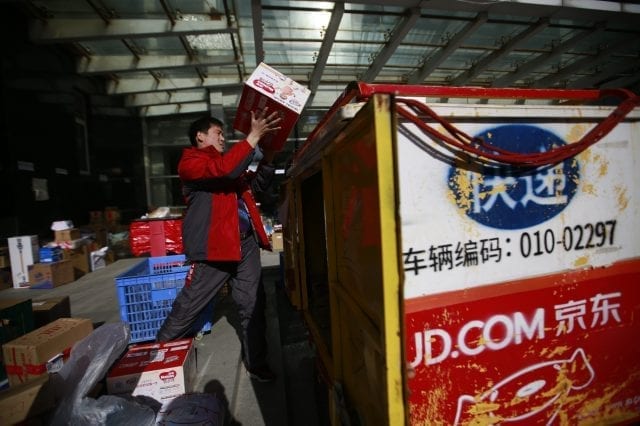
    During the second quarter, JD expanded its leadership position in fulfillment capabilities among China’s e-commerce companies. As of June 30, JD operated 521 warehouses covering an aggregate gross floor area of 11.6 million sqm in China.

    The company had more than 170,000 merchants on its online marketplace, and 173,904 full-time employees at the end of the quarter.