Author: Mei Ling Tan

  • Alibaba and Guess’ FashionAI Concept Store unveiled in HK

    Alibaba and Guess’ FashionAI Concept Store unveiled in HK

    GUESS is global strategic partner of Alibaba’s FashionAI project, an initiative to give shoppers a glimpse of what the future of fashion retail will look like.

    Alibaba rolled out a pilot FashionAI concept store on the Hong Kong Polytechnic University (PolyU) campus pairing GUESS’ retail knowledge and latest collections with advanced Alibaba AI and other technology.

    “By partnering with Alibaba, a dominant technology leader, we are changing the retail experience as our customers also evolve,” said José Blanco, CEO of Greater China for GUESS. “It is important that we continuously invest in new technology and platforms. This entire project came together in just five months thanks to a strong partnership between our two companies. At GUESS, we believe in the need to innovate in real time. We plan to extend this project in the region as the future of retail.”

    Besides the FashionAI concept store’s futuristic appeal, the project is aimed at providing a better retail experience for shoppers and to use analytics to help brands be smarter in ordering and maintaining inventory.
    “GUESS and Alibaba share the same vision to understand customer behaviors through technologies, ” said Zhuoran Zhuang, Vice President, Alibaba Group. “With GUESS’ retail expertise, we are able to train and refine our FashionAI system, and marry technology with fashion in a way that’s never been done before. We are looking forward to deepening our partnership to innovate personalized services offered in retail shops.”

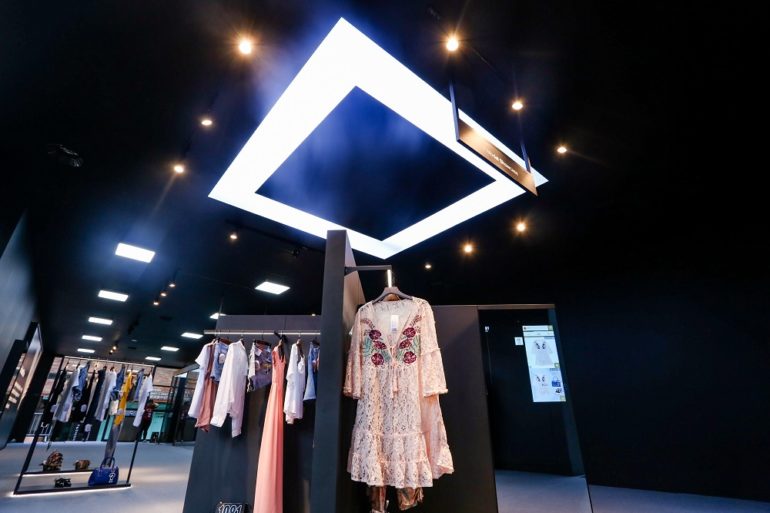
    The FashionAI concept store features smart racks, smart mirrors and next-generation fitting rooms.

    Alibaba’s FashionAI system underpins the stores, offering up mix-and-match clothing and accessory suggestionsfor customers from the GUESS line, as well as items sold by others on Tmall and Taobao, China’s biggest B2C and C2C platforms, respectively.

    GUESS launched its store on Tmall at the end of 2013 and the brand has been one of the most popular brands in the fashion apparel category. GUESS’ store has achieved more than 100% growth over the last 3 consecutive years.

    GUESS collaborates with Alibaba closely in the New Retail concept since 2016 with the
    implementation of the O2O project in both online and offline stores.

    The FashionAI concept store, located at the Logo Square of PolyU campus, will be open to the public from July 5-7. It is being set up on the sidelines of the Artificial Intelligence on Fashion and Textile Conference 2018, co-hosted by Alibaba and PolyU.


  • Take a look inside the new Apple store at Sands Cotai Central

    Take a look inside the new Apple store at Sands Cotai Central

    The newly opened Apple Macau store has been designed to offer “a calm complement to the buzz and excitement of Macau,” says its creator, Foster + Partners.

    “We wanted to create something very simple and pure – a beautiful and elegant building that complements the sounds, sights and colors of Macau, while embodying a sense of clarity and quietude,” explains Stefan Behling, head of studio at London-headquartered practice.

    “The design creates two distinct spaces, one inside and one outside, imbued with a sense of authentic beauty arising from the innovative use of natural materials.”

    The new store anchors the extension of the Sands Cotai Central retail space, which houses 25 stores. It opened last Friday.

    Technology, entertainment and arts come together in the new store, giving locals and tourists alike an inviting, contemplative space. Behling says its timeless design reinvigorates a corner of Cotai with a distinctive addition – a luminescent cube, whose pure geometry and warm ‘beacon-like’ glow draws passers-by closer, set within a quiet bamboo grove and an external plaza.

    Apple Cotai Central is conceptualised as a ‘paper lantern’ that glows mysteriously. Visitors entering the store are treated to a magical experience, surrounded by glowing stone panels that shimmer throughout the day as the sun brings them to life, while at night the cube radiates a warm glow, contrasting against the bright lights of Macau. The first-of-its-kind glass-stone composite facade comprises five layers of glass integrated with wafer-thin layers of stone, which gives the building its distinctive materiality – appearing as translucent stone walls, akin to stained-glass, explains Behling.

    The structural frame is supported by just three corner columns wrapped in mirrored stainless-steel that reflect the patterns and colors of the facade, dematerialising the structure and blending seamlessly with the surrounding environment.

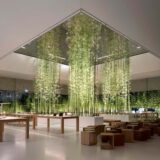
    Inside, a quiet bamboo grove has been taken from the ‘forest’ outside and placed under a soaring central atrium. It is capped by a large central skylight with punched pyramidical apertures that brings natural light deep into the interior. The ground level is wrapped in a glazed facade that looks onto a layered bamboo screen, providing a heightened sense of enclosure, while blurring the boundaries between the inside and outside.

    At the far end of the store is a 10.6m by 4.5m video wall, alongside an entrance from the adjacent retail shopping mall and casino.

    Two grand stone staircases lead to the upper level, lit by skylight strips that bring in filtered natural light.

    Display tables are arranged around the central atrium looking onto the bamboo grove below. The composite glass-stone facade wraps around the entire upper level, creating what Behling describes as a soft internalised environment that exudes a sense of calm and serenity.

    The Apple Macau store design is the result of a close collaboration between the Apple team led by chief design officer, Sir Jonathan Ive and Angela Ahrendts, senior VP of retail and online stores, and Foster + Partners.

    Full images of the store can be viewed below :

  • Department store in Nagoya ends 400-year history

    Department store in Nagoya ends 400-year history

    A 400-year-old department store in Nagoya has closed.

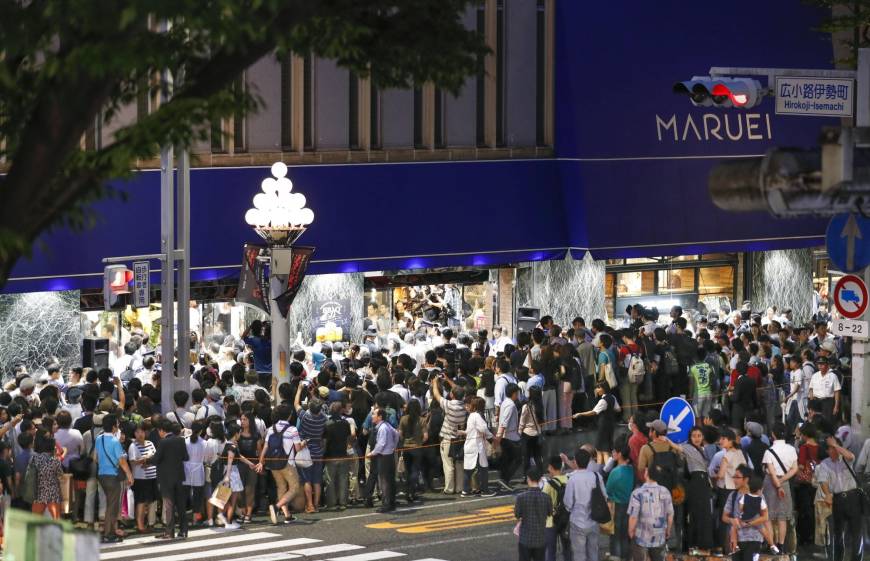
    Maruei Department Store, which opened as Juichiya kimono shop in 1615 and was renamed in 1943 when it merged with another retailer, was once the largest stores of its kind in Western Japan. It was hit by hard economic times in the early 1990s but was kept operational until sales dropped to an all-time low last year.

    Under new ownership since being acquired by Nagoya pharmaceuticals firm Kowa in 2010, the store failed to overcome the rise of e-commerce and became obsolete, with some observers noting a base inconsistency in its various product lineups. Kowa is planning to reopen a commercial facility on the same site several years from now.

    Yoshimitsu Hamajima, the president of Maruei Department Store, thanked the crowds of well-wishers who showed up for the grand closing ceremony.

  • Indonesia’s June Annual Inflation Rate Slows to 3.12%

    Indonesia’s June Annual Inflation Rate Slows to 3.12%

    Indonesia’s annual inflation rate slowed less than expected in June from a year ago and stayed within Bank Indonesia’s target range, the Central Statistics Agency said on Monday (02/07).

    June’s annual inflation rate came in at 3.12 percent, compared with May’s 3.23 percent. Analysts surveyed by Reuters had expected a rate of 2.88 percent.

    Suhariyanto, the head of the statistics bureau, said the consumer price index rose 0.59 percent on a monthly basis in June, due to rising demand during the Muslim fasting month.

    However, the annual rate fell because of the base effect of high prices during last year’s Ramadan, he said.

    The annual core inflation rate, which excludes government-controlled and volatile food, eased slightly to 2.72 percent in June, from 2.75 percent in May. Bank Indonesia targets inflation at 2.5-4.5 percent this year.

  • Korea’s cosmetics exports in January-May up 36.7 percent on year

    Korea’s cosmetics exports in January-May up 36.7 percent on year

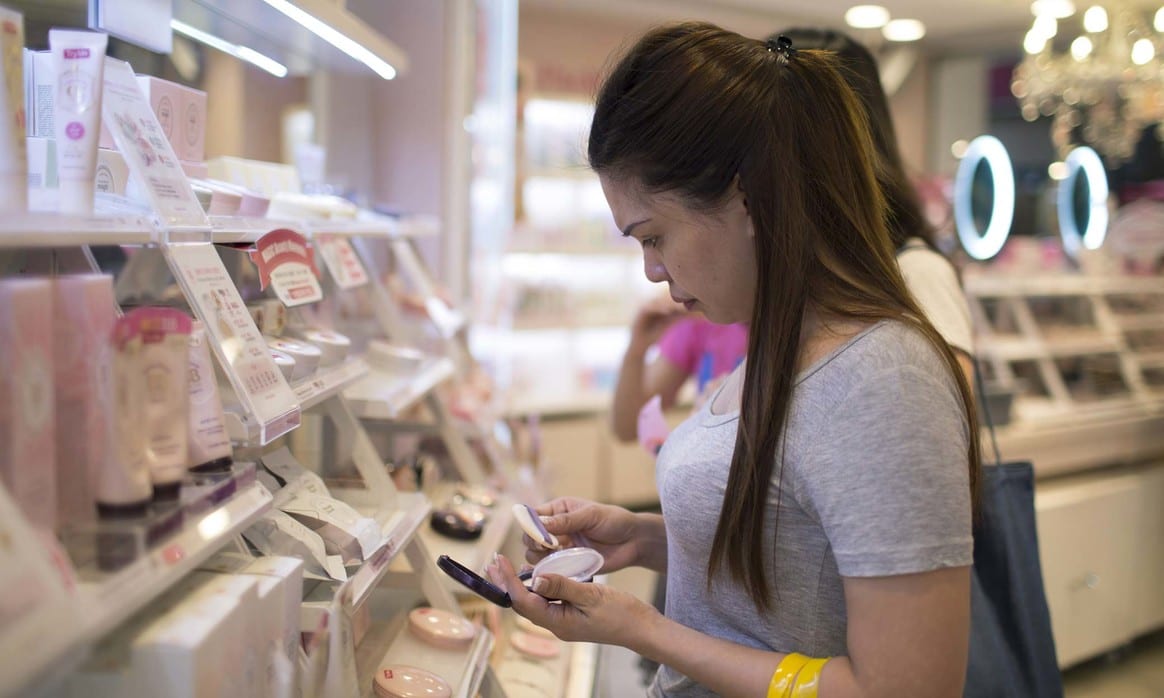
    South Korea’s beauty exports remain unfazed, gaining nearly 40 percent in the first five months of the year against a year-ago period.

    According to data released by the Korea Customs Service on 28 June, K-beauty exports between January and May this year amounted to US$2.06 million, up 36.7 percent against a year ago and showing little signs of softening.

    Last year, cosmetics exports reached an all-time high of US$3.92 billion, nearly quadrupling from US$1.05 billion in 2013 and overwhelming imports of US$1.17 billion.

    The bulk went to ethnic Chinese – 37.4 percent in the mainland and 24.6 percent in Hong Kong. Of the remainder, 9.4 percent was consumed by Americans, 5.0 percent by Japanese, and 3.4 percent Thais.

    Chinese have been the biggest non-Korean consumers of K-beauty products since 2000. Exports reached US$1.47 billion last year alone, also helped by a sales tax cut on cosmetics in China.

    Korean beauty products are rapidly gaining ground in Vietnam. Exports to Vietnam hit US$123 million last year, up a whopping 109.5 percent on year. Shipments to traditional beauty powerhouses of France and the United Kingdom have also been on a steady rise.

    Basic skin care products accounted for the largest 50.7 percent of the country’s total cosmetics exports last year while makeup products made up 9.5 percent, those for eye makeup 3.6 percent, and lipsticks 3.2 percent.

    The Korea Customs Service forecast cosmetics exports to extend strong growth this year, fueled by renewed popularity of K-pop and Korean entertainers.

  • Vietnam stock market hits new low, could go lower

    Vietnam stock market hits new low, could go lower

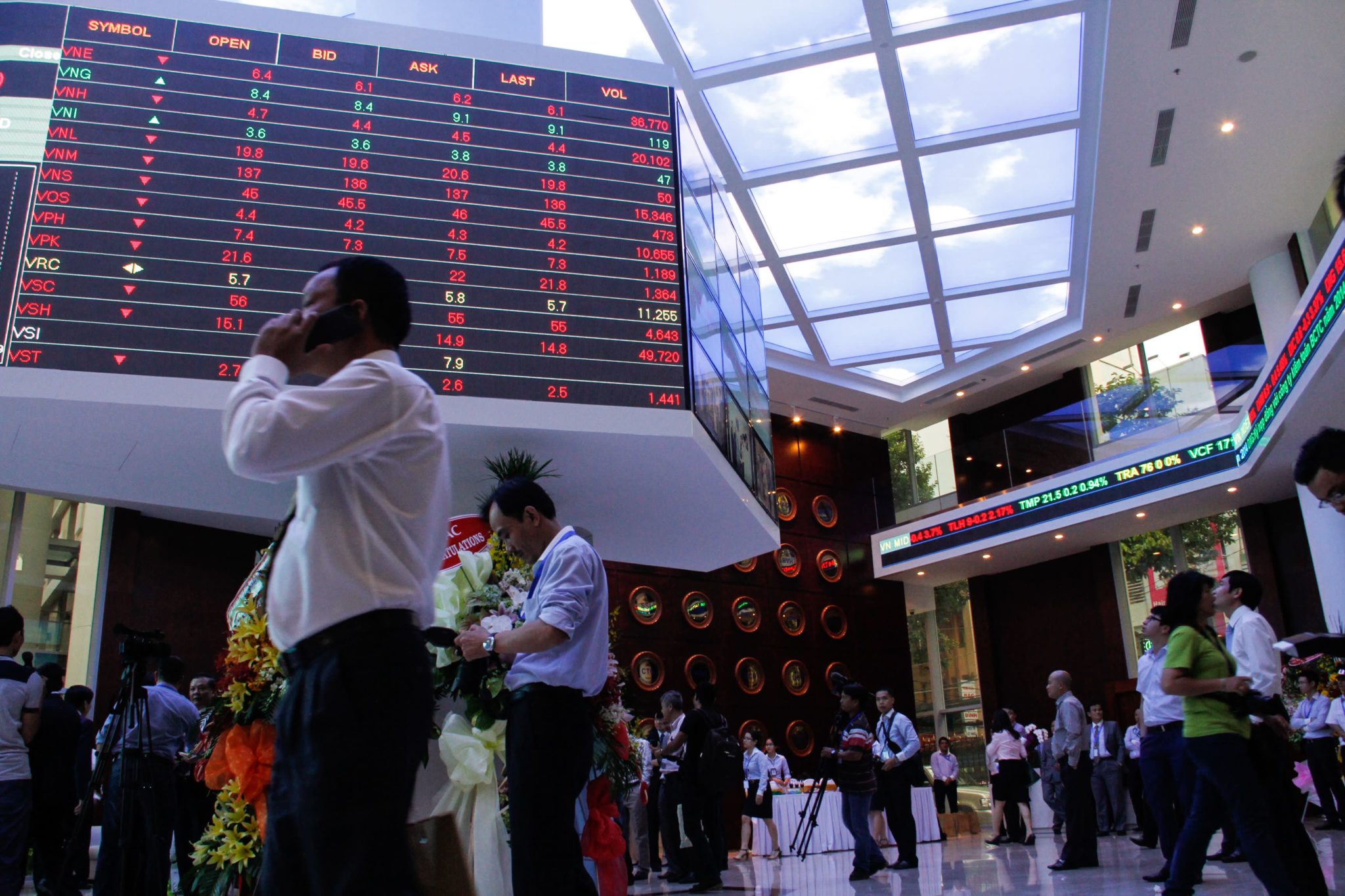
    Vietnam’s stock market fell 4.11 percent on Tuesday afternoon, hitting its lowest point this year, following a dramatic plunge in the second quarter.

    The country’s benchmark stock index, VN-Index, fell 39 points to 908.26 by 2:25 p.m. Tuesday, while the VN30-Index, representing a group of 30 largest capitalization stocks in the country, also fell by 3.7 percent to 895.86.

    The smaller HNX-Index on the Hanoi Stock Exchange and the UPCoM-Index for unlisted companies also dipped 3.7 percent and more than two percent, respectively.

    Shares of banks, including Vietcombank and ACB, plunged 4-5 percent.

    Meanwhile, blue chip stocks like Vinhomes JSC (VHM), Vingroup JSC (VIC), and steelmaker Hoa Sen Group (HSG) were being sold en masse, driving down the entire market.

    This marks a further drop in Vietnam’s stock market after it plunged 18.19 percent in the second quarter this year, making it the worst-performing market in the world.

    Local stock companies have anticipated that the VN-Index could fall to 900 points and even further.

    Vietnam’s stock market had experienced its heyday since last year, when it hit a 10-year high and reached 984.24 points in the last trading session of 2017. It had not broken the 800-point barrier since 2008.

    Continuing its good run, the VN-Index grew 19.33 percent in the first three months of this year, becoming the best-performing market in the world.

    It passed the 1,200-point level on April 9, and has hovered at above 900 since then.

  • Innisfree Vietnam, Malaysia to go bigger

    Innisfree Vietnam, Malaysia to go bigger

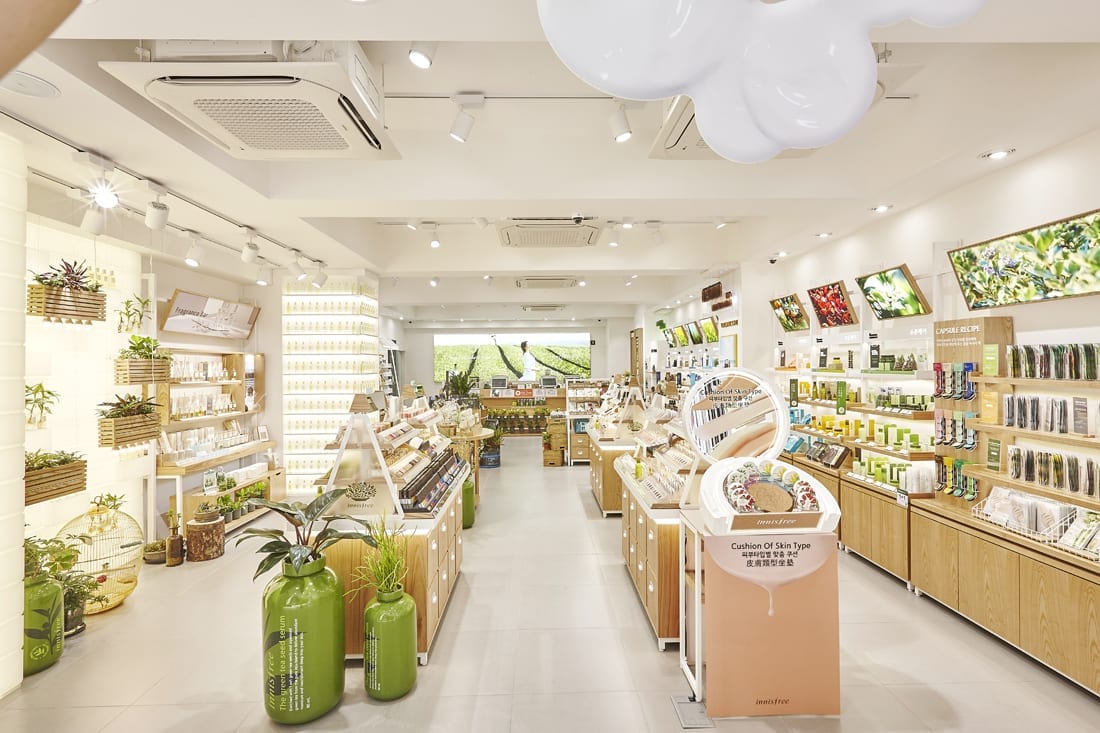
    Amorepacific-owned Innisfree Vietnam has opened its first store in Hanoi, the brand’s fifth in the country.

    Located at 290 Ba Trieu Street, Innisfree Hanoi ranges skincare and makeup products for men and women.

    Opening day saw long queues of the brand’s fans who had been looking forward to the brand having a Hanoi presence for two years.

    In Malaysia, Innisfree has teamed with travel retailer Dimensi Eksklusif to make its debut at Kuala Lumpur International Airport.

    KLIA is Innisfree’s latest airport store outside Korea after Singapore’s Changi and Hong Kong International Airport.

    Sales of perfumes and cosmetics at KLIA in the first quarter of this year grew by 29 per cent and are expected to continue to grow, attracting more world-renowned brands to open there.

    Innisfree has nine stores in Malaysia.

  • Uniqlo unveils plans to open in Denmark in 2019

    Uniqlo unveils plans to open in Denmark in 2019

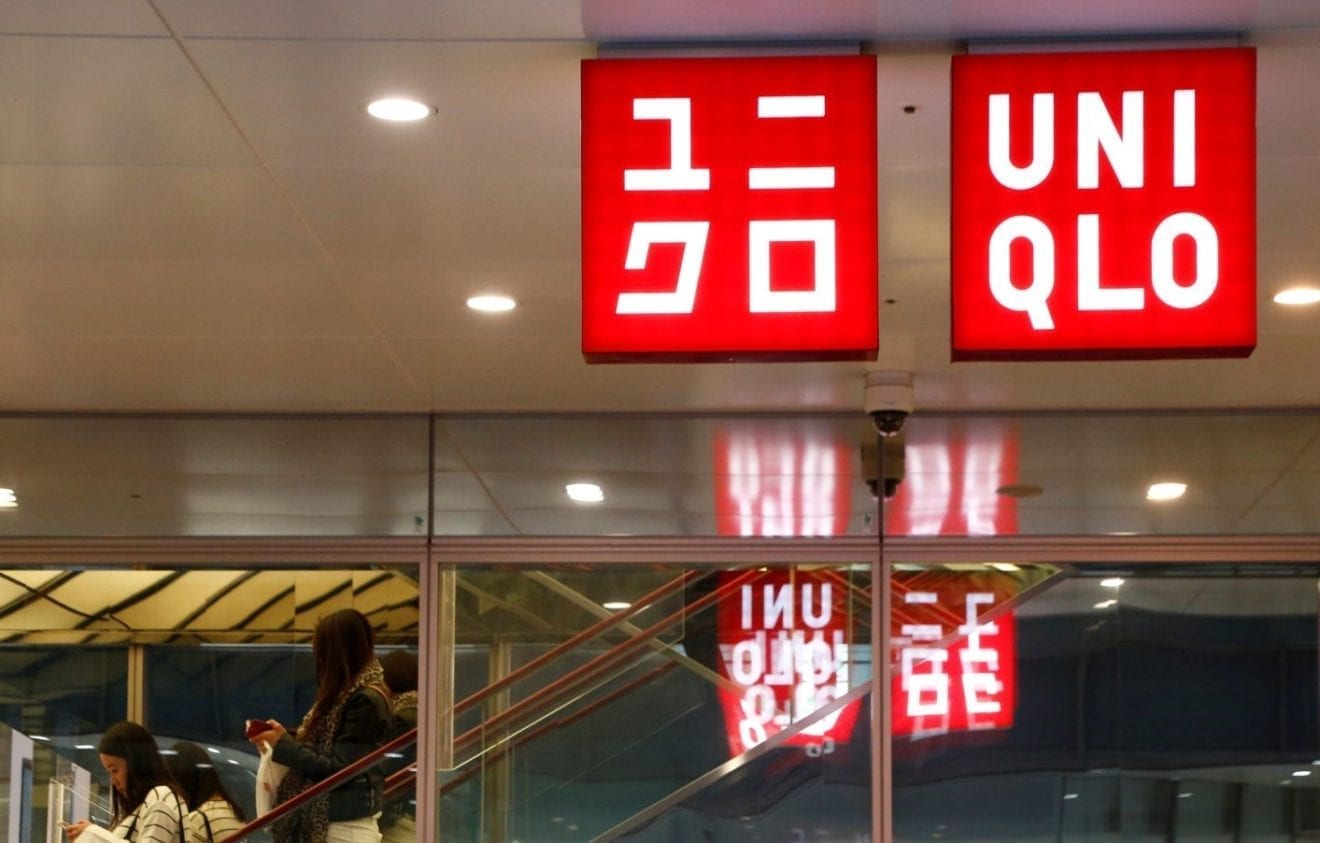
    Uniqlo has been working hard on expanding its presence across Europe, and will arrive in Sweden and the Netherlands in fall 2018.

    The next new market for the casualwear label will be Denmark, where a new store is expected to open Strøget, one of Europe’s longest pedestrian streets, in Copenhagen in the spring of next year.

    The company has chosen a historical building dating back to the mid-1700’s, once occupied by clothier Louise Christine Rasmussen, for its first Danish store, which will occupy a space of approximately 1,400 square metres across three levels. Elements from the original classic style architecture will feature throughout the interior of the store and on the façade.

    “We are pleased to be announcing our next phase of growth in Scandinavia with the launch of our first store in Denmark next year, on the renowned Strøget in Copenhagen. We look forward to introducing the Uniqlo brand and our LifeWear concept to Danish customers, who appreciate well designed, functional and high quality clothes,” said Taku Morikawa, chief executive officer of Uniqlo Europe.

    Denmark will become Uniqlo’s 9th country in Europe, joining the UK, France, Russia, Germany, Belgium and Spain and new markets Sweden and the Netherlands.

  • Supermarket chains Tesco, Carrefour form strategic alliance

    Supermarket chains Tesco, Carrefour form strategic alliance

    Britain’s largest grocery chain Tesco and French grocery giant Carrefour have joined forces on how they source and buy from suppliers in a bid to cut prices.

    The long-term deal, which was struck amid mounting competition from Amazon and other rivals, allows the supermarket giants to jointly source certain products to lower prices and offer a wide range of product offerings to customers.

    According to Tesco, the alliance will be governed by a three-year operational framework and will enable both companies to improve the quality and choice of products available to their customers at even lower prices.

    Both companies will continue to work with supplier partners at a local and national level.

    “By working together and making the most of our collective product expertise and sourcing capability, we will be able to serve our customers even better, further improving choice, quality and value,” said Dave Lewis, Tesco Group chief executive.

    Alexandre Bompard, chairman and CEO of Carrefour, said the strategic alliance between the two grocery giants is a major agreement that combines the purchasing expertise “of two world leaders, complementary in geographies with common strategies.”

    The alliance will be formally agreed within the next two months, Tesco said in a statement.

    The British retailer has trialled a few days ago a new “shop and go” technology that allows Tesco customers to pay for their groceries without visiting a till, just through a smartphone.

    The retailer has given 100 company employees smartphones and use them to shop at its headquarters to trial the service. They use the phones to scan barcodes and pay for their shopping.

    The experiment is similar to the technology Amazon has already adapted in its grocery store in Seattle.

  • Indonesia to Review Capital Goods Imports to Control Current-Account Deficit

    Indonesia to Review Capital Goods Imports to Control Current-Account Deficit

     Indonesia plans to review the import of capital goods for big government projects to help manage its current-account deficit, Finance Minister Sri Mulyani Indrawati said on Tuesday (03/07).

    The move forms part of a series of coordinated policy measures to bolster the country’s financial markets.

    The rupiah, stocks and bonds have sold off as investors flee emerging markets amid rising interest rates in the United States, higher oil prices and the threat of a full blown US-China trade war.

    The vulnerability of Southeast Asia’s biggest economy has been increased by worries about its current-account deficit.

    Bank Indonesia has raised its benchmark rate by a total of 100 basis points, with the latest hike coming on Friday, amid efforts to defend the rupiah and stem capital outflows.

    Sri Mulyani said the current-account deficit was “a source of negative sentiment” for investors, so authorities were looking at ways to reduce it.

    “We will look at the content, whether a project is urgent to be completed and must import capital goods,” she said, describing the measure as “a short-term correction for long-term development.”

    Indonesia’s current-account deficit was 1.7 percent of gross domestic product last year, but is expected to widen to somewhere below 2.5 percent in 2018 as economic activity improves, the central bank has said.

    Between January and May this year, Indonesia imported $4.1 billion worth of goods in relation to the government’s infrastructure push and another $1.1 billion in defense equipment, central bank data showed.

    The rupiah hit 14,455 to the dollar on Tuesday, the weakest since October 2015 as Asian currencies are roiled by global trade tensions.

    Bank Indonesia Governor Perry Warjiyo said on Tuesday that the central bank will work with the government to reduce the deficit and pledged to keep intervening in the currency and bond markets.

    Bank Indonesia will remain “pre-emptive, front-loading and ahead of the curve” in its policy setting, he said, including by making sure it is ahead of other emerging markets in terms of attracting investors.

    “When they want to invest in emerging markets, they will compare yields, risk premium and other things. When we make decisions, we have to benchmark ourselves against others,” he said, comparing Indonesia’s real interest rate to India’s before and after Friday’s 50-basis-point rate hike.

    India, Indonesia and the Philippines are considered Asia’s most externally vulnerable economies due to current-account deficits and also due to their appetite for oil imports.

    Sri Mulyani also warned companies to prepare to absorb shocks in their balance sheet from a weaker rupiah and higher interest rates.

  • KitchenAid opens its first experiential flagship store in HK

    KitchenAid opens its first experiential flagship store in HK

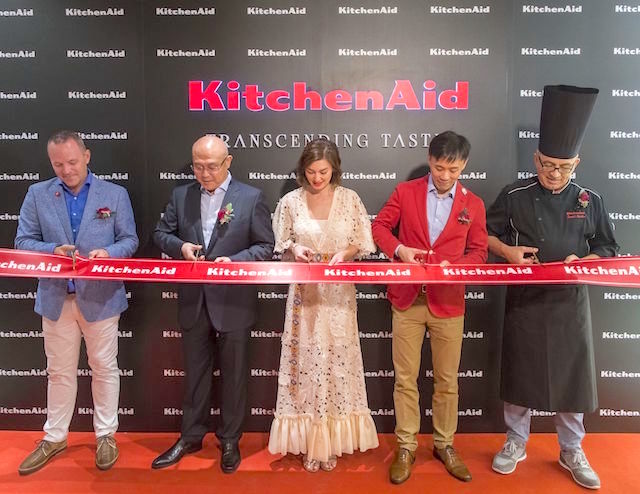
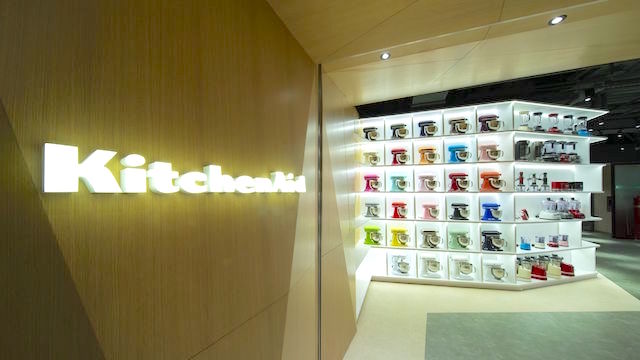
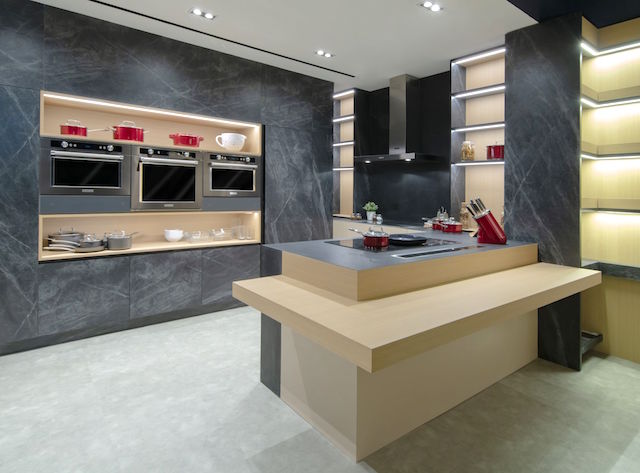
    Located at Lee Garden Three in Causeway Bay, the 2,000 square feet experience store does showcases KitchenAid’s bestselling small appliances and the recently launched range of major household appliances.

    To celebrate the store’s grand opening, a feast for the senses was hosted by Italian chef Daniele Paralovo alongside model and culinary goddess, Danielle Peita Graham.

    The highlights of the event included a live cooking demonstration and food-themed hair accessories by stylist Alistair Rae. The larger than life KitchenAid Artisan stand mixer on display at the store was also the centre of attention.

    Founded in 1919, KitchenAid’s story begins in 1908 when engineer Herbert Johnson came up with the idea of a stand mixer after observing a baker mixing dough and thought there should be a better way of doing the task.

    Almost a decade after the initial introduction of KitchenAid’s iconic stand mixer, the appliance brand has presence in 92 countries all over the world, in which Hong Kong is the second flagship experience store after Korea in Asia.

    As a favourite of tastemakers and creative cooks such as French chef Oliver Baiard and American cooking guru Julia Child, KitchenAid is known for its bold yet sleek design and professional performance.

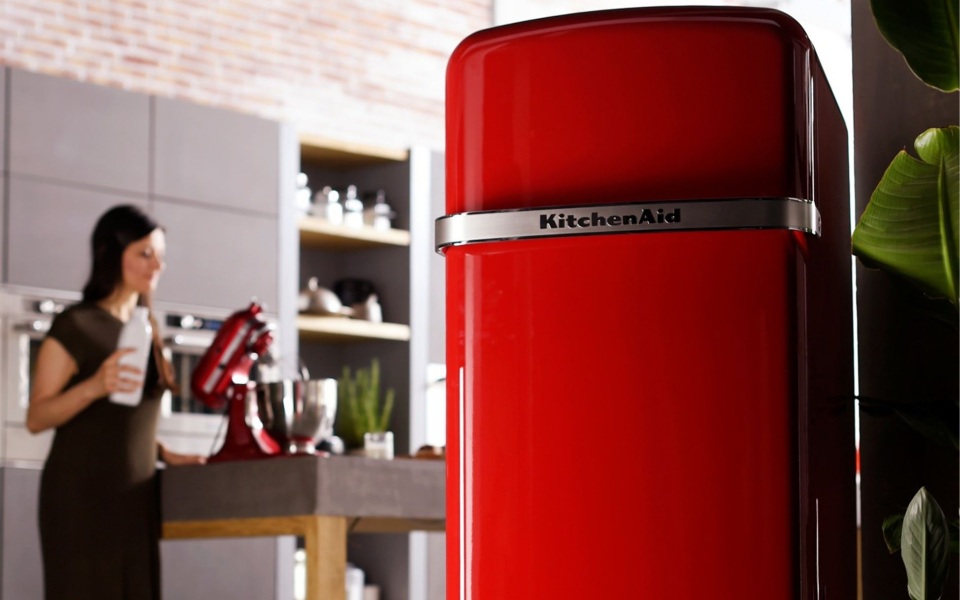
    Some of the most loved KitchenAid designer appliances include their iconic fridge and stainless-steel kitchen appliances that are as sophisticated as fine art.

  • Asia Pacific leads world tourism growth together with Europe

    Asia Pacific leads world tourism growth together with Europe

    Tourist arrivals worldwide climbed by +6% in the first four months of 2018, compared to the same period last year, according to new figures from the UN World Tourism Organisation (UNWTO).

    This not only continued the strong 2017 trend, but exceeded UNWTO’s early forecast for 2018.

    Growth was led by Asia and the Pacific (+8%) and Europe (+7%). Africa (+6%), the Middle East (+4%) and the Americas (+3%) also recorded sound results. Earlier this year, UNWTO’s forecast for 2018 was for a growth rate between +4-5%.

    “International tourism continues to show significant growth worldwide, and this translates into job creation in many economies,” said UNWTO Secretary-General Zurab Pololikashvili. “This growth reminds us of the need to increase our capacity to develop and manage tourism in a sustainable way, building smart destinations and making the most of technology and innovation.”

    From January to April 2018, international arrivals increased in all regions, led by Asia and the Pacific (+8%), with sub-regions South-East Asia (+10%) and South Asia (+9%) driving results.

    The world’s largest tourism region, Europe, also performed strongly during the four-month period (+7%), led by the destinations of Southern and Mediterranean Europe, and Western Europe (both +8%).

    Growth in the Americas is estimated at +3%, with strongest results in South America (+8%). The Caribbean (-9%) is the only sub-region to experience a decrease in arrivals during this period, weighed down by some destinations still struggling with the aftermath of the hurricanes of August and September 2017.

    The limited information coming from Africa and the Middle East points to +6% and +4% growth, respectively, confirming the rebound of Middle East destinations and the consolidation of the growth in Africa.

  • Vietnamese consumers among world’s most positive

    Vietnamese consumers among world’s most positive

    Vietnamese consumer confidence index achieved its highest score in the last decade, placing it as the fourth most optimistic country in the world, according to market research firm Nielsen.

    The index reached 124 points in the first quarter of 2018, up 9 points over the same period last year.

    “The great economic growth across industries, combined with strong foreign investment flows, increasing household incomes and proper government policies have resulted in optimism among consumers,” said Nguyen Huong Quynh, Managing Director of Nielsen Vietnam.

    “However, positive sentiments did not lead to strong fast moving consumer goods (FMCG) sales in Vietnam, with the market up just 1.8 percent in Q1. The growth was slower than expected and reflected the characteristic of FMCG industry in Vietnam, possibly due to changing consumer behaviors,” Quynh added.

    Having a stable job and good health remains key concerns of Vietnamese consumers. In this quarter, the top five concerns of Vietnamese consumers remained the same as last year. Job security topped the list with 43 percent, followed by health and wellness (41 percent). Other concerns included work-life balance and economic status with both at 23 percent.

    The Nielsen report said Southeast Asia and North America showed the highest level of consumer confidence. The confidence score of consumers in Southeast Asia increased 2 points from 119 in fourth quarter of 2017 to 121 in first quarter of this year.

  • Japan’s Ryohin Keikaku opens second Muji Hotel in Beijing

    Japan’s Ryohin Keikaku opens second Muji Hotel in Beijing

    Japan’s Muji hotel & store has just opened in Beijing in a key location overlooking Tiananmen Square.

    The hotel’s first basement-level retail store sells travel essentials and everyday items, many of which feature in the guest room amenities.

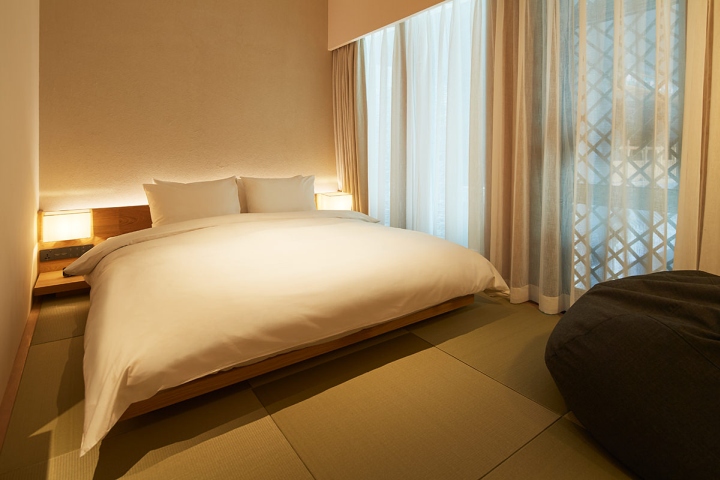
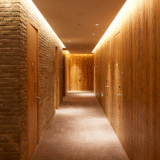
    Designed as an antidote to the brute gorgeousness of boutique and luxury properties and the cheapness of budget accommodation, the hotel’s understated zen-like interior grounded in undisturbed sleep is intended to stand in keeping with the world heritage sites in the hotel’s immediate surrounding district.

    The property also features a Muji Café&Meal venue serving simple, health-conscious food offerings, and a diner featuring classic East Asian cuisine.

    Another Muji hotel opened in Shenzhen last January.

    Check how Muji Hotel Beijing looks in the gallery below (10 images) :

  • Indonesia Extends Freeport’s Grasberg Mine Permit Amid Talks on Environmental Impact

    Indonesia Extends Freeport’s Grasberg Mine Permit Amid Talks on Environmental Impact

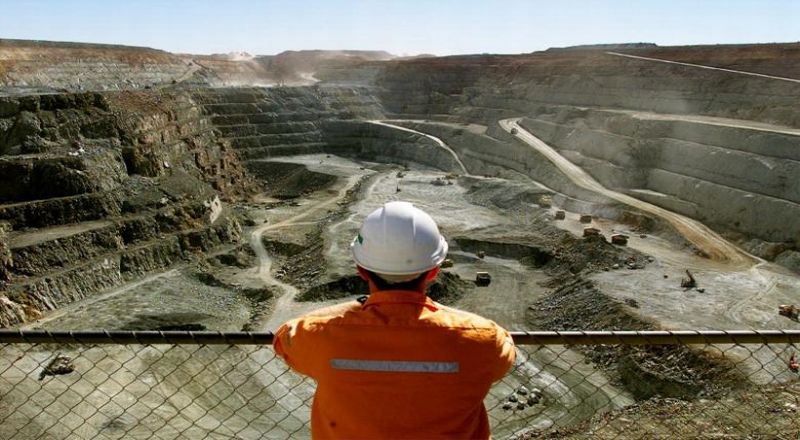
    Indonesia has extended a temporary operating permit for Freeport McMoRan’s Grasberg copper mine in Papua until the end of the month while discussions continue over long-term rights, a Mining Ministry official said.

    The United States-based mining giant’s local unit, Freeport Indonesia, was given a temporary operating permit until July 31 for Grasberg, the world’s second-biggest copper mine, Coal and Minerals Director General Bambang Gatot Ariyono said at a press conference on Tuesday (03/07).

    Freeport has been in negotiations with Indonesia to secure long-term operating rights at Grasberg after the government introduced new rules last year aimed at giving it greater control of its resources.

    However, efforts to finalize a deal have been overshadowed by concerns over Grasberg’s environmental footprint.

    “This month we hope all of the aspects – the divestment transaction, investment stability guarantees, the environment, a smelter – all of them are resolved,” Gatot said.

    Freeport’s previous temporary operating permit for Grasberg expired on June 30 after being awarded in January.

    Freeport’s Grasberg partner Rio Tinto and state-owned mining holding company Inalum are also involved in negotiations on Grasberg, which needs significant investment to develop an underground phase from its current open-pit construction.

    Inalum may complete a multi-billion-dollar deal to acquire a majority stake in Grasberg this month, officials said on Saturday, but details on how Freeport will maintain operational control have yet to emerge.

    According to Gatot, the main issues to be resolved were environmental matters, and discussions were ongoing “between the Environment and Forestry Ministry, the Freeport team and Inalum, who have requested an opportunity to resolve them.”

    Other matters, which include a requirement for Freeport to build a second copper smelter and adopt a new tax regime, “are nearly finalized,” he said.

    A 2017 state audit of operations at Grasberg that outlined massive damage from Freeport’s mine waste and a lack of proper environmental permits has complicated efforts to wrap up the deal.

    In April, following the audit, Environment and Forestry Minister Siti Nurbaya Bakar issued two decrees that gave Freeport six months to overhaul management of its mine waste.

    Freeport’s average daily copper ore production at Grasberg was between 175,000 and 176,000 metric tons so far this year, below its 2018 target of 230,000 tons, Gatot said.

    The company exported 465,000 tons of copper concentrate from February to mid-June, he added.