Author: Mei Ling Tan

  • Philippines AirAsia to develop more regional Filipino hubs

    Philippines AirAsia to develop more regional Filipino hubs

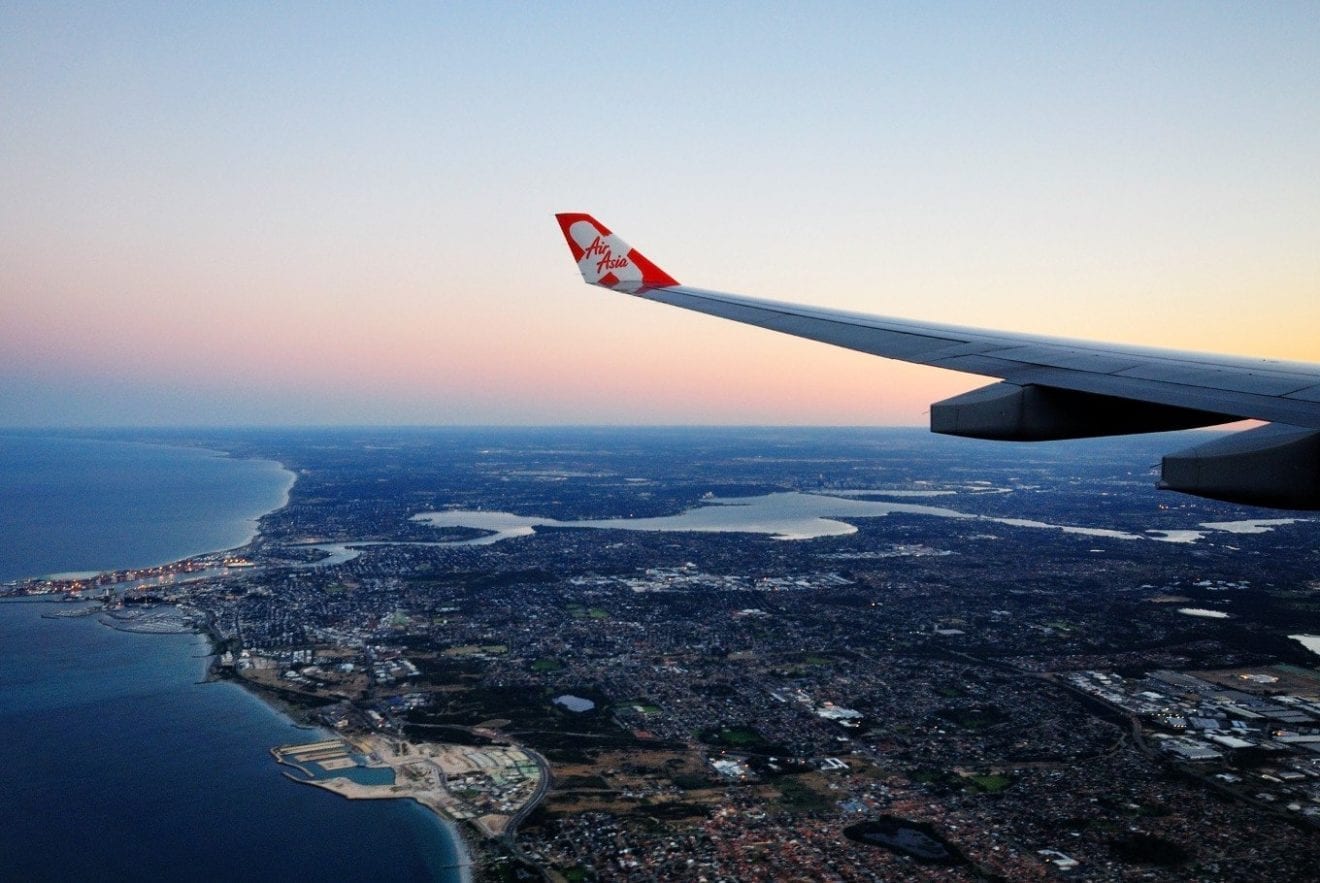
    Philippines AirAsia will skirt future growth at Manila Ninoy Aquino Int’ldue to serious capacity constraints and instead will focus its development at regional hubs in Clark, Cebu, Kalibo, Puerto Princesa, and Panglao, an airport set to replace Tagbilaran by the end of 2018, CEO Dexter M. Comendador has told the Business Mirror.

    “These will be opened up as hubs because we are lacking space in Manila, and in the next 10 years, we should have 70 planes. So we need to distribute the planes to the countryside. It will spread; then development will follow,” Comendador has said.

    The Filipino unit of AirAsia Group currently operates 399 weekly departures, 38% of all its flights, out of the capital airport in the country. Cebu, its second-largest base, is served with 160 weekly departures. However, these proportions may soon change.

    According to the ch-aviation fleets module, Philippines AirAsia currently operates twenty-one A320 aircraft. It is set to receive around fifty more A320 Family jets, possibly including A320neo, in the next 10 years.

    In line with a government directive, Philippine Airlines (PR, Manila Ninoy Aquino Int’l) has also announced that it, too, will focus on regional airports as the capital gateway lacks space for growth.

    Comendador has also reaffirmed Philippines AirAsia’s plan to launch an Initial Public Offering (IPO) in the fourth quarter of 2018. Philippines AirAsia intends to raise around USD200 million and float up to 30% of its shares.

  • Airline cargo capacity rises faster than demand

    Airline cargo capacity rises faster than demand

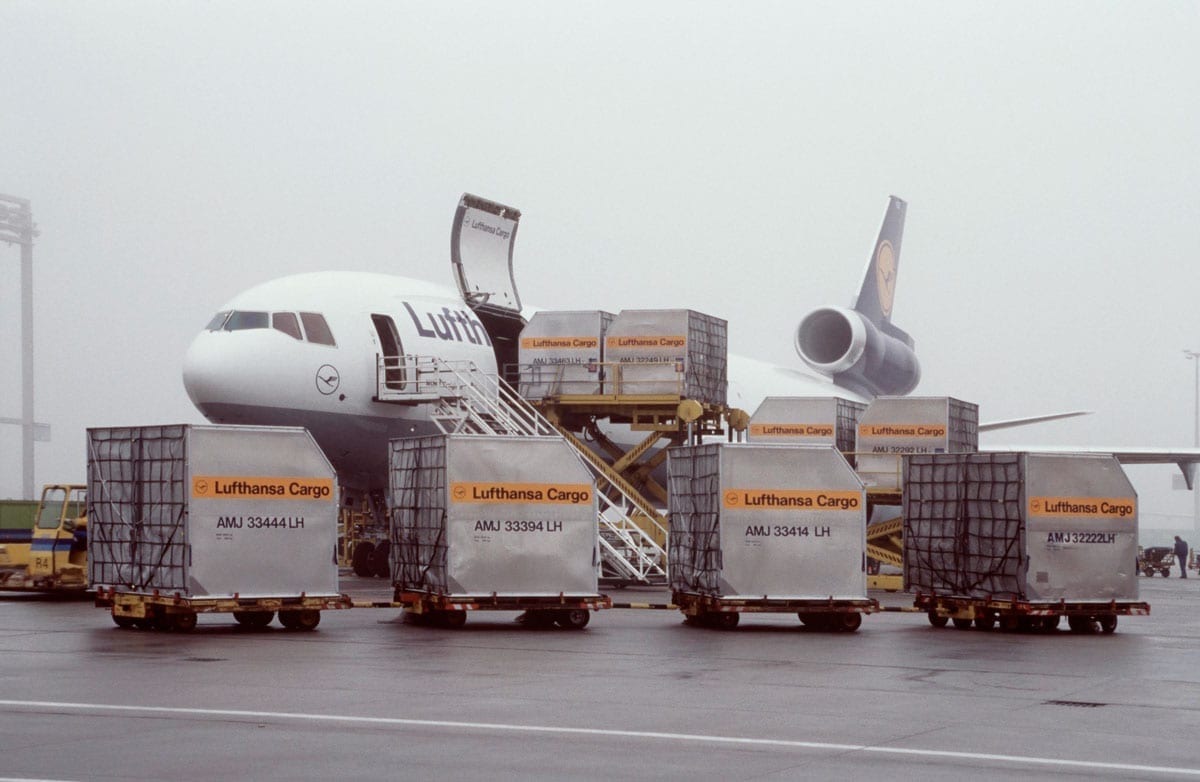
    IATA says airfreight capacity rose faster than demand in March for the first time in 20 months. Demand rose 1.7 percent year-on-year, a drop of 5.0 percent over February, to produce the slowest growth in 22 months. The increase in global capacity fell to 4.4 percent from 6.3 percent in February.

    As forecast last month, IATA says the slowdown is due to the end of an inventory restocking cycle coupled with a “softening” of global trade.

    “We would caution against reading too much into the softening in seasonally adjusted volumes in recent months as yet,” said IATA economist David Oxley. “We continue to expect freight-tonne kilometres to grow in the region of 4-5 percent in 2018. However, the bigger picture is that the recent period of airfreight outperformance looks to be firmly behind us.”

    Airlines in all regions except Latin America reported year-on-year declines, with Africa falling 3.4 percent after reporting the fastest growth for 17 of the last 18 months; Asia-Pacific carriers produced growth of just 0.7 percent; European airlines’ traffic rose 1.0 percent as the € gain against the US$; Latin American airlines by comparison saw a 15.5 percent growth in volumes, in part due to an improved Brazilian economy; a growth of 0.8 percent by Middle East carriers in March was consistent with a “general weakening” over recent months; and North American airlines produced a 3.9 percent rise in traffic – although the US inventory-to-sales ratio rise in 2018 suggests an airfreight boost from restocking is over, says the Association.

  • Rising costs in China make entrepreneurs look to Vietnam

    Rising costs in China make entrepreneurs look to Vietnam

    ‘People are starting to wonder if doing business in China is worth it.’ African nations have been turning to Vietnam as the business environment in China becomes increasingly more difficult. African businesses started flooding to Guangzhou City after China joined the World Trade Organization in 2001.

    Migration from Africa has risen as China “has stepped up its diplomatic links and investments with the continent,” the newspaper explained.

    In 2009, local media put the African population in Guangzhou at 100,000, including those who had overstayed their visas, it said.

    Guangzhou draws merchants who come to buy goods such as jewelry and electronics in bulk, which they ship back to their homelands.

    A part of the city has even been given the name “Little Africa.”

    But things have changed.

    The city’s African population had dropped to 10,344 in February last year, citing the municipal bureau of public security as saying, though Liang Yucheng, a professor of social sciences and humanities at Sun Yat-sen University, told the newspaper that there were still nearly 20,000 African traders in Guangzhou.

    Felly Mwamba, a leader of the Congolese community in Guangzhou, said one of the main reasons for this was rising costs, listing visa fees air tickets and other living expenses.

    “Most African trade with China is basic goods, like clothes, shoes, electrical appliances and low-end smartphones. Prices, logistics and living costs are all soaring in China,” a Kenyan trader identified as Don said.

    “Every day among the African community in Guangzhou, more and more have people started talking about going home or exploring new markets like India, Vietnam and Cambodia,” he said.

    The other reason for the falling African population in Guangzhou, as pointed out by Xinhua news agency in January, is that “police have tightened enforcement on illegal immigration.”

    Long-time African residents told that they have seen their compatriots lapse into “illegal” status after struggling with visa renewal requirements.

    Nigerians must submit criminal record checks for all work and student visas, and no African countries are eligible for 72-hour or 144-hour transit visa exemptions, unlike visitors from many other nations.

    “My friend had to go home to give fingerprints for a criminal record check. A return flight costs $2,000. By the time he got all his documents in order, his visa had expired,” said Akubakarr Sajor Barrie, director of an import-export company.

    “For a small business owner, this is really hard. People are starting to wonder if doing business in China is worth it and they’re going to countries like Turkey and Vietnam instead,” he was quoted as saying.

    Official data from the labor ministry showed the number of foreign workers in Vietnam grew by more than 12,600 in 2004 to 83,500 in 2015, and 93 percent of them are legal.

    Those foreigners come from 110 different markets, and most of them are from China, South Korea, and Taiwan.

    Vietnam was named among the top 10 destinations for expats in a ranking released in March to aim at guiding the world’s rising number of modern nomads.

    The country was placed ninth on the InterNations’ 2018 Expat Insider survey, climbing three spots from last year.

    More than four in five expats, or 81 percent, described the Vietnamese people as welcoming, and 73 percent said it was easy to settle down in the country, the survey found.

    Of the expats questioned, 56 percent said they had found it easy to make friends with locals, and 16 percent said they planned to stay forever.
  • Touristly rebrands to Vidi one year after selling 50% stake to AirAsia

    Touristly rebrands to Vidi one year after selling 50% stake to AirAsia

    Malaysian online travel start-up, Touristly has rebranded to Vidi. The move follows the evolution of the company from a traditional trip planner to a visual discovery platform as it looks to captures the tours and activities in Asia Pacific and beyond.

    Taken from the Latin word “to see”, Vidi also reflects the travel agent’s mission to help  travellers see the world by discovering and booking the best things to do while on holiday.

    “Our mission from day one was to give travellers the missing link in how they plan their holidays. This rebranding marks a new chapter in our journey as we move towards making travel discovery more engaging, fun and visual,” Aaron Sarma, founder and CEO of the company said. In addition, the company also unveiled a new mobile app coming in line with the rebranding in the coming weeks.

    Last year, AirAsia ​acquired a 50% stake in Touristly through an asset injection and loan deal valued at RM11.5 million. AirAsia Group CEO, Tony Fernandes will serve as chairman of the board for Touristly upon completion of the acquisition. The transaction ​will see AirAsia inject the digital platform of its Travel 3Sixty inflight magazine, valued at RM6.5 million, into Touristly via AirAsia Investments.

    The digital platform comprises the online brand for the Travel 3Sixty inflight magazine, touchpoints on the website and online advertising assets, which will allow the startup to reach AirAsia’s 60 million guests annually. Touristly, which will operate under the Travel 3Sixty brand following this deal, will also gain access to offline advertising assets, including the physical version of the inflight magazine, overhead cabins and seat trays on AirAsia aircraft.

  • Ericsson, Fraunhofer Institute demo industrial 5G for jet engine

    Ericsson, Fraunhofer Institute demo industrial 5G for jet engine

    Ericsson is partnering with the Fraunhofer Institute for Production Technology to explore and develop industrial applications for 5G.

    The first example is producing so-called blade integrated disks, or blisks, for Germany-based jet engine manufacturer MTU Aero Engines.

    Blisks are high-tech components where the disk and blades are produced as a single piece and serve the purpose of compressing the air inside jet engines. They are milled out of solid pieces of metal and have extremely high requirements towards accuracy and surface integrity.

    Typically the milling process takes 15-20 hours and the total lead time is around three to four months, including the coating processes and quality checks.

    At the trial Ericsson has built a 5G trial system operating on 3.5-GHz, which is connected to an acceleration sensor mounted directly on the blisk in the production machinery.

    Vibrations are transmitted in real time via 5G to the evaluation system. The very low latency of 5G technology helps correlate the vibration to the tool’s position and enable prompt adjustment of the production process.

    “Applying 5G in the manufacturing industry has many important benefits in terms of costs, quality, and flexibility. The ultra-low latency and very high bandwidth make it possible to control machines in real-time, reducing manufacturing costs and improving the quality of products,” Ericsson said.

    The Swedish vendor said the 5G-enabled production process can help a single factory save €27 million ($32.7 million) per year in efficiency. It also helps cut CO2 emissions – from both the production of blisks and their operation in jet engines – by some 16 million tons annually on a global basis.

    These efficiencies and benefits would be impossible if using fixed line technology because of the complexity of production, the vendor added.

    Ericsson said the Blisk project, which was presented at the Hanover Fair in Germany late April, is the company’s first published tangible case study.

    “The Blisk project is a perfect example of what is possible in the industrial context with 5G in the future. Ultra-low latency of 5G makes this industrial use case feasible,” said Arun Bansal, Ericsson’s senior vice president and head of market area for Europe and Latin America.

  • 5G-ACIA created to promote 5G in industrial production

    5G-ACIA created to promote 5G in industrial production

    A number of key players from the telecoms, automation and manufacturing sectors have banded together to create a new alliance that aims to promote adoption of 5G in industrial production and to design it for industrial capability from the outset.

    The 5G Alliance for Connected Industries and Automation (5G-ACIA), which was formed at the ZVEI in early April, brings together 26 leading companies including Ericsson, German Research Center for Artificial Intelligence, Fraunhofer Gesellschaft, Bosch, Huawei, Infineon, Intel, Mitsubishi, Nokia, Siemens, Vodafone, and Yokogawa.

    The 5G-ACIA is contributing to the standardization and regulation of 5G technologies. At the same time, the alliance is working to identify and analyze possible use cases and the associated requirements from the perspective of the industrial domain.

    Dr. Andreas Müller, chairman of 5G-ACIA, said the key objective of 5G-ACIA is to ensure the best possible applicability of 5G technology and 5G networks for connected industries, in particular the manufacturing and process industries.

    The alliance brings together important players in the fields of IoT and smart factories for the first time and will make it possible to align 5G with the needs of industries worldwide, Muller said in a statement.

    “5G will become the central nervous system of the Factory of the Future and will have a disruptive impact on industrial production,” he said. “There are many advantages to 5G, including a very powerful wireless networking technology that is suitable even for critical industrial applications.”

  • SAP expands innovation footprint in APJ with the launch of SAP Leonardo Center Singapore

    SAP expands innovation footprint in APJ with the launch of SAP Leonardo Center Singapore

    SAP  today announced the launch of the SAP Leonardo Center Singapore, established to help customers, partners and the broader ecosystem of universities and start-ups across the Asia Pacific Japan (APJ) region to deliver faster innovation with less risk. This launch expands SAP’s innovation footprint in the region, adding to the three Innovation Centers and four SAP Labs in APJ. Globally, SAP spent €3,352 M on Research and Development in 2017.

    According to World Economic Forum, Singapore is the most competitive economy in Asia Pacific and third globally. The SAP Leonardo Center Singapore is the fifth in the global network of SAP Leonardo Centers. It is designed to serve as the “front-end” for APJ customers and partners to accelerate their digital innovation journeys using the capabilities of SAP Leonardo and Design Thinking. SAP Leonardo brings together Internet of Things (IoT), Machine Learning, Blockchain, Big Data, Analytics and Data Intelligence on SAP Cloud Platform. It also applies SAP’s leading technology capabilities and deep knowledge of 25 industries, in a live technology-delivery environment to deliver the Intelligent Enterprise for every customer.

    “The SAP Leonardo Center in Singapore will showcase the art of the possible in digital innovation and help our customers scale quickly, easily and effectively,” said Scott Russell, President, SAP APJ. “Together with our customers and partners, we aim to leverage the SAP Leonardo Center Singapore as a think tank to drive purpose-led innovation that will ultimately improve the lives of one billion people and deliver the Intelligent Enterprise for over 70,000 customers in APJ by 2022. The SAP Leonardo Center in Singapore will play a key role in realizing our growth strategy and drive customer success in the new Intelligence era.”

    Collaborative business environment

    The SAP Leonardo Center Singapore aims to foster a collaborative environment for businesses, start-ups, small and medium-sized enterprises to experiment and innovate. One of SAP APJ’s first SAP Leonardo customers in Korea is Hanon Systems. Headquartered in South Korea, Hanon Systems is a global leader in automotive thermal and energy management solutions, and an early-adopter of SAP Leonardo in APJ. With insight into the benefits of digital manufacturing, the company identified manufacturing performance and equipment health as areas of measurement to pilot the Leonardo platform at one of its plants in Europe. Robert Oh, Chief Information Officer and Business Transformation Executive at Hanon Systems, believes a supplier’s ability to compete in today’s automotive market is no longer measured by just its product offering. “At Hanon Systems, we believe our digital transformation can change the way we manufacture in a positive way to improve our productivity, increase our overall efficiency and further strengthen our customer relationships.”

    Hub for Ecosystem

    The SAP Leonardo Center Singapore also serves as a hub for SAP’s broader digital technology ecosystem including universities, startups, tech communities and accelerators. SAP APJ prepares the next-generation innovators with knowledge and skills for the digital future through the SAP University Alliances program, which exposes 1.7M students in educational institutions in APJ to innovative technologies. SAP APJ has established 13 Next-Gen labs in APJ with plans to open more in the future. SAP India designed a modular offering called i360 forAjeenkya DY Patil University, which includes SAP Leonardo IoT, SAP Leonardo Machine Learning and SAP Open SAP Learning. India has seen an increase in the uptake of modular offerings that focus on Industry 4.0 and Smart Cities. Demand for talent in India with skills in IoT, Machine Learning, Artificial Intelligence, Blockchain and Big Data and Analytics is high. Educational institutions have found merit in collaborating with technology firms to close this gap.

  • Arvato takes over warehousing and distribution for ECOVACS Robotics

    Arvato takes over warehousing and distribution for ECOVACS Robotics

    Arvato SCM Solutions is the new fulfillment partner for the in Duesseldorf, Germany based European Headquarter of ECOVACS Robotics, a global leading manufacturer of home robotic appliances. As part of the collaboration, the service provider is responsible for the entire warehousing and distribution processes of robots and accessories for the EMEA region since the beginning of March. Operating out of Arvato’s 75.000 square meter logistics site in Dueren (North Rhine-Westphalia), an essential part of the solution developed for ECOVACS is Arvato’s new transport management system, which allows all inbound and outbound shipments to be managed and billed carrier-neutrally.

    For our growth in Europe, we needed a partner with experience in retailing,

    covering specific retail requirements, while at the same time providing a high level of system automation as well as efficiency through scalable structures,” explains Andreas Wahlich, General Manager of ECOVACS Europe. In the highly competitive European market for home robotic appliances, the robotics company currently ranks second in terms of market share. In its home market China and the Asia-Pacific region in general, ECOVACS is the market leader.

    The new business was implemented at the state-of-the-art multi-user site in Dueren. From there, Arvato SCM Solutions manages and distributes ECOVACS robots to business customers, distributors and consumers in the EMEA region. “We started with several central European countries as well as some third party countries like Switzerland and Ukraine,” states Dennis Schmitz, Director Account Management Hightech & Entertainment at Arvato SCM Solutions. Overall, he expects a shipment volume of around 300,000 floor and window cleaning robots in the first year – with a strong growth tendency for the following years.

    “ECOVACS is a client with high growth potential and active in the fast-evolving robotics market – a target industry that is also a part of our growth strategy,” says Thomas Becker, Executive Vice President Hightech & Entertainment at Arvato SCM Solutions. “Here we can leverage one of our strengths, focusing on standardized and efficient processes in highly complex retail environments.”

  • Vietjet reports first quarter profits of over USD65 million

    Vietjet reports first quarter profits of over USD65 million

    Vietjet Aviation Joint Stock Company (HOSE: VJC) has just released its consolidated financial statement for the first quarter of 2018 with significant growth for the airline that exceeds expectations.

    The airline’s revenue stood at VND12,560 billion (USD552 million), a year-on-year increase of 146% that is attributed to growth in passenger transport, ancillary service and sales and leaseback revenue.

    The airline’s fleet expansion, coupled with the opening of new international routes, raised its transport revenue to VND6,035 billion (USD265 million), an increase of 52% over the same period last year, and 10% higher than the company’s target. Vietjet’s core business profit was increased to nearly VND737 billion (USD32 million), a 74% jump over the previous year’s figure. Ancillary revenue also increased to VND1,825 billion (USD80 million), a rise of 64% year-on-year.

    The positive results in revenue growth contributed significantly to the company’s gross profit of VND1,810 billion (USD79 million), a 135% increase year-on-year. At the same time, sales and management costs also increased at a lower rate compared to revenue growth. Therefore, Vietjet’s profit before tax in this quarter stood at VND1,480 billion (USD65 million), an increase of 254% compared to Q1 2017. After-tax profit of the parent company’s shareholders stood at VND1,366 billion (USD60 million), a 263% increase. Earnings per share in this quarter stood at VND3,026 (USD0.13), one of the highest EPS on the Vietnamese stock market.

    Vietjet’s Q1 results were 25.5% over the airline’s original target of VND50,970 billion (USD2.24 billion) in revenue and VND5,806 billion (USD255 million) in profit before tax for 2018.

    In the first quarter of 2018, Vietjet operated 28,830 safe flights with the technical reliability rate of 99.7%, and with the safety performance indicators of flight as well as ground operation amongst the top in the region. The on-time performance in the first quarter stood at 83.4%. During Q1, Vietjet also announced plans to open international routes to India and Australia in line with its plans to expand its international flight network after having achieved full coverage on the domestic network.

    The airline’s stellar Q1 performance was further buoyed by the naming of Vietjet as the region’s top fastest growing airline by Singapore’s Changi Airport.

    As of March 31, 2018, Vietjet’s undistributed profit after tax was VND6,724 billion (USD295 million). The company will pay a cash dividend of 10% on May 25, 2018 to its shareholders and is on its way to finalizing the necessary procedures at the State Securities Commission of Vietnam to settle the remaining 20% dividend of 2017 by shares. Earlier last week at the 2018 General Shareholders Meeting, the shareholders also agreed with a proposal to pay dividends of 50% of its profits in 2018.

  • Shrinking profit for Sabeco’s Vietnam

    Shrinking profit for Sabeco’s Vietnam

    Saigon Beer, Alcohol and Beverage Corporation (Sabeco) has released its consolidated financial statement for the first quarter of this year. Accordingly, Sabeco reported an increase in revenue but a decrease in profit.

    Notably, its consolidated net revenue was VND7.81 trillion ($343.1 million), up 4.6 per cent on-year, after-tax profit decreased by 2.7 per cent to VND1.16 trillion ($50.96 million).

    Besides, as of March 31, the firm’s asset value reached VND20.76 trillion ($912.09 million), down 6 per cent against the beginning of the year.

    Meanwhile sales expense decreased by 13 per cent to VND594 billion ($26.18 million) due to decreases in expenditure for administrative and marketing programmes.

    Along with the decline in profit, Sabeco’s share plunged after hitting the record VND334,500 ($14.69) in late November 2017. Notably, on May 4, Sabeco’s shares were at VND219,000 ($9.62).

    Previously, the April 23 extraordinary general shareholders’ meeting voted to add three new foreign members to the management board, including one from Thai Beverage Public Co., Ltd.

    The first is Koh Poh Tiong, chairman of Thai Beverage-owned Beer Group, which owns a 49 per cent stake in Vietnam Beverage.

    This year, Sabeco estimated earnings of VND35.98 trillion ($1.58 billion) in revenue and VND4.8 trillion ($210.86 million) in after-tax profit, signifying increases of 4.4 and 2.2 per cent, respectively.

    The others are Malcolm Tan Tiang Hing, CEO of Shanghai-based alcoholic beverages distributor Dxcel International, and Sunyaluck Chaikajornawat from Thai law firm Weerawong Chinnavat & Partners Ltd. They were elected as independent members.

    Speaking at the meeting, Koh Poh Tiong stated that the new members will co-operate with the existing members to help Sabeco maintain its leading position in Vietnam. Besides, the new members will try to take the Sabeco and 333 Beer brands abroad. Singapore will be the first destination and the next stop Thailand, before other countries.

    It will take massive funds to realise the above promise, which seems even more unlikely in light of the consecutive decreases in Sabeco’s profit.

  • Seafolly eyes off China in further expansion

    Seafolly eyes off China in further expansion

    Armed with a mandate to pursue global growth, Seafolly’s new chief executive Paul Kotrba is eyeing off an expansion into China to further build on the Aussie swimwear brand’s international business, less than a month after opening its first retail store in Europe.

    The former LVMH executive has been busy since joining the 43-year-old business in January, overseeing the final stages of an e-commerce relaunch and bedding down a deal for a flagship store in France’s renowned Rue D’antibes shopping precinct in Cannes.

    But now the retail veteran is looking east to untapped potential in the world’s largest state, in what could be Seafolly’s first significant step in Asia since launching retail stores in Singapore eight years ago

    “We’re looking at China really closely,” Kotrba told. “For cultural reasons and preference, the swimwear category doesn’t have a big footprint … you don’t see a standalone global swim fashion house trading in the market.”

    Kotrba is no stranger to China, having overseen DKNY’s expanding presence in Asia during his time with LVMH, an experience that’s left him both bullish and cautious on the notoriously fickle market.

    “We want to be very methodical and careful,” Kotrba explained. “It’s super competitive and the Asian customer is more educated than most customers around the world … you really need to put your right foot through the door.”

    The swimwear brand, which now sources as much as 45 per cent of its annual revenue outside of Australia, already has three stores in Singapore and has been learning and adjusting its Asian offer for some time.

    Kotrba was tight lipped on specifics but has come to the company looking to drive the international part of its business at a time when the Australian retail sector has come under pressure.

    Australia is still Seafolly’s largest market with 23 stores but a subdued outlook for discretionary retailers is dictating caution.

    “We’re optimising our footprint, I’m not sure we’ll be growing it by significant numbers,” Kotrba said of the company’s local retail presence.

    European pop-ups in the pipeline

    Instead, alongside Asia, Europe has been earmarked for retail growth. With an initial store in France now up and running Kotrba said Seafolly will look to pursue pop-up stores throughout the continent over the European summer.

    “If you’ve spent a summer in Europe you’re familiar with the places that the majority of people go in July and August [such as Mykonos, Greece] … having a short-term presence in some of those key locals is something we’re looking into.”

    Europe, predominately through an extensive wholesale network and concessions in French and British department stores, currently accounts for 20 per cent of Seafolly’s total revenue, with France growing by 46 per cent y/y in 2017.

    The strategy is to test the waters -literally- with pop-up stores, which will then inform decisions about where to establish more permeant operations throughout the Euro-zone.

    Kotrba did not say whether Seafolly had a store target for Europe in mind, but the business will proceed with caution in light of the disruption plaguing bricks-and-mortar retail globally.”

    “We don’t want to open flagships indiscriminately … everyone is coming to grips with the challenging landscape,” he said.

    Seafolly also recently launched new e-commerce platforms in Australia the US and Singapore, introducing a new interface and a variety of new functions.

  • Vietnam’s e-commerce market sees many new players

    Vietnam’s e-commerce market sees many new players

    Vietnam is among the fastest growing commerce markets. E-commerce makes up 0.5 percent of value of the FMCG (fast moving consumer goods) sector in the four largest cities, while the number of online shoppers increased from 5.4 percent to 8.8 percent in urban areas within one year. The value of one online shopping cart triples the value of a traditional shopping cart.

    The recent report of Kantar Worldpanel says that Vietnam’s e-commerce activities grew by 69 percent in 2017. Meanwhile, Frost & Sullivan predicted that Vietnam’s market value would rise from $1.7 billion in 2016 to $3.7 billion in 2030, or an annual growth rate of 45 percent.

    Chinese firms

    Analysts warned that Chinese online retailers are penetrating the Vietnamese market, putting pressure on domestically made products.

    JD earlier this year announced investment in Tiki to become one of the biggest shareholder of the e-commerce firm. While JD declined to reveal the amount of capital, Tiki has said that it had raised $50 million worth of funds to expand its business.

    Prior to that, Alibaba launched in Vietnam in April 2016 after it wrapped up the takeover of Lazada in SE Asia.

    Headquartered in Singapore, Shopee is still listed among Chinese firms in Vietnam as 40 percent of Shopee shares are held by Tencent, a Chinese technology group.

    All three Chinese ecommerce markets entered the Vietnamese market through mergers and acquisitions.

    According to Google, Lazada, Shopee and Tiki are three out of four most searched e-commerce websites in Vietnam.

    Chinese not the only foreign players

    However, with investors from the US and Japan entering the field recently, the worry about the dominance of Chinese firms has been lifted.

    Most recently, Japanese Scroll acquired 26.9 percent of shares of Cat Dong, the company that owns cungmua.com, nhommua.com and Shipto.vn. This is the second time that Cat Dong transferred capital during its 8-year operation.

    Prior to that, Cat Dong received investment from ACA Investment, a Japanese ifund belonging to Sumitomo which once poured money into Bibomart and Son Kim Land.

    In early March, the e-commerce market welcomed Amazon. The US giant, instead of making investment deals, decided to join hands with the Vietnam E-commerce Association. With the cooperation, Amazon wants to help Vietnamese businesses export their products on the Amazon platform.

  • Vietnamese concerned as biofuel proposed to replace regular fuel

    Vietnamese concerned as biofuel proposed to replace regular fuel

    People fear that they are being forced to buy a product they are not interested in. A new proposal to replace the most popular gasoline in Vietnam with biofuel is raising concerns among experts and consumers who said it will force them to buy a lesser product.

    The idea of replacing the current 95-octane gasoline A95 with E5 biofuel was proposed by Tran Minh Ha, deputy director of Saigon Petro at a meeting between fuel companies and the Ministry of Industry and Trade on Wednesday.

    E5 is a locally-produced biofuel that the government has been trying to promote for years. Starting from January 1, the government has officially replaced the 92-octane A92 with the ethanol-blended E5, which is a mixture of 95 percent of A92 and 5 percent of ethanol.

    With prospects of A95 being wiped off the market, drivers feel they are being forced to switch to the E5 biofuel, which they don’t want.

    Although studies conducted by Hanoi University of Technology have found that the E5 mixture is good for engines while producing fewer emissions, Vietnamese drivers are still hesitant because they fear that it can cause fire or damage their vehicles’ engine and parts.

    “No policy should compel people to purchase a product. Authorities need to make careful calculations with the public’s preference taken into consideration,” said Ngo Tri Long, former director of Market Research Institute under the Ministry of Finance.

    Although E5 is reportedly used by 42 percent of drivers, the quality of this mixture has not convinced the public, Long said.

    As there is currently only one company producing E100 alcohol in Vietnam, an ingredient of the E5 mixture, there won’t be enough supply to produce biofuel should A95 be taken off the market, he added.

    Local fuel businesses have been trying to promote ethanol fuel by lowering its price. However, the price difference between E5 biofuel and the popular A95 is not substantial enough to attract drivers, according to Tran Ngoc Nam, deputy general director of Vietnam Petroleum Group (Petrolimex).

    In a VnExpress survey of over 13,000 readers, 88 percent said they do not want the familiar A95 to be withdrawn from the market.

    The Ministry of Industry and Trade said on Thursday that they will take the matter into consideration and ask for directions from the government.

    Most countries in the world still offer consumers a choice between ethanol and gasoline. The United States, Brazil and European Union are leading the change in biofuel usage, producing and consuming about 80 percent of the world’s total, according to Bioenergy Australia. Thailand plans to increase its biofuel consumption from 7 percent of total fuel energy use to 25 percent by 2036.

  • Ermanno Scervino explores Hong Kong with Shops

    Ermanno Scervino explores Hong Kong with Shops

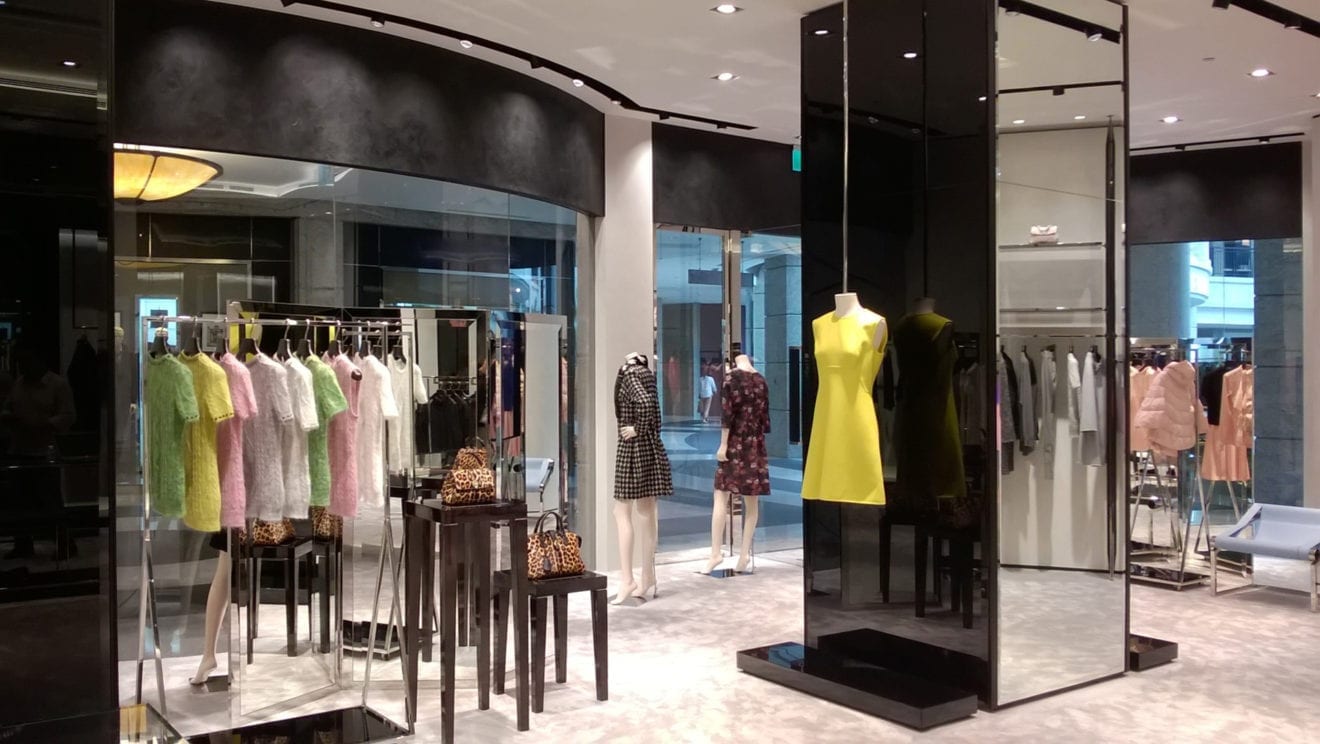
    Italian fashion label Ermanno Scervino has opened its first boutique in Hong Kong, in Ocean Center Harbour City.

    With four large windows and an external light box, it covers more than 130sqm and houses ready-to-wear collections and accessories for women and men.

    The flooring is in black marble and carpet, while the walls are embellished with canneté glass and polished steel while the external cladding is Belgian black marble.

    “Hong Kong is a dynamic metropolis with a deeply international soul, an authentic place to be for those who, like me, conceive of fashion as transcendent of geographical boundaries,” says Ermanno Scervino.

    Describing the Far East as an important market, group CEO Toni Scervino says that with partner Requing the brand will continue to expand its retail network in the territory.

  • Vietnam to cut black pepper farm area

    Vietnam to cut black pepper farm area

    The surge in world pepper prices in the 2013-2015 period led local growers to expand their farms uncontrollably. Vietnam plans to slash its black pepper growing area by 26.7 percent in response to falling global prices, the chairman of the country’s pepper association said Tuesday.

    Vietnam is the world’s largest black pepper exporter, accounting for 60-65 percent of global trade, and nearly half of global output.

    “We will cut the area to 110,000 hectares from 150,000 hectares over the coming years by encouraging local farmers to grow other crops and remove pepper farms with poor quality,” said Vietnam Pepper Association Chairman Nguyen Nam Hai.

    Hai said the surge in world pepper prices in the 2013-2015 period led local growers to expand their farms uncontrollably, from 50,000 hectares in 2013 to the current of 150,000 hectares.

    “Now with the increased output, prices have fallen and we need to cut the area,” Hai said.

    Vietnam’s black pepper exports in the first quarter rose 17.5 percent from a year earlier to 60,033 tons, but export revenue in the period fell 31.4 percent to $221 million, according to official customs data.

    Hai said exports for the entire 2018 are forecast to stay flat from last year at around 215,000 tonnes.

    Vietnam’s key markets for the spices include the United States, India, China and Europe.