Author: Mei Ling Tan

  • Manolo Blahnik opens store in Marina Bay Sands

    Manolo Blahnik opens store in Marina Bay Sands

    Manolo Blahnik’s Spanish footwear styles have arrived in Singapore with a standalone store in Marina Bay Sands.

    Architect Nick Leith-Smith, who has overseen all of Blahnik’s brick-and-mortar projects, designed the space, drawing inspiration from the cultural and contemporary architecture of Singapore. The floor has colonial-style monochromatic tiles, with woody elements, while sharp corners and matte-black frames reflect the modernity of its retail surroundings.

    Manolo Blahnik brand CEO Kristina Blahnik says Marina Bay Sands has been at the forefront of combining innovative architecture, luxury shopping and leisure, “so I am very excited now Manolo Blahnik will be part of this special concept”.

  • MobiFone refunded after failed pay TV investment deal

    MobiFone refunded after failed pay TV investment deal

    The telecommunications giant has not repaid AVG investors. MobiFone has confirmed to authorities that it has been refunded in full from a private pay TV firm after the deal between these companies fell through.

    The state-run telecommunications giant said that a total of VND8.9 trillion ($390 million), equivalent to a 95 percent stake in Audio Visual Global JSC. (AVG), had been returned to the company on April 26.

    MobiFone has yet to return shares to AVG shareholders, and is now waiting for government inspectors to confirm the transfer before proceeding, the statement said.

    In early 2016, MobiFone announced that it was breaking into the pay TV market through the acquisition of a 95 percent stake in AVG, without revealing any information about the deal.

    After investigating the deal, the Government Inspectorate concluded that MobiFone’s deal to acquire AVG had violated investment laws and caused a loss of about VND7 trillion ($307 million) to the state.

    Multiple ministries, including the information ministry, were also found responsible for a number of wrongdoings relating to the deal.

    The canceled acquisition was brought up last week when Communist Party General Secretary Nguyen Phu Trong said at a committee meeting that the government was determined to fight corruption without exception.

  • Telenor Velocity hosted Pakistan’s first ‘IoT Hackathon’ in Lahore

    Telenor Velocity hosted Pakistan’s first ‘IoT Hackathon’ in Lahore


    Pakistan’s first ever Internet of Things (IoT) based Hackathon successfully concluded by Telenor Velocity in Lahore on 5th May. The two day event brought together innovators, key industry players, startups and experts to witness and participate in the historic event where Telenor Velocity partnered with Plan9 and DIY Geeks to provide passionate developers the opportunity to innovate and present one click digitized solutions for everyday problems.

    The IoT Hackathon took place at Arfa Software Technology Park, the province’s hub of technological innovation. At the event Waqar Nayyar, Head of IoT at Telenor Pakistan, introduced the new IoT Platform and IOT products to the participants along with sharing Telenor Pakistan’s vision of fostering a digital revolution in the country and the company’s extraordinary initiatives in the IOT ecosystem. Hackathon was attended by Ayub Ghauri – CEO Netsol, Ather Osama – Member Science & Technology and ICT at Planning Commission, Kashif Moin – CEO Zigron, Barkan Saeed – Chairman P@SHA, Dr. Umar Saif – Chairman PITB, Burhan Rasool – GM PITB, Atif Mumtaz, Director PITB and officials from Telenor Pakistan and Plan9.

    Speaking at the event, Dr. Saad Ghazanfar Kiyani, Head of Digital Partnerships, Telenor Pakistan said, “Telenor Pakistan has always been at the forefront of digital innovation and technology in the country and firmly believes in its power to deliver greater empowerment for our societies. The IoT Hackathon is Telenor Pakistan’s investment in the future and we hope to bring great minds together to build it.”

    Innovators were invited from across the country for the Hackathon to devise innovative solutions for day to day problems and promote socioeconomic progress and wellbeing. Participating developers pitched their ideas before a panel of judges on the last day while they worked collaboratively to bring the products and solutions to life over the past two days. Their ideas were mentored by top-industry experts, developers, and investors to help them leverage the full potential of Telenor’s IoT platform for potential up scaling.

    The judges panel comprised of Sophia Hasnain – CEO linked things, Faizan & Arsalan – co-founders Wattie.io, Ehtisham Rao – CEO and founder ServUp, Usama – CEO DIYGeeks, Waqar Nayyar – Head of IoT, Telenor Pakistan – Dr. Adnan Jabbar, Consultant IoT and Muhammad Azm Saeed Dar, Head of IoT partner solutions. The panel evaluated pitched ideas and reviewed finished products to announce the winners. ‘Smart Mirror’ was declared the winner of the event and secured a slot in Telenor Velocity’s next cohort along with prize money of PKR 125,000. ‘JF Labs’ and ‘Design IT’ were announced as the runner ups who received prize money of PKR 50,000 and PKR 25,000.

    Telenor Pakistan will continue to work with the winners of the Hackathon to help them refine and scale their products and solutions. The event also provided developers the opportunity to connect with similar startups, likeminded entrepreneurs and investor for potential future collaborations.


  • Vietnam Airlines considers creating cargo unit

    Vietnam Airlines considers creating cargo unit

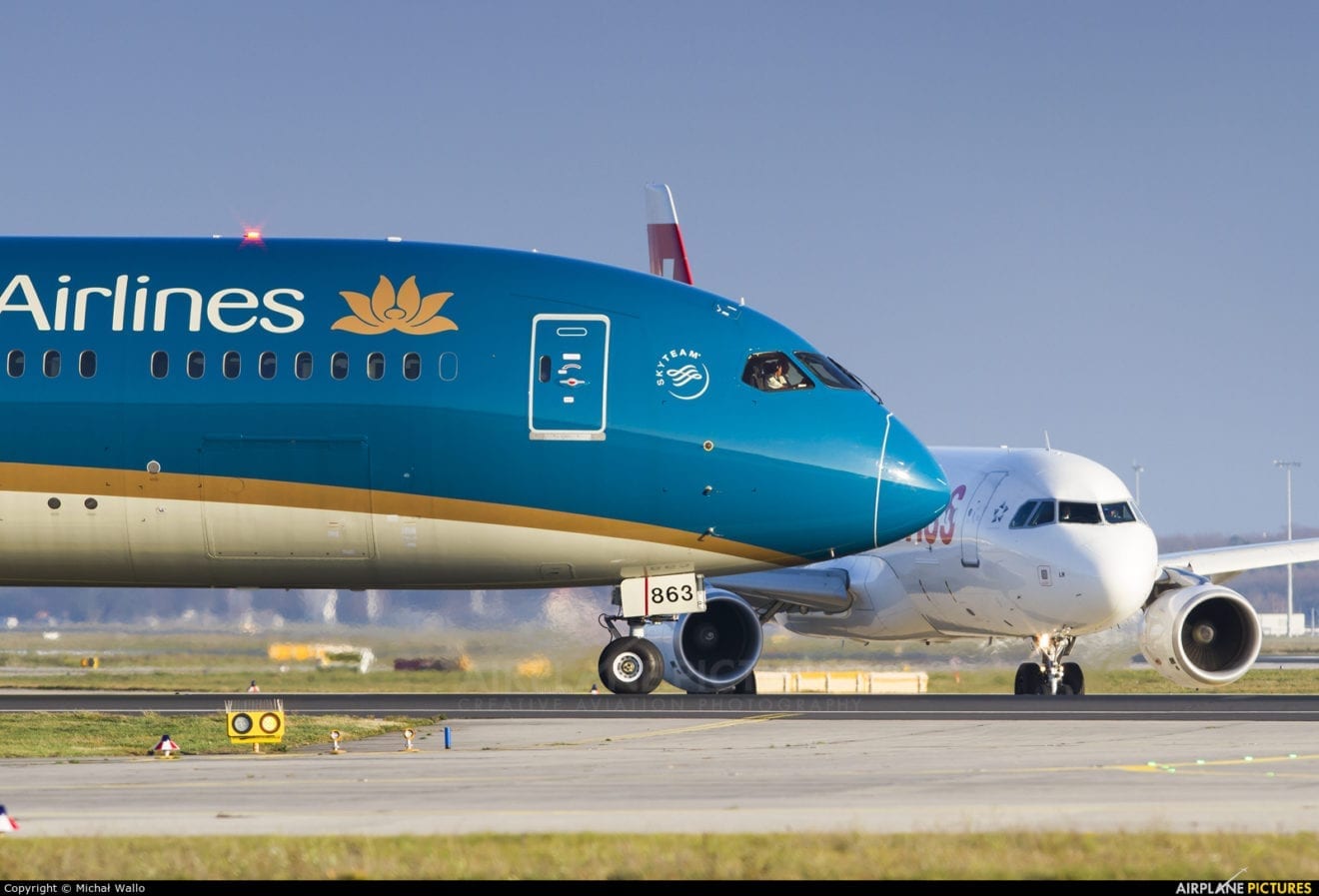
    Vietnam has become a major manufacturing hub, providing an air freight opportunity for the state-owned carrier. Vietnam Airlines is looking to boost growth by starting a dedicated cargo unit, according to a company official.

    With companies such as Samsung annually producing billions of dollars worth of devices, there is an air freight opportunity for the national carrier, Vietnam Airlines CEO Duong Tri Thanh told.

    Investments by companies such as Samsung, LG and Nestle have fueled the country’s manufacturing sector and driven it to become one of the fastest growing in the region.

    Vietnam’s economy expanded by 7.38 percent in the first quarter of this year, the highest rate in a decade, according to the General Statistics Office. The country is looking to attract more visitors and develop tourism as a key industry.

    “We expect a higher number of international passengers, especially from Japan and Korea, and more middle-class passengers domestically, thanks to Vietnam’s fast economic growth,” Thanh said.

    The airline was rated among the 11 best major airlines in Asia by the 2018 Traveler’s Choice Awards, which collects travelers’ ratings from the past year in terms of legroom, customer service, cleanliness, food and beverages, comfort, value for money, check-in and boarding, and in-flight entertainment.

    Competing with the nation’s largest private carrier, VietJet, the state-owned airline is also focusing on attracting premium passengers at the front-end as faster economic growth drives incomes higher.

    Vietnam Airlines is planning a route to Los Angeles by late 2019 or early 2020. Last year, it formed a venture with Air France to add 17 more destinations in Europe to the existing three.

  • Blockchain-based ride-hailing app to arrive in Vietnam

    Blockchain-based ride-hailing app to arrive in Vietnam

    MVL says drivers will not have to pay commission, and the company will make a profit from selling data. A blockchain-powered ride-hailing app which requires no commission fee from drivers will be arriving in Vietnam this July in the wake of Uber’s departure last month following Grab’s acquisition of the firm’s Southeast Asian operations.

    MVL from the Singapore-based startup MVLchain is going to recruit its first batch of drivers in Vietnam this month.

    The upcoming app utilizes blockchain technology, and is the first ride-hailing app in Vietnam to do so, said CEO Kay Woo during a conference held in Ho Chi Minh City last Saturday.

    Blockchain technology utilizes a growing list of digital records which are linked and secured using cryptography. That means a blockchain system can act as a secure, open and transparent distribution ledger to record transactions between two parties efficiently and verifiably. Blockchain technology can be applied to manage assets, contracts and global payments.

    “Our data is stored using blockchain technology. That means all data belong to all suppliers in the system, which provides transparency,” said Woo. Fellow ride-hailing apps Grab and Uber instead store all their data in servers, said Woo.

    MVL will also not require its drivers to pay a commission. Instead, the firm will sell data generated from its daily operations to insurance and market survey companies to make a profit.

    The firm hopes to attract more drivers this way, aiming to eventually acquire 25 percent of all four-wheel and two-wheel vehicles currently operating in Vietnam.

    MVL will have to compete with Grab, the largest ride-hailing app currently operating in Vietnam. Once all the legal procedures are completed, MVL is expected to go live in Vietnam this July.

    Grab has raised suspicions about creating a monopoly in Vietnam now that its biggest rival Uber is gone, despite an official from the Ministry of Transport saying Grab is unlikely to do so, considering how there are other apps competing with Grab, including ViVu, Mai Linh Bike and Go-Jek.

    MVLchain was founded in 2012 by a group of Korean investors. It currently operates in South Korea, Taiwan, Hong Kong and Singapore.

  • Vietnam’s e-commerce companies face logistics and price challenges

    Vietnam’s e-commerce companies face logistics and price challenges

    Shipping costs are forcing prices up and driving potential customers away. Vietnam’s e-commerce industry is facing challenges due to poor logistics and consumer price-sensitivity.

    “The challenge for commerce in Southeast Asia in general, and Vietnam in particular, is logistics,” said Vu Duc Thinh, country manager for the logistics arm of Lazada, a Singapore-based e-commerce company which also operates in Vietnam.

    Vietnam’s logistics costs accounted for 20.9 percent of GDP in 2016, according to the World Bank, and were higher than regional peers China, Thailand and Japan.

    Inflated logistics costs are putting a strain on local businesses and need to be cut in order to make firms more competitive, said Prime Minister Nguyen Xuan Phuc during a conference held by the Ministry of Industry and Trade in Hanoi earlier this month.

    The reason for this is the cost of transporting goods via land, Phuc said. In Vietnam, transportation via land accounts for 59 percent of all logistics costs, which is 9.7 times more than via water and 2.5 times more than by train, said Deputy Minister Nguyen Van Cong during the conference.

    Insufficient infrastructure development is to blame for the disparity, with rail links lacking connections to storage depots, and waterway transport taking from 3-5 times longer than by land, according to experts.

    Another factor hindering the advancement of Vietnamese e-commerce companies is consumer price-sensitivity, which is proving to be a challenge when it comes to taking into account shipping fees when companies set their prices.

    “If Vietnamese e-commerce companies want to win customers here, they have to come up with the best prices,” Huynh Mai, 25, a Vietnamese online shopper.

    Online sales in Vietnam have expanded rapidly in recent years, currently accounting for 3.39 percent of the country’s retail market. The total retail market grew 10.9 percent last year to $173.27 billion, as reported by local media.

    The World Bank forecasts that Vietnam’s $200 billion economy is likely to grow to a trillion dollars by 2035. More than half of its population, compared with only 11 percent today, is expected to join the ranks of the global middle class with consumption of $15 a day or more.

    According to one estimate, about 30 percent of the population will be buying goods and services over the internet in 2020, with each shopper spending an average of $350 per year.

  • Walmart closes in on $15bn Flipkart e-commerce deal

    Walmart closes in on $15bn Flipkart e-commerce deal

    Walmart may have secured a key victory over Amazon in India, with reports surfacing that the board of Flipkart Online services, one of the fast-growing nation’s largest retail platforms, has approved a deal to sell 75 per cent of the company to the grocery giant for around US$15 billion.

    Citing sources familiar with the deal Bloomberg has reported that the world’s largest retailer is closing in on an official offer for the Indian retailer after Amazon, which was also reportedly looking at the business, took itself out of the race.

    The deal is expected to close in the next 10 days, although final terms remain uncertain. A Walmart deal is thought to be more appealing to regulators given Amazon’s position as the number two competitor in the market.

    Should a transaction progress it would represent a significant international capital reallocation for US-based Walmart, which only last week agreed to offload most of its stake in UK supermarket chain Asda in a £10 billion merger with Sainsbury’s.

    For Amazon, which has been investing heavily in its own Indian platform in recent years in a bid to cash in on growing consumption in the world’s second fastest growing economy, the deal represents a renewed competitive threat.

    Flipkart is an online marketplace founded in 2007 by former Amazon employees Sachin Bansal and Binny Bansal, valued at around $20 billion after garnering investment from the likes of Ebay, Microsoft and Tencent.

  • Louis Vuitton debuts with Les Petits Nomades Project

    Louis Vuitton debuts with Les Petits Nomades Project

    Contributing to the Les Petits Nomades collection are Atelier Oi, Humberto & Fernando Campana, Marcel Wanders and Patricia Urquiola.

    The collection was launched alongside four additions to the French fashion house’s travel-inspired furniture and lighting collection, Objets Nomades. The pieces were all presented at an exhibition within the Baroque interiors of Milan’s 19th-century Palazzo Bocconi.

    Displays included a room with pink balloons covering the ceiling, a dark corridor of mirrors lined with glowing lamps, and a grand hallway strung with hundreds of leather flowers.

    Objects include a vase crafted from 176 two-tone, leather-covered metal petals, created by Humberto & Fernando Campana, while Swiss design studio Atelier Oi contributed 15 leather origami flowers.

    Making his debut with Louis Vuitton, Andre Fu has introduced a two-person “conversation” chair with swooping leather-wrapped wooden arms. The chair’s curved shape is inspired by the movements of traditional Asian ribbon dances.

    Louis Vuitton also showcases artworks inspired by vintage travel posters, each featuring a designer’s objects and home city.

    First created in 2012, the Objets Nomades collection is a series featuring travel-inspired furniture and lighting. Objects range from hammocks to deckchairs and portable lamps.

  • Ebay brings Flybuys to platform into the Wesfarmers deal

    Ebay brings Flybuys to platform into the Wesfarmers deal

    Wesfarmers has inked a deal with Ebay Australia that will see its Flybuys loyalty program extended to purchases made on the marketplace.

    As of today, Ebay shoppers can collect and redeem Flybuys points with 40,000 Australian retailers on the marketplace, earning one point for every $2 spent on eligible items.

    The partnership is the biggest expansion in the Flybuys program since the addition of Velocity frequent flyer points in 2016, signalling the growing importance of the program to Wesfarmers in the context of the planned Coles demerger.

    For Ebay the deal is its first move into loyalty, representing a significant opportunity to strengthen its customer retention in the lead up to the launch of Amazon Prime in Australia later this year.

    The online marketplace estimates that over 60 per cent of Australian households who actively use Flybuys will now also be able to redeem points for Ebay vouchers at a rate of 2,000 points for $10, which they can use to purchase items from the e-commerce company’s 1.1 billion global listings.

    Julie Nestor, Ebay Australia’s chief marketing officer, said Ebay had originally approached Flybuys with the idea for the partnership and described the deal as a no-brainer.

    “We’re thrilled to partner with Australia’s most popular loyalty rewards program as part of our mission to continue innovating and transforming the retail industry,” Nestor told.

    The details of the partnership remain confidential and Ebay would not be drawn on the specifics, but it comes as Wesfarmers pushes to better leverage its digital and data capabilities.

    In February, Wesfarmers group managing director Rob Scott announced the creation of a new data unit within the retail conglomerate, to pursue a variety of projects across its business units, as its rival Woolworths steps up its own efforts.

    Wesfarmers will retain ownership of Flybuys in the Coles demerger, a move that was flagged by Scott in March as a strategic boon.

    Ebay said the partnership will help smaller retailers on the platform gain access to a widely recognised loyalty program, which they likely would not be able to do on an individual basis.

    Citing a survey conducted with 1,570 sellers in April, Ebay said 62 per cent of small retailers believe a rewards program would help their business compete with larger players, while 71 per cent believe a loyalty program would be too expensive to set up and run.

  • Airtel sell 25% of its African unit

    Airtel sell 25% of its African unit

    India’s Bharti Airtel reportedly plans to raise up to $1.5 billion through a public listing of Bharti Airtel International, the holding company for its African operations.

    The operator plans to dilute a 25% stake into the holding company for roughly $1 billion to $1.5 billion.

    The public listing is expected to take place in early 2019, the sources said. At the upper end of the estimate, Bharti Airtel International would be valued at $6 billion.

    Netherlands-registered Bharti Airtel International is the holding company of Airtel’s operations in 14 African markets – Nigeria, Chad, Congo-Brazzaville, Democratic Republic of Congo, Gabon, Madagascar, Niger, Kenya, Malawi, Seychelles, Tanzania, Uganda, Zambia and Rwanda.

    Airtel’s African operations have finally started making profits seven years after Airtel entered the African market with the $9 billion acquisition of Kuwait-based Zain’s African assets. The African operations reported their first full year of profit for the financial year of around 18.27 billion rupees ($273.4 million).

    A global listing for Bharti Airtel International is expected to help the parent company get better value for its African operations, deleverage its balance sheet, and help it raise funds to invest in its core Indian mobile business to help it better compete in a tight market.

  • Candystud pop-up store for Beijing

    Candystud pop-up store for Beijing

    Fashion brand Valentino aims to create a stylised handbag factory with its Candystud pop-up store in Beijing’s Sanlitun neighbourhood

    Running until May 17, it features two limited-edition Candystud bags as well as four exclusive sneakers and small leather goods such as as smartphone covers, mirror bags and charms.

    The pop-up, decorated in bright pink livery, is designed to look like a candy store – yet will sell customised products. The brand says it is trying to create a “cinematographic atmosphere”.

    Sanlitun attracts consumers from a younger demographic and Valentino sees the pop-up as an opportunity to broaden awareness among millennials and Generation Z customers.

  • Fashion reigns as Vietnam’s online shopping queen

    Fashion reigns as Vietnam’s online shopping queen

    With busy schedules occupying people’s lives, e-commerce sites are catching up with the rising demand. With e-commerce booming in Vietnam, shopaholics have been switching from walking from store to store to just sitting back and relaxing with their computers and phones to choose their favorite fashion items.

    Despite spending almost ten hours per day at work, Ha, an office worker in Binh Thanh District, HCMC, can still find the time to buy herself new clothes every month.

    Her computer is bombarded by advertisements for new fashion items that stream from the social media channel she uses to the news sites she usually follows since she searched online for a new dress.

    “I don’t have much free time to stop by every store to find the clothes I want, but I can easily do it online. Of course there are risks buying clothes online, but if I order products from shop and receive exactly what I expected, then I go back to that shop,” she said.

    The trend has become so popular that many Vietnamese women say they spend time almost every night watching online retailers livestreaming their products on Facebook.

    A survey released in October last year by Vietnamese market research firm Q&Me showed fashion standing on top of all products purchased online in Vietnam, followed by IT products, cosmetics, food and beverages, and books and stationary.

    Out of a pool of 966 respondents aged between 18 and 39, 73 percent said they went online to buy fashion products, the survey found.

    Tapping into this trend in Vietnam, online shopping platform Lazada has launched a partnership with Au Chau Fashion and Cosmetic Co. Ltd (ACFC), a distributor of world-leading brands such as Calvin Klein Jeans, Levi’s, Dune and Diesel.

    Lazada said the move expresses its ambition to boost the development of its clothing and cosmetics sector, and its target to become the leader in Vietnam’s e-commerce market by 2020.

    “Last year, Lazada’s revenue from fashion products doubled, and the number of fashion providers registering on its platform rose 4.5 times,” said Nguyen Thanh Thuy, director of brand marketing solutions at Lazada Vietnam.

    Vietnam’s e-commerce market grew by 25 percent last year and is expected to maintain its growth in the next three years, according to the Vietnam E-Commerce Association.

    Revenue from online retail is forecast to hit $10 billion by 2020, accounting for 5 percent of the country’s retail market, it said.

    The thriving market has attracted global giants.

    American e-commerce giant Amazon month entered the Vietnamese market last month, just four months after Chinese e-commerce conglomerate Alibaba officially entered Vietnam by investing in Lazada.

    Earlier this year, China’s second biggest online e-commerce firm JD.com Inc announced plans to invest in Tiki, a Vietnam-based online retailer that it intends to help with fulfillment, logistics and more. JD.com co-led the financing with Vietnamese entertainment and social media firm VNG Corp.

  • Alibaba reaches a new record in transaction volumes

    Alibaba reaches a new record in transaction volumes

    Alibaba Group on Friday reported soaring revenue figures for the quarter ended March 31 and the 2018 fiscal year driven by strong growth in its core commerce business and strategic investments in New Retail.

    Total revenue for the quarter increased 61 per cent year-on-year to US$9.9 billion, with core commerce revenue increasing 62 per cent year-on-year to US$8.2 billion and cloud computing revenue increasing 103 per cent year-on-year to $699 million.

    Revenue from digital media and entertainment increased 34 per cent year-on-year to US$840 million and revenue from other initiatives increased 8 per cent year-on-year to US$158 million.

    Income from operations was US$1.5 billion. Adjusted EBITDA increased 11 per cent year-on-year to US$2.7 billion, while adjusted EBITDA for the core commerce segment increased 19 per cent year-on-year to US$3.5 billion.

    “Alibaba Group had an excellent quarter and fiscal year, driven by robust growth in our core commerce business and investments we have made over the past several years in longer-term growth initiatives,” said Alibaba Group’s chief executive Daniel Zhang.

    “With the continuing roll out of our New Retail strategy, our e-commerce platform is developing into the leading retail infrastructure of China. During the past year we also doubled down on technology development, cloud computing, logistics, digital entertainment and local services so that we are in a position to capture consumption growth in China and other emerging markets,” he said.

    Highest growth rate since IPO

    Alibaba ended the 2018 fiscal year with US$39.9 billion in revenue, a 58 per cent increase over the previous year. US$34.1 billion of that came from the company’s core commerce business, including its Taobao and Tmall e-commerce platforms. This represents a 60 per cent year-on-year increase in core commerce revenue, the highest revenue growth rate since the company’s IPO.

    Revenue growth in core commerce was largely driven by Alibaba’s investments in content and technology to personalise its retail marketplaces, its marketplace expansion through organic growth and acquisitions and its strategic shift to New Retail to capture consumer wallet share through online-offline integrations.

    H&M, Marni and Yonex established flagship stores on Tmall in the quarter, joining the more than 150,000 brands that sell through the platform, 18,000 of which are international brands from 74 countries selling into China through Tmall Global.

    Tmall’s newly established Luxury Pavilion now counts close to 50 brands, including Burberry, Dom Perignon, Tod’s, Zenith, La Mer, Maserati and Guerlain.

    Alibaba saw record transaction volumes in the 2018 fiscal year, with US$768 billion worth of goods purchased through its retail marketplaces, a 28 per cent over the previous year. This represents an acceleration compared to the 22 per cent increase in gross merchandise value it posted in the 2017 fiscal year.

    The company ended the fiscal year with 552 million and 617 million mobile active customers.

    Alibaba’s chief financial officer, Maggie Wu, said the company expects to maintain this high level of growth in the year ahead.

    “Looking ahead to fiscal 2019, we expect overall revenue growth above 60 per cen, reflecting our confidence in our core business as well as positive momentum in new businesses. We expect our new growth initiatives will drive long-term, sustainable value for our customers and partners and increase our total addressable market,” she said.


  • New deep-sea port to boost logistics capacity in Vietnam

    New deep-sea port to boost logistics capacity in Vietnam

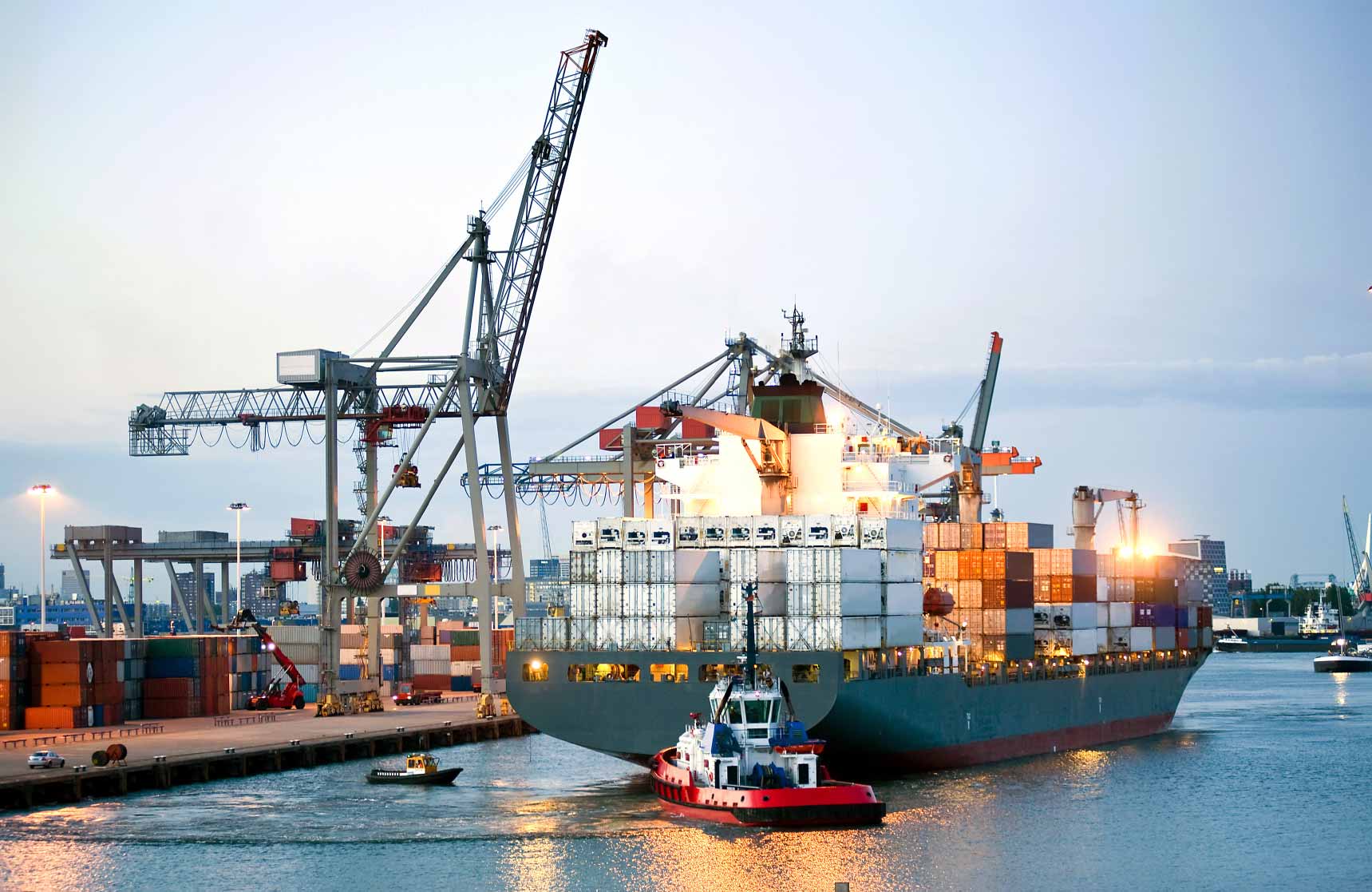
    The new terminal will double the current loading capacity of the biggest port in northern Vietnam. A new deep-water port is set to open this month in Vietnam’s northern city of Hai Phong.

    The city is a major sea gateway for Vietnam, but the existing port cannot receive large container ships as it lies on the Cam River, which is only seven meters deep.

    The new Lach Huyen International Gateway Port faces the sea, where the water is 14 meters deep.

    It stretches 750 meters (2,460 feet), which is double the length of Hai Phong Port, and has two container cranes.

    Work started on Lach Huyen Port in 2013 at an estimated cost of $1 billion, and when the first phase is completed on May 13, it will be able to handle around 300,000 20-foot equivalent units, or TEUs.

    That figure will rise to between 2-3 million TEUs in 2019, which is double the current capacity of Hai Phong Port.

    At a ceremony to mark the construction of Lach Huyen’s second phase in 2016, Prime Minister Nguyen Xuan Phuc said the new port “holds a key role in Vietnam’s maritime strategy”.

    Infrastructure to support the operation of the port has been taking shape, including an expressway connecting Hai Phong with the capital Hanoi that cuts travel time by half to roughly 90 minutes, and Southeast Asia’s longest cross-sea bridge, which opened to traffic in September last year.

    Spanning 15.63 kilometers (10 miles), the $523-million bridge connects Tan Vu Port to the new Lach Huyen Port.

    At a government meeting in Hanoi last month, PM Phuc said Vietnam’s logistics costs are putting a strain on local businesses and need to be cut in order to make firms more competitive.

    Vietnam’s logistics costs accounted for 20.9 percent of GDP in 2016, according to the World Bank, and were higher than regional peers China, Thailand and Japan.

    The reason for this is the cost of transporting goods via land, he said.

    In Vietnam, transportation accounts for 59 percent of all logistics costs, Deputy Minister of Industry and Trade Nguyen Van Cong told the meeting.

    The cost of transporting a 40-foot container by land from Hanoi to HCMC is about VND40 million ($1,785), which is 9.7 times more than transporting it by water and 2.5 times more than moving it by train, he said.

    According to a 2016 report released by the ministry, 77.2 percent of goods are transported by land in Vietnam, while just 5.22 percent go via water and 0.42 percent by train.

  • Telstra outage leads to 000 disruption

    Telstra outage leads to 000 disruption

    Australian incumbent operator Telstra has repaired a damaged fiber cable that led to intermittent disruptions to the nation’s 000 emergency call service in half of the nation’s states.

    The operator said a preliminary investigation indicates that the disruption was caused by fire damage consistent with a lightning strike.

    The disruption commenced at around 2am on Friday, and persisted until impacted routers were restored at about 4:50am, after which services progressively returned to normal. The cable was fixed at around 11am.

    While most call traffic was diverted to alternative cable and equipment, an issue occurred with the routing of some traffic which resulted in intermittent disruptions to 000 calls.

    The disruption impacted some callers in Queensland, NSW, Victoria and South Australia. The Queensland Ambulance Service has identified 11 emergency calls that experienced delays calling through its operations centers as a result of the disruption, while a NSW Ambulance commissioner complained that the operator did not inform it about the outage.

    Other representatives of emergency services departments have stated that it is difficult to ascertain how many emergency calls failed to get through, or if anybody died or was harmed as a result of the outage.

    The damage also reportedly caused disruptions to other telephony services as well as EFTPOS machines and street lighting.

    The federal government has revealed it will conduct a formal investigation into the outage, including the cause of the fire and the failure of Telstra’s contingency plans. The operator may face significant financial penalties as a result of the investigation.