Author: Mei Ling Tan

  • Kinofy app opens door to 1 billion Chinese consumers on WeChat

    Kinofy app opens door to 1 billion Chinese consumers on WeChat

    Singaporean brands have been promised access to more than 1 billion Chinese consumers through a new cross-border e-commerce app which runs on the WeChat ecosystem.

    Kinofy Group has launched its plug-and-play, cloud-based, platform which is designed to allow international brand owners and small- and medium-sized businesses to sell goods and services in China.

    The platform offers merchants a single view of their business and customers across sales channels and enables them to manage products and inventory, process orders and payments, build customer relationships and leverage WeChat’s analytics and reporting. From a legal perspective, the Kinofy platform enables merchants to export and sell their products seamlessly across different sales channels through an official product registration and importation channel. The platform integrates multiple channels: e-commerce, social selling tools and operational management of product registration, importation, warehousing and logistics, last-mile delivery and overseas-payment settlement into a single platform, allowing brands to enter the Chinese market faster and more efficiently. Kinofy also offers warehousing and logistics solutions at the Ningbo Free Trade Zone (NFTZ) giving businesses infrastructure to reach China’s 613 cities.

    Leveraging the platform, brands can accelerate their entry into the fast-growing Chinese market – reducing entry time to three months with official product registration approval.

    Singapore trade and industry minister S Iswaran officially launched the platform to an audience of 300 guests including some of Singapore’s top brand owners.

    Kawee Chong, CEO of Kino Biotech Group and co-founder of Kinofy Group, said the opportunity for Singaporean brands in China is immense – and Kinofy being smart, simple and seamless makes market entry frictionless.

    “We are proud to welcome brands like Naturext, Health Domain, Yohmo Tonic, GreenLife, Lipaddict, SkinSoul, SWANZ, Kinohimitsu, Fitwhey and Esthemedica to the Kinofy family and look forward to inviting more of our fellow Singaporean brands to join us on this exciting journey.”

    Kinofy is a pre-approved solution supported by the SkillsFuture Singapore grant. The partnership enables local companies to construct digital business channels and grow sales plus revenue through cross border trade. Local small and medium enterprises will enjoy a 70 per cent subsidy for their first year subscription to the Kinofy platform through SkillsFuture Singapore. Training is also provided at 90 per cent subsidy from SkillsFuture Singapore. The Kinofy Group also works extensively with Enterprise Singapore to conduct outreach efforts in markets like the US, Germany, Korea, and Thailand.


  • Kate Tokyo counter opens at Hong Kong airport

    Kate Tokyo counter opens at Hong Kong airport

    Japan’s Kanebo Cosmetics has partnered with The Shilla Duty Free to open a Kate Tokyo counter in arrivals at Hong Kong International Airport.

    Kanebo says Kate Tokyo aims to establish itself in the global travel retail arena through increased exposure in Asia.

    In Japan, it has the highest sales volume among make-up brands, says Kanebo. Its range includes eye palettes, foundation lipstick and mascara.

    Kanebo brands include Impress, Kanebo and Lunasol.

    Meanwhile, Kanebo has appointed Blue Chip Group as its travel retail sales agent.

  • Fatburger Buffalo’s Express opens Tokyo burger restaurant

    Fatburger Buffalo’s Express opens Tokyo burger restaurant

    A co-branded Fatburger Buffalo’s Express is opening its first Tokyo location tomorrow. Located at the Magnet by Shibuya109 building in Shibuya Crossing, the US fast-food brands’ outlet will feature all-American fare from Buffalo’s Express and Fatburger, as well as alcoholic offerings from bar concept, FatBar.

    “We’ve been waiting for the perfect opportunity to enter Japan and it’s finally here. As a team, we couldn’t be more pleased with how this flagship location has developed,” said Andy Wiederhorn, CEO of Fat Brands.

    “Our recipes, ambiance and service have exceeded expectations in other locations across Asia and I expect nothing less in Tokyo.”

    The Japanese outlet is operated by Green Micro Factory, subsidiary of G Three Holdings.

    Fatburger parent company Fat Brands has recently announced openings and development deals in Canada, the Philippines, Scotland, Singapore and Southern California.

  • Studio 0321 offer diners blooms in a box

    Studio 0321 offer diners blooms in a box

    Shenzhen-based Studio 0321 has inserted a rose-tinted box containing a flower shop into the front of a restaurant in Dongguan, giving diners and passers-by an impression of the blooms inside.

    Nous restaurant offers both a dining space and florist, and visitors are encouraged to explore the connection between different flowers and food ingredients. The owners tasked Studio 0321 with creating a space that “solves the relationship between flora and dining in a visual, functional and emotional way”.

    To achieve this, the studio decided to house the florist within a pink translucent box, visually connecting it to the restaurant. At its centre is a long counter where flowers are displayed, creating a partial screen between the street and diners in the restaurant.

    “We like this kind of conflict and interference, rather than a mediocre and harmonious coexistence,” says Studio 0321.

    Storage is provided by matching pink cabinetry, all echoed by rosy-hued tiles on the restaurant facade.

    The restaurant interior is almost entirely in dark grey terrazzo with oversized white aggregate for an “extreme visual experience”. This is complemented by metal tabletops and slate-coloured cushions on the bench seats.

    Other than a mirrored panel along a peripheral wall, decoration has been kept to a minimum.

    Continuing the palette of the flower shop, a staircase with a pink glass balustrade and terrazzo steps leads to the second floor.

  • Blockchain Startup Nuggets Selected to  Join Prestigious Access India Programme

    Blockchain Startup Nuggets Selected to Join Prestigious Access India Programme

    E-commerce payments and ID platform Nuggets has been selected to join the Access India Programme (AIP) – a prestigious initiative providing support to high-potential UK businesses seeking to establish a presence in India.

    In partnership with the UK India Business Council, the High Commission of India in London launched the AIP programme in 2017. It identifies high-potential UK SMEs using innovative technologies, and helps them establish themselves within the fast-growing Indian economy. Selected companies receive a range of invaluable services, from mentorship to networking and market-entry support.

    Nuggets offers compelling potential for the Indian economy. The country has only recently moved away from making 80% of payments in cash, with 60% of the population unbanked. Even so, India’s GDP is forecast to grow by 7.4% in 2018, and the economy is set to overtake both the UK and France in size over the next few years.  A consumer product like Nuggets, which enables simple, secure e-commerce payments, has obvious value in accelerating India’s move towards a cashless society.

    That move is already under way. IndiaStack, for example, is an ambitious program aiming to combine APIs and software on a single platform, and use bleeding-edge technology to bootstrap a new cashless infrastructure. It already boasts protocols such as eKYC and UPI, and could soon add Nuggets to its ranks.

    Seema Khinda Johnson, COO and co-founder of Nuggets, said: “Nuggets is a global payments and identity platform. Having support like this from the Indian High Commission will help our expansion efforts immeasurably.

    “We’re proud to have been selected for this programme. We’ve always believed in the power of our technology to empower consumers and boost economies. That’s especially true in such a vibrant, tech-focused environment as contemporary India.”

    Manish Singh, Economic Minister with the High Commision of India in London, said: “We are delighted to welcome Nuggets to our flagship AIP programme. Nuggets is exactly the sort of product we look for: exceptionally innovative, delivered in a way that can empower an entire population.

    This latest international victory for Nuggets comes soon after similar success in China. On 13th April 2018, the UK Government and the Mayor of London announced Nuggets would lead the UK Tech Mission in China. The company also took part in the recent launch of ‘Regulatory Sandbox for FinTech: UK-China Collaboration to Promote Financial Innovation’.

    Government support has played a critical role in Nuggets’ development. In its early days, the startup was selected by the UK Financial Conduct Authority (FCA) for its Project Innovate, enabling Nuggets to test its revolutionary product with consumers in the regulatory sandbox.

    Using blockchain technology, Nuggets enables people to make payments without having to share their personal data. That protects them from fraud, and eliminates the need for a username, password and payment details to be shared.

  • Earlier Spike in Travel Expenses Due to GE14

    Earlier Spike in Travel Expenses Due to GE14

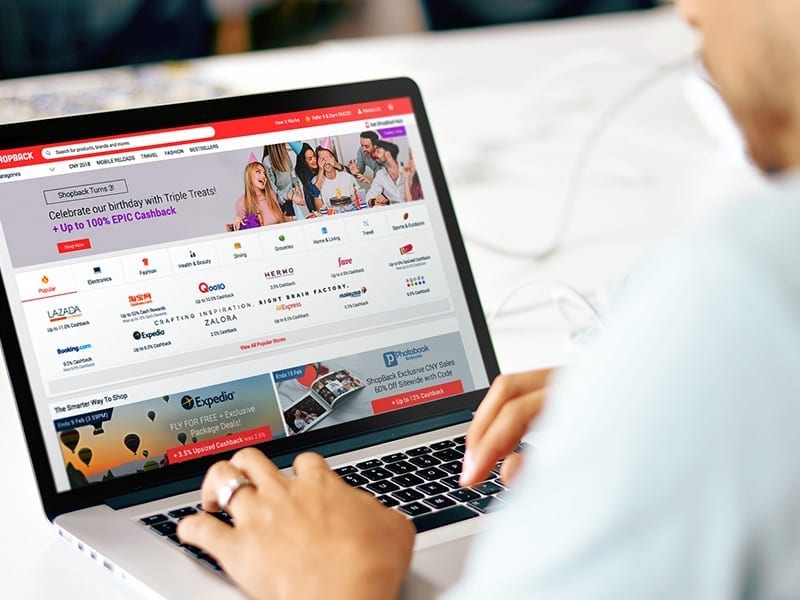
    ShopBack, the leading online Cashback platform that partners majority of transportation and accommodation booking sites in Malaysia, observes a 26% increase in travel purchases among its local users since the unveiling of the 14th General Election’s voting day (May 9th).

    “The next peak period for travel booking after March’s MATTA fair is supposed to be two weeks to a month prior to Hari Raya, but the purchasing trend came sooner this year as GE14 falls before Ramadhan,” says Alvin Gill, Country General Manager of ShopBack Malaysia.

    According to ShopBack Malaysia’s data, partners that offered a discount in flight and bus tickets, as well as reloadable petrol card, are the most sought-after stores under travel category on ShopBack’s web and app.

    “The daily average sales of our travel merchants has got a 26% increment since the voting day announcement. The demand remained strong in the past weeks, and we reckon part of the contributing factors was that AirAsia introduced fixed fares for all voters. ShopBack Malaysia’s users could purchase AirAsia’s tickets via Traveloka and Expedia; at the same time obtain cashback savings from every transaction made. In addition, bus tickets, Petronas gift cards from Lazada and 11street were also among the best-selling products in April,” Alvin explained.

    To cater for those who haven’t got transportation bookings sorted out yet, ShopBack Malaysia will organise a Mid-Year Travel Fair from April 30th to May 6thand offer up to 7.5% cashback together with its travel partners including Malaysia Airlines, Traveloka, Expedia, BusOnlineTicket, Booking.com, Hotels.com, etc. Malaysians could seize the chance and optimise their spending by visiting ShopBack’s website or download its mobile app.

    Malaysia is the No.1 Travel Destination for Locals, Not Overseas

    On the other hand, ShopBack Malaysia’s data also shows Malaysians frequently visits domestic destinations, especially Kuala Lumpur, Malacca, and Johor Bahru. Japan is the second most popular country, followed by Taiwan, Indonesia and Thailand.

    “Malaysians love to travel, and they didn’t stop travelling due to the economy challenges. Instead of flying out, many of them chose to travel within Malaysia and spent on better accommodation, such as 4-star hotel i.e. KSL Hotel & Resort and Hatten Hotel Melaka. Even so, the daily average spending for domestic travel is still significantly lower than Japan and Taiwan (four times lower than Japan and about half of Taiwan’s expenses).”

    Delving into customer purchasing pattern, he said if there’s no special occasion, travel transactions usually happens on Monday and Wednesday, between 3 pm – 6 pm. The year-end holiday season makes the heaviest travel months throughout the entire year, and Malaysians’ online travel spending also tends to spike before every festive period, and during MATTA Fair.

    “Although MATTA fair is an offline event, online booking sites such as Malaysia Airlines, Traveloka, Expedia will jump on the bandwagon and as the platform that empowers shoppers to shop and save smart, ShopBack Malaysia works closely with them to tailor-make best deals and upsized cashback for our users. It is a win-win situation as the result usually is very encouraging – for example, we noticed local airlines achieved 2.5 times more bookings during the past MATTA fair,” Alvin said.

    To date, ShopBack has more than 1 million users in Malaysia and it has rewarded them with more than RM25 million worth of cashback.  What’s better is users are able to stack this on top of their credit card’s cashback, and transfer the money to their bank account once it gets validated. Other than Malaysia, ShopBack is also available in Singapore, Thailand, Taiwan, Indonesia and the Philippines.


  • AEON Free New Kawaii LINE Sticker “Kanekko Cat” is Available Now

    AEON Free New Kawaii LINE Sticker “Kanekko Cat” is Available Now

    AEON Thana Sinsap (Thailand) Public Company Limited launched the sixth version of its LINE sticker set, “AE Chan, ON Kun & Kanekko” which introduces new kawaii character, “Kanekko”, a Japanese cat with colorful kimono who represents warmth and friendship towards AEON members. The new LINE sticker’s 3D animations will make every chat more fun. The stickers have a 90 days validity and can be downloaded for free from now until 30 May 2018.

    Becomes friends with AEON LINE Official for more information on promotions and activities by searching (“AE Chan, ON Kun & Kanekko”)

  • Juniper enhances cybersecurity platform

    Juniper enhances cybersecurity platform

    Juniper Networks has announced new enhancements to its unified cybersecurity platform, aimed at helping customers run their businesses with confidence and efficiency across locations and clouds.

    These enhancements simplify security operations by accelerating time to detection and orchestrating mitigation. The result is improved productivity and a stronger security posture across enterprise networks and cloud workloads whether in AWS, Azure, Google Cloud or private data centers.

    To give security teams a simplified and comprehensive view of threats and enable one-click mitigation, Juniper Networks SRX Series Next-Generation Firewalls now feed directly into the Advanced Threat Prevention (ATP) Appliance. This integration enables the aggregation and correlation of security events from various Juniper and third-party sources into a consolidated timeline view of all threats in the network, and allows security teams to teams  prioritize critical alerts and mitigate threats with one click.

    Furthering its promise to use the entire network for security enforcement, the Juniper ATP Appliance is bringing its built-in threat behavior analytics and one-touch mitigation to Junos Space Security Director Policy Enforcer, offering a unified view of threat behavior across the security fabric for extended remediation. This integration enables adaptive malware detection that triggers automated policy enforcement for a substantially hardened security posture across networks and cloud environments.

    Security Director Policy Enforcer is meanwhile now integrated with Amazon Web Services (AWS)Juniper extends multicloud workload protection and consistent security across multicloud environments, securing workloads in AWS Virtual Private Clouds (VPCs).

    As part of its commitment to global cybersecurity, Juniper Networks now has data centers for Juniper Sky ATP in Asia Pacific and Canada, in addition to its existing data centers in the US and Europe. The company is also  furthering its commitment to an open and unified approach to cybersecurity by joining the Cyber Threat Alliance (CTA), an organization dedicated to improving the security of the global digital ecosystems through cyber threat information sharing.

  • Telenor Myanmar trials 1Gbps LTE-A

    Telenor Myanmar trials 1Gbps LTE-A

    Telenor Myanmar and Ericsson have completed a trial of 1Gbps LTE-Advanced services using technologies including licensed assisted access (LAA).

    The trial also utilized LTE technologies including 256 quadrature amplitude modulation (QAM), 4×4 multiple-input multiple-output (MIMO) and carrier aggregation, the companies said.

    According to Telenor Myanmar CEO Lars Erik Tellmann, the 1Gbps peak speeds were the fastest speeds ever achieved in the nation.

    “Today’s Gigabit 4GLTE trial result is a remarkable breakthrough for Myanmar and the country’s telecom industry. Telenor has already established the fastest and most consistent mobile data network in Myanmar, and with this speed trial we have showcased that our network is capable for increased future demands,” he said.

    “Today’s successful trial reached 5G speed levels, and for Telenor this is another major step in our network improvement in Myanmar.”

    He said monthly average data usage for the operator’s 4G customers has already reached 5.6GB and is increasing, and the sucessful capacity trial of its LTE network has given the company confidence that it will be able to meet customers’ growing demands for faster speeds and better capacity.

    Telenor Myanmar already offers the nation’s fastest mobile speeds, according to a 2H17 ranking compiled by internet testing company Ookla.

  • AirAsia Philippines to fly Clark-Taipei from July

    AirAsia Philippines is launching its Clark-Taiwan flights on July 12, 2018, the Clark International Airport Corp. (CIAC) this week announced.

    AirAsia will have thrice weekly flights from Clark International Airport (International Code: CRK) to the Taiwan Taoyuan International Airport, which serves the capital Taipei and northern Taiwan.

    “This new development is an opportunity to explore the beauty of both the Philippines and Taiwan and will benefit travelers, tourists, OFWs and their families,” remarked CIAC president and chief executive officer Alexander Cauguiran.

    “The Taipei flights are also advantageous to numerous Taiwanese locators and other business travelers based in Clark and Subic,” he added.

    AirAsia also services domestic routes such as Kalibo, Caticlan, Puerto Princesa, Iloilo, Tacloban and Davao via Clark airport.

    At present, CRK is serving 158 international and 323 domestic flights making it one of the busiest airports in the country today.

    The airport also serves more than 7,000 passengers daily since President Rodrigo Duterte designated it to become an alternative to Manila’s overcrowded airport.

    “There’s definitely a surge at Clark airport in terms of the number of flights, destinations and passenger volume, along with the improvements of its facilities,” he confirmed.

    The CIAC registered 8,736 passengers last April 23, the highest recorded number of travelers in a day that passed through Clark in the history of CIAC since 1995.

    AirAsia Philippines CEO Captain Dexter Comendador said, “We are here to provide only the best service possible and massive connectivity across Asean, Asia and, beyond.”

    AirAsia has a special promo fare of P990 One Way All-In fare for the Clark-Taipei flights.  Air Asia will start On-Line Booking Period by May 6, 2018 and Travel Period on July 12, 2018 to October 27, 2018.

  • Hutch Lanka to merge with Etisalat Lanka

    Hutch Lanka to merge with Etisalat Lanka

    Hong Kong conglomerate CK Hutchison Group has announced plans to merge its Sri Lankan mobile unit Hutch Lanka with UAE-based Etisalat’s mobile business in the nation Etisalat Lanka.

    The combined company will be majority owned and controlled by CK Hutchison, the company said in a statement.

    The merger is aimed at better positioning the companies to serve their Sri Lankan customers, and is part of Etisalat’s ongoing portfolio optimization strategy.

    The deal still requires competition and regulatory approvals in Sri Lanka as well as other closing conditions.

    If approved, the merger would reduce the number of mobile operators in Sri Lanka from five to four and put the combined company in a better position to compete with incumbents Dialog Axiata and Mobitel.

    According to GSMA Intelligence, Etisalat Lanka has a roughly 13% share of the local market, while Hutch Lanka has around 10%. This compares to 45% for market leader Dialog Aixiata and 24% for Mobitel. The remaining 8% is controlled by Bharti Airtel Lanka.

  • Lion Air signs GDS agreement with Sabre to fuel its growth

    Lion Air signs GDS agreement with Sabre to fuel its growth

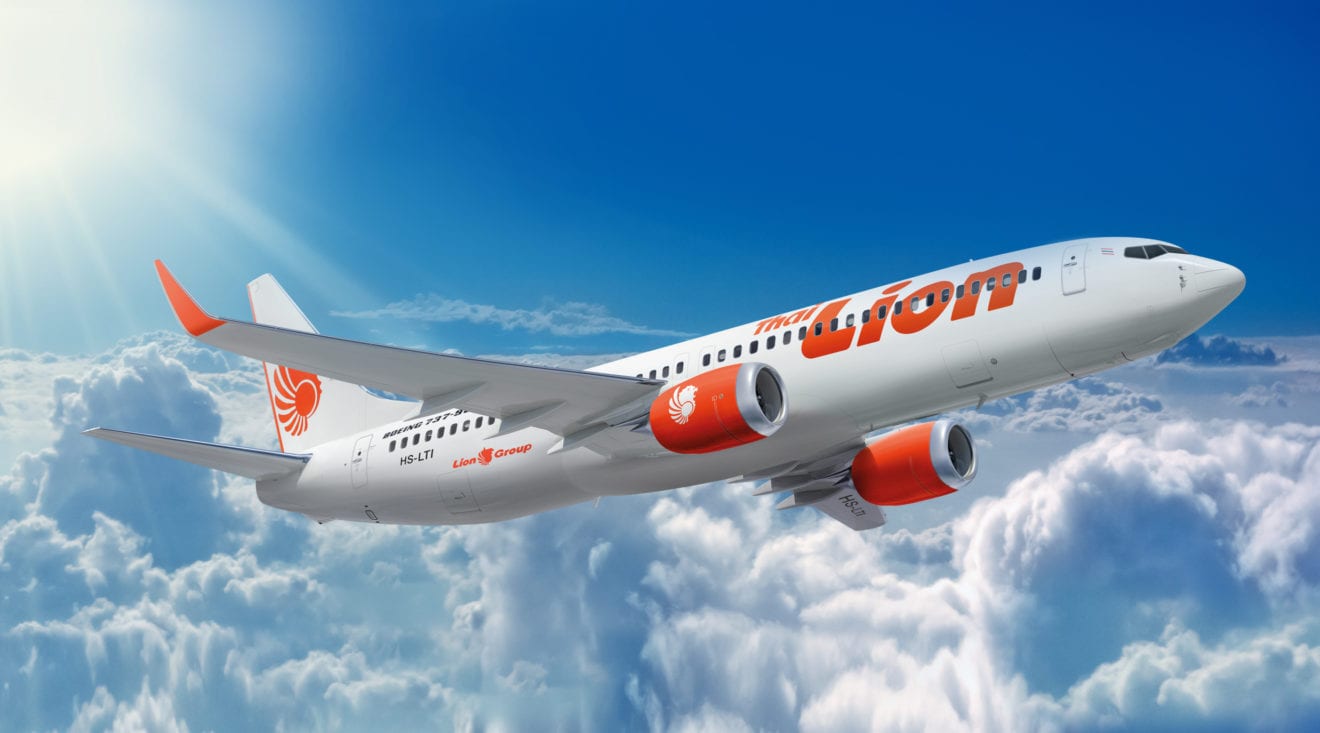
    Sabre Corporation, the leading technology provider to the global travel industry, today announced a new content distribution agreement with Lion Air, the largest privately-owned airline in Indonesia, and its subsidiary, Wings Air, as the preferred global distribution system (GDS) to offer Lion Air content in the carrier’s home market.

    Sabre has served as a strategic partner to Lion Air and supported both the airline’s reservations and planning and scheduling capabilities through its innovative SabreSonic passenger services system and AirVision portfolio of solutions since the carrier first began operations 18 years ago. Now the airline strives to achieve even more ambitious growth, including a plan to quintuple the size of its fleet with the world’s largest number of aircraft on order. As Indonesia remains a rapidly growing travel market, Lion Air is expanding operations and its relationship with Sabre, selecting them as their primary GDS to distribute content across its innovative global travel marketplace.

    “With our content now available to 425,000 travel agents across the globe, the extension of our agreement with Sabre will be instrumental to our continued success and will provide us with the visibility needed to support our growth objectives throughout Asia Pacific and beyond,” said Rudy Lumingkewas, CEO, Lion Air.

    “As the leading GDS in Indonesia, we are in a unique position to best support Lion Air’s growth through the distribution of new bookable content on the Sabre platform,” said Rakesh Narayanan, vice president, air line of business, Sabre Travel Network Asia Pacific. “This new agreement is a testament to the solid, longstanding partnership that has developed between Lion Air and Sabre over the years. Our industry-leading solutions will serve as a solid technological foundation for Lion Air as it continues to expand operations while our global marketplace will help fuel the aggressive growth the airline is looking to achieve,” he added.

    Lion Air and Wings Air operate an extensive domestic and international network of routes with 166 aircraft based in the main hub of Jakarta.

  • Huawei may face criminal probe from US DoJ

    Huawei may face criminal probe from US DoJ

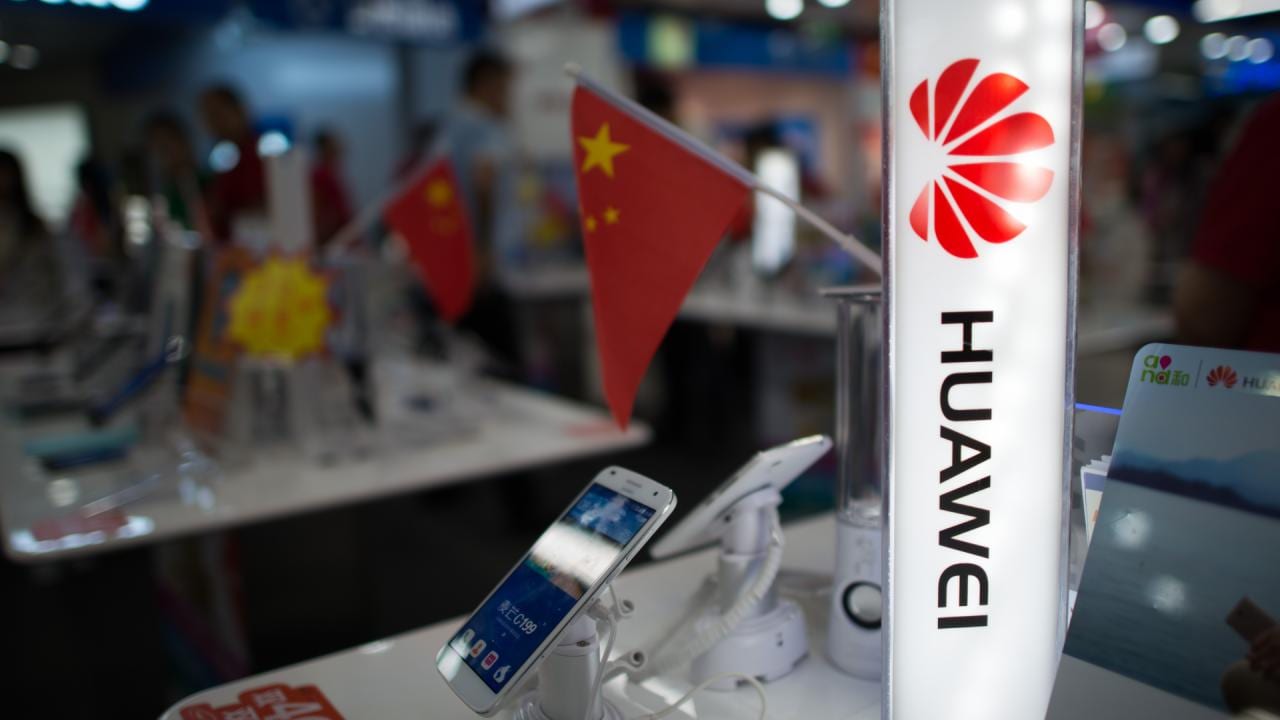
    The building US-China trade war could have an even more substantial impact on the telecommunications sector following reports that Huawei may be facing a criminal probe from the US Department of Justice.

    The Department of Justice is investigating allegations that Huawei violated US sanctions by selling equipment with US components to Iran.

    This is the same offense for which ZTE was recently hit with a seven year export ban prohibiting the company from procuring US components, although the ban was only put into effect after the department accused ZTE of violating its settlement agreement over the initial investigation.

    Huawei’s ambitions of gaining a foothold in the US already faced a potentially fatal blow earlier this month following a vote by the US FCC to prohibit US government departments from acquiring equipment from the vendor and rival ZTE. Now the company could face even more significant consequences.

    Neither the department or Huawei have publicly confirmed that an investigation is underway, but analysts are already exploring the potential impact of the imposition of US sanctions on Huawei.

    The worst case scenario would involve Huawei being banned from acquiring US components just like ZTE. But while the sanctions imposed on ZTE have put the vendor in survival mode, Huawei is thought to be in a better position to weather the potential impact.

    One reason for this is that Huawei has been investing heavily in developing its own components, including with its Kirin chips. According to the South China Morning Post, Huawei has confirmed that it will be able to substitute its Kirin chips for the more high-end chips it acquires from the US should need arise.

    Meanwhile the vendor is also said to have been developing its own smartphone OS since 2012 as a preparation for worst-case scenarios that would leave the vendor unable to continue licensing Android.

    But according to sources cited in the report, the company has not yet released it because it is not as good or has as many third party apps available as Android.

    The Chinese government is nevertheless appealing to the US to avoid undermining investor confidence by imposing any unilateral sanctions on Huawei.

    The government is also making moves to reduce the nation’s reliance on US semiconductors by establishing a nearly $19 billion fund to support the domestic chip sector.

    The second fund from the National Integrated Circuitry Investment Fund would focus on boosting local chip production and technologies, three sources told the news agency.

    While the fund has been in the pipeline since before the flare-up of the US China trade war and the ZTE sanctions, the government now plans to invest more in the sector due to these tensions.

  • Supernap Wins Datacloud Asia Awards for “Excellence in Data Centre Service Southeast Asia”

    Supernap Wins Datacloud Asia Awards for “Excellence in Data Centre Service Southeast Asia”

    SUPERNAP Thailand, the recognized leader in colocation services, won “Excellence in Data Centre Service Award Southeast Asia” and the best “Data Centre Location Award” at Datacloud Asia 2018 held at the Capella Hotel in Singapore recently. It is the first time that a data center in Thailand won an award from the international premier conference for data centres and cloud technology in the region.

    The awards recognize SUPERNAP Thailand as the leading Southeast Asia data center provider for its most efficient, high density and ultrascale capacity. Chonburi Province, where SUPERNAP Thailand is located, is recognized as the most attractive location for attracting operators and cloud services providers. Chonburi province is part of the EEC (Eastern Economic Corridor) zone and is strategically positioned for the submarine cables and “one belt one road” project.  It is Thailand’s new flagship investment zone designed to accommodate next-generation industries and meet the Thailand 4.0 policy.

    The Datacloud Asia award recognizes genuine innovation and the continuing evolution in the flourishing Asia digital infrastructure market.

    “Datacloud Asia goes from strength to strength and the award winners mirror the optimism, dynamism and entrepreneurism that is permeating throughout the region,” said Mr. Philip Low, Host of Datacloud Asia and President of BroadGroup. “The rapid development of the Asian data economy can lead global innovation and break down old mindsets from many aspects.”

    “We are extremely honored to accept the awards, that are a testimonial to our efforts in providing the excellent and the most trusted data center service to our customers in Thailand and across the region, said Mrs. Sunita Bottse, Managing Director of SUPERNAP Thailand. “Moving towards the transformation of the economy, we foresee that the demand for innovative, scalability, security, redundancy, and availability will tremendously increase.

    We will remain steadfast in our commitment to continue to deliver excellent customer service, thus powering their ability to the greater success.”

    SUPERNAP Thailand was one of five nominees for the Excellence in Data Center Service Award. The company won over its counterparts from South Korea, Hong Kong, Indonesia, and Singapore. Revolutionary innovations such as tri-redundant power systems, modular building design and 100% heat containment technologies allow SUPERNAP Thailand to efficiently facilitate client growth without current or future concerns over reliability of power supply, cooling, connectivity or space. The award reiterates SUPERNAP Thailand’s positioning as the most trusted world-class purpose-built data center for customers with a long-term vision to develop Thailand’s presence as a serious data center hub for Asia Pacific.

    While the award for best “Data Center Location” recognizes Chonburi Province as a prime location for data centers in Asia,  it succeeded over three other locations nominated from China, India, and Malaysia. This strongly confirms that SUPERNAP Thailand has been cited as the best strategic location to provide support for growth for all investors in Asia. In addition, SUPERNAP Thailand is located outside Bangkok’s flood zone and 110 metres above sea level and able to access numerous national and international telecommunications carriers with proximity 27km to the international cable landing station.

    Established in 2017, SUPERNAP Thailand targets customers from government bodies, the banking and finance sectors, insurance and healthcare providers, cloud solution providers, and e-commerce companies both in-country and across ASEAN countries.

  • Stable quarter for CapitaLand Mall Trust

    Stable quarter for CapitaLand Mall Trust

    With its well-located shopping malls, CapitaLand Mall Trust (CMT) has continued to deliver stable results in its first quarter.

    This was despite industry headwinds, says CEO Tony Tan of CapitaLand Mall Trust Management (CMTML), CMT’s manager.

    “Portfolio occupancy was resilient at 98.9 per cent as at 31 March.”

    During the quarter, Raffles City Singapore completed interior enhancement works with the revamped Level 3 Atrium featuring a new garden-themed cafe. Meanwhile, the next phase of upgrading Tampines Mall has started and will include a new F&B duplex. This work is expected to be complete before year’s end.

    Meanwhile, says Tan, the group has signed an agreement to divest Sembawang Shopping Centre, with the sale proceeds expected to enhance CMT’s financial flexibility.

    CMT achieved net property income of S$125.7 million for the quarter to the end of March, up 4.7 per cent. Gross revenue grew 1.8 per cent, mainly because of higher occupancy for IMM Building, Clarke Quay, The Atrium@Orchard and Plaza Singapura, as well as higher car-park income.