Author: Mei Ling Tan

  • CRCT’s 1Q 2018 distributable income up 9.6% year-on-year

    CRCT’s 1Q 2018 distributable income up 9.6% year-on-year

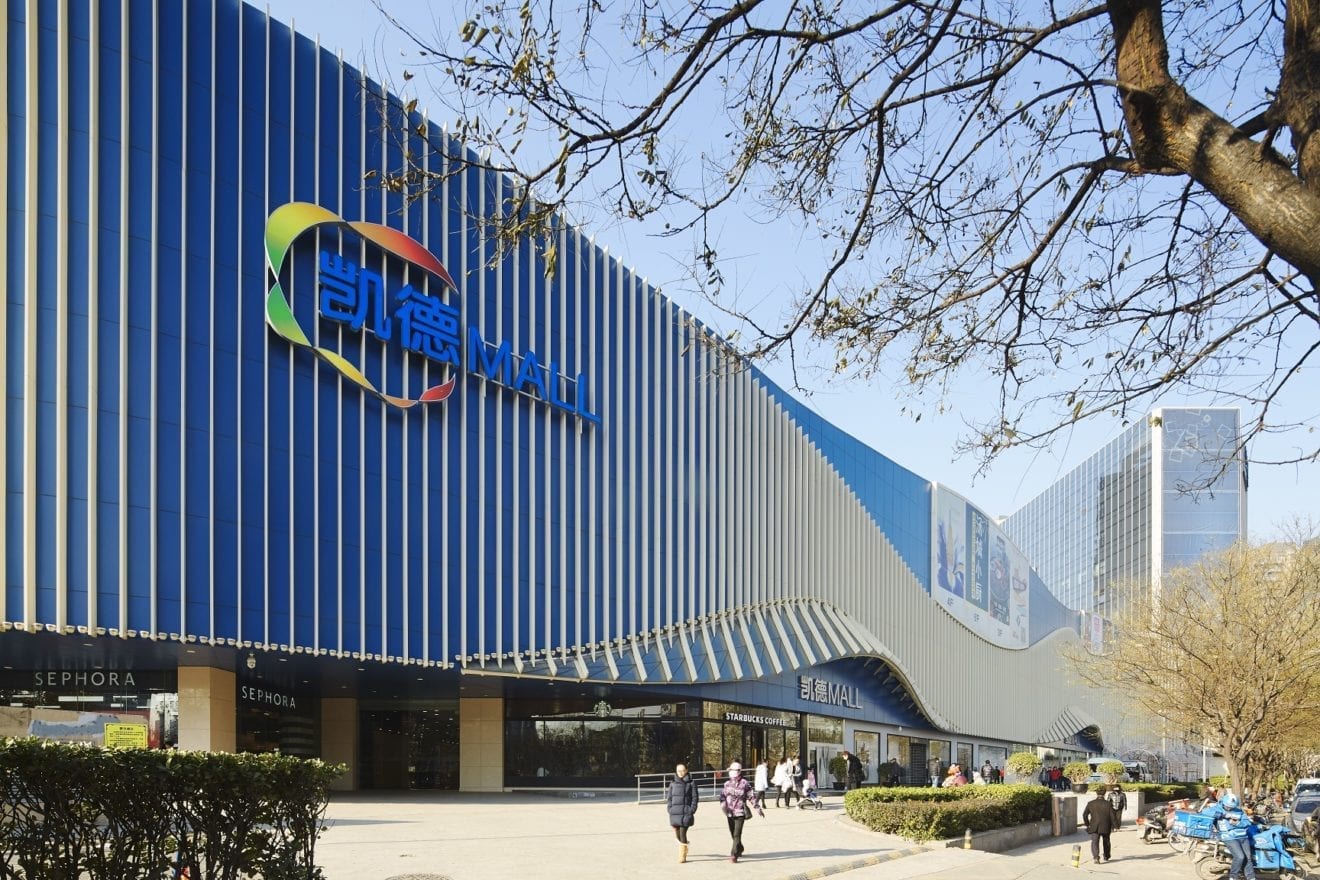
    CapitaLand Retail China Trust Management Limited (CRCTML), the manager of CapitaLand Retail China Trust (CRCT), today announced that it posted higher distributable income of S$26.7 million for 1Q 2018, an increase of 9.6% from S$24.4 million a year ago. Distribution per unit was 2.75 cents, 0.4% higher than 1Q 2017. Based on CRCT’s closing price of S$1.55 on 26 April 2018, the annualised distribution yield for the quarter was 7.2%.

    In 1Q 2018, CRCT’s multi-tenanted malls registered a robust rental reversion of 12.8%. Portfolio occupancy as at 31 March 2018 remained strong at 95%. Tenants’ sales and shopper traffic for the quarter increased year-on year by 2.1% and 7.7% respectively.

    Mr Tan Tze Wooi, CEO of CRCTML, said: “Since completing the acquisition of Rock Square on 31 January 2018, we have been strengthening the mall’s appeal through active tenant mix adjustments. By the end of 1Q 2018, Rock Square’s occupancy improved to 97.1% from 96.4% as at 30 June 2017, with an encouraging rental reversion of more than 20%. We made progress in enhancing the mall’s operational efficiency by replacing its manned carpark payment booth with an electronic system, and achieved significant cost savings by working with CapitaLand to manage the mall. We will be further finetuning Rock Square’s tenant mix and retail layout to maximise the potential of this well-located mall.”

    “The reconfiguration of the recovered space at CapitaMall Wangjing is on track and the space is almost fully leased. Opening progressively from 2Q 2018, shoppers can look forward to more than 20 retail, lifestyle and dining concepts including Sisyphe Book Cafe, YID cooking studio and Lao Wang Hotpot – several of which are new-to-market in the Wangjing subdistrict. These new stores will almost double the recovered space’s rental income and diversify the mall’s offerings to draw in more shoppers.”

    “We have been proactively curating new concepts in our malls that are refreshing and relevant to shoppers. An example is CapitaMall Grand Canyon’s unmanned convenience store – a retail trend that is catching on in Beijing – that is operated by Bianlifeng. We have also introduced trendy gourmet concepts P.Plus Bakery Club and Greybox Coffee to CapitaMall Xinnan and CapitaMall Wangjing respectively. Other new concepts in our portfolio include China’s first standalone C&A Kids apparel store in CapitaMall Xinnan and Wuhan’s first indoor simulated counter strike gaming centre in CapitaMall Minzhongleyuan. To enhance shopper engagement, we continue to embrace digital initiatives such as robotic concierge and augmented reality gaming. Looking ahead, we will further build on our strong foundation and proactively look at further optimising our portfolio to create more value for Unitholders.”


  • Ikea open new store in Hyderabad, mid July

    Ikea open new store in Hyderabad, mid July

    Ikea India says it will launch its first store in Hyderabad in July.

    This follows the Swedish furniture maker opening a “Hej Home” experience centre in the city in November to familiarize locals with brand.

    Covering 400,000sqft in Hi-tech City, the debut store will have more than 7000 products on display, says Ikea Hyderabad store manager John Achillea.

    It is six years since the company was given permission for single-brand retail, and a month ago it announced the appointment of Peter Betzel as its CEO for India. Betzel came in from Germany, its largest market, to look after what the company describes as “one of its most important growth markets”.

    Previously Ikea has announced plans to open 25 stores by 2025. It has also bought land parcels in Bengaluru, Mumbai and New Delhi to build stores, with more land to be acquired in cities such as Ahmedabad, Chennai, Kolkata, Pune and Surat.

  • Vietjet Soaring to Greater Heights

    Vietjet Soaring to Greater Heights

    In just a little over a decade, Vietjet – Vietnam’s new-age airline has taken Asia and the world by storm, making waves in the global aviation industry and turning heads with its rapid growth, unique service offerings and cheeky out-of-the-box ideas.

    Once the underdog of the race, Vietjet is now leading the domestic aviation market in Vietnam and actively expanding its fleet to support its foray into new international markets.

    Earlier this year, the airline was the first in Southeast Asia to take delivery of an A321neo Airbus aircraft, adding to its existing fleet of 55 aircraft, which includes a mix of A320s and A321s.

    Vietjet also recently announced its decision to upgrade an existing order for 42 A320neo aircraft to the superior and larger A321neo models. Accordingly, the airline now has a total of 73 A321neo and 11 A321neo on order for future delivery.

    The airline currently operates 44 international routes, including flights to and from Hong Kong, Thailand, Singapore, South Korea, Taiwan, Malaysia, Cambodia, China and Myanmar – making traveling across Southeast Asia both convenient and less expensive. Domestically, Vietjet’s extensive flight network connects passengers to a total of 38 destinations within Vietnam, allowing travellers to explore the many hidden gems the country has to offer.

    With a vision of becoming a favourite multinational airline, Vietjet has also made great strides in the expansion of its flight network both domestically and internationally. The airline has established a comprehensive code-sharing partnership with Japan Airlines, providing customers better access to destinations between Vietnam and Japan, and beyond.

    Just recently, the airline also announced plans to connect Vietnam with New Delhi, India and Brisbane, Australia. Scheduled to commence in 2019, the non-stop service between Ho Chi Minh City and Brisbane will give the airline much reason to celebrate as it will mark Vietjet’s first Australian long-haul destination.

    There is no denying the vast potential of the growing tourism market. Moving forward, Vietjet aims to continue exploring unchartered territories, forging partnerships and taking hold of opportunities to facilitate deeper international and regional integration. In the coming months, the airline will continue adding new routes to its ever-expanding list of destinations, spreading its wings to even more destinations across the globe. These are but a few of the things the airline is doing to better serve its customers in the region.

  • Bharti Infratel to merge with Indus Towers

    Bharti Infratel to merge with Indus Towers

    India’s Bharti Airtel has approved a plan to merge its infrastructure unit Bharti Infratel with Indus Towers to create a listed pan-India tower company.

    The combined company will fully own the respective business of Bharti Infratel and Indus Towers, and will own over 163,000 towers across all 22 of India’s telecom circles, making it the largest tower company in the world outside of China. It will change its name to Indus Towers Limited.

    Bharti Airtel already owns a 42% stake in Indus Towers, with Vodafone Group owning another 42%, Idea Group owning 11.15% and Providence Equity Partners owning the remaining 4.85%.

    Post-merger, Vodafone will be issued 783.1 million new shares in the combined company, while Idea Group will be given the option of selling its shares in the company or taking shares based on the merger ratio, and Providence will be given the option of selling most of its holdings.

    Assuming Idea and Providence take up the option of selling their shares for cash, Airtel’s shareholding in the combined company will be diluted to 37.2% and Vodafone’s shareholding would be diluted to 29.4%.

    The combined company is expected to have an enterprise value of around $10.8 billion, Airtel said in a statement.

    Based on this expected valuation, Idea stands to gain around $1 billion from the sale of its shares. Vodafone’s holding in the combined company would meanwhile be worth around $4.3 billion.

    The merger is expected to be complete in the current financial year, which ends in March 2019.

  • CapitaLand to explore investments in high-tech business park and new-gen township in Zhejiang

    CapitaLand to explore investments in high-tech business park and new-gen township in Zhejiang

    CapitaLand is set to broaden its master planning and urban design capabilities in China through new strategic partnerships in Ningbo and Jiaxing – two fast-growing cities in Zhejiang Province, east China.  Through its wholly owned subsidiary CapitaLand China, CapitaLand has signed two Memoranda of Understanding (MoUs) to explore developing and managing large-scale business park and township projects in line with a new direction in China’s urbanisation drive emphasising integration between industrial and urban development (产城融合). The signings took place this morning in Zhoushan at the 13th Singapore-Zhejiang Economic and Trade Council meeting witnessed by Ms Sim Ann, Singapore’s Senior Minister of State for Trade and Industry, and Culture, Community and Youth; and Mr Zhu Congjiu, Zhejiang’s Vice Governor.

    Under the MoU with Ningbo’s Haishu District Government, CapitaLand will explore investing in a business park comprising research & development facilities, offices, residences and civic & community facilities that supports Ningbo’s push to attract higher-tech manufacturing industries under China’s Made in China 2025 blueprint.  In another MoU with Zhejiang Communications Investment Group Co., Ltd., CapitaLand will explore investing in a new-generation township comprising integrated developments, offices, residences and serviced residences built around Jiaxing’s highspeed rail (HSR) station in Yuxin area.

    Mr Lim Ming Yan, President & Group CEO of CapitaLand Group, said: “In tandem with China’s rapid urban development, CapitaLand has grown our real estate business across asset classes, and sharpened our development and operational capabilities to address China’s urbanisation needs.  Our extensive track record in integrated developments has honed our expertise in making the most efficient use of limited land supply to create vibrant communities with an optimal mix of quality live-work-place spaces that are seamlessly integrated and interconnected.  As one of Asia’s largest real estate fund managers, our experience in capital management is also a key success factor for mega projects with a longer development horizon.  CapitaLand is in a strong position to continue playing an active role in China’s next phase of urbanisation.”

  • uCloudlink launches innovative mobile data service GlocalMe Inside

    uCloudlink launches innovative mobile data service GlocalMe Inside

    uCloudlink, the global innovative mobile data solution provider, has today launched GlocalMe® Inside, a powerful data service designed for frequent and business travelers. GlocalMe® Inside service provides network coverage in 100+ countries and regions, enabled by CloudSIM technology and delivered through extensive carrier partnerships that ensure fair local data charges for its customers. This move marks the introduction of a new era of positive disruption for cross-border business, bringing expense management, convenience, flexibility and robust global network coverage for reliability of service.

    Alongside this new service innovation, uCloudlink also introduces two models of the brand new GlocalMe® Inside World Phone, in which the service has been pre-installed.

    As of April 2018, the new GlocalMe® Inside service has been rolled out in Hong Kong in collaboration with Hong Kong Broadband. The company is also in active conversations with potential customers and partners across key markets in Asia and North America, discussing the launch of GlocalMe® Inside service’s forthcoming global footprint in the near future.

    Mr. Simon Tan, Co-Founder and Chief Marketing Officer, uCloudlink says, “uCloudlink is dedicated to continuous mobile data solution innovation. Our vision is to offer the utmost accessibility of mobile data for everyone in the world. The new service and our new phone products are a reflection of our commitment to improve global mobility by enhancing and sharing CloudSIM technologies with the world. This will achieve true global connectivity and sharing without limitations. We hope this service innovation can turn many silent roamers into active ones, addressing one of the most pressing challenges facing the entire industry.”

    Elitek is the first phone brand to be launched with the service embedded. uCloudlink is expecting to see increasingly rapid collaboration with more third-party phone brands in the future for which the GlocalMe Inside mobile data service will be available, making them the first true World Phone.

    Mr. Bill Zhang, General Manager of the Smart Devices Business, uCloudlink, explains, “We are very excited about this service innovation which represents a significant breakthrough for business users and other mobile data service users who travel extensively. GlocalMe® Inside overhauls the current mobile data package fee and contracting model, and therefore is a massively positive disruption to the telecommunications industry in this regard. For too long, service users have been subject to high rates, non-transparent pricing models and data roaming which often costs well beyond what was expected; the GlocalMe® Inside revolution changes all that. We have for a long time now been inspired by the truly disruptive players who have changed the way the world works, from social media and accommodation booking services to app-based technology and changes to the media industry by disruptive communication. This is what uCloudlink GlocalMe® Inside is all about”.

    Global roaming revenue was not significantly increased with the growth of international travelers and smartphone users as was expected by the carriers. The main reason is the user’s fear of high data roaming charges. “Our disruptive technology and innovations built on customer convenience and genuine cost management changes all of this”, he concludes.

  • Telenor Pakistan introduces 24/7 Self-Service Booths across Pakistan

    Telenor Pakistan introduces 24/7 Self-Service Booths across Pakistan

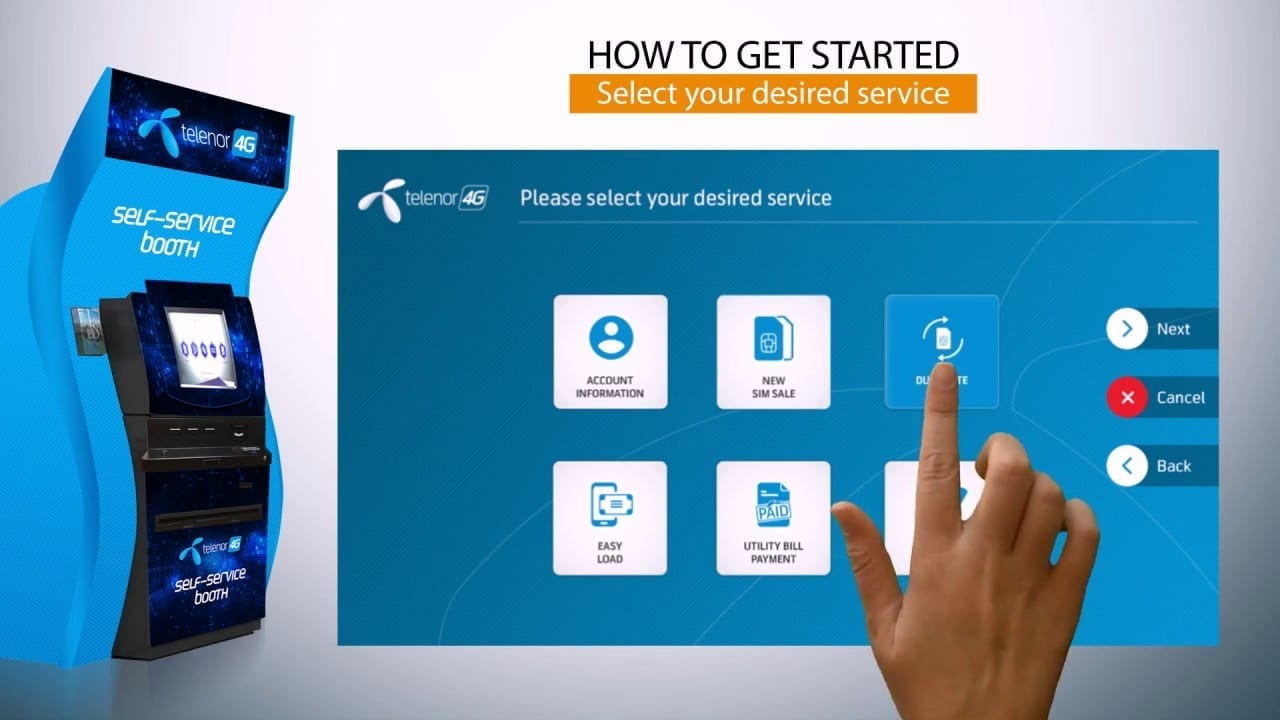
    Leading the developments in digital ecosystem in the country, Telenor Pakistan has introduced Self-Service Booths across the nation to provide easier, securer, and round-the-clock access to its products and services.

    These booths give customers the option of availing multiple Telenor and Easypaisa services at their convenience such as buying and replacing Telenor SIMs, buying Easyload top-ups & Easycards, and open new Easypaisa accounts at any time of the day without having to visit the Telenor franchise or retailer. These booths will also enable customers to pay their utility bills as well as send and receive money.

    Featuring biometric verification, these state-of-the-art machines warrant safety and security against unregistered individuals and unauthorized transactions. Telenor Pakistan plans to place these self-service booths across Pakistan to extend greater enablement to its customers in consistence with its vision of fostering customer-centricity across its business operations.

    “Self-service booths are going to redefine customer facilitation in today’s digital age,” said Bilal Kazmi, Chief Marketing Officer at Telenor Pakistan. “Through this initiative, we aim to empower the customers by transferring accessibility of Telenor & Easypaisa services into customers’ own hands while reducing dependency on physical outlets characterized with long queues and waiting time. Being a customer centric organization, we are evolving the processes and channels to serve our customer better and we shall continue to introduce innovative ways to bring the best to our customers.

    The introduction of this round the clock Self Service Booth, bringing access, ease and convenience, is set to redefine the concept of customer services. As part of its #TelenorHearsYou outreach campaign, Telenor Pakistanis actively listening to its customer feedback and concerns, and is taking a proactive approach to ensure delightful experiences for them.

  • Alibaba brings ‘New Retail Concept’

    Alibaba brings ‘New Retail Concept’

    E-commerce powerhouse, Alibaba Group, has given Aussie consumers a glimpse of its ‘New Retail’ strategy via pop-up launches in Australia this week.

    Set in an apartment style store space at Westfield Chatswood in Sydney’s north, Alibaba’s first Aussie pop-up featured technologies that the e-commerce giant thinks are the future of online and offline shopping.

    With the location only operating for less than a week – ahead of another temporary location launching later this week at QV Melbourne – Alibaba is using the stores to demonstrate where it thinks the retail industry is headed.

    “We’re driving this new retail strategy in China where we believe payments, entertainment, online and offline are going to merge into one seamless experience for the consumer,” said James Hudson, Alibaba Group director of corporate affairs and marketing, on a walk-through tour of the pop-up. “It is extraordinary how fast this is happening in China.”

    Alibaba is also using the pop-ups to show various CTOs and technology teams from local retailers the ways in which it is pushing away the “either-or” retail equation, in favour of a model that melds both in-shop and online experiences.

    The store features augmented reality, AI mirrors and virtual, cloud-enabled shelf technologies. All products in the pop-up have QR codes that are scanned using the app from Alibaba’s subsidiary shopping website,Taobao, which is immediately linked to its online merchandise.

    Hudson said the ‘cloud shelf’ enables retailers to showcase a whole range of products that they wouldn’t be able to stock in their store otherwise. Geotag technology on products also allows consumers to scan and find out more information or buy products.

    Using video recognition, consumers can also have product recommendations supplied by staring into digital screens that find products based on a customer’s mood.

    Raymond Ma, head of ASEAN and ANZ for Alibaba Cloud said while the cloud supports all infrastructure requirements, the most important aspect is the big data analysis that AI offers.

    Entertainment, according to Hudson, is also a major component of New Retail.

    “We want to drive consumers to want to visit offline stores because it gives them more choice and allows retailers to do a whole range of different merchandising solutions.”

    With the majority of Alibaba shoppers falling under the age of 30, the pop-up incorporates a gaming element  – with consumers able to play online games to accrue points for shopping discounts or win coupons.

    Only Chinese migrants or those with a Chinese bank account are able to shop at the locations.

    More partnerships, not store fronts in Oz

    Hudson said there are no plans for Alibaba to roll-out store fronts in Australia, with the company instead focusing on building partnerships with local retailers.

    Alipay is also on the rise locally, with 8,000 retailers now accepting Alipay – the company’s payments platform – from Chinese consumers.

    While online sales penetration in China the highest in the world, brick-and-mortar retail still accounts for more than 80 percent of total retail sales.

    Alibaba’s Hema supermarkets have also continued to roll-out in China, with 38 opened in 18 months and 100 more to open over the next year.

    The supermarkets sell groceries, fruits, vegetables and fresh seafood. Consumers are able to take fresh products, including seafood, raw or cooked, or have it prepared to eat in-store.

    For consumers who live within three kilometres of the market, Hema supermarkets deliver goods within 30 minutes. Each store serves as its own warehouse and logistics centre that collects, fulfils and delivers customer orders as fast as they come in, online or offline.

    Other initiatives that Alibaba is rolling out include auto vending machines, with the first launched in partnership with Ford in the southern city of Guangzhou.

    The Ford auto vending machine lets customers browse makes and models inside their app, choose one they want to test drive, pick it up from an unmanned vending machine and drive it for up to three days, before making an appointment to visit a dealer when they’re ready to buy.

  • Adidas appoints new president

    Adidas appoints new president

    Adidas has appointed a Kiwi as its new president of Adidas North America.

    Former Adidas New Zealand product manager Zion Armstrong will oversee American operations from 1 July, succeeding Mark King, who has decided to step down after a long career with the company.

    Armstrong, who has co-led Adidas North America as general manager together with King since June 2015, will be reporting directly to Roland Auschel, member of the executive board of Adidas AG, responsible for global sales.

    Armstrong first joined Adidas New Zealand as product manager for footwear in 1998 before moving to Adidas headquarters in Germany in 2002. From 2005 to 2014, the Kiwi held various leadership roles in Asia Pacific including managing director for Adidas South Korea.

    Armstrong has served as general manager of Adidas North America since 2015. He competed in the IAAF World Junior Championships and the Commonwealth Games and is a former New Zealand record holder for 400 meter hurdles.

    “We are very excited to promote Zion Armstrong to one of the most important roles in our company,” the sportswear retailer said. “We are convinced that Zion’s leadership will enable us to continue our successful journey in North America.”

    In the coming years, King will continue to serve Adidas North America as an advisor.

  • Gucci succesfull for Kering sales

    Gucci succesfull for Kering sales

    “Kering maintained its outstanding sales momentum in the first quarter,” said Kering chairman and CEO Francois-Henri Pinault. “Under its new luxury pure-player profile, the group clearly outperformed a market that remains well oriented,” he said.

    After including discontinued operations – Puma, Volcom and Stella McCartney, which Kering has divested its interests in – sales growth was still up 27.1 per cent.

    Gucci’s “spectacular growth” included a 49.4 per cent leap in Asia Pacific and 64.4 per cent in North America. Gucci sales for the quarter totalled €1.866 billion.

    “Gucci, Saint Laurent and Balenciaga set a high mark within a group that delivered sharp growth as a whole,” said Pinault. “In the balance of the year, we face a high base of comparison and a tough currency environment, but we are confident in the ability of our Houses to continue doing better than their peers, leveraging their innovativeness and creative audacity.”

    Yves Saint Laurent sales rose 19.6 per cent (including 23.6 per cent in Asia Pacific) while the combined contribution of Alexander McQueen, jewellery and watches recorded a 37.9 per cent improvement. Even troubled Bottega Veneta improved by 0.7 per cent (including a 5.8 per cent lift in Asia Pacific), the first visible impact of a restructuring plan. New lines were “well received,” according to Kering, and ready-to-wear fared well, but wholesale slipped “slightly” in the quarter.

    “The House is continuing to optimise its store network and strengthen its visibility through a communications strategy designed largely for digital media.”

    Balenciaga led a 37.9 per cent improvement from ‘Other Houses’, Kering’s smaller luxury brands.

    “Watches and jewellery performed very well this quarter. The strengthened positioning of Boucheron, Pomellato and Qeelin are paying off, thanks to new collections, extended iconic lines and investments in communications and store networks. Watches also turned in a good performance this quarter,” said Kering.

  • Pizza Hut Indonesia plans IPO

    Pizza Hut Indonesia plans IPO

    Pizza Hut Indonesia operator Sarimelati Kencana is planning an IPO to raise US$58.7 million.

    Sarimelati Kencana runs 237 Pizza Hut Restaurants and 156 delivery outlets across 76 centres in Indonesia.

    The company said, it will offer up to 604.375 million new shares each priced between Rp 1100-1350 (US 8-10 cents).

    Sarimelati Kencana director Jeo Sasanto says two-thirds of the funds raised will be used to expand the Pizza Hut Indonesia network and to renovate existing stores.

    The company has already commenced a book-building period which is scheduled to close on May 3, with the shares to start trading on May 23.

  • LG bought Avon Products Japan

    LG bought Avon Products Japan

    South Korean cosmetics and household goods maker LG Household & Healthcare says an affiliate will buy a Japanese cosmetics firm for ¥10.5 billion (US$97.6 million).

    Ginza Stefany Inc, based in Japan, will take a 100 per cent stake of Avon Products, founded in 1968.

    The company’s sales reached KRW100 billion ($93 million) in it latest fiscal year.

    The acquisition is the Korean cosmetics giant’s latest move to strengthen its foothold in Japan after buying Ginza Stefany in 2012 and Everlife the following year, reports Yonhap News Agency.

    “Based on Avon’s credibility in Japan and its five decades of relationships with local companies, LG Household & Healthcare would like to overcome possible obstacles in expanding business there,” says the company.

    Meanwhile, LG has had record earnings for this year’s first quarter. Its new profit of KRW196.4 billion was  8.8 per cent up from a year earlier. Sales rose 6.5 per cent to reach KRW1.7 trillion, and operating profit was up 9.2 per cent to KRW284 billion.

    On the back of the robust earnings, the company says it will invest KRW389.3 billion by March 2020 to expand its production lines and build a logistics centre in Cheongju, central South Korea.

  • Gap watching Old Navy for growth

    Gap watching Old Navy for growth

    Gap is ramping up its roll-out of Old Navy stores as the budget brand drives growth for the embattled US apparel giant.

    Gap Inc says it will open 60 new stores this year in the US, Canada and Mexico – twice the number of new stores it opened last year. It will refurbish a further 150 stores, upgrading fitting rooms, bathrooms and checkout facilities.

    The new focus on Old Navy, revealed last September, comes at the same time about 200 underperforming Banana Republic and Gap-bannered shops will be closed. Over a three-year timeframe, Gap Inc plans to open about 270 new Old Navy and Athleta stores, leaving a net network growth of 70 shops.

    Old Navy sales rose 9 per cent in the last quarter, on top of a 5 per cent rise a year earlier. Gap expects Old navy to reach US$10 billion in annual sales within the next few years, and its athleisure brand Athleta, to reach the $1 billion threshold.

    Analyst Retail Dive observes that while Gap store sales are showing signs of stabilising, lower-priced Old Navy has been hitting a stride that the flagship banner has failed to do for years now”.

    “Old Navy is the jewel in the portfolio,” added Ray Hartjen, director of marketing at RetailNext.

    “Shoppers have shown their preference for value across the board, and off-price retail has been one of the few consistent bright spots for the industry the last several years,” he said. “Moreover, Old Navy repeatedly resonates with its loyal core shopper, season after season, with its merchandise assortment.”

  • Jimmy Choo starts selling make-up

    Jimmy Choo starts selling make-up

    After the launch of its fragrance Fever, fashion label Jimmy Choo plans to broaden its offering by developing a make-up range.

    CEO Pierre Denis says that while the brand may be known for its shoes, it also offers bags, small leather goods, sunglasses and fragrances.

    “Jimmy Choo is more than a shoe brand, it is really an accessory brand,” he says. “We are particularly proud we have fragrances, and to be frank, not many shoe brands are successful with perfumes.”

    Choo has been working with French manufacturer Interparfums for eight years, launching three fragrances.

    Declining to reveal details, Denis says the fragrance collection will be “glamorous”, in keeping with the brand’s image. Fever will become part of its portfolio from August 13.

  • Deliveroo Singapore now offers self-collection

    Deliveroo Singapore now offers self-collection

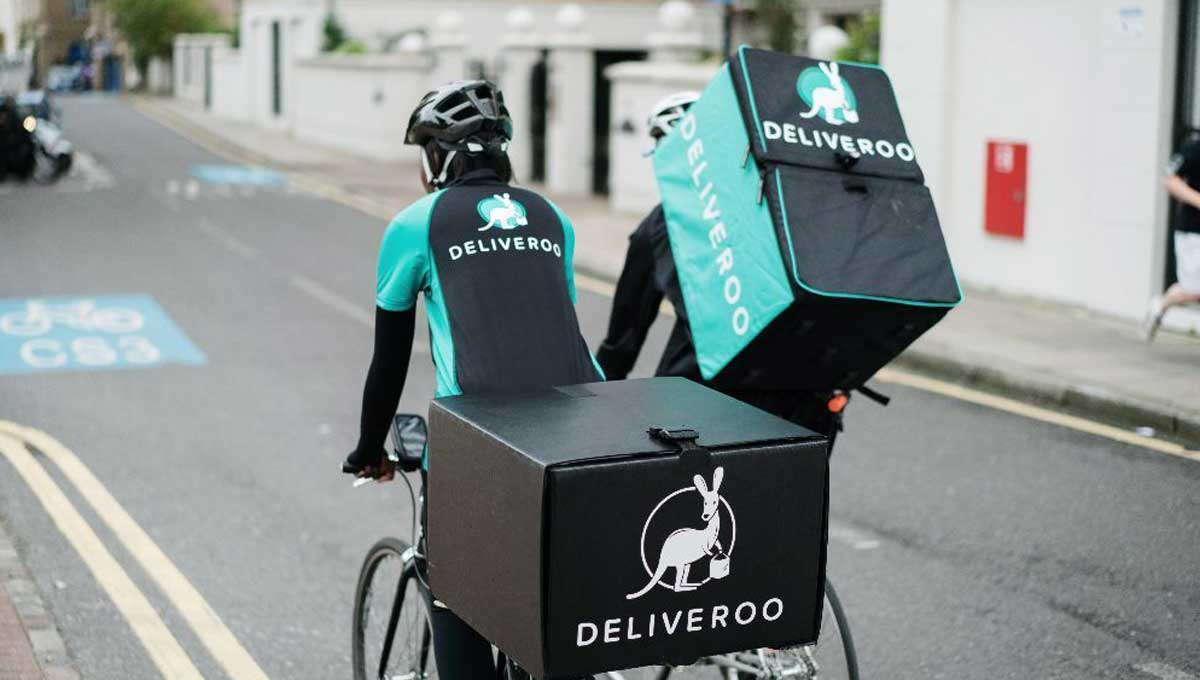
    Self-collection is now possible at Deliveroo Singapore’s new central kitchen, a first by a food-delivery service provider in the territory.

    Deliveroo Editions 2, which has just opened in Lavender, embraces seven restaurants that prepare food for Deliveroo’s online customers. It also lets customers pick up their meal via a new “click and collect” option. They can also opt to eat in a 20-seat dining space.

    At the office and retail building CT Hub 2, Editions 2 is Deliveroo’s second multi-restaurant kitchen and is 1.5 times larger than the 2110sqft Deliveroo Editions in Katong, which opened last year. It features Da Paolo Pizza Bar, Dosirak, Streets of Saigon and Wolf Burgers plus three restaurants also featured at Katong: Aloha Poke, Blu Kouzina and Kurry Kornerplus.

    Deliveroo chief executive/co-founder Will Shu says Deliveroo plans to open more central kitchens soon.