Author: Mei Ling Tan

  • AEON awards the 25th Anniversary from campaign “25th year AEON Anniversary Cerebration”

    AEON awards the 25th Anniversary from campaign “25th year AEON Anniversary Cerebration”

    Mr. Kiyoyasu Asanuma (7th from right), Managing Director, together with Ms. Suporn Wattanavekin (9th from left) and Mr. Nuntawat Chotvijit (6th from right), Director and Management of AEON Thana Sinsap (Thailand) Public Company Limited awarded the grand prize to the key customer of “25th year AEON Anniversary Cerebration with 25 Cars and Other Prizes Worth Over 19 Million Baht” campaign with the first prize is 25 Toyota Yaris Ativ 1.2S cars, the second prize is 25 iPhoneX 256 GB and the third prize is 200 gold necklaces weight 50 Satang or 7.58 Grams. The 250 prizes, a total worth over 19 Million Baht at Queen Sirikit National Convention Center.

    Furthermore, AEON also surprised a special prize of gold bar weight 2 Baht or 30.48 Grams to the 25 customers who using along with AEON services for 25 years, worth 1.1 Million Baht.

    “AEON Celebrate its 25th Anniversary with 25 Cars” campaign was held to celebrate AEON’s 25th Anniversary, giving AEON customers who spend the required amount under conditions. Apply and using AEON services for the first time as well as download and registration “AEON THAI MOBILE” application

  • FedEx Express announces launch of new route

    FedEx Express announces launch of new route

    FedEx Express, a subsidiary of FedEx Corp. (FDX) and the world’s largest express transportation company, announced the launch of a new route which, for the first time, connects the FedEx APAC Hub in Guangzhou, China and the FedEx World Hub in Memphis, Tennessee, U.S.A.

    Currently, a FedEx Express MD-11 freighter is being used for the new route but it will be replaced with a B-777 freighter in May to meet increasing shipping demand. The new route has five flights per week from Tuesday to Saturday.

    In April, the flight departing from Guangzhou stops in Osaka, Japan and Anchorage, Alaska, U.S.A. Beginning in May, the flight from Guangzhou will stop in Osaka before flying directly to Memphis. From Tuesday to Friday, the flight returning from Memphis stops in Indianapolis, Indiana, U.S.A. and Anchorage before flying directly to Guangzhou, while the Saturday flight stops in Honolulu, Hawaii, U.S.A. and Anchorage.

    The Asia Pacific region is predicted to grow at a rate of 6.5% in 2018, 2% faster than the projected global growth rate. Boeing forecasts that air cargo flowing from Asia to North America is expected to increase by 4.7% per year over the next 20 years. In addition, Guangdong province, where the APAC Hub in Guangzhou is located is one of China’s major trade centers. In 2017, Guangdong’s total import and export value of goods grew by 8% year-on-year, while the total import and export value with the United States grew by 10.4% year-on-year.

  • DHL Global Forwarding launches Helpdesk in Berlin

    DHL Global Forwarding launches Helpdesk in Berlin

    DHL Global Forwarding, the air and ocean freight specialist of Deutsche Post DHL Group, has launched a helpdesk in Berlin that is custom-tailored to the needs of start-ups. The logistics professionals working at the DHL Start-Up Helpdesk assist dynamic start-up entrepreneurs and expanding start-up companies in the areas of logistics and supply chain development to enable them to achieve success both in and beyond Germany.

    “Our customer base of start-ups with global operations is growing rapidly at our branch in Berlin. Understandably, they have a greater need for advice and services, particularly in the initial stages,” explains Joachim Hermansky, Vice President Customer Service Germany at DHL Global Forwarding. “That is precisely why we trained up a young team that acts as a link between companies going global and traditional handling departments. They understand both worlds and that allows them to provide swift and flexible support.”

    The Start-Up Helpdesk at DHL Global Forwarding helps young companies enter the international business market. The digital world and e-commerce accelerate and simplify cross-border expansion for entrepreneurs. However, what requirements need to be met if products and goods are to be offered in other countries, and perhaps even outside the European Union, with immediate effect? The same applies to the procurement of products or materials and components for their own business when it is essential to deliver or receive the goods on time, and with the correct shipping and customs documents. That is where the Start-Up Helpdesk’s work begins. Have the goods been properly packaged? What transport mode is the best to be used? What customs requirements need to be met for imports and exports? What shipping documents need to be furnished? Have the goods been properly insured? These and many other questions suddenly become relevant in order to successfully develop and manage a business’s supply chains. The start-up team at DHL Global Forwarding is the right port of call for all these issues. DHL’s global network makes it possible to find the right transport services and solutions in no time and, if necessary, to contact experts able to deal with issues relating to all aspects of customs, regulations and transport routes.

  • Lazada’s Birthday Sale Reveals Singaporeans are Spontaneous Shoppers

    Lazada’s Birthday Sale Reveals Singaporeans are Spontaneous Shoppers

    At the stroke of midnight yesterday, droves of Singapore shoppers clicked “Add to Cart” and checked out their purchases. On the first day of Lazada’s Birthday Sale, 24 April, traffic to the online marketplace surged and it saw a 10x spike in orders in comparison to a regular day.

    The items flying off the shelves first were Lazada’s surprise boxes, worth $100 but available on Lazada.SG at $29 each. The catch – shoppers only knew which brand they were buying from while the contents inside remained a mystery. At midnight, the first 1,300 surprise boxes went on sale, with all boxes running out of stock within the hour. The trend continued throughout the day, with subsequent surprise boxes from household and premium brands consistently selling out within seconds.

    The buying frenzy resulted from Lazada’s 6th Birthday Sale which kicked off yesterday at midnight and runs until 26th April. Across the days, 74 brands are selling the coveted surprise boxes iconic to Lazada’s mega campaigns.

    “Our surprise boxes have been overwhelmingly popular since we introduced them at our last Birthday Sale. To mark our sixth anniversary, we have up to 16,000 boxes from brands and sellers that are available every two hours to satiate the customer demand. These sell out in minutes, so shoppers need to be quick to purchase,” said Mr. Alexis Lanternier, CEO and Head of New Retail, Lazada Singapore. “Beauty brands now form the largest representation of surprise boxes, to cater to the meteoric growth in female shoppers on Lazada,” he added.

    Lazada’s Birthday Sale is a three-day shopping festival with discounts of up to 90% off across 300 official brands and more than 10,000 local sellers, over 600 flash deals and new vouchers up for grabs at 9am daily. Besides the surprise boxes, the top five purchases are:

    1. Tsum Tsum EZ-Link Charm

    2. Apple iPhone X Space Grey 256GB

    3. Dumex Mamil Gold Step 3 Milk Formula

    4. A-Jays Five Earphones

    5. Laneige Multi Cleanser

  • imageHOLDERS Launching New Tablet Kiosk at RBTE 2018

    imageHOLDERS Launching New Tablet Kiosk at RBTE 2018

    imageHOLDERS will be unveiling their new Mini POS kiosk called the Integrator Pro 15, at RBTE 2018.

    The all-in-one countertop kiosk is a versatile and robust solution with internal space for up to five devices. The latest addition to imageHOLDERS vast portfolio of self-service solutions, the Integrator Pro 15 is a new take on the original integration kiosk imageHOLDERS launched in 2015. The upgraded design can enclose a 15” tablet or touch screen alongside multiple devices within the base of the kiosk.

    Designed to be modular and easy to adapt, the futureproof design drastically lowers the cost of ownership in comparison to alternative solutions. The Integrator Pro 15 is an all-in-one kiosk which can be countermounted, or mounted on bespoke furniture designed by imageHOLDERS to mount kiosks securely.

    Alongside the new Integrator Pro 15, imageHOLDERS will be showcasing their self-service retail solutions which have been successfully deployed for several large retailers and supermarkets.

    Many industries are seeing technology greatly impact their traditional structure, and none more so than the retail and hospitality industry. Retail Business Technology Expo brings together over 370 suppliers and organisations within the retail and hospitality industries, showcasing innovative solutions and tools to support businesses.

    Retail Business Technology Expo is being held at the London Olympia on the 2nd and 3rd May 2018. If you would like to visit imageHOLDERS exhibit, please click here to sign up for your ticket.

  • Chinese visitors can now use Alipay in The Dubai Mall

    Chinese visitors can now use Alipay in The Dubai Mall

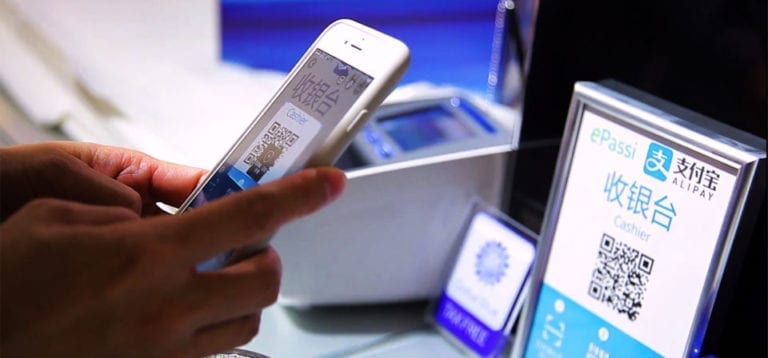
    Alipay, the world’s largest online and mobile payment platform operated by Ant Financial Services Group, and The Dubai Mall, the world’s largest and most-visited retail and entertainment destination, located in the heart of the prestigious Downtown Dubai, today jointly announced that Chinese mainland visitors can now use Alipay to pay for a wide range of shopping, dining and must-see leisure attractions.

    With the remarkable growth and importance of Chinese tourism to Dubai, The Dubai Mall is continuing to look at ways to accommodate their needs, which includes multilingual Guest Services staff and Chinese language Mall Guides.

    Chinese visitors can now look for stores across The Dubai Mall through Alipay’s in-app Discover platform, and pay for their orders in RMB via Alipay at the cashiers.

    Key destinations include The Souk, an elegantly designed precinct featuring jewellery shops, accessory outlets, traditional Arab clothing and handicraft stores; or The Village, which offers a rich collection of denim brands and brings an outdoor community feel with tree-lined walkways, cafés and restaurants; or the newly expanded Fashion Avenue, which provides a significant boost to Dubai’s premium shopping options, with over 150 luxury shopping and dining experiences including flagships and new concepts.

    In addition, Chinese visitors can use Alipay at all The Dubai Mall’s popular entertainment attractions including Dubai Aquarium & Underwater Zoo, the newly opened VR Park, Dubai Ice Rink and At the Top, Burj Khalifa, the world’s highest observation deck with an outdoor terrace.

    With a total internal floor area of 5.9 million sq ft, The Dubai Mall has 3.77 million sq ft of gross leasable space and over 1,300 retail outlets including two anchor department stores – Galeries Lafayette and Bloomingdale’s – and over 200 global food and beverage outlets. The Dubai Mall offers an unparalleled retail mix combined with world-class dining, entertainment and leisure attractions.

    The Dubai Mall, the world’s largest shopping and entertainment destination, is part of Downtown Dubai, Emaar Properties’ flagship mega-development.

    Alipay currently has over 520 million active users in China. According to a report from Alipay and Nielsen, ease of payments is also a leading factor when it comes to key purchase decisions for Chinese tourists. 91% of Chinese tourists claimed they would show greater willingness to spend and shop if overseas merchants accepted Chinese mobile payments.

    Statistics by The Department of Tourism and Commerce Marketing in Dubai show that over 764,000 Chinese tourists visited Dubai in the fiscal year of 2017, with a year-on-year growth of 41%, ranking China as the 5th largest source market of Dubai. Over 68,000 Chinese tourists visited Dubai this January*.

  • Riverbed upgrades SteelConnect platform

    Riverbed upgrades SteelConnect platform

    Riverbed Technology has announced major updates to its SteelConnect SD-WANand cloud networking solution.

    Riverbed claims that SteelConnect is currently the only SD-WAN solution that provides unified connectivity and policy-based orchestration spanning the entire distributed network fabric – hybrid WAN, branch LAN/WLAN, data centers, and the cloud.

    With the latest upgrades to SteelConnect, Riverbed aims to expand the power of one-click connectivity and optimization into AWS and Microsoft Azure with added support for AWS Direct Connect and Azure ExpressRoute.

    Riverbed is also introducing seamless integration between SteelConnect and Riverbed Xirrus Wi-Fi with zero-touch provisioning of Riverbed Xirrus access points, and is providing new deployment flexibility with the addition of LTE wireless options for SteelConnect SD-WAN gateways.

    Customers can manage SD-WAN and Wi-Fi together through a centralized cloud console, including zero-touch provisioning of Riverbed Xirrus Wi-Fi Access Points, creation of Wi-Fi networks, and Wi-Fi monitoring.

    The platform now also supports LTE uplinks for a variety of use cases including back-up network connectivity in retail stores, pop-up stores, rural sites, or mobile retail. By leveraging LTE, retailers can maximize reach and productivity while increasing resiliency and agility of the network.

  • Airtel Q4 profit slumps 78% due to price war

    Airtel Q4 profit slumps 78% due to price war

    India’s Bharti Airtel has reported a steep 78% slump in net profit for the March quarter to 830 million rupees ($12.5 million), partly as a result of the industry’s ongoing price war.

    Revenue for the quarter fell 5.4% year-on-year to 196.3 billion rupees, with revenue from India falling 7.5% to 147.96 billion rupees on an underlying basis.

    India mobile revenues fell 13.5% due to the stiff competition, but Airtel increased its customer base by 4.9% from the previous quarter to 273.6 million.

    Revenue from Airtel’s African operations by contrast grew 10.7% year-on-year, with data traffic up 88%, voice minutes increasing by 37% and customer net additions increasing 11.5% to 84.13 million.

    During the quarter, Airtel expanded its operations to Rwanda with the purchase of Tigo Rwanda.

    For the full year, Airtel’s total revenue fell 9.8% to 836.8 billion rupees and its net income fell 71.1% to 10.99 billion rupees.

    “The [Indian] telecom industry continues to witness below cost, artificially suppressed pricing. Industry revenues were further adversely impacted this quarter due to the reduction in international termination rates,” Airtel CEO for India and South Asia Gopal Vittal said.

    “Airtel continued to consolidate its leadership position this quarter. Our strategic investments in data capacities, innovative digital content through Airtel TV, customer friendly bundles and upgrade programs led to the highest ever mobile data customer additions of 15 million during the quarter. Usage parameters remained robust–on a YOY basis, we saw data and voice traffic grow 584% and 55% respectively.”

  • Myanmar to impose 2% USF levy in June

    Myanmar to impose 2% USF levy in June

    The Myanmar government has revealed plans to impose a 2% tax on the income of mobile operators starting in June to fund expansion of telecoms services to unserved rural areas.

    The proceeds from the tax will be pooled into a universal service fund to fulfil the provision of basic telecoms services in rural areas.

    Myanmar’s four mobile operators, which include state-owned MPT, Telenor Myanmar, Ooredoo Myanmar and Mytel – the joint venture between Vietnam’s Viettel and a consortium of local ICT companies – will be required to pay into the scheme.

    Current mobile networks cover over 90% of Myanmar’s population, but the government believes the USF will be necessary to fund the development of network towers in unserved areas.

    Through the project the government is targeting 94% population coverage by the first quarter of next year and 99% coverage in the future.

    Once basic infrastructure is deployed to the rural areas, more advanced telecommunications services can be introduced in the future, the report states.

  • Cebu Pacific passes IATA safety audit

    Cebu Pacific passes IATA safety audit

    For the first time, Gokongwei-led Cebu Pacific passed the globally recognized safety audit of the International Air Transport Association (IATA).

    “Cebu Pacific has achieved full compliance with IATA’s Operational Safety Audit (IOSA), joining a roster of 429 airlines worldwide that have strictly complied with the most stringent of international standards governing aviation safety,” the airline said in a statement on Thursday, April 12.

    Though Cebu Pacific is not a member of IATA, which represents some 280 airlines comprising 83% of global air traffic, it is now listed in the IOSA Registry, which lists those who have met the benchmark for airline safety management.

    The IOSA, which is conducted for each airline every two years, is described by IATA as “an internationally recognized and accepted evaluation system designed to assess the operational management and control systems of an airline.”

    “We are committed to upholding the highest possible standards for the benefit of our passengers. Hence, we chose to undergo the rigorous and stringent audit requirements for IOSA,” said Cebu Pacific president Lance Gokongwei.

    “Since it is considered the internationally recognized and accepted benchmark for airline safety, we wanted to be sure that our protocols and regulations meet IOSA standards,” he added.

    Gokongwei also said Cebu Pacific “invested in safety technology over the past several months… to better manage safety risks.”

    These include the on-board Runway Overrun Prevention System (ROPS) cockpit technology for its Airbus fleet, which monitors runway conditions before landing and calculates where the aircraft can safely stop, as well as Area Navigation (RNAV) data for more accurate navigation and approaches to various airports.

    It also invested in a Fatigue Risk Management System for pilots to minimize safety risks and ensure they are at adequate levels of alertness.

    Philippine Airlines and its subsidiary PAL Express are also included in the IOSA Registry, with the latter passing its latest audit back in March.

  • China Unicom, Huawei collaborate on 5G network slicing

    China Unicom, Huawei collaborate on 5G network slicing

    China Unicom and Huawei Technologies have signed an agreement to conduct joint research, demonstration, and deployment of 5G network slicing.

    Under the agreement, Unicom and Huawei will work together to develop key technologies and solution for the Chinese telco’s 5G network slicing services and applications.

    The pair will also jointly promote network slicing for various vertical markets, such as VR/AR games, industrial control, Internet of Vehicles (IoV), and the Internet of Things (IoT).

    “Network slicing is a key native capability of 5G, which can maximize the efficiency of communications networks and reduce network construction and O&M costs,” said Zhang Yong, president of China Unicom’s Network Technology Research Institute.

    “In the 5G era, the concepts of slice as a capability and slice as a product have become an industry consensus. China Unicom will demonstrate the multi-scenario slicing service in vertical industries and deepen the integration with the industry to facilitate digitalization in China.”

    Zhang said Unicom wants to focus efforts on terminals, chips, networks, and vertical industries.

    He Weijie, vice president of Huawei Cloud Core Network Product Line, said the company’s concepts of slice as a service and slice as a product have played a major role in shaping the 5G business model.

    With its agile deployment, security isolation, high reliability, and automatic management, network slicing helps operators like Unicom to expand the vertical industry market in the 5G era and fully exploit the potential of their networks, He said.

    As the fundamental feature of 5G, network slicing enables mobile operators to run multiple logical networks as virtually independent business operations on a common physical infrastructure. It brings new opportunities for operators to engage with the vertical market.

    In February, a handful of industry players, including China Mobile, HuaweiTencent, Germany’s Deutsche TelekomDigital Domain and Volkswagen, jointly founded the 5G Slicing Association.

    The association, inaugurated during Mobile World Congress 2018, will study key technical issues in 5G network slicing, cooperate with slicing-related standards development organizations and forge test beds and trials aimed at verifying the capabilities of the technology.

  • GSMA halts development of eSIM standard

    GSMA halts development of eSIM standard

    The GSMA has confirmed it has put development of a universal standard for eSIMs on hold pending the outcome of an investigation by the US Department of Justice.

    The eSIM standard would contain a range of features, including an option for the eSIM to be locked to a specific carrier.

    But the Department of Justice has now opened an antitrust investigation into the GMSA, as well as US operators AT&T and Verizon which are helping lead the development of the standard.

    The report, which cites six unnamed sources, states that the department is investigating allegations that AT&T, Verizon and the GSMA have been colluding to prevent customers from easily switching to another provider by allowing them to lock a device to their network.

    The investigation was reportedly opened in response to complaints from at least one device maker – Apple – and one rival wireless operator, the report adds.

    In a statement, the GSMA said that the development of the latest version of the eSIM specification is on hold pending the completion of the investigation, and that it is cooperating fully with the department.

    The industry body also noted that under the proposed standard, in the US, consumers would have to explicitly consent to being locked to a provider when signing up to specific contracts, such as when purchasing a subsidized device.

  • How does the Facebook inquiry relate to retail?

    How does the Facebook inquiry relate to retail?

    In the latest example of the United States Democratic political machine’s inability to accept losing the ‘un-losable election’, Facebook has become the next scapegoat for failure.

    The spectacle of one small geeky guy being bullied by 20 senators and the might of the ‘political inquisition’ is absurd theatre that may provide some people with an avenue to exorcise their frustration but will change little.

    Why? For three very good reasons.

    Firstly, the very foundations of e-commerce rely on monetising data collection. Without it the model does not work and the world leader in e-commerce technology and its monetisation is the United States.

    Secondly the intelligence community is so intertwined in this web that it will defend it at all costs.

    And thirdly, while when confronted with direct questions about personal data consumers may offer negative opinions, their behaviour betrays that they care more about what they can get than they do about what information is collected as a result of their actions.

    If there are any traditional retailers expecting e-commerce to be derailed as a result of the Facebook inquiry they will be sadly disappointed. The media angle taken on e-commerce data portrays the lemming-like thinking that sees e-commerce (which produces less than 10 per cent of retail sales dollars and a fraction of the gross margin) given a halo of power that magnifies its influence beyond its natural impact.

    Data collection and its manipulative use online creates the virtual equivalent of a product stalker following a shopper around a centre and shouting in their ear every five minutes that they should buy their product for a discounted price until the customer either capitulates or runs away.

    Most shoppers (read more than 90 per cent by dollar value) would prefer to buy at physical stores for a multitude of reasons. However what data allows online outlets to do is destroy competitors by starving their profitability – not by providing a better alternative.

    E-commerce outlets do not build brands. They generate transactions. They do not build experiences. They provide transactional convenience. And they use data to do it. Make no mistake, they can decimate traditional retailers who either put their head in the sand and ignore them or react the wrong way.

    Unless the retail industry starts to think strategically, rather than tactically, e-commerce may end up with the majority share of retail purely by outlasting bricks and mortar retailers economically by starving them of profitability.

    So regardless of any meaningful legislative changes that are unlikely to emerge from the Facebook inquiry, the e-commerce game will roll on and the technologically enabled, globally connected marketplace will continue to evolve beyond the ability of legislator’s attempts to curb it.

    It is not new (we’ve been collecting data on consumers in one form or another since commerce began) but it is technologically turbo-charged.

    However, as any true merchant will tell you, there is a big difference between data points and really knowing what turns on a customer and how to charm them. That is where the real opportunity will always live for real retailers and brands as distinct from product and price catalogue sellers.

  • Online Giants Carve Out Twin Empires in China’s Age of New Retail

    Online Giants Carve Out Twin Empires in China’s Age of New Retail

    The largest e-commerce players in China have rapidly expanded their scope and reach in recent years through a wave of investments and acquisitions. Alibaba owns two of China’s largest e-commerce platforms, Taobao and TMall, as well as an electronic payments system, AliPay. JD has allied with Tencent, which owns WeChat. Now, a report released by Oliver Wyman, a global consulting firm, analyses how the two players’ ubiquity in mobile payments, deep consumer data and sophisticated logistics capabilities has resulted in a new ‘age of empires’ in China’s retail sector where incumbents must quickly adapt to survive.

    The report, Chinese Grocery’s Age of Empires, reveals the e-commerce giants’ efforts to drive further growth by introducing new shopping formats – dubbed O2O, or online-to-offline. These blend online shopping’s convenience and wealth of information with the social experience and physical contact with products that people enjoy in traditional, brick-and-mortar stores. This is most immediately visible in the online grocery sector, where Alibaba and Tencent/JD are actively pursuing three strategic plays that could together increase their share of grocery shopping from around 10 percent today to around 30 percent over the next five years, by when it could be worth approximately 400 billion renminbi in gross merchandise value.

    “With the grocery sector seeing mobile payment penetration of 35%, the two giants are seeking to maximize their critical advantage of dominance in covering 97% of the overall mobile payment market,” says Richard McKenzie, Partner, Greater China at Oliver Wyman. “Now their investments are rapidly building a wider ecosystem of alliances that will make them ubiquitous through online-to-offline tools and features.”

    Over 460 million people in China regularly shop online, where densely populated cities facilitate home delivery. As a result, China has leapfrogged other markets to take the lead with nearly 10 percent of the population shopping for groceries online, compared to just 3 percent in the United States and 6 percent in the United Kingdom, Europe’s highest rate.

    This rapid change favors the two giant empires, which could make it hard for independent retailers to survive outside of them, evidenced by declining like-for-like sales and margins among China’s traditional supermarkets and convenience stores over the past few years. However, they may yet survive in some form with help from the online giants themselves, leveraging the empires’ logistics networks, rapid delivery services and new software solutions.

    Both empires are building their O2O power through three plays, each of which blends their online capabilities with offline stores in new ways:

    1. Experimentation with own retail formats

    Unlike supermarkets elsewhere that offer online shopping in parallel with a traditional in-store experience, China’s players integrate elements of the two. For example, Alibaba’s Hema stores offer smartphone payment and home delivery within 30 minutes. . Though expensive to set up and with high initial running costs, these stores are only marginally loss making. With further maturity and ramp up, breaking even is within reach. Oliver Wyman believes there is potential for at least 1,000 stores in major cities with total revenues of RMB 200 billion.

    1. Strategic Partnership with Big Box Retailers

    Big-box retailers have tried and failed to launch their own O2O and online shopping services in the past. Amid pressure from the online giants, a flurry of partnerships has seen large retailers aligning themselves with the two tech empires. These show early signs of success as parties combine their different strengths. Examples include Alibaba installing Tmall Supermarket shelves in RT-mart branches, with one-hour home delivery for products on these shelves, while Walmart, which has a strategic partnership with JD, is using its O2O unit JD Daojia as the service platform for over 150 stores to attract online traffic.

    1. Reinvention of the traditional world of “mom and pop” shops

    Traditional stores still account for half the sales of fast-moving consumer goods in China, much of them through the more than 7 million family-run stores that dominate retail outside big cities. Since early 2017, JD and Alibaba have been converting these into franchises, helping them optimize their stock through data-based curation tailored to their neighborhoods. Smartphone-based ordering systems and rapid delivery have also revolutionized procurement. Tmall planned to open 10,000 such franchises in 2017, while JD is aiming for one million by 2021. Alibaba and JD are further likely to dominate the growing market for their ordering systems, a market that could be worth up to RMB 400 billion over the next five years.

    Wai-Chan Chan, Partner, Greater China at Oliver Wyman notes, “China has not only surpassed the US in terms of online grocery penetration but also in terms of the pace of innovation and introduction of value-added services. Customers at a Hema store can pay seamlessly via their mobile phone, have fresh crayfish cooked in-store and delivered to their home within 30 minutes. Players in other markets are still some way behind in matching that offering.”

    As O2O becomes the new normal in retail, the two alliances will act as both players and facilitators of these models. While retailers and brands need to plan the best way to function in a retail world dominated by the two tech empires, identifying opportunities for synergy, it will pose a more serious challenge for some incumbents.

    The new environment will pose serious challenges to independent supermarkets and hypermarkets. Survival will require drastic changes, but this is unlikely under their current set-up. Some leading convenience stores should be able to survive outside these empires in the short term, but they too will come under threat in time from the revival of family-run stores under the franchise networks run by the two giants.

    The tech empires will inevitably influence the shape and future of the supermarket and hypermarket industry. It is crucial for incumbents to find ways to partner or co-exist with them if they are to survive and thrive.

  • Cocosnack offers a new diner experience

    Cocosnack offers a new diner experience

    Cocosnack, in the centre of Hue city, claims to be the first American diner in Vietnam offering both local and international food.

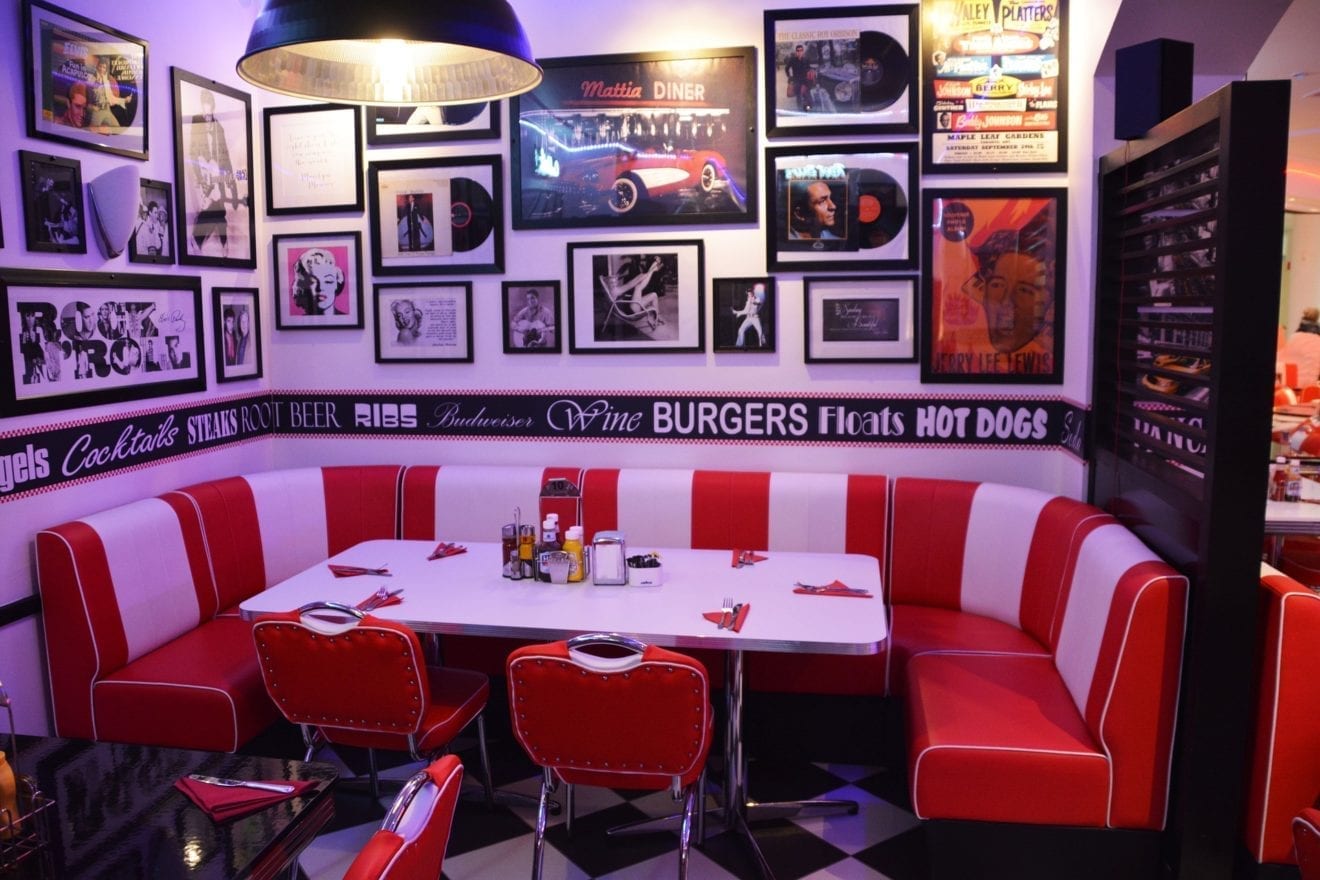
    As the photos show, the venue features an unforgettable pink colour palette with strong 1950s-influenced theming. The shocking pink is offset by a black-and-white chequered floor.

    As well as burgers featuring Australian beef, the new outlet offers freshly made Vietnamese specialities.

    Using imported flour, the diner’s French chef can also produce French country-style bread, kebabs, pasta and pizza, as well as snacks.

    It is easy to recognise the diner with its stylised Citroen car by the entrance.