Author: Mei Ling Tan

  • Alexachung expands with Tokyo pop-ups

    Alexachung expands with Tokyo pop-ups

    British womenswear label Alexachung has marked its Asian expansion with a series of Tokyo pop-ups, starting earlier this month.

    Alexachung hopes the pop-ups will build brand awareness and boost sales thanks to a “very loyal” Japanese customer base.

    “Our goal is to build a reliable, constant presence and hope to develop retail when [we] are ready to,” said Alexachung CEO Edwin Bodson.

    Hong Kong-based Bluebell Group is the exclusive distribution for Alexachung in Japan.

    Korea and Taiwan are also considered to have strong potential thanks to solid retail and wholesale volumes last season.

    The brand also plans to open a London store by 2020.

  • Tianjin Tianhai plans a Dangdang takeover

    Tianjin Tianhai plans a Dangdang takeover

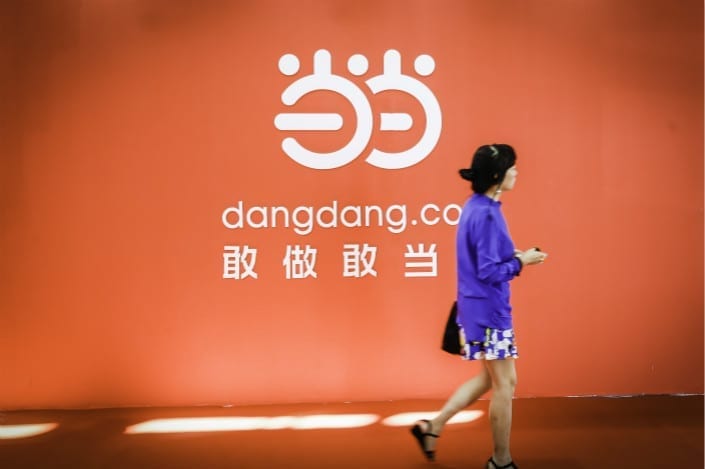
    Tianjin Tianhai Investment, a unit of Chinese conglomerate HNA Group, plans to acquire Chinese company Dangdang’s e-commerce assets for RMB7.5 billion (US$1.19 billion).

    The acquisition will allow Tianjin Tianhai to tap into China’s e-commerce market via Dangdang, which is known for its online marketplace for books, clothes, furniture and other consumer goods.

    Tianjin Tianhai plans to buy 100 per cent stakes in two e-commerce companies owned by Dangdang, a rival to Amazon in China, via cash and an issue of shares, it says in a filing to the Shanghai stock exchange.

    Trade in Tianjin Tianhai’s shares were suspended in January because of a restructuring by owner HNA.

    The shares remain suspended.

    HNA Group is under scrutiny over its opaque ownership and tactics during  buying spree over the past few years.

    Tianjin Tianhai’s deal requires approval from authorities such as the China Securities Regulatory Commission.

  • MSGM China opens a new Beijing boutique

    MSGM China opens a new Beijing boutique

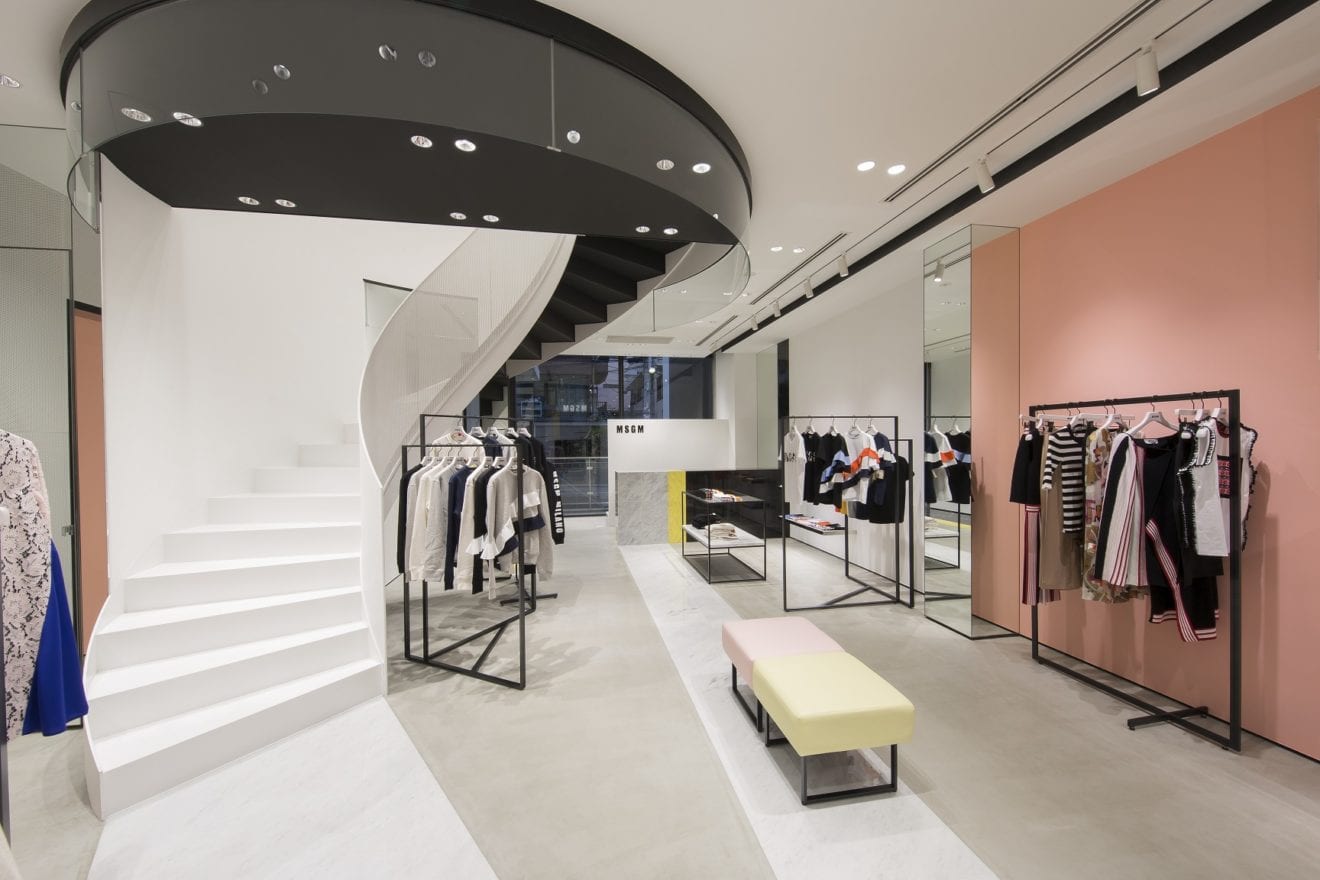
    MSGM China has opened its second store, a boutique in SKP Beijing.

    The Italian fashion label’s 15th store, it offers menswear, womenswear and accessories. The 100sqm space features flexible iron display structures, geometric neon lighting and Carrara and black Marquina marble surfaces interrupted by a fluorescent yellow stripe, a hallmark of the brand.

    MSGM China’s first store opened in Shanghai last year, when the brand also opened a space in Seoul.

  • JD.com promises to add ‘1000 stores a day’

    JD.com promises to add ‘1000 stores a day’

    As 50,000 people apply each day to be franchisees, JD.com promises to open more than 1000 stores a day this year.

    It started the journey last month, with founder/CEO Liu Qiangdong saying almost every store will be a franchise, according to local media reports.

    The ambitious aim is a part of a plan the e-commerce announced 12 months ago, when Liu said it would open a million convenience stores in the next five years, half of them in rural areas. JD.com’s convenience stores are run by independent investors, and the company offers loans for potential franchisees.

    “We receive 50,000 applications every day,” says Liu. “The applicants are mostly migrant workers who have returned to their villages or small towns. Jingdong Finance can provide them with loans to open stores. They can earn more than RMB8000 [US$1275] a month.”

    The first batch of shops, 1111 of them, opened their doors on the same day in November.

    Liu’s latest announcement comes a month after JD.com signed an agreement with convenience store group FamilyMart. This enables JD users to have food delivered to their homes from FamilyMart’s core locations in Beijing, Shanghai, Shenzhen and Chengdu within 30 minutes at any time.

    Smart carts

    And in January, JD.com launched offline fresh-food supermarket 7Fresh, a 4000sqm store in Beijing that features “smart carts” that guide customers to the items they seek to buy.

    JD’s first high-profile deal in the emerging O2O retail sector was its investment of RMB4.3 billion for a 10 per cent stake in Shanghai-listed supermarket chain Yonghui Superstores three years ago.

    Meanwhile, JD.com is partnering with mainland retail conglomerate China Resources Vanguard in a deal to take Vanguard’s shops in Hangzhou and Nanjing to its O2O platform. Customers will be able to buy from Vanguard’s offline stores via JD Daojia, and the partnership will later extend to the brand’s 2000 retail stores in more than 30 major cities in China.

    China Resources Vanguard, formerly China Vanguard Super Department, has more than 3000 retail stores in 200-plus cities and has revenues of RMB103.6 billion last year.

    JD Daojia is a one-hour delivery service that partners with 100,000 local merchants and provides on-demand groceries, fresh produce, snacks, flowers and pharmacy needs in more than 30 cities. It has more than 50 million registered users and 20 million monthly active clients.

  • New Singapore jobs portal to better match jobseekers and employers

    New Singapore jobs portal to better match jobseekers and employers

    A High-tech national jobs portal was launched on Tuesday to better match local jobseekers with employers. It can prioritize search results according to the relevance of the jobseeker’s skills, and filter results to show those under government schemes to support training, among other key features.

    The new portal, called MyCareersFuture.sg, was developed by Workforce Singapore (WSG) and the Government Technology Agency (GovTech).

    It replaces the interface of the existing Jobs Bank for users, and WSG said it aims to roll out the function for employers to post jobs by the end of this year.

    For now, employers are still to post jobs on the Jobs Bank, and the posts will be shown on MyCareerFuture.sg.

    A pilot run of the new portal was conducted with 100 users in the last three months of 2017, and the site went live in January this year. It has received 280,000 visitors as of the first week of April.

    To calculate the relevancy of jobseekers’ skills, which is displayed as a percentage from zero to 100, the system uses machine learning to analyse job descriptions and identify the skills needed.

    It then compares these with skills that the jobseeker has indicated.

    For example, after searching for “communications manager” jobs, a user will be prompted to select the skills he has, such as public relations, social media, marketing, or strategic communications.

    The job results will then be listed according to how closely his skills match what is required for those positions. Clicking on a job post will also show other relevant skills that the jobseeker lacks.

    WSG group director for Careers Connect Lynn Ng said this feature is to encourage jobseekers to reflect on the skills and experience they have.

    “It’s better than just submitting applications based on the job title, salary or company name,” she added.

    Search results also display upfront the number of applications for the position and when it was posted. On the Jobs Bank portal, jobseekers had to log in using their SingPass in order to view this information.

    The Jobs Bank was launched in July 2014 as part of the Fair Consideration Framework to boost employment prospects for Singaporean professionals, managers, executives and technicians (PMETs). Companies have to post job ads on the portal for at least 2 weeks before they can apply for an Employment Pass for the role.

    From July 1 this year, this rule will be extended to cover firms with at least 10 workers and for jobs paying under S$15,000 a month. Currently, it applies only to firms with at least 26 workers and for jobs paying under S$12,000 a month.

    So far, more than 300,000 jobseekers and about 30,000 employers have registered on the Jobs Bank. WSG said at a media briefing it does not have statistics on the number or share of successful matches, as not all employers update the status of job applications in the portal.

    It said the new portal is meant to complement the MySkillsFuture.sg portal, which was rolled out last year and caters to the wider population besides jobseekers. It provides information on career pathways and training available.

    WSG will roll out more features for the new portal later this year, such as recommending suitable candidates for employers based on applicants’ CVs, and giving jobseekers tips on how to improve their CV for each job application.

  • Singpost launches new stamps commemorating early trades in Singapore

    Singpost launches new stamps commemorating early trades in Singapore

    A set of stamps commemorating four common trades in the early days of Singapore was launched by Singapore Post (SingPost) on Wednesday (Apr 18).

    The stamps depict the samsui women, the Sikh police contingent, the orang laut and the coolies.

    The samsui women were a common sight at construction sites in Singapore from the mid-1930s with their trademark red headscarves. Most had come to Singapore from the Sanshui district of Guangdong province in southern China and are seen to be thrifty and resilient individuals who helped build Singapore’s infrastructure.

    The Orang Laut are tribes of nomadic sea people who made a living as fishermen, boatmen and rowers. They were one of the earlier immigrants to Singapore during pre-colonial days.

    The coolies were unskilled labourers who formed the backbone of Singapore’s earlier labour force during the colonial era. They were often employed in mines, ports, plantations, construction sites and as rickshaw pullers, and were mainly immigrants driven by poverty in China to seek a better life in Singapore.

    The Sikh police contingent was made up of Sikhs from Punjab, India who were recruited to serve as policemen and security personnel in the Straits Settlement. The contingent was established in Singapore in 1881 and was highly regarded by the British police until its disbandment in 1945.

    The stamps, which are available for sale at all post offices, come in four denominations – 1st Local, S$0.60, S$0.90 and S$1.30. Pre-cancelled First Day Covers affixed with the complete set of stamps are available at S$4.60 each.

    It can also be purchased at the Philatelic Store @ GPO, the Singapore Philatelic Museum and at the SingPost online store.

    The stamps are designed by Ms Lim An-ling.

  • How Muji can resist in a world of brands

    How Muji can resist in a world of brands

    In an era when branding has never seemed so important, the enduring success of Japan’s Muji might seem perplexing to many retailers.

    Almost every day fashion houses reveal new collaborations – often with unlikely bedfellows, like Louis Vuitton and Supreme or Gucci and a hitherto little-known cassette-tape retailer Waltz in Tokyo.

    But Kei Suzuki, director and executive officer of Muji parent Ryohin Keikaku, has no fears that Muji’s anti-brand format is under threat. He told in an interview on the sides of the MarketingPulse conference in Hong Kong that Muji’s approach will survive the current brand era.

    “I think we can continue what we are doing because the reason why other people enter into brand collaborations is because they want exposure to the customer by helping each other – because maybe they can broaden their customer range.”

    Muji, he says, was born from a concept: producing simple, stylish products that make their customers’ lives easier and are not expensive. “So what we want to do is realise the concept and make our customers more happy.”

    So while other retail brands and fashion labels are pursuing partnerships, Muji would rather work on expanding its categories. That is why it designed a minimalist house in 2015, a Muji campsite and, this year, its first truly fresh grocery concept store.

    “Always we think: what can we do for the people, and how can we make their lives easier?” This is instead, he explains, of focusing purely on the business side.

    “By applying this concept to many different categories, we believe we can broaden our exposure to our customer or potential customer. Eventually, that will help us increase the size of the business, or sales. We will not collaborate with brands, but we believe in collaborating with somebody else with the expertise who shares the Muji concept. An example of that is the new Muji Hotel in Shenzhen.

    Suzuki says investing in and running hotels is not Muji’s speciality, but if it could find a partner to run a hotel it would want to implement its design and functionality skills into the project. “We provide the concept, they provide the hotel.”

    Despite its anti-brand position, it is no urban myth that Muji engages some of the world’s best-known designers to help develop products – it just never tells anyone about them.

    “We collaborate with designers who have sympathy with the Muji concept so they are happy to be involved, but their names are never to be disclosed.”

    Muji’s rationale is that if customers do not know a product is designed by someone they know by name, they will focus on the product.

    “Some designers are already too famous, so if we sold a product with their name, everybody would buy it. But at Muji, there are no names… They can get very nervous, because people judge only from the product.

    “We do not want the consumer to be misled just for the sake of a name.”

    He says some of the designer products have become best-sellers for Muji, while others have been less successful. This, he concedes, can make the exercise more than a little nerve-wracking for the invisible partners.

    Suzuki is in charge of Muji in China, Hong Kong and Korea, the fastest-growing of the company’s markets internationally. In the mainland, Muji now has more than 230 stores, and is opening new ones at the rate of about 40 a year.

    Hong Kong was one of the first markets outside Japan, along with the UK, where Muji ventured.

    “Opening stores in Hong Kong and the UK helped the company, because both cities are very cosmopolitan and many people visit. So they see Muji and some of them understand the concept. Then awareness increases. That helped us when we started opening stores in France and other new markets.”

    Hong Kong is also proving a great testbed for new concepts, like the Muji Travel store, of which there are two in the territory – one at Hong Kong Station, the other at the airport. Both are trading “very well”, selling travel essentials and convenience products. “I think they provide very good solutions for travellers.”

    Online is another area where Muji is treading positively but cautiously.

    “E-commerce is very important because if somebody wants to buy something from Muji we want to make it easy. But at the same time, we think it is important from the customer’s standpoint to have an actual connection or experience. So our stores are not just for retail, but also for the experience, and for engagement with the customers.”

  • The DNA of Zalora Explaned

    The DNA of Zalora Explaned

    Alibaba and JD.com may be embracing brick-and-mortar retailing in a move offline, but Southeast Asia’s fashion-focused Zalora still considers itself a pure-play online retailer and has no plan to change.

    In an interview, Zalora Group CEO Parker Gundersen, who will step down from the role at the end of May for personal reasons, says digital pop-ups in various markets across Asia should not be mistaken for a move offline.

    “I would consider ourselves a pure-play digital-commerce provider. The pop-up shops for us are largely for marketing. I love them because it is a great way to introduce consumers to Zalora and the products we sell, and to our technology [interface], so they can see how easy it is to shop on our platform.”

    Fashion-focused Zalora has a growing presence in Hong Kong, sourcing orders here from its Malaysian warehouse.

    Romain Voog, outgoing CEO of Zalora parent Global Fashion Group, (pictured below) says the company treats Hong Kong as part of a cluster of markets that also includes Malaysia, Singapore and Taiwan.

    “I think we can see a lot of progress in Hong Kong, especially if we are getting products that are more geared toward Hong Kong customers. It is surprising there is not more Chinese influence selling into Hong Kong. We’ve been surprised by the results we have seen of basically just organising a shipping route into Hong Kong.”

    Growth ahead

    Voog sees a lot of opportunity for Zalora to increase its Hong Kong presence, especially if it can source a better assortment of product.

    “We don’t share our growth rate in Hong Kong, but it is above our overall market growth rate. We are starting to invest more into it in terms of marketing and assortment, so we should see improvement in growth reflecting that.”

    Gundersen is not tempted to copy the massive investment by Alibaba and Amazon into traditional retailing formats via acquisitions and moving offline, albeit with heavy technology behind the scenes.

    “Those two players are in a unique position in this world in terms of the size of their portfolios, their capabilities and what they can do. I can only speak for myself and this business that we run – our DNA is technology and agility, and if I look at our supply chain, it is about efficiency, especially in markets where you have consumers spread out, big populations of consumers who are nowhere near high street. It is such a sensible alternative to have an e-commerce platform where you can consolidate one warehouse and distribute the product to wherever there is demand – it is a far more efficient way to go.

    “So for us, I want to stay focused on that model. But there are ways we can partner with the offline world, because if you think about it, 95 per cent of retail today – probably more like 98 per cent in most markets – is still happening offline. So we have a very small share of the overall market.

    ‘So much opportunity’

    “It is interesting to see the big players making these moves, but I think there is still so much opportunity for a company like Zalora because we have that really focused perspective. We love fashion, we love beauty and we love what that does for our consumers. Not all fashion is the same. There is a big spectrum of fashion, but the ability to have a viable channel for brands around the world here in Southeast Asia is still unique.”

    That said, the online market is growing fast and Gundersen is excited to see how much more share e-commerce takes. “We’re still limited in terms of size right now, so we maximise our coverage and try to get as much face in this region as possible, reaching as many consumers and potential customers as possible who are now coming online.”

    He is speaking about the entire Zalora Asia business, of course, which stretches from the Philippines through Malaysia, Singapore, Indonesia and up to Taiwan and Hong Kong. Forays into Thailand and Vietnam were less successful and sold off to local players, allowing the company to focus on its stronger markets.

    Voog will not rule out a return to either market long term, but believes there is greater opportunity through not dispersing resources too thinly in too many markets.

    “If you look at the Philippines, Indonesia, Singapore and Malaysia, these markets are at a very early stage. E-commerce penetration is like 5 or 6 per cent, so that means 95 per cent of the business is not online yet. The results are clear: if we double down in these markets, and get the right partner on board where we need one, you can see the results.”

    Misinterpreted

    In the Philippines, Zalora partnered with shopping mall/banking/telco giant Ayala, which took a 49 per cent shareholding. Gundersen says the partnership – since misinterpreted by some commentators as a partial exit from the market – will allow customers to move between physical and digital channels seamlessly. The two companies can share data, and use that information to improve customer touch-points.

    “The partnership creates a special opportunity to align the country’s leading commercial mall company, telecom provider (Globe) and consumer bank (BPI) with the region’s leading online fashion retailer to create a first-of-its-kind retail partnership that focuses on the customer journey,” he says.

    “We have very ambitious plans to connect our respective consumer-facing businesses to create some ‘seamless journeys’ for customers in the Philippines and across our markets. The idea is simple: leverage our combined customer-facing business and our digital capabilities to create a far more connected shopping experience for Filipinos.”

    Immediate benefits include click-and-collect, allowing online shoppers to have their purchases delivered to an Ayala mall, This gives the mall a strong e-commerce face to consumers, including space for tenants to join Zalora’s ranks of vendors.

    As Gundersen explains, “My first responsibility is ultimately how do I please my customer by getting the right product? If I have product the customers don’t really want, it is just going to be left over. You’re not really going to build a brand that way, or a profitable retail company, Partnering with places like Ayala and helping them to invest in creating an e-commerce solution like we have is unlikely for most offline players, unless they are really in a unique position. There are a few out there who are making those acquisitions to bring in that kind of capability.”

    Voog says critics alleging the company is divesting misunderstand the Philippines strategy. “It is totally the opposite. We are actually overinvesting, but we are investing in a way where every investment is going to double the result because of the partnership.”

    Relationships essential

    Gundersen sees strong relationships with brands as essential to Zalora’s success.

    “A couple of years ago, few brands were willing to take a shot [with Zalora]. But we are sitting in a unique position because the brands are really now starting to come in and say, ‘Hey, I like what you guys are doing – I like the adjacencies, I like the brands, I like the way you represent brands in your channel and I want to come in’.”

    He believes Zalora is attractive to brands because they can achieve incremental sales from customers not initially seeking them out.

    “Zalora is like a shopping mall whereas the monobrand website is like a small shop in one location – they just can’t get the traffic we can. And we have that customer relationship, so we can introduce new brands to people. They may come in and buy a Mango or Topshop item, but we can introduce them to Adidas or Nike.”

    Is it is a challenge convincing brands they are not cannibalising their own direct-to-consumer sales by listing on Zalora?

    “We have the data, so we can show why e-commerce makes so much sense in Southeast Asia,” says Gundersen. “A lot of consumers just don’t have access to offline stores. I think the local distributors are much more concerned, so over the years we have really had to work with them and build confidence and trust. At the end of the day, this is a net positive thing for the overall business.

    “With our local distributor partnerships – in some markets we still work closely with those distributors – we really try to focus on how to uplift their performance as well.”

    Distributors, he says, are often being pushed by the brands to develop their own country-specific e-commerce site, so partnering with Zalora is sometimes less of a threat and more of an opportunity to appease the brand.

    “I’m very focused with my team on how we build stronger relationships with the brands and understand what they need as well, because not all product is the same. There are brands that give only the best products to the best partners. That’s the status I want to get into.”

    Profit question

    Meanwhile, Zalora’s struggle to become profitable in Asia has attracted a significant amount of media attention in recent years. Never mind that it took Amazon decades to return a profit, the financial press is less forgiving with Zalora. Voog is candid when asked about the timeline for the company making it into the black.

    It is totally different in different markets. Some of our regions, the Middle East for example, are profitable. It really depends on the market maturity and the level of competition there.

    “Our view is simple: we want to build the largest, highest-growth and profitable operation, focused entirely on fashion product. We want to be the fashion platform in each of our countries in each of our regions. We want to be the largest, highest-growth and obviously most-profitable fashion platform.

    “We’ve seen from our overall GFG result that we are making progress on the path to profitability and we are now in single-digit EBITA negative results, which is a steep improvement to the minus 40 we were three years ago. I am not interested in being a profitable small business – I am interested in being a large, high-growth business, so I think the priority will always be to make sure we stay the leader and reinforce that leadership position. Sometimes that might mean delaying break-even point to make sure you reinvest in acceleration of growth. That is fine.

    “The real indicator of success is being profitable on viable cost. Once you cover your viable result, any extra growth will help build your bottom line and help pay for your fixed costs.”

    Voog does not believe Zalora has made many major mistakes since entering Asia. “Maybe the only one was to go too broad too quickly, going into too many countries and being subscale and spreading ourselves too thin. That’s why we exited Thailand and Vietnam. If there was one thing I’d do differently, it was probably this one. The rest, we have been lucky.”

    That said, there have been many lessons along the way.

    “I think we have developed as a company the ability to be agile. We test a lot of things, then we try and humbly measure the results, and if we fail, we stop. It is a huge mistake when you start to do things and you don’t act when you fail and you keep on doing it.

    “We don’t do that. If we fail, we stop and we move on.”

  • Operators shift IT spend to IT services and software

    Operators shift IT spend to IT services and software

    The 4Q17 Telecom Infrastructure Services Benchmark report by Technology Business Research (TBR) revealed that the spending shift by operators towards offerings from IT services‐ and software‐centric companies may spell bad news for equipment vendors. The spend coincides with an industry that itself is following the global digital transformation movement.

    TBR Telecom senior analyst Chris Antlitz noted that operator spend on digital‐related initiatives will accelerate over the next few years. “IT services companies will continue to garner a disproportionate share of digital‐related, software‐centric business from operators as their competencies and capabilities align with what operators need to pursue digital transformation,” he added.

    Lower RAN (radio access network) volumes globally significantly impacted most RAN vendors’ telecom infrastructure services (TIS) revenue throughout 2017. TBR’s research suggests the global RAN market peaked in 2015 with product-attached services revenue now tapering off as payments are fully recognized. RAN vendors are responding to this headwind by diversifying into other areas, such as the IT domain, and are concurrently restructuring their network deployment businesses to profitably align with the new demand level.

    The global RAN market is likely to bottom out in 2019 and then return to growth in 2020 as 5G deployments ramp up. Until then, operators are likely to continue to shift spend from RAN and RAN‐related services to other business areas.

    Huawei spokesperson noted this trend towards IT, software and services, which forced the company to also make a course correction. “We have been actively investing in and developing these capabilities for some time. In addition, we have built an active global ecosystem of industry partners to support this industry shift, and count many of the world’s leading IT and software providers among our strategic partners today.”

    It is a similar comment from long time equipment vendor Nokia. Danial Mausoof, head of Strategic Marketing for Asia Pacific and Japan, commented that Nokia has taken steps to help the industry address this.

    “As an example, we are working on a common software foundation (CSF) which allows for a scalable library of common components and this gives us greater speed and flexibility by using pre-integrated blueprints to address the customer’s needs. In addition, we have identified key enterprise verticals such as energy and public sector transportation where we are able to leverage our extensive solution offerings to help industry players accelerate their digital transformation journeys,” he added.

    Not just operators

    “We do see the trend and it is not only happening to operators but many large enterprises as well. Apart from the cloud security and cloud infrastructure are more mature so that buying services on the cloud than the actual equipment on-site is more viable, said Linda Hui, managing director of Ruckus Hong Kong and Taiwan.

    “Secondly, many enterprises find that the technology has moved very fast, hence, before they can amortize the equipment, they need to upgrade their infrastructure to cope with the existing traffic, hence, it will be easier for them to just subscribe the service.”

  • Online boost for Chow Tai Fook Jewellery

    Online boost for Chow Tai Fook Jewellery

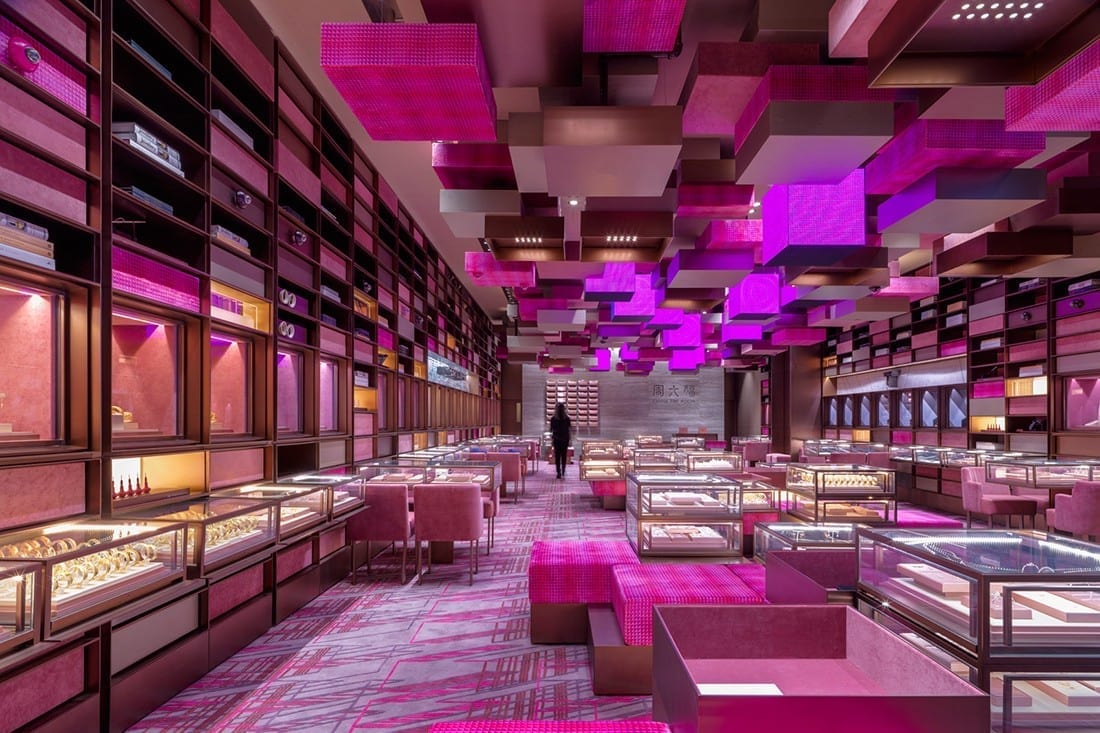
    Chow Tai Fook Jewellery Group’s fourth quarter saw e-commerce business soar in Mainland China.

    Retail sales value grew at the rate of 38 per cent year-on-year accompanied by a volume boost of 34 per cent.

    During the three months to the end of March, the percentage of retail sales value settled by Alipay, China UnionPay, WeChat Pay or RMB in the Hong Kong and Macau market – a proxy for sales contribution from mainland tourists – improved to 51 per cent from 44 per cent for the same period last year.

    Both the value of retail sales and same-store sales continued to improve in both the Mainland China and Hong Kong/Macau markets. Hong Kong/Macau had relatively stronger growth during the quarter thanks to improved consumer sentiment and a revival of visitor numbers from the mainland.

    In Mainland China, same-store sales of gem-set jewellery declined while retail sales value stayed positive. The same-store average selling price improved to HK$7100 (US$905) from $6500 a year earlier.

    In Hong Kong/Macau, both volume and average selling price at same-store level increased during the quarter. There was double-digit growth in same-store volume while the average selling price improved to H$13,000 from $12,400.

    An increase in volume drove same-store sales performance of gold products in both markets. The average selling price improved with an increased gold price (up an average 9 per cent) and higher-value purchases.

    The same-store average selling price was $4400, up from $3900, in China while the figure for Hong Kong/Macau rose to $7900 from $7000.

    Chow Tai Fook ended the quarter with 20 more points of sale. This included 17 outlets opening in China, one in Hong Kong/Macau, one in Taiwan and two in Korea. One point of sale closed in the US, taking to total of outlets to 2585.

  • OCBC Bank is First in Singapore to Rollout AI-Powered Voice Banking Services

    OCBC Bank is First in Singapore to Rollout AI-Powered Voice Banking Services

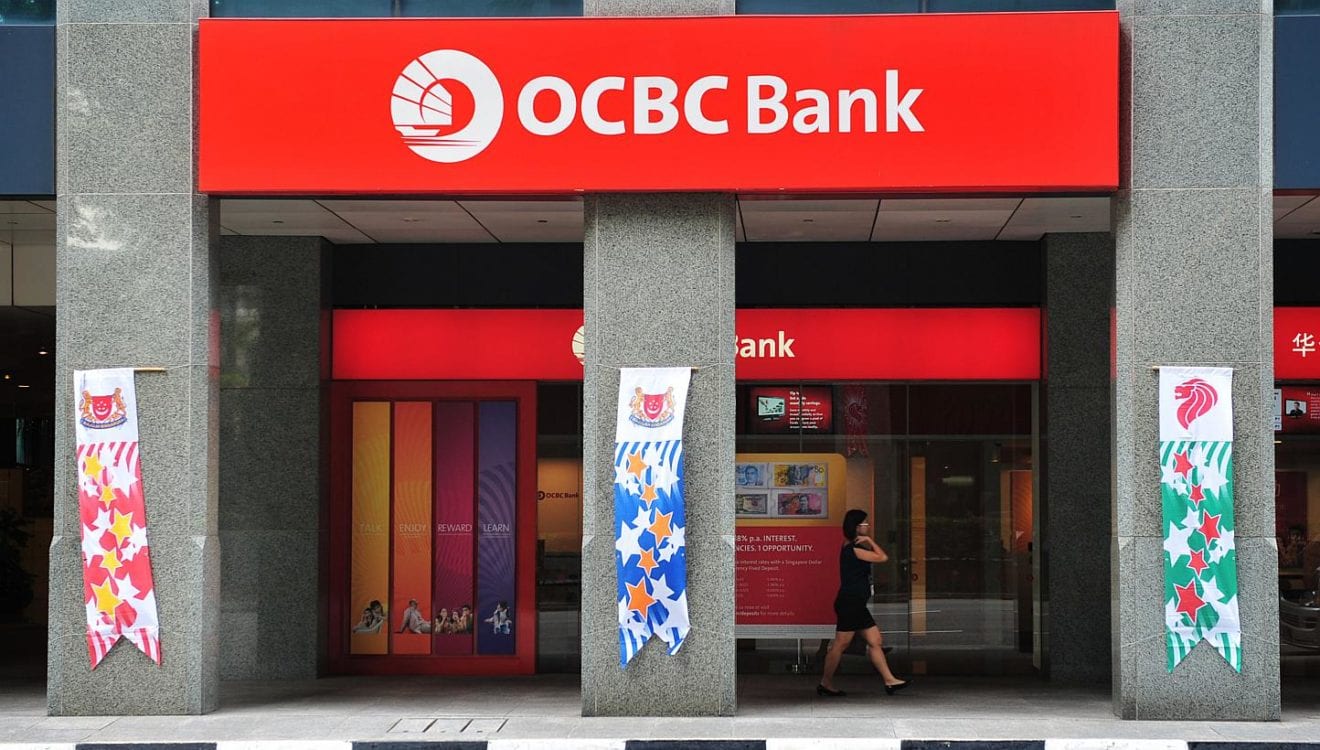
    OCBC Bank is the first in Singapore to launch artificial intelligence (AI) powered voice banking in collaboration with Google. With Google Home and Google Home Mini launched in Singapore today, anyone can now speak to the Google Assistant – on a smartphone or a Google Home device – to initiate a conversation about OCBC Bank’s services. These services range from planning for retirement or a new home to saving for a child’s education, getting the latest financial market updates, and more.

    At the forefront of voice-powered banking

    The proliferation of digital voice assistants is tipped to impact the consumer technology market this year. A 2018 Digital Consumer Survey by Accenture of 21,000 online consumers in 19 countries, including Singapore, indicates year-on-year growth of stand-alone digital voice assistants will increase 50 per cent in 2018, suggesting consumers are increasingly comfortable talking to digital voice assistants and smart home devices.

    The Google Assistant will provide consumers with another self-service digital channel to interact with OCBC Bank that is convenient and embedded in consumers’ lives. Consumers can pose general banking questions to the Google Assistant at any time of the day to get instant responses. This complements other self-service digital channels such as AI-powered chatbot ‘Emma’, which was launched in 2017 and specialises in answering home and renovation loan queries on the OCBC Bank website in an intelligent, human-like way.

    OCBC Bank remains the only bank in Singapore to offer voice-based banking on digital voice assistants as a medium for customer interaction and engagement. OCBC Bank has been leading the financial industry in rolling out numerous voice and conversational banking innovations for the convenience of customers. Voice-powered technology has been deployed across the bank since October 2016, when OCBC Bank was the first in Singapore to enable customers to initiate e-payments using Apple’s Siri voice assistant. In October 2017, OCBC Bank was again first in Singapore to let business banking customers check their account balances and make funds transfers using just their voice via Siri. This was extended to retail banking customers in February 2018. OCBC Bank will continue to innovate and add more banking services – payments and account balance enquiries, which require more secure access and authentication – to expand OCBC Bank’s services via digital voice assistants, in partnership with technology companies.

    Mr Aditya Gupta, Head of E-Business Singapore said: “This is the new digital – conversational, smarter and simpler access to banking. For our customers to be able to interact with OCBC services by simply speaking to AI assistants on their smartphones and smart home devices is an exciting development, and an important one as we shape the bank of the future. We are the first bank in Singapore to collaborate with Google on this game-changing service, and will continue to embed ourselves in consumers’ lives using voice-powered AI tools, which will be able to answer more questions and perform more tasks for OCBC customers over time.”

    ‘Talk to OCBC’ via the Google Assistant

    By speaking to the Google Assistant, users will be able to:

    • Calculate the mortgage loan amount they can afford
    • Plan how much to save for their children’s education
    • Ascertain how much they would need to retire comfortably
    • Get the latest updates on the financial market
    • Check unit trust prices
    • Get foreign exchange rates
    • Search for nearby OCBC Bank branches or ATMs

    For retirement planning, a user can activate OCBC Bank’s service through the Google Assistant by saying: “Ok Google, talk to OCBC about retirement planning.” The Google Assistant will then reply to the user with leading questions to eventually calculate the retirement amount required.

    The Google Assistant: “Great! It’s never too late to plan for your retirement. Let’s start with your age, how old are you?”

    User: “I’m 25 years old.”

    The Google Assistant: “Cool, you are 25 years old. At what age do you expect to retire?”

    User: “65 years old.”

    The Google Assistant: “All right – this means you have another 40 years to build your retirement portfolio. Now, imagine

    you are 65 and have just retired. How much do you expect to spend on basic expenses such as utilities, transport, entertainment and food in a month based on today’s prices?” 

    User: “$2,000.”

    The Google Assistant: “All right, $2,000 a month for basic expenses sounds good. Finally, how much do you plan to spend on vacations and overseas travels every year after retirement?”

    User: “$2,000.”

    The Google Assistant: “$2,000 per year it is. In total, it sums up to approximately $2,200 per month. Let’s compare this to the expected income you will receive after retirement. During retirement, how much do you expect to receive from investments and rental per month?

    User: “$2,000.”

    The Google Assistant: “Okay, $2,000 every month from rentals and investments. Lastly, how much do you expect to receive from CPF or other allowances per month?”

    User: “$500”

    The Google Assistant: “Okay, $500 from CPF and allowances every month it is. So, in total, you should be receiving $2,500 a month during your retirement. If you start today, you will need to save approximately $751,000 for retirement. Don’t worry, OCBC can help you achieve your retirement planning goals. Would you like to chat with an OCBC expert about your retirement plans in detail? 

    User: “Yes.” 

    The Google Assistant: “That’s great, can you please provide a contact number so I can arrange for someone to call you?”

    User: “91234567”

    An OCBC Bank customer service representative will then follow up with the user on their retirement plans.

  • AirAsia starts Clark–Cebu flights on May 11

    AirAsia starts Clark–Cebu flights on May 11

    AirAsia continues to expand its domestic network in Clark Airport in Pampanga with new flights between Clark and Cebu starting May 11, 2018. AirAsia Philippines CEO Captain Dexter Comendador said their commitment is to make air travel more affordable, convenient and accessible to travelers especially outside Metro Manila with “superb service and signature low fares.”

    “We are thrilled to be painting Clark and Cebu skies red with introductory fares now up for grabs from as low as P17 only!” To celebrate AirAsia’s newest flight, “all-in promo fares for Clark to Davao are now available from as low as P17.00, one-way fare only, until 22 April 2018 at www.airasia.com for travel period between 11 May 2018 and 26 October 2018,” he said. At a recent Philippine Economic Briefing 2018, the Philippine government has envisioned the New Clark City to be a hub of agro-industrial activities, cutting-edge technology and logistics companies and government centers with world-class sports facilities. Alongside this development, Clark International Airport (CIA) will have a new terminal building to accommodate a projected 8 million passengers per year and a new railway system connecting to Manila and neighboring provinces.

    The expansion of CIA according to government transport authorities will help decongest Ninoy Aquino International Airport (NAIA) in Manila. The expansion project for the Clark airport broke ground last December. “AirAsia is here to support the government’s flagship projects to boost tourism and trade. We aim to better connect Clark to secondary cities within the Philippines like Iloilo, Davao, Tacloban and Cebu followed by inter-Asean connectivity where the AirAsia Group has massive network covering over 120 destinations in the whole of Asean, in greater Asia, Australia, United States and beyond,” Comendador added. Aside from Clark-Cebu route, AirAsia also offers several flights to and from Clark, Iloilo, Davao, and Puerto Princesa.

    AirAsia launched its first commercial flights from Clark with only two planes in March 2012 before transferring its hub to Metro Manila following a strategic partnership with a local carrier in 2013. AirAsia has since been operating on a much larger scale with a fleet of 20 aircraft from Metro Manila and has expanded its domestic and international network with flights from hubs in Manila, Cebu, Clark and Kalibo.

  • PLDT aims for instant provisioning of WAN with Zenlayer solution

    PLDT aims for instant provisioning of WAN with Zenlayer solution

    In the digital era, competitive advantage is not just a matter of being able to connect to the world. It is about creating a scalable business-friendly environment that connects enterprises to anywhere in the world.

    Responding to this opportunity, Philippine operator PLDT confirmed it has signed on with software-defined network vendor Zenlayer to offer software-defined wide area network (SD-WAN) technology to global enterprises by Q2 of 2018.

    SD-WAN interconnects enterprise networks, data centers, and clouds with each other, enabling customers to be agile despite geographical distances via a powerful and secure cloud platform.

    The operator said the goal is to be able to deliver instant provisioning of dedicated wide area networks that provide reliability and ultra-low latency to the Southeast Asian market.

    Jojo Gendrano, VP & Head of PLDT Enterprise Core Business Solutions, said the partnership is in line with the company’s goal of offering its customers a dynamic bandwidth solution that allows them to connect and sync applications and workloads with other global offices and data centers.

    “There has been a huge demand for international inter-office and inter-cloud connectivity, and this partnership has allowed us to further broaden our capacity to fill that need. Enterprises need to be strategic, agile, and adaptive to achieve business resiliency, and we can provide the necessary tools to get them there,” he added.

  • Four barriers to digital transformation

    Four barriers to digital transformation

    Consumers are increasingly using digital channels for part, if not all, of the path to purchase. As a result, retailers are shifting from a product-driven approach to a more customer-centric model, allowing them to deliver a personalised experienced regardless of which channel is used.

    Investment in digital transformation is required to successfully make this transition. Think for instance of the data capture capabilities that are required to deliver a personalised experience in stores. However, innovation is easier said than done and many retailers have experienced difficulties on their digital transformation journeys.

    Here are four major barriers that retailers often encounter in their digital transformation projects are as follows:

    Overcoming resistance to change

    Digital transformation often leads to significant changes within organisations and that can provoke strong reactions. It is only human nature to resist change after all. This can manifest itself through issues such as difficulties in pushing through budgets, unsettled staff and a lack of consensus. If change is not managed carefully and communicated clearly to all staff, projects can easily derail.

    Understanding the connected customer

    Before embarking on digital transformation, it is crucial for organisations to truly understand the challenges they face. Why do customers choose to buy online and what expectations do they have when they visit a store? Technology on its own is not the answer and retailers need to be very careful to ensure digital initiatives meet their customers’ needs.

    Achieving departmental cooperation

    Digital transformation can and should touch all facets of the organisation. However, too often digital initiatives are driven by one department and key internal stakeholders are not consulted throughout the process. For changes that may disrupt the entire business model of a retailer, it is critical to get buy-in across the entire organisation, from the executive board to store staff.

    Attracting the right talent

    Digital transformation requires forward-thinking pioneers and getting the right talent on board can accelerate a retailer’s digital strategy and even provide a competitive edge. With the entire sector facing disruption, highly skilled professionals are in demand and retailers are increasingly having to look outside the sector to find the expertise they need.

    • Philip Wiggenraad is head of research with Tofugear and will be a speaker at next month’s Millennial Masterclass.

    What barriers does your organisation face when it comes to developing a digital strategy and driving organisational change? Inside Retail and Tofugear have kicked off the 2018 Asia Digital Transformation Survey and are inviting retail executives and managers in Asia to participate in the survey. Respondents will also be given exclusive access to the findings as well as a free hard copy of the final report.

  • Gucci adds some coolness to cassette tapes

    Gucci adds some coolness to cassette tapes

    Luxury Italian fashion brand Gucci is helping make cassette tapes cool again in a collaborative collection with the Waltz shop in Tokyo’s Nakameguro district.

    Special Waltz-inspired patches are featured on six products, including a Boston bag, shoulder bag and wallet, which are available at the cassette tape specialist. The Gucci Aoyama flagship will also start selling the products this month.

    Intended to support the shop’s cassette tape activities, the collaboration is one of an exclusive series based on Gucci’s Courier collection. Waltz is one of seven international locations named as “Gucci Places” that reflect the contemporary aesthetic sense of the brand’s creative director, Alessandro Michele.

    “Almost no-one thinks the cassette-tape business will grow, but tapes have created a new trend,” says Waltz owner Taro Tsunoda.