Author: Mei Ling Tan

  • GS Retail to expand Lalavla network

    GS Retail to expand Lalavla network

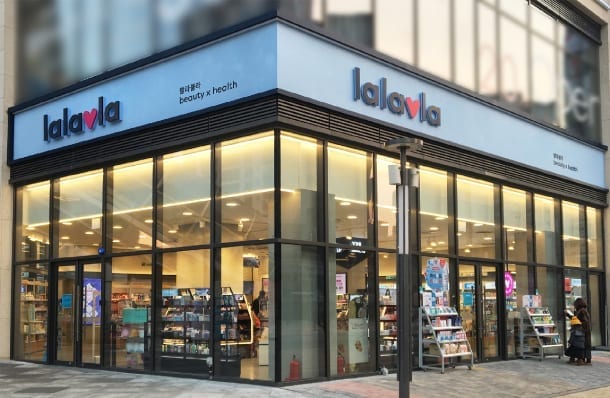
    South Korean convenience store company GS Retail plans to grow its health and beauty store network by up to 300 this year.

    After running Watsons outlets through a 50-50 JV with AS Watson, GS Retail bought the balance of shares from the Hong Kong-based firm last year and launched its new Lalavla brand in February.

    “We have completed changing the storefront signs,” says a company official. “We will now focus on advertising our new brand and expanding our business.”

    There are now 191 Lalavla stores nationwide.

  • JD Sports Fashion Korea

    JD Sports Fashion Korea

    JD Sports Fashion Korea will launch with a store in Seoul’s Gangnam district on Friday week.

    It is the British sports fashion brand’s first venture into the Northeast Asian market since forming a JV with Korean retailer Shoemarker in September.

    By the end of the year, JD Sports hopes to have 32 stores across Korea, to be promoted and managed by Shoemarker. They will offer such global sportswear brands as Adidas, Fila, Nike and Puma.

    Founded in 1981, JD Sports Fashio has more than 1250 stores in 14 countries including Australia, France, Germany and the UK. Sales reached US$3.24 billion in 2016.

  • Ikea Southeast Asia’s Toppen mall to be ‘heart and hub’ of JB

    Ikea Southeast Asia’s Toppen mall to be ‘heart and hub’ of JB

    Ikea Southeast Asia’s new Toppen Shopping Centre in Tebrau, a suburb of Malaysia’s Johor Bahru, is already more than 60 per cent tenanted as construction continues on what will become the new “heart and hub” of the border town.

    Granted, that figure includes the giant Ikea store which has already been trading for several months, drawing customers from all over southern Malaysia and across the border from Singapore.

    Tenants of the 1.1 million sqft complex already signed up include Australian furniture and electronics retailer Harvey Norman, cinema chain TGV and B.I.G (Big Independent Grocer), a gourmet supermarket which already anchors Ikea Southeast Asia’s IPC shopping centre, integrated with its Ikea Damansara store in Kuala Lumpur.

    The Toppen Shopping Centre is on schedule to open by the third quarter of next year. It is next to Aeon Tebrau mall, described by Ikea Southeast Asia MD Christian Rojkjaer as a “friendly competitor” and home to Thai furniture and homewares rival Index Living Mall.

    “Johor is home to 3.6 million potential consumers with fast-growing retail sales,” Rojkjaer told a media briefing at the site. “Johor’s economy is booming – growing faster than the rest of the nation. The mature community gives us the opportunity to create significant partnerships with both the community and business owners.”

    The new centre will feature four floors of retailing, with a multi-purpose piazza-style rooftop including community garden, play areas, sports offerings, a cinema and al fresco eateries. It will be home to 300 tenants across all categories, including international brands and local specialty stores.

    Ikea Southeast Asia owns and runs the brand’s stores in Singapore, Malaysia, Thailand and, from 2020, the Philippines. It is the only Ikea franchisee globally to be owned by the Kamprad family, which founded Ikea in Sweden.

    As such, it is also the only Ikea business in Asia to own and run shopping malls, a formula that works in Europe where the company has about 50 centres anchored by giant Ikea stores. Its malls include Bangkok’s Mega Bangna and Kuala Lumpur’s MyTown and IPC Shopping Centre, which has just had a major refurbishment.

    “Through our rich experience and deep understanding of market trends, Ikea’s presence normally contributes to an additional 20 per cent of footfall to our shopping centres,” says Ikea Southeast Asia shopping centre and mixed-use director Christian Olofsson.

    “Toppen is not just another shopping centre – it is a space for the community to come together, a platform for business owners to grow, and a positive driver for Johor’s economic growth through the creation of job opportunities (an estimated 5000) and increased tourism.”

    Rojkjaer expects that about 5 per cent of the Ikea Tebrau store’s sales will to be Singaporeans, who can take a short drive across the bridge border from their city state, where prices for many products are higher. But he is not concerned about prospective cannibalisation of the Singapore business’ sales. As if to underscore that point, last Easter holiday weekend the number of people heading to Malaysia by road caused traffic jams on the Singapore side of the border. Instead of the usual quick crossing, travellers were caught in queues for several hours.

    Such is Johor Bahru’s rapid growth that even without cross-border traffic, both Ikea executives are bullish about the Malaysian city’s future.

    “Every time we come here we see how things are developing,” said Rojkjaer. “Tebrau is going to be a major destination for years to come.”

    Rojkjaer expects the centre to attract 15 million visitors in 2020, its first full year of trading.

  • DHL forecasts solid growth

    DHL forecasts solid growth

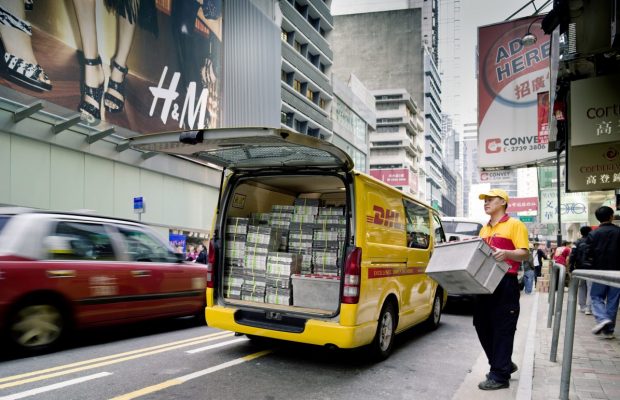
    Launched in January 2018, the DHL Global Trade Barometer uses large amounts of logistics data to forecast demand for the next three months. In its second report, the barometer increased to 66 points, up from 64 points in January.

    According to DHL, an index value above 50 signals solid positive growth for global trade, while the increase from the initial forecast in January indicates that growth is gaining momentum.

    Compared to the findings in January, the improved global index is mainly driven by an increasingly positive outlook for South Korean and trade in the USA. In contrast, the prospects for German trade eased after the strong peak seen in 2017.

    India continues to show the highest index value of all seven countries for the overall trade predictions, while the UK, after a modest decline since January, scores the same level as China at the lower end of the country ranking.

    The outlook for global airfreight, according to DHL, remains positive despite dropping slightly by one point compared to January. With 70 points, airfreight remains robust as air trade growth in China and the USA is expected to accelerate.

    Meanwhile, the outlook for global ocean trade improved to 63 points in March from 60 points in January. This growth is also driven by the USA and China, together with a strong increase in South Korea, offsetting a slightly reduced growth outlook for UK and German oceanfreight.

    The DHL Global Barometer is published four times a year. The next release date is June 27, 2018.

  • From bikes to drones, how JD Logistics built its delivery network

    From bikes to drones, how JD Logistics built its delivery network

    Amazon has nearly mastered e-commerce deliveries in the U.S. Sure, there are occasional hiccups, particularly due to surges at the holidays, but the company has built a solid network of partners – particularly UPS, FedEx and USPS – that have large logistic networks that have gotten the job done.

    While Amazon was able to lean on established partners in the U.S., JD.com did not have that luxury when building its logistics network in China, a country of some 1.4 billion people covering 3.7 million square miles. Consequently, if JD.com wanted to become a major e-commerce player in Asia, it needed to build its own network.

    “One [factor] is that the 3PLs in China are pretty fractured,” Josh Gartner, vice president of international corporate affairs, explained to FreightWaves. “That is why we decided to build out our own system.”

    JD.com built its logistics operation, JD Logistics, which is now a subsidiary of the e-commerce company. JD Logistics was just infused with $2.5 billion in investment, led by Tencent Holdings and Sequoia Capital China, to help to further develop its logistics operations, which already include everything from warehousing to packaging and last-mile delivery. It is also now offering services to third-party companies as well. There is also rumors that some of that money will be used to develop a U.S. operation to support online sales in this country.

    The funding valued JD Logistics at about $11 billion. JD.com holds 81.4% of that after only starting the logistics business in early 2017.

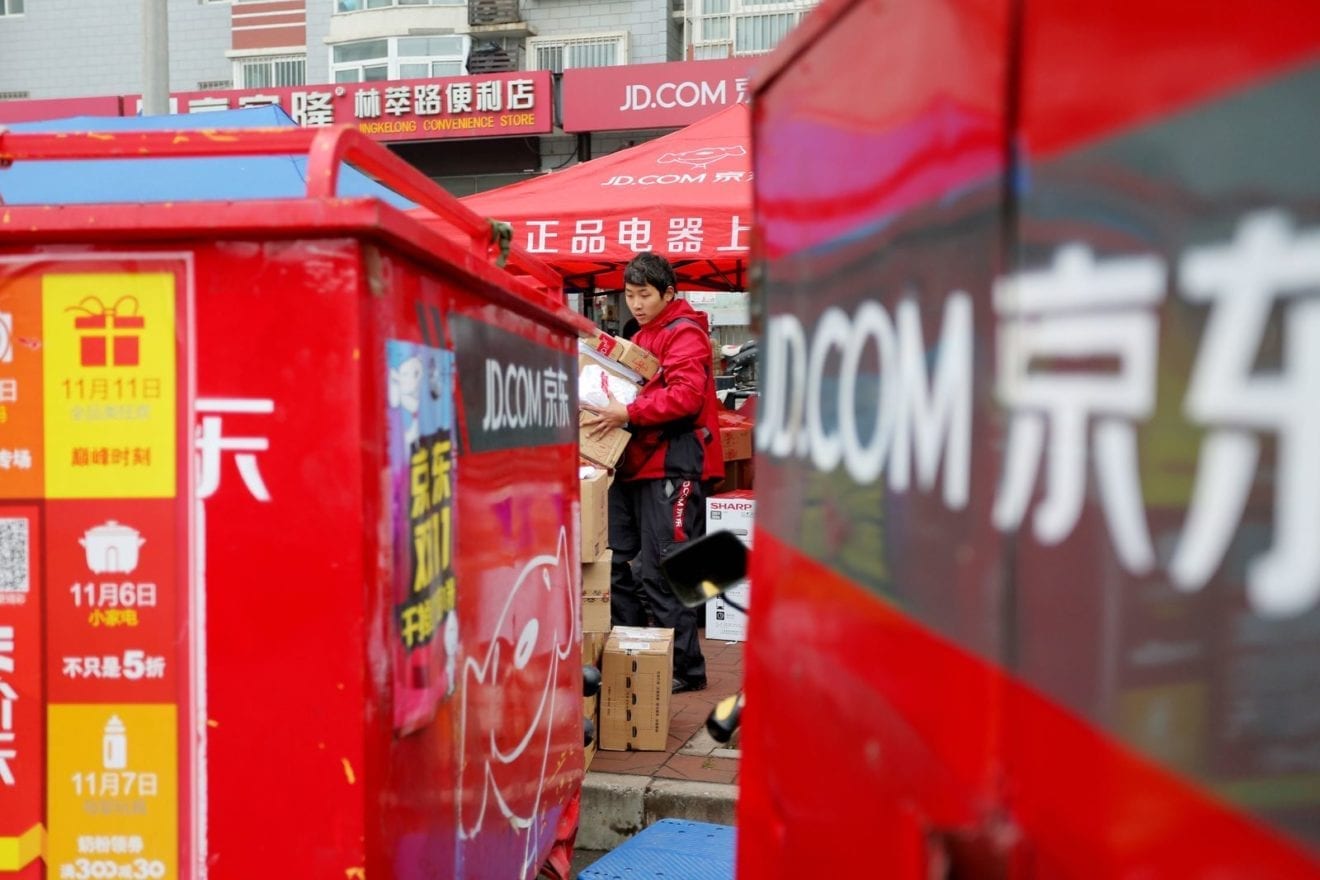
    Gartner walked FreightWaves through the company’s logistics operations, but like Amazon’s, it all starts with providing quality service to the customer, and that means last-mile efficiencies. According to Gartner, the last-mile services cover 99% of China’s population and it is done through a variety of methods, from vehicles, to drones, to electric bikes.

    Gartner says that final mile delivery for much of China is handled by electric, three-wheeled vehicles. These vehicles collect packages from local facilities for home deliveries.

    “We have what we call ‘delivery stations’ and those are in neighborhoods,” Gartner said. “We deliver by truck from warehouses to these smaller stations and they have about 50 to 100 last-mile delivery drivers (based on the size of the city) making the final delivery.”

    To JD Logistics, the value of having its own drivers make those final deliveries is important. “When people look at our logistics, they see our couriers,” Gartner said.

    Like all e-commerce companies, JD.com has learned that to deliver goods quickly requires proper positioning of product. JD Logistics uses technology to help predict where product will be needed.

    “Most of the efficiency and speed is done at the warehouse level and predicting where [product will be needed],” Gartner said. Full truckloads of freight are loaded at the warehouse level and brought to the delivery stations for final delivery. This keeps the larger trucks running set routes back and forth and speeds the delivery process.

    JD Logistics also offers a “white glove” service for shoppers, complete with specially-trained JD employees wearing white gloves. These drivers deliver special luxury brands that qualify for the service in electric vehicles rather than the tricycles and scooters often used.

    Technology plays a big role in JD Logistics’ efficiency, and that includes automation, drones and more, both on vehicles and in warehouses.

    Last year, JD Logistics opened the world’s first fully automated B2C warehouse in Shanghai. The warehouse can reportedly process over 200,000 items a day at full operation. Technology in general helps JD Logistics plan where product should be located and helps ensure that customers are receiving one delivery a day with their complete order, regardless of where any individual product is sourced.

    “A few months ago, we had a logistics expert come through and order a few things and he was really impressed with the operation,” Gartner said, adding that the expert ordered items from several locations and received a single order with all items.

    Gartner credits the network design – larger trucks moving products from warehouse to delivery station – for that delivery success.

    “It’s a much more efficient process, otherwise you would have more vehicles,” he said.

    On the vehicle equipment front, the company has been utilizing electric vehicles and entered into an agreement last year with SAIC Maxus and Dongfeng Motor Corp. to develop autonomous delivery vehicles. JD Logistics has jointly researched two models of autonomous light electric vans with SAIC Maxus and Dongfeng, respectively, for delivery of goods from JD’s distribution centers to delivery stations in the future.

    The company began testing autonomous delivery via robots at Renmin University and Tsinghua University among other schools last June. The autonomous robots deliver goods to a designated location and customers receive a unique passcode to open the robot’s secure locker to retrieve their packages.

    “With technology as the driving force, JD operates the most advanced retail operation in the world,” said Zhenhui Wang, CEO of JD Logistics. “Our extensive in-house logistics network provides the ideal real-world scenario in which to test autonomous vans. Working with our partners, we will continue to enhance our smart logistics and push the bounds of traditional logistics solutions.”

    Like Amazon, JD Logistics is also venturing into drone delivery. Currently, the company is using drones to make deliveries to remote areas of China, bringing online shopping and quick delivery to residents of these areas.

    The program works by dispatching orders from regional delivery stations to JD’s network of dedicated “village promoters” in each village, who then distribute the orders directly to customers, significantly shortening delivery times and reducing logistics costs. JD.com currently has more than 300,000 village promoters across the country.

    “The focus is one rural areas that have lower order densities,” Gartner said.

    On a larger scale, the company has also started testing “heavy-load drones” capable of carrying 1 ton of goods at a time. Gartner noted these drones will move product traditionally carried by truck between warehouses.

    JD signed a strategic cooperation agreement with the municipal government of Hangcheng, in Shaanxi Province, to set up the first urban drone delivery platform in the world. JD will explore the model and plans to test city drone delivery in Hancheng to evaluate its viability. Additionally, the company will also test its automated delivery vehicle and logistics facilities and hopes to build Hancheng City into a model city for smart logistics.

    Having conquered China delivery – more than 92% of products sold by JD.com are delivered within one day, including many that are delivered same day – JD Logistics may be looking abroad, specifically the U.S.

    According to a report in January, the company is planning U.S. operations later this year and will use some of the $2.5 billion in funding to do so. Gartner declined to confirm any U.S. plans, saying only that “we’re still focused on China and Asia.”

    The Bloomberg article quoted founder Richard Liu as saying the company will begin selling online to U.S. customers in the second half of this year.

    “This year, Vietnam, India, Philippines, Malaysia – every Southeast Asian country – we will come by the end of this year,” Liu is quoted as saying. “Our future is we will invest in U.S. and build a warehouse fulfillment center in U.S. so you can get same-day delivery.”

    The story noted that JD.com could leverage its relationship with Walmart Stores, which is an investor in the company, for help in building a U.S. logistics network.

    The approach to last-mile delivery in China is very different than it is in the U.S., so it remains to be seen how JD Logistics would handle that operation in America. If the stories are true, we may find out very soon.

  • Citi Launches Pay with Points on HKTVmall

    Citi Launches Pay with Points on HKTVmall

    Citi today announced its first API partnership in Hong Kong through the launch of Citi Pay with Points on HKTVmall, the 24-hour online shopping mall operated by Hong Kong Television Network Limited.  The new service enables cardholders of Citi points-bearing credit cards who shop on HKTVmall.com or the HKTVmall mobile app to offset purchases upon checkout using their reward points seamlessly without ever leaving the shopping platform.  This convenient shopping experience is made possible by fully integrating the Citi Pay with Points Application Program Interface (API) on the HKTVmall platform.

    Lum Choong Yu, Head of Cards and Unsecured Lending at Citibank Hong Kong, said: “We are excited to be launching our first API partnership in Hong Kong with a like-minded company that is renowned for and committed to ongoing innovation and providing best-in-class customer experience.”

    “Citi’s approach to open API architecture underscores our commitment to fostering closer collaboration with the digital ecosystems to accelerate the offering of our banking services in all areas of our customers’ digital lives.  Our strategy is also fully in line with the Hong Kong Monetary Authority’s vision for wider adoption of open API in the banking sector,” he added.

    Ricky Wong, Chairman of Hong Kong Television Network Limited said, “Since its launch, HKTVmall bears the mission to create new ways of retailing and we position ourselves as a technology applications pioneer, to integrate different technologies from different business areas. While online shopping is not only talking about displaying products on digital platform, we emphasize customer experience from the ways we do digital marketing, interface design, payment, warehousing and logistics. In light of this, we are glad to be the first API partnership with Citi Hong Kong, and this will be one of our key milestones on customers’ payment experience.”

    To offset purchases on HKTVmall with Citi credit card reward points, either in full or partially,   simply follow three easy steps:

    1)    Complete payment with your Citi points-bearing credit card*

    2)    Perform a one-time identity verification

    3)    Select the amount you wish to pay with points

    In September 2017, Citi announced the launch of Citi Pay with Points in Hong Kong, the first and only reward points redemption service that enables cardholders to offset any local purchase using credit card points on mobile phones upon receiving the redemption SMS.  The newly-formed partnership with HKTVmall takes the Citi Pay with Points experience to a new level, providing Citi credit cardholders with a new additional way to enjoy the service during the online checkout process.

    “Citi Pay with Points has been a phenomenal success and extremely well received by our cardholders as it makes spending with a Citi credit card all the more rewarding.  Today, close to 50% of reward points redemptions are conducted through the Pay with Points platform.  We will continue to enhance the service to enable our cardholders to conveniently use their points when making purchases, whether online or at physical outlets, any time and anywhere,” said Choong Yu.

    In March 2017, Citi became the first bank in Hong Kong to adopt an open API architecture by making available 30 APIs on the Citi API Developer Portal (developer.citi.com).  Through the API Developer Portal, Citi grants developers access to a variety of APIs across seven usage categories, including Accounts, Cards, Customers, Money Movement, Onboarding, Rewards, and Reference Data.

    Promotional Offers

    Between now and May 31, 2018, Citi cardholders who shop on HKTVmall.com or the HKTVmall mobile appcan receive a HKTVmall e-Coupon of up to HK$100 in value upon spending HK$400 or above.

    Citi cardholders* who successfully complete the first Pay with Points redemption when shopping on HKTVmall.com or the HKTVmall mobile app will receive a HKTVmall e-Gift Voucher of HK$100 in value.

  • Vietjet launches Summer Promotion with 500,000 tickets

    Vietjet launches Summer Promotion with 500,000 tickets

    Vietjet is to launch a 3 golden days promotion from April 4 to 6, 2018, with half a million tickets priced from HKD0. Available on its website www.vietjetair.com, the promotion is part of Vietjet’s Summer Promotion.

    The promotion applies for international route flying from Ho Chi Minh City to Hong Kong and all other international services from Vietnam to Seoul, Busan (South Korea)/ Kaohsiung, Taipei, Taichung, Tainan (Taiwan)/ Singapore/ Kuala Lumpur (Malaysia)/ Bangkok, Phuket, Chiang Mai (Thailand)/ Yangon (Myanmar) and Phnom Penh, Siem Reap (Cambodia). The flight period of this promotion is from May 5 to December 31, 2018(**).

    Vietjet’s three golden days promotion will offer passengers the opportunity to experience the native traditions of the new year of Southeast Asian countries, while planning for their summer vacations in many attractive international destinations.

    The promotional tickets are available during the golden hours from 13:00 to 15:00 (GMT+8) on their website. Payment can be easily made with debit and credit cards of Visa/ MasterCard/ AMEX/ JCB and KCP.

    Aiming to become a “Consumer Airline”, Vietjet is continually opening new routes, adding more aircraft, investing in modern technology and offering more added-on products and services to serve all demands of customers. Vietjet is a pioneering airline that is loved by many for its exciting promotional and entertainment programs, especially during the festive season. With high-quality services, diverse ticket classes and special low-fare tickets, Vietjet offers its passengers flying experiences on new aircraft with comfy seats, delicious hot meals, beautiful and friendly cabin crews, and other interesting added-on services.

  • AirAsia Malaysia has flexible policies to empower its women workforce

    AirAsia Malaysia has flexible policies to empower its women workforce

    Over half of Spencer Lee’s team are women, and the head of the commercial department at AirAsia Malaysia continues to be amazed by all of them, their drive and their prowess for critical thinking.

    “Women are analytical, dynamic and rational individuals. Besides being great planners, they are calmer and never take no for an answer. This positive drive has enabled AirAsia to produce great results in the aviation turf,” Lee says.

    “I’m surrounded by women in the office. Some say I need a bodyguard to protect me from these confident and empowered women,” Lee adds in jest, during an interview at AirAsia’s RedQ in Sepang, Selangor.

    “A large percentage of women in our department hold managerial positions, too. They head sections such as marketing, sales, social media and route revenue,” says Lee, who has been with AirAsia for 13 years.

    Women are analytical, calm and confident in the workplace.

    Though Lee surrounds himself with strong women, he is never threatened or intimidated by their capabilities. On the contrary, he says he has never been gender specific about selecting team players. Instead, he focuses on their individual skills.

    “Employment comes down to having the drive, right skills set and commitment towards the job. No matter how smart a person is, that means nothing without the right attitude. At AirAsia’s commercial department, we source talents who are driven and passionate,” Lee explains.

    Lee says he’s aware that many of his colleagues are juggling various roles, especially mothers with young kids or those caring for elderly parents. “It’s important for leaders to emphasise and understand their subordinate’s concerns.”

    He adds, “We live in a world where everyone is digitally connected. At times, mothers in my team work from home when caring for a child who is unwell. The key is flexibility and understanding,” says Lee, who believes in adopting versatile work policies.

    AirAsia recently set up a daycare centre for kids between one and six years old, to make working more conducive for mothers. There’s also a launderette, a cafeteria and a clinic for their benefit.

    Lee says any company will attract the right female talent if it has the right policies and work environment.

    “At AirAsia, we have an amazing team comprising of mothers who juggle work and family. They are engineers, pilots and ramp agents (people who load and unload baggage and cargo). It is important to create a good ecosystem with facilities that empower women.”

    Lee says he’s never had a major hiccup among his female colleagues. The secret is to respect everyone and work as a family.

    “We take our work seriously and strive to give it our best. The job can be challenging but we embrace the work culture. Occasionally we have a get-together after work. It keeps the team stronger and united regardless of gender, colour or creed.”

  • NBTC reverses decision on 1800-MHz spectrum split

    NBTC reverses decision on 1800-MHz spectrum split

    Thai regulator NBTC has reversed a decision to split the 1800-MHz spectrum due to be reallocated in a spectrum auction into nine 10 MHz blocks.

    The regulator plans to revert to the plan to instead auction the spectrum in three 30 MHz lots.

    The about face was motivated by complaints from operators that the decision to carve the spectrum into 10 MHz blocks would hurt their long term business strategies, and to bring the upcoming auction in line with the two previous 1800-MHz auctions in 2015.

    Meanwhile JAS Mobile Broadband has been banned from participating in the planned auction after it defaulted on its first license payment in 2016.

    The 1800-MHz spectrum due to be allocated in the auction is currently used by private operator Dtac as part of its old concession agreement with state-owned CAT Telecom. But this concession is set to expire at the end of September, before the auction is planned, potentially leaving Dtac without the required spectrum to maintain service continuity for customers.

    Dtac has insisted that there will be no disruption, but the operator is facing a profit hit as a result of the decision. One option would require Dtac to operate using remedy measures, which would require it to transfer all earnings after expenses to the government as a result of being able to continue operating without a license for the required spectrum.

  • AEON and Bangkok Bank jointly offer gold and iPhone 8 to lucky customers

    AEON and Bangkok Bank jointly offer gold and iPhone 8 to lucky customers

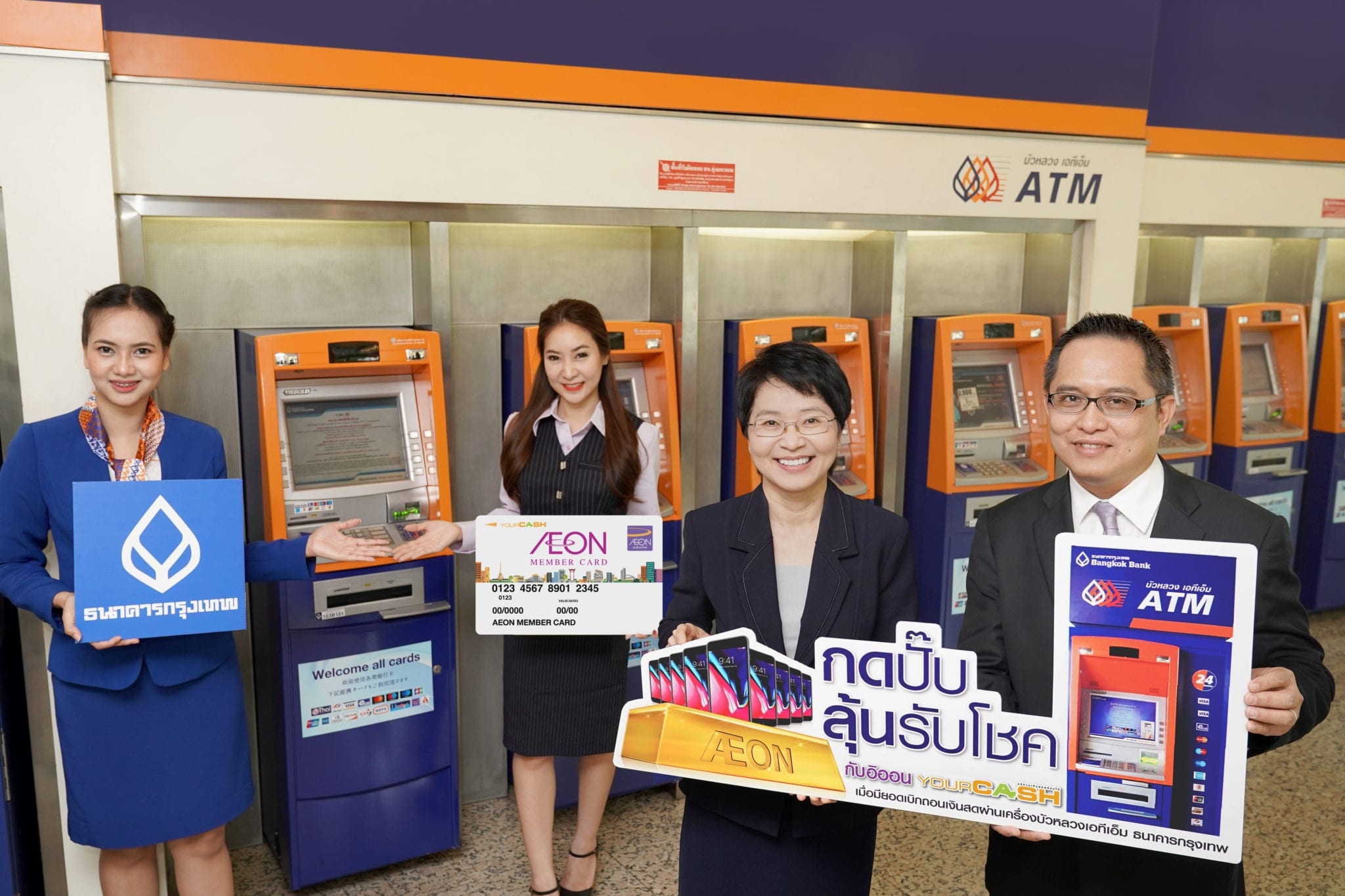
    Mr. Nuntawat Chotvijit (Right), Marketing Director of AEON Thana Sinsap (Thailand) Public Company Limited, together with Ms. Prassanee Ouiyamaphan (2nd from Right), Executive Vice President of Bangkok Bank announced a campaign “Get Prizes with AEON Your Cash”. Get a chance to win, worth a total of 745,000 Baht, include a gold bar worth 400,000 Baht and 10 prizes of iPhone 8 256GBs. AEON Your Cash cardholders are eligible to participate in the campaign by making cash withdrawals at least 1,000 Baht per sales slip at Bualuang ATMs Bangkok Bank during 1 April – 31 May 2018.

  • Singaporeans interested in biometric authentication

    Singaporeans interested in biometric authentication

    Singaporeans are interested the use of biometric methods to verify identity (97%) and make payments (96%), while recognizing that biometrics are faster, easier and more secure than traditional passwords, according to a recent Visa survey on biometric authentication for payments.

    The survey titled “Biometrics in Payments: Singapore” was conducted by AYTM Market Research late last year. Respondents consisted of 500 adult consumers in Singapore who used at least one credit card, debit card and/or mobile payment method.

    According to the survey, more than half of the respondents have already used at least one form of biometric authentication including fingerprint recognition (88%), facial recognition (56%), iris scanning (50%) and voice recognition (49%). Among the range of biometric solutions, consumers were most familiar with fingerprint recognition, with 51% of them using it regularly.

    Survey results showed one in five Singaporeans currently use fingerprint authentication or facial recognition from their respective banks or mobile phone providers. For those who have not used biometric authentication, 91% stated that they would be likely to use fingerprint or facial recognition authentication from their banks in future.

    More than half (55%) of the respondents agree that the use of biometrics eliminates the need to remember and key in multiple passwords, and PINs, for their respective accounts. Forty one per cent said that biometric authentication is more secure compared to passwords and PINs as they can better confirm individual identities.

    Singaporeans believe that fingerprint recognition is the most desired biometric authentication, followed by eye scanning and facial recognition for both online payment and in-store purchases. For online payment authentication, Singaporeans are keen to use it for large purchases (more than $100) and small purchases (under $100), and transfer of funds to family. The preference is similar for in-store purchases, including using biometric authentication to pay for a meal at the bar or restaurant and buy tickets for transportation.

    Mandy Lamb, Group Country Manager, Regional Southeast Asia for Visa, said, “Singaporeans are early adopters of technology and many of them already have experience with biometrics authentication. With the proliferation of biometric authentication solutions used by mobile providers and banks, Singaporeans recognize the value these new technologies bring to their everyday lives. As the country continues its Smart Nation journey, we believe more people will start to adopt biometric authentication.”

  • India imposes import duty on smartphone components

    India imposes import duty on smartphone components

    The Indian government has introduced a 10% import duty on key smartphone components as part of its ongoing efforts to stimulate local handset and component manufacturing.

    The new duty covers PCBs, camera modules and connectors and is likely to increase prices of mobile phones for companies that do not source these components locally.

    In February, the government introduced a 20% basic customs duty on imports of full mobile phones, as well as duties of between 5% and 20% on components including LCD panels, PCBs for chargers, lithium batteries and other components including keypads, battery packs and antennae.

    The report notes that currently more than 80% of phones sold in India are assembled locally, and sales volumes for mobile phones made in India are projected to improve 55% this year. Major contract manufacturers including Foxconn, Wistron, Flex and several Chinese handset makers have established local manufacturing to reduce costs.

    But Samsung remains the only major brand to locally assemble PCBs, which account for around half the cost of manufacturing a handset, prompting the government to attempt to stimulate market growth.

  • IT leaders aim to “consumerize” cloud access

    IT leaders aim to “consumerize” cloud access

    The proliferation of cloud applications and use of a disparate range of devices within businesses has led nearly two-thirds (64%) of IT leaders and their security teams to consider implementing consumer-grade access to cloud services for employees, finds new research from Gemalto.

    Surveying more than 1,000 IT decision makers globally, Gemalto’s 2018 Identity and Access Management Index revealed that the majority (54%) believe that the authentication methods they implement in their businesses are not as good compared to those found on popular sites including Amazon and Facebook.

    With a growing number of cloud apps in use, more employees working remotely and pressure mounting to make authentication stronger while ensuring ease of use, IT decision makers are keen to ‘consumerize’ the login process. In fact, 70% of IT professionals believe that authentication methods applied in the consumer world can be applied to secure access to enterprise resources.

    Despite this, 92% of IT leaders express concern about employees reusing personal credentials for work. This comes as 61% admit that they are still not implementing two-factor authentication to allow access to their network, potentially leaving themselves vulnerable to cyber criminals.

    At the same time, there seems to be increasing recognition that new approaches to cloud access can contribute to alleviating these issues. 62% of respondents believe that cloud access management tools can help simplify the login process for users, while 72% stated that a strong consideration for implementing a cloud access solution is the desire to reduce the threat of large scale breaches.

    The fact that 61% of respondents also stated that inefficient cloud identity management would be a key factor in adopting a cloud access management solution shows that scalability and management overheads are also of high concern to IT professionals, Gemalto said.

    “These findings clearly show that IT managers are struggling to balance the need for a simple and easy login experience with security,” said Francois Lasnier, SVP Identity and Access Management at Gemalto.

    “While there is a need to make things easier for employees, there is a fine line to be walked. IT and business line managers would do best to figure out the risks and sensitivities associated with the various applications used in their organizations and then use access management policies to manage risk and apply the appropriate authentication method. In this way, they can ensure a convenient login experience for their users, while still maintaining access security.”

    With the growth in remote working, the cloud and secure access to applications have become important for organizations. As a result, almost all (94%) respondents believe that cloud access management is integral to adopting cloud applications.

    In fact, nine in 10 also feel that ineffective cloud access management can lead to issues for their company, such as security (52%), IT staff’s time being used less efficiently (39%) and increased operational overheads and IT costs (38%).

    Despite this focus on protecting cloud applications, just three of the 27 applications used on average by organizations are protected with two-factor authentication.

  • Mintel integrates ecommerce sales data, social listening and price tracking analytics

    Mintel integrates ecommerce sales data, social listening and price tracking analytics

    Mintel, the world’s leading market intelligence agency, announced today a strategic joint venture with Early Data, ecommerce solutions and market intelligence provider.

    Online retail has gone from an industry disruptor to an everyday, preferred channel for many consumers. In today’s ‘new’ retail world, brands are challenged to meet the needs of a new breed of consumer. By combining ecommerce category performance, social listening and price tracking analytics from Early Data with Mintel’s existing portfolio of Mintel Global New Products Database (GNPD), Mintel Trends and Mintel Reports, brands and companies will have access to game-changing research and insights into China’s online retail market—the biggest in the world. Brands will be able to access category and brand share for both ecommerce volume and value with detailed item level sales performance, helping them continually monitor and strategise their growth within the evolving landscape.

    John Hore, Managing Director APAC at Mintel, said: “The new joint venture between Mintel and Early Data is changing the rules of the research market. We are combining a host of trusted proprietary data sets and a wealth of expertise in ecommerce data, predictive analytics, consumer research, product innovation and market sizing. Never before has this combination of data and unparalleled expertise been available to businesses operating or looking to do business in China.”

    Brian Negley, Executive Vice President of Early Data, commented: “We are proud to partner with Mintel to deliver what we believe is the best market intelligence solution available. By integrating Early Data with Mintel, digital ecommerce, product and marketing teams alike will have a complete picture of their category, a clear understanding of the consumer behaviours driving it, and the expert recommendations of where their company should be headed next.”

  • Telstra launches 5G-powered Wi-Fi hotspots

    Telstra launches 5G-powered Wi-Fi hotspots

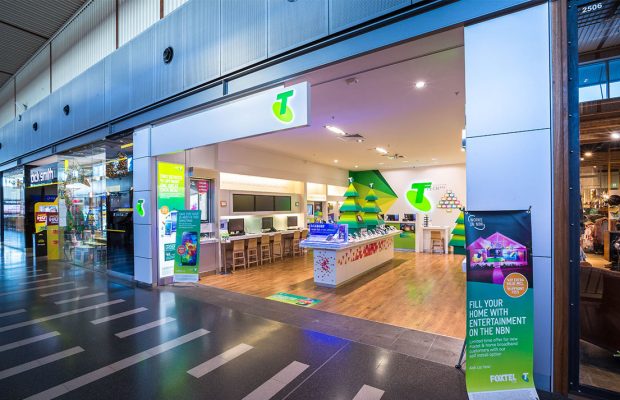
    Australia’s Telstra has launched what it says are the first 5G-enabled Wi-Fi hotspots in the world as part of its ongoing evaluation of 5G technology.

    The new hotspots on the Gold Coast in Queensland will provide locals and visitors with access to free broadband services during the evaluation period. The open hotspots will provide up to 10GB of downloads per device per day.

    They will be managed by Telstra’s recently-launched 5G innovation center on the Gold Coast. Telstra has connected 5G backhaul and related infrastructure in the Southport Exchange in the city to allow connections to the 5G network over Wi-Fi on existing devices.

    “Wi-Fi has limited throughput so a single hotspot alone cannot come close to reaching the limits of 5G at our Innovation Center,” Telstra group managing director for networks Mike Wright said.

    “By using multiple hotspots with potentially hundreds of smartphone users served through a single 5G device we are able to get closer to demonstrating 5G in a real world environment. Our 5G backhaul is capable of delivering download speeds of more than 3 Gbps.”

    Telstra is also using its new 5G innovation center to power a connected car trial using the Intel 5G Automotive Trial Platform.

    Wright said the trial is in the very early stages of development but the company is still achieving download speeds approaching 1Gbps inside the car, which is also equipped with a Wi-Fi access point.