Author: Mei Ling Tan

  • Online sales bring cheers to online retailers

    Online sales bring cheers to online retailers

    To technology, retailers have and are moving out from brick-and-mortar stores to join the cyber world. As a result, street retail sales are accelerating on the Internet, offering shoppers better deals because they do not have to worry about the overhead expenses which traditional stores have to deal with.

    Christy Ng Sdn Bhd founder Christy Ng, who started her business in her mother’s living room years back, now owns five brick-and-mortar stores that delivers to 30 different countries.

    She decided to open her own physical store after her loyal customers, who rather try out the shoes before buying them, nudged her into it.

    “During the recent MyCybersale blow-out frenzy which ran from Oct 9 to 13 last year, we achieved 10-fold more sales than our physical stores,” she said.

    “We also witnessed a 35% increase in sales, specifically during the Alibaba Single’s Day 11.11 and 12.12 mega sale bash.”

    She added that 60% of her customer base comes from the online store, whereas the remaining 40% of customer base are from our physical outlets.

    MyCybersale is a five-day online sales festival organised by the National ICT Association of Malaysia along with the Malaysia Digital Economy Corp.

    MyCybersale 2017 managed to rack in a gross merchandise value (GMV) of RM311 million, exceeding the RM300 million target set for the year.

    RM39 million of the RM311 million GMV were derived from international shoppers which surpassed the export revenue target of RM20 million.

    It was a phenomenal growth of over 254% from the 2016 export revenue of RM11 million.

    Bagman Corp Sdn Bhd group CEO Datuk Liew said his online retail business also witnessed some positive numbers during the online mega sale frenzy.

    “Bagman didn’t do all that well during last year’s MyCybersale. However, during the 11.11 and 12.12 deals, we saw a 20%-30% increase in sales.

    “It is an improvement from the previous year and I believe online retail is the future,” Liew said.

    Liew, who used to sell his designed bags in major marketplaces, however, added that it is hard to do branding on those marketplaces since shoppers mainly go on these sites to search for “affordable” things.

    Previously reported that ShopBack Malaysia country GM Alvin Gill revealed the average spending per customer surged more than threefold during the recent the 12.12 online shopping celebration compared to the Single’s Day 11.11.

    “The average spending per customer during the 12.12 was RM485, whereas for 11.11 it was US$76 (RM302.04).

    “This is due to the increase in travel bookings made for the year-end holidays along with Christmas gift purchases, as well as apparels purchases for the New Year,” said Gill.

    ShopBack Malaysia collaborated with more than 30 online partners during 12.12, among them were Lazada, Zalora, 11street as well as Booking.com.

  • Titijaya Land teams up with Tokyu Land

    Titijaya Land teams up with Tokyu Land

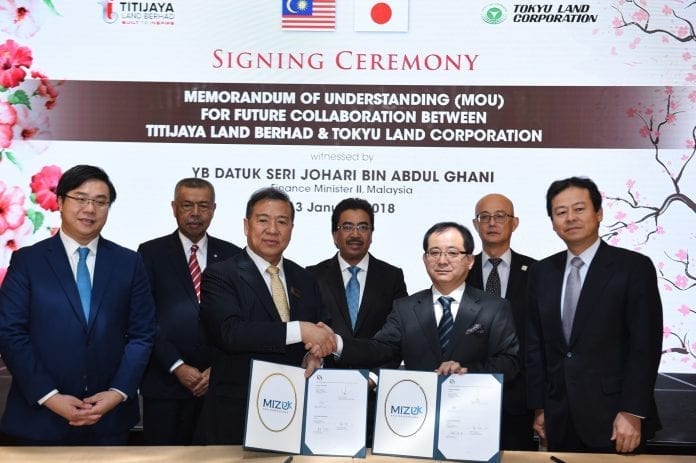
    Bursa Malaysia-listed property developer Titijaya Land Berhad (Titajaya) has signed a memorandum of understanding with Tokyu Land Corporation (TLC) to establish a provisional collaboration in the real estate industry.

    In a statement, Titijaya said it will share and exchange knowledge and expertise with TLC with the intention of further revolutionising their real estate development and to explore potential collaborations for any property development projects that either of them may undertake.

    TLC, founded in 1953, is a real estate firm involved in urban development, wellness and overseas business. It is a core subsidiary of the Tokyu Fudosan Holdings Group, a Japanese company listed in the Tokyo Stock Exchange.

    “By entering into the MOU, we are able to leverage on TLC’s strength to further revolutionise our business,” said Titijaya Land Group Managing Director Tan Sri Dato’ Lim Soon Peng.

    TLC is to establish itself in the Malaysia property development sector by capitalising on Titijaya’s current and upcoming market, he added.

    TLC is known for its technology, expertise, creativity, and innovative knowledge in developing and marketing real estate with an edge, putting it a class ahead in the urban property development realm.

    This includes multiple large-scale projects in Shibuya (birthplace of TLC), Ginza, Takeshiba, and other urban areas.

    Its development in Shibuya is a transit-oriented development (“TOD”) concept with a bus terminal as well as tourist support facility that supports the activities of local and international visitors. TLC also has a good track record in property

    According to the MOU, Titijaya and TLC are desirous of collaborating in real estate development areas such as, but not limited to, residential, office, transit oriented development, senior housing, urban hotels and other forms of hospitality, commercial and retail properties.

    It also includes property management and operations, as well as the establishment of or investments in real estate investment trusts (“REITs”).

  • For Thailand, a ‘Go Local’ move to spread tourism benefits

    For Thailand, a ‘Go Local’ move to spread tourism benefits

    The Thai government has approved a series of tax deduction measures to promote seminars, leisure travel and MICE events in 55 second-tier tourist provinces nationwide all through 2018.

    These will support the Tourism Authority of Thailand (TAT)’s latest Go Local campaign, a landmark project to promote the kingdom’s secondary destinations, spread tourists between urban and rural areas, and even out traffic between peak and non-peak periods.

    Go Local targets to improve the ratio of visitors – both domestic and foreign – to main cities vs secondary cities from 64:36 to 60:40. The aim is also to bring 10 million tourist arrivals into secondary cities and communities, generating an estimated 10 billion baht (US$312 million) in tourism revenue in 2018.

    As part of the campaign, TAT will cooperate with domestic tour operators and travel agents to offer incentives such as discounted meals when buying local tour packages covering secondary destinations. Travellers will also be exempt from personal income tax for the amount paid out to tour operators, hotel operators or homestay operators for domestic tours to the 55 provinces, but not in excess of 15,000 baht.

    Moreover, TAT will target Stock Exchange of Thailand-listed companies with a corporate tax exemption on income equal to 100 per cent of expenses for seminars and accommodation rooms, transport and other expenses incurred for conducting staff training seminars in the 55 provinces.

    TAT will also introduce the TAT Plus discount card, which can be used in participating retail and dining merchants in secondary destinations as well as domestic airlines.

    Other efforts include cooperating the Thai Restaurants Association, chefs, credit card companies and provincial authorities to promote the consumption of local food and purchase of local raw materials; as well as partnering attractions such as museums and theme parks to organise activities that celebrate the local culture.

    Yuthasak Supasorn, TAT governor, said: “When local communities grow, the country grows. With travel and tourism now widely recognised as a major contributor to grassroots economies, job creation and income distribution, we are now taking specific measures to ensure that the benefits are better distributed across the breadth and depth of the entire kingdom.”

    A Go Local Directory will be launched to provide specific information on dining, travelling and accommodation for getting tax deductions.

  • Microsoft says security patches slowing down PCs, servers

    Microsoft says security patches slowing down PCs, servers

    Microsoft said on Tuesday that software patches released to guard against microchip security threats slowed down some personal computers and servers, with systems running on older Intel Corp processors seeing a noticeable decrease in performance.

    The comments in a blog post were the clearest signal from Microsoft that fixes for flaws in microchips from Intel and rivals described last week could meaningfully degrade performance. The topic is of keen interest to large data center operators, which could incur significant cost increases if computers slow down.

    Microsoft also said that security updates froze some computers using chipsets from Intel rival AMD, dragging AMD’s shares down nearly 4 percent.

    Shares in Intel, which reiterated on Tuesday that it saw no sign of significant slowdown in computers, fell 2.5 percent taking the loss since the issue surfaced last week to about 7 percent or around $15 billion in market value.

    AMD shares have gained nearly 20 percent in the last week as investors speculated that the chipmaker could wrest market share from Intel, whose chips were most exposed to the security flaws.

    Security researchers disclosed the flaws on Jan. 3 that affected nearly every modern computing device containing chips from Intel, AMD and ARM Holdings, owned by Japan’s SoftBank Group Corp.

    “We (and others in the industry) had learned of this vulnerability under nondisclosure agreement several months ago and immediately began developing engineering mitigations and updating our cloud infrastructure,” Microsoft executive Terry Myerson wrote in a blog post on Tuesday.

    Internet and networking equipment maker Cisco Systems Inc said in a security advisory updated on Tuesday that it has identified 18 vulnerable products, including some of its blade servers, rack servers and routers, and expects to have patches for servers in about five weeks, on February 18.

    Cisco said it is also looking for problems in nearly 30 other products, including switches and routers. The majority of Cisco’s products were not vulnerable because they are “closed systems that do not allow customers to run custom code on the device,” it said.

    The memory corruption flaws, named Meltdown and Spectre, could allow hackers to bypass operating systems and other security software to steal passwords or encryption keys on most types of computers, phones and cloud-based servers.

    ARM Holdings estimated that around 5 percent of more than 120 billion chips its partners have shipped since 1991 was impacted by Spectre. It said the number of chips affected by Meltdown was significantly less.

    “ARM will address Spectre in future processors but there will need to be an ongoing discipline in the design of secure systems which needs to be addressed through both software and hardware,” a company spokesman said in an emailed statement.

    Intel and AMD have not disclosed the number of chips affected by the security flaws.

    Intel said a typical home and business PC user should not see significant slowdowns in common tasks such as reading email, writing a document or accessing digital photos.

    The chipmaker said last week that fixes for security issues in its microchips would not slow down computers, rebuffing concerns that the flaws would significantly reduce performance.

    Rival AMD had also played down the threat, saying its products were at “zero risk” from the Meltdown flaw, but that one variant of the Spectre bug could be resolved by software updates from vendors such as Microsoft.

    But on Tuesday AMD said it was aware of an issue with some older-generation processors following the installation of a Microsoft security update that was published over the weekend.

    Microsoft said it was working with AMD to resolve the issues.

    Apple Inc also released an updated version of its operating system software on Monday to fix the security flaw.

  • Florence’s Gucci museum opened a restaurant with the world’s best chef

    Florence’s Gucci museum opened a restaurant with the world’s best chef

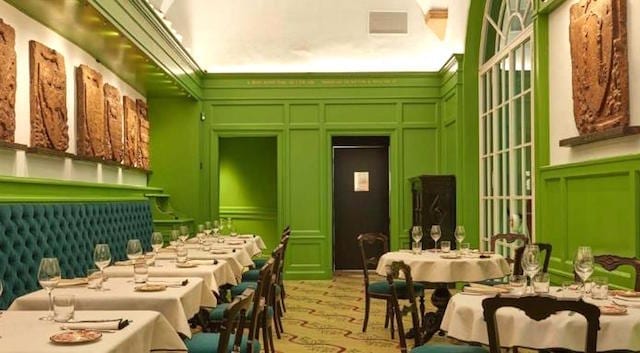
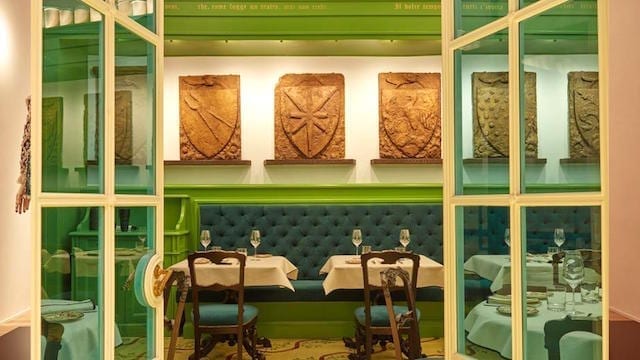
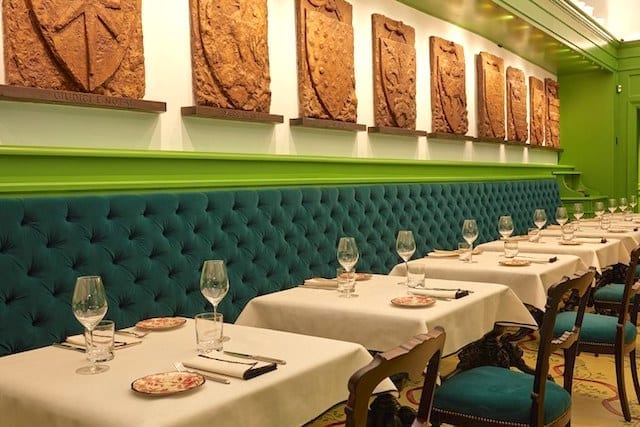
    Luxury fashion brand Gucci has opened a 50-seat restaurant, Gucci Osteria, in Florence featuring triple-starred Michelin chef Massimo Bottura.

    This follows in the tracks of Giorgio Armani offering fine-dining restaurants at its hotels in Dubai and Milan, the Dolce & Gabbana Gold Restaurant and Dolce & Gabbana Martini Bistrot in Milan, and Ralph Lauren with Ralph’s Restaurant in Paris. Roberto Cavalli also has an international chain of cafes.


    LVMH last year also announced it would open a second branch of its gourmet grocer La Grande Epicerie in Paris, days before Tiffany’s & Co launched its Blue Box Cafe in New York. LVMH also owns Cova Pasticceria, which has a strong international presence along with Prada’s Pasticceria Marchesi.

    In Seoul, Dior runs the Dior Cafe at its flagship store, in partnership with patissier Pierre Herme.


  • Facebook updates News Feed to make friends a priority

    Facebook updates News Feed to make friends a priority

    Facebook on Thursday announced a major update that will put friends and family above pages or celebrities in a user’s news feed — and likely result in people spending less time on the leading social network.

    The change to the way Facebook ranks posts will put more weight on social interactions and relationships, according to News Feed product manager John Hegeman.

    “This is a big change,” Hegeman told.

    “People will actually spend less time on Facebook, but we feel good about that because it will make the time they do spend more valuable, and be good for our business in the end.”

    For example, a family video clip posted by a spouse will be deemed more worthy of attention than a snippet from a star or favorite restaurant.

    “We think people interaction is more important than passively consuming content,” Hegeman said.

    “This will be one of the more important updates that we have made.”

    Facebook co-founder and chief Mark Zuckerberg has said that bringing people together and strengthening communities in the real world are priorities.

    The news feed ranking update, which is set to roll out globally in the coming weeks, is expected to support that goal.

    “As we roll this out, you’ll see less public content like posts from businesses, brands, and media,” Zuckerberg said in a post at his Facebook page.

    “And the public content you see more will be held to the same standard — it should encourage meaningful interactions between people.”

    Google, Twitter and Facebook have come under fire for allowing the spread of bogus news — some of which was directed by Russia — ahead of the 2016 U.S. election and in other countries.

    Facebook has introduced a series of changes intended to address the problem.

    “We are doing a ton of work to reduce the frequency of bad content on Facebook,” Hegeman said.

    “This update is more about amplifying the things people value.”

    He cited academic research indicating that interacting with loved ones is crucial to a person’s wellbeing, while reading news articles or watching shared videos may not be.

    “There is really no silver bullet here to determine what is most meaningful, but we are trying to mine the signals to get the best representation that we can,” Hegeman said.

    Known for setting annual personal goals ranging from killing his own food to learning Mandarin, Zuckerberg’s stated mission for this year is to ‘fix’ the social network, including by targeting abuse and hate, and making sure visiting Facebook is time well spent.

    “I’m changing the goal I give our product teams from focusing on helping you find relevant content to helping you have more meaningful social interactions,” Zuckerberg said Thursday.

  • ZTE launches 5G core product based on SBA

    ZTE launches 5G core product based on SBA

    ZTE has launched a new 5G core product based on service based architecture (SBA) and fully compliant with the 3GPP Release 15 standard from September.

    The ZTE Cloud ServCore consists of 3GPP network function services and common network function services in the control plane, and distributed media planes supporting flexible deployment and high-performance forwarding.

    These distributed planes interwork with the control plane through Packet Forwarding Control Protocol (PFCP).

    It is based on the micro-service cloud native architecture ad utilizes micro-service components, DevOps tools and containerized deployment.

    The platform uses a fully virtualized architecture decoupled from the underlying cloud platform, and supporting hardware and software acceleration.

    ZTE said it anticipates that China Mobile could adopt the technology as part of its 5G core trials. The China Mobile Research Institute has been conducting joint research with ZTE in its 5G Core Lab and has praised the design of the Cloud ServCore product.

  • Vietnam ministries against tax on sugary drinks

    Vietnam ministries against tax on sugary drinks

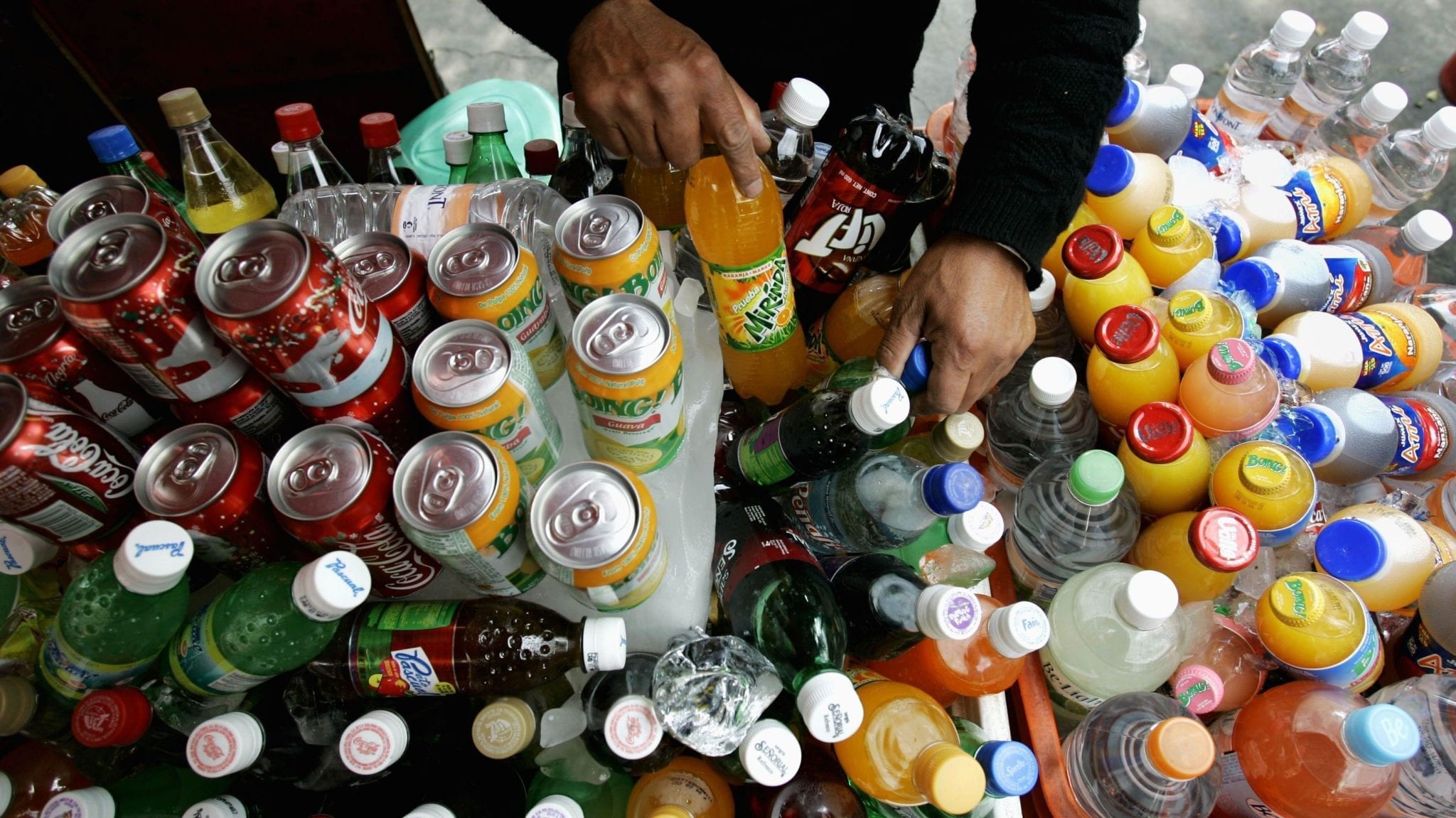
    Vietnam’s Finance Ministry has proposed a special consumption tax on some soft drinks that it claims contain an unhealthy amount of sugar, but its argument has been dismissed by other ministries.

    The Ministry of Industry and Trade said in a statement that imposing a special consumption tax on soft drinks because they contain sugar is not a convincing enough reason.

    It said the finance ministry needs to give a clearer explanation as to why soft drinks should be subject to higher taxes and why their consumption should be restricted.

    The trade ministry was repeating the same argument made by the Vietnam Chamber of Commerce and Industry (VCCI), which represents thousands of businesses in Vietnam.

    The VCCI said last October that a special tax should only be imposed after adequate studies have been made on the drinks’ impacts on consumer health and how much the tax could help reduce the risks.

    The Ministry of Agriculture and Rural Development has also demanded scientific evidence of why instant tea and coffee should be subject to the tax.

    “No study has found that the abuse of sweetened tea or coffee causes obesity, diabetes or cardiovascular diseases in Vietnam,” it said.

    The Ministry of Planning and Investment is also against the proposal, which it says could affect the beverage industry and its large workforce.

    In Vietnam, special consumption taxes are levied on items and services considered unhealthy or luxurious such as tobacco, alcoholic drinks and cars.

    The finance ministry has suggested a tax rate of 10-20 percent on sugary drinks from 2019. “The tax will help regulate the consumption of sweetened beverages, and it’s also an international norm,” it said last August.

    A letter from the World Health Organization (WHO) last September endorsed the proposed tax, which is effective in around 40 other countries, it said.

    “The WHO recommends Vietnam impose a tax that can increase the market prices of soft drinks by 20 percent,” it said.

    The ministry also cited a WHO report that shows excessive consumption of sugary drinks can lead to obesity which has been linked to many health risks such as cardiovascular disease, hypertension and strokes.

    A study unveiled in June last year found that about 25 percent of Vietnamese adults are overweight or obese. The obesity rate among children under five years old is also rising fast.

    Many Southeast Asian countries have already imposed taxes on sugary drinks, according to the ministry. The current rate is 20-25 percent in Thailand, 5-10 percent in Laos and 10 percent in Cambodia.

    Myanmar, the Philippines and Indonesia are considering a similar tax.i

  • FairPrice and Grab to launch new subscription service

    FairPrice and Grab to launch new subscription service

    A subscription service is being planned by supermarket chain NTUC FairPrice and on-demand transportation/mobile payments platform Grab.

    They have signed a memorandum of understanding to embark on a joint initiative to complement the online-to-offline lifestyle of consumers by offering better value, convenience and access to goods and services.

    “Our strategic partnership with Grab signifies our ongoing efforts to cater to the evolving needs of the community,” says NTUC FairPrice CEO Seah Kian Peng.

    Grab Singapore group CEO/co-founder Anthony Tan says the partnership will offer its customers extra discounts and perks from FairPrice. “With both supermarket and transport services as part of this initiative, we are thrilled to provide greater cost savings and convenience.”

    A survey of more than 1000 customers between 20 and 40 years old has shown that 95 per cent are likely to subscribe to such services, while 56 per cent of respondents indicated they are not subscribed to a service. Groceries (69 per cent) and transport (54 per cent) also top the list of services they want from a subscription service.

    Consumers opting for the Grab/FairPrice subscription service will be offered exclusive savings, rebates and access to services on groceries and transport. It is targeted for launch this first quarter.

  • Teletalk and Robi sign network sharing deal

    Teletalk and Robi sign network sharing deal

    Bangladesh operators Teletalk and Robi Axiata have arranged to share network sites across the country to improve the network experience for their respective customers.

    The two operators have signed an agreement on the network sharing deal at a meeting this week attended by company executives including Robi CEO Mahtab Uddin Ahmed and Teletalk managing director Kazi Md Golam Kuddus.

    The agreement is also aimed at accelerating the 4G network rollout process once LTE licenses are awarded to mobile operators.

    Bangladesh’s 4G auction is scheduled to take part in February, and is expected to draw participation from the two operators as well as Grameenphone and Banglalink.

    CityCell, which recently had its operations suspended as a result of failure to pay required license and related fees, has also raised the prospect of participating in the auction in order to re-enter the market.

    The auction will encompass spectrum in the 2100-MHz, 1800-MHz and 900-MHz bands. The deadline for applying to take place is January 14 and the auction will be held on February 14. Operators will need to deploy a 4G network nationwide within 36 months as part of the auction terms.

  • China’s Huawei setback in US market amid national security concerns

    China’s Huawei setback in US market amid national security concerns

    Chinese tech giant Huawei faces a major setback in efforts to expand in the U.S. smartphone market following renewed national security concerns, documents showed.

    Huawei, which appeared to lose a deal with AT&T that would have given it an improved foothold in the handset market, faced criticism from U.S. lawmakers over its intellectual property protection and its ties to Chinese intelligence, according to a letter seen by AFP this week.

    The letter, signed by 18 members of the House and Senate intelligence panels, expressed concerns first voiced in 2013 by congressional investigators.

    The document said that later information obtained by the committees “only reinforces our concerns regarding Huawei and Chinese espionage.”

    The letter dated December 20 was sent to the U.S. Federal Communications Commission with copies to the Justice Department, FBI, CIA and Department of Homeland Security.

    It said the FCC “would benefit from Intelligence Community briefings on the threat Huawei and other Chinese technology companies pose.”

    Huawei has become the world’s third largest smartphone maker — but its U.S. presence has been limited by a lack of agreements with wireless carriers, which sell most devices.

    The company’s consumer business chief Richard Yu was a keynote speaker Monday at the Consumer Electronics Show, where an expected announcement with AT&T failed to happen.

    Yu did not directly address concerns in the letter, but said it was “unfortunate” that Huawei would not be selling in the U.S. through carrier channels.

    “It’s a big loss for us and also for carriers,” he said. “But the more big loss is for consumers.”

    In addition to the AT&T deal, a potential agreement with another major wireless carrier, Verizon, was also in jeopardy, according to media reports.

    A Huawei spokesman said the company would not comment on rumors or speculation and did not respond to the letter, which was revealed earlier this week by U.S. media.

    The company said it would release new products to U.S. consumers as unlocked devices through retail channels, reaching a smaller market.

    “We have the strongest confidence in our products and will continue to innovate and break new ground,” Huawei said in a written statement.

    “At the same time, we believe that U.S. consumers deserve equal opportunity and the choice to enjoy the best technology and more smartphone options through more channels… At Huawei, privacy and security are always our first priority.”

    The statement added: “We are compliant with the world’s most stringent privacy protection frameworks… We have gained the trust of over 150 million customers in the past year alone, and now sell our devices through more than 45 of the top 50 global carriers.”

  • Taobao Again on U.S. Blacklist for Counterfeit Products

    Taobao Again on U.S. Blacklist for Counterfeit Products

    Taobao has been added to the USTR counterfeit blacklist for the second successive year for selling suspected fake items on its shopping platform.

    However, the Chinese e-commerce giant says the listing does not reflect its IP-protection efforts.

    Owned by Alibaba Group, it is one of 25 online markets along with 18 physical markets to make the annual USTR (US Trade Representative) list of “the world’s most notorious markets” for selling pirated and counterfeit goods.

    Taobao managed to stay off the list from 2012 to 2015, but was included in 2016 and now again for last year.

    “A high volume of infringing products reportedly continues to be offered for sale and sold on Taobao.com, and stakeholders continue to report challenges and burdens associated with IP enforcement on the platform,” says the USTR. While the agency acknowledges Alibaba’s efforts to curb the sale of fake products on Taobao, it says the prevalence of infringements is still a challenge.

    Alibaba says it has made its IP protection programs easier to use, leading to an 11 per cent increase in registries plus a 25 per cent drop in takedown requests as infringing listings were removed even before reaching its marketplaces.

    “In light of all this, it is clear that no matter how much action we take and progress we make, the USTR is not actually interested in seeing tangible results,” says Alibaba Group president Michael Evans.

    The USTR says Alibaba’s data does not directly reflect the scope and status of the counterfeiting problem on Taobao, but is “merely suggestive of progress” in its anti-counterfeit efforts. It also says those efforts appear to be more toward addressing the concerns of global brands rather than small and medium businesses.

    “It is incumbent upon Alibaba to develop more effective means to address the concerns of the full range of US businesses that continue to find infringing versions of their products for sale on Taobao.com.”

  • Ncell Axiata expands LTE network

    Ncell Axiata expands LTE network

    Nepal’s Ncell Axiata has revealed it has expanded its LTE network to cover two more cities – Lahan and Dhangadhi.

    The operator’s 4G network now spans 21 cities, giving Ncell the widest 4G coverage in the market at more than 15% of the population.

    Ncell launched 4G mobile broadband in the 21 cities last week. The company is giving customers the ability to acquire a 4G SIM with the same mobile number for just 1 rupee ($0.0098).

    The new SIM will be bundled with 1GB of 4G data valid for three days, as well as a buy 1 get 1 free offer providing the equivalent of double the 4G data for any data packs. The offer will also be bundled with a 30 day subscription to the Yonder Music digital music library.

    As well as the two new cities, Ncell’s 4G network covers Nagarkot, Banepa, Dhulikhel, Pokhara, Damauli, Biratnagar, Birtamode, Damak, Dharan, Bharatpur, Hetauda, Birjung, Bhairahawa, Butwal and Nepalgunj, Kolhpur and Birendranagar.

    “We are very much delighted to announce introduction of 4G service in Lahan and Dhangadhi, bringing more people into access of new technology based high speed mobile connectivity,” Ncell corporate services director Pranay Acharya said.

    “By making the 4G service accessible to more than 15% of population, we have been able to swiftly deliver on what we have committed, contributing towards the goals of National Broadband Policy and Digital Nepal.”

    Expansion to other parts of the country is already underway.

  • Legion Concept Store to Open Soon in Kuala Lumpur

    Legion Concept Store to Open Soon in Kuala Lumpur

    Technology company Lenovo Group plans to open a Legion concept store in Kuala Lumpur.

    Skewed toward gaming, the store will also offer an experiential area where customers can try Legion’s gaming products.

    Lenovo central Asia Pacific GM Ivan Cheung says a site has already been chosen and renovation work has started. The opening is expected to be within the next quarter.

    With the Legion brand established just a year ago, the company believes it is important to give customers the chance to test and experience the products. The portfolio includes gaming laptops and desktops as well as peripherals such as specialised mice, keyboards and even backpacks.

    Lenovo has identified Malaysia as a high-potential market for gaming.

  • India, Vietnam race in rice market

    India, Vietnam race in rice market

    Rice prices gained this week in India as Bangladesh continued to lap up the staple grain from its neighbour, while prospects of deals with the Philippines saw rates climb for the first time in three weeks in a relatively quiet Vietnamese market.

    In Vietnam, benchmark 5 percent broken rice rose to $400 a ton, free-on-board (FOB) Saigon, ending a three-week flat trend within the $390-$395 range, and boosted by prospects of deals with the Philippines, traders said.

    “Prices edged up on market talk that the Philippines would invite tenders to buy 250,000 tonnes at the end of January,” a trader in Ho Chi Minh City said.

    However, trading remained thin due to depleted stocks in the world’s third-largest rice exporter, while Vietnam’s major winter-spring crop would be ready only by the end of February, traders said.

    Vietnam plans to sell close to a 23 percent stake in the country’s main rice exporter Vinafood II through an initial public offering.

    Top exporter India’s 5 percent broken parboiled rice prices rose by about $2 per tonne this week to $423-$427.

    Traders from Bangladesh are aggressively buying new-season crop since prices in Bangladesh are still elevated, said an exporter based in Kakinada in the southern state of Andhra Pradesh.

    India’s rice exports likely jumped 22 percent in 2017 to a record 12.3 million tonnes as Bangladesh ramped up purchases after flooding damaged its crops.

    As of the end of December, farmers in India had cultivated winter-sown rice on 1.88 million hectares, 44 percent higher than a year earlier.

    Prices were also higher in another major Asian exporter, Thailand, with the country’s benchmark 5 percent broken rice gaining to $395-$410, FOB Bangkok, from $393-$396 last week on an appreciating baht and lower supplies.

    The baht has gained 1.6 percent versus the U.S. dollar so far this year and been Asia’s best-performing currency.

    “Rice prices have increased due to a stronger baht, lower supplies due to the effects of floods, as well as a recent 200,000-tonne export deal with Indonesia,” a Bangkok-based rice trader said.

    The Ministry of Commerce forecast Thailand to export 9.5 million tonnes of rice, worth $4.7 billion, in 2018.

    “I think this target is achievable. It’s lower than last year’s record figure of over 11 million tonnes probably due to a stronger Thai baht and bad weather conditions affecting supplies,” said another trader based in Bangkok, adding, “Demand has remained fairly constant.”

    Thai prices are likely to be on an upward trend over the next few weeks, traders said.