Author: Mei Ling Tan

  • From clicks and bricks strategy for Courts Singapore

    From clicks and bricks strategy for Courts Singapore

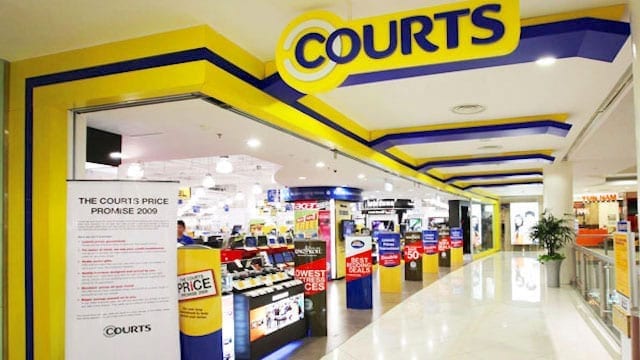
    Electronics, IT and furniture retailer Courts Singapore has relaunched its website and reopened its Tampines megastore after transforming it to offer customers an omni-channel experience.

    Built by e-commerce agency SmartOSC, the new Courts Online store has more than 17,000 SKUs and offers improved navigation and searching, plus faster checkout. New mobile-first and user-centric features connect the retailer’s digital and physical stores. Customers can research and buy online, and pick up purchases in-store or have them delivered.

    Combining omni-channel retailing, automated marketing and content management, the e-commerce system offers Courts a real-time view of inventory and customer profiles.

    Courts Asia chief strategy officer Stan Kim says the website was launched in time for last month’s Black Friday and Cyber Monday retail events, with sales for both almost doubling from the previous year.

    Meanwhile, the Courts Megastore in Tampines offers experiential retail spaces designed to offer memorable and informative experiences for customers.

    Courts has more than 80 stores across Singapore, Malaysia and Indonesia.

  • Prada Station pop-up at Galaxy Macau

    Prada Station pop-up at Galaxy Macau

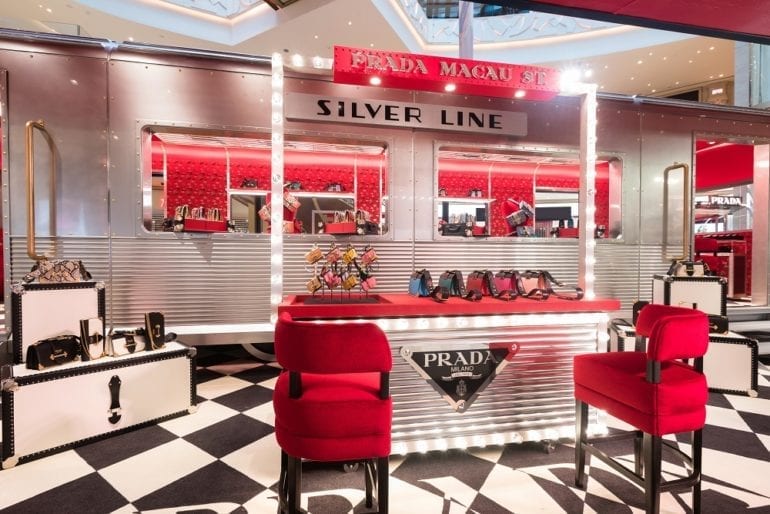
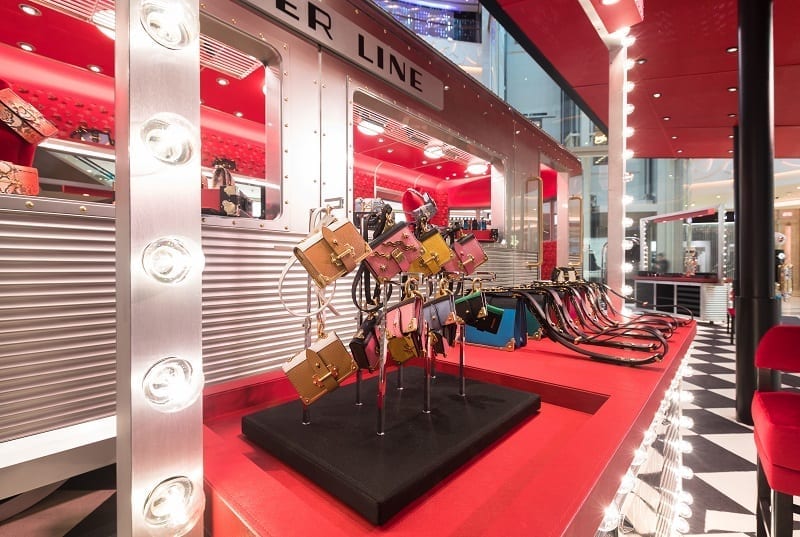
    The pop-up is designed as a dream-like container; it represents the image of Prada on the move, drawing inspiration from the brand and its fundamental codes, such as travel and modernity.

    Around the train, the illuminated platforms host a series of small installations that complement the main aesthetic experience embodied by the train including Christmas versions of life-size Prada Robots and a ticket kiosk .

    The interior features walls covered in floral-patterned red silk brocade to create a luxurious, romantic look.

    The setting is completed by the iconic black-and-white chequered floor which characterizes Prada stores around the world since 1913.

    The Prada Cahier bag is reinterpreted in three styles made of exotic leathers, exclusive at The Promenade Shops in Galaxy Macau.

    This project – here inaugurated for the first time – offers customers the chance to acquire exclusive products which are chosen for each leg of the journey and presented inside this original installation.

    Prada Station Pop-up will delight the customers until 14 January 2018 at The Promenade Shops’ Pearl Lobby, located within Galaxy Macau.

    Galaxy Macau and Broadway Macau combine deliver the “Most Spectacular Entertainment and Leisure Destination in the World”. Developed at an investment of HK$43 billion, the two properties cover 1.1 million square meters of unique entertainment and leisure attractions that are unlike anything else in Macau.

  • Pokemon Go game set to launch in China

    Pokemon Go game set to launch in China

    Pokemon Go maker Niantic has announced plans to launch its monster-catching game in China.

    The firm said it would bring the augmented reality game to China after striking a partnership deal with a local company NetEase.

    Chinese regulations covering online content demand that foreign firms find a partner to launch digital ventures in the country.

    Niantic gave no specific date for when Pokemon Go would be turned on in China.

    Competition time

    John Hanke, chief executive of the US firm, told the FT that it “absolutely” intended to take its games to China – the worlds largest mobile market.

    The 2016 launch of Pokemon Go and its massive popularity had left the company cash rich, he said, and in a good position to expand.

    Also, he added, a recent funding round had raised $200m (£148m) from investors that would also fuel expansion.

    The Pokemon game involves players using their smartphones to find and catch the game’s titular monsters in the real world. They then use the captive creatures to battle other players. Augmented reality (AR) technology inserts the monsters when people view the world through their phone’s camera.

    Player numbers had dwindled sharply since Pokemon’s launch, said Mr Hanke, but there was a “solid” core of players who had stuck with the game.

    The technical and policy expertise Niantic had amassed while launching Pokemon Go would serve it well as it developed more games, he said.

    The next big game it plans to launch will be based around the hugely popular Harry Potter series of stories. That game had the potential to appeal to a very wide range of people, he said.

    The game is due to be released in the second half of 2018.

    Niantic could face increased competition in 2018 from Google, Apple, Facebook and Snap all of whom have released AR toolkits for developers. Additionally, in China online retail giant Alibaba has announced plans to use AR to help commercial partners.

  • Why is South Korea suddenly terrified of bitcoin?

    Why is South Korea suddenly terrified of bitcoin?

    Bitcoin has been hailed as the greatest technological innovation of our time, yet it seems South Korea, one of the most technologically innovative societies, is now not only giving up its role as a leader in the field but aggressively fighting the trend.

    Some observers suggest the government has many reasons to be afraid of bitcoin, not the least of which is the cryptocurrency’s potential to be used by Kim Jong-un ’s North Korea as a covert economic weapon. But leaders point to other concerns as well.

    South Korea’s Ministry of Justice said on Thursday the country is considering shutting down all local cryptocurrency exchanges, an announcement that sent shockwaves through the industry worldwide. Earlier this week, stock in the internet service provider Pareteum more than doubled after it said it would provide blockchain support services, Bloomberg reported, but fell 25 per cent after Seoul’s comments.

    Hong Nam-ki, the minister for government policy coordination, called Korea’s interest in cryptocurrencies “abnormal”, echoing the disdain of Prime Minister Lee Nak-yeon, who last month warned that cryptocurrencies could corrupt Korean youth and lead to “social pathological phenomena”.

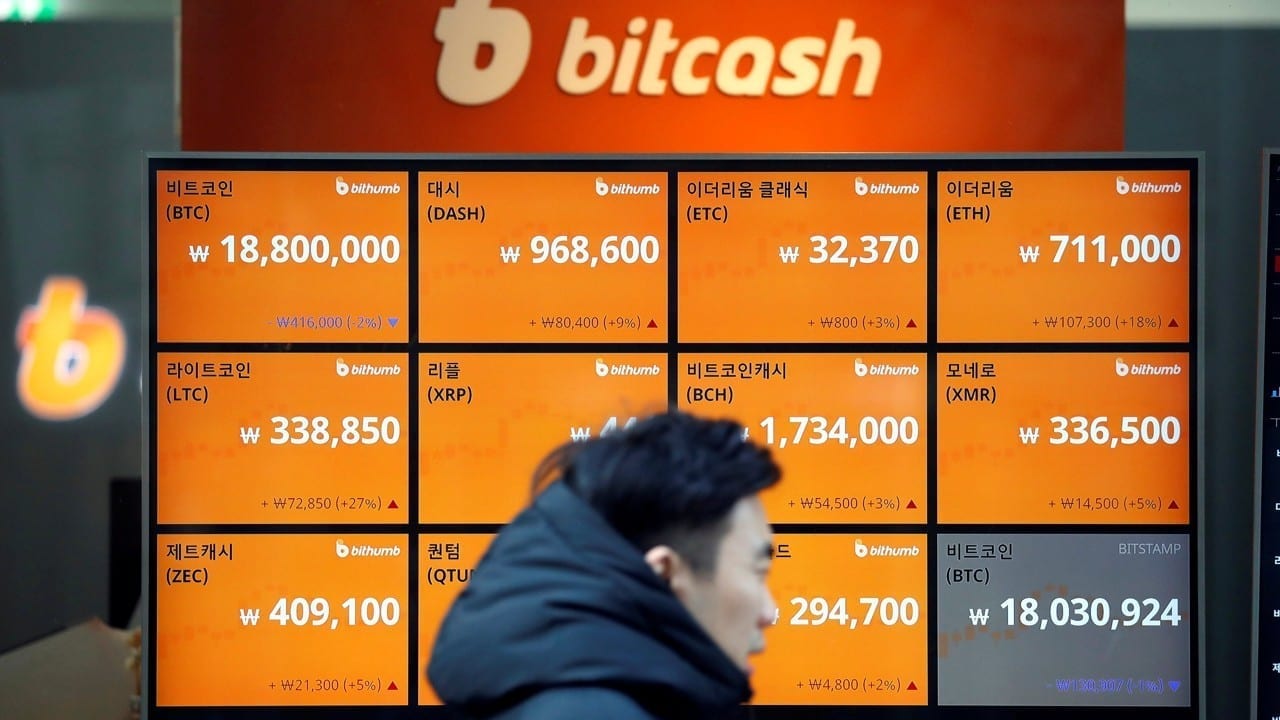
    After Hong’s announcement, bitcoin prices at the Korean cryptocurrency exchange Bithub fell 13.8 per cent from US$20,181 to US$17,400.

    Others are also pulling back. Two of Korea’s largest banks, Shinhan and KB Kookmin, announced this week that in mid-January they will no longer redeem credit card points for bitcoin, according to a report by Korea Biz Wire. This comes after South Korean officials reportedly banned the trade of bitcoin futures in December and drafted emergency measures prohibiting minors, foreigners and banks from bitcoin trading.

    One cause for concern is that bitcoin has grown in value more than 12 times since January and remains prone to extreme volatility. In early December, it almost doubled in value from US$10,240 to an all-time high of almost US$20,000, before falling 30 per cent to below US$11,000 then rallying to almost US$16,000.

    Despite the fluctuations, retail investors and several major Korean companies are getting in on the action. Samsung announced in May a project using blockchain – the platform for all cryptocurrencies – to track shipping orders in real time. Kakao, maker of the country’s leading messaging app, acquired the fintech start-up Dunamu to launch its own cryptocurrency exchange in October, named Upbit. And video game giant Nexon is now the biggest shareholder in Korbit, Korea’s third-largest cryptocurrency exchange.

    But if Korea moves ahead with a full shut down, it would not only end these projects but also make bitcoin less attractive in neighbouring Asian nations, possibly triggering a domino effect.

    Bitcoin, the world’s largest cryptocurrency, has an underlying technology that makes it an unhackable commodity that doesn’t need a central bank or a government to guarantee its value. This allows users to make transactions without an intermediary, saving time and money, potentially upending the costly financial services and exchange markets as we know it.

    Korea is the third-largest market for bitcoin trading after Japan and the United States, making up roughly 20 per cent of all bitcoin trading, and the country’s recent change of heart comes amid other nations also placing restrictions on the cryptocurrency.

    On December 25, the Israeli Securities Agency announced companies will no longer be able to trade in bitcoin on the Tel Aviv stock exchange, and in Morocco, Bolivia and Ecuador, bitcoin is completely illegal.

    Concerns seem most profound across Asia, however, where bitcoin is also illegal in Kyrgyzstan, Bangladesh and Nepal. China, which once constituted 90 per cent of all bitcoin trading, banned initial coin offerings (ICOs) in September and began to crack down on exchanges.

    In addition, Bank of Japan Governor Haruhiko Kuroda called the surge in bitcoin prices “abnormal” last week, CNBC reported, specifically citing the dangers of speculative investing; the Reserve Bank of India has expressed concern about tax evasion and other misuses; Indonesia seems poised to ban cryptocurrency transactions next year; Vietnam may ban cryptocurrency payments; Singapore warned speculative investors last week about the risk of losing “all their capital”. These cracks in confidence will only widen if South Korea moves against bitcoin.

    There are, of course, legitimate concerns about fraud. In December, police busted a US$200 million cryptocurrency Ponzi scheme named MiningMax and the bitcoin exchange BitKRX, which claimed to be a legitimate venture created by the Korea Exchange but was revealed to be fraudulent. The incident gave authorities a reason for more regulations, but some worry they would really be a form of protectionism.

    In a November 2016 Korean Law Blog post, Sean Hayes wrote: “Korea has struggled with the acceptance of new technologies that infringe on some of the major vested interests and we suspect that bitcoin will be no different.”

    What makes South Korea’s situation different, however, is the existential threat posed by North Korea. Youbit went out of business in December after being hacked, losing one-fifth of its clients’ holdings. It was also attacked in April, when it lost US$35 million. The company did not say how much was taken, or how it happened, but Pyongyang is a leading suspect. North Korean hackers are also believed to be behind the attacks on four South Korean bitcoin exchanges this past summer. The regime also began mining bitcoin in mid-May, and can use what it mines or steals to circumvent sanctions.

    Nevertheless, bitcoin enthusiasts feel these challenges can be surmounted with the right combination of regulation and support. “There’s a delicate balance involved,” said Yoo Byung-joon, business administration professor at Seoul National University and co-author of the 2015 research paper “Is Bitcoin a Viable E-Business?: Empirical Analysis of the Digital Currency’s Speculative Nature”.

    “But a lot of governments are looking at this very carefully,” he said. “Some are even considering putting their currencies on the blockchain system. The biggest challenge facing bitcoin now is the potential for misuse, but that’s true of any new technology.”

    Regarding the government’s announcement that it may shut down bitcoin exchanges, Yoo said: “I think the decision seems too quick. We don’t need to do that, but they worry about fraud or such. But there’s no guarantee that this shutdown will pass Congress, so we have time. Governments, you know, are risk-averse. But economically, I think it’s not a good decision. There’s no need to hurry.”
  • New digital marketplaces seek to reshape economy

    New digital marketplaces seek to reshape economy

    The age of digital transformation is dawning on Thailand’s economy and society as evidenced by crucial developments in banking, retail and other sectors.

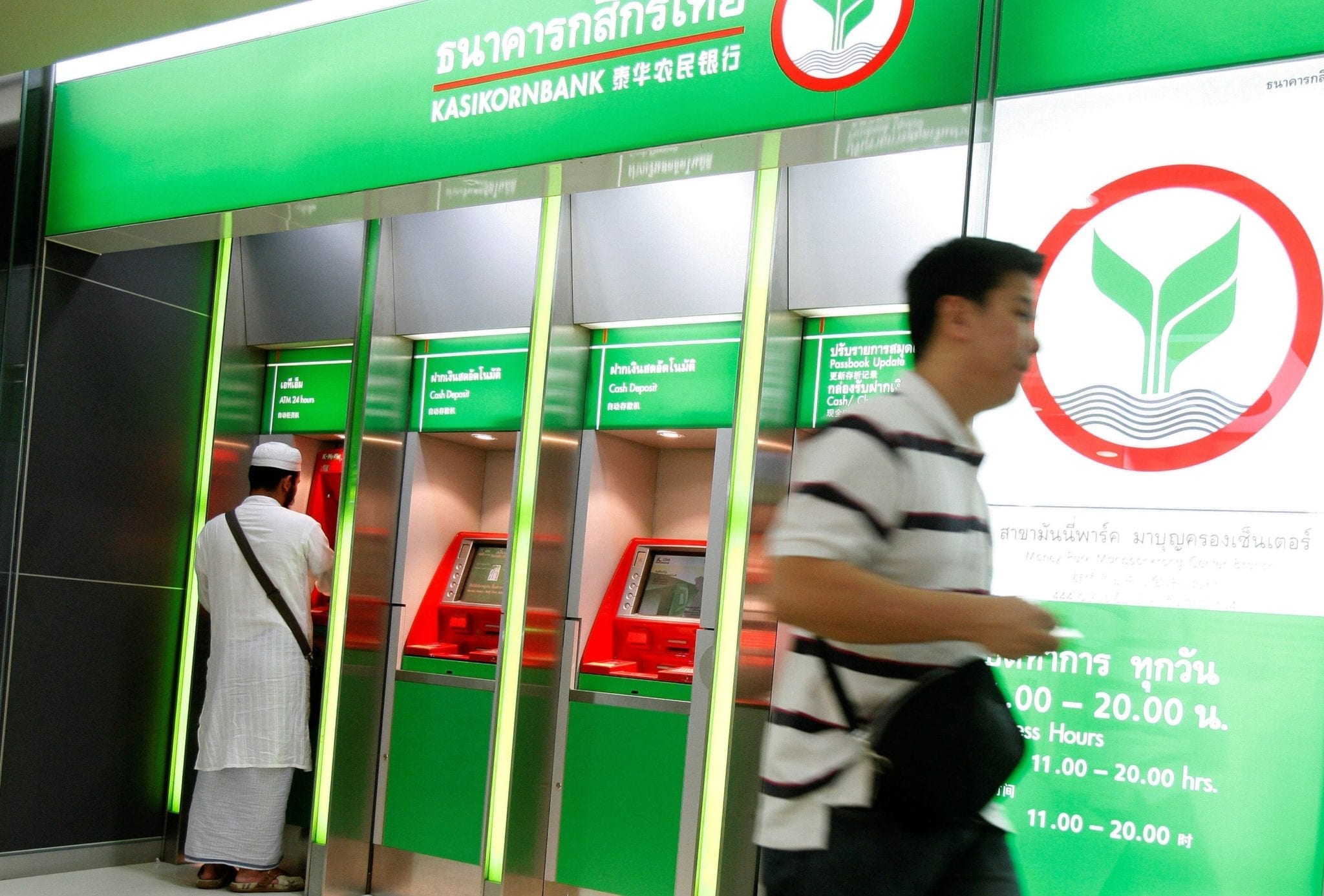
    The Bank of Thailand reported that commercial banks had shut down nearly 300 bank branches in the country in 2017 as customers moved towards Internet and mobile banking services, ushering in a new era of digital banking.

    In the meantime, Siam Commercial Bank (SCB) is leading the pack by launching its “SCB Express” concept – fully-automated banking centres in various Bangkok locations.

    SCB and Kasikorn Bank are seeking regulatory approval to operate e-commerce platforms to link millions of mobile customers with vendors of various goods and services, especially small and medium-sized enterprises (SMEs). In the retail sector, SCB is working with The Mall group, one of Thailand’s biggest retail and shopping centre chains, to introduce an automated cashier-less supermarket service at selected locations.

    Central department store group has joined forces with China’s No 2 e-commerce giant, JD.com, to create an “online marketplace”, and the country’s top e-commerce sites, led by Lazada (part of the Alibaba group), 11 Street and Shoppe, have been challenging traditional retail models with disruptive technologies.

    With many payments now possible through the ease of touching a mobile-phone screen or waving a card, consumers are expecting more from goods and service providers.

    E-commerce, mobile payments using QR Codes, digital banking on the go, cashier-less grocery shopping and other innovations will start to become the norm this year as traditional business models merge with digital technology to stay relevant. Artificial intelligence (AI) is becoming the new tool for banks, retail chains and other service providers to stay ahead of their consumers’ expectations.

    Since machine-learning technology is now cheaper and easier to manage, it is likely that predictive analytics that capitalise on the abundance of consumer and other data will be more widely used by Thai businesses and industries.

    AI will soon usher in a new term, “machine commerce”, in which transactions are automatically generated by computer software using the huge amount of available data in real time.

    This will happen this year if the major commercial banks get approval from the Bank of Thailand to launch e-commerce platforms that automatically match millions of bank customers with SMEs and other vendors.

    Kasikorn Bank has said it has about 7 million mobile customers and is enlisting SMEs to join its proposed e-commerce platform pending regulatory approval, while SCB has about 6 million mobile customers and is planning a similar marketplace platform.

    AI and machine learning will become more commonplace in other sectors, especially in logistics and warehouse management as well as in food, beverage and other manufacturing sectors in which the use of robots and automation systems is rapidly replacing human workers.

    To facilitate the advent of a digital economy and society, government and private sector organisations have joined forces to launch the National Digital ID programme to provide reliable online confirmation of personal identities for various activities, including online government services and financial transactions. For example, a person may open a bank account online using the government’s demographic database to verify his or her identity based on the 13-digit ID number assigned to each person.

    Such a use will be sanctioned by law to ensure that this and other online activities are legally binding in the digital age.

  • Korean Government Threatens to Shut Down All Bitcoin Exchanges

    Korean Government Threatens to Shut Down All Bitcoin Exchanges

    Bitcoin has tumbled after South Korea announced new rules for trading.

    In order to curb the widespread speculation growing amongst investors, the new regulations could include the prohibition of anonymous trading accounts operating within the country with authorities having the right to even shut down exchanges if needed.

    The uncertainty about regulating the cryptocurrency trading in South Korea has been looming for quite a long time and it seems the government has now finally decided on a crackdown.

    “Cryptocurrency speculation has been irrationally overheated in Korea”, the government said in the statement.

    All anonymous accounts now in use will be closed next month, it added.

    “The government had warned several times that virtual coins cannot play a role as actual currency and could result in high losses due to excessive volatility”, the government said in a statement.

    As part of what appears to be a series of updates created to improve oversight of industry practices, the government will also seek to bar banks from issuing new virtual accounts to cryptocurrency exchanges.

    The announcement came two weeks after Seoul banned its financial firms from dealing in virtual currencies, most notably bitcoin, as their prices soared, sparking concerns of a bubble largely fuelled by retail speculators.

    Bitcoin resumed its slide Thursday, dipping below $14,000 as the cryptocurrency’s dizzying drop from a record set 10 days ago intensified.

    Following this news, the Bitcoin price has plunged by more than 11% in the past 24 hours and is now trading at $14375.70, according to CoinMarketCap.

    The measures have been floated as part of efforts to stamp out market speculation in a country that is believed to make up a significant portion of global cryptocurrency trading.

    Currently, many cryptocurrency exchanges (including South Korean ones like Kucoin) allow trading with little more than your name and an email.

    The Youbit exchange became the first South Korean cryptocurrency exchange to close after the hacking attack that stole 17 percent of its assets.

    Bank of Japan governor Haruhiko Kuroda said last week that the price surge of the virtual currency was “abnormal”, while Singapore’s central bank advised investors to “act with extreme caution”.

  • Petron investing $3.5b in Malaysian oil refinery

    Petron investing $3.5b in Malaysian oil refinery

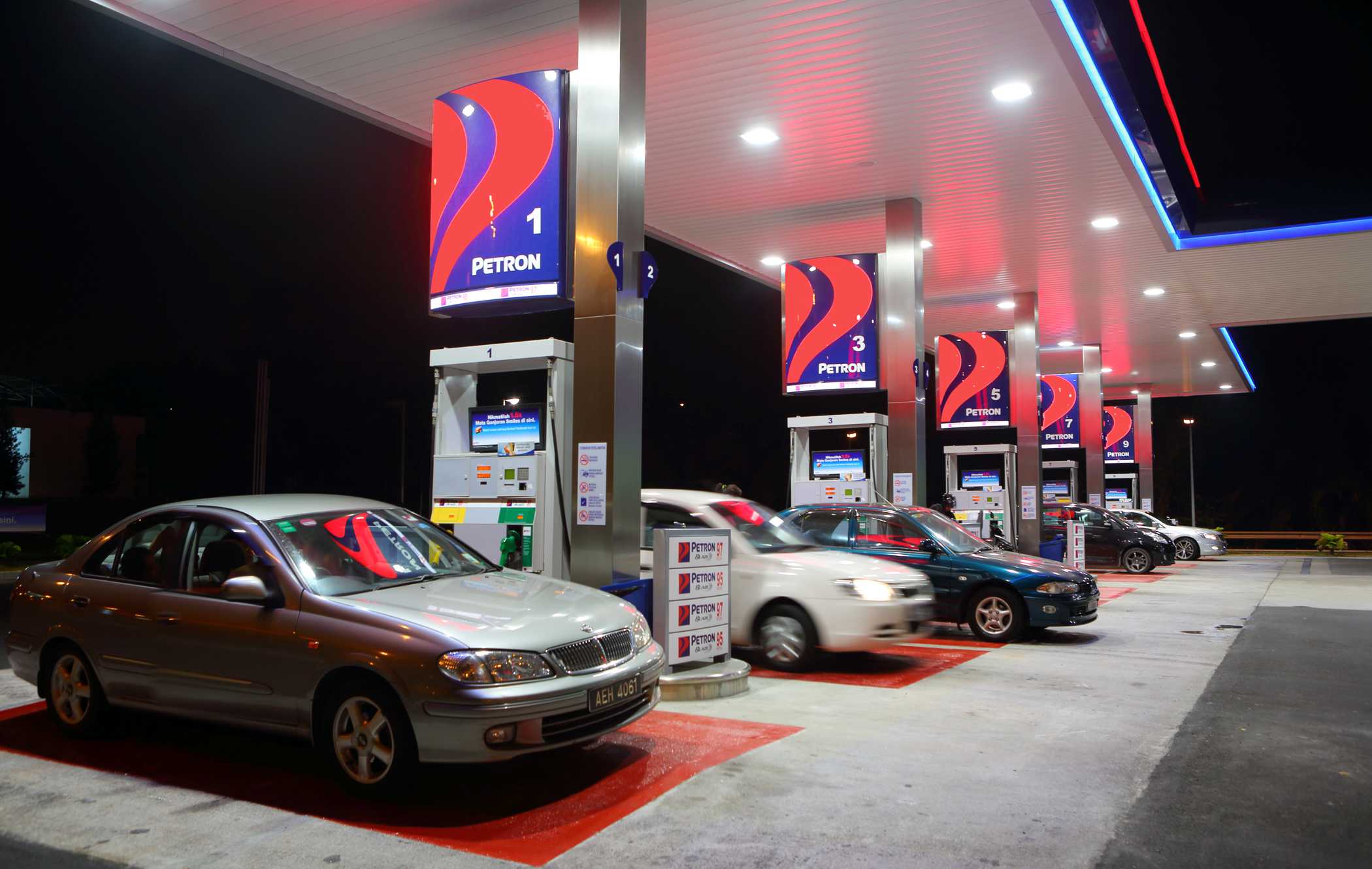
    Petron Corp. is pursuing a $3.5-billion expansion of its refinery in Malaysia that would significantly improve the company’s bottomline, a top executive said.

    “One we complete the expansion there, we are projecting that it will give $600 million a year from $20 million,” Petron president Ramon Ang said.

    Petron acquired Esso Malaysia’s Port Dickson refinery and fuel retail network in Malaysia  in 2011.

    Ang said Petron Malaysia showed consistent strong financial results.

    “We acquire Malaysia before with $20 million Ebitda [earnings before interest, taxes, depreciation and appreciation]. This year, we will end at $270 million Ebitda,” Ang said.

    Ang said once the planned expansion was given an approval, the construction would be completed by 2020.

    The Malaysian refinery currently produces around 80,000 barrels per day. Petron ranks third in terms of market share in Malaysia.

    “It will add  another 90,000 [barrels] a day,” Ang said.

    “The Malaysia expansion, if we will add 90,000 barrels per day, [would cost] $3.5 billion,” Ang said, adding that most equipment in the refinery needed to be replaced and upgraded.

    Petron is also embarking on a $5-billion refinery expansion in the Philippines that will bring the existing capacity of its Bataan refinery to 360,00 barrels per day in  three years.

    Ang said the expansion of the existing Bataan facility would be done in phases at 90,000 barrels per day for each phase. The first phase is expected to be completed by 2019 and the next phase by 2020.

    “[For] the next expansion of our refinery, we will be adding another 90,000 bpd.  So from 180,000 bpd, we will be hitting 270,000 bpd,” Ang said earlier.

    Petron owns the existing 180,000 bpd refinery in Limay, Bataan.

    “We can start [the first phase] in 2018, to be completed in 2019. We forecast an increase in income,” he said.

    Ang said the first phase of the expansion would cost $1.5 billion while the second phase would amount to $3.5 billion.

    He said the expansion would help produce more  petrochemical products.

    Petron already invested $2 billion to upgrade its Bataan refinery and make it at par with the most advanced refineries in the region.

  • Gaw Capital keen on more S’pore properties

    Gaw Capital keen on more S’pore properties

    Hong Kong private equity property group Gaw Capital Partners (GCP) is keen to expand its presence here after investing around $500 million in Singapore in recent years.

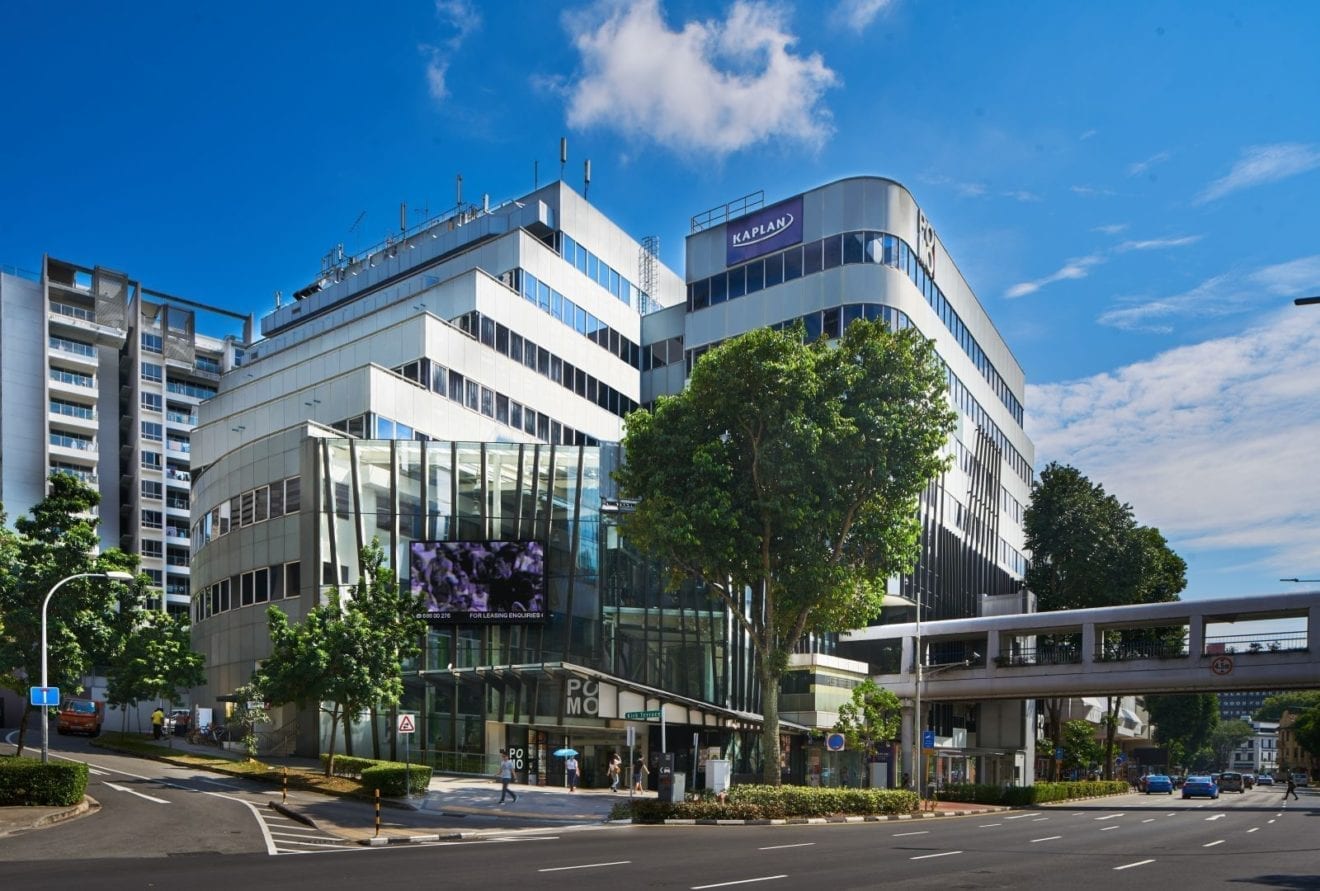
    It made its intentions clear last month when it completed the $342 million acquisition of PoMo, a nine-storey office and retail block in Selegie Road.

    It intends to revamp the block, particularly its retail component, to tap the student population from the many educational institutions in the area.

    President and co-founder Kenneth Gaw said: “Singapore’s property sector is one of the very few major markets in Asia which suffered a downturn in the past few years.

    “It is now on the cusp of recovery and we are confident about buying into a recovery.”

    The group also owns Hotel G in Middle Road. It is a revamp of the former Big Hotel that GCP picked up for $203 million in late 2015 before forking out a further $10 million to refurbish and rebrand the asset.

    Both properties are in the Bugis arts and cultural district.


    “Other than Hotel G and PoMo, we are interested in acquiring other assets in the commercial office and residential sectors in Singapore,” said Mr Gaw.

    He and his elder brother Goodwin set up GCP in 2005.

    Since its inception, the group has raised equity of US$8.7 billion (S$11.6 billion) and has US$13.4 billion in assets under management.

    It specialises in adding strategic value to underutilised real estate through redesign and repositioning.

    Mr Gaw noted that in Singapore, with the successful official launch of Hotel G last year, the group’s asset management team has become familiar with the neighbourhood and its traffic flow.

    “We’re confident that we can add value to PoMo,” he said.

    GCP senior investment director Imelda Tham noted PoMo’s strategic location in a vibrant arts and educational neighbourhood and its close proximity to several large educational institutions, which provide access to about 17,000 captive students and teaching staff in the area.

    The Singapore Management University, Nanyang Academy of Fine Arts, LaSalle College of the Arts (McNally Campus), School Of the Arts and Kaplan are among the educational institutions in the area.

    Ms Tham said: “PoMo itself is anchored by Kaplan, which has a substantial student enrolment.

    “We believe we can harness this potential by creating a more comprehensive retail tenant mix that engages the student population and draws higher foot traffic into the mall.

    “The mall has a mix of food and beverage (F&B), fitness, and health and beauty tenants, and we are looking to introduce more experiential aspects by introducing an entertainment zone.”

    PoMo’s net lettable area of about 180,000 sq ft comprises 110,000 sq ft of offices – levels four to nine – and 70,000 sq ft of retail space that goes from basement one to level three.

    Its offices are fully leased, with education service provider Kaplan the biggest tenant. Almost the whole of level five is designated for the Community/Sports Facilities Scheme, with The Little Arts Academy occupying it now.

    The retail space is 75 per cent leased, achieving an average rent of about $9 psf a month. Tenants include Evolve Mixed Martial Arts, Cosmoprof Academy, Mos Burger, Ya Kun Kaya Toast and other F&B outlets. Major tenancies will be expiring in about two years.

    PoMo, which has 143 carpark spaces, is on a site with 99-year leasehold tenure starting on March 17, 1983. The 43,027 sq ft plot is zoned for commercial use.

    The existing gross floor area of 234,996 sq ft has maximised the site’s development potential.

    Revamp work is likely to begin progressively this year, Ms Tham said. She could not estimate the cost of the project as it is still in the planning phase.

    It will be focused mainly on the retail area to improve the circulation and enhance visibility of the shops, with light touch-ups of the common areas and the facade.

    Mr Gaw said: “We will harness our numerous experiences in other parts of the world when we renovate PoMo.”

    The firm’s renovations include work at Pacific Century Place in Beijing, Plaza 353 in Shanghai, Metropolitan Plaza in Guangzhou and West 9 Zone retail podium in Hong Kong.

    GCP manages four opportunistic property funds targeting assets in the Greater China and Asia-Pacific regions, and a fund that specialises in hospitality assets in Asia-Pacific.

    It also manages two funds that invest in United States properties, as well as various separate account investments in Britain.

    Its activities include investing, value-adding renovations and development in residential, commercial offices, retail malls, serviced apartments, hotels and logistics.

  • Petron sees $600M in annual earnings

    Petron sees $600M in annual earnings

    Petron Corp., the largest oil refining and marketing company in the Philippines, is projecting earnings of about $600 million a year once the planned expansion of its refinery in Malaysia is completed.

    “Once the expansion is finished, we are expecting earnings before interest, taxes, depreciation and amortization (EBITDA) of $600 million annually from $20 million [in 2012],” Petron President and Chief Operating Officer Ramon Ang said.

    For 2017, the Malaysian business is expected to generate EBITDA earnings of $270 million.

    He added that expanding the capacity of the Malaysian refinery will entail an investment of $3.5 billion and would add 90,000 barrels per day (bpd) to its output. The current crude distillation capacity is 88,000 bpd.

    Petron is currently running the Port Dickson Refinery, which is located about 90 kilometers from Kuala Lumpur in Port Dickson, Negeri Sembilan. It is equipped with a crude distillation unit, a naphtha hydro treating unit, two semi-regeneration reformer units, and a kerosene hydro treating unit.

    The complex has amenities such as wastewater treatment facilities, steam generator, cooling water plant, flare and safety relieving unit, crude storage tanks, refined petroleum products storage tanks, as well as spheres for liquefied petroleum gas (LPG) storage.

    Petron, which supplies almost 40 percent of the country’s oil requirements, has a combined retail network of almost 2,900 service stations, more than a fifth of which are in Malaysia. Since 2012, the company has rebranded and built an extensive retail network of nearly 600 stations in Malaysia.

    The oil company also exports different petroleum and non-fuel products to Asia-Pacific countries including India, Japan, Malaysia, Singapore, South Korea, Thailand, and Pakistan, as well as to the United Arab Emirates.

    Shares of Petron slipped 1.19 percent to P9.17 on Friday.

  • Tourism sector likely ended 2017 on strong note

    Tourism sector likely ended 2017 on strong note

    Ask hotel owners and others in the tourist industry about last year and the prospects for 2018 and they will likely give you a thumbs-up; ask retailers and you might get a big frown.

    The two sectors are intertwined to a great extent, yet their fortunes have veered widely over the past 12 months. While visitor numbers have kept surging and are tipped to go even higher this year, the cash registers at local shops remain muted, with sales flat and recording only marginal increases.

    The rise in tourist visits has been striking, with 2017 ending on a strong note, bolstered by growing arrivals from China. Preliminary estimates from the Singapore Tourism Board (STB) show that 13.05 million visitors came here in the first three quarters of last year, up 5 per cent on the same period in 2016.

    Arrivals from China shot up nearly 10 per cent to 2.49 million, as the STB’s efforts to better engage Chinese visitors and reach out to more second-tier cities appear to be paying off.

    Arrivals from Indonesia, which has traditionally been Singapore’s top source market, were lower than China’s at 2.17 million but still up 2 per cent on the same period in 2016.

    The STB had forecast arrivals of 16.4 million to 16.7 million for last year as a whole, while tourism spend was expected to come in at between $25.1 billion and $25.8 billion. However, if arrivals had continued at this pace in the last quarter of 2017, Singapore could have surpassed the threshold of 17 million visitors.

    Ms Selena Ling, OCBC Bank’s head of treasury research and strategy, said: “Visitor arrivals growth should remain healthy into 2018, as the easing headline GDP growth (in China) is unlikely to fully curb the Chinese appetite for overseas travel.”


    Mr Vishnu Varathan, head of economics and strategy at Mizuho Bank, said that Chinese government restrictions on travel to South Korea could also mean spillover benefits for Singapore.

    However, both economists highlighted that global competition for the tourist dollar is heating up, which could present a challenge for Singapore.

    STB data shows that total room revenue for the first nine months of last year fell 2 per cent year-on-year to $2.39 billion while revenue per available room (RevPAR) was flat at $201. The increased supply of rooms meant the industry-wide average room rate dipped around 1 per cent to $233 while the average occupancy rate edged up 1 percentage point to 86 per cent.

    Economy hotels had the biggest growth in RevPAR, clocking a more than 5 per cent increase to about $85. Economy and luxury hotels were the only segments to register increases – albeit marginally – in average room rates.

    CBRE Hotels (Asia-Pacific) projects occupancy for last year as a whole would have reached around 85 per cent, up almost one percentage point from 2016.

    “This has been driven by a strong growth in visitor numbers, which will exceed 17 million,” said CBRE Hotels executive director Robert McIntosh. “However, these visitors are spending less time here so the growth in arrivals has resulted in a lower rate of growth in room nights sold. The result is that room rates have declined marginally and therefore the revenue per room has been flat.”

    The supply of new hotel rooms is expected to taper off in 2018, which should provide some relief.

    “Occupancy is likely to fall slightly and room rates are forecast to stabilise,” said Mr McIntosh. “The declines of the last few years appear to have stopped, provided the economy and the visitor numbers can keep growing.”

    Corporate demand will also likely pick up next year, he added, although companies are increasingly placing employees on short-term projects, which means a reduction in the length of stay.

    The picture is slightly less rosy for the retail industry, which is dealing with headwinds such as high operating costs and competition from online shopping. Sales in the third quarter rose 0.9 per cent year-on-year, a decline from the 1.4 per cent in the second quarter.

    Ms Ling said: “This suggests that there may not be significant cheer for the peak year-end season on the domestic consumption front, especially since many Singaporeans usually travel during the school holidays, in addition to medium-term structural changes like e-commerce.”

    Mr Varathan noted that the improving Singapore economy has yet to filter down to the headline retail figures, at least not compellingly.

    Nonetheless, the pick-up in economic growth and “exuberant” stock market conditions could have boosted retail sales for certain segments, he added.

    For instance, sales of luxury goods such as watches and jewellery have risen more than 5 per cent for the January to October period in both real and nominal terms.

    Mr Varathan warned that “rising energy prices and food costs could start to dent discretionary income, especially if rising interest costs begin to be felt by households with financing commitments” in 2018.

    One potential bright spot for retailers could be tourism spend, which could help to dispel some of the gloom. In the first half of last year, tourist shopping receipts jumped by a solid 20 per cent, while total tourist receipts rose at a lower 10 per cent. The Chinese emerged as the biggest spenders.

  • Parami Energy Myanmar readies imported LPG for sale as demand rises

    Parami Energy Myanmar readies imported LPG for sale as demand rises

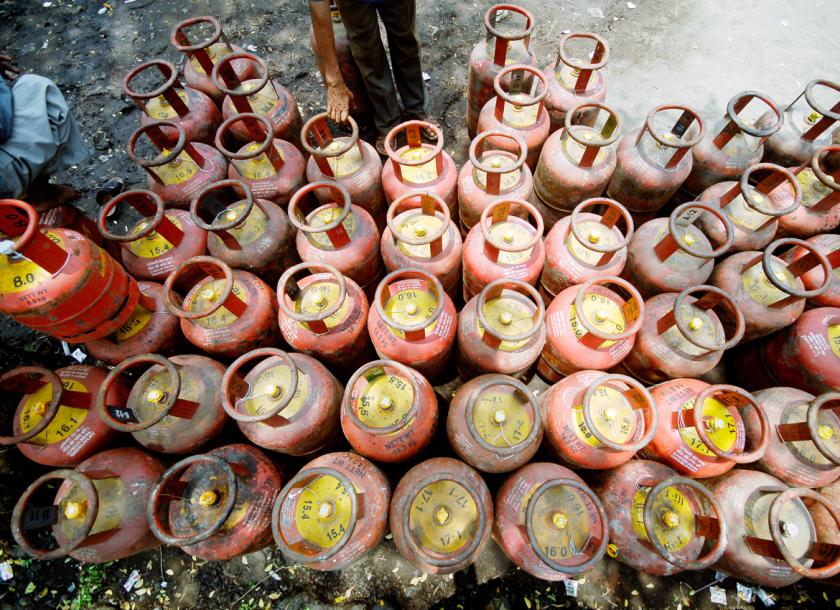
    The government is aiming to replace the use of electricity with Liquefied Petroleum Gas (LPG) as a fuel for household cooking. If widely used, LPG can reduce the use of firewood as well as electricity when cooking, which will help to conserve power as well as the environment.

    Last year, the Ministry of Electricity and Energy (MOEE) launched a K6.5 billion tender involving the lease of a jetty, terminal and storage facility at the Thanlyin refinery in Yangon Region, for the purpose of importing, storing and distributing LPG in Myanmar.ti

    A total of 21 companies sought tender applications but only nine submitted proposals. Of these, privately-owned Parami Energy Services Company ultimately beat oil company Puma Energy to win the tender in August last year.

    It is the first time the government has leased out state-owned facilities under a Public-Private Partnership for the import, storage and distribution of LPG in Myanmar. In the past, the import and distribution of LPG was conducted solely by state-owned Myanmar Petrochemical Enterprise.

    During an interview over the weekend, U Pyi Wan Tun, CEO of Parami Energy, shared his company’s plans and the prospects for LPG in Myanmar. Here is an excerpt of the interview, which has been edited for clarity:

    Can you give us an overview of the current Myanmar LPG market? 

    Currently, LPG is mainly imported from Thailand through the Myawaddy border. Some quantities are imported from China. Officially, Myanmar imports 4,000 tonnes of LPG per month, but the real number could be as high as 7,000 tonnes per month.

    However, this is not enough to meet demand from the industrial, commercial and household sectors. Nationwide, LPG consumption is around 100,000 tonnes annually and this is expected to grow as there are now more hotels, restaurants and other businesses that require LPG.

    In comparison, Thailand consumes 4 million tonnes of LPG yearly, which is around 40 times more than Myanmar. So, our LPG market has the potential to expand to become a million-tonne market at least in the years to come.

    What is required to address and develop the LPG market?  

    The LPG industry must build up adequate safety standards as international investors will invest in growing the sector only if there are satisfactory standards in place. We need to promote safety standard procedures across every part of the business, from filling stations to consumption. We will develop these together with Fire Bridge Department and respective ministries.

    The other issue is taxes. The import tax for LPG is less than 5percent in Thailand. Businesses also get tax exemptions when the LPG is re-exported. In Myanmar, we need a comprehensive and efficient policy to further develop the business.

    What have you done so far since winning this tender last year?

    We did some renovation works at the jetty and terminal. As there is no filling station, we have also built one. We started importing LPG since December. It is now ready for sale.

    Where do you currently import from and what is your target? 

    We imported the first batch of LPG from Indonesia. We will continue to import two vessels worth of LPG a month for now. Currently, our jetty in the Thanlyin refinery area is the only one in the country equipped to handle LPG imports. As the water depth is only 5 meters, we can only handle vessels with the capacity to transport 2,000 tonnes of LPG. So it is still quite limited. But our target is to import at least 8,000 tonnes – 10,000 tonnes of LPG a month over the longer term.

    How long is this project and who is your partner?

    It is a two year project but extendable. If there are investments and we make a profit, we may be able to continue. Currently, we do not have any partner for this project. But we are planning to expand our investments beyond importing to include retail distribution to cover more areas. If we are going to do both wholesale and retail distribution, we will need international partners to help with funding, technology and expertise. At the moment, we cannot expand into retail distribution.

    What is your current investment in this LPG project?

    We have invested $2 million-$3 million to renovate the jetty and terminal as well as build the filling stations. So far, we have 1,800 tonnes of LPG in storage. It is ready for sale. We expect the market to stabiles and for sales to be good.

    What are the advantages of leasing state-owned LPG facilities both for the country and Parami Energy?

    This is the first time state-owned LPG facilities at the Thanlyin refinery area are being leased out to a private company for business. During the previous administration, struggling state-owned enterprises were usually privatised or suspended. By leasing out the facilities to us, the state earns K6.5 billion and gains from private sector investments. As the facilities will be run by a private company, additional expenses like maintenance are also

    passed on.

    The government has a target of supplying LPG to 150,000 households in Yangon. This project will support it. At the moment, we are still in the investing stage and are not sure yet of any profits. However, we can expect a profitable outcome if we can import more than three vessels worth of LPG a month.

    One of the risks is market competition. When a newcomer enters the market, our profit margins will become smaller. On the other hand, we can expect a win-win situation when market demand hits one million tonnes of LPG or more, as there will be room for more competition then.

  • Handmade World brings Hawaii Thai to India

    Handmade World brings Hawaii Thai to India

    Handmade World, a leading name in the handmade outdoor furniture and interior décor in India, has tied up with world’s hi-end handwoven furniture brand, Hawaii Thai, to be the sole dealer and distributor for India market. Having received the India market rights for the lifestyle outdoor furniture brand, Handmade World has started looking for channel partners in key markets like Ahmedabad, Pune, Bengaluru, Ludhiana, Chandigarh, etc.

    Talking about the new development, Adarsh Mishra, Founder of Handmade World said that it was an achievement of sorts for the company that they have been able to persuade the Thailand-based global brand to partner for India market. “They are masters in handwoven outdoor furniture and acknowledged world over for quality. Hawaii Thai is the only brand which offers five-year complete warranty for outdoor furniture, including the fabric and the colour,” he said. Even in outdoor conditions, even the colour of the fabric doesn’t fade, he added.

    When asked about the value that will be bringing to Handmade World’s portfolio in India market, Mishra said, “Hawaii Thai will be a strong partner for us which will drive our outdoor furniture business in India in coming years. It will definitely change the outdoor furniture landscape in India.” The weaving technology they use, the colour combinations they have and offer are far ahead of the competition, he said. “We will now be able to cater to all range and budgets in the market,” he added.

    Started seven years ago as a retail outdoor handcrafted furniture brand, Handmade World later expanded into interior décor as well. “99% of our products are handcrafted by artisans and weavers from different parts of the country. We offer materials and get the work done,” he said. Handmade World offers outdoor furniture to both households and institutional customers like hotels, restaurants, corporate offices, etc.

    When asked about the latest fad in outdoor furniture which is more towards rustic and recycled, which is also Handmade World’s forte, Mishra said that the trend is yet to pick up momentum in India. “We are yet to develop that taste for rusticness compared to the US or Europe. Lot of modern cafes and bars are following the trend, but it is still a very small market,” he said.

  • FTC chief urges conglomerates to improve ownership structure

    FTC chief urges conglomerates to improve ownership structure

    The head of South Korea’s antitrust watchdog said on Dec. 31 that the country’s large businesses groups should work hard to improve their complicated ownership structures and refrain from wielding their market dominance.

    “Large conglomerates should make efforts to curb their economic power and to improve their ownership structures,” Fair Trade Commission Chairman Kim Sang-jo said in his message for 2018.

    “They should also work hard to stem unfair business practices that hurt smaller firms,” Kim said.

    Kim, a former civic activist, said he will keep monitoring large business groups that abuse their market dominance and exert undue pressure on subcontractors and small-time enterprises.South Korea‘s conglomerates have been under fire for years for largely relying on controversial cross-shareholding arrangements among their affiliated companies to strengthen their owner families’ control over the entire group.

    The FTC chief also vowed to carry out sweeping reforms to root out unfair business practices and strengthen consumer protection.

    “In order to help smaller firms seek innovative growth, a level-playing field is necessary,” Kim said, adding that harsh punitive measures will be taken against unfair contract terms.

    Earlier, the FTC unveiled a plan to impose punitive damages of up to three times the actual losses incurred by illegal business practices, such as unfair payments and returns, as well as cutting back supplied goods, which frequently occur between large shopping mall operators and smaller partners.

    The South Korean distribution industry is currently led by huge retailers, department stores and discount outlets that lease their spaces to small businesses. Big-name retail giants, such as Lotte, Shinsegae and Hyundai Department Store, take up the bulk of the market share and wield great influence over the entire industry.


  • What Will the Giorgio Armani-TMall Partnership Bring About?

    What Will the Giorgio Armani-TMall Partnership Bring About?

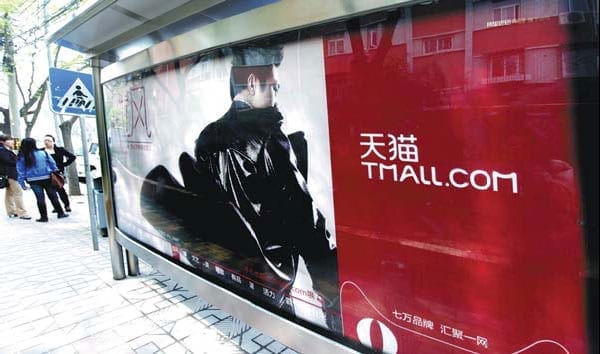
    Giorgio Armani will launch a flagship e-tail store on TMall to sell its high-end cosmetic products in China, the company announced at the end of December last year. It will also partner with Luxury Pavilion, a subsidiary of TMall featuring luxury brands, to provide customers with first-hand, exclusive sales called “TMall Super Brand Days” this month. It seems that in recent years, Western luxury brands have become increasingly eager to join China’s e-commerce platforms.

    So what will the Giorgio Armani-TMall partnership bring about this time? Here are some Jing Daily’s concerns and takeaways:

    More exclusivity?

    In August when the Luxury Pavilion was first launched, only 17 brands, including LVMH’s Zenith, Guerlain and Rimowa; La Mer; Burberry; Hugo Boss; and Maserati, were invited to participate in the platform’s first-phase sales. As for consumers, the access to the Luxury Pavilion was also invitation-only, which means Alibaba has filtered out customers in advance based on their previous transactions on Taobao. The more one has spent on Taobao, the more likely one will be invited to the Luxury Pavilion. Therefore, even though joining TMall may help Giorgio Armani expand its presence in China, the effort might be limited, given that such an e-tail store will only be available to select luxury consumers. Of course, differentiating individual shoppers is the best way to maximize profits and is in fact quite popular in the industry. But doesn’t this also indicate routine profiling and discrimination from the retailer? Will it be a good policy in the long run?

    More convenience?

    Western high-end cosmetics brands usually cost more in China due to import tariffs, and sometimes certain brands are not even available in local brick-and-mortar stores, which forces many Chinese customers to turn to daigou (shopping agents), who go abroad to buy goods to resell in China, for cheaper deals and purchases. By launching a flagship store on TMall, Giorgio Armani will make it easier for Chinese customers to order products directly from its authorized e-retail website – otherwise, these Chinese customers might step up their purchases through daigou in other countries or from other platforms. However, it’s still not clear the pricing Giorgio Armani will offer to TMall customers. If prices are not competitive compared to the price that a daigou can offer, customers may very well avoid using the platform.

    More anti-counterfeiting efforts?

    Despite e-commerce platforms’ relentless efforts to fight against counterfeit goods, it is impossible to make each e-commerce site completely fake-free. Hence, selling products through a flagship store directly from the brand will help provide a quality local resource for Chinese fashionistas – in this case, the Giorgio Armani fans. However, even if Giorgio Armani manages to deal with the fake goods issue, it may still face another challenge: how to combat against counterfeit goods. Look-alike goods are often hard to examine and can exist in all corners of the e-commerce world. For example, Kering, which owns brands including Gucci and Yves Saint Laurent, has filed law suits against Alibaba for allegedly selling counterfeit (note: not fake) goods on the platform.

    More consumers?

    The post-90 generation, who have grown up and matured with mobile technology, is now a driving force for the online luxury purchase industry, according to the latest report on China’s e-luxury market by Secoo and Tencent. Giorgio Armani’s e-tail will certainly cater to such groups, but will it appeal to all customers? Many consumers from older generations still prefer visiting brick-and-mortar stores, especially when it comes to luxury cosmetics shopping. In all fairness, most consumers still want to try on lipsticks or find the perfect foundation color match before any expensive purchase.

  • S. Korea’s service sector investment focused on wholesale

    S. Korea’s service sector investment focused on wholesale

    South Korea’s investment in the service sector has been focused on low value-added areas, such as wholesale, retail and restaurants, official data showed Monday.

    The gross fixed capital formation (GFCF) for the service sector was tallied at 256.1 trillion won (US$239.6 billion) in 2015, the findings by the Bank of Korea and the National Assembly Budget Office showed. This represents a solid 13.9 percent increase to 224.8 trillion won reported in 2006.

    The GFCF refers to the net increase in assets that takes into account both investments and deductions within a set period of time.

    The tally, however, showed investments in high value-added areas, such as cultural and education industries, backtracking.

    From 2006 through 2015, when investment in the service sector shot up the steepest, investment was centered on restaurants and catering, as well as retail and wholesale.

    An injection of funds into this sector reached 18.1 trillion won in 2015, or a 69.2 percent spike from 10.7 trillion won tallied in 2006.

    The increase rate is five times faster than gains for the entire service industry as a whole in the same time period.

    The central bank said the sharp rise has allowed restaurants and catering businesses, and retail and wholesale to make up 7.1 percent of all service sector investments in 2015 from 4.8 percent in 2006.

    On the other hand, investment in the cultural sector contracted 20.8 percent to 7.6 trillion won in 2015 from 9.6 trillion in 2006, with 15.2 percent drop being reported for education-related outlays in the same period.

    Hong Joon-pyo, a senior analyst at the Hyundai Research Institute (HRI), said areas where investment has focused on in recent years is closely associated with self-employed posts.

    “Many people who retire and do not have any skill sets often go into these businesses so there has been a natural rise in investment,” he said.

    The economist said that this trend has led to an over saturation of certain service sectors that has eaten into profits.

    Statistics Korea said operating profits of restaurants and catering industries stood at 13.4 percent in 2015 or down 9 percentage points from five years earlier, while numbers for retail and wholesale correspondingly stood at 5 percent or down 2 percentage points.

    The statistical office said this has led to such stores’ average survival rate three years after opening standing at an average of just 39.1 percent. Such dismal numbers are not conducive to sustainable growth for the economy as a whole.