Author: Mei Ling Tan

  • Arktika Vodka Expands With New Ready-to-drink Line: Launches Unique Fruit Flavours

    Arktika Vodka Expands With New Ready-to-drink Line: Launches Unique Fruit Flavours

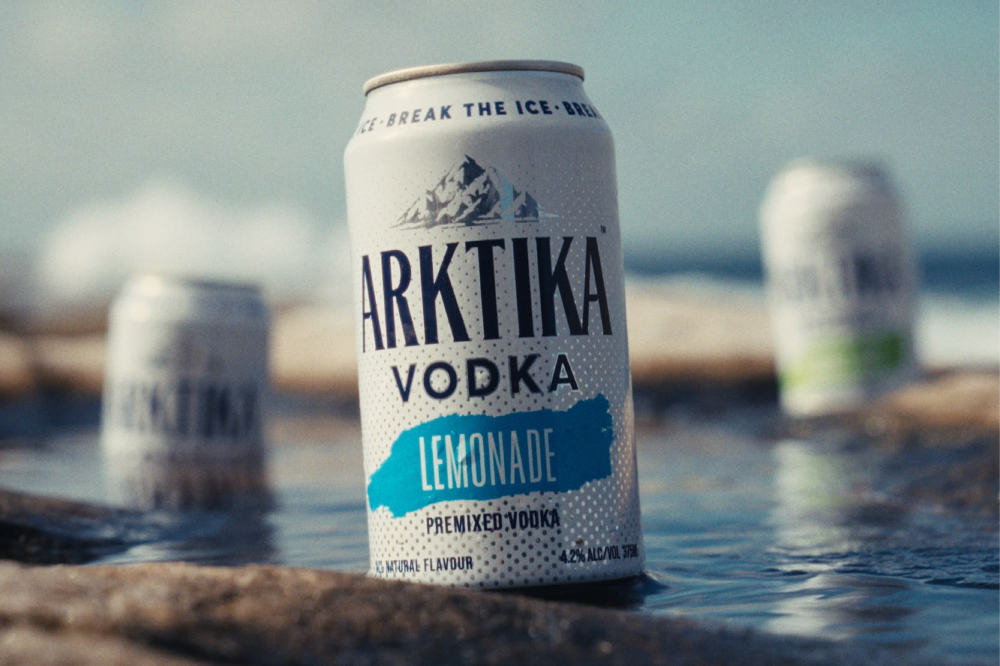
    Arktika Vodka has recently unveiled their new ready-to-drink (RTD) product line. This line features three unique flavours: Raspberry, Lemon & Lime, and Lemonade. By introducing these new offerings, the firm seeks to solidify its standing in the RTD category.

    New Ready-to-Drink Offerings

    In these new offerings, Arktika Vodka has successfully combined their signature vodka with natural fruit flavours to create a distinctive and refreshing beverage. Each flavour promises to offer a perfect balance of sweetness and a clear, crisp profile that is sure to delight the senses. This balance between sweet and clean ensures a satisfying experience for all palates.

    Packaging and Alcohol Content

    The new RTD beverages will be provided in 375ml cans, making them the ideal size for a single serving. They contain an alcohol by volume (ABV) of 4.2 per cent. This moderate alcohol content makes them a perfect choice for casual sipping or for social gatherings.

    Availability and Pricing

    The new Arktika Vodka RTDs are now available for purchase at a recommended retail price (RRP) of $49. They can be found through several national distributors, including ALM and Paramount Liquor.

    Questions & Answers

    What are the new flavours offered by Arktika Vodka in their RTD line?
    Arktika Vodka has introduced three flavours in their RTD line: Raspberry, Lemon & Lime, and Lemonade.

    What is the size and alcohol content of the new RTD offerings?
    The RTDs are available in 375ml cans with an alcohol by volume (ABV) of 4.2 per cent.

    What is the price of the Arktika Vodka RTDs and where can they be purchased?
    The Arktika Vodka RTDs can be purchased for a recommended retail price (RRP) of $49 through several national distributors, including ALM and Paramount Liquor.

  • Uniqlo And Old Chang Kee Unite: A Unique Fashion Fusion Celebrating Singapore’s Heritage

    Uniqlo And Old Chang Kee Unite: A Unique Fashion Fusion Celebrating Singapore’s Heritage

    Uniqlo Singapore has recently announced an exciting collaboration with local food brand, Old Chang Kee. This new venture will see the launch of a unique UTme! collection, beautifully capturing the ethos and heritage of Old Chang Kee.

    A Blend of Fashion and Heritage

    This project, developed in association with local design house Wheniwasfour, uncovers a fresh and engaging perspective on Old Chang Kee’s storied history. The collection incorporates playful illustrations of the brand’s original Rex outlet as well as their signature snack – the Curry’O. The result is a delightful mix of fashion and nostalgia.

    The collection comprises seven distinct t-shirt designs, alongside six unique embroidery options.

    Shared Values and Synergy

    The collaboration between Uniqlo and Old Chang Kee is a particularly significant one, as reflected in the sentiments of Han Keen Juan, the chairman and founder of Old Chang Kee. He emphasized that the alliance was not merely a business venture, but a shared belief in common values.

    Juan expressed that Old Chang Kee, since its inception in 1956, has consistently focused on enhancing the everyday lives of Singaporeans. The brand’s commitment to innovative and top-quality products that cater to individuals of all backgrounds is closely aligned with Uniqlo’s own ethos.

    Accessibility and Exclusivity

    Four of the seven UTme! shirt designs will be available for purchase at all Uniqlo outlets across the country. Alternatively, for those seeking something more exclusive, three additional designs and six embroidery motifs will only be available at UTme! stores. These are located at Orchard Central, Jewel Changi Airport and VivoCity.

    In addition to the Old Chang Kee-themed shirts, the collaboration also offers customization options. Customers will have the opportunity to add personalized touches to other items, including denim pieces and tote bags, using the available embroidery designs.

    The Vision Behind the Collaboration

    Paulene Ong, the Managing Director of Uniqlo Singapore, stated that this collaboration aligns perfectly with their ‘Lifewear philosophy’. They drew inspiration from Old Chang Kee’s commitment to preserving their rich heritage through the training of future generations.

    Ong expressed hope that each design will resonate with both the local community and tourists alike, providing an engaging glimpse into Singapore’s vibrant food culture.

    The Uniqlo x Old Chang Kee collection will be launched in stores and online on October 17.

    Questions & Answers

    What does the Uniqlo x Old Chang Kee collection include?
    The collection includes seven unique t-shirt designs and six embroidery motifs, inspired by the heritage of Old Chang Kee.

    Where can one purchase items from the Uniqlo x Old Chang Kee collection?
    Four of the seven t-shirt designs will be available at all Uniqlo stores across Singapore. However, three additional designs and six embroidery options will be exclusive to UTme! stores located at Orchard Central, Jewel Changi Airport and VivoCity.

    What is the key motivation behind this collaboration?
    The collaboration stems from a shared set of values between Uniqlo and Old Chang Kee. It seeks to combine fashion with tradition and heritage, thereby resonating with a wide range of customers – local residents and tourists alike.

  • Swift & Moore Partners With Otter Craft Distilling For Nationwide Spirits Distribution

    Swift & Moore Partners With Otter Craft Distilling For Nationwide Spirits Distribution

    Swift & Moore, a beverage distributor, has recently formed a collaboration with Otter Craft Distilling (OCD). As part of this new alliance, Swift & Moore will be taking over the nationwide distribution of the Sydney-based distillery’s variety of small-batch spirits.

    Collaboration Details

    In addition to taking over the distribution, Swift & Moore will also relocate some of its spirits production to Otter’s Marrickville facility. This strategic decision is designed to enhance Swift & Moore’s impact in the high-end spirits category, a segment that continues to experience growth in both retail and on-site sales channels.

    Established in 2015, Otter Craft Distilling produces a selection of Australian vodka, gin, and whiskey. The company has built a reputation for its small-scale, hands-on production methods. All their products are made in controlled quantities directly on-site. This collaboration provides the brand with access to Swift & Moore’s comprehensive national sales and logistics network.

    CEO’s Remarks

    “OCD represents the creativity and quality that consumers are growing more interested in when it comes to craft spirits,” observed Michael McShane, CEO of Swift & Moore. He further noted, “This partnership allows us to introduce their exceptional products to a larger audience and persist in driving growth and customization in the premium spirits category.”

    Swift & Moore manages a collection of numerous beverage brands, comprising both local and international producers. The company has gradually shifted its focus towards premium spirits as a key aspect of its growth strategy.

    Distribution Status

    The partnership started immediately, with OCD products being incorporated into Swift & Moore’s national distribution system well before the holiday trading season.

    Questions & Answers

    What products does Otter Craft Distilling produce?
    Otter Craft Distilling makes a selection of Australian vodka, gin, and whiskey.

    What is Swift & Moore’s growth strategy?
    Swift & Moore has gradually been focusing more on premium spirits as a significant part of its growth strategy.

    How will the partnership benefit Otter Craft Distilling?
    The partnership will give Otter Craft Distilling access to Swift & Moore’s comprehensive national sales and logistics network, helping the brand expand its reach.

  • Vietjet Launches 10-Day Super Sale with Up to 50% Off Fares, Free Baggage, and Hotel Perks Across Asia-Pacific

    Vietjet Launches 10-Day Super Sale with Up to 50% Off Fares, Free Baggage, and Hotel Perks Across Asia-Pacific

    Vietjet is kicking off its largest promotional campaign of the year, a 10-day Super Sale featuring discounts of up to 50% off airfares, complimentary checked baggage, and exclusive hotel offers. With an expanding fleet and a growing network across Asia-Pacific, Vietjet continues to make travel more accessible and convenient. For Singapore travellers, this means easy, direct flights at affordable prices to Hanoi, Da Nang, Ho Chi Minh City, and Phu Quoc, perfect for year-end getaways or New Year adventures.

    From 10 to 19 October 2025, travellers can enjoy up to 50% off Eco-class fares (excluding taxes and fees) by entering promo code SUPERSALE1010 when booking on www.vietjetair.com or the “Vietjet Air” mobile app. The promotion applies to Vietjet’s Singapore – Vietnam routes, and other services across its entire flight network, for travel between 1 November 2025 and 27 May 2026 (availability varies by route; excluding public holidays).

    As part of the Super Sale celebration, travellers flying between 1 and 25 November 2025 will also enjoy extra perks. For Eco passengers, Vietjet offers complimentary 20kg checked baggage on all international direct flights from and to Vietnam and 50% off pre-booked hot meals on both international sectors and Vietnam domestic flights. Meanwhile, Business and SkyBoss passengers can enjoy up to 50% off fares across all routes by using promo code LEADER10.

    Adding to the celebration, Vietjet passengers will also enjoy up to 50% off stays at the renowned Furama Resort in the beach paradise of Da Nang, valid for stays until 28 February 2026 (terms and conditions apply).

    As Vietjet has significantly increased flights to Vietnam, with one daily flight on the Singapore-Phu Quoc route and two daily flights on the Singapore-Da Nang route, there’s no better time to start planning your next adventure. With 49 weekly return flights by December 2025, travellers can enjoy authentic experience in Vietnam, from the bustling streets of Hanoi and Ho Chi Minh City to the serene beaches of Da Nang, Nha Trang, and Phu Quoc, or the cultural charm of Hue, Hoi An, and Ninh Binh.

  • Vietnam’s Import-export Turnover Hits Record $680.66b In 2025, Reflecting 17.3% Yoy Increase

    Vietnam’s Import-export Turnover Hits Record $680.66b In 2025, Reflecting 17.3% Yoy Increase

    In the initial three quarters of 2025, Vietnam’s total import-export turnover reached a staggering $680.66 billion, which signifies a 17.3% increase in comparison to the same period in the previous year.

    Exponential Export Growth

    The National Statistics Office released data revealing export figures of $348.74 billion during this period, marking an impressive 16% year-on-year rise. The domestic economic sector contributed 24.5%, or $85.41 billion, to the total sum, reflecting a modest 2% annual increase. Meanwhile, the foreign-invested sector, including crude oil, made a more substantial contribution of $263.33 billion, posting a robust 21.4% year-on-year surge.

    A breakdown of the export data shows 32 items with exports surpassing the $1 billion threshold, accounting for 93.1% of the total export turnover. Notably, seven of these items exceeded a hefty $10 billion each.

    Category Analysis

    Further analysis by category illuminates that manufactured industrial products led the pack, generating $309.03 billion or 88.6% of the total exports. Following this were agro-forestry products, with earnings of $29.51 billion, equivalent to 8.5% of the total. Aquatic products and fuels and minerals contributed $8.17 billion (2.3%) and $2.03 billion (0.6%) respectively.

    Import Increase

    On the other side of the trade coin, imports amounted to $331.92 billion during the same period, reflecting a significant 18.8% increase from the prior year. The domestic sector accounted for $105.67 billion of this total, up 4.6%, while an impressive $226.25 billion, up 26.8%, was attributed to the foreign-invested sector.

    In terms of individual items, 43 surpassed the $1 billion mark, contributing to 92.9% of the total import value. Among these, three items went beyond $10 billion.

    Examining imports by category, production inputs formed the vast majority, accounting for $311.22 billion or 93.8%. The remaining $20.7 billion comprised consumer goods.

    Trade Surplus and Services Trade

    Vietnam registered a trade surplus of $16.82 billion in the first nine months of 2025, according to the National Statistics Office.

    Simultaneously, service exports and imports were estimated at $21.99 billion and $30.29 billion respectively, marking a 19.1% and 16.3% increase year-on-year. This resulted in a service trade deficit of $8.3 billion for the period.

    Questions & Answers

    What was the total import-export turnover for Vietnam in the first nine months of 2025?
    The total import-export turnover for Vietnam during this period was $680.66 billion.

    What sector made the most substantial contribution to Vietnam’s exports in this timeframe?
    The foreign-invested sector made the most significant contribution, accounting for $263.33 billion of the total exports.

    How much was Vietnam’s trade surplus in the first nine months of 2025?
    Vietnam recorded a trade surplus of $16.82 billion in the first nine months of 2025.

  • Nike Franchise Collapse Sparks Debate: Is The Retail Franchise Model Nearing Its Limits?

    Nike Franchise Collapse Sparks Debate: Is The Retail Franchise Model Nearing Its Limits?

    The franchise model has long been an effective method for expanding retail reach. However, the downfall of AF-1, an Australian franchisee that managed seven Nike stores in Sydney, has sparked questions about whether this model is reaching its limits.

    Challenges Facing Franchisees

    Operating costs are increasingly high, consumer demand is unpredictable, and the space for mistakes is shrinking. As global brands evolve at a rapid pace towards direct-to-consumer, data-informed decision-making, and experience-focused retail, franchisees that adhere to older structures and slower cycles are under strain.

    The closure of AF-1 led to more than 110 job losses, immediate store closures across Sydney, and the nullification of all existing store credits and gift certificates. This liquidation took place amidst difficult conditions for Australian retailers and marked the termination of almost twenty years of AF-1’s operations of Nike franchises in Sydney.

    Transformation of the Retail Landscape by 2025

    By 2025, the retail landscape is predicted to have undergone a significant shift, influenced by retailers’ digital integration, changing consumer expectations, and the move towards brand centralisation.

    This shift is indicative of a larger trend towards a centralised brand strategy. Here, the importance of consistency, data ownership, and customer experience surpass the benefits of decentralised franchising. Today’s consumers expect smooth, omni-channel experiences, and maintaining consistent brand standards across multiple franchises can pose a challenge.

    Although the franchise model remains feasible, it is less dominant than before, particularly for brands with the capability and resources to manage their own stores.

    The Potential Advantages of Nike Controlling Its Operations

    If Nike were to take full control of its retail stores, it could unlock significant benefits. This would mean prioritising brand control, customer experience, and data integration over rapid growth through franchising.

    A centralised brand control would enable Nike to offer a consistently premium worldwide experience, from cutting-edge store design to unified customer engagement and merchandising.

    Full ownership of data would give Nike the ability to apply insights from every customer interaction to strategic decisions, enabling a tailored customer experience. The brand would also gain operational agility, quickly introducing new technologies, sustainable practices, or innovative merchandising without dealing with delays from franchise partners.

    Direct ownership would also eliminate the need for profit-sharing with franchisees, allowing Nike to maintain higher margins and control pricing and promotions for maximum value.

    Enhancing the Nike Experience

    For consumers, store ownership by Nike would mean an improved and seamless journey, regardless of whether they are shopping online, in-store, or through the Nike app.

    Store teams directly trained by Nike would provide consistent expertise and premium service. Owned stores could offer exclusive access to unique product releases, customisation experiences, community events, and tech integrations specific to Nike’s brand ethos. The customer would also benefit from increased trust and transparency, with authenticity, ethical standards, and sustainability consistently maintained throughout the shopping experience.

    Questions & Answers

    What are the challenges facing franchisees in the retail industry?
    High operational costs, unpredictable consumer demand, and shrinking margins for error due to rapid changes in retail trends are some of the key challenges faced by franchisees.

    What are the potential benefits if Nike were to fully control its operations?
    Nike could unlock significant advantages such as prioritising brand control, customer experience, and data integration, maintaining higher margins, and controlling pricing and promotions for maximum value.

    What would store ownership by Nike mean for consumers?
    A seamless shopping journey across various platforms, consistent expertise and premium service, increased trust and transparency, and exclusive access to unique product releases and experiences would be the benefits for consumers.
  • Ikea Acquires Us Tech Firm Locus To Reinforce Delivery Services And Optimize Online Shopping Experience

    Ikea Acquires Us Tech Firm Locus To Reinforce Delivery Services And Optimize Online Shopping Experience

    Swedish furniture giant Ikea has announced the acquisition of US-based logistics technology company, Locus. This strategic move is aimed at enhancing Ikea’s delivery services and facilitating a faster and more streamlined online shopping experience.

    The Strategic Acquisition

    The acquisition is part of a broader $2.2 billion strategic investment by the Ingka Group, the world’s largest Ikea franchisee, in the US market. In the highly competitive US retail sector, Ikea is up against major players like Wayfair and Walmart, while also grappling with increased costs due to higher import tariffs.

    While the specifics of the deal have not been made public by Ikea, Locus was valued at $300 million during its most recent investment round in 2021. Ikea’s decision to acquire Locus is projected to simplify its logistics framework and decrease delivery costs by an estimated 100 million euros ($117.41 million) globally each year.

    Utilizing Artificial Intelligence

    Locus employs artificial intelligence to optimize the grouping of orders and define routes that reduce time spent in traffic by delivery vehicles. This is a significant improvement over the current manual planning process carried out by Ikea employees, according to Parag Parekh, Chief Digital Officer at Ingka Group.

    In addition to delivering faster, Locus will also facilitate Ikea in providing customers with more delivery windows and options. Shoppers will also receive live updates on the location of their packages. Initially, Ikea plans to pilot this technology in the US and UK before implementing it worldwide.

    Improving the Customer Experience

    “Apart from the aspect of speed, the flexibility and the ability to track will significantly improve customer experience,” explained Parekh. As part of the agreement, Locus will continue operating independently and servicing clients beyond Ikea.

    Expansion in the US Market

    With a reputation for its large, blue suburban stores featuring an array of furniture in a maze-like layout, Ikea has been shifting its focus towards its online business and investing in smaller city-center stores to attract younger, urban shoppers.

    Online sales constituted 28% of Ikea’s total retail sales in the 2024 financial year, a significant increase from 11% in 2019. This strategic acquisition follows Ingka Investments’ purchase of a Manhattan building for $213 million, indicating a commitment to US expansion, despite higher furniture import tariffs.

    Questions & Answers

    What is Ikea’s aim with the acquisition of Locus?
    Ikea aims to enhance its delivery services and facilitate a faster, more efficient online shopping experience with the acquisition of Locus.

    How will Locus’ technology benefit Ikea’s operations?
    Locus’ artificial intelligence technology will allow Ikea to optimize the grouping of orders and define delivery routes, reducing delivery times and associated costs. It also enables Ikea to offer customers more delivery options and real-time tracking of their packages.

    What impact has the focus on online sales had on Ikea’s business?
    The focus on online sales has significantly boosted Ikea’s retail sales, accounting for 28% of total sales in the 2024 financial year, up from 11% in 2019.

  • Uniqlo’s Bold Expansion In U.s. Amid Rising Tariffs: A Strategy For Success?

    Uniqlo’s Bold Expansion In U.s. Amid Rising Tariffs: A Strategy For Success?

    In the face of ever-changing tariffs and an increase in living costs that have impacted consumer spending, many brands are struggling to maintain a physical retail presence, let alone expand it. However, one international retailer is boldly rising to this challenge: Uniqlo.

    Uniqlo’s Expansion Plans

    This week, the Japanese retail and lifestyle behemoth Uniqlo announced plans to expand its retail footprint in the United States by 2026. The expansion entails the opening of flagship stores in Chicago and San Francisco, and four new locations in New York City.

    Uniqlo plans to inaugurate a total of 11 new stores across the United States in the forthcoming spring/summer season, increasing the total number of its American stores to 89. This is a significant milestone for the clothing titan.

    Uniqlo’s management had previously announced their intention to add between 20 and 30 new locations every year in North America, aiming for a goal of 200 stores by 2027.

    Christine Russo, Principal of Retail Creative and Consulting Agency (RCCA), noted that although Uniqlo is slightly off its projected schedule with its current 76 stores, geopolitical instability and tariffs are likely the cause.

    Russo explained that the timing of Uniqlo’s expansion aligns with the rise of “recession-core”, a consumer behavior trend that emerges during economic downturns. This trend is characterized by a preference for minimalism, with consumers opting for practical, versatile, and durable clothing over more flamboyant items that have a shorter shelf life.

    Uniqlo’s Appeal to Consumers

    Uniqlo has garnered consumer attention with its commitment to steadfast quality, a stark contrast to other fast-fashion brands. The company offers durable basics and a limited number of designs per season, and their dedication to technological innovation is evident in their patented Heatech and Airism fabrics.

    Neil Saunders, Managing Director of Global Data, also believes that Uniqlo’s appeal lies in its commitment to creating sturdy, yet stylish basic wardrobe items. He stated that Uniqlo’s reputation for quality distinguishes it from other fast-fashion competitors, a characteristic that appeals to shoppers who prefer to buy durable items that last.

    Moreover, Uniqlo has made significant efforts to create engaging store environments in its U.S. locations that encourage consumers to browse and make purchases. For instance, several U.S. stores now offer services that were once exclusive to its Asian locations, including custom embroidery and clothing repair services.

    The Brand’s Future Growth

    Despite its success in the U.S. market, Uniqlo has yet to fully penetrate this retail region. Saunders believes that Uniqlo’s expansion plans will allow the brand to establish a presence in larger cities where they can open flagship stores, thus increasing brand visibility and potentially boosting sales volume in the U.S.

    Uniqlo’s unique differentiation points, according to style publications such as Esquire and GQ, include a carefully curated selection of items ranging from innovative products designed to combat extreme temperature variations to the perfect everyday white t-shirt. The brand’s methodical approach to growth and consistency in quality underscore its enduring appeal.

    Questions & Answers

    What is Uniqlo’s expansion plan in the U.S.?
    Uniqlo plans to open 11 new stores across the U.S. in the forthcoming spring/summer season, bringing the total number of its American stores to 89.

    What makes Uniqlo stand out from other fast-fashion brands?
    Uniqlo distinguishes itself with its commitment to quality, offering durable, basic clothing items and a limited number of designs each season. The company’s focus on technological innovation is also prominent, as reflected in their patented Heatech and Airism fabrics.

    How is Uniqlo planning to increase its brand visibility and sales in the U.S.?
    Uniqlo aims to increase its brand visibility and sales by expanding into larger cities where it can establish flagship stores. It also continues to offer engaging store environments and services that encourage consumers to browse and make purchases.

  • Domino’s Japan Welcomes New Ceo Dieter Haberl Amid Leadership Streamlining Strategy

    Domino’s Japan Welcomes New Ceo Dieter Haberl Amid Leadership Streamlining Strategy

    Dieter Haberl has been named as the new CEO of Domino’s Japan business. The appointment, effective from October 20, sees Haberl bring over a quarter-century of executive experience in Japan to the role.

    Haberl has a distinguished history of leadership in the region, having guided the fortunes of prominent consumer brands such as Toys R Us, Reebok, Lacoste, and Furla. He has also held high-level roles within The Coca-Cola Company in Germany and Japan.

    Domino’s executive chairman, Jack Cowin, expressed his pleasure at Haberl’s appointment. He lauded Haberl’s proven ability to drive large-scale transformations, reposition brands, and foster team development in sophisticated consumer-facing operations.

    Cowin emphasized the critical importance of the Japanese market for Domino’s, highlighting its leading status in the pizza sector. He indicated that Japan is an advanced market that values high-quality food, especially from global brands with a proven track record of surpassing customer expectations.

    However, the appointment of Haberl coincides with the departure of the current acting CEO of Domino’s Japan and CEO of Domino’s Asia, Josh Kilimnik. He will be exiting the business on March 30 after a transition period with Haberl.

    Kilimnik’s departure follows the company’s decision to cut down general and administrative expenses by streamlining regional leadership. This strategic move is aimed at giving regional teams more responsibility and accountability. As a part of this decision, Domino’s confirmed that the roles of CEO Asia and the presently unoccupied role of CEO Europe will remain unfilled.

    Questions & Answers

    Who is the new CEO of Domino’s Japan?
    The new CEO of Domino’s Japan is Dieter Haberl, an executive with over 25 years of experience in Japan.

    When will the current CEO of Domino’s Asia, Josh Kilimnik, leave the business?
    Josh Kilimnik, the current acting CEO of Domino’s Japan and CEO of Domino’s Asia, will leave the business on March 30.

    Will the roles of CEO Asia and CEO Europe be filled after Kilimnik’s departure?
    No, Domino’s has decided not to fill the roles of CEO Asia and the presently vacant role of CEO Europe. This decision is part of a strategic move to streamline regional leadership and give more responsibility and accountability to regional teams.

  • Cafe Amazon Retreats From Vietnam: Intense Competition Spurs Strategic Pivot For Centel

    Cafe Amazon Retreats From Vietnam: Intense Competition Spurs Strategic Pivot For Centel

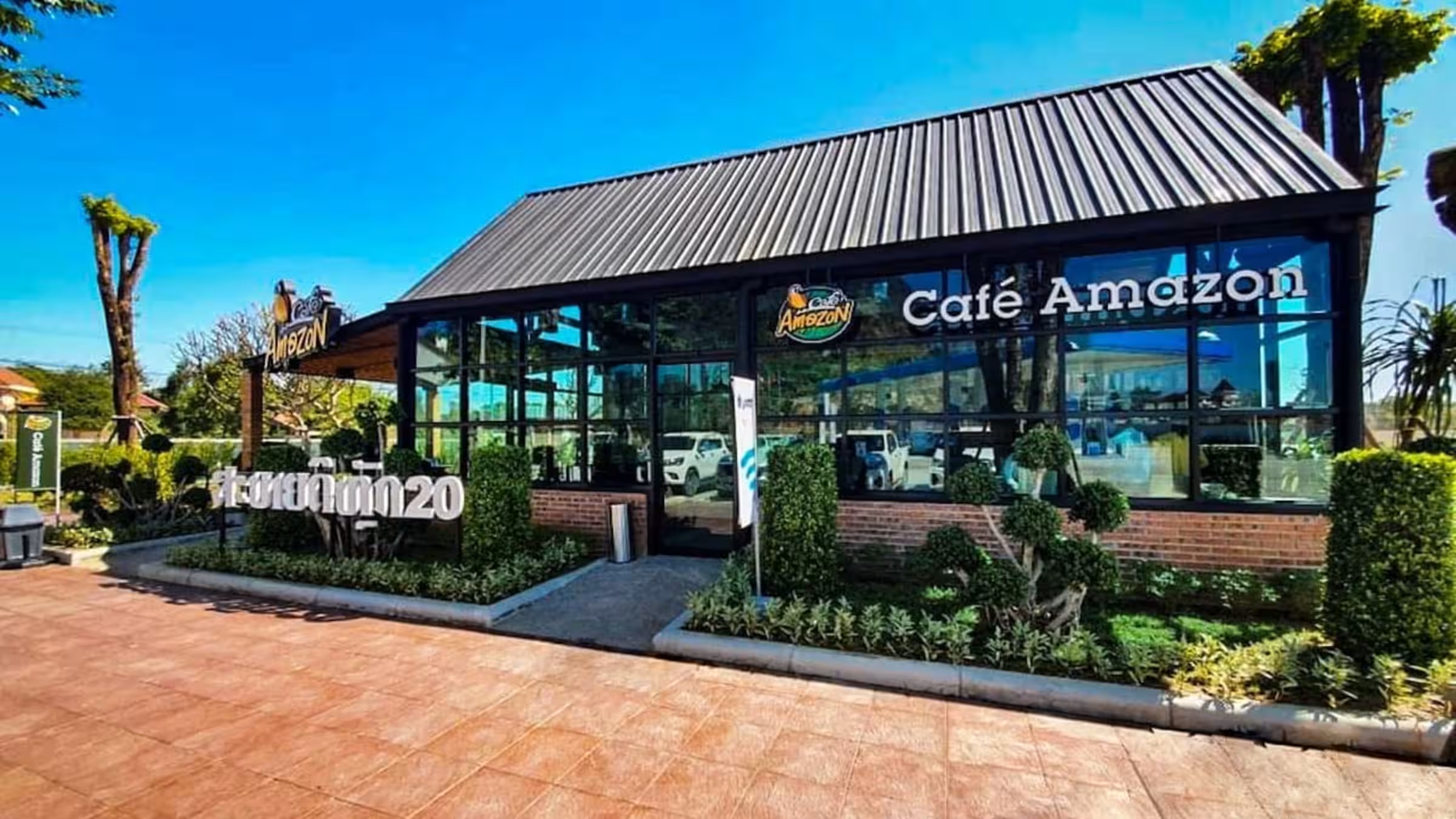
    Thailand’s Cafe Amazon seems prepared to bow out from the local market after a half-decade attempt to square up with local coffee chains. At the forefront of this decision is Central Plaza Hotel Public Company Limited (Centel), who will be stepping away from the Cafe Amazon joint venture in Vietnam. This move indicates a strategic pivot in response to the fierce competitive landscape in Vietnam’s coffee sector.

    Centel’s withdrawal implicates the dissolution of the ORC Coffee Passion Group Joint Stock Company (ORCG), the corporation responsible for the operations of Cafe Amazon within Vietnam. ORCG was a partnership between Centel’s indirect subsidiary, Central Restaurants Group (Vietnam), which owns a 40 per cent stake, and PTTOR International Holdings (Singapore), another subsidiary of the publicly-traded Thai firm PTT Oil and Retail Business, with a 60 per cent stake.

    In an official statement, Centel underscored the necessity to “realign business priorities” and adapt to the pressing challenges in the market. As of the end of August, the company’s investment in the venture amounted to THB 56 million (US$1.72 million).

    This decision marks the end of Centel’s involvement in Cafe Amazon’s expansion into Vietnam, an ambitious initiative that was launched in 2020 with the goal of becoming a top global coffee brand. Unfortunately, the stiff competition from both international and local chains proved to be too daunting.

    Questions & Answers

    What is the primary reason for Cafe Amazon’s exit from Vietnam?
    Intense competition from local and international coffee chains is the main reason behind Cafe Amazon’s exit from the Vietnamese market.

    What percentage of ORC Coffee Passion Group Joint Stock Company (ORCG) does Central Restaurants Group (Vietnam) hold?
    Central Restaurants Group (Vietnam), an indirect subsidiary of Centel, holds a 40 per cent stake in ORCG.

    When did Cafe Amazon originally plan its expansion into Vietnam?
    Cafe Amazon initiated its ambitious expansion into Vietnam in 2020, with the goal of becoming a top global coffee brand.

  • India To Implement Facial Recognition, Fingerprint Verification For Upi Transactions From October 8

    India To Implement Facial Recognition, Fingerprint Verification For Upi Transactions From October 8

    Starting October 8, India will incorporate facial recognition and fingerprint verification as methods for approving transactions carried out through the nationally renowned Unified Payments Interface (UPI), according to insiders with direct knowledge of the situation.

    The authentication process will employ biometric data stored within Aadhar, the Indian Government’s singular identification system, an anonymous source disclosed.

    This initiative comes after the Reserve Bank of India issued new guidelines allowing for alternative means of authentication. This marks a significant shift from the existing system, which necessitates a numeric PIN for transaction verification.

    The National Payments Corporation of India (NPCI), the entity responsible for operating UPI, intends to unveil this novel biometric attribute at the ongoing Global Fintech Festival in Mumbai, stated the sources who requested anonymity due to not being permitted to speak to the press.

    The NPCI has not responded immediately to requests for comment.

    Questions & Answers

    When will the new biometric features for payment approval through the UPI be introduced in India?
    The new features for payment approval which include facial recognition and fingerprint verification will be introduced starting October 8.

    What is the current system for approving transactions carried out through the UPI?
    The existing system of approving transactions carried out through the UPI requires a numeric PIN for transaction verification.

    Who operates the UPI and who intends to showcase the new biometric feature?
    The UPI is operated by the National Payments Corporation of India (NPCI), which plans to debut this novel biometric feature at the ongoing Global Fintech Festival in Mumbai.

  • NTT and Broadcom Team Up to Revolutionize Data Centers with Energy-Efficient Optical Chips

    NTT and Broadcom Team Up to Revolutionize Data Centers with Energy-Efficient Optical Chips

    In a significant move toward sustainable technology, Japanese telecommunications giant NTT has teamed up with U.S. chipmaker Broadcom and other key partners to pioneer optical-based semiconductor packages. This innovative collaboration aims to cut energy consumption in data centers, a must in an era where soaring energy demands are increasingly linked to the rise of generative AI workloads.

    Driving Significant Energy Reductions

    NTT revealed that these groundbreaking devices, set to hit the market next year, could potentially reduce data center power usage by as much as 50%. This prospect is particularly crucial as organizations worldwide grapple with the intense energy requirements posed by AI advancements.

    Harnessing the Power of Light

    The partnership advances NTT’s Innovative Optical and Wireless Network (IOWN) initiative, which seeks to revolutionize information infrastructure through light-based communication technologies. By replacing traditional electrical wiring with optical signals, these new devices promise considerable enhancements in both processing speed and energy efficiency.

    “What counts most is to help society cut the use of electricity,” said NTT President and CEO, Shimada Akira, during a recent press conference announcing the collaboration.

    Forging Ahead in the AI Landscape

    By integrating optical interconnects into semiconductor packages, NTT and its allies aim to deliver processors that enable quicker and more efficient AI computations. The firm plans to supply these advanced products to U.S. companies developing generative AI systems, highlighting NTT’s expanding role in shaping the AI-driven digital infrastructure landscape. This is not just a step forward; it’s a leap into the future for tech processing efficiency.

    Commitment to Sustainable Solutions

    This initiative places NTT at the forefront of a vital global effort to achieve high-performance computing while adhering to environmental sustainability. As data volumes surge, the pressure to balance cutting-edge AI innovation with ecological responsibility has never been greater, and NTT’s efforts are a noteworthy contribution to this ongoing challenge.

    Questions & Answers

    How will the new optical-based semiconductor packages affect data center operations?
    The new packages are expected to reduce energy consumption in data centers by up to 50%, significantly improving efficiency, especially with the increasing demands of generative AI workloads.

    What is the IOWN initiative, and how does it relate to this partnership?
    The IOWN initiative, spearheaded by NTT, focuses on creating a next-generation information infrastructure through light-based communication technologies, aiming to replace traditional electrical systems to enhance processing speed and energy efficiency.

    Who will benefit from the new technology being developed?
    U.S. firms working on generative AI systems will be the primary beneficiaries, as NTT plans to supply these advanced optical devices to bolster their efforts in AI and digital infrastructure.

  • Mumbai Emerges as India’s Thriving Data Centre Hub: A New Era in Digital Infrastructure

    Mumbai Emerges as India’s Thriving Data Centre Hub: A New Era in Digital Infrastructure

    Mumbai is positioning itself as the data centre powerhouse of India, commanding an impressive 40% of the country’s overall capacity and 44% of its active IT infrastructure, according to a recent report by Knight Frank. The city experienced a notable surge in capacity during the first half of the year, increasing by 14.3% and surpassing the crucial 4 gigawatt (GW) mark. Currently, it boasts 591 megawatts (MW) of operational capacity, with an additional 185 MW under construction and a staggering 3.2 GW in the pipeline.

    This remarkable growth is largely fueled by the rapid adoption of cloud technology, stringent data localization mandates, and the burgeoning local sectors of fintech and banking, financial services, and insurance. In fact, Mumbai’s tight vacancy rate of 5.4% starkly contrasts with India’s overall colocation vacancy rate of 12.3%. Impressively, two-thirds of the city’s current construction projects are already pre-leased, indicating a robust demand in the market.

    However, amidst this frenzy of development, Mumbai faces a critical shortfall in capacity for hyperscale deployments. Currently, only three sites are operational that can support such extensive needs, with just one facility offering more than 10 MW of available capacity. This situation creates a short-term shortage for large-scale requirements, leaving enterprises in a scramble for solutions.

    Knight Frank notes that this fragmented supply landscape is opening doors for well-capitalized global players and joint ventures to step in and provide high-capacity facilities, challenging local dominance in the sector. In an industry where the demand for data infrastructure seems to accelerate daily, the race is on for companies to capitalize on Mumbai’s emerging status as a data-driven hub.

    Questions & Answers

    How much of India’s data centre capacity is located in Mumbai?
    Mumbai accounts for 40% of India’s total data centre capacity and 44% of the country’s active IT capacity.

    What factors are driving the growth of data centres in Mumbai?
    The growth is primarily driven by rapid cloud adoption, increasing data localization requirements, and the expansion of local fintech and banking sectors.

    Is there an immediate supply issue for hyperscale data centre deployments in Mumbai?
    Yes, there is a short-term supply tightness, with only three live sites currently equipped to handle hyperscale deployments and just one site offering over 10 MW of capacity.

  • Gold Soars Past $4,000 an Ounce for First Time, Fueling Unprecedented Market Rally

    Gold Soars Past $4,000 an Ounce for First Time, Fueling Unprecedented Market Rally

    Spot gold prices surged by 0.7%, reaching $4,011.18 per ounce, while December gold futures also climbed 0.7% to $4,033.40 per ounce, highlighting the enduring appeal of the precious metal amidst ongoing global uncertainties.

    Gold’s Resilient Rise Amidst Market Turbulence

    In an age marked by instability, gold has solidified its reputation as a reliable store of value. Year-to-date, spot gold has soared an impressive 53%, building on a robust 27% increase in 2024.

    “There’s so much faith in this trade right now, the market is eyeing the next big milestone: $5,000, particularly with the Federal Reserve expected to keep lowering interest rates,” noted Tai Wong, an independent metals trader. Despite potential obstacles such as a lasting truce in the Middle East or challenges in Ukraine, Wong suggests that key drivers like ballooning debt, reserve diversification, and a weaker dollar will persist in influencing the gold market in the medium term.

    The Factors Fueling the Gold Rally

    Gold’s recent rally doesn’t just follow the whims of speculation; it stems from a perfect storm of conditions. Expectations surrounding interest rate reductions, persistent political and economic uncertainties, strong central bank acquisitions, increased engagement with gold exchange-traded funds, and a weakening dollar are all contributing to the precious metal’s ascent.

    As the U.S. government shutdown entered its seventh day on Tuesday, key economic indicators that typically guide market sentiment have been delayed, leaving investors to gauge the Fed’s next moves through alternative data sources. Current projections are pointing toward a 25-basis-point cut during the Fed’s upcoming meeting, followed by another cut in December, igniting further optimism for gold.

    KCM Trade Chief Market Analyst Tim Waterer commented on the backdrop of rising uncertainty: “This pattern of escalating uncertainty is historically known to drive gold prices higher, and we’re witnessing this trend play out yet again.” While lower U.S. interest rates and the government shutdown seem to favor gold, the $4,000 threshold presents a tantalizing opportunity for profit-taking, which could pose a risk in the short term.

    Global Dynamics Driving Demand

    Moreover, a “fear of missing out” phenomenon appears to be propelling the market forward. Demand for gold is further spurred by political unrest in countries like France and Japan. Capital.com analyst Kyle Rodda remarked on how recent developments, such as the election of Sanae Takaichi and the anticipated surge in Japan’s deficit spending, feed into the broader narrative of the “run it hot” trade.

    Looking ahead, analysts anticipate strong inflows into gold-backed exchange-traded funds and continued central bank purchases, bolstered by the likelihood of reduced U.S. interest rates. This outlook has prompted financial giants like Goldman Sachs and UBS to revise their price expectations for gold in 2026 significantly.

    Outside of gold, other precious metals are also seeing upward trends; spot silver has witnessed a 1.3% uptick to $48.42 per ounce, platinum advanced 2.5% to $1,658.40, and palladium rose by 1.8% to $1,361.89, showcasing a vibrant precious metals market across the board.

    Questions & Answers

    What factors are currently driving the rise in gold prices?
    A combination of anticipated interest rate cuts, political and economic uncertainty, significant central bank purchases, inflows into gold exchange-traded funds, and a weaker dollar are fueling the uptrend in gold prices.

    How has the current U.S. government shutdown affected the gold market?
    The ongoing U.S. government shutdown has delayed the release of crucial economic indicators, prompting investors to turn to alternative data to assess the Federal Reserve’s approach to interest rates, which is influencing their confidence in gold.

    What can we expect for the gold market in the near future?
    Analysts predict that demand for gold will remain strong, supported by anticipated inflows into exchange-traded funds and central bank purchases, alongside expectations of lower U.S. interest rates, which could further bolster gold prices over the next few years.

  • Global Currency Shifts: Us Dollar Hits Low Against Vietnamese Dong Amidst International Uncertainty

    Global Currency Shifts: Us Dollar Hits Low Against Vietnamese Dong Amidst International Uncertainty

    On Tuesday morning, the U.S. dollar experienced a decrease against the Vietnamese dong, reaching its lowest point since August 4. Vietcombank registered a 0.02% decrease in the dollar’s value, with a selling price set at VND26,398. Concurrently, the State Bank of Vietnam decreased its reference rate by 0.02%, bringing it down to VND25,141.

    Black Market & Global Currency Updates

    Despite the official figures, the U.S. dollar saw a marginal increase of 0.09% on the black market, where it was trading at VND26,615. Internationally, the yen’s value dipped, reaching a two-month low against the dollar. This change in the yen’s value comes amidst speculation on potential cabinet member appointments after Sanae Takaichi’s party leadership success in Japan.

    In Europe, the euro is in a precarious position following the resignation of France’s Prime Minister. Officials from the European Central Bank have hinted at the possibility of a rate cut. Investors worldwide will be tuned in to speeches from Federal Reserve policymakers later in the day. The anticipation is heightened due to a U.S. government shutdown which has curtailed other data signals.

    Dollar Index & Euro Status

    The dollar index, which measures the U.S. dollar’s value against a selection of currencies, saw an increase of 0.05%, reaching 98.17. Meanwhile, the euro remained relatively stable with a slight fluctuation, settling at $1.1705.

    Questions & Answers

    What was the U.S. dollar’s value against the Vietnamese dong on Tuesday?
    On Tuesday, the U.S. dollar’s value decreased against the Vietnamese dong, with Vietcombank selling the dollar at VND26,398.

    What factors are influencing the yen’s value?
    The yen’s value has been affected by recent political changes in Japan, including speculation regarding potential cabinet member appointments following Sanae Takaichi’s party leadership victory.

    What might be the implications of the French Prime Minister’s resignation on the euro?
    The resignation of France’s Prime Minister has put the euro on a fragile footing. Possible repercussions could include a rate cut, as suggested by officials from the European Central Bank.