Author: Mei Ling Tan

  • Fast fashion competition bursting at the seams in Vietnam

    Fast fashion competition bursting at the seams in Vietnam

    An increasingly wealthy population has global designer brands looking to stitch up the market. Nguyen Minh Ngoc jostles for space in a Mango store as she rummages through a dizzying array of marked-down clothes in search of a perfect blue sweater for the upcoming winter.

    It’s a routine shopping excursion for Ngoc, who admits to spending at least VND4 million (some $180) per month in Mango, Ninewest, Zara, Forever21 and H&M, while ignoring home-grown labels like Nem, Blue and PT2000.

    “I’m more inclined to foreign brands because of their quality. I don’t mind spending more if the quality is better,” the 28-year-old PR worker said.

    In the past, Ngoc either bought clothes on overseas trips or ordered them online. This obsession with foreign brands among young customers like Ngoc has emboldened global brands to open outlets in Vietnam.

    Last month, the opening of Swedish giant H&M’s first store in Saigon attracted around 4,000 shoppers. The firm will open its second outlet in Hanoi on November 11.

    By setting prices for selected items at 15-20 percent less than its stores in Malaysia and Singapore, Zara has triggered a craving for fashion in Vietnam.

    Its cousins, Stradivarius, Pull & Bear and Massimo Dutti, have also dipped into the market of over 90 million potential Vietnamese customers. Other brands like Mango (Spain), and Nine West and Old Navy (U.S.) have also stepped foot into the country.

    Japanese giant Uniqlo and American brand Forever 21 are also expected to arive soon. Fast Retailing, the operator of Uniqlo, began recruiting staff in Hanoi and Saigon in May to launch stores in several cities.

    There are some 200 international fashion brands in Vietnam, accounting for more than 60 percent of the market share.

    Lucrative market

    An increasing middle-class population has made Vietnam a magnet for international fast fashion brands.

    Vietnam’s economy has experienced rapid growth in recent years, and average annual income reached $2,200 last year, according to the World Bank.

    The so-called “middle and affluent class” earning $714 a month or more in Vietnam will double to 33 million people, about a third of the population, by 2020, citing the Boston Consulting Group.

    Customers are well aware of the latest fashion trends and have a desire to buy fast fashion brands, which refer to those that mass-produce and sell inexpensive clothing by rapidly copying the latest trends.

    “The from brands like Mango, H&M and Zara suit me because their designs are simple and modern, and their prices are reasonable,” Le Thu Trang, a student from Hanoi University, said.

    Trang, 22, also likes to wear Zara and H&M clothes. “The two brands occupy nearly half of my wardrobe. When they open outlets in Hanoi, I will definitely visit them,” she said.

    Le Viet Thanh, CEO of local brand K&K Fashion, said some local retailers are worried about international brands penetrating the domestic market. “They are big enterprises with strong financial backing. They have the ability to launch promotions that could stitch up local rivals.”

    Change to survive

    Pham Thai Binh, head of retail at consulting firm Savills, said competition in the local fast fashion industry is heating up, and most of the key players are foreigners. Domestic fashion retailers need to be more sensitive to changes in consumer behavior in order to stay in the game, he said.

    Le Quoc An, former chairman of the Vietnam Textile and Apparel Association, said the entry of foreign brands could be a big challenge to local fashion retailers such as Ninomax, Blue, Foci and PT 2000.

    But in the long term, local brands should be able to hold their own as long as they adopt business strategies with cheaper production costs.

    Echoing him, an industry insider said: “Competition is good for everyone. Local brands just need to step up.”

    The story of how coffee chains Highlands and Trung Nguyen have stood their ground despite Starbucks’ attempted invasion has proved there is room for everyone, he said. Homegrown coffee chains like Highlands and Trung Nguyen have beaten foreign rivals by being more attuned to local tastes and limited budgets.

    Serial shopper Ngoc said that better value would make her rethink her opinion of Vietnamese products.

    “If Vietnamese brands could improve their quality, I would think about shopping at local shops again,” she said.


  • Casino finds itself in royal mess at Vietnam’s top resort town

    Casino finds itself in royal mess at Vietnam’s top resort town

    The owners have reported multi-million dollar losses, blaming a drop in Chinese gamblers visiting Ha Long Bay.

    The company running the only casino in Vietnam’s famous Ha Long Bay appears to have been dealt a bad hand.

    The Royal International Corporation said in a new financial report that its losses in the third quarter had jumped 23 times from a year ago to more than VND69 billion ($3.04 million).

    That added to a VND100 billion ($4.4 million) loss in the first nine months, a fourfold increase from 2016, the company said.

    Most of the losses were incurred by its casino operation, but its villa business also played a small part, it said.

    The casino was opened in 2003 but the business has bled red ink since 2013. The company reported a VND154 billion loss in 2014.

    Managers said most gamblers come from Taiwan and mainland China, but fewer have been showing up of late.

    Vietnam has six casinos that open exclusively to foreigners, and four of them are reporting losses.

    Earlier this year the government lifted a long-time ban on Vietnamese nationals to allow them to gamble in two casinos – one on the southern resort island of Phu Quoc and the other at the Van Don Special Economic Zone in the northern province of Quang Ninh Province, close to the loss-making Ha Long casino.

    Both casinos are under construction.

  • Asia gives Dr Martens revenues a kick along

    Asia gives Dr Martens revenues a kick along

    A strong performance in Asia has helped boost UK footwear brand Dr Martens revenues by 25 per cent.

    Sales in Asia for its latest fiscal year grew by 43 per cent, to contribute £66.4 million (US$88 million) to its total revenues of £290.6 million.

    During the year the company added 18 stores globally, taking its total to 71. In Asia it increased its concessions in South Korea from 44 to 54 and had strong sales in Japan where it has opened five more stores for a total of seven. Two stores were also opened in Hong Kong.

    As well as opening a store in New York City, the brand has launched an experiential concept store in London and upgraded its European headquarters.

    EBITDA was up 27 per cent to £37.5 million from the investment in new stores, e-commerce (where sales grew 54 per cent to £32.4 million) and new products such as its DM’s Lite range.

    Chairman Paul Mason is acting as CEO on an interim basis following the departure of Steve Murray. Owned by European private-equity firm Permira, Dr Martens saw its revenue and profits drop in the previous year, except in Asia where revenues rose 19 per cent.

  • Tigas Alliance opens innovative flagship pharmacy

    Tigas Alliance opens innovative flagship pharmacy

    Tigas Alliance, the pharmacy chain owned and run by Berjaya Pharmacy Retail, has opened a flagship at Plaza Berjaya in Kuala Lumpur.

    Farmasi Tigas Ekspres features an innovative service format that includes health advice.

    With the tagline “A pharmacy you can talk to”, Tigas Alliance focuses on providing consultation services with its own licensed pharmacists, termed #rockstarpharmacists.

    “We believe pharmacists are an essential stakeholder in the partnership with doctors to deliver holistic and effective patient care,” says Tigas Alliance pharmacist/senior manager Jennifer Tan.

    “Our mission is to promote excellence in preventive health consultations.”

    Tigas ensures its #rockstarpharmacists are kept informed of the latest industry guidelines through regular professional development sessions. No appointments are needed for customers at the store’s private consultation areas.

    Pharmacy services include health assessment and monitoring, medicine review, weight management, smoking cessation, family planning and dietary advice.

  • Yes24 testing robot to help out in bookstore

    Yes24 testing robot to help out in bookstore

    Bookseller Yes24 is trialling an autonomous robot, nicknamed Around, at its secondhand bookstore in Busan.

    Its prime job is to collect books that have been read by customers, but it is also helpful for staff members.

    Yes 24 collaborated with Naver Labs for a year on developing the robot as well as an “air cart”, an electric trolley to help staff members move books around more safely and easily. It is equipped with anti-collision features.

    More Arounds and carts will be rolled out before year’s end after the trial and follow-up software and hardware updates.

  • Ikea China pulls commercial after criticism

    Ikea China pulls commercial after criticism

    Furniture retailer Ikea China has apologised and retracted a commercial criticised for allegedly prejudice toward single people.

    Public backlash was aired on social media following the appearance of the 30-second advertisement, with the tagline “Celebrate every day in an easy way”, on Sina Weibo.

    It featured a woman harshly telling her daughter over dinner, “Don’t call me ‘mom’ anymore if you cannot bring a boyfriend home”.

    It then lightened up when the doorbell rang and a young man was revealed holding flowers. The daughter coyly introduced him as her boyfriend, and suddenly Ikea furniture popped up all over the living room. The dinner then turned into a welcome party.

  • Ten Ren milk tea comes to Vietnam via franchise

    Ten Ren milk tea comes to Vietnam via franchise

    Taiwanese milk tea brand Ten Ren to open first Vietnam store next month via a franchise agreement with The Coffee House.

    Nguyen Hai Ninh, co-founder and CEO of coffee chain, says Ten Ren will open 40 stores by the end of 2018.

    “At first, we will sell traditional packed tea, bottled drinks and anchored product – milk tea. Each year we will add more items according to customer demand,” Nguyen says.

    Nguyen believes Vietnam’s milk tea market still offers huge potential, citing Euromonitor data  showing the market was worth US$282 million in 2016 with a 20 per cent year-on-year growth rate.

    The latest entrants to Vietnam’s milk tea market include Yutang, and Vietnamese brand Tocotoco.

    Backed by Seedcom holding group, The Coffee House was founded in 2014, has 64 stores all over Vietnam,with plans to increase to 200 by 2020.

    Ten Ren Tea was founded in 1953, specialises in tea and ginseng products.

  • Lumine Singapore features fashion plus food

    Lumine Singapore features fashion plus food

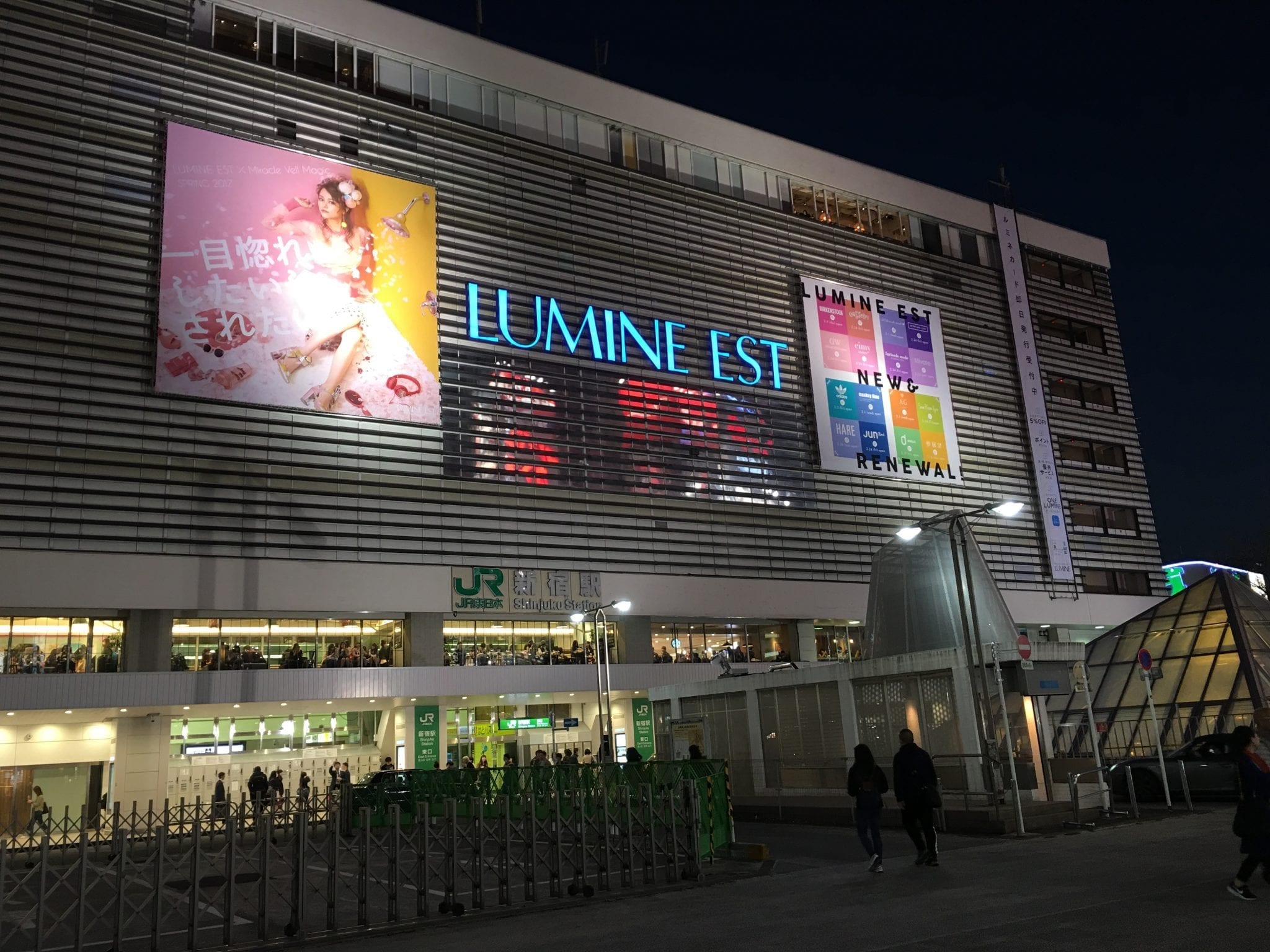
    Japanese fashion and food both feature in the new Lumine Singapore fashion mall in Clarke Quay Central.

    For its launch, in line with its philosophy “I am who I am”, the mall invited Japanese and Singapore personalities known for their individuality.

    “Singapore is an important milestone in our business plan because it is an important gateway to the Asian market and pivotal in positioning the brand on the world map,” says Lumine Singapore MD Naokazu Kozakai.

    With expertise in direct management and subleasing, plus access to more than 2200 tenants in its malls, Lumine intends its Singapore mall to be a platform for Japanese brands to jumpstart their entry in the city and other markets in the region.

    As tipped in July, the 10,000sqft (930sqm) specialty lifestyle store targets independent, sophisticated women, offering the same shopping experience as its 15 malls in Japan. Included is Lumine cafe, which will be run by Create Restaurants Asia.

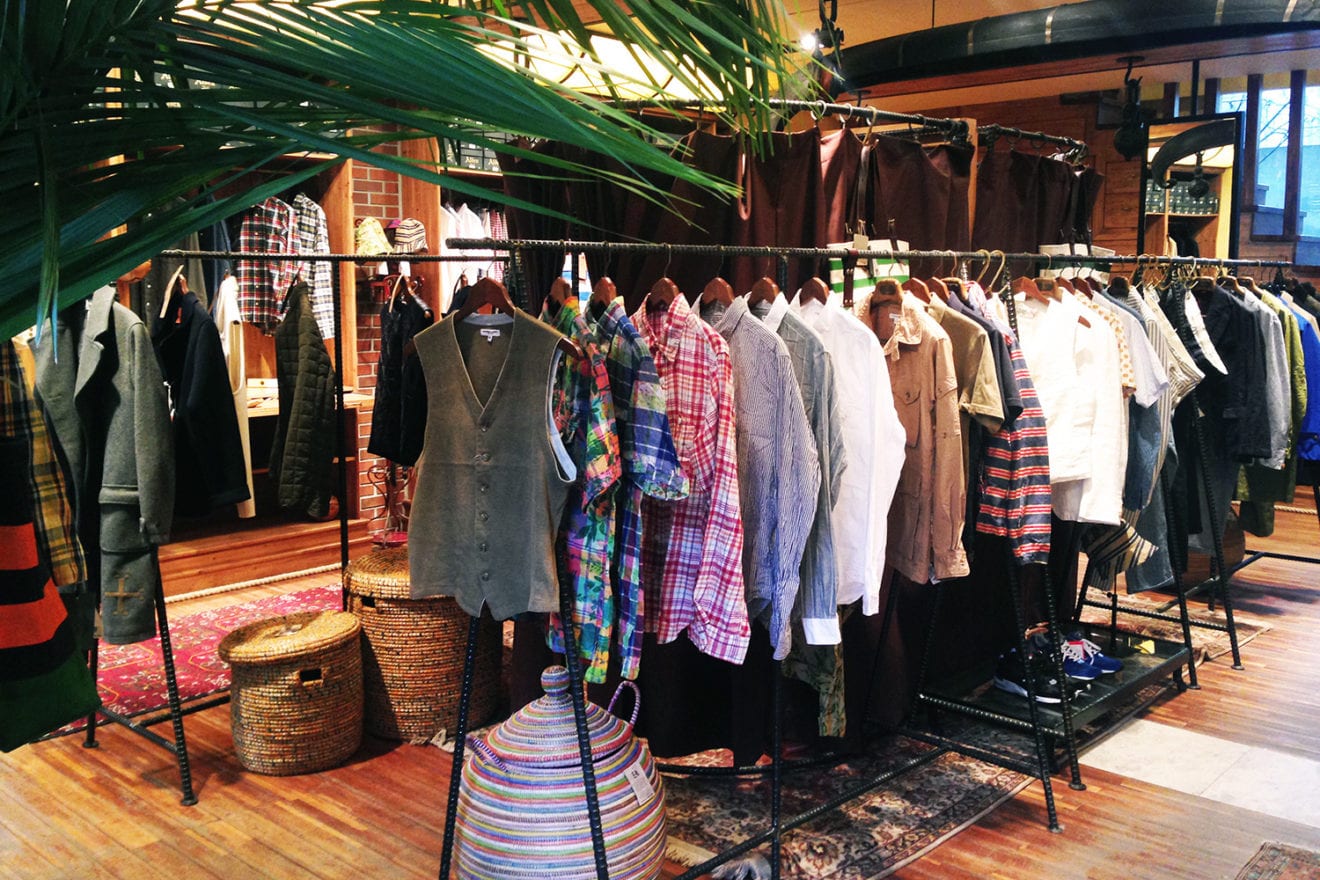
    Lumine Singapore offers a collective of 20 fashion brands that are iconic in Japan including Fray ID, Ien, Lagunamoon, Lily Brown, Mila Owen, Moussy, Sly, Snidel, Spick & Span, Tomorrowland and Ungrid. There are also shoes and accessories from Drama HP France, Le Talon and RoomsShop, plus exclusive Zoff eyewear.

    A brand incubation program is part of Lumine’s business strategy. “We have created a space as a testbed for Japanese brands in the new store called Lumine Lab,” says Kozakai. “It aims to share and explore the diversity in Japanese fashion and craftsmanship.”

    Featuring first in the space are influencer-based Japanese brands including And Couture, Emoda, MercuryDuo, Murua and Rienda.

    Among women attending the official opening were musician/entrepreneur Aarika Lee, entrepreneur Savina Chai, food artist Suwa Ayako, model/DJ Una and musician Yuuki (YJY).

  • Singapore retail rent decline ‘moderated’

    Singapore retail rent decline ‘moderated’

    Fresh research from real estate house Edmund Tie & Company suggests the decline in Singapore retail rents has moderated.

    Dr Lee Nai Jia, head of research with Edmund Tie, says the retail leasing market remained subdued in the third quarter, despite the decline easing.

    “While e-commerce and the accessibility to shopping havens in neighbouring countries continue to affect retailers and the overall retail market, the impact seems contained for now,” he said in a research note.

    “In fact, we see more online shopping portals adopting the brick and mortar strategy, such as Reebonz.

    “Separately, local retailers are engaging consumers via omni-channels.”

    In the short term, Jia predicts food and beverage operators and educational institutions will most likely form the bulk of demand for retail space.

  • Blockchain technology impact stretches way beyond Bitcoin

    Blockchain technology impact stretches way beyond Bitcoin

    Blockchain technology – the foundation beneath Bitcoin – has “immense potential to disrupt and transform the world of money, business, and society” in the years ahead.

    The technology tops a new list of IT projections from Dimension Data, which also cites artificial intelligence, machine learning, robotics, and virtual and augmented reality as having the greatest potential to deliver disruptive outcomes and reshape digital business next year.

    “Companies that have not started the digital investment cycle are at high risk of being disrupted,” says Dimension Data Group CTO, Ettienne Reinecke.

    Blockchain, he says, has gone from strength to strength.

    “Last year, when we looked at the top digital business trends for 2017, we predicted that centralised transaction models would come under attack. We were spot on. In the financial services sector, we’ve seen the US and European capital markets moving onto Blockchain platforms, and similar activity in markets such as Japan. Considering how conservative and compliance-focused this sector is, that’s quite remarkable.

    “It’s ironic that the cybercriminals who perpetrated the recent WannaCry ransomware attack could hold a federal government to ransom and demand to be paid in Bitcoin. Bitcoin might be a crypto-currency, but it’s based on Blockchain, and if cybercriminals are confident that Bitcoin provides a safe mechanism for the payment of ransoms, it indicates just how secure the distributed ledger approach is. I believe that Blockchain has the potential to totally re-engineer cybersecurity, but the industry has yet to come to terms with it,” says Reinecke.

    He predicts Blockchain will also deliver on the promise of Internet of Things (IoT) in the year ahead.  “In the world of IoT you’re generating millions of small transactions that are being collected from a distributed set of sensors. It’s not feasible to operate these systems using a centralised transactional model: it’s too slow, expensive, and exclusive. To extract the true value from IoT technology you have to be able to operate in real time. Once a sensor alert is received from a control system you must react to it, meter it, and bill for it instantly – all of which negates the viability of a centralised transactional authority. The cost of the transaction has to be near-zero or free, and the cost elements of a centralised model simply don’t support the potential business model in IoT,” he explains.

    In 2018, some interesting applications of Blockchain and IoT in the area of cybersecurity will emerge. Significant attacks have recently been launched from low-cost IoT endpoints, and there’s very little incentive for manufacturers of these devices to incur the cost of a security stack, which leaves them extremely vulnerable. Blockchain can play a fundamental role in securing these environments.

    Wireless feeds IoT

    Another exciting trend to look forward to is the boom in new wireless technologies that will enable IoT and bring us a step closer to the dream of pervasive connectivity. Some of these advancements will include 5G and Gbps Wi-Fi, new controls, virtual beacon technology, and low power, long distance radio frequency.

    There’s also a “digital fight-back” coming on the part of certain incumbent players. Established businesses that have proactively transformed into digital businesses, modernised their architectures, and embedded high levels of automation into their operations have a window of opportunity to claw back market share in the year ahead. That’s because there’s been an increase in the number of cloud-born start-ups themselves starting to be disrupted in certain industries.

    “I predict that a number of digitally transformed incumbents will successfully start reclaiming their markets because they have more credibility, longer histories, an established customer base, and assets that can stand the test of time,” says Reinecke.

    Andy Cocks, CTO for Dimension Data Asia Pacific, concurs with Reinecke and adds: “Blockchain has immense potential to disrupt and transform the world of money, business, and society. But, it is the companies that have not started the digital investment cycle which are at the highest risk of being disrupted.”

  • Aerin Beauty introducing its fragrances

    Aerin Beauty introducing its fragrances

    Lifestyle brand Aerin Beauty has arrived in Singapore, introducing its fragrance collection at The Shoppes at Marina Bay Sands.

    Founded by Aerin Lauder, a granddaughter of Estee Lauder, the brand also has beauty and home decor products, which may be introduced later.

    There are nine scents in the collection, each available as eau de parfum sprays or rollerball bottles as well as body creams.

    Each bottle has been designed drawing inspiration from the founder’s everyday life and featuring natural elements such as flowers and stones.

  • Cebu Pacific launches program to train future Filipino pilots in Australia

    Cebu Pacific launches program to train future Filipino pilots in Australia

    Gokongwei-led budget carrier Cebu Pacific Air launched a new program to train would-be pilots in Australia.

    Dubbed the Cebu Pacific Cadet Pilot Program, it seeks to address the airline’s expansion requirements over the next 5 years. The training will be conducted in partnership with Australia’s Flight Training Adelaide (FTA).

    The aim is to train 250 Filipinos who will subsequently join the corps of pilots of Cebu Pacific.

    “Over the next 5 years, Cebu Pacific will be investing $25 million to train 250 cadet pilots to become full-fledged First Officers and eventually Captains. The program will allow us to train homegrown Filipino pilots with best-in-class international standards,” Cebu Pacific chief executive officer Lance Gokongwei said during the launch of the program on Tuesday, October 24.

    Cadet pilots will undergo a 56-week program that features integrated flying training, flight theory, and education courses.

    After completion of the program, the cadet pilots will become First Officers at Cebu Pacific, flying both domestic and international routes.

    The airline will initially shoulder the cost of the training, with payments amortized through salary deductions over a maximum period of 10 years.

    Changing the pilots’ game

    One major reason for the program is to address the need of Cebu Pacific, and the overall aviation industry, for more trained pilots.

    Cebu Pacific vice president for flight operations Sam Avila noted that there are around 290,000 commercial pilots globally this year, while around 440,000 will be needed in 2027.

    Of the estimated 440,000, around 180,000 need to be captains, and some 220,000 expected to be flying have not yet begun training due to prohibitive costs.

    “It’s expensive to become a pilot and there’s no timeline for a return on investment because employment is not guaranteed, which limits the pool of pilots available,” Avila explained.

    He estimated the cost to be around P2 million to P3.8 million for a 12-month course which does not yet include license and certification expenses.

    “This program changes the game in that it is company-sponsored so it broadens the selection pool to provide equal opportunities to qualified Filipinos of all financial means,” Avila added.

    Cebu Pacific said 16 candidates will be chosen per batch, with 3 batches of cadet pilots to be sent to Australia per year.

    The application process begins with an online screening, followed by an on-site screening for core skills and pilot aptitude tests, among other examinations, where a fee of AU$425 or around P17,000 will be charged. Cebu Pacific and FTA will jointly select the final candidates.

    The program is open to all Filipinos who are college graduates, proficient in English, and hold passports valid for at least two years prior to the start of the program.

    The program will start by the beginning of 2018, with the first batch of 16 cadet pilots aimed to be selected by December this year.

  • Tigers to pioneer same day bicycle deliveries for online fashion brand holymesh

    Tigers to pioneer same day bicycle deliveries for online fashion brand holymesh

    Tigers Germany has won the exclusive contract for online start-up fashion brand HOLYMESH in Germany, Austria, and Switzerland.

    The Hong Kong-headquartered supply chain specialist has doubled its Cologne e-commerce fulfilment complex to support HOLYMESH, a favourite with German YouTube influencers.

    Tigers Germany will pioneer a new same day delivery service, initially in Cologne, in order to introduce an efficient, green final mile solution.

    “We are supporting HOLYMESH with both B2B and B2C solutions, including shipping from their production centres in Italy and China, as well as developing bespoke packaging solutions and fulfiling quality controls both at shipping and on arrival at our facility,” said Andreas Niklasch, Managing Director, Germany and Switzerland, Tigers Germany.

    “Each B2C package is a bespoke undertaking, from cardboard packing and label taping, to adding the respective documents, such as autographs from YouTube influencers, and other promotional material.”

    Tigers handles sorting and checking into stock for HOLYMESH, storage, Electronic Data Interchange (EDI) order transfers, in addition to processing returns, quality check Web Map Service (WMS) data maintenance, repacking and relabelling.

    HOLYMESH famously partners with YouTube influencers in Germany to exclusively develop, produce, and distribute clothing and accessories collections.

    “Tigers is a flexible and innovative logistics partner, providing us with the support we need to optimise processes, as our company continues to grow, and the influencer business continues to change rapidly,” said Jasmina Borgard, Managing Director, HOLYMESH.

    Tigers Cologne’s team of 20 has over 100 years’ industry experience, including expertise in e-commerce for fashion brands.

    “Our Cologne e-commerce fulfilment center has doubled in space in less than a year due to increasing demand,” added Niklasch.

    “We offer high flexibility, processing between 200 and 1,500 orders daily, in addition to a dedicated customer service to provide solutions further tailored to each of our customers.”

    “We are planning to launch a same day bicycle delivery service in Cologne, further boosting our offerings.”

    Tigers Germany works with a wide range of industries, including fashion, automotive, industrial goods, pharmaceuticals, and chemicals.

    Tigers recently launched a new rail freight service, Tiger Rail, on the new Silk Road, offering customers a 16-day transit time both east and westbound, between Duisburg, Germany, and Hefei, Chongqing, and Chengdu, China.

  • Tesla cuts Model 3 part orders to Taiwan supplier Hota

    Tesla cuts Model 3 part orders to Taiwan supplier Hota

    Luxury electric carmaker Tesla plans to slash by 40 percent its orders for parts for the new Model 3 mass-market sedan from Taiwanese auto component maker Hota Industrial Mfg from December, according to a media report.

    Shares of the parts maker dropped nearly 9 percent after the Economic Daily News reported, citing Hota Chairman Shen Kuo-jung, that Tesla had told the firm orders would be cut to 3,000 sets per week from 5,000 sets starting December, due to a “bottleneck” in the production of Model 3.

    Tesla may delay scheduled weekly shipments of 10,000 parts in March by a few weeks until May or June, the report added.

    Hota, which makes gears and axles for vehicles, and Tesla did not immediately respond to a request for comment.

    Earlier this month, Tesla said production bottlenecks had left the company behind its planned ramp-up for the new Model 3 sedan. It began production of the model in July.

  • Phee Group brings logistics solutions to Myanmar’s shores

    Phee Group brings logistics solutions to Myanmar’s shores

    Singapore-based, multinational shipping and logistics pioneer, Phee Group, has established Phee Central, a 60,000 square feet logistics centre in Myanmar to cater to a diverse array of logistics needs from businesses in the growing market. It is breaking into this new business segment after having specialised in freight forwarding for over 24 years in Myanmar. This was done with the support of International Enterprise (IE) Singapore, government agency promoting international trade and partnering Singapore companies to go global.

    An investment of US$5 million, the ISO 9001: 2015 and HACCP and GMP certified Phee Central, a multi-temperature storage facility, is situated a mere 25 kilometres from the BSW, MIP and AWP ports and less than 25 kilometres from Yangon International Airport.

    The facility serves a valuable logistics function with the potential to greatly optimise supply chains. Built on 3.2 acres of elevated ground with an around-the-clock security system, Phee Central is equipped with high capacity backup generators to provide an uninterrupted power supply. It is the first of its kind to support a state-of-the-art column-free design that maximises capacity and improves efficiency.

    Phee Central distinguishes itself through delivering a higher standard of reliability matched by advanced technologies. Its Warehouse Management System (WMS) relays live updates of inventory statuses for each client’s warehouse activities. This data is accessible in real-time via web-enabled storage technology, ensuring both reliability and accuracy. Other value-added services include contract logistics, freight consolidation, carrier management, customs brokerage and trade compliance management.

    Ben Phee, group managing director of OV Logistics and Phee Group, said, “It has always been our aspiration to provide a more extensive array of services that offer a peace-of-mind to our clients. With Phee Central, we are not only able to achieve this, we are also able to reduce the wastage of resources and materials due to inadequate storage. Coupled with our temperature-controlled delivery system, we are confident in delivering highly reliable all-rounded logistics solutions for our clients.

    Above all, Phee Central illustrates our commitment to serve the Singapore and Myanmar community. On this note, we are honoured to be recognised by the respective Myanmar authorities for our professional experience and contribution to this country and supported by IE Singapore to realise our commitment of investing and expanding in Myanmar possible more rapidly.”

    Phee Group has been working with IE Singapore on its expansion strategy in Myanmar. Its entry into specialised logistics solutions is timely as Myanmar’s economic reforms and rising middle class have attracted many foreign investments in various sectors of the economy, including food and beverage, hospitality and pharmaceutical equipment and medicines. This brings demand for specialised supply chain solutions such as temperature controlled logistics facilities. As the local logistics infrastructure is still in nascent stage, demand for such services presents opportunities for Singapore logistics companies. Phee Group has risen to bridge the market gaps with its new warehouse, Phee Central.

    Said Law Chung Ming, group director of Transport & Logistics Group for IE Singapore, “It is important for Singapore companies to constantly transform themselves to capture opportunities in fast-growing regional markets such as Myanmar. Having established in Myanmar for over 20 years, Phee has built a firm understanding of the market needs, putting it in a good position to provide specialised cold chain logistics solutions. To build their business in Myanmar, we worked with the company to develop Singaporean talents with specific, customised skill sets in specialised logistics and market-readiness.”

    IE Singapore supported Phee Group by developing a manpower strategy to improving its recruitment, training and retention processes for its operations at Phee Central warehouse. This included market attachments to help their new employees better understand the environment and the cold chain business landscape in Myanmar. Through IE’s support, Phee Group is able to achieve greater regional growth and expansion.

    Headquartered in Singapore, Phee Group crafts unique integrated logistics solutions and practices that are thorough and reliable. Benchmarked to meet the conditions of the Myanmar marketplace, they also effectively resolve complex operations in a simple manner.

    Phee is also looking to partner Singaporean companies to tap onto its logistics solutions, as well as share its insights and networks in the ASEAN market which it has operated in for over two decades.