Author: Mei Ling Tan

  • Telekom Malaysia signs backhaul deal with edotco

    Telekom Malaysia signs backhaul deal with edotco

    Telekom Malaysia has entered an agreement with regional infrastructure services company edotco aimed at providing backhaul services for Malaysian mobile operators’ LTE deployments.

    Under the partnership, Telekom Malayia will provide its next-generation backhaul (NGBH) services for connectivity between operators’ cell sites and their core network at edotco’s ground-based tower sites in selected areas.

    The two companies will also explore opportunities to provide common infrastructure via smart centralized radio access network (smart CRAN) services to allow operators to expand their coverage footprints.

    Malaysia-based edotco provides end-to-end tower services ranging from tower leasing, co-location, build-to-suit, energy, transmission and operation and maintenance. The company operates in Malaysia, Sri Lanka, Bangladesh, Cambodia, Pakistan and Myanmar, and has a portfolio of over 26,000 towers across these markets.

    “Telekom Malaysia is proud to be given the opportunity to fulfill our role as the strategic partner in the country’s economic development. This partnership allows us to share and converge our capabilities towards accelerating Malaysia to be digitally connected,” Telekom Malasia group CEO Dato’ Sri Mohammed Shazalli Ramly said.

    “Telekom Malaysia is also committed to support the Government’s aspiration in providing better broadband access to Malaysians nationwide and further embrace smart solutions by offering next generation services.”

    The collaboration is subject to the signing of a definitive agreement that is expected to be finalized within the next six months.

  • Metro Retail Stores not hurrying with e-commerce

    Metro Retail Stores not hurrying with e-commerce

    Metro Retail Stores Group in the Philippines is planning to open more stores while it continues to mull e-commerce.

    Saying brick-and-mortar stores are still more profitable than online counterparts, chairman/CEO Frank Gaisano reveals that the company plans to open two more stores this year with up to eight more next year.

    He says the department stores and hypermarkets company is seeking to build a synergy between its physical stores and a future foray into e-commerce, citing US e-commerce giant Amazon as also betting on physical retail with its acquisition of Whole Foods.

    “It’s a good mix to have, online at the same time as a physical store. That’s what we are doing right now,” he says. “We’re still getting ready at this point. We’re not there yet.”

    Metro Retail ensures its stores are stocked based on the demands of the location. While Luzon and Visayas stores may both sell jeans, the brands may be different brands, says Gaisano.

    “Millennials want a ‘curated’ selection with not too many choices,” he says.

  • Mixed quarter for CapitaLand Malaysia Mall Trust

    Mixed quarter for CapitaLand Malaysia Mall Trust

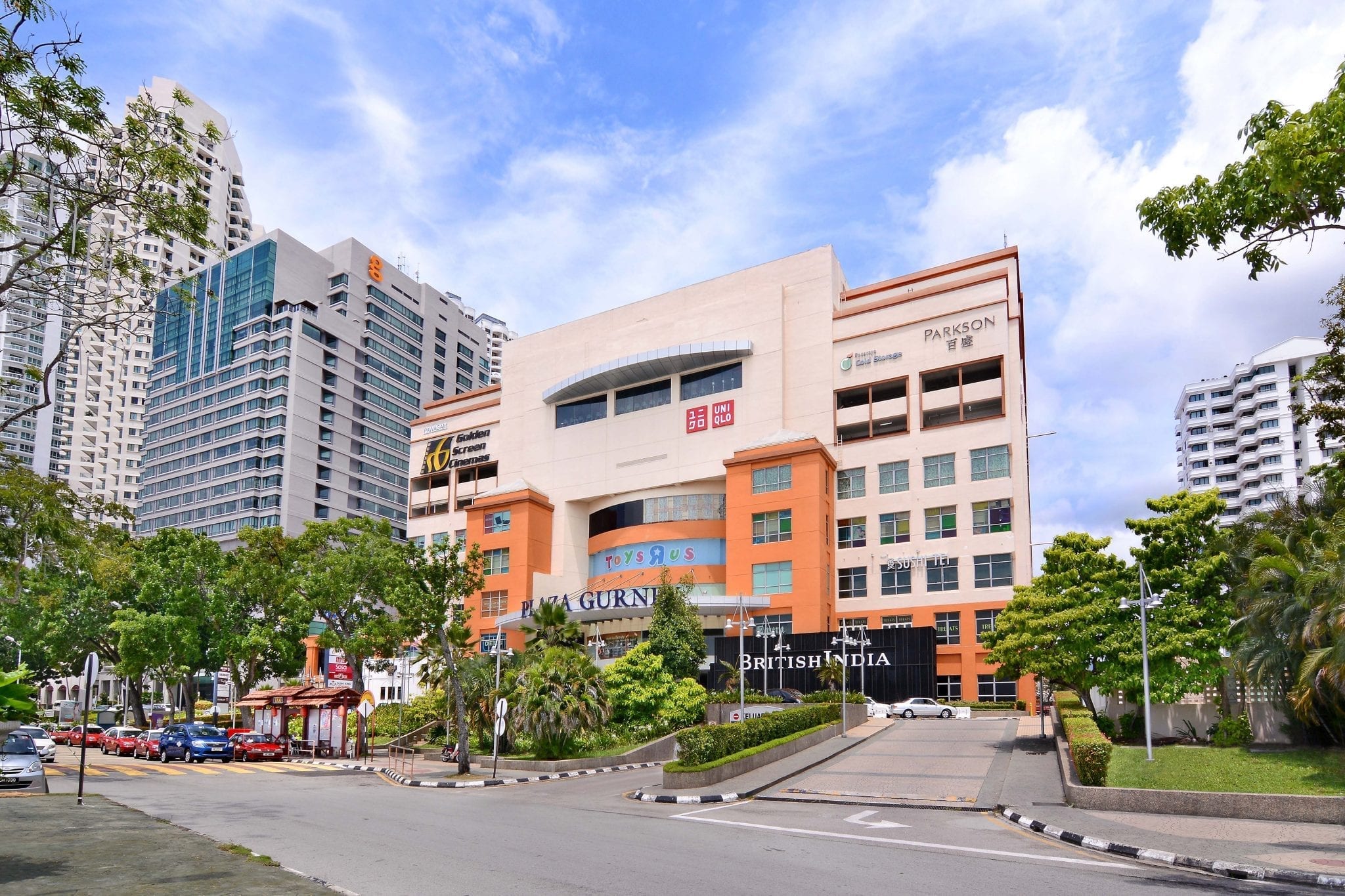
    In a third quarter of mixed results, CapitaLand Malaysia Mall Trust (CMMT) saw its net property income fall 2.2 per cent year on year to RM60.1 million (US$14.1 million).

    East Coast Mall and Gurney Plaza turned in stronger performances to partially mitigate lower contributions from the trust’s Klang Valley shopping malls.

    Cautious consumers and growing competition from new malls have affected Malaysia’s retail sector, says chairman David Wong of CapitaLand Malaysia Mall REIT Management (CMRM), which manages the trust.

    “Our Klang Valley malls continued to be affected by the increased supply of retail space in the vicinity,” says CMRM CEO Low Peck Chen.

    She says a reconfiguration of the basement level at Gurney Plaza to increase the F&B offering is expected to contribute to income from the fourth quarter.

    “At Tropicana City Mall, a Japanese restaurant was added to the standalone F&B cluster

    adjoining the office tower. Another restaurant will join the cluster next month to make a total
    of four F&B outlets, all of which have extended hours past midnight to better meet the needs of consumers.

    “Shoppers at The Mines will also find more shopping and entertainment choices on Level 4 following reconfiguration works.”

    Meanwhile, a rejuvenation of the 40-year-old Sungei Wang Plaza is expected to start soon.

    “During the quarter under review, we organised several family-oriented experiential marketing
    activities to enhance the shopping experience, which drew more visitors to our malls.”

  • Singapore helps boost Swiss watch exports

    Singapore helps boost Swiss watch exports

    Singapore has been a major contributor to a continuing upswing in Swiss watch exports, reports the Federation of the Swiss Watch Industry.

    The value of watches sent to Singapore rose by 89.6 per cent last month, says the federation, mainly because of interest in expensive timepieces.

    As the Hong Kong market recovers, it achieved sustained growth of 13.7 per cent.

    While exports to Japan grew in August, the market lost ground again with last month’s figures tumbling by 15.6 per cent.

    The pace of growth also slackened in China at 1.2 per cent.

    Overall, Swiss watch exports rose for the sixth month in succession, their value last month reaching 1.8 billion francs (US$1.8 billion), 3.7 per cent growth over September last year.

    Among the main categories in value terms, watches in precious metal and steel continued to advance, while there was a sharp downturn in bimetal timepieces, which have been declining significantly for several months, says the federation. Volumes also took a dive.

    More expensive timepieces are in demand, the figures showing an 8 per cent gain in value of exported items costing more than 3000 francs (export price). Those between 200 and 3000 francs showed slight growth.

    However, the exports of cheaper watches have been falling sharply for more than a year, says the federation. Exports of watches priced at less than 200 francs eroded by 18.5 per cent.

  • Hyundai Motor says to consider green car tie-up with China’s local firms

    Hyundai Motor says to consider green car tie-up with China’s local firms

    Hyundai Motor Co says to step up monitoring of possible revisions of South Korea’s free-trade deal with the United States.

    To raise the number of its SUV models in China to 7 by 2020 from 4.

    To consider “flexible” cooperation on green cars with China’s local firms.

  • Red Ant Asia brings toy-shop mascot to life

    Red Ant Asia brings toy-shop mascot to life

    UK toy retailer The Entertainer has teamed with Hong Kong retail technology company Red Ant Asia so its mascot can talk to online customers.

    They can ask the retailer’s mascot Jack (as in the jack-in-the-box toy), dressed as Santa for the occasion, about items available for the festive season. Jack, who can be addressed by either voice or text, also offers Christmas jokes and information.

    Jack also asks two profiling questions – age and price range – so he can provide an appropriate link to The Entertainer’s gift finder.

    Artificial intelligence via natural language processing identifies and classifies customer questions so Jack can give the most relevant response from his database of answers. Human helpers can continuously refine the process.

    “In many ways, Hong Kong is leading the way when it comes to the adoption of AI and conversational commerce, and it is expected to make a significant contribution to the economy over the coming years,” says Red Ant Asia regional director/co-founder Elisa Harca.

    The Entertainer head of online and digital Rob Wood says the company wanted to use Red Ant’s experience to deliver a virtual assistant that ticks all the boxes. “We wanted something fun, relevant and genuinely useful, and Santa Chat is all three. It also paves the way for future connected retail initiatives.”

    Founded in 1981 by husband-and-wife team Gary and Catherine Grant, The Entertainer has more than 130 stores in the UK and six internationally. Its e-commerce platform offers a 30-minute click-and-collect service.

  • China star market for L’Occitane International

    China star market for L’Occitane International

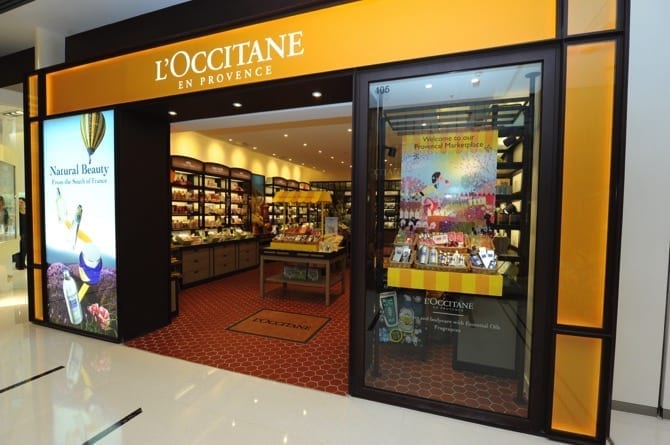
    China led first-half international sales for French beauty products group L’Occitane International with 22.7 per cent growth in local currency and 15.8 per cent in same-store sales.

    This continued China’s sales momentum in the first quarter, and the company credits the growth to a marketing campaign featuring Chinese artist Lu Han.

    T-mall sales continued to grow at triple digits, ahead of plan, while the company’s other e-commerce and online marketplace outlets grew 22.6 per cent to reach 12.9 per cent of total retail sales.

    However, net sales eased by 0.6 per cent from the same period last year to reach €548.2 million (US$648.4 million) at reported rates. At constant exchange rates, sales growth was 1.1 per cent.

    On a like-for-like basis – excluding the disposal of Le Couvent des Minimes and a one-off deal of L’Occitane au Bresil last year – sales grew by 2.3 per cent at constant rates and 0.5 per cent at reported rates.

    Retail sales accounted for 72.4 per cent of net sales, amounting to €397.1 million, down 0.9 per cent at reported rates. At constant rates, growth was 1.1 per cent. This growth was primarily contributed by non-comparable stores and other sales, including new and renovated stores, marketplaces and spa businesses. The growth was 5.2 per cent at constant exchange rates

    The group’s same-store sales eased by 0.1 per cent, an improvement from the 0.6 per cent dip for the first quarter and the 2.5 per cent drop for last year’s first half. This is attributed to China’s sales and overall improvements in key countries.

    Wholesale sales at €151.1 million accounted for 27.6 per cent of total sales, up 1 per cent at constant exchange rates. Like-for-like growth was 5.4 per cent, primarily driven by dynamic growth in travel retail, distribution, B2B and web-partner channels of the L’Occitane en Provence brand. Emerging brands Erborian and Melvita delivered double-digit growth.

    L’Occitane International says it maintained selective openings with five stores added to its network and 78 renovated during the six months to the end of September. During the same period last year, 32 stores opened and 39 were renovated.

  • Amazon sales surge on Wholefoods acquisition

    Amazon sales surge on Wholefoods acquisition

    E-commerce giant Amazon has posted a surge in sales of 34 per cent to $43.7 billion over the last three months.

    Amazon announced profits in the three months to the end of September were $256 million, up from $252 million in 2016. Despite its sales growth, the company’s profits were nearly flat as it ploughed money into tech gadgets, streaming video, data centres and warehouses to support its growing empire.

    The firm also saw an increase in revenue in its profitable cloud services division which exceeded $4.5 billion, up 42 per cent.

    Amazon’s recently acquired upmarket grocer Whole Foods has brought in $1.3 billion in sales for the quarter.

    Upmarket grocer Whole Foods, which Amazon acquired in August, brought in $1.3bn in sales in the quarter. Excluding Whole Foods, the e-commerce giant said sales increased 29.8 per cent.

    The firm has posted a 35 per cent increase in overall sales in North America, which accounts for the bulk of Amazon’s business. They increased 29 per cent in its international division thanks in part to a Prime Day surge, but the unit is still running at an operating loss.

    Neil Saunders, managing director of GlobalData Retail, said Amazon has impressively managed to increase the pace of growth from its online stores, where sales increased by 22 per cent over the prior year.

    “This is the highest rate of growth since the second quarter of 2016,” Saunders said. “A very successful Prime Day, the addition of more customers to the Prime ecosystem, and continued uplifts in spending from both Prime and non-Prime customers alike, all drove the outperformance.”

    “All that said, it is clear that Amazon’s own online stores are no longer the star of the show,” he said. “Both the subscription services arm and Amazon’s web services division (AWS) are outpacing product sales in growth terms.”

    Saunders said the former, which includes Prime fees, grew by 59 per cent and the latter by 42 per cent.

    “In particular, we believe that the growth of Prime will continue to boost subscription revenue in the quarters ahead, all the more so because of the slew of new devices that Amazon is releasing,” he said.

    Saunders said for all Amazon’s undoubted success, there are a few chinks in the behemoth’s armor.

    “The main one of these is profit,” he said. “For the quarter, operating income was down by 40 per cent to $347 million. The dramatic growth of marketing costs, which were partly a function of the Whole Foods acquisition as well as the substantial promotion of new devices, took its toll on the bottom line. Fulfilment and shipping costs also increased faster than sales, although the pace of increase is not quite as bad as feared.”

    International also weighed down on the profit line with a $936 million operating loss during the quarter, Saunders added. This was a sharp increase on the $541 million loss the division posted last year. The launch of new services like Amazon’s unlimited music service in several European countries, and the rollout of Alexa services to India and Japan, have all taken their toll on the cost line. Amazon is still very much in the building stage in many of its overseas operations, and we think profitability is likely to get worse before it gets better. However, this near-term pressure should not be seen in negative terms; indeed, we view it as an investment rather than as an unrecoverable cost.

    “Turning away to Amazon’s latest venture, Whole Foods, we believe it is too early to conclusively say whether this is a success story,” Saunders said.

    However, initial signs are encouraging, and our data show some very slight movements on price perception – these are not dramatic, but they are a step in the right direction and show that Amazon’s approach is being noticed by consumers. Looking ahead, we excited about the possibilities for the Whole Foods business and believe that over the medium to longer term Amazon will make some more radical changes that will deliver stronger results.”

    Overall, Saunders said, Amazon is in very good shape.

    “In some ways, the deterioration in profit doesn’t matter, if only because the business has an enormous amount to show for its expenditure,” he said. “These investments – in services, devices, new ventures, pricing, international markets, and business services – will all power growth in the years ahead.”

  • Alipay, WeChat top China brand relevance index

    Alipay, WeChat top China brand relevance index

    Chinese internet brands are trumping their Western counterparts in China, according to the second China Prophet Brand Relevance Index (BRI).

    Alipay and WeChat came in first and second respectively for the second consecutive year, followed by Android, IKEA and Apple.

    “Chinese consumers today live, work and play in a connected, digital world, so the brands that deliver useful, easily accessible and enjoyable experiences are going to be the most relevant to their lives,” Tom Doctoroff, Senior Partner at Prophet said in a press release.

    “This is our second Brand Relevance Index in China, and Alipay and WeChat dominate once again as the top two brands because they brilliantly use technology to innovate and inspire consumers,” he added.

    BRI is a ranking of the most relevant brands in consumers’ lives. Prophet partnered with research firm SSI to survey 50,000 consumers across the US, UK, Germany and China about 750 brands before deriving the results. The Chinese BRI results is part of this four-country effort, and is the second global survey conducted by the firm.

    Five retail and hospitality brands finished the top 10 listing. They included Nike, Estee Lauder, BMW, Marriott and NetEase Cloud Music.

    According to the Prophet, almost half of the top 50 brands were all technology-led. The rest were significantly invested in digital connectivity, showing that Chinese consumers like brand experiences that occur on demand, across devices and channels.

    “Brands today cannot stay still. They need to earn and re-earn loyalty at every micro moment in the customer journey, again and again. They have to be relentlessly relevant. This is more true in China than anywhere else. The brands that scored high in our Index enjoy healthy long-term demand and a strong bottom line because they are constantly reinventing themselves to satisfy and delight consumers,” Doctoroff said.

    The findings also showed that Chinese consumers are demanding for unique and immersive experiences. Here, brands like Marriott, W Hotel (ranked 11) and BMW dominated through their focus on experience and design.

    Equally important are brands that Chinese consumers to show their individualism. They are increasingly looking to share their unique experiences on QQ (ranked 28), show a greater desire to try on Taobao (ranked 35), test on Meituan (ranked 40) and taste products on Dianping (ranked 41).

    Meanwhile, Chinese consumers are focusing more on music, gaming, entertainment and sporting goods, which make up more than a fifth of the top 50 brands. According to the press release, there is “a growing shift towards prioritizing the balance between emotional and physical wellbeing, instead of focusing on just physical health.”

    Chinese consumers are beginning to embrace the sharing economy. Mobike (ranked 14) and Airbnb (ranked 45) are now taking over spots held by restaurants and airlines. Ofo (ranked 54) and Didi (ranked 87) are just outside the top 50 ranks.

    “It’s clear to be successful, brands need more than size and ubiquity. They must create a product that people love enough to integrate into their everyday lives. The brands that inspire this level of loyalty will ultimately grow the fastest because they are relevant in the moments that matter most to consumers,” Leon Zhang, Partner at Prophet, based in Shanghai, said.

    Apple continued to dominate across global rankings, holding the top positions in the US, UK and Germany rankings. Google was among the top three in the same countries.

  • Nokia launches 5G-ready Smart Plan Suite

    Nokia launches 5G-ready Smart Plan Suite

    Nokia has launched a new real-time charging, policy control and customer engagement suite specifically designed for advanced digital experiences.

    The cloud-native, 5G-ready Nokia Smart Plan Suite uses continuous delivery principles and DevOps automation to stay constantly updated with the latest capabilities.

    The suite is designed to allow service providers to deliver personalized and contextualized offers to enhance subscribers’ digital experiences, and can integrate with webscale offerings including Google’s Mobile Data Plan Sharing API.

    It forms part of a wider monetization portfolio covering mediation, digital sales, real-time decision making and machine learning powered analytics software. Nokiaasserts that the portfolio can help operators increase subscriber campaign take-up rates by more than 400%.

    Nokia president of applications and analytics Bhaskar Gorti said the portfolio is designed to allow operators to engage with their customers in ‘digital time’.

    “This means delivering the right service through the right channel the moment they need it. We do this by providing ‘connected intelligence’ — we connect insights, people, processes and technologies to help service providers monetize their services, push the limits of automation and delight their customers,” he said.

    “Service providers need a new approach if they are to deliver the personalized, contextualized and immediate experiences consumers have become accustomed to from leading webscale companies. Most revenue management systems in use within telcos today are monolithic in nature and weren’t designed to support such modern experiences,” Analysys Mason senior analyst John Abraham commented.

    “The industry needs to adopt a different approach, and solutions based on a cloud-native architecture such as Nokia’s Smart Plan Suite are key to helping CSPs cross the chasm in enabling a new class of innovative and engaging customer experiences.”

  • Telcos must transform service delivery: MyRepublic CIO

    Telcos must transform service delivery: MyRepublic CIO

    Founded in 2011, MyRepublic is best known for being the first ISP in Singapore to launch 1Gbps broadband plans at mass-market pricing. Seen somewhat as a disruptor, the Singaporean brand is now active in 4 markets in the region. Within the next two years, the company has plans for an IPO and already has teams actively looking for partnership opportunities for four further expansions. Potential sites include Cambodia, Myanmar, Malaysia, Philippines and Thailand.

    Eugene Yeo, Group CIO at MyRepublic, has been a part of the company since its earliest days, and started coding when he was in his early teens, he told Enterprise Innovation in an exclusive interview. But “rather than go to university and get a degree in IT, which I felt was not going to value add, I felt that I wanted to foray into something different,” he revealed. Yeo attended SMU to study business administration, which allowed him to learn about managing business, running an organization, and growing a team.

    Early adopters of cloud

    “We are firm believers of using IT as a strategic tool to make sure our company remains innovative and a disruptor, staying ahead of everyone,” said Yeo. “As we grew the company over the last 5 years, we realized that there was a huge potential. The way we do things is very different from the incumbents,” said Yeo. “Embracing open source, embracing technologies out there to help us become more agile and efficient …we realized that there’s huge value in them and that there’s potential to grow the business into something much bigger.”

    As a firm believer of utilizing IT to stay ahead of the competition, MyRepublic adopted cloud technology even before the idea of cloud infrastructure gained wide traction. This significantly differed from other telcos that had invested heavily in legacy infrastructure, according to Yeo.

    They also developed their own business support systems (BSS) and operations support systems (OSS), believing this to be a move critical to their agility as a company. MyRepublic originally adopted public cloud for their BSS and OSS stack, but placed network-critical applications on traditional VMs in their data centers.

    Eventually, their infrastructure evolved to be cloud native. Yeo highlighted: “We really wanted to move to a hybrid cloud infrastructure across the organization and leverage an on-premise private cloud to supplement our public cloud strategy.”

    MyRepublic started their first on premise cloud in Australia, and have now brought it across to their centers in Singapore and Indonesia, moving all core network applications onto the on-premise cloud. Setting their foundations in cloud allowed MyRepublic to scale flexibly and expand rapidly into new markets – taking fewer than 60 days for their Australia and New Zealand markets.

    “Because we already had our foundation set with cloud, for us to be able to scale from 300 thousand [cutomers] to a million to 5 million isn’t really a big challenge”, said Yeo. “Even though we are a fairly young company, we believe in continuous improvement, and we’re actually embarking on our own transformation program internally. We’re embarking on what we call a customer experience transformation within the entire organization – to make sure that customer-centric culture is right at the root of MyRepublic.”

    Emphasis on open source

    Apart from being a firm believer in the cloud, Yeo is also a staunch supporter of open source, and partnered with RedHat to deploy OpenStack earlier this year.

    MyRepublic’s open source journey started when they introduced their engineers to the open source community to kick-start their understanding on how the technology worked, what potential challenges might be faced, and the general sentiment of the community through feedback. MyRepublic started with three engineers – but now with a team of 70 – 80 engineers, Yeo believes the time has come to contribute heavily back to the community.

    “We would have never got to the first version of our software without open source – from open source databases, to open source libraries, workflow engines etc. These actually helped us get to the next level faster,” said Yeo.

    With internet giants likes Facebook and Google being very active in the open source community, there has been massive ratcheting up of input into the open source space over the past few years. To this, Damien Wong, Vice President and General Manager, ASEAN, Red Hat, added: “Innovation is still happening in the proprietary space. I don’t think open source is the only way of innovation, but I think that it has gained such momentum that it cannot be ignored by any organization.”

    The evolving telco industry

    Arguably, the telco industry is traditionally one of the most conservative industries when it comes to innovation, disruption and transformation, Yeo believes. With disruptive technologies such as cloud, open source, 5G, machine learning, and IoT looming on the horizon, the telco industry is transforming to keep up with the times.

    Traditional means of texting and calling are a thing of the past, replaced by alternative platforms – such as WhatsApp, Telegram, and Facebook Messenger – powered by mobile data. The rise of smartphones and the power to consume applications also changes the needs and requirements of customers. In the telco space, it is apparent that telcos are trying to move from being communication service providers to becoming digital service providers.

    “You want services provided by the service provider to be intelligent, relevant, affordable, and accessible – all those attributes have to be there. With all the technologies that have evolved and been created… I think it is quite clear that telcos are moving from hardware-based infrastructure to software-based infrastructure for reasons of agility,” said Wong. “Moving forward, we are going into 5G, and people who can capitalize on that 5G infrastructure are going to be extremely successful.”

    In the shorter term – over the next 3 years or so – telcos need to become very efficient in the way that they deliver their services, according to Yeo. Connectivity is going to become a utility like water or electricity. “It’s not about optic fiber, mobile SIM, etc – people don’t care. In the end, they just want to be connected. That’s really the value proposition and the demand from the consumers. They just want connectivity in the fastest and most affordable way, and don’t care how you deliver it to them. Telcos need to understand that and know how to create the efficiency in that space,” he said.

    “We are moving to the data world, and data is money,” said Yeo. “There will come a day where you don’t need to pay for a SIM card, because your data will already pay for that connectivity. Telcos’ business models have to evolve – I see that telcos are going to start moving towards monetizing the data that they get, figure out how best to innovate using that data, and then use that data to fund the growth of the business.”

  • Telstra adds SD-WAN to Programmable Network

    Telstra adds SD-WAN to Programmable Network

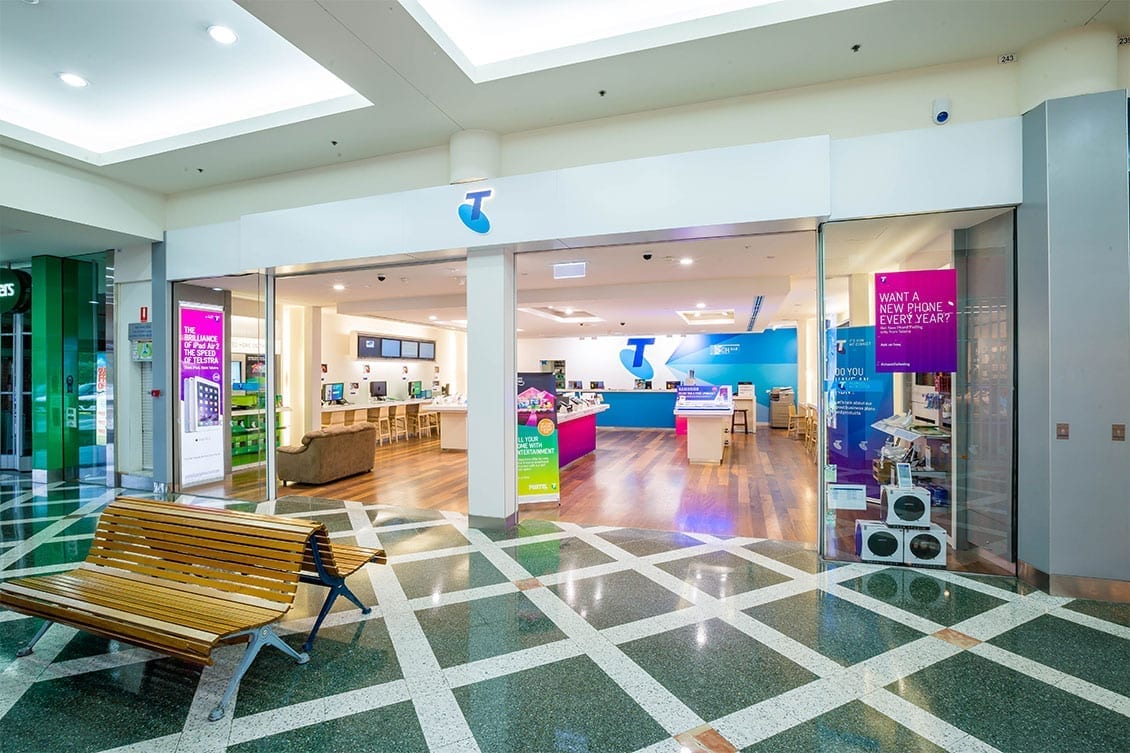
    Australian operator Telstra has expanded the capability of its Telstra Programmable Network service with the introduction of a software-defined WAN (SD-WAN) and virtual branch.

    In partnership with VeloCloud, an SD-WAN provider based in the US, Telstra has introduced the ability for businesses to shift their branch network to the cloud. Telstra announced an investment in VeloCloud through its Telstra Ventures subsidiary in March.

    Business customers can achieve the migration by deploying a  single Juniper Networks Universal CPE device on site and using a marketplace of virtual network functions to self-provision bandwidth and required services.

    “Cloud adoption continues to grow and new WAN architectures such as Hybrid and SD-WAN are rapidly evolving. We are unlocking this technology for our customers who depend on having the fastest and most highly available digital experiences possible,” Telstra Global Products executive director Michelle Bendschneider said.

    “Businesses need to constantly adjust in a rapidly evolving technical world, so we really looked at this release from a customer’s perspective with flexibility front of mind. The addition of SD-WAN provides a more intelligent layer to that flexibility, enabling customers to do more with their network as they digitally transform their business and scale and deploy additional applications when and where they need to.”

    She said Telstra plans to offer both VeloCloud SD-WAN as a virtual network function and SD-WAN as a more traditional physical solution in recognition of the fact that there is no one sized fixed all approach to business networks.

    The Telstra Programmable Network is available in over 30 countries in Asia, EMEA and North America.

  • Smiths City puts off capital return again

    Smiths City puts off capital return again

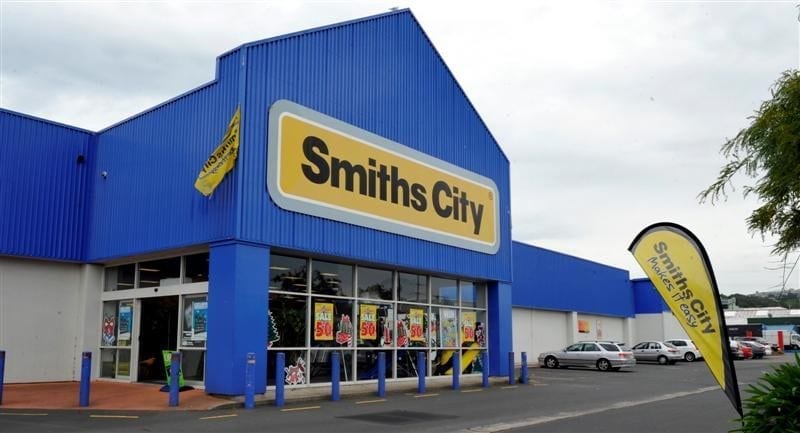
    Smiths City Group has delayed a planned $5.7 million capital return to shareholders a second time as increasingly tight trading conditions prompted the retail chain to downgrade its first-half earnings outlook.

    Christchurch-based Smiths City won’t consider the capital return until 2018 as stiff competition and the need for more investment in its transformation programme led the board to maintain a more conservative capital structure.

    The retailer already delayed plans to pay 72 cents per share in a compulsory acquisition and cancellation of three shares in every 20 over outstanding regulatory issues, having first floated the return in June.

    The retail environment has attracted strong competition, especially in consumer electronics, digital products, and whiteware.

    Smiths City said revenue will likely fall 3 per cent in the six months ending October 31 from the $113.9 million reported a year earlier, implying first-half sales of about $110.5 million.

    “We expect group profitability to be lower than the same six months last year, with a weaker retail performance partially offset by a strong performance from our finance operations,” chair Craig Boyce said in a statement.

    “In the face of these challenges, it is appropriate the company maintains a more conservative level of gearing. The Smiths City board has resolved to review the position during the 2018 calendar year.”

  • Miele Hong Kong joining Redress in clothing drive

    Miele Hong Kong joining Redress in clothing drive

    Miele Hong Kong, the appliance brand, is joining forces with environmental charity Redress in a bid to challenge residents to be less wasteful with unwanted apparel.

    It is using a citywide clothing drive from November 6 to 19 to re-direct wardrobe items away from landfill and back into the fashion loop.

    While new studies suggest that more than 60 per cent of Hong Kong residents now consider recycling their clothes, 111,690 tonnes of textiles are still being dumped each year. This means that about 15,000 garments or textile items go into landfills every single hour

    The Get Redressed x Miele Clothing Drive is seeking donations of used clothing, shoes and accessories that will directly benefit such charities as Christian Action, Friends of the Earth (Hong Kong), Green Ladies and Green Little of St James’ Settlement, Pathfinders and the Tung Wah Group of Hospitals.

    High-quality clothing and accessories will be sold at the Get Redressed charity/secondhand pop-up shop from November 22 to 25 to raise funds for Redress, enabling it to continue its 10-year legacy of cutting waste out of fashion.

    Partner locations where donations can be left include Caelum Greene in Central, the Miele Experience Centre in Lee Garden Six, and PizzaExpress outlets in K11 Art Mall, V City and Yoho Mall.

    Miele Hong Kong marketing director Richard Green says the company sees the importance of sustainability and is keen to promote laundry care through a holistic approach, including motivating consumers to keep their clothes in use for longer.

    Redress hopes to raise consumer awareness of the importance of clothing care to keep garments in active use longer. It says that extending the life of clothing by nine months is estimated to reduce carbon waste and water footprints by around 20 to 30 per cent each.

  • 7-Eleven pays out $150 million to staff

    7-Eleven pays out $150 million to staff

    About 3600 7-Eleven workers have been paid out $150 million since revelations of under-payments and poor record-keeping.

    A Senate committee heard on Wednesday the “compliance partnership” between the Fair Work Ombudsman and 7-Eleven was yielding results.

    Ombudsman Natalie James said 10 matters were before the courts.

    An agreement struck in 2016 also included installing and overseeing biometric shift-scanning systems and the introduction of 7-Eleven-owned CCTV at all outlets to allow head office to monitor employee hours and make sure workers were paid correctly.

    The Ombudsman has also written to pizza chain Domino’s about underpayments.

    “We have some outstanding issues around information we have requested,” James said.

    Last week, 7-Eleven said it supported the Ombudsman’s investigation into a Brisbane franchisee.

    The franchisee allegedly sought repayment of accrued annual leave that had been paid to the employee, then dismissed the employee when these requests were refused.

    7-Eleven conducted its own investigation into the allegations, which was unable to find a level of evidence required for the company to take its own action under the industry codes.