Author: Mei Ling Tan

  • Vietjet and Qatar Airways sign Interline Agreement

    Vietjet and Qatar Airways sign Interline Agreement

    Vietjet recently announced a two-phase interline partnership with Doha – based Qatar Airways. The first phase which came into effect this September will enable Qatar Airways’ passengers to travel to and from points in Vietnam and in Taiwan served directly by Vietjet; the next phase will soon allow Vietjet’s passengers to fly to more than 150 points around the world served by Qatar Airways using a single reservation system that serves both airlines’ networks.

    Qatar Airways Group Chief Executive, Mr. Akbar Al Baker, said: “We are delighted to welcome Vietjet to our growing roster of interline partners as they allow us to provide a more seamless experience for our passengers. The new agreement with Vietjet will offer our passengers even more choice, providing them an easy connection in Ho Chi Minh City or Hanoi before transferring to their Qatar Airways flights.”

    Vietjet Vice President, Ms. Nguyen Thi Thuy Binh, said: “This partnership is a pillar of Vietjet’s strategy to diversify our services with an aim at offering our passengers travel opportunities to points all over the world. We will continue to partner with other airlines based on advanced technology platforms to better benefit our passengers.”

    Qatar Airways is commencing two non-stop operations connecting Hanoi and Ho Chi Minh City with Doha with frequencies of double daily flights and ten weekly flights, respectively.

    Previously, Vietjet and Japan Airlines agreed to codeshare/interline on their flights between Japan and Vietnam, their domestic services and their flights between Vietnam and other Asian countries. The two carriers also cooperate in various areas including a frequent flier partnership, aircraft operations and maintenance, and ground handling services and training.

  • Over 500 already signed up as Amazon hosts first Aussie summit

    Over 500 already signed up as Amazon hosts first Aussie summit

    Amazon will host a marketplace seller summit in Sydney with hundreds of Australian businesses set to attend to receive advice on selling through the e-commerce giant’s platform.

    Over 500 Australian sellers already registered to sell on Amazon Marketplace in Australia.

    In a recent webinar with potential sellers, key account manager, Brittany Rinker, said the company aims to launch Marketplace by late 2017 or early 2018, though she emphasised that this is not an official launch date.

    She said Amazon is currently focused on getting businesses signed up and creating listings on Marketplace, which represents over 50 per cent of all items sold on Amazon websites globally.

    The free half-day event will provide practical guidance on setting up and growing a business online, and is being run in partnership with the Australian Retailers Association (ARA) and small business network, the SME Association of Australia (SMEA).

    “The internet and technology have the power to level the playing field between big and small businesses, empowering Australian companies, large and small, to grow their sales and their business online,” said Rocco Braeuniger, Australian country manager, Amazon.

    “We look forward to enabling local businesses to make their products available to a wide audience, not only in Australia, but also worldwide.”

    The event at Jones Bay Wharf in Sydney will feature keynote presentations from Braeuniger, and head of Amazon Marketplace in Australia, Fabio Bertola, as well as insight from experts and entrepreneurs.

    “Amazon launching in Australia marks an exciting time for Australian entrepreneurs,” said Adam Mills, CTO and founder of Australian business KoalaSafe, which has seen incremental year on year growth in sales, with Amazon Marketplace being its biggest channel. Mills will be presenting at the Seller Summit, sharing his experience and best practice.

    “For those who are selling physical products, Amazon provides a great opportunity to get these products in front of customers and we encourage businesses to take full advantage.”

    Russell Zimmerman, executive director of the Australian Retailers Association said Amazon’s arrival brings new possibilities to Australian retailers, small and large.

    Mark Flack, board member, SMEA added that the “reality is that there’s a lot of education that needs to happen amongst the small business community when it comes to being digitally savvy and using the right tools to take their business to the next level.”

  • Supermarket marches out machines for VendMart

    Supermarket marches out machines for VendMart

    In a double pop-up, supermarket chain Giant has clustered 17 vending machines at its new VendMart outlet at Tampines, with another five at its IMM branch in Jurong.

    On trial until the end of the year, the cash (and cashless) machines mainly offer food and snacks but also grooming products, toys and beauty items.

    For the hungry, the machines offer ice cream (picked up by a claw crane, from Happy Ice), salted egg prawn tempura popiah (from Mr Popiah), Japanese canned oden (Ninja Oden), healthy snacks (BoxGreen), herbal teas (JuicyFresh by Royal Vending) and pizza by the slice (Shiok Pizza).


    There are toys from Star Wars and the DC and Marvel comics franchises, from Tenacity Toys, while Bus Carnival offers the chance to scoop up soft toys with a claw.

    Other vending machines dispense more unusual items such as men’s grooming products by SGPomades, halal items such as teas, essential oils and headscarves by Vibes Mastery, DIY gardening kits and seedlings by Farmily, and even fish food by Dajana.

    Giant has  also created its own $10 “mystery box” vending machine with such catches as shopping vouchers, household appliances and kitchen gadgets – plus one lucky person will go home with a new iPhone 8.

    Most of the brands on display are local start-ups, and if the response is good the vending machines may have their stay extended to Chinese New Year.

  • Tips For Packaging And Transporting Goods

    Tips For Packaging And Transporting Goods

    It’s important to be cautious when transporting products. Just one dropped box could cause a lot of problems for you. If you’re careful about how you pack, you’ll be able to protect your items from the challenges ahead.

    These simple and effective tips will help you to keep your products safe.

    Make Sure Your Pallet Can Support The Items It’s Carrying

    It’s important to properly secure any items you are transporting to the pallet beneath them.

    You also need to confirm that the pallet can fully support the weight of the items.

    Ideally, there should be several centimeters between your goods and the pallet’s edge. You should never have items hanging over the edge of the pallet.

    Make sure there are no loose nails or planks.

    Stainless steel banding will help ensure things on the pallet are kept strongly in place. It prevents movement and limits the chance of problems. A lot of companies recommend Reid Brothers UK – stainless steel banding as they find it to be of excellent quality.

    If the goods are stacked too high, or if the pallet seems heavily weighed down, you may

    Properly Protect Any Bulk Bags That Are Being Transported

    If you’re transporting bulk bags, such as bags of feed or flour, you should make sure you protect them.

    If you place the bags directly on a ballet, they could wind up tearing. If there are gaps between the planks, the bags could wind up falling through those cracks. It’s a good idea to place a carton on top of the pallet before you load the bags up.

    That way, you can keep your bags secure and safe.

    Make sure the carton carrying the bags isn’t too close to the edge of the pallet.

    Take Advantage Of Plastic Wrap

    You never want to ship out boxes that are unassembled.

    Plastic wrap can help you to consolidate the parts you are shipping out. It can also keep boxes from becoming misplaced during the shipping process. Make sure you wrap the boxes several times over.

    If the boxes are wrapped securely, you won’t have to worry about them slipping off of the pallet.

    You should start wrapping from the bottom. From there, you should layer over half of the wrap at each turn.

    You should wrap the pallet a few times over. Make sure that all of the boxes, including the boxes at the very top, are fully covered.

    Provide Instructions As Needed

    Carriers unload thousands upon thousands boxes each day. If you have special needs, you’re going to have to make sure you properly convey them. You should include labels that will help carriers transport your boxes properly.

    Examples of the kind of labels you should use include “This Side Up,” “Fragile,” or “Do Not Stack” labels.

    You should use a bright color like orange for the labels; this will ensure that they are easy to spot. You should also use a large, easy-to-read font.

    Additional Packaging Tips:

    What sort of information should be included on packaging?

    You’ll want to have the destination and the origin point clearly printed on the box. If you’re transporting hazardous materials, you’ll need to make sure you use the proper identification.

    Are there additional steps you need to take if you are shipping goods from or to the United States?

    While transporting items to the United States can be more complex, we recommend that you follow the same basic advice.

    Can a driver refuse to ship out goods that are packaged improperly.

    If you ask a driver to transport unsecured merchandise, they have the right to refuse. Improperly secured merchandise can put the other items that driver is transporting at risk. If you are shopping out something that can’t be fully secured, such as a snowmobile, the driver may write something like “Bourret not responsible for damages” on the bill.

    Looking For Additional Tips?

    If you’re dealing with a problem or have additional questions, get in touch with us as soon as you can. We’d be happy to help you securely ship out your cargo!

  • Velox launches cloud PBX in Singapore

    Velox launches cloud PBX in Singapore

    Singapore startup Velox Networks has launched a new VoIP and cloud based private branch exchange (PBX) communications platform.

    Velox said the deployment will allow it to offer end-to-end communications services at a fraction of the costs charged by the incumbents – the company is promising business customers prices up to 95% lower than prevailing rates.

    The company has developed a customizable business communications platform               with functionalities including voicemail to email, groups, IVR and real-time updates on telecoms expenditure.

    The Velox mobile application will route landline calls to data connected mobile phones and customers will be able to port their current DID numbers to the Velox network.

    “Velox Networks aims to remove impediments to free-flowing communications with technological solutions so our customers can focus on relationships, ideas and growth, not on getting technology to work,” Velox founder and CEO Martin Nygate said.

    “With the internet as our network, no physical infrastructure and lean manpower requirements, Velox Networks is raising the bar for quality, inexpensive telecommunication services in Singapore.”

    He said Singapore and the wider region are lagging behind the US and Europe in the adoption of cloud-based PBXs, and are still relying on physical PBXs for their business communications needs.

  • Claudie Pierlot sees Asia as ‘next growth vector’

    Claudie Pierlot sees Asia as ‘next growth vector’

    After consolidating its presence in Europe, fashion label Claudie Pierlot sees strong potential in Asia, particularly China.

    It is the smallest of the three labels owned by SMCP group, with Maje and Sandro already well established. Claudie Pierlot joined the group in 2009, and in the past three fiscal years has grown sales by nearly 30 per cent. It topped the €100 million revenue mark last year.

    Accounting for 16 per cent of the group’s total revenue of €786 million (US$933 million) last year, the label is expected to increase by yet another 30 per cent this year.

    Claudie Pierlot is opening between 20 and 30 retail outlets a year, half of them ‘corners’ and half monobrand stores, most directly owned. This rate of expansion has brought the label’s total network to 200.

    Claudie Pierlot GM Isabelle Allouch says the label is already growing in Asia given its style and accessible luxury positioning.

    After being acquired by Chinese group Shandong Ruyi, SMCP has a solid infrastructure in the region and is pushing hard to speed up brand development there. As a result, Claudie Pierlot has opened 10 stores in the past 12 months, in Hong Kong, Mainland China and South Korea.

    More stores are expected to follow in each of these countries on account of SMCP’s impending stock exchange listing. “The region is clearly our next major growth vector,” says Allouch.

    Claudie Pierlot was previously established in Japan, thanks to partnerships set up by its founder before the label was bought by SMCP. “We are entering countries one by one, so we will first concentrate on China. Japan will come later,” says Allouch.

    As well as working on its retail network, the label is also busy in the accessories category, which it wants to grow to become 10 per cent of the business. As well as footwear, it last month added a signature handbag to its product line.

  • DHL continues IoT drive with latest Huawei pilot

    DHL continues IoT drive with latest Huawei pilot

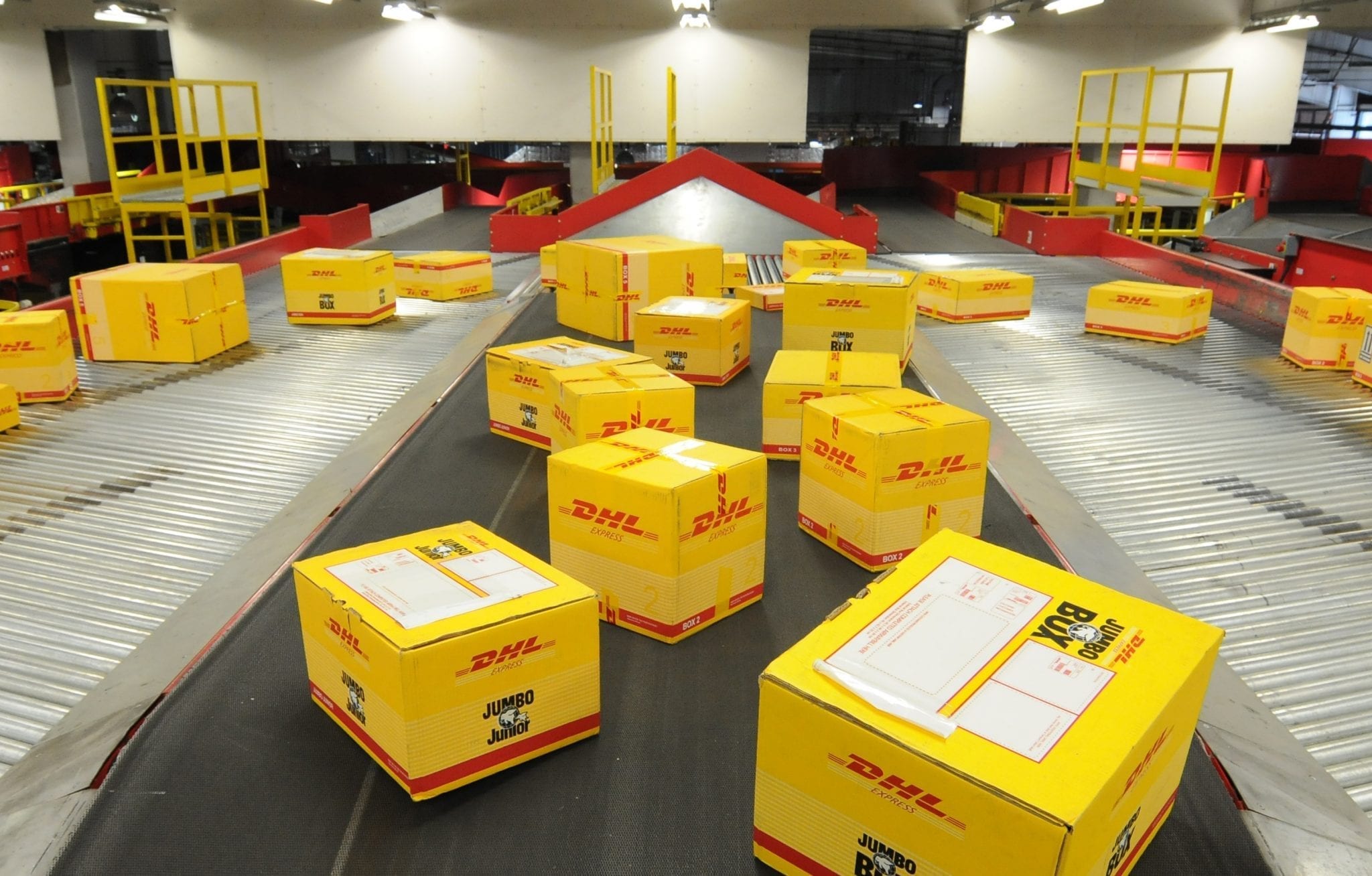
    When a business operates across hundreds of sites globally, the little things add up. And so German logistics company DHL has kick started a series of internet of things (IoT) pilots across its sites around the world – the latest being an automotive plant in Liuzhou, China, with the help of Chinese technology company Huawei.

    The proof of concept, delivered jointly with China Mobile and Huawei, will make use of Narrowband IoT and run with 100 DHL drivers. Narrowband IoT (NB-IoT) is a low power wide area (LPWA) technology that is designed to allow IoT devices to transmit data to and from one another across a network, and was standardised by the 3GPP group in June last year.

    Inbound truck drivers check a mobile app and are directed to a free dock as soon as it becomes available, and the results so far have seen the average waiting time halve from 40 to 20 minutes.

    Trucks can be prioritised according to the site’s needs, and incoming shipments can be sent to the dock most appropriate for them. DHL expects the pilot to run until the end of September.

    DHL has previously partnered with Cisco and IoT startup Conduce to introduce IoT ‘cockpits’ into its warehouses in Germany, the Netherlands and Poland. These systems took data from equipment and visualised it for real-time operation management.

    “We are working with everyone in the industry who offered us solutions that are interesting to us,” says Dr Markus Voss, CIO for DHL, speaking with Computerworld UK at Huawei Connect in Shanghai, China. “This is early stage in terms of the technology and we are open to partnerships, not just with tech giants but also startups, as well as research institutes. It really is an ecosystem of partners.”

    That ecosystem could also include smart cities or governments that have a certain need DHL could provide through its expertise in the field, and the company has run pilots for smarter city logistics.

    But Huawei, the Chinese business that went from providing switching equipment in the domestic market to becoming a worldwide player in networking and cloud, has long had a partnership with DHL.

    “We have been working with Huawei for decades, they have been a provider for us, and we have been a provider for them, so this is a long-term relationship,” says Voss.

    “The trial has already proved its readiness: we have reduced waiting time, which is awesome for productivity, as well as error rates quite dramatically. That, I would consider a success, so we can roll this out to other parts of our operations.”

    These pilot programmes, Voss says, quite clearly demonstrate both the results and the future possibilities that come with integrating newer technologies into the supply chain, and so buy-in at the board level has not been a particularly hard sell.

    “There has never been a better time to sit at the board level and have a very important seat at the table,” says Voss. “So when I talk to my colleagues about digitisation they are very, very open minded, see the possibilities themselves, and are excited. We work very closely together so it was an easy sell-in, essentially.”

    DHL Supply Chain, a Bonn-based division of Deutsche Post DHL, has run other pilots to demonstrate how it can apply new technologies to the supply chain.

    Last year, the company tested an augmented reality (AR) glasses programme across warehouses in the US and the UK. The smart glasses could be used to quickly locate where an item needs to be placed on a trolley, with the aim of reducing error rates while freeing up workers’ hands to pick items faster.

    It also ran a trial at a site in Unna, Germany for the use of ‘EffiBot’, a robotic trolley that follows pickers through warehouses and is designed to lighten the physical load of pushing heavy carts around. The company is also testing the Baxter and Sawyer robots (pictured above) in some warehouses.

    While AR glasses have been a consumer flop to date, Voss says the company saw “huge potential” in using the technology to create efficiencies in the workplace. While DHL keeps an eye on emerging trends in social, business and consumer technology, Voss stresses that IoT has the potential to generate as much as 1.77 trillion in additional value for the logistics market worldwide, and this could forge new paths for the business to build revenue.

    “There are still a lot of inefficiencies in today’s supply chains, there are trucks that are empty on one route,” Voss says. “There is a lot we can bring in, more algorithms, more knowledge, more data and information about what happens, so I think there’s huge potential for us to drive better efficiencies out of the supply chain.

    “What I’m sometimes more excited about are the completely new business models – how can we think of something that is out of the traditional offers a logistics provider would bring to the table?”


  • Sincere Fine Watches showcasing German masterpieces

    Sincere Fine Watches showcasing German masterpieces

    Sincere Fine Watches in Singapore continues its “100” exhibition theme, this time showcasing that number of masterpieces from German watchmaker A Lange & Sohne.

    The series started in 2013 with the “100 Tourbillons” exhibition, bringing together 21 brands in a world-first showcase. In 2015, “100 Complications” featured 22 brands in the best of haute horlogerie.

    For 13 days from tomorrow, Sincere puts the focus on one brand with its “100 Masterpieces”. A Lange & Sohne is known for producing only a few thousand wristwatches in gold or platinum each year, each with proprietary movements, lavishly decorated and assembled by hand.

    This another world-first showcase by Sincere Fine Watches as the never-before-seen collection includes old pocket watches from the brand’s archives, the first four wristwatches created in 1994 when the brand was re-established, and its latest range alongside timepieces from each of its product families.

    The exhibition is at the Sincere Fine Watches flagship boutique at Takashimaya Shopping Centre.

  • Cebu Pacific ushers in surfing season with direct Manila-Siargao flights

    Cebu Pacific ushers in surfing season with direct Manila-Siargao flights

    An island with lush forest covers, trimmed with fine white sand and a crown of gleaming blue waters—Siargao is indeed another gem in the Pearl of the Orient that both surfers and beach bums dream about. And as more travelers chase the breathtaking giant waves of Siargao, this island paradise becomes more within reach with Cebu Pacific’s special additional flights to the Surfing Capital of the Philippines.

    Starting December 17, 2017, up until March 24, 2018, the Philippines’ leading carrier will be flying direct between Manila and Siargao, six times a week. For as low as PHP2,370, vacationers from the country’s capital may leave the hustle and bustle of the Metro and fly in to Siargao’s haven of cozy resorts and warm and hospital locals.

    Perfect for backpackers and adventure enthusiasts, the island of Siargao boasts of exciting roads that lead to many different spots for a quick dip, snorkeling, sight-seeing and world-class surfing. Traveler favorites are the famed Cloud 9 and General Luna, where beginners learn to paddle then stand on a board, and pro-surfers get to hang ten.

    Nearby islets like Guyam, Daku, and Naked Islands also draw a crowd for an unbridled experience of nature in the South. In these parts, travelers can discover Siargao’s natural heritage and the various facets of local culture as it evolves with the foreigners who now call the island their home.

    The island also boasts of an effervescent food scene and night life, enriched by the fusion of local and foreign influences. With fresh catch of seafood and baskets of fruits readily available in the destination and the positive outlook in the community, Siargao serves the most delectable and satisfying experience from dusk to dawn.

    “There is a clear surge of interest in Siargao, and we’ve seen its great potential for tourism since we began offering flights in 2009. With our special direct Manila-Siargao flights, we are positive that more tourists will discover what Siargao has to offer. Cebu Pacific is glad to make it easier for everyJuan to visit this dreamy island paradise more often, where surfing and sustainable living are a way of life,” says Alexander Lao, President and CEO of Cebgo.

    Aside from Manila, Cebu Pacific also flies direct to Siargao from Cebu twice daily, with the lowest year-round fare of PHP 2,104. Travelers also visit the island by taking a connecting flight from Manila via Cebu to Siargao.

    Discover the mesmerizing beauty of Siargao, the elusive coast for surfers and beach lovers, by flying in with Cebu Pacific. Checking in sports equipment like surf-boards are also available in these flights, and can be added to flight bookings up to four hours before scheduled times of departure.

  • Operators stepping up preparations for 5G

    Operators stepping up preparations for 5G

    Many operators have accelerated preparations for the arrival of 5G, and are increasingly looking to the enterprise as well as the consumer market as potential customers, research from Ericsson indicates.

    A survey of operators that have publicly announced intentions to deploy 5G shows that 78% are conducting 5G trials, up from just 32% during a similar survey last year.

    In addition, 28% of the respondents plan to deploy 5G next year. Operators have meanwhile further evolved their business strategies for 5G services to extend beyond the consumer market.

    “In the 2016 survey, 90% of the respondents pointed to consumers as the main segment in their 5G business planning,” Ericsson head of 5G commercialization Thomas Noren explained.

    “This year, it is an even split between three segments and operators have identified business opportunities not only in the consumer segment but also with enterprise users and specialized industries.”

    With operators considering the consumer market to be becoming saturated, 5G planning has been more evenly distributed across specialized industry segments (58%), business users (56%), and consumers (52%).

    The industry segments considered to have the most potential include media and entertainment, automotive and public transport, with energy and utilities as well as healthcare being considered other attractive potential markets.

    The survey also found that a clear majority of operators believe that the IoT will play an important role in the 5G ecosystem.

  • Gucci bans fur

    Gucci bans fur

    Italy’s Gucci will stop using fur in its designs from next year, joining a growing number of fashion houses looking at alternatives after coming under pressure from animal rights activists and changing consumer tastes.

    Gucci, part of Paris-based luxury group Kering, has paraded models down the catwalk in luxurious fur coats in the past and creative director Alessandro Michele brought in loafers and sling-backs lined with kangaroo-fur two years ago.

    But the brand said it would now join an alliance of fur-free companies, adding it would sell off remaining accessories and clothing made with animal fur in a charity auction.

    Gucci has sold some of its mink fur coats for over $US40,000 ($A51,000).

    Marco Bizzarri, Gucci’s chief executive, said the brand would drop fur starting from its spring and summer 2018 collection and that its new approach had been agreed on with Michele.

    Gucci has enjoyed a revival under Michele, whose flamboyant, colourful designs have fuelled sales over the past two years.

    Animal rights campaigners said they hoped the move by the Italian fashion house could have a knock-on effect, although it is far from the first label to stop using fur.

    “Gucci’s decision will radically change the future of fashion,” said Simone Pavesi, manager of animal-free fashion at Italian campaign group LAV.

    “As fashion becomes more and more ethical, supply chains that revolve around animals will be a thing of the past.”

    In June, Yoox Net-A-Porter, a multi-brand online luxury retailer, adopted a fur-free policy on accessories and clothing sold on the site.

    Italy’s Giorgio Armani last year committed to stop using fur, saying technological progress meant there was no longer any justification for cruelty to animals, while US brand Calvin Klein took the plunge in 1994.

  • Costa Coffee buys out south China partner Yueda

    Costa Coffee buys out south China partner Yueda

    British high-street chain Costa Coffee has taken full ownership of its south China business after buying out partner Yueda.

    Costa previously held 51 per cent of their JV, buying the balance of shares for RMB310 million (US$47 million), giving it total control of 252 stores.

    The deal is part of the group’s plans to expand overseas, says Alison Brittain, chief executive of Costa’s parent company Whitbread.

    “We have enjoyed an excellent partnership with Yueda over the past 10 years, together beginning to build the Costa brand in this key market,” says Brittain. “The coffee shop market in China is highly attractive, with a compelling opportunity for Costa to grow its presence over the longer term.

    “This acquisition gives us full strategic and funding flexibility to unlock Costa’s potential in China.”

    Meanwhile, the company says it remains fully committed to its partnership with BHG in northern China.

  • LuLu Group may invest in Philippines

    LuLu Group may invest in Philippines

    Supermarket chain LuLu Group, based in Abu Dhabi, has been looking at investment opportunities in the Philippines.

    It is part of its plans to expand in Southeast Asia, says director general Charito Plaza of the Philippine Economic Zone Authority (PEZA), following a visit from LuLu Group executives. Initially it aims to establish a warehouse for food products it will export to the Middle East and other markets where it has a presence. It has 138 retail stores in 21 countries.

    “They will be building in Malaysia and Thailand, then also in the Philippines,” says Plaza.

    She says the group will be setting up warehouses and seeking to grow vegetables and other crops, as well as establish food-processing factories. The LuLu delegation visited an economic zone in Angeles, Pampanga, as a possible warehouse site.

    Aside from this, the group is also thinking about building malls and supermarkets in the Philippines.

    Plaza says Qatar is also looking at sourcing food products from the Philippines.

  • Adyen rolls out Alipay to stores worldwide

    Adyen rolls out Alipay to stores worldwide

    Adyen has expanded its partnership with Alipay to allow retailers worldwide to accept non-cash payments from Chinese customers in store.

    The partnership enables retailers using Adyen’s point of sale solution to take payments in store from Chinese consumers paying with their Alipay-enabled mobile device. The Alipay payment option is added as a new option to the existing payment terminal, with no need for additional devices or terminals.

    “Europe and the US are popular destinations for the Chinese tourists, so it’s vital that retailers are able to cater to their needs,” said Souheil Badran, President, Alipay North America.

    “Given the capabilities built into Adyen’s omnichannel service for retailers, as well as Alipay’s included marketing solution, we look forward to enhancing what it means to deliver an integrated retail solution for retailers.”

    Roelant Prins, Chief Commercial Officer at Adyen, added that “Chinese tourists are an important audience for retailers to consider. At Adyen, we’re committed to making payment processes as easy as possible for retailers, while delivering a great experience for customers. Our partnership with Alipay helps retailers unlock an enormous opportunity to grow and gain more revenue. For Chinese customers traveling abroad, they will encounter the payment experience they are used to while at home.”

  • H&M invests in ‘new unique’ recycling technology

    H&M invests in ‘new unique’ recycling technology

    H&M Group has also invested in new unique recycling technology, after partnering with Swedish company re:newcell whose unique technology recycles used cotton, viscose and other cellulosic fibers into a new, more sustainable dissolving pulp.

    The pulp can be turned into new textile fibers and be fed into the textile production cycle.

    H&M said the partnership is another step towards H&Ms goal to use 100 per cent recycled or other sustainably sourced material by 2030.

    “Re:newcell´s technology has the potential to become a commercial and scalable solution for the industry and accelerate the journey from a linear fashion industry towards a circular one”, said Cecilia Brännsten, acting environmental sustainability manager and circular economy lead, at H&M group.

    Earlier this month, the fast fashion giant reported a quarterly earnings drop after reduced footfall in stores and increased competition in the fashion sector.

    Net profit for the three months to end-August, the third quarter of the retailer’s financial year, came in at 3.84 billion kronor ($470 million), a drop of 20 percent. Sales grew 4.6 percent to 51.23 billion kronor.

    The fast fashion giant recently  confirmed it will open its first Wellington store at Queensgate Shopping Centre in Lower Hutt on October 26.

    Queensgate will be the site of H&M’s third store in New Zealand and span 2,700sqm over two levels.