Author: Mei Ling Tan

  • GuangYuYuan mixes medicine with fashion

    GuangYuYuan mixes medicine with fashion

    In a Paris Fashion Week first, a traditional Chinese medicine (TCM) brand, GuangYuYuan Chinese Herbal Medicine, has sponsored a runway show.

    With a history of nearly 500 years, it is the oldest TCM brand in China. GuangYuYuan board chairman Guo Jiaxue says the brand’s Paris Fashion Week campaign is all about connecting with younger consumers.

    “We are the oldest of the ‘big four’ TCM brands, so it’s easy to mistake us for being old fashioned. Today, we are reinterpreting our legacy with innovation and flair.”

    Its global debut in Paris was as a sponsor for fashion designer Liu Qing, also known as Big-King. It was also his first Paris runway show.

    Big-King typifies the young customer GuangYuYuan is seeking out. At the show, he revealed 10 modern looks using elements inspired by traditional Chinese motifs and themes. The event was attended by celebrities such Celina Jade, and representatives from top fashion houses including Gucci and Louis Vuitton.

    Former French Prime Minister Jean-Pierre Raffarin presents GuangYuYuan Chairman Guo Jiaxue with an award for “Most Influential and Innovative International Brand” at the 2017 Select Fashion Awards

    The unusual collaboration between a TCM brand and fashion design was the brainchild of new hire Wang Xinyu, GM GuangYuYuan’s brand centre. Wang is leading the company through a marketing modernisation strategy. The runway show was co-organised with tech giant Tencent.

    Founded in 1541, GuangYuYuan was acquired by pharmaceutical conglomerate Xi’an Dongsheng Group in 2003, and in 2006 the Chinese Ministry of Commerce gave the brand its “Time-Honoured Brand” appellation. Two of GuangYuYuan’s oldest products have been declared to be part of China’s intangible cultural heritage, and their formulas have been named national secrets.

  • Golden touch for Alipay overseas transactions

    Golden touch for Alipay overseas transactions

    During Golden Week, there were eight times as many in-store Alipay transactions overseas than last year.

    Asia dominated the top 10 destinations in terms of transaction volume, with Hong Kong topping the list. It was followed by Thailand, Taiwan, Japan, South Korea, Macau, Malaysia, Singapore, Australia and New Zealand.

    Much of the fastest growth in Alipay use from last year was also in Asia, with transactions volumes in Singapore growing by a factor of 30. Japan’s transaction volumes were 16 times last year’s figure, while in Hong Kong and Taiwan volumes were 13 times the 2016 figure. Thailand saw six times the transaction volume of last year.

    Alipay use also grew in the Pacific, with transactions volumes up 20 times in Australia and a six-fold increase in New Zealand – the same as for Europe, where Germany, the UK and France accounted for 40, 23 and 22 per cent of transaction volumes respectively. Italy, where Alipay launched in April, accounted for a further 5 per cent.

    Alipay per capita spend was up 50 per cent to RMB1301 (US$198). This was much higher than average in destinations outside Asia, particularly Europe, where users spent an average of RMB3150.

    Switzerland posted the highest per-capita spend (RMB36,298) of any country or region, and more than 10 times the average for Europe as a whole.

    Also above the global average were the US and Canada (RMB1648) and Australia and New Zealand (RMB1415).

    Users born in the 1980s and 1990s accounted for 84 per cent of transactions.

  • Pret A Manger has 39 per cent profit leap

    Pret A Manger has 39 per cent profit leap

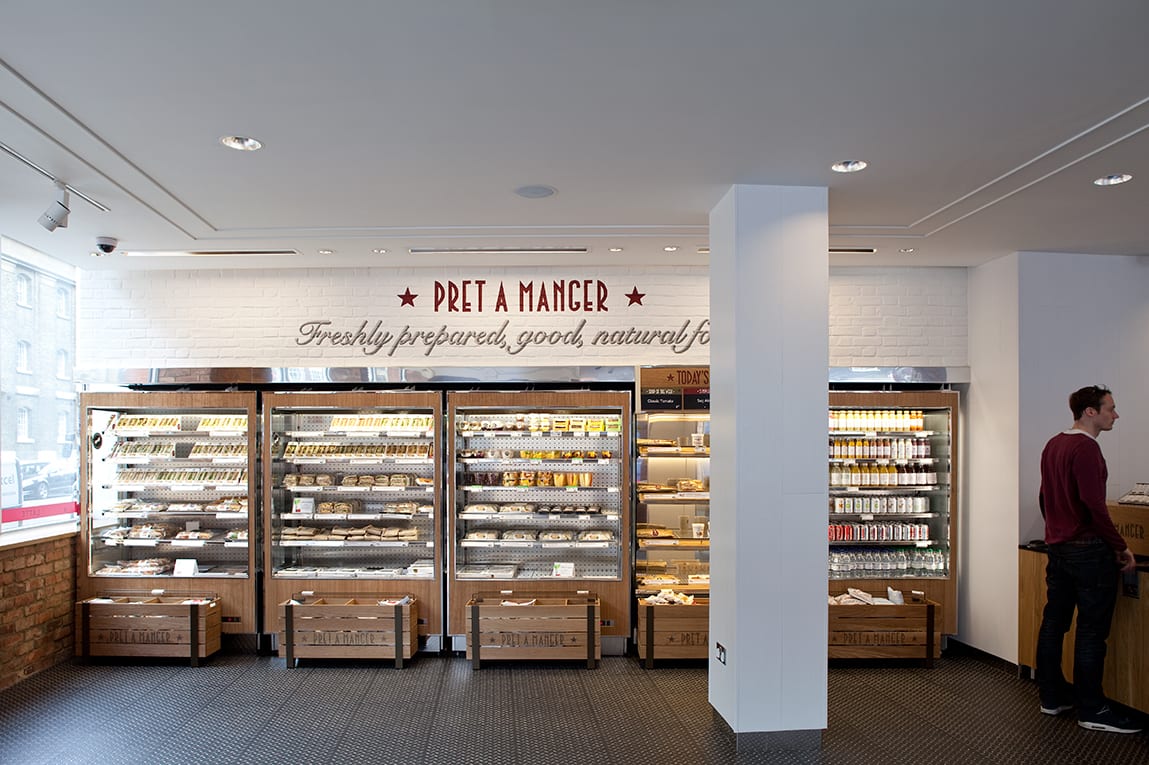
    While UK sandwich chain Pret A Manger has not broken out details of its Hong Kong business, it had a 39 per cent jump in global pre-tax profits to a record £75.5 million (US$99.6 million) overall for its latest year.

    Total sales were £776 million as it capitalised on consumer eating trends, including a demand for dairy-free food. It says coconut is its most popular new ingredient, with coconut porridge selling particularly well.

    Research firm Kantar Worldpanel ­reports that flatbread, avocado, halloumi and spinach were among the fastest-selling foods last year.

    Pret A Manger says hot breakfast pots have been popular as well as its refreshed soup range, all gluten- and dairy-free and less than 250 calories.

    Meanwhile, there have been reports the chain is preparing for a partial listing on the New York Stock Exchange. Owner Bridgepoint is believed to want to continue to hold a stake in the company rather than cashing out completely. The European private equity firm bought a majority stake in the business for £500 million in 2008.

    More recently, Filipino fast-food restaurant owner Jollibee expressed an interest in buying Pret A Manger.

    The chain added 31 stores in the UK during the 12 months, including a vegetarian-only shop in London, taking the national total to 329. It has a further 110 branches overseas.

  • Inside Alibaba’s Home Store of the future

    Inside Alibaba’s Home Store of the future

    Home Times, a furniture store supported by Alibaba Group technology, has opened for business in the Chinese city of Hangzhou.

    Attracting between 1,500 and 3,000 daily visitors since opening, the furniture store is another example of Alibaba’s  New Retail model. In recent months, Alibaba has expanded that model out to a variety of sectors, following the success with its hyperlocal Hema Supermarkets, which have shown how analytics and technology can transform traditional grocery stores into a seamless online-offline customer experience.

    Over 20,000 items are available for purchase at Home Times, including furniture, kitchenware, home décor, stationery and travel essentials—a majority of which are sourced from merchants already selling through Alibaba’s B2C shopping platform Tmall.

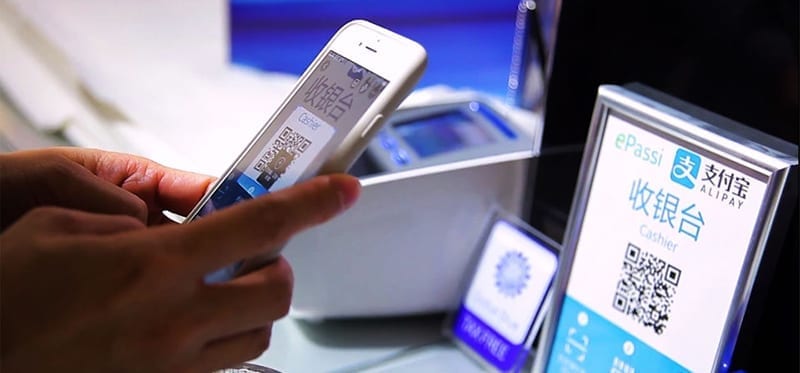
    And a phone in hand is all it takes for seamless shopping. Shoppers scan each item’s QR code with their smartphones to see the product name, price, description, and instantly purchase using Alibaba’s mobile payment service Alipay.

    “We have the hardware and know-how to build New Retail-driven stores, and we work with partners that have access to offline channels and expertise in operating physical storefronts,” said William Chen, who heads the Home Times project at Alibaba’s Cloud Retail division. “We provide the technology and Tmall’s pool of consumer insights.”

    Tmall analyzes the behavior and preferences of users within a five-mile radius of the shop. Products are then handpicked from these users’ top preferred categories and added to store shelves. This system cuts the time required to source products worldwide for traditional retailers down to a single day, while store offerings will change every 10 to 15 days, added Chen.

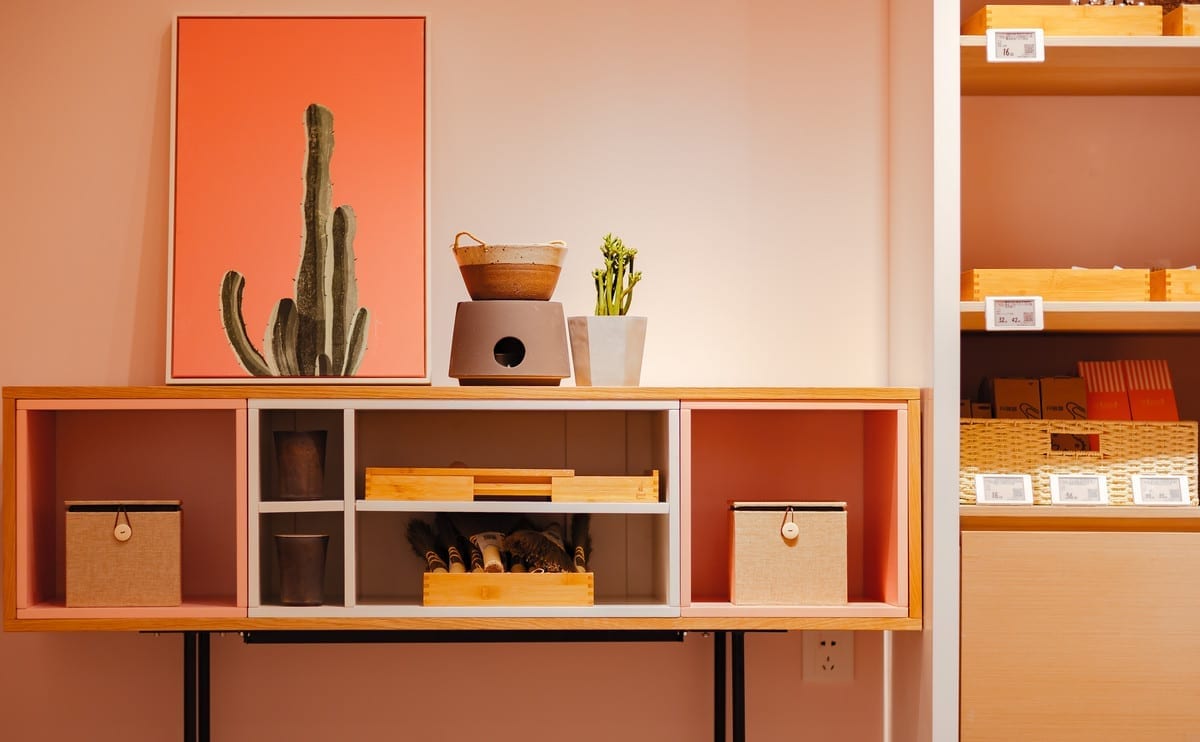
    Each product has an electronic price tag that can automatically sync prices with the latest seen online, removing the need for staff to manually print and replace the labels.

    Large screen displays on the wall allow customers to see their desired furniture and décor in a virtual home setting. This also indicates that Home Times requires significantly less display space, compared to traditional furniture sellers, since products can be displayed virtually.

    Home Times is set to open two new branches in Hangzhou by the end of 2017, including one at the In77 shopping center in the Hubin business district and another at an undecided location in West Hangzhou. It plans to open 15 to 20 new stores in 2018.

    “We definitely want to open this system to more businesses. Plans to apply our New Retail infrastructure to industries beyond home furnishing are underway,” said Chen.

  • CEO confirms Ikea Philippines expansion

    CEO confirms Ikea Philippines expansion

    The first Ikea Vietnam store is in planning, with the Swedish furniture and homewares retailer revealing the country as one of its next two Asian markets.

    In an interview with Bloomberg, Inter Ikea CEO Torbjorn Loof said expansion in Southeast Asia and South America are priorities for the brand, which already has stores in Singapore, Hong Kong, Malaysia and Thailand in this part of the world.

    Philippines is the other country he named in Asia. Both countries will host Ikea stores within five years.

    Ikea is not currently in South America, but the company sees the continent as “an important growth market” in the long term. Bloomberg named Mexico, Peru, Colombia and Chile as the most likely priority countries in South America for Ikea.

    “We haven’t zoomed in or decided on any particular markets, but we’ve said that within the next five years we should have opened our first Ikea in South America,” Loof said. “When we open in South America, because it’s a new continent and a new region, we can’t just open one warehouse.”

    The expansion plans follow Ikea’s entry into India and Latvia this year as it continues its slow global roll-out. After opening 22 new stores this year – eight more than last year – Loof said it expects to open about 25 a year moving forward.

  • Luxury retailer Coach rebrands to ‘Tapestry’

    Luxury retailer Coach rebrands to ‘Tapestry’

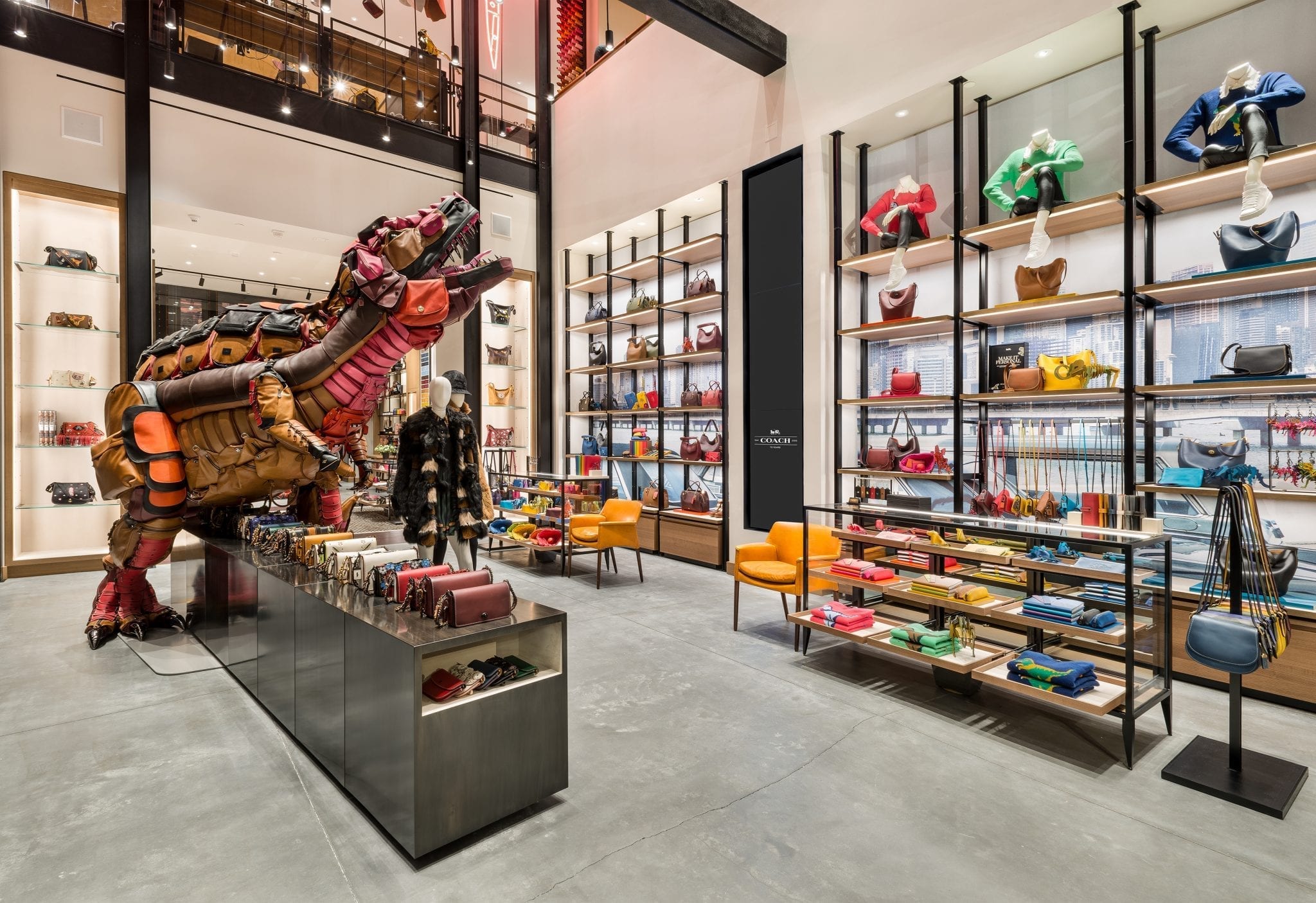
    To better incorporate all of the brands it now owns, luxury goods company Coach of New York is changing its name to Tapestry.

    The company that came to prominence in the Mad Men era now owns brands like Stuart Weitzman and Kate Spade & Co as well.

    Chief executive Victor Luis said on Wednesday the name Tapestry is more inclusive.

    Coach acquired Stuart Weitzman in 2015 in a deal valued up to US$574 million. It spent US$2.4 billion for Kate Spade this year, seeking to broaden its appeal.

    The Coach brand of bags and other goods is alive and well, but it becomes one of three brands sold by the company that will be called Tapestry.

    “Three years ago we laid out our vision to transform Coach and announced our intention to grow beyond the Coach brand,” said Victor Luis, CEO of the luxury firm in a statement.

    “Through the execution of our strategic plan and with the acquisitions of Stuart Weitzman in 2015 and Kate Spade & Company just this summer, we have realised these goals.

    “We are now at a defining moment in our corporate reinvention, having evolved from a mono-brand specialty retailer to a true house of emotional, desirable brands, all leveraging our strong operational foundation.”

    Luis said each of brand under the new Tapestry label has a unique proposition and fulfils “different fashion sensibilities and emotional needs within the very attractive and growing $80 billion global market” for premium handbag and accessories, footwear and outerwear.

    “In Tapestry, we found a name that speaks to creativity, craftsmanship, authenticity and inclusivity on a shared platform and values.

    “As such, we believe that Tapestry can grow with our portfolio and with our current brands as they extend into new categories and markets.

    “Most importantly, we are establishing a strong and distinct corporate identity, which enables our brands to express their individual personalities and unique language to consumers.”

    A website with the new name, which becomes official at the end of the month, is up and running.

    The change is part of Coach’s pursuit of younger shoppers who may not feel the same draw to store windows on Manhattan’s 5th Avenue.

    Coach began as a small workshop in Manhattan in 1941, and became a fashion powerhouse in the early 1960s though innovate designs.

    Coach Inc will also be changing its ticker symbol on the New York Stock Exchange from “COH” to “TPR”.

  • Chinese consumers most well-informed and demanding globally

    Chinese consumers most well-informed and demanding globally

    “The Chinese consumer in my opinion is the most well-informed, sophisticated, demanding consumer in the world,” declared Terry von Bibra, general manager for Alibaba during his keynote at Shoptalk Europe this week.

    “They have a disposable income and they want to invest in quality products from around the world,” he said. “They have complete access to products, information choice and they are engaging with these products and brands in an intensive way with a common theme – they want to improve their quality of life and their family members.”

    To illustrate the sheer size of China, Von Bibra pointed out there are 10 cities in the US with a population of 1 million or more. There are 18 such cities in Europe. In China, there are 102 cities today with that population and it’s forecast to grow to eventually 220 cities.

    Von Bibra emphasised the need for retailers to offer seamless online and offline experiences to customers, something which Chinese shoppers now expect from retailers, especially with the country’s high penetration of smartphones and use of mobile payment system, Alipay.

    According to Von Bibra, 80 per cent of the China’s e-commerce transactions take place on smartphones, 500 million of which are used via Alipay.

    While Alibaba may be known as an e-commerce platform, the business has invested in several physical store initiatives over the past few years, including the acquisition of InTime Department Stores and their investment in Suning electronic stores.

    In addition, Alibaba has now opened 20 Hema stores in China, a hyper local supermarket best known for its fresh seafood offering that blends on and offline services.

    “People can go into Hema and say, ‘I’m going to order the stuff at home, get into the store, actually, but I want to order more stuff and actually that crab I ordered, I want to eat it in 15 minutes with my friends, so please prepare it in Szechuan-style and the rest of the stuff I bought? I’d like you to deliver it to my house’,” explained Von Bibra.

    Another Alibaba initiative is known as Rural Taobao, where the business has launched Alibaba stores in the centre of 16,000 villages in China. After all, while there are 731 million Chinese online, there are 600 million who don’t have access to the internet, Von libra pointed out. The plan is to eventually reach 100,000 villages.

    “Customers can go into a shop, order something online, get it delivered in a few days, or you can take the products you produce in your village and sell them online. It’s a long-term idea about how we can help the Chinese consumer in the rural world,” he explained.

    Despite the fact that many believed that commerce would kill the local mum-and-dad corner store, six million of these stores currently exist in China, said Von Bibra.

    “This is how [people] want to engage, this is how people want to buy. So we provide an app where people can run their shops, order their products wholesale, sell them retail in their stores and we give them access to data and access to logistical solutions so they can offer products like food, which many of them could not because of the logistical challenge,” he explained.

    “We try to make it easy for corner shops to enter the world of new retail and how we’ll experience it in the future.”

    “The transformation in China of the retail experience has been driven to a great degree by e-commerce in the past few years. In the future, it will be driven by how people are able to build a seamless retail experience that combines offline in a way that is best for that particular consumer for that particular brand experience.”
  • Lalamove raises US$100m in series-C funding

    Lalamove raises US$100m in series-C funding

    Same-day delivery and logistics provider Lalamove has completed a US$100 million series-C funding round.

    Aside from market expansion, the cash injection will also be used to invest into talent across the organisation, to add product features and to allow businesses more direct access to Lalamove’s fleet of drivers. One example is new integration technology to help SMEs include the company’s on-demand delivery as part of their own business services.

    “We foresee strong growth in last-mile delivery, and this has been reflected in Lalamove’s growth and performance,” says partner Cheng Tian of venture capital firm ShunWei Capital, which led the round..

    “In only a couple years, Lalamove’s standardisation, speed of service, lean operations and execution strategies have all drastically improved efficiency, lending to its excellent reputation across Asia.”

    “Delivery of information takes seconds, but delivering physical goods is still relatively slow,” says Lalamove founder/CEO Shing Chow. “We want to change that, and want delivery to be measured in minutes, not days. Our average order-to-delivery time is very quick at 46 minutes, but we want to achieve even more.”

    In July, the Hong Kong-based company added its 100th city for deliveries. It has more than 15 million users and is supported by more than 2 million drivers while continuing to expand across China and Southeast Asia.

    It currently operates in Hong Kong, Thailand, Singapore, the Philippines and Vietnam.

  • Leading logistics networks strike groundbreaking deal

    Leading logistics networks strike groundbreaking deal

    Elite Global Logistics Network (EGLN) has announced to its membership during its annual conference in Vietnam this week, that it has reached a formal agreement for WCA Ltd to acquire a majority interest in the rapidly-growing network. Formed in 2015, EGLN has seen its membership around the world flourish to now encompass 332 memberships in 131 countries. The acquisition by WCA will enable the network to move to the next stage of its development and provide member companies with increased opportunities for business expansion and organic growth.

    Roy Stapleton will remain as president of EGLN and will continue to set the network’s strategy as well as overseeing day-to-day operations. “This new agreement is unprecedented in the history of freight networks. EGLN is proud to become a part what we believe is a ‘win-win’ solution for our members and the network,” said Stapleton.

    “The suite of benefits evolved by WCA has allowed it to stand out as a networking leader, and EGLN members will benefit from these obvious synergies offered by this unique partnership.”

    WCA Chairman and founder David Yokeum stated that 2018 will prove to be an exciting year for EGLN, following the formal commencement of the agreement on 1 January.

    “Roy has, over many years, built a deservedly strong reputation for providing independent forwarders with high quality environment in which members feel secure and confident that their business will grow,” said Yokeum.

    “EGLN will retain its unique ethos and management style, but by adding many of WCA’s valued benefits and attributes, alongside strong backroom and financial support, EGLN has the tools to embark on an exciting new phase in its development.”

  • Orange Business, Microsoft sign IoT partnership

    Orange Business, Microsoft sign IoT partnership

    Orange Business Services and Microsoft have teamed up to deliver large-scale, end-to-end Internet of Things (IoT) solutions for the manufacturing sector.

    The Orange modular IoT solution, Datavenue, accompanied by Microsoft Azure IoT Suite, aims to help enterprises transition to Industry 4.0 and optimize the entire manufacturing value chain.

    Through this collaboration, companies can take advantage of the combined expertise of Orange and Microsoft regarding data protection, as well as device and data management.

    This includes the opportunity to leverage Orange Business Services’ many IoT connectivity options, in particular LoRa. Use cases range from supply chain and smart inventory management to digital operations, such as predictive maintenance, employee safety and facility and equipment management.

    For its long-term customer e.l.m. leblanc, Orange delivered a customized IoT platform on Microsoft Azure, which provides a tailored solution for remote monitoring, along with curative and predictive maintenance.

    A subsidiary of the Bosch Group, e.l.m. leblanc manufactures gas boilers and water-heaters since 1932. The company is a major player in the French housing and industrial markets for heating and cooling systems and hot water for sanitary use.

    “Using the Azure Cloud allows for high-level scalability and efficient machine learning solutions with reasonable costs,” of e.l.m. leblanc CEO Philippe Laforge said.

    The remote monitoring solution collects the boiler’s data and alerts technicians of any malfunction. This allows for more efficient maintenance intervention, with fine-tuned predictions on the probable causes of failure based on real-time data analytics.

    Preemptive alerts can also be raised by the platform through predictive maintenance algorithms. Benefits include optimization of intervention processes, and increased end-customer satisfaction, thanks to innovative and responsive customer support.

    In order to accelerate the roll out of industrial projects, Azure IoT Suite provides pre-packaged solutions and allows companies to swiftly get familiar with the set-up and explore the most common IoT project scenarios, including remote monitoring, predictive maintenance and connected factories.

    The software environment provided by Microsoft will allow for the use of advanced solutions such as Cortana Intelligence Suite (advanced analytics and AI), Power BI (data visualization) and Mobile Apps (Xamarin) to ensure a flawless mobile user experience.

  • ZTE, Huawei sign circular design commitment with KPN

    ZTE, Huawei sign circular design commitment with KPN

    ZTE and Huawei have both committed to producing telecoms equipment for Dutch operator KPN that is circular by design by 2025, to reduce waste and emissions and improve energy efficiency.

    A circular design involves minimizing waste, emissions and energy leakage by recycling, repairing and reusing components and employing a long-lasting design.

    Huawei, ZTE and five other KPN suppliers have now signed the KPN Circular Manifesto, agreeing to implement a circular design for products manufactured for the operator by 2025.

    “Climate change is one of the most pressing challenges in our society and it’s time for action, not words.  As the Netherland’s largest ICT provider, we recognize that we have a leading role to play to enable the necessary transition towards a sustainable and increasingly circular economy. That’s why we’re implementing our own circular economy target with a demanding timeline,” KPN CEO Eelco Blok said.

    Huawei said that to achieve its commitment, the vendor plans to incorporate design principles of easy take-bake, maintenance, recycling reuse and maximizing product lifespan.

    “For years Huawei and KPN have been working together successfully to improve KPN’s energy efficiency and reduce CO2 emissions. Now we need to transition from a linear to a circular way of working,” Huawei Netherlands CEO Steven Cai said.

    “It is very commendable that KPN is taking a lead and involving partners in the process. Together with KPN, we’ll take joint responsibility to proactively drive an energy-saving, environmentally friendly, and low-carbon society.”

    KPN was recently recognized by the Dow Jones Sustainability Index as the world’s most sustainable operator, after having lowered its annual energy consumption over the past six years. The operator is on track to reduce its energy consumption by 50% by 2030 compared to 2010, despite the anticipated continued exponential growth in data traffic.

  • Magna joins BMW-Intel self-driving car project

    Magna joins BMW-Intel self-driving car project

    Canadian auto parts producer Magna International Inc said on Tuesday it had joined a consortium including BMW and Intel Corp to develop a self-driving vehicle platform for the use of auto makers by 2020.

    The move comes as automakers are increasingly seeking alliances to share the high costs of developing self-driving vehicle technology, which requires extensive research and development and software expertise outside the traditional domain of carmakers.

    Magna is the latest addition to the BMW-Intel alliance, which aims to develop new technology that could put self-driving cars on the road by around 2021. (reut.rs/2y9llha)

    The consortium also includes Mobileye, Fiat Chrysler and auto suppliers Delphi Automotive and Continental AG.

    Earlier this year, Intel bought Mobileye, the world’s largest supplier of systems used in automotive collision detection systems, for $15 billion.

    Magna will also help automakers industrialize the platform designed by the consortium, the Canadian company in a statement.

  • SIA, Grab integrate mobile apps

    SIA, Grab integrate mobile apps

    Singapore Airlines (SIA) and Grab have integrated their respective mobile apps to offer enhanced convenience to travelers.

    The partnership will benefit customers who are travelling to the airport in six countries across Southeast Asia – Indonesia, Malaysia, the Philippines, Singapore, Thailand and Vietnam.

    SIA customers can now book Grab rides through the SingaporeAir mobile app. Customers using the app will see an option to book a Grab ride to the airport seven days before their scheduled flight.

    Selecting this option will direct customers to the Grab app, where they can choose to order a Grab ride to the airport on-demand or in advance. The airport will be automatically listed as the destination, so the user simply fills in the pick-up point and desired time.

    The first 5,000 customers will receive GrabPay Credits worth S$10 ($7.38) in their Grab account for bookings made through the SingaporeAir mobile app for Grab rides in Singapore.

    “We are constantly seeking to enhance our SingaporeAir mobile app and KrisFlyer program to ensure that we provide more benefits to our customers,” said Campbell Wilson, SIA SVP for sales and marketing.

    Jason Thompson, head of GrabPay, said that with GrabRewards, a dollar spent on Grab is more valuable than a dollar spent in cash. “By integrating Grab’s and SIA’s loyalty programs, customers can look forward to using their points when they plan for their next holiday.”

  • Myanmar’s Global Technology to deploy LTE

    Myanmar’s Global Technology to deploy LTE

    Myanmar broadband service provider Global Technology Group has revealed plans to roll out LTE-based wireless broadband services in 30 cities starting in April.

    The operator plans offer high-end wireless broadband services to both residential and business customers.

    The rollout will cover cities in the Nay Pyi Taw, Magway, Bagon, Mon, Kayin and Tanintharyi regions, to cater to an anticipated spike in demand for data traffic as a result of the growing popularity of streaming based services.

    Global Technology Group secured a network facilities service license in 2015 and a fiber network license in March. So far the operator has deployed FTTx based broadband services to the Yangon, Mandalay and Bago regions.

    The company competes with state-owned operator Myanmar Post and Telecom (MPT), which commenced an FTTH deployment in August and currently serves over 80% of the nation’s FTTH customers.

    MPT has announced a target of expanding the reach of its FTTH network to cover the entire country in 2018.

  • Smart to double LTE capacity in two cities

    Smart to double LTE capacity in two cities

    The Philippines’ Smart Communications plans to upgrade its cell sites in Marikina and Quezon City in the latest phase of its network expansion and modernization program.

    The PLDT subsidiary plans to double its LTE cell sites in the two areas, and aims to boost the coverage of its 700-MHz and 1800-MHz based network to both improve indoor coverage and enhance each cell site’s capacity.

    Smart has to date finished its LTE rollout in major urban hubs Metro Cebu and Metro Davao, in the island resort of Boracay, and in Rizal province. Deployment is underway in Metro Manila, and the operator plans to speed up its LTE network deployment to cater to growing demand.

    Smart is conducting the upgrade in stages to minimize disruption, according to PLDT and Smart SVP for network planning and engineering Mario Tamoyo.

    “By continuously upgrading our networks, we are leading the way toward improving internet and digital services for Filipinos,” he said.

    “From the work that we’ve already completed, our customers are already reporting much improved LTE and 3G experience. They will enjoy progressively better mobile data services in the next few months, particularly for those using LTE devices.”