Author: Mei Ling Tan

  • Suitsupply launches women’s chain, Suistudio

    Suitsupply launches women’s chain, Suistudio

    Fashion disruptor Suitsupply is taking its new concept targeting women international.

    Suistudio will open its first US store in New York City at the end of October, with both banners planning to roll out across the continental US.

    Suitsupply has so far opened 84 stores internationally, including in Hong Kong and Bangkok, to support it successful webstore. The concept is selling suits tailor-made in-store while the customer waits.

    In a bid to position itself apart from Suitsupply, Suistudio has released an edgy, if potentially controversial, advertising campaign with the message: “We’re #notdressingmen,” featuring model Rianne ten Haken. The theme shows a woman in a stylish suit while her male partner is naked, is designed to convey the message Suistudio is taking women’s suiting every bit as seriously as men’s.

    Suistudio recently launched its online store, which the company says is already proving a success.

    “The key to customer satisfaction is not only the true to size fit, but also offering both “the now” and “the classic” suit styles that women have been asking for,” the company says.

    Like Suitsupply, Suistudio combines high-quality Italian fabrics like Vitale Barberis Canonico and Ferla (mills from the Biella Region) with expert tailoring that is hand-finished. The result, a power suit.

    “We’ve been asked consistently for a long time to make a women’s collection,” explained CEO/founder Fokke de Jong. “Our brand is about bringing high-quality product for attainable price points. It isn’t a snap your fingers and done sort of project. After years of preparation, I think we finally nailed it. A perfect fit that our customers are excited to wear.”

    Suistudio’s suits and coats are priced between US$399 and $699, trousers $199 to $299 and jackets $299 to $699.


  • Domino’s pays back employees, launches new tech initiatives

    Domino’s pays back employees, launches new tech initiatives

    Domino’s Pizza says it has returned $5.4 million in underpaid wages and superannuation to its employees over the past four years under a national audit of its stores that is due to wrap up in December.

    Chief executive Don Meij, speaking after a Domino’s investor day update, said only one of the pizza chain’s stores had been referred for further examination after evidence of wage underpayments discovered during a Deloitte-led audit.

    “The fact that we found only one person out of the last 322 stores audited is very encouraging to us, its certainly looking very good at the moment compared to where we were in the first three years,” Meij said.

    Domino’s has been auditing its stores for three years and in March extended the probe across its national network after the Fair Work Ombudsman joined investigations following media reports of underpayments to staff.

    Meij said that since 2014, a total of $5.4 million worth of unpaid wages and superannuation had been recovered and paid to Domino’s franchisee staff,.

    Domino’s had originally planned to complete the audit by June but Meij said he expects to finalise the program across Australia’s 666 stores by the end of December.

    “The media was talking as if this was all Domino’s – that’s very unfair – the fact that only a single store has been referred for further audit illustrates that its not the majority, it’s the minority of the franchisees,” Meij said.

    As part of Monday’s investor update, Meij highlighted improvements to the company’s “360 degree” performance measurement software used for Domino’s franchisees, along with a suite of new technology initiatives including an expansion of its New Zealand drone delivery trials.

    Meij said a new iteration of Domino’s Operations 360 monitors, improves and benchmarks individual franchisee performance – offering head office and a franchise owner a rounded view of the business.

    “This is not an auditing program, its a self-assessment tool which allows franchisees to view their business as part of their peer group and on top of that we also get to look at the business and encourage people to chase better performances,” Meij said.

    Domino’s will also roll out its GPS-based Anywhere delivery service, which enables deliveries to locations such as parks and beaches without specific addresses.

    Heated lockers that keep food hot at a store until picked up by a customer, who can unlock the device using their smartphone, were also unveiled to be in use in Australia by Christmas.

    Domino’s faced some of its own heated customer blowback last week when social media fumed over Domino’s six-and-a-half year exclusive distribution deal with Schweppes – ensuring Coca-Cola remains out of the Domino’s picture until 2024.

    Meij said sales of Schweppes drinks were now higher than sales of Coca-Cola brands had been.

    Domino’s shares closed 11 cents lower at $45.50 on Monday.

    Meij said the enhancements across the business would use new and existing technologies to enhance customer service, improve productivity and enhance franchisee standards.

    “At Domino’s we use technology to solve problems and to make things easier for our customers, our franchisees and for our business,” he said.

    “Technology and data is of value only if you use it to improve, and that is something we have done from our first use of online ordering, through to using GPS Driver Tracker to reduce our delivery times – this is no different,” he added.

  • Alibaba, New Hua Du supermarkets forming JV

    Alibaba, New Hua Du supermarkets forming JV

    To accelerate its roll-out of new high-tech retail, Alibaba Group is establishing a JV company with supermarket chain New Hua Du Supercenter.

    It will be a co-operative platform to pool their resources and respective advantages in the supply chain.

    The controlling shareholder of New Hua Du Supercenter, Newhuadu Industrial group, has transferred 10 per cent equity at lower than market price to Alibaba (Chengdu) Software Technology Company in concert with Hangzhou Hanyun Xinling Equity Investment Fund Partnership, and signed a co-operation framework agreement with Hangzhou Alibaba Zetai Information Technology Company.

    After the deal, the proportion of shares held by Newhuadu Industrial Group will decline to 45.8 per cent, and Alibaba (Chengdu) Software Technology and Hangzhou Hanyun Xinling Equity Investment Fund Partnership will own 5 per cent equity of the company respectively.

    Newhuadu Industrial Group hopes to introduce strategic investors to advance resource integration and expand business channels through taking advantage of Alibaba’s resources in e-commerce.

    New Hua Du Supercenter has also signed a co-operation framework agreement with Alibaba Zetai Information Technology. The two parties have proposed to establish a JV company to invest, open and run innovative stores under the tentative name Fujian New Box Network Technology Company, with a registered capital of RMB200 million (US$30 million). Its business scope will include technical development, technical consulting and technical service in the field of computer networks.

    New Hua Du Supercenter and Alibaba Zetai Information Technology will make capital contributions in cash, each by RMB100 million, accounting for 50 per cent of the stake.

  • Berli Jucker eyeing Asean expansion

    Berli Jucker eyeing Asean expansion

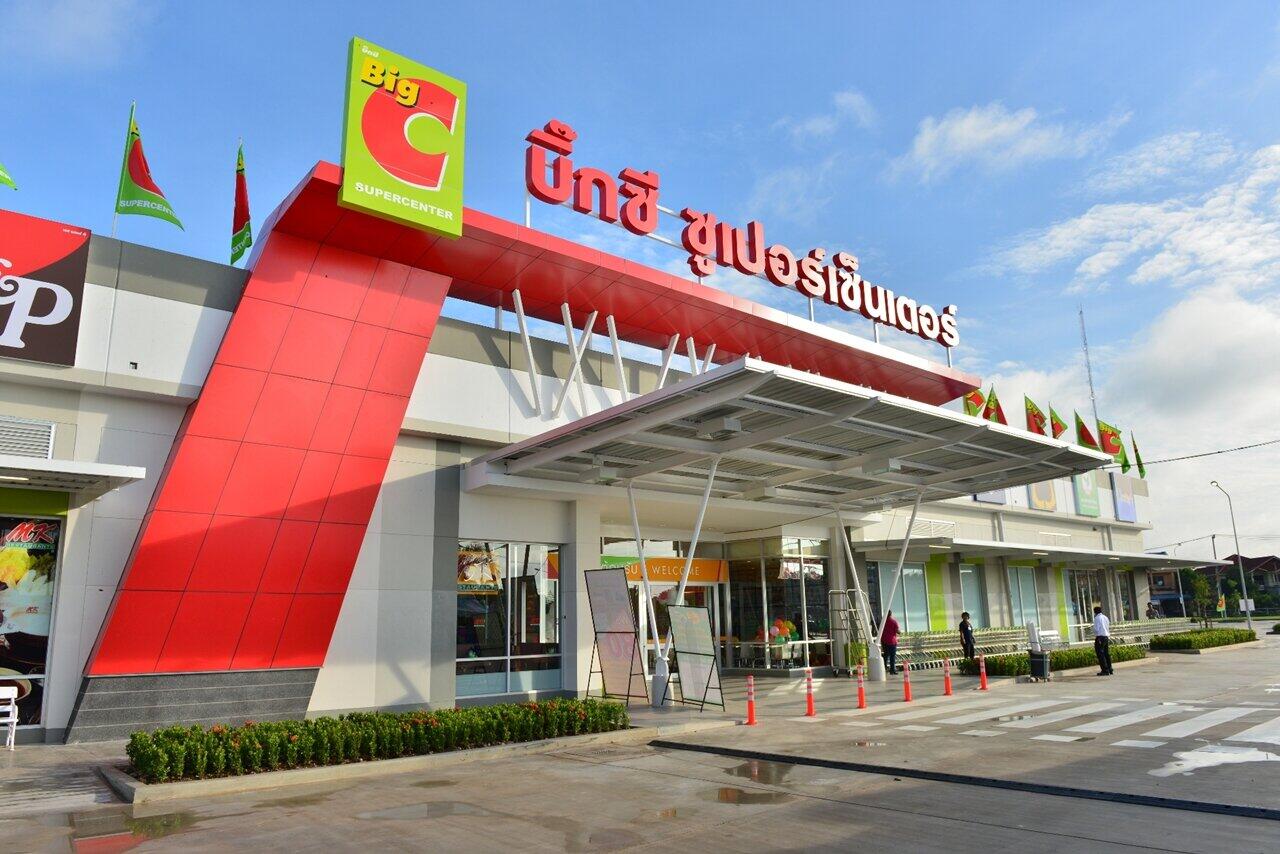
    Thai company Berli Jucker (BJC) plans an aggressive expansion of its retail network in the Asean region.

    The push will include its hypermarkets and convenience stores, including the opening of Big C hypermarkets in Malaysia.

    BJC president/CEO Asawin Techajareonvikul says the company is evaluating whether to give Malaysia or Vietnam priority in its retail network expansion.

    Described by the company as “downstream business”, the expansion will help its main interests, manufacturing, distribution and logistics.

    Group chairman Charoen Sirivadhanabhakdi says BJC has had a foothold in Malaysia since acquiring a glass factory there in 1966. Big C stores would be the group’s first retail venture there.

    However, Asawin says there are already many competitors in Malaysia. “Meanwhile, in Vietnam, we already have 19 MM Mega Market hypermarkets as well as 173 B’s Mart convenience stores. The market has a lot of potential.”

    He says that between 200 and 300 hypermarkets are run by different companies in Thailand, but with about 90 million people in Vietnam, the number of hypermarkets there is quite small.

    “Our strategy is to build ‘connectivity’ within our retail network,” says Asawin. “Our Big C stores now cover all major provinces throughout the kingdom, but the transportation lead time from one store to another is currently about three hours. We want to reduce this to only one hour, and that means we need to open more stores to fill the gap, especially in cities in border areas.”

    BJC has 1200 retail outlets in Thailand, Laos and Vietnam under different brands, including Big C in Thailand, MM Mega Market and B’s Mart in Vietnam, and M-Point Mart in Laos. The group also has more than 10 factories in Asean.

  • FamilyMart Philippines chain up for auction

    FamilyMart Philippines chain up for auction

    FamilyMart Philippines convenience-store chain, partly owned by the Ayala and Tantoco groups, is up for auction.

    With about 70 stores, the Japanese chain has been offered to prospective investors in the past few months.

    Ayala Land and the Rustan’s group, via their equally owned JV firm Sial CVS Retailers, in 2012 signed a deal with FamilyMart and Itochu Corporation to develop and run FamilyMart convenience stores in the Philippines.
    FamilyMart has been closing unprofitable stores over the past 12 months.

    In the convenience store market in past six years, new brands have been challenging 7-Eleven and MiniStop, respectively run by Philippine Seven Corporation (PSC) and Robinsons Retail Holdings.

    Aside from FamilyMart, the Puregold group also brought Japan’s Lawson into the market while the SM group introduced Indonesian brand Alfamart. Meanwhile, real-estate magnate Manuel Villar has also built his own convenience-store network, All Day.

    To date, the two original brands still lead the market, with 7-Eleven surpassing 2000 outlets while Mini-Stop has at least 500 stores.

  • Tata Tele informs govt of shutdown plans

    Tata Tele informs govt of shutdown plans

    India’s Tata Group has reportedly informally notified the government of plans to shut down its wireless business Tata Teleservices after 21 years in operation.

    Tata Group executives have been meeting with Department of Telecom and other government officials to discuss ways of surrendering or selling off the struggling Tata Teleservices’ spectrum assets.

    According to the report, which cites unnamed sources, the operator will have 60 days to complete the wind-down process once it formally begins. The company will need to give customers 30 days’ notice of its intent to shut down.

    Tata Teleservices was launched in 1996 as a landline company, but moved into mobile services in 2008 under a partnership with Japan’s NTT DoCoMo.

    After DoCoMo decided to enter the loss-making JV in 2014 the company pursued a sale to larger rivals Bharti Airtel and Vodafone, but these talks fell through, prompting parent company Tata Group to consider shutting down the operations instead.

    On the record, Tata Sons chairman N Chandrasekaran would not confirm whether a shut down will take place, but said he will have to make a “tough call” surrounding the future of the venture.

    If it takes place, the closure will affect around 5,000 Tata Teleservices employees nationwide.

  • AirAsia X may convert A330neo order to larger A350 jets

    AirAsia X may convert A330neo order to larger A350 jets

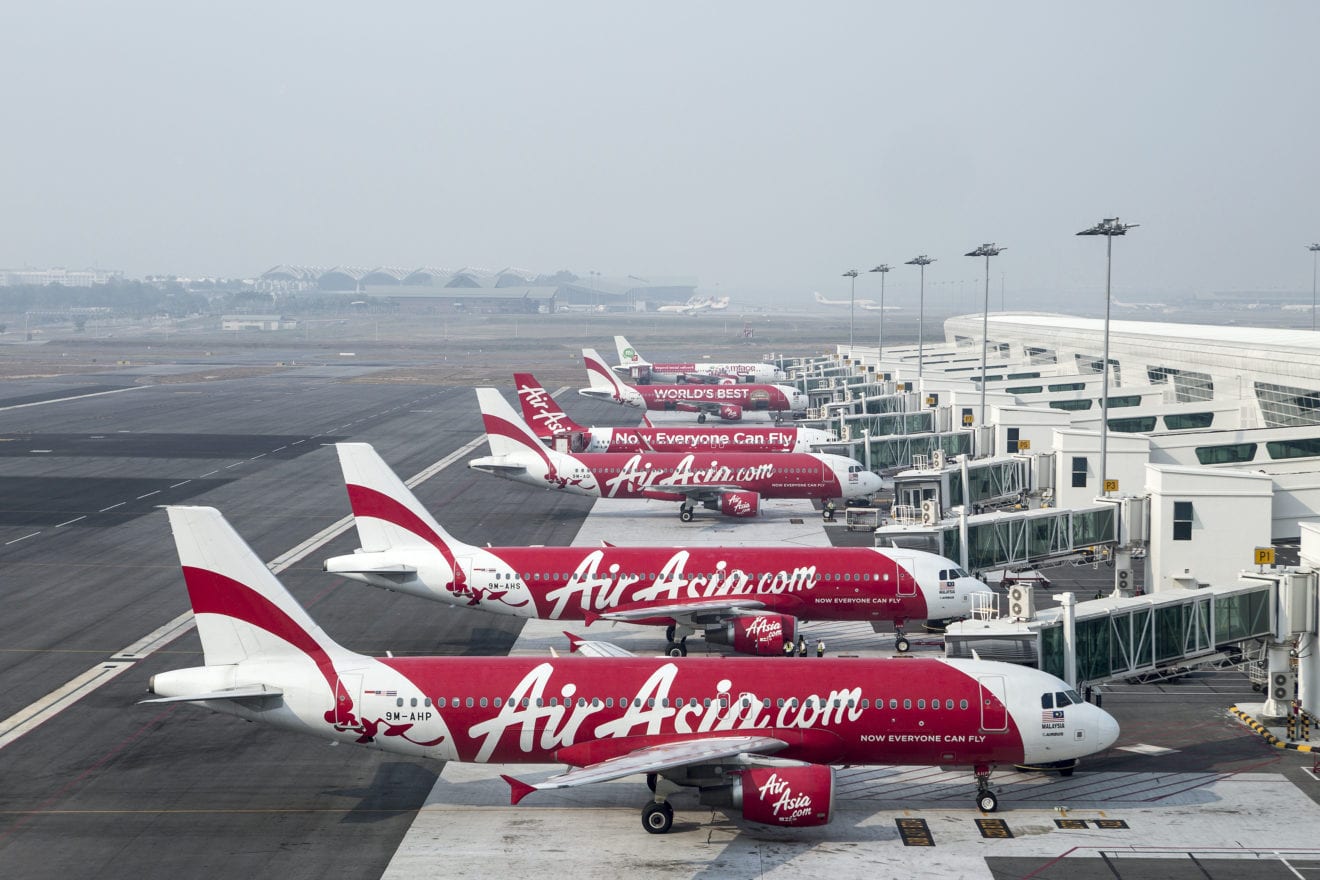
    AirAsia X Bhd, the long-haul arm of the region’s biggest budget carrier, is looking at swapping an order for 66 Airbus SE A330neo widebody jets to larger A350s in a bid to boost capacity on its busiest routes.

    A review of the Kuala Lumpur-based discounter’s fleet requirements is under way and could result in a plan to trade up to the bigger widebody, Tan Sri Tony Fernandes, chief executive officer of the AirAsia

    AirAsia X will remain focused on routes within four to eight hours’ flying time and would deploy the A350s on those services just as it had aimed to do with the A330s, Fernandes said, adding that a switch wouldn’t indicate a revival of plans to serve Europe.

    For Airbus, an order would shrink the 212-plane A330neo backlog while bolstering an A350 programme that has itself suffered recent setbacks.

    “Over the last 10 years we’ve been tweaking the model,” the CEO said. “Now that we kind of know what we want to do, we’re looking at the fleet. We’re toying with the A350. If we went A350, we wouldn’t use the A330neo anymore, we’d go all A350.”

    AirAsia X currently has 10 A350-900s on order alongside the larger A330neo commitment, while its existing fleet comprised 30 currentgeneration A330s. The Boeing 787 “looks interesting as well,” Fernandes said in London.

    The move would mark an about face from previous plans. In 2015, the Malaysian operator began looking at flipping the ten A350s due for delivery from 2021 to A330neos, with the unit’s chief Benyamin Ismail saying the smaller jet was cheaper and just as economical.

    While an order rethink could be lucrative for Airbus, with the A350-900 having a sticker price of US$311.2mil versus US$290.6mil for the A330neo, the switch would come as a complication given the airline’s status as a launch customer for the plane.

    Fernandes said the first jet is due in December 2018, though the date is “slipping” after already being put back amid development issues with Rolls-Royce Holdings Plc’s Trent 7000 engine. The company will send representatives to the model’s first flight, scheduled for Oct 18 in Toulouse, he said.

    AirAsia X is also exploring the business case for adding Airbus A321neos to serve routes to India and China that might not support bigger planes, Fernandes said.

    The main AirAsia shorthaul operation already has orders for more than 400 upgraded Airbus narrowbodies, including 100 A321 variants.

    Commencing heavily discounted flights to Europe is unattractive right now, given the amount of capacity already deployed, the CEO said.

    “When we come into a market we’ve got to make sure we can really bring fares down; we don’t think we can,” he said, adding that serving the US from Japan could be a more interesting market, with an Osaka-Honolulu route doing “very well”.

    Fernandes said plans to sell AirAsia’s aircraft leasing arm Asia Aviation Capital Ltd should come to fruition before the end of this year, with the company focused on two or three bidders from around the world.

  • Michael Kors reopens Makati flagship store

    Michael Kors reopens Makati flagship store

    Affordable luxury leather goods brand Michael Kors has finished renovating its flagship store in Manila, reopening to the Filipino customer in October 2017.

    Located at Greenbelt 5, the improved Makati store unveils a new play on metal accents — as seen on shelves and fixtures – for the US brand.

    The New York handbag and accessories retailer is locally distributed in the Asian nation by Stores Specialists Inc. (SSI), and is looking to ramp up sales in the Philippines.

    “Michael Kors has contemporary styling and great value. It is very up to date with trends interpreted in a way that resonates with every kind of style,” SSI Group president Anton Huang, told local media.

    According to Huang, Michael Kors bags, accessories and footwear remain the Philippines’ most sought after item.

    However, Michael Kors Philippines has witnessed an increase in sales for ready-to-wear lines, adding the brand’s success is rising as more customers adopt a sophisticated lifestyle.

    “Ready-to-wear apparel has become more important to our customers. It  is been successful. For apparel, there’s growth season after season.”

    In addition to the newly reopened Makati flagship, Michael Kors has other stores in the Philippines located at Central Square on Bonifacio High Street, Newport Mall, Power Plant Mall, Rustan’s Makati, and Shangri-La Plaza Mall.

    Kors had been grappling with declining sales in recent quarters as more people shop online. The firm has faced over-distribution of its products and a reliance on promotions to boost sales also eroded some of Kors’ brand value and its appeal.

    However, in August 2017, Michael Kors Holdings reported better-than-expected profit for the first quarter as it cut down on promotions and sold more premium handbags, it said.

    Looking ahead, the company expects fiscal 2018 revenue of about $4.28 billion, slightly higher than its earlier forecast of $4.25 billion.

  • Ferrari opens new Kuala Lumpur showroom

    Ferrari opens new Kuala Lumpur showroom

    Ferrari has opened a new showroom in Kuala Lumpur in partnership with Naza Italia, the official importer and distributor of Ferrari in Malaysia.

    Located at Naza Platinum Park on the ground flor of Tower 1, Naza Italia has invested RM2.8 million to develop the 3,115 square foot Ferrari City Showroom.

    A second Ferrari outlet for the Malaysian capital, the new showroom showcases three of the latest Ferrari models, and boasts a luxurious customer lounge as well as a configuration and customiszation room.

    The opening is part of the company’s strategy to boost the brand’s presence in the metropolitan area.

    “Substantial growth in business calls for an expansion that will enable us to better serve Ferrari’s discerning clientele,” Naza World Group executive chairman, Datuk SM Faisal SM Nasimuddin, told media at the launch.

    “To address that, we are making the brand more accessible with a showroom in this prime location,” he continued.

    The Naza Platinum Park location compliments Ferrari’s first showroom offering, located in Petaling Jaya.

    “The showroom is somewhat of an appetizer, presenting Ferrari enthusiasts and potential buyers a taste of the latest offerings and a preview of experience provided at the showroom in Petaling Jaya,” he said.

    Naza World also recently invested RM5 million to renovate its debut KL showroom.

    “The upgrade is a reflection of Naza Italia’s commitment to the clientele and to better serve our customers,” he concluded.

  • Longchamp Singapore reopens at Paragon

    Longchamp Singapore reopens at Paragon

    Longchamp Singapore has reopened its Paragon mall boutique.

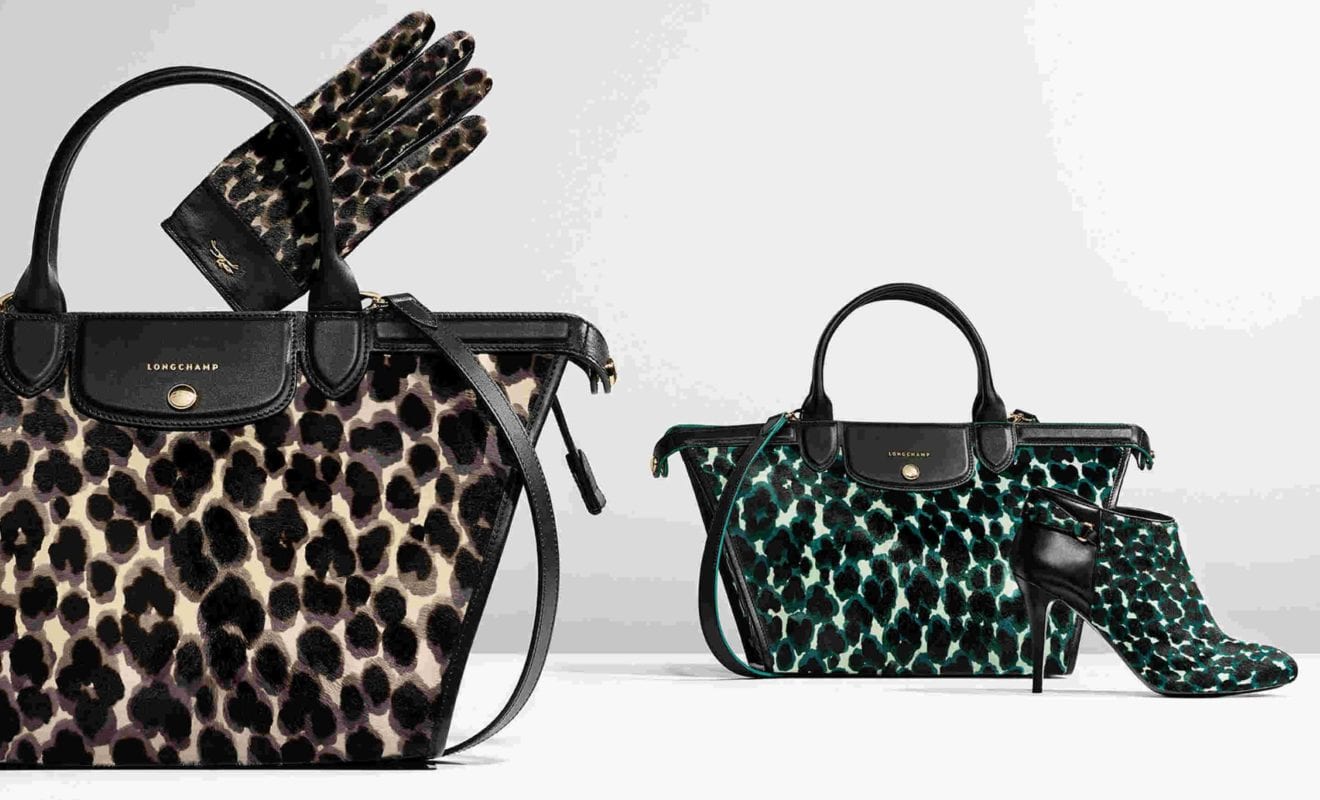
    Marking the relaunch at 02-40 kiosk, the French luxury leather brand released its Mademoiselle Longchamp range of bags, which is exclusively distributed there until September 15, and at all Longchamp outlets thereafter.

    Inspired by 1970s heroines such as Jane Birkin and Francoise Hardy, the bags are available in black, grey, cognac and mimosa, and are sold from US$630 to $1955.

  • Céline opens in Sydney

    Céline opens in Sydney

    French maison Céline has opened its second Australian store in Sydney.

    Located on level four of Sydney’s Westfield Shopping Centre, the 186-square-metre store is designed with clean lines and pared-back simplicity, hallmarks of the brand’s creative director, Phoebe Philo.

    Raw materials such as onyx, fired terracotta, carved lime wood and industrial chipboard mix in with foliage, and bounce off black metal hanging rails, brought to life by a concrete floor in grey.

    A central sculpture wall divides each room, with bespoke furnishings – designed by Danish artist FOS – splattered throughout. Features include mirrors, a jewellery table, sunglasses and jewellery display casing, and a large seating area in ceramic and wood.
    The new Sydney flagship hosts Céline’s autumn/winter 2017 collection, as well as a range of ready-to-wear, shoes and accessories.

    The Sydney store is the brand’s 141st store globally. The first Australian flagship opened in Melbourne’s Chadstone shopping centre in 2016.

    Founded in 1945 by Céline Vipiana, the Paris house is today owned by global luxury conglomerate LVMH group.

  • Nokia launches carrier-grade home Wi-Fi suite

    Nokia launches carrier-grade home Wi-Fi suite

    The product portfolio will consist of a line of Wi-Fi gateways and extenders for operators to offer their customers to improve the user experience and decrease Wi-Fi related support costs.

    Operators will be able to offer a managed in-home Wi-Fi solution which aims to reduce the volume of customer support calls related to poor in-home connectivity and reduce churn.

    The portfolio also utilizes a Broadcom WLAN chipset to analyze and avoid interference effects caused by other Wi-Fi and non Wi-Fi devices, minimizing connectivity issues. The Nokia Wi-Fi gateways can identify 17 different interference sources at both 2.4-GHz and 5-GHz.

    “Everyone knows how tedious malfunctioning Wi-Fi networks can be. People demand instant connectivity and perfect coverage throughout their homes. Nokia in-home Wi-Fi delivers just that,” Nokia SVP and GM for broadband carrier access Greg Fischer said.

    “Nokia Wi-Fi will be a great tool for service providers to increase customer loyalty and focus on new revenue streams. As they lease the central home gateway and have a trusted relationship with subscribers, they have a key role to play in delivering the Digital Home.”

  • Huawei, SUSE building mission-critical server

    Huawei, SUSE building mission-critical server

    At SUSECON 2017, Huawei and Linux-based operating system developer SUSE announced a expanded partnership to build a more reliable Mission Critical Server for enterprise customers.

    The server will support memory module hot swap, helping customers slash unplanned maintenance time while keeping their production systems up and running.

    The solution will run on Huawei’s 16-/32-socket KunLun Mission Critical Server and SUSE Linux Enterprise Server for SAP Applications. It strengthens both companies’ lineup of enterprise mission-critical offerings.

    The Huawei KunLun Mission Critical Server is specifically engineered for critical workloads such as enterprise database, decision support, and business processing. Supporting 8, 16, or 32 Intel processors with up to 32 TB in-memory computing, the KunLun server is capable of processing massive amounts of data even in large-scale in-memory database systems.

    “Huawei is teaming up with SUSE to jointly launch the in-memory computing hot swap solution built on the Huawei 16-/32-socket KunLun Mission Critical Server and the SUSE Linux Enterprise Server RAS enhanced feature package,” Huawei IT server product line president Qiu Long said.

    “This solution will ensure continuous, stable running of enterprise business-critical applications and reduce unplanned downtime. Supporting memory online maintenance, it reduces unplanned system outage caused by memory faults to almost zero, thereby boosting the reliability of enterprise critical applications.”

  • Ericsson picks new chair to guide recovery efforts

    Ericsson picks new chair to guide recovery efforts

    Ericsson has nominated former mining equipment provider Atlas Copco CEO Ronnie Leten as its new chairman to assist with the struggling vendor’s recovery efforts.

    Leten will stand for election at a shareholder vote on March 28 as Ericsson’s pick for the successor to Leif Johansson, who announced in July that he won’t make himself available for re-election.

    As well as his role as president and CEO of Atlas Copco, Leten is currently a board member of bearing and seal manufacturer SKF, chairman of home appliance maker Electrolux and proposed chairman of planned Atlas Copco division Epiroc.

    Despite his lack of telecoms industry experience, the chairman of Ericsson’s nominating committee Johan Forssell said the committee believes Leten is the right pick for the job.

    “Ronnie Leten has a very strong track record when it comes to value creation,” Forssell said. Under his tenure, Atlas Copco has seen its shares rise twice as high as the European industrial sector index.

    “Mr Leten is a very skilled businessman, technically savvy and strategically versatile. Furthermore, he has significant experience from digitalization of major operations, which will be beneficial for Ericsson’s focused work together with its customers.”

    The committee has also proposed that Kurt Jofs, the leader of Ericsson’s networks business between 2003 and 2008, rejoin the company as a new board member.

    “With Mr Jofs’ deep knowledge of and background from the telecom and IT-industry, not least from his previous tenure at Ericsson, we believe that he will contribute complementary skills and experience to Ericsson’s Board. With these changes, the Nomination Committee believes that the company is given the right conditions for realizing its long-term potential,” Forssell said.

  • Asia Beauty Group deal for ‘beauty park’

    Asia Beauty Group deal for ‘beauty park’

    A consortium comprising a Macau firm and two Mainland Chinese companies has signed an agreement with Hong Kong’s Asia Beauty Group Holding to open a “beauty park” in Grand MixC, an urban complex being developed in Hengqin.

    Macau’s San Fong Wang Property Development & Investment is also funding the construction of the RMB50 billion (US$7.52 billion) mixed-use complex. The two other parties are real-estate developer China Resources Land and financial services group China Resources Trust, according to information released by the Zhuhai government.

    Aimed at providing “one-stop fashion and leading cosmetic services” for women, the 20,000sqm park will include hairdressers, beauty salons, spas, catering, wedding services, photography resources, a themed hotel and a media centre within 10 theme areas. Hengqin is an island and special economic zone in Zhuhai, in Guangdong province.

    Previously owned by Ng Lap Seng, a Macau real-estate tycoon convicted on July 30 of bribery, money laundering and corruption, San Fong Wa is now headed by his son Ng Kei Nin.

    Completion of the beauty park is expected next year, when the first phase of the Grand MixC project is also expected to be completed. The complex is expected to become a retail and cultural destination, targeting the boutique trade and exhibitions, healthcare, cultural and creative activities as well as the hi-tech industry.