Author: Mei Ling Tan

  • Hokkaido Ramen Santouka opens Quezon branch

    Hokkaido Ramen Santouka opens Quezon branch

    Hokkaido Ramen Santouka, which arrived in the Philippines in 2013, has opened its 11th branch, in Up Town Center in Quezon City.

    Launching in Japan in 1986, the brand is known for its meticulous preparation of its tonkotsu broth, a tradition if follows in the Philippines. Hokkaido Ramen Santouka Manila president Annaliza Lim says all its branches have a full kitchen that takes up about 40 per cent of the store’s space.

    “We make all our broths in house at every branch to ensure freshness. A Japanese chef goes to our different branches to check the tonkotsu broth to make sure the quality is at par,” says Lim.

    All ingredients are imported from Japan, with the soup being cooked for 20 hours daily.

  • Oppo Philippines launches concept store in Cebu

    Oppo Philippines launches concept store in Cebu

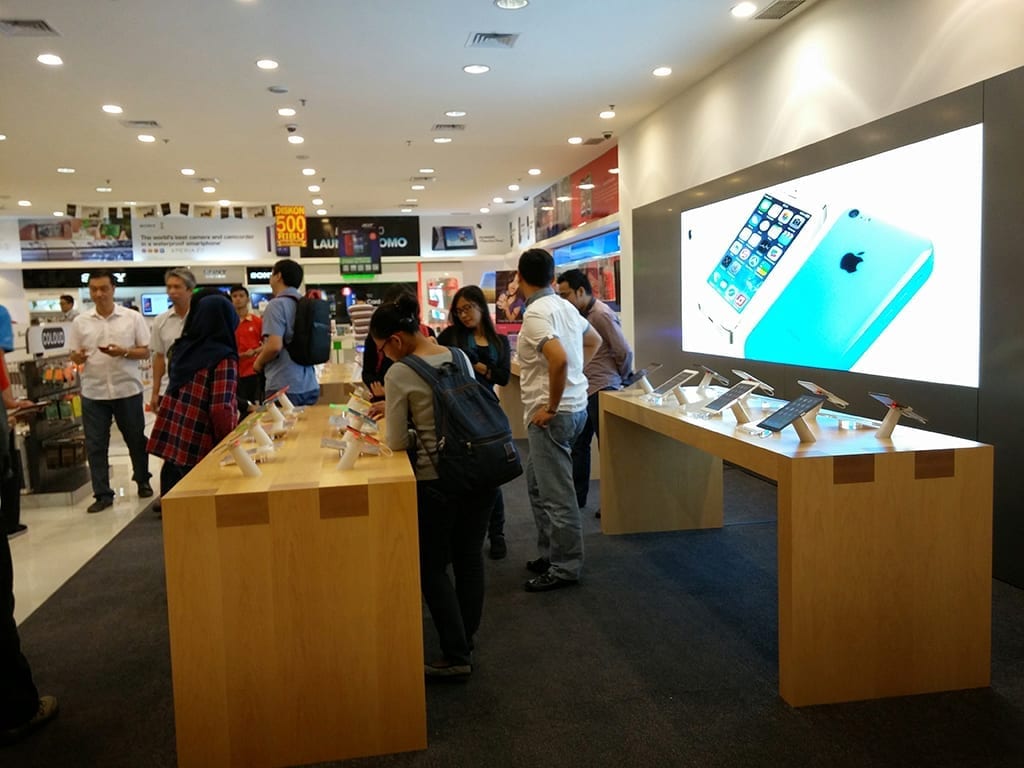
    Oppo Philippines has opened a concept store at Ayala Center Cebu.

    It is part of a nationwide expansion plan by the smartphone brand.

    “Cebu is a valuable market for Oppo… our selfie-centric smartphones are definitely relevant in the ninth city for most selfies in the world,” says Oppo Philippines PR manager Eason de Guzman.

    As well as the latest phone models, the Oppo concept stores carry accessories.

    On hand at the Ayala Center store’s opening was actor Rocco Nacino.

  • Similar to Ikea, but it’s Alibaba

    Similar to Ikea, but it’s Alibaba

    Alibaba has opened a colourful, all-inclusive home-furnishing flagship store in Hangzhou similar to Ikea, but fully augmented by Alibaba’s e-commerce technology.

    The Home Times store is the Chinese e-commerce giant’s second major offline push into the US$130 billion Chinese home-furnishing market (it launched designer home-product store House Selection in Hangzhou in December).

    Alibaba is reportedly planning to open three more Home Times stores by the end of the year and 15 next year, reports China Money Network.

    More than 20,000 items are available in the store, including furniture, kitchenware and stationery – all the most popular items from Alibaba’s online shopping channels. Each item has an electronic price tag that allows staff members to match the price to the online retail price if necessary. The barcode on each tag also allows customers to check and order the item on Tmall.com if they chose, rather than taking bulky products home by car or mass transit. Tmall.com also shows the products in different colours and formations via a touch screen.

    More than 30 per cent of customers in China buy their furniture in a furniture shop or at malls, while 21 buy online, according to a report by Chinese real-estate portal Fang.com.

  • APAC battered by cyber attacks in 1H17

    APAC battered by cyber attacks in 1H17

    Asia Pacific was heavily hit by cyber attacks during the first six months of the year, taking more attacks than other regions in most threat categories, according to Trend Micro.

    Globally, Trend Micro detected 82 million ransomware threats and found that on average, 28 new ransomware families were created every month. The company also blocked more than 3,000 BEC attempts; and discovered and disclosed 382 new vulnerabilities.

    In the meantime, a new trend of cyberpropaganda reared its head in 2017 – cybercriminals started selling tools and services that helped create fake content, boost social media reach, and buy votes that can directly influence elections.

    Connected devices continue to be a problem too. In April, Trend Micro discovered the Persirai botnet targeting more than 1,000 Internet Protocol (IP) camera models. The company also found more than 83,000 exposed industrial routers and 28 exposed industrial robots.

    Out of the 82 million ransomware threats blocked, those targeting APAC entities accounted for 35.7% of all, the highest of all regions. This is followed by EMEA (25.24%), Latin America (22.66%), and North America (15.71%).

    The successive successes of WannaCry and Petya attacks reinforced the need for consistent patching for enterprises across all industries. Despite Microsoft releasing a patch in March for the vulnerability CVE-2017-0144 or EternalBlue, which WannaCry and Petya exploited, the attacks still infected thousands of computers in April and in June.

    Other noteworthy ransomware families that surfaced in the first half of the year included new variants of Cerber, an infamous ransomware now armed with anti-machine-learning capabilities; Patcher, which affected the MacOS; and the mobile ransomware SLocker.

    In the first six months of the year, more than 436 million malware detections were observed in the APAC region, surpassing the numbers in all other regions by a huge margin. APAC is followed by North America (324 million) and EMEA (169 million). The top three malware found in the region are DocDrop, DOWNAD, and WannaCry. The most hit countries in the region are Japan, Australia, and Taiwan.

    As industrial IoT devices continue to mushroom in APAC, the number of supervisory control and data acquisition (SCADA) system vulnerabilities is also increasing, providing fodder for malware attacks. Based on the findings from the Trend Micro’s Zero Day Initiative program, there exist malware specially made to target these connected systems.

    APAC also leads in the number of detections for online banking malware in the first half of the year, culminating in more than 118,193 malware discovered and blocked, four times more than EMEA (24,798) and five times more than North America (20,888). Japan, China, and Vietnam encountered most of the attacks.

    Trend Micro also found that more than 47 million malicious mobile apps were downloaded by users in APAC, much more than those from other regions. For instance, EMEA users downloaded 30 million such apps; the numbers are even lower in North America (eight million) and Latin America (six million).

    Exploit kits are another prominent threat in the APAC region, with a total of 556,542 detected within the six months, more than quadrupling the second place – North America (120,470).

    The most distributed exploit kits for the first six months in APAC are Rig, Magnitude, Sundown, and Nebula. Exploit kits normally target popular software such as AdobeFlash, Java, and Microsoft Silverlight. In 2017, connected industrial systems became a popular target for exploit kits too. Some of them can be used to deliver ransomware, such as Rig, Magnitude, and Sundown.

  • Startups challenge telecoms status quo as 5G rises

    Startups challenge telecoms status quo as 5G rises

    The rise of 5G is promising to shake up the status quo in the mobile equipment industry by presenting opportunities for startups to grab market share away from the incumbent vendors, according to ABI Research.

    In a new report, the research firm identified 15 startups exhibiting strong potential to play a role in operators’ 5G transformation through innovative products and services.

    Operators are facing the need to address key network performance and traffic management issues ahead of the standardization and launch of 5G in 2019-2020, the report states.

    Technology trends including SDN and NFV for mobile networks, the evolution of the mobile edge and self-organizing network solutions will also lay the groundwork for 5G. Other enabling technologies include the use of big data analytics to enhance network performance.

    Startups such as Athonet, CellWize, CellMining, AirHop Communications, Core Network Dynamics, Blue Danube and Vasona Networks are developing innovative solutions in these areas and are poised to challenge the long-established telecoms industry status quo.

    “Traditionally operators have deployed a handful of infrastructure vendors in their networks, especially in the core network…The end-to-end digital transformation toward virtualized and software defined networks is creating the opportunity for operators to open their highly proprietary networks and vendor ecosystem to include innovative startups,” ABI Research senior analyst Prayerna Raina said.

    “The telco start-ups we have profiled are challenging the incumbents in every way. From the flexibility of the solution to value-added services and a strong R&D focus, these companies are not just innovative, but also reflect an understanding of telco operators’ operational models as well as revenue and network performance challenges.”

  • Vietnam’s incumbent cellcos testing MNP

    Vietnam’s incumbent cellcos testing MNP

    Vietnam’s three largest mobile operators have started testing mobile number portability ahead of its planned implementation in the nation by the end of the year.

    Viettel, VinaPhone and MobiFone are conducting preparations for the introduction of MNP as part of a communications ministry edict to introduce the capability.

    The ministry approved the MNP project in 2013, and the plan calls for its introduction this year in order to benefit consumers and stimulate competitiveness in the mobile market.

    A mobile switching center has now been established to facilitate number porting and Vietnam’s Authority of Telecommunications plans to introduce a detailed implementation plan early next month.

    According to ministerial guidelines, only mobile subscribers with numbers activated for at least 90 days will be able to port their numbers to other networks.

    Vietnam has around 126.5 million mobile customers, so the MNP facilities that are introduced may need to be able to manage large volumes of switching requests.

  • Ericsson launches wearable voice call solution

    Ericsson launches wearable voice call solution

    Ericsson has released a new VoLTE-based core network functionality to allow operators to offer single-number services for multiple wearable SIM-based devices.

    The new solution will allow operators to provide voice services for wearables using the same mobile number as a customer’s smartphone.

    It is designed for the new breed of wearable devices with cellular connectivity that are able to make and receive calls without being tethered to a nearby smartphone.

    The functionality can be added as an upgrade to Ericsson-supplied VoLTE networks with IMS deployed.

    Ericsson said the solution has been verified and pre-integrated with market leading devices, and will be adapted for more device types and brands as they are released. The company is already deploying the technology in more than 10 operator networks.

    “We continue building new useful services for our installed base of VoLTE networks, to enable our customers to launch innovative consumer and enterprise communication services,” Ericsson head of product management for communications services Monica Zethzon said.
    “With the new Multi-SIM for voice calls functionality, we support operators launching new attractive devices, which can also make high-quality operator voice calls anywhere, using the subscriber’s mobile phone number.”

  • Bangkok’s Stadium One puts focus on sports retail

    Bangkok’s Stadium One puts focus on sports retail

    Downtown Bangkok’s first sports community mall, Stadium One, is planned to open in November.

    Developed by Sportsociety Co, the retail project is at the Banthat Thong intersection opposite Tesco Lotus hypermarket and near National Stadium, Chulalongkorn University and several shopping centres.

    Stadium One will cover about 27,000sqm, of which 20,000sqm will house 124 shops selling sports products and equipment. The five-storey building will also include a sports clinic, 5000sqm for indoor sporting activities, and 2000sqm for events.

    Sportsociety’s four partners – Thanomkiat Summavuthichai, Natapak Rekijtisirikul, Sittichai Srisanguansakul and Pongwat Tiyapornchai – have budgeted THB200 million (US$6 million) to rent the project site from Chulalongkorn University for seven years.

    Executive director Thanomkiat says the number of people concerned with their health has been continually rising. The market size for the sporting business is estimated to be worth THB160 billion, with growth of 8 to 10 per cent a year.

    “Thailand’s sporting market is in an upside trend,” Thanomkiat says. “The market size for sporting goods is still lower than Singapore and Malaysia by several times. With this growth opportunity, sporting goods and fitness chains will be parading to the Thai market soon.”

    Leading the way will be a Swedish fitness brand that will offer around-the-clock service in a 1000sqm space at Stadium One in November, says Sportsociety director Natapak.

    He says about 60 per cent of space at Stadium One is already booked and about 90 per cent  is expected to be taken by opening time.

  • E-Mart China exit confirmed

    E-Mart China exit confirmed

    Thailand’s CP Group has agreed to buy five of the six remaining E-Mart China stores, ending a 20-year presence for the Korean firm.

    Sources in the retail investment banking sector said E-Mart inked an agreement with CP Group to hand over the stores in Shanghai pending approval from Chinese regulators.

    Reports emerged earlier this month that the two parties were in negotiations. Yonhap news agency’s sources said E-mart is in the process of selling off its sole outlet in Xishan by the end of the year.

    Exact details of the sale have not been released, but market watchers said E-Mart will not be able to get the full market value for the stores and will have to settle for much less.

    The net book value of the stores to be sold to the Thai food and agribusiness stands at around 68 billion won (US$59.9 million), with CP Group expected to benefit from economy of scale with the takeover. The company already operates a supermarket chain under its CP Lotus subsidiary.

    “Getting approval from Chinese authorities takes time, and the company cannot reveal details about the contract before then, but internally the goal is to exit China by the end of 2017,” said an E-Mart insider, who declined to be identified.

    E-Mart first entered the Chinese market in 1997, with the total store number rising to 30 at one point yet it had to scale back operations in the face of tough conditions and weak sales.

    Last year the retailer reported losses hitting 21.6 billion won, while total losses in the last four years reached 150 billion won.

    The company, meanwhile, said that it is moving into new Asian markets to compensate for China, where the diplomatic row over Seoul’s decision to deploy a US anti-missile defense system on its soil has hurt sales of South Korean-made products and services.

    E-Mart said that it is making a determined push to expand into the Mongolian, Vietnamese, Laotian and Cambodian markets that offer good growth potential.

    It said a second store in Mongolia will be opened Friday following the first that started operations in July 2016.

  • Hawaiki Cable nearly ready for installation

    Hawaiki Cable nearly ready for installation

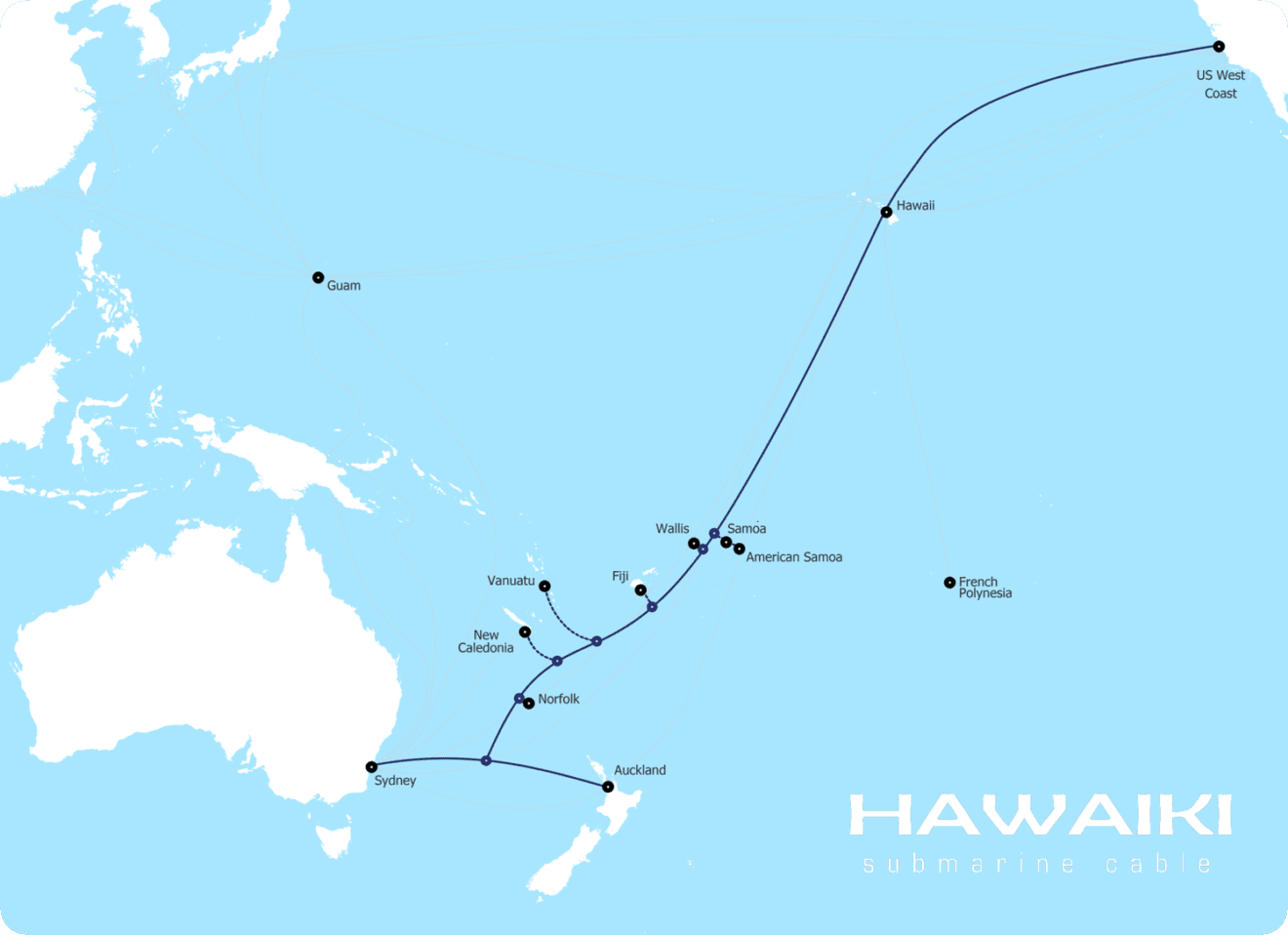
    The companies behind the planned Hawaiki transpacific cable connecting Australia and New Zealand with the US have revealed that installation of the cable is due to commence next month.

    Hawaiki Submarine Cable and cable supplier TE Connectivity said the 14,000km of subsea cable are in the final stages of being loaded onto two cable laying vessels.

    All installation permits for the planned landings in Australia, New Zealand and the US have meanwhile been secured, and the system remains on track for completion in mid-2018.

    Once complete, the Hawaiki Cable will link the three nations via Hawaii and American Samoa, with options to expand to multiple south Pacific islands such as Fiji and Tonga. It will be the highest cross-sectional capacity link between the US and Australia and New Zealand.

    “The coming months will see the realization of our vision for Hawaiki, a system that will impact the capabilities and economies of hundreds of Pacific communities,” Hawaiki Submarine Cable CEO Remi Galasso said.

  • AirAsia moves closer to setting up JV carrier in China

    AirAsia moves closer to setting up JV carrier in China

    Airasia is moving closer to setting up a joint-venture (JV) budget airline in China, having entered into a non-binding term sheet with China Everbright Group and two other companies on Friday last week.

    In an announcement to Bursa Malaysia on Monday, the low-cost carrier said the term sheet, whose signatories included Singapore-based  Plato Capital and Oxley Capital Ltd, intended to confirm the parties’ interest in forming the JV and contained supplementary information to an earlier memorandum of understanding (MoU).

    On May 14, AirAsia signed an MoU with Everbright – a conglomerate under the direct supervision of state-owned Assets Supervision and Administration Commission of China’s State Council – and Henan Government Working Group.

    Their target JV airline, to be known as AirAsia (China) in China, will be established either through an acquisition or by obtaining a new airline licence.

    Under the 12-month MoU, it is intended that AirAsia (China) will submit an application for an operating permit in China to Civil Aviation Administration of China (CAAC).

    In addition to the airline, the JV will also look into developing infrastructure.

    The JV will invest in developing for pilots, engineers and crew training as well as a maintenance, repair and overhaul provider (MRO).

    The parties have also expressed interest to incorporate AirAsia (China) in Zhengzhou which is intended to be AirAsia (China)’s operating base and headquarters.

    The term sheet signed on Friday, Sept 25, is valid for no longer than 12 months for the parties to discuss and negotiate definitive agreements for the proposed JV.

    Plato is an investment holding company listed on the Singapore Exchange Securities Trading Ltd, while Oxley is an innovative private investment firm and multi-family office specialising in real estate, agriculture/alternative energy, natural resources sectors and investments across the Asia-Pacific region.

  • Aldi UK plans 70 new stores

    Aldi UK plans 70 new stores

    Aldi UK plans to open 70 new stores next year as it eyes 1000 by 2020.

    The German discount grocer says its sales increased by 13.5 per cent to £8.74 billion last year as it grew market share and continued to expand its store network.

    Gross profit, however, fell 7 per cent to £324.5 million due to investment in its distribution operations.

    Aldi UK currently has 726 stores.

    “Our growth is accelerating, thanks to the hundreds of thousands of new customers switching their shop to Aldi,” said Matthew Barnes, Aldi UK and Ireland CEO.

    “This is happening right across the UK and is all down to a simple, straightforward commitment – products comparable to the leading brands and supermarket premium ranges at the lowest prices in Britain.

    “We’re doing everything we can to insulate customers from those cost increases, making sure our prices are the lowest in the UK, every day of the year.

    “At the same time, we’ve been improving the quality of our range and introducing the new products our customers have asked for. The result is a carefully selected range of exclusive own-label brands and award-winning products.”

  • BMW to build new 8 series at German Dingolfing plant from 2018

    BMW to build new 8 series at German Dingolfing plant from 2018

    Carmaker BMW plans to build its new 8 series model at its plant in the southern German town of Dingolfing from 2018, strengthening the site’s role in the production of premium models in addition to electric vehicle components.

    The plant currently makes BMW’s 3 to 7 series models and expects to beat its record annual output of 369,000 vehicles this year, BMW said in a statement on Saturday.

    It reiterated that its new electric, autonomous iNEXT model was to be built at Dingolfing from 2021, and that the plant will be involved in the supply of electric motor, components and a battery for the electric MINI to be built in Oxford.

    “And that is certainly not the end of it,” Andreas Wendt, head of the plant, said in a statement.

  • Yusen Logistics raises the bar with two milestones

    Yusen Logistics raises the bar with two milestones

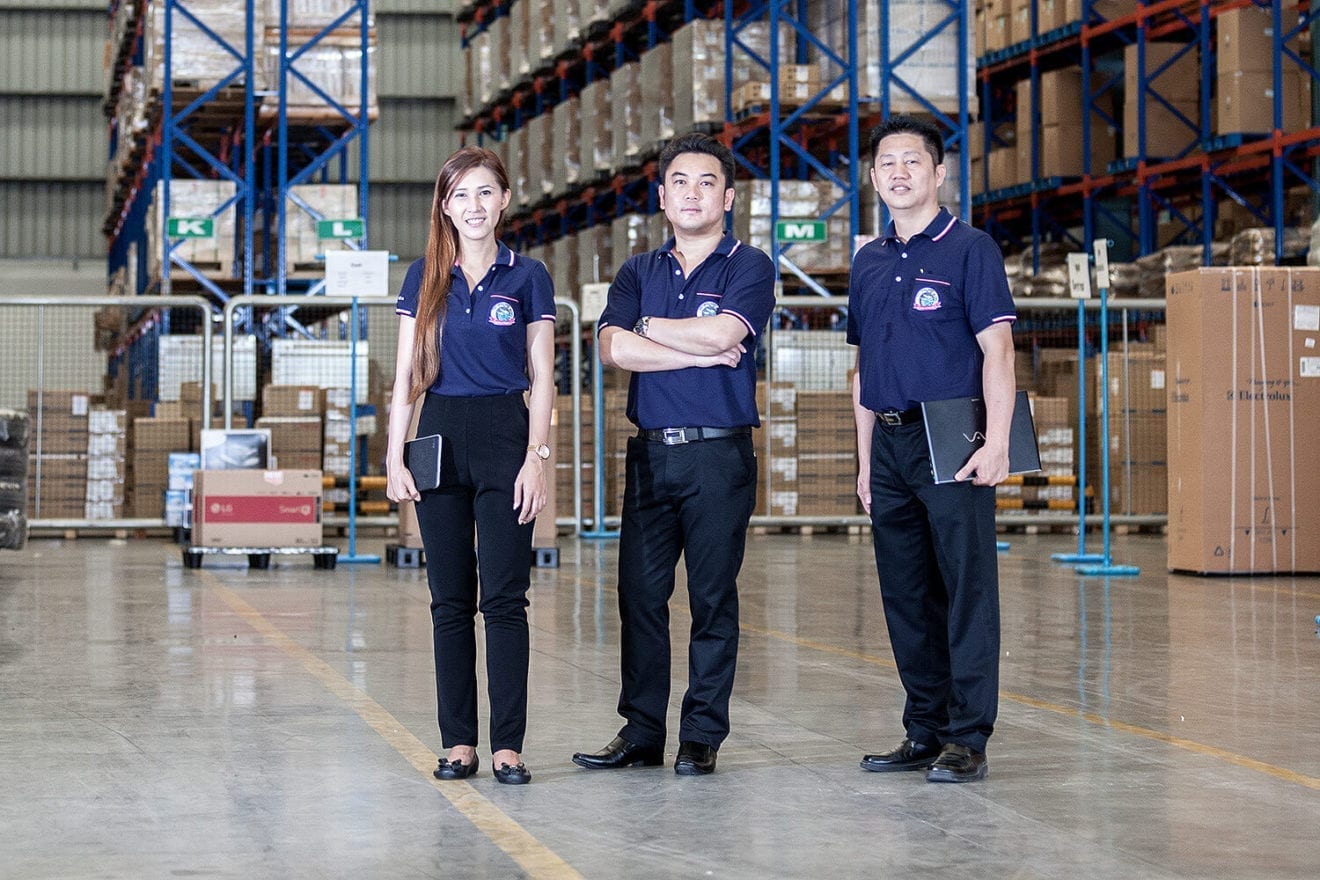
    Yusen Logistics Singapore Pte Ltd marked two significant milestones on 20 September 2017 in Tuas – a groundbreaking ceremony for its first future-ready warehouse and the commissioning of Swisslog Autostore, an automated ultra-high-density storage and robotic order-picking technology.

    Breaking ground to superstruct a new warehouse on existing site and launching the Swisslog Autostore that is newly installed within its current Tuas warehouse, Yusen Logistics is advancing existing operation productivity by:

    • Optimising storage volume for a 1,260 square metre floor area, in existing building, from
    • 2,000 cubic metres to 3,500 cubic metres;
    • Increasing throughput for receiving, sorting and put-away by 18 times;
    • Upskilling 60 per cent of manual labour by transforming manual tasks to digital skills;
    • Increasing high volume and high mix order fulfilment rate by 200 per cent; and
    • Creating new data analytical jobs – Executives analysing data from various digital systems to uncover new patterns for operational improvements and to improve customers’ supply chain efficiency and effectiveness.

    Ready by Q1 2019, the new three-storey ramp-up warehouse is designed and built by Boustead Projects and offers seamless process integration with the existing building. Advanced robotic, radio-frequency identification (RFID), vision recognition system and autonomous technology will be installed and integrated with Swisslog Autostore, to transform the conventional warehouse operation to smart data driven logistics operation.

    The new warehouse comprises 20,000 square metres of storage area, with 36 loading bays and an 8,000 square meter rooftop parking area for up to 100 trailers.

    “We are always applying insight, service quality and innovation to be the world’s preferred supply chain logistics company. This new warehouse in a strategic location is equipped with the most advanced technology. We will create sustainable growth for Singapore by providing high quality supply chain logistics service that will meet our customers’ needs,” said Kenji Mizushima.

    “Data driven operation provides the infrastructure for process customisation. The capabilities to provide customisable work processes mean Yusen Logistics can tailor specific services for the various industry verticals. This is a unique capability. Singapore is a global transportation hub with extensive trade links and market connectivity. Storage space with tailored quality, reliable and consistent value-added services provide competitive advantages to our customers who use Singapore as a regional distribution centre,” said Francis Kwa, head of contract logistics and information system, Yusen Logistics Singapore Pte Ltd.

    Yusen Logistics’ vision of connecting people, businesses and communities to a better future, through logistics, focuses on providing customers with the Japanese Kaizen Culture of continuous improvement of work processes and efficiency. Embracing Smart Technology is a logical step from the Kaizen Culture.

    “We are transforming ourselves to get closer to our customers and helping them with challenges that they are facing. With a vision to create sustainable growth for society, Yusen Logistics works towards driving productivity, space and operational efficiency by re-skilling our employees through partnership with educational institutions to be ready for the future and be equipped with the skills for automation. We strive to create better connections where we convert insights into actions to optimise their supply chain in the most effective and efficient way,” said Ng Kim Hung.

    Lee Eng Keat shared his optimism for the growth potential of the logistics sector: “Singapore’s logistics industry has consistently been ranked among the world’s best, reinforcing our position as a global leading logistics hub. EDB is excited to support the ambition of companies like Yusen Logistics, to catalyse enterprise-level transformation and improve productivity through innovation and greater adoption of automation. This will also translate into new professional roles and career pathways for Singaporeans, as well as the upskilling of rank-and-file jobs, building the necessary talent competencies to further the strengths and capabilities of the industry.”

  • ANZ markets outpaced in mobile shopping

    ANZ markets outpaced in mobile shopping

    Growth in online shopping in Australia and New Zealand is much slower compared to some emerging markets in the Asia Pacific region, according to the recent Mastercard Mobile Shopping Survey.

    Emerging markets in Asia Pacific have recorded high year-on-year growth in mobile shopping, outpacing their more developed counterparts. India, at 75 per cent, has retained its crown as the region’s top mobile shoppers for the second consecutive year; China, at 71.4 per cent, remains a close second.

    The Philippines (53.5 per cent) and Malaysia (55.6 per cent) have the highest year-on-year growth in mobile shopping, recording increases of 12.6 per cent and 10.1 per cent respectively.

    While the Philippines, Malaysia, China and India have recorded growth in mobile spending, the more advanced markets like Japan (31 per cent), Australia (26 per cent), and New Zealand (26 per cent) are keeping their mobile purse strings tight, the study showed.

    The study also revealed Asia Pacific’s penchant for mobile shopping has also fueled a steady increase in digital wallet adoption, with more than one in five consumers (22.3 per cent) using such payment methods. The region’s consumers are also embracing QR code payments. Over one in ten consumers use QR code payments with the most avid users hailing from China (42.6 per cent) by a wide margin.

    “Consumers in many of Asia Pacific’s emerging markets are mobile-first users, having leapfrogged the traditional payment evolution,” said Benjamin Gilbey, senior vice president, Digital Payments and Labs, Asia Pacific, Mastercard. “Their governments are making significant efforts to push the development of the e- and m-commerce landscape as well as its supporting infrastructure, which has in part contributed to the growth we’ve seen in the latest survey results.”

    Gilbey said today’s consumers have shifted from simply being one-device users to one-app users as they demand more seamless payment experiences.

    The Mastercard Mobile Shopping Survey, which was carried out across fourteen markets in Asia Pacific (Australia, China, Hong Kong, India, Indonesia, Japan, Malaysia, New Zealand, Philippines, Singapore, South Korea, Taiwan, Thailand & Vietnam) where total of 8,738 consumers aged 18-64 were polled online, revealed that majority of consumers across the region (53.6 per cent) cite convenience as a key reason for shopping on their mobile devices, particularly those in China (70.9 per cent), Thailand (60.8 per cent) and Taiwan (59.2 per cent). Contrary to the rest of the region, majority of consumers in Malaysia cited the ability to shop on the go as a key reason, as opposed to convenience.

    Clothing and fashion accessories (34.9 per cent), personal care and beauty products (21 per cent) and movie tickets (20.2 per cent) are the top purchases made by Asia Pacific’s mobile shoppers, the study showed. This was not the case, however, for mobile shoppers in Japan, New Zealand and Taiwan, whose top purchases include books, CDs and DVDs; toys and gifts; and personal and beauty care products, respectively.

    Preferences for in-store shopping continues its steady decline across Asia Pacific, dropping to 45.9 per cent from 48.6 per cent two years ago.