Author: Mei Ling Tan

  • Burger brand charts big expansion plans

    Burger brand charts big expansion plans

    Gourmet burger brand, Burger Urge, has opened a Sydney office and revealed plans for eastern seaboard expansion, including the roll-out of 37 new restaurants by 2020.

    Burger Urge has announced it will open five new restaurants in the second half of the year, will additional openings along the east coast including Port Macquarie, Toowoomba and Brisbane CBD.

    Sean Carthew, Burger Urge director, said the brand’s expansion plans follow a period of significant restructure and refocus.

    “Like any fast-growing business, we’ve made our fair share of mistakes and have learned a lot,” Carthew said. “Most significantly, we learned that we need to be very careful who we take advice from and who we let into our inner circle.”

    Carthew said part of Burger Urge’s restructure would see the company “return to its roots.”

    “When Burger Urge began 10 years ago, we made absolutely everything from scratch – we made our own patties, we hand-cut the chips, we even made sauces in-house,” he said. “It was the focus on the integrity of our food that generated lines down Brunswick Street every Saturday. It sounds simple, but by returning to our roots, we’ve not only won back the hearts and bellies of our regular customers but attracted a new legion of Burger Urge fans.”

    With its recent menu refresh, Burger Urge is now heading south – physically – in a bid to grow the brand’s national presence.

    “We are proud to have 22 restaurants throughout Queensland but it’s now time to stretch our wings and seek out the next opportunity,” Carthew said.

    The brand has launched a Newcastle restaurant last May and will open its second NSW site in Port Macquarie next month.

  • H&M reveals new store layouts

    H&M reveals new store layouts

    Swedish fashion retailer H&M will open two new stores in Queensland in the coming months, the company has announced.

    The H&M at Stockland Townsville will open on October 19, followed by the H&M store at Stockland Rockhampton on November 2. The two new stores will be the seventh and eighth H&M stores to open in Queensland.

    The two H&M stores will both be set over one large floor and each will span across approximately 2,500sqm.

    The stores will offer apparel, underwear and accessories for Men, Women, Kids and Baby with the Townsville store having the addition of the Home concept.

    “We are excited to be making further progress on our expansion in regional Queensland with the launch of our H&M stores at Stockland Townsville and Stockland Rockhampton,” said Hans Andersson, Australian country manager for H&M.

    “We look forward to meeting our H&M customers in both Northern and Central QLD and engaging them with our wide range of offers.”

    H&M entered the Australian market in 2014 and now has 22 stores nationwide.

  • Hong Kong: more than just retail

    Hong Kong: more than just retail

    There has been no shortage of ink spilt in recent years about the negative impact of China’s anti-corruption crusade on Hong Kong’s retail sector.

    Visitor arrivals from the PRC represented 76 per cent of all tourists in 2016, when those numbers fell 6.7 per cent. Taken with aggressive campaigns to lure mainland tourists elsewhere — Japan, Singapore, South Korea — and a strong Hong Kong dollar, life has become harder for the SAR’s retailers and landlords.

    Or has it?

    Despite currency fluctuations and fleeing Chinese travellers, overnight visitors to Hong Kong spent an average of approximately HK$6600 a head during their stays, funnelling nearly $300 billion in related capital into the economy that year according to the Hong Kong Tourism Board — and that was down from 2015. Though Mainland Chinese arrivals declined, short-haul markets (Taiwan, South Korea, Japan, the Philippines, Singapore and Thailand) registered an increase of 3.4 per cent, long-haul market arrivals (the US, Australia) rose by 2.3 per cent, and MICE and cruise passenger visits increased by 10 per cent and 50 per cent respectively.

    People are still coming to Hong Kong –  and they’re still shopping.

    Put very simply, Hong Kong’s one-two punch of consumer-friendly retailing and a great deal to offer visitors seeking to complement their shopping are the primary reasons the retailing scene remains vibrant. An open door business policy and historical connections make international brands a must-stop for regional expatriates and curious regional visitors alike. Stop outside a Marks & Spencer Food Hall on any given afternoon if you need proof.

    The new Italian outlet mall, Florentia Village, at Kwai Chung and the imminent Citygate expansion add to choices for bargain hunters, alongside guidebook hotspots like Ladies’ Street. An added bonus: all of this is free of sales tax. In some form, 12 per cent is added to goods in the Philippines, Koreans and Australians can pay as much as 10 per cent in levies, the Japanese 8 per cent and Thais 7 per cent according to tax advisory Deloitte. Twelve cents may not be a lot on a dollar, but it makes an enormous difference on a genuine Prada handbag.

    A travel ban that actually benefits Hong Kong…

    While it’s true the recent diplomatic spat between China and South Korea over defence deployment has proven a boon to Hong Kong shopping (Chinese travel to Korea fell 40 per cent in the year to April 2017 on the back of Beijing directives to halt travel packages to the Hermit Kingdom) it is in all likelihood a temporary glitch.

    Ultimately it is the city’s extras that keep Hong Kong a shopping option. When not browsing boutiques, stellar food and beverage breaks are available at every turn, and leisure parks, cultural outlets, nature and excursions can all be found in an easily navigable, compact space.

    If there’s a silver lining to the city’s retail property woes it’s the newly available space for international restaurant groups to move into. Finding room on the dining scene so far this year are Japan’s Michelin-starred ramen eatery Tsuta, fresh-local burger shack Honbo, Royal favourite Thai Brassiere by Blue Elephant, Moi Moi by Vietnamese Sydney celebrity chef Luke NguyenLilya Moroccan Lounge and Bar and venerable American dessert cafe The Cheesecake Factory are just a few. Anyone travelling with children (cruise operators are quick to point out the burgeoning family demographic) will be glad to have the amusements at Hong Kong Disneyland and perennially popular Ocean Park — with real animals — an MTR ride away.

    Art & culture

    Admittedly not everyone travels to Hong Kong with family or has a soft spot for amusement parks, and for those shoppers the SAR’s reputation as a cultural wasteland is quickly disappearing. The two-year old PMQ regeneration has put local, artisanal and independent design a shoppers’ fingertips, and the forthcoming West Kowloon Cultural District has just opened its first gallery: M+. Soon to be a few minutes’ walk from the PMQ is the Central Police Station redevelopment on Hollywood Road, Tai Kwun. The 16 buildings will comprise art galleries, boutiques, dining, and leisure spaces with an eye towards highlighting local heritage. Tai Kwun and the WKCD are set to be destinations in of themselves.

    Need some hiking and more?

    Finally, tourists are drawn to Hong Kong from around the world for its renowned urban hiking, traversing over 250km on just the Hong Kong, Lantau, Wilson and MacLehose routes. In no other city in the world can you be on a lush, seemingly remote trail one minute, and ensconced in the glamorous shopping of the Landmark an hour later.

    Also an hour away: Macau, which beckons as a Disneyland for adults, where luxury spas and more Michelin-starred dining awaits. It’s no surprise shopping in Hong Kong is as healthy as ever.

  • IPhone 8 Sees Bleak Response In Australia As Buyers Await iPhone X

    IPhone 8 Sees Bleak Response In Australia As Buyers Await iPhone X

    Users are probably waiting for the launch of the iPhone X, which is why the long lines outside the Apple Stores that have been a common sight post-iPhone launches are nowhere to be seen. A source told Reuters that it was a “bleak turnout” on Friday with fewer than 30 people in the queue before the Sydney Apple Store on George Street opened.

    Mazen Kourouche, who reviews products on YouTube and was first in the queue, noted that there are some modest changes in the device.

    “(It) is pretty similar to the iPhone 7 but it shoots 4k 60 frames per second and it’s got a new glass back instead of the metal which is apparently more durable,” Kourouche told.

    On the feature front, however, the iPhone 8 does not have much to offer, he added.

    Apple shares nosedived following poor iPhone 8 and 8 Plus reviews. Investors who were not happy with the way the device panned out pushed the shares down to a nearly two-month low. What is worrying investors that pre-orders are lower than they have been in previous launches.

    Usually, the number of pre-orders is a good indicator of how well the newest iPhones will sell. However, hours after both the iPhone 8 and iPhone 8 Plus were available, there were not many takers, and there was still stock left with September 22 delivery dates available either online or for in-store pickup, notes MacRumors. Mentions of the iPhone 8 and 8 Plus and iPhone X were fewer on the popular Chinese social media platform Weibo than mentions of the iPhone models in the previous two launches.

    According to Neil Cybart, an analyst who covers Apple for Above Avalon, “I think demand is down from last year, for no other reason than you have another flagship phone.”

    This could result in weekend sales being lower than at any other point since the launch of the iPhone 6 in 2014, the analyst says. Further, the steep price increase for the iPhone 8 over the price of its predecessors could also dent sales going forward.

    BTIG Research analyst Walt Piecyk also believes that other than anticipation for the iPhone X, lack of carrier promotions could be another reason for the lukewarm response to today’s iPhone launch. Piecyk stated that wireless carriers are not interested in promoting the iPhone 8 and 8 Plus, and this might not change even when the iPhone X launches, says the Financial Times.

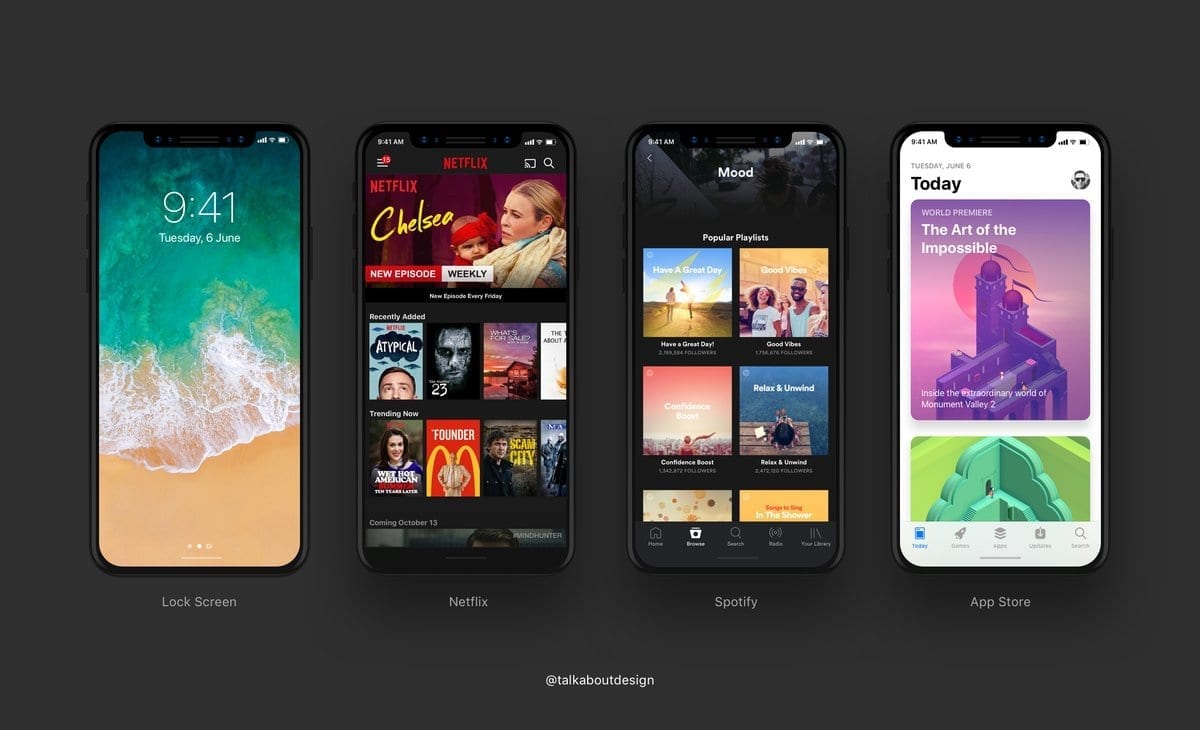
    Apple’s iPhone X will be available for pre-order starting October 27 with a price tag of $999. The iPhone X comes with an edge-to-edge screen, an improved camera and a new facial recognition system. Rumors suggest that the iPhone X supply will not be enough to meet demand until next year. Apple CEO Tim Cook described the iPhone X  as “the biggest leap forward since the original iPhone.”

    On Thursday, Apple shares closed down 1.72% at $153.99. Year to date, the stock is up more than 32%, while in the last year, it is up more than 33%.

  • Natuzzi Announces Consolidated Results for the Second Quarter and First Half of 2017

    Natuzzi Announces Consolidated Results for the Second Quarter and First Half of 2017

    The Board of Directors of Natuzzi S.p.A. has approved second-quarter and half-year 2017 consolidated results. Consolidated net sales for the second quarter of 2017 were €117.9 million, up 7.3% from €109.9 million reported in 2016 second quarter. Revenues generated by core business (sofas, beds and furnishings) were €109.1 million, up 5.0% compared to the second quarter of 2016.

    In particular, furnishings net sales increased by 15.3% over prior year same quarter at €7.4 million and represented 20.2% of the Natuzzi Italia branded sales.

    Natuzzi branded revenues increased 4.1% to €79.6 million, also due to an increase of 5.2% of the average price per seat. Within Natuzzi branded sales, we saw an increase from the Americas (+6.5%), and Asia-Pacific region (+13.8%). EMEA reported a decrease in sales (-1.1%) over the same period of last year, mainly due to our Italy-based Divani&Divani by Natuzzi network.

    Our direct retail operations (DOS) generated sales of €15.1 million during the second quarter of 2017, increasing by 32.3% over the same period of last year. These sales represented 13.8% of our core business, compared to 11.0% of one year ago.

    The actions implemented over the past few quarters on the Company’s owned stores have produced good results. In particular, during the second quarter of 2017, sales generated by our DOS network on a like-for-like basis have shown an increase both versus first quarter of 2017 (+17.7%) and second quarter of last year (+6.1%). Furthermore, considering the same like-for-like parameter, the DOS operating result for the second quarter of 2017 was positive (+€0.8 million), improving with respect to both 2017 first quarter (when we reported an operating loss of -€0.3 million) and 2016 second quarter (with an operating income of +€0.3 million). We saw improvements in our DOS in the UK, China, USA, Spain and Switzerland, while our Italy-based Divani&Divani by Natuzzi retail network is still under a restructuring phase. The recently acquired Mexican stores were still in the start-up phase in second quarter 2017.

    More recent sales data for DOS confirm the positive trend experienced in the first part of the year: our order flow through the third week of September on a Like-for-Like store basis increased 3.4% over the same period of last year. When we include sales from our new stores, the increase over last year is 38.3% in DOS.

    Consistent with the Group’s strategy to expand its presence in the direct-retail market to better control the entire value chain, we opened one DOS in West Palm Beach, Florida, USA, and acquired three Natuzzi Italia stores in Mexico, during the second quarter. Two directly operated Natuzzi Editions stores also opened in China in the second quarter of 2017. As of the date of this press release, the number of DOS is 60.

    We already have plans to open five new-generation stores, three in the last quarter of 2017 and two in the first quarter of 2018.

    Sales from our Softaly Division were €29.5 million, up 7.6% compared to the second quarter of 2016, as a result of the 15.2% increase in the Americas and 4.5% increase in EMEA. Sales from Asia-Pacific decreased by 31.2% in the second quarter of 2017, after increasing by 101.7% in the first three months of this year. In spite of such positive results in the quarter, Softaly “Private Label” division of the Natuzzi Group is still challenged by the limited number of accounts on the North American market which has caused a reduction of the volumes. We will present an extended program at the coming High Point market in October with the aim of adding new major Accounts. Europe keeps growing while in the APAC market the activities planned should bring the targeted results during the current year.

    In the second quarter of 2017 the Group increased the industrial margin to 35.1% from 34.2% reported in the second quarter of 2016. The slight decrease in upholstered seats sold was more than offset by a better mix and by the double digit increase in furniture sales.

    Transportation costs as percentage of net sales also improved to 8.9% as opposed to 9.8% in 2016 second quarter.

    Over the past few quarters the Company started implementing its retail strategy in priority markets, such as North America and China. The execution of this strategy has required investments in the organization, which resulted in increased SG&A. We expect that such investments, whose return started to appear in second quarter 2017, will support additional turnover in the future.

    For the reasons highlighted above, in spite of the overall improvement of the business, the Company reported a net operating loss of €2.9 million versus net operating loss of €1.0 million in the second quarter of 2016.

    The Group reported a net loss for the second quarter of €4.0 million, from a loss of €0.8 million in the same period of last year.

    For the first half of 2017, the Group reported a net loss of €14.7 million. Excluding €9.3 million as extraordinary accrual accounted for in the first quarter of 2017, net loss for the first semester would have been €5.4 million, from a net loss of €1.1 million in the same period of last year.

    The Group’s Net Financial position was positive at €13.6 million, up from a €12.8 million reported at the end of first quarter of 2017.

    Chairman and CEO Pasquale Natuzzi said, “Despite the troubles confronting our industry and retail in general, I am pleased to report the Natuzzi grew both revenues and industrial margin in the second quarter. This is a direct result of the work we are doing to grow our direct retail network through which we are generating sales of higher end product as well as more complete home furnishing packages. Focus on continuing to build for this growth is our highest priority. At the same time, we are taking steps to strengthen management in critical areas and are managing closely our administrative expenses during this period of rapid investment. Our brand has never been stronger and our drive never more directed. All indications are that our strategy is and will continue to succeed.”

    Chief Financial Officer Vittorio Notarpietro added: “We have continued with the execution of the direct retail expansion program to boost our branded sales and the scale of the entire value chain. This has resulted in the opening of new points of sales, acquisition of existing stores and reinforcement of the retail organization, both at central and regional levels.

    “All these activities require, by their nature, start up investments. We are just in the initial phase of such programs, and first results from our retail business model are emerging.

    “We’ll continue to pay attention in managing capital needs for investments and working capital in order to successfully accomplish the DOS development program globally so to benefit from higher margins.”

  • Chinese luxury e-commerce firm Secoo debuts on Nasdaq

    Chinese luxury e-commerce firm Secoo debuts on Nasdaq

    Chinese luxury e-commerce company Secoo Holding Limited on Friday rang the Nasdaq Stock Market opening bell in celebration of its Initial Public Offerings (IPO).

    Secoo’s IPO of 8,500,000 American depositary shares (ADSs) priced at 13 U.S. dollars per ADS, within the pricing range of 11.5 dollars to 13.5 dollars given by the company, for a total offering size of approximately 110.5 million dollars, assuming the underwriters do not exercise their option to purchase additional ADSs. Each two ADSs represent one Class A ordinary share.

    The company has granted the underwriters an option, exercisable within 30 days from the date of the final prospectus, to purchase up to an aggregate of 1,275,000 additional ADSs to cover over-allotments.

    Shares of Secoo, trading under the ticker symbol of “SECO,” tumbled about 19 percent to 10.52 dollars per ADS around midday Friday.

    Secoo is Asia’s largest online integrated upscale products and services platform as measured by gross merchandise volume in 2016, according to the Frost & Sullivan report.

    The company’s net revenues increased to 198.6 million dollars for the six months ended June 30 from the same period a year ago, with a net profit of 7.7 million dollars. It had net losses of 32.9 million dollars and 6.6 million dollars in 2015 and 2016, respectively.

    “China’s consumption expenditure continues to grow rapidly, with luxury spending on the upswing, which will give us tremendous development opportunities,” Secoo Founder & CEO Richard Rixue Li told.

    By 2021, China will add 1.8 trillion dollars in new consumption, according to a report by The Boston Consulting Group and AliResearch, the research arm of Chinese e-commerce giant Alibaba.

    Meanwhile, online platforms are one of the fastest growing retail channels in China. The stocks of Alibaba and JD, China’s two largest e-commerce firms, have been trading around their record highs in recent days, despite the stagnant global consumer market.

    “By listing on the Nasdaq Stock Market, Secoo will have a better international stage, which will enable us to link global brands and the Chinese consumer market more closely,” Li said.

  • Tokidoki Plans to Open 10 to 15 Hotels in China in the Next Five Years

    Tokidoki Plans to Open 10 to 15 Hotels in China in the Next Five Years

    Devotees of Tokidoki, the overly cute character lifestyle brand, will in future be able to book a room in a Tokidoki-adorned hotel. Cofounders Pooneh Mohajer and Simone Legno plan to open 10 to 15 Tokidoki hotels in China in the next five years, with the first one expected to be welcoming guests by the end of next year. Chasing young professionals who favor ultra-clean design with touches of art, the company is laying the groundwork for its own affordable luxury hotels. The Tokidoki branded hotel will feature its own designed decor, including hospitality products that will be available for purchase at the hotel. Legno, creative director, said, “It is a 360-degree experience as a designer. I have a graphic design background so I will apply that to stationery for the Tokidoki hotel, as well as a new logo.” (His fine art will also be sprinkled throughout the hotel.)

    Tokidoki’s interpretation of Kartell “Ghost” chairs will be in the hotel rooms. The company just unveiled the $480 Louis Ghost chair and the $185 Lou Lo one for children, reimagining the iconic seats that Philippe Starck designed for the company. Legno said, “We will promote it for sure. Why not? That’s the wonderful part of a design project.”

    The name Tokidoki means “sometimes” in Japanese, but the Asian-inspired products are made by an Italian artist now living in Los Angeles. The mash-up of cultures has led to collaborations with Karl Lagerfeld, LeSportsac, Marvel and Hello Kitty, among others, and a global following. The new Kartell chairs, for example, will be sold via Tokidoki’s site, Kartell’s New York and Miami stores and its wholesale accounts. With 10 Tokidoki stores, including outposts in Shanghai and a two-month pop-up shop at Galeries Lafayette in Beijing that featured big-screen animation. The 12-year-old company, which has flagship in IAPM Mall in Shanghai, plans to open 20 more before the end of this year.

    In January, the brand teamed with the conglomerate Chow Tai Fook for fine jewelry which is being distributed through more than 1,500 outposts in China, as well as stores in the U.S., Japan, South Korea, Singapore and Malaysia.

    This week alone included stays in Singapore, Los Angeles and New York. Monday they will be off to Vancouver. Next month, trips to New York, London, Milan and Indonesia are slated. “A year feels like it goes by in a month,” Mohajer said. “It’s pretty insane.”

    Reminded of his recent trips to India and Thailand, Legno said, “You have to push as much as possible when it’s a hot moment. We’re trying to focus on a global label and expand the brand as much as possible.”

    Li & Fung, Toki’s master licensing partner for China, Taiwan and South Korea, coordinated the hotel deal, and is scouting new ones for jewelry and cosmetics. A jewelry collaboration is in place and more shoppers are in search of Tokidoki’s vinyl art collectible figurines. Mohajer said of Li & Fung, “They’re constantly generating good flow. It’s been amazing to work with them. They were part of negotiating and procuring a retail partner for us for China.”

  • No long queues in Hong Kong on iPhone 8 launch day

    No long queues in Hong Kong on iPhone 8 launch day

    The launch of iPhone 8 on Friday did not receive such enthusiastic response from Hong Kong consumers as previously, with no long queues in front of Apple outlets.

    As the iPhone 8 and 8 plus went on sale across the globe on Friday, Apple stores in Hong Kong opened early in the morning and set up crowd control barriers at the entrance for customers to collect their pre-ordered products, but saw shorter-than-expected queues.

    A consumer who successfully bought an iPhone 8 on Friday morning told Xinhua that customers did not even need to pre-order online before getting the new phones at the store. “This is very different from previous years and shows how low the demand is.”

    Due to low demand, the number of resellers or scalpers outside the Apple stores was also obviously smaller than in previous launch days.

    Outside the Apple outlet in the Causeway Bay, a scalper told Xinhua that the prices the scalpers offered to purchase the new phones were the same as or even lower than official retail prices.

    The market has “low expectations” for the iPhone 8, he said, adding that many of his customers prefer waiting for the upcoming iPhone X.

    In Sin Tat Plaza in Kowloon, which usually was crammed with traders reselling new iPhones on the launch day, only a small number of customers were there on Friday, with the resale prices of all iPhone 8 and 8 Plus models barely meeting official retail prices.

    A local newspaper quoted owners of two different shops in the plaza as saying that they believe the iPhone 8 is not warmly welcomed by customers because it is not substantially different from the iPhone 7, but they expect the sales of the iPhone X will be better.

  • Alipay takes aim at Nordic markets

    Alipay takes aim at Nordic markets

    Alipay, the world’s largest online and mobile payment platform, operated by Ant Financial Services Group (“Ant Financial”, “Ant”), today announced that it has signed separate MoUs with Finpro (Finland), Svensk Handel (Sweden) and the Scandinavian Tourist Board, which will enable merchants across Nordic region to accept payment via Alipay and reach Chinese customers before, during and after their visit via Alipay’s in-app marketing platform.

    This will bring Chinese tourists the same convenient payment and travel experience that they enjoy in China.

    Douglas Feagin, President of International Business, Ant Financial Services Group, said, “Alipay has been leading the trend of smart living in China. People not only use Alipay for payment, but also for settlement of all types of needs in their daily life. As part of our globalization strategy, we are focused on working with local partners to bring this smart lifestyle to Chinese tourists, no matter where they go.”

    Over 500 merchants in Finland already accept Alipay and are searchable on Alipay’s Discover Platform, including well-known brands in Helsinki such as Marimekko, Iittala and Marja Kurki. Finland’s latest addition to the Alipay ecosystem is retail giant Stockmann. ePassi, a leading e-payment company in Europe, and the largest e-wallet in Finland, has been working with Finpro, a government owned organization promoting trade, investment and tourism in Finland, to promote Alipay among merchants in the country.

    Alexander Yin, CFO of ePassi, said, “Together with Alipay, we are building a smart tourism ecosystem for Chinese tourists. Now Chinese users have an easy and flexible way to enjoy a full Finnish shopping experience without a language or currency barrier. The convenient payment experience starts when a Chinese tourist books his or her flight ticket and hotel room online, continues with shopping on Finnair flights between China and Helsinki, and, once there, encompasses everything from hop-on-hop-off buses and sightseeing in Helsinki to shopping, dining, enjoying a classic Finnish sauna, and even meeting the Moomin in Naantali or Santa Claus up in Lapland.”

    In Sweden, several merchants including luxury watch shops have already launched Alipay through local partner Cimple in a network that is gradually expanding. Alipay’s latest MoU with Svensk Handel (“Swedish Trade Federation”), the employers’ association serving the entire trade and commerce sector, will see the two sides promote Alipay with Business Sweden, an organisation jointly owned by the Government of Sweden and representatives from the Swedish business community. Swedish State Secretary to the Minister for EU Affairs and Trade Oscar Stenström witnessed the signing of the MoU.

    Mr. Mats Hedenström, Head of Policy at Svensk Handel, said, “In Sweden, 90% of transactions are now cashless. We find it’s a safe and efficient solution for both customers and merchants. Tourists may find some shops here don’t accept cash at all. Svensk Handel’s intention in signing up with Alipay is to make it more convenient for the growing group of Chinese visitors to enjoy shopping in Sweden.”

    In Norway, 2paynow, a leading mobile payment and tax refund marketing provider in Europe, and its sales partner APay are working with the Scandinavian Tourist Board to introduce Alipay services to the Norwegian market in September. Per Holte, Chairman of Scandinavian Tourist Board, said, “Numbers of Chinese tourists, especially free independent tourists (FITs), have been increasing rapidly in the recent years and China has become an important market for the Scandinavian tourism industry. We will further deploy Alipay services in this region with 2paynow to help local merchants understand and service Chinese tourists better, which will strengthen the advantages of Scandinavian countries as Chinese-friendly destinations.”

    Meanwhile, Nets, the largest Nordic vendor of digital receipt solutions, is also bringing Alipay to merchants in Denmark and beyond.

    Alipay is now accepted by more than 10 million merchants across China and by bricks-and-mortar shops in 32 countries and territories.

    According to the World Tourism Organisation, 2016 was another strong year for outbound tourism from China, the world’s leading outbound market. International tourism expenditure grew by US$11 billion to US$261 billion, an increase of 12%. The number of outbound travellers rose 6% to 135 million in 2016.

  • Save on KLIA Ekspres fares when you fly with AirAsia

    Save on KLIA Ekspres fares when you fly with AirAsia

    Express Rail Link Sdn Bhd (ERL) has partnered AirAsia to offer a special KLIA Ekspres train fare of RM48 for one-way and RM88 for a return trip for the airlines’ passengers. The deal was introduced on September 21.

    Passengers can now also book their tickets for Kuala Lumpur’s fastest airport transfer via AirAsia’s website, making it a one-stop ticketing solution, said ERL in a statement here, today.

    “With the inclusion of KLIA Ekspres, AirAsia’s passengers can easily manage and plan their travel arrangements through one site,” ERL Senior Vice President, Marketing & Sales Management, Yeow Wei-Wen said.

    The journey between KL Sentral and KLIA2 takes only 33 minutes. Special KLIA Ekspres child fares (two to 12 years old) at RM22 one-way and RM40 for a return trip is also being offered through the site.

    AirAsia Bhd’s Head of Commercial, Spencer Lee said with this new partnership, AirAsia BIG members will earn 100 BIG points for the purchase of every KLIA Ekspres one-way adult ticket and 200 BIG points for a return adult ticket.

    This AirAsia BIG Points offer is only available until October 20, 2017. Passengers can purchase the exclusive KLIA Ekspres fares through airasia.com under the Manage My Booking page.

  • ShopTV beams to a new audience

    ShopTV beams to a new audience

    Home Shopping Network one of the largest direct-response TV shopping companies in the country today, formally announced the launch of its ShopTV app powered by TackThis!, the do-it-yourself e-Commerce platform of Voyager Innovations, with a fully-integrated payment gateway provided by PayMaya Philippines.

    Launching the ShopTV mobile app as early as 2015, Home Shopping Network (HSN), a pioneer in direct response TV shopping, reported a 47% increase in sales via its new shopfront mobile app powered by Voyager Innovations.

    “ShopTV has always dived head first into digitization; one of the first of the large established enterprises to foray into the digital space by bringing ShopTV onto a full-featured digital commerce platform as early as 2014,” said Marc Concio, Managing Director for Digital Commerce at Voyager Innovations.

    ShopTV also became the first in their industry to launch a mobile app with both iOS and Android versions. With the new mobile strategy, it now effectively covers all offline and online channels.

    “With its new shopfront app, HSN is extending that compelling ShopTV experience to the new, digital-savvy and influential generation of shoppers, led by the Millennials, who more and more make up the world’s consumers and the workforce,” said Gerry Castro, Chief Executive Officer at HSN.

    “ShopTV of course knows the incredible power of TV ads combined with direct response, you know, ‘call now.’  Today, having an online store and a mobile app really enhances that kicker effect on ROI.”

    On-Air, Online, On-the-Go

    ShopTV was set-up in 2003 and first went on-air, 12-hours a day in November 2005, going 24/7 by August 2006.

    At the turn of the decade, even as the digital tsunami overran industries notably traditional media, commercial and retail industries, HSN turned to Voyager’s TackThis! platform to quickly bring the ShopTV experience online via a website fully imbued with e-commerce functionalities.

    With complete repose in the capabilities of Voyager’s digital commerce startup, HSN worked with TackThis! to facilitate HSN’s entire digital commerce journey – managing effortless online store creation, hassle-free store and inventory management, all the way to fulfillment, payment and customer service. Store marketing was accomplished via placement on Takatack, the country’s biggest online discovery platform.

    “As fast as technology was disrupting industries we had to pivot quickly and transform ourselves into a digital enterprise. But HSN’s transformation continues. Today, with the ShopTV mobile app, we have pushed the envelope again, and we are being validated once more, with the app driving sales very significantly. ” said Castro

    “Plus there is plentiful evidence that online and physical retail channels are overlapping. Folks who purchased online have also had an in-store experience, and vice versa; in-store shoppers have interacted with the retailer online in the same, say, three-month period. Our ShopTV Showroom in Solar Century Tower draws many everyday after they have shopped online, and they use our mobile app to keep abreast on the latest product releases,” added Castro.

    114 x a day

    114. That’s the number of times Millennials check their smartphones daily, according to some studies. Already online social media is the primary source of news for Millennials and viewing on mobile devices, at two hours daily, is also already overtaking TV viewing.

    “Millennials aged 20-40 are now the dominant demographic. There’s evidence 91% use their smartphones while completing another task, such as watching TV or even actually shopping in a physical mall.  As consumers become more reliant on their mobile devices, they also expect instant gratification, getting exactly what they need in the moment they need it. It’s called the “mobile moment,” and retailers will want to exploit this, by having a shopfront app at the cornerstone of their e-commerce strategy,” said Voyager’s Concio.

    “In the US, mobile commerce is increasingly a larger portion of total e-commerce–30% in 2016 and projected to be almost half of all e-commerce by 2020. In the Philippines, we will leapfrog e-commerce altogether with most Filipinos first accessing the Internet and transacting online via mobile,” Concio added.

  • Bolloré Logistics inaugurates multimodal hub in Le Havre

    Bolloré Logistics inaugurates multimodal hub in Le Havre

    Bolloré Logistics inaugurated its new multimodal hub on September 19, 2017, on the Logistics Park of Pont de Normandie 2 (PLPN2), in the heart of France’s leading foreign trade port. With this new site located near the multimodal terminal, Bolloré Logistics offers all the solutions to manage logistics flows throughout the Seine Valley.

    BLX new multimodal hub in Le Havre.

    Bolloré Logistics plays a key role in the logistical development of the Seine axis, where the company has four branches and runs a network of more than 700 employees. The location of the hub allows Bolloré Logistics to position itself as a leader in the organisation of multimodal transport. The 24,000 square metres warehouse built near the multimodal terminal reinforces Le Havre as a major port logistics hub. Thanks to the opening of this second logistics site in the Logistics Park area of the Pont de Normandie 2, Bolloré Logistics now has in Normandy a total of 110,000 square metres of warehouses, of which 39,000 square metres in Le Havre.

    “As a partner of HAROPA, Bolloré Logistics benefits from exceptional visibility on the three ports on the seine trade – Le Havre Rouen Paris – and an attractive and diversified offer in the treatment of international flows. Our platforms connected to all modes of transport – sea, air, road, rail, barges are designed to support the growth and sustainable development of our clients in the Port of Le Havre and the Normandy region,” said Laurent Foloppe, director of the Normandy Region.

    With a comprehensive range of services, combining its sector expertise, Bolloré Logistics meets the needs of its various customers by offering them multi-country expertise, its services of consolidation and full containers, logistics, road, customs integrating a range of services to added values. Bolloré Logistics’ strategy is to invest in the Hubs by positioning itself on the world’s major trading hubs, Singapore, Dubai, Miami … A position that allows Bolloré Logistics Le Havre to draw more flows and manage global logistics activities and supply chain of its customers.

    “Beyond being a maritime platform where we operate more than 10,000 consolidations per year or a warehouse offering all the services of storage, repackaging and value-added services, this new hub is indeed a multimodal platform intended to supply all the Greater Paris in which we wished to invest,” said Henri Le Gouis, CEO Europe of Bolloré Logistics.

    A Multimodal Green Hub

    Also known as “Green Hub”, the multimodal hub is fully in line with the Group’s CSR approach and is in perfect harmony with the environmental values of Bolloré Transport & Logistics.

    For this operation, Bolloré Logistics is committed to respecting the most demanding environmental standards in terms of responsible construction and to take action on essential points: installations that enable cost and CO2 control solutions, energy management, the preservation of water resources and the natural spaces of fauna and flora, adaptation of means of transport, quality of life at work … A CSR and QHSE approach hailed by the award of several environmental certifications: NF HQE , LEED 4 Silver, Ecocert and BiodiverCity.

  • Kate Morris’s award-winning collection on display

    Kate Morris’s award-winning collection on display

    British designer Kate Morris has her winning collection from the EcoChic Design Award on display at Lane Crawford department store in IFC Mall.

    It will be featured until October 4.

    Also to go on display, at Hysan Place, will be the outfit designed for an indie musician by Gao Qing Zi, who took the Hong Kong Best title of the award. Other select pieces from finalists will also be featured, with the display running from October 5 to 19.

    Run by Redress, the sustainable fashion award was sponsored by Create HK and drew entries from 46 countries. It culminated in a runway finale.

  • How Mon Purse has capitalised on social media

    How Mon Purse has capitalised on social media

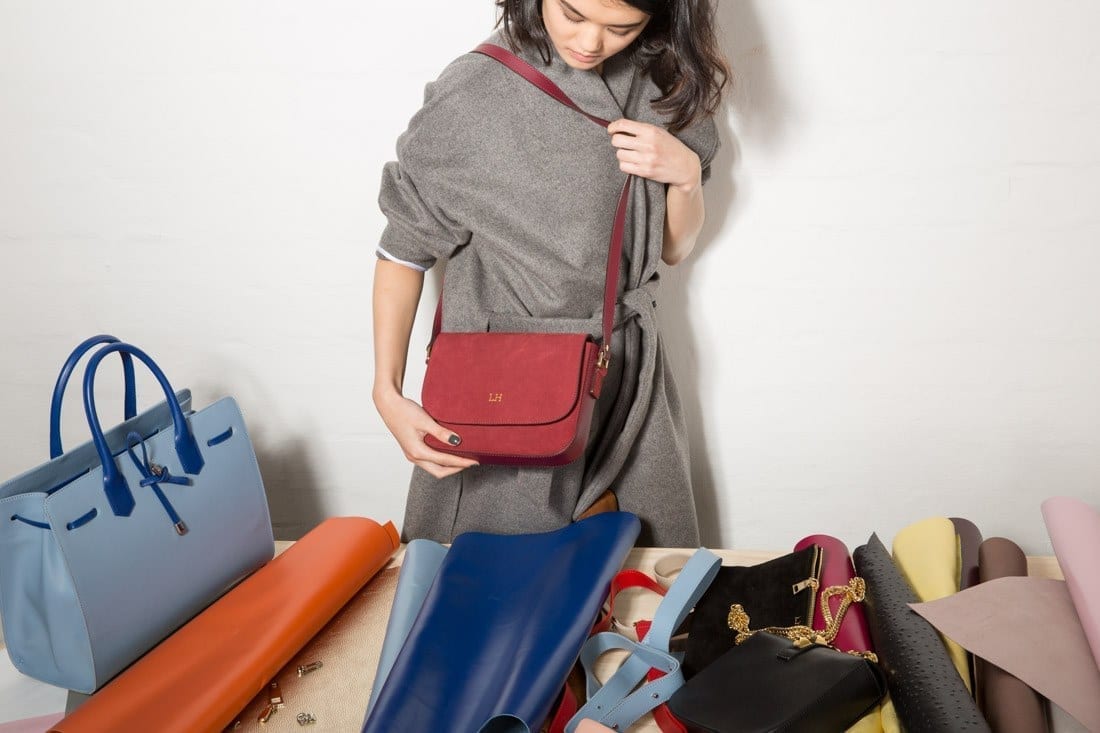
    Mon Purse’s explosive growth has become somewhat of a textbook example of ecommerce disruption in the industry after founder Lana Hopkins started the personalised handbag offer in 2014. Since then the company has expanded overseas and into bricks-and-mortar, becoming a well known retail brand amongst digital natives.

    Behind that success has been a robust social media strategy. With more than 45,000 Facebook likes and 80,000 Instagram followers, the company has invested heavily in the eyeballs of tech-savvy millennials.

    Inside Retail sat down with Mon Purse’s head of ecommerce, James Hopkins, to have a chat about how the brand has navigated the social space at a time when theories about how to maximise the value of digital marketing are seemingly endless.

    IR: Give us a bit of background James – what role does Facebook and Instagram play in Mon Purse’s business?

    JH: They’re both really important tools for us, they have been since we launched the business.

    Obviously as our audience as grown and the business has grown and the offering has evolved with both platforms we’ve stayed really across both of them to leverage the most that we can in terms of functionality and features.

    We weren’t actually using the Facebook platform to managing our campaigns originally, we we’re actually using a third party. I found that they’d not been able to keep up with what Facebook has been doing so over the last couple of months as a team we’ve had to go and re-learn how to walk, and re-think about how we plan and strategise a campaign so that we’re using what’s native on Facebook as opposed to a third party offering.

    Its a lot of trial and error. Obviously you’re not looking at 60x ROI each and every day, there’s certain conditions and factors that need to come into play to really get those numbers.

    IR:What type of campaigns have worked for Mon Purse?

    JH: We ran a campaign a little while ago that actually generated a return on investment of 121x so its double that 60 number. That was a six week campaign that was laser pointed on abandonment behaviour.

    We targeted people who’d started to design their own handbag, but they hadn’t finished that process. So we knew they had an understanding of the brand, we knew that they had gone and played with the tools, but they just didn’t actually either add the bag to cart or take it any further. From what we understood they were just having a play around.

    We spent $283, and again we’re not talking massive amounts of scale here, and it had a seemingly unsustainable cost-per-click (CPC) of $6.74, but it was interesting because we had an overall cost cost-per-acquisition (CPA) of just $5.30 and its not everyday you see the CPA lower than the CPC, which made that one quiet unique. In the end it delivered that 121x ROI, and we saw nearly $37,000 in revenue from an investment of under $300.

    We also run what we call ‘evergreen’ campaigns, which is one that’s constantly going. In the last thirty days we’ve spent $1,300 on those and have reclaimed 135 customers that have abandoned their cards – so with $10 per purchase we’ve generated nearly $17,000 in revenue.

    What’s interesting about that for me is that the creative, in this case an iPhone cover, isn’t dynamic to what the customer abandons, its just a great piece and that clearly resonates with customers, showing them that their entry level to the Mon Purse brand is quiet accessible.

    From a marketing perspective its about trying to leverage these events that happen on the site, finding a sweet spot in the moment that you’re most likely to engage with the customer and get that conversation.

    The other element we’ve also found successful on Facebook lead generation campaigns, that’s a tactic that’s worked pretty well for us in both delivering new leads that in fact make the purchase very quickly.

    We did one that had a $17,000 spend and delivered around $80,000 in new revenue through 1,350 new leads and 35 of those made a purchase in the first seven days.

    The remainder sat at around 60 per cent after 30 days, so definitely a revenue positive experience and a database growth experience and bringing those two together.

    IR: Social media has been touted for its two-way communication capabilities with customers, what’s that look like for Mon Purse in terms of customer engagement both pre and post purchase?

    JH: It evolves, and it’s really a time consuming aspect of the social media programme in terms of engaging one-on-one with your customers – which was what everyone was shouting about in the early days of social media.

    There’s obviously tools now that can be used to auto respond and all of those things – we don’t do any of that.

    We try and engage with our customers at an authentic and personal level. Given that we’re a business that’s about personalisation that’s important to us. On Instagram the functionality is getting better and better there in terms of having a thread where we can have a conversation, so we continue to use it very much as a Q&A function.

    We get a lot of questions about what bag is that? What colour is that? Where are those shoes from? So you use those opportunities to build a relationship with your customers.

    IR: What are the differences between Facebook and Instagram from your perspective?

    JH: You just have to try and leverage the functionality. From a Facebook perspective now we can tag our products in the feed, so we can include products in our posts and have that link directly back to the site.

    I’m truly excited for the day that those beta tests on Instagram come to Australia because I’m seeing some of these brands in the US getting shoppable links and I think personally that will be pretty valuable to us in time.

    Its about evolving your strategy as the functionality evolves and trying and testing new things.

    We’ve been loving using the Facebook pages app on our phones recently because If you jump into a piece of content you can actually just invite everyone who likes that piece of content to like your page, its a good little trick and is quite a cost effective way of building new likes.

    IR: What does cross-over look like between the platforms?

    JH: Where we’ve seen a lot of success in the last two months since it was released is around those new options such as re-targeting people who have been on Facebook, but have engaged with your Instagram profile. Those are the sorts of crossovers that we’ve found to be quiet useful and lucrative.

    Then of course building those out to someone who has purchased and building it out further to create a look-a-like of those audiences has been something that’s been of benefit to us.

    IR: There’s been a big conversation about organic versus paid social media spend and how that should be navigated by retailers, what are your thoughts there in terms of when Mon Purse will use one rather than the other, vice versa?

    JH: We don’t really look at it that differently, I think you have to look at what objective you want to take from the creative and what your purpose for that post, whether its a newsfeed post or whatever the content is. If you see that content is getting some engagement and is sticky then you should be putting some spend behind it.

    That’s the bottom line in reality, we haven’t found that we’ve managed to crack the code and get that piece of content that does get that massive massive organic virality or anything like that – we’re wondering on a few ideas there, but at the end of the day you’ve got to pay for your eyeballs.

  • Daniel Wellington Hong Kong opens pop-up

    Daniel Wellington Hong Kong opens pop-up

    Daniel Wellington Hong Kong has opened a pop-up store at Yoho Mall 1 in Yuen Long.

    The Swedish watch company took back the business from its from its distributor in March and now has four self-run stores in Hong Kong, at Festival Walk, Harbour City, IFC Mall and Lab Concept.

    Regional manager Jay Lam says the pop-up features a high-visibility stage design.

    He also says the brand is seeking to open more locations this year, and the aim is to eventually have up to 15 points of sale in Hong Kong.