Author: Mei Ling Tan

  • Jimmy Choo profits jump 174%

    Jimmy Choo profits jump 174%

    Luxury shoemaker Jimmy Choo Plc, which is being bought by U.S. retailer Michael Kors, said its pretax profit for the half year almost tripled, helped by its retail and licensing businesses.

    Pretax profit for the six month to June 30 was 18.1 million pounds ($23.4 million), compared to 6.6 million pounds last year. Revenue for the period rose 4.5 percent to 201.6 million pounds.

    Michael Kors agreed two months ago to buy Jimmy Choo for $1.2 billion, snapping up the British company whose towering stilettos have been made famous by celebrity customers from Princess Diana to Kendall Jenner.

    Jimmy Choo Chairman Peter Harf said the deal opened up exciting opportunities.

    “The shared vision and distinctive appeal of these two iconic brands will provide an exciting platform to achieve global leadership in luxury retail,” Harf said in a statement.

    Revenue at the company’s Japan unit rose 11 percent at constant currency helped by continued growth in its Men’s section.

    Excluding Japan, the company’s Asia business grew 8.2 percent at constant currency, driven by strong demand for seasonal fashion offerings.

    Shares in the company were up about 0.2 percent at 0740 GMT on the London stock market, trading close to the 230p offer price. ($1 = 0.7747 pounds) (Reporting by Sanjeeban Sarkar in Bengaluru; Editing by Keith Weir).

  • H&M launches Justin Bieber collection

    H&M launches Justin Bieber collection

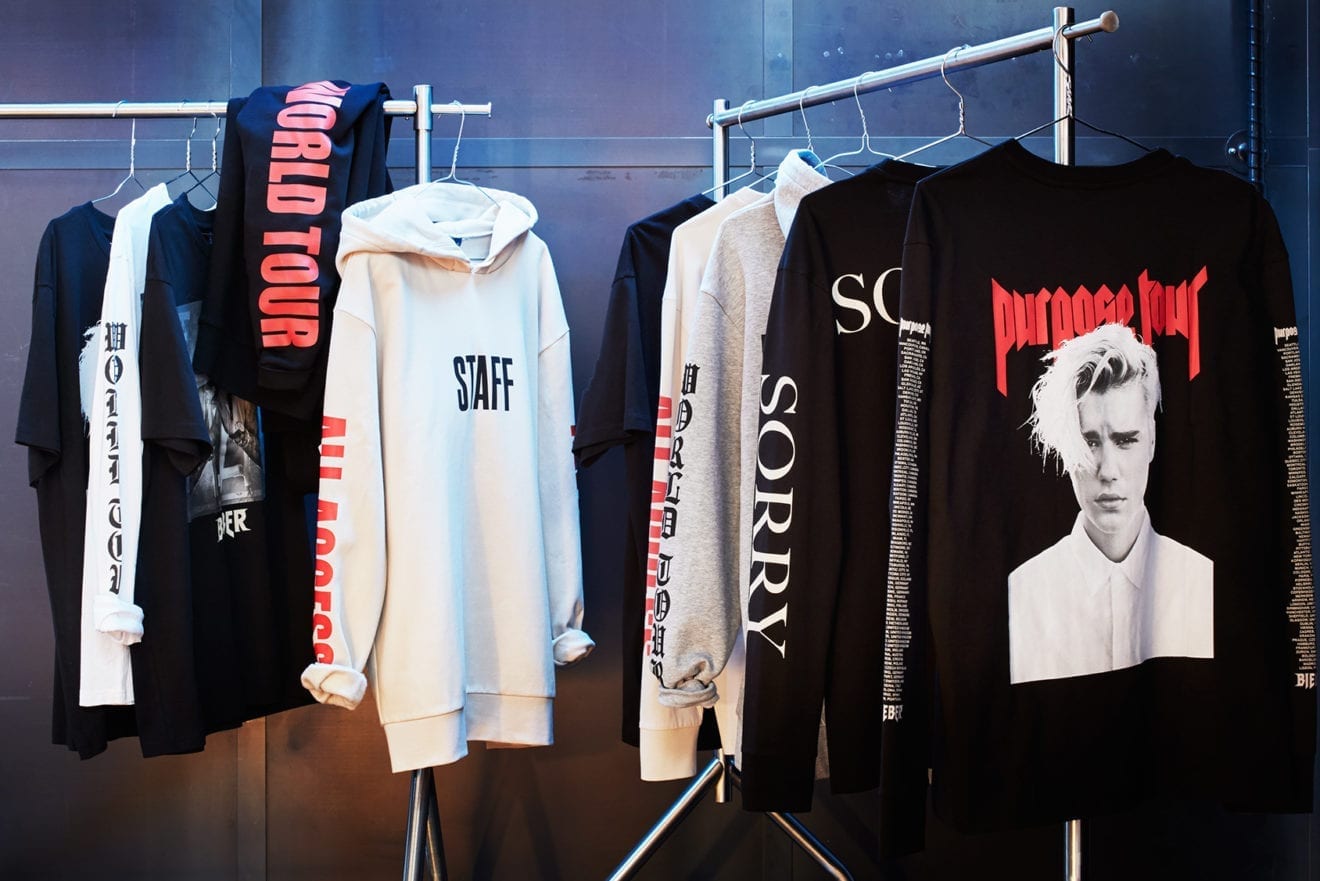
    H&M is releasing a Justin Bieber collection hot on the heels of the pop star cancelling his Purpose World Tour, which was to have included a concert in Singapore next month.

    Drawing its inspiration from the tour’s merchandise, the line includes hoodies, joggers, sweaters and t-shirts. Features are a yellow Stadium hoodie, which Bieber wears himself, plus a tour t-shirt with his face on the front (as worn by Ellen DeGeneres).

    The Justin Bieber x H&M collection will be available online and in stores from Thursday next.

    The collection’s colours are black, red, grey, white and yellow.

  • What if Amazon is the trigger for the next tech wreck?

    What if Amazon is the trigger for the next tech wreck?

    With the levels of hype around the US retailer and predictions that “Amazon will decimate retail as we know it”, it is worth considering the opposite alternative as well – at least in the interest of balanced contemplation. Let’s be clear however. There are no signs at all right now that Amazon is in any way facing economic collapse or imminent failure, but what if….

    The current frenzy around Amazon is based on the theory that top-line growth – as distinct from trading profit growth – will at some point make Amazon the undisputed heavy weight champion at retail and that at that point in time they will be able to transition market dominance into high yielding profit.

    It has taken Amazon twenty years in the United States to achieve a market share of nearly 4 per cent of all retail sales. While its growth is strong – 24 per cent year on year – Walmart’s online growth is tracking at 69 per cent. And Walmart makes a huge profit. It also declares dividends. Investors are massively backing a future payoff for Amazon. In most other markets around the world Amazon at present has less than 2 per cent market share of all retail sales and its margins are thin.

    The usual rules of investment do not apply to Amazon. Something that seems to only apply to technology stocks today, as it did between 1997 and 2001 when we saw technology stocks climb to valuation levels, which had nothing to do with traditional EBIT multiples. The “belief” in Amazon is about a future that may or may not eventuate.

    So what if it doesn’t? And what if the over-arching investment cycle turns and investors – who could previously justify their support of Amazon based on re-valuing the stock and using dividends from other holdings in their portfolios to pay returns to investors – get desperate about the need to drive greater dividend streams to pay returns to investors and earn their bonuses?

    When patience runs thin and the luxury of taking the ‘big gamble’ is removed, the market turns. The biggest bet on applied technology in the ‘age of disruption’ is Amazon. Therefore it could very well be the trigger that sets off the next ‘tech wreck’ – a correction many analysts are saying is overdue.

    From a book re-seller with grand ambition to its present day position as a major player, Amazon has made great progress and changed the way many retailers and suppliers do business. However it isn’t the only heavy weight contender and it has yet to deliver real returns to shareholders. Hype – as most seasoned analysts and investors will tell you – is a distraction smart people can do without. Salesmen love it. Canny businessmen don’t.

    Study Amazon. Learn from it. Improve your own game because the only thing that matters is the real competitive context and how customers react to it. But don’t get swayed by hype and the wall of noise that is modern media coverage. Amazon could one day deliver. Or it could be the next trigger for a tech wreck.

    Only time will tell and in the meantime you have to build your customer franchise and make the profits that you can re-invest into your business growth. Because – unlike Amazon – no one will give you cheap investment capital on a promise.

  • Fulfilment by Amazon ‘unlikely’ for initial launch

    Fulfilment by Amazon ‘unlikely’ for initial launch

    Almost one month after Amazon confirmed the location of its first fulfilment centre in Australia, the e-commerce giant remains tight-lipped about the date and scope of its launch of Marketplace Down Under.

    But sources within the retail sector have told that a late-September, early-October launch is very likely. They have also said Fulfilment by Amazon (FBA) will not be part of the initial launch.

    “It will more than likely not be a full-service that will be launching. They might not have all their categories. They might not have all the FBA service,” said Ray Ridgeway, managing director of World First, a company that helps sellers on Amazon, Ebay and other global marketplaces transfer funds overseas.

    FBA allows sellers to outsource their entire logistics process – warehousing, fulfilment, returns and customer service – to Amazon for a fee. While the exact fee depends on the weight of the item, among other factors, sellers using FBA can expect to pay somewhere between 25-30 per cent of the sale to Amazon. This includes the 15 per cent fee Amazon charges to sell on Marketplace.

    Most people in the industry agree that FBA is the key to Amazon’s success, underpinning its delivery offering and differentiating it from competitors like Ebay. (The alternative is FBM, or Fulfilment by Merchant.)

    Qing Yuan Zhou, venture partner at Goat Consulting, a US-based Amazon consulting firm, previously told that her company almost always recommends FBA to sellers, since they are more likely to get a favourable page ranking and a shortcut for customers to add their products to cart. As a result, Zhou said, sellers may see sales go up by at least 20 per cent.

    But according to sources who have been given access to a beta version of ‘Seller Central’, Amazon’s seller portal, FBA is not currently supported in Australia. This is unsurprising given the fact that Amazon has only recently secured its first local warehouse and the general consensus that Marketplace will launch in time for Christmas trading.

  • Tommy Hilfiger opens new store at Westfield Parramatta

    Tommy Hilfiger opens new store at Westfield Parramatta

    PVH Corp-owned fashion chain, Tommy Hilfiger, has opened its 10th full price store in Australia at Westfield Parramatta yesterday.

    Set over 145 square meters, the store design reflects the brand’s global retail concept, which is based on the brand’s heritage and takes cues from a ‘nautical lifestyle’ – one of Tommy Hilfiger’s longstanding sources of inspiration.

    The store has launched with the brand’s Spring fashion collections across men’s, women’s sportswear and accessories.

    There are over 1,800 Tommy Hilfiger stores in over 100 countries worldwide including global flagships in five locations: Fifth Avenue, New York; Brompton Road, London; Omotesando, Tokyo; Regent Street, London; and Schadowstraße, Düsseldorf.

    In its second quarter results for FY17, the Tommy Hilfiger brand saw its revenue increase 4 per cent (year on year) to hit $892 million, while PVH was up 7 per cent to $2.1 billion.

    Recently, Gazal Corporation– which jointly owns and manages PVH Brands Australia, a joint venture company in partnership with PVH Corp – confirmed it has acquired a 7.35 per cent shareholding in struggling luxury handbag retailer, Oroton, at $1.00 per share.

  • Technology for Sustainable Paths to Thailand’s Future

    Technology for Sustainable Paths to Thailand’s Future

    King Mongkut’s Institute of Technology Ladkrabang (KMITL) and Thai Canal Association for Study and Development (TCA), signed a Memorandum of Understanding (MoU) on the international conference on Technology for Sustainable Paths to Thailand’s Future, THAI CANAL: Comprehensive Study of Alternative Logistics Systems for the Maritime Silk Road which is to be held on September 11, 2017 at Grand Hyatt Erawan Bangkok Hotel.

    The MOU was signed by Prof. Dr. Suchatvee Suwansawat (2nd from the right), President of KMITL and Gen. Pongthep Thesprateep (2nd from the left), Chairman of TCA. Prof. Dr. Harald Wagner (right) and Pakdee Tanapura (left) witnessed the signing ceremony.

    The MOU will facilitate the mutual sharing of efforts and expertise in organizing the international conference which aims to bring together professionals from different disciplinary backgrounds involving various specialists in commercial canals in order to brainstorm on the feasibility of the Thai Canal from both academic and visionary perspectives.

    Moreover, the conference is officially supported by European Association for Business and Commerce (EABC). The close collaboration will make the conference a dynamic and insightful forum for ambitious practitioners from around the world who have realized that the Thai Canal construction (formerly known as Kra Canal) is vital, and believe that it will make a radical change to Thailand, and the world.

    Following the signing of the MOU to jointly organise the international conference on the Thai Canal, Prof. Dr. Suchatvee Suwansawat, currently President of King Mongkut’s Institute of Technology Ladkrabang (KMITL), announced that public and private entities involved in the development and construction of small or large projects would normally adopt the policy to study both negative and positive impact from every aspect. Relevant data collected would then serve to reassure everyone that the project is appropriate, most beneficial to the people and would have the least negative impact on the population as a whole.

    The same goes for the “Kra Canal” project which is now called “Thai Canal.” At present, the said project is still in the pre-feasibility study stage. Appropriate construction technologies would have to be considered. Advantages in the fields of economic development, transportation and logistics would have to be weighed against disadvantages for Thailand that might occur such as impact on the environment, on the livelihood of Thai people and on national security.

    Therefore, the fact that this upcoming conference will set the stage for exchange of ideas and experiences among national and international experts from different professional backgrounds will certainly help to clarify and confirm our knowledge about the Canal project from various vantage points. The KMITL, as an educational institution that houses one of the top faculties of professors and experts in engineering and technology in Thailand, is ready to share its data and its expertise in the study of this project in order to help the lasting development of our nation.

  • New Zealand expanding national fiber network

    New Zealand expanding national fiber network

    The New Zealand government plans to extend its Ultra-Fast Broadband (UFB) national fiber network to 190 more small towns.

    The government has announced plans to spend NZ$130 million ($93.4 million) to extend the network to 60,000 new households and businesses across the nation and complete the UFB deployment by 2022.

    A further NZ$130 million will be spent to expand the concurrent Rural Broadband Initiative (UFB) to bring non-fiber broadband to another 74,000 rural premises, and to extend mobile coverage to an extra 1,000km of rural highways as part of the Mobile Black Spot Fund.

    The RBI involves a combination of upgrades to existing fixed line infrastructure and fixed wireless infrastructure.

    “We started UFB in 2010 with the original goal of connecting 34 towns to world-class fibre-to-the-premises. Earlier this year we expanded it to 200 more towns and today’s announcement will bring us to 390,” New Zealand communications minister Simon Bridges commented.

  • Vietnam in talks to acquire rights to Finland’s education programs

    Vietnam in talks to acquire rights to Finland’s education programs

    Finnish high schools will also open their doors to students in Hanoi and Ho Chi Minh City in the near future.

    Education officials from Vietnam are in Finland to learn about the Scandinavian country’s education programs from elementary to undergraduate level.

    A delegation led by Minister of Education Phung Xuan Nha held talks with their Finnish counterparts on Monday about acquiring the rights to publish Finnish educational material in a variety of subjects, local media reported.

    During the meeting, Vietnamese universities, high schools and their partners signed 18 memorandums of understanding on education transfer.

    They also agreed on plans to open a Finnish high school in Hanoi to add to the one in Ho Chi Minh City that will open next year.

    Finland has one of the most successful education systems in the world, which focuses on early education and encourages research and experiment.

    The country is usually one of the best performers among developed countries on the Program for International Student Assessment (PISA) report, a guide used to measure education systems around the world.

    Its students ranked 12 out of 72 economies in the latest test results released last December, a drop compared to its dominance in 2000, 2003 and 2006.

    Vietnam ranked 21st last year.

  • SoftBank, Ericsson to trial 5G in 4.5-GHz

    SoftBank, Ericsson to trial 5G in 4.5-GHz

    Japan’s SoftBank plans to work with Ericsson to conduct a joint trial of 5G in the 4.5-GHz band in dense urban areas of Japan.

    The end-to-end trial will involve two 5G new radios, a virtual RAN and EPC, beamforming, Massive multiple input multiple output (MIMO) functionality and test support services.

    The trial is set to commence once Softbank obtains an experimental 5G license, Ericsson said.

    In March, SoftBank and Ericsson also teamed up for a 5G trial in the 28-GHz millimeter wave band, which followed more basic tests in the 4.5-GHz and 15-GHz bands in Tokyo in 2016.

    SoftBank aims to be one of the first operators to deploy 5G services once the standardization process is complete and seeks to position itself as a pioneer of 5G.

    The operator also recently announced plans to deploy Ericsson’s Radio Dot system across Japan to improve indoor coverage in high-density urban areas. Softbank has been testing the technology since 2015.

  • Axiata more than doubles Q2 profit

    Axiata more than doubles Q2 profit

    Malaysia’s Axiata Group has reported a strong 115.5% year-on-year surge in Q2 profit to 479.1 million ringgit ($112.2 million) due in part to record-high revenue.

    Group revenue increased 13.9% year-on-year and 3% sequentially to 6.1 billion ringgit, despite increased losses from Axiata’s 19.75% stake in India’s Idea Cellular due to that market’s ongoing weakness.

    Revenue and ebitda at both Malaysian mobile unit Celcom Axiata and Indonesia’s XL Axiata both improved, while Cambodia’s Smart Axiata had another strong quarter, the company said.

    Data revenue grew nearly 11% from the previous quarter to account for 44.1% of service revenue.

    In the group’s South Asian Markets, Sri Lanka’s Dialog Axiata increased its mobile data revenue by 44.1% sequentially, Bangladesh’s Robi Axiata’s year-to-date data revenue grew 95.6% sequentially and Nepal’s Ncell posted data revenue growth of 16.9% quarter-on-quarter.

    For the first six months of the year, group revenue grew 15.7% quarter-on-quarter to 11.9 billion ringgit with profit up 17% over the same period to 741.1 million ringgit.

    “While the Group achieved better-than-expected half year performance, there remain considerable macroeconomic and industry challenges. As such, the Board is supportive of the ongoing turnaround of key units, while balancing the need to remain fiscally disciplined in terms of dividend and investment policies,” Axiata chairman Tan Sri Azaman Hj. Mokhtar said.

  • Virtual Closet offers interactive approach to fashion

    Virtual Closet offers interactive approach to fashion

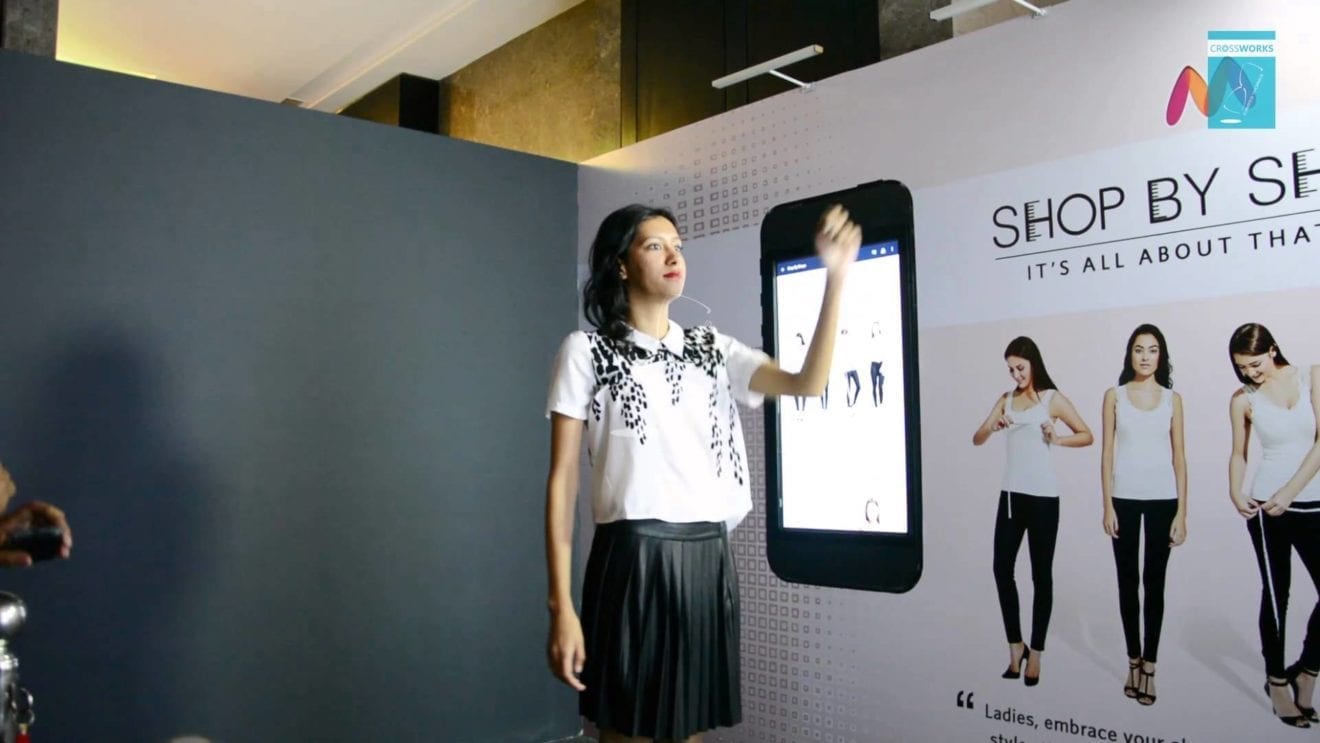
    In a first for Singapore, The Shoppes at Marina Bay Sands has unveiled an interactive concept, the Virtual Closet.

    Located on the Grand Colonnade of The Shoppes, it is an interactive platform enabling shoppers to browse the latest collections from Burberry, Dolce & Gabbana and Tom Ford. Each brand showcases its collections for at least a fortnight, with the closet closing its doors on October15.

    Set up to resemble a walk-in wardrobe, the Virtual Closet has interactive digital mirrors offering a 360-degree view of selected products. Visitors can interact with the display cases and mirrors to switch colours and designs clothing items and accessories.

    A feature is a multi-sensory photo booth where shoppers can choose a projected background and audio soundtrack as they pose for selfies. Those who upload their image on social media can win treats from restaurants at The Shoppes or Marina Bay Sands’ celebrity-chef restaurants.

  • Robinsons Place Naga a first for Bicol region

    Robinsons Place Naga a first for Bicol region

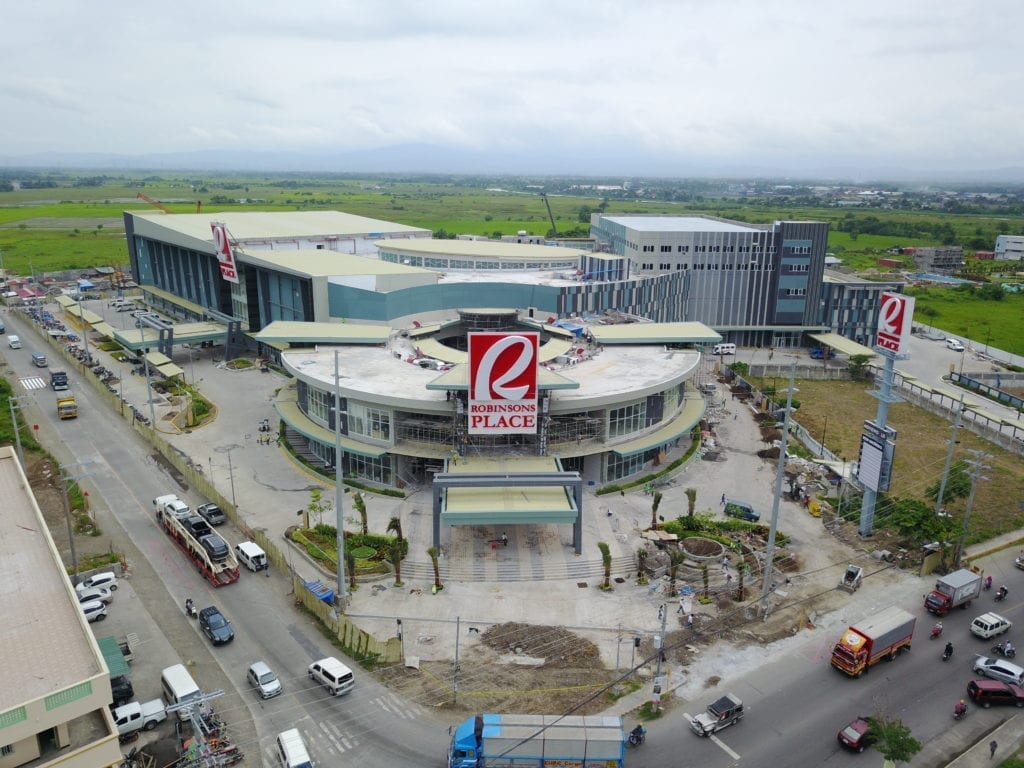
    Along Almeda Highway and Roxas Avenue in Naga City, the three-level mall offers 31,000 sqm of gross leasable area, 81 per cent of which is already occupied.

    Japanese clothing brand Uniqlo will open by next year, taking up most of the remaining space.

    RLC president Frederick Go attended the mall’s launch, along with Wildflower stars Maja Salvador, Joseph Marco and RK Bagatsing as special guests.

    It is RLC’s 46th mall in the Philippines, and the company’s 28th branch in Luzon. It is part of a mixed-use development that also includes a business-process outsourcing office and two hotels.

    “That means a lot of jobs for all the Bicolanos and the people of Naga City,” Go told guests at the opening.

    Offering 120 rooms altogether, the two Robinsons hotels – the upscale Summit and budget Go Hotel – are targeted to open within 12 months.

    Similar to its properties in other provinces, RLC incorporates local elements into the mall to complement international brands and its key stores, Handyman, Robinsons Appliance, Robinsons Department Store and Robinsons Supermarket.

    Its ceiling features a leaf-shaped motif reminiscent of gabi (taro) leaves, a popular ingredient in Bicolano cooking. There is also the “Tree of Life,” a 15m fiberglass structure by Jefre Manuel also inspired by gabi leaves.
    On the third floor are Naga-themed murals by Anina Rubio, known for her artworks in last year’s independent movie Sakaling Hindi Makarating.

    Bicol restaurants have outlets in the mall, including Bigg’s Diner,  Bob Marlin, Crown Park, First Colonial, Molino Grill, Triboo Grill and Tugawe Cove. Local treat pasalubong is available at Baker’s Plaza, Caramel and J. Emmanuel, each offering pili snacks.

  • Apple backs payments via WeChat

    Apple backs payments via WeChat

    Apple Inc’s online services support WeChat payment from yesterday under a tie-up between the US technology giant and Tencent, China’s top dot-com firm with almost 1 billion users.

    Apple users can purchase apps and subscribe to online music by bundling App Store and WeChat payment accounts. In China, around 963 million people use WeChat, a popular instant message and picture sharing tool.

    Apple will “continue to be committed to offering customers across its ecosystem a variety of payment options that are simple and convenient,” the firm said in a statement.

    The WeChat payment tie-up is expected to allow Apple to boost revenue from services, which may help the company to offset sales decline of iPhone and iPad in recent quarters in China, industry insiders said.

    Apple has increased investment in China by setting up new research hubs data centers and more Apple Stores.

  • Canada Goose wings way to Japan

    Canada Goose wings way to Japan

    Canadian winter-clothing brand Canada Goose, which listed last year, has already opened a store in Japan with plans also for a flagship.

    Its maiden store is for men only, opened in Tokyo’s Hankyu Department Store in Yurakucho, Chiyoda-ku, last week.

    The company says on its Facebook page that it launched Canada Goose Hankyu Men’s Tokyo because of demand created by severe cold in Japaan.

    Meanwhile, its planned 300sqm flagship, to be run by its distribution partners, will be in Tokyo’s Sendagaya district, reports Fashion Network.

    After listing last year, the brand launched in Toronto, following up with a New York store within a few months. It is also planning outlets in London and Chicago.

    Specialising in high-end down jackets and parkas, Canada Goose is also expanding at home with a store in Calgary before the end of year.

    In its first quarter, to the end of June, the label says it had strong sales growth, notably because of its monobrand stores and e-commerce. Sales grew from CAD$12.5 million (US$9.8 million) to $28.2 million, while gross margin rose 29.7 to 46.9 per cent.

    However, operating income was on the other side of the ledger with losses of nearly $15 million, the same as in the previous fiscal year.

  • Kerry Logistics Records 10% Growth in 1H Core Operating Profit to HKD1,019 Million

    Kerry Logistics Records 10% Growth in 1H Core Operating Profit to HKD1,019 Million

    Kerry Logistics Network Limited (‘Kerry Logistics’ or together with its subsidiaries, the ‘Group’; Stock Code 636) today announced the Group’s interim results for the six months ended 30 June 2017.

    The Group’s Financial Highlights

    • Turnover surged by 31% to HKD13,705 million (2016 1H: HKD10,461 million)
    • Core operating profit increased by 10% to HKD1,019 million (2016 1H: HKD928 million)
    • Core net profit went up by 5% to HKD576 million (2016 1H: HKD548 million)
    • Profit attributable to the Shareholders rose by 11% to HKD788 million (2016 1H: HKD709 million)
    • Integrated Logistics (‘IL’) business recorded a segment profit of HKD884 million (2016 1H: HKD799 million), which represents a lift of 11%
    • International Freight Forwarding (‘IFF’) business achieved a 7% increase in segment profit to HKD222 million (2016 1H: HKD208 million)
    • Interim dividend of 8 HK cents per share recommended

    William Ma, Group Managing Director of Kerry Logistics, said, “2017 1H has been another challenging period. Global demand stalled in Q1 and our cargo volume was at a low level in January and February. Nevertheless, the temporary slowdown in Q1 reversed as the world economy gradually stabilised with cyclical recovery starting from Q2. Supported by strong logistics volume growth in Asia and sound performance in the Americas, the Group’s performance and earnings have shown considerable improvements since Q2. Against this backdrop, for 2017 1H, Kerry Logistics recorded a 31% growth in turnover and a 10% growth in core operating profit. However, core net profit only reported a 5% growth due to the unsatisfactory performance of our investments in associates, which reported a 52% year-on-year decrease in contribution.”

    Strongest Network in Asia

    In 2017 1H, Kerry Logistics continued to adhere to the global development strategy of capturing opportunities brought forth by China’s Belt and Road Initiative. The new subsidiary Globalink Logistics, with operations spanning across Commonwealth of Independent States countries, added nine countries to Kerry Logistics’ global network. They include Kazakhstan, Uzbekistan, Kyrgyzstan, Tajikistan, Turkmenistan, Georgia, Armenia, Azerbaijan and Ukraine. Meanwhile, another new member, Lanzhou Pacific Logistics, allows Kerry Logistics to offer multimodal solutions to customers within its global network.

    The development of an integral overland transportation network with land-bridge connectivity demonstrates Kerry Logistics’ commitment to providing new options and cost-efficient solutions to customers.

    IL Maintains Stable Growth

    The IL division delivered an 11% growth in segment profit in 2017 1H. The overall performance in Greater China remained flat. In Hong Kong, the logistics business delivered continued growth as it benefitted from contribution through new business and customer wins, while the warehousing business maintained growth after a change in client mix despite rental pressure. Weak performance of some of the key accounts in Mainland China adversely affected the Group’s business performance. Although the increased operating cost under the new labour law added pressure on 1H earnings, Taiwan’s performance is expected to improve in 2017.

    The overall IL business in Asia remained strong in 2017 1H, driven by the enhancement of the Group’s service capabilities in ASEAN.

    IFF Sustains Significant Growth

    The IFF division continued to achieve significant growth in 2017 1H, fuelled by the substantial contribution by APEX in the US. As a result of the alliance shuffle, carrier consolidation and reduction in capacity, freight rates increased in 2017 1H, causing the profit margin of the IFF business to narrow, despite an increase in volume. In Europe, the acquisition of Tuvia Italia S.p.A and the launch of the new sales office in Poland further strengthened the Group’s global IFF sales and operations network.


    Asset Portfolio Expansion

    All projects in the pipeline progressed as planned. In Thailand, phase four expansion of Kerry Siam Seaport is expected to complete in 2018. Construction of three logistics facilities in Shanghai and Wuxi, Mainland China, and Phnom Penh, Cambodia were completed in 2017 1H. Inland ports in Yangon and Mandalay, Myanmar, together with three other facilities in Changsha and Wuhan, Mainland China, and Guanyin, Taiwan are under construction.

    Asset Optimisation

    In March 2017, the Group entered into a share purchase agreement to divest its entire 15% interest in Asia Airfreight Terminal Company Limited to Holistic Capital Investment Limited, a subsidiary of Hong Kong Airlines Limited.  The completion of the transaction is subject to certain conditions precedent which, the Directors believe, will be satisfied in 2017 Q3. Going forward, the Group will continue to consider divesting non-core assets and businesses.

    George Yeo, Chairman of Kerry Logistics, concluded, “The Group continues to see China’s Belt and Road initiative as a major opportunity to expand our network and to drive growth in long-term profitability across Asia. The new acquisitions made in 2017 1H added important components to our strategic plan to become the pre-eminent logistics service provider for the new overland and maritime Silk Roads. We are increasing our capabilities in e-commerce and cross-border logistics in Asia.  In 2017 Q2, we formed a joint venture with a local express operator in Indonesia to tap into the booming market there.  Singapore will be our next target for expansion.  With Q2 performance much better than Q1, we expect the momentum of recovery for the rest of 2017 to be positive.”