Author: Mei Ling Tan

  • New Era Philippines opens second Cebu store

    New Era Philippines opens second Cebu store

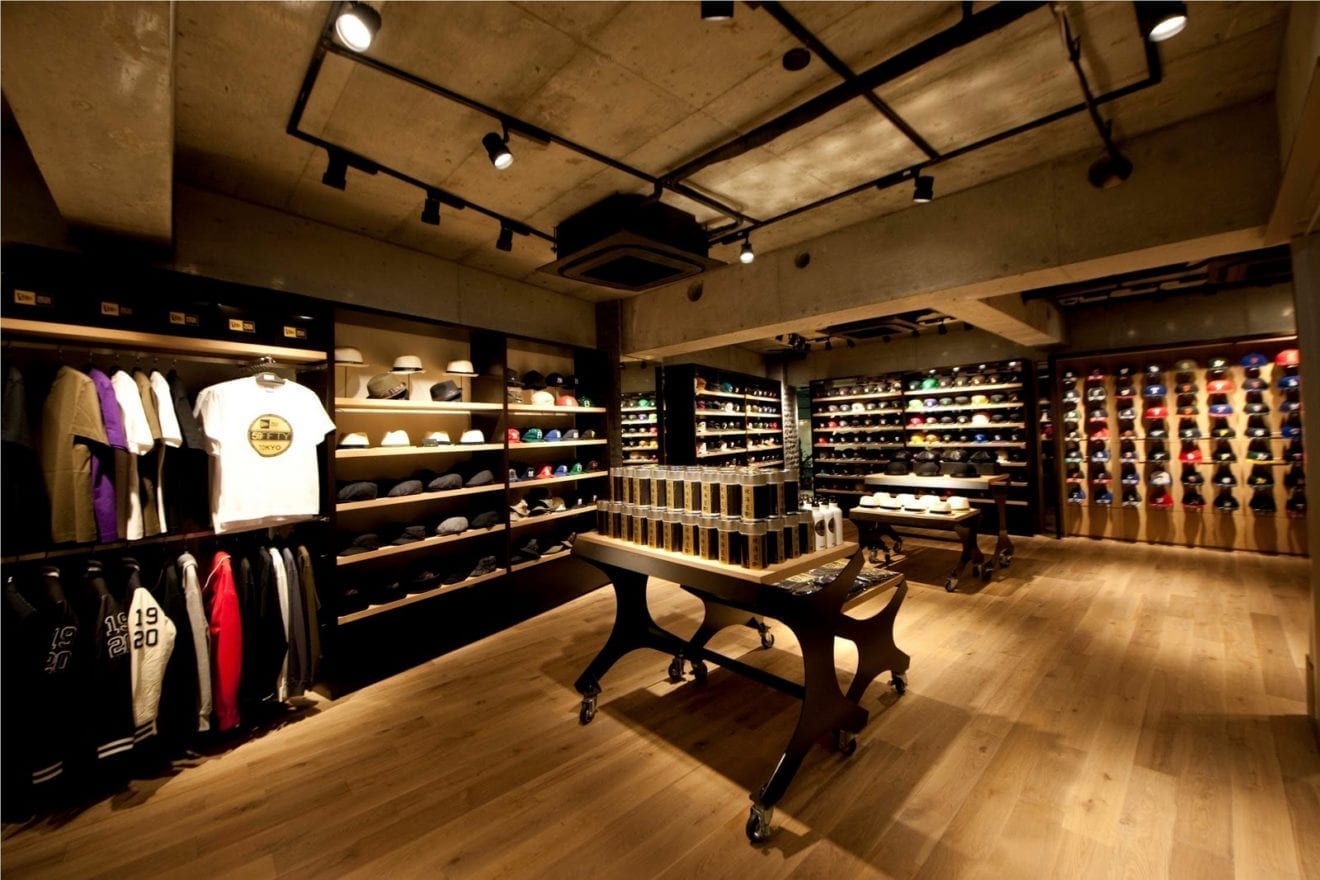
    New Era Philippines has opened its second store in Cebu, the Queen City of the South.

    The global lifestyle brand, which is the official headwear of sporting organizations including the US NBA, Major League Baseball and the NFL, has opened at Ayala Center Cebu.

    “Cebu is one of the most exciting destinations in the country today. With its unique history, heritage, and culture, we saw that the Queen City of the South is the perfect location for New Era to expand as it reaches out to more Filipinos,” said Beatrice S Lim, New Era Philippines marketing director.

    “Aside from this, we are greatly encouraged by the reception of Cebuanos to our brand, thus we’re giving them a second store that they can visit.”

    The store is the brand’s ninth in the Philippines.

  • UK parent steps into salvage Topshop in Australia

    UK parent steps into salvage Topshop in Australia

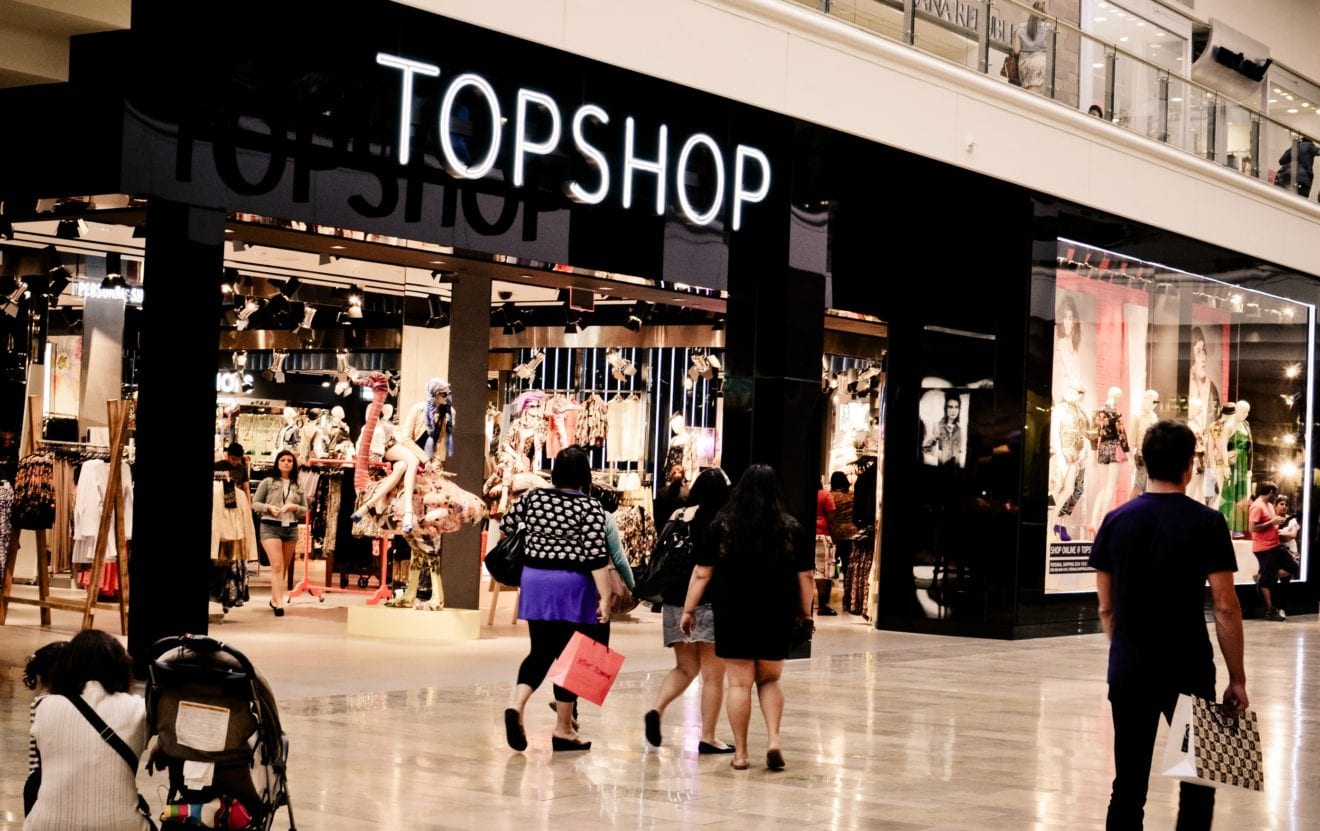
    Topshop and Topman have been salvaged in Australia, with Sir Philip Green and his UK-based Arcadia Group stepping in to take over the business.

    Administrators, Ferrier Hodgson, today made the announcement of the successful restructure of the fashion chains in Australia, which sees the sale of certain assets to Top Shop / Top Man (Australia) Limited, an entity controlled by the Arcadia Group.

    Four retail stores located at Gowings and Bondi Junction in Sydney, Emporium in Melbourne and Brisbane City will now be operated by the UK based retailer.

    “The Administrators are delighted with the outcome of our discussions with Topshop/Topman as it finalises a successful restructure and right-sizing of the business in Australia,” said Ryan Eagle, joint administrator alongside Ferrier Hodgson partners James Stewart and Jim Sarantinos.

    “Throughout this process we have considered the optimal operational structure of the business, ensuring the brand will continue in the local market and to preserve a significant number of jobs within the business”

    A Topshop/Topman spokesperson said the company is “excited to operate directly in the Australian market and look forward to delivering unparalleled fashion to our customers”.

    “We are delighted to be offering more than 290 jobs within the Australian market at Topshop and Topman.”

  • H&M’s new brand opens first stores in London and online

    H&M’s new brand opens first stores in London and online

    Swedish fashion retailer H&M’s new brand, Arket, has launched its online store and first physical store on Regent Street in London last Friday.

    According to the fast-fashion giant, the new brand is a modern-day market, offering essential products for men, women, children and the home. The brand’s online store caters to 18 European markets.

    The Regent Street store occupies two storeys of a former department-store corner building, with womenswear and the children’s collection located on the second floor, and menswear, homeware and an Arket cafe on the ground floor. The vegetarian cafe menu is based on the New Nordic Food Manifesto and blends traditional Scandinavian flavours with modern and global influences.

    “We are incredibly happy to introduce Arket and its collections, and welcome our first customers into our stores on Regent Street and online at arket.com,” said Lars Axelsson, managing director.

    “Our team has been working towards this day for over two years, and we are excited to finally share the results.”

    The new brand has accumulated over 28,000 followers on Instagram and 5000 on Facebook, ahead of the launch.

    Ulrika Bernhardtz, creative director, recently said they picked the name Arket,which means ‘sheet of paper’ in Swedish, because it relates to both their origin in the Nordic tradition of functional, long-lasting design and symbolises the blank sheet, “the sense of optimism and possibility they felt when creating the new brand.”

    The launch of the London store will be followed by the opening of Arket in Copenhagen on September 1, then by stores in Brussels, Munich and in London’s Covent Garden during the coming weeks and months.

    The Swedish fashion retailer will launch its first hometown store in Sweden at Biblioteksgatan 9, in the heart of Stockholm’s shopping district Bibliotekstan and will open in the spring of 2018.

  • Wilcon Depot launches third Visayas branch

    Wilcon Depot launches third Visayas branch

    Home improvement retailer Wilcon Depot has opened its 38th store, in Talisay City, Negros Occidental.

    It is the brand’s third branch in the Visayas region following its branch at Mandaue City in Cebu.

    A special feature is the Design Hub where customers can create room layouts using 3D computer software, which produces a product list and cost estimate.

    Like other Wilcon stores, services include free parking, tile-cutting and delivery. Customers with a Wilcon Loyalty Card are offered promotional exclusives.

    Wilcon’s exclusive brands include Direct Hardware, Franke Kitchen Systems, Grohe and Kohler, Koller, and Pozzi.

    Its tile gallery features Grespania and Rocersa products, while furniture features the Heim and Heritage brands. There is also the new lighting brand Alphalux.

  • Toys ‘R’ Us to open four new stores in Australia

    Toys ‘R’ Us to open four new stores in Australia

    Global toy retailer, Toys ‘R’ Us, will open four new stores across Victoria, Queensland and New South Wales between September and November.

    The four new stores will be located in Robina (Queensland), which will open on September 16 ; Rutherford (NSW), which will open on October 7 ; South Morang (Victoria), which will open on October 14 ; and North Lakes (Queensland). The retailer’s store in North Lakes will be its 15th store to open over a three-year period.

    Dianne Guerreiro, managing director of Toys ‘R’ Us Australia, said they believe the expansion will have a beneficial impact on the local communities.

    “We are committed to giving our customers access to the latest and most exciting toy and baby products in Australia, and with each new location, we can make sure we’re reaching even more toy fans across the country,” Guerreiro said.

    According to Guerreiro, they will be recruiting 60 to 80 new staff in each store.

    Toys ‘R’ Us currently has 39 stores across Australia, employing 2,300 staff members, which rises to 3,000 during the busy Christmas trading period.

    In May, the toy retailer combined its Japan, Greater China and Southeast Asia businesses as part of a joint venture with Hong Kong-based Fung Retailing Limited.

    Toys ‘R’ Us Asia Ltd, which currently operates 223 stores in China and the Southeast Asian markets, entered into an agreement with Fung Retailing Limited to consolidate Toys ‘R’ US Japan, which operates 160 stores in the country, into Toys ‘R’ Us Asia.

    The unified business will now be owned by about 85 per cent by Toys ‘R’ Us, with the remaining percentage held by Fung Retailing.

    Andre Javes, president of Toys ‘R’ Us Asia Pacific, said they have seen growth in expenditure on children’s products in recent years, driven primarily by Asia’s economic growth, rising middle class and rapid urbanisation.

  • Major South Korean Conglomerate Enters Bitcoin Remittance Market

    Major South Korean Conglomerate Enters Bitcoin Remittance Market

    South Korean conglomerate, Dongbu Group, has announced a partnership with Bitcoin remittance service provider Sentbe in its bid to enter the Bitcoin remittance market.

    The group is collaborating with Sentbe through its savings bank subsidiary, the Dongbu Savings Bank.

    According to an official of the savings bank, a Memorandum of Understanding (MOU) was already signed by the partners to prepare for the fourth industrial revolution era.

    “We have been working on this business alliance to prepare for the fourth industrial revolution era under the traditional savings bank business.”

    Brief background of the partners

    South Korean firm Sentbe was a recipient of a financial technology (fintech) award for its foreign remittance service utilizing Bitcoin in 2016.

    Through the service, customers can send money to China, Vietnam, Japan, Indonesia and the Philippines at a fee that is up to 95 percent lower than those charged by traditional banks.

    The Dongbu Group, meanwhile, is a major conglomerate in South Korea. It produces industry, chemical, shipping, financial and insurance products. Its subsidiary, Dongbu Savings Bank, is a member of the World Savings and Retail Banking Institute (WSBI).

    Through WSBI, the bank collaborates with many financial institutions around the world, including Sweden’s Swedbank, Fra-Spa of Germany, Philippine Postal Savings Bank, the Indonesia National Housing Bank, the Sri Lanka National Savings Bank and the Thai Government Savings Bank.

    South Korea’s legalization of Bitcoin remittances

    The South Korean government has amended the Foreign Exchange Transactions Act in order to legalize Bitcoin remittances. The amended law took effect on July 18, 2017.

    Under the law, fintech companies planning to provide Bitcoin foreign exchange transfers should register with the Financial Supervisory Service (FSS). They should also comply with certain financial requirements like a paid-in capital of more than two bln Won (around $1.77 mln), and a debt-to-equity ratio of less than 200 percent.

  • Japan to make Olympic medals from old cellphones

    Japan to make Olympic medals from old cellphones

    Japan will make the medals for the 2020 Olympic Games using recycled consumer electronic devices such as cellphones and home appliances.

    “Japan is undertaking an interesting project,” Nakagawa Masaharu, Japan’s environment minister, said during an environmental ministers’ meeting for China, Japan and Korea in Suwon, south of Seoul, Friday. “This is very meaningful in that it recycles rare metals and makes people think about the environment.”

    The minister also showed interest in cooperation with Korea and China.

    “We recognize that collecting rare metals from used devices is a very important issue. In the future, we would like to think about possible cooperation between the three countries, Japan, Korea and China,” the minister said.

    Since the project was announced in February, the Japanese government set up collection boxes at local offices and retail shops across the country, according to news report. According to Japan’s environment ministry, by the end of May, it had collected 106 tons of electronic devices. In addition, 530,000 cell phones have been collected.

    Altogether, Japan needs 5,000 medals, gold, silver and bronze, and traditionally, the Olympic game host cities have purchased the metals from companies.

    Electronic devices are valuable sources of rare earth metals, including gold, silver, nickel and lithium.

    Gold and silver are found in mobile phones, tablet and laptop computers, CD players, DVD players, TV sets, microwaves and others.

    Efforts have been made to recycle recyclable electronics. Currently, some are dumped to be buried or burnt down, but also shipped to places such as China and India where the metals get separated by chemical processes and reused.

    Greenpeace, a global environmental NGO, was at the forefront of rare metal recycling campaigns, by pushing cell phone and tablet makers.

    The cooperation among China, Japan and Korea in making medals, if realized, will score a major positive point with their complex relations.

    Common history and North Korea have for long been sources of tensions among the three countries. Between Korea and Japan, the Dokdo islets and the former sex slavery of the Japanese military in WWII are thorny issues. Two Sino-Japan wars left the bilateral relations between Japan and China on the ice. Between China and Korea, the deployment of the U.S. anti-ballistic missile defense system is an unsettling problem.

    Environmentally speaking, yellow dust from Inner Mongolia and dust from fast-industrializing China has caused deep concerns for Koreans and Japanese, with some individuals and news media outlets demanding China apologize and compensate potential victims. The three ministers have met for 19 years now to discuss environmental issues and cooperation.

  • SM Store offering discount deliveries

    SM Store offering discount deliveries

    Mall chain The SM Store has launched a nationwide delivery service in conjunction with courier company LBC Express until the end of the year.

    Its “You Shop, We Move” promo offers shoppers a discount for every transaction through LBC, which has branches inside SM Supermalls.

    Shoppers simply present the purchase they want delivered, along with the SM Store receipt.

    The promotion covers local destinations.

  • Emerging APAC nations most exposed to malware

    Emerging APAC nations most exposed to malware

    Emerging APAC nations are the most vulnerable to malware, according to Microsoft’s bi-annual Security Intelligence Report (SIR).

    Of the top locations across the globe most at risk of malware infection in the first quarter of 2017, most of them are developing economies in the region.

    The report found that Bangladesh and Pakistan have the highest malware encounter rates around the world. This is followed by two ASEAN nations – Cambodia and Indonesia. Approximately one in four computers running Microsoft real-time security products in these countries reported a malware encounter from January to March 2017.

    Other top areas facing malware threats include Myanmar, Nepal, Thailand, Vietnam, each with an average malware encounter rate of more than 20% in the first quarter of 2017. This is more than double the global average of 9%.

    On the other hand, markets with higher levels of IT maturity, namely Australia, Hong Kong, Japan, New Zealand and Singapore, performed better than the worldwide average. In fact, Japan has been ranked the safest country in the world, with only 2% of its computers reporting a malicious program incident.

    Ransomware attacks on the rise

    Ransomware is one of the most infamous malware families in 2017. In the first half of the year, two waves of ransomware attacks, WannaCrypt and Petya, exploited vulnerabilities in outdated Windows operating systems worldwide, disabling thousands of devices by illegitimately restricting access to data, through encryption. This not only disrupted individuals’ daily lives but also crippled many enterprises’ operations.

    The attacks were disproportionately concentrated in Europe while most of the Asia markets have not been too heavily impacted. In fact, Japan and China were listed as the two top countries with the lowest ransomware encounter rates. One of the few exceptions in the region is Korea, which has the second highest ransomware occurrence rate worldwide.

    Attackers evaluate several factors when determining which regions to target, such as a country’s GDP, average age of computer users and available payment methods. A region’s language can also be a key contributing factor as a successful attack often depends on an attacker’s ability to personalize a message to convince a user to execute the malicious file.

    Cloud accounts and services under cyber siege

    As cloud migration increases, the cloud has become the central data hub for the majority of organizations. This also translates into more valuable data and digital assets being stored the cloud, making it an increasingly attractive target for cybercriminals.

    The SIR highlighted a 300% increase in consumer and enterprise accounts managed in the cloud being attacked globally over the past year while the number of logins attempted from malicious IP addresses have increased by 44% year-over-year.

    In addition, a large majority of these security compromises were the result of weak, guessable passwords and poor password management, followed by targeted phishing attacks and breaches of third-party services. As the frequency and sophistication of attacks on user accounts in the cloud accelerates, there is an increased emphasis on the need to move beyond passwords for authentication.

    Malware Encounter Rates for Markets in Asia in Q1 2017 (from highest to lowest):

    1. Bangladesh
    2. Pakistan
    3. Cambodia
    4. Indonesia
    5. Mongolia
    6. Myanmar
    7. Vietnam
    8. Nepal
    9. Thailand
    10.  Philippines
    11.  Sri Lanka
    12.  China
    13.  India
    14.  Malaysia
    15.  Taiwan
    16.  Korea
    17.  Hong Kong
    18.  Singapore
    19.  Australia
    20.  New Zealand
    21.  Japan
  • Wearable device sales to grow 16.7% this year

    Wearable device sales to grow 16.7% this year

    Wearable device sales are on track to grow 16.7% this year to 310.4 million, representing sales of $30.5 billion, Gartner has projected.

    Nearly a third ($9.3 billion) of the total value of the market is expected to come from smart watches.

    Gartner predicts there will be 45.1 million smartwatches sold this year, and by 2019 the devices are expected to be the second best selling category of wearable devices behind Bluetooth headsets.

    While Apple is expected to continue to have the greatest market share of any smartwatch provider, its market share is expected to decrease from around a third in 2016 to a quarter in 2021 as more providers enter the market.

    Gartner said Apple may announce an Apple Watch in September that will enable direct cellular connectivity for texting, interacting with Siri or transferring sensor data when a Wi-Fi network is not present.

    “Smartwatches are on pace to achieve the greatest revenue potential among all wearables through 2021, reaching $17.4 billion,” Gartner research director Angela McIntyre said.

    “The overall ASP of the smartwatch category will drop from $223.25 in 2017 to $214.99 in 2021 as higher volumes lead to slight reductions in manufacturing and component costs, but strong brands such as Apple and Fossil will keep pricing consistent with price bands of traditional watches.”

  • Guess Asia sales rise in second quarter

    Guess Asia sales rise in second quarter

    Guess Asia sales rose 17.5 per cent in the second quarter – and its operating margin improved in the region as well.

    Reporting its results for the three months to July 29, CEO Victor Herrero said global revenues rose 5.3 per cent to US$573.7 million and operating profit by 49 per cent year-on-year, both figures at the high end of the company’s expectations.

    “We continue to see the results of our efforts in Europe and Asia… mainly driven by new store openings, wholesale growth and positive comp sales. We are also encouraged by the trends in operating margins for these two regions, as they expanded in the quarter relative to last year.”

    Operating margin for in Asia increased 870 basis points to 2.4 per cent in the second quarter of fiscal 2018, compared to negative 6.3 per cent in the prior-year quarter, as the US-based fashion retailer reduced expenses.

    Herrero described the quarter as a “truly exciting time” for Guess.

    “We have now increased revenues for four consecutive quarters and we expect consolidated revenues to continue to increase despite store closures in North America. In Europe and Asia we have seen not only strong double digits growth for several consecutive quarters but also continuing margin expansion. We have achieved meaningful cost reductions, especially in our supply chain.”

    In the US, Guess is speeding up the culling of its store network, that market now representing less than 36 per cent of Guess’ global sales.

    For the second quarter, Guess reported net earnings of $15.2 million, a 52.8 per cent decrease from $32.3 million for the same time last year, but those results included a one-off gain of $22.3 million, related to the sale of an investment.

    Adjusted net earnings of $16.1 million, represented a 30.4 per cent increase on the $12.3 million of the same quarter last year.

  • Bonjour loss grows, as expected

    Cosmetics company Bonjour Holdings’ first-half operating loss expanded to HK$50.3 million (US$6.4 million) from $22.3 million for the same period last year.

    This follows a warning last month projecting a “substantial” Bonjour loss.

    The company’s gross profit margin dropped from 40.3 per cent to 36.6 per cent, and it had a 9.3 per cent drop in turnover to $916.8 million.

    Included in the operating loss was a loss on disposal of available-for-sale financial assets amounting to $6.1 million. Excluding this, the operating loss narrowed down from the figure of $55.6 million at the end of last year’s second half to $44.2 million.

    Bonjour says its performance reflects the plummeting of Hong Kong retail sales to all-time lows over the past few years. It has been hit by the steep drop in mainland visitors, an “inharmonious” political climate in Hong Kong and cross-border conflicts.

    It also says Chinese tourists no longer consider high-value, big-ticket shopping as a top preference, instead focussing more on experiencing Hong Kong’s culture and history.

    In response to these trends, the group says it has adjusted its product portfolio, pricing and sales network, and has been involved in exhibitions around the world in order to expand its sourcing network. 

    E-commerce strengthened

    Bonjour has also strengthened its e-commerce sales channels. In addition to its official online shopping website and long-established shopping platforms at Tmall and WeChat, the group has cooperated with China-post Cross-border eCommerce to launch an online cross-border shopping platform that has further integrated online and physical stores. First-half online retail sales in the Hong Kong and China markets grew by 2 per cent.

    Bonjour also rationalised its retail network. With sharply falling rents offering retailers more affordable choices, it seized opportunities to renew existing leases at “considerable” concessionary rent reductions and to spread the store network to different neighbourhoods.

    At the end of June, the group had a combined overall store count in Hong Kong, Macau and Guangzhou of 43, down three from the same time last year. The retail store rent-to-turnover ratio improved to 20.4 per cent from 21.1 per cent.

    The group now distributes 180 brands of global cosmetics, skincare and healthcare products, including Auslin, Dr Bauer, Dr Schafter, Suisse Reborn, WowWow and Yumei. Because of changing customer preferences, the group’s own product sales mix underperformed, decreasing by 1.8 per cent year on year.

  • Li & Fung profit jumps to $170 million

    Li & Fung profit jumps to $170 million

    Global supply-chain manager Li & Fung saw its half-year core operating profit jump by 11.9 per cent to US$170 million.

    Profit attributable to shareholders increased by 51.3 per cent to $101 million, while total margin percentage increased by 0.1 point on a like-for-like basis to 11.5 per cent.

    Excluding the impact of the strategic divestment of the group’s Asia consumer and healthcare distribution business, turnover decreased by 2.1 per cent to $7.3 billion. On a reported basis, the fall was 9 per cent.

    “Subdued retail sentiment resulting from economic and geopolitical uncertainties continued to weigh on our brand and retail customers,” the group says.

    Its first half was the first execution period of its three-year plan (2017-2019). “At the core of this plan is our goal to build the supply chain of the future.”

    Accounting for 73 per cent of total turnover, its supply-chain business offers end-to-end services from product design and development to raw material and factory sourcing, as well as manufacturing control.

    Diversified clients

    Li & Fung says its diversified customer base includes brands, specialty stores, department stores, big-box retailers, e-commerce players, hypermarkets, off-price retailers and clubs. “We also converted our vendor base of more than 15,000 to a new customer base for services that
    can improve their efficiencies and compliance levels.”

    Previously its principal-to-principal business under its trading network, products has became an independent business segment under the group’s new structure. It mainly comprises sweaters, furniture and beauty verticals as well as onshore wholesale businesses, each with its own management team.

    “Our sweater vertical also announced a joint venture with South Ocean Knitters Holdings [Hong Kong], combining the resources of both entities to become one of the largest and most innovative knitwear suppliers globally,” says the group.

    Turnover for the segment fell by 8.1 per cent, however, to $1.5 billion, “largely because of anaemic consumer sentiment and an unstable economic environment”.

    Core operating profit tumbled by 28.6 per cent to $33 million while the core operating profit margin eased by 0.7 points to 2.2 per cent. Total margin decreased by 7 per cent to $318 million.

    The US remained the largest contributor to the business, accounting for 65 per cent of total turnover. Asia accounted for 10 per cent.

    Four verticals

    The group’s logistics business focusses on four core verticals: footwear and apparel, fast-moving
    consumer goods, F&B and healthcare.

    In April the group opened a 1 million sqft distribution hub in Singapore, the largest bonded warehouse in Asia. It has 212 distribution centres around the world and 21.5 million sqft of warehouse space. India, Japan, Korea and Vietnam have joined the network to take the group’s reach to 17 markets.

    “Our global network of more than 15,000 vendors, spanning more than 40 economies, allows for flexibility when moving orders from one production country,” says Li & Fung. During the first half, its top three sourcing countries continued to be China, Vietnam and Bangladesh.

    “While China accounted for more than 50 per cent of our sourcing unit volume, we have sizable sourcing operations in Vietnam, Bangladesh, Indonesia, India, Cambodia and other countries.”

    Meanwhile, the group’s strong balance sheet, including $1 billion raised last year via the strategic divestment of its Asia consumer healthcare and distribution business, has provided it with maximum flexibility to fund future growth, the group says. This includes $150 million for digitalisation over the next three years.
  • Cole Haan signs China deal with Sitoy Retailing

    Cole Haan signs China deal with Sitoy Retailing

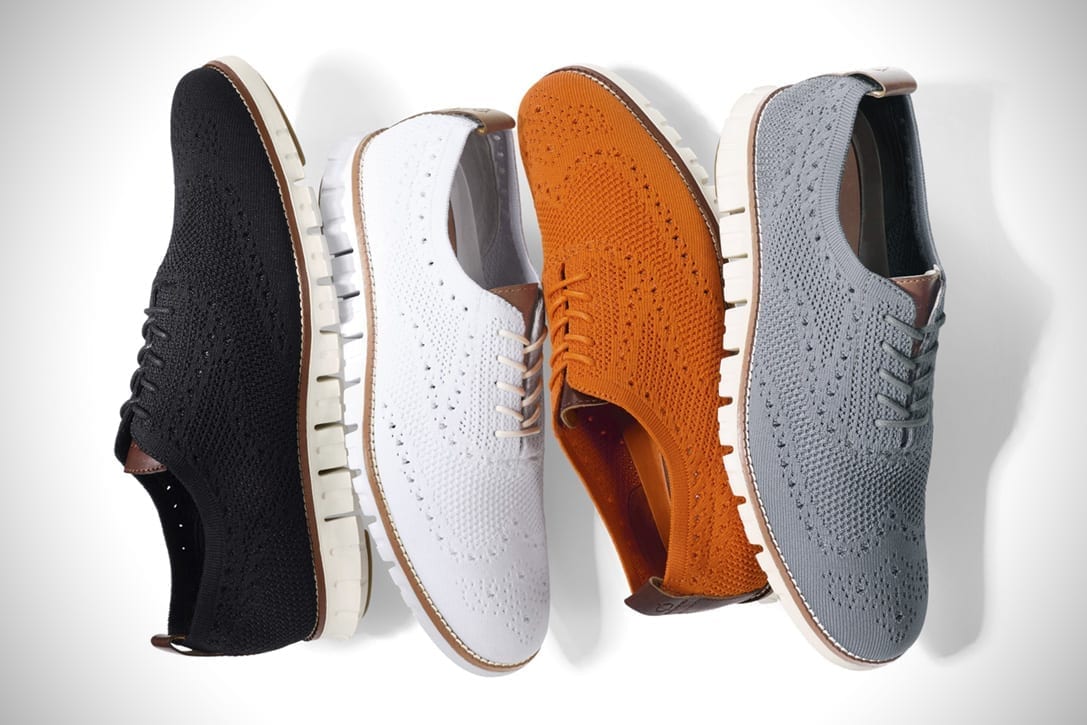
    US lifestyle group Cole Haan has signed a deal for distribution of its apparel, footwear and accessories in Greater China.

    It has formalised a long-term retail, wholesale and e-commerce distribution agreement with the Sitoy Group Holdings subsidiary that will introduce the Cole Haan brand in China, Hong Kong and Macau through all major retail channels from this summer.

    Active for nearly 90 years, Cole Haan has a retail presence in more than 40 countries across five continents as it focusses on a strategic initiative of global expansion.

    Beyond its direct retail businesses, the company has stores within top-tier shopping malls, department stores and specialty retailer locations in North America and Japan, as well as through distributor-run shops in Asia.

    In Hong Kong, it has stores in Harbour City, Festival Walk, Sogo Causeway Bay and Times Square, and nine in Mainland China, four of which are in Shanghai. Sitoy plans to launch more than 20 outlets in Greater China next year, and will also work through diversified e-commerce platforms.

    With its global headquarters in New Hampshire and its creative centre in New York City, Cole Haan retails men’s and women’s footwear, handbags, leather accessories, outerwear and eyewear.

    Sitoy Retailing has distribution agreements with such brands as A. Testoni, Bruno Magli, Jockey and Kenneth Cole. Its house brands include Fashion & Joy and Tuscan’s.

  • Belstaff Japan opens in Hankyu Men’s Tokyo

    Belstaff Japan opens in Hankyu Men’s Tokyo

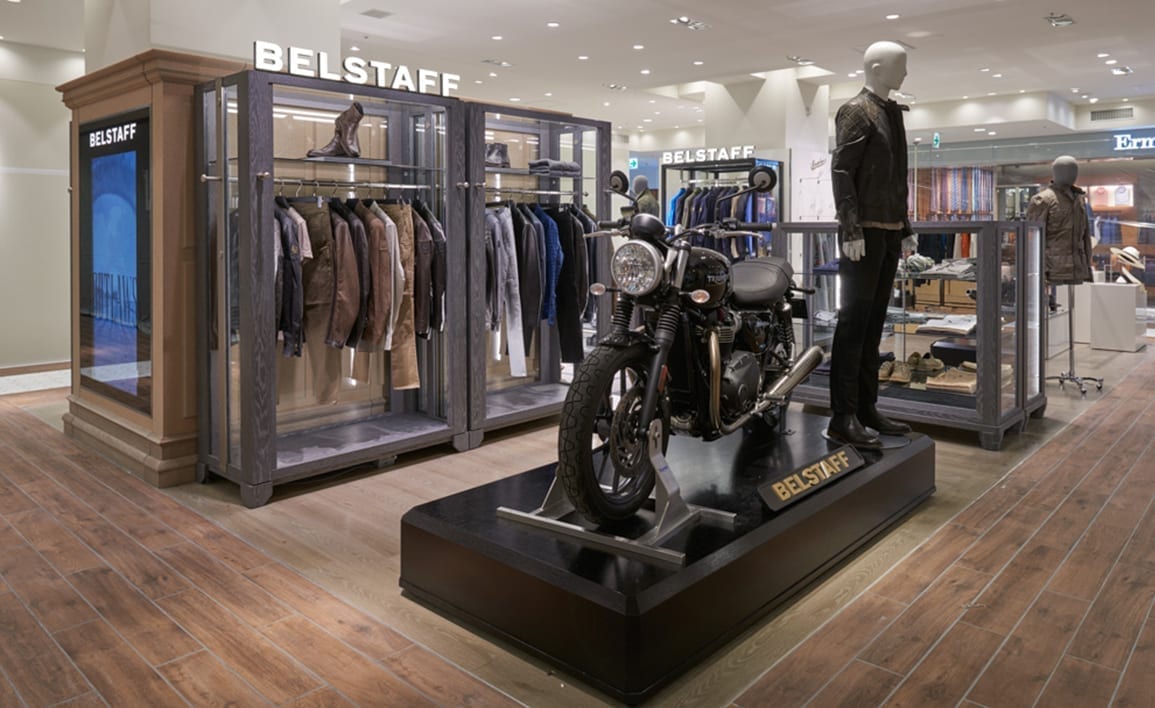
    Belstaff Japan has opened its fifth store, in Hankyu Men’s Tokyo, 18 months after the British fashion brand’s arrival in the nation.

    As well as the men’s AW 17 collection, the new outlet features a limited-edition leather jacket, and from next month will offer a limited-edition capsule collection in collaboration with Japanese street label Sophnet.

    The new store’s interior features black raw-steel rails offset by a brighter light concept that highlights products and materials.

    Belstaff will launch a men’s pop-up store in Hankyu Men’s Osaka from October to November.