Author: Mei Ling Tan

  • Ikea plans $212 million Malaysian distribution centre

    Ikea plans $212 million Malaysian distribution centre

    Swedish furniture retailer Ikea is to  open a regional distribution and supply chain centre for Asean in Malaysia.

    According to Malaysian media, the facility will cost about RM908 million (US$212 million), and serve the existing 12 stores in the Ikea Asean network – and seven more planned for construction by 2026.

    The 100,000 sqm warehouse will be one of Ikea’s largest worldwide and reflects the company’s growing focus on the fast-growing Asian market.

    Ikea currently has stores in Thailand, Malaysia, Singapore and Indonesia. More are planned for the Philippines and Vietnam, although launch dates have yet to be announced.

    It is unclear whether Ikea stores in Hong Kong and India will also source products from the new facility.

    Malaysia’s international trade and industry minister Datuk Seri Mustapa Mohamed said the project adds momentum towards making Malaysia a regional distribution hub and the preferred logistics gateway to Asia, as outlined in the National Logistics and Trade Facilitation Masterplan and National E-Commerce Strategic Roadmap.

  • David Jones’ profit drop amid slowing sales

    David Jones’ profit drop amid slowing sales

    Department store giant David Jones’ sales growth has weakened markedly amid a decline in consumer spending and a poorly received private label clothing range.

    DJs recorded a 25 per cent drop in operating profit while total sales edged up one per cent in the year to June 25 compared to the prior year, which enjoyed sales growth of 8.4 per cent.

    South African parent company Woolworths Holdings – not related to the Australian supermarket chain – said the collapse of electronics retailer Dick Smith last year, which had concession stores inside David Jones stores, impacted growth by one per cent.

    The high-end retailer’s crucial comparable store sales, which excludes Dick Smith, declined 0.7 per cent – sharply lower than the prior year’s seven per cent growth in comparable sales.

    “Sales growth slowed in the second half as consumer sentiment worsened, although our share of the department store and specialty market grew marginally,” the company said in a statement on Thursday.

    Woolworths Holdings chief executive Ian Moir said David Jones suffered a disappointing private label performance but lessons had been learnt and remedial action was being taken.

    The group’s other Australian business, the Country Road Group – which includes the Country road and Witchery apparel brands – had a 5.1 per cent lift in sales and showed a marked improvement in the second half, with newly acquired Politix adding 3.7 per cent to growth.

    Sales in comparable stores however declined by 0.4 per cent.

    Moir said Country Road’s “above-market performance” reflected changes made to the business over the past 18 months and ongoing improvements to ranges during the year.

    Woolworths stated it’s in the process of rolling out its new beauty offering across its clothing and general merchandise division, which will include international brands Chanel and Estee Lauder for the first time.

    “Sales growth slowed in the second half, as consumer sentiment worsened, although our share of the department store and specialty market grew marginally,” said Moir.

    Looking ahead, Woolworths expects market conditions in the year ahead “to be constrained by the same economic and political conditions that impacted our performance during the year under review”.

    “We will continue to invest in various transformational initiatives, most notably in David Jones, and remain  confident that our strategies will deliver future – fit businesses capable of long-term profitable growth. We expect our food and clothing businesses in both South Africa and Australia to continue to outperform their respective markets.”

  • Emerging APAC drives Q2 smartphone sales

    Emerging APAC drives Q2 smartphone sales

    Global smartphone sales grew 6.7% year-on-year during the second quarter to 366.2 million units, driven by demand for 4G handsets in emerging markets, according to Gartner.

    Greater China and emerging APAC markets collectively accounted for nearly half of global smartphone sales during the quarter, the research firm has estimated.

    But China’s share of the overall market has declined from 33.3% a year ago to 27.7% as of the second quarter of 2017, with total unit shipments falling from 114.2 million to 101.5 million over the same period.

    By contrast, emerging APAC’s share increased to 21.4% from 17.3% a year earlier, with shipments growing from 59.4 million to 78.2 million.

    “Although demand for utility smartphones remains strong, there is growing demand in emerging markets for 4G smartphones, with more storage, better processors and more advanced cameras. This is translating into higher demand for midpriced [$150 to $200] smartphones,” Gartner research director Anshul Gupta commented.

    Globally, Android increased its lead with a market share of 87.7%, compared to 12.1% for iOS, down from 12.9% a year earlier. Samsung meanwhile saw its sales grow 7.5% year-on-year after three consecutive quarterly declines associated with the recall of the Galaxy Note 7.

    But the Galaxy S8 and S8+ are bringing back high demand for Samsung smartphones. “Despite growing competition from Chinese brands such as Huawei, Oppo and Vivo, we expect Samsung to register growth in 2017,” Gupta said.

  • Hong Kong retail landlords ‘ready to negotiate’

    Hong Kong retail landlords ‘ready to negotiate’

    Hong Kong retail landlords are expected to be more flexible with lease terms as the market continues to recover, says real-estate consultancy Knight Frank.

    With four consecutive months of positive growth, retail sales value rose another 0.1 per cent year on year in June.

    Visitor arrivals during the first half of the year were up 2.4 per cent, led by 2.3 per cent growth in visitors from the Chinese mainland.

    “Rental levels for prime street retail stores in different districts have mostly undergone adjustments,” says Knight Frank.

    “Recognising that extra capital cost is needed to recruit new tenants and at the same time to avoid the risk of having empty shops for an extended period, landlords are now willing to make more adjustments during negotiations.

    “Following the stabilisation in overall retail sales, we expect to see more realignments for retail stores in the comings days.”

    The company believes the retail rental market is on track to bottom out before the end of the year.

  • Japan department stores see sales ease

    Japan department stores see sales ease

    Department-store sales in Japan fell 1.4 per cent last month on a same-store basis because of weak clothing and food sales, reports the Japan Department Stores Association.

    Sales at 229 stores run by 80 companies totalled ¥547 billion (US$5 billion), says the association. Sales decreased as most of the stores had moved their summer sale period to June, pushing down sales of clothes that would have sold well in July during a discount period.

    Accounting for 29.8 per cent of overall sales, the clothing category declined 5 per cent while there was a 2 per cent drop for food items, furniture and other home-use items.

    Among 10 major cities, Nagoya recorded the highest fall, 4.8 per cent, and Hiroshima a 3.4 per cent drop from July last year.

  • Chinese shoemakers ordered to pay New Balance $1.4 million

    Chinese shoemakers ordered to pay New Balance $1.4 million

    Three Chinese shoemakers have been ordered by a Chinese court to pay US sportswear company New Balance US$1.5 million in damages and legal costs for infringing its logo.

    It is believed to be the largest trademark infringement award ever granted to a foreign business in China.

    Suzhou Intermediate People’s Court, near Shanghai, ruled that the three defendants, who made shoes under the brand New Boom, “seized market share from New Balance” and “drastically damaged the business reputation of New Balance”.

    Zheng Chaozhong, Xin Ping Heng Sporting Goods and Bo Si Da Ke Trading had relied on the “malice of free-riding”, says the ruling. Their actions had led to “confusion by a large number of consumers”.

    The decision can still be appealed.

    New Balance has also taken on such Chinese brands as New Barlun and New Bunren since it started selling shoes on the mainland in 1995, reports The New York Times.

    In April, a court in Hangzhou awarded New Balance $500,000 in damages after ruling that a company making New Bunren shoes infringed its trademark. The same month, the Suzhou court fined five companies for breaching an injunction prohibiting them from selling shoes with New Balance’s “N” logo.

    However, New Balance once tried to reclaim intellectual property from a man using its Chinese name and was itself fined $16 million. The amount was later reduced to about $700,000, and a further appeal will go before China’s Supreme Court.

    Regarding the aggressive protection of its trademarks, New Balance’s senior counsel for intellectual property, Daniel McKinnon, says that if the China marketplace can be thought of as a schoolyard, “New Balance wants to make it abundantly clear we are the wrong kid to pick on”.

  • Germany draws up rules of the road for driverless cars

    Germany draws up rules of the road for driverless cars

    Protecting people rather than property or animals will be the priority under pioneering new German legal guidelines for the operation of driverless cars, the transport ministry said on Wednesday.

    Germany is home to some of the world’s largest car companies, including Volkswagen, Daimler and BMW, all of which are investing heavily in self-driving technology.

    German regulators have been working on rules for how such vehicles should be programmed to deal with a dilemma, such as choosing between hitting a cyclist or accelerating beyond legal speeds to avoid an accident.

    Under new ethical guidelines – drawn up by a government-appointed committee comprising experts in ethics, law and technology – the software that controls such cars must be programmed to avoid injury or death of people at all cost.

    That means that when an accident is unavoidable, the software must choose whichever action will hurt people the least, even if that means destroying property or hitting animals in the road, a transport ministry statement showed.

    The software may not decide on its course of action based on the age, sex or physical condition of any people involved.

    “The interactions of humans and machines is throwing up new ethical questions in the age of digitalization and self-learning systems,” German Transport Minister Alexander Dobrindt said in a statement.

    “The ministry’s ethics commission has pioneered the cause and drawn up the world’s first set of guidelines for automated driving,” he added.

    Germany earlier this year passed legislation under which a driver must be sitting behind the wheel at all times ready to take back control if prompted to do so by the autonomous vehicle, clearing the way for the development and testing of self-driving cars.

  • G-III Apparel taking DKNY, Donna Karan to China

    G-III Apparel taking DKNY, Donna Karan to China

    American apparel brands DKNY and Donna Karan are about to invade Greater China via a JV between New York’s G-III Apparel Group and investment fund Amlon Capital.

    As well as the mainland, the venture is targeting Hong Kong, Macau and Taiwan, with January 1 as lift-off date.

    G-III owns 49 per cent and Amlon the balance of the JV, which will have $25 million in funding. It is being chaired by Tommy Hilfiger chairman Fred Gehring with Steve Shen from Nanjing Datex fashion as CEO.

    G-III chairman/CEO Morris Goldfarb says the collaboration offers a “major strategic opportunity”.

    G-III makes and distributes apparel and accessories under licensed, owned and private-label brands. Its owned brands include DKNY, Donna Karan, Jessica Howard and Vilebrequin. It has fashion licences for such brands as Calvin Klein, Dockers, Guess, Ivanka Trump, Karl Lagerfeld, Kenneth Cole, Levi’s, Tommy Hilfiger and Vince Camuto.

    Amlon was set up last year by Gehring together with partners and private equity firm Apax Partners. The private investment vehicle already has stakes in Denham Jeans, Karl Lagerfeld and childrenswear brand Vingino.

  • FedEx supports young entrepreneurship

    FedEx supports young entrepreneurship

    A team of student entrepreneurs from Australia and Hong Kong were named the winner at the annual FedEx Express/JA International Trade Challenge (FedEx/JA ITC) Asia Pacific Finals in Singapore. This year, the finalists presented market entry strategy plans to export a pet product to the United States of America. Songen Yeung (Australia) and Manson So (Hong Kong) beat 29 teams from across the region with their eco-friendly cat litter, which is made of soybeans and is a first for the American market. The pallets are natural, safe for pets and bio-degradable, creating less harm to pets as well as the environment.

    To further promote cross culture exchange of ideas, individual finalists were randomly shuffled to form teams of two with each member from a different market. A total of 60 students from ten Asia-Pacific markets (Australia, mainland China, Hong Kong, Japan, Malaysia, the Philippines, Singapore, South Korea, Thailand and Vietnam) participated in the competition.

    “Winning wasn’t on my mind when I decided to participate,” said Songen Yeung. “I started off with the mindset to learn about doing business, meet new people from different places, and challenge myself to do something out of my comfort zone. I am thrilled that I have achieved all that, and won the competition.” Manson So added, “This is certainly an eye-opening experience for me. We learned a lot about global business and team work among different cultures. I’d strongly encourage my schoolmates and friends to join this competition next year.”

    The first runner up, Nathan Peadon (Australia) and SukHoon Chang (Korea), stood out with their proposal of uVET, a silicon microchip to be implanted into dogs to help owners keep track of their pets’ well-being and health, such as monitoring hydration levels, body fat and body temperature.

    Kevin Ho (Hong Kong) and Taishi Nishizawa (Japan) came in third with the idea of a multi-functional smart collar for dogs that owners can use to track the location of their pets. It can also measure the number of steps taken by a dog to ensure that the pet stays fit.

    “Technology is moving us towards an increasingly borderless world, and cross-cultural collaboration has become the order of the day,” said Karen Reddington, president, FedEx Express Asia Pacific. “We are thrilled that this year’s format reflected the increasing importance of international team-work. And FedEx is glad to be playing a part in providing a platform to nurture budding entrepreneurs. As part of our FedEx Cares commitment to invest $200 million in 200 communities worldwide by 2020, we are committed to giving entrepreneurs everywhere the tools they need to succeed.”

    “The FedEx/JA ITC aims to provide students with the opportunity to gain business knowledge and work as cross-border teams to create innovative business ideas and solutions, just like in the real business world. Looking at the students’ interactions and impressive presentations this week, we are proud to say that it has been a success. We would like to thank FedEx Express for their continued support of this program, giving us the opportunity to support the development of young minds every year,” said Vivian Lau, president, JA Asia Pacific.

    The FedEx/JA ITC program is jointly organized by FedEx Express, a subsidiary of FedEx Corp. (NYSE: FDX) and the world’s largest express transportation company, and JA Asia Pacific, a member of JA Worldwide. It aims to inspire and educate young entrepreneurs about global business and provide them with a solid foundation to build their future careers in business. The program has inspired more than 17,000 students in the region since its inception in 2007.


  • LVMH’s Cha Ling opens first China store

    LVMH’s Cha Ling opens first China store

    Luxury high-end skincare brand Cha Ling has launched its first store in China, opening a flagship outlet in Shanghai.

    Cha Ling, which means ‘tea forest’ in Mandarin, is inspired by the rare Chinese Pu’er tea — a type of tea known for its anti-oxidant and anti-ageing properties

    The LVMH Group-owned cosmetic venture launched in Paris just 18 months ago, and is the brainchild of Guerlain president and CEO Laurent Boillot.

    The brand is created in the Guerlain labs in France, with ingredients from Yunnan where farmers harvest 500-year-old tea trees.

    Products include Pu’er-infused cleansing powder, serums, massage cream and a “steam tablet” for purifying pores. Prices range from $20 to $200.

    Cha Ling is also planning to expand to Beijing and Chengdu soon, according to local media reports. Meanwhile, following the move into China, other stores are slated to open in international markets.

    Cha Lang first launched in French department store Le Bon Marché in January 2016. In February 2016, it opened its first standalone in Hong Kong inside the Harbour City shopping mall.

    It now has a second Hong Kong location in Causeway Bay and plans to open a standalone Paris boutique this year.

  • Prada duo launches exclusively with The Shilla Duty Free

    Prada duo launches exclusively with The Shilla Duty Free

    Puig is partnering with The Shilla Duty Free and Changi Airport to exclusively launch the latest Prada fragrance duo: La Femme Prada L’Eau and L’Homme Prada L’Eau.

    The scents are available exclusively at The Shilla Duty Free for two weeks before a wider roll-out. It is the first time that Prada fragrances have been available at Changi Airport before launching anywhere else.

    La Femme Prada L’Eau and L’Homme Prada L’Eau are said to offer a new olfactory signature to Prada Parfums.

    To celebrate the launch, Puig and Shilla will introduce a personalisation and gifting concept at Changi Airport over the coming months.

    La Femme Prada L’Eau opens with green frangipani flower enriched by Mandarin essence and smoothed by ylang ylang notes. Tuberose gives depth to the scent. L’Homme Prada L’Eau features amber and iris mingled with red ginger and neroli. Other notes include cedar and sandalwood.

    The bottle and packaging for La Femme Prada L’Eau and L’Homme Prada L’Eau are dressed in Prada’s signature Saffiano leather: Pink for the feminine scent and light blue for the masculine.

    Changi Airport Group Airside Concessions Group Senior Vice President Teo Chew Hoon said: At Changi Airport, we take pride in delivering newness, surprise and excitement to our savvy shoppers.

    With the first-in-the-world launch of the La Femme Prada L’Eau and L’Homme Prada L’Eau, we are confident that these distinctive, curated fragrances will resonate with the modern woman and man, and invite travellers to be amongst the first to embark on this journey of self-discovery with us.”

    The Shilla Duty Free Vice President of Global Merchandise Division Raelene Johnson commented: “The Shilla Duty Free has always been committed to creating exclusive retail experiences for our travel shoppers.

    This time, we are proud to partner with Puig to announce the first-in-the-world launch for its new Prada fragrances.

  • APL Logistics appoints chief financial officer

    APL Logistics appoints chief financial officer

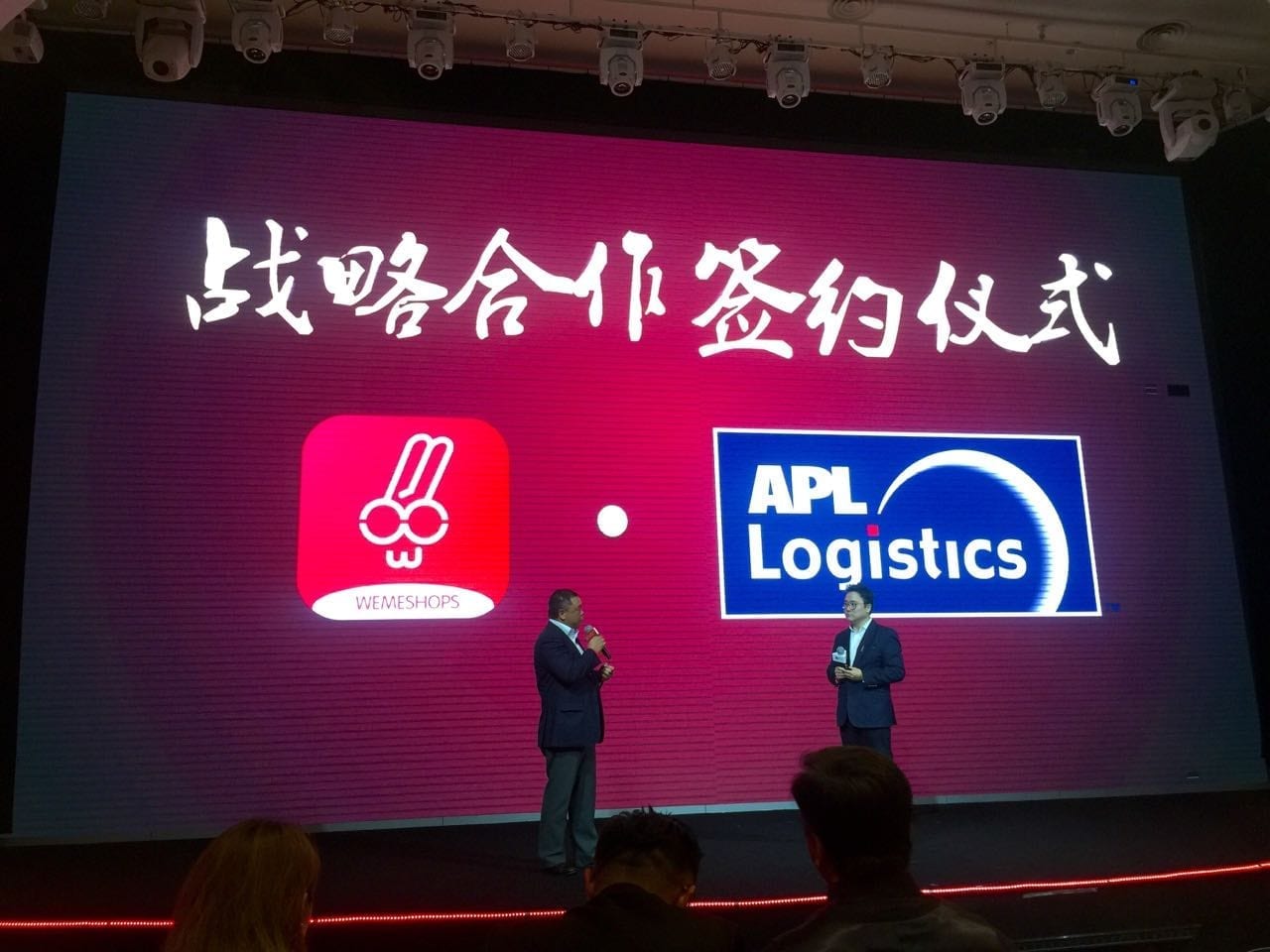
    APL Logistics has appointed Kazuo Inui as chief financial officer. His appointment is a planned succession from Shigeo Mori, whole will move on to Kintetsu World Express (KWE) Group, APLL’s parent company.

    Inui will be responsible for leading the global finance, treasury, accounting and global support service functions in APL Logistics. He brings over 34 years of experience in accounting and finance, including knowledge of the air freight forwarding, NVOCC and customs brokerage business. In KWE Group, he held a series of senior finance and accounting roles in Japan and the USA. Immediately prior to APL Logistics, Inui held the position of general manager – Accounting and Finance in KWE Japan.

    Bill Villalon, president of APL Logistics said “We are pleased to welcome Inui to APL Logistics. His predecessor, Mori, has done a fine job in leading the finance function and we are grateful for his contributions. I am confident that Inui will play an equally key role as part of the APL Logistics leadership team as we blend our deep operational and digital capabilities to deliver integrated and value-driven supply chain solutions to customers.”


  • AirAsia and CAE extend business relationship

    AirAsia and CAE extend business relationship

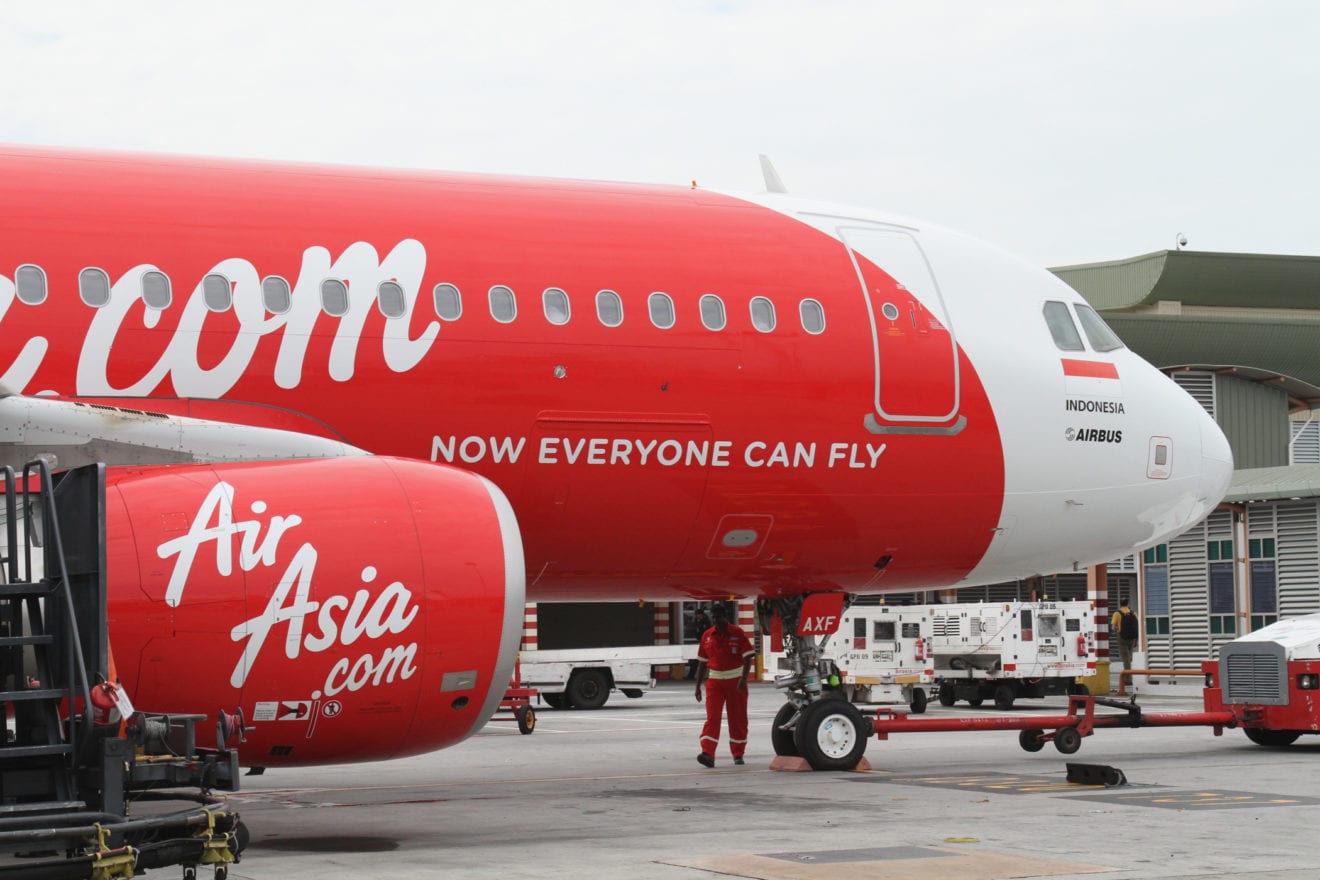
    AirAsia and CAE have concluded a sale and purchase agreement concerning the Asian Aviation Centre of Excellence (AACE), which is currently a 50:50 CAE-AirAsia joint venture. The transaction of US$100 million (including earn-out) will give CAE full control over AACE’s three training centres – located in Sepang, Malaysia; Singapore; and Ho Chi Minh City, Vietnam – as well as its share of the Philippine Academy of Aviation Training (PAAT), a joint-venture training centre between AACE and Cebu Pacific, located in Manila, Philippines.

    “CAE and AirAsia have been close partners since 2004, and we created AACE together in 2011. This new agreement is a natural evolution of our relationship and a win-win for both organizations,” said Marc Parent, CAE President and Chief Executive Officer. “It allows AirAsia to concentrate on its core business by completely outsourcing its training needs to CAE, and it allows CAE to expand its footprint in Asia Pacific, the fastest-growing aviation market.”

    CAE will remain AirAsia Group’s exclusive training partner. The largest low-cost carrier in Asia has extended its existing contract for all training requirements for AirAsia and for that of its affiliates in support of all aircraft types it operates up until 2036.

    “We’ve had CAE as our training partner of choice for many years now and it has been a great success. Our first MPL cadets trained by CAE are now flying as captains, and we put our full trust in CAE to fulfill our training needs at the highest quality level, as we continue to grow,” said Tony Fernandes, Group Chief Executive Officer of AirAsia. “AirAsia is rich in assets but our core business is passenger service and ancillary, and we will continue to regularly dispose of non-core investments and dividend most of it out, subject to board approval. This stake sale is just part of our long-term plan to monetize all our assets. We are also working on several other divestments of valuable assets including our leasing arm, which is imminent.”

    Marc Parent added: “We are very proud of what we have accomplished with AirAsia in creating AACE. We’d like to thank AACE employees for setting the standard and creating a great training experience, and we welcome them to CAE. Together we will continue to shape the future of training.”

    AACE offers training for pilots, cabin crew, maintenance engineers, technicians, and ground services personnel on the Airbus A320, A330, and Boeing B737NG platforms.

    The closing of the transaction is subject to customary closing conditions, including regulatory approvals. TD Securities acted as financial advisor to CAE.

  • Korean cellcos may sue govt over subsidy hike

    Korean cellcos may sue govt over subsidy hike

    South Korean mobile operator’s SK Telecom, KT and LG Uplus are considering taking the government to court over an order to increase discounts for new subscribers.

    The operators last week received a formal order to implement a 25% discount rate for regular new subscribers as part of the current government’s objective of reducing telecoms expenses for household.

    The change would represent a five percentage point increase of the current selective discount rate of 20% for regular subscribers, which was itself raised from the previous 12% in 2015.

    But the operators are reportedly considering taking administrative litigation to counter the order, citing a lack of sufficient discussion and consultation about the change as well as a need to prevent further revenue declines and asset depreciation.

    Another potential avenue for challenging the decision involves the way the discount rate was calculated.

    The mobile sector has also expressed concern over the potential for the 25% figure to be raised further in the future – the ICT ministry has proposed to review the discount rate every two years to reflect the average length of a postpaid contract.

    South Korea’s ICT ministry has estimated that the higher discount rate will reduce the country’s mobile costs by around 1 trillion won ($884.6 million) per year.

    Analysts have meanwhile estimated that the cut would lead to a 300 billion won reduction in sales for the three operators if applied to all customers currently benefiting from the selective discount rate, and 600 billion won in losses if it is expanded to apply to all existing subscribers.

  • Shaver Shop up on debut year profit growth

    Shaver Shop up on debut year profit growth

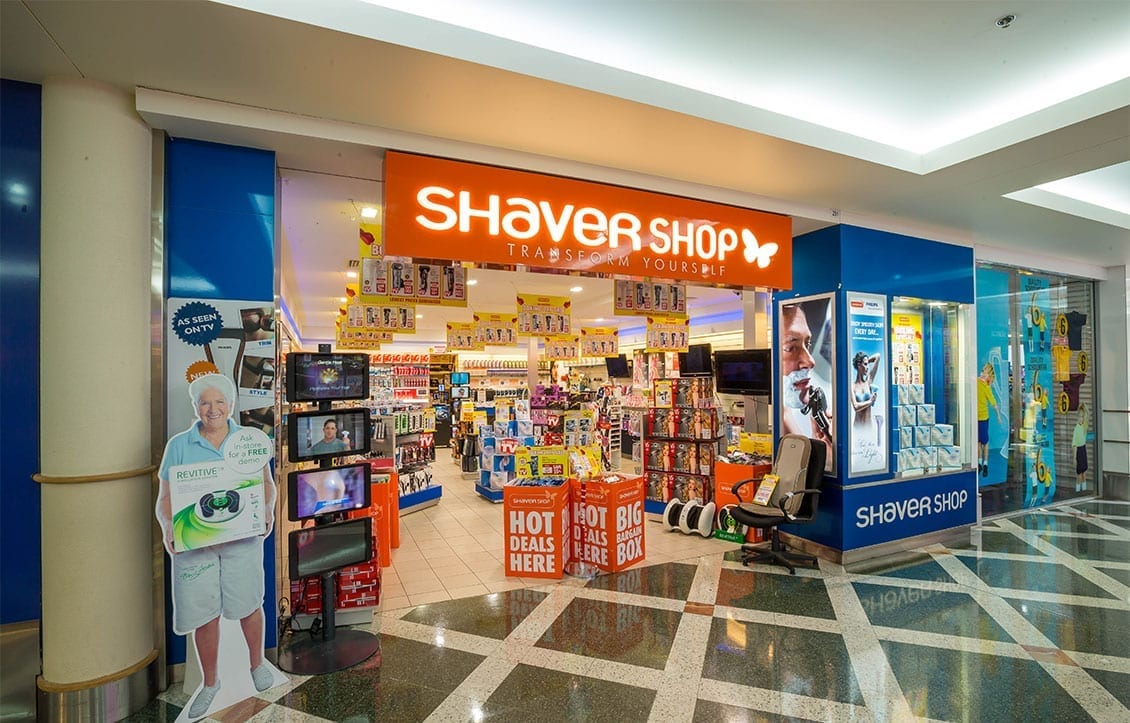
    Shaver Shop shares are trading higher after the grooming products specialist lifted its full-year profit and revenue in its first year on the Australian share market.

    The company says its pro forma profit rose 20.7 per cent to $9.1 million in the year ending June 30, 2017, while its revenue lifted 33.6 per cent to $142.6 million.

    Statutory profit was $9 million, up from $3.9 million the previous year when profits were hit by costs related to its IPO.

    Chief executive Cameron Fox says that despite a “tough” retail environment, Shaver Shop’s same store sales grew by 6.2 per cent in 2016/17, partly through the new sales channel it began offering in the second half to Australian customers who purchase bigger quantities of products to resell.

    Shaver Shop’s online sales improved by 9.4 per cent to $11.7 million, which the company says was helped by a new website launched in February.

    The group’s retail network also grew, with the opening of eight new stores and the buying back of seven franchises, bringing its total number of stores to 95, with 13 franchise outlets remaining.

    Looking forward, Fox said Shaver Shop had made a strong start to 2017/18 and was optimistic about how its upcoming festive season promotions will perform.

    But, he said, supply uncertainty for the company’s recently introduced resale channel means its same store sales are likely to moderate.

    Shaver Shop will pay a fully franked final dividend of 2.4 cents.

    Its shares were trading 6.25 per cent higher at 68 cents at 1418 AEST.