Author: Mei Ling Tan

  • Myanmar’s startups map past, shape future with virtual reality

    Myanmar’s startups map past, shape future with virtual reality

    Few countries in the world have experienced such rapid discovery of technology than Myanmar.  Gasps echo across the hall as the Myanmar school kids trial virtual reality goggles, marveling at a device that allows some of Asia’s poorest people to walk on the moon or dive beneath the waves.

    “In Myanmar we can’t afford much to bring students to the real world experience,” beamed Hla Hla Win, a teacher and tech entrepreneur taking virtual reality into the classroom.

    “If they’re learning about animals we can’t take them to the zoo… 99 percent of parents don’t have time, don’t have money, don’t have the means,” she added.

    Few countries in the world have experienced such rapid discovery of technology than Myanmar which has leapfrogged from the analogue to the digital era in just a few years.

    During the decades of outright junta rule, which ended in 2011, it was one of the world’s most isolated nations, a place where a mobile phone sim card could cost up to $3,000.

    For half a century its paranoid generals cut off the country, restricting sales of computers, heavily censoring the Internet and blocking access to foreign media reports.

    But today phone towers are springing up around the country and almost 80 percent of the population have access to the Internet through smartphones, according to telecoms giant Telenor.

    Budding startups

    Tech startups are emerging around the commercial capital Yangon, many seeking to improve the lives of rural people, most of whom still live without paved roads or electricity.

    “The increase in activity from last year till now — new startups, more people determined to become entrepreneurs and working in the tech sector in general — is significant,” said Jes Kaliebe Peterson, CEO of community hub Phandeeyar.

    Virtual reality is the latest advance to cause a stir, with a handful of entrepreneurs embracing tech for projects including preserving ancient temple sites to shaping young minds of the future.

    The Phandeeyar incubator works with more than 140 startups. Among them Hla Hla Win’s virtual reality social enterprise 360ed which is using affordable cardboard VR goggles attached to smartphones to break down barriers in Myanmar’s classrooms.

    She founded the non-profit last year after 17 years working in the woefully underfunded education system in a bid to bring learning to life.

    “I see it as an empathy machine where we can teleport ourselves to another place right away,” she told.

    And it’s not just school children who benefit from stepping into places they could only ever dream of visiting.

    360ed has used virtual reality to help Myanmar teachers attend training courses in Japan and Finland and is working on setting up deals with schools in India, Pakistan, China and Bangladesh.

    “With VR there’s no divider, there’s no distance,” Hla Hla Win said.

  • Fave Ready To Support Singapore’s Drive to Become a Cashless Society

    Fave Ready To Support Singapore’s Drive to Become a Cashless Society

    As Singapore seeks to accelerate its growth as a cashless society, online-to-offline (O2O) mobile platform, Fave is supporting restaurants and offline retailers to offer convenient mobile payments that aim to help them grow their business by rewarding customers.

    Prime Minister Lee Hsien Loong has signalled that Singapore must do more to avoid falling behind other cities in e-payments. He used his recent National Day speech to point out that 60% of transactions in Singapore still involve cash or cheques, despite the cities well-developed financial system and tech-savvy population.

    Fave, Southeast Asia’s leading food & beverage app, is supporting Singapore’s growth as a smart nation by making it easier for restaurants and offline retailers to offer cashless payment options and reward customers through FavePay, Fave’s newly launched mobile payments platform.  With more than two million subscribers already in Singapore, FavePay is now readily available for Singapore to begin adopting mobile payments. It is now accepted at over 150 outlets including Chocolate Origin, Four Seasons Durians, Rong Hua Bak Kut Teh, Wrap & Roll, Charcoal Thai and more.

    Andersen’s of Denmark, a luxury ice cream parlour with six locations across Singapore, initially adopted FavePay as a way to improve customer service and enhance its customer rewards programme. However, the FavePay-linked business tools are proving to be just as valuable.

    “We are pleased to be part of Singapore’s move to a smart, cashless nation. FavePay was easy to set up and the transaction process has been fast and problem-free from day one. From an operational point of view, we appreciate real-time transaction reports and detailed statement of account reports, which provide insights that we can use to refine our loyalty programmes and other marketing efforts,” said Ms Wong Khai Rhou, Business Manager of Andersen’s of Denmark.

    To use FavePay, consumers simply need to open their existing Fave app and scan the QR code at the participating restaurant or offline retailer before entering the total bill amount and confirming. Customers who use FavePay earn cashback of up to 30%, which they can redeem on their next visit. For merchants, FavePay is hassle free as Fave will provide them with a proprietary dashboard called FaveBiz that will allow them to get real time reporting, monitor performance as well as receive direct customer feedback.

    Fave merchants have the option to also accept Alipay, one of the world’s largest online and mobile payment platforms. Fave teamed up with Ant Financial, the financial affiliate of Alibaba Group, earlier this month to offer Chinese tourists visiting Singapore a seamless cross-border payment experience with Alipay.

    “Deploying FavePay to help restaurants and retailers succeed is one of the pillars of Fave’s business model. Together with Alipay, we provide fast and easy cashless mobile payments that support retailers in reaching out to new and return customers and delivering seamless service that tech-savvy Singaporeans are looking for,” said Ng Aik Phong, Managing Director of Fave Singapore. “Enabling retailers to benefit from low cost mobile payments is important to our smart city future and we are encouraged by PM Lee’s recent call towards a cashless society. FavePay is uniquely positioned to help both merchants and customers benefit from fast, cashless transactions.”

    “To enhance consumer adoption, FavePay is unique because besides being a cashless payment service, it also provides cashback of up to 30% that customers can use during their next visit. This has accelerated customer adoption at a rate of 50% week on week, as proven by our thousands of FavePay users since our introduction in mid-July.” added Mr Ng.

  • Thais show significant preference for mobile wallet payments

    Thais show significant preference for mobile wallet payments

    Nine out of ten Thais are keen to make payments via mobile wallets given the right security measures, incentives and additional services such as built-in loyalty programs, according to the Visa Consumer Payment Attitudes Study.

    The fourth instalment of the annual study discovered that 94 percent of respondents would be more likely to replace cash with a mobile wallet if payment[2] comes with features such as offers and rewards. Built-in functions such as loyalty programs, instant purchase notifications, as well as digital receipts to track expenses, will make consumers more likely to try mobile wallets.

    “The findings from this study confirm that consumers not only expect fast, simple and secure mobile payments, they also want access to relevant services such as promotions and the ability to collect and utilize reward points. Whatever the form factor, people are moving away from seeing payment as just a commodity. As a global leader in payments, Visa enriches the entire payment ecosystem by offering global acceptance, innovative product platforms, reward incentives, and state of the art security,” said Suripong Tantiyanon, Visa Country Manager, Thailand.

    Payments made via mobile applications are on the rise, particularly for financial products and services such as investment units, and online shopping. The former constituted as much as half of all mobile transactions (51 percent), while the latter comprised three in ten (31 percent). In the case of financial products and services, the increase from the previous year was a robust 14 percent.

    The Study showed that nine in ten respondents (87 percent) have made a mobile payment in the past year, with 58 percent already using it on a weekly basis. Yet the biggest barrier to entry remains security.

    The main barriers to mobile payment adoption are fear of phone hacking and data theft (34 percent), losing your phone or having it stolen (22 percent), unauthorized access to personal accounts (17 percent), and viruses and malware (9 percent).

    “While people value the convenience and benefits that come with mobile payments, security remains the highest priority. For Visa, whether it is contactless payment through card, mobile device, or QR code payment, we always implement a multi-layered approach to security to ensure that customers can pay with peace of mind. This can include the Visa Token Service that replaces the traditional payment card account number with a unique digital identifier or “token” to process online and mobile payments without exposing actual account details, or two-factor authentication for mobile commerce,” said Mr. Suripong.

    QR Code in particular will help drive the global shift toward a cashless future. Visa and the other EMVCo Members have recently launched new globally interoperable EMV specifications and successfully enabled merchant-presented QR technology in 15 countries around the world.

    This new global specification is an important step that promotes interoperability and standardizes the fast growing ecosystem of QR code payments across the world. Already, 33 banks and more than 328,000 merchants across India, Kenya and Nigeria have adopted the interoperable standards as they accelerate their QR code digital payment programs.

    EMVCo is the global technical body tasked with managing, maintaining and enhancing EMV specifications to ensure interoperability and acceptance of EMV-based payments worldwide.


  • Record first-half sales for Samsonite International

    Record first-half sales for Samsonite International

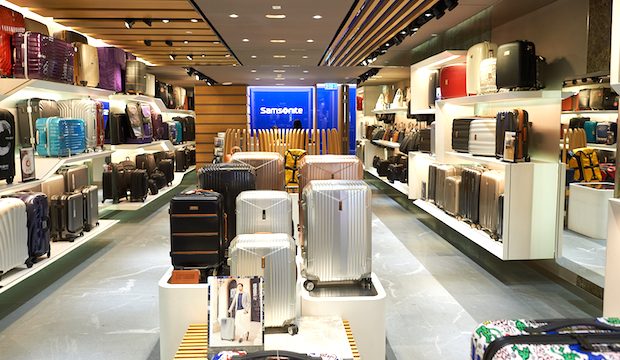
    Luggage company Samsonite International had record half-year net sales of US$1.5 billion, a year-on-year increase of 31.8 per cent.

    Its acquisition of the Tumi brand had “significant” positive impact on its performance in Asia, reports the company, announcing its interim results.

    Samsonite assumed direct control of Tumi distribution in China, Hong Kong, Indonesia, Macau, South Korea and Thailand. It also added 37 Tumi stores worldwide. As a result, the brand had net sales of $296.9 million for the six months.
    Excluding amounts attributable to the Tumi business, the group posted 7.5 per cent net sales growth. Net sales of the Samsonite brand grew by 7 per cent, and for American Tourister by 1.3 per cent.

    “Further down the price pyramid, our Kamiliant brand performed exceptionally well, validating our belief in the vast untapped potential of the entry-price segment,” says Samsonite International CEO Ramesh Tainwala. “We will further expand Kamiliant distribution across Asia.”

    E-commerce acquisition

    Also acquired, in May, was eBags, for a cash consideration of $105 million. The company says this significantly strengthens its platform to accelerate the growth of its direct-to-consumer e-commerce business.

    Already this grew 89 per cent during the first half (20.2 per cent excluding Tumi), driven by a 126.7 per cent increase in net sales, partly as a result of acquiring eBags.

    Net sales in Asia reached $563.3 million for the group, an increase of 19.8 per cent. Excluding Tumi, the increase was 3.8 per cent.

    Japan had 53.4 per cent net sales growth. Excluding Tumi, this was a 12.8 per cent increase, driven by the American Tourister, Gregory and Samsonite brands.

    China’s net sales grew 11.2  per cent, or 8.8 per cent with Tumi excluded. This was attributed to a strong performance from the Samsonite brand.

    Net sales in South Korea were up 18.1 per cent, but would have been down 1.6 per cent without Tumi. This was because of fewer shoppers from China and weak consumer sentiment.

    Hong Kong’s net sales soared 97 per cent, driven by the addition of Tumi. Otherwise there would have been a 1.7 per cent decrease because of fewer Mainland China visitors. This compares with the 7.4 per cent decline in the second half of last year and the 15.6 per cent drop in the first half.

    Driven by the Kamiliant and Samsonite brands, net sales in India grew by 1.9 per cent. However, there was a temporary disruption in the second quarter because of a goods-and-services tax taking effect.

  • Cebu Pacific waives rebooking fees

    Cebu Pacific waives rebooking fees

    After serving more than 150 million passengers in over two decades, Cebu Pacific has decided to waive fees on rebooking or flight changes as part of its push to improve customer experience.

    Passengers who decide to change flight schedules within 24 hours from booking will no longer have to pay rebooking fees of as much as P2,800.

    In the past, passengers who make changes on their bookings were required to pay P1,500 for domestic flights, P2,300 for short-haul flight and P2,800 for long-haul international flights.

    For bookings that require changes in the flight sequence, penalty fees will also be waived.

    For example, if a passenger booked a Manila-Cebu flight, and then needs to change this to Cebu-Manila, the cancellation fee is waived.

    The same applies for Sum of Sectors (SOS) or  “Through Fare” bookings, which are basically two connecting flights treated as one.

    For instance, a passenger books a Virac-Manila-Cebu flight and needs to change this to Cebu-Manila-Virac, the cancellation fee is waived.

    Penalty fees will also be waived for direct flights changed to SOS booking and vice versa.

    While the rebooking and cancellation fees are waived, however, passengers who make such flight changes will still need to shoulder the fare difference.

    The waiver on the rebooking and cancellations fees is applicable across all booking channels of Cebu Pacific, whether through a travel agent, ticket office and call center.

    Ancillary services, such as seat selection, baggage allowance and preordered meals, are also fully transferrable to other guests and flights at no extra cost.

    “Rebooking and cancellation fees have been a key concern for passengers, especially those who have been able to avail themselves of low fares. This will benefit them as it truly makes flying with Cebu Pacific more affordable,” Cebu Pacific Vice President for Corporate Affairs Paterno S. Mantaring said.

    The airlines has also updated all its booking systems to make exemptions from the Ninoy Aquino International Airport (Naia) Terminal Fee, or the International Passenger Service Charge (IPSC) applicable on bookings made via the Cebu Pacific mobile app and web site.

    The move is seen benefiting thousands of overseas Filipino workers (OFWs) who book flights on Cebu
    Pacific to get to their job sites.

    Aside from OFWs, pilgrims with authorization from the Philippine Sports Commission and guests who have been issued an exemption certificate are also exempted from paying the IPSC, provided valid documents are presented.

    Cebu Pacific flew 10.1 million passengers in the first half of  2017.  Cebu Air Inc. saw its profits down in the first half of the year, as the rise in revenues failed to offset the spike in expenses.

    The company’s net income stood at P4.34 billion in the first six months of 2017, a 43.6-percent drop from P7.68 billion last year, as a result of slower revenue growth versus bigger expenses.

    In the same comparative periods, revenues increased by 7.7 percent to P35.66 billion, from P33.09 billion, fuelled by its passenger revenues of P26.62 billion.

    Expenses, on the other hand, rose 16.6 percent to P29 billion due to the rise in average jet-fuel prices in 2017, coupled with the weakening peso against the greenback.

    As of end-June, the Gokongwei-led airline operates a fleet of 61 planes, serving 66 domestic routes and 38 international routes from its hubs all over the Philippines.

  • Turnover dips as Ajisen (China) under pressure

    Turnover dips as Ajisen (China) under pressure

    While half-year turnover edged down 2.5 per cent for restaurant group Ajisen (China) Holdings, its core profit grew 36 per cent.

    Its turnover was RMB1.1 billion (US$165.2 million) while the profit reached RMB135 million.
    Gross profit margin, up 2.3 points, was 73.1 per cent, while the gross profit reached about RMB841 million, up 0.7 per cent. Profit attributable to the owners of the company fell by about 80.9 per cent to RMB108 million.

    Ajisen says competition in the foodservice industry has intensified, with high opening and closing rates emerging as the new norm. As an example, it cites a surge of new restaurants in Beijing, Shanghai, Guangzhou and Shenzhen being accompanied by a higher rate of take-over with a monthly closure rate of 10 per cent, and a compound annual closure rate exceeding 100 per cent.

    Also the shopping centre/catering model is under pressure, says the company, as a result of lower flow aggregation and insufficient customer numbers because of the homogenisation of shopping centres. Catering outlets in shopping malls in 10 cities recorded a closure rate of more than 30 per cent.

    Meanwhile, the takeaways segment of the industry is growing rapidly with an accent on healthy eating. Statistics for last year show that overall transactions in the segment sharply increased to more than RMB150 billion in value, accounting for 4 per cent of the catering industry total.

    Ajisen says its management will actively explore and seek opportunities to transform, adopting a lean management approach and establishing smart stores to enhance the customer experience.

    At the end of June the group had 649 fast-casual chain restaurants, down 13 from the same time last year. However, its network extended its reach to 31 provinces and municipalities in China, amounting to 133 cities, 11 more than last year.

    Four major production bases were launched – in Shanghai, Chengdu, Tianjin and Dongguan – to support the group’s expansion.

    As well as China, the group has 29 restaurants in Hong Kong, down eight from last year, and one in Rome, Italy.

  • Macy’s taps Ebay exec with strong digital background

    Macy’s taps Ebay exec with strong digital background

    US department store retailer Macy’s has named Hal Lawton, formerly senior vice president of Ebay North America, as president.

    Effective September 8, Lawton will be responsible for all aspects of the Macy’s brand, including merchandising, marketing, stores, operations, technology, and consumer insights and analytics, and will report to Macy’s CEO Jeff Gennette.

    Lawton brings strong retail and digital expertise from his time at Ebay and Home Depot, where he was responsible for jump-starting the hardware store’s e-commerce site and building it into a nearly $2 billion business.

    After reporting a fall in sales and earnings per share last quarter, though the fall wasn’t as bad as analysts were estimating, Macy’s is banking on Lawton’s tech background and track record of successfully driving change to turn the business around.

    “This is a key step as we look to further transform the business and work through the volatility of today’s retail landscape,” said Gennette in a statement.

    “Macy’s already has one of the strongest omnichannel businesses in the industry, and with Hal on the team, we will accelerate the integration of digital both online and in our stores to deliver the world-class experience our customers demand.”

    In addition to Lawton’s hiring, Macy’s has also announced the creation of a single simplified merchandising organisation and an enhanced focus on the company’s data analytics capabilities.

    The restructuring will consolidate three functions – merchandising, planning and private brands – into a single function organised around five ‘families-of-business’ (ready-to-wear, center core, beauty, men’s and kid’s, and home).

    The restructure will be supported by strengthened customer insights and data analytics, including new inventory replenishment and pricing capabilities.

    While the primary objective is growth, Macy’s anticipates it will save approximately US$30 million on an annual basis, some of which may be used for reinvestment in the business. It expects one-time costs of approximately $20-25 million to be booked primarily in the third quarter of 2017 and a headcount reduction of approximately 100.

    Lawton said he is excited to play a part in transforming the iconic retailer for the future of retail.

    “At a time when there is both dramatic change and great potential in retail, I’m excited to be part of the team that will shape the future of the Macy’s brand and, along with it, consumer expectations of what a great omnichannel experience can be,” he said.

  • Bapcor books growth at Autobarn

    Bapcor books growth at Autobarn

    Autobarn owner, Bapcor, has recorded a 50.9 per cent increase in net-profit-after-tax to $65.8 million for the year ended 30 June, excluding costs related to its Hellaby Holdings acquisition.

    Earnings before interest, tax, depreciation and amortisation increased by 52.4 per cent to $117.4 million, with its retail and services segment, including Autobarn and Autopro booked a 30.3 per cent increase in earnings.

    Same-store sales growth at Autobarn increased by 2 per cent during the year, the total network now standing at 122 after the opening of eight new locations.

    The company has decided to divest Hellaby’s footwear portfolio, including the New-Zealand based Hannahs, Hush Puppies, Pulp and Number One Shoes brands, classifying the business as discontinued operations as it looks to sell the companies.

    “FY17 was again a transformative year with the acquisition of Hellaby making us Australasia’s leading automotive aftermarket supplier with over 850 locations,” CEO Darryl Abotomey said.

    “We are very pleased with the full year results in which the trade, retail and service and specialist wholesale businesses all recorded year-on-year improvements.”

    Bapcor moved to increase its proportion of company-owned Autobarn stores during the year, with 25 per cent, or 31 of the total store network now owned by Bapcor itself.

    Click and collect sales increased 45 per cent for the year, helping to underpin a 28.3 per cent increase in revenue for the division.

    Looking ahead, Bapcor said it expects “another strong year of revenue and profit growth” in FY18, with a full 12 months trading from the Hellaby acquisition, plus continued growth across the business. The automotive group has forecast NPAT growth from continuing operations of circa 30 per cent.

  • Amazon’s Wholefoods takeover gets regulatory green light

    Amazon’s Wholefoods takeover gets regulatory green light

    Amazon’s Wholefoods takeover has received regulatory approval, clearing the way for the biggest retail deal of the year to proceed.

    The Federal Trade Commission, charged with ensuring business acquisitions do not impact customer choice, has given the green light to the US$13.7 billion deal,  shortly after Whole Foods shareholders voted in favour of it.

    The FTC said in a statement that it was satisfied the deal would not substantially lessen competition or constitute unfair competition and had opted not to continue its investigation further.

    But it effectively sent a warning to the US’ largest online retailer that it “always has the ability to investigate anticompetitive conduct” should it believe it has grounds to in the future.

    GlobalData senior analyst Molly Johnson-Jones said the shareholder vote “consolidates the threat of Amazon repeating the damage on the grocery market it has ravaged on mainstream supermarket territory”.

    “Amazon is the ultimate disrupter in retail, but for a long time it has only been on the periphery for the food retailers. Amazon’s vision of being a one-stop-shop for all of a consumer’s needs is (now) one step closer to being a reality.”

    Analysts did not expect the FTC to intervene given Amazon has little involvement in the retail grocery market at present, and Whole Foods’ share of that market is small.

  • Thai retailers arrested for counterfeit footwear

    Thai retailers arrested for counterfeit footwear

    Thai authorities have arrested two men and seized 160,000 pairs of counterfeit footwear from six retail outlets.

    The footwear has a market value of about THB20 million (US$601,000), says Department of Special Investigation (DSI) deputy-chief Suriya Singhakamol.

    The DSI obtained warrants from the Central Intellectual Property and International Trade Court to search four locations in Samphanthawong and one in Rat Burana in Bangkok, plus another in Nakhon Pathom province.

    Suriya says 160,000 pairs of sneakers and other footwear were found falsely labelled as Adidas, Converse and Nike, as well as other brands.

    Two Chinese shop owners, Hongbin Lin and Lin Sow, have been charged with possession of products falsely labelled with registered trademarks, and with smuggling those products into Thailand in breach of trademark and customs laws.

    The men had set up companies to import counterfeit products, and traded them around the clock, says Suriya.

    The DSI has been talking with retail space owners over the past month, asking for their co-operation in not renting space to traders selling counterfeit products.

  • Walmart, Google in voice shopping deal

    Walmart, Google in voice shopping deal

    Walmart is diving into voice-activated shopping with Google to offer hundreds of thousands of items for voice shopping through Google Assistant.

    The capability will be available in late September.

    It’s Google’s biggest retail partnership – and the most personalised shopping experience it offers – as it tries to broaden the reach of its voice-powered assistant Home speaker. It underscores Walmart’s drive to compete in an area dominated by Amazon’s Alexa-powered Echo device.

    “Voice shopping is becoming a more important part of everyday shopping behaviour,” said Marc Lore, CEO of Walmart’s US e-commerce business.

    The voice-activated devices are becoming more mainstream as they become more accessible. Walmart has said Google’s investment in natural language processing and artificial intelligence will help make voice-activated shopping even more popular.

    Lore said the personalisation of the partnership means people can shout out generic items like milk, bread and cheese, and Google Assistant will know exactly the brands and the size that the user wants.

    Google introduced shopping to Home in February, letting people use voice to order essentials from more than 40 retailers like Target and Costco under its Google Express program. But that was far behind the Echo, available since late 2014.

    Walmart, which has more stores than any other retailer and the largest share of the US grocery market, is also working hard to close the gulf online between itself and Amazon.

    To be more competitive, Google Express is scrapping the $US95 ($A120)-a-year membership starting on Wednesday, allowing shoppers to get free delivery within one to three days on orders as long as the purchase is above each store’s minimum.

    Walmart says it will be tapping its 4,700 US stores and its fulfilment network next year to offer more kinds of customer experiences using voice shopping. For example, shoppers can tell Google Assistant they want to pick up an order in a store.

    Lore said the company wants to make voice shopping as easy as possible.

    “That’s why it makes sense for us to team up with Google. We know this means being compared side-by-side with other retailers, and we think that’s the way it should be,” he wrote in a corporate blog post.

  • Sephora’s latest store “completes omnichannel loop”

    Sephora’s latest store “completes omnichannel loop”

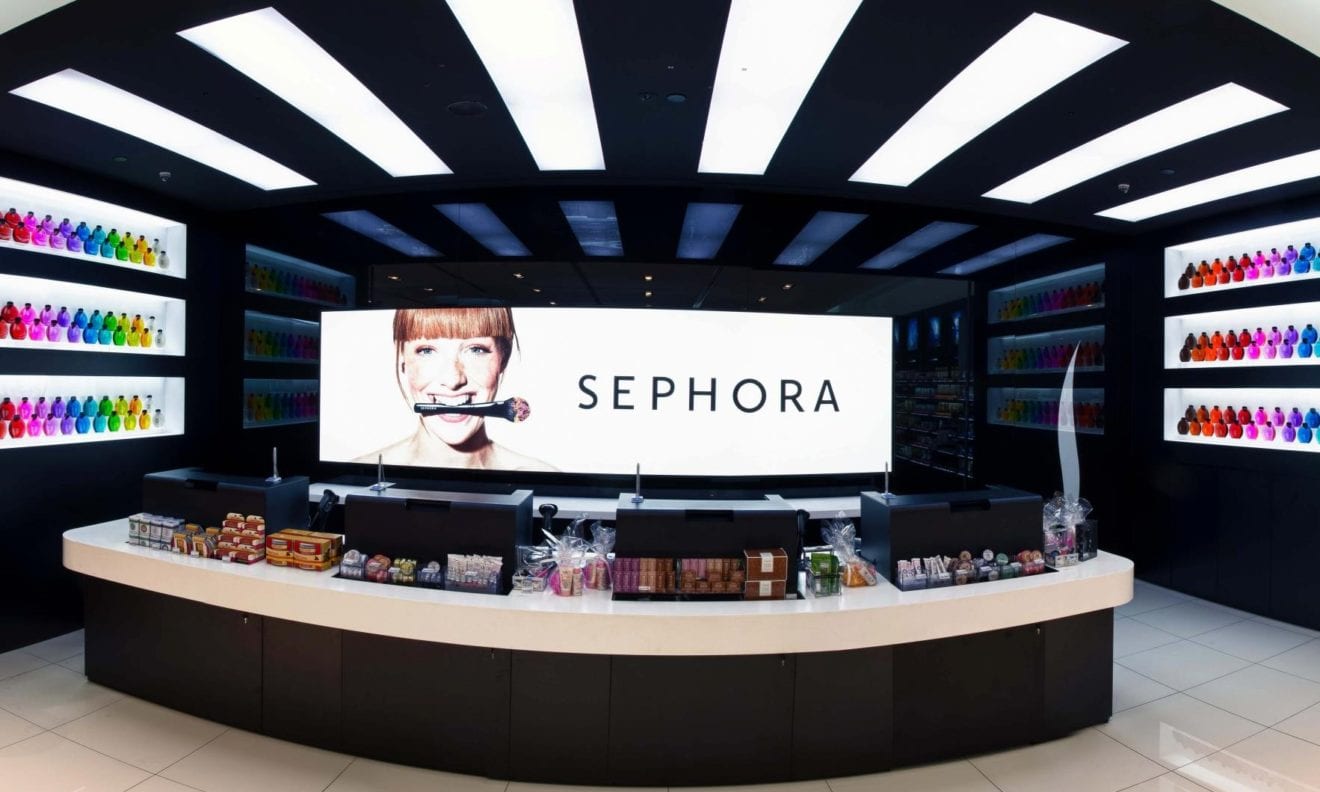
    Cosmetics retailer, Sephora, will open its 11th Australian store at Westfield Bondi Junction in September.

    The new location adds to the beauty chain’s five Sydney stores, located at Pitt St, Broadway, Macquarie, Warringah, Macarthur Square, as well as the soon to open Charlestown (Hunter Valley) location.

    Sephora country manager, Libby Amelia, said it had been a “big year” for the brand and that there was “no sign of us slowing down yet.”

    Brands including KORA Organics, The Beauty Chef and WelleCo, alongside luxe hair care brand Ouai and natural efficacious skincare like Peter Thomas Roth and Ole Henriksen will be offered at the store.

    According to Amelia, the Bondi location will house niche, luxe and natural offerings from local and international brands, with the store set to one of the first retail locations to include Sephora’s new in-store ‘Wellness’ hub, which completes “the loop on our omnichannel offering.”

    “In 2017, ‘Wellness’ became the new black – far from a trend, this beauty essential is a staple in the routines of women across the globe,” said Amelia.

    “Instead of buying quick-fixes and synthetic supplements health-conscious consumers are turning to products with ingredients that promise to combat the effects of an always-on lifestyle.”

    As the first market globally to adopt the Wellness vertical, the global retailer said “it’s only logical that the Australian market would select from the wealth of Aussie wellness brands,” offering a selection from Miranda Kerr’s KORA Organics and Elle Macpherson’s WelleCo, Carla Oates’ The Beauty Chef, James Duigan’s Bodyism, and Chanelle Louise’s Cilk Rosewater.

    “Our customers always want the next big thing, and the demand for wellness has been growing for some time”, said Alice Macdonald, Sephora Australia’s digital category manager.

    “Women are seeing beauty as a natural extension of their health, and are scanning beauty labels just as thoroughly as they do the labels on their food. The social movement for the wellness category is really strong with our customers, and we are so excited to be able to cater to their needs.”

    Sephora Australia retail category manager, Kirrily Bird, said its customers “know that Wellness isn’t an add-on or an afterthought, but a key step in her daily beauty routine” and that the retailer was “really conscious of partnering with brands and products that had a strong link back to beauty and skin health.”

    Of the future plans for the category, Amelia said that, “Wellness isn’t a moment, but a mainstay at the core of our business”.

    “The launch is one moment in the journey of Wellness for Sephora and for our brands and offering. Watch this space,” she said.

  • China cloud computing market grew 54% in 2016

    China cloud computing market grew 54% in 2016

    China’s cloud service providers have been urged to beef up their security ecosystem in expectation of managed security services becoming a new growth area in the increasingly challenging area of security.

    IDC’s latest China Cloud Service Provider Security 2017 Vendor Assessment found that the nation’s public cloud computing market expanded 54% in 2016 from a year earlier as more enterprises started to deploy their business to the public cloud.

    However, recently enterprises are increasingly becoming the targets of hackers as the digital transformation boosts their digital asset value, making security a major concern for public cloud service tenants.

    Digital transformation has linked enterprises’ business security closely with IT security, resulting in a big increase in enterprises’ digital asset value. This has also attracted the interest of criminals and hackers, posing a huge threat to enterprises’ digital assets.

    In May 2017, the WannaCry blackmail virus once again sounded the alarm bell, attesting to the fact that a considerable number of enterprises urgently need to improve the security of their IT systems.

    As public cloud tenants generally lack the ability to build security in a cloud environment, therefore cloud service providers have an unshakable responsibility to safeguard their cloud tenants’ business security. Thus, cloud service providers are facing unprecedented security challenges.

    IT security systems must be built with the strong support and close supervision of the government. The Chinese government has elevated the importance of cyberspace security to the level of national security, though cloud service providers also bear an unprecedented level of responsibility when it comes to security.

    It is essential that cloud service providers play the role of managed security service provider (MSSP) to help their tenants build secure IT systems.

    For cloud tenants, the only way to foster their strengths, circumvent their weaknesses, and use the capabilities provided by cloud service providers to strengthen the security of their IT systems is to raise their own security awareness and forge in-depth cooperation with cloud service providers.

    It is widely known that the security capabilities offered by cloud service providers have much room for improvement. In order to learn from others’ strong points to bolster their own weak links and win tenants’ unanimous recognition of their security strength, cloud service providers must engage in in-depth cooperation and close collaboration with professional IT security vendors through security ecosystem building.

    Building a complete security ecosystem will provide more reliable technical support for cloud service providers and their tenants.

    “Implementation of the Cyberspace Security Law of the People’s Republic of China means that cloud service providers now bear even greater security responsibilities. Cloud security capability enhancement will become one of the important strategies for cloud service providers in the future,”  IDC China senior research manager James Wang said.

    “In addition, as enterprises generally lack security planning and building abilities, they will have an urgent need for managed security service in building next-generation security systems. Globally, the managed security service model has been widely accepted by enterprises, while China’s managed security service market is still in its early stages.”

    Drawing upon their sound security ecosystem and rich security experience, public cloud service providers in China can provide managed security services to their large number of cloud tenants. Consequently, cloud service providers will be most likely to become the best practitioners of managed security services.

    Since China set up the Central Leading Group for Network Affairs in 2014, the importance of cyberspace security has risen to the height of national strategy. Following the release of Cyberspace Security Law of the People’s Republic of China, the National Cyberspace Security Strategy and other related laws, regulations and policies in recent years, security and trustworthiness have become key to enterprise-level users’ IT system building.

    For important sectors and fields such as public communications, information services, energy, transportation, water conservancy, finance, public service and e-government, it is more important to ensure a secure and trustworthy key information infrastructure. As a result, enterprise security building standards in China feature distinctive Chinese characteristics.

  • Struggling Surfstitch slips into administration

    Struggling Surfstitch slips into administration

    Struggling surfwear chain, Surfstitch Group, has today entered administration after appointing John Park, Quentin Olde and Joseph Hansell of FTI Consulting effective immediately.

    The retailer’s online companies, SurfStitch (Aus), SurfDome (UK) and Swell (US), and publishing businesses MagicSeaweed (UK) and Stab (Aus & US) will continue to trade while the administration process takes place.

    Sam Weiss, chairman of Surfstitch, said that the companies “reluctantly made the appointments due to several significant external challenges including two Class Actions, protracted litigation and an ASIC investigation which have brought high levels of uncertainty impacting the companies’ trading position.”

    “The administrators have been appointed with the intention of preserving value for stakeholders in the business whilst recapitalisation options are pursued.”

    John Park, leader Australia, corporate finance & restructuring of FTI Consulting, said the administrators will work closely with the operating businesses to preserve value for stakeholders.

  • China Telecom 1H17 profit grows 7.4%

    China Telecom 1H17 profit grows 7.4%

    China Telecom has reported a 7.4% growth in net profit for the six months ending in June, even amid an intensifying competitive environment.

    Net profit for the half-year period reached 12.54 billion yuan ($1.88 billion), on the back of a 4.1% year-on-year increase in revenue to 184.12 billion yuan.

    Service revenues grew 6.8% over the same period – surpassing the industry average growth rate – to 165.85 billion yuan. Mobile revenues were up 12.2% to 75.7 billion yuan as the company completed the deployment of its full coverage 4G network incorporating its refarmed 800-MHz spectrum.

    China Telecom’s total mobile subscriber base grew by 14.85 million during the six month period to reach 230 million, with 4G handset users up 30.15 million to 152 million.

    On the fixed line side, China Telecom’s fiber coverage reached 92% as its FTTH subscriber base increased by 11.24 million to 117 million.

    During the period China Telecom also made progress with its planned Transformation 3.0 strategy, which is focused on “network intelligentization, service ecologicalization and operation

    intellectualization.” The company plans to continue with this strategy in the coming quarters.

    Despite the results, China Telecom’s board has elected not to pay an interim shareholder dividend for the period citing its capital requirements for future development.