Author: Mei Ling Tan

  • SumoSalad joins Menulog network

    SumoSalad joins Menulog network

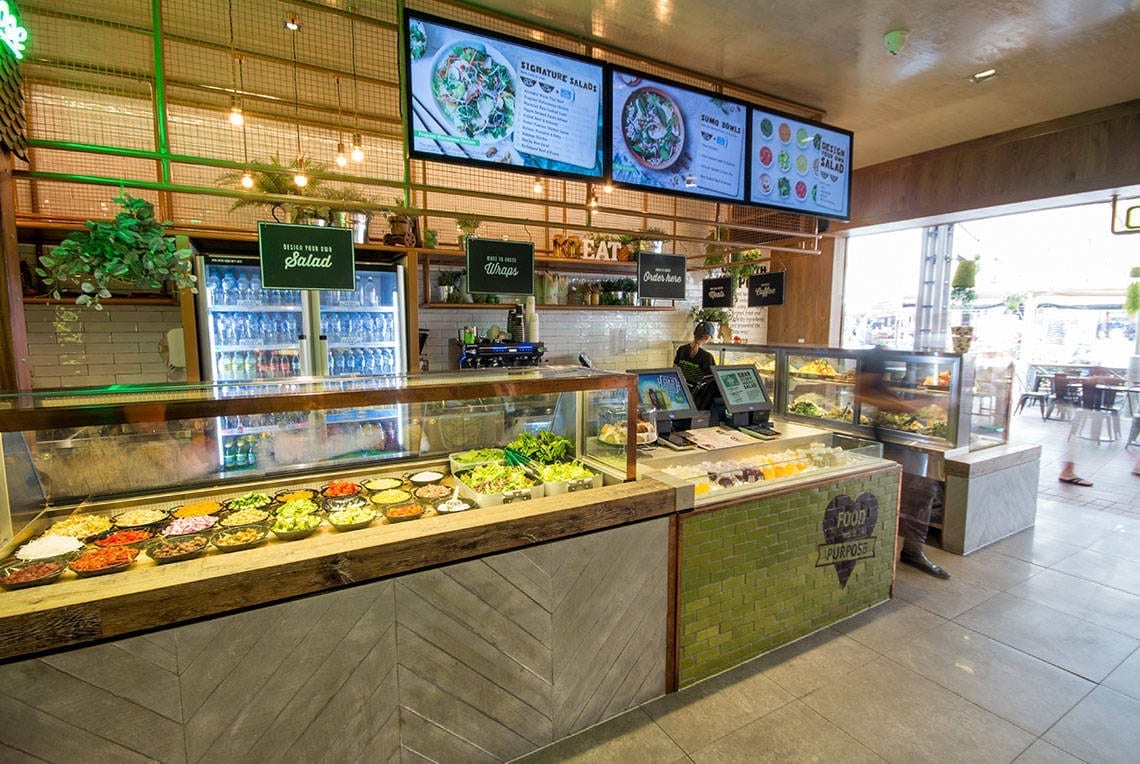
    Health fast food chain, SumoSalad, has partnered with online food platform, Menulog, to launch a delivery service in NSW and Victoria.

    Sumo Salad co-founder and CEO Luke Baylis said the partnership reflects a growing demand for healthier foods.

    “One of our major goals is to make better food choices more readily available. We want to take Australia off the podium of being one of the world’s fattest nations and encourage socially responsible private enterprise as a solution,” he said.

    SumoSalad pointed to research that found over two thirds of Australians are not meeting the recommended intake of vegetables, with ‘convenience’ attributed as one of the major factors.

    The health food chain joins Menulog’s network of over 9000 food companies across Australia.

    “We’re excited to start our partnership with stores in NSW and VIC, with the view to expand in coming months,” said Rory Murphy, commercial director, Menulog.

    According to McCrindle Research, four per cent of Australians bring lunch from home every day, leading the average employee to spend $18.52 on lunches, snacks and beverages during the workday every week.

    Research also shows that the workday is getting busier, with 28 per cent of the labour force eating lunch ‘al desko’, rather than sitting down with co-workers or leaving the office.

    QSR chains and food delivery companies alike have noted a rise in lunchtime orders, and some, spotting an underserved market, have expanded their offerings to include more convenient lunch options.

  • Mt Sapola Singapore evolves as Hysses

    Mt Sapola Singapore evolves as Hysses

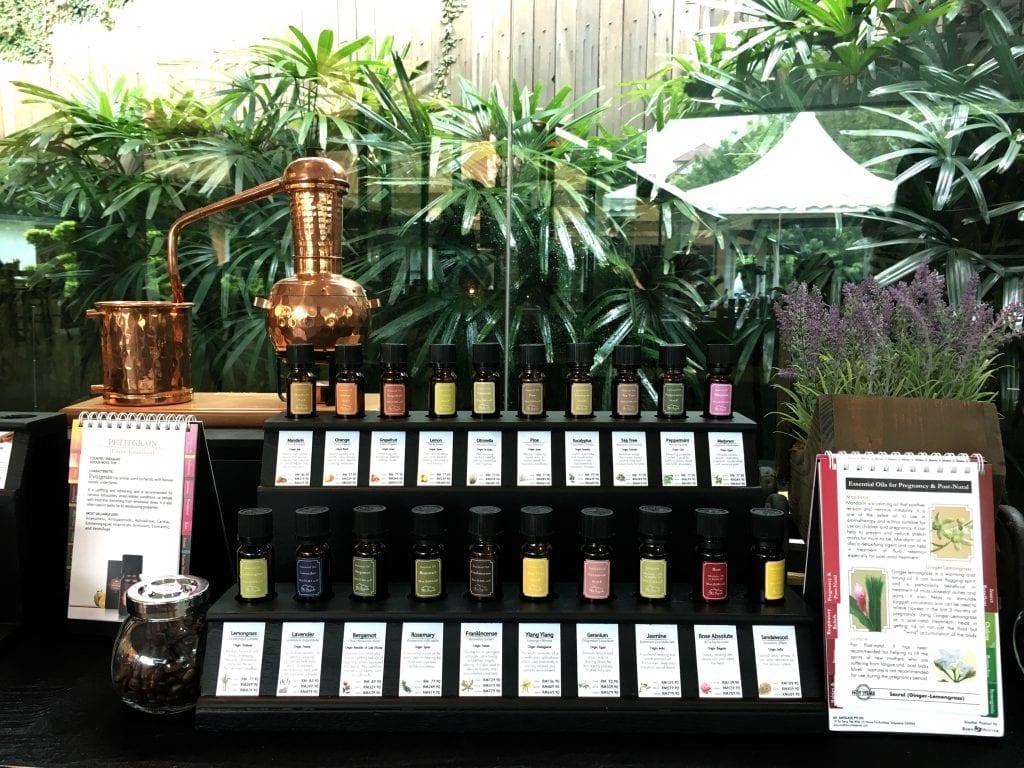
    Skincare company Mt Sapola Singapore has relaunched itself as Hysses as its moves beyond its spa-at-home heritage.

    “In the past 10 years we have grown as a company to have a stronger sense of who we are and what we can deliver, which allows us to tell compelling stories while sharing our knowledge,” says founder/MD Cheryl Gan.

    Gan launched the company in Singapore in 2007 with a store in Tanglin Mall. Its products were made in Thailand, where the brand was run independently. As the business began to grow in Singapore, Gan set up Barn & Potter, a specialised laboratory with its own manufacturing arm, in 2010.

    By 2013, at least 60 per cent of Mt Sapola Singapore’s retail products were made and packed locally. New scents were exclusively sold in Singapore and Malaysia. As overseas distributors started asking for the new scents, not available in Thailand, the products were rebranded as Barn & Potter.

    Franchise requests

    Mt Sapola Singapore also started receiving a growing number of requests for franchise opportunities, so Gan decided it was time for the company to form its own brand identity. Three years later, Hysses is ready to roll out globally.
    Its bodycare range has expanded from six to 13 scents, each formulated to address a particular skin problem. Similarly, the haircare range has added bioactive ingredients to tackle such problems as thinning or hair loss.

    Meanwhile, the laboratory and manufacturing spaces have tripled in size to meet demand.

    “Hysses” is adapted from the Chinese word for “native village” as the brand’s ingredients such as essential oils, herbs, stones and earthenware are sourced from villages.

    Renovations have started on the company’s boutiques in Singapore and Malaysia, with the full transformation targeted to finish by the end of the year. This will be followed by the rollout of an online store.

  • Spanish fashion brand El Ganso heads to Middle East

    Spanish fashion brand El Ganso heads to Middle East

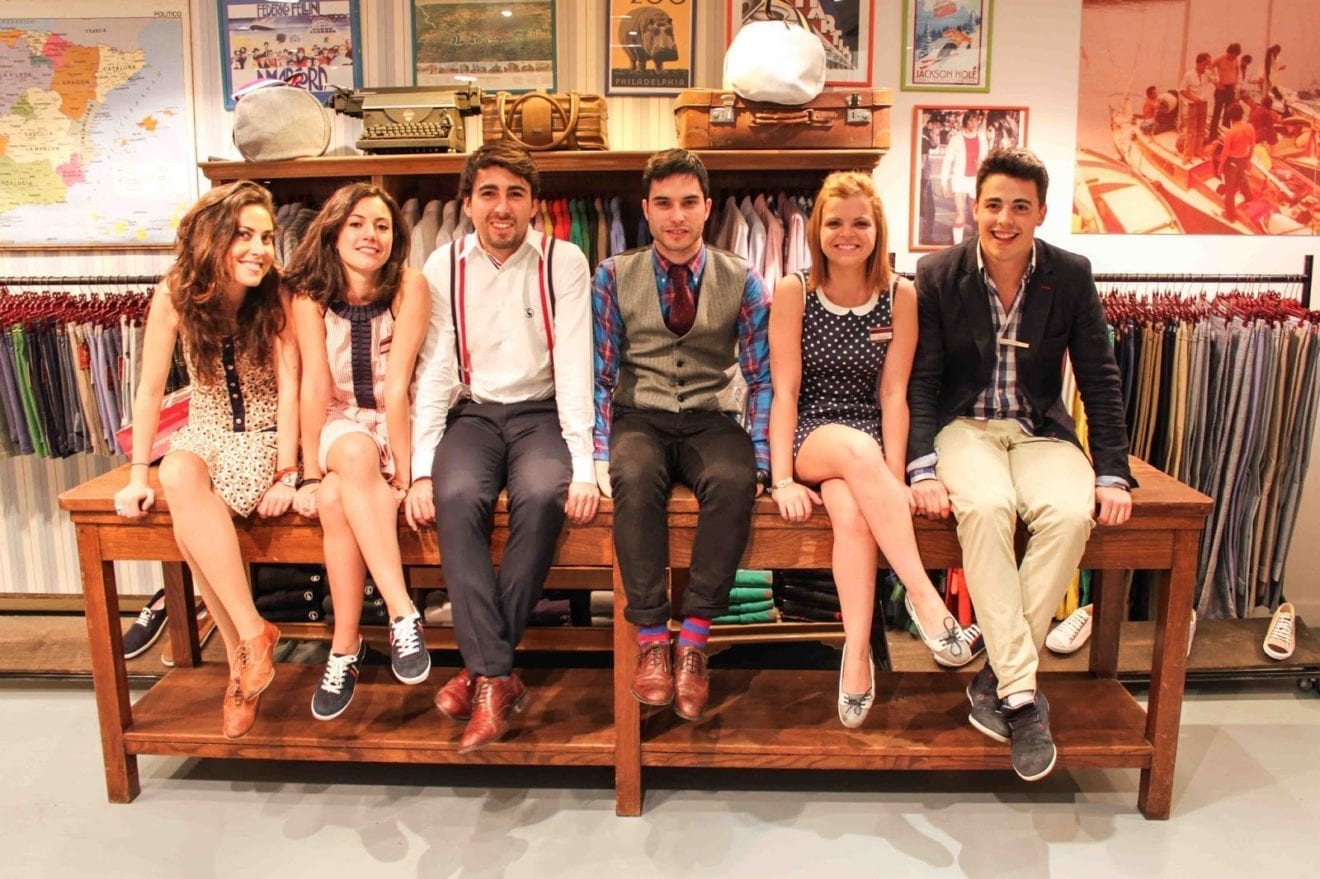
    Spanish fashion brand El Ganso is to expand into the Middle East, opening its first store in Kuwait.

    The store – to be located in The Avenues shopping centre, will be operated in partnership with retail franchise business MH Alshaya.

    El Ganso was founded in 2004 in Madrid and specialises in “fun, elegant clothing for individuals with class, in search of a unique style”.

    The brand says its style is a cosmopolitan look, with colours and ranges from preppy American looks to the more alternative Berlin style, “and not forgetting a touch of English elegance”. Every collection is designed and manufactured 100 per cent in Europe from local raw materials, using new fabrics and yarns from quality Italian houses such as Subalpino.

    Co-founder and CEO Alvaro Cebrian said the company is excited to be introducing El Ganso into Kuwait and the wider region.

    “The brand’s design ethos is rooted in on our experiences of global culture and we are sure its hallmarks of confident colour, quality and innovative detail will appeal to fashion-forward consumers in this region. We look forward to welcoming customers to our store.”

    Kuwait will join 190 stores in 11 countries, including cities like London, Paris, Milan, Madrid, Amsterdam, Berlin and Lisbon.

    “The new El Ganso store will stock collections for both men and women, boasting styles and designs that reflect the individuality of nonconformists, who are in search of unique attire with a clear focus on design, quality, innovation and attention to detail,” said Cebrian.

  • ECI launches hybrid virtualization platform

    ECI launches hybrid virtualization platform

    ECI has launched its Hybrid Virtualization Platform that designed to support multiple network functions virtualization (NFV)-based use cases to help communication service providers can simplify operations, increase agility, reduce opex and provide better SLAs.

    Featuring ECI’s vE-CPE family, the Hybrid Virtualization Platform combines hardware with management and orchestration (MANO), providing a platform as a service (PaaS) to organize different virtual network functions (VNFs).

    The platform leverages multi-access edge computing (MEC) capabilities to alleviate the workload of core networks. It encompasses ECI’s Mercury NFVi platform, ETSI-compliant MANO and a library of VNFs.

    By bringing service agility closer to the network edge, ECI said the platform can accommodate future demands of IoT networks and 5G.

    “Carriers need to get everything they can out of their current network assets. Virtualization at the edge can help unlock all the potential hidden in their current infrastructure, and create additional value on top of current assets,” said Erez Zelikovitz, VP SDN/NFV Solutions Global Portfolio at ECI.

    “Virtualization at the edge can help unlock all the potential hidden in their current infrastructure, and create additional value on top of current assets. We are giving our customers a cost-effective, future proof and easy-to-implement solution, which they can use now to improve service agility, and for the demands of future IoT and 5G networks on the same open and flexible platform.”

    The platform is based on open industry standard architecture, which allows CSPs to easily integrate it into current operations, enjoy end-to-end orchestration and incorporate third-party software.

    It is available on a “pay-as-you-grow” subscription model, and intended to reduce opex and shorten time to market, ECI added.

  • JB Hi-Fi, Max Brenner to open at Australia Fair

    JB Hi-Fi, Max Brenner to open at Australia Fair

    Major retail brands JB Hi-Fi and Max Brenner will open new stores at Australia Fair shopping centre on the Gold Coast later this year, as part of the Southport location’s $25 refurb.

    The home entertainment retailer, JB Hi-Fi will be located next to Telstra on the ground floor, and Max Brenner will be near the Scarborough Street entry.

    Ramon Otten, Australia Fair general manager, said the new tenants will enhance the centre’s offering for shoppers.

    “We are thrilled to welcome JB Hi-Fi and Max Brenner – both household brands known and loved by Australian families – to Australia Fair’s retail family, at this very exciting time of our redevelopment,” Otten said.

    “With so many new retailers coming on board, we are in the throes of the evolution of our centre, with major works to both our interior and exterior creating a whole new look and feel for shoppers.”

    Otten said the centre’s redevelopment is on track to be unveiled ahead of the 2018 Commonwealth Games.

    Work is under way for the expansion of Coles into the former outdoor food court, with the new entrance opening early September and the grand unveiling of the new look Coles set to open before Christmas.

    The exterior facelift is creating a contemporary facade for the retail, dining and entertainment complex, with the new structure to feature lighting and fresh signage bearing Australia Fair’s new branding.

    Other new tenants joining Australia Fair’s retail offering who have recently opened at the centre include Colette by Colette Hayman, Ted Ross, U Grill, Joy Stylist and Green Valley Butcher. Brazilian restaurant and bar The Grill House, Vintage Grind, Stella Saigon Street Food, Chikor, Wrap and Roll and LiquorLand are also set to open their doors over the next few months, while several existing traders are relocating or undergoing a fresh fit-out.

  • Costco to open third Sydney outlet at Marsden Park

    Costco to open third Sydney outlet at Marsden Park

    Bulk discount retailer, Costco, will open its third Sydney outlet, and ninth store nationwide, at Marsden Park in Sydney’s northwest next week.

    The Costco Marsden Park store, which will span 13,575sqm, will include a Costco fuel station, tyre centre, food court, optometrist, hearing aid services and fresh food production.

    The site is located within the large format retail precinct at Sydney Business Park, in Marsden Park. Costco is the latest major retailer to open at the Business Park, which is one of Australia’s largest large format retail centres, spanning 115,000sqm in floor space.

    Owen Walsh, Sydney Business Park project manager, said Costco is a welcome addition to Sydney Business Park, which, is fast becoming a major shopping and warehouse distribution and logistics destination for the region.

    “We are pleased to be part of Sydney’s rapidly growing northwest, and it is rewarding to see the community growing around Marsden Park and the Sydney Business Park,” Walsh said.

    Walsh said in the last five years, the Marsden Park community has completely transformed with the establishment of major new retailers opening their doors.

    “New retail has created new jobs and that has attracted people to relocate here to be closer to where they work or to find work,” he said. “The next five years will see even more dramatic transformation with major commercial towers to be built as well as a major town centre. By 2025, the surrounding North West Growth Centre is expected to support 177,000 new residents and 61,900 new homes.”

    Sydney Business Park has secured approximately $600 million in investment to date, on track as part of the broader $3 billion project.

    Patrick Noone, Costco Wholesale Australia managing director, said the company was very pleased with the new site and said the store opening marks another significant milestone for the company.

    Costco joins other retailers at the centre including Aldi, Baby & Toddler Town, Beacon Lighting, Bunnings Warehouse, Carpet Call, Coles Express, Costco Wholesale, Forty Winks, Home Consortium Marsden Park, Home Hub Marsden Park, Ikea, JB Hi-Fi Home, Knotts Pine, Lindt Factory Outlet, Reece, Repco, Shell, Snooze, and The Good Guys, among others.

  • Leaked report shows loss for Chanel International

    Leaked report shows loss for Chanel International

    Chanel International, the Dutch holding company that has the French luxury brand under its wing, had a 9 per cent year-on-year loss with turnover of US$5.67 billion last year, according to a leaked document.

    Chanel International does not publicly disclose its earnings, but two publications have been able to access a confidential 91-page document audited by Deloitte and filed at the Amsterdam Chamber of Commerce.

    This showed the company’s net income fell nearly 35 per cent from $1.34 billion to $874 million. The publications say its operating income slid 20 per cent to $1.28 billion, resulting in a 22.5 per cent decline in profitability – a slight improvement on its 25.7 per cent decline the previous year.

    According to the document, Chanel International’s decline is partially explained by the sale of its subsidiary Chanel UK, which represents about 11 per cent of its sales, to another entity also under its control. “On an equivalent benchmark, at constant exchange rates, the results are stable.”

    Terrorism impact

    It also attributes the revenue drop to terrorist attacks in Europe hitting the flow of tourists. The impact of the company’s sale of the Bourjois beauty brand to Coty in April 2015 also impacted sales for the first quarter of last year. Chanel received 15.43 million Coty shares, equivalent to about $240 million at the time.

    Figures in the leaked report probably also include Chanel’s fragrance and beauty sales, as well as earnings from other brands owned by the Wertheimer family, including swimwear brand Eres and British gunmaker Holland & Holland.

    But while results dropped, dividends to Chanel International’s shareholders, Alain and Gérard Wertheimer, increased. Bilan says the brothers received $3.41 billion last year, more than double the $1.64 billion for the previous year. Alain has been global chief executive of Chanel since January last year, while Gérard oversees Chanel’s watch division. Their grandfather, Pierre Wertheimer, was the business partner of Chanel founder Gabrielle “Coco” Chanel.

    Meanwhile, the luxury goods market is expected to return to growth this year, driven by domestic spending in China and tourism in Europe, according to a May study by US advisory firm Bain & Co.

  • FJT Logistics ships ocean cruising trimaran from Vietnam to New Zealand

    FJT Logistics ships ocean cruising trimaran from Vietnam to New Zealand

    FJT Logistics, a Pangea member in New Zealand, has shipped a brand-new ocean cruising trimaran constructed from light weight carbon fibre in Cat Lai, Vietnam to Auckland, New Zealand. The Trimaran departed from Tan Cang – Cat Lai port, near Ho Chi Minh city, which is the biggest and most modern container port in Vietnam.

    The Trimaran was secured with a special tailor-made wood support saddle and shrink-wrapped for protection against damages during the whole journey. The packed Trimaran measured 18m long, 4.8m wide and 5.33m high, with a total weight of 10,000kg.

    The boat was stowed under deck on a platform of 8 40’ Flat Racks and departed on 25th July. It was shipped from Vietnam via Kaohsiung Port in Taiwan and finally arrived at Auckland on board M/V OOCL Savannah on 18th August.

    Once the Trimaran arrived to Auckland, FJT Logistics coordinated the lifting and discharging operations as well as the delivery with a low bed truck to Silo Park boat yard, where the boat will be assembled and rigged. After sea trials are completed the ultimate Trimaran will begin cruising in the ocean.

  • Beard Papa’s plans to puff up Asia presence

    Beard Papa’s plans to puff up Asia presence

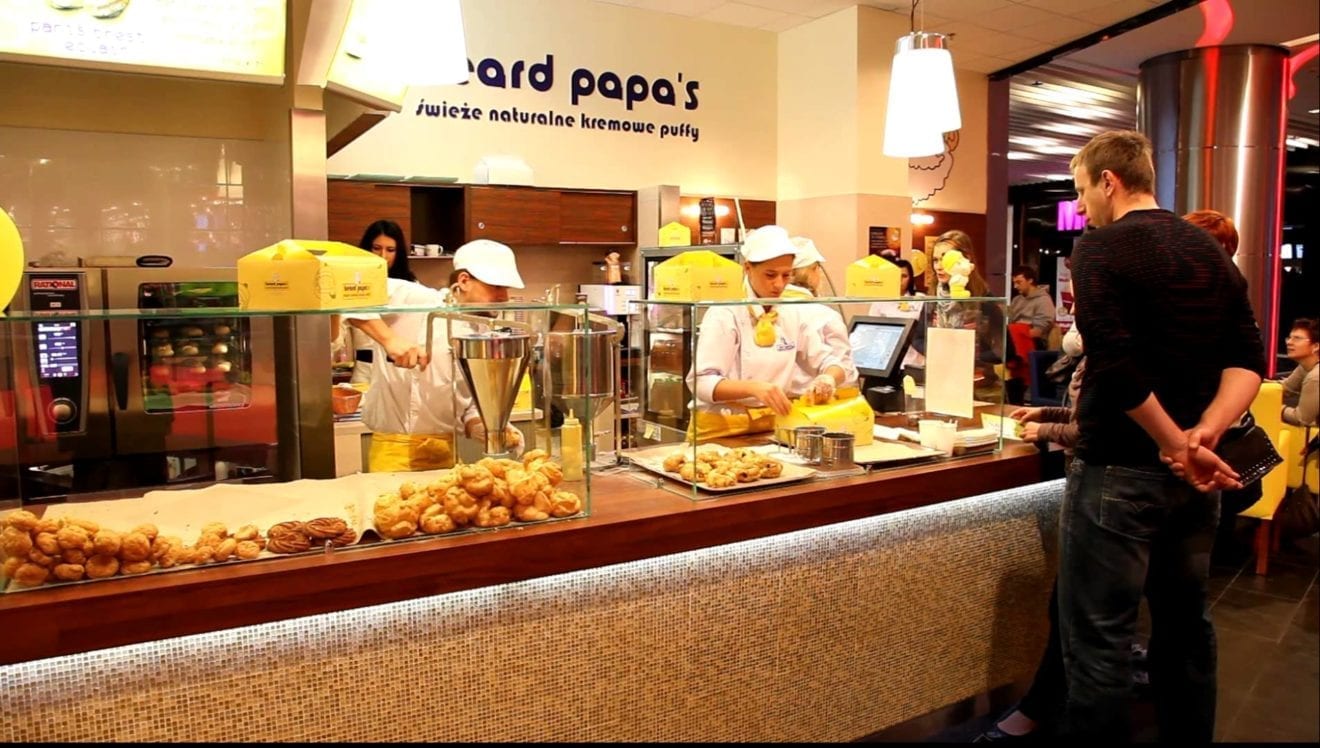
    Japan’s Beard Papa’s chain of cream-puff shops is expanding with a target of 150 outlets before year’s end in Asia beyond its home market.

    Run by Muginoho Holdings, the brand is known for adding fillings to its freshly baked choux pastries in front of customers, as well as its trademark, a bearded fellow in a woolly cap.

    Most of the planned locations will be managed as franchises, which are already proving efficient for the brand.

    One example is the Beard Papa’s inside Soekarno-Hatta International Airport in Jakarta, which has monthly sales totalling about ¥10 million (US$90,400).

    A store at Bangkok’s Don Mueang Airport has been almost matching the chain’s top performers since it opened on July 14.

    The linchpin of the regional business is a plant in Singapore set up in 2014 as Muginoho’s second production base.

  • UnionPay Curates Over 80 of the World’s Finest Restaurants for New Global Dining Privilege Programme

    UnionPay Curates Over 80 of the World’s Finest Restaurants for New Global Dining Privilege Programme

    UnionPay International has launched a new global dining privilege programme – the U Dining Collection – for Platinum and Diamond UnionPay Cardholders. Curating over 80 of the finest restaurants located in key cities around the world, including Michelin-starred restaurants, restaurants by famous chefs, chain restaurants and feature restaurants, the U Dining Collection will whet the appetites of even the most discerning palates with exclusive dining privileges that heighten overall dining experience.

    To enjoy these privileges, UnionPay Platinum and Diamond Cardholders (card number starting with 62) can browse the curated list of fine dining restaurants in Singapore, Cambodia, China, France, Hong Kong, Italy, Japan, Korea, Macau, Malaysia, Taiwan and Thailand, at the U Dining Collection website, and make their reservations via the UnionPay Singapore Concierge hotline. By making the reservation process fuss-free, Cardholders can now enjoy the full dining experience with ease, complete with exclusive benefits such as priority seating, discounts, or complimentary dessert, wine and champagne.

    “Restaurant ANDRÉ is pleased to be part of UnionPay International’s U Dining Collection programme, one that connects gourmet diners to the best tables in the world by providing exclusive accessibility and services.” said Chef Andre Chiang, Chef/Owner of Restaurant ANDRÉ.

    “By bringing together some of the most highly-acclaimed and Michelin-starred restaurants from around the world, U Dining Collection is designed to cater to the most discerning of palates, offering premium dining experiences to UnionPay Platinum and Diamond Cardholders. With a one-stop concierge service that simplifies the reservation process for these highly-popular restaurants, Cardholders can free their minds to enjoy the dining experience at some of the best restaurants from around the world,” added Mr Wenhui Yang, General Manager of Southeast Asia, UnionPay International.

    The launch of U Dining Collection adds a new dimension to UnionPay’s global premium privilege programme, which features:

    • The UnionPay Global Concierge Service – assists Cardholders with everyday and special tasks such as hotel, flight, transport and attraction recommendations and reservations; travel vaccination consultation and translation assistance.
    • The UnionPay Global Assistant Service – provides travel and medical support to meet Cardholders’ overseas requirements, including assistance for lost passports, delayed/lost baggage, emergency legal aid, medical advice and transfers.
    • The UnionPay VIP Airport Service – provides VIP services to Cardholders at airports around the world, including the complimentary use of VIP lounge facilities, access to the internet, drinks, snacks and more.
  • Verdict for Samsung heir weighs on telecom giant

    Verdict for Samsung heir weighs on telecom giant

    Prosecutors have demanded a 12-year sentence for Samsung’s 49-year-old ‘crown prince.’ The heir to the Samsung empire faces the verdict in his corruption trial Friday, which threatens to leave the world’s biggest smartphone maker rudderless for more than a decade.

    Lee Jae-Yong, vice chairman of Samsung Electronics and the son of Samsung group chairman Lee Kun-Hee, has been groomed all his life to take over the giant conglomerate founded by his grandfather in 1938.

    It is by far the largest of the chaebols, the family-controlled firms that dominate Asia’s fourth-largest economy, which some South Koreans self-mockingly dub the “Republic of Samsung”.

    Its turnover is equivalent to a fifth of the national GDP and it has long had close, opaque connections with political authorities.

    But now prosecutors have demanded a 12-year sentence for Samsung’s 49-year-old “crown prince” if he is convicted of charges including bribery and embezzlement in connection with the corruption scandal that brought down president Park Geun-Hye.

    Park, dismissed from office in March after public fury, is on trial separately accused of offering policy favors to tycoons including Lee who enriched her secret confidante Choi Soon-Sil, with Samsung handing over around $40 million.

    Lee has been detained during his trial, and the prospect of his being imprisoned for years has sent shockwaves through Samsung, where the founding family’s rule has been taken for granted for decades.

    The Lee clan directly owns about five percent of Samsung Electronics shares, but maintains its grip on the wider group through a byzantine web of cross-ownership stakes involving dozens of companies.

    Although Samsung’s day-to-day business is maintained by the elite CEOs at each unit, analysts say they would be unwilling to make — and take responsibility for — costly decisions over large-scale acquisitions or investments without family approval.

    “In South Korea, such decisions are often endorsed by the patriarch of a ruling family,” said Chung Sun-Sup, the head of corporate analysis firm chaebul.com.

    Lee Jae-Yong’s sister Boo-Jin, who is in charge of the group’s fast-growing hotel business, was once touted as a potential stand-in.

    But many dismiss the possibility, saying she has few allies and little management experience at Samsung Electronics — the crown jewel of the group.

    Despite Lee’s absence Samsung Electronics has reported stellar profits in recent months, sending its share price soaring, thanks to booming demand for its memory chips used in computers, servers and mobile gadgets.

    Analysts say it is reaping the benefit of radical decisions made years ago under the senior Lee’s rule, including the construction of new chip factories that cost billions of dollars.

    “With so much uncertainty at its leadership, Samsung may move more slowly than before to make the kind of bold, large-scale investments that made it so successful today,” Chung told AFP.

    Future strategy

    Since the senior Lee was left bedridden by a heart attack in 2014, Samsung has stepped up attempts to streamline itself, selling off marginal or less profitable businesses, while also enhancing Lee Jae-Yong’s authority.

    Those efforts would be suspended if Lee receives a lengthy jail term, Chung said, which could force the group into “an unprecedented experiment” of operating without direct Lee family control.

    But Geoffrey Cain, the author of a forthcoming book on Samsung, pointed out Samsung Electronics had been able to make strategic moves despite Lee’s detention in custody.

    “The leader being in jail is a familiar story for chaebol groups, and one they can get around,” he said.

    “Samsung will not be doomed without Jay Lee. Even if he gets a prison sentence, Samsung will be just fine. It’s up to the specialists to make their own decisions.”

    After the scandal sparked nationwide calls to reform “corrupt” chaebols, Samsung earlier this year disbanded its Future Strategy Office — a small, secretive group of top company veterans who directly served the Lees — vowing to give the board of directors a bigger role in decision-making.

    Millions of dollars

    New President Moon Jae-In won a sweeping election victory in May with promises of weeding out deep-rooted, corrupt ties between chaebols and regulators.

    Prosecutors accuse Lee of seeking state approval for a controversial 2015 merger of two Samsung units seen as a key step to ensuring his accession.

    He pleaded not guilty, saying he was not involved in decisions over the donations and not even aware of Choi’s existence.

    During his trial, his lawyers and ex-members of the Future Strategy Office tried to portray him as an inexperienced, naive heir not even allowed to “meddle with” decisions made by the veteran executives chosen by his father.

    As a legal strategy it is undoubtedly embarrassing, but it remains to be seen whether the three judges hearing the case, in which four other top Samsung executives are also accused, are convinced.

    “If he is found innocent and walks away, it would be a huge setback against the court and the current administration,” said Shim Jung-Taik, an author of several books on Samsung and its history.

    He warned of “huge public outcry” in the event of an acquittal, telling AFP: “In South Korea, the Lee case is not just a legal case but a social and political one whose result is seen as a verdict on wider chaebol culture and corruption.”
  • Starbucks Korea to trial voice ordering with AI

    Starbucks Korea to trial voice ordering with AI

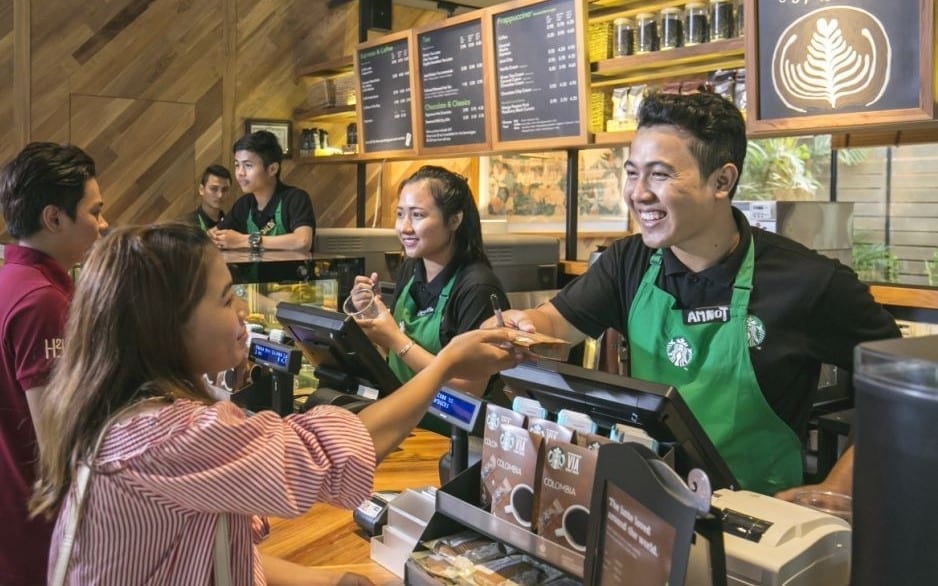
    Starbucks Korea is to partner with the country’s largest telco in a trial of voice ordering using AI.

    If it works, Starbucks customers will be able to order and pay for a coffee just by speaking, speeding the payment process.

    SK Telecom Co says the trial will use the company’s AI device Nugu, released last September, which focuses on providing household-related services. Earlier this month, SK Telecom released a portable edition of Nugu, seeking to tap deeper into the AI industry.

    Nugu provides various services to users, including music streaming, Internet-of-Things solutions, schedule management and weather alerts.

    The mobile carrier also plans to connect Nugu to its driving-navigation platform T-map, allowing drivers to order drinks and locate the nearest drive-thru Starbucks shops. If the development is completed, drivers will be able to safely order drinks without having to tap their smartphones.

    Starbucks Korea and SK Telecom plan to complete the development by the end of the year.

  • Hyundai will launch pickup, more SUVs to reverse U.S. sales slide

    Hyundai will launch pickup, more SUVs to reverse U.S. sales slide

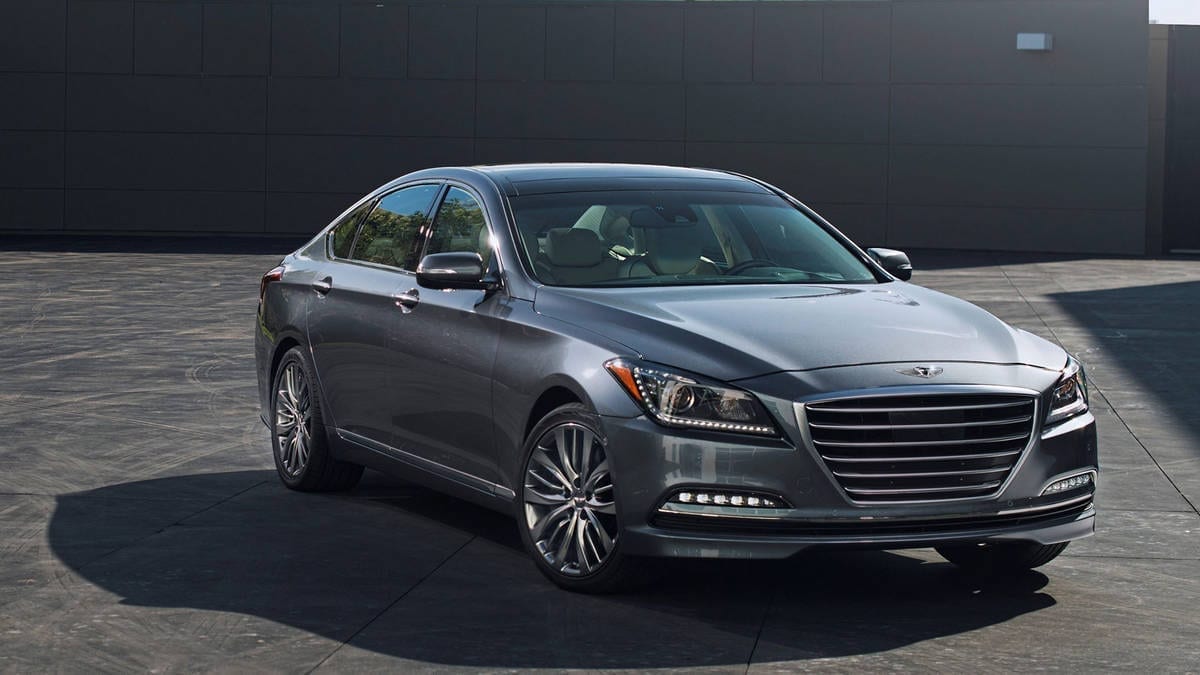
    Hyundai Motor plans to launch a pickup truck in the United States as part of a broader plan to catch up with a shift away from sedans in one of the Korean automaker’s most important markets, a senior company executive told Reuters.

    Michael J. O’Brien, vice president of corporate and product planning at Hyundai’s U.S. unit, said Hyundai’s top management has given the green light for development of a pickup truck similar to a show vehicle called the Santa Cruz that U.S. Hyundai executives unveiled in 2015.

    Hyundai currently does not offer a pickup truck in the United States.

    O’Brien also said Hyundai plans to launch a small SUV called the Kona in the United States later this year.

    People familiar with the automaker’s plans said the pick-up truck is expected to be launched in 2020.

    They said separately that Hyundai plans to introduce three other new or refreshed SUVs by 2020.

    Under the plan, Hyundai Motor plans to roll out a new version of its Santa Fe Sport mid-sized SUV next year, followed by an all-new 7-passenger crossover which will replace a current three-row Santa Fe in early 2019 in the United Sates. A redesigned Tucson SUV is expected in 2020.

    So-called crossovers – sport utilities built on chassis similar to sedans – now account for about 30 percent of total light vehicle sales in the United States. Consumers in China, the world’s largest auto market, are also substituting car-based SUVs for sedans.

    Hyundai’s U.S. dealers have pushed the company to invest more aggressively in SUVs and trucks as demand for sedans such as the midsize Sonata and the smaller Elantra has waned.

    “We are optimistic about the future,” said Scott Fink, chief executive of Hyundai of New Port Richey, Florida, which is Hyundai’s biggest U.S. dealer. “But we are disappointed that we don’t have the products today.”

    Hyundai’s U.S. sales are down nearly 11 percent this year through July 31, worse than the overall 2.9 percent decline in U.S. car and light truck sales. Sales of the Sonata, once a pillar of Hyundai’s U.S. franchise, have fallen 30 percent through the first seven months of 2017. In contrast, sales of Hyundai’s current SUV lineup are up 11 percent for the first seven months of this year.

    “Our glasses are fairly clean,” O’Brien said. “We understand where we have a shortfall.”

  • Exposing the cost of lost sales

    Exposing the cost of lost sales

    Lost sales can be an enormous drain on a retailer’s profitability. Apart from the the direct loss of gross profit, there is also a pretty good chance that the customer won’t come back, could share negative stories about their experience and so on. The life-time cost of losing one lost sale could actually multiply out several times higher than just the gross profit alone.

    As consumers, we can all think of examples when we’ve left a store, with full intention of making a purchase, empty handed. For whatever reason – poor service, poor range, out-of-stocks – we’ve gone elsewhere.

    For retailers, the good news is that these things can be addressed. I don’t intend to talk about customer service as it’s a topic well covered. However, the cost of out-of-stocks is not so well understood.

    Think of a bakery that sells on average 20 loaves of bread in the last hour of the day. If the baker starts the last hour with exactly 20 loaves of stock, on average they’ll sell out just on closing time. Perfect!! Unfortunately for the baker, the 20 average sales is an average – it’s not going to happen every single time. The actual data might be made up of say, 10, 20 and 30 loaves over three days, which on average is 20.

    On the quiet day, the baker will sell 10 and have 10 left over. The cost to the business is the production cost of the loaves thrown out x 10. Say $1 x 10 = $10.

    On the busy day, the baker will have lost 10 sales, so the cost to the business is the lost profit. Say ($4 – $1) x 10 = $30.

    On the day the baker sells 20 exactly, there is no cost.

    Given that each scenario has a one third chance of happening, the cost on average works out to be:

    0.33 x $10 + 0.33 x $0 + 0.33 x $30 = $13.20

    If the baker carried 30 loaves into the last hour, the cost would be

    0.33 x $20 + 0.33 x $10 + 0.33 x $0 = $9.90

    Much better to carry the extra 10 loaves.

    With accurate data and a bit of statistics, you can create some incredibly powerful models to help calculate the cost of lost sales. One technique is using Monte Carlo Simulation, which takes its name from its famous namesake casino. The technique uses random numbers to represent the probability of an event occurring (just as the baker identified that one third of the time they would sell 10 loaves of bread).

    Here’s an example that fashion retailers might identify with:

    Imagine that the size curve of your customers is exactly 1:1:1:1:1:1 (that is, sizes 8, 10, 12, 14, 16 and 18 are all equal). You know this because you have lots of aggregate data (either lots of stores or lots of styles). We can now simulate customers coming in through the door wanting to buy the latest style. You’ve only bought one pack (6 units in the given size ratio). As there are six units and each is an equal probability, we can use a dice to run the simulation.

    Each roll represents a customer coming in and each number on the dice represents their size. Roll one will never be disappointed as we are fully stocked so they make a purchase. However, we are now sold out of one size already. Roll two has a 1/6 chance of being disappointed (roll two equals roll one) and a 5/6 chance of being able to buy (roll two is different to roll one).  Roll three has a 2/6 chance of being disappointed and only a 4/6 chance of being able to buy. After six rolls of the dice, the chance of customers coming into the store exactly as per the size curve (ie that you have rolled one and only one of each of the numbers on the dice) is just 1.5 per cent.

    Without going into the details, the chance of having rolled any number twice in six rolls is 13 per cent. This is the chance of losing one customer. The chance of rolling other combinations, eg three of one, two sets of doubles and so on, make up the balance of the probability and represent losing even more sales.

    The reason we lost sales wasn’t because the size curve was incorrect but because averages calculated using large data sets breakdown when applied to small data sets.

    What should the retailer do? The answer to that question is going to depend on the real life scenario. Gross Margin, cost of transferring from another stores, cost of unit replenishment, cost of extra stock etc all come into the equation. For example, carrying an extra pack of stock goes a long way to meeting the need of the first six customers (you can still get stock-outs but the probability is reduced) but now the retailer has to clear the remaining six items.

    It’s always a fascinating exercise and well worth the time spent in building a model that represents the particular circumstances.

    You might be shocked at how much lost sales are costing your business.

  • Alipay to boost acceptance points in Singapore

    Alipay to boost acceptance points in Singapore

    Chinese online and mobile payment platform Alipay has signed a deal with CC Financial Services to allow it to expand its 20,000 acceptance points in Singapore.

    CC Financial Services, a Singapore-based startup which runs a mobile payments platform named CCPay, will function as a merchant acquiring partner for Alipay.

    The partnership aims to allow Chinese tourists to Singapore to pay for purchases using their Alipay e-wallets. Customers who use to service need to use their mobile phones to scan the QR codes provided by the retailer.

    Alipay’s country manager for Singapore, Sri Lanka and Maldives Melvin Ooi told The Straits Times that the Alipay platform will “soon” be made available for customers of banks in Singapore, although a timeline was not provided. Currently, Alipay users need to either have a banking account from China or a credit card issued by a bank in China.

    Recently, Alipay tied up with taxi operator Comfort Delgro in a partnership which enabled Alipay users to pay for cab rides using the platform. 17,000 of the current 20,000 Alipay acceptance points in Singapore are for taxis.

    CC Financial Services, which was founded in March this year, has acquired more than 600 merchants, with the plan to grow this number to 6,000.