Author: Mei Ling Tan

  • GrabBike drivers slam on the brakes in Hanoi to strike against pay cut

    GrabBike drivers slam on the brakes in Hanoi to strike against pay cut

    Some drivers are trying to stall the ride-hailing app by making false bookings. GrabBike drivers in Hanoi are encouraging each other to switch off the ride-hailing app in protest to a pay cut the company announced last weekend.

    Some are even hijacking the service by making false bookings to make life difficult for both passengers and other drivers who have not joined the picket line.

    Grab Vietnam has said starting September 5 it will deduct up to 20 percent of the fares that drivers receive from passengers instead of the current 15 percent.

    “The new payment poses a serious problem for us because the current fares that Grab charges are already very low, and more and more people are applying to work as GrabBike drivers,” said a driver named Binh in Cau Giay District.

    “The cost for fuel and phone cards is on us; the company does not cover those expenses,” he added, saying he and other disgruntled drivers have stopped working in the hope that the company would change its policy.

    A driver named Nam who has not switched off his engine said the situation is affecting customers because they can’t find a driver as easily and quickly as before.

    “I received three false bookings yesterday and I think they all came from GrabBike drivers,” he said.

    These bookings get canceled shortly before the drivers arrive, leaving real customers waiting and the drivers without a job.

    “The 20 percent deduction is fine with me. I think I just need to work harder. This job is still better than others because I can control my own schedule,” he said.

    Nam added that GrabBike fares have increased slightly recently.

    On their online forum, some drivers are telling others to switch from Grab to U.S.-based Uber, currently the firm’s only rival in Vietnam.

    Malaysia’s Grab Vietnam said the company has not decided what to do about the strike or the false bookings, and has just asked drivers to play by the company’s rules.

    “Grab started applying the 20 percent fee for new GrabBike drivers in Ho Chi Minh City in early May, and we will do the same for all GrabBike drivers in HCMC and Hanoi from September 5,” said Nguyen Thi Thu An, media director of Grab Vietnam.

    GrabBike drivers told us on Tuesday that they used to earn from VND150,000 ($6.6) to VND350,000 each day, but with more drivers joining the company, they only make around VND100,000 now.

    Several drivers told us a similar story in June, saying they are earning less and less now that they are having to compete with fellow drivers in the same network.

  • Vietnam chews over special consumption tax on sugary drinks

    Vietnam chews over special consumption tax on sugary drinks

    The tax could help combat the country’s rapidly increasing obesity rate. The Ministry of Finance on Tuesday proposed levying a special consumption tax on a range of sweetened beverages. If approved, the proposal would see the tax imposed on carbonated and non-carbonated soft drinks, energy drinks, sports drinks and bottled instant coffee and tea.

    The ministry has suggested either a 10 percent or a 20 percent rate for the new sugary drink tax to be applied from 2019, with 10 percent being the preferred option.

    “The tax will help regulate the consumption of sweetened beverages, and it’s also an international norm,” the proposal said.

    A can of carbonated soft drink, for example, currently costs around VND10,000 ($0.44).

    At Tuesday’s press conference, the ministry cited a report by the World Health Organization (WHO) that shows excessive consumption of sugary drinks can lead to obesity. Obesity, in turn, has been linked to many health risks such as cardiovascular disease, hypertension and strokes.

    Meanwhile, a study unveiled in June found that about 25 percent of Vietnamese adults are overweight or obese. The obesity rate for children under 5 years old is also rising fast.

    Many Southeast Asian countries have already imposed sugary drinks taxes, according to the ministry. The current rate is 20-25 percent in Thailand, 5-10 percent in Laos and 10 percent in Cambodia.

    Myanmar, the Philippines and Indonesia are also considering imposing the tax.

    In Vietnam, special consumption taxes are levied on items and services considered unhealthy or luxurious such as tobacco, alcoholic drinks and cars.

  • Miniso South Africa launches in Pretoria

    Miniso South Africa launches in Pretoria

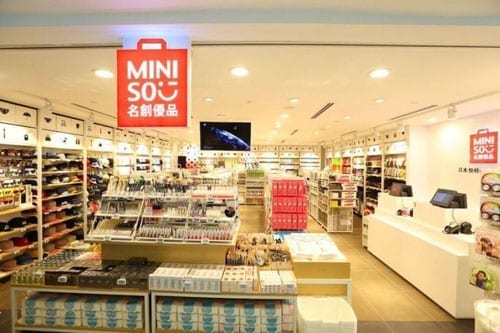
    Miniso South Africa has officially launched with a store at Pretoria’s Menlyn Park Shopping Centre, with another 50 outlets in the pipeline.

    The Chinese discount merchandise chain is also opening at Maponya Mall in Soweto, to be followed by stores in Gauteng, Forest Hill in Kyalami and Norwood Mall in Johannesburg, reports Marklives.com.

    Cape Town and Durban stores will be launched next month.

    With more than 2000 stores in 62 countries, the Chinese discount merchandise chain had global sales of US$1.5 billion last year.

  • CP Lotus revenue drops

    CP Lotus revenue drops

    Revenue fell by 6.3 per cent for lifestyle retailer CP Lotus Corporation for its first half, dipping by RMB337.1 million (US$50.5 million) to RMB4.9 billion.

    It says the decrease was mainly the result of a 9.1 per cent decline in same-store sales, cushioned by the revenue generated from two new stores opened in the second half of last year plus two new stores and one Lotus Center opened during the review period.

    All merchandise categories had lower sales for the six months to June 30. Sales from apparel, electronics, hardline and personal care fell by about RMB189.7 million or 9.8 per cent, while fresh-food sales eased by 2.2 per cent.
    Gross profit margin was 17.5 per cent of sales (2016: 16.8 per cent), a reduction of RMB23.2 million or 2.6 per cent.

    The two stores opened during the six months were in Nanhai, Guangdong province, and Xian, Shaanxi province, where the Lotus Center mall was launched. The group owns and runs 63 retail stores, including 62 hypermarkets and one supermarket. It also runs two shopping malls.

    During the first half the group continued its efforts to enhance the merchandise mix and offerings. It continued to expand direct sourcing and more direct purchase of vegetables and fruit. CP Lotus says direct sourcing not only lowers prices but also allows for better control of product quality.

    “As consumers’ disposable income and their demand for high-quality imported food continued to rise, the group continued to bring in a wider range of imported products such as wine, beverages, snacks, health supplements, kitchenware and other groceries.”

    Also, the group’s house brand team continued to work with the merchandise and marketing team to develop competitively priced house-brand products.

  • Central Pattana lifts profit by 8 per cent

    Central Pattana lifts profit by 8 per cent

    Central Pattana Public Company (CPN) had a second-quarter consolidated net profit of THB2.4 billion (US$74.6 million), up 8 per cent year on year.

    Total revenues grew by 6 per cent to THB7.62 billion.

    CPN, which manages 30 shopping malls, says its performance was resilient as its has continually placed great emphasis on effective revenue generation from new malls, asset enhancement and efficient management of running costs.

    At the end of the quarter, the occupancy rate for its retail properties remained high at an average of 92 per cent, slightly lower that the first quarter’s 93 per cent because of major renovations at CentralWorld and CentralPlaza Rama 3.

    For the second quarter, the average rental rate of all retail properties was THB1636 a
    sqm/month. Same-store rental growth was primarily driven by rental rate growth with lower discounts in most projects, especially at CentralPlaza Chiang Rai with double-digit rental growth after contract renewal, together with impressive rental growth at CentralMarina after a renovation.

    Excluding new and renovated projects, same-store rental revenues for the quarter grew by about 3.4 per cent, while effective costs management resulted in a higher gross profit ratio of 50.1 per cent, says the group.

    It attributes the strong performance to several factors:

    • The CentralPlaza Nakhon Si Thammarat shopping mall launched in July last year, which had an occupancy rate of 88 per cent at the end of the quarter.
    • Asset enhancement, including CentralMarina (previously Central Center Pattaya) being inaugurated in December after a six-month renovation, with its occupancy rate reaching 90 per cent by the end of the quarter; plus a Food Destination Zone, incorporating a supermarket, being added at CentralPlaza Bangna, CentralPlaza Chaengwattana, CentralMarina and CentralFestival Phuket.

    On a quarterly basis, CPN had a 1 per cent drop in total revenues partly because of projects under renovation (especially CentralWorld), higher administrative expenses with the engagement of new senior-management staff members in preparation for expansion, and higher marketing and promotional expenses. As a result, net profit declined 11 per cent quarter on quarter.

    For the first half, CPN had 6 per cent growth in total revenues and a 12 per cent leap in net profit. Excluding new and renovated projects, same-store rental revenues grew by about 3.4 per cent.

    Meanwhile, CPN has participated in Malaysia’s Central i-City project as its pioneering shopping complex abroad. This is by way of a JV in which CPN, through subsidiaries, holds a 60 per cent stake. Its wholly owned subsidiary I-R&D holds the balance. The project is scheduled to launch next year. CPN has already secured key anchor tenants.

    Also, the board has approved entering into a JV to develop a theme park project in central Phuket, while CPN and Dusit Thani Public Company will jointly invest in a mixed-use development project in Bangkok including a shopping mall.

  • Thai 7-Eleven parent CP All reports sales, profit gains

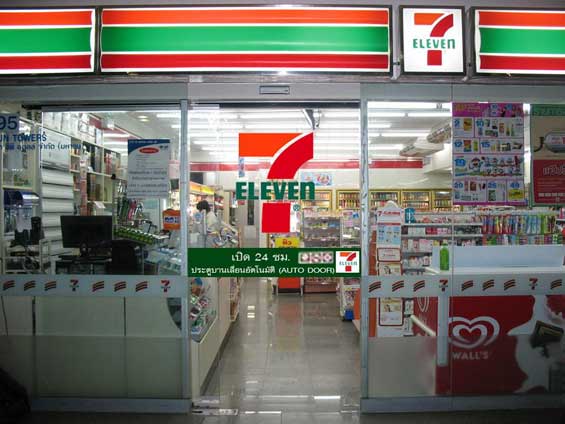
    Thai 7-Eleven parent CP All reports sales, profit gains

    Same-store sales shrank 1 per cent for CP All, which runs Thailand’s 7-Eleven stores, during its second quarter despite gains in both consolidated revenue and net profit.

    Net profit was up 10 per cent year-on-year to reach THB4.647 billion (US$139 million) while revenue grew 5.3 per cent to THB120.6 billion. Convenience store sales grew 5.7 per cent to THB69.3 billion, boosted by Siam Makro’s THB6.1 million contribution.

    Gross profit rose 7.7 per cent to THB25.8 million, largely because of increased sales of higher-margin products. This advanced gross margin to 22.2 per cent from 21.8 per cent for the same period last year.

    For the first half, revenues rose 6.6 per cent to total THB2.3 billion, mainly driven by 6.7 per cent growth in sales revenue and services income. Net profit was THB9.4 billion, up by 13.9 per cent.
    Of total revenue, Siam Makro contributed 36 per cent, similar to the figures for the same period last year.

    Convenience stores accounted for 77 per cent of profit before tax, down from 78 per cent for last year’s first half, while membership-based trade accounted for 23 per cent, up from 22 per cent. Average spending per ticket was THB67 and there were 1194 customer visits per store each day.

    With 700 outlets added over the past year, the total reached 10,007 at the end of June – the world’s second-largest network of 7-Eleven stores after Japan. CP’s long-term goal is 13,000 stores by 2021, and it says expansion has been on track.

    Most stores (86 per cent) are stand-alone while the others are in PTT gas stations.

  • MBK launches “Bangkok Buddy” service

    MBK launches “Bangkok Buddy” service

    Thai shopping mall MBK Center has launched a “Bangkok Buddy” service aimed at providing a memorable customer experience for local and international shoppers.

    Available from 2pm every day, the two-hour experience starts with an exclusive hip hop and contemporary dance production combining electronic music with Thai instruments. The Bangkok Buddy team then walks around the mall to offer customers and tourists any shopping or travelling help they may need.

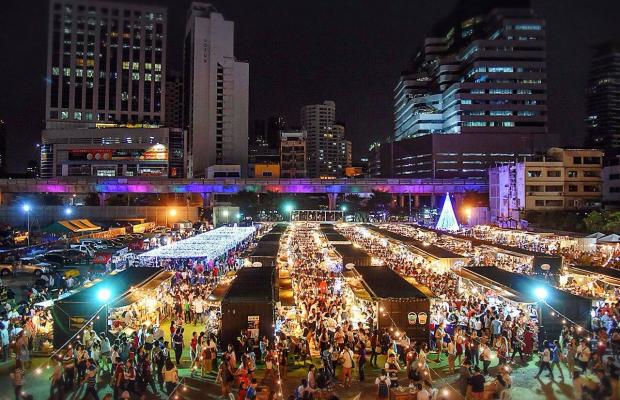
    Founded in 1985 as Mah-Boon-Krong, MBK Shopping Center is at Pathumwan intersection in the heart of the city. The eight-storey mall offers 140,000 sqm with more than 2500 shops and stalls plus 150 eateries. It has an average of 115,000 customers a day, including 35,000 tourists.

    MBK is close to Siam Centre, Siam Discovery, Siam Paragon and Siam Square with their shopping and dining experiences.

  • China’s Geely beats expectations as Volvo pays off

    China’s Geely beats expectations as Volvo pays off

    China’s Geely Automobile Holdings Ltd said on Wednesday that first-half profit more than doubled, scoring its fastest earnings growth in eight years as cars designed with its Swedish unit Volvo won over domestic consumers.

    Although known at one point more for its copycat designs and lower quality vehicles, the Hangzhou-based firm has transformed itself into an automaker with up-market aspirations.

    Vehicles engineered with Volvo know-how, such as the GC9 sedan and the Boyue sport-utility vehicle, have been hot-sellers in China, the world’s biggest auto market.

    “So far in 2017, the group’s performance has exceeded management’s original expectations despite a generally weaker market in China during the same period,” the company said in a statement to the Hong Kong bourse.

    Net profit came in at 4.34 billion yuan ($648.96 million), 128 percent higher than the 1.91 billion yuan it made in the same period a year earlier and eclipsing an estimate of 3.61 billion yuan from CCB International.

    It said it had decided not to pay an interim dividend.

    Sales jumped 89 percent in January-July and last month Geely raised its 2017 sales target by 10 percent to 1.1 million vehicles. It sold 766,000 vehicles last year.

    Geely’s parent Zhejiang Geely Holding Group owns the maker of London’s black cabs and this year acquired a 49.9 percent stake in Malaysian automaker Proton.

    The carmaker said that the business environment in its previous key export markets in Eastern Europe and the Middle East remained weak and that it would continue to operate its exports business at the current restricted scale for the rest of 2017.

    In its next phase of expansion, Geely plans to market a third brand, Lynk & Co – in developed markets next year, beginning with Europe and the United States.

    Geely also plans to use more Volvo-developed technologies including small turbo-charged gasoline engines in Geely-brand cars.

  • Kerry Logistics manages Maxim’s new central distribution centre

    Kerry Logistics manages Maxim’s new central distribution centre

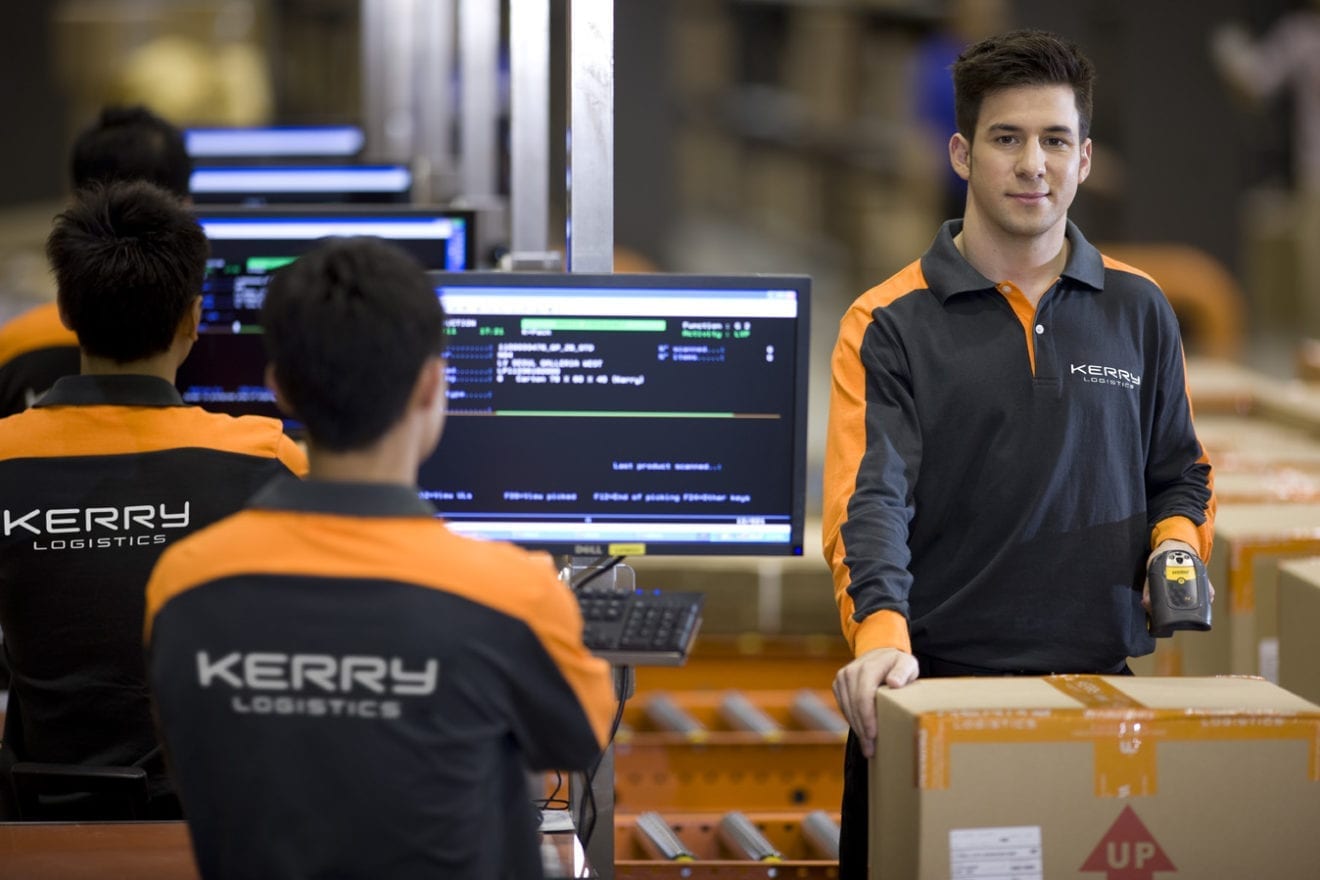
    Kerry Logistics has secured a long-term contract with Maxim’s Caterers, one of Hong Kong’s leading food and beverage companies.

    Kerry Logistics will provide integrated logistics services to Maxim’s Group including cold chain solutions, supporting the caterer’s more than 780 outlets in Hong Kong and key accounts, 365 days per year. This strategic cooperation signals the collaboration of two industry leaders in Hong Kong, and exists to serve the Hong Kong community with speedy and hygienic food supply.

    The new strategic cooperation will see Kerry Logistics managing Maxim’s new central distribution centre (‘DC’) with multi-temperature storage, accommodating Maxim’s extensive product range. Kerry Logistics will also provide a wide range of value-added services and daily replenishment to Maxim’s restaurant chains and key accounts.

    William Ma, group managing director of Kerry Logistics, said, “This is an exciting partnership for us. As Hong Kong’s largest F&B caterer, Maxim’s has highly demanding logistics needs and some of the most complex distribution channels in the industry. Kerry Logistics is committed to servicing Maxim’s with dedicated resources, both software and hardware, as well as the Hong Kong community at large. The project will add another mega-scale domestic DC operation to our logistics business portfolio. We are looking forward to developing a long and successful partnership with Maxim’s through delivering quality performance and reliable services.”

    Michael Wu, chairman and managing director of Maxim’s Caterers Ltd., said, “Over the years the Kerry Logistics team has demonstrated its commitment and capabilities to deliver agile services to support our seasonal and project needs. The ten months in the preparation for our new DC have made us realise that our two companies share a similar culture of quality, dedication and innovation. We are delighted to work in close partnership with Kerry Logistics for enhanced efficiencies and expanded scale.”

    Supported by Kerry Logistics’ industry expertise and extensive distribution network, Maxim’s diverse range of catering services will continue to fulfil Hong Kong people’s needs.

  • Philippine 7-Eleven stores to expand food, services offer

    Philippine 7-Eleven stores to expand food, services offer

    Philippine 7-Eleven stores will be adding new concepts and initiatives over coming months to help differentiate from rival c-store chains.

    Parent Philippine Seven Corporation, revealing its trading figures for the first six months which included a decline in net profit from P472.3 million to P446.4 million year-on-year, said higher sales in the second half reduced the rate of decline from 13.3 per cent in the first quarter to 5.5 per cent in the second quarter. Same-store sales rose by 1.2 per cent in the second quarter, compared with a 2.5 per cent decline in the first.

    Total retail sales rose 16.9 per cent due to network growth to P18.1 billion. The company added 347 stores during the six months, taking the total to 2087.

    While revealing few details of the planned new initiatives, Philippine Seven said it would be launching new food and beverage options to stand out from other fast-food options consumers had.

    The company also plans to expand its merchandise assortment and add new services reflecting growing customer demand for  innovation and convenience in many categories.

    Meanwhile, the company continues to pursue opportunities to expand  its network.

    “The company… continues to invest in opening new stores in existing and new markets even if competition had slowed down,” it said in its results statement.

  • Ikea Malaysia heading north to Penang

    Ikea Malaysia heading north to Penang

    Ikea Malaysia will open its first store in the north at the end of next year, in Penang.

    Ikano, which owns the franchise for the Swedish furniture giant for Malaysia as well as Singapore and Thailand, teamed up with Aspen Group to buy 99 ha of land in Batu Kawan from Penang Development Corporation to develop the Aspen Vision City (AVC), where the Ikea store will be located.

    Ikano will hold a 20 per cent stake in AVC with Aspen holding the balance. The Ikea store will be wholly owned by Ikano.

  • Muji Japan adds groceries, mini-house to flagship

    Muji Japan adds groceries, mini-house to flagship

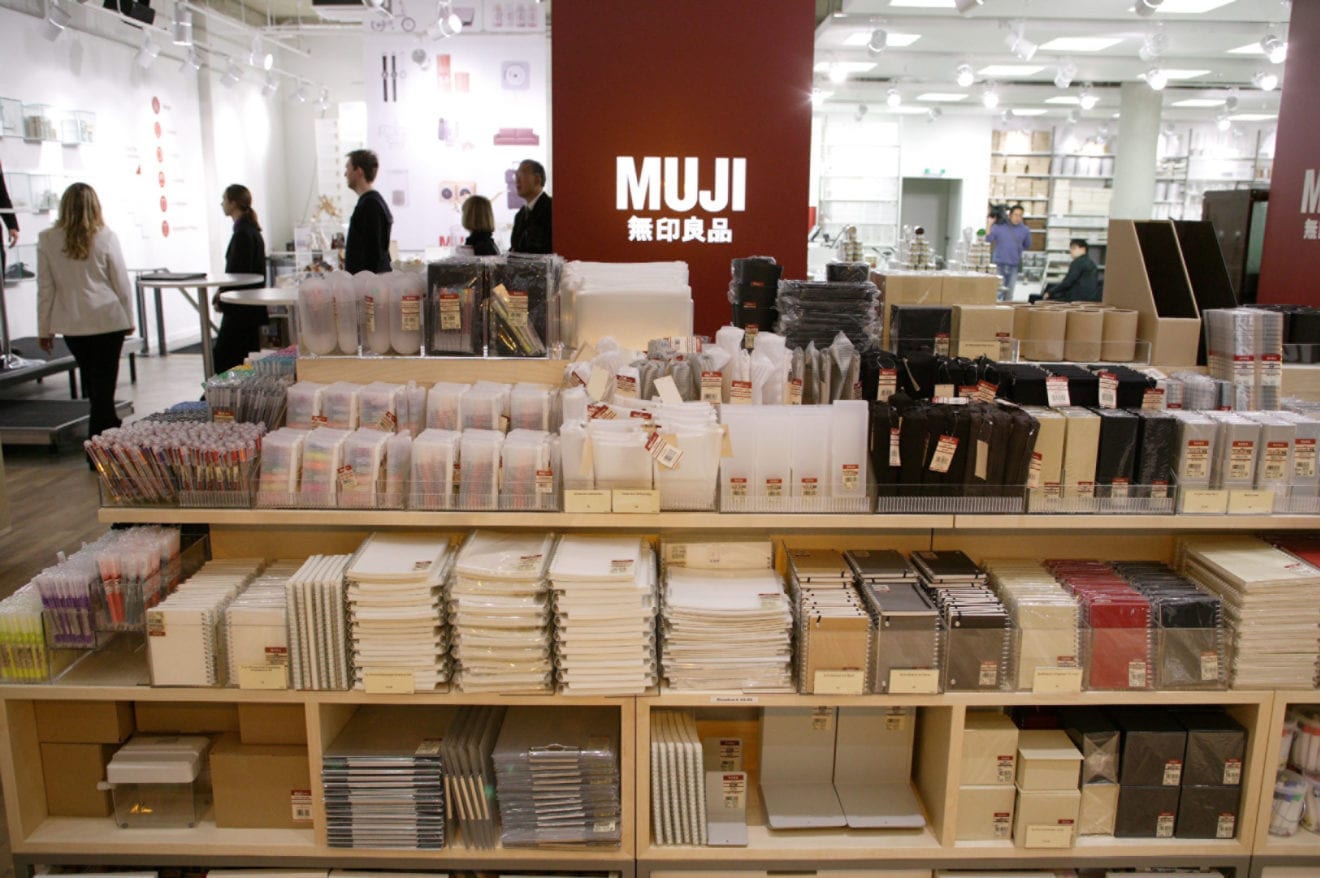
    In a redesign, housewares company Muji Japan has added groceries and even a miniature house to its global flagship store in Tokyo.

    It draws its inspiration from the core necessities of survival: food, shelter, clothing and food, reports Curbed.com.

    “Among the basic lifestyle needs, food is the most fundamental and indispensable aspect,” says the store’s opening announcement.

    This is why the flagship is the first Muji store in the world with a fruit and vegetable market. All the produce, grown with little or no fertiliser or pesticides, is sourced directly from growers who add notes to customers near their items. There are also 300 grocery items such as spices and snacks.

    A second-floor cafe serves bread and soup made from the produce available downstairs.

    On display is a simple Muji Hut – a tiny black timber house with interior designers on hand to answer questions. Its one room is fitted out as a music room and retreat.

  • Card spending up, delinquency down – Monetary Authority of Macao

    Card spending up, delinquency down – Monetary Authority of Macao

    While credit-card spending has increased in Macau, the delinquency rate (amounts overdue for more than three months) has eased, Monetary Authority of Macao data shows.

    Total credit-card turnover reached MOP4.9 billion (US$608 million) in the second quarter, up 2.1 per cent quarter to quarter and 8.9 per cent year on year.

    Local cash advance turnover reached MOP225.2 million, nearly 4.6 per cent of total card turnover.

    Credit card repayments, including interest and fees, totalled about MOP4.8 billion – down 6.6 per cent from the first quarter but up 8.1 per cent from the same period last year. The ratio of overdue amounts remained low, dropping to 1.37 per cent at the end of June, down from 1.46 per cent at the end of the previous quarter.

    With more dual- and triple-currency cards, the total number of personal credit cards in circulation was 1,134,044 at the end of June. This was an increase of 3.7 per cent over the previous quarter earlier or 12.3 per cent year on year.

    Pataca (MOP) cards rose by 11.4 per cent to 796,992, Hong Kong dollar (HKD) cards increased by 10.2 per cent to 94,725 while renminbi (RMB) cards grew by 16.2 per cent to 242,327.

    Banks had granted about MOP27.3 billion in card limits by the end of the quarter, up 3.6 per cent since the end of March and a 15.5 per cent increase from a year earlier.

    Credit-card receivables amounted to MOP2.5 billion, of which rollover reached MOP751.7 million, nearly 30.5 per cent of receivables.

  • Domino’s Pizza misses profit guidance

    Domino’s Pizza misses profit guidance

    Fast food retailer, Domino’s Pizza, has missed full-year profit expectations due to weak sales in Japan and France. The pizza giant, however, posted a lift in full year net profit by 24.8 per cent to $102.9 million, helped by double-digit sales growth in Australia, New Zealand and Europe.

    CEO, Don Meij, said the forecast miss was mostly caused by underperformance in France.

    “I acknowledge our results, while strong, did not reach the guidance we set. This was largely due to the delay in rectifying some issues with our online platform in France, and the initial response in H2 to our value range offering in France,” Meij said.

    “Both have now been addressed.”

    Domino’s, which lifted its full-year earnings forecast in February after a strong first-half performance, had anticipated net profit and underlying earnings would rise 32.5 per cent.

    The company said underlying net profit for the 12 months to July 2 grew 28.8 per cent to $118.5 million, while earnings before interest, tax, depreciation and amortisation rose 28.3 per cent on the prior year to $230.9 million.

    Revenue for the year to July 2 has risen 15.4 per cent to $1.07 billion.

    Domino’s said FY18 had started well, but indicated that same stores sales in the Australian and New Zealand market would likely be lower in the first half.

    The group plans to open between 180 and 200 new stores and expects net profit to increase by around 20 per cent in FY18.

    It also has announced a share buyback of up to $300 million, which will be funded through new and existing debt facilities.

    The company will pay a partially-franked final dividend of 44.9 cents per share, taking the full-year payout to 93.3 cents per share, up from the 73.5 cents for the 2016 financial year.

  • Irvins Salted Egg snacks make Manila debut

    Irvins Salted Egg snacks make Manila debut

    Irvins Salted Egg snack store from Singapore has opened its first Philippines outlet, in Metro Manila.

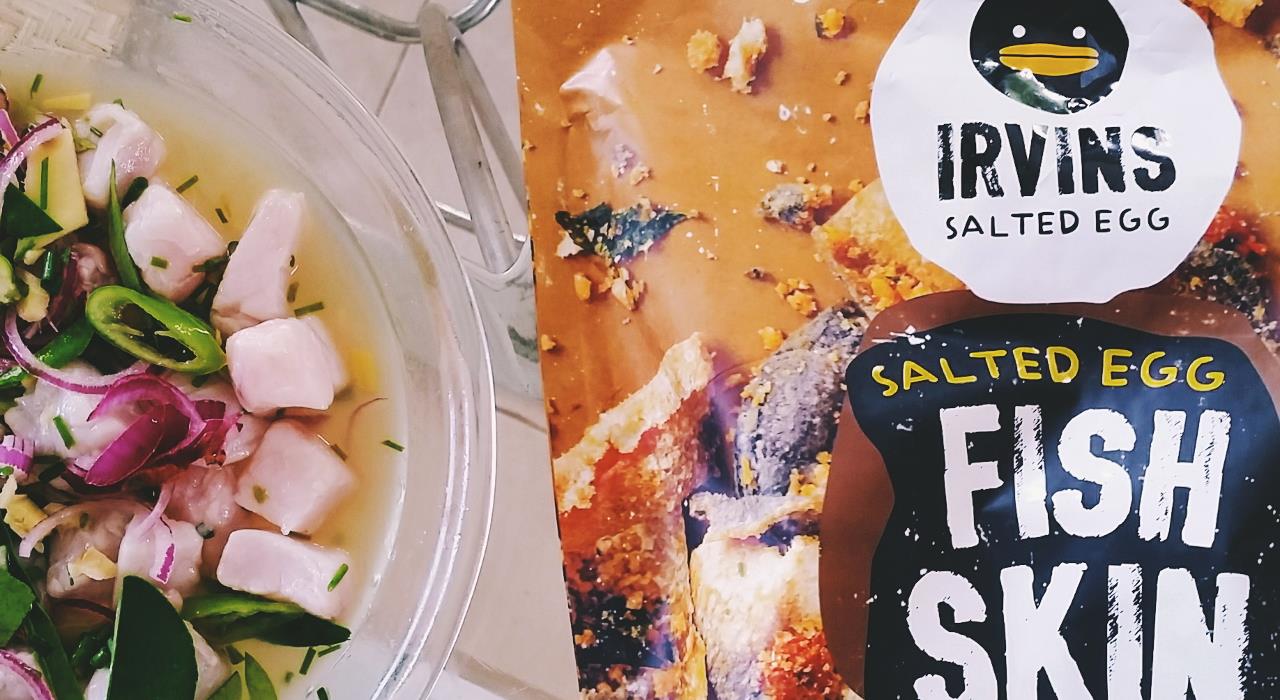
    On the ground floor of SM Mega Fashion Hall, the shop sells the brand’s signature snacks: salted egg fish skins and salted egg potato chips.

    Owner Irvin Gunawan says he decided to open a store in the Philippines after seeing the great response to the snacks from Filipinos in Singapore. His hunch was right, as on its first day the Manila store had a queue throughout the morning.

    Gunawan says other branches will come, the first before year’s end.