Author: Mei Ling Tan

  • Jakarta prepares for Indonesia’s most influential sugar show

    Jakarta prepares for Indonesia’s most influential sugar show

    The low production of sugar which cannot meet the large demand of sugar consumption in Indonesia caused by inefficient processes initiates the INAGRITECH 2017 to present its premier sub-event named SugarMach Indonesia 2017. SugarMach Indonesia 2017 is the premier show focusing on sugar machinery, innovation, and technology. This show gains a strong support from the Indonesian Sugar Association (AGI) and Indonesian Sugar Professional Association (IKAGI) as SugarMach Indonesia 2017 is held in an attempt to push Indonesia’s infrastructure development in sugar industry as well as supporting the country’s effort to achieve sugar self-sufficiency. For the success of the event, AGI-IKAGI will also hold the National Sugar Summit 2017 along with SugarMach Indonesia 2017.

    National Sugar Summit 2017 will be attended by thousand of professionals from all Indonesia Sugar Industries and government to discuss technology, policy, challenge and strategies how to make Indonesia Sugar Industry to become more competitive in global. Most of the attendee should be decision makers, the board of director, owner, government and professional in the ugar business.

    The resounding big success of INAGRITECH 2016 Jakarta held along with INAGRICHEM 2016 and INAPALM ASIA 2016 attracted 216 companies from 14 countries and 8,920 trade attendees from over 12 countries, has further proved the event as the ASEAN’s most leading trade show for agricultural machinery & equipment, agrochemical, palm oil processing machinery and the other agricultural supporting industries. The expo has expressed a proven opportunity to boost sales and gain exposure as well as meeting with key decision makers and potential buyers. Around 95 per cent of exhibitors also expressed a proven opportunity to boost sales and gain exposure as well as meeting with key decision makers and potential buyers from both domestic and international.

    SugarMach Indonesia 2017 is an ideal platform for sugar industry players to explore their business, to network with both local and global communities, and to unveil their latest products of technology. Indonesia’s sugar self-sufficiency effort provides an opportune time for investors to participate in the sector as well as take advantage of various incentives on offer. The bright prospects for investment in the national sugar industry are evident from the growing interests of the private sector to invest in the sector.

    SugarMach Indonesia 2017 taking place on 23 – 25 August 2017 at JIExpo Kemayoran, Jakarta – Indonesia will co-locate with INAGRITECH 2017, INAGRICHEM 2017 and INAPALM ASIA 2017. It will definitely be one of the Indonesia’s most prospective one-stop exhibitions for sugar industry players. The scale of exhibition area will be expanded up to twice as large as last year’s and will attract more than 500 exhibiting companies.

    According to the Indonesia Ministry of Trade, Indonesian sugar consumption within the consumer retail segment is 3 mn tonnes per year, while national sugar production is only about 2.5 to 2.7 million tonnes per year resulting in a shortfall of 300-500,000 tonnes of sugar. Therefore, the new government is committed to building 10 new sugar mills between 2015 and 2020 with Rp42.5 trillion of investment. Each mill is hoped to be able to process 30,000 tons of sugarcane per day. To achieve the goal, Indonesia’s sugar mill must upgrade and use the modern technology and machinery for its sugar production.

  • Help for Singapore start-ups in Indonesia

    Help for Singapore start-ups in Indonesia

    Singaporean start-ups eyeing the Indonesian market can now look to a new innovation hub in its capital. Block71 Jakarta, a 1,500 sq m facility in the Kuningan district, officially opened its doors yesterday to 24 businesses from both countries. Operations had begun in March.

    The hub, a tie-up between the National University of Singapore’s entrepreneurial arm NUS Enterprise and Indonesia’s Salim Group conglomerate, will host conferences, business competitions and other start-up events.

    It is based on Singapore’s Block71 in Ayer Rajah Crescent.

    NUS Enterprise chief executive Lily Chan said: “Block71 Jakarta is open to all start-ups and entrepreneurs who are keen to explore the Indonesian market. In particular, we strongly encourage companies that are developing innovative technology solutions with the potential to scale globally to apply.”

    Start-ups are also expected to be able to tap the global networks of investors and industry players that NUS Enterprise and Salim Group are plugged into.

    The group’s executive director, Mr Axton Salim, said in a statement: “We have embarked upon this initiative as we want to support entrepreneurs as well as encourage new developments in Indonesia.

    “The Salim Group’s networks and experience will facilitate the entry of start-ups and innovations to the local market and benefit the community here.”

    His family business deals in a diverse array of sectors, with its units including real estate, telecommunications and manufacturing.

    Among the Singapore start-ups that have ventured into Block71 Jakarta is the pslove company, which sells heat patches to alleviate menstrual cramps. Founder Tan Peck Ying told: “As a consumer product company, we go where the demand is. For the past couple of months, we have been getting multiple requests from Indonesia and this is a natural move for us.”

    The Indonesian start-ups at Block71 Jakarta include 8villages, a social enterprise that provides rural farmers with a mobile information platform to communicate and do business.

    Minister for Trade and Industry (Trade) Lim Hng Kiang, who officiated the hub’s opening ceremony yesterday alongside his Indonesian counterpart, said: “Block71 Jakarta will be a launch pad for Singapore entrepreneurs and innovators to build ties with the Indonesian start-up community. We hope Block71 Jakarta will foster a healthy two-way exchange of ideas, innovation and expertise.”

  • Maybank Indonesia Patmi up 16.3% in 1H

    Maybank Indonesia Patmi up 16.3% in 1H

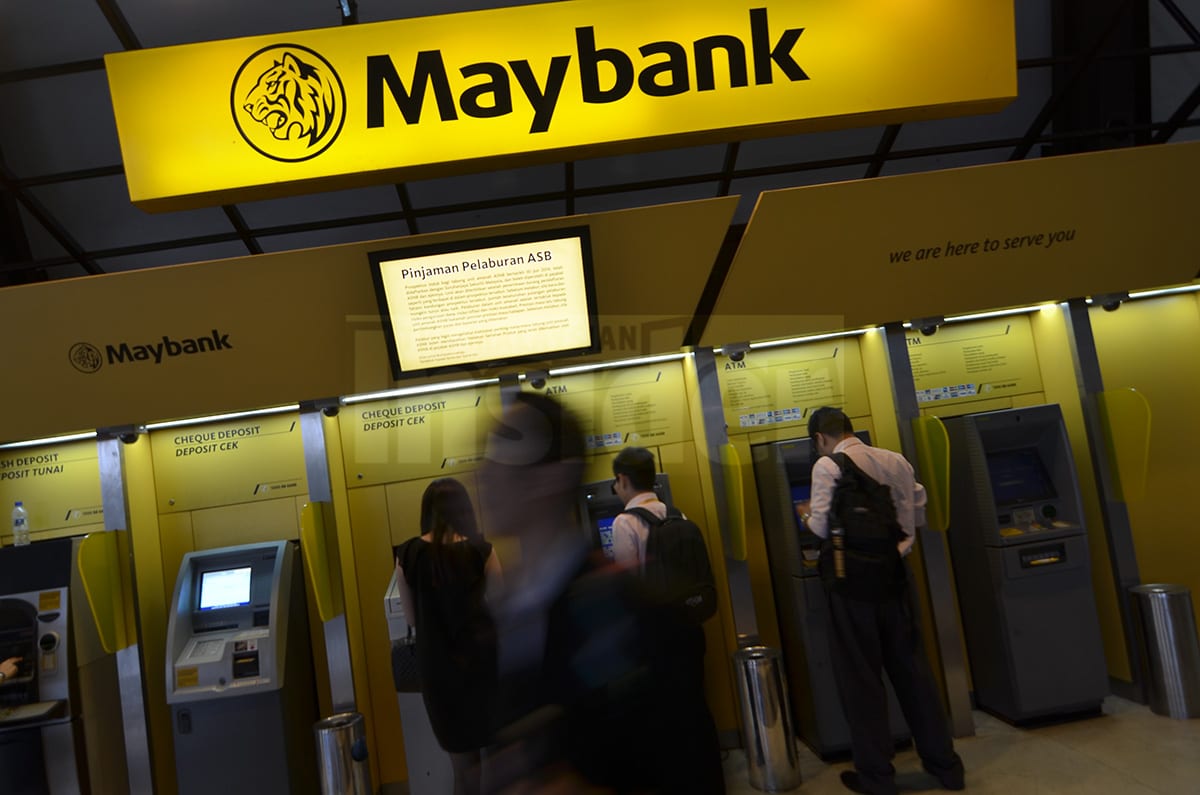
    Malayan Banking Bhd’s (Maybank) Indonesian unit PT Bank Maybank Indonesia Tbk (Maybank Indonesia) posted a 16.3% year-on-year (y-o-y) rise in profit after tax and minority interests (Patmi) to 998.5 billion rupiah (RM320.7 million) for the first six months ended June 30, 2017 (1HFY17), from 858.4 billion rupiah, on an overall improvement in its core banking business.

    In a statement yesterday, Maybank said Maybank Indonesia’s net interest income rose 7% y-o-y to 3.8 trillion rupiah in 1HFY17, from 3.6 trillion rupiah, mainly due to the bank’s discipline in loan pricing and active funding management.

    The net interest margin improved to 5.3% in June 2017, compared with 5% in June 2016, while fee-based income grew 9.1% to 1.5 trillion rupiah from 1.3 trillion rupiah.

    “I am pleased the bank continued to show encouraging improvement for the first semester despite the challenging macroeconomic environment,” Maybank group president and chief executive officer Datuk Abdul Farid Alias said. He is also Maybank Indonesia’s president commissioner.

    Maybank Indonesia’s global banking loans grew 18.9% to 27.3 trillion rupiah in June this year, as a number of key deals were successfully realised.

    Its community financial services (CFS) non-retail loans, which comprise micro, small and medium enterprises, and business banking, grew by 2% to 50.1 trillion rupiah. However, due to a slowdown in consumer spending, CFS retail loans declined 6.4% to 42.5 trillion rupiah, the banking group added.

    Maybank Indonesia’s asset quality was also maintained, with the consolidated non-performing loan (NPL) level remaining at 3.6% (gross) and 2.4% (net) as of June 2017, compared to a year earlier. Provision expenses declined by 15.7% to 835.8 billion rupiah in June 2017, from 991.1 billion rupiah in June 2016.

    The loan-to-deposit ratio (bank only) stood at a “healthy” 86.7%, while the loan-to-funding ratio (bank only) was at 85.9%. Total customer deposits grew 5%, from 114.1 trillion rupiah in 1HFY16 to 119.8 trillion rupiah in 1HFY17, with the current account and savings account ratio reaching 37.4%.

    Maybank said its Indonesian unit’s continuous focus on transactional banking and electronic channels, which include its Internet-based mobile banking facility Maybank M2U, also “contributed greatly” to the improved liquidity position.

    Syariah banking also continued to perform in 1HFY17, said Maybank, with net profit growing 95.9% to 384.9 billion rupiah in June 2017, from 196.4 billion rupiah in June 2016.

    “Total syariah financing rose 49%, reaching 16.2 trillion rupiah in June 2017, compared with 10.8 trillion rupiah in June 2016, while deposits jumped 41.4% to 13.5 trillion rupiah from 9.6 trillion rupiah,” Maybank said.

    Meanwhile, Maybank Finance reported a 20.4% rise in profit before tax to 174.9 billion rupiah in June 2017, from 145.2 billion rupiah in June 2016, with a 21.9% rise in consumer financing (stand-alone) to 6.7 trillion rupiah from 5.5 trillion rupiah. In terms of asset quality, gross and net NPLs stood at 0.4% and 0.3% respectively.

    “Our strong first-semester results clearly reflect the steady improvement in our core business performance as strong fundamentals, rigorous risk management practices, as well as a disciplined approach towards pricing and growth are well in place,” said Maybank Indonesia president director Taswin Zakaria.

    The bank is confident of seeing sustainable profit growth in the remainder of 2017, he added.

  • Tourism Ministry to Lure More Asia Pacific Tourists

    Tourism Ministry to Lure More Asia Pacific Tourists

    Tourism Ministry claimed that they will keep adding the number of international flight routes especially from Asia Pacific to Lombok, West Nusa Tenggara. One of the potential markets targeted is South Korean tourists.

    Tourism Ministry’s Asia Pacific deputy assistant Vincent Djemadu said that the potential tourists from Asia Pacific to Indonesia are high in number. They are mostly attracted to Indonesia’s nature and culture.

    Nationwide, in a year there are at least 350 thousand Korean tourists choose Indonesia to spend their holiday. Vincent mentioned that this year the figure will increase to 500 thousand tourists.

    “At present, nationally, the existing market is roughly 350 thousand tourists per year. It will most likely increase up to 500 thousand by the end of this year,” Vincent said in Praya on Saturday (29/7).

  • LVMH global sales soar 15 per cent

    LVMH global sales soar 15 per cent

    LVMH global sales soared 15 per cent in the first half year, largely driven by strong sales in Asia and France.

    Revenue totalled  €19.7 billion in the first half of 2017, and profit from recurring operations was €3.64 billion, up by 23 per cent. The group’s operating margin reached 18.5 per cent, up 1 per cent.

    “LVMH has enjoyed an excellent first half, to which all our businesses contributed,” said Bernard Arnault, chairman and CEO.

    “In the current climate of geopolitical and economic instability, creativity and quality, the founding values of our group, have more than ever become benchmarks for all. The increasing digitalisation of our activities furthermore reinforces the quality of the experience we bring to our customers. In an environment that remains uncertain, we approach the second half of the year with caution.”

    Highlights of the first half of include:

    • Solid growth in the wines and spirits division, with sales up 10 per cent and improved momentum in China.
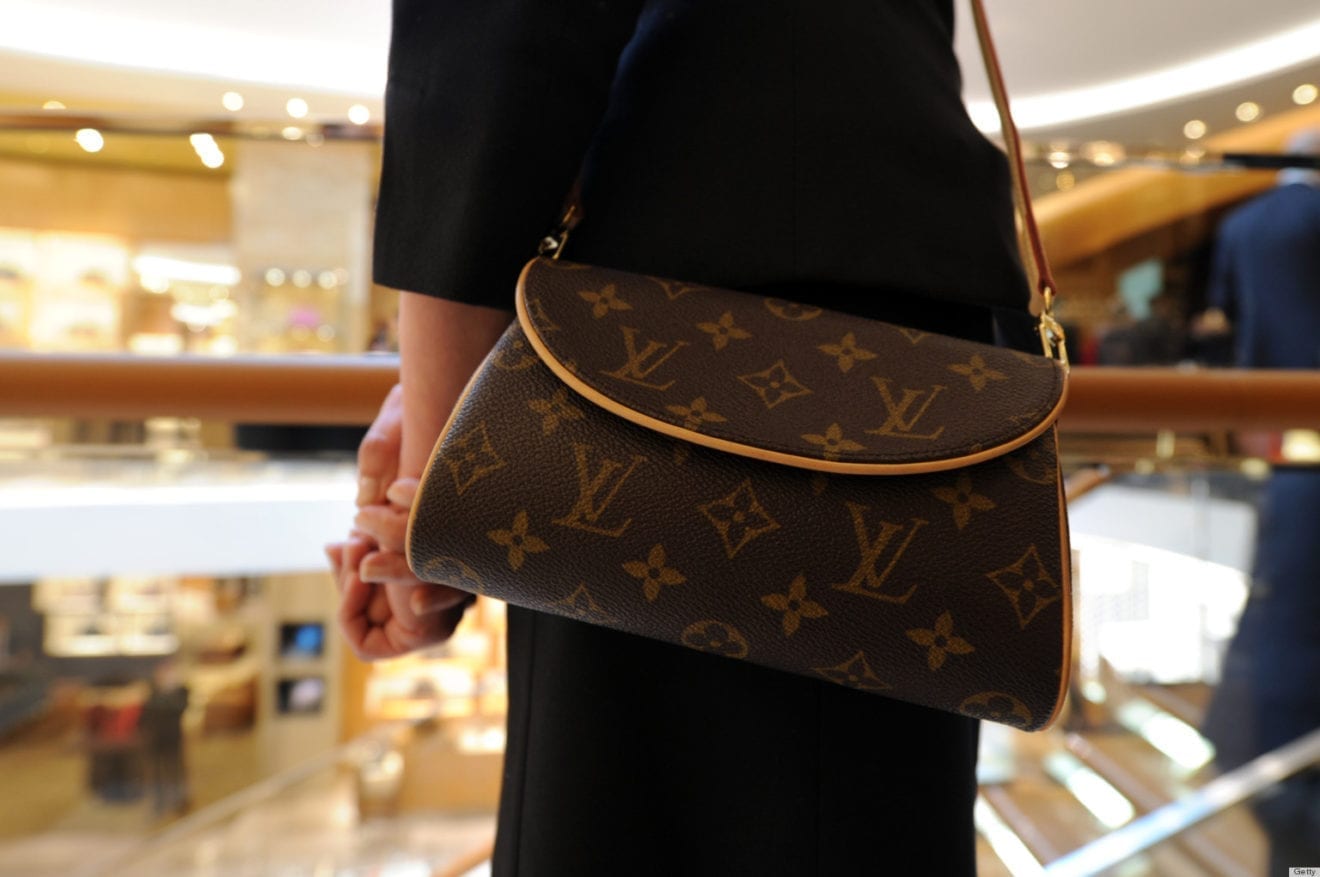
    • Sales up 14 per cent in the fashion and leather goods division, thanks to solid creative momentum at Louis Vuitton and further strengthening of other brands. “The momentum at Louis Vuitton, driven by its exceptional creativity, was demonstrated across all its product categories. The Cruise Collection presented at the Miho Museum in Kyoto, Japan, was a great illustration of this. The launch of new models resulting from the collaboration with the artist Jeff Koons and the cult New York skatewear brand, Supreme, were the highlights of the first half. Fendi continued its strong growth and enriched its leather goods lines, notably with the new Kan-I model. Loro Piana strengthened its presence in Asia with several openings. Céline, Loewe and Kenzo experienced good growth. Marc Jacobs strengthened its product offering and continued its restructuring. Other brands continued to grow. Rimowa, which joined the LVMH Group, is consolidated for the first time in the first half-year accounts.”
    • The perfumes and cosmetics business posted organic revenue growth of 12 per cent. “Christian Dior showed strong growth momentum, sustained by the vitality of its iconic fragrances J’adore and Miss Dior, the continued success of Sauvage and the performance of its latest makeup creations. Guerlain enjoyed a successful launch of its new perfume, Mon Guerlain, represented by Angelina Jolie. Parfums Givenchy experienced rapid growth in makeup, especially its line of lipsticks. Benefit continued to roll out its Brow Collection.”
    • In the watches and jewellery division, Bvlgari had a strong first half and the successful development of Tag Heuer’s core range had an impact, helping at 13 per cent overall increase in sales. “Bvlgari enjoyed an excellent first half and continued to gain market share. This dynamic is notable in both jewellery and watchmaking, especially in China and Europe, thanks to the success of the iconic Serpenti and B-Zero 1 lines and the new Octo Finissimo watch. Tag Heuer experienced solid revenue growth in a tough watch market. The new products created in its flagship Carrera, Aquaracer and Formula 1 collections were very successful and a new generation of the smartwatch was launched. Hublot continued its growth.
    • Strong growth Sephora and improved momentum of DFS in Asia, helped LVMH’s selective retailing business group achieve organic revenue growth of 12 per cent. “Sephora continued to make progress and reinforced its omnichannel strategy. While increasing its share of online sales, Sephora continued to invest in extending its network and renovating existing stores, particularly in New York and Dubai. Le Bon Marché developed a new online shopping experience by launching its digital platform 24 Sèvres. DFS experienced better momentum in Asia, while the T Galleria, which opened in 2016 in Cambodia and Italy, continued to develop.”
  • KFC Japan to launch new healthy dining retail concept

    KFC Japan to launch new healthy dining retail concept

    KFC Japan is to open a new healthy food retail concept called The Table by KFC in Sendai City on August 5.

    The Table by KFC aims to offer deli-style foods, including salads, along with versions of its traditional favourites – like a full-size KFC chicken – targeting commuters passing through railway stations and shopping precincts.

    The first store will be located in the S-Pal Sendai shopping center in Sendai City, Miyagi Prefecture, which is located in the northern part of Honshu.

    News of the concept was revealed in English on the Sorai News 24 website, which has published a number of photos of the dishes one can expect, following a local announcement by KFC Japan.

    Sorai News 24 says the store is “designed to have a natural look, using plenty of wood-grain material for a ‘home kitchen’ feel”.

    “The foods will be displayed in bowls and dishes of different designs, so that the setup is enjoyable to look at too.”

    New dishes to join the menu include Spanish-style Garlic Chicken Gizzard and Oriental Smoked Chicken Caesar Salad.

  • Impact’s The Portal offers restaurants and retail space

    Impact’s The Portal offers restaurants and retail space

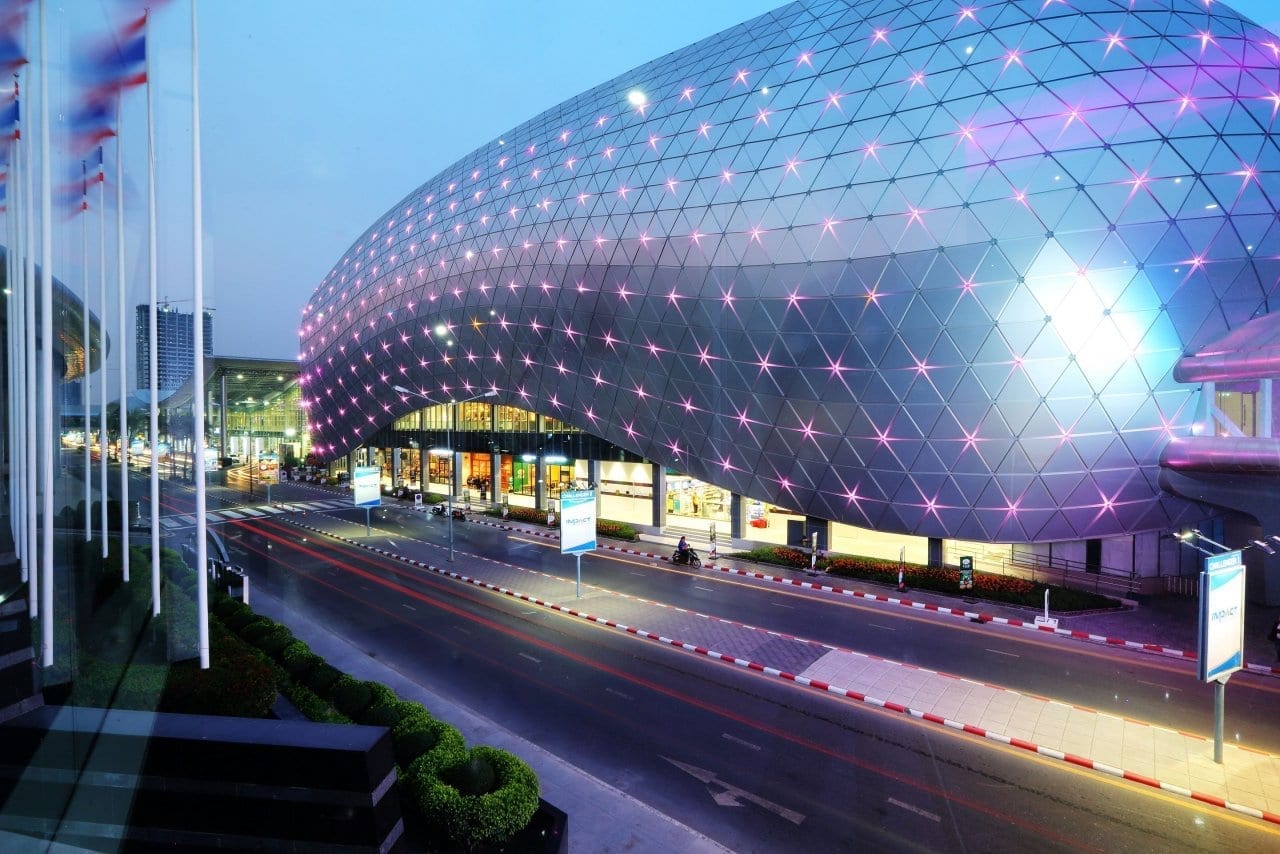
    The managers of the Impact Exhibition and Convention Center have opened a four-story commercial building to house retail stores and other facilities for locals, exhibitors and visitors alike.

    Dubbed The Portal Lifestyle Complex, the futuristic-looking building connects to the Impact Arena, Impact Challenger and Impact Exhibition Center via link bridges. It houses retail stores, a foodcourt, restaurants and brand-name outlets as well as providing a lifestyle venue for the general public visiting Muang Thong Thani, an outlying suburb of Bangkok.

    Paul Kanjanapas, Impact Exhibition Management MD says the building, which cost about THB600 million to construct, is a response to a growing demand for exhibition space and services.

    The curved design of the exterior was inspired by “the movement of undercurrents” according to a statement.

    A number of retail, food and beverage and service companies have leased space, including Burger King, The Pizza Company, After You, Watsons, Thai Ticket Major, Isan@Arena, Tsubohachi Express and Hong Kong Suki. The retail areas are open from 10am to 8pm.

    The third floor of The Portal Lifestyle Complex features a large food arena and the top floor the 1500 sqm Portal Ballroom, offering an elegant function area.

  • Adidas Originals to open renewal flagship store in Gangnam, Seoul

    Adidas Originals to open renewal flagship store in Gangnam, Seoul

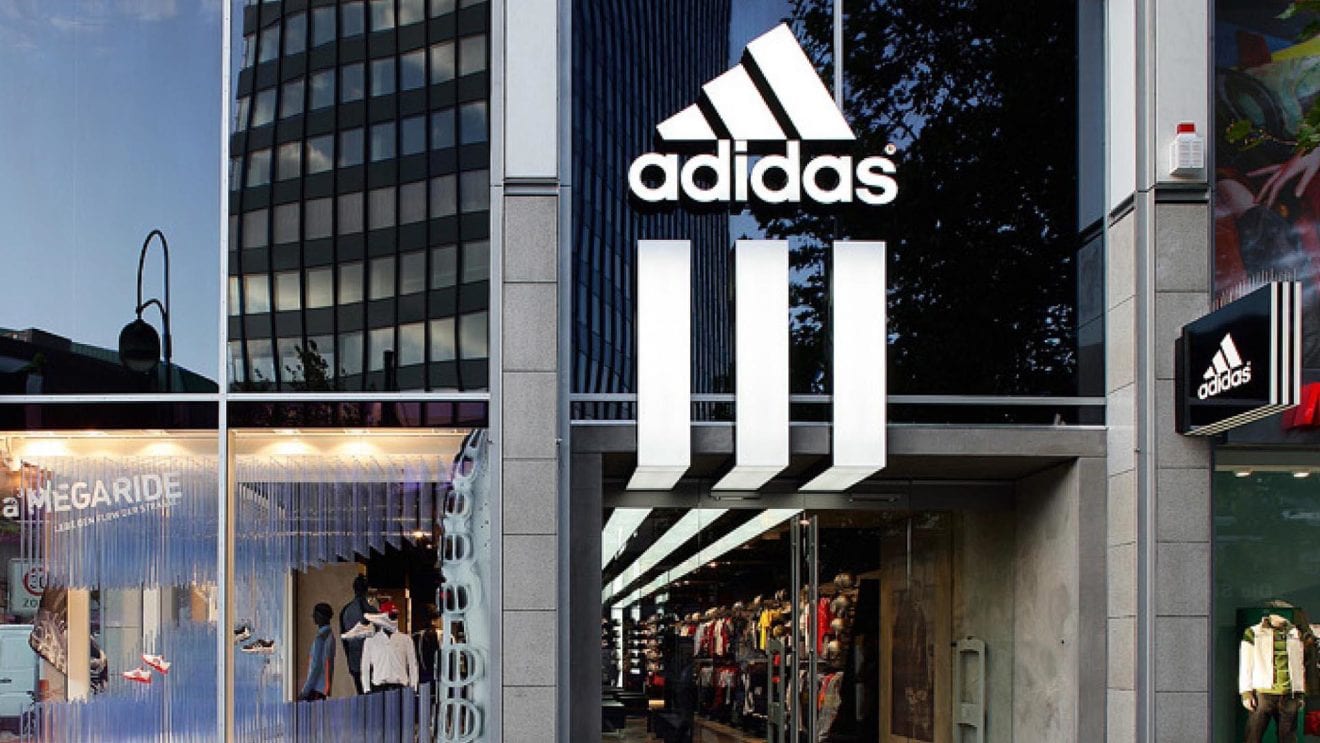
    The Adidas Originals Seoul flagship store, which closed last Monday, will open on July 28 again. Adidas Korea renewed its flagship store and reopened to commemorate the third anniversary of the opening of this year.

    “Adidas Originals” will provide consumers with the store as a space to express their individuality and creativity, not just a place to sell products.

    The store, which opened in 2014, attracted attention as the third flagship store of Adidas Originals in the world. While expressing the aspiration to become Seoul’s leading street fashion and cultural center, it was loved by sneakers mania with various collaborations and limited edition items of “Adidas Originals” as well as parties and events.

    “Adidas Origins” has organized a variety of events on the theme of ‘CREATIVE CANVAS’ that fans of the brand can participate and enjoy before re-opening.

    On Saturday, July 29, the first weekend of reopening, the ‘Do The Over’ party, which has been taking part in celebrated cities all over the world starting in LA in 2005, is held in the back yard of the flagship store .

    The famous DJs will show DJing performances in ‘Do The Over’. Anyone who is a fan of “Adidas Originals” can apply through the event page.

    As part of the NMD ‘NEVER FINISHED’ campaign from September 29th to August 9th, various inspirational pictures of the city taken by customers will be displayed in the store.

    On August 5th, it will hold ‘ADIDAS MAKER LAB’ event where you can create your own sneakers miniature of your desired design and color.

    On August 12, “Adidas” sneaker collector “Quat” of Berlin, Germany will visit the flagship store. He will display 200 pairs of “Adidas” vintage sneakers in his collection and have a time to meet domestic consumers, talking about street culture.

  • New Hua Du Supercenter buys vending machine group

    New Hua Du Supercenter buys vending machine group

    Chinese supermarket chain New Hua Du Supercenter has acquired a vending-machine company just weeks after Alibaba and Auchan launched self-service convenience stores.

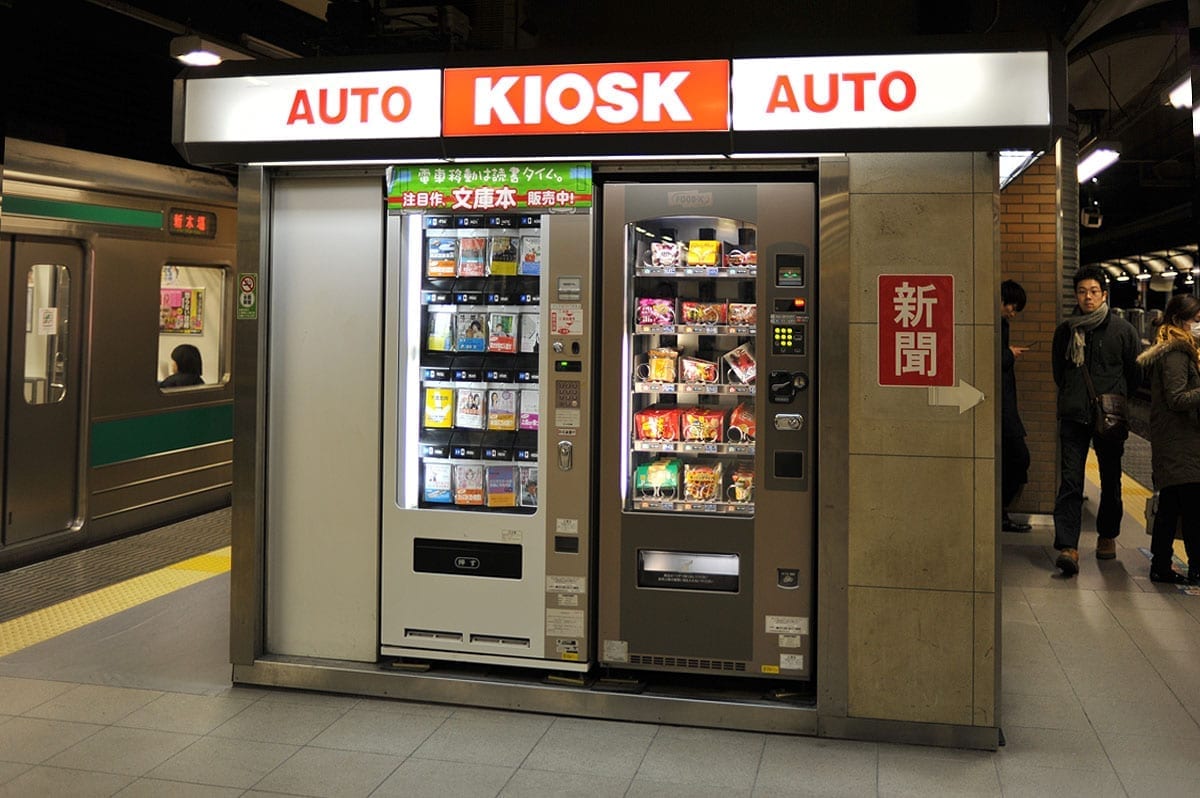
    Based in Fujian, the chain says it has signed an equity-swap agreement with Beijing Ubox Online Technology Corporation. Under the deal, Ubox, which runs more than 57,000 vending machines – more than any other similar company – will be absorbed into New Hua Du.

    New Hua Du has a market value of RMB5.7 billion (US$850 million), smaller than its new subsidiary Ubox, which is valued at RMB6.5 billion. New Hua Du’s profit last year rebounded to RMB54 million from a loss of RMB373 million a year earlier, driven in part by the three e-commerce companies it acquired.

    “The acquisition comes at a time when staffless retail is hot,” says Haitong Securities analyst Wang Liting. “The deal will enable integration between supermarkets and smart vending machines.”

    After Amazon.com launched its Amazon Go self-service shop last year, Chinese companies have taken up the staffless shop concept with Alibaba Group Holding opening Tao Cafe in Hangzhou and Groupe Auchan introducing BingoBox in Shanghai.

    Wang says the vending-machine market has significant potential in China. Ubox’s profit last year more than doubled to RMB81 million.

  • Dean & Deluca expands at Silom

    Dean & Deluca expands at Silom

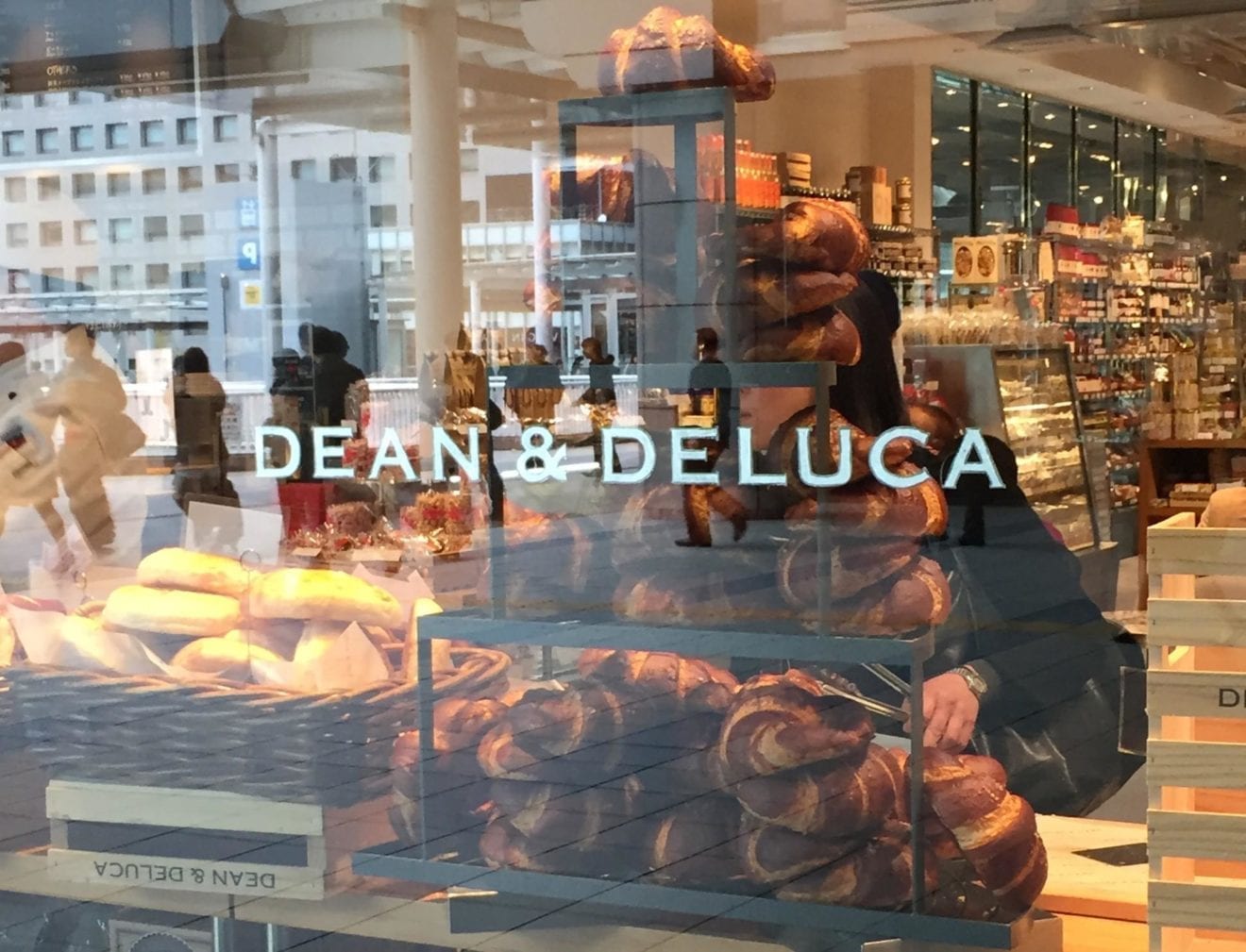
    Thai-owned cafe and deli chain Dean & Deluca has expanded, opening a new outlet on Silom’s Soi 1.

    Decorated in the signature style of cafe and pizzeria, the branch offers crafted beverages including beer and wine, as well as pizza and sandwiches.

    Just a few steps from BTS Sala Daeng, the two-storey restaurant can accommodate 80 diners. The ground-floor area offers counter seating and a view of the pizza oven, while the mezzanine has more comfortable seating with couches and wooden tables.

    There is also a retail corner selling gourmet chocolates, confectionery and biscuits, as well as in-house homeware products such as coffee mugs, vacuum flasks and tote bags.

  • Gourmet Market to open at Bangkok subway station

    Gourmet Market to open at Bangkok subway station

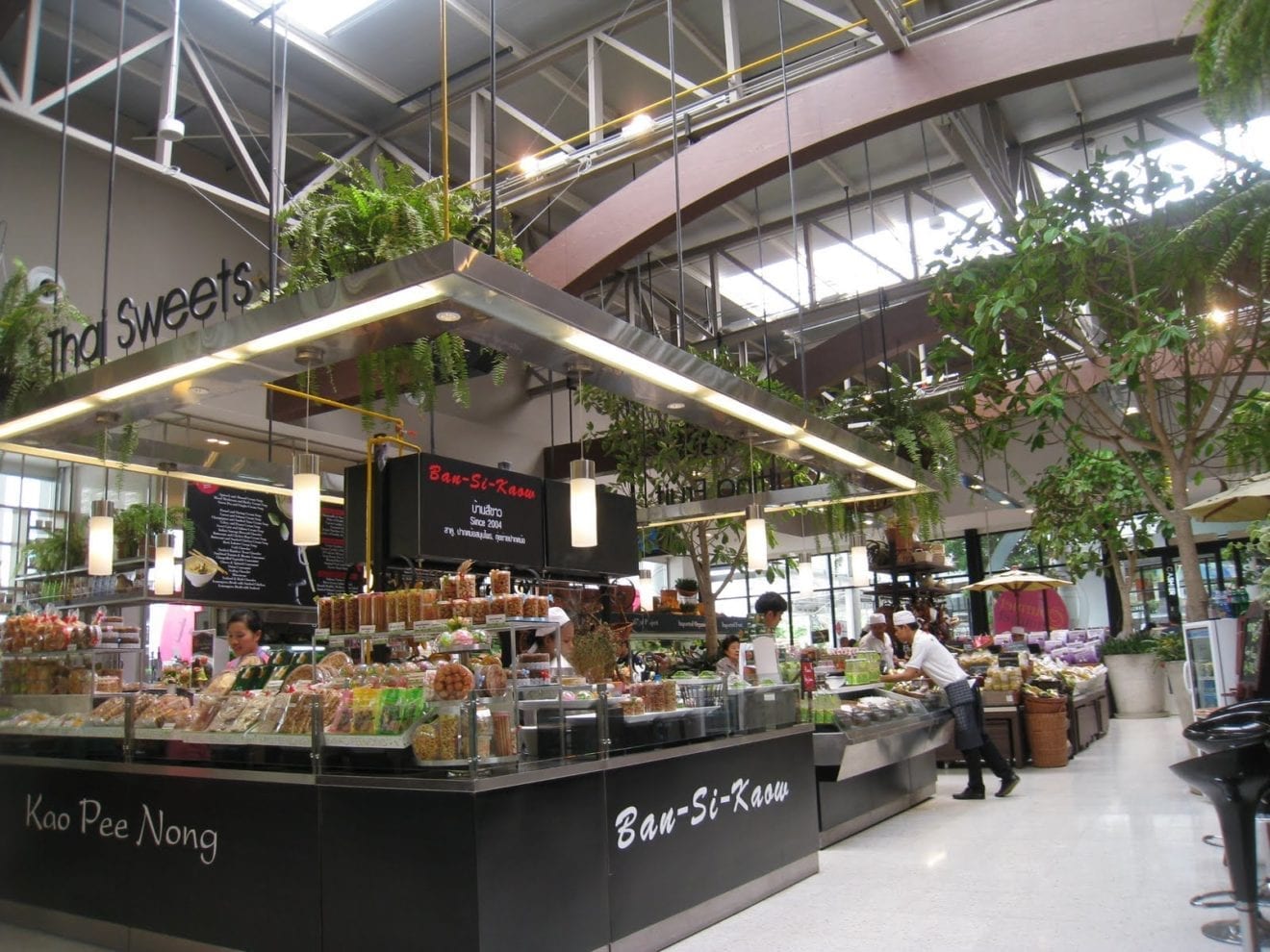
    Working with Bangkok Metro Network (BMN), The Mall Group will open a Gourmet Market at Lat Phrao subway station.

    The MRT serves more than 240,000 passengers each day, with the Lat Phrao station being a key transit point with a large parking lot.

    The outlet is the fourth outside the group’s shopping complexes as the retailer seeks to position stores that can capture more passing trade. It is in the park-and-ride area of the Ratchadaphisek Road station and is set to open in September.

    Group executive VP Chamnarn Maytaprechakul says the collaboration is part of the company’s transformation to provide its services through different channels.

    “The three Gourmet Market outlets that already sit outside our complexes have received a warm welcome from customers, and we predict they will thrive with double-digit sales growth, compared with the single-digit growth of our stores inside malls.”

    Its established Gourmet Market outlets can be found in Terminal 21 at the Asok intersection, in The Promenade shopping complex on Ram Intra Road, and in The Crystal SB Ratchapruek community mall.

    Other business opportunities being explored by The Mall Group include delivery service, online shopping and e-payment.

  • Amazon’s huge profit drop

    Amazon’s huge profit drop

    Amazon has reported a jump in retail sales but its profits took a big hit as the e-commerce giant continues investing in a number of costly areas, including video, fulfilment centers and international expansion within fast-growing economies such as India.

    The world’s largest online retailer has reported a 77 per cent slump in quarterly income and forecast a potential operating loss in the current quarter, $US300 million ($A376 million) to a loss of $400 million.

    The company posted second-quarter revenue of $38 billion, up 25 per cent from the previous corresponding period.

    Operating cash flow increased 37 per cent to $17.9 billion for the trailing twelve months, compared with $13.0 billion for the trailing twelve months ending June 30, 2016. Free cash flow increased to $9.7 billion for the trailing twelve months, compared with $7.7 billion for the trailing twelve months ended June 30, 2016.

    Operating income decreased 51 per cent to $628 million in the second quarter, compared with the operating income of $1.3 billion in second quarter 2016.

    “Our teams remain heads-down and focused on customers,” said Jeff Bezos, Amazon founder and CEO.

    “It’s energising to invent on behalf of customers, and we continue to see many high-quality opportunities to invest.”

    According to Neil Saunders, managing director of GlobalData Retail, Amazon’s breakneck growth stood in contrast to the fate of many brick-and-mortar rivals, who have struggled to find their footing as more people shop online.

    “While many other retailers are bumping along the bottom in terms of growth, Amazon increased its sales line by almost a quarter,” Saunders said. “In real terms, this means the online behemoth took some $7.5 billion more in revenue this quarter than during the same period last year. By any standards, this is an impressive performance – but it is doubly so for a company of the size and scale of Amazon.”

    “Worryingly for other retailers, Amazon shows no signs of slowing down.”

    Saunders said Amazon’s growth this quarter was sequentially better than last. Even in a mature market like North America, Amazon still managed to grow its sales line by 26.6 per cent.

    “And all of this comes before the sales benefits of Whole Foods, which will boost future growth rates by around 12 percentage points. All in all, it is clear that Amazon is not only increasing its dominance but is doing so at an ever-faster pace,” he said.

    Saunders said, however, that as good as Amazon is at generating sales, it is far less successful in turning those sales into profits.

    “To be fair, much of this is deliberate: Amazon chooses to reinvest in its business and to sacrifice profits to boost its market share and dominance,” he said. “However, such a strategy shows up in a weak set of bottom line numbers. Indeed, in its latest quarter, Walmart made more net profit in a week than Amazon did during the entire three-month period.”

    “As we predicted in our last note, Amazon’s profitability is getting worse rather than better,” Saunders said. “However, it all adds up to one thing: Amazon is buying sales at the expense of the bottom line.”

    He said in their view, this is a sustainable position both because Amazon is cash generative and is not losing money; nevertheless, it takes some of the shine off Amazon’s success.

    “The unfortunate truth for other retailers is that Amazon’s growth and success will force them to reduce margins, especially if they want to grow in e-commerce,” he said. “And While Amazon is comfortable operating with relatively low profitability, many other retailers – and their investors – are not. This is something that will create some significant pain points over the coming years.”

    Bezos’ wealth skyrockets

    Bezos also briefly became the world’s richest man in Forbes magazine’s tracking of wealth, as stock in his e-commerce company hit an all-time high.

    Microsoft founder Bill Gates reclaimed the lead by Thursday afternoon, as Amazon’s stock fell nearly 1 per cent for the day to $US1046.

    Amazon shares have been trading at a record high. They hit $US1083.31 at about noon on Thursday. According to securities filings, Bezos owns about 80 million shares, or 17 per cent; those shares were valued at more than $US87 billion ($A109 billion) at the peak. Bezos also owns The Washington Post through a holding company.

    Forbes said Bezos’ net worth was about $US90.6 billion when the market opened on Thursday. Gates had $US90.1 billion. Forbes said Gates would have been the undisputed leader had he not given billions of dollars away to various philanthropic causes. Bezos issued a request for philanthropic ideas in a tweet in June, just before Amazon announced a $US13.7 billion deal for organic grocer Whole Foods.

  • SK Telecom more than doubles Q2 profit

    SK Telecom more than doubles Q2 profit

    SK Telecom more than doubled its net profit during the second quarter due to factors including a record performance at chipmaker SK Hynix.

    The operator reported a net income of 620.5 billion won ($555.06 million), up 113.2% year-on-year. Revenue meanwhile grew 1.8% to 4.35 trillion won and operating income increased 3.9% to 423.3 billion won.

    But it was a challenging quarter for the operator’s core telecommunications business, with operting income on a non-consolidated basis falling 3.3% year-on-year to 462.3 billion won due to increased marketing expenses and depreciation costs from the 2.6-GHz spectrum acquired last year.

    Despite this non-consolidated revenue edged up slightly to 3.11 trillion won, due to increased mobile data usage and increased sales in new business areas including IoT solutions.

    Revenue from the SK Broadband division meanwhile increased 1.9% year-on-year to 730.1 billion won and the unit reported a record-high quarterly operating income of 31.6 billion won.

    Internet commerce arm SK Planet meanwhile posted a 5.4% increase in sales to 275 billion won, but still recorded an operating loss of 35.1 billion won.

    “Despite the challenges in the mobile telecommunications market, SK Telecom posted improved results due to the strengthened performance of its main subsidiaries,” SK Telecom CFO Ryu Young-sang commented.

    “SK Telecom will become a global leading ICT company by achieving meaningful growth in media and IoT, while maintaining leadership in the mobile network operations business.”

    The company is also planning to connect its AI platform to other services, including mobile services, media, commerce and its T Map mobile navigation service to generate differentiated big data it can use to provide customized products and services.

  • Inflight Wi-Fi essential for 2 in 3 APAC travelers

    Inflight Wi-Fi essential for 2 in 3 APAC travelers

    Two thirds of airline passengers in Asia-Pacific feel that inflight Wi-Fi is not merely a luxury but a necessity, according to Inmarsat-commissioned research.

    A survey of travelers in the region, conducted by market research company GfK, found that 79% are willing to pay for inflight connectivity even on short leisure flights. In addition, 61% believe quality inflight Wi-Fi is more important than onboard entertainment.

    The survey found that inflight broadband is changing the airline industry and transforming travelers’ expectations of the onboard experience.

    Inflight Wi-Fi is becoming so important that over half (52%) of passengers in the region say they will stop using their preferred airline within the next year if it does not introduce the technology.

    Passengers who have experienced high-quality in-flight Wi-Fi also rate it as the third most important consideration when choosing an airline, behind ticket price and flight slots.

    Passengers in China are more likely to be conscious of the quality of Wi-Fi (55%) than those from other countries in the region. Notably, the top three airlines that passengers expect to offer in-flight Wi-Fi and eventually lead the inflight connectivity market in APAC are airlines from China – Air China (46%), China Eastern Airlines (22%) and China Southern Airlines (21%).

    “Good quality Wi-Fi in the air is changing the way people think about flying. Whether using the time to work, to connect with friends and family, or to pass time shopping or viewing entertainment, the availability of inflight broadband has become a major factor when choosing an airline,” Inmarsat Aviation vice president for APAC Otto Gergye said.

    “It’s clear the opportunity that connectivity presents to airlines cannot be underestimated. Airlines in Asia Pacific are recognising this, and can now take advantage of having a high quality onboard Wi-Fi option available in the region.”

  • Bahri, Bolloré Logistics launch logistics joint venture

    Bahri, Bolloré Logistics launch logistics joint venture

    Headquartered in Riyadh, the joint-venture will offer end-to-end logistics solutions to support the needs of customers in the Kingdom of Saudi Arabia and the region as well as international companies doing business with the Kingdom.

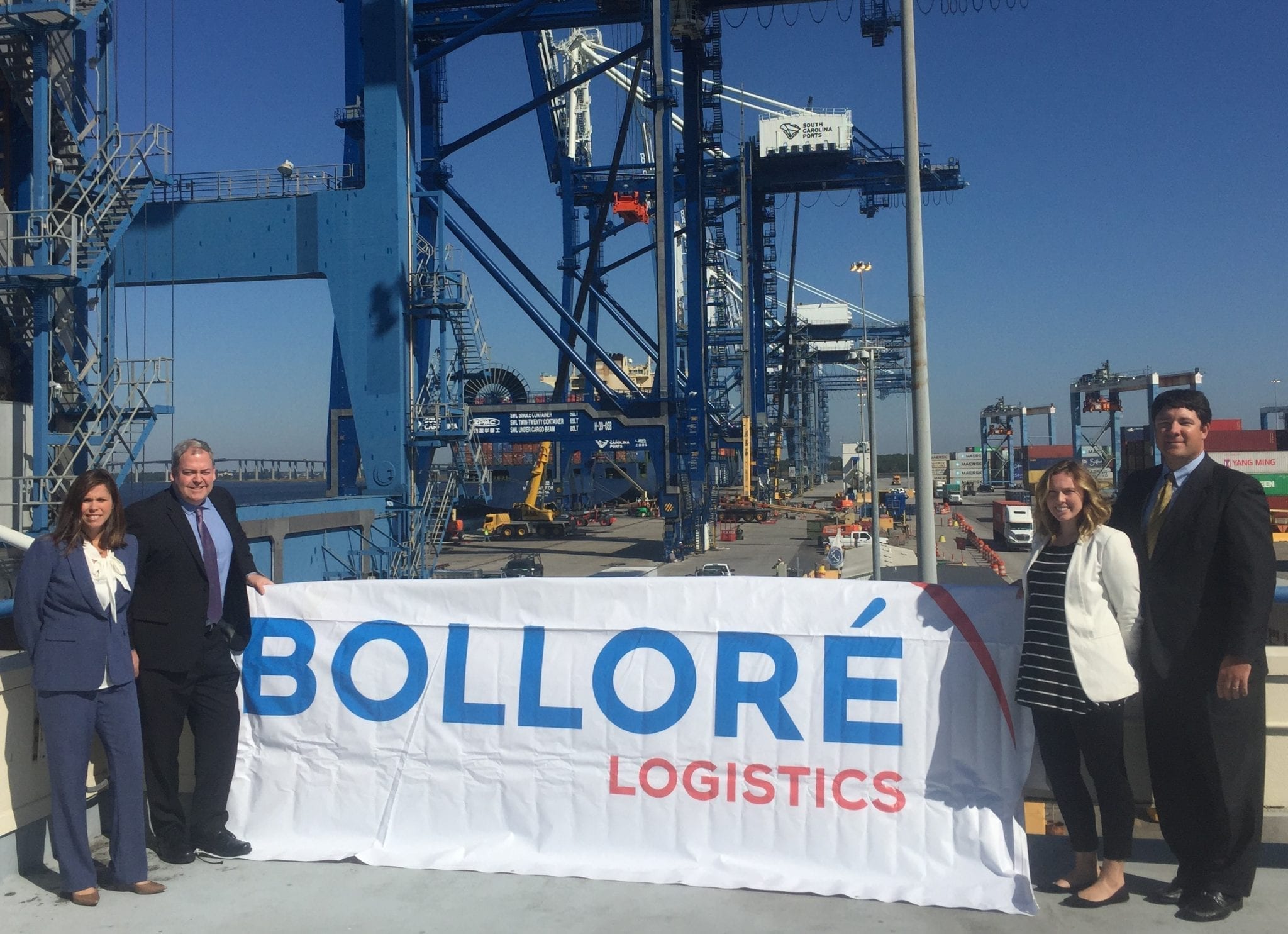
    Bolloré Logistics has signed a joint-venture agreement with Bahri, a recognized global leader in transport and logistics, on July 18th, 2017, in Riyadh, and will now operate under the name Bahri Bolloré Logistics in Saudi Arabia.

    The agreement marks another step of Bolloré Logistics’ expansion into the fast-growing logistics and supply chain management market within the Gulf Cooperation Council (GCC).

    “It is a great honor for us to partner with Bahri, a leading and well recognized transport and logistics player in Saudi Arabia. This collaboration will intensify Bolloré Logistics’ development in the Middle East, which is definitely a key region for our organization, mainly because of its strategic location at the crossroads of Asia, Africa and Europe. The Joint-venture with Bahri also allows us to reinforce our market segments development, especially for Aerospace & Defense, Oil & Gas, Luxury Goods and Healthcare,” said Mr. Philippe Lortal, Chief Executive Officer of Bolloré Logistics Middle East – South Asia.

    “Bolloré Logistics’ global capabilities in logistics and supply chain management, coupled with our regional knowledge and depth of expertise in transportation and logistics services, will help unlock synergies and operational efficiencies powerful enough to propel the new venture toward becoming a logistics partner of choice for companies around the region,” said Mr. Ali Al-Harbi, Acting CEO of Bahri.

    The logistics market in the GCC is worth SAR 176.3 billion (US$47 billion), with Saudi Arabia, with a market size of SAR 71.3 billion (US$19 billion), representing 43 per cent of the combined regional market, according to a report by research consultancy Solidiance. One of the fastest growing countries in the logistics and warehousing industry globally, Saudi Arabia is positioned as the primary entry point for goods in the GCC market, and the Kingdom’s logistics industry has been growing at an average rate of around 6% per year.