Author: Mei Ling Tan

  • Korean Air Charters Flight Directly to Lombok

    Korean Air Charters Flight Directly to Lombok

    Korean Air is set to open a chartered flight from Incheon airport to Lombok, West Nusa Tenggara (NTB), starting on July 29. According to Head of the NTB tourism agency, Lalu Moh Faozal, the South Korean airline has prepared seven flights up to October 9.

    “The flight will carry 200 passengers in each flight from Incheon,” said Faozal on Wednesday, July 12. Australian Jet Star will also open a flight from Sydney, Australia to Lombok.

    South Koreans have been attracted to Lombok ever since a Korean drama series shot an episode in gili Trawangan and several other locations in Lombok.

    Considering that Lombok has successfully grabbed the attention of international tourism community, Faozal urged the people of NTB to improve the quality of several aspects in NTB such as problems of traffic congestion and environmental problems.

    Tourism has been the fourth largest contributor for Indonesia’s economy, devoting 9.3 percent to the national income compared to other national industrial aspects. Tourism also contributes 10 percent of Indonesia’s total gross domestic product (GDP).

    Previously, South Korean ambassador, Taiyoung Cho met with the governor of West nusa Tenggara, Muhammad Zainul Majdi. “Lombok is really popular there,” said Taiyoung Cho. Korean businessmen will be diverted to invest in the property sector.

    Direct flights between Incheon and Lombok by the Korean Air are expected to help improve foreign tourist arrivals in NTB.

  • 7-Eleven sees success in Vietnam after failure in Indonesia?

    7-Eleven sees success in Vietnam after failure in Indonesia?

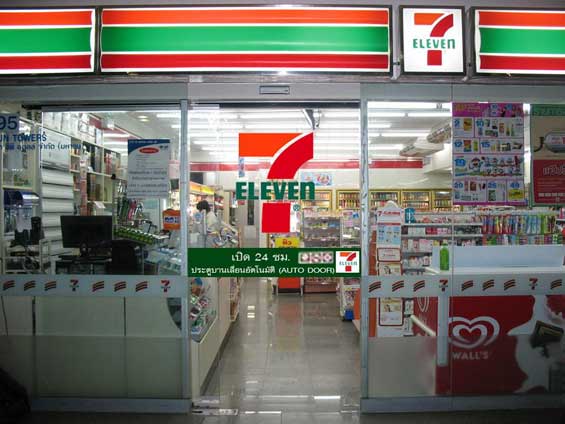
    After 7-Eleven’s initial success in the Vietnamese market, people are still questioning its long-term achievements as competition among different brands of convenience stores in Vietnam is getting more intense, and especially after 7-Eleven’s failure in Indonesia.

    Currently, people are less crazy about 7-Eleven after four new stores were opened within nearly a month. However, some people may still wish to experience this famous chain of convenience stores, while others who used to live abroad, especially in Japan, Thailand, and China, may not be too excited about 7-Eleven in Vietnam.

    At the middle of June, the debut of 7-Eleven in Vietnam lured great attention on newspapers and Facebook, there were even some rumours that customers were paid to queue in front of the first 7-Eleven store.

    In real life, there is not much talk about 7-Eleven, because they think that 7-Eleven stores are just like other convenience stores that have appeared in Vietnam in recent years, such as Ministop, B’s smart, Circle K, Vinmart+, and Shop & Go.

    Since three years ago, Nguyen Tan Minh, a communication employee at a big consumer goods corporation, said that he had not bought goods from traditional grocery stores or small shops on the pavements because he used to be sold the expired goods there, making him lose faith in these kinds of stores. Meanwhile, different chains of convenience stores are appearing everywhere, and the goods in these stores are regularly checked.

    In addition, buying goods in a 24-hour convenience store helps Minh to save time more than buying at a supermarket. Minh is a frequent customer of Ministop but he said that he would not hesitate to leave Ministop and buy in 7-Eleven if one opened closer to his home.

    “7-Eleven sells some kinds of homemade food that suit my taste, such as cakes or yogurt. I usually buy bread in this store for breakfast to save time,” Minh said.

    Besides, 7-Eleven attracts consumers by its own advantages, such as the various imported confectionery products. Specifically, 7-Eleven has a menu of 100 dishes which are cooked in Vietnamese style, and the menu changes every day. This is not only 7-Eleven’s advantage, but also a point of differentiation.

    However, the selling price at 7-Eleven is a little bit higher than some other stores. “This is not important, I love this store mainly due to its convenience,” Minh said and added that a little bit of difference in selling price does not originate from the popularity of a brand, but derives from the initial investment and lease fees.

    All four 7-Eleven stores are at prime locations in Ho Chi Minh City, the most populous and dynamic city in Vietnam. Still, consumers like Minh hope that after the early stage, the prices in 7-Eleven will go down.

    According to Minh, the only shortcoming of 7-Eleven is that there are few stores in the suburbs, so people in these areas must travel all the way to Saigon Trade Center at 37 Ton Duc Thang Street, District 1. However, this 7-Eleven store does not have its own parking lot for customers who drive motorbikes and it is such an inconvenience

    Factors behind 7-Eleven’s success

    Without aggressive advertising, numerous chains of convenience stores have silently entered the Vietnamese market in recent years, such as Circle K, B’s mart, Ministop, Shop & go, and Vinmart+. This year saw a boom of convenience stores with the participation of 7-Eleven.

    “Basically, these convenience stores are similar. I often visit a convenience store because it is near my house, not because of its Japanese or Thai goods,” Thy Thy, a communication employee of Asus Vietnam, said.

    Vietnamese customers’ habits often change quickly. Youngsters in Vietnam do not stick to certain brands and are willing to try new convenience stores if they offer various products at competitive prices, but above all comes convenience.

    Thus, 7-Eleven has the strategy of developing its chain of convenience stores everywhere, on crowded streets or in small and narrow lanes in residential areas.

    In Vietnam, 7-Eleven targets to open 100 stores within three years and 1,000 stores within the next ten years. 7-Eleven is the first foreign retailer in Vietnam that sets such a high target.

    The rumour among domestic retailers says that Henry Nguyen Bao Hoang, managing general partner of IDG Ventures Vietnam, the first technology venture capital fund in Vietnam, is the one who stands behind 7-Eleven stores in the country. He is also the person who brought the first McDonald’s to Vietnam.

    Notably, Pham Phu Ngọc Trai, an excellent Vietnamese CEO over two last decades, is a shareholder of Seven System Vietnam Joint Stock Company, a franchisee of 7-Eleven in Vietnam. He has mastered the retail sector and consumer goods industry in Vietnam.

    All of these things make people think that the 7-Eleven chain will flourish in Vietnam. However, the initial success does not ensure a bright future for 7-Eleven on its own.

    Threats from domestic competition

    While 7-Eleven is warmly welcomed in Vietnam, in Indonesia, it had to close all stores eight years after entering. Previously, Modern International, 7-Eleven’s franchisee in Indonesia, continuously expanded the brand outside the capital Jakarta.

    Like in Vietnam, 7-Eleven induced a modern space with various foods at reasonable prices for Indonesian youngsters. However, these were not enough for 7-Eleven to survive in Indonesia, because at the same time, it had two strong domestic rivals, Alfamart and Indomaret, two chains with a long history and expansive networks all over Indonesia.

    At first, Alfamart and Indomaret copied 7-Eleven upon seeing its success. Afterwards, they focused on raw and fresh food products rather than processed food.

    This is one precious lesson for 7-Elven Vietnam, but at present, it refuses to answer questions about domestic competition. In Vietnam, Vinmart+ of Vingroup may become the Vietnamese version of Alfamart and Indomaret, posing a threat to 7-Eleven.

    Vinmart+ entered the retail sector later than most domestic and foreign convenience stores and mini-marts, but it has one of the biggest number of stores. After only two years of operation, Vinmart+ has opened about 1,000 stores. It targets to open an additional 1,000 stores this year.

    Currently, Vinmart+ focuses on fresh and raw vegetables and fruits instead of cooked food to attract youngsters, who love a quick and convenient life, but the store is changing its strategy.

    Vinmart+ will supply clean vegetables and fruits from its eco-farm VinEco, necessities for housewives and busy officers, and fast food and processed food for youngsters. The food will be processed in VinmartCook and then distributed in Vinmart+ stores.

    Convenience stores in Vietnam have their own ways to approach potential customers. However, customers’ psychology and needs are always changing and they seem to be reluctant to stick to a single brand. This demonstrates that convenience stores that aim for success must understand their customers and adjust to the tren

  • David Jones unveils $100m food strategy

    David Jones unveils $100m food strategy

    Department store chain, David Jones, has unveiled its $100m food strategy, aiming to build a retail food business that draws on design elements from the world’s top food sellers and gets younger generations back in-store.

    David Jones’ new gourmet food offering will kick off at Bondi Junction in Sydney’s east within seven weeks time and will showcase the retailer’s attempt to tap into the $100 billion food sector.

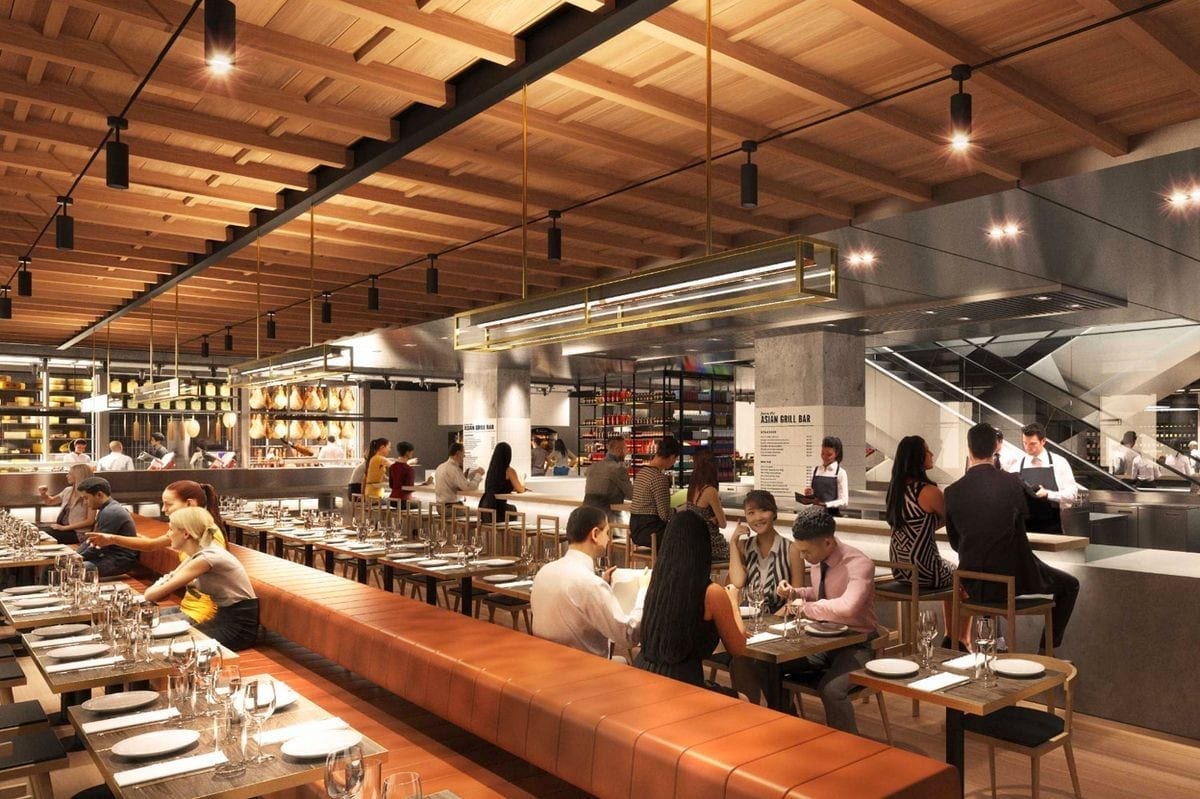
    Taking cues from Switzerland’s Globus, Eataly in New York, and La Grande Epicerie under Bon Marche in Paris, the revamped food offering will incorporate integrated dining developed with well-known chef and restaurateur Neil Perry, as well as cafes, butcher shops, bakeries and seafood counters plus prepared meals and packaged groceries.

    Westfield Bondi Junction will be followed by a food market in GPT Group’s Wollongong Central shopping centre, then Melbourne’s Bourke Street store in November.

    When Woolworths Holdings acquired Australia’s oldest department store retailer, food  “was never part of the rationale of the acquisition” according to Pieter de Wet, group food executive, David Jones. But the South African based retail group – which is now predominantly a food business with over 400 food stores generating over 60 per cent of its turnover today – quickly recognised a gap in the market.

    Pointing to a survey undertaken with a sample of its customers, de Wet said customers felt limited in their food options and gravitated towards big supermarket players only because they had no choice and it’s a case of “whichever one is closest on the way home.”

    “So there’s no emotional connection that exists with specialists, so their local barista, baker, that they have the connection they love their experience from.”

    De Wet said when asked about DJs food offering, its customers were unanimous. “They basically said that from a food point of view, we had fallen off the map completely”

    “If you speak to the 35 years old and under generation, there’s no reason for them to come to David Jones today because it’s not kept up with the times…they basically said to us if you’re going to do food, make sure it’s not just a small evolution, make sure it’s a massive step forward otherwise it’s not going to really interest us.”

    When asked by assembled media about Amazon’s $13.7b acquisition of WholeFoods in the US, John Dixon, David Jones CEO said it showed the US giant is changing its strategy after understanding the importance of stores. “They initially started selling books online…the acquisition of WholeFoods shows that they understand that its important in this day and age to have both an online and store operation.”

    “Certainly when you think about the opportunity and strength of David jones, we already have a great store network, nationwide coverage and we’ve got an online business which is going very nicely that we are about to re-platform in September.

    “We’ve brought over an expert from the UK to spearhead our online growth and what we know is when customers actually shop across what we call both channels, they are the most important and valuable customers to us. So I think we are very well placed because we have what we call a connected retail strategy.”

  • Australia Post appoints new MD and group CEO

    Australia Post appoints new MD and group CEO

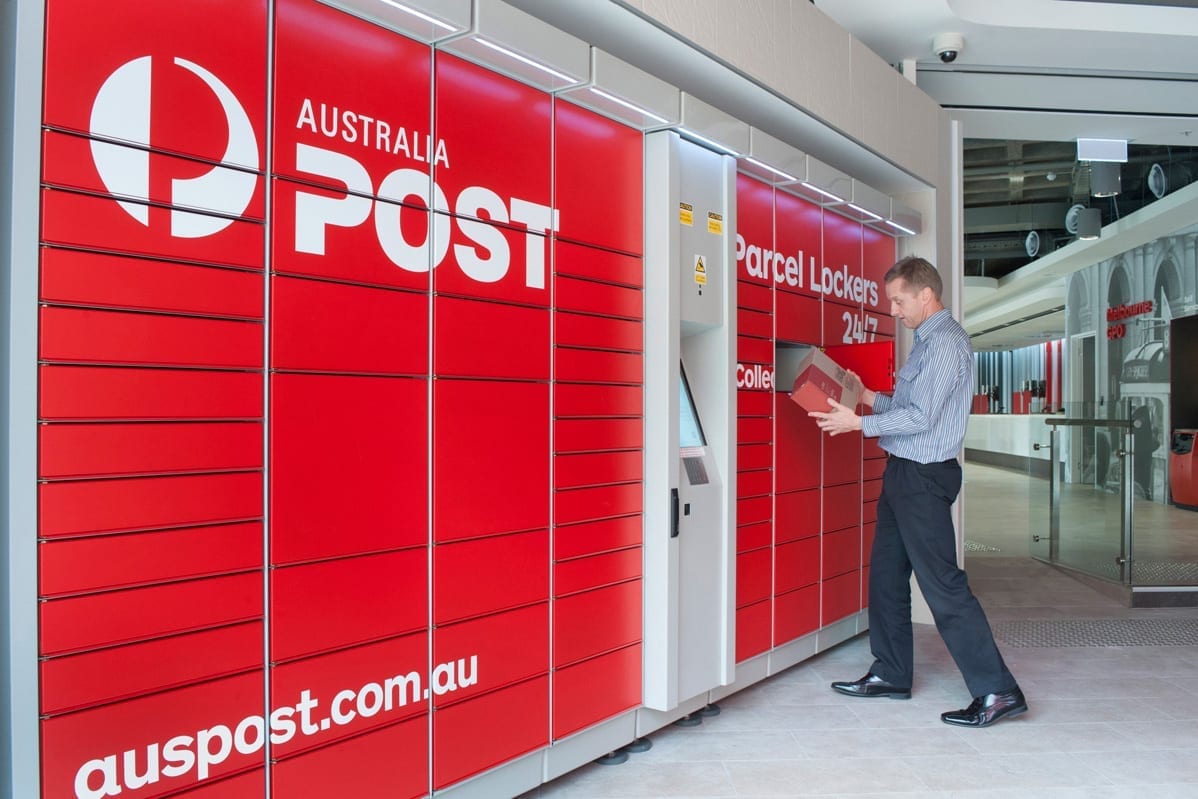
    Ex-Blackmores chief, Christina Holgate, has today been announced as the new chief of Australia Post effective from October, after a ‘global search that identified her as the outstanding candidate’ to lead the company in its transformation program.

    Holgate will be the corporation’s next managing director and group CEO, and succeeds the departing Ahmed Fahour who will step down next month after seven-and-a-half years in the role.

    Holgate joins after nine years as CEO of Blackmores and previous executive roles with Telstra, JP Morgan and Cable & Wireless.

    The Turnbull Government issued a statement welcoming the appointment of Holgate.

    Following direction by Government in February 2017, the remuneration of Australia Post’s new chief is now subject to oversight by the Remuneration Tribunal, an independent statutory authority. The government said consistent with the parameters set by the Remuneration Tribunal, the Australia Post board has agreed to a total remuneration of $1.375 million and performance pay of up to $1.375 million per annum.

    Malcolm Turnbull had previously called on Fahour to take a voluntary pay cut and was critical of the $4.4 million salary and a $1.2 million bonus Fahour was paid last year, labelling it part of a “cult of excessive executive CEO remuneration”.

    Australia Post chairman, John Stanhope, said the past seven years had seen the company “transformed into Australia’s leading parcels and e-commerce company” with critical reforms introduced to its letters service. He said Holgate had a demonstrated track-record of delivering results in large, complex organisations, both here in Australia and internationally.

    “The Board was impressed by her experience of working very successfully in a range of different industries that are highly regulated. And, on top of that, she has a proven ability to implement strategy – and successfully grow a business in Asia,” he said.

    Stanhope also said Holgate’s business philosophy was a strategic fit for the company. “She is a firm believer that businesses must perform commercially, but also serve the community. And that’s entirely consistent with our objectives as a community-based business that has both commercial objectives and community service standards to uphold.”“Her knowledge of global e-commerce will be invaluable as we pursue our Asian Strategy, which is all about offering logistics support to Australian businesses that are either selling in Asia, or sourcing their products there.”

    The Australia Post Board today also announced that its group chief customer officer, Christine Corbett, will lead the business through the CEO transition period – between Fahour’s departure on 28 July and Holgate’s arrival in October.

    Corbett joined Australia Post in 1990 and has extensive experience working in key leadership roles across retail, mail network, major change, strategy, marketing and communications.

    Holgate said she felt privileged to be appointed as CEO of such an iconic Australian corporation and she looked forward to building on the achievements of her predecessors.

    “Australia Post has proven itself to be one of the most resilient and successful postal businesses anywhere in the world.  I feel fortunate to be joining at a time when we can really strengthen Post’s leading position in the e-commerce market – both here, in Australia, and in Asia,” Holgate said.

    “I’m a passionate advocate for Australian business seizing the opportunity that’s on our doorstep in Asia and that creates opportunities for everyone – our workforce, our shareholder, the community, as well as businesses across Australia.

  • JD.com buys into Farfetch fashion site

    JD.com buys into Farfetch fashion site

    Chinese e-commerce giant JD.com has made its largest overseas investment ever, in online Farfetch fashion marketplace.

    JD.com has bought a US$397 million stake in Farfetch, solidifying a partnership that will see its CEO Richard Liu take a place on the UK company’s board. It will also make JD.com one of Farfetch’s largest shareholders.

    This comes amid a push by the luxury-oriented Farfetch to expand in Asia, having raised $110 million in 2014 to support China growth. The new partnership will allow Farfetch to make use of JD.com’s logistics network and marketing systems, alongside online payment technology and social-media resources like its partnership with WeChat.

    An added bonus for the UK fashion marketplace is an increased ability to tackle counterfeit luxury products produced in the region.

    JD.com will also benefit from the partnership, pushing into the luxury market and setting itself apart from rival Alibaba.

    “China is the world’s second-largest luxury market, and we are delighted to have such a respected partner, known for its strict protection of IP, with whom to address Chinese luxury consumers,” says Farfetch founder/CEO Jose Neves.

    Just this month, JD.com launched its high-end delivery service JD Luxury Express, with staff in suits and white gloves delivering packages via electric vehicles directly to customers’ homes.

    Farfetch, which counts France’s Eurazeo, Singapore sovereign wealth fund Temasek and China’s IDG Capital among its investors, was valued at around $1.5 billion in a fundraising last year.

  • H&M Beauty is coming to Malaysia this Fall 2017

    H&M Beauty is coming to Malaysia this Fall 2017

    An affordable cult beauty line worldwide, H&M Beauty is finally making its way to Malaysian shores and it is set to launch in the coming Fall 2017, which means September onwards.

    Featuring over 1,000 makeup and beauty products, H&M Beauty will be launching in selected Malaysian stores, where it will have its own dedicated area within.

    Packed in its signature ivory, black and gold cases inside makeup/toiletries bags, the collection will also include an assortment of fragrances, bodycare, hair care and styling products.

    To top it off, H&M Malaysia will also bring in two subsidiary collections: a premium bodycare range, and the ‘Conscious’ range of Ecocert-approved sustainable products.

    And not to forget, seasonal limited edition collections, much like its fashion designer collaborations.

  • Two luxury names to open at revamped centre

    Two luxury names to open at revamped centre

    Luxury retailers, Bally and Harrolds, are set to open their first outlet stores at Birkenhead Point this spring, alongside global designer giants Coach and Michael Kors, and Australian brands Peter’s of Kensington and progressive streetwear designer Zanerobe.

    Mirvac made the announcement yesterday, as the centre prepares for the launch of its multi-million dollar makeover, which will open to the public in early August.

    The fashion brands will join other  international names including Armani, Hugo Boss, Polo Ralph Lauren, Calvin Klein and Victoria’s Secret; plus local Australian designer Oroton.

    Pharmacy chain,  Chemist Warehouse recently expanded its footprint to 580sqm along with Shoe Warehouse returning in its new location on Level 1.

    Mirvac said the revamped centre appeals to locals, domestic and international visitors.

    “This latest development responds to our customers’ wants and desires and greatly enhances the appeal of Birkenhead Point, Christina Nelson, Mirvac senior development manager. “We have improved the customer experience by delivering a sophisticated and contemporary palette of finishes in the main mall on Level 2, including new mall flooring and ceilings, bespoke furniture and shopfront upgrades, whilst embracing the heritage backdrop  of this unique and much-loved building.”

    The redevelopment also includes incorporate a new ‘entry statement’, with a  glass window display and state-of-the-art digital screen technology using content designed by creative agency, Vandel. The display, at the Roseby Street entrance, will play host to the Birkenhead Art Project, exhibiting work from some of Australia’s artistic talent in collaboration with Art Pharmacy Founder, Emilya Colliver.

    The art will sit in the giant window display and be interpreted digitally on a large screen.

    Sydney based paper artist, Jo Neville, is first up, showcasing a bespoke paper floral installation.

  • RIP high street retailers, faced by the relentless onslaught of mobile

    RIP high street retailers, faced by the relentless onslaught of mobile

    I overheard a young Hongkonger say recently, “I rarely buy anything at shops anymore. I only shop online.” It is not hard to notice the profound effect that e-commerce has had around the world and especially in an emerging and fast-growing market like China.

    But this phenomenon has yet to fully hit Hong Kong’s major luxury malls and department stores that are crammed with overpriced purses and overwrought window displays.

    Despite a restructuring of Hong Kong retail outlets by major luxury brands, the city still hosts more flagship stores than any other place. The lucrative wave of mainland shoppers has long receded and on any given day the luxury stores in Landmark and Pacific Place and other high-profile malls appear awfully sleepy.

    The fate of Hong Kong’s luxury malls against the online shopping onslaught has not yet unfolded.

    I don’t expect them to become ghost towns, but even they cannot avoid downward trends.

    But they are like the fixed fortifications on Frances’s doomed Maginot Line that were bypassed by the German army on the second world war – intimidating and monolithic, but easily made irrelevant by technological disintermediation.

    E-commerce has radically changed shopping habits in the US. Hudson’s Bay department store posted a US$152 million quarterly loss. Ralph Lauren is closing its fabulous and iconic Fifth Avenue flagship store. What is occurring goes beyond an economic cycle, but rather it represents technology enabling generational change. Millennials are conducting their entire lifestyle on smartphones.

    Will Hong Kong’s malls become obsolete or changed so much they will not mean the same thing.

    Sites like deadmalls.com chronicle the slow, but sure death and irreversible evolution of shopping malls in the US.

    Although not all of them are dying, certain segments in urban and suburban areas are empty, hastened by the rise of online. Changing consumer habits and online shopping is decimating the mall as a central retailing concept or necessary gathering place for the community.

    JD.com’s recent acquisition of a US$397 million stake in Farfetch, the London-based luxury fashion and boutique e-commerce service provider, marks a major milestone in the development of luxury retailing. The company, which reported gross sales of US$800 million last year, runs nine local language e-commerce sites, which include the mainland, South Korea and Japan.

    The two companies described their strategic partnership as a means to dominate market share in the estimated US$80 billion market in domestic and travel-related purchases of luxury goods by mainland consumers.

    “We’re just scratching the surface of China’s US$80 billion luxury market,” said Jose Neves, Farfetch’s CEO and founder after the announcement.

    “In China, there’s a huge movement from offline to online [shopping] and there are millions of new millennial luxury shoppers who live their lives digitally.”

    I met its Portuguese founder Jose Neves in 2012 after he raised US$23 million from venture capitalists. Four years into its start-up he expected to close the year with over US$100 million annual sales growth rate of 204 per cent and 56,000 customers in over 100 countries. Today, its online marketplace sells to about 1 million customers in more than 190 countries and territories.

    Farfetch demonstrates the irreversible momentum of change that is possible in shopping habits when shoppers are technologically enabled.

    Furthermore, disintermediation – the reduction in the use of intermediaries between producers and consumers – is an almost imperceptible event when it takes hold.
    What looks like an insignificant catalyst is like observing a distant car in your car’s rear-view mirror. Suddenly, it sling shots past you at great speed and is never seen again as it no longer competes directly with you. Rather it has redefined and recreated a new industry.

    Hong Kong retailers and shoppers have been slow to adopt e-commerce. During internet 1.0, department store owner tycoons woefully misinterpreted the idea by spawning “Dickson CyberExpress”, a misguided attempt to cross a website with a physical mall.

    It only showed how our retail tycoons cannot visualise retailing beyond renting floor space, seeking profits per square foot and abusing “cyber” and “e”.

    By waiting for the trend to materialise and prove itself rather than adapting, leading and innovating Hong Kong mall owners only ensure their extinction.

    The best malls will probably survive as every major city has a high street, but tenant mix and rent levels may not remain the same. But then again, if technology has taught us anything, it is that you still have to worry about some obscure person toiling away in a garage or flat somewhere, inventing the new killer platform.

  • Personal consumer credit becoming lucrative business

    Personal consumer credit becoming lucrative business

    FE Credit is leading the consumer finance market with $1.4 billion worth of loans provided in 2016, accounting for 48 percent of market share.  Its rivals, Home Credit, HD Saison and Prudential, hold 15.7 percent, 12.2 percent and 8.1 percent, respectively, according to StoxPlus. The other well-known names in the market are Mirae Asset Finance, JACCS and Toyota finance.

    The consumer finance market has become bustling thanks to high demand from borrowers and readiness by commercial banks and finance companies. Since customers are in both large cities and rural areas, it is easy for finance institutions to expand the market and disperse risks.

    Lending to fund personal consumption is lucrative, which accounts for 42.5 percent, followed by lending to fund household goods (28 percent), and transport means (19.6 percent).

    Regarding the growth rate, lending to fund transport purchases and house upgrading witnessed the highest growth rate of 42 percent each in 2016.

    Business Monitor International (BMI) predicted that the consumer finance market would perform well in 2016-2019, as personal income has growth rate of 13.2 percent per annum.

    Also according to BMI, consumer finance targets people of working age, expected to reach 56.2 million by 2020. The figure was 54.4 million in 2015.

    The consumer finance assets were reported as making up 12.4 percent of total assets in 2016.

    By the end of the year, the finance consumer value had reached VND598.5 trillion, an increase of 30 percent over 2015. This included VND453.1 trillion worth of loans provided without mortgaged asset requirement.

    Consumer finance in Vietnam in 2016 made up 9.8 percent of GDP. Meanwhile, the figure was 320 basic points higher in regional countries.

    Regarding credit types, the cash is predicted to decrease from 89 percent in 2016 to 81 percent of total outstanding loans by 2019 as the market share will fall into credit cards.

    Regarding the market structure, consumer finance is undertaken by retail banks and finance companies. Commercial banks tend to set up subsidiaries specializing in consumer finance or to take over existing companies.

    MB Bank in March 2016 took over Song Da Finance Company (SDFC) and renamed it MCredit. Later, in November 2016, after joining hands with Shinsei Financial from Japan, MCredit once again changed its name to MB Shinsei with 51 percent of capital contribution from MB Bank.

    In recent years, Vietnam has not granted licenses to companies providing only consumer finance services, which was a barrier to market admission.

  • Smart taps Redknee to keep up with demand

    Smart taps Redknee to keep up with demand

    Smart Communications, based in the Philippines, has awarded Redknee a services and support contract for an agile, flexible, and scalable converged billing, charging, and customer care platform.

    Redknee Unified promises service providers to enhance their competitiveness and maximize value by quickly launching new revenue streams and service offerings with multi-channel customer support.

    The solution provides a capable adaptive quota solution allowing customers to access data services on multiple devices at the same time, delivering an optimal user experience and an efficient use of resources.

    With Redknee Unified, Smart can benefit from improved time to market, by adding tool-based testing for product configuration and real-time configuration changes. Redknee’s multi-campus solution is deployed with geo-redundancy, enabling Smart to support its rapidly growing subscriber base with high quality and resilient backend, the vendor said.

    “We are excited to launch Redknee Unified in the fast paced Asia Pacific region,” said Danielle Royston, Redknee’s CEO. “Redknee’s strong client relationship with Smart allowed us to quickly transform the business support systems to deliver leading real-time monetization solutions to its major cellular brands.”

  • Payment deal boon to Vinomofo

    Payment deal boon to Vinomofo

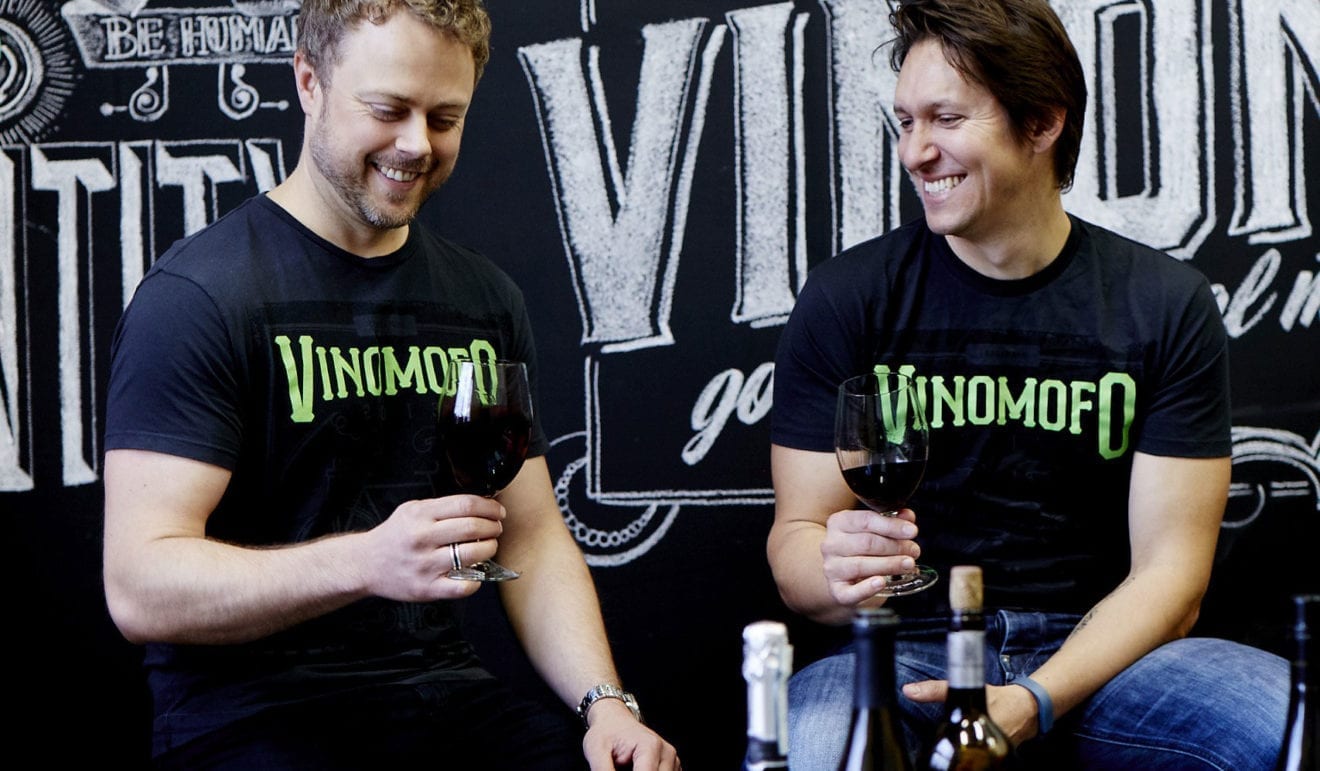
    Vinomofo co-founder Justin Dry says a recent deal between payment giant Stripe and Chinese digital wallet providers Alipay and WeChat Pay is “very welcome news” for its Asian expansion plans.

    Stripe announced yesterday that its customers will now have access to millions of Chinese consumers, through a partnership with Alibaba’s Alipay and Tencent‘s WeChat Pay.

    Together the wallet services claim more than one billion users and are estimated to have processed sales of almost $3 trillion in 2016, according to a UN affiliated report conducted by Better Than Cash Alliance.

    Vinomofo co-founder Justin Dry, who runs 90 per cent of his business through Stripe platforms, said he sees WeChat pay being at the “core” of its communications with customers in China, noting that the extended services will be tools in the arsenal for the company’s plans in the region.

    “We can see WeChat Pay especially being at the core of our communications over there, it’s an awesome social platform with a massive user base, perfect for us as a content-led tribe retailer,” he said.

    Stripe, based in Silicon Valley, works with a variety of e-tailers Down Under, including Vinomofo, Catch Group and Shoes of Prey.

    Under the deal Stripe’s withstanding partnership with Alipay in North America will be expanded to the Chinese market for one-time payments and a beta-test will be kicked off on WeChat Pay support and recurring payments.

    Stripe co-founder John Collison said he hopes the deal will catalyse more trade between Australia and China, noting where consumers maintain high demand for Aussie products, particularly wine and produce.

    “There is already impressive demand among Chinese consumers for Australian goods and services, and this presents a vast growth opportunity for Australian internet businesses” Collison said.

    Chinese retail e-commerce sales were worth US$376 billion in 2016 and are projected to more than double to US$839 billion by 2021, according to data portal Statista.

  • Adairs up on late year turnaround

    Adairs up on late year turnaround

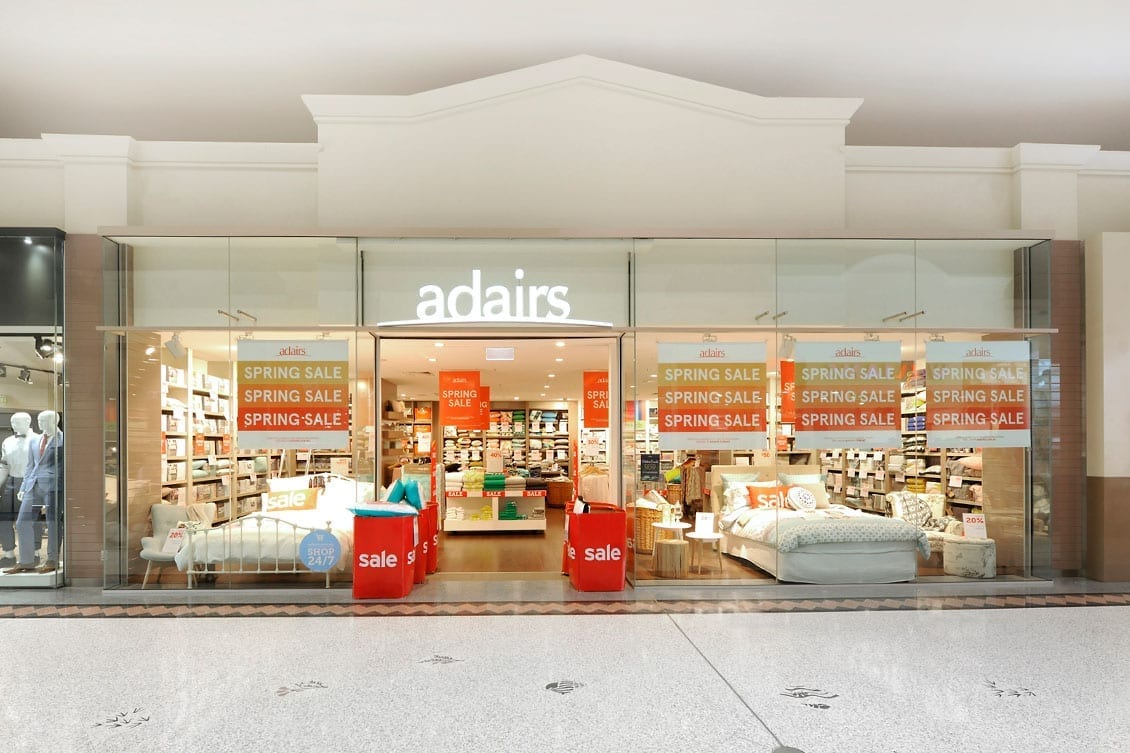
    Big-box bedding retailer Adairs has turned around a weak start to FY17, advising the market this morning that it expects total sales during the second-half to increase by 8.3 per cent to $140.4 million.

    CEO Mark Ronan now expects to reveal full year sales of $264.9 million next month, noting that a 3.8 per cent increase in sales during Q4 had saved the year.

    Second-half like for like sales increased by 1 per cent, crimping a 6.8 per cent decline during Q2 and a 2.4 per cent decline in Q3.

    Adair’s share price spiked in early Wednesday trading on the news, increasing by more than 26 per cent to $1.20, breaching the dollar mark for the first time since April.

    Ronan told shareholders that issues in its bed linin range identified in the first half have been “largely resolved”, with new products coming in to bring the core category back into black in the second half.

    “The business continues to make changes to address the issues that led to the disappointing first half results,” Ronan said.

    “While we are pleased to see sales in the bed linen category improve, we continued to see higher than usual sales variability across our store formats, centre types, product categories and geographies,” he continued.

    With full-year like for like sales still expected to decline by 1.4 per cent, in line with its previous guidance, Ronan outlined the well-noted “subdued retail environment” as a factor, also noting that there’s still room for improvement on product and store execution.

    The company is due to hand down its audited full-year results on August 28.

  • Australian dollar soars

    Australian dollar soars

    The Australian dollar has surged against its US counterpart which has fallen ahead of key Congressional testimony by Federal Reserve chair Janet Yellen, after a Donald Trump Jnr e-mail came to light.

    At 0635 AEST on Wednesday, the Australian dollar was worth 76.34 US cents, up from 76.18 US cents on Tuesday.

    BK Asset Management FX managing director Kathy Lien said the US dollar had reversed it gains, and had fallen particularly against the yen and the euro, though not sterling.

    The dollar fell to a more than one-week low against a basket of major currencies on Tuesday, after US president Donald Trump’s eldest son released an email chain citing Russian support for his father before last year’s US election.

    The greenback’s movements, and therefore its stance against the Aussie dollar, over the next few likely will depend on the tone of Federal Reserve chair Janet Yellen’s congressional testimony.

    “The (US) dollar will rise if she emphasises the need for continued gradual removal of policy accommodation and will crash hard if she is noncommittal about additional tightening,” Lien said in a Wednesday morning note.

    FX Techs’ Niall O’Connor says it is likely the local currency will reverse its course.

    “AUD/USD is impulsively reversing from the important .7725/50 area, as the momentum setup suggests a shift is due,” he said in a morning note.

  • Airtel to launch VoLTE later this year

    Airtel to launch VoLTE later this year

    India’s Bharti Airtel has announced plans to launch VoLTE services later this year to counter new market entrant Reliance Jio Infocomm.

    Airtel is trialing VoLTE in five cities and plans to become the second operator in the nation after Reliance Jio to launch the technology.

    The launch could potentially allow Airtel to better compete against Reliance Jio’s strategy of offering free voice calls and only charging for data. The entry of Jio into the market has triggered a price war and compelled the nation’s operators to pursue consolidation in response.

    Airtel CEO Gopal Vittal detailed the company’s VoLTE plans at an event announcing the launch of Project Next, its latest initiative aimed at improving the customer experience.

    As part of the new project, Airtel has introduced a data rollover program enabling customers to carry over up to 200GB of data left unused in the previous month.

    The new initiative will also include improvements to the operator’s app, website and in-store experience, including the Family Promise program designed to allow postpaid customers to develop multiple customized plans for each family member over the MyAirtel app, enabling savings of up to 20%.

    Airtel revealed plans to invest up to 20 billion rupees ($309.8 million) on Project Next, and through the program aims to transform into a truly digital service provider.

  • Calvin Klein operator ups stake in struggling retailer

    Calvin Klein operator ups stake in struggling retailer

    Apparel supplier and retailer, Gazal Corporation, has upped its stake in struggling luxury handbag retailer, Oroton, confirmed in an announcement yesterday.

    Gazal – which jointly owns and manages PVH Brands Australia, a joint venture company in partnership with PVH Corp – confirmed it has acquired a 7.35 per cent shareholding in Oroton at $1.00 per share.

    The apparel operator said it noted the current strategic process in place for the ailing handbag retailer, which is negotiating with Westpac the terms of a $35 million facility that is due to expire in 2018, will receive up to $3 million credit support from its major shareholder and former director James Vicars, who holds an 18.2 per cent share.

    “Gazal has no proposal to put to Oroton but may consider opportunities arising from the strategic process as well as other opportunities as they arise,” the company said in its statement to the ASX.

    The company holds the licenses and operates PVH’s brands including Calvin Klein and Tommy Hilfiger as well as other licensed and JV owned brand names such as Van Heusen, Pierre Cardin, Bracks, Nancy Ganz, Spanx and Hold Me Tight. It also operates the Bisley Workwear brand.