Author: Mei Ling Tan

  • A&W to return to Singapore in 2018

    A&W to return to Singapore in 2018

    he American fast-food chain’s root beer float, coney dog and curly fries are making a comeback. American fast-food chain A&W will set up shop in Singapore again, after exiting the market more than 10 years ago.

    A&W CEO Kevin Bazner said that A&W has had an office in Singapore since 2016, and that the company is looking to open 30 to 40 new restaurants a year across Indonesia, Malaysia, Singapore and Thailand.

    The company is currently looking for a retail space for its flagship in Singapore, which is scheduled to open next year. This flagship will also serve as a training store for other Southeast Asia outlets.

    A&W – which stands for “Allen and Wright” – made its debut in Singapore in 1966 at Dunearn Road, and the first A&W drive-through opened in 1970 at Bukit Timah Road.

    The fast-food joint’s hamburgers, hot dogs and root beer soon became hugely popular among Singaporeans and it is believed its success helped pave the way for other fast-food establishments to set up shop in Singapore, including McDonald’s (1979), Kentucky Fried Chicken (1977) and Burger King (1982).

    However, by 2003, A&W faced stiff competition from its competitors and shuttered its remaining outlets in the same year.

  • Concerted action needed for M&A breakthrough

    Concerted action needed for M&A breakthrough

    It is forecasted that the value of mergers and acquisitions (M&A) deals in 2017 will not exceed those of 2015 and 2016, thus, the market needs a boost from enterprises and the government to leverage the opportunities from foreign capital to make a breakthrough.

    In 2016, the total value of all M&A deals over the world was $3.5 trillion, a reduction of 27 per cent on-year, but a high value nevertheless. However, this could be considered an ending of the global M&A’s growth period. Due to Brexit and Donald Trump’s new policies, global M&A activities are becoming harder to predict and there may be some shifts in the flow of investment capital in the world.

    According to the statistics of the Institute for Mergers, Acquisitions and Alliances (IMAA), Vietnam hit a 10-year record hike of $5.2 billion in M&A activities in 2015. In 2016, the value of M&A deals was $5.1 billion, even though experts said that in the second half of 2016, the growth was slowed down because not many big M&A deals were publicised at the time.

    It is forecasted that in 2017 without a breakthrough, the total value of M&A deals in Vietnam may not overtake 2015 and 2016 figures. For a breakthrough, the Vietnamese M&A market really requires a boost.

    The most vibrant industries with the highest number of M&A deals in 2016 were the retail sector, consumer goods production, and real estate. The finance and banking industry did not have many outstanding activities last year. Some other fields, such as education and technology, also attracted M&A investment in 2016.

    Foreign capital has been playing an important role in M&A activities in Vietnam with numerous sizeable deals. For example, Japanese enterprises are now strategic partners to many state-owned enterprises, such as Vietnam Airlines and Petrolimex. Similarly, a number of South Korean enterprises joined the Vietnamese market by investing in agriculture, and investors from Singapore have been paying close attention to some real estate projects.

    According to some assessments made by the government and investors, the progress of equitisation and the state divestment from big enterprises is slow. A wide range of Vietnamese enterprises are luring in investors after being equitised or divested by the state, such as Saigon Beer-Alcohol-Beverage Joint Stock Corporation (Sabeco), Hanoi Beer Alcohol and Beverage Joint Stock Corporation (Habeco), Vietnam Mobile Telecom Services Company (MobiFone), and Vietnam Dairy Products Joint Stock Company (Vinamilk).

    Currently, Sabeco and Habeco’s stocks have been listed on the stock exchange. However, most investors said that this step was implemented more slowly than they had expected.

    There are numerous challenges for the growth of M&A in Vietnam, including changes in the US policies, the withdrawal of the US from the Trans Pacific Partnership or the various obstacles to equitisatisation, the problems of enterprises’ quality, and the scale of the Vietnamese economy.

    To achieve at least 2016’s $5.1 billion in deal value, the state divestment in some Vietnamese enterprises should be implemented more quickly and thoroughly.

  • Unicom, Ericsson, Qualcomm demo VoLTE over Cat-M1

    Unicom, Ericsson, Qualcomm demo VoLTE over Cat-M1

    China Unicom, Ericsson and Qualcomm have completed the first demonstration of LTE Cat-M1 Voice over LTE use cases.

    The demonstrations at last week’s Mobile World Congress Shanghai involved providing connectivity for a fire alarm trigger panel and a GPS emergency tracking device.

    The demos were conducted using Unicom’s spectrum, Ericsson’s IoT and VoLTE capable network infrastructure and IoT devices equipped with Qualcomm multimode IoT modems.

    Adding VoLTE support to Cat-M1 allows IoT devices based on the cellular IoT technology to make voice calls as well as sending data.

    The demonstrated showed that emergency communications devices can be designed or retrofitted to  support wireless connectivity, supporting voice communication between the devices and emergency centers.

    In the case of the fire alarm trigger panels, people triggering an alarm were able to describe the situation to first responders and get immediate guidance.

    The GPS emergency tracking device demonstration meanwhile showcased the ability of such devices to send GPS location data while enabling VoLTE calls for coordinated emergency response.

    “China Unicom aims to drive the development of the IoT and accelerate cellular network development and large-scale business implementation by constructing the leading 4G FDD network,” Unicom executive director and senior vice president Guanglu Shao said.

    “We launched NB-IoT on a pre-commercial basis on May 12 in Shanghai. This cooperation on eMTC with Ericsson and Qualcomm is a new venture intended to boost social intelligence and the Internet of Everything through wide cooperation and the construction of leading networks.”

  • Nutanix launches OS for hybrid cloud environments

    Nutanix launches OS for hybrid cloud environments

    Nutanix has revealed that that the Nutanix Enterprise Cloud OS will be delivered as a full software stack with new multi-cloud capabilities in Nutanix Calm and a new cloud service called Nutanix Xi Cloud Services.

    The new offerings, announced at its .NEXT Conference 2017, are designed to allow customers to use Nutanix Enterprise Cloud Software throughout their multi-cloud deployments, including on-premises with platforms from IBM, Dell EMC, Lenovo, Cisco and HPE, in the cloud via AWS, Google Cloud Platform and Azure, or natively.

    Delivered as software, the Nutanix Enterprise Cloud OS supports a variety of hardware platforms, form factors and third-party vendors, ensuring that a single software fabric with unified management can run across all enterprise environments.

    The Nutanix Enterprise Cloud OS extends beyond Nutanix-branded appliances, OEM offerings from Dell EMC and Lenovo and systems from partner IBM to flexible subscriptions and enterprise license agreements (ELAs) on Cisco and HPE platforms.

    For consumption as a service, IT leaders will be able to leverage Nutanix software as a native cloud-delivered solution via Xi Cloud Services.

    Xi Cloud Services will allow customers to provision and consume Nutanix infrastructure on demand as a native extension of the enterprise data center.

    The first available Xi Cloud Service will enable Nutanix customers to set up, manage and test a complete cloud-based DR service in just minutes. Using the same Prism management interface, Nutanix customers can instantly protect their applications and data inline with existing workflows as part of their routine IT operations.

    Nutanix will partner with strategic cloud providers to deliver Xi Cloud Services globally, and to meet the data provenance requirements governing multiple industries and use cases.

    Building and operating a multi-cloud architecture requires that applications can be easily defined, instantiated and scaled independent of the cloud environment. Nutanix Calm abstracts application environments from the underlying infrastructure and recommends the right cloud for the right workload while harmonizing cloud operations.

    Nutanix Calm will allow applications to be defined via easy-to-use blueprints, which can be provisioned, managed and scaled into different cloud environments. The solution includes a powerful, integrated marketplace so that application designs can be shared across the organization to speed the time to production for new business initiatives.

    The Nutanix Enterprise Cloud OS is now available as a software-only offering for popular platforms from Cisco and HPE. Nutanix Calm is planned to be available for sale by calendar Q4 2017. Nutanix Xi Cloud Services for disaster recovery are planned to be offered for early access by calendar Q1 2018.

  • Credit growth expected to rise 16.33% in 2017

    Credit growth expected to rise 16.33% in 2017

    The total loans of the banking system are expected to grow by 16.33 per cent in 2017 against December last year, lower than the Government’s limit of 18 per cent.

    The State Bank of Viet Nam released the information this week after conducting a survey on business performance trends of credit institutions in the second half of this year.

    The survey also shows that credit institutions forecast the total capital mobilisation of the banking system to rise 16.02 per cent in 2017, of which dong contributes to a rise of 16.59 per cent and foreign currency 1.14 per cent.

    The General Statistics Office (GSO) has reported that credit growth in the first half of this year was 7.54 per cent, the highest in the past six years. The new record, considerably higher than the previous record of 6.28 per cent set in 2015, reflects the market’s significantly improved capacity to absorb capital, the GSO said.

    Loans in the period were mainly focused on prioritised and large projects as instructed by the Government, accounting for roughly 50 per cent of total outstanding loans. Agriculture and rural industries, and small- and medium-sized firms received around 19 per cent and 22 per cent of the total outstanding loans, respectively.

    Lending interest rates were 6-9 per cent per year for short-term loans, and 9-11 per cent per year for medium- and long-term loans. For customers with transparent finances, short-term lending rates ranged from 4-5 per cent per year.

    The banking system’s capital mobilisation in H1 has risen by 5.89 per cent, and deposit interest rates have been relatively stable. Interest rates for dong deposits were 4.5-5.4 per cent per year for short term, 5.4-6.5 per cent per year for medium term, and 6.4-7.2 per cent per year for long-term deposits.

    The Government has targeted credit growth of 18 per cent for 2017, but at the National Assembly meeting recently, some deputies suggested that this limit be raised so as to support economic growth.

    Analysts at Bao Viet Securities (BVS) also recently forecast that the central bank may consider raising credit growth targets for several banks to aid economic growth.

    The Government has been under intense pressure to loosen its monetary policy as the country is determined to meet its GDP growth target of 6.7 per cent for 2017. However, the fiscal policy has been struggling with disbursement of public investment, the BVS analysts said in a report. By end of May, disbursement of public investments had touched VND88 trillion, equal to only 30.6 per cent of the entire year’s estimates.

    The BVS analysts said when fiscal policy does not support growth well, pressure will intensify on monetary policy. Increasing credit growth targets of several banks may be an option worth considering, the analysts said.

  • Vietnam’s pork crisis ain’t over yet

    Vietnam’s pork crisis ain’t over yet

    Vietnamese farmers have been hit by a glut in supply for months.

  • ICAO President impressed by Vietjet’s superb performance

    ICAO President impressed by Vietjet’s superb performance

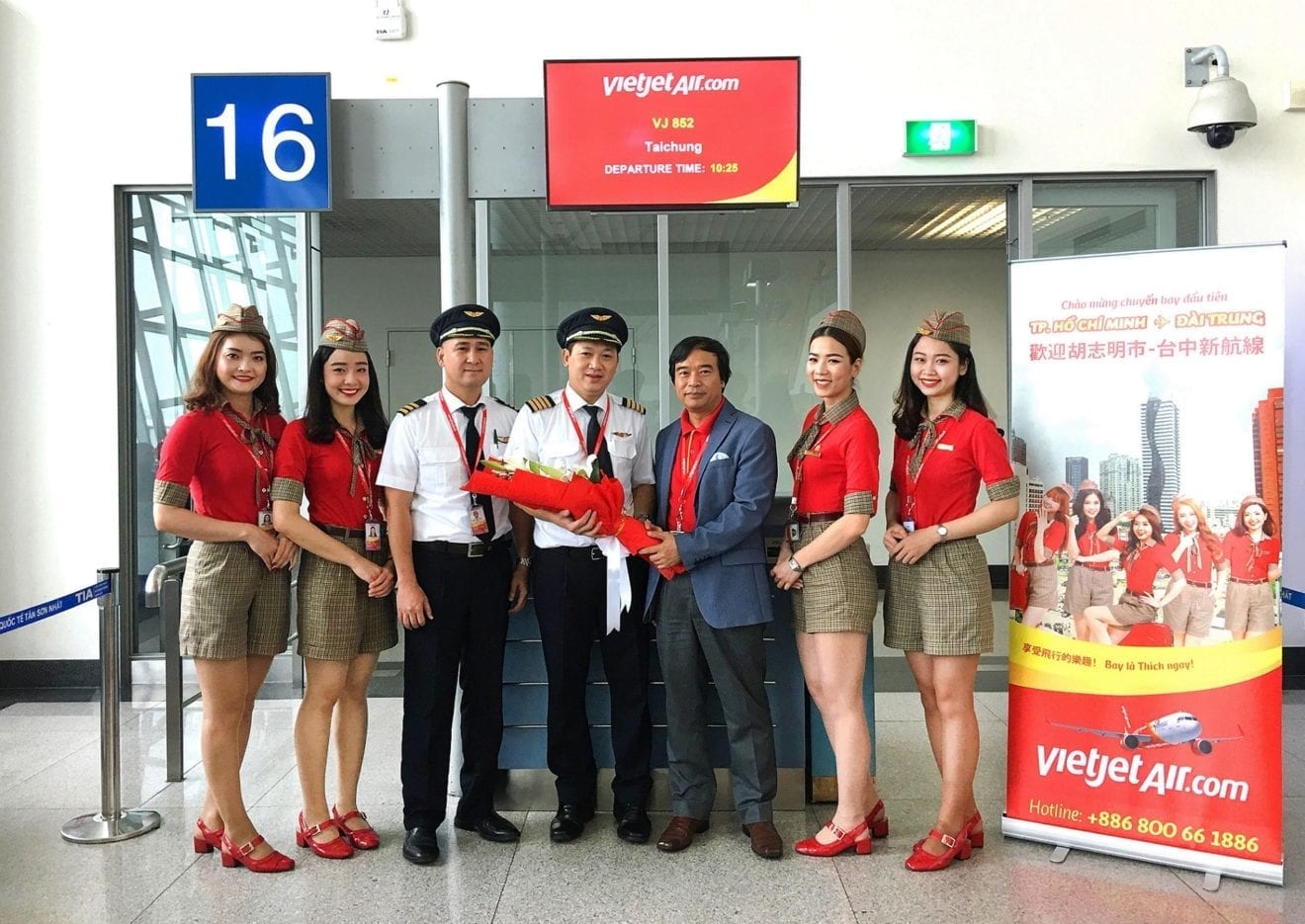
    The superb performance of Vietjet in its operations, services and management has gained the appreciation of the Council of the International Civil Aviation Organization (ICAO).  The ICAO delegation, led by president Dr. Olumuyiwa Benard Aliu and ICAO APAC Deputy Regional Director Manjit Singh Seva Singh, visited the Vietjet office during its trip to Vietnam from 5 to 10 July, 2017.

    Speaking at the meeting with the Vietjet management board members on the first day of their visit, Dr. Olumuyiwa Benard Aliu said he highly appreciated the airline’s efforts and achievements in its operations, services and management activities. He also stressed on its comprehensive investment in building up human resources and training highly skilled experts that meet the internationally standardized safety requirements for operation and management, which greatly contributed to not only the airline’s success but also the growth of the aviation industry in Vietnam and the region.

    Dr. Nguyen Thanh Hung, Vice chairman of Vietjet Board of Directors, Mr. Luu Duc Khanh, Managing Director and other management members of Vietjet warmly welcomed the ICAO delegation. Mr. Luu Duc Khanh said: “Safety is our top priority not only in operations but also in the entire airline’s activities. Safety requirements conformity has been the guideline for us in all operations and policy decision we have made. We are happy that our technical reliability rate stood at 99.59% in the first quarter of the year and flight operation, ground operation and engineering safety indicators were also listed in the group of highest quality airlines in the Asia Pacific region”.

    Following their working agenda in Vietnam, the ICAO delegation today met with high-ranking officials of the Vietnamese Government, the Ministry of Transport, and Civil Aviation Authority of  Vietnam (CAAV) followed by their granting of the Council President Certificate to the representatives of CAAV in Hanoi. The certificate recognizes Vietnam’s significant progress in resolving safety oversight deficiencies and improving the effective implementation of ICAO Standards and Recommended Practices

  • Over 1 million passengers travel through Bali airport

    Over 1 million passengers travel through Bali airport

    State-owned airport operator PT Angkasa I said that over 1 million passengers have traveled through Balis Ngurah Rai International Airport during the homecoming flow of post-fasting travelers since 10 days (D-10) before the Lebaran D-Day to D+4.

    Head of Public Relations of PT Angkasa Pura I at I Gusti Ngurah Rai International Airport, Arie Ahsanurrohim, stated in Denpasar on Saturday that the passengers recorded during the period were those for domestic and international routes.

    Arie added that the movement of passengers was calculated based on regular and unscheduled flights.

    He explained that the unscheduled flights were the ones used by former US president Barack Obama and Malaysian Prime Minister and family when they visited during the Lebaran holiday season.

    Meanwhile, related to the flow of Lebaran homecoming, Arie explained that the movement at the local airport was quite unique compared to other airports in Indonesia, which are mostly dominated by the flow of departing passengers.

    At Ngurah Rai Airport, the flow of departure and the arrival of passengers were high or only slightly different, considering Bali as a tourist destination where many tourists spend the long Lebaran holidays.

    Data from Integrated Monitoring Lebaran Command Post at the airport mentioned on H+4 or on Friday (June 30) that the number of domestic passenger arrivals reached 19,174 people, up 10.6 percent compared to the same period in 2016.

    Passengers departing from the airport reached 21,573 people, or jumped 14 percent compared to the same period in the previous year.

    The number of those arriving and departing through the international routes increased with arrivals recorded at 16.3 thousand, or up by 16 percent, and departure at 17.7 thousand, or up by 14 percent.

  • Shinsegae Duty Free lands fashion & accessories contract at Incheon Airport T2

    Shinsegae Duty Free lands fashion & accessories contract at Incheon Airport T2

    Shinsegae Duty Free has been awarded the fashion & accessories contract at Incheon International Airport Terminal 2. The DF3 concession covers 14 stores embracing 4,889 square meters of retail space.

    It draws a line under troubled period for the concession, which was retendered multiple times with successively reduced minimum guarantees in an effort to attract interest.

    Bidding was negatively affected by the perceived high cost of entry and the recent collapse in Chinese tourism caused by the THAAD dispute between South Korea and China. Last year the Chinese represented almost 50 percent of total arrivals and generated around 65 percent of duty free spending. Chinese visitor arrivals have fallen dramatically so far in 2017, by -40 percent year-on-year in March, -66.6 percent in April, and -64.1 percent in May.

    In the end, Incheon International Airport Corporation decided to directly negotiate a contract with Shinsegae and requested the Korea Customs Service (KCS) to hold a patent examination committee.

    If the selection of operators is delayed, it is difficult to open 2 terminals until January next year.

    As reported, the other T2 contracts have been awarded as follows: DF1, The Shilla Duty Free; DF2, Lotte Duty Free; DF4 SM; DF5 Entas Duty Free; DF6 CItyPlus.
    The new terminal is due to open in the final quarter of this year.

    Shinsegae will proceed with negotiations with Incheon International Airport Corporation on specific matters related to the duty-shop business contract in the future.

  • India’s big data market set to hit $16b by 2025

    India’s big data market set to hit $16b by 2025

    India’s big data analytics sector is set to record impressive growth in the coming years, WNS Global Services has predicted.

    The sector is expected to witness eight-fold growth to reach $16 billion by 2025 from the current $2 billion, according to industry experts. The sector is also looking at registering compound annual growth rate (CAGR) of 26% over next five years.

    India is currently among top 10 big data analytics markets in the world.

    “The government, industry and academia can collaborate to build an ecosystem to generate sustainable solutions by harnessing the power of big data and digital innovation,” said WNS Global Services Group CEO Keshav Murugesh.

    “The combined power of harnessing big data and digital solutions can drive tremendous results in improving the citizen experience, implementation efficiency and boosting the nation’s economy.”

    Murugesh was speaking at the Emerging Worlds Conference workshop organised by Indian School of Design and Innovation (ISDI) in collaboration with MIT Media Labs. “India is a diversified country with a wide array of challenges, and it is pertinent that we as citizens of this country, innovate to find effective solutions that can make a difference to the billion lives that live here,” he said.

    “If big data can be put to cutting-edge use for our corporations and clients, it can very well be a catalyst for the economy and the country.”

    The workshop brought together industry leaders, technical experts, data scientists, innovators, academic institutions, implementation collaborators and progressive corporate collaborators to source national challenges and potential solutions.

  • Logistics industry has some catching up to do with digitisation

    Logistics industry has some catching up to do with digitisation

    The degree of digitisation in the logistics industry is still not very high – in fact, it only came in tenth in an industry ranking, putting it dead last amongst the ten economic sectors studied. These were the findings of the “Branchenatlas Digitale Transformation” study conducted by the Digital Intelligence Institute on behalf of d.velop.

    According the study, it is at the strategic level that the logistics industry is furthest behind, with just 18 percent of logistics companies surveyed stating that the digital transformation was of fundamental strategic importance. For all of the others, it is not clear who is driving strategic development or where the responsibility lies.

    The continuing widespread reliance on paper documentation is also hindering the digital transformation. In fact, only one in five logistics companies has at least 80 percent of their business processes organised primarily digitally and free of media discontinuities.

    Furthermore, the companies displayed relatively little willingness to invest in digital business models, with just 17 percent currently planning additional funds for projects pertaining to the digital transformation.

    The industry with the highest level of digitisation is currently the information and communication technology sector, followed at some distance by banking and insurance, media and entertainment, and the electronics industry.

    Start-ups: interface to new logistics

    A number of young companies and innovative start-ups have focused on the digitisation of processes in the field of logistics, developing digital business models that they will be presenting at Hypermotion from 20 to 22 November 2017.

    One of these firms is Loadfox, a technology start-up based in Munich that offers a freight-pooling service. This makes things easier for freight forwarders and carriers, facilitating the work of transport enterprises in Germany. An intelligent algorithm combines partial loads in order to create profitable routes. As a result, the utilisation of existing truck capacities is optimised, traffic volume is reduced, emissions are cut and the profitability of participating transport companies is increased.

    Mesaic Technology GmbH, a start-up from Hamburg, has developed a solution that helps companies deal with changed consumer behaviour and increasing customer requirements for logistics such as on-demand and same-day delivery. In order to make communications between companies, service partners and customers in the delivery process as simple and efficient as possible, the company has developed its own platform that intelligently networks service providers and customers in Messenger.

    Metrilus GmbH, a young Erlangen-based firm, has developed a system for automatic freight measurement. With the help of multiple real-time 3D cameras and sensors, an app can be used to dimension packages and even entire pallets, in order to calculate their length, width and height within seconds. In addition, it can be connected to existing systems, e.g. for determining weight, without difficultly.

    Berlin-based start-up M2MGo, established in 2013, is dedicated to “fast and simple networking”, in order to process raw data in real time. The enterprise content management system allows even non-programmers to create custom and complex applications, portals and apps for the internet of things / Industry 4.0 as simply as with a modular system using drag & drop, without doing any programming. Furthermore, legacy systems, device data and APIs can be integrated with ease. That saves time and money.

  • Geely’s Volvo to go all electric with new models from 2019

    Geely’s Volvo to go all electric with new models from 2019

    Geely-owned Volvo Car Group said on Wednesday all new models launched from 2019 will be fully electric or hybrids, spelling the eventual end to nearly a century of Volvos powered solely by the internal combustion engine.

    The Gothenburg-based company will continue to produce pure combustion-engine Volvos from models launched before that date, but said it would introduce cars across its model line-up that ranged from fully electric cars to plug-in hybrids.

    Volvo’s plans make it the first major traditional automaker to set a date for the complete phase-out of combustion-engine-only models though electrification has long been a buzzword across the industry and Elon Musk’s Tesla Motors has been a pure-play battery carmaker from day one.

    “This announcement marks the end of the solely combustion engine-powered car,” Volvo Cars Chief Executive Hakan Samuelsson said in a statement.

    Five new models set to be launched in 2019 through 2021 – three of them Volvos and two Polestar-branded – will all be fully electric.

    “These five cars will be supplemented by a range of petrol and diesel plug in hybrid and mild hybrid 48-volt options on all models,” Volvo said.

    “This means that there will in future be no Volvo cars without an electric motor.”

    Volvo has invested heavily in new models and plants since being bought by Zhejiang Geely Holding Group from Ford Motor Co. in 2010, establishing a niche in a premium auto market dominated by larger rivals such as Daimler’s Mercedes-Benz and BMW.

    Part of its strategy has also been to embrace emerging technologies which allow higher performance electric vehicles as well as, eventually, self-driving cars.

    Only last month, Volvo said it would reshape its Polestar business into a standalone brand, focused on high-performance electric cars aimed at competing with Tesla and the Mercedes AMG division.

    Volvo has also taken steps towards an eventual listing, raising 5 billion crowns from Swedish institutional investors through the sale of newly issued preference shares last year, though the company has said no decision on an IPO has been made.

  • India to double apparel, textile market by 2025

    India to double apparel, textile market by 2025

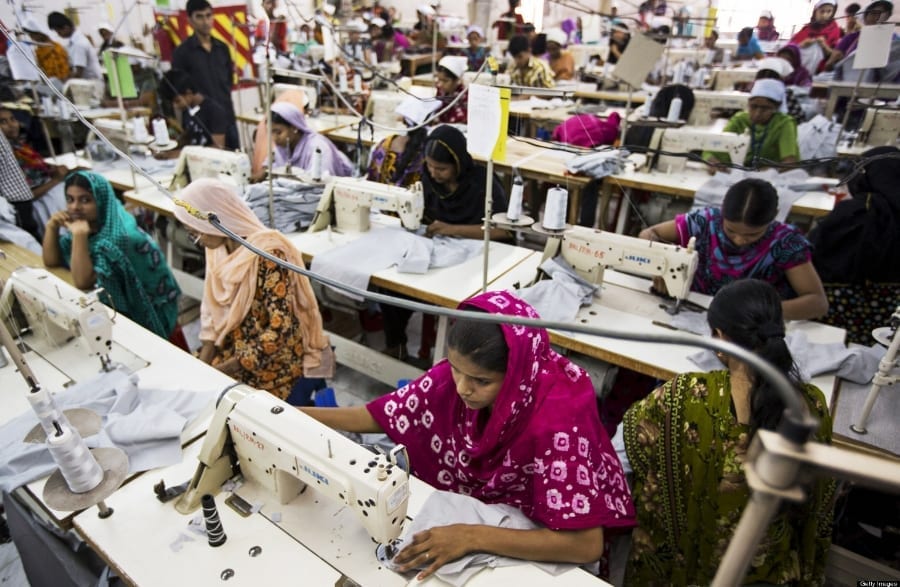
    The textile and apparel industry in India is worth some $110 billion, and is the nation’s second largest employer, after agriculture, providing direct employment to more than 45 million people and indirect employment to another 60 million.

    All this is set to soar by 2025, according to Indian Prime Minister Modi, who addressed attendees this week at the Textiles India 2017, a three-day event, which saw the PM map out a series of targets for India’s textile industry.

    Modi said that the domestic market for apparel and lifestyle products is worth $85 billion and is expected to grow to $160 billion by 2025, boasted by increased spending from wealthier Indians.

    “This growth will be driven by the rising middle class,” he said.

    Modi also hailed his nation’s liberated direct investment policies, allowing international firms to inject money into the burgeoning sector.

    “We have one of the most liberal investment policies for foreign investment in the textile and apparel sector,” said Modi.

    “We allow 100% foreign direct investment through automatic route in the textile and apparel sector. I think the time has now come for us to concentrate on textile exports in a big way,” he added.

    Moreover, the textile industry is expected to create about 35 million more jobs by 2024-25, with exports rising from $39 billion to $300 billion by that time, said Modi.

    India is the world’s second-largest exporter of textiles, after China. Apparel exports accounted for an estimated $17 billion, making India the sixth-largest exporter of garments in the world.

  • Government committed to relocating Indonesian capital

    Government committed to relocating Indonesian capital

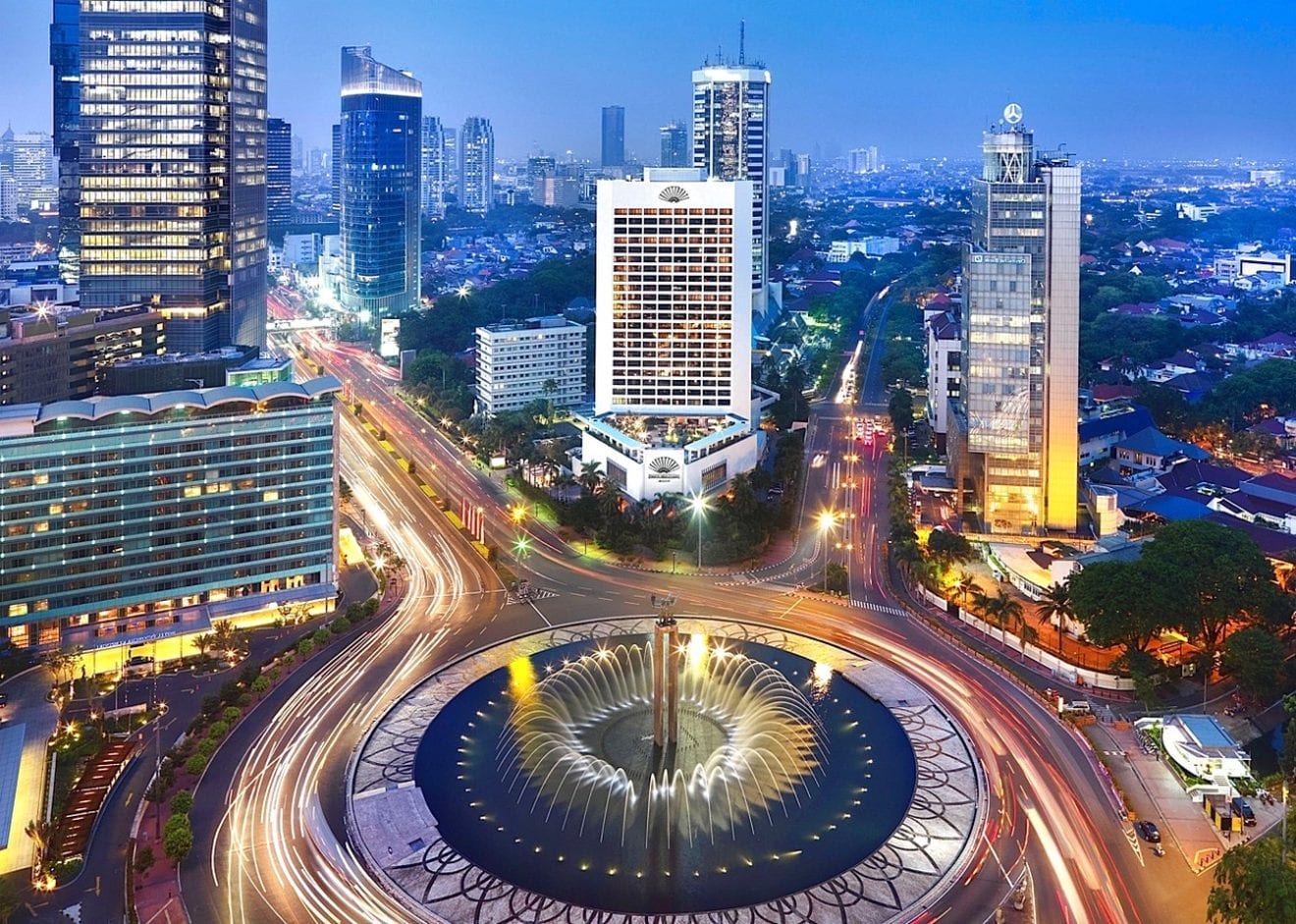
    The Government of Indonesia is determined to relocate the state capital Jakarta out of Java Island to avoid total traffic gridlock by 2020.

    President Joko Widodo, better known as Jokowi, had urged the National Development Planning Board (Bappenas) to conduct a feasibility study on the possible location, and Palangkaraya in Central Kalimantan was one of the options.

    Bappenas Chief Bambang Brodjonegoro has stated that by the end of this year, the agency would have completed assessing potential alternative cities that could become the new capital of Indonesia.

    Brodjonegoro expressed hope that in the next two years, activities related to the transfer of the administrative center of the state capital would be carried out.

    Debates on relocating the capital have frequently resurfaced since it was first mooted by President Sukarno in 1957.

    Sukarno once held a discourse that the state capital could be relocated to Palangkaraya, as he had also visited the city to review its development.

    Problems of the overcrowded Jakarta city have since then become more practical and less ideological, with reports surfacing that areas of north Jakarta are sinking at a rate of 25 centimeters a year.

    In search of a new capital city of Indonesia, Bappenas is looking at aspects, such as the availability of land and natural resources around the potential cities.

    “We have discussed the matter with the president, and essentially, we will soon begin the process of relocating the capital,” the Bappenas chief remarked.

    Brodjonegoro reiterated that the assessment would hopefully be completed this year, including its estimation and funding scheme.

    According to Brodjonegoro, Bappenas will encourage private involvement in the planned relocation of the state capital, particularly in terms of funding.

    For funding, he said Bappenas will push the public-private partnership model.

    Until now, Bappenas is still reviewing the plan to relocate the state capital from Jakarta to a new area outside Java Island.

    The capital city should be relocated to outside of Java Island, given the availability of more adequate land.

    Nevertheless, Brodjonegoro has not revealed details of the specific location of the new capital of the country.

    “Certainly, outside Java, most likely on the island of Kalimantan, but the specific location will be finalized soon,” Brodjonegoro said.

    Java Island is believed to dominate Indonesias economic activities. Moreover, economic activities in Java are more concentrated in the areas of Jakarta, Bogor, Depok, Tangerang, and Bekasi.

    If the plan to relocate the capital city is truly realized, the Bappenas chief said the heavy burden on Jakarta, as the center of government, finance, and business, can be reduced.

    In addition to heavy burden of Jakarta as the center of government, finance, as well as business, annual flooding during the rainy season has repeatedly crippled Jakarta and hindered the smooth functioning of administrative and business activities.

    The flooding has aggravated several existent problems faced by Jakarta, which conventional measures have failed to resolve.

    Public services and government businesses grind to a halt every time floods lash the capital city.

    In a bid to solve Jakartas problems, the idea of relocating the state capital has repeatedly resurfaced.

    But numerous political figures have stated that moving the capital to another island in Indonesia outside of Java would not solve the problems.

    They suggested that it would be better if the city of Jakarta remains Indonesias capital, but it would be beneficial if some government activities are relocated outside Jakarta.

    They said the problems of Jakarta can be solved by relocating some ministries to other islands across the country.

    According to them, shifting some of the ministries can resolve the issues plaguing the capital city. But, the Ministry of Finance, the Ministry of Religious Affairs, the National Police, Defense and Security Ministry, and the Presidential Palace should remain in Jakarta.

    By relocating the capital, the political figures do not want to give the impression that they are shifting Jakartas problems to another city.

    The names of some Indonesian cities in Kalimantan, West Java, and Papua had circulated among the public following the discussions related to relocating the countrys administrative center.

    Some of the proposed cities were Palangkaraya in Central Kalimantan, Jonggol in West Java, and Jayapura in Papua.

    Some years ago, in an address to all provincial governors across the country at a gathering in Palangkaraya, Central Kalimantan, the then President Susilo Bambang Yudhoyono stated that Jakarta Metropolitan City was already too crowded and hence not an ideal location to be the center of the national administration.

    “Around 15 years ago, Jonggol in West Java was under consideration to be the new national administration center,” Yudhoyono stated at the time.

    The idea of relocating the center of administration from Jakarta to another area was shelved as Indonesia was hit by a monetary crisis some years ago.

    Over the years, the Jakarta Metropolitan City has become too crowded, and the idea of relocation should be reconsidered.


  • Direct Flights from Indonesia to Moscow Set to Open

    Direct Flights from Indonesia to Moscow Set to Open

    Indonesia has planned to open direct flights to Moscow, Russia, in a bid to attract the countrys tourists to visit Indonesia.

    “Currently, we have to transit in a third country when we fly to Russia, and this could take 24 hours, whereas with direct flight, it might only take 11 hours,” Ambassador to Russia M. Wahid Supriyadi said here on Wednesday. Wahid is scheduled to hold a meeting with the management of the national flag carrier Garuda Indonesia to discuss the plan.

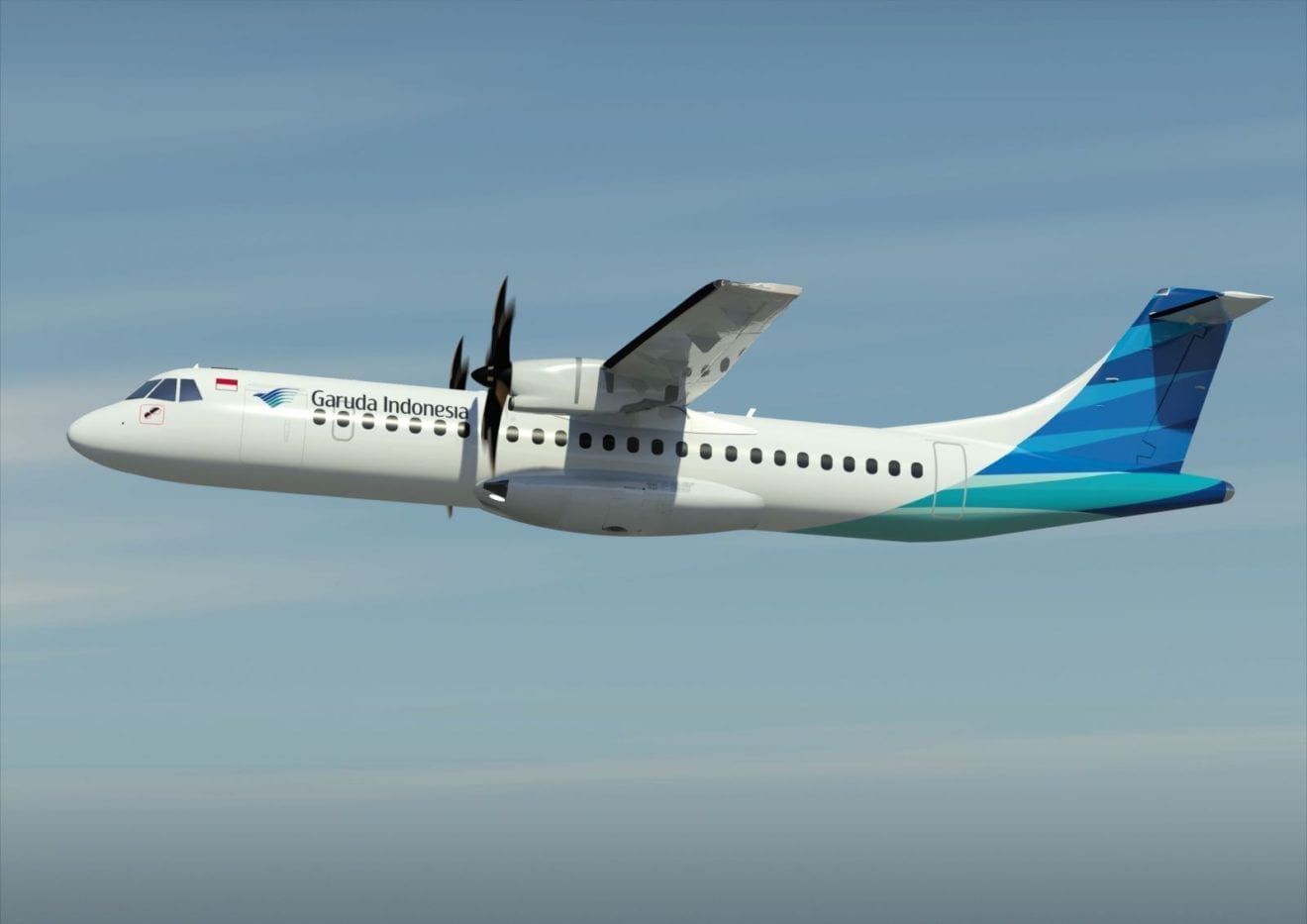
    “Alhamdulillah, Garuda has the commitment to fly to Moscow,” he noted. Garuda Indonesia has planned to fly thrice a week to Russia, two flights from Denpasar in Bali and one from Jakarta, from August.

    A data of the Tourism Ministry showed that some 85 thousand Russian tourists had visited Indonesia in 2016. The number is targeted to reach 100 thousand tourists in 2017. However, Wahid remarked that the number was still relatively small compared to Russian tourists visiting Thailand, which is about 1.5 million per year, through direct flights from the country.

    “Garuda’s flight would not only carry passengers but also tropical fruits and vegetables,” he revealed, adding that these commodities were scarce in Russia. Following the European Union and the US embargo, Russia would halt import of fruits, vegetables, and dairy products from the two regions as a response.

    The move would provide an opportunity for Indonesian commodities to penetrate the Russian market. “These products would have to be transported by air cargo,” Wahid pointed out, adding that Garuda Indonesia planes could carry some 5 tons of the products in one flight.