Author: Mei Ling Tan

  • Pakistan’s Jazz secures 4G license

    Pakistan’s Jazz secures 4G license

    Pakistani mobile operator Jazz has formally secured its 4G license after submitting the sole bid for a 10 MHz block of 1800-MHz spectrum in May.

    The license was officially awarded to the company during a ceremony on Friday.

    Jazz has become Pakisan’s third operator to be granted a 4G license, after China Mobile’s Zong and Warid Telecom.

    Jazz submitted the minimum bid of $295 million for the block of spectrum just before the auction deadline. The company chose to pay the whole price upfront rather than taking the option of paying in six instalments with interest applied.

    While Ufone had been expected to participate in the auction as the only remaining operator without the capacity to launch 4G services, the company declined to take part citing the high cost of 4G services and handsets in the market that it claims are out of reach for the average Pakistani consumer.

    Zong also sat out of the auction after stating that the operator will not does not require additional bandwidth in the near future.

  • DoCoMo to deploy Ericsson’s UDN

    DoCoMo to deploy Ericsson’s UDN

    Japan’s NTT DoCoMo has contracted Ericsson to provide the vendor’s Unified Delivery Network (UDN) global content delivery network solution for the DoCoMo mobile network.

    The contract marks Ericsson’s first deployment of its UDN in Japan. DoCoMo will initially use the platform to roll out content distribution services, and will follow this up by introducing future value added services including toll-free data for certain content.

    Ericsson’s UDN is designed to connect content providers worldwide with the last mile reach network operators can offer.

    It is designed to aggregate network capabilities to allow services to be optimized and monetized in new ways, while offering operators the ability to efficiently scale the delivery of OTT services and high-quality video content.

    “For future services, NTT DoCoMo foresees that consumption of 4K video, virtual reality and augmented reality content will increase and believes a platform like a UDN adds value in the high-speed 5G era,” the operator’s GM of service design Takaaki Sato said.

    Ericsson head of UDN service provider partnerships Cillilan Maher said its UDN ecosystem now encompasses 55 content providers and 40 operators worldwide.

    “As part of [this ecosystem], DoCoMo will be able to significantly advance the traditional content delivery network model,” he said.

    “As a service provider partner, they will be able to garner incremental revenue and can participate as a content provider, driving traffic through both their own network and the UDN ecosystem.”

  • Australia new vehicle sales surge to record in June

    Australia new vehicle sales surge to record in June

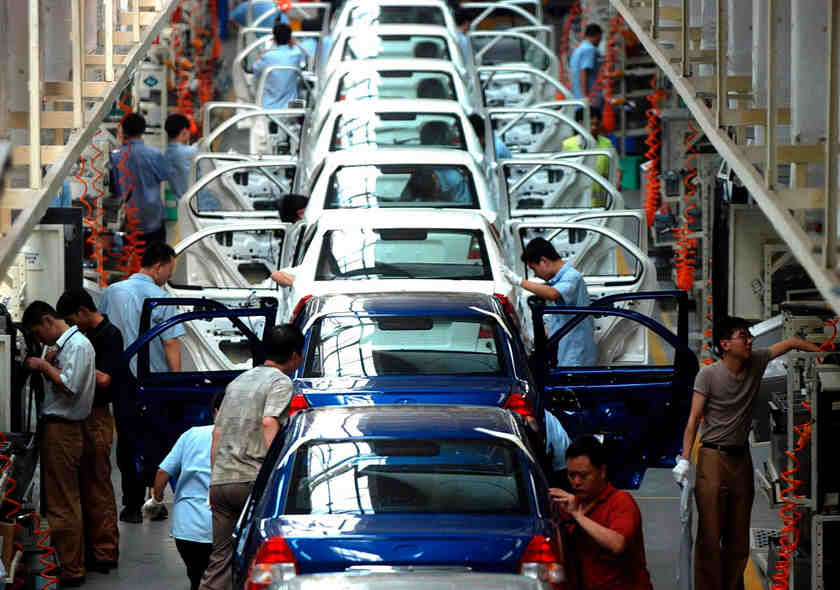
    Australian new vehicle sales jumped to a record in June, a second straight month of bumper results that augured well for consumer demand across the economy.

    The Australian Federal Chamber of Automotive Industries’ VFACTS report out on Wednesday showed 134,171 new vehicles were sold in June, up 4.4 percent on the same month last year. Both months had the same number of selling days.

    June is typically a strong month as dealers clear stock for the end of the financial year.

    Sales of sports utilities alone surged 11.7 percent in June, with the upper large segment rising almost 21 percent. Sales of light commercial vehicles climbed 12.2 percent while the heavy vehicle market gained 9.2 percent.

    The willingness to splash out on big-ticket items follows upbeat reports on retail sales for both April and May and points to a likely rebound in consumption for the second quarter after a muted start to the year.

    Toyota Motor Corp retained first place on the sales ladder with 18.3 percent of the market, while Mazda Motor Corp had another strong month taking 9.3 percent.

    Hyundai Motor took third spot with an improved share of 9.1 percent. The Holden unit of General Motors tied with Mitsubishi on 6.9 percent, while Ford trailed with 6.6 percent.

  • DHL brings Gorenje’s household appliances to the world

    DHL brings Gorenje’s household appliances to the world

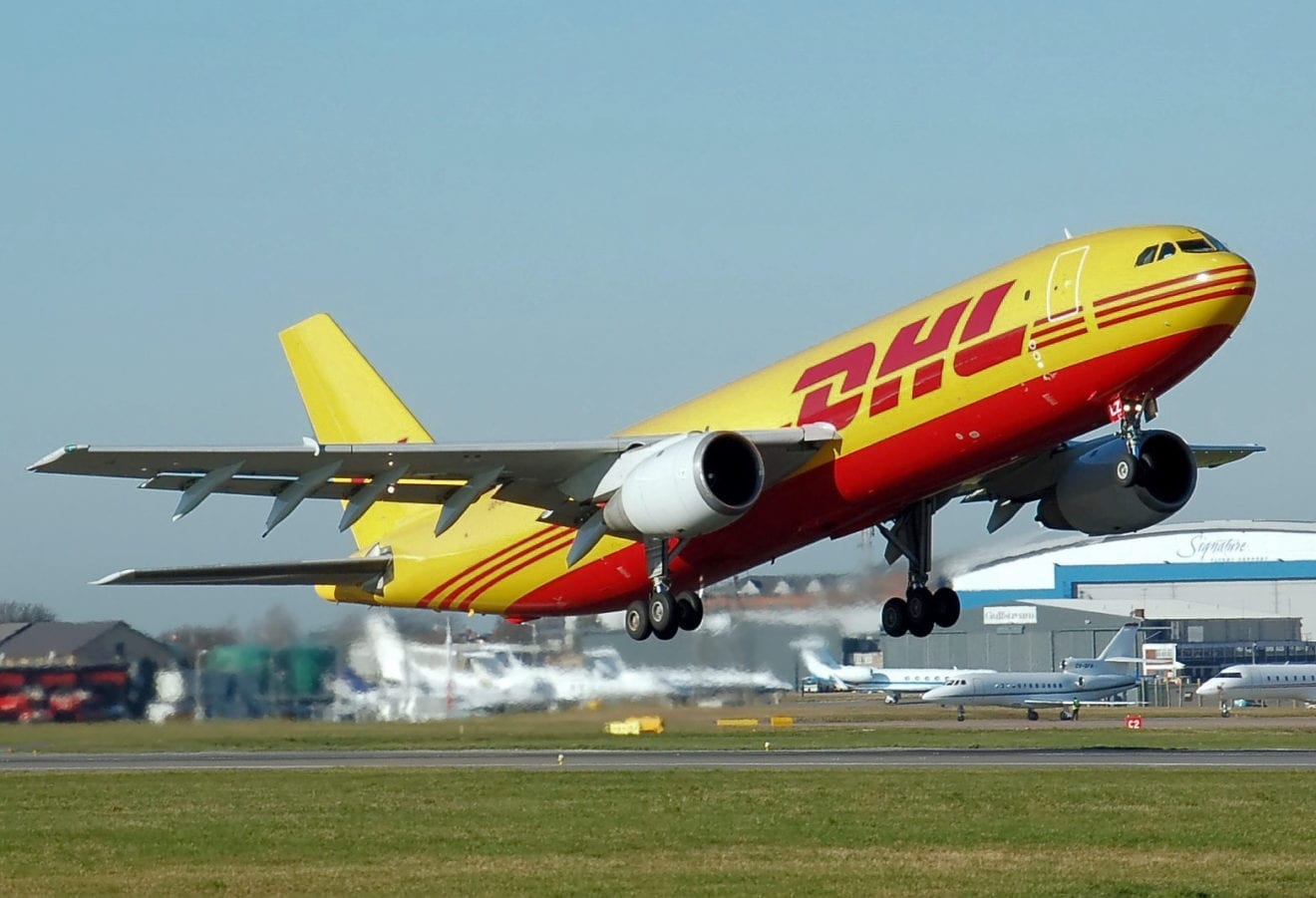
    DHL Global Forwarding, the air and ocean freight specialist within Deutsche Post DHL Group, has taken over responsibility for the international and domestic cargo transport needs of Gorenje Group. DHL will support the international transfer of goods to help one of Europe’s leading manufacturers of household appliances to follow their growth plans and extend their business on a global level. The agreement comprises the processing of the company’s logistic needs in 90 countries. The contract came into effect in January and comprises an annual freight volume of approximately 2,200 Twenty-foot Equivalent Units (TEU).

    “Knowing Gorenje Group for over six years and knowing their needs and expectations in detail enables us to offer tailor-made solutions. DHL is adding real value to Gorenje’s business by aligning all processes efficiently and replicable as well as providing opportunities for further progress,” said Sabine Eisses, country manager Slovenia and Croatia, DHL Global Forwarding.

    Good contacts to Gorenje suppliers and customers
    Within its 66 year lasting company history, Gorenje Group has developed two global and six local brands. Gorenje Group manufactures technologically advanced, energy-efficient household appliances like for example fridges, washing machines, laundry dryer and ovens. The group is well known for its tasteful and modern design and has a particularly strong presence in e.g. Eastern Europe, Finland, Austria and Russia.

    DHL Global Forwarding Slovenia keeps good contacts to Gorenje suppliers and customers in order to support smooth and timely pick-up and deliveries and provide immediate updates on the status of their cargo. DHL has furthermore evaluated a competitive mix of transportation providers and selected premium carriers with space and equipment capacity to serve regular flows of the company and support their growing business. The main trade lanes are imports from China via Hamburg to Nuremberg and exports from Slovenia to Australia which will be handled via seaway and overland.

  • Australia’s retail sales lift more-than-expected in May

    Australia’s retail sales lift more-than-expected in May

    Australian retail sales increased 0.6 per cent, on seasonally adjusted basis, surpassing expert expectations of just a 0.2 per cent gain, according to data released this week.

    While the May results were down on the 1 per cent growth recorded in April, economists were pleased with the May increase, saying it signaled a solid second quarter for Australia after a poor start to year. Year-on-year, sales increased 3.2 per cent.

    With the majority of categories strengthening, department stores continued to have problems with turnover falling 0.7 per cent.

    Clothing, footwear and personal accessories rebounded from a recent weakness, largely held up by the demand for personal accessories and shoes, as apparel sales fell.

    Supermarket sales rose 0.5 per cent, while liquor sales dwindled, down 2.1 per cent.

    Finally, there were strong gains in electronic goods, furnishings and garden supplies.

    By state, shoppers in New South Wales and Victoria were the biggest spenders, while retail sales in Queensland fell for the sixth time out the last seven months.

    Analysts said the much stronger-than-expected rise in retail sales in May, coupled with the leap in sales over April, suggests Australia’s consumption growth surged in the second quarter. However, it may not be sustained.

    “With consumer confidence continuing to trend downwards, households’ incomes facing an additional squeeze from rising energy bills and household indebtedness at a record high we expect that real consumption growth will slow from around 2.6 per cent year-on-year in the second quarter to 2.0 per cent by the end of the year,” Capital Economics analyst, Kate Hickie, told The Australian.

  • Wings Air to open new route to three cities from Jakarta

    Wings Air to open new route to three cities from Jakarta

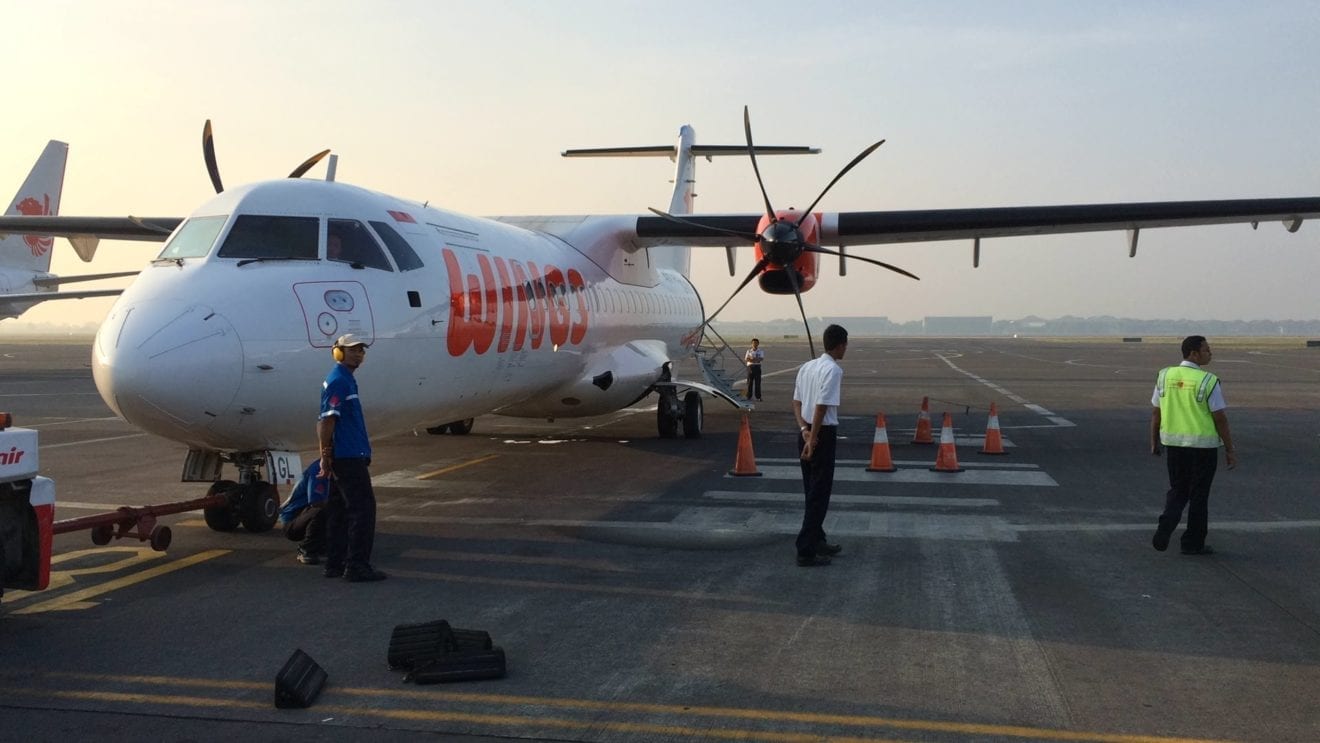
    Wings Air, a subsidiary of Indonesia’s largest airline, Lion Air Group, will soon open a new route from Jakarta via Halim Perdanakusuma International Airport to three destinations in one go, namely Bandung, Malang and Makassar.

    “The new route will only be served once every day and will use ATR ‪72-500/600 aircraft that have a capacity of 72 passengers,” said Lion Air Group president director Edward Sirait.

    The route will launch on July 2, with departure from Jakarta scheduled at 1:55 p.m., from Bandung to Malang at 2:15 p.m. and from Malang to Makassar at 4:35 p.m.

    On July 3, the plane will fly back from Makassar to Malang at 6 a.m., then from Malang to Bandung at 7:25 a.m. and from Bandung to Jakarta at 9:35 a.m.

    “Currently, Wings Air flies to more than 86 domestic destinations with more than 293 daily flights and owns 52 ATR ‪72-500/600 aircraft,” Edward added.

  • Indonesia’s Credit Growth in May Fueled by Abundant 3rd Party Fund Placement

    Indonesia’s Credit Growth in May Fueled by Abundant 3rd Party Fund Placement

    Indonesias banking credits grew 8.71 percent in May 2017, up 0.37 percent from 8.34 percent in the same month last year, according to the Financial Service Authority (OJK). However, the May 2017 credit growth fell 0.76 percent from 9.47 percent a month earlier.

    Although the banking credits in May 2017 grew at a slower pace than in April 2017, OJK believes the credit growth until May 2017 was still relevant to the business plans of banks which have set the target of credit growth for 2017 at 9-12 percent.

    “Compared to last year, it (the credit growth) is better,” Chief of OJKs Board of Commissioners Muliaman Hadad said at the Indonesia Stock Exchange (BEI) Building here on Tuesday.

    The May 2017 credit growth was fueled by abundant third party fund placement which grew by 11.18 percent year-on-year, he said. The amount of credits which were extended to the electricity sector grew 31.05 percent, the construction sector 24 percent, the fisheries sector 11.2 percent and the agricultural sector 10.8 percent.

    Muliaman noted that the expansion of four state-owned banks businesses contributed significantly to the credit growth.  The amount of credits extended by the four state banks, Bank Mandiri, Bank Rakyat Indonesia (BRI), Bank Negara Indonesia (BNI) and Bank Tabungan Negara (BTN), until May 2017 reached 14.81 percent, with third party fund placement growing 16.77 percent.

    However, the banking credit growth did not spread evenly as the amount of credits channeled by private banks grew 4-5 percent. The ratio of non-performing loans remained at 3.07 percent until May 2017.

  • Singapore explores more air links to India

    Singapore explores more air links to India

    Singapore is exploring more airline services to India whichis expected to overtake China and Indonesia to become the fastest-growing air-traffic generating market for Changi Airport here, according to a media report.

    New services to Pune, Madurai, Bhubaneswar and Guwahati are being explored, to add to the 15 cities in India that airlines already operate to from Singapore, said Changi Airport Group’s managing director for air hub development Lim Ching Kiat.

    More than 1.7 million passengers travelled between Singapore and India between January-May this year, a 15 per cent jump over the same period of last year, Lim was quoted as saying by the Straits Times.

    Comparatively, two-day traffic between Singapore and China, as well as Indonesia, grew by 12 per cent and 9 per cent, respectively.

    Changi Airport handled 5 million passengers in May, a 4.6 per cent increase from the same month a year ago.

    Nine airlines, including Singapore Airlines, Scoot, Tigerair, Air India and Jet Airways, fly between Singapore and India.

    Among the Indian cities, top-performing routes include Mumbai, Chennai and Bangalore. The traffic increase has come on the back of additional capacity provided by airlines with more flights and flying bigger aircraft.

    This led to a 21 per cent increase in the number of seats on the Singapore-India sector in the first five months of this year, compared with the same period last year.

    Just last week, India’s largest domestic carrier, IndiGo, launched a new daily non-stop service between Singapore and Bangalore.

    A growing Indian expatriate population here and strong Singapore-India trade links are fuelling demand for travel between the two countries, with competition among carriers bringing fares down for travellers, the Singapore daily had experts as saying.

    According to the High Commission of India in Singapore, the city state is among India’s largest trade and investment partners, accounting for more than 22 per cent of India’s overall trade with ASEAN countries from 2014 to 2015.

    Indian travellers also featured significantly among transfer and fly-cruise passengers, Lim said.

    India is currently the third largest contributor of Changi Airport’s transfer traffic, after Australia and Indonesia.

    Last year, about 100,000 cruise passengers from India, the highest for any country, were registered by the Singapore Tourism Board.

  • East Nusa Tenggara urges Garuda to open Kupang-Dili-Darwin flight route

    East Nusa Tenggara urges Garuda to open Kupang-Dili-Darwin flight route

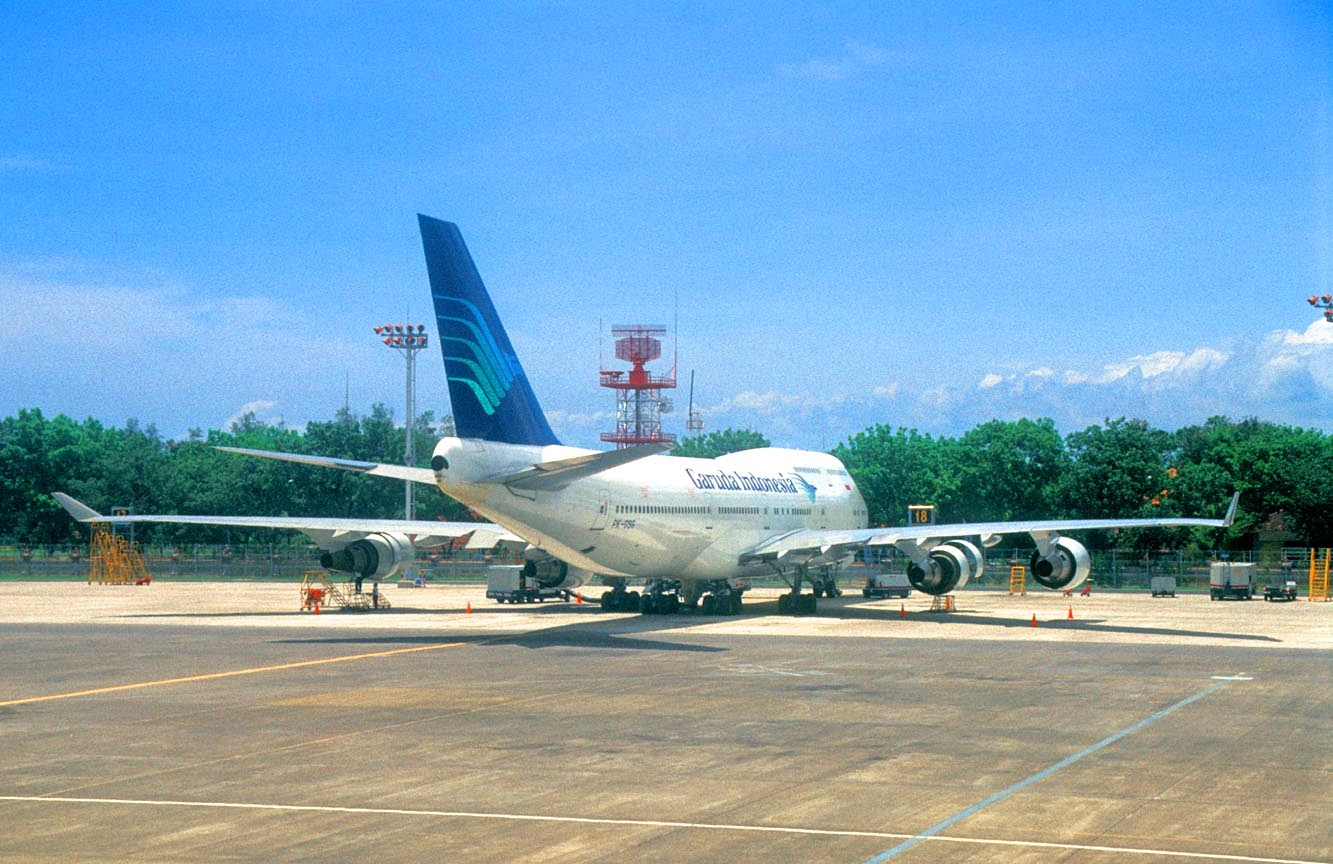
    The East Nusa Tenggara Tourism Office has urged Garuda Indonesia to open Kupang-Dili-Darwin flight route round trip immediately to help boost foreign tourist arrivals to the islands province.

    The head of the Tourism Office, Marius Ardu Jelamu, stated here on Tuesday that in the past year, the number of tourists visiting the province in cruises and chartered aircrafts had increased.

    According to Marius, Kupang-Darwin flights will help travelers in terms of cost and time because it only takes 1.5 hours to reach the destination.

    Marius is optimistic that the Kupang-Timor Leste-Darwin flight would increase the number of tourist arrivals to East Nusa Tenggara, considering the current growing tourism potential in the province.

    East Nusa Tenggara is increasingly attractive to domestic and foreign tourists, especially with regard to the various cultural festivals.

  • Indonesia sets tariff ranges for online car-hailing services

    Indonesia sets tariff ranges for online car-hailing services

    Indonesia set minimum and maximum tariffs for online car-hailing services in a bid to ensure comparable pricing with conventional transport providers and address complaints of undercutting, sending shares of the nation’s top two taxi firms soaring.

    Ride-hailing services such as US group Uber Technologies Inc, Southeast Asia’s Grab and Indonesia’s GO-JEK have heavily subsidised their drivers in Indonesia in order to gain market share in the country of 250 million people, analysts say.

    The transport ministry said in a statement on Sunday that it had set a tariff range for online car-hailing services of 3,500-6,000 rupiah (S$0.35-S$0.62) per kilometre for the islands of Java, Bali and Sumatra.

    For Kalimantan, Sulawesi, Nusa Tenggara, Maluku and Papua, the range is 3,700-6,500 rupiah per kilometre.

    The regulation kicked in on July 1 and will be evaluated in the next six months, the ministry said. “There has to be a balance between conventional and online transport, so that has to be regulated,” Pudji Hartanto Iskandar, director-general of land transport at the ministry, told by phone.

    The news sent shares of Indonesia’s two biggest taxi operators, PT Blue Bird Tbk and PT Express Transindo Utama Tbk, surging on Monday.

    By 0340 GMT, Blue Bird shares jumped as much as 10.7 per cent, while Express gained as much as 4.3 per cent. The broader Jakarta stock exchange was 0.7 per cent higher.

    Drivers of Blue Bird and Express have called for a ban on ride-hailing services, claiming they were subject to less stringent requirements than conventional taxis.

    Uber said in an emailed statement it had yet to receive a copy of Indonesia’s regulations. “However, we remain committed to working with the government to find a path forward that accommodates the interests of riders and driver partners and supports innovation, competition and customer choice,” Uber said.

    Grab said it is ready to cooperate with the transport ministry and to comply with regulations. “After receiving direction from the government, we will review the policy and make the necessary adjustments to ensure that our driver-partners will still earn the best incomes when using the Grab platform,” it said in an email.

    GO-JEK did not provide an immediate comment. Blue Bird and Express did not immediately respond to requests for comment.

  • e-retail brands out of the social media loop in SE Asia

    e-retail brands out of the social media loop in SE Asia

    Over 85% of consumers in Singapore, Malaysia and Indonesia, who mention e-retailer brand names in their social media posts don’t tag brand handles, according to Digimind.

    This means brands need to be vigilant in monitoring their brand reputation in the wider social media space to ensure they aren’t missing out on key conversations and trends, and are able to act upon any customer service concerns quickly.

    With the rise of empowered consumers and an increasing adoption of online shopping, e-retailers need to adopt customer-centric strategies in order to thrive. With so much of our daily conversations happening online, data from social media can provide key insights for e-retailers wishing to optimize customer experiences.

    Digimind’s study, Social Shopping in 2017, assessed the state of the e-retail industry in the three countries by monitoring 15 local and regional e-retailers, including Lazada, Zalora, and Berrybenka.

    “It’s no secret that brands who implement customer-centric strategies are excelling. With 2.8 billion active social media users in Southeast Asia, it is crucial for e-retailers to listen to what is being said about their brand, competitors and the industry online,” said Stephen Dale, general manager of APAC at Digimind.

    “Understanding what consumers are saying on social media can provide companies with an arsenal of insights that can be used to develop content strategies, improve customer service, build brand advocacy, and increase sales,” said Dale.

    He added that when analyzed in conjunction with other data such as web page visits and browsing behavior, this can further inform marketing plans and Voice of the Customer programs.

    The study also revealed that while the majority of e-retailer’s followers in the countries studied were on Facebook, consumers were most actively publicly posting their opinions and experiences on e-retailers on Instagram and Twitter.

    This means while Facebook is the ideal channel for brands to communicate with followers, Instagram and Twitter are key channels for community engagement.

  • Tech giants all-out to secure more data for AI leadership

    Tech giants all-out to secure more data for AI leadership

    Big data is all the rage as the key building block to prop up the emerging artificial intelligence (AI) industry. For this reason, tech giants here and abroad have gone all-out to become more data-rich to embrace the next AI era.

    This is true for almost all the tech industries including smartphones, internet and e-commerce as shown in the latest steps taken by leaders of these tech platforms.

    Apple and Samsung, for example, are turning their eyes to the autonomous vehicles market as their next growth area, which requires massive datasets for full-fledged services. Google and its Korean counterpart, Naver, are intensifying their rivalry for language translation service. This is also cited as a war of data, as those with enough datasets can offer more accurate and natural translation outcomes.

    One thing they have in common is that they have their own voice recognition platforms combined with big data. The smartphone leaders are equipping their flagship devices with voice assistant services, while Naver and Google are seeking leadership in the AI speaker industry.

    The AI home speaker is particularly drawing keen attention from the global tech sector, with industry-leading IT giants such as Google, Amazon and even Alibaba tapping into the data-driven hardware market.

    Observers point out that the AI speaker is not serving as a key revenue generator for those leading tech titans, but plays an important role in collecting datasets.

    Amazon and Google are two leading players in the industry, with the former launching its wireless speaker, Echo, in 2015. The latter followed suit with Google Home in 2016.

    Amazon’s Chinese e-commerce counterpart, Alibaba, is also set to unveil its own AI speaker this week.

    In Korea, Naver is cited as the most influential AI player, backed by its unmatched amount of datasets from its internet search portal that has more than a 70 percent market share here.

    The internet giant is boosting its AI presence in Asia where Google and Amazon have yet to achieve notable success.

    Naver plans to launch its AI speaker called Wave this year. Its AI voice assistant app, Clova, will operate the device.

    “Wave is targeting Japan at the initial stage, as no AI speaker competes in the market seriously as of now,” a Naver spokesman said. “After securing a sizable market there, we are going to expand the business into other Asian countries.”

    The company said it is seeking to take advantage of its AI expertise and massive language-related datasets.

    “The language-learning process may come as a hurdle for overseas AI firms like Amazon and Google in tapping into Asian markets,” he said. “But we have strong footholds in both brand value and language datasets in major Asian markets.”

    The company, teaming up with its Tokyo-based subsidiary LINE, is also planning to launch its Champ portable AI speaker in Japan and other Asian nations. It vies to take advantage of its presence as a dominant messaging app player especially in Southeast Asia.

  • Local fashion brands face fierce competition with foreign rivals

    Local fashion brands face fierce competition with foreign rivals

    The influx of foreign fast fashion brands into Vietnam is threatening local retailers’ market share, forcing the firms to move to keep their foothold in the market.

    Le Thi Quynh Trang, General Director of the Multimedia JSC – which runs many fashion programmes in Vietnam, said the country is becoming more popular in the global fashion industry as most fashion brands, from high-end to fast fashion ones like Chanel, Giovanni, Salvatore Ferragamo, Versace, Burberry, Topshop, Mango and Zara, have come to Vietnam. H&M and Uniqlo also plan to enter this market.

    “Vietnamese consumers’ demand is now ripe for them to make inroads into Vietnam,” she said.

    H&M is scheduled to open its first outlet in Ho Chi Minh City in the next few days. The Swedish brand said Vietnam is one of its five key future markets.

    There are nearly 200 foreign fashion brands in Vietnam, accounting for more than 60 percent of the market share. Mid-end brands like Giordano and Bossini and high-end ones such as Mango, Dolce & Gabbana, Topshop, Gap, Banana Republic and Tommy Hilfiger post the strongest sales.

    Competition pressure

    Foci, a domestic brand that debuted in 1999 and gained a strong foothold in the affordable segment, folded in 2014.

    Ngo Thi Bau, General Director of Nguyen Tam Textile & Garment Company – Foci’s owner – switched to opening a Japanese-style restaurant chain in HCM City. She said aside from high ground rent, Foci had to give up due to falling sales caused by cheap clothing from China and counterfeits.

    The Viet Fashion Joint Stock Company, which owns Ninomaxx and N&M brands, has been making strategic steps to develop. It has 62 retail outlets across the country at present and plans to increase store numbers soon.

    However, some insiders said Ninomaxx may lose its status to foreign rivals. They said in addition to cost-related problems, Vietnamese firms struggled as they were unable to grasp the latest fashion trends or change their promotion methods.

    Zara earned 5.5 billion VND (nearly 242,000 USD) on the opening day of its outlet at Vincom Dong Khoi shopping mall in HCM City on September 8, 2016. That reflects Vietnamese consumers’ interest in foreign fast fashion, which pressures domestic brands to make changes.

    The force to change

    Among Vietnamese brands, Canifa has emerged as an affordable fashion brand with the leading growth rate and store number in the country. The presence of Zara, H&M and Uniqlo has forced Canifa to change, especially with their target markets similar.

    Canifa has raised the number of its outlets to 96, many of which are based in major shopping malls or ideal locations in big provinces and cities. An advantage of this firm is that its factories are in Vietnam, helping cut time from design, production to sale.

    Nguyen Van Thoi, Chairman of TNG Investment and Trading Joint Stock Company, said the entrance into Vietnam by H&M, Zara and Uniqlo is a chance for Vietnamese brands to develop their designs but also a big challenge.

    TNG used to manufacture apparel ordered by Walmart, Zara, Levi’s, GAP, CK and Puma. However, it decided to abandon this and specialise in selling TNG-branded products. TNG outlets are expected to increase to about 100 this year, he said.

    The decisive factor is keeping up with consumers’ taste, thus Vietnamese firms need professional designers. TNG has partly satisfied the market’s demand and gained a market share, he noted.

    Thoi said TNG products are sold at competitive prices and will outpace foreign brands in this regard.

  • Aggressive Thai pricing for 2017 BMW 430i Coupe and Convertible

    Aggressive Thai pricing for 2017 BMW 430i Coupe and Convertible

    Due to increased competition in the Thai premium mid-size coupe and convertible segments, BMW Thailand has given the facelifted 4 Series Coupe and Convertible aggressive pricing.

    To be officially launched next week, the two 4 Series models come in 430i forms boasting 252hp 2.0-litre petrol-turbo engine. The 420i Coupe, for one, goes from 0-100kph in 5.8sec and is priced at 3.499 million baht in Luxury spec. The M Sport trim, mainly distinguished with sportier appointments and M-like steering wheel, asks for an additional 300k.

    The 430i enjoys the same 30% excise tax (emitting no more than 150g/km of CO2) as the 420i, which uses a 190hp version of the same 2.0-litre block and is slower from 0-100kph by 1.7sec. Hence, the 420i isn’t available anymore.

    Sales of the pre-facelift diesel-powered 420d have also been discontinued. Two possible reasons could be its higher production costs and Thai preference for petrol power in two-door sports cars.

    How does its competition fare?

    The two most direct rivals in terms of performance are the Audi A5 Coupe 45 TFSI Quattro and Lexus RC200t F-Sport.

    Although the A5 Coupe 45 TFSI boasts the same power and engine size of the 430i Coupe, it is slower from 0-100kph, at 6.3sec. The Audi’s price of 4.299 million baht is also way higher. Even the 190hp 40 TFSI is jaded by the 430i due to its price kicking out at 3.699 million baht.

    The RC200t is in an even more crippling state. It has 245hp from a similar displacing petrol-turbo motor yet is slowest with 7.5sec time. Worse, it asks for 5.49 million baht.

    The Mercedes-Benz C250 Coupe, meanwhile, comes with lesser 211hp 2.0-litre petrol-turbo unit and costs 3.24 million baht for Sport and 3.59 million baht for AMG Dynamic. This kind of means less performance (0-100kph in 6.8sec) for less money.

    What about the open-top 430i?

    The only opponent for the 252hp 430i Convertible is the 245hp C300 Cabriolet. The 430i Convertible Luxury goes for 3.999 million baht and an extra 300k for M Sport. The C300 Cabriolet AMG Dynamic is priced at 4.24 million baht – 59k less than the spec-on-spec M Sport.

  • Indonesian banks urged to update their IT systems

    Indonesian banks urged to update their IT systems

    Indonesian banks have been urged to update their system of information technology so that they could protect themselves from possible cyber attacks that have become more and more massive.

    Bank Indonesia Governor Agus Martowardojo said here on Monday hackers or virus attackers continued to innovate and find loopholes in the IT system and so banking industry and other financial sectors must update their security standard.

    His statement came in the midst of increasing alertness following global virus attack by so-called “”Petya” after global system of IT routed by “Ransomware Wannacry”.

    “All who use technology applications must use the latest version. The latest version usually has been given features to prevent possible cyber attacks,” Martowardojo said.

    “We must not be offguard. We must be prepared because there will certsinly be other innovations that could disrupt the system,” he said.

    The general chairman of the State-owned Banks Association, Maryono, said that until Monday there had been no report coming from four state-owned banks – three of them controlling banking markets -being attacked by Peyya virus.

    “Usually if one bank is hit and so will the others but so far we have received no teport about it,” he said.

    The chief of PT. Bank Central Asia Tbk. which is the countrys largest private bank said Petya did not disrupt the banking system. Howevet cyber attack has been rife to give a warning for banks to improve their IT security system.

    “We will keep safeguarding it. Thank God there has been no problem so far,” BCA president director Jahja Setiaatmadja said.

    The ministry of informatics and communication has earlier called on the people and heads of institutions to take anticipatory measures against global Ransonware Petya cyber attack by preparing backup and updating their IT security system.

    Indonesias financial industry including capital market is worth more than Rp16,000 trillion and so security system in the industry is a very important pillar to maintain trust and sustainability of the industry which also serves as a source of development funding.

    Petya was first known after infecting the server in Russias biggest oil company and disrupted the operation of a bank in Ukraine and paralyzed computers in multinational shipping and advertising companies.

    Petya-infected computer will show a message telling that the system has been blocked and its owner must pay a tansom of US$300 in the form of Bitcoin.