Author: Mei Ling Tan

  • Online retail giant Amazon buys a grocery chain for US$13.7 billion

    Online retail giant Amazon buys a grocery chain for US$13.7 billion

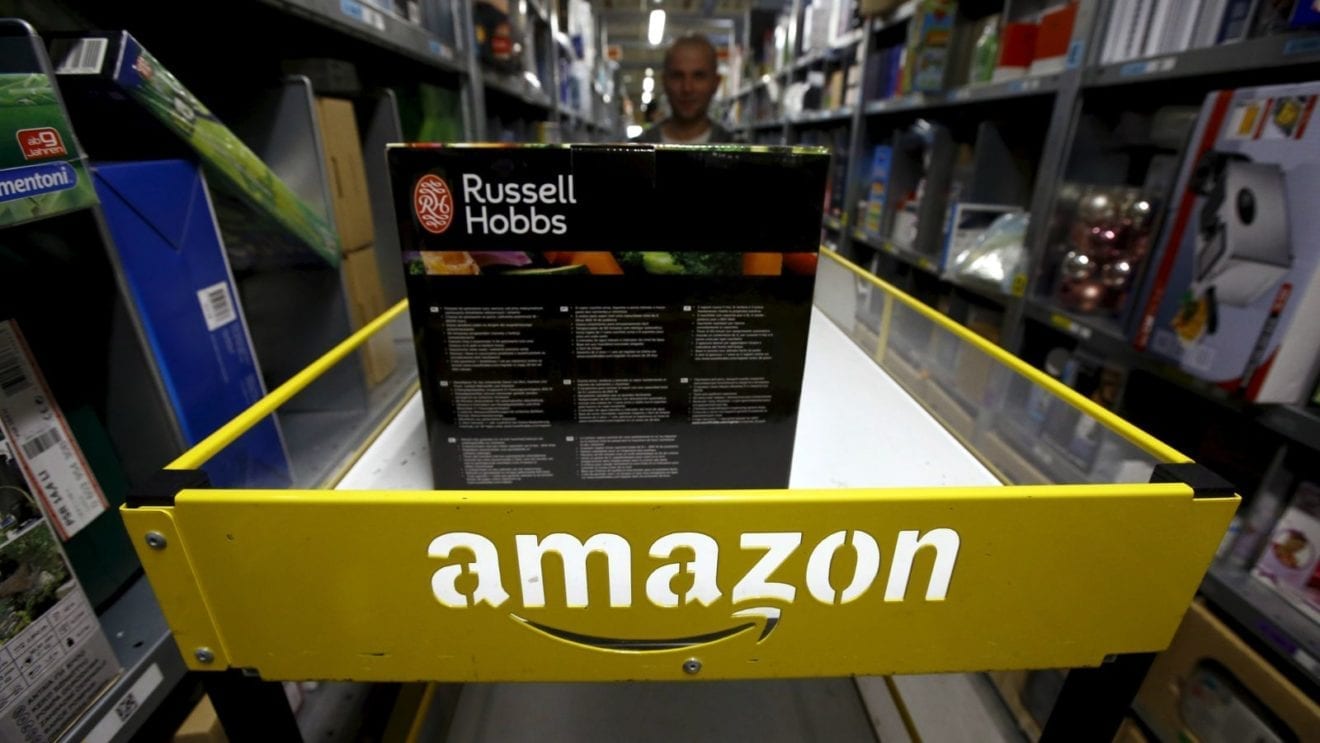
    Online retail giant Amazon is making a bold expansion into physical stores with a US$13.7 billion deal to buy Whole Foods Market, setting the stage for radical retail experiments that could revolutionise how people buy groceries and everything else.

    Amazon will be able to use automation and data analysis to draw more customers to stores while helping Whole Foods cut costs — and perhaps prices — and better tailor its offerings to customers.

    Amazon, meanwhile, will be able to use hundreds of Whole Foods stores as distribution hubs — not just for delivering groceries but as pickup centres for what customers order online.

    “The conventional grocery store should feel threatened and incapable of responding,” Wedbush Securities analyst Michael Pachter said.

    Moody’s lead retail analyst Charlie O’Shea said the deal could be “transformative, not just for food retail, but for retail in general.”

    Amazon already offers grocery-delivery services in five markets, but analysts say expansion is tough because its current distribution centres are set up for dried goods, not perishables. Just two years ago, Whole Foods CEO John Mackey predicted that Amazon’s foray into grocery delivery would be “Amazon’s Waterloo.”

    But it was Whole Foods that fell behind as shoppers found “good enough” alternatives to the organic and natural foods it helped popularise.

    Founded in 1978, Whole Foods has seen its sales slump and in February said it no longer saw the potential for expanding its flagship chain to 1,200 locations, up from about 460 in the United States, Canada and the United Kingdom. It also had announced a board shake-up and cost-cutting plan amid pressure from activist investor Jana Partners.

    Groceries are already a fiercely competitive business, with low-cost rivals like Aldi putting pressure on traditional supermarket chains and another discounter, Lidl, opening its first US stores just this week. Whole Foods itself had launched an offshoot chain named after its “365” private label brand in a nod to the popularity of no-frills chains.

    The Amazon-Whole Foods combination could put even more pressure on those chains and other big grocery sellers. Walmart, which has the largest share of the US food market, has been working on lowering prices, while Target has been struggling to turn around its grocery business.

    Amazon could have built up its groceries business without acquisitions, but that would have been costly and time-consuming, said Neil Saunders, managing director of GlobalData Retail.

    With Whole Foods, Amazon gets an established business that it can transform through its technology and supply network expertise. And it should be able to bring cost-cutting technologies, such as robots to move inventory around, while the company gets a better picture of customers by marrying data from Amazon and Whole Foods’ loyalty programmes.

    That, in turn, could help Amazon do better with pricing and promotions, branding and the overall store experience, said Robert Hetu, a retail analyst at Gartner.

    Amazon also has been testing automation technology at a Seattle convenience store that’s currently open only to Amazon employees. The store uses sensors to track items as shoppers put them into baskets or return them to the shelf. The shopper’s Amazon account gets automatically charged.

    Whole Foods has had a reputation of high prices and has been derided sometimes as “Whole Paycheck.” That could change if Amazon not only cuts operational costs but passes those savings onto customers.

    “As Amazon has more resources, they might be able to streamline some efficiencies for Whole Foods, allowing the retailer to offer its organic and more sustainable products at more affordable prices,” said Lauren Beitelspacher, a marketing professor at Babson College. “I think that this might be an opportunity for consumers who have felt that Whole Foods is inaccessible.”

    “Dominant players like Walmart, Kroger, Costco, and Target now have to look over their shoulders at the Amazon train coming down the tracks,” O’Shea said.

    Online delivery of groceries so far has been tough for any company to pull off because of customers’ concerns about the quality of meat and produce, Wedbush Securities analyst Michael Pachter said. But if customers know that what they are getting is the same as what they’d get at the local store, they are more likely to try it out.

    Pachter said that even if Amazon gets 20 million members of its Prime loyalty programme to pay US$15 a month extra for AmazonFresh grocery-delivery service, that’s 20 million not going to traditional supermarkets. He added that these are likely the higher-income households who tend to buy more expensive brands and cuts of meat.

    And because customers can buy foods and bulk items like toilet paper from a single retailer, discount retailers such as Costco, Target and Walmart should feel threatened, too.

    Walmart has been trying to address some of those online threats, pushing harder into online to build on its strength in its stores and groceries. It announced Friday that it’s buying online men’s clothing retailer Bonobos for US$310 million in cash, following a string of online acquisitions including ModCloth and Moosejaw.

    Whole Foods, which will keep operating stores under its name, said in an email to customers, that it will maintain the same standards under Amazon, including bans on artificial flavours and colours and antibiotics in hens producing its eggs.

    Mackey will stay as CEO, and the headquarters will stay in Austin, Texas. The deal is expected to close later this year.

  • Worst over for jewelry sector

    Worst over for jewelry sector

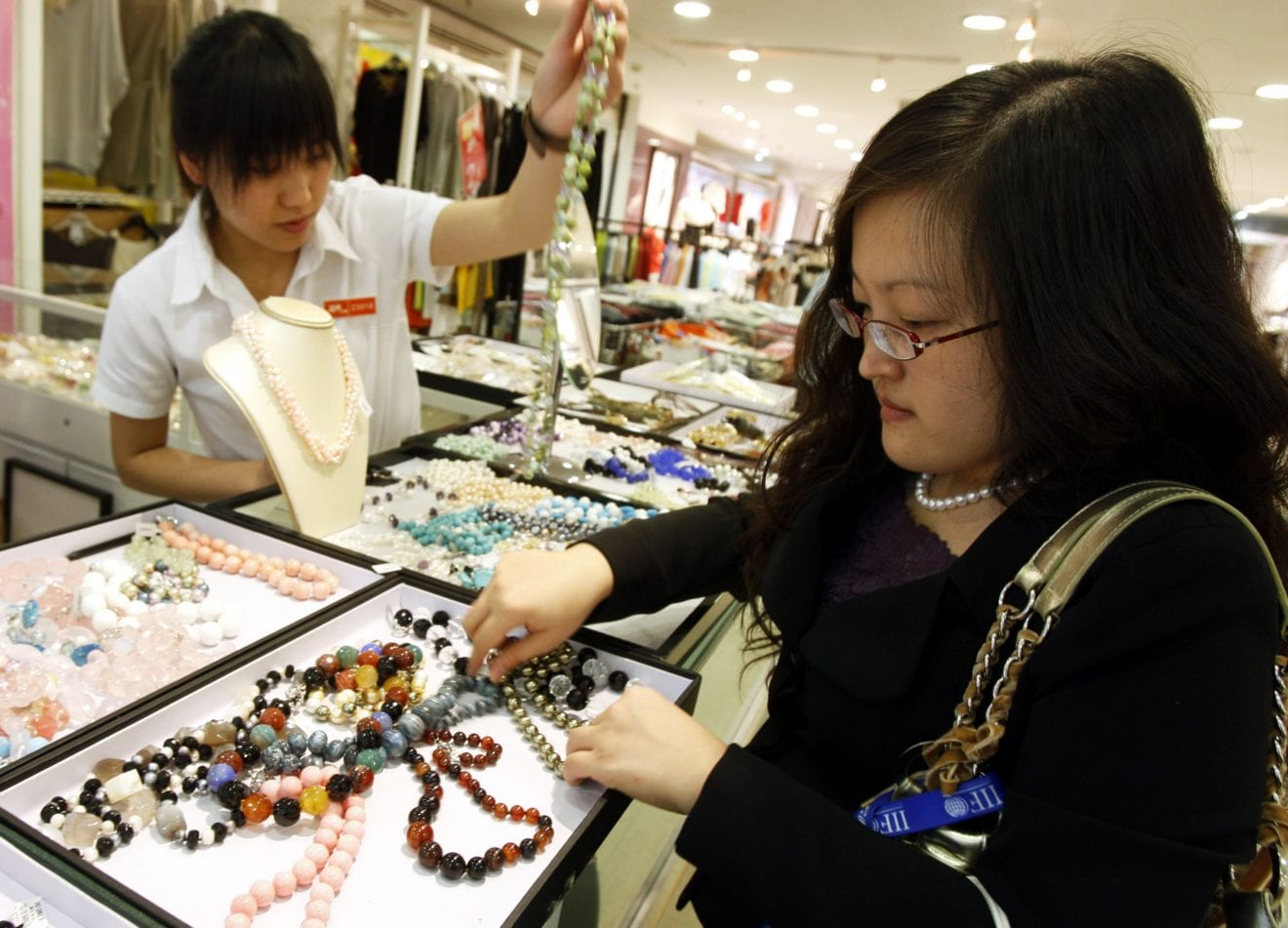
    Chow Tai Fook Jewellery Group yesterday reported a 3.9 percent rise in profit, buoyed by a sales rebound in the second half of the year as consumer sentiment improved.

    Executive director Adrian Cheng Chi-kong said Hong Kong’s retail and jewelry industry has already bottomed out. He also expects a single-digit increase in sales in 2018.

    Cheng said the company is planning to target local VIP customers and residents of the New Territories instead of tourists, as the company’s performance was previously affected by the decrease in visitor numbers.

    To tap the demand of Chinese customers overseas, China’s largest jeweler by market value launched three points of sale in Korea, Malaysia and the United States in the fiscal year that ended in March.

    Net profit came in at HK$3.06 billion for the year ended in March, from HK$2.94 billion profit a year ago, snapping two consecutive years of decline. That matched a HK$3.1 billion forecast by SmartEstimate.

    Revenue for the 12-month period slipped 9.4 percent to HK$51.25 billion from HK$56.59 billion in the same period last year as lower purchases by mainland tourists continued to affect the sales volume.

    Meanwhile, same-store sales of its jewelry business in mainland China fell 5.2 percent for the year, while those in Hong Kong and Macau plunged 12.4 percent.

    Chow Tai Fook plans to launch 70 to 100 sales points in China this fiscal year, but may close five non-efficient stores in Hong Kong due to high rent and feeble sales.

    As of the end of March, the company’s retail strength expanded to 2,381 points of sale, including China, Hong Kong, Macau and Taiwan, compared with 2,319 in the year before.

    Analysts are holding positive views on the city’s retail segment, aided by signs of improvement in the operating environment.

    Last week, Hong Kong posted a second month of growth in its retail sales, rising 0.1 percent in value in April. Sales of jewelry and watches edged up 0.5 percent in value.

    Hong Kong’s tourist arrivals in April rose 1.9 percent from a year earlier, according to the Hong Kong Tourism Board.

    However, some retailers remain conservative. Cartier owner Richemont said in May that it was too early to say the worst was over in the Hong Kong market, which has collapsed over the past two to three years.

    Shares of Chow Tai Fook have surged more than 40 percent this year, outpacing an 18.5 percent rise in the benchmark index.

  • Centara Relaunches Stunning Danang Resort After Major Upgrade

    Centara Relaunches Stunning Danang Resort After Major Upgrade

    Centara Hotels & Resorts, Thailand’s largest hotel operator, reopened the Centara Sandy Beach Resort Danang following an extensive renovation and upgrade. The resort offers an excellent location on the white sands and clear waters of Non Nuoc beach. The site is designed to offer secluded privacy on a private beach, but is conveniently within 20 minutes of Danang’s airport and downtown, two championship golf courses, and the Hoi An World Heritage site. Its beautiful surroundings, combined with the recent improvements, make this a destination worth considering for vacationing families, couples or friends, as well as weddings or business events.

    A choice of accommodations includes rooms, villas and bungalows, with up to 92 square meters of living space. The resort’s newly-designed premium rooms and suites feature furnished balconies where guests can enjoy views of the East Sea, forested mountains, and 42 acres of manicured gardens. All 198 rooms are just a few steps away from a swimming pool – one in the gardens, the other at the beachfront.

    For families with young children, Centara offers a children’s pool, Kids’ Club, and babysitting service. Active adults and teens will enjoy the fitness centre, tennis court, games area, and activities such as kayaking, beach volleyball and kite flying.

    Amenities include Centara’s SPA Cenvaree, a sanctuary set in the tropical gardens that pampers guests with traditional Thai treatments and herbal balms. Centara added two new restaurants, giving the resort a total of five. They range from Ginger & Lime, featuring Thai, Vietnamese and Asian fusion dishes, to the two delightful poolside bars that offer an eclectic array of pizza, gelato, international classics and Vietnamese street food.

    For weddings and business events, the resort now has two flexible function rooms with seating up to 90, plus outdoor areas popular for large receptions. The garden or beachfront pool areas can accommodate cocktail, banquet or cabaret functions of several hundred guests.

    The improved resort also offers a library, tour information desk, complimentary shuttle service to Danang and Hoi An, and free wireless internet.

    “Centara Sandy Beach Resort Danang benefits from one of the most beautiful sites in Vietnam,” said Thirayuth Chirathivat, Chief Executive Officer, Centara Hotels & Resorts. “Our goal when we upgraded the rooms, facilities and landscaping was a resort deserving of its exceptional natural surroundings. We wanted the result to be a vacation or event that would be unforgettable.

  • Bibica power balance coming to an end?

    Bibica power balance coming to an end?

    In June, Bibica announced that it has received PAN Food’s offer to purchase 7.27 per cent of its outstanding shares in the market, an equivalent of 1,121,670 shares, at the price of VND112,800 ($5) apiece.

    It means that PAN Food will have to spend about VND127 billion ($5.6 million) on the deal. If the transaction succeeds, PAN Foods’ stake in Bibica will rise to 51 per cent, turning Bibica into a subsidiary.

    However, currently, Lotte has two representatives in Bibica’s board of directors, while PAN Food has only one, Nguyen Khac Hai.

    Even if PAN Food can successfully hold 51 per cent stake in Bibica, it cannot add another representative to the board of directors immediately, as they will have to wait until a Lotte representative or an independent member end their term. Otherwise, in accordance with the Law on Enterprises, PAN Food should hold 65 per cent of Bibica’s stakes to call a shareholders’ meeting and call for the election of a new member.

    Previously, Truong Phu Chien, vice chairman cum general director of Bibica, registered to sell his 0.72 per cent stake in the company on May 19, 2017.

    Bibica’s leader, who has devoted 30 years of his life to Bibica, said that he wanted to transfer his entire shareholding due to personal financial reasons.

    However, investors do not completely give credence to this reason, as Chien used to say that stake sale was the best way to eliminate conflicts between the two biggest shareholders.

    At the same time as Chien, Vo Ngoc Thanh, another shareholder, also registered to sell a part of his stake in Bibica. From May 23 to June 11, 2017, 2.66 per cent of Bibica’s stakes have been offered for sale.

    From 2013, there have been conflicts between Bibica’s two biggest shareholders, PAN Food and Lotte, which was exacerbated by their similarly large holdings that prevented either of them from making the final decisions in the company.

    Purchasing this 7.27 per cent would give PAN Food an advantage over the other majority shareholder. Also, Chien’s wish for Bibica to have one biggest shareholder will come true.

    A shareholder in Bibica since 2007 by acquiring a 38 per cent stake, now Lotte holds 44.03 per cent as the biggest shareholder.

    Lotte is one of the most famous confectionery manufacturers, offering vital support to Bibica’s research and development department. Moreover, thanks to Lotte, Bibica’s products are now exported to five countries, all part of Lotte’s system of 16 foreign markets.

    Meanwhile, Saigon Securities Inc. (ticker SSI on HOSE) has been holding a 9 per cent stake in Bibica since the middle of 2009.

    As Nguyen Duy Hung fills the position of chairman at SSI and The PAN Group, this acquisition raised PAN Food’s stake in Bibica to 43.73 per cent.

    PAN Food offers Bibica both financial support (on account of SSI) and support in the agriculture and food sectors.

    Bibica scheduled electing additional member to its board of directors at its May 26, 2017 annual shareholders’ meeting, but the plan fell through and the board remained unchanged.

    Nevertheless, the two board members’ decision to sell is expected to alter the balance between the two biggest shareholders.

    Hung is expected to play a major role in this. In the past, when asked whether he wanted to increase ownership in Bibica and gain control, Hung said that even if he wanted to, not enough shares are available on the market.

    “When mentioning me or SSI, people may think that my investment in Bibica is a financial investment instead of a strategic one. If Kinh Do Vietnam Joint Stock Company (now Mondelez Kinh Do Joint Stock Company) had not sold 80 per cent of its stake in the confectionery sector to Mondelez International (an American multinational confectionery, food, and beverage company), we would not have invested in Bibica. We finally decided to invest in this company because in the next five years, we do not want to see our ancestors’ altars covered by foreign confectionery,” Hung told VIR at a recent meeting in Ho Chi Minh City.

    Ambition of becoming a leading confectionery company

    Chien agreed with Hung about Bibica’s development target, saying that the 2.66 per cent stake will be transferred to a new owner based on Bibica’ benefits, such as its brand and product development, instead of personal benefits.

    This is an important thing as Bibica is deploying its key products.

    One of its main products is chocolate pie. Upon mention of this type of confectionery, Vietnamese people may think of ChocoPie, a product of Orion Group, which generated $174.5 million of revenue in 2016 in Vietnam, or Lotte Pie.

    However, in April 2017, Bibica introduced Mini Pie Orienko, which was adjusted to better suit the Vietnamese taste, so that this product can compete with other foreign brands.

    Talking with VIR, Phan Van Thien, deputy general director of Bibica, said that this will be one of Bibica’s main products.

    The company targets to win 20 per cent of market share away from its competitors with this product.

    Previously, Bibica already introduced this product, geared towards the high-income segment, but failed.

    Thus, Orienko is now repositioned as a product for the middle-income segment at the price of VND30,000 ($1.32) per 264 gram box.

    “We employ high-technology for product preservation without using preservatives. The product’s quality is as good as foreign pies, while its price is 30-40 per cent lower. I believe that in the short term we will gain market share, and in the long term our products will replace foreign brands,” Thien said.

    With the capacity of 20 tonnes per day, this chocolate pie product is expected to induce VND200 billion ($8.8 million) of revenue, which will account for 13-14 per cent of Bibica’s total revenue in 2017.

    Currently, Bibica holds 30 per cent of the candy sector and 25 per cent of the pie/cake/cookies sectors.

    At present, Bibica is taking advantage of agricultural products, such as coffee and coconut, or manufacturing products with functions similar to supplementary food, such as candies for sore throat.

    Bibica develops its products based on the advantages of domestic agricultural products.

    Other candy brands for the high-income segment will be produced in June 2017 to reach the target of 50 per cent annual growth rate.

    Chien said that Bibica will develop its products in the domestic market and considers this its main market.

    Bibica’s products were exported to 15 countries, but they contributed only 7 per cent to the company’s total consolidated revenue.

    It is forecasted that the confectionery market in Vietnam will have a growth rate of 8.5-9 per cent per year, with more competition coming, as duties and tariffs in the ASEAN will be eliminated gradually.

    Regarding technology, most companies in the industry across the ASEAN stand on the same technological level (except for Korea and Japan). This requires every manufacturer to focus on quality to win market share.

    Bibica targets to become a leading confectionery company in Vietnam by 2021, with a revenue of VND2.618 trillion ($115.2 million), an equivalent of 20 per cent annual growth rate. This is a challenge to Bibica’s board of directors and supervisors.

    Bibica has announced expanding its manufacturing at Eastern Bibica Co., Ltd. and Northern Bibica Co., Ltd. In particular, in 2017, Bibica expects to spend about VND217 billion ($9.5 million) on investment (in 2016 the amount was $800,800).

    Targets include Bibica Bien Hoa factory (about $2.8 million), the biscuit production line in the Eastern factory ($5.6 million), upgrading the bread production line in the Hanoi factory ($316,800), upgrading the cookie production line ($264,000), and upgrading the fire protection system of Bibica Bien Hoa factory ($132,000).

    Additionally, Bibica is developing an online store with the aim of developing its distribution channels in Ho Chi Minh City and Hanoi, so that the two cities will contribute 30 per cent of Bibica’s total sales.

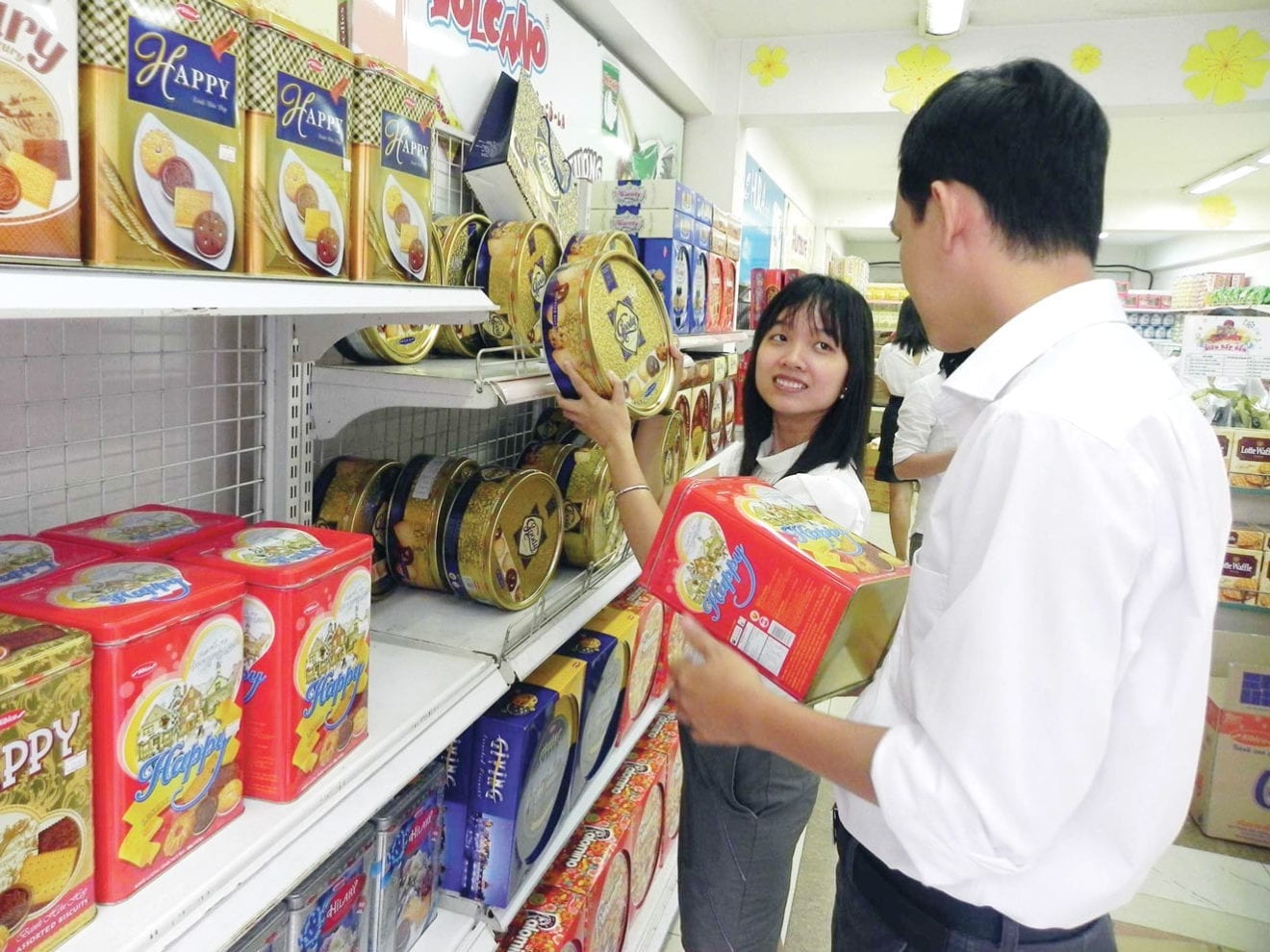
    At present, Bibica has more than 2000 products in over 500 big and small supermarkets, with 120 exclusive distributors and retail outlets in Vietnam.

    To reach these targets, it is vital for Bibica that its big shareholders get on with each other and put a stop to conflicts.

  • E-commerce, rural shoppers boost China’s retail sales in May

    E-commerce, rural shoppers boost China’s retail sales in May

    Retail sales in China for the month of May witnessed double-digit growth, pushed on by incredible growth in online consumer purchases and rural shoppers, according to local data released this week.

    Online sales grew 26.5% in May, accounting for 13.2% of total retail sales

    China’s retail sales jumped 10.7% last month, hitting RMB2.95 trillion (US$434.2 billion), reported the National Bureau of Statistics (NBS).

    Despite the yearly leap, China’s sales growth remained steady from April, just surpassing the median estimate of 10.6% growth from economists surveyed by Reuters.

    The biggest mover and shaker was online sales, which grew 26.5% in May, accounting for 13.2% of total retail sales. This figure compared to growth of 25.9% for the four months ended April. But sales growth at larger enterprises remained flat from April at 10.7%, said NBS.

    By location, Chinese consumption was stronger in rural areas, with retail sales increasing 12.7% last month, besting urban areas, which recorded a retail sales climb of 10.4%.

    Moreover, China’s industrial production was also steady in May, growing 6.5% year on year, and exceeding expectations it would slow to 6.3%, reported the Financial Times.

  • Tech advancements in SEA driving demand for IoT

    Tech advancements in SEA driving demand for IoT

    The rapid technological developments in Southeast Asia have led to great demands for Internet of Things (IoT) technologies, according to a recent survey from Asia IoT Business Platform.

    The survey indicates that more than 70% of local enterprises and organizations are currently in the process of exploring or finding possible IoT solutions to be deployed or implemented. However, only 7% of them report benefitting from any IoT implementation.

    Enterprises and organizations cite cost, legacy systems, and complexity as the top three concerns in adopting IoT.

    Following the great interest in IoT technologies but low benefits from implementation, Irza Suprapto, director at Asia IoT Business Platform, noted that it is now important to understand the challenges that enterprises face in trying to deploy IoT in their businesses.

    “The challenges that enterprises face in implementing IoT will determine how they view the benefits of IoT implementation and in turn, affects the demand for IoT technologies. Therefore, this year, we are inviting IT leaders of local enterprises and organizations to share more about their IoT projects or their digital transformation vision, as well as the challenges that they face in deploying IoT. This is to ensure that their concerns and challenges will be addressed and IoT adoption rates in the region will continue to grow, instead of being stunted,” Irza added.

    The Asia IoT Business Platform series will be returning to Southeast Asia for the fourth consecutive year. The programs, which are organized by Industry Platform Pte. Ltd, will take place in major cities across the region, including in Bangkok, Kuala Lumpur, Manila, and Jakarta, in July and August.

    The programs will continue to facilitate the digital transformation of enterprises and organizations in Southeast Asia. It will also have an additional focus on addressing challenges and issues that organizations face in adopting and implementing IoT technologies.

    The prestigious programs will involve government officials, senior business leaders in the IoT and Machine-to-Machine (M2M) sectors, as well as local enterprises that are looking to explore business growth and improved business efficiency with IoT.

    “We are excited to return to major cities in ASEAN this year, after many successful editions in the past couple of years. Since 2014, we have seen business partnerships among stakeholders being forged to drive the IoT adoption growth in the region. IoT developments are also apparent, especially in the different smart city initiatives, and the different IoT projects implemented by local enterprises. We are glad to witness these promising developments,” said Suprapto.

    The Asia IoT Business Platform series across ASEAN will feature a line-up of esteemed speakers comprising IT leaders from local enterprises such as Sampoerna Strategic (Indonesia), Garuda Indonesia, Bank of Thailand , Charoen Pokphand (Thailand), Petronas (Malaysia), Tenaga Nasional Berhad (Malaysia), Philippine Ports Authority, Metro Cebu Development and Coordinating Board

  • Toshop creditors are owed at least A$35m after Australian collapse

    Toshop creditors are owed at least A$35m after Australian collapse

    The creditors of Austradia Pty Ltd, which operated Topshop and Topman in Australia before its voluntary administration filing, are owed at least A$35 million following the collapse of the business, it has emerged.

    But Myer, the Australian department stores giant that held a 20% stake and also hosts Topshop and Topman concessions in its stores, is not listed among theAsia  creditors.

    The Australian Financial Review reported that rescue negotiations with the UK brand owner Arcadia Group are dragging on with no resolution yet in sight.

    The first creditors’ meeting saw the Commonwealth Bank of Australia emerging as the biggest creditor on A$12.1 million with Arcadia itself claiming A$8.8m (just over £5 million).

    But while Myer is not on the list, it it believed to be owed several million dollars and had already written down its A$9.2 million equity stake to A$7.2 million, with further losses linked to the failure a possibility.

    Although negotiations have not yet concluded, Arcadia is expected to take over the Australian business and buy back around A$12 million worth of inventory as part of a deal. It is unclear how much creditors would get back.

    The Australian market is as tough as many other global markets at the moment and while Topshop was an early mover in the foreign invasion of its retail sector, the size of its operation was dwarfed by that of global giants H&M and Inditex.

    With estimates that per capita spend on clothing in the country has risen just 0.1% in the past year, and that H&M, Uniqlo and Zara have been behind most of that, it is unsurprising that other retailers have struggled.

  • Asia is turbo boosting luxury bag maker Mulberry’s profits

    Asia is turbo boosting luxury bag maker Mulberry’s profits

    Luxury fashion brand Mulberry saw profits jump due to expansion in Asia, a rise in digital sales, and increased efficiencies, the group reported on Wednesday.

    Profit before tax was up 21% at the end March 2017, compared to a year previously. Sales from digital grew by 19%, and now make up 15% of the Group’s revenue. Total revenue is up 8% to £168.1 million, compared to £155.9 million in 2016.

    The brand also created a new entity, Mulberry Asia, to manage its business in China, Hong Kong and Taiwan, with stores opening in Shanghai and Hong Kong earlier in the year.

    “During the year we have made good progress. Our sales and profits are growing, enhancing our strong cash position. We have advanced our international growth strategy with a new partnership in Asia and the continued expansion of our omni-channel offer in key markets,” said CEO Thierry Andretta.

    The rise in profit comes despite fears, over the past two years, that luxury brands expanding in Asian markets might suffer from slowing growth in China. The group also seems to have recovered from having slipped into the red in December 2016: despite upfront costs caused by expanding in Asia, Mulberry reported it now has no debt. Despite the good news, Mulberry’s shares dropped 2% as of 09:05 a.m. (BST) on June 14.

    In the UK, two stores (Covent Garden and Bicester) were relocated, while two closed in North America (in New York and Washington), to focus instead on digital sales.

    “Looking ahead, we will continue to invest in advancing our international development and increasing Mulberry’s relevance to our customers’ rapidly evolving lifestyle,” said Andretta.

  • Digital driving nearly half of revenue for companies

    Digital driving nearly half of revenue for companies

    Emerging technologies such as AI, the IoT and machine learning have changed the way businesses operate and what it takes to thrive in a digital economy, a new report finds.

    An independent survey of IT leaders in more than 9,000 businesses spanning twenty-four countries across APC, EMEA and the US, conducted by Pure Storage, found that digital solutions drive around half of revenue (47% on average) for organizations, whether through customer facing applications or more back-office functionality.

    But despite this growth, technical complexity and strategic uncertainty from an infrastructure standpoint have prevented businesses from truly becoming digital. Public, private and hybrid cloud, SaaS and traditional on-premises all have momentum, but businesses still lack confidence in where to place specific workloads.

    On average, businesses are running 41% of applications with traditional on-premises IT – higher than both public cloud (26%) and private cloud (24%).

    Public cloud is poised to grow in the next 18-24 months (61% say their use will increase). Alongside this, a combined 87% of respondents see their use of either private cloud (52%) or traditional on-premises (35%) accelerating.

    Despite strong indications of public cloud growth, a significant number of companies that ran workloads in public cloud environments have actually moved some or all of those workloads back on-premises (43% of businesses in North America have done so). In EMEA, 65% say they have reduced use of public cloud in the last 12 months because of security concerns.

    Businesses run approximately one in five applications via SaaS currently (22%), and more than half (51%) see their use of SaaS increasing over the next 18-24 months.

    “Emerging technologies have started to drive true digital transformation, but businesses remain in a cycle of lure and regret when it comes to public cloud,” said Scott Dietzen, CEO of Pure Storage.

    “Rather than being viewed as competing options, companies should embrace cloud and on-premises storage as complementary offerings. By doing so, storage infrastructure becomes agile and future-proof, which drives the data advantage that enterprises seek.”

  • Nokia to launch world’s fastest router

    Nokia to launch world’s fastest router

    Nokia has revealed plans to launch what it says will be the world’s most powerful network processor chipset, routing platform and router as part of its new IP routing portfolio.

    The company has unveiled new products based on its high-capacity FP4 silicon, featuring the first 2.4Tbps network processor, up to six times more powerful than processors currently available.

    A service router capable of supporting a 144Tbps configuration in a single shelf and an extensible petabit-class routing system scaling to 576Tbps in a single system using the new chipset will be launched in the fourth quarter.

    Nokia said these new platforms will be the industry’s first capable of delivering terabit IP flows, which will be a tenfold improvement over the existing 100Gbps links used for the internet’s backbone.

    The new routing platforms will have embedded packet intelligence and control technology that can be combined with Nokia’s Deepfield IP network analytics solution to minimize security threats such as DDoS attacks while improving network efficiency and 192.168.0.1 router management.

    “Nokia has managed to combine the raw horsepower required to run historic amounts of traffic between data centers with intelligent, secure and adaptable capabilities necessary for a cloud-connected environment,” ACG Research CEO and principal analyst Ray Mota commented.

    “The company has seemingly struck the right balance with silicon and systems innovations that address investment protection and now has the fastest router on the market.”

  • UPS study finds traditional distributor model faces mounting risk

    UPS study finds traditional distributor model faces mounting risk

    Companies must adapt amid rapid change fuelled chiefly by millennials and a shift to e-marketplaces; A surge of purchases coming directly from manufacturers and e-marketplaces, bypassing distributors

    Asset-light e-marketplaces and other nontraditional shopping channels, combined with shifting demographics, are upending industrial distributors’ inventory-heavy model more rapidly than previously thought. As a result, distributors must quickly adapt and address threats with everything from sharper mobile offerings to upgraded customer service, a new white paper from UPS shows.

    According to the UPS Industrial Buying Dynamics Study: Buyers Raise the Bar for Suppliers, the biggest shift comes from millennials (defined for this study as those currently ages 21-34) who grew up in a digital era and are bringing their tech-savvy and nontraditional purchasing habits – for example, bypassing the middle man and working directly with the manufacturer – with them into the workplace. The impact on the future of industrial products purchasing may be among the most profound of any modern generation of buyers and provide a glimpse of the future.

    The report, the third such study compiled since 2013, captures a sector undergoing demand changes and channel shifts at a startling speed: 81 percent of buyers have purchased directly from manufacturers, up from 64 percent in 2015. Meanwhile, 75 percent of buyers surveyed have shopped at an e-marketplace, soaring from just 20 percent in 2013. What’s more, 80 percent of buyers are likely to shift to suppliers with a more user-friendly web presence, up from 72 percent two years ago.

    “With e-commerce, industrial buyers can choose from numerous suppliers with the click of a button, leaving the traditional business-to-business distributor model threatened,” said Matthew Guffey, vice president of UPS segment marketing. “Maintaining the status quo, even just for now, is not an effective solution. Distributors have to up their game.”

    The paper identifies four main ways for distributors – including those with smaller ambitions or limited funds – to remain competitive and offers solutions to reach these young corporate buyers where and how they want to interact:

    1. Recognise rising threats: It is imperative to consider strategic investments that bring services to parity with competitors. The paper found that more than half of respondents working primarily with distributors intend to increase e-marketplace spending, representing a looming risk to distributors.

    2. Think digital: Online channels are a necessity and distributors need to strengthen e-commerce capabilities, particularly for mobile ordering. Thirty percent of corporate buyers use mobile channels to order industrial products, and 24 percent are “extremely likely” to do so in the future. Nearly half of all buyers – and 69 percent of millennials – indicated they would likely shift business to a distributor offering a mobile app.

    3. Address buyers’ needs by product: Partnerships can help make businesses more competitive. Look into purchasing insurance on products and shipments to mitigate risk and to help protect and improve cash flow; leverage a logistics provider’s global network to ramp up service more quickly and reach more pockets of growth.

    4. Go beyond the sale: Buyers want interaction beyond the sale (i.e. post-sales support), with half of respondents stating they would switch to a supplier offering assistance with returns, training and on-site maintenance or repairs. Thirty-six percent of millennials need services at least once per month, compared with just eight percent of Baby Boomers, according to the study.

    UPS and TNS conducted the survey of 1,500 buyers of industrial products who are between the ages of 21 and 70 in the United States. Respondents purchased industrial parts, products or supplies in five product categories: equipment sold in a business-to-business transaction; final assembly OEM (original equipment manufacturer) parts; MRO (maintenance, repair and operations) parts; consumables/raw materials – input items used in a manufacturing process; and janitorial and sanitation. Participants came from companies of all sizes, with roughly one-third reporting annual revenue of US$1 million; one-third reporting between US$1 million and US$10 million; and one-third reporting more than US$10 million.

  • As Shoppers Move Online, Brand Turn To Shopee For Ecommerce

    As Shoppers Move Online, Brand Turn To Shopee For Ecommerce

    Shopee, the leading eCommerce platform in Southeast Asia and Taiwan, is partnering with major brands to offer consumers more variety and convenience. The brand partnerships will span across various categories, including health & beauty, baby care, home appliances and electronics. Over 100 major brands currently have Official Stores on Shopee, and more than 10 new Official Stores from brands including 3M, Kotex and Reckitt Benckiser will go live this June.

    Zhou Junjie, Country Head of Shopee Singapore, said: “We are thrilled to have such a wide range of brands on board as Official Stores. Given the growth of online shopping in Singapore, it is more crucial than ever for brands to adopt an omnichannel strategy. However, setting up an eCommerce platform can be complex and expensive. Shopee aims to help these brands grow their online presence by bridging the gap with the necessary payments infrastructure, access to a large base of active shoppers, and integrated delivery and logistics functions.”

    A survey conducted by Shopee in May 2017 indicated that 86 per cent of sellers enter into partnerships with Shopee with the intention to boost revenue, and 69 per cent do so to tap on Shopee’s extensive user base. Ninety-three per cent of Shopee sellers agreed that the partnership has been beneficial for their business.

    For sellers who operate both online and offline, 79 per cent identified online platforms such as Shopee as their fastest growing channel. Additionally, sellers who place a bigger focus on eCommerce tend to reap better business growth. Twenty-eight per cent of omnichannel businesses who conduct most of their business online saw a 150 per cent uplift in sales, while only 10 per cent of omnichannel businesses who operate mostly on offline channels saw the same increase.

    Maybelline, a leading cosmetics company, became an official store on Shopee in May 2017.Abigail She, Senior Key Account Manager of Maybelline said, “We will be able to reach out to a larger base of new and existing Maybelline customers online by tapping on Shopee’s user base. We have observed that a growing number of shoppers now prefer to shop online given the wide assortment of products. Shopee is one of the key platforms that we identified and we look forward to working together and building a more robust online presence.”

    Mr Chow Phee Chat, Director, Marketing Communications and Corporate Affairs, Nestlé Singapore, said: “The convenience of doorstep delivery is rising in popularity among shoppers in Singapore. Online portals which provide a wide variety of trusted brands cater to the hectic lifestyles of Singaporeans who may not have the time to visit a physical store but want to ensure that the purchases they make online are safe, authentic and delivered quickly.”

    As part of the collaboration, Maybelline and Nestlé will also offer exclusive promotions and deals on Shopee during this year’s Great Singapore Sale (GSS), as part of Shopee’s Great Shopee Sale campaign which runs from 9 June 2017 to 13 August 2017. Maybelline will host a 30 per cent storewide discount on Shopee, offering attractive discounts on everything from concealers to their popular Color Sensational Loaded Bold lipstick range. Nestlé will also be running storewide sales on Shopee during this period.

    Shopee was officially launched in November 2015. As of May 2017, it has achieved over 40 Million downloads and an annualised Gross Merchandise Value (GMV) of over US$3 Billion across its seven markets – Singapore, Malaysia, Thailand, Taiwan, Indonesia, Vietnam and the Philippines.

  • China Fruit Logistica to launch in 2018

    China Fruit Logistica to launch in 2018

    Global Produce Events has announced the launch of CHINA FRUIT LOGISTICA, the new annual trade show for China’s fresh fruit and vegetable business, which opens its doors next May in Shanghai. 

    “FRUIT LOGISTICA is a trusted brand family, and we now have a third platform that enables us to service the fresh produce trade in mainland China,” said Will Wollbold, commercial director of Global Produce Events. 

    “FRUIT LOGISTICA in Berlin is the leading global fresh fruit and vegetable event. ASIA FRUIT LOGISTICA in Hong Kong is the leading continental event for Asia’s buyers. CHINA FRUIT LOGISTICA in Shanghai launches as the leading national event for China’s fresh produce trade.” 

    CHINA FRUIT LOGISTICA takes place on 14-16 May 2018 at Shanghai Convention & Exhibition Center of International Sourcing in the commercial capital’s Putuo District. 

    “The time is right for the launch of CHINA FRUIT LOGISTICA,” said Wollbold. “There are many events for the fruit business here in China, but the Chinese trade needs a truly national and trusted platform for the trade in fresh fruit and vegetables, with effective international connections to the wide world of fresh produce. CHINA FRUIT LOGISTICA provides just that.

    “This is a powerful proposition,” Wollbold continued. “China is home to hundreds of millions of consumers demanding freshness, taste and quality in every region of the country. CHINA FRUIT LOGISTICA establishes the premier trade platform on a national scale for the Chinese fresh fruit and vegetable business, both online and through conventional channels.” 

    China’s fresh produce hub 

    CHINA FRUIT LOGISTICA offers a range of services to visitors and exhibitors to boost their business, said Wollbold. 

    “It’s the meeting place for top buyers and decision-makers, and the central trading platform where retailers and produce buyers from across the nation look for the widest range of top-quality fresh produce on the best business terms,” he explained. “Reliable supply partners present new business concepts, from new products to modern distribution solutions. And everyone gains fresh inspiration and new business contacts from both inside and outside China to develop and expand their business.” 

    CHINA FRUIT LOGISTICA covers every sector in the fresh produce category, including fruit, vegetables, mushrooms, herbs, dried fruit and nuts as well as many new products. The trade show spans the complete supply chain, featuring cool chain logistics, packaging and technology solutions, and the full range of service providers to the fresh fruit and vegetable business. 

    The majority of trade visitors and buyers are set to come from China, including retailers, wholesale buyers, online traders, importers and exporters as well as other stakeholders along the country’s fresh produce supply chain.

    Fresh know-how 

    FRESH PRODUCE FORUM CHINA, which has established its position as the number one conference and networking event for decision-makers in China’s fresh fruit and vegetable business, forms an essential part of CHINA FRUIT LOGISTICA. 

    “A trade show is all about exchanging ideas, learning about the latest developments in the business and sharing information,” said Wollbold. “FRESH PRODUCE FORUM CHINA takes place alongside CHINA FRUIT LOGISTICA, providing delegates with first-rate information and insights on the latest market trends and opportunities, not to mention high-quality networking.” 

    Powerful support: in person & online

    Exhibitors and visitors to CHINA FRUIT LOGISTICA can rely on a strong support network – in person and online. CHINA FRUIT LOGISTICA is run by a world-class organisation team based in Shanghai, Bangkok and Berlin, and is supported by an international network of representatives in over 100 countries. 

    “CHINA FRUIT LOGISTICA exhibitors and visitors can be assured of a FRUIT LOGISTICA-class service,” said Wollbold. “We have set up a Chinese subsidiary, Global Produce Events (Shanghai), and we’re operating our own office in Shanghai.

    “We look forward to welcoming fresh produce professionals from all over China, and from throughout the international trade, to Shanghai next May.” 

  • Amazon reportedly eyeing BigBasket buy in India

    Amazon reportedly eyeing BigBasket buy in India

    India’s e-commerce market, which is very much driven by mobile commerce, is growing fast and Amazon, which has been operating there for several years, is trying to stay ahead of that growth. The company recently made progress gaining on market leader Flipkart, largely by improving its mobile app engagement rate by 46% in the span of one year.

    But that’s not the only way to grow a business, and if Flipkart’s Snapdeal acquisition goes through, Amazon may move fairly quickly to take advantage of new regulations in India allowing 100% foreign ownership of native e-commerce marketplaces.

    The Bloomberg story also suggests that BigBasket could be talking to other parties, including private equity firms, about a deal, even though the company raised about $150 million from investors last year and another $7 million in venture debt just three months ago. That may be another sign of how fast the market is growing, as even a well-funded, fast-growing online grocery firm appears to need even more money help to keep up.

    Amazon is “deadly serious about Indian e-grocery,” according to Deepanshu Mandlekar, retail analyst with Planet Retail, who wrote up his opinion of the Amazon-BigBasket report. Mandlekar suggested Amazon needs to move quickly to make this acquisition if Flipkart is working on its own deal to gain greater scale and resources.

    Though most recently Amazon has been obsessed with entering the brick-and-mortar grocery market, it could also focus on international expansion of those efforts. In India, being able to absorb an established player would be a shortcut to market prominence might be too hard to ignore.

  • Flipkart fashion sale clocks 2x sales jump

    Flipkart fashion sale clocks 2x sales jump

    Running on its 3rd day, Flipkart said its Fashion Sale event has witnessed a 2x sale jump in the first 3 days of the total 9 day sale event. The ecommerce player said, it is confident about receiving similar response on the remaining 6 days of the sale event.

    Flipkart Fashion Sale which started on 10th of June’2017 is majorly offering theme based discounts including ‘Brand Stock Exchange, Late Night, Early Morning Shows, Fashion Tribes, Lucky Size Store etc.

    “The purpose of the sale isn’t to get a onetime spike but to shift the baseline itself. With learning from this sale, Flipkart will make several of these first time constructs regular engagement activities for its fashion shoppers,” said Rishi Vasudev, head-Fashion, Flipkart.

    Flipkart said, the biggest attraction for shoppers has been the Brand Stock Exchange, where over 20 brands such as Benetton, Puma, Fila, Fossil, Vero Moda, American Tourister, etc have participated.

    “Basis demand, discounts surged and prices were slashed every hour. As demand for a brand increased, discounts reduced. The construct proved to be very engaging for customers, and categories like kids, clothing & footwear spiked the maximum. Multiple editions of the Stock Exchange are expected to come again during the sale. Almost 25% of all customers who visited Flipkart for the day interacted with the Stock Exchange, thereby leading to 2X surge in sales volumes,” Vasudev added further.

    At an overall level, the sale has seen a healthy mix of repeat and new customers on the platform, with women customers again seeing a surge for both western & ethnic wear, the company said.