Author: Mei Ling Tan

  • Vietnam Airlines targets nearly $4 bln in revenue for 2017

    Vietnam Airlines targets nearly $4 bln in revenue for 2017

    A high salary bill and increased competition dragged on the carrier’s income last year. Vietnam’s national flag carrier Vietnam Airlines (VNA) has set a revenue target of VND87.9 trillion (nearly $4 billion) for 2017, up 22.7 percent from last year.

    A report to be submitted at VNA’s annual shareholder meeting on June 20 shows that 2016 was a difficult year for the carrier due to increased competition from budget airlines on international and domestic routes.

    In 2016, VNA’s revenue hit VND71.6 trillion, eight percent below its target. That was partly due to a salary bill for 6,199 workers that cost VND2.7 trillion.

    Pilots’ salaries rose 4.7 percent on average to VND115.3 million per month, while flight attendants enjoyed a rise of 10.9 percent from last year to VND25.5 million.

    According to the airline, the Vietnamese economy remains unpredictable due to foreign currency and fuel price fluctuations, as well as fiercer competition.

    At the upcoming meeting, VNA will ask shareholders to for approval to issue 191 million new shares to existing stakeholders at a starting price of VND10,000 in order to increase its charter capital.

    If the proposal is adopted, the shares will be issued in the fourth quarter of this year, bringing the airline’s charter capital to VND14.2 trillion.

    The money will be used to buy more Boeing Dreamliners and Airbus A350s.

  • Shiseido Travel Retail challenges the status quo with WASO Millennial skincare line

    Shiseido Travel Retail challenges the status quo with WASO Millennial skincare line

    Shiseido Travel Retail is set to extend its skincare offer with a new and “completely different” range aimed at Millennials. The WASO line, which aims to change the way beauty is seen and made, will be available in travel retail Asia Pacific in August and in the Americas, Europe, Middle East & Africa in September.

    WASO means skincare that is inspired by Japanese aesthetics, following the ‘Washoku’ philosophy, which ensures that the range has been created with respect for nature while harnessing the power of botanical ingredients. WASO’s campaign and product line aim to champion beauty from the inside out.

    Shiseido said through WASO it is redefining beauty and empowering Millennials to feel beautiful in their own skin.

    To celebrate the new approach to beauty, WASO has partnered with five Millennial brand ambassadors to change the perception of “what is pretty”. The campaign, shot by Viviane Sassen, features the five influencers in the Japanese wilderness. 21-year-old art designer, fashion designer and videographer Julian Klincewicz created the campaign’s video content. Shiseido said it chose him not only because of his talents but because of its dedication to creating an authentic voice for a new generation.

    Collaborative collective Dvein, helmed by Teo Guillem and Carlos Pardo, is behind WASO’s launch film which is a celebration of the key ingredients in each of the WASO products, showing them in their natural elements alongside technology.

    Shiseido has designed a unique method for formulating whole botanical cells into the WASO range, to deliver a total skincare solution, which is called “Whole Cell Release System W” (for moisturisers). Designed to treat the needs of Millennial skin, the product range resolves skincare concerns like dryness, oiliness, blemishes and visible pores.

  • Over 1m new mobile internet subs to be added daily

    Over 1m new mobile internet subs to be added daily

    The telecoms industry is on track to attract more than 1 million new mobile internet subscribers per day between now and 2022, according to the latest Ericsson Mobility Report.

    The report predicts that there will be 2.6 billion new mobile broadband subscribers added through 2022, with LTE set to become the dominant access technology in 2018, making it the fastest growing mobile technology in history.

    Ericsson noted that it has taken just five years for LTE to cover 2.5 billion people, compared to eight years for 3G. There were 250 million new LTE subscriptions added in the first quarter of 2017 alone.

    Total traffic over mobile networks meanwhile grew 70% over the 12 months ending in Q1 – the fastest year-on-year mobile data growth globally since 2013 – and is set to increase to eight times its current level by 2022, the report predicts. Recent growth has been driven by explosive increases in consumption in India.

    Global growth in demand for mobile data will also drive 5G deployment. The report predicts that there will be more than 500 million 5G subscriptions globally by 2022, not including IoT connections. By this time, 5G is expected to cover around 15% of the world’s population.

  • Trojan horse DDoS attacks on the rise

    Trojan horse DDoS attacks on the rise

    The greatest DDoS risk for organisations is the barrage of short, low volume attacks which mask more serious network intrusions,  Corero Network Security has warned.

    According to new Corero research, which highlights DDoS attack attempts against its customers, short, frequent, low-volume DDoS attacks continue to dominate.

    Despite several headline-dominating, high-volume DDoS attacks over the past year, the vast majority (98%) of the DDoS attack attempts against Corero customers during Q1 2017 were less than 10 Gbps per second in volume. In addition, almost three quarters (71%) of the attacks mitigated by Corero lasted 10 minutes or less.

    Due to their small size, these sub-saturating attacks tend to go undetected by IT security staff and many DDoS protection systems. However, they are just disruptive enough to knock a firewall or intrusion prevention system (IPS) offline so that the hackers can target, map and infiltrate a network to install malware and engage data exfiltration activity.

    “Short DDoS attacks might seem harmless, in that they don’t cause extended periods of downtime. But IT teams who choose to ignore them are effectively leaving their doors wide open for malware or ransomware attacks, data theft or other more serious intrusions,”Corero Network Security CEO Ashley Stephenson explained.

    “Just like the mythological Trojan Horse, these attacks deceive security teams by masquerading as a harmless bystander – in this case, a flicker of internet outage – while hiding their more sinister motives.”

    In total, Corero customers experienced an average of 124 DDoS attack attempts per month, equivalent to 4.1 attacks per day during Q1 of 2017. This is a 9% increase in attacks over Q4 2016.

    “Rather than showing their capabilities in full view, through large, volumetric DDoS attacks that cripple a website, using short attacks allows bad actors to test for vulnerabilities within a network and monitor the success of new methods without being detected. Most cloud-based scrubbing solutions will not detect DDoS attacks of less than 10 minutes in duration, so the damage is done before the attack can even be reported,” Stephenson said.

    “As a result, the raft of sub-saturating attacks observed at the beginning of this year could represent a testing phase, as hackers experiment with new techniques before deploying them at an industrial scale.”

    While low volume attacks remain the norm, Corero recorded a significant (55%) increase in large DDoS attacks of more than 10 Gbps per second, in Q1 of 2017, compared to the previous quarter. In addition, while the majority of attacks recorded lasted less than 10 minutes, the data also revealed a slight increase in attacks lasting 20 minutes or longer, with these attacks now accounting for nearly a quarter (22%) of all the attacks recorded.

  • Footwear company Red Wing opens first store in Malaysia

    Footwear company Red Wing opens first store in Malaysia

    Red Wing Shoe Company announced on Tuesday the grand opening of its first retail location in Kuala Lumpur. The store opening expands the footwear company’s retail footprint in Southeast Asia.

    The new store is a result of Red Wing’s partnership with Leeden National Oxygen (Leeden NOX), a distributor partner for over four decades. Prior to opening the new store in Kuala Lumpur, the two companies opened stores in Singapore.

    The Kuala Lumpur store, which is located in the Avenue K Shopping Mall, features an industrial work-themed interior with leather chairs, brick walls, and custom fixtures.

    In addition to offering the brand’s full product offering, including its namesake line, Vasque, the performance hiking boots and shoes collection, the Heritage collection that launched in 2008 and personal protective equipment and accessories, Red Wing Kuala Lumpur offers foot-scanning technology that identifies arch type, foot type and pressure points.

    “Red Wing Shoe Company has been a leader in the footwear industry for over 110 years, and for more than 50 years it has grown to become a top provider of head-to-toe solutions for the international energy industry,” said Paul Olson, Managing Director, Eastern Hemisphere for Red Wing. “From oil rigs to shipping docks, factory floors to refineries, we’ve supported Malaysian oil and gas workers for over three decades through our distribution services, and we’re now excited to offer those workwear products as well as new offerings for lifestyle and hiking footwear through our Kuala Lumpur retail store location.”

    Established in Red Wing, Minnesota in 1905, the Red Wing Shoe Company is a global designer, producer, and distributor of work, safety and lifestyle and work apparel. Today, Red Wing is distributed in over 110 countries in a multi-channel environment of 500+ stores, third party partners, and owned e-commerce platforms.

  • Vietnam launches first specialties e-commerce platform

    Vietnam launches first specialties e-commerce platform

    The site offers about 20,000 agro-forestry-fishery products, herbal food, beverage and handicrafts and others from 5,000 suppliers. All listed goods have clear origins and quality certificates issued by competent authorities.

    The platform sells commodities directly to customers from suppliers. The VNPOST only cooperates with reputable partners who have obtained business licences and food safety certificates.

    Prices of goods and delivery services are posted publicly, while payment for the shipment is collected at the time of delivery.

    At the launching ceremony, Deputy Minister of Information and Communications Nguyen Minh Hong asked the VNPOST to pay attention to technical infrastructure and working mechanism for safe and legal transactions.

    VNPOST General Director Pham Anh Tuan said his company wants to form links with suppliers of specialties across regions.

    Through the site, VNPOST hopes to contribute to promoting the “Vietnamese people give priority to using Vietnamese goods” campaign, Tuan added.

  • Swarovski debuts Perth flagship store

    Swarovski debuts Perth flagship store

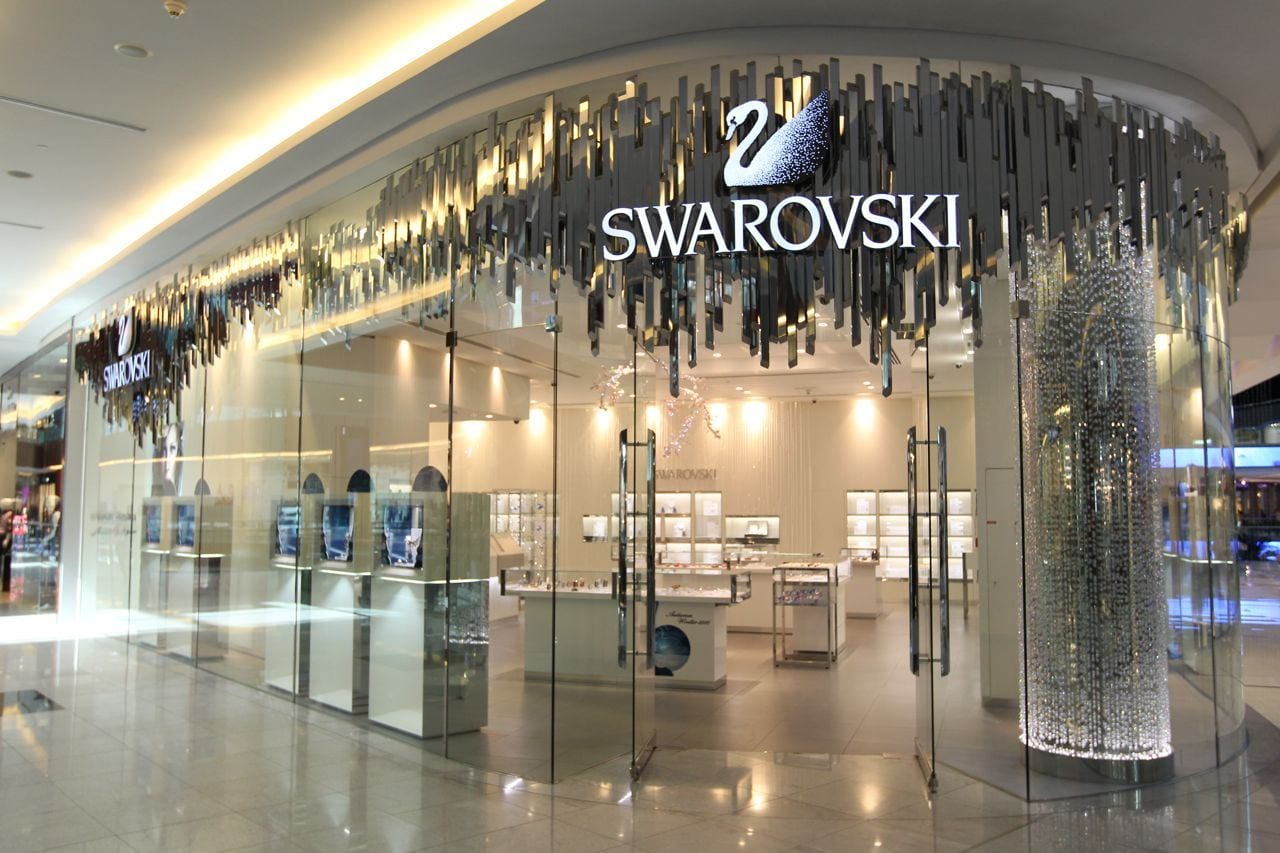
    Crystal maker and jeweller Swarovski has opened its Perth flagship store, the second store in Australia to feature the brand’s crystal drop chandelier, as part of its new retail design.

    Located in Perth Hay Street Mall, the new Western Australia store boasts Swarovski’s new ‘crystal forest’ outfit, which was unveiled at the opening of the Austrian firm’s Sydney store in May.

    Updating the store layout, Swarovski employed renowned architect Tokujin Yoshioka as part of the brand’s plan to improve aesthetics across its distribution network.

    Robert Buchbauer, member of the Swarovski Family and of the company’s CEO, said the new store design is “a tremendous illustration of Swarovski’s contemporary vision and taste for design.”

    In an interview earlier in the year, Australia managing director of Swarovksi, Brett Spinks, said Australia was a “growing” market, adding that the high-end jeweller plans to roll out more new store in 2017.
    “We see robust growth in our retail channel both online and in our physical [stores],” Brinks said.

    “Due to this significant growth, we are delighted to be able to further meet our consumer demand by opening a number of new stores in 2017.”

    The Australian watch and jewellery retailing industry grew by an annualised 2.9% over the five years through 2016-17, to reach $3.3 billion, according to Ibis World.

  • Hyundai Motor bets on new small SUV as China sales skid

    Hyundai Motor bets on new small SUV as China sales skid

    Hyundai Motor unveiled its first subcompact sport utility vehicle Kona for advanced markets, including the United States, Europe and South Korea, as it tries to offset sliding sales in China and catch up with rivals in the segment.

    The South Korean automaker said it would also launch an electric version of the Kona small sport utility vehicle (SUV) next year and a smaller SUV and a large SUV by 2020.

    This comes at a time when Hyundai looks set to miss its sales target for a third straight year due to the unpopularity of its mainstay small sedans and political tensions between Beijing and Seoul that have battered sales in China, the company’s biggest market.

    Hyundai, which together with its affiliate Kia is the world’s No.5 automaker, previously sold subcompact SUVs only in emerging markets, missing out on strong growth in the segment in South Korea, the United States and Europe.

    The subcompact SUV is the top-performing segment globally, growing at an annual average of 46 percent from 2010 to 2016, Hyundai said, citing IHS Automotive data.

    “Even as the global SUV market is nearing saturation, we believe that extra small or small SUVs have more room for growth than large SUVs,” Hyundai Motor Co Vice Chairman Chung Eui-sun said during a launch event near Seoul.

    The automaker launched the Kona in South Korea on Tuesday, and said it would roll out the small SUV in Europe in August and the United States in December. It aims to sell over 200,000 of the vehicles globally next year.

    The Kona will compete with Nissan’s Juke and Honda’s CR-V in the United States.

    Hyundai and Kia in January said they aimed to increase global sales by 5 percent this year, but their combined sales fell 7 percent over January to May, hit by slowing Chinese and U.S. sales.

    “Our sales plan has suffered a setback, but we will use this as an opportunity to overhaul our products,” said Chung, the only son of Hyundai Motor Group Chairman Chung Mong-koo.

    He also said Hyundai would beef up cooperation with technology firms like Cisco, Baidu and Uber instead of buying other automakers.

    Kia will join Hyundai in the launch of the former’s subcompact SUV, Stonic, starting next month.

  • Spark taps Nokia to prepare network for 5G

    Spark taps Nokia to prepare network for 5G

    New Zealand’s Spark has contracted Nokia to upgrade the operator’s core infrastructure in preparation of 5G, ultra-fast broadband and the IoT.

    Spark will expand the capacity of its wireless network, which is primarily based on a Nokia IP/MPLS network, with a new router with terabit capacity.

    The three-year contract will see Nokia providing advanced IP and optical equipment and software for the Spark network. The agreement follows Spark’s recent launch of 200Gbps per wavelength fiber link using Nokia optical transport network technology.

    Spark general manager of partnering, procurement and vendor management Rajesh Singhh said the operator is committed to ensuring New Zealand is one of the first countries globally to be ready to adopt 5G. He said upgrading to 5G will help enable the government’s goal of improving broadband services in rural areas.

    “This strategic partnership is a key step for us to realize our vision of a data-driven future for New Zealand. Nokia is helping us to achieve worldwide leadership in preparing for 5G,” he said.

    “It will allow us to offer our customers the most advanced mobile and fixed broadband services anywhere, efficiently and securely.”

    “We are very pleased to continue our strategic partnership with Spark, which is committed to keeping New Zealanders at the cutting edge of technology,” added Kent Wong, head of Nokia’s Asia-Pacific IP business.

    “Spark’s investment will safely accommodate future growth as they benefit from Nokia’s global reach, expertise and agility. We are excited to help them be among the first customers to begin the move to 5G.”

  • Michael Kors eyes 100 more China stores on new retail strategy

    Michael Kors eyes 100 more China stores on new retail strategy

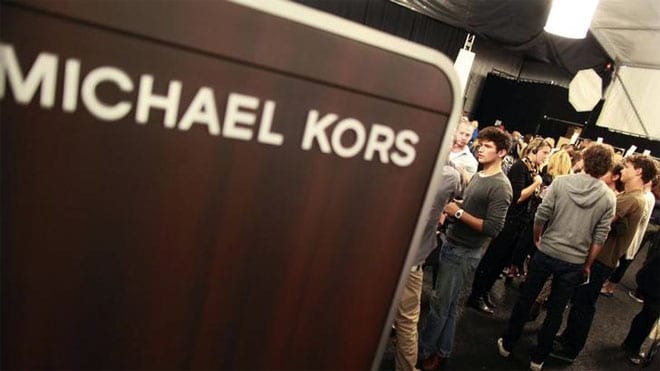
    Michael Kors plans to open around 100 new stores in China in next three years, as the US brand continues to plan for mass global retail closures, forming part of its recently revealed “Runway 2020” restructuring program to turn dwindling sales around.

    Michael Kors’ initial restructuring announcement came in early June, after the brand posted a double-digit same-store sales percentage decline in the fourth quarter ending April. It was here that Michael Kors said it would shutter 125 stores worldwide.

    “We think that the [accessories market] is down slightly in North America. We think it’s flattish in Europe. We think it’s up slightly in Asia,” John D. Idol, Michael Kors’ chairman and chief executive officer, told WWD in a recent interview.

    The New York-based luxury leathergoods and accessories added that its main growth drivers moving forward will be its retail presence in Asia and its surging men’s category — each of which have the potential to become $1 billion segments of the brand.

    Growth in Asia is the main, most achievable goal, according to Idol, with plans for 100 stores to be added in China alone and more elsewhere in the region over the next few years. There are 111 Michael Kors stores in Asia in operation now.

    In addition, some 100 global stores will be renovated to sell better a new Michael Kors luxury collection, and reposition the high-end factor of Michael Kors to a bored clientele. Speciality salons for shoes are another area of planned growth for the brand.

    The company also wishes to minimise wholesale, aiming for a revived Michael Kors brand that is 30 per cent wholesale and 70 per cent retail.

    With the aforementioned retail and product changes in put in place, Michael Kors said it expected revenue of $4.25 billion for fiscal year 2018 and also forecasts a high single-digit drop in same-store sales.

    For the fourth quarter ended April 1, total sales fell 11.2 per cent to $1.06 billion. Analysts had expected $1.05 billion.

  • Philippines, Indonesia agree to open up banking

    Philippines, Indonesia agree to open up banking

    The Philippines and Indonesia are set to ink an agreement this weekend to open up the banking industry aimed at greater financial integration and economic development among members of the Association of Southeast Asian Nations (ASEAN).

    Bangko Sentral ng Pilipinas Governor Amando Tetangco Jr. said a letter of intent (LOI) on the ASEAN Banking Integration Framework (ABIF) would be signed with Indonesia’s Financial Services Authority (OJK) in Jakarta over the weekend.

    “The LOI is in line with the ASEAN Banking Integration initiative,” he said.

    Under the ABIF timeline, each ASEAN-5 including Indonesia, Malaysia, Philippines, Singapore, and Thailand should conclude at least one bilateral agreement with another ASEAN-5 country by 2018.

    By 2020, ABIF targets the conclusion or near conclusion of at least one bilateral agreement for each of the 10 ASEAN members as part of the integration under the ASEAN Economic Community (AEC).

    The integrated system is defined under the ASEAN Financial Integration Framework (AIFF) that also covers the integration of the banking markets wherein qualified ASEAN banks (QABs).

    To achieve the consolidation of the 10 ASEAN markets into a single economic base with the launch of the AEC in 2015, the BSP chief said there is a need to have an integrated and well-functioning regional financial system.

    “It reflects the mutual interest of the BSP and OJK to begin discussions intended to culminate in a formal bilateral agreement on the entry of QABs between the Philippines and Indonesia,” the outgoing BSP chief said.

    The BSP signed the Declaration of Conclusion of Negotiations (DCN) with Bank Negara Malaysia and the LOI with the Bank of Thailand on the sidelines of the 3rd ASEAN Finance Ministers’ and Central Bank Governors’ joint meeting and related meetings in Mactan, Cebu last April 6.

    Tetangco signed the DCN on the entry of Qualified ASEAN Banks between the Philippines and Malaysia with Bank Negara Malaysia Governor Muhammad bin Ibrahim as well as the LOI with Bank of Thailand Governor Veerathai Santiprabhob.

    The agreement signed by the BSP and Bank Negara Malaysia reflects the specific conditions for QABs from each jurisdiction to enter the other in a manner that is consistent with global banking standards and meets host jurisdiction regulations.

    The ASEAN region has a great potential as savings rate reached 33 percent of gross domestic product (GDP) against the lower rate of 25 percent in other regions.

    For his part, BSP Deputy Governor Nestor Espenilla Jr. said several foreign banks have expressed interest in establishing its presence in the Philippines through several modes of entry.

    Aside from entering as a QAB or as a strategic partner, he said foreign banks could enter the country through Republic Act 10641 signed by former president Benigno Aquino III in July 2014.

  • Google Settles Tax Matter with Indonesia

    Google Settles Tax Matter with Indonesia

    Alphabet’s Google has made an agreement with Indonesia for 2016 after a long-standing dispute over charges of insufficient annual payments to the government.

    The latest settlement figure has been estimated using a new method which will finally conclude to charges that the tech firm was avoiding the required tax payments in the country.

    The report also corresponds with information that a decision was expected very soon.

    Indonesia’s Finance Minister Sri Mulyani Indrawati said on Tuesday that they already have reached a deal with the group based on prior year but they cannot release the figure yet.

    Google has so far not provided any statement.

    It is a notable progress seeing that both parties have settled for just one collection year. The government had been going after the search giant for tax avoidance and failure to pay the required amount for the past five years.

    Indonesia is doing the same but is coming across complication with tracking the money flow in view of the fact that the revenue of Google’s Indonesian business is managed at its Asia Pacific headquarters located in Singapore.

    The search giant was expected to pay about $376 million in taxes for 2015 but only paid $391,000.

    Google had mentioned that the estimated size of Indonesia’s digital advertising market was at $300 million for the said year.

    If found to have failed with taking care of payments, the five years of back taxes will cost the company a fine of over $400 million for only the year 2015 which could put a slight pressure on Google’s swamp bank account.

    Indonesia is keen on increasing tax collection and is planning to make use of the newly loaded capital to reduce its budget shortage and add fund to their current infrastructure program in the country.

    Other governments around the world are searching as well so as to crack down on what they consider as business tax avoidance.

    Other News

    During the Ramadhan, Google Indonesia e-commerce consumer behavior presented data searches on areas associated with the celebration in the country rose up to 28 percent while spending added to 30 percent.

    The country’s e-commerce head Henry Prihatna said that fashion product had the biggest sales gaining 180 percent, home appliances with 100 percent high and cellular phones edged up 80 percent.

    On the other hand, Google’s shares closed its Monday session losing as much as 0.7 percent to $942.90 on the Nasdaq Composite Index as tech stocks declined nearly 75 percent with Apple, Microsoft and Alphabet falling almost 6.5 percent.

    The three companies make up for approximately 30 percent of the index’s weighting.

    However, some experts believed that investors do not have to worry as any decline is likely to be buying opportunity and that the market is overbought from a long-term point of view and estimations are extended.

    With regards to money flows, investors may think about merging the variation between rising and falling matter in the stock market or their preferred index with money flows so as to have a useful perspective.

  • Cebu Pacific deploys bigger planes, opens new domestic routes

    Cebu Pacific deploys bigger planes, opens new domestic routes

    Cebu Pacific said Tuesday it would upgrade some domestic routes to larger aircraft, open new routes and add more flights to meet strong demand.

    The 180-seater Airbus A320 will replace the 78-seater turboprop ATR 72-600 for flights from Manila to Cauyan, Legazpi and Virac, the country’s largest airline said in a statement.

    The freed up ATR aircraft will be deployed to five new routes, which open late next month: Cebu-Masbate; Cagayan de Oro-Zamboanga; Davao-Dumaguete; Davao-Tacloban; and Cotabato-Zamboanga.

    The Gokongwei-owned airline said it would add 10 more flights weekly between Manila and Iloilo, 6 between manila and Bacolod, and 8 between Manila and Cagayan de Oro.

    Cebu Pacific is also shifting to the 436-seater Airbus A330 for its Cebu, Davao and Hong Kong routes by July 4.

  • SoftBank to trial 5G in Tokyo with ZTE

    SoftBank to trial 5G in Tokyo with ZTE

    Japan’s SoftBank and ZTE have teamed up to trial 5G over 4.5-GHz spectrum in metropolitan areas of Tokyo.

    SoftBank and ZTE will work to verify the performance of ZTE 5G end-to-end network equipment in sub 6-GHz spectrum under real-world conditions in a major, densely populated city.

    The two companies have been conducting joint R&D on foundational 5G technologies including massive MIMO (multiple-input multiple-output), and plan to further explore using the technology for 5G.

    “We have a long term partnership with SoftBank in key 5G technologies such as massive MIMO, and we are pleased to expand that work to accelerate 5G new radio readiness,” ZTE chief scientist Dr Xiang Jiying commented.

    “As a global leading provider of M-ICT mobile technologies, ZTE is making substantial investments in 5G and cooperating with industry partners to promote the maturity of the 5G ecosystem. We are confident that ZTE will be one of the first vendors to deliver end-to-end 5G solutions for our customers.”

  • Au Bon Pain bakery bound for Cambodia

    Au Bon Pain bakery bound for Cambodia

    The Au Bon Pain bakery chain is to expand into Cambodia, Laos, Myanmar and Vietnam by the end of the year, to serve growing middle classes in the region.

    The expansion was announced by Mudman Plc, the authorised Thai franchisee of the Au Bon Pain bakery chain, and international retail food brands including Baskin Robbins and Dunkin’ Donuts. The firm said the development is intended to capitalise on increasing consumer purchasing power and the strong economies in the Cambodia, Laos, Myanmar and Vietnam (CLMV) market.

    Nadim Xavier Salhani, chief executive of Mudman, was quoted in the Bangkok Post as saying the company recently won rights from ABP Corporation, the owner of Au Bon Pain in the US, to open branches of the bakery in the CLMV market.

    “The company is considering forming a joint venture with local partners or investing on its own in CLMV. The investment model will be finalised by year-end, while the expansion of Au Bon Pain bakery chain into the CLMV market reflects the market’s potential.” said Salhani. “Mudman expects to open the first Au Bon Pain branch in Cambodia or Vietnam by the end of this year or next.”

    Express Food Group general manager Virak Tep told Khmer Times there is plenty of room for coffee and bakery chains to expand into the Cambodian market. He added that many international brands are entering into Cambodia, with the notable exception of McDonald’s. “I think Au Bon Pain is a good brand and with strong potential for a franchiser who wishes to bring it to Cambodia,” said Virak.

    Salhani said purchasing power is increasing due to economic stability and growth in the CLMV, while international brands are popular among younger people.

    Sales volumes in the food and beverage sector in Cambodia is rising at about 10 percent year-on-year, attracting many international franchises, according to Virak.

    “Cambodian consumer trends show increasing preference for international brands from Thailand, Korea, Vietnam, Singapore, Malaysia and the US. As long as the taste of the food or drink meets their expectations, they will go for those brands,” said Virak. He added his company will open another outlet of the chain restaurant Bar B Q Plaza in Cambodia by the end of this year.

    Hem Samnang, area manager of BreadTalk Cambodia, a franchise brand from Singapore, agreed that coffee and bakery chains have room to grow in Cambodia. He said consumer awareness of international brands has been getting better over the past decade, as peoples’ incomes have gone up.

    “Purchasing power in cafes and bakeries is rising day by day, both among youths, middle-aged people and families,” said Samnang said. “Cambodia still has more opportunities for international brands to enter the market as the country’s GDP is rising. I cannot say Au Bon Pain will be my competitor until I see their products.”