Author: Mei Ling Tan

  • Ted Baker sees e-tail surge, US, Europe and Asia stores also drive growth

    Ted Baker sees e-tail surge, US, Europe and Asia stores also drive growth

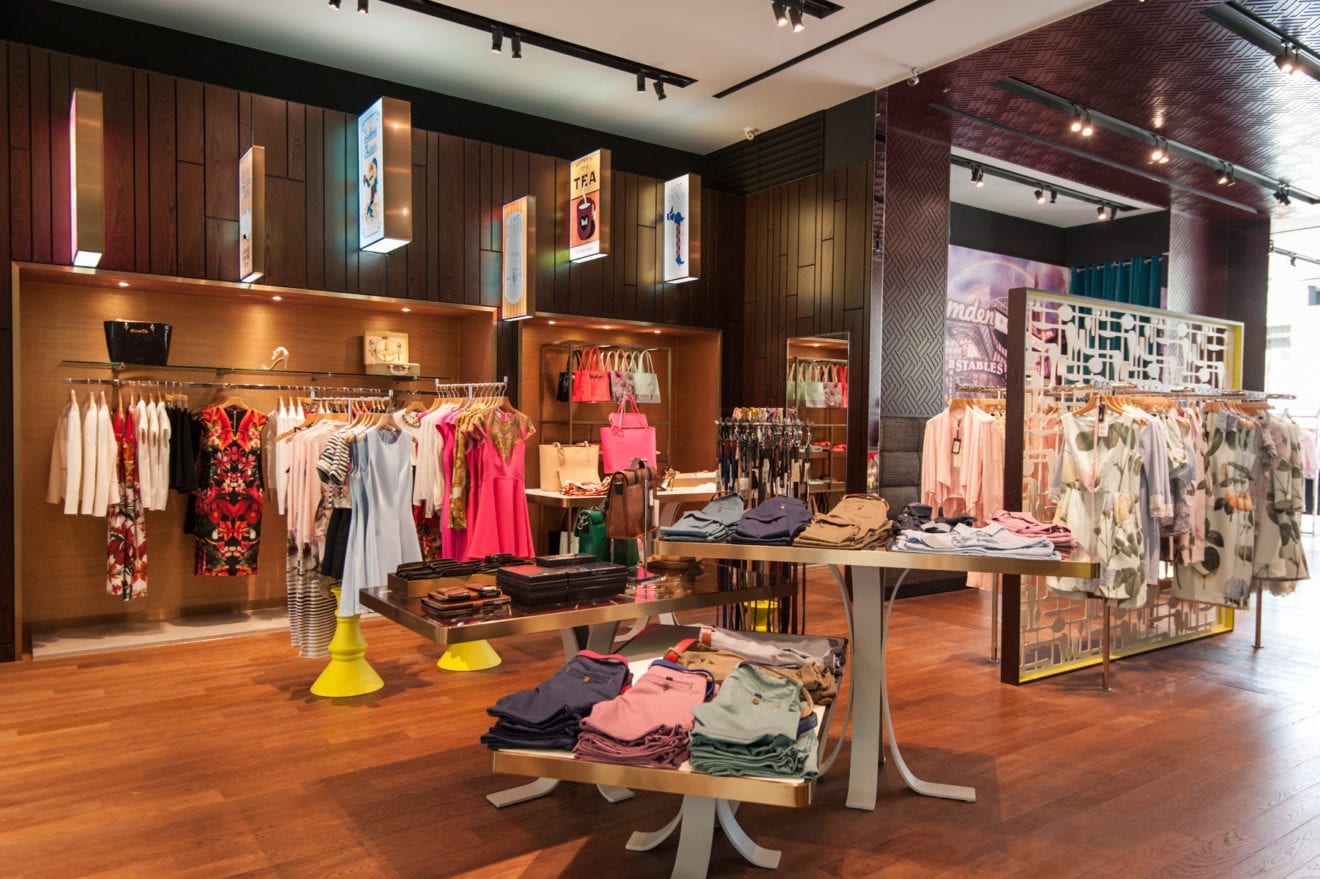
    Ted Baker proved once again on Tuesday why it’s one of the most buoyant names in an otherwise-under-pressure UK fashion retail sector. The mid-market women’s and menswear chain detailed a double-digit sales rise, further global expansion, yet another e-commerce spurt and a healthy wholesale business.

    That’s some achievement given the backdrop of increasing consumer caution, a focus on experiences over ‘stuff’ and UK uncertainty about Brexit, the election and inflation. The company is not immune to the effects of these negative pressures and to the slowdown that is hitting the rest of the industry. But it’s most definitely outperforming many of its peers, which can only bode well for the time – if it comes – when sector conditions improve.

    So, what did we learn Tuesday morning? In the 19 weeks to June 10, its group revenue rose 14.2% year-on-year with total retail sales up 14.3% and up 8.4% on a constant currency basis. That was “despite external factors continuing to impact trading conditions across some of our global markets.”

    Its e-commerce business continued to perform well with sales increasing an undeniably impressive 35.9% (or 32.3% in constant currency) “reflecting continued growth across our e-commerce sites as well as the strength of our retail proposition.”  Average retail square footage rose by 4.9% to 398,000 sq ft, which means comparable sales are clearly rising ahead of the chain’s overall space expansion.

    As well as performing well at home, global growth is key and this expansion of the brand continued with successful openings in Los Angeles, Paris, and Shanghai, its first Dutch store in Roermond and further concession openings in premium department stores in France, Germany, Japan, South Korea, and the Netherlands. It opened new concessions in the UK too and also relocated its Miami Aventura and Tokyo stores.

    Wholesale, which is a lower-margin channel from which many higher-end brands have chosen to retreat, is performing well for Ted Baker, as it is for a number of its most buoyant UK peers (such as the Superdry label).  Sales for the period increased 13.8% (or 8.9% in constant currency) reflecting good performances from both its UK and North American businesses.

    The company said that both its retail and wholesale gross margins were in line with its expectations and that its product and territorial licensees continue to perform well, reflecting the global strength and appeal of the brand with licensed store openings in Dubai, Kuwait and Mexico.

  • Telstra acquires UK’s Company85

    Telstra acquires UK’s Company85

    Telstra has acquired Company85, a UK-based technology services business and provider of data center, workspace, cloud, security and network services.

    Christopher Smith, executive director of Telstra’s business technology services, said the acquisition was aligned to Telstra’s strategy to grow its technology services business internationally and would significantly enhance Telstra’s service offering for UK and European based business and government customers.

    “Company85’s offering is strongly aligned to the existing suite of technology consulting services we offer our Australian customers, and is consistent with the strategic investments we have made in Australia. Importantly, it aligns with our strategy to grow our services business in regions that are key hubs for multinational corporations,” Smith said. “We see the UK as a key market for our growing technology services business and a strong platform to expand into Europe.”

    Smith also said Company85 was highly regarded in the UK for its consulting and technical expertise, including the market-leading approach it has developed for standardizing and automating data center migrations.

    “Company85’s broad set of consulting capabilities will help us to differentiate our offerings in Europe. We will be able to engage in IT transformation conversations with prospective customers early in the proposal stage, which we believe will help to strengthen our position and create demand for our network services in the region,” Smith said.

    Company85 CEO Adrian Spink said the combination of Telstra’s world class network and global reach, with Company85’s technical expertise and strong relationships with CIOS and Chief Information Security Officers at leading organizations, would create exciting growth opportunities.

    “Being part of Telstra we see a tremendous opportunity to reach new customers and accelerate our international expansion,” Spink said.

  • BT unleash newest cloud service

    BT unleash newest cloud service

    BT has announced the launch of “BT Connect Intelligence InfoVista-as-a-Service,” a new application performance management solution delivered from the cloud.

    The company said the new solution adds a scalable “as-a-service” flexible pricing model to BT’s applications performance management portfolio, BT Connect Intelligence.

    It delivers InfoVista’s Ipanema technology via BT’s cloud infrastructure, integrating all the capabilities organizations need to orchestrate the performance of business applications running across their network, BT said.

    BT Connect Intelligence InfoVista-as-a-Service gives enterprises greater flexibility and cost control as they manage the experience of users accessing business-critical applications across the corporate network, regardless of how they connect and how much bandwidth they use. It also gives enterprises a more predictable view of costs as its user-based pricing is not affected by the growth of network bandwidth.

    The new solution is available globally to both BT’s existing network customers and organizations using other network providers.

    The software underpinning the solution is delivered from BT’s cloud infrastructure and its management is now possible over the Internet.

  • Taxi booking service via Facebook Messenger launched

    Taxi booking service via Facebook Messenger launched

    The service launched by Thanh Cong Taxi on June 13 is the first of its kind in Vietnam, allowing people to hail a cab from the company without having to download and use a taxi-hailing app.

    Nguyen Khuong Duy, representative of Thanh Cong Taxi, said that Thanh Cong Taxi is a pioneer in Vietnam using the latest Chatbot technology of Facebook to develop the service.

    Thanh Cong company takes advantage of the Facebook Messenger application installed in mobile phones of some 40 million Vietnamese people to offer services to customers in the traditional to luxury segments.

    Besides requesting a ride, people can easily leave their comments by chatting via the messenger, Duy said.

  • De Beers Inks Japan Retail Grading Deal

    De Beers Inks Japan Retail Grading Deal

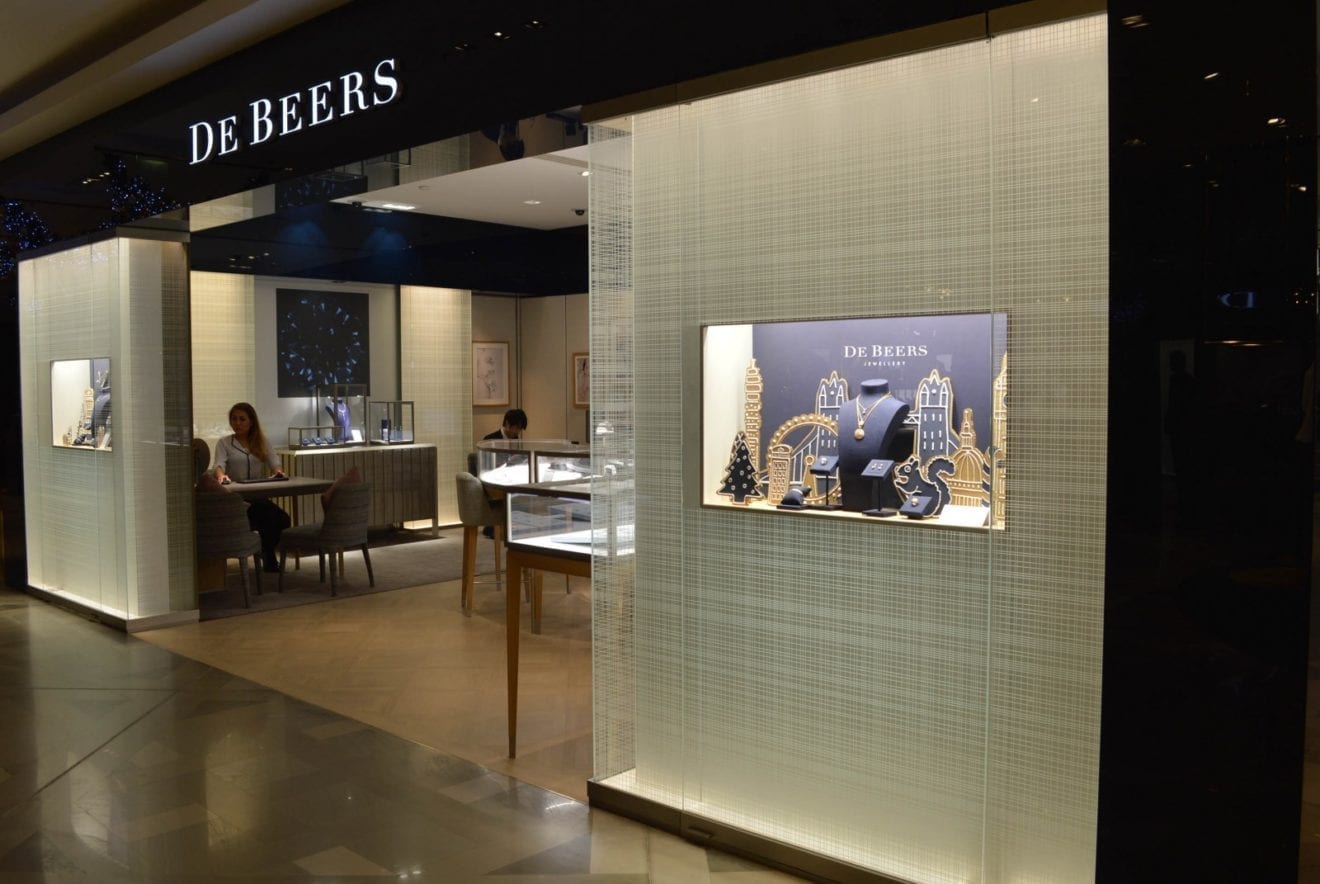
    The International Institute of Diamond Grading & Research (IIDGR) has partnered with Japanese bridal-jewelry retailer I-PRIMO to provide it with polished grading reports.

    The De Beers-owned laboratory will grade diamonds showcased at all 68 I-PRIMO stores in Japan, with the aim of boosting consumer confidence, IIDGR said last week. The reports will use De Beers’ “Ideal Optical Symmetry” technology, which provides a magnified image of a stone’s light performance. The companies plan to extend the program eventually to I-PRIMO’s stores in Taiwan, Hong Kong and Shanghai.

    IIDGR has previously entered partnerships with Singapore’s Soo Keep Group, as well as Hong Kong-based retailer Luk Fook, with which it issues co-branded grading reports.

    “Our ability to tailor bespoke solutions for our customers, backed by our innovative proprietary technologies, has been well-received and is supporting our growth in the region,” said IIDGR president Jonathan Kendall.

  • Apple To Open The First Retail Store Taiwan

    Apple To Open The First Retail Store Taiwan

    Apple has revealed that it will be opening its first store in Taiwan in the near future. The store will be located at the Taipei 101 skycraper and will take up space on both the basement level and the ground floor. The combined floor space will be approximately 1,322 square meters. Taipei 101 is the fourth tallest building in the world and is in the Xinyi District of Taiwan’s capital city.

    “Taiwan’s first Apple Store will soon open in Taipei! Apple Store – Taipei 101 will provide a space for people to experience Apple’s full range of products and services; At the same time, for people to come together to create, share and learn,”

    Authorized resellers

    While the specific opening date has not been set, a Taiwanese publication has speculated that it could happen as soon towards the end of this month. Currently, Apple sells its range of products such as iPhones, iPads, Apple Watch, Mac desktop and laptop computers via third-party resellers. Apple also sells to its Taiwanese customers directly online. Some of the Apple authorized resellers in Taiwan include iStore, Studio A and Youth.

    So far there are about 495 Apple stores spread across 17 countries around the globe. The United States takes the lion’s share of the stores having 270 of them while the remainder is distributed in the rest of the world. In the greater China area, Apple has more than 40 retail stores with five of them located in Hong Kong and about 41 retail stores located in Mainland China. Most of these stores are stationed in MixC and Galaxy shopping malls.

    Recruitment of employees

    Apple’s plans to open a retail store in Taiwan first came to the fore in 2016 when it posted ads for various positions include business leader, store leader, manager, expert and genius. This came at a time after Apple had raised in a bond offering approximately $1.38 billion in Taiwan. The absence of an Apple retail store in Taiwan has been ironic since majority of the key suppliers to Apple such as Foxconn are headquartered on the island.

  • L&K expanding cosmetics presence in Asia

    L&K expanding cosmetics presence in Asia

    L&K Cosmetic CEO Kwon Yong-soo hopes to turn the company into one of Asia’s leading beauty brands by expanding its private label product lineup.

    Kwon, 50, started his business in 1993 as a Seoul-based cosmetics retailer, going through a series of ups and downs before launching the cosmetics retail and manufacturing brand in 2013.

    “My first online cosmetics site generated more than 15 billion won ($13.33 million) in annual sales back in the early 2000s when the internet shopping industry began to take shape,” he said in an interview at the firm’s Tokyo branch, Friday.

    But he said it was not long before he ended up with mounting debt due to burgeoning rivalry and the lack of private brand products.

    “As a retailer, I could not pile up enough margins by selling products from other companies,” he said. “But I was confident if we develop and manufacture our own products, the quality will be more trustworthy, helping us to generate more revenue.”

    He has experience running some cosmetics retail stores in one of Korea’s largest shopping districts, Myeong-dong in central Seoul.

    “Overseas travelers — mostly from China and Japan — are the major revenue source for most cosmetics stores there. But the Myeong-dong stores always come with risks — such as cross-border political conflict or the spread of infectious diseases,” he said.

    “For example, when the Middle East Respiratory Syndrome (MERS) hit Korea in 2015, we had to suffer deficits for almost half a year when foreign travelers were reluctant to visit the nation.”

    Such unexpected risks were the key reasons for his decision to tap into the Japanese market.

    L&K Japan was established in 2013 when Kwon turned his eyes on manufacturing private label products.

    The decision came as he has sought to create a stable and profitable source of income for the long term, which he thought would prevent the recurrence of his previous downfalls.

    “We launched our private mask sheet pack brand, Mask Diary, in 2014, with our Japanese subsidiary running three retail stores there,” he said. “Mask Diary will also be available in the Chinese market soon.”

    Other private products of the company include wrinkle essence, regenerative skin cream and UV protection BB cream.

    In a bid to seek new revenue areas, L&K Japan also opened an aesthetic skin massage therapy store in Tokyo’s commercial center of Shinjuku last week.

    “Demand for Korean beauty services and products remains strong in Japan,” he said. “That is why I decided to start the new business here.”

    The company also seeks to continue its winning streak in China. In 2015, L&K opened its online mall at the country’s largest online marketplace, Taobao. The Korean firm has since forged partnerships with such local internet titans as Alibaba and Alipay.

    “Our ultimate goal is to diversify our product lineup and enhance our brand image, so we can set foot in other territories such as North America and Europe,” he said. “Toward that end, L&K will continue to spare no efforts in cosmetics R&D.”

  • Bolloré Logistics Awarded at the China Offshore Convention in Shenzhen

    Bolloré Logistics Awarded at the China Offshore Convention in Shenzhen

    Present at the China Offshore Convention in Shenzhen from May 25-26, 2017, Bolloré Logistics was honored to receive the “Outstanding Offshore Logistics Contractor of the Year” award in front of the Oil & Gas community.

    “After 50 years serving the Oil & Gas industry around the world, Bolloré Logistics is proud to be recognized for its expertise. I would like to once again thank the organizers for such a great event,” says Mr. Bruce Boudailler, Regional Director Oil & Gas at Bolloré Logistics Asia-Pacific, who received the award on behalf of the Oil & Gas teams from the hands of Mr. Weiping Hu, President of China Overseas Development Association.

    80% of the results were based on WeChat online voting platform, a Chinese social media application, while the 20% remaining were based on the voting of the expert committee from the summit. Initiated by the organizer on WeChat, the voting period went on from May 12-20, 2017, in an effort to select nine outstanding companies in different sectors related to the offshore. Among the last three nominated outstanding logistics contractors of the year, Bolloré Logistics received the most votes out of more than 11,000 persons who voted.

    Recently tasked to lead the Oil & Gas global strategy of Bolloré Logistics, Mr. Bruce Boudailler would like to take this moment to praise the value and commitment of our dedicated teams of specialists, which have been supporting all the segments of the industry.

    Present in the major global hubs, as well as in most of the oil and gas producing countries, with a strong implementation in Africa and Asia, Bolloré Logistics offers tailor-made solutions on contract or project basis.

    The company prides itself in delivering simple or complex solutions to its oil & gas customers, sometimes in the most challenging areas of the world, in full compliance with Ethics and the QHSE standards. Differentiating itself from the other major international freight forwarders, Bolloré Logistics has developed a very strong expertise and track record in handling very big capital asset projects onshore and offshore, and extended the logistics chain beyond the entry gates of the supply bases.

    As an extension of the supply chain, Bolloré Logistics has been integrating for many years in its solutions marine services as well as supply base services. With reference to the Oil & Gas players and many industry suppliers in its portfolio, Bolloré Logistics also created a movie showcasing its technical expertise of logistics operations dedicated to the Oil & Gas in Port Gentil, Gabon.

  • Samsung Experience Store Large unveiled at The Gardens Mall

    Samsung Experience Store Large unveiled at The Gardens Mall

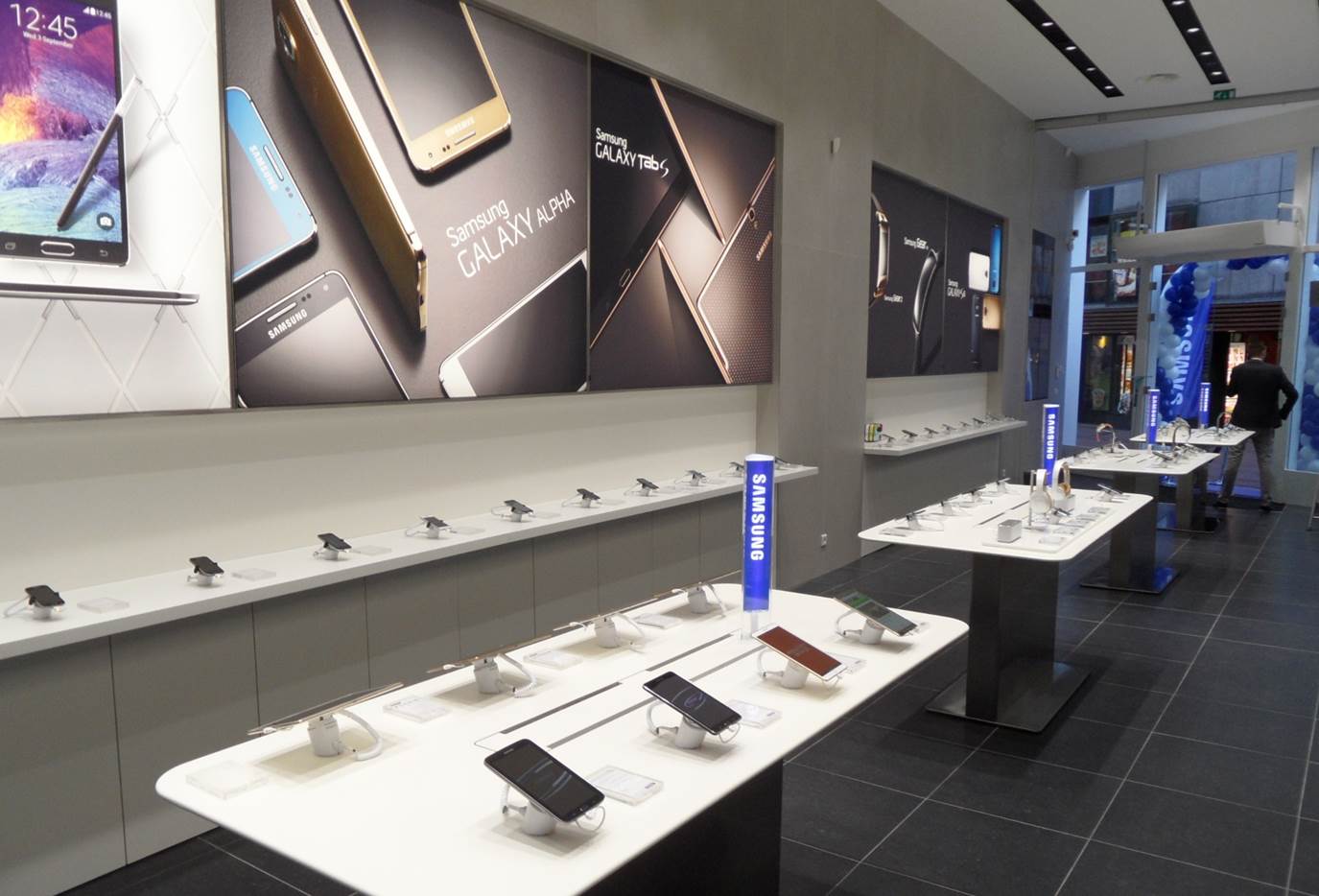
    Samsung Malaysia Electronics relaunched one of its most prominent Samsung Experience Store Large (SESLs) in Malaysia at The Gardens Mall here.

    Being only one of a handful of SESL establishments in the country with vast retail area that integrates merchandising, experiential zones and customer services, the grand reopening marked the establishment’s first major revamp since its inception in 2013.

    Samsung Malaysia Electronics said the SESL, operated by Welfon Telecommunication Sdn Bhd, is designed to be a one-stop retail solution, offering the full range of smartphones, tablets, wearables, ecosystem and genuine accessories.

    The company’s Head of Mobile Business, Hosea Heen, said the new flagship store concept is a reflection of the Samsung philosophy to provide the best costumer experience.

    “With this new SESL located at one of the prime shopping locations in the Klang Valley, we look forward to encouraging an open and welcoming (environment) that goes beyond just brick-and-mortar, and resonate with consumers from all walks of life,” he said.

    The SESL also provides the Samsung Smart Service, allowing customers to obtain after-sales care at the service centre, including full hardware repair, software upgrades, device consultation and advice.

    From June 9 to 27, in conjunction with the SESL’s grand opening, customers who spend over RM1,000 will receive a complimentary Mono Bluetooth Headset; while visitors who register their first payment via card will be entitled to a free Samsung Wireless Charger Stand worth RM279.

  • More Filipinos adopt online trading at stock mart

    More Filipinos adopt online trading at stock mart

    Online accounts at the Philippine stock market grew 27.8 percent to 302,516 from 236,669 in 2015, according to the annual Philippine Stock Exchange (PSE) report.

    PSE reported also that the total number of stock market accounts, which include both online and traditional accounts, was at 8.5 percent, from 712,549 accounts in 2015 to 773,187 at the end of 2016.

    “Technology has played a big role in the growth of our investor base over the years. We are pleased to see that more Filipinos have continued to adopt online trading to invest in the stock market,” said PSE President and CEO Ramon S. Monzon.

    Investors with online accounts trade themselves, typing in their buy or sell orders on their online trading platform whereas investors with accounts in traditional stock brokerage firms have to call their broker to place their orders.

    The minimum required amount to open an account and the broker’s fee of online stock brokerage firms are usually lower compared with their traditional counterpart. Online investors are typically provided research materials by their online broker while investors of traditional firms also get research reports and they can discuss their investing options with their broker.

    The continued growth in online accounts also translated to higher trading activity. In 2016, 53.7 percent of total market transactions, measured in terms of number of trades, were accounted for by online accounts.

    This was the first year that online transactions were responsible for more than half of the market’s total transactions. Online trades registered a 41.4 percent growth in value turnover, which translated to a 9.3 percent share in the market’s total value turnover.

    Of the total stock market accounts, 98.2 percent, or 759,952, were held by local investors while the remaining 1.8 percent or 13,595 were accounts of foreign investors.

    The PSE’s 2016 Stock Market Investor Profile survey showed that among the retail investors using online and traditional brokering, 43.7 percent earn less than P500,000 annually. This was followed by investors earning above P1 million at 31.1 percent while investors with an annual income of Php 500,000 to Php 1 million made up 25.2 percent of the total retail investors.

    Meanwhile, close to 40 percent of investors were aged 30 to 44. The 45- to 59-year-old investors covered 26.4 percent of the total count and those who are 60 and above comprised 19.3 percent. The young millennials or those between 18 and 29 had accounted for 14.8 percent of investors.

    In terms of geographic location, a total of 96.1 percent of retail investors are based locally while the rest are based overseas.

    The concentration of retail investors continue to be in Metro Manila, which accounted for 70.6 percent of investors. Luzon cornered 16.4 percent of investors with Visayas and Mindanao making up for 6.2 percent and 2.9 percent, respectively. Overseas-based investors comprised 3.9 percent of retail accounts.

    “We are pleased with the continued growth of stock market investors in the market. Clearly, we have a long way to go and we at the PSE will continue our financial literacy programs to demystify stock market investing and make investing as understandable and accessible as bank or insurance products,”. Monzon said.

    In the past year, the PSE has intensified its market education efforts by doubling the number of its free seminars both in Metro Manila and in Cebu. To cater to the increasing number of tech-savvy Filipinos, PSE has been regularly conducting free webinars to discuss basic and intermediate topics. These webinars attract close to 500 participants per session.

    Online retail investors younger, more spread across the country

    The PSE survey results showed that close to three quarters of online retail investors are aged 18 to 44 years. Among online investors, 21.7 percent are in the 18 to 29 year old range, 52.9 percent are 30 to 44 years old, 18.4 percent are 44 to 60 years old, while the remaining 7.0 percent were 60 years and above.

    In terms of location, retail online investors are also less concentrated in Metro Manila compared to the geographical distribution of total stock market accounts. For online accounts, Metro Manila investors only accounted for 57.0 percent of the total online accounts, with Luzon, Visayas and Mindanao online investors making up a much bigger share of 26.0 percent, 6.8 percent and 4.2 percent, respectively. The share of overseas-based clients is also higher at 5.9 percent for online accounts.

    The survey also showed that online traders invest even with lesser incomes. Those earning P500,000 or less annually comprise 60.3 percent of the total online trading population. Meanwhile, 23.7 percent of online traders earn between P500,000 to P1 million per year and the remaining 16.0 percent have incomes of more than P1 million annually.

    “The numbers show that more investors are finding out that participating in the stock market is actually an affordable investment. We are also happy that our online brokers have been able to reach out to more Filipinos outside of Metro Manila towards making stock market investing more inclusive,” Monzon added.

  • Vietjet makes its debut at Hong Kong International Travel Expo with 5,000 free tickets

    Vietjet makes its debut at Hong Kong International Travel Expo with 5,000 free tickets

    The fast growing New-Age Carrier, Vietjet, will take part in the International Travel Expo (ITE) Hong Kong to be held at the Hong Kong Convention and Exhibition Centre from June 15 to 18, 2017.

    As a debutant of this star event of the Asia travel industry, Vietjet will turn out in full force with attractive and informative displays, special offers and promotion programs. The Vietjet Booth at G102 with the theme, “Free Summer, Fly for Free,” will spot the very attractive Vietjet Red and Yellow to welcome its visitors. They will be treated to interesting and interactive activities, from photo-taking opportunities with the popular Vietjet crew to mobile phone games with special prizes for the winners.

    The highlight of Vietjet’s presence in the ITE will be a feature performance on the Grand Stage at 2:00 pm on June 17 (Saturday), with a spectacular Flashmob Dance by a leading dance group Helki.Fam. There will also be a drama and game session on stage for visitors from the public.

    To celebrate Vietjet’s participation in the ITE, Vietjet also offers 5,000 promotional tickets priced only from HKD0 (excluding taxes & airport fees) within the golden hour 13h-15h during the ITE’s four-day time from June 15 to June 18, 2017 only at their website. The promotion applies for Ho Chi Minh City-Hong Kong route with flight time being from August 1 to December 31, 2017 (excluding national holidays).

    The recent Vietjet Summer Promotion, “Free Summer, Fly for Free,” held between April 25 and June 15, 2017, has proven to be very popular among travelers with the 1 million HKD0 tickets.

  • Entrepreneur is trying to cure Hong Kong’s meat addiction

    Entrepreneur is trying to cure Hong Kong’s meat addiction

    David Yeung believes that meat is the new tobacco. But the long-time vegetarian and practicing Buddhist won’t try to get you to stop eating meat. He just wants you to consider eating less.

    That’s what he’s trying to do with the citizens of Hong Kong, who collectively have the highest per-capita meat and seafood consumption in the world, according to a 2015 study by Euromonitor. His life’s mission is to get the citizens of our planet — particularly his home city — to cut out eating animals at least one day a week. And it’s working: Menus inspired by his “Green Monday” philosophy appear in hundreds of restaurants across Hong Kong, and at schools and universities around the world.

    Though Mr Yeung grew up in Hong Kong, he spent over a decade living in New York. When he was 16, his family moved to nearby New Jersey to be closer to the fashion industry. His father was one of the four founders of the global clothing company Tommy Bahama. Mr Yeung graduated from Columbia University in 1998 with a degree in engineering, spent a few years consulting for PwC and then launched a software startup (now defunct). He grew up eating meat, but in 2001 he dove into Buddhist philosophy, a core tenet of which is the truth of suffering. It wasn’t a big leap for Mr Yeung to go from looking inward to looking outward, and he quickly concluded that by changing his diet he could stop the suffering of animals.

    Shortly before moving back to Hong Kong, he read about Meatless Monday, a campaign that urged Americans to take one day each week off from eating meat. “I thought the word meatless was not the best choice. People aren’t going to say, ‘Oh, today let’s go meatless,’” he said. He also figured that regardless of language, ethnicity, geography and gender, “green” was a universally known word. “Monday”, too. “These have to be two of the top 50 words that people around the world learn,” said Mr Yeung. So he made it positive and actionable: “Green Monday.”

    Today, you can find Green Monday vegetarian menus offered at hundreds of restaurants around Hong Kong. It’s incorporated into the food service at over 600 universities in 31 countries, 84 of them in the US, including Mr Yeung’s alma mater. You’ll find Green Monday menus at several hotel chains and even at Bon Appétit Management Co ., which is best known for managing Google’s dining empire. The one thing he insists on when he signs up new partners is that they don’t remove meat entirely from the menu. This may seem counterintuitive, but it’s a mind shift. “If you completely remove choices for people, that’s when you get a backlash,” he said.

    These small but important partnerships provide the foundational arm of Mr Yeung’s Green Monday empire with helpful branding to grow its name recognition; to date, it works with more than 2,000 schools. As a mission-based entrepreneur, he makes it an integral part of his social-impact goals, which Mr Yeung defines as bringing a triple-bottom-line to his organization: His work is good for the business, the community and the environment.

    After several successful years promoting Green Monday, Mr Yeung opened the world’s first plant-based retail store in 2015. Think 7-11 (grab-n-go food) meets Muji (clean, functional design) meets Hello Kitty café (fun). He named it Green Common . It was a place for people to eat delicious vegetarian food that riffs on Chinese classics — such as Hainan Chicken, minus the bird — and then take home the newest plant-based groceries. There are non-edible items too, including reusable water bottles, green cleaning products, skincare, cookbooks and vegetable growing kits. In addition to investing in plant-based products, Mr Yeung has become the distributor of choice for American brands that want to break into the Asian market, such as Follow Your Heart, Daiya, Califia Farms, Gardein, and Miyoko’s Creamery. Today, there are four locations, all in iconic Hong Kong retail spots including Harbour City Mall and Landmark Alexandra House.

    What Mr Yeung is most excited about is the April launch of the Beyond Meat burger — a pea-protein, plant-based burger that looks like meat (the pink hue on the inside comes from beets) and tastes like meat. (Really.) Sales are already more than double the projections, a great sign for its broader acceptance. As an investor in the US startup, Mr Yeung has become one of its biggest advocates. “He has been enormously supportive of our brand,” said Ethan Brown, chief executive officer of Beyond Meat and a fellow plant champion. Brown had wanted to expand into the international market, but he needed the right partner. “It was an easy decision to make,” said Brown. “He handles all the marketing and distribution, and he’s positioned the burger in the only way that someone that lives [in Hong Kong] could do.” The one tricky piece was naming the dish. Because there is no word for ‘beyond’ in Cantonese, Mr Yeung calls it the “future burger”. For the entrepreneur, the burger was from the future and for the future.

    Mr Yeung’s journey towards social entrepreneurship wouldn’t have gone anywhere without two key figures. One of them is Green Monday co-founder Francis Ngai, a local investor who previously founded Social Ventures Hong Kong, a philanthropic venture fund that invests in social mission-based startups that work to address urban challenges such as wealth discrepancy, handicap accessibility and elderly issues in Hong Kong. The two shared a diet and a cause. “We would have lunch for hours and talk about ideas to change the world,” said Mr Yeung. At one of those lunches, Mr Ngai said, “David, is there anything we can do with food that is social?” Mr Yeung put down his chopsticks and said, “Duh”.

    At the time, all that the two vegetarians could order were beef noodles — and then ask the server to hold the beef. “But they charge you the same, and they give you that look,” recalled Mr Yeung. The look that says you are giving them trouble.

    The other influence was Mr Yeung’s father, who oversaw the manufacturing side of Tommy Bahama before it sold for $325 million in 2003. In living the Buddhist philosophy — an awareness of those less fortunate — Mr Yeung’s father gave a good deal of his income to charity. These two men inspired Mr Yeung to create his for-profit business, along with his charitable foundation. The third piece of his plant-forward company is a venture fund that focuses on impact investments. Green Monday Ventures pilot fund invested in Beyond Meat, and its second fund invested in Perfect Day, a cellular agriculture company making dairy from cell culture;  Lighter, which provides meal-planning technology and services; and other food-tech startups.

    It may be hard to keep track of all of Mr Yeung’s efforts, but it’s clear that his outreach has, in some way, nudged his fellow Hong Kongers toward a more sustainable lifestyle. PizzaExpress, a UK-based chain with over 20 stores in Hong Kong, has experienced double-digit growth in its vegetarian menu sales on Mondays, and it sees a halo effect on other days. Said Liam Collette, the general manager of PizzaExpress for Hong Kong, United Arab Emirates and Singapore, “We have more than doubled the people eating vegetarian [menu items] on Monday, but we have also had a sustained uplift of overall customers on Mondays. I see this a success for us and for customers.” A third-party study of over 1,000 people, sponsored by Green Monday, found that before the launch, only 5% of the autonomous territory’s more than 7 million inhabitants had a goal of adjusting their consumption. Today, 22% of Hong Kong’s inhabitants report practicing some form of plant-based diet. Other signs? In 2013, Hong Kong had only 130 vegetarian restaurants, and today there are close to 250. Financially, Mr Yeung is on track, too. Revenue for the entire organization, including retail and wholesale, should fall somewhere in the $10 million to $12 million range.

    Mr Yeung’s next target, after Hong Kong? Mainland China. “The food industry is going through a lot of change,” he said, undaunted by the scope of this challenge. “We are exactly at a point where disruption is due.”

  • Zalora and SPH Magazines Announce Strategic Content Partnership

    Zalora and SPH Magazines Announce Strategic Content Partnership

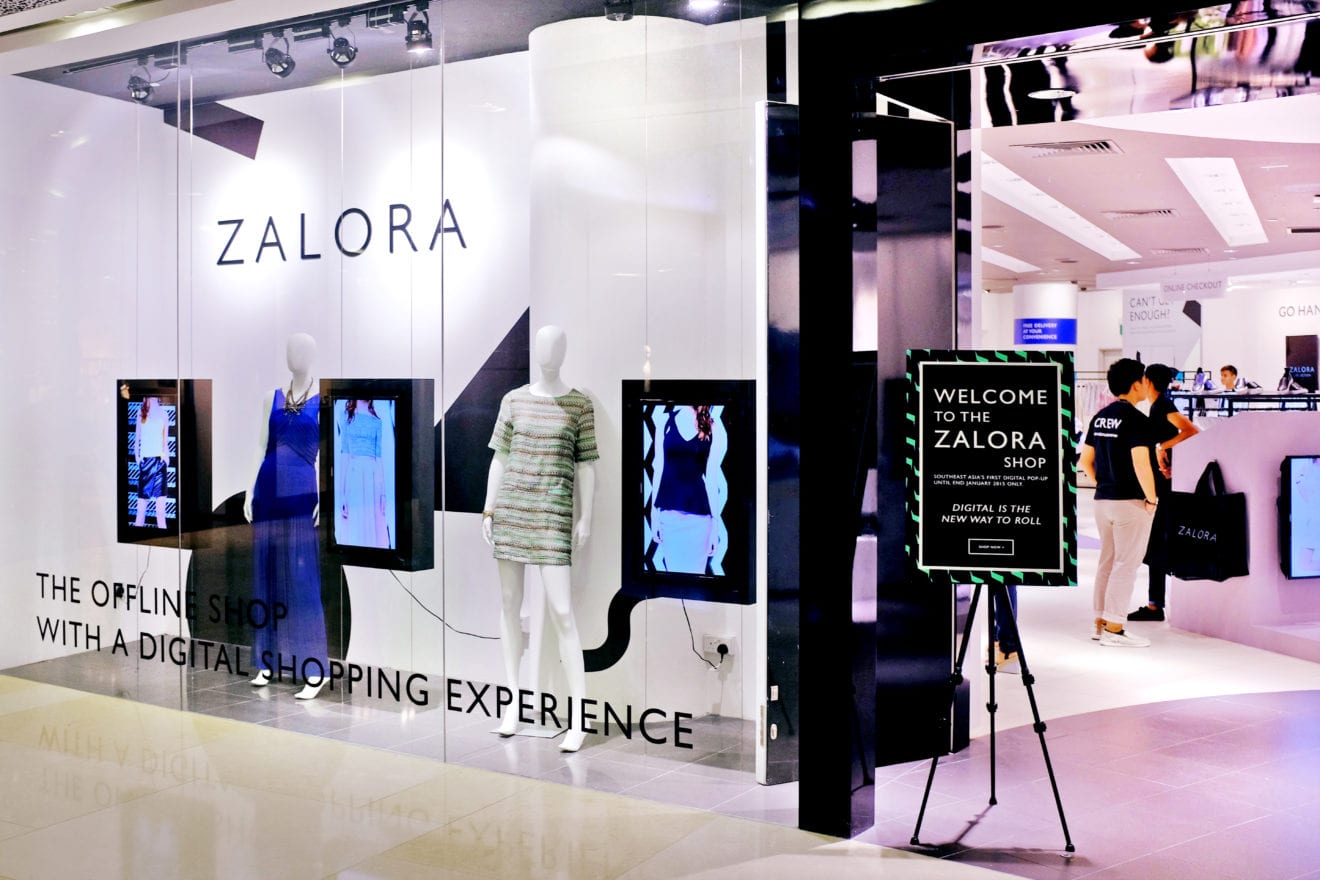
    ZALORA, Asia’s Online Fashion Destination, announces its partnership with SPH Magazines Women’s Network. The partnership will see both organisations share editorial content and syndication between SPH Magazine’s Women’s Network Magazines and ZALORA’s fashion magazine, ZCOOP, as well as cross-channel promotions on their social media pages. This collaboration brings together two of Singapore’s fashion authorities, the country’s most popular fashion e-commerce website and Singapore’s top magazines including Her World, Female, Cleo, Singapore Women’s Weekly, and Shape.

    As one of the leading organisations in Singapore catering to women, SPH Magazine Women’s Network is an authoritative voice on the trends and wants of the Singaporean women, while being able to deliver relevant and useful content to their readers. They boast of award winning editorials and have intimate knowledge of the latest news in lifestyle, fashion and beauty.

    The content partnership with SPH Magazines Women’s Network is a step forward for both organisations in terms of engaging the consumer through separate channels. Today’s consumers are comfortable with the notion of mixing and matching different elements of their persona, a trait that carries over into their shopping choices, according to analysts and academics. Providing them a plethora of brands with mixes of independent designers and boutiques while being able to keep them entertained through online publications, social media and other channels is the ideal way to create and maintain the bonds created between ZALORA and our consumers.

    Tito Costa, Chief Marketing Officer of ZALORA Group said, “Media consumption is at its height in Singapore, and as a leading fashion e-tailer, ZALORA must communicate our fashion proposition in an entertaining manner and establish authority in curating styles. As such, ZALORA recognises the need to invest in engaging consumers through different touch points as well as providing an optimised presence on mobile devices. This partnership with SPH Magazines Women’s Network will allow us to deliver content that our consumers want and need while tapping onto that to build a stronger brand.

    We are very excited to see what SPH Magazines Women’s Network will create.” “A brand needs more than its own voice. SPH Magazines are uniquely positioned as a content partner as we give our clients the credible, persuasive voice of third-party endorsement with the authority of our editorial experts and the connection we have with our audiences,” said Eileen Chia, Head of Product and Partnerships, Women’s Network.

    Added Ivan Wong, Commercial Director, SPHM Pte Ltd, “Great content which attracts, delights and grows customer relationships is the one constant in the evolving digital economy. This bespoke partnership with Zalora affirms our strategy of placing audience and content at the heart of our business.”

    The partnership will include content syndication, content production and cross-channel promotion through social media and other publications. Exclusive ZALORA deals will also be available to readers of SPH Magazines through this partnership and special subscription rates will be given to ZALORA customers.

  • Weak peso to weaken consumer spending

    Weak peso to weaken consumer spending

    Household spending in the Philippines is expected to post a slower growth this year because of rising consumer prices and a weaker currency, Business Monitor International, a unit of Fitch Group, said in a report over the weekend.

    “In US dollar terms, household spending growth will experience a significant deceleration from 6 percent in 2016 to 0.8 percent in 2017 as we forecast the Philippine peso to depreciate against the US dollar over 2017,” BMI said.

    “With that said, household spending will grow at an annual average of 8 percent between 2017 and 2021, reaching $337 billion up from $232 billion in 2017,” it said.

    BMI expects essential spending to remain dominant over its forecast period and account for 74 percent of total household spending in 2017 and 75 percent by 2021.  Essential items include food, beverage, housing, clothing, utilities and basic services.

    Essential spending is expected to grow at an average annual rate of 9.5 percent between 2017 and 2021, with non-essential spending growing at an average rate of 8.4 percent over the same period.

    “As a result of low average incomes and a large rural population, essentials will continue to account for the majority of household spending in the medium term at least. Food and non-alcoholic drinks, housing and utilities and transport will continue to account for the majority of household retail spending, rising from 74 percent of total spending in 2017 to 75 percent by 2021,” it said.

    The increasing cost of housing and utilities will demand a greater portion of household income over the coming years. Albeit declining, the share of household spending on food and drink will remain the largest, forecast at 37.3 percent in 2021 (down from 38 percent in 2017), it said.

    “Non-essential spending is expected to continue to account for a roughly stable portion of total household retail spending over our forecast period. Real wages are steadily on the rise, however, which should boost spending in the non essentials sector over the long term, and will prompt consumers to upgrade to higher quality essentials,” BMI said.

    Household spending in the Philippines is dominated by spending on food and non-alcoholic drinks; housing and utilities and transport, which accounts for 69 percent of total spending. BMI expects spending patterns in the Philippines to remain fairly static over the medium term with the top three spending categories retaining their positions.

    “Housing and utilities will make the greatest gains over our forecast period, increasing by 1.15 percentage points as a proportion of total spending on the back of rising costs in this segment. Food and

    non-alcoholic drinks spending will experience the largest decline over this period, registering a decline 0.7 percent as a proportion of total household spending,” it said.

    “Food and non-alcoholic drinks account for the largest share of retail spending in the Philippines, at 38 percent of total household spending in 2017. We expect that the sub-sector will maintain its

    dominant role in the Philippines’s retail basket, as low household income levels in the country encourage subsistence-based spending,” it said.

    Households are forecast to spend P4.4 trillion on food and non-alcoholic drinks in 2017, while spending another P190 billion on alcoholic drinks and tobacco. BMI said over the medium term, food and drink will continue to dominate household spending, as overall income levels remain low.

  • Cashing in on mobile payment

    Cashing in on mobile payment

    Eight years ago, Starbucks developed an app for mobile payments. Today, it is still held up as the gold standard in the US. In Asia’s rapidly developing market, where mobile payment is almost a decade ahead of the West, things are quite different.

    In China, you can mobile pay for everything, from cab fares to a utility bill. In 2015, WeChat registered more financial transactions in a day than PayPal did in 12 months. It is not just China that is adopting the trend – mobile payment is also making massive inroads in South-east Asia as shopping apps gain popularity.

    In Singapore, there are 30,000 retail points accepting contactless payment methods, such as Apple Pay, Android Pay and Samsung Pay. In Indonesia, the most populous country in the region with 250 million people, most of the big traditional retailers are unveiling e-commerce plans of their own.

    In a recent GfK study, The Connected Asian Consumer, consumers here and in Indonesia reported fairly high usage of shopping apps (37 per cent and 35 per cent, respectively).

    This growth is fuelled by affordable smartphones, a massive young and tech-savvy population as well as efforts by governments and telco operators to expand and improve high-speed wireless networks.

    It is only a matter of time before mobile payment goes mainstream.

    Unfortunately for traditional retailers, the age of e-commerce also produced a new consumer – we like to call them the “connected consumer” – and their behaviours are shaping the future of retail.

    In the GfK FutureBuy survey last year of 20,000 consumers in 20 markets, it was found that shoppers are becoming less loyal to any one retailer.

    Almost half (46 per cent) of all consumers (aged 14 to 65) stated that they are less loyal when shopping. This figure rises among the youngest consumers – to 53 per cent of Gen Y (aged 18 to 29) and 58 per cent of Gen Z (aged 14 to 17).

    For retailers who understand the connected consumer, there are opportunities to stay ahead of the competition – and mobile payment is a huge part of it.

    Despite becoming less loyal, many connected consumers expect an omni-channel shopping experience, where they interact with a brand. Connected consumers in Asia-Pacific seek the best of both worlds.

    For example, shoppers in China are the most likely to embrace omni-channel shopping – 71 per cent shop both online and in-store, while Australian shoppers are the most likely to shun online shopping (62 per cent shop exclusively in-store).

    In contrast, Indians lead the way in online shopping with 23 per cent shopping the category exclusively online.

    NEW REALITY

    Therefore, it is important for retailers to understand the new reality of the omni-channel consumer and know that the “whatever, whenever” culture demands that user experience is seamless across all devices.

    If retailers do not understand this, customers will simply delete their app and move on.

    At the same time, using analytics, retailers can receive customer data to offer more personalised services. In turn, this presents an opportunity to generate long-term relationships.

    But it is important to note that not all connected consumers are the same.

    For example, older consumers are not as comfortable with sharing personal information as younger consumers.

    Understanding the shopper’s purchase journey is easier these days, with research offering detailed information on the route shoppers take when making a purchase as well as ways in which online and offline touchpoints influence their decisions.

    We believe that brands that understand, respect and protect the consumers’ individual boundaries will earn their loyalty.

    As mobile payments continue to grow in Asia-Pacific, businesses in sectors such as financial services, cybersecurity and telecommunications stand to gain, and they can evolve to support the changing landscape.

    Loyalty is great, but to really retain customers in today’s omni-channel space, the shopping experience is equally important.

    To connected consumers, simplicity and convenience is paramount. Not only do they expect everything quickly, they also lose their patience faster.

    For large retailers, mobile payment offers the opportunity to segment and target consumers much more effectively, with highly-personalised offers.

    Discounts and offers can be integrated into mobile payment, replacing the need for physical coupons and entering information into a terminal.

    Connected consumers will wave goodbye to the traditional checkout queue and benefit from customised rewards.

    Mobile payment also offers a chance for small retailers to move into a new era of retailing. Freed from high transaction fees and with new ways to connect with consumers, they can embark on the kind of personalisation and targeting that is usually the privilege of larger players.

    With e-commerce here to stay, there is plenty of potential for retail businesses to leverage research intelligence to adequately design and develop strategies to target this group of consumers.