Author: Mei Ling Tan

  • Maxis’ continuous plans to enhance network in Sarawak

    Maxis’ continuous plans to enhance network in Sarawak

    Maxis Bhd’s (Maxis) network expansion plans in Sarawak is an ongoing development, as it currently covers 89 per cent of the population with its 4G network.

    According to head of Sarawak region Alexius Bong, at this point in time, Maxis has no intentions to stop and will continue to expand “even to the smallest towns.”

    “Because you can’t hide the fact that people are consuming more data and you need that network to support (demand), it is definitely a focus in our plan to do that,” he revealed in an exclusive interview with The Borneo Post earlier this week.

    On plans to open more retail outlets in Sarawak, Bong stressed that Maxis is very focused on retail expansion and distribution footprint. It currently has nine Maxis centres and 15 dealer-operated retail stores in the state.

    “By this year end, we intend to add six more retail stores plus another 20 dealer-operated stores at the same time to increase our distribution footprint, it goes in tandem with our network,” he added.

    These plans will occur throughout Sarawak, with the focus now on secondary towns. Maxis also intends for customers to have the same experience whether they are visiting Maxis centres or dealer-operated outlets.

    Continuous network expansion will be one of the key areas Maxis focuses on in Sarawak this year.

    “We want to continue expanding our network, we have such a great product that syncs together with this,” Bong added.

    “At any one time, the focus of the network is not just the network itself – it ties back to the consumer.

    “With that, we want to ensure that whether it is prepaid, postpaid, or wireless broadband (WBB), we will continue to enhance our product proposition especially on internet offerings.

    “Of course, we will continue to expand our distribution and retail because market presence is significant in our business and is very important.”

    At the same time, Maxis would also like to relook at the small and medium enterprises (SMEs) in Malaysia and, how they can help SMEs digitalise the way they work.

    Head of prepaid, Navin Manian, highlighted that Maxis is also trying to give a much better experience by going purely digital for its customers.

    “It’s not just all product-centric, we also look into the customer experience,” Navin said.

    “So it’s a big drive now, for both postpaid and prepaid segments to move our customers from the old UMB usage behaviour to now the app and we have been doing very good in that space.”

    On the expected takeup rate for the prepaid segment in East Malaysia, Navin revealed that Maxis has been doing really well in the region over the past few years from a series of products that they have been launching.

    “We are very confident that this will continue a good growth trajectory for us here,” he added.

  • China cuts retail fuel prices

    China cuts retail fuel prices

    China will cut the retail prices of both gasoline and diesel for the fifth time this year from Friday following a drop in global oil prices, the country’s top economic planner said Friday.

    Gas prices will decrease by 180 yuan ($26) per ton, while the diesel price will be lowered by 175 yuan per ton, according to the National Development and Reform Commission (NDRC).

    China adjusts domestic retail oil prices when international crude prices change by more than 50 yuan per ton within a 10 working-day period.

    Global crude prices have fallen in recent weeks following expansion of U.S. crude oil output and inventories. The NDRC expected global crude prices to continue to fluctuate, tempered by the effects of falling OPEC output and rising U.S. production.

    The NDRC said it is closely monitoring the current pricing mechanism and will continue improvements based on market changes.

  • Alibaba’s Tmall expands in Hong Kong and Southeast Asia to non-Chinese speaking consumers

    Alibaba’s Tmall expands in Hong Kong and Southeast Asia to non-Chinese speaking consumers

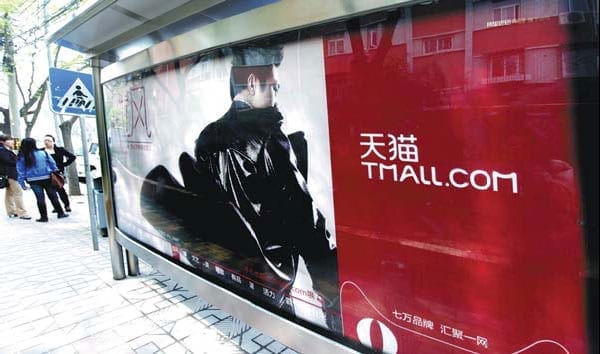
    Alibaba Group, the world’s largest e-commerce operator, is beefing up its presence in online shopping by further expanding in Hong Kong and tapping more English and non-Chinese speaking consumers in Southeast Asia.

    The group has officially launched its Tmall online supermarket in Hong Kong this week, and teamed up since March with Southeast Asian e-commerce operator Lazada – which it acquired last year – to sell selected Taobao products under the “Taobao Collection” direct to shoppers in Singapore.

    The English-language Lazada site also operates local sites in Indonesia, Malaysia, the Philippines, Thailand and Vietnam, where some of them are in local languages.

    The Malaysian platform will be launched on June 13, where shoppers will be able to take advantage of lower prices from Chinese sellers, said Elaine Hu, director of Tmall World on Monday.

    In Hong Kong, Tmall sells daily necessities from food to household products imported from the mainland to local Hong Kong consumers. With its warehouse in Shenzhen – the group’s largest in South China region – consumers will be able to receive the products within the next day after placing the order on the Hong Kong supermarket, Hu said.

    She said mainland foodstuff and snacks not easily available in Hong Kong were the most popular products.

    Household supplies, especially paper products were also selling well as consumers look for cost-saving products from the mainland, Hu said, based on data obtained from the trial run of the platform in the city since late April.

    “The average value of orders on Tmall HK’s supermarket is surprisingly high so far. It is the highest compared to any other regions in China and shows the strong spending power of local Hong Kong consumers,” Hu said, without giving specific figures.

    The variety of goods available to Hong Kong consumers pales in comparison to those on the mainland platform as fresh products and heavy goods are generally not included. Products imported to Hong Kong are also subject to rules of local regulations.

    Unlike on the mainland where the group faces fierce competition from rivals including the Tencent-backed JD.com, Hu said Alibaba was a dominant e-commerce player in the Hong Kong market.

    In 2012, the group said it had 1.4 million registered users in Hong Kong. Hu said the figure was higher now but she didn’t give any figures.

    According a survey released by Mastercard in April this year, topping the most popular category list for Hong Kong online consumers is clothing and accessories, with 41.7 per cent out of more than 8,000 consumers surveyed. Supermarket products came second, with 37.5 per cent. Other popular categories: airlines – 36.7 per cent; travel – 36.2 per cent; and hotels – 36.0 per cent.

    The strengthening of retail business in Hong Kong and other overseas markets is seen to serve as a part of Alibaba long-term plan that aims to provide services to as many as 2 billion consumers worldwide by the year of 2036, Alibaba founder Jack Ma Yun told the investors in Hangzhou last week.

    In response to the recent dispute between Alibaba and logistics firm SF Express, Hu said SF remained a partner of Tmall and for overseas transactions, downplaying the impact.

  • Indonesia may lose 50,000 tourists because of Qatar crisis

    Indonesia may lose 50,000 tourists because of Qatar crisis

    The Indonesian government is predicting that the recent severing of ties between several Arab countries and Qatar would deal a blow to the archipelago’s tourism industry, with 50,000 expected tourists not showing up because of the crisis, a senior official said on Tuesday.

    That is the number of visitors Tourism Minister Arief Yahya said Qatar Airways, for the most part, would have brought to Indonesia this year.

    “Given that seven months are left in the year 2017, we estimate we will lose about 50,000 foreign tourists as a result of the boycott of Qatar,” Arief told reporters at the State Palace on Tuesday.

    In order to reduce the expected loss, Arief said his ministry would coordinate with the Transportation Ministry to transfer the license given to the Qatari airline to other airlines, such as Emirates and Etihad.

    “First of all, I will ask the Transportation Ministry to transfer the aircraft license given to Qatar Airways to other airlines. We have no option as they Qatar Airways could not fly their aircraft anyway,” Arief said.

    Qatar Airways said on its official website it had suspended all flights to Saudi Arabia.

    Saudi Arabia and several of its allies on Monday cut relations with Qatar, accusing it of supporting extremism.

  • Tesla Model X electric cars to hit Indonesian roads

    Tesla Model X electric cars to hit Indonesian roads

    Indonesians can now purchase US-made Tesla Model X electronic luxury cars with price tags starting from US$200,000. Prestige Image Motorcars, the sole Tesla motor car distributor in Indonesia, began exhibiting one of the cars at its showroom in Pluit, North Jakarta, on Tuesday.

    Prestige president director Rudy Salim said his company started receiving orders for the car in June with deliveries, beginning in September.

    “Tesla cars have good prospects in the Indonesian market, considering they are not the most expensive among the super cars in the country,” Rudy said.

    Each Telsa cars is equipped with a battery that supports up to 350 kilometers of travel, much more than Indonesians generally needed, Rudy said.

    A director of the Association of Indonesian Automotive Manufacturers (Gaikindo), Jongkie Sugiarto, said that Tesla cars would have their own fans in Indonesia.

    However, he said, luxury cars belonged to a specific and limited market, which did not grow significantly.

    According to Gaikindo, the domestic sales of diesel and petrol cars in the first four months of the year increased by 5.71 percent to 373,407 from 352,072 in the same period of 2016.

    Tesla Inc. of the United States was quoted by Reuters as saying in April 2 that its first-quarter vehicle deliveries jumped by 69 percent to 25,000 vehicles compared to the same period last year.

  • Swisslog launches latest intralogistics innovations

    Swisslog launches latest intralogistics innovations

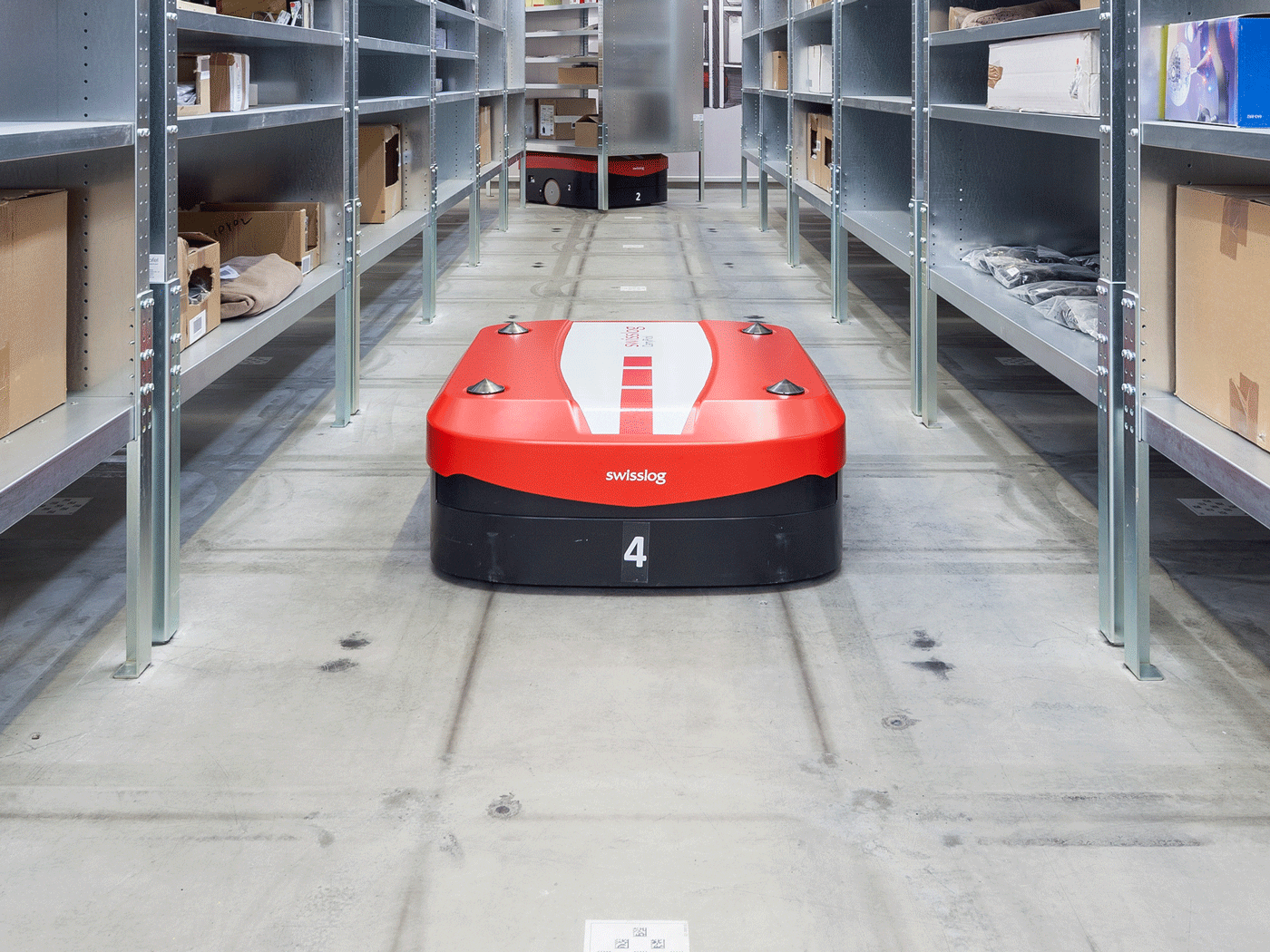
    Intralogistics provider, Swisslog, is expanding the capabilities of the business by reinforcing its presence in France. The global provider of robotic and data-driven intralogistics solutions have customers which include Unilever, Coca-Cola, Pfizer and Walmart. Already having a well-established presence within the French materials handling market from its base in Paris, Swisslog has historically focused on healthcare related applications. Building on its success since becoming part of the KUKA Group, the company is now investing in the delivery of materials handling technologies to the French intralogistics market.

    Managing director of Swisslog WDS in France and the Benelux, Peter De Henau, believes now is the best time to expand in the French warehouse and distribution sector. Says De Henau: “We are delighted to be strengthening our presence in this vital European market. Together with KUKA, we are looking forward to opening the next chapter of Industry 4.0. Our latest innovations and proven technologies are testament to the support Swisslog can offer businesses in France to help them grow smart with their intralogistics.”

    Edin del Mar is the latest to join De Henau’s growing team as business development manager for Swisslog WDS in France. Joining Swisslog from Savoye, del Mar will play an integral part in expanding the provider’s presence in the country.

    “I am really pleased to be joining Swisslog at this exciting time,” says del Mar. “Swisslog is ready to offer the widest and smartest portfolio of automated intralogistics technologies and services to the French market and is investing heavily in bringing in a new era of innovations alongside its proven solutions portfolio. Having launched multiple solutions such as ACPaQ, PowerStore and SynQ this year alone, I am excited to be working with solutions that many leading global brands are already benefiting from.”

    Swisslog offers proven solutions, including the popular AutoStore and CarryPick technologies, to businesses looking to expand or simply take their first steps into automated warehousing, and the firm’s expansion is already accelerating with the first CarryPick solution being installed for a retailer in the Northern French region.

    “Our technologies may be innovative but our approach is fairly straightforward,” adds Peter De Henau. “While we eradicate risk and inefficiencies for customers by delivering new or adapted solutions, it often takes face-to-face discussions to really demonstrate the range of opportunities we can offer. That’s why it’s great to have a local presence in this key European market.”
    “Every single customer is important at Swisslog and we pride ourselves on providing a tailored approach,” concludes De Henau. “Businesses looking to connect their warehouse to the future can arrange a visit to see our technology in action via www.swisslog.com/solutions-automatisees.”

    Swisslog designs, develops and delivers best-in-class automation solutions for forward-thinking warehouses and distribution centers. The company offers integrated systems and services from a single source – from consulting to design, implementation and lifetime customer service. Behind its growing success are 2,300 employees worldwide, supporting customers in more than 50 countries.

  • Vietnam, Indonesia have much faster internet speed than India

    Vietnam, Indonesia have much faster internet speed than India

    Ranked 89 globally, India’s average internet connection speed of 6.5 Mbps is slower than Vietnam and Indonesia, which are much faster, a report said on Friday.

    While Vietnam, ranked 58, had an average internet speed of 9.5 Mbps, Indonesia at rank 77 provided a speed of 7.2 Mbps, Global leader in content delivery network services Akamai Technologies’ “The State of the Internet Q1 2017 Connectivity” found.

    The report also said that India witnessed a 4 Mbps broadband adoption of 42 per cent in the first quarter of 2017 with a year-over-year change of 81 per cent.

    “Increases in connection speeds and broadband penetration have helped enable the internet to support levels of traffic that even just a few years ago would have been unimaginable,” David Belson, editor of the report, said in a statement.

    “One need only look to January’s US Presidential Inauguration, which broke traffic records for live coverage of a single news event delivered by Akamai, largely thanks to the combination of more viewers watching at increasingly higher levels of video quality,” Belson added.

    On a global level, the average connection speed was 7.2 Mbps – an increase of 15 per cent year-over-year – and average peak connection speed increased 28 per cent year-over-year to 44.6 Mbps in the first quarter of 2017.

    “While South Korea had the highest average connection speed globally at 28.6 Mbps in the first quarter, Singapore had the highest peak connection speed at 184.5 Mbps in the first quarter,” the report noted.

    The average mobile connection speeds ranged from a high of 26 Mbps in Britain to a low of 2.8 Mbps in Venezuela. Germany had the highest peak mobile connection speed at 200 Mbps in the first quarter.

  • Government to realize self-sufficiency in garlic in 2019

    Government to realize self-sufficiency in garlic in 2019

    The Agriculture Ministry has targeted to achieve self sufficiency in garlic in 2019, sooner than its previously set target of 2033, Agriculture Minister Amran Sulaiman stated here, Monday.

    Sulaiman noted after the delivery of the Supreme Audit Agency Report that the decision to advance the target was made following recent fluctuations in the prices of the commodity.

    “We are learning from the recent fluctuations in the prices of garlic. Earlier, we had planned to become self-sufficient in garlic in 2033. However, we would advance the target; god willing, it would be in 2019 or 2020. We are aiming to advance the target by 13 years,” he remarked.

    According to the minister, a total of 60 thousand hectares of land will be needed to realize the target.

    Currently, some 90 percent of the countries garlic demand is met through imports annually reaching some 500 thousand tons worth Rp20 trillion.

    “If we can have 60 thousand hectares of (garlic plantations), then we can save Rp20 trillion in foreign exchange while boosting the farmers income,” he added.

    Sulaiman noted that the ministry will maximize the existing land potential, including four million hectares of rain-fed land and 21 million hectares of former swamp areas.

    “We can cultivate (garlic) in these four million hectares of land, with three harvests a year. Farmers could earn Rp150 trillion-Rp200 trillion from this. Secondly, we have 21 million hectares of swap areas that we can use for farming along with building a sugar factory. If we can achieve this, then we can become the worlds largest food producers,” Sulaiman remarked.

    Data from the Central Bureau of Statistics showed that 22,630 tons of garlic was imported from China as of April, while 1,971 tons of the commodity was imported from India during the same period.

    Indonesia has recorded self-sufficiency in garlic production in the period between 1990 and 1998.

  • Vietnam among top 6 most-attractive retail markets

    Vietnam among top 6 most-attractive retail markets

    Vietnam has been named among the Top 6 most-attractive retail markets in the world this year by A.T. Kearney in its Global Retail Development Index (GRDI), following India, China, Malaysia, Turkey, and the United Arab Emirates (UAE).

    It outstripped populous markets such as Indonesia (8th) and countries with good retail markets in recent years, such as Thailand (30th), Philippines (18th), Kazakhstan (16th), and Saudi Arabia (11th).

    This is evidence that Vietnam’s retail market is again attracting foreign investors, as it was outside of the Top 30 in 2002, then 6th in 2009, 14th in 2010, and 23rd in 2011, according to A.T. Kearney.

    The reason why Vietnam is in the Top 6 is that its investment laws are open and promote its attraction among foreign retailers.

    The government has permitted foreign retailers to own 100 per cent of capital in the country’s retail sector and has adopted priority policies to attract them.

    This is reflected in a 12.5 per cent increase in foreign investment in 2016. The recent free trade agreement (FTA) signed with the EU is expected to push investment even higher.

    Retail sales have also increased significantly in recent times, reaching $118 billion in 2016, up 10.2 per cent against 2015.

    “It’s a suitable time for Vietnam to boost up its economy, which is shifting towards private enterprise and high-value export items, and this is expected to increase incomes and consumption in the long term,” said Mr. Soon Ghee Chua, AT Kearney’s Southeast Asia chief.

    He also believes that government incentives, urban and middle-class population growth, a young population, and GDP growth expected at 6.6 per cent this year gives foreigners plenty of reason to be optimistic about Vietnam.

    E-commerce also contributes significantly to retail revenue in the country, which is expected to increase 22 per cent this year, and online discounts and promotions are boosting sales. AT Kearney notes, however, that businesses will have to be careful and have a long-term strategy to sustain this growth.

    Foreign retailers are expanding their business systems in the domestic market. According to A.T. Kearney, convenience stores and mini-marts are the fastest growing segments. Circle K and FamilyMart entered the market in 2009 and are expanding rapidly. FamilyMart expects to have more than 800 stores by 2020 and 7-Eleven will open its first store in Vietnam this month under a franchise agreement with Seven System Vietnam, and aims to open 1,000 stores over the next ten years.

    According to forecasts to 2020, modern retail channels will increase up to 45 per cent, the country will have about 1,200-1,300 supermarkets, the number of trade centers will also increase to over 300, and convenience stores will number in the thousands.

    The GRDI was first published in 2002, ranking 30 developing countries on their attractiveness for retail investment.

    It analyzes 25 factors related to macroeconomics and retail, to help retailers identify global strategies and identify emerging market investment opportunities. The study not only indicates the most attractive markets today but also potential markets in the future.

  • Visa Partners ShopBack to Host Three-Day Buka Puasa Treats Online

    Visa Partners ShopBack to Host Three-Day Buka Puasa Treats Online

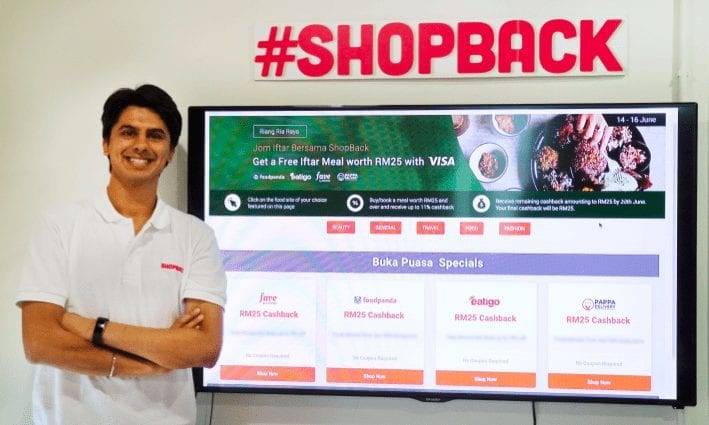
    Top Cashback platform ShopBack and global payment technology company Visa today announced a three-day Buka Puasa Treats ‘Jom Iftar Bersama ShopBack’ campaign, which will be organised in the form of online meals booking via ShopBack Malaysia’s Visa store from 14th – 16th June 2017.

    During the event period, the public can go to the site and order a meal/voucher from Eatigo, Fave by Groupon, Foodpanda, or PappaDelivery for themselves and the person they want to sponsor and enjoy a Buka Puasa dinner with, whereas Visa and ShopBack will giveaway RM25 Cashback to their accounts thereafter.

    “We are truly glad to team up with Visa on this campaign in the spirit of Ramadan. We hope to express our appreciation to our users and encourage the spirit of sharing among the online community in Malaysia, starting by ordering and sharing a meal with the people around us. The Cashback earned is meant to be transferred to their bank account after verification, which is also a savings that could be put to good use.” Alvin Gill, the Country Manager for ShopBack Malaysia said.

    Alvin expressed that the company has seen at least 60 per cent increment in terms of the number of users from its website and app in the past six months, which indicates more Malaysians are spending cautiously and constantly looking for the ways to save due to current economic challenges.

    Currently, there are more than 650,000 Malaysians making online purchases through ShopBack account every month. The company collaborates with over 500 international and online e-retailers such as Booking.com, Fave by Groupon, Foodpanda, Hermo, Lazada, Zalora and more to reward shoppers with up to 30% hard cash whenever they make a purchase online.

    ShopBack is the top Cashback platform in Southeast Asia that has enabled Malaysian online shoppers to save RM13.5 million thus far. Other than Malaysia, it also has a presence in India, Indonesia, Philippines, Singapore and Taiwan.

  • Digital Realty expands to Japan

    Digital Realty expands to Japan

    Digital Realty has inaugurated Digital Osaka 1, its first data center in Japan, a 93,000 square foot facility providing 7.6 megawatts of IT capacity.

    Digital Realty also announced the acquisition of an adjacent land parcel for the development of a Digital Osaka 2 data center. Upon completion, the Osaka connected campus will support up to 27 megawatts of additional IT capacity.

    “Digital Osaka 1 was fully leased prior to the official opening, a reflection of the strong demand in the Japanese market for Digital Realty’s comprehensive data center solutions,” Digital Realty managing director for Asia Pacific Edward Higase said.

    “The development of our Osaka connected campus will enable us to further expand our world-class data center platform and support our customers’ rapidly growing demand here and around the world.”

    Japan has become one of the most highly sought-after markets for cloud data center locations, according to a Canalys report.

    Strict data sovereignty laws and high customer demand are some of the factors pushing cloud service providers to seek data centers in Japan, where personal data is increasingly required to be stored in facilities that are physically located within the country.

    “With the addition of Osaka to our global connected campus network, customers will soon have new opportunities to connect, extend their reach and find new business opportunities across our global data center platform,” Digital Realty CEO A. William Stein added.

  • Hanoi shops employ topless men to lure customers

    Hanoi shops employ topless men to lure customers

    The trend started at a restaurant on Thai Ha Street. The images of young men without a shirt on and hot body made many curious and went to the restaurant to see for themselves.

    Tran Thai Linh, a local in Dong Da District, said she also went to the restaurant out of curiosity but then she was disappointed after discovering that the men only appeared for two minutes when the restaurant introduce new dishes.

    Linh said the restaurant definitely hit the nail on the head as everybody liked beautiful things. The images were shared by women are those who came to the restaurant at that moment.

    “I wasn’t there personally but it looked like both adults and children were at the restaurants while the topless waiters appeared. This may not be good for children as they are too young and people of different age groups also come here to eat and may find it offensive,” Linh said.

    After the images and the video clip were shared widely on the internet, many people commented that the PR stunt was crude and that they prefer waiters in ties and shirts.

    Nguyen Minh Hoang, head of the marketing department of the restaurants, said, “This is a private event to introduce new dishes. All 120 guests we invited are students and office workers age 18 to 35. However, some people who couldn’t attend gave their tickets to their relatives and acquaintances. That’s why there are elderly people and children.”

    Hoang said the restaurants couldn’t exactly tell the guests to leave then. He said such private event had been held in many countries before but the restaurant failed to predict the unexpected outcome.

    Not long after, another clip was quickly shared on Facebook, showing hairdressers in only trousers and ties serving customers. Many said they would ask their friends to go to the salon.

    Trinh Minh Hang from Quang Ninh Province said, “I needed my hair done and wanted to experience the service by those muscular and handsome men so I called the salon. However, they said the men were there for a special event and they only washed and dried your hair.”

    Kim Anh, an office worker in Thanh Tri District, said at first she wanted to try too but then was persuaded by her friends that it was not very appropriate.

    Hanoi Department of Culture, Sports and Tourism fined the Tran Anh Company which runs electronic goods stores VND40 million (USD1,920) fast year for employing promotional girls wearing bikinis to greet customers last year. The company claimed that they just co-operated with a partner to make a sex education video series, and it was not a marketing campaign.

    In 2012, VietJet Air was also fined VND20m for in-flight bikini show to celebrate its first flight between Ho Chi Minh City and Nha Trang.

  • Vietnam’s exporters hunt for robusta coffee as supplies dwindle

    Vietnam’s exporters hunt for robusta coffee as supplies dwindle

    International trade is holding bulk of Vietnamese robusta stocks. Vietnamese coffee exporters, faced with dwindling robusta supplies in the world’s top producer, are paying up to buy beans from international trade houses who scooped up much of the crop early in the season.

    Local exporters in Vietnam are struggling to find coffee to fulfill their contracts, trade sources said, after farmers sold forward much of the harvest early on in the season when global prices hit their highest in more than five years.

    The squeeze comes at a time of tight supplies in the country, after a smaller crop this season and heavy rains during harvesting that wreaked havoc on crop quality.

    Vietnam is the world’s top grower of robusta coffee, which is mainly used to produce instant or soluble coffee.

    The coffee is priced against ICE robusta futures and international trade houses were able buy at a discount of $50 to $70 a tonne when farmers were selling heavily.

    “The international trade has been stockpiling basically,” said one European trader. “They decided to get long early on.”

    Local exporters, now unable to get supplies from farmers, have been forced to buy from the international trade houses at premiums of $20 to $30 a ton, industry sources in Europe and Vietnam estimate.

    They pegged profits for the international trade houses, who have stored the coffee in their warehouses in Vietnamese ports, at $70 to $100 a ton.

    “They used financial leverage to buy at discounts at the beginning of the harvest season,” said Phan Hung Anh, deputy director of Anh Minh Co, a coffee-trading firm in Daklak, Vietnam’s largest coffee-growing province. “And now they sell back to companies at premiums.”

    “Vietnamese firms can’t do the same because their financial capability and storage don’t match those of international trading houses.”

    Vietnam is expected to produce 26.3 million bags of coffee in the 2016/17 season, down from 28.4 million in the prior season, Rabobank figures show.

    International traders were holding roughly 6.5 million 60-kg bags (390,000 tons) at the end of May, out of about 9 million in stocks in the country, sources estimated. They have sold about 30,000 to 40,000 tons to local exporters, Vietnamese traders said.

    These trades have been painful for local Vietnamese exporters, some of whom sell beans to coffee giants such as Nestle and Jacobs Douwe Egberts.

    Traders said many had sold coffee far in advance to roasters at much lower prices and are now feeling the pinch of strengthening differentials as they inch towards delivery.

    The exporters have been left with little choice, however, as farmers sit on their remaining good quality coffee in the hope that prices will climb.

    Farmers are holding less than 15 percent of the crop at this point in the season, compared to about 35 percent in a typical year, traders estimated.

    Local exporters could find themselves squeezed further in coming months as supplies continue to dwindle and differentials strengthen before the start of the next harvest in October.

    There is also a risk international trade houses may stop selling coffee to Vietnamese exporters, as they shift attention to delivering on their own contracts with roasters later in the year.

    “That tightness is starting to materialize,” said another trader. “And if they turn off the tap, the prices and the differentials will go even higher.”

  • 4.36 Percent Inflation Expected in 2017

    4.36 Percent Inflation Expected in 2017

    The Governor of Bank Indonesia Agus Martowardojo projects year-on-year inflation rate in 2017 of 4.36 percent, an increase compared to late 2016 of 3.02 percent, mostly attributable to pressure from administered prices.

    Agus said yesterday that the projection was based on the movement in the Customer Price Index (CPI) that was down in January to May 2017 and lower compared to January to April 2017.

    “At the meeting of the Board of Governor in April, the year end inflation rate is predicted at 4.63 percent (year on year/yoy). In May 2017, it will drop to 4.36 percent (yoy),” Agus said.

    Lower annual inflation forecast, according to Agus, was due to correction to inflation impacts of administered prices.

    Bank Indonesia views that inflation pressure from administered prices, particularly raise in electricity price for 900 VA category will not be as high as predicted before.

    Moreover, controls on food prices and other components in volatile foods category from January to May 2017 have convinced the central bank that inflation rate can be curbed.

    Inflation due to volatile foods as of May 2017 stood at 3.26 percent (yoy), whereas inflation contributed by administered prices hit 9.14 percent (yoy).

    “We will see the year-end inflation rate if the current forecast remains the same as has been targeted before,” he said.

    Bank Indonesia expect to set inflation target through out this year in the range of 4 percent plus or minus 1 percentage points. Inflation control is also the reason behind the central bank’s decision to hold the benchmark 7-Day Reverse Repo Rate at 4.75 percent for the eight consecutive time on May 18.

    Meanwhile, the government in the 2017 state budget (APBN) assume the inflation rate at four percent.

  • China Telecom aims to make Shanghai a gigabit city

    China Telecom aims to make Shanghai a gigabit city

    China Telecom’s Shanghai branch Shanghai Telecom plans to deploy the first commercial FTTH network in China using 10G PON technologies, and aims to provide full 1Gbps fiber coverage across Shanghai over the next three years.

    Shanghai Telecom has contracted Huawei to help with the rollout, which marks an important step towards making Shanghai China’s first gigabit city, the vendor said.

    Shanghai Telecom was providing 1Gbps access for 269 communities in the city, and through the deployment aims to increase the average access rate for its network from 50Mbps to 280Mbps by the end of 2018.

    The operator is using its high-speed network to offer a range of home broadband services, such as multi-channel 4K video streaming, video calls and conferencing an video-based smart home services.

    Under the latest rollout, the company is adopting Huawei optical line terminals (OLT) and optical network terminals (ONT) capable of providing gigabit convergence, 4K video streaming to 16,000 concurrent households over a single subrack, 8K video streaming, VR applications and smart home services.

    Separately, Nokia has announced it has secured a contract to deploy millions of ONT home gateways in 29 provinces across China for China Mobile.

    China Mobile plans to deploy home gateway units based on Nokia’s solution to over 30 million users this year, and use established FTTH networks to extend internet coverage in the home and enable IoT communications between devices and sensors.

    “China Mobile is progressing fast as a converged telecommunications operator — with more than 31 million FTTH subscribers — and has proven it can successfully leverage its extensive fiber access network to deliver ultra-broadband applications such as 4K TV services and Gigabit access to customers across various provinces.,” IDATE principal analyst Roland Montagne commented.

    “With the addition of intelligent home gateway technology, China Mobile will be able to further differentiate its services, providing consumers with enhanced internet coverage in the home and a more seamless experience for connecting various devices and sensors.”