Author: Mei Ling Tan

  • Hong Kong retail sales rise for second consecutive month

    Hong Kong retail sales rise for second consecutive month

    Hong Kong’s retail sales rebounded slightly in April for the second straight month following a two-year period of contraction, with an industry expert predicting that growth for the whole year could hit 1 per cent.

    The latest figures released by the Census and Statistics Department yesterday showed that total retail sales in April edged up 0.1 per cent year on year to HK$35.2 billion.

    That was drastically lower than the 3 per cent rise confirmed for March – which ended a 25-month slump dating back to February 2015.

    ooking at the figures for April, consumer durables recorded the biggest year-on-year decline of 12.8 per cent. The dip was fuelled by an 18 per cent plunge in sales of electronic goods and photographic equipment.

    Motor vehicle sales also fell in April, by 13.9 per cent, in stark contrast to a 16 per cent rise the previous month spurred by a last-minute buying spree for electric cars ahead of the cancellation of a tax waiver for the vehicles.

    Retail Management Association chairman Thomson Cheng Wai-hung said sales of jewellery and luxury watches would also remain sluggish.

    “We don’t see any trend pointing to [the sale of] these expensive items picking up at any time,” he said.

    Setting aside these negatives, Cheng said the April figures were quite positive, with most categories recording modest growth.

    The exception was supermarket sales, which dropped 0.6 per cent.

    “A lot of Hongkongers travelled overseas during the Easter and Ching Ming holidays … This affected livelihood-related sales,” Cheng said.

    Asked if the Labour Day holiday – known in mainland China as the “golden week” – would lead to better figures for May, Cheng said association members who responded to a survey on sales over that period were mostly disappointed.

    The likely visit of President Xi Jinping for the July 1 handover anniversary would also turn some mainland visitors away due to the inconvenience caused by tight security measures, he said.

    We cannot guarantee there will be growth this year, but we see the market starting to stabilise. Thomson Cheng, Retail Management Association chairman

    But for the whole year, the association forecast the value of sales would remain the same as last year, give or take 1 per cent.

    “We cannot guarantee there will be growth this year, but we see the market starting to stabilise,” Cheng said.

    If local demand, which accounts for 70 per cent of all sales, remains robust, a rebound of inbound visitors would translate into a positive sales outlook, he said.

    Statistics from the Tourism Board showed that visitor arrivals in April picked up 1.9 per cent year on year, and 3.2 per cent for the first four months of the year.

    The recent growth provided much-needed relief to the tourism industry, which last year weathered a 4.5 per cent drop in inbound visitors.

    A government spokesman said the near-term outlook depended on how fast the tourism sector recovered and local consumer sentiment amid likely US interest rate rises and external uncertainties.
  • AirAsia Free Seats promotion starts tomorrow

    AirAsia Free Seats promotion starts tomorrow

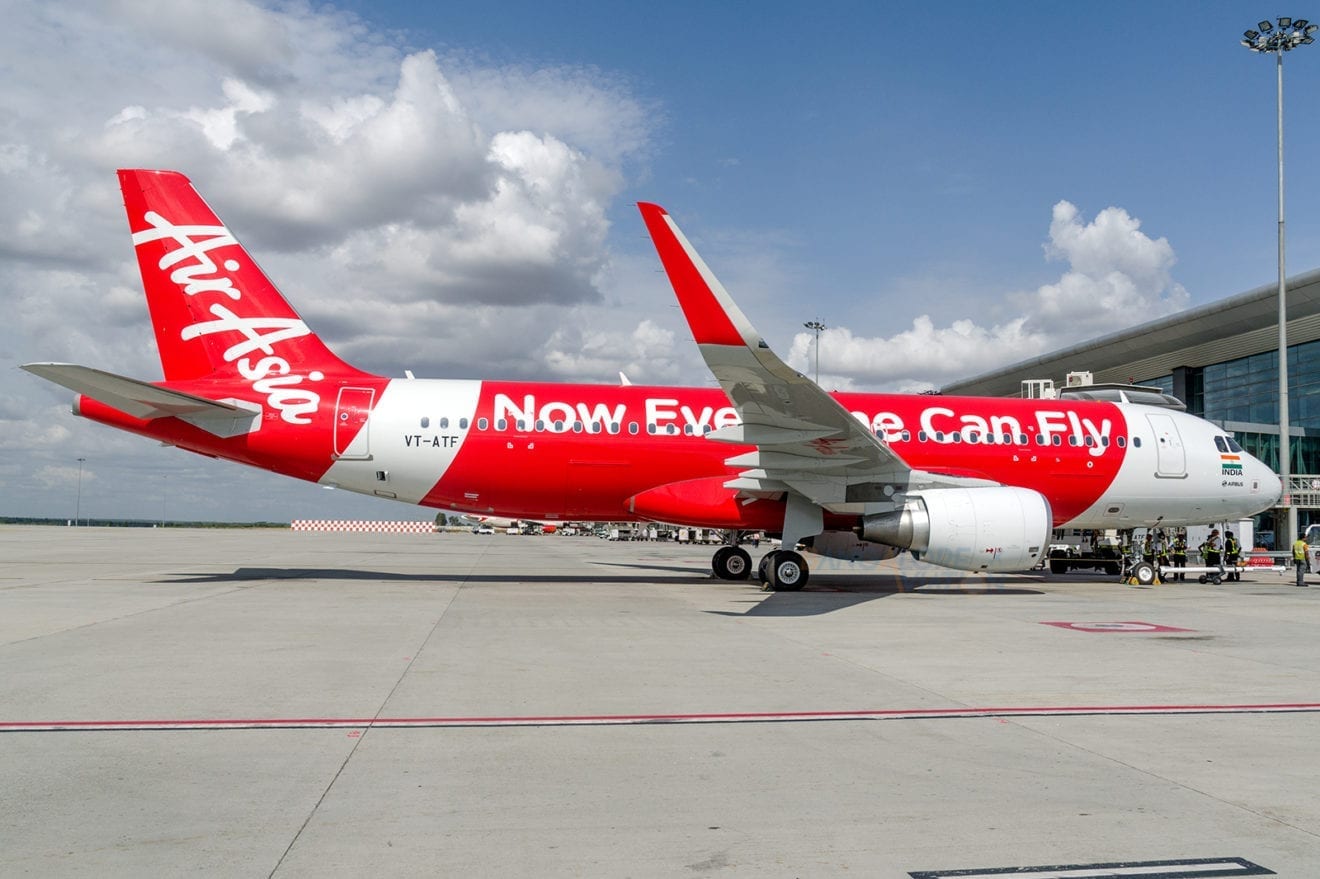
    Need to satisfy your wanderlust? Look no further, because AirAsia will be giving away up to three million promotional seats in its Free Seats campaign.

    The promotion is available from June 5 to June 11 for travel between Jan 15 and Aug 28, 2018.

    Fares will be as low as RM0 to des­­tinations such as Johor Baru, Pe­­nang and Surat Thani from Kuala Lumpur; Singapore and Lang­­kawi from Penang; and Te­­reng­ganu from Johor Baru.

    Other than that, AirAsia X guests can also fly from Kuala Lumpur to Perth and Chongqing for fares as low as RM199.

    Those travelling on AirAsia X will also be able to enjoy its award-winning Premium Flatbed from Kuala Lumpur to Beijing, Shanghai, Osaka, Busan, Auckland, Gold Coast, and many more destinations from only RM899.

    AirAsia BIG Members and BIG Prepaid MasterCard members will enjoy priority access and will be able to make bookings on airasia.com and the AirAsia mobile app or redeem flights via airasiabig.com from today.

    Other partners will also be able to access the promotion 24 hours earlier. BIG Prepaid cardholders can do so on airasia.com, AirAsiaGo and AirAsia Expedia on their respective websites, while account holders with Citibank in Malaysia will re­ceive an exclusive link from the bank. The first 100 daily bookings with AirAsia-Citi Card will get a RM50 AirAsia Electronic Gift Voucher (eGV).

    “Free Seats is the best time to lock down travel plans for next year,” said AirAsia Group chief commer­cial officer Siegtraund Teh.

    “With so many fantastic destinations on offer, it’s perfect for a long break or even just a quick weekend getaway,” she said in a statement.

  • AYA Bank to overhaul core banking system with Misys

    AYA Bank to overhaul core banking system with Misys

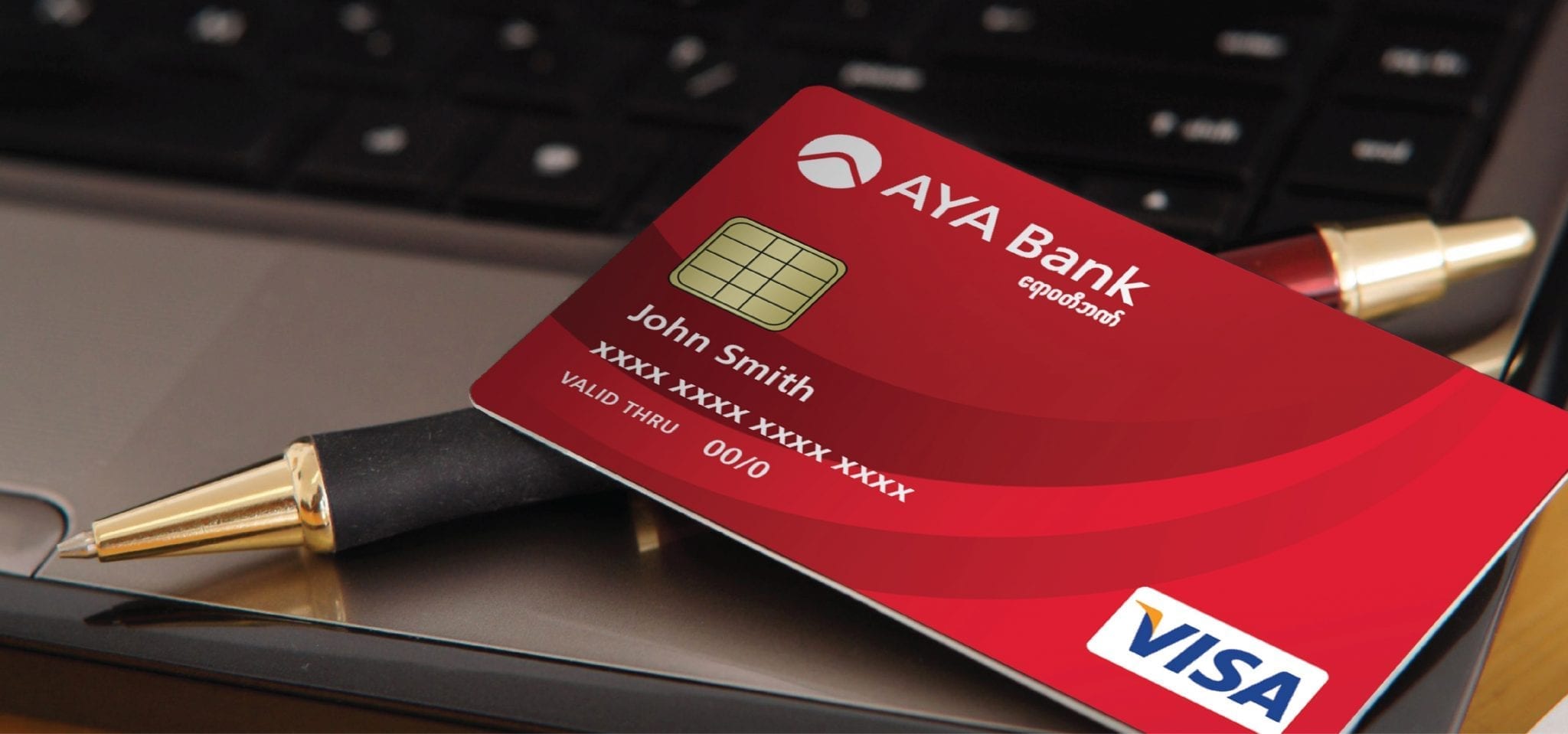
    AYA Bank (Ayeyarwady Bank) has selected the Misys FusionBanking suite to support a transformative project which will overhaul its core banking system, digitalise operations and improve overall efficiency throughout the organisation.

    U Zaw Zaw, Chairman, AYA Bank said, “It’s thrilling to see more of our vision for AYA Bank come to life in Myanmar. In addition to providing existing customers with a seamless, best-in-class experience, this transformation will drive rapid business and economic growth in Myanmar by increasing banking penetration and the availability of reliable, secure banking services to the nation’s large underbanked population. With Misys, this transformation will mean we can deliver excellence and pursue growth in our rapidly changing country while continuing to lead from the front. These financial services not only support the Myanmar government’s national goals of inclusive economic growth, but also connect Myanmar to global commerce.”AYA Bank has always been at the forefront in providing modern retail banking services and products and in just seven years the bank has grown to become one of the top three private banks in Myanmar. Using the Misys platform, the bank will consolidate and streamline workflow as well as digitalising all manual and non-digital processes to better service its customers across retail and corporate banking.

    The modern digital Misys platform will help improve the services and products available, as well as protecting customer information and data integrity. AYA Bank’s customers will enjoy faster access to more information and will have the option to perform a wider range of transactions at the click of a button through new online and mobile banking solutions. This in turn will enable the bank to improve customer engagement and accelerate customer acquisition through functions such as digital on-boarding.

    “As Myanmar’s banks modernise to keep pace with the disruption that’s driving the economy forward, digitalisation can be a catalyst for much broader change across the nation,” said Nadeem Syed, CEO, Misys. “With fierce competition brewing in Myanmar’s financial services sector, we are confident that we can help AYA Bank leapfrog developed market banking challenges to modernise faster and more efficiently. This will help to have a significant impact in including more people into Myanmar’s financial system and making a cashless society a reality for all.”

    This transformation will also enable AYA Bank to offer internal stakeholders a better service. This includes improving process efficiency and minimising operational risk, providing accurate and reliable reporting, supporting decision-making and improving the bank’s speed-to-market in launching new products and services in branches across the country.

    The Misys partnership-driven approach and commitment to remain closely engaged with AYA Bank will also be beneficial over the longer term as AYA Bank uses the integrated FusionBanking solution suite to anticipate future needs, deliver growth and plan regional expansion that stretches beyond Myanmar’s borders.

    Expansion of the Misys footprint in Myanmar is testament to the fast transformation taking place in the region as banks strive to modernise and keep one step ahead of the technological advancements changing their customers’ lives. Big Byte International, a Misys InFusion partner, has been instrumental in supporting the Misys journey in Myanmar and Asia Pacific, and is now investing in creating regulatory framework tools for Myanmar using the Misys FusionFabric architecture, in addition to building a team of local domain experts to support Misys in the region.

  • New techs launched at Asia’s major exhibition in Singapore

    New techs launched at Asia’s major exhibition in Singapore

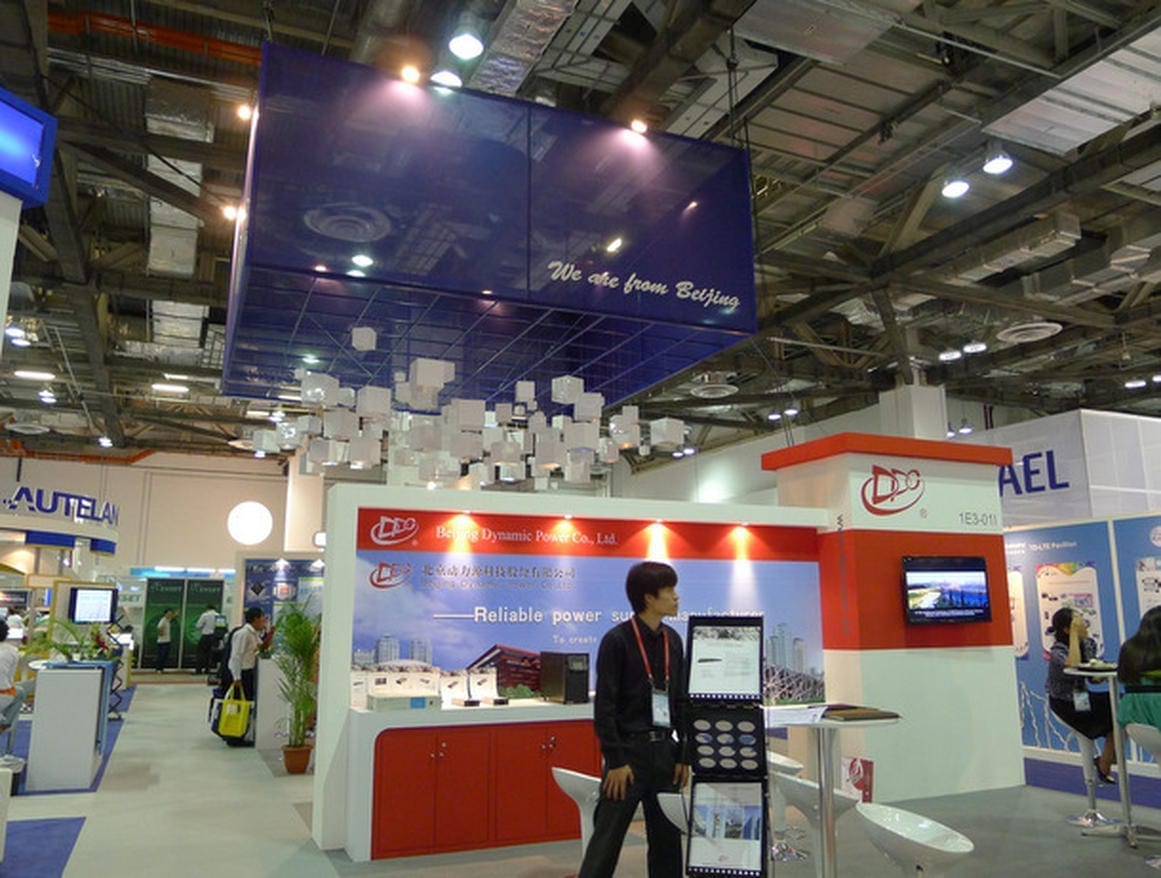
    More than 900 new products were introduced to the public for the first time. CommunicAsia, EnterpriseIT and BroadcastAsia 2017 have wrapped up a three-day exhibition and conference addressing technologies and strategies for smart cities and companies in Asia.

    Held by Singapore’s leading event organizer UBM SES, the three exhibitions hosted 1,800 exhibitors from 62 countries and regions who came to present more than 900 new products.

    Dubbed as Asia’s largest gathering of companies and experts from the world’s technology and digital entertainment, the event drew over 40,000 trade attendees and showcased innovations featuring the latest in big data analytics, cloud, artificial intelligence, robotics, cybersecurity, Internet of Things, among others.

    “As organizers, we are proud to present an event that aligns to the region’s initiatives and push in advancing Asia’s digital transformation,” said Victor Wong, Project Director of Communications Events at UBM SES.

    Following this year’s success, UBM SES will launch a new event next year for emerging technologies and business solutions, he said.

    A combination of CommunicAsia, BroadcastAsia and the newly launched NXTAsia, ConnecTechAsia 2018 will be a three-day event slated for June next year in Singapore.

  • Vietnam rice export back on track

    Vietnam rice export back on track

    Vietnam exported 2.3 million tons of rice worth US$1 billion in the first five months of the year, up 1.6% in volume and 1.2% in value year-on-year.

    China remained Vietnam’s largest rice importer, accounting for 47.5% of the nation’s total rice exports. More than 815,000 tons of rice costing over US$376 million went to the northern neighbor in January-April, up 16.1% and 16.2% against the same period last year respectively.

    Vietnam shipped 4.89 million tons of rice valued at US$2.1 billion in all of 2016, a respective decrease of 25.54%  and 20.57% against 2015.

    China was still Vietnam’s biggest importer of the food staple last year despite a 19.79% decline. It purchased more than 1.8 million tons of rice from Vietnam last year, 36.97% of Vietnam’s total rice shipments.

    The domestic rice price has improved by VND200-300 a kilo, supported by the recent signing of a memorandum of understanding to export one million of rice a year to Bangladesh until 2022. The South Asian country will import 300,000 tons at first.

    In addition, the National Food Authority (NFA) of the Philippines has announced to buy 250,000 tons of rice from Vietnam in June.

    Nguyen Thanh Tho, a rice trader at Ba Dac wholesale market in Tien Giang Province, told the Daily that IR 50404 rice is sold at VND4,350-4,400 a kilo, an increase of VND200-300, helped by the Bangladesh rice deal.

    Besides, IR 50404 material rice is purchased at VND6,350-6,450 a kilo in the Mekong Delta, up VND200.

    Major importing markets, especially Bangladesh and the Philippines, have helped buoy the price. The Free On Board (FOB) price of 5%-broken white rice from Vietnam is US$370-380 a ton, up US$5-10 compared to a week ago.

  • Vital signs look weak for private hospitals in Saigon

    Vital signs look weak for private hospitals in Saigon

    Some are being forced to offload their assets and close with the weight of massive loans bearing down on them. Major private hospitals in Ho Chi Minh City are struggling to turn a profit despite making massive investments in infrastructure and equipment. Some of them have even called it quits or have sold out to other investors.

    By the time International General Phuc An Khang Hospital in District 2 wrote to health authorities in April to inform them it would be closing after just two years, it had had already racked up accumulated losses of VND60 billion ($2.64 million).

    With 500 beds meeting international standards, Phuc An Khang hospital used to make VND3 billion per month in revenue.

    But that sum was only enough to cover staff salaries, and the hospital had to use its own capital for other expenses such as medicine, director Mai Tien Dung told in an earlier interview.

    “The pressure from the loan we took out in the first place to build the hospital is probably the main reason for our downfall,” he said.

    It’s a similar story for Phu Tho General Hospital in Tan Phu District.The hospital’s investor plans to sell equipment worth VND200 billion and other assets to pay outstanding salaries to staff.

    This hospital closed its doors after its investor failed to pay interest on a total loan of VND120 billion to 30 lenders.

    After the investor jumped ship, the lenders seized the hospital’s equipment and turned it into a parking lot.

    Fallen star

    Once regarded as a bright light in the country’s high-end medical sector, Vu Anh International General Hospital in Go Vap District is now looking for partners to save its business.

    Doctor Vo Xuan Son, director of Exson International Clinic in District 10, said that a number of factors are making it difficult for private hospitals, including unfair policies between public and private facilities.

    “Revenue at private hospitals is fairly stable, but their profits are always low because, unlike public hospitals, they have to bear expenses for hiring premises, equipment depreciation and corporate income tax,” Son said.

    Management is another headache for private hospitals as most directors are doctors with no business experience, he added.

    More than 170 private hospitals with 45,000 beds are operating in Vietnam, according to data from the Vietnam Private Hospital Association, and the country has been calling for more private investments in public hospitals to improve service quality in the public sector.

    Total expenditure for healthcare service in Vietnam makes up 5.8 percent of the country’s economy, the highest in the region, said the Vietnam 2035 report released last year by the World Bank and Ministry of Planning and Investment.

  • Daimler, BAIC agree to make electric cars in China

    Daimler, BAIC agree to make electric cars in China

    Daimler and its Chinese joint venture partner BAIC Motor Corporation agreed to upgrade the Mercedes-Benz factory in Beijing to make electric cars, the German carmaker said on Thursday.

    At a signing ceremony in Berlin attended by German Chancellor Angela Merkel and Chinese Premier Li Keqiang, Daimler signed a framework agreement to upgrade production facilities at Beijing Benz Automotive (BBAC), to make New Energy Vehicles, a label for so-called low-emission vehicles which include hybrid and pure battery electric cars.

    “China today is already the world’s largest market for NEVs, and Daimler is committed to contributing to the further development of electric mobility in this country,” Hubertus Troska, Daimler’s board member in charge of China, said.

    Daimler also agreed to acquire a minority stake in Beijing Electric Vehicle (BJEV), a subsidiary of the BAIC Group, to enhance collaboration on developing so-called new energy vehicles. Daimler declined to provide a figure for the scale or value of the stake.

    BJEV was established in 2009 by the BAIC Group and other shareholders as a development platform for New Energy Vehicles.

    It focuses on research and development, production, and sales and services for New Energy Vehicles and core NEV components. To date, the company’s product portfolio covers five major series of electric vehicles.

    The German government’s agenda to the Germany-China summit in Berlin also showed that Volkswagen was due to sign a contract with Anhui Jianghuai Automobile Co about production, research and development of electric cars in China.

  • La Perla opens Takashimaya store in Singapore

    La Perla opens Takashimaya store in Singapore

    Italian lingerie retailer La Perla has opened a second Singapore store. Located on Orchard Road inside the Takashimaya Shopping Centre, the new store spans 182 square metres and was designed by the Italian architectural studio Baciocchi Associati.

    Consistent with La Perla stores around the world, the Singapore boutique boast three rooms with white marble floors, overlayed by lilac, blue and nude tones.

    Geometric prints and metallic accents cover the walls with golden mesh detailing, meant to look like tulle – a moniker of La Perla lingerie. Velvet couches and gold displays finish the store look.

    In August 2016, the Italian luxury lingerie label announced the appointment of Julia Haart as its new Creative Director. At the time of her appointment, Haart promised to revolutionise La Perla’s ready-to-wear line, intending to make it more comfortable while respecting its glamorous, sexy DNA.

    Founded in 1954 by Ada Masotti, the Bologna-based fashion label was acquired in 2013 by Italian businessman Silvio Scaglia.

    La Perla counts 36 points of sale in Asia, with 150 worldwide.

  • Korea still has fastest average broadband speeds

    Korea still has fastest average broadband speeds

    South Korea retained its position of having the world’s fastest average internet speeds during the first quarter, but it was the only market in APAC to experience a year-on-year speed decline.

    These are among the findings of Akamai’s latest State of the Internet – Connectivity report, which found that South Korea’s average speed was 28.6Mbps for the quarter.

    Hong Kong had the second fastest average speeds in APAC and the fourth in the world at 21.9Mbps, followed by Singapore (seventh globally) at 20.3Mbps and Japan (eighth globally) at 20.2Mbps.

    Vietnam had the highest year-on-year gains in average speeds at 89%, but remained in ninth place among APAC countries and just 58th globally with an average speed of 9.5Mbps. India (87% improvement to 6.5Mbs) and China (78% improvement to 7.6Mbps) also recorded strong gains.

    The Philippines continued to have the slowest average broadband speeds in APAC at 5.5Mbps, despite a 57% year-on-year improvement. The report notes that president Duterte’s up to $4 billion national broadband network project has the potential to turn the market around. Deployment could commence as early as this month.

    By contrast, besides South Korea’s year-on-year decline, Hong Kong had the lowest level of improvement with just a 10% gain.

    In terms of average peak connection speeds, Singapore retained its top spot with a speed of 184.5Mbps, up 26% year-on-year. Singapore was followed by Hong Kong (129.5Mbps), South Korea (121Mbps), Thailand (106.6Mbps) and Taiwain (106.6Mbps), which had global rankings of fourth, fifth, eighth and 13threspectively.

    The slowest average peak connection speed was recorded in India (41.4Mbps), followed by the Philippines (45Mbps), China (45.9Mbps), Australia (55.7Mbps) and Sri Lanka (57.3Mbps).

  • Amazon appoints new fashion head

    Amazon appoints new fashion head

    US e-commerce conglomerate Amazon has appointed a new head of its fashion division. The Seattle-based Amazon has selected Christine Beauchamp to be president of Amazon Fashion, the section that operates the corporation’s online fashion marketplace.

    Beauchamp replaces Catherine Lewis Beaudoin, following her departure last month. Beaudoin had held the role since 2013.

    Beauchamp has an extensive professional resume. She was previously CEO at Victoria’s Secret Beauty; served as brand president at Ann Taylor; and spent nine months as global brand president for the brands Lauren, Chaps, American Living and Ralph for the Ralph Lauren group in 2015.

    Beauchamp returned to the Boston Consulting Group as a senior consultant back in 2016, where she was most recently.

    A Harvard and Princeton graduate, she will oversee Amazon Fashion and continue to promote its current range and by seeking out partnerships.

    Beauchamp will take up the role as president of Amazon Fashion before the start of the summer.

    Amazon has made its fashion presence well known by sponsoring the Met Gala in 2012 and sponsoring CFDA’s NYFW: Men’s fashion week alongside Cadillac and Samsung. The deal with the CFDA ended after NYFW: Men’s in February 2017. In addition, the online retailer announced plans to launch private-label intimates and an athleisure line.

    Amazon has been reported by Yahoo to be larger than the 8 largest retailers in the U.S. combined (Macy’s, Best Buy, Target, Nordstrom, JCPenney, Walmart, Kohl’s and Sears), and is poised to surpass Macy’s this year as the biggest apparel retailer in the U.S.

  • Massimo Dutti Opens a New Global Concept Store at Vivocity

    Massimo Dutti Opens a New Global Concept Store at Vivocity

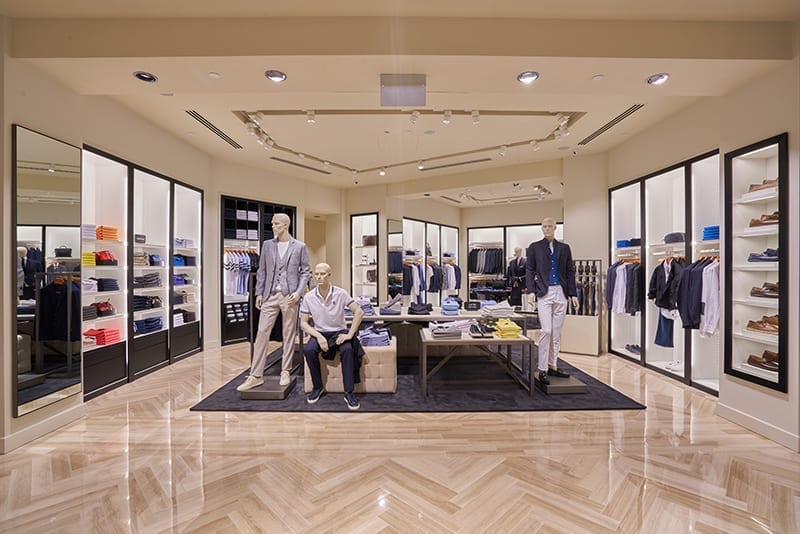
    The establishment, with over 518 square metres of retail space on one floor, hosts the collections for both men and women.

    Interiors project

    The interior design, entirely developed by Massimo Dutti, was based on the use of new material, details and lighting. The floors are set with Serpeggiante’s Italian marble in beige and placed in spike, it contributes a note of elegance in an example of modernity and contemporaneousness mixture. The lighting has also project with supreme detail, zenith areas give the protagonist to the collections and different lamps give the perfect dose of environmental light, creating a warm atmosphere that yields the protagonist to the collection. In this new shop all the details line up to consolidate the identity and the lifestyle of the brand, sending a message of quality, a value inherent in all the Massimo Dutti’s collections. Also the furniture contributes to the warmth of the environment with the balanced combination of Krion’s big central tables with style 50’s armchairs and clear carpets.

    Advanced technology 

    Technology at the service of customers. The explosion of 3.0 technology including social networks and mobile services has led to the appearance of new, omni-channel trends that serve to connect the virtual and online world with brick-and-mortar stores, making the point of sale a space where emotions can take flight.

    Always at the cutting-edge of where fashion and technology meet, Massimo Dutti has implemented a series of activities with the aim of offering new purchasing experiences based on innovation and adaptation to customers’ new needs. These activities include:

    Dynamic marketing screens. These allow the continual publication and broadcast of the brand’s own contents, reflecting its physical and aspirational world.

    Eco-efficiency: a brand commitment

    The new store is in line with the Inditex Group’s most advanced concepts of sustainability, principles that have been followed both in the restoration project and in the store’s commercial operations. Electricity consumption has been reduced by some 30% and water consumption by 40% in comparison with conventional stores. The eco-efficiency measures implemented include a store lighting system that optimizes the lighting of the furnishings, and the exclusive use of LED bulbs. The lighting system also enables partial lighting of store spaces depending on the time of day and tasks to be carried out, as well as automatic activation when a presence is detected in internal working areas.

    Optimal air conditioning and ventilation are achieved using thermal insulation, and a ventilation control that varies according to space occupation, calculated using CO2 measurements. The equipment installed employs inverter technology capable of regulating itself depending on the demand for heating or cooling, adapting at all times to consumption needs. The air curtain is controlled by probe and allows three working levels depending on the air temperature on the premises. Finally, control and monitoring devices allow instant distance readings of consumption levels, making it possible to detect and correct any anomaly affecting the use of the facilities and their consumption.

  • Giv Giv: Singapore’s first Build-It-Yourself Gifting Platform

    Giv Giv: Singapore’s first Build-It-Yourself Gifting Platform

    Officially launching this month, Giv Giv specializes in its simple yet fun and thoughtful gifting process via its unique web platform (www.givgiv.co). With over 300 gift items and 50 partnering brands across diverse gift categories, it is the ideal destination to customise an exclusive bundle (Giv) of mixed brand gift items or shop from pre-curated Givs for an upcoming celebration-or even, just because.

    The website, soft-launched on 28 April 2017, allows gift shoppers to create personalized Givs for scheduled dates in advance. Based on their gifting needs and shopping preferences, they can simply bui Id a Giv from the wide selection of gift items curated by the Giv Giv team . “Each and every gift item is chosen by the sender and that is certainly meaningful, if not more thoughtful than the usual gift voucher or hampers with an item or two they might not like,” shares co-founder Estee Lua. In addition to the exciting customizable options, Giv Giv is also releasing a new collection of pre-curated Givs every month to provide their shoppers with additional gift varieties.

    The pre-curated collections are hand picked to commemorate life’s various milestones and to celebrate the little moments. There are also exclusive releases of pre-curated Giv bundles with seasonal gifts and exciting looks for one-click gift shoppers. From birthday bundles to congratulatory Giv sets, these options are all about the details and provide gift inspiration for shoppers to build their own.

    Giv Giv is also using the brand as a platform to promote gift items from local and regional lifestyle and indie brands. Gift shoppers can shop their favourite and popular gift items from over 1 O featured categories; be it a pampering session of candles and blooms, or a bundle of thoughtful lifestyle goods to send your best wishes, gift shoppers are spoilt for choice. Recipients of the special gifting experience will receive a selection of gift items and a personalized gift card accompanied by the signature orange Giv packaging and door-to-door courier service that elevates the surprise. For the exciting month of June, Giv Giv will be launching new Giv bundles for Father’s Day and other seasonal editions. For all new gift shoppers, use the promo code [ FIRST10] to get 10% off your orders!

  • Chearavanont family keeps crown as rich Thais get richer

    Chearavanont family keeps crown as rich Thais get richer

    The Chearavanont brothers, led by Dhanin Chearavanont, honorary chairman of Charoen Pokphand (CP) Group, Thailand’s agriculture and food conglomerate, remain the wealthiest family in Thailand this year, according to Forbes magazine.

    According to the Forbes list of Thailand’s 50 Richest in 2017, more than two-thirds of the tycoons saw their wealth increase, with the top five notching the biggest dollar gains. The collective net worth of Thailand’s 50 richest is US$123.5 billion, up 16% since 2016.

    The CP Group’s net worth includes shares owned by Mr Dhanin and his three brothers, Jaran, Montri and Sumet, who are the biggest gainers in dollar terms, adding $3 billion to their wealth to retain the top rank with a net worth of $21.5 billion.

    CP Group has operations in Thailand and overseas with core businesses involving agribusiness, retail and telecommunications. The empire now falls in the hands of Mr Dhanin’s two sons after he decided to step down earlier this year.

    His youngest son, Suphachai, succeeded him as chief executive of CP, while his eldest son, Supakit, is chairman of CP Group, overseeing CP’s business in China.

    Second on the wealth list is TCC Group chairman Charoen Sirivadhanabhakdi, who grew richer by $1.7 billion, making his net worth $15.4 billion.

    In April, Mr Charoen announced the largest property investment in a single site in the country with One Bangkok, a 120-billion-baht business district at the intersection of Rama IV and Wireless roads.

    Coming in third is the Chirathivat family, which operates retail businesses under the Central Department Store brand, as well as hotels and property, with $15.3 billion, up $2.3 billion.

    Central Group, under chief executive Tos Chirathivat, restructured its management board late last year by bringing in a number of key professionals, including former central bank governor Prasarn Trairatvorakul, to run the group’s operations and brace for increasing challenges in retail business.

    This is the first time the 70-year-old company recruited outsiders to help manage group business, which has a combined sales revenue estimated at 320 billion baht.

    A notable gainer on this year’s list is duty-free tycoon Vichai Srivaddhanaprabha, who moves up from No.7 to No.5 with $4.7 billion in wealth, up from $3.25 billion in 2016.

    Mr Vichai replaces Vanich Chaiyawan, a founder of Thai Life Insurance Co, whose rank dropped to No.7 as his net worth dipped by $200 million to $3.8 billion.

    Also dropping in wealth are Prasert Prasarttong-Osoth, a major shareholder of Bangkok Airways and Bangkok Dusit Medical Services Plc, and beer baron Santi Bhirombhakdi.

    Indian-born plastics tycoon Aloke Lohia emerged in 10th place to replace former prime minister Thaksin Shinawatra. The net worth of Mr Lohia, chief executive of SET-listed Indorama Ventures Plc, one of the world’s leading makers of polyethylene terephthalate, rose to $1.75 billion from $1.2 billion in 2016.

    The rich list was compiled using shareholding and financial information obtained from the families and individuals, stock exchanges and analysts, the Stock Exchange of Thailand and regulatory agencies. The stock market rose by 12% in the past 12 months.

    Newcomers to this year’s list include poultry producer Winai Teawsomboonkij (No.35), who founded Thaifoods Group; Itthipat Peeradechapan (No.44), founder of SET-listed Taokaenoi Food and Marketing; and Nutchamai Thanombooncharoen (No.46) of Carabao Group.

  • Samsung Galaxy Tab S3 now available in Malaysia

    Samsung Galaxy Tab S3 now available in Malaysia

    Samsung Malaysia Electronics announced the availability of the Galaxy Tab S3, a stylishly designed tablet with advanced computing technology offering a premium mobile experience.

    Equipped with an S Pen designed to feel and write like your favourite ball pen, the Galaxy Tab S3 delivers versatile usage as a productivity tool.

    “The Galaxy Tab S3 is carefully crafted with versatile features and functionality that provide a dynamic user experience.

    “This tablet represents Samsung’s commitment to expand its tablet portfolio with premium technology and deliver the best of entertainment and productivity for users at home, work or on the go,” said Hosea Heen, Samsung Malaysia Electronics head of mobile business.

    Building upon its signature design, the Galaxy Tab S3’s minimal and refined design was achieved by affixing glossy, reinforced glass panels to an aluminium frame, resulting in seamless aesthetics.

    The Galaxy Tab S3 provides premium Galaxy technology including an enhanced S Pen, which allows users to be more productive, creative, and to multi-task.

    The Galaxy Tab S3 is the first Samsung tablet to boast powerful quad-stereo speakers crafted by AKG by Harman in each corner of the device.

    Housing a superb 9.7-inch Super AMOLED display with HDR (High Dynamic Range) video content support, the Galaxy Tab S3 also displays stunningly vivid images with true-to-life colours.

    Unveiled at this year’s Mobile World Congress, the Galaxy Tab S3 delivers on Samsung’s legacy of innovative Galaxy technology including a 13-megapixel rear camera with auto focus and a 5-megapixel front camera for high-quality photos.

    The tablet also includes expandable storage and more power efficiency with fast-charge capabilities, supporting up to 12 hours of video playback.

    Mobile entertainment is taken to the next level as the tablet provides a cinema-like experience with 4K video playback on its Super AMOLED display. Highly optimised for gaming, the Galaxy Tab S3 also comes equipped with Vulkan API for superior graphics and the new Game Launcher for an enhanced user interface and personalised gaming experience, as well as modes like ‘Do Not Disturb’ for uninterrupted gameplay.

    Samsung Flow uses biometric authentication for a safe and secure login and can wirelessly tether compatible devices to transfer documents from a mobile device to a tablet. It also syncs message notifications so users will never miss an important text message, whether they are using a smartphone or their tablet, making working on the go seamless.

    For power users always on the go, the Galaxy Tab S3 also supports Pogo keyboards as no charging or pairing is required. The tablet’s dedicated Pogo pin-connected keyboard locks into place securely so users can get to work quickly, and features a streamlined layout that optimises key spacing to promote accurate typing. USB Type-C compatibility, meanwhile, provides more convenient cable connections as well as much faster data transfers. The Pogo Keyboard Cover comes in gray colour and retails at RM499.

    A new selection of Galaxy Tab S3 covers will give stylish users the option to pair their tablet with soft-coloured Book Covers that feature powdery matte finishing and a lightweight design to complete the device’s stylish look.

    Its dual usage mode—Viewing Mode or Touch Mode—makes it perfect for propping the tablet up to touch with ease or standing it up to watch movies comfortably. The Book Covers are also designed to magnetically attach the S Pen for quick access.

    Available in black, white and green colours, the Book Covers retail at RM199.

    The Galaxy Tab S3 is available in Malaysia at Samsung Experience Stores nationwide, including e-commerce partners Lazada and 11street, as well as authorised dealers starting June 1.

    Offered in understated black and silver colours to suit the refined tastes of modern millennials, the powerful tablet has an attractive recommended retail price of RM2,999 inclusive of six per cent GST.

  • Shoes Of Prey delivers women’s custom footwear in two weeks at retail prices

    Shoes Of Prey delivers women’s custom footwear in two weeks at retail prices

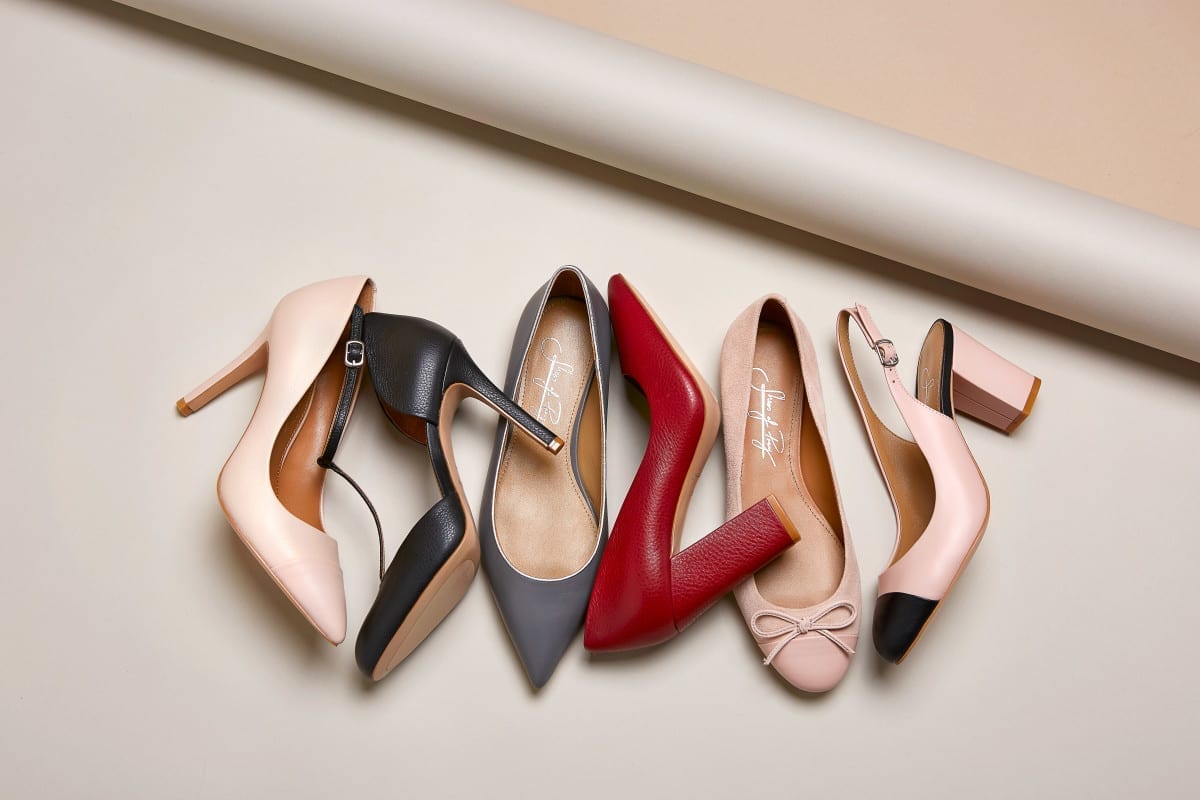
    The future of shoes is two weeks away. That’s how long it takes Shoes of Prey to build and deliver custom-made women’s footwear in just about any size, color and style imaginable.

    Founded in 2009 in Australia but now based here in Los Angeles, Shoes of Prey lets women choose from millions of design options, from gold metallic stilettos to purple fishskin peeptoes, at prices in step with everyday retail.  The company has designed more than six million shoes, according to the company’s 2016 end-of-year report, after raising $26 million in venture funding. Manufacturing is outsourced to China but plans are, ahem, afoot to speed delivery by adding factories in North America and Europe.

    Customers usually appreciate the idea of designing shoes. Psychologist Barry Schwartz famously talks about The Paradox of Choice and how option profusion makes consumers less happy rather than more. But the Shoes of Prey 3D design interface keeps people on track with recommendations for heel height, colors, materials… Possibilities are limitless, but framed pre-designed shoe options, hence helping clients.